Archive for the ‘above the ground’ Category
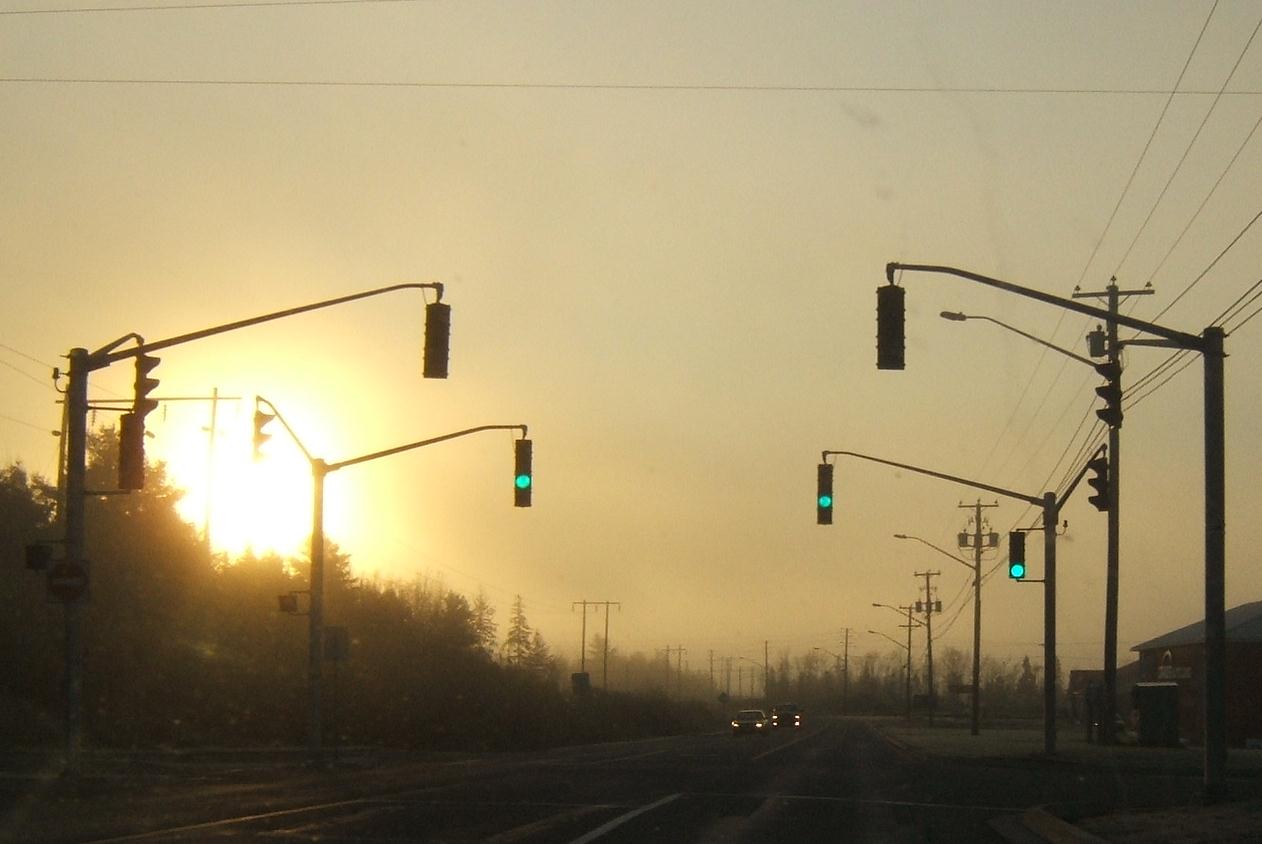
a moment of beautiful – traffic lights
the space: above the roadway, at an intersection, in the fog
the beautiful: green, yellow and red traffic lights, seeming to hover, like jewels in the fog
~
Traffic lights!!! Beautiful??? Perhaps you will never agree. But I think those lights, when seen on a foggy day, suspended as if from the sky itself, are as beautiful as jewels. Emerald, topaz and ruby.
~
~

Copyright Jane Tims 2012
witch’s broom
In the Balsalm Fir tree over our shed is a strange growth, like a dark mass of short deformed branches. This dark mass of branches is known as a ‘witch’s broom’.
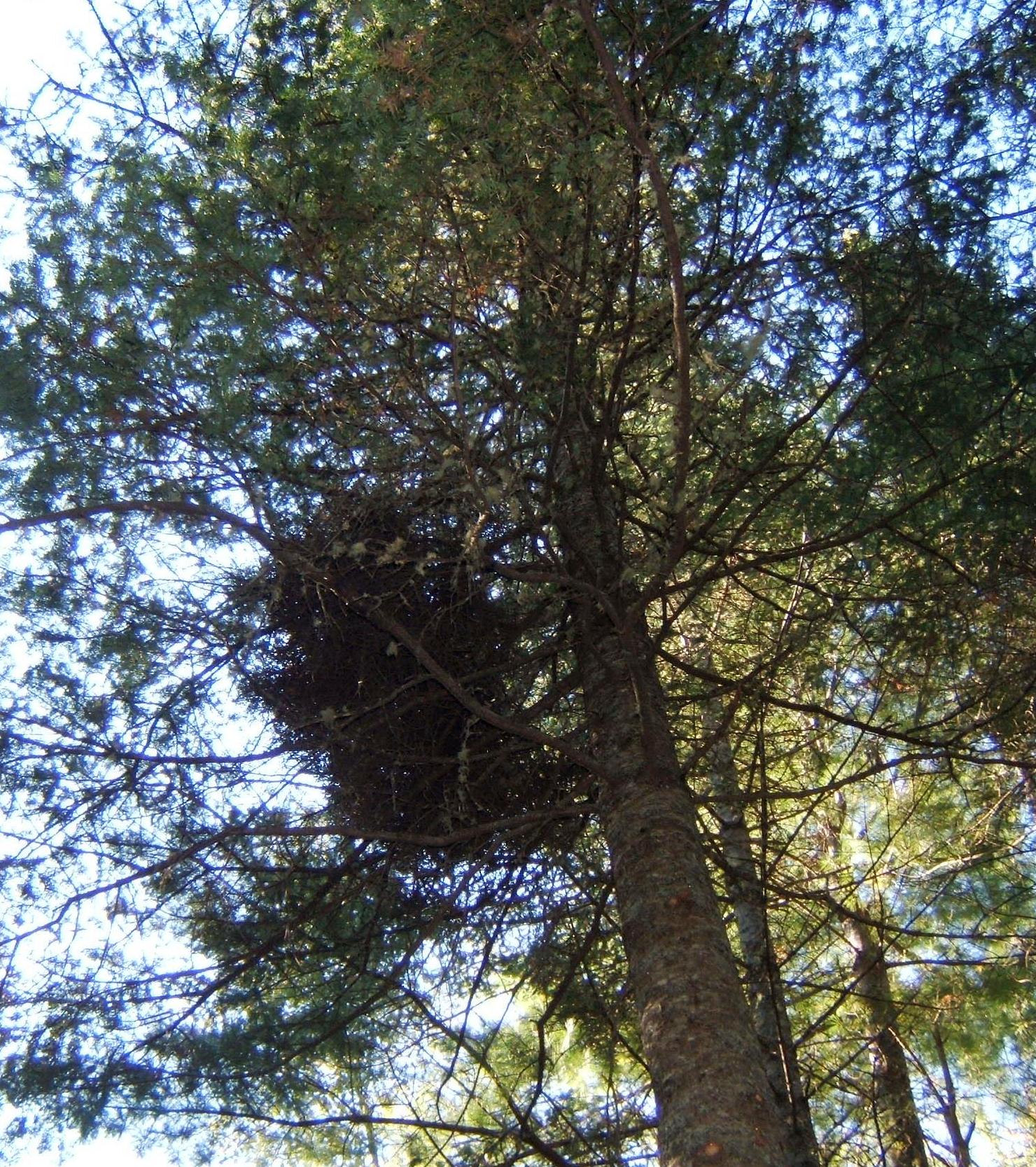
A witch’s broom is a common term for an abnormal growth caused by the action of an agent such as a mite, virus, insect, or fungus. The agent causes a branch of the tree to grow from a single point, resulting in a mass of twigs and branches resembling a nest or broom. Many kinds of plants can have a witch’s broom deformity, including many tree species.
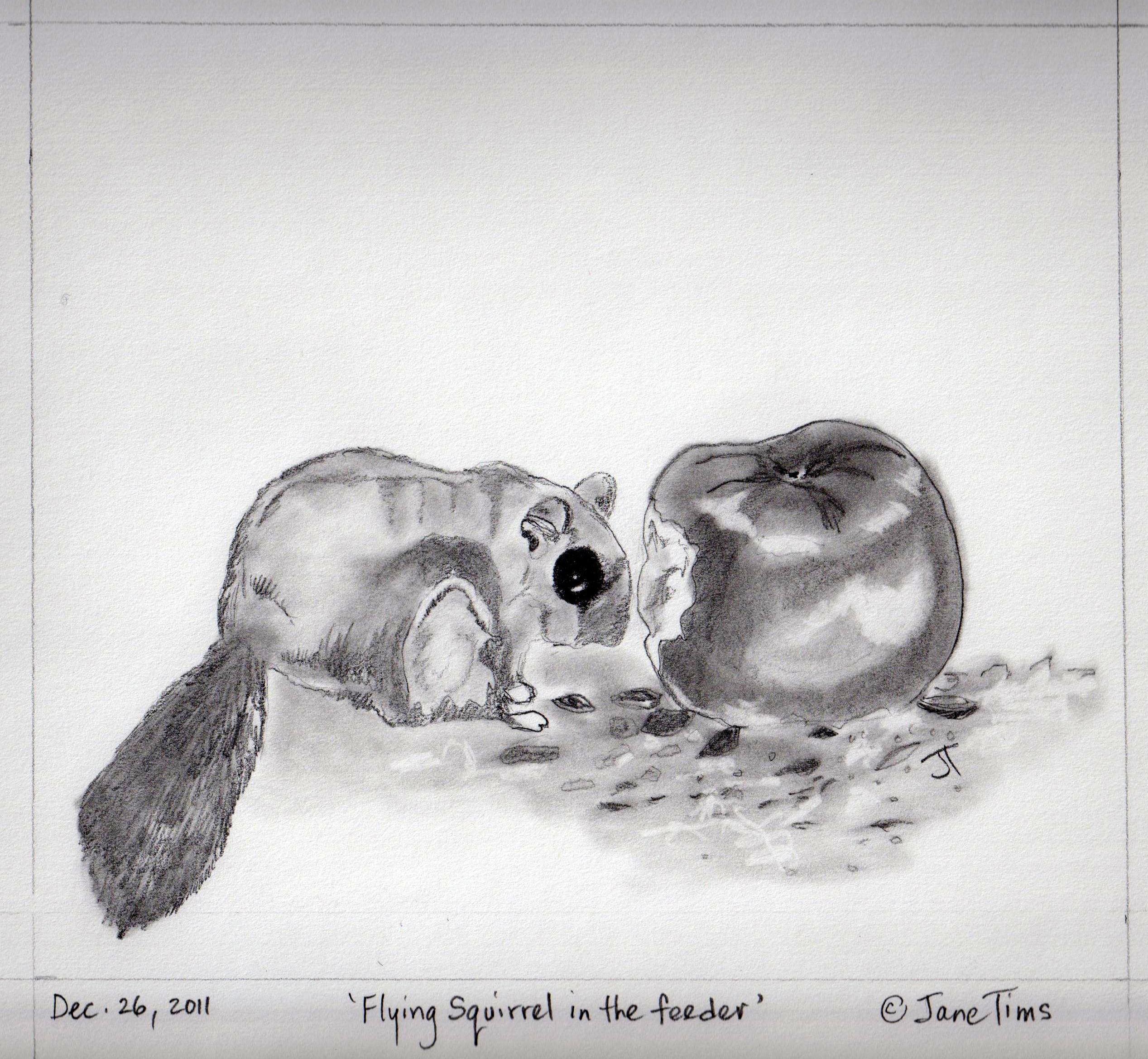
Animals, including the Northern Flying Squirrel, use the witch’s broom as a nesting place. The Northern Flying Squirrel is the big-eyed squirrel invading our feeders every night (see ‘spacemen in our feeder’ under the category ‘competing for niche space’ for December 23, 2011).
Witch’s brooms occur frequently … we have at least three in our grey woods. They lend an air of mystery to the woodland. People used to believe a witch had flown over the place where a witch’s broom grew.
If anyone knows of another name for the witch’s broom, please let me know. Years ago, we visited a small farm museum in northern Maine and an example of a huge witch’s broom was displayed in the shed, labelled ‘horrah’s nest’, but I have been unable to find this term used elsewhere.
~
~
wood witch
~
burdened by snow
a tree falls
tumbles a witch’s broom
the witch set free
~
a hex on the snowfall
slate where the dog walks
cuts her feet
soft rubies in every track
~
a hex on the room
cold as I left
now warm
~
too warm
~
~
© Jane Tims 2001
in the branches of the White Pine

- the White Pine is the larger tree to the left of the road

The most frequent denizens of the pine are a pair of Bohemian Waxwings (Bombycilla garrulus). They prefer berries for food and so are in their ideal habitat. Our property must look like a big dinner plate to them, with its orderly presentation of wild strawberries, blueberries, blackberries, hawthorn and winterberry.
Another bird who stops to rest in the pine is the American Goldfinch (Carduelis tristis), also known as the Thistle bird. These are seed-eating birds who fly across the fields in a distinctive pattern of loops. They are also one of the most common birds at our winter bird feeder.

~
~
building homes
~
we fly kites
to learn the field and sky
set copper whirligigs to spin
~
yellow flirt crosses blue
per-chick-or-ree
potato-chip potato-chip potato-chip
~
we build our cabin
with 2 by 4s, boards and trusses
woodscrews and spiral nails
~
firm framework
woven grass and birch
bark rim and spider silk
~
you fill walls with fiberglass
I quilt curtains for windows
~
goldfinch waits while his female tucks
her nest with thistledown
tufts of cattail, puffs of dandelion
~
© Jane Tims 2011

crows in trees

Of all the birds, I like the American crow (Corvus brachyrynchos) the best.
For one thing, they seem to me to be full of personality. I also know that crows are intelligent – research shows they can distinguish humans from one another by facial features. Crows also stay in family groups (parents and fledged offspring) for a few seasons. I feel sorry for crows; they seem to have a bad reputation and are treated poorly as a result.
If you want to learn more about crows and their habits, have a look at Michael Westerfield’s new book “The Language of Crows: The crows.net Book of the American Crow,” available at www.crows.net/crowbook.html .
A group of crows is known as a ‘murder’ of crows. The term ‘murder’ refers to the ‘observation’ that a group of crows will kill a dying cow. Some people are advocating for an alternative, since the term ‘murder’ perpetuates the notion of crows being malicious. Alternative names for a group of crows are presented in http://www.crows.net/mjw.html Michael Westerfield’s Crow Log: The Crows.net Project. I think this is an opportunity for a Poll!
~
~
Morning Song
~
in the morning
dew soaks the grass
and Canada
belongs to the crows
~
the croaking of ravens
the cawing of crows
familiar, unheard
backdrop to Canadian dawn
~
(theme music
in Canadian film)
~
in a conversational rattle
discussing gold and letters
~
a two syllable scream
haunting the fields
~
solitary sorrow
throned at the top
of a tamarack
~
black wings bruise the air
he calls an alarm
screams to his mate
the love of his life
with only the fall of the dew
for an answer
~
silent is the shroud of black feathers
strung by the feet from a pole
beside a garden
where she braved the flapping man
and dared to pull new corn
~
in the morning
Canada belongs to the crows
~
Published as: ‘Morning Song’, Spring 1995, The Cormorant XI (2)
© Jane Tims 1995
trees on sky
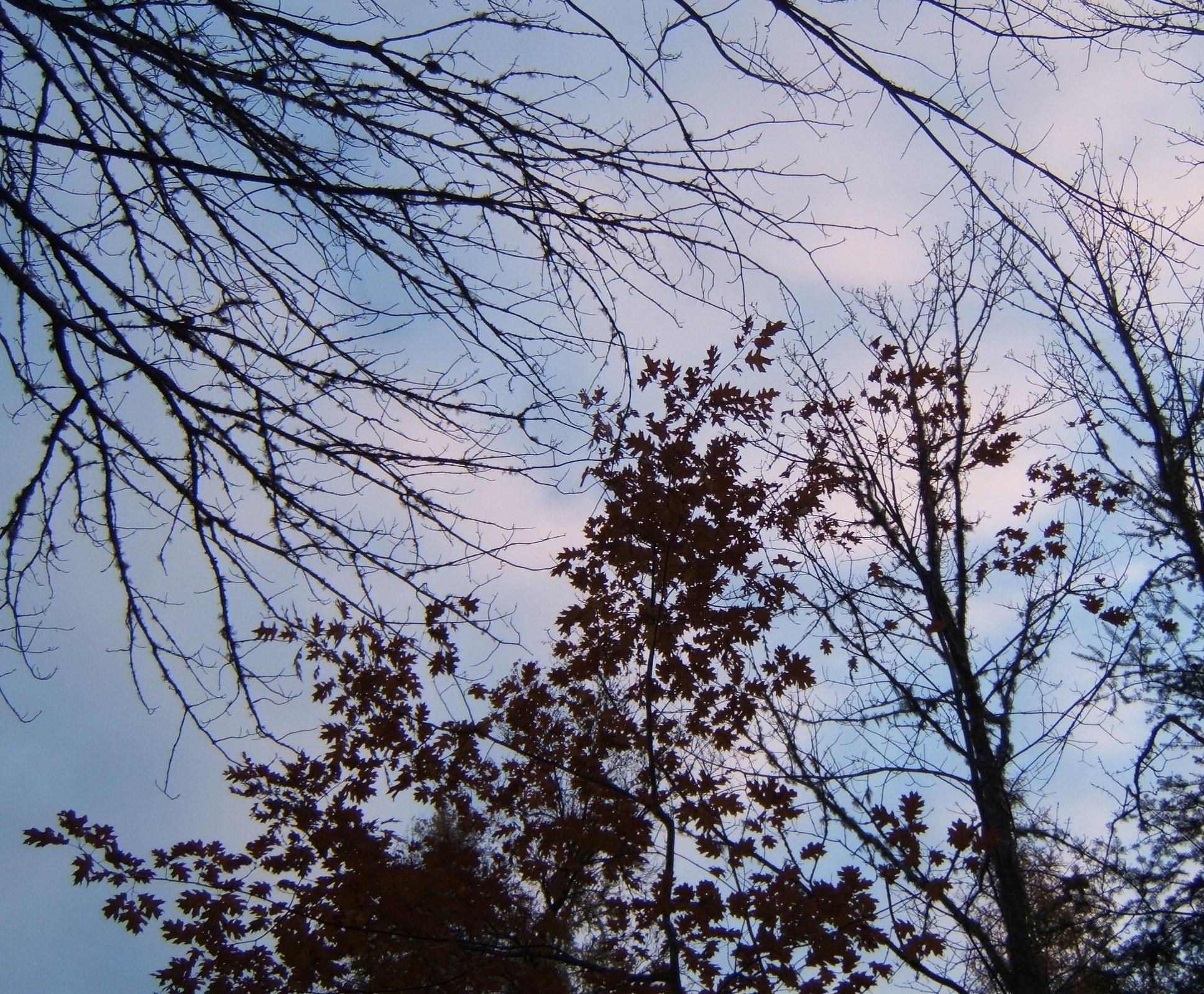
This time of year, the lost leaves allow a new observation of sky. The bare branches remind me of pen and ink on paper.
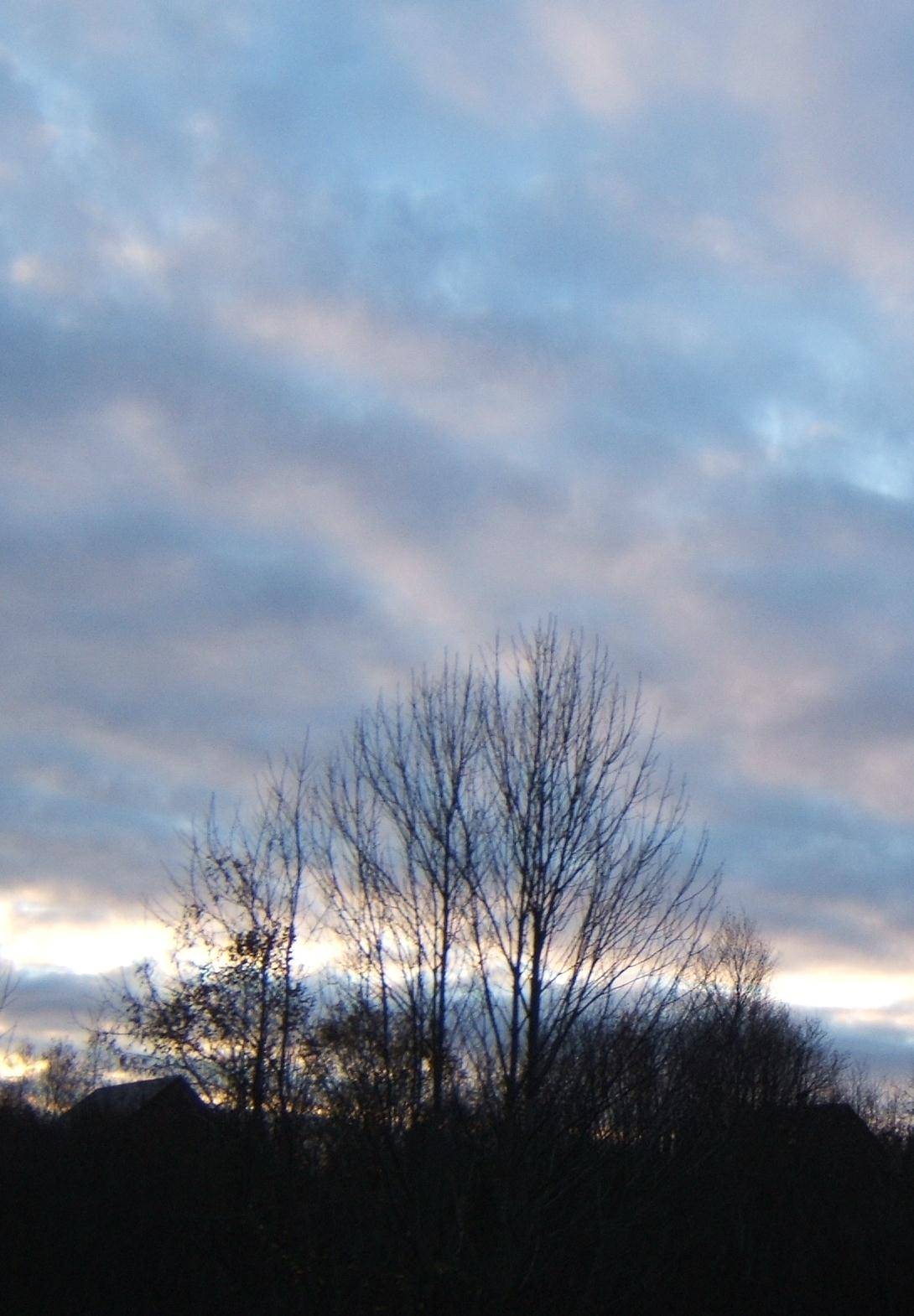
these leafless trees / brush against /a linen sky / ink strokes /on rice paper
(from ‘requesting the favor of a reply’ in the post ‘hidden in the hollow heart of an oak’ August 19, 2011, under shelter)
pale sunrise
~
perhaps this sparse oak
colored the pale sunrise
palette, faded autumn
~
even loaded, lean branches
lay only brief color
on canvas sky
~
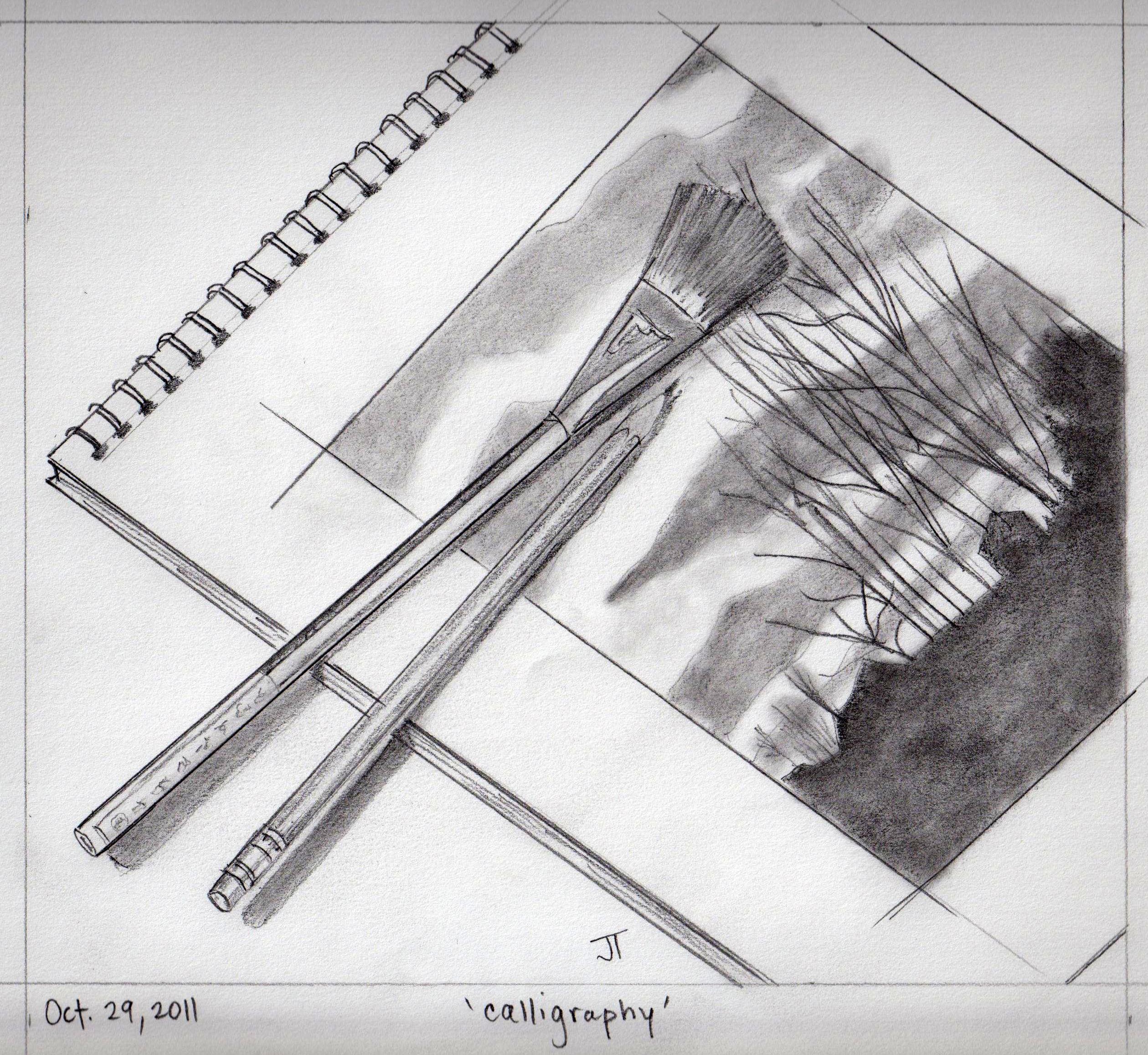
brush more suited to calligraphy
a few abbreviated strokes
a terse ‘good morning’
~
© Jane Tims 2007
(brackets in the birch grove)
Last week we went for a walk (more like a struggle) through the birch grove at the base of the grey woods (see the ‘map of the grey woods’ under ‘about’). To get there, we crossed the fern gully, mostly dry this time of year, and entered a mixed wood of birch, maple, spruce and fir, much younger than the mature spruce in the grey woods.

These trees grow in very wet conditions, and the forest floor is a hummocky, spongy growth of Sphagnum moss and fern.

There is no path through this woodland, so the ‘walk’ was an up-and-down, over-and-under kind of trek. To stay dry, you must take giant steps from hummock to hummock. To stay upright, you must check your footing and hang on to the young trees. With all this concentration on moving forward, I tend to miss some of the interesting detail, so I try to use each ‘balancing moment’ as a time to look around and observe the wild life.
One occupant of the birch grove is the bracket fungus. This is a type of fungus that grows like shelves on both living and dead trees. The fungus forms thick flat pads on the tree, usually parallel to the ground. They remind me of steps, a spiral stair to ascend the tree.

The semi-circular body of the bracket fungus is called a conk. The conks of the bracket fungus growing in our woods are thick, often oddly shaped, and constructed of various cream, tan and brown coloured layers. The conks are the outwardly visible, reproductive part of the fungus. The vegetative portion of the fungus grows as an extensive network of threads within the tree.
bracket fungi
~
1.
in this forest
staid
practical
grey
could any form
construe to magic?
~
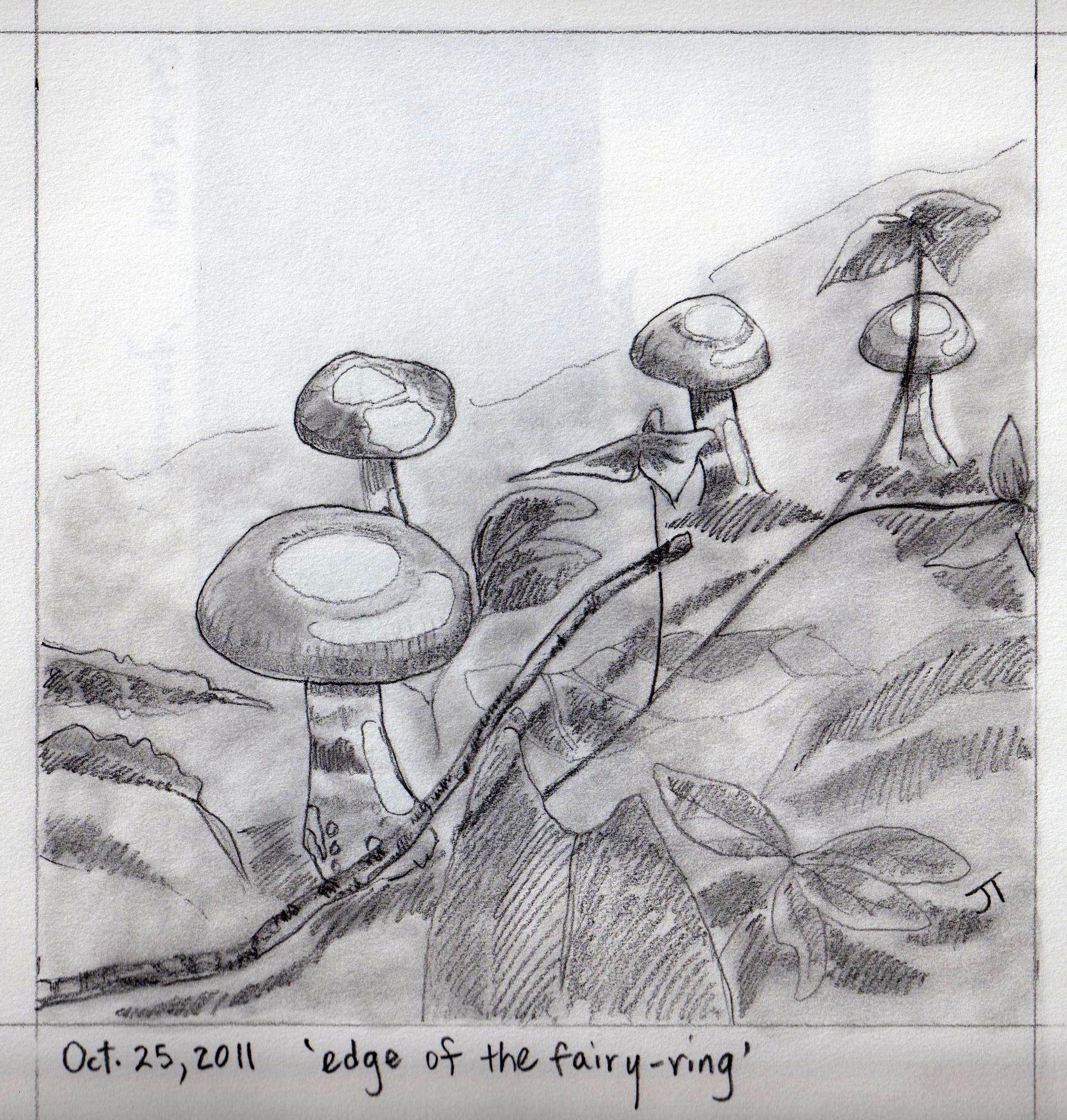
fairy rings
moths in spectral flight
spider webs, witches brooms
burrows and subterranean
rooms, hollows in wizened
logs, red toadstools
white-spotted, mottled
frogs
~
2.
bracket fungi
steps ascend
a branchless tree
~
© Jane Tims 2011
under the red maple
We have a huge red maple (Acer rubrum L.) in front of our house. It forces a turn in the walkway, but I love to greet it every morning and watch it through the seasons. When we first lived here 30 years ago, the tree was small enough to encircle with thumb and finger. Now I can’t fit my arms around its girth.

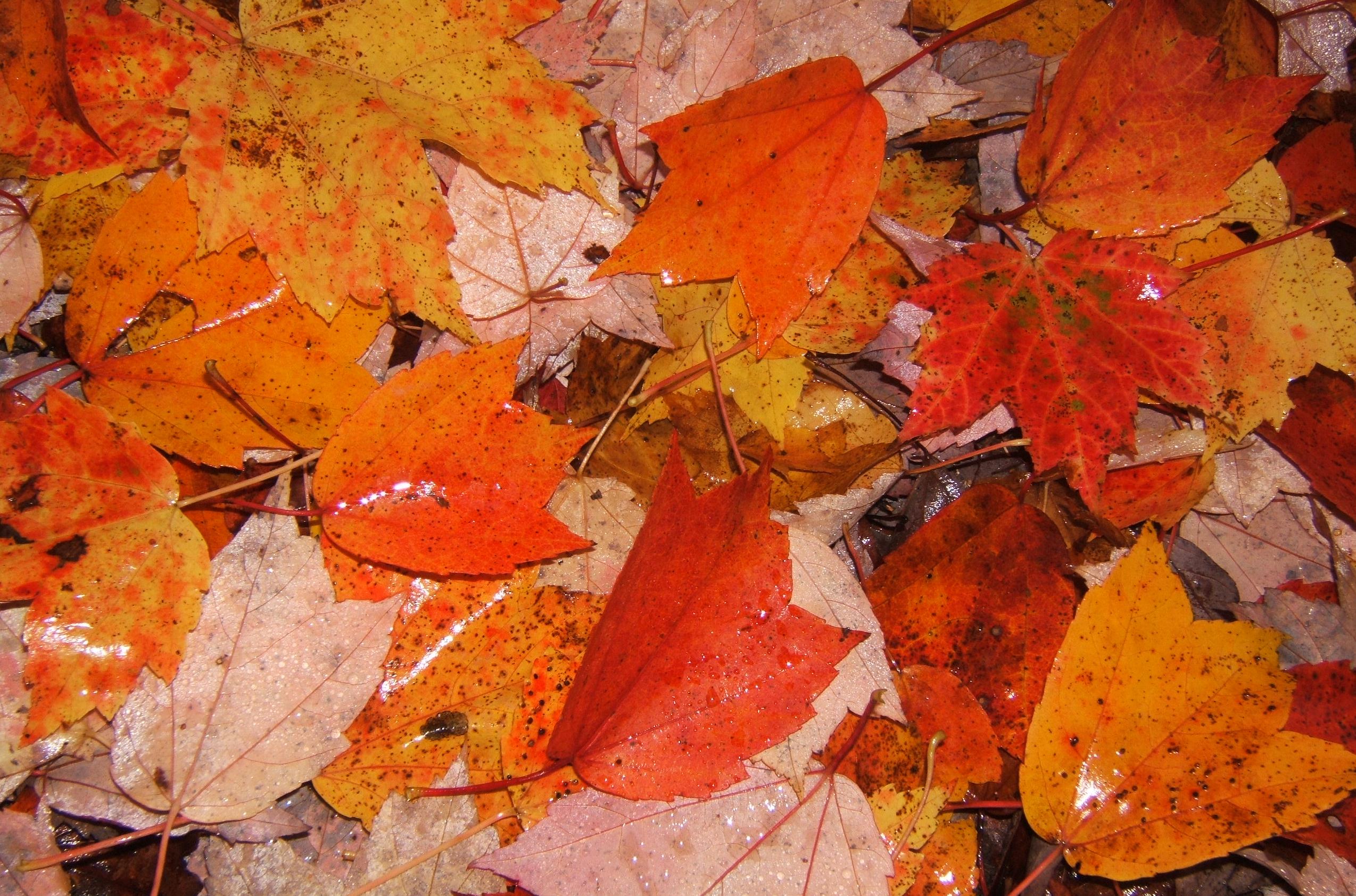
Autumn inspires this tree. It takes its time, gradually turning yellow, red and orange over several days. Then it gives up all its leaves within a day.
When I drive my car away the next morning, a dark rectangle of driveway remains, within the circle of new-fallen leaves.
summer in flames
~
suddenly
leaf fall
embers settle
on the walkway
patio table and chairs
~
suddenly
impossible
to walk in silence
red flames
and careful steps
a conflagration
~
suddenly
shadows lost
and branches
scratch the sky
sun bright
hands warm before the fire
~
© Jane Tims 2011

in hurricane rain
Hurricane Irene is past and the skies are clearing after 44 mm of rain yesterday and a very windy night.
I feel so sorry for those who are left in misery after the storm, but our experience was rather tame. My memories will be:
…bands of rain across the yard…
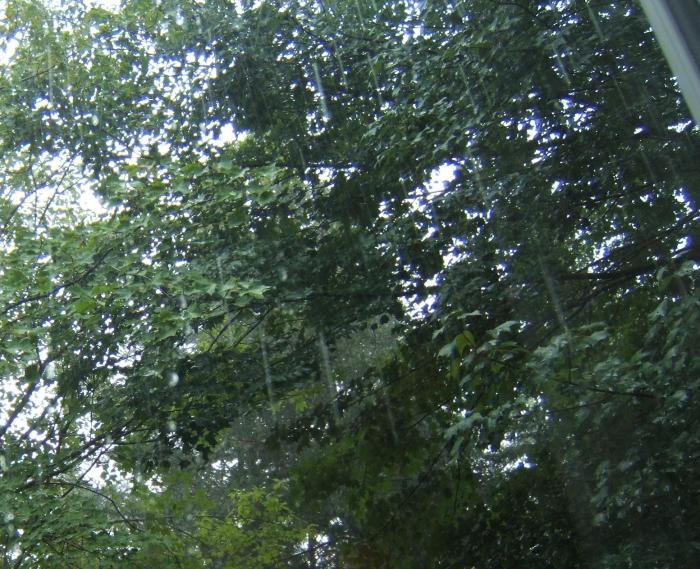
- rain viewed from the window

…waking up to a lawn riddled with leaves…
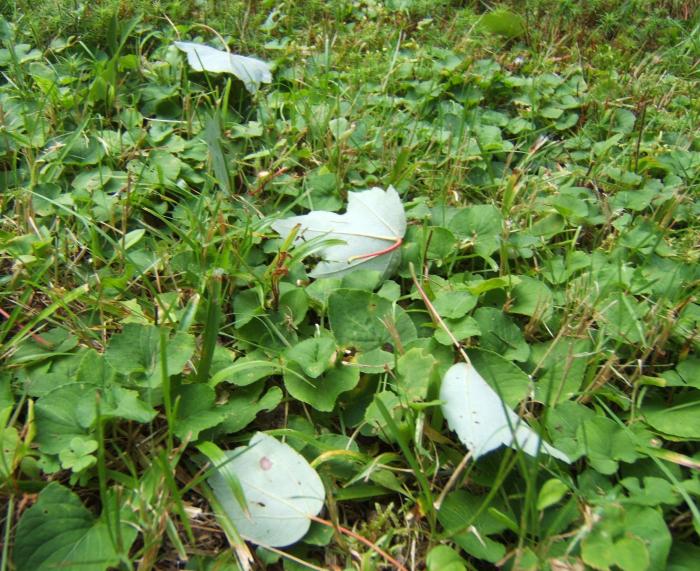
- leaves on our ‘lawn’ of violets…why do they all seem to land upside down?

…a clear sky in the middle of the night. A star was shining through our window, made alternately non-existent and brilliant by the wild movement of the tree branches in the wind. The star was so bright it woke me…
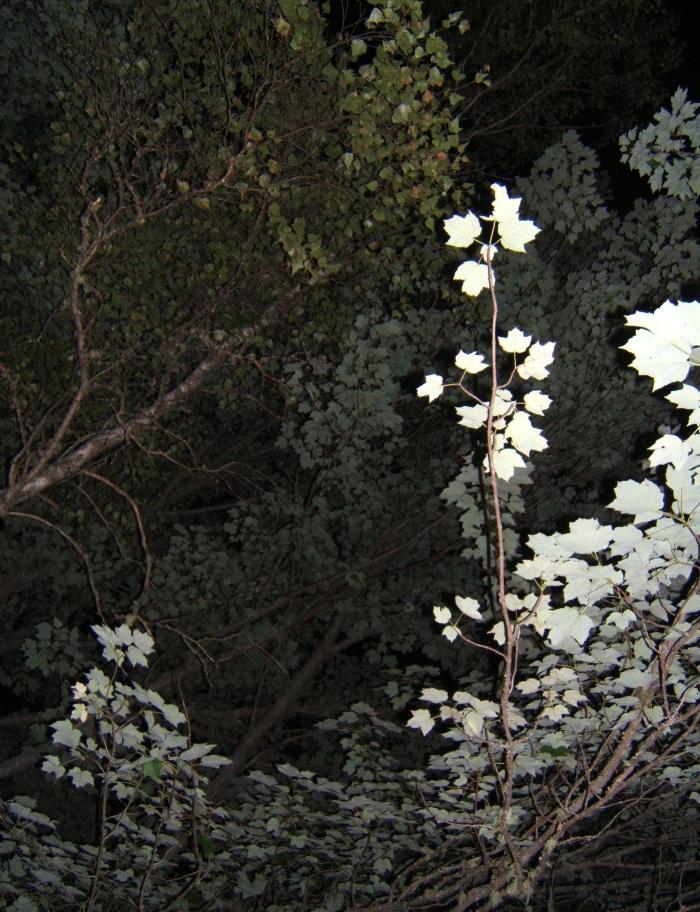
- the trees above our deck rocked wildly all night long
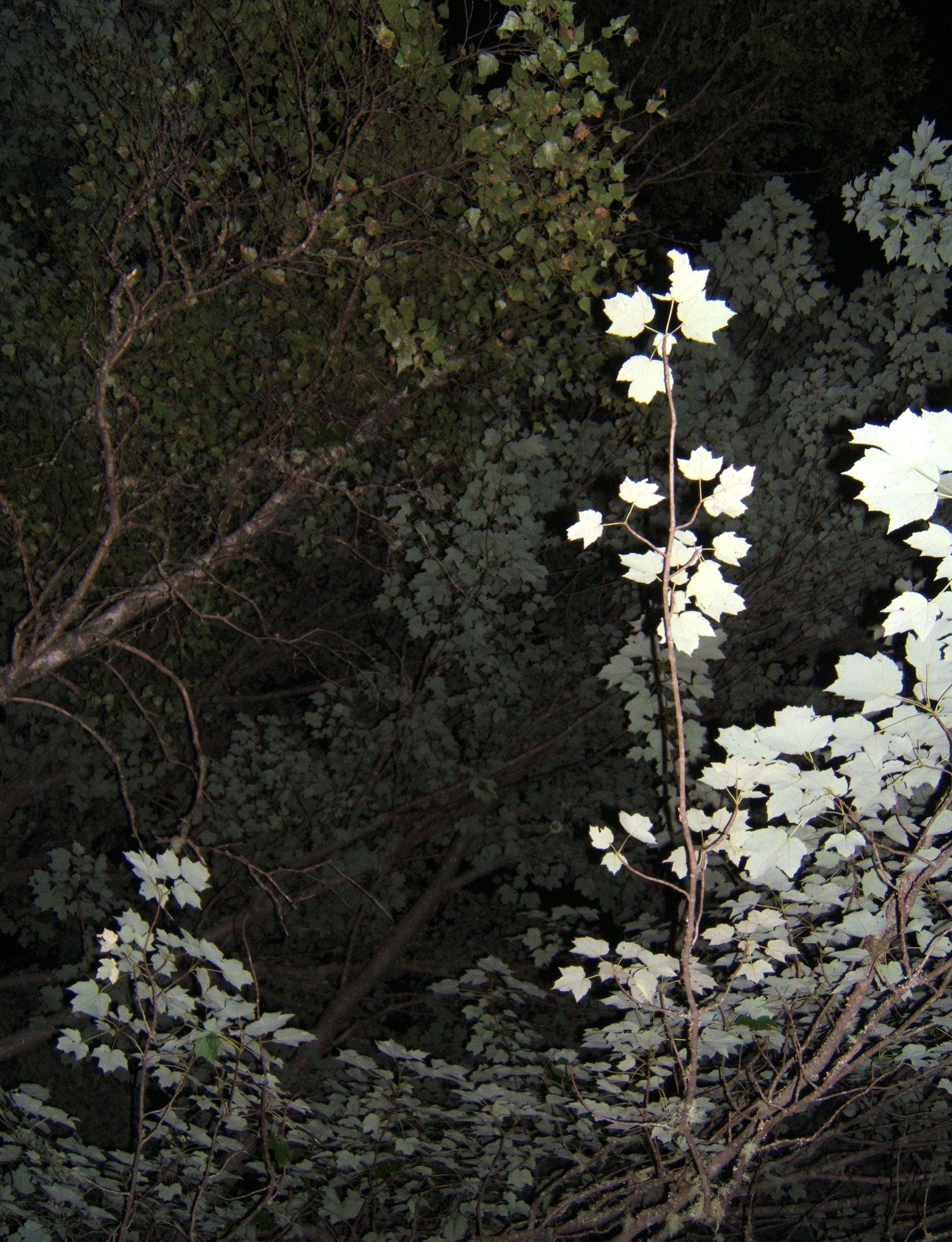
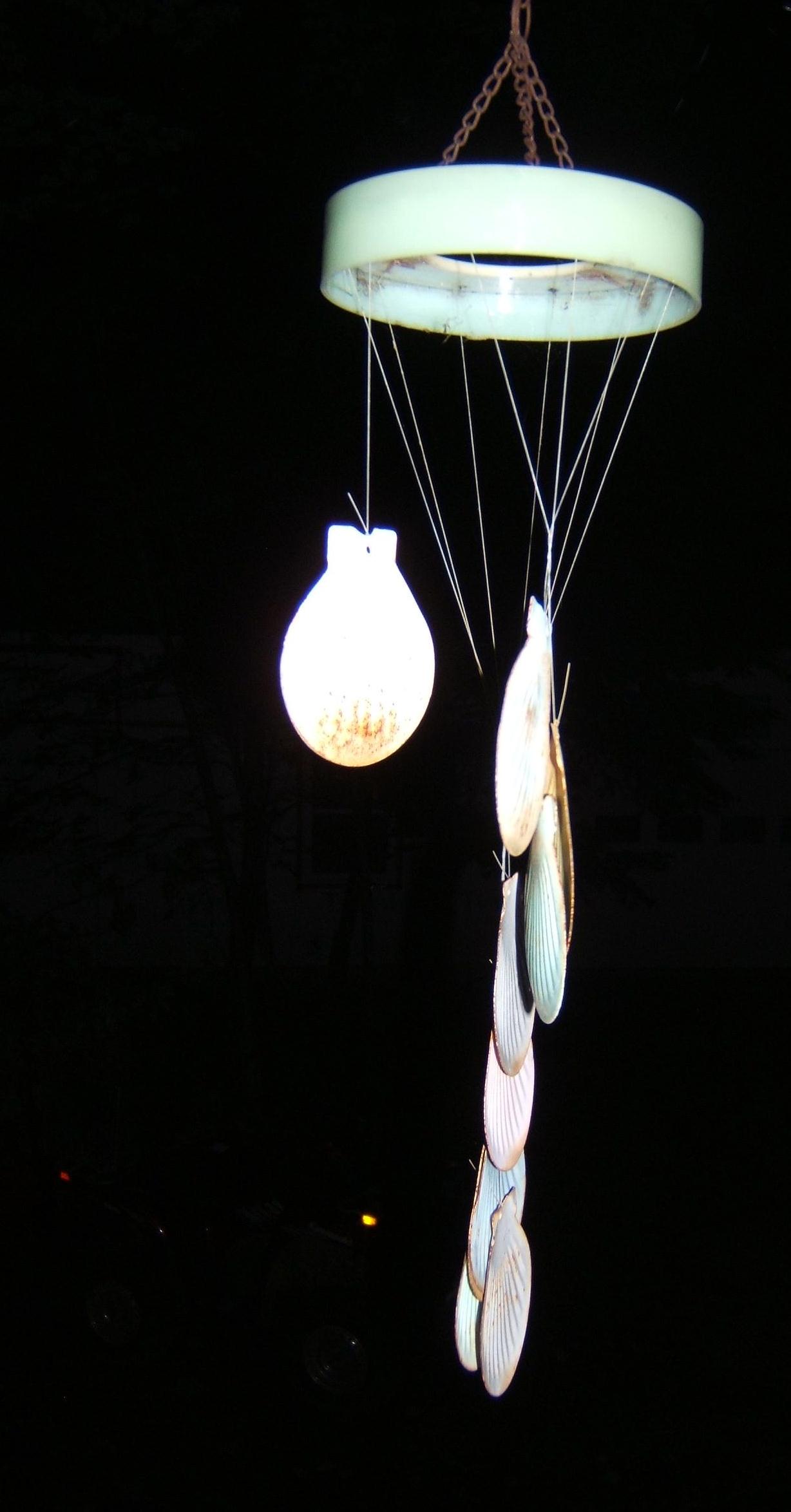
…our demented windchime. A mangle at the best of times, the poor thing is so tangled, it may not be possible for me to figure out the puzzle…

- my poor tangled windchime …yes it is rusty but it makes a lovely sound
…everything saturated, the bird bath full of clean, fresh water and our driveway like soup…
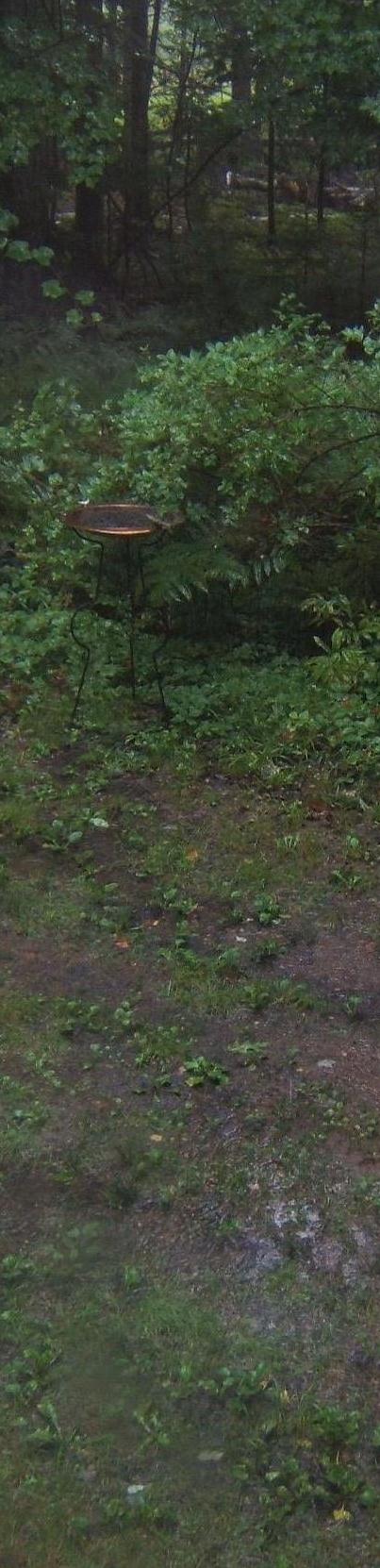
- bird bath and rain
My first knowledge of the power of a hurricane was associated with Hurricane Hazel. I was born the year it hit in 1954 (October 15), but its ‘bad reputation’ lived long enough for me to hear stories of it as a child. In its wake, 81 people in Ontario were dead due to flooding, and 4000 people in southern Ontario were left homeless.
Hurricane
~
Hazel
hurled northward
toward home
and me bewildered
wind at the roof
rain at the glass
faint imitation
of the rage
described in the encyclopaedia
more like the silent eye
~
I turned the page
saw a photograph in disbelief
a straw driven
into the heart of a tree
still standing
~
today, I believe
~
I stand still
while fury lashes around me
and in the quiet, I
am impaled
by a word
~
Published as: ‘Hurricane’, 1993, The Amethyst Review 1 (2)
(revised)
© Jane Tims
watching the wind
The wind fills empty air space with movement and sound. When the wind blows, the void above us suddenly has form and power and dimensionality. It can lift a kite. It can steal a balloon. It can fill the air with dandelion fluff. It can convince you a seagull lives to soar.
My favourite way to ‘see’ the wind is to watch clothes drying on a line. Colourful towels, flowered table cloths, patterned pyjamas, and white cotton underwear. They sway together and lift as the wind catches them. Surely the whole line will sail away.
Do you have a clothesline and do you hang out your bedding to dry?

a clothesline in the countryside
Hanging out bedding to dry
~
by the last acre
of oat field
grown golden in the sun
and wind
~
wet sheets billow
up
up and outward
the long husks of the grainheads
sigh like pebbles
sorted by the sea
~
pillowcases
pegged to a blue horizon
tug at the line
cedar masts are set
firm in the island till
~
quilts and coverlets
spinnaker and mizzen
carry me
over the wind-washed
waves of grain
~
Published as: ‘hanging bedding to dry’, Summer 1995, The Amethyst Review 3(2)
© Jane Tims
competing with the squirrels #2
We watched our hazelnuts carefully every day until August 11, certain the squirrels would not get them ahead of us.

our hazelnuts, almost ready to pick
Then, as humans do, we went on a small vacation, and returned on August 14, only three days later.
As soon as I was out of the car, I went to have a look at my hazelnuts.
And not one remained.

no hazelnuts
The squirrels got the hazelnuts.
No poem can express my dismay.
Next year…
Warning: 1. never eat any plant if you are not absolutely certain of the identification; 2. never eat any plant if you have personal sensitivities, including allergies, to certain plants or their derivatives; 3. never eat any plant unless you have checked several sources to verify the edibility of the plant. © Jane Tims 2012




 nichepoetryandprose