Posts Tagged ‘St. John River’
in the shelter of the covered bridge – Milkish Inlet
We continue to drive around to look at covered bridges in New Brunswick. Eventually, I would like to write a series of poems about the plants and animals living in or around a covered bridge.
~
Last Saturday we visited a covered bridge on the Kingston Peninsula at Bayswater. The Milkish Inlet #1 (Bayswater Covered Bridge) was built in 1920. At 66.5 meters, it is the longest covered bridge in Kings County, New Brunswick. It is by far the busiest bridge I have seen – it was hard to amble through the bridge since there always seemed to be a car going through and a car waiting.
~

~
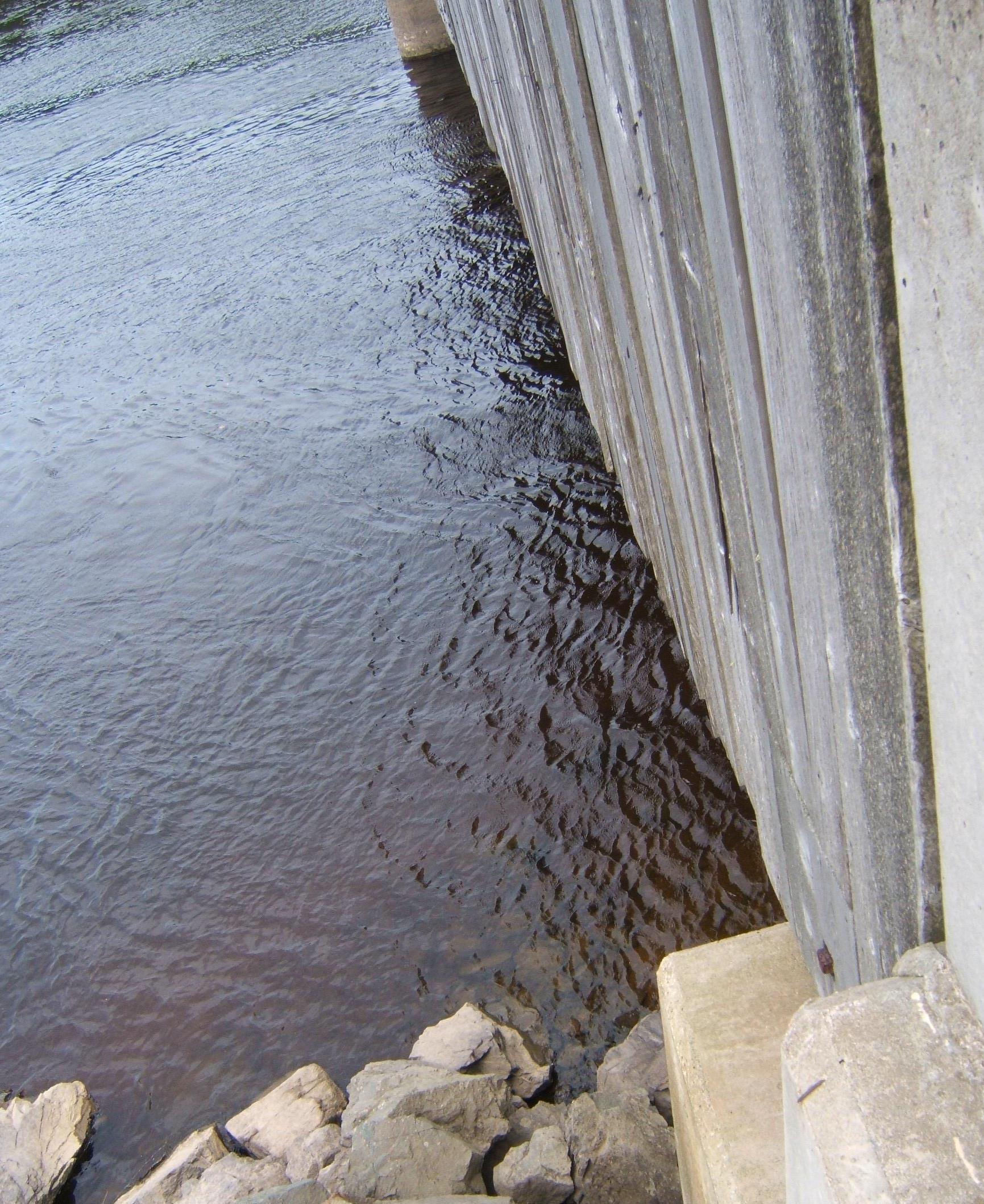
The bridge crosses the Milkish Inlet at Bayswater. The water here is under the influence of the tides.
~
~
Swimmers, wanting to dive from the height of the bridge, have removed a section of the bridge’s wall boards.
~

~
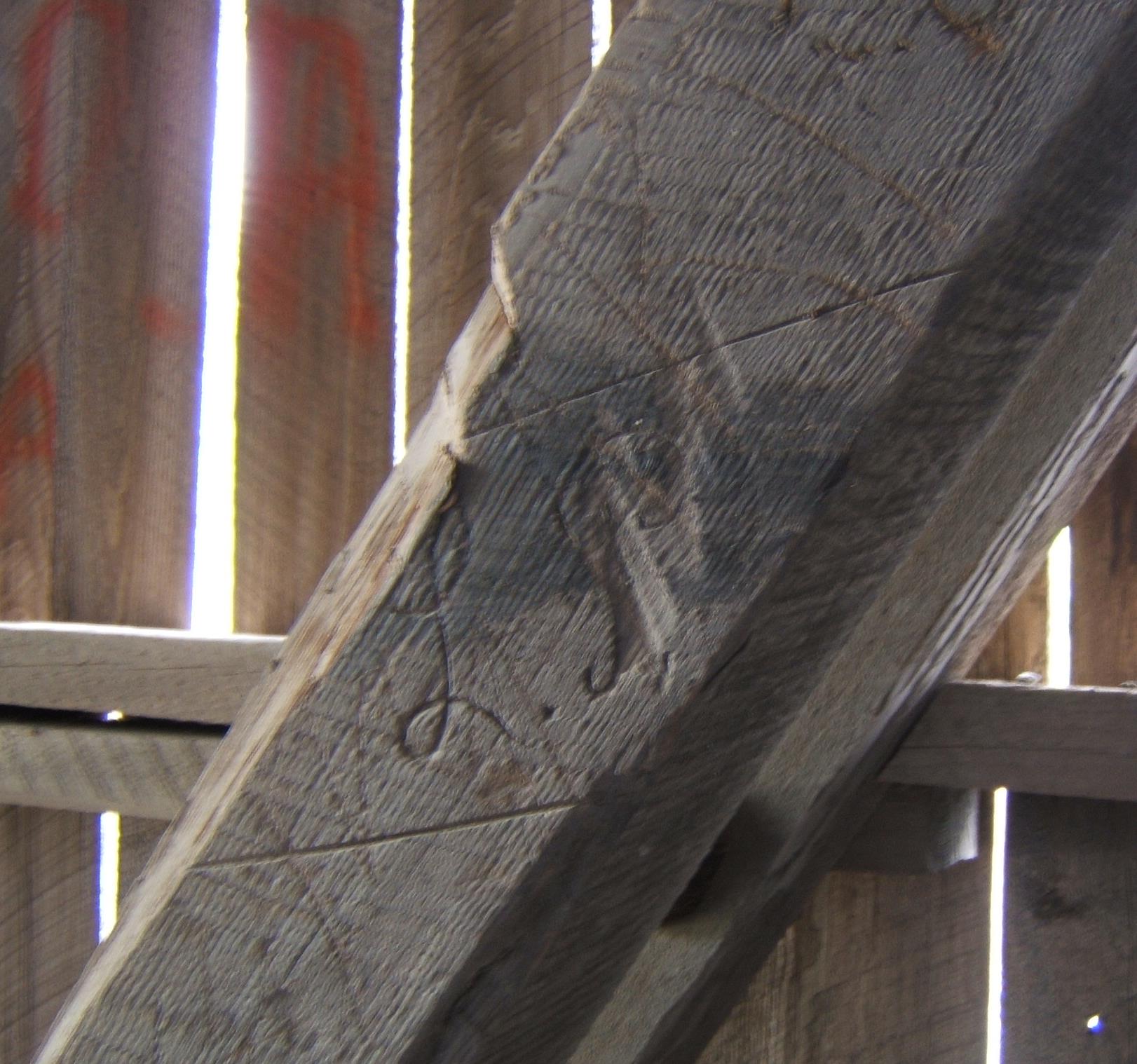
There are many carvings inside the bridge, including this rather charming L. P.
~
~
Another covered bridge once crossed Milkish Creek, but it has been replaced by a causeway.
~
I wondered about the name of the Inlet. The water is not ‘milkish’ in colour!
~
I have discovered the name is from a First Nations word meaning ‘the place where food is dried’ (Source: http://coveredbridgevic.com/festival/Bridges.htm ).
~
Copyright 2015 Jane Tims
summer on the river
~
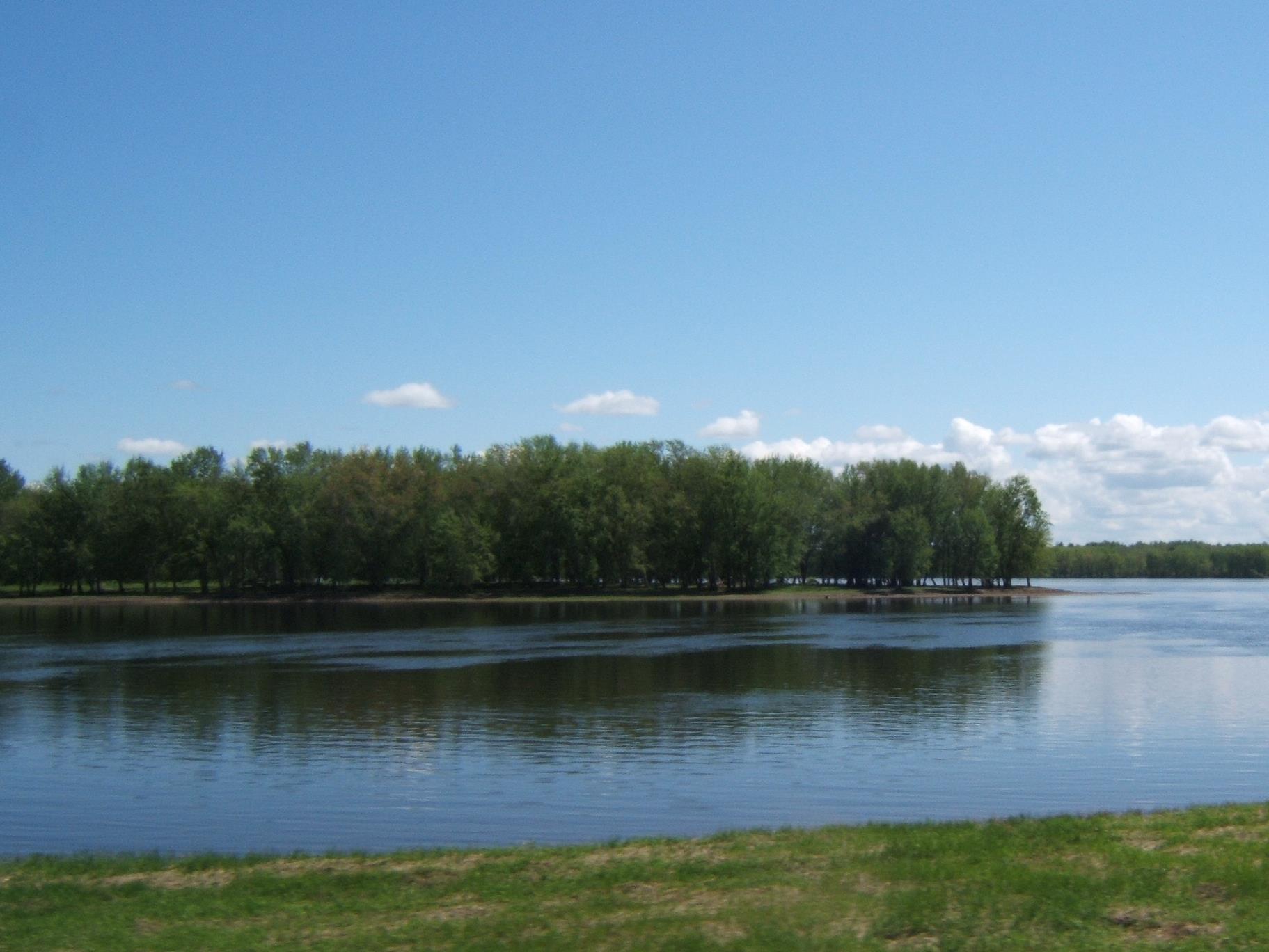
St. John River, south of Fredericton
~
drinks on the patio
~
the setting spins
on the river
golden while the mayflies dance
with gilded wings
~
this is conversation!
a cold glass
singing ice
white wicker
umbrella shade
the hills
wistful beyond the gauze
of mayfly dancing
~
you are dazzled by the play of sun
and words on water
your voice
your smile
who cares what you are saying
as long as the lines are long
and the tone is light
and the mayflies stir
the air above the river
~
I listen
with a nod of my head
a flutter of my hand
the corners of my mouth lift
to smile
~
my ears and eyes
have better things to do
~
the sunlight slides on cobwebs
spun across the river
our voices slur
while the mayflies dance
the rise and fall
of their glass bodies
and your laughter
~
liquid on water
~
~

St. John River, south of Fredericton
~
Published as ‘drinks on the patio’, Pottersfield Portfolio 17 (3), Spring 1997.
Copyright 2015 Jane Tims
forward direction
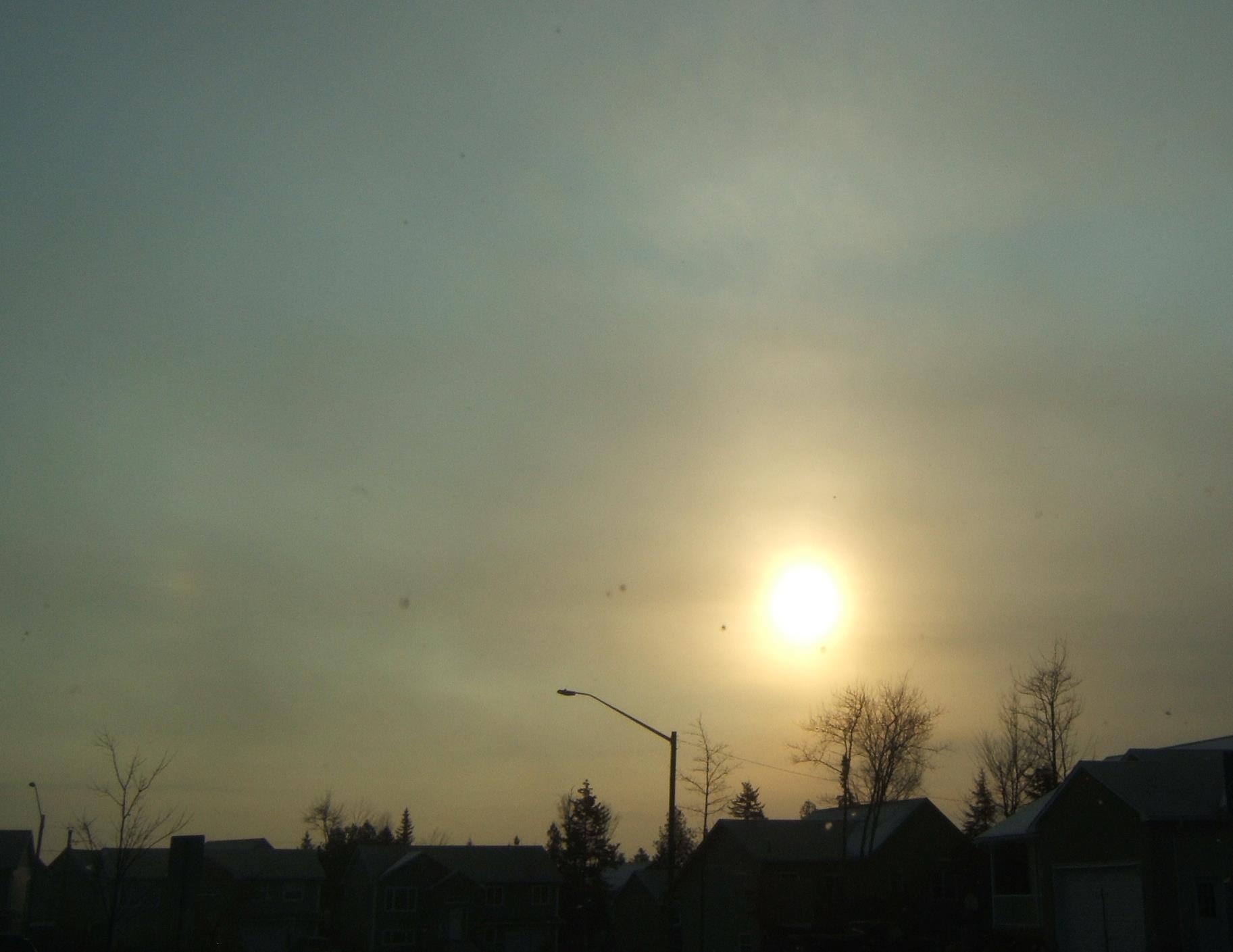
Going over some older writing, I discovered the poem below. Retired now, I remember days when I thought I couldn’t take another minute of work situations I can’t now even remember. A good message for me when I feel stressed. Ask myself if I will even recall the circumstances of this moment years from now. The photos are from a drive to work in 2011.
~
~
~
in car-contained wrath
aftermath of a stress-filled day
a shadow cloud of dots and dashes crosses
my road, there and gone
feathered beings, perhaps
a murmuration of birds
or an incantation of angels
wing tips backward beating
frail quills and a message
to go forward
~
~

early autumn morning
~
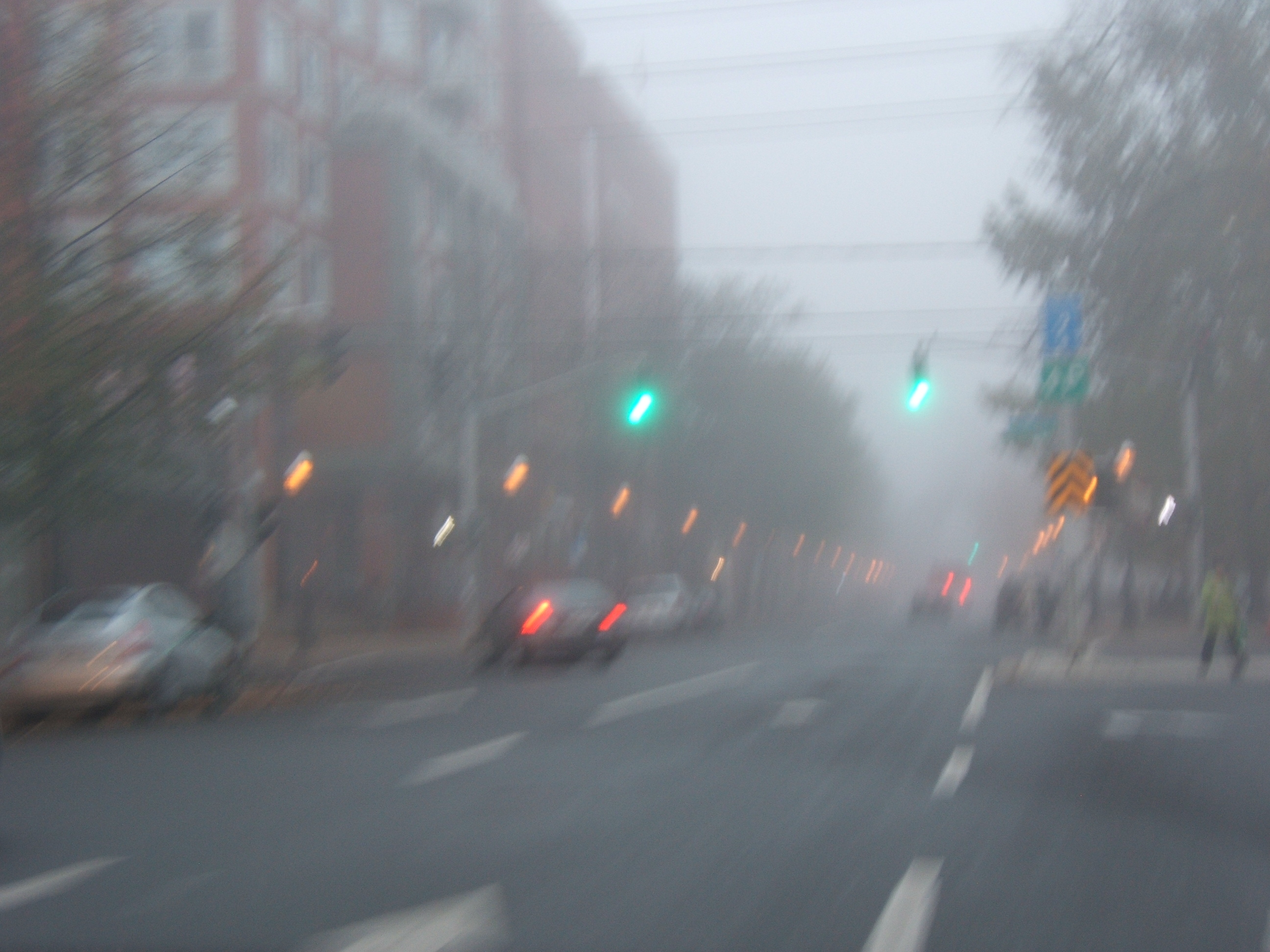
lots of fog on a morning commute
~

looks like this was a drive ‘to’ work and I was late … no wonder I was stressed!
~

green means ‘go forward’
~
Copyright 2015 Jane Tims
ghost girl
In Fredericton, there is a relatively famous road, called Waterloo Row. It is famous for its beautiful old homes and is featured in the Canadian version of the game Monopoly. For me, the road represents a favorite part of my former morning commute.
~
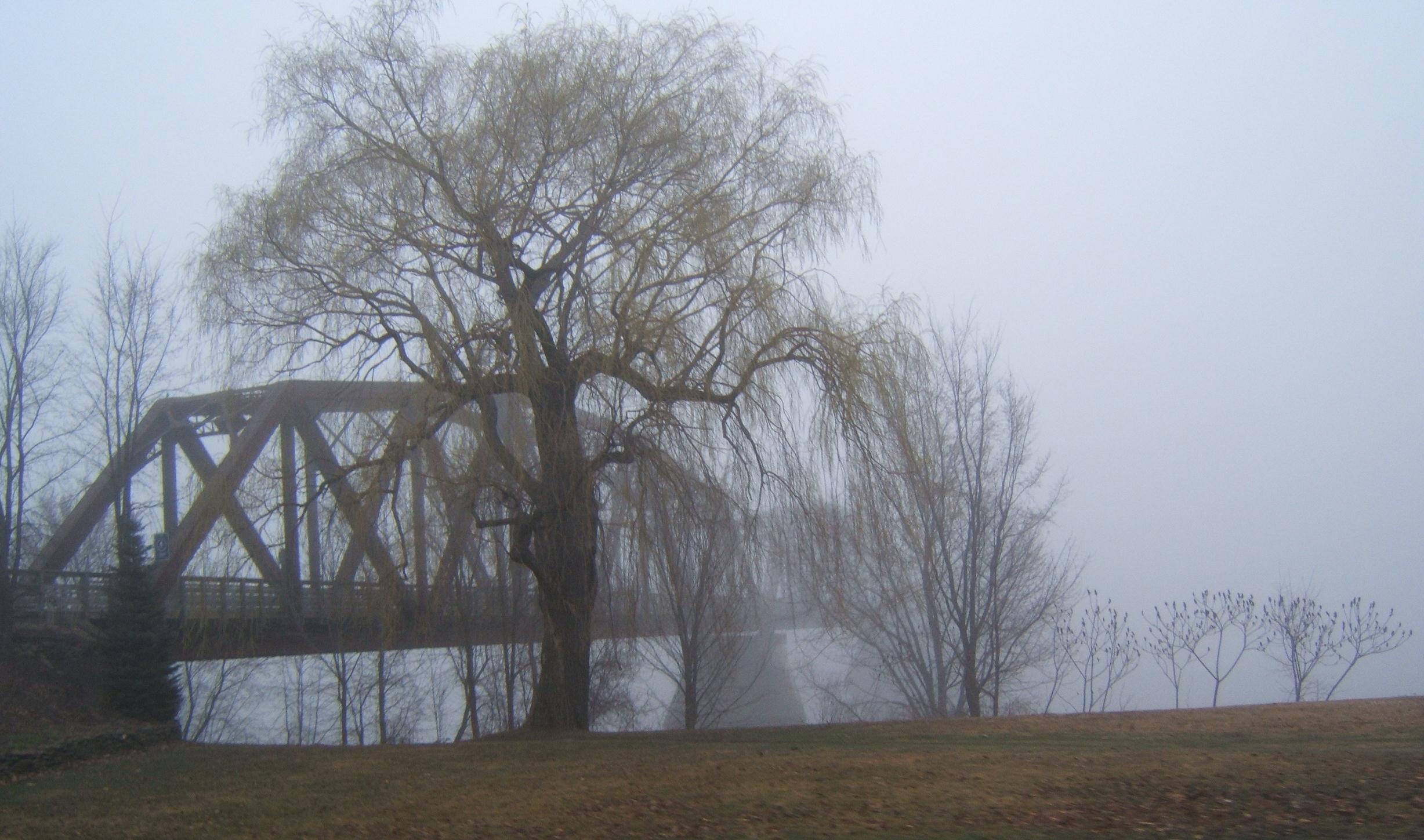
Especially in fog, Waterloo Row presents some lovely vignettes, including ghostly images of the St. John River, with the old bridge, now a footbridge, vanishing into the mist…
~
~
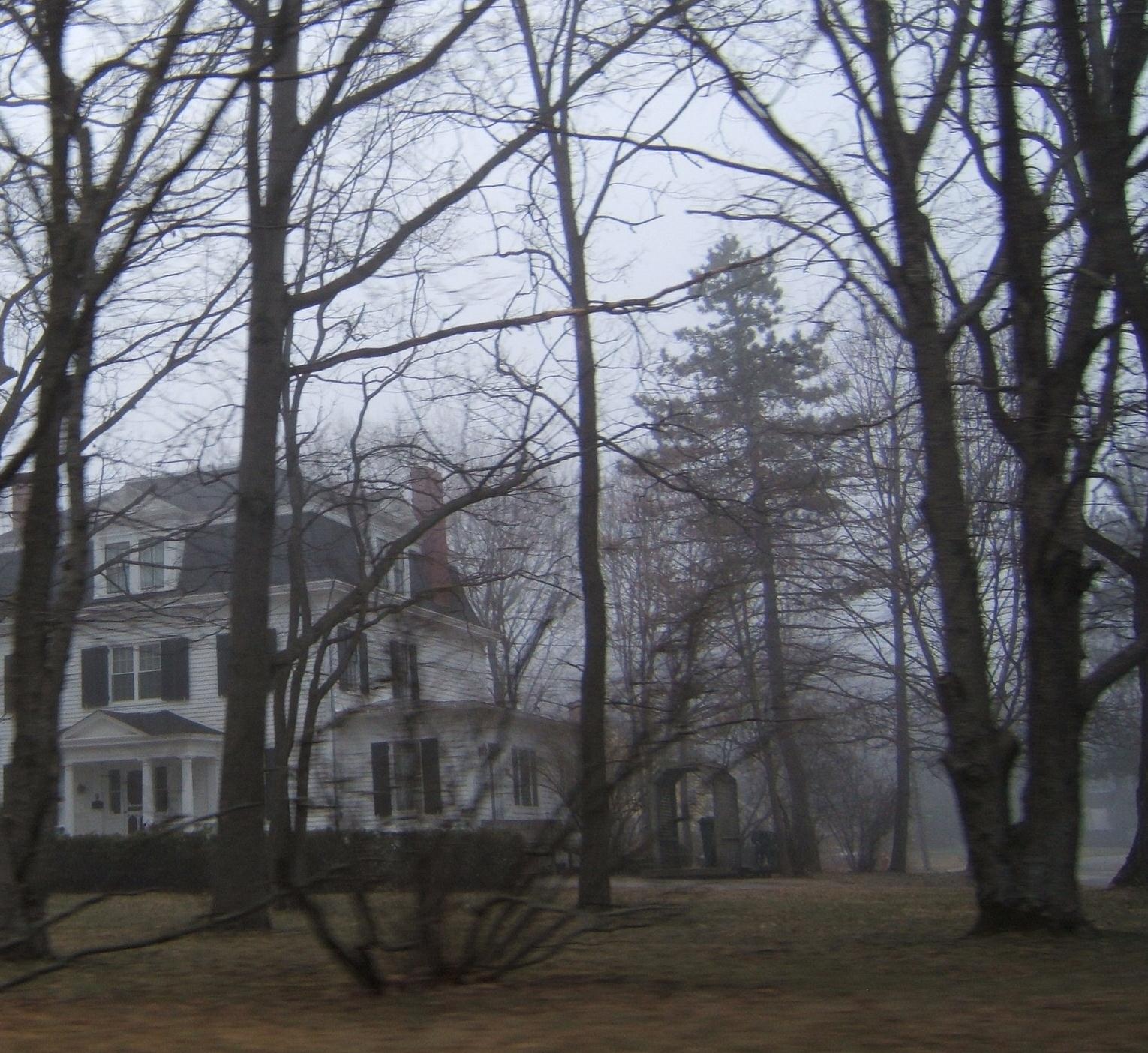
older homes, some of whom are reputed to be haunted…
~
~
and a bench along the river footpath, haunted by a young girl who sat there almost 34 years ago, considering her future…
~

~
I see her sitting there whenever I drive by. On a cool evening in May of 1980, she drove there on her bicycle and watched the river for an hour, thinking about what her life would be. In two months, she would marry, and her life would change in many ways. She thought about this and wondered.
~
If I could talk to her, I could answer almost all her questions. I could tell her about her marriage of (so far) 33 wonderful years. I could tell her all about her future husband and amazing son. I could tell her how relaxing it will be to be at home full-time after three decades of work. And I could tell her – the river could never be as beautiful as the sight of our small pond with its stone bench and violet-studded lawn on this day at the end of May, 34 years later.
~
Copyright 2013 Jane Tims
the colour of October #1- Virginia Creeper
~
Our Virginia Creeper comes from a shoot I collected along the banks of the St. John River over 30 years ago. It grows on our power pole. Some years it makes great progress and gets to the top of the pole to grow along the wires. Other years it struggles to gain any hold at all after damaging winds, or if the power company decides it needs cutting back. The last few years it has grown into the neighboring bushes. As a result, my lilacs seem to have mutant leaves and turn scarlet when the other lilacs are a sickly yellow.
~
This year the Virginia Creeper leaves are shot with holes from the same insect infestation plaguing them last year.
~
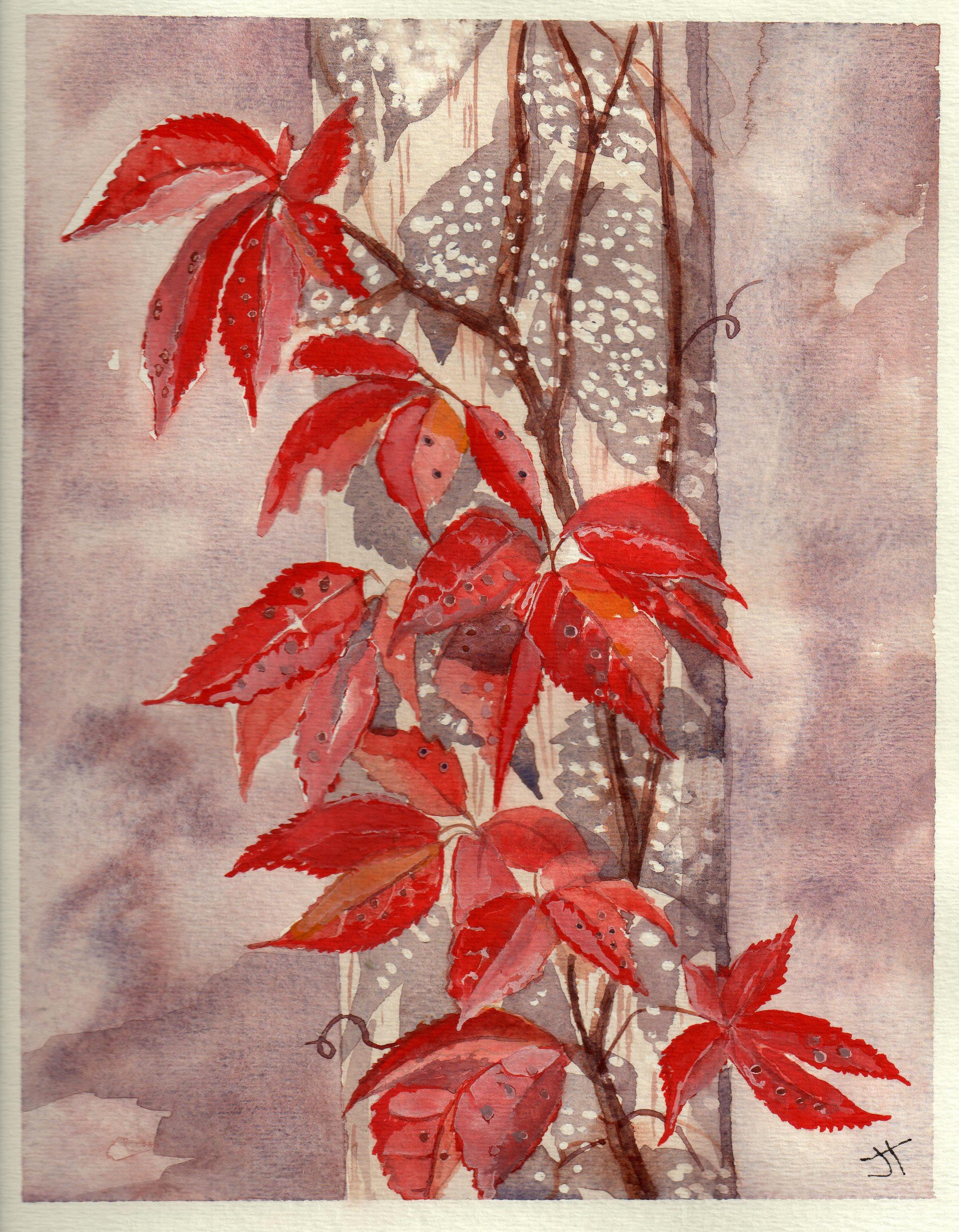
October 7, 2013 ‘Virginia Creeper’ Jane Tims
~
Copyright 2013 Jane Tims
windy October drive
On Monday, I went on a drive to Cambridge Narrows, to visit an antique store and a roadside market. My goal: to buy some Nancy Drew mystery books for my collection and some pumpkins for Halloween.
It was a blustery day, windy enough to put some whitecaps on the St. John River…
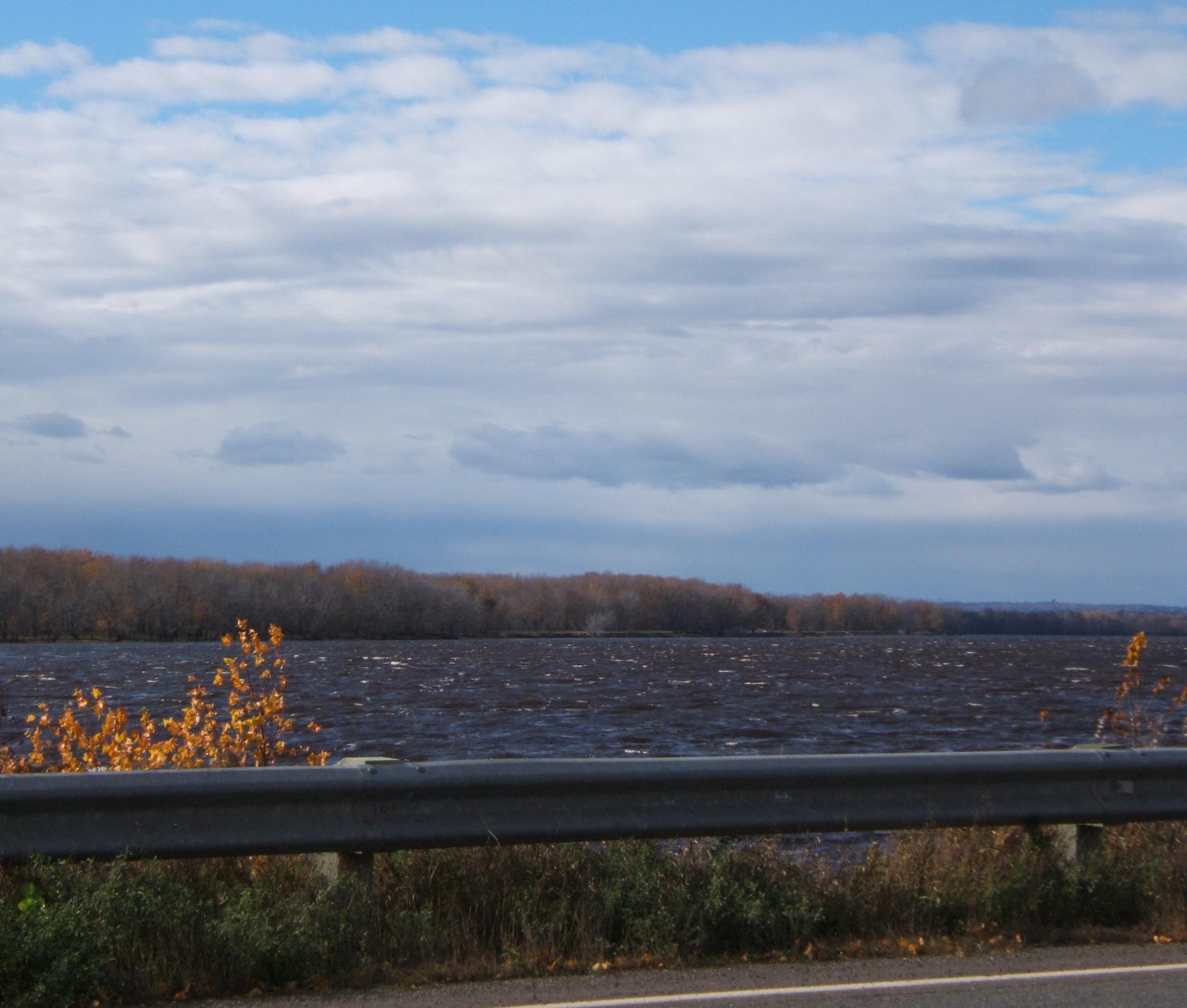
The wind was especially evident along the former Trans-Canada Highway, where dry leaves have gathered in all the ditches. Since only a few vehicles use this older highway, the leaves blow into the roadway…

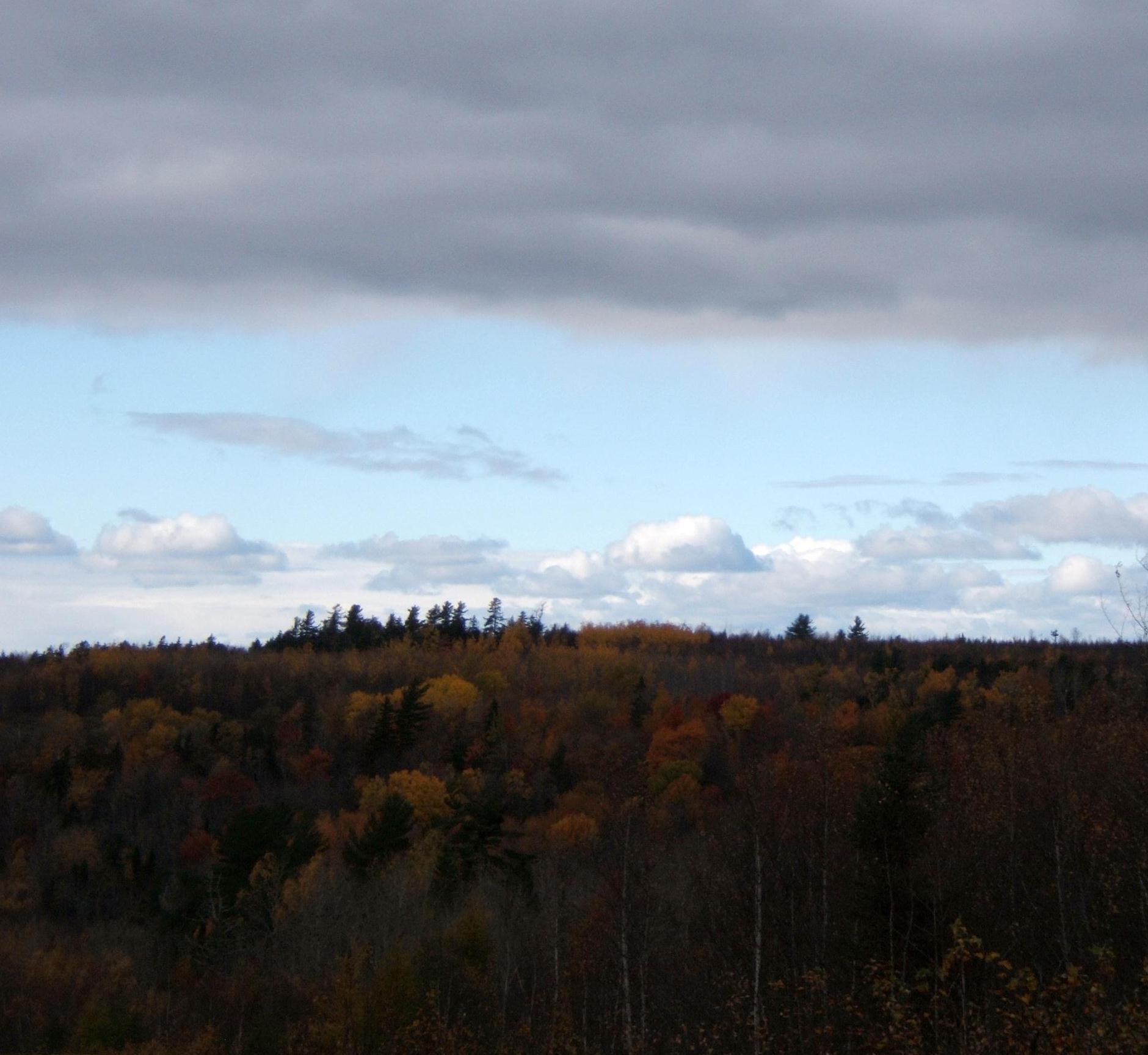
The day had a luminous quality, in spite of the wind. Most of the reds are gone from the trees, leaving the yellows of the poplars, the rusty-orange of the oaks and the gold of the tamaracks…
I had a successful day. I bought some small pumpkins at a roadside stand…

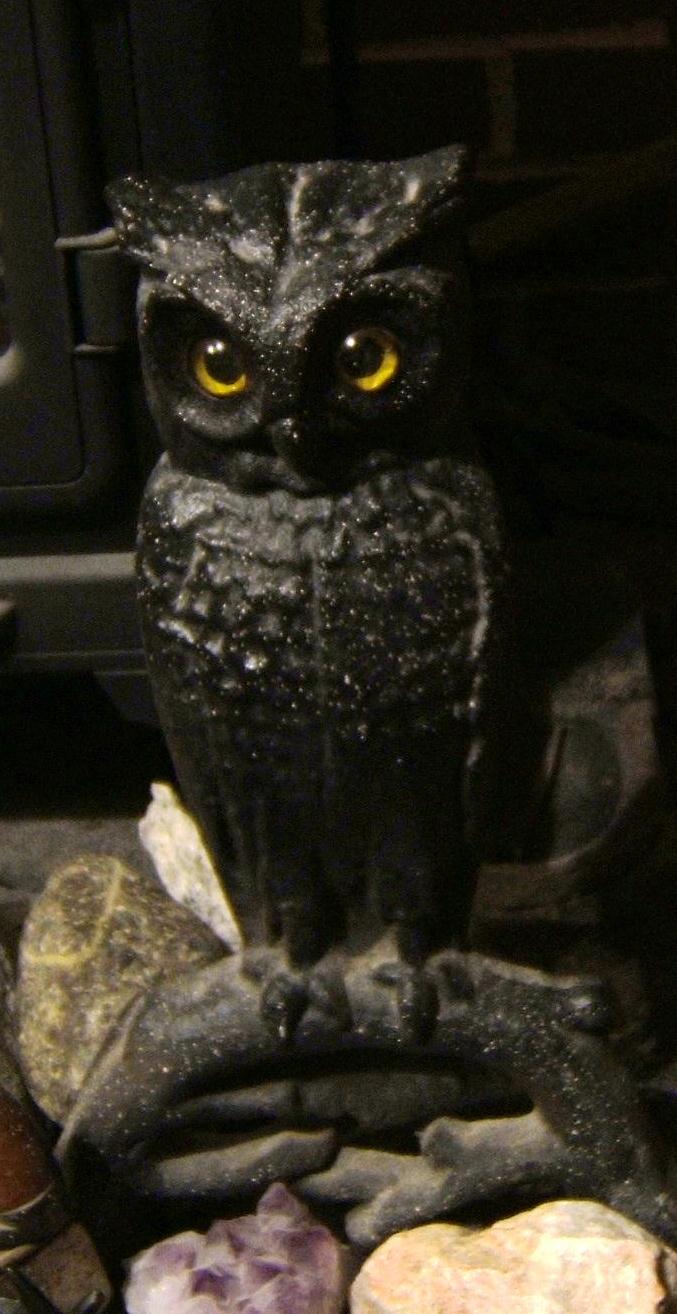
three little pumpkins from the roadside vegetable stand (the faint eyes in the background are the amber eyes of our owl-andirons)
I also added five books to my collection of Nancy Drew mysteries…
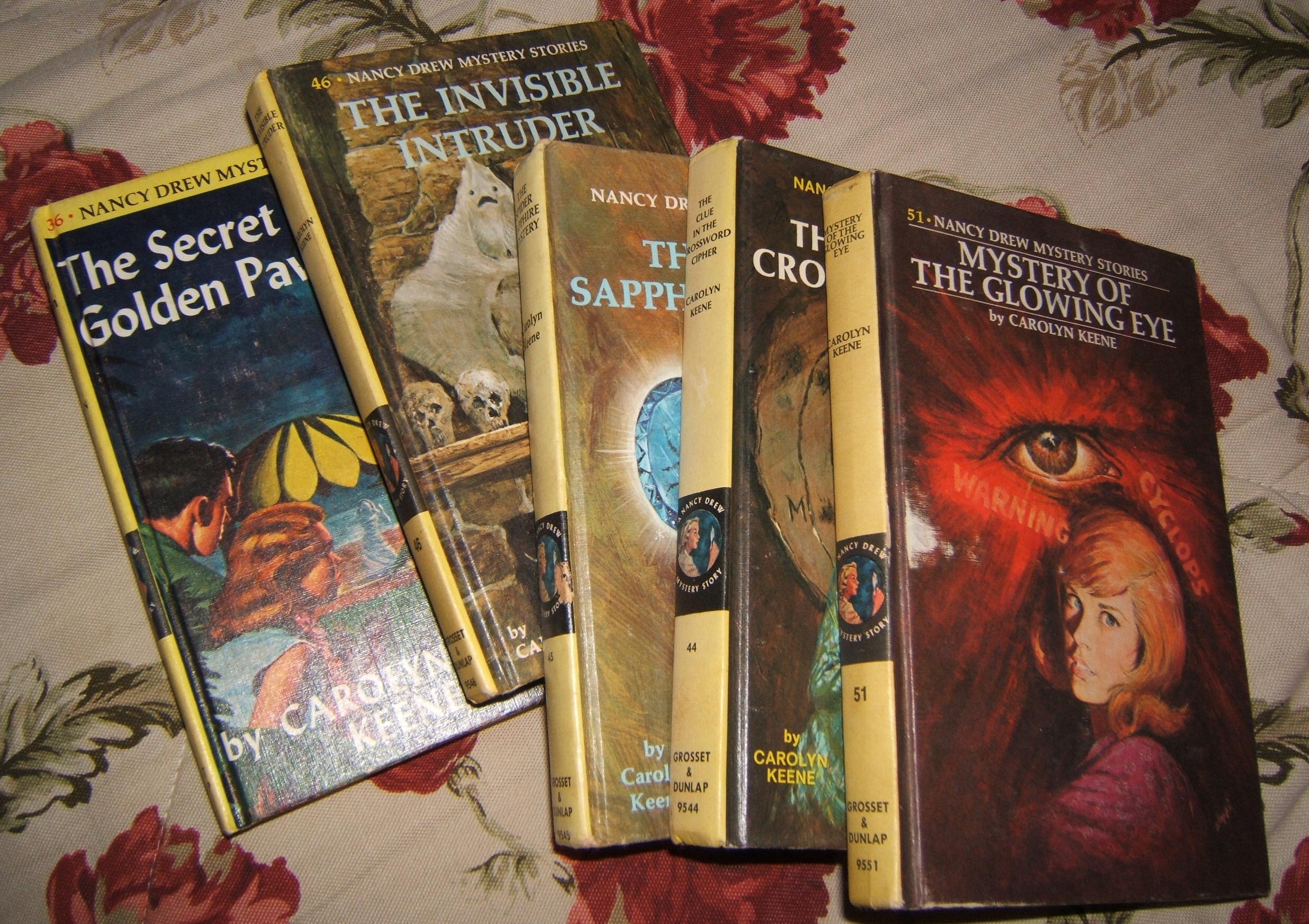
five new mysteries for my collection… enough ghosts and glowing eyes for a spooky Halloween
~
~
andiron
~
wrought owl with amber eyes
perches on the hearth
hears a call in the forest
six syllables and silence
~
Great-horned Owl, light gathered
at the back of his eyes,
and the oscillating branch
after wings expand and beat
~
iron owl longs for a glimpse
of the sickle moon
the shadow of a mouse
sorting through dry leaves
~
in this cramped space
night woods are brought to their essence
fibre and bark, sparks and fire
luminous eyes
~
~
Copyright Jane Tims 2012
Mountain Road adventure
Last week, we decided to take a drive along Mountain Road. This is a trail extending from Mazerolle Settlement outside Fredericton, New Brunswick to Newmarket, near Harvey Station. We used to take it regularly when my husband and I first knew one another, over 30 years ago. In those days, it was a narrow road built along the side of Porcupine Mountain. It was overhung with hardwoods and crossed the upper part of the Woolastook Game Refuge. We decided it would make a good drive on an October afternoon.
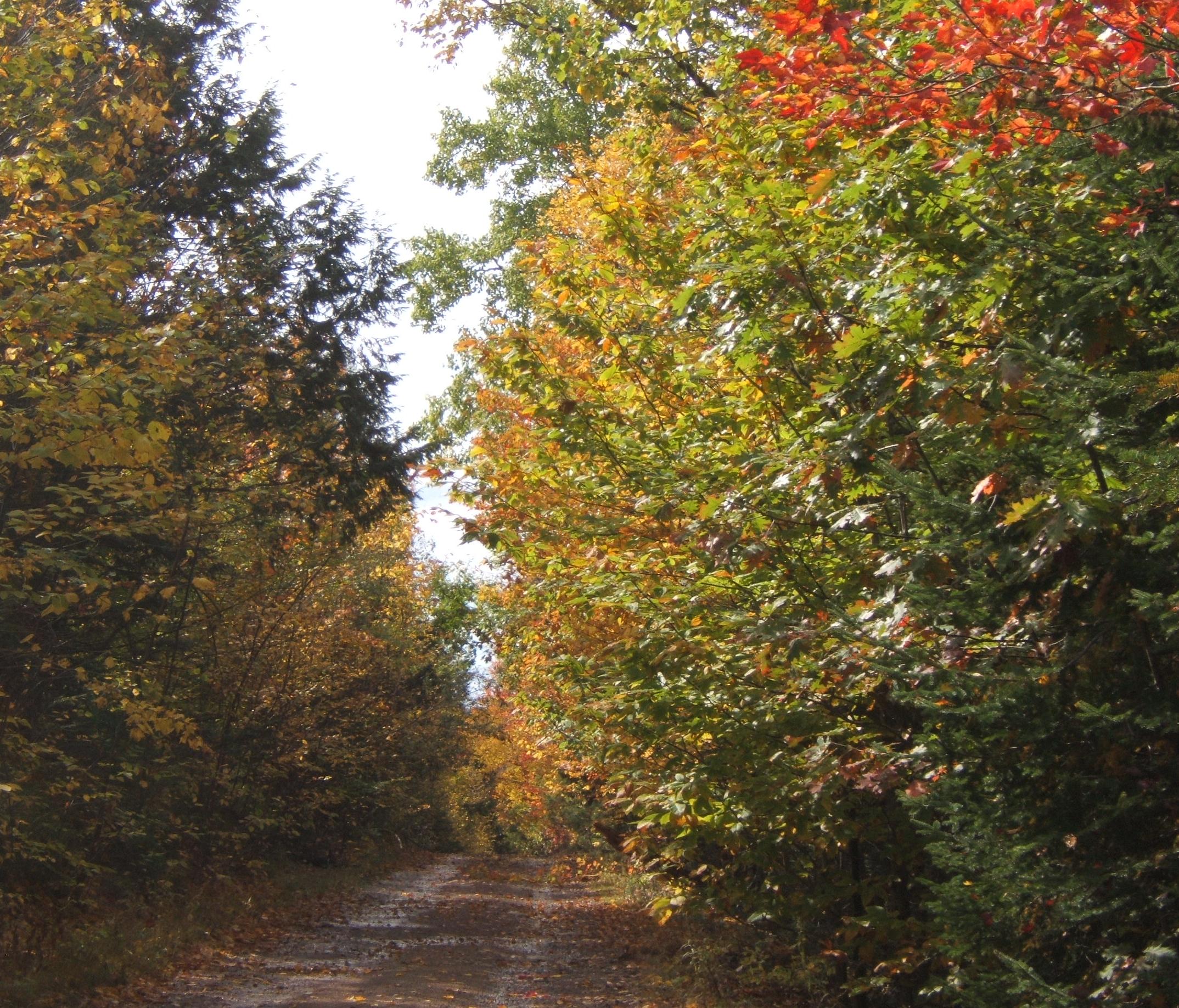
The drive started with a sighting of White-tailed Deer near the road entrance.

Then we stopped briefly at an inlet of the St. John River, to watch a Blue Heron take off and circle the cove.

Although there are a few houses along the first part of the road, the area is generally uninhabited and the woods on either side of the road were still natural. The trees were beautiful – oak, maple and beech were all in various autumn hues.
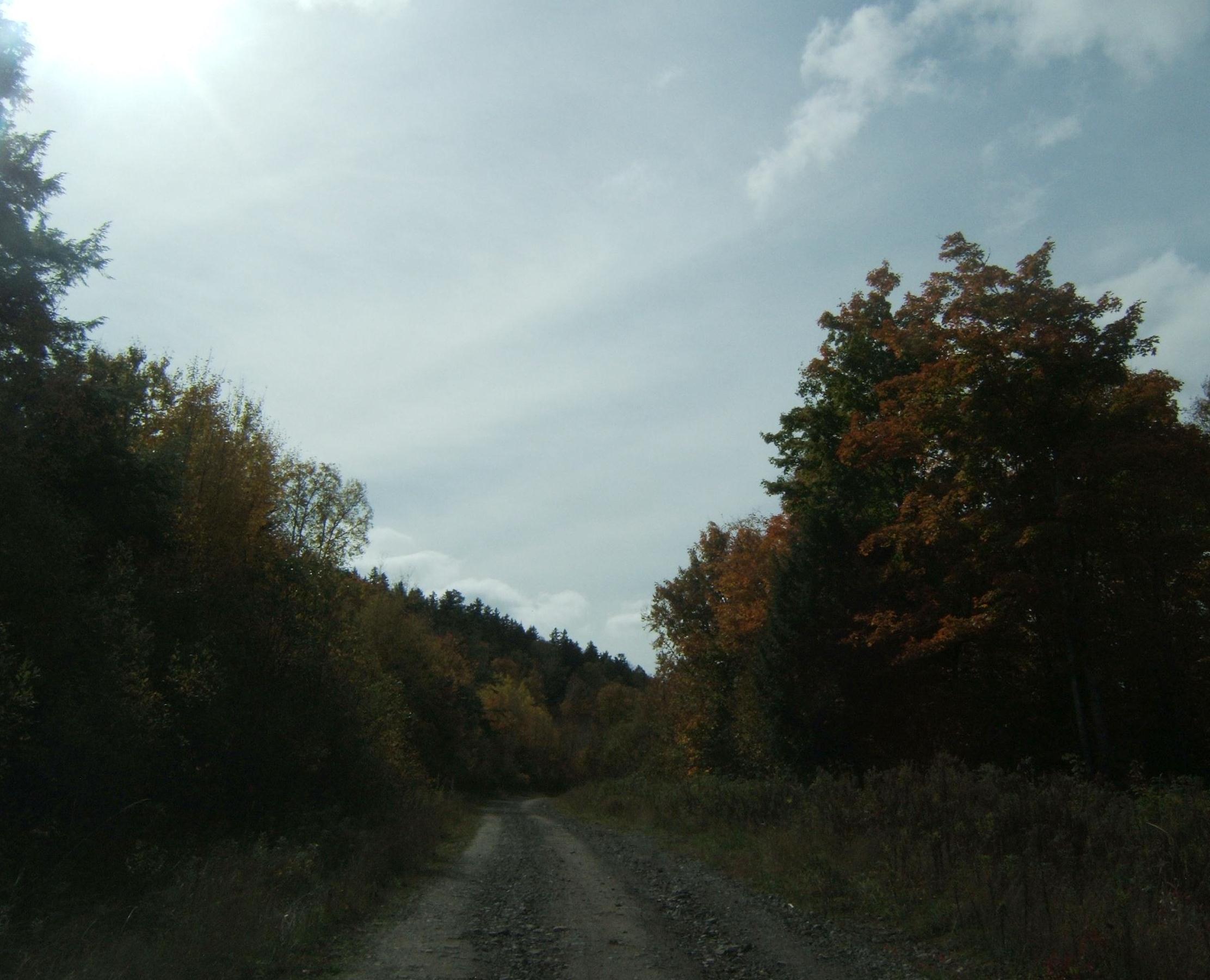
It has rained recently, and as we went further along the road, its deteriorated condition became evident. Culverts were heaved at several points and we had to take our time as the waterholes in the road became deeper and deeper.
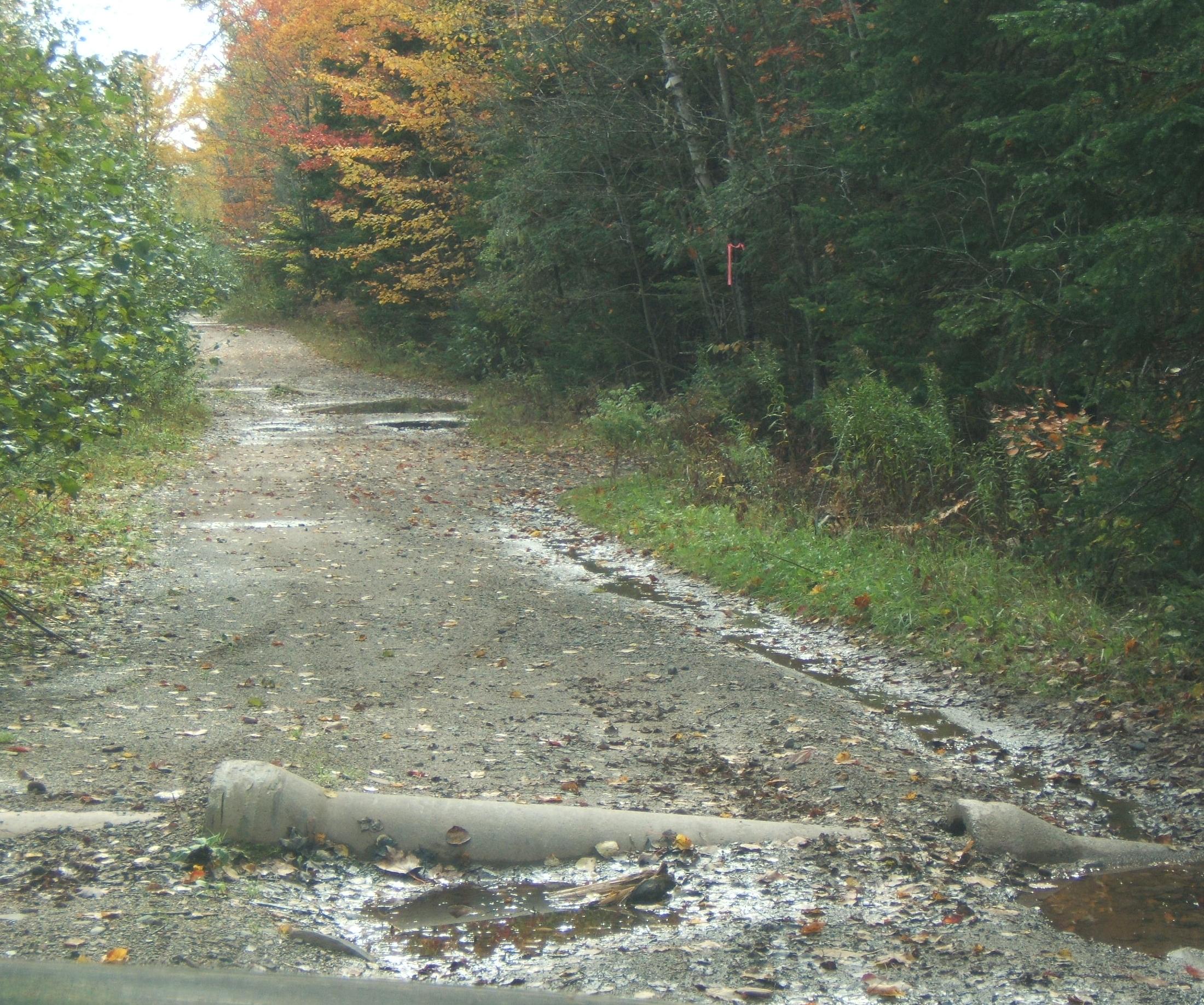
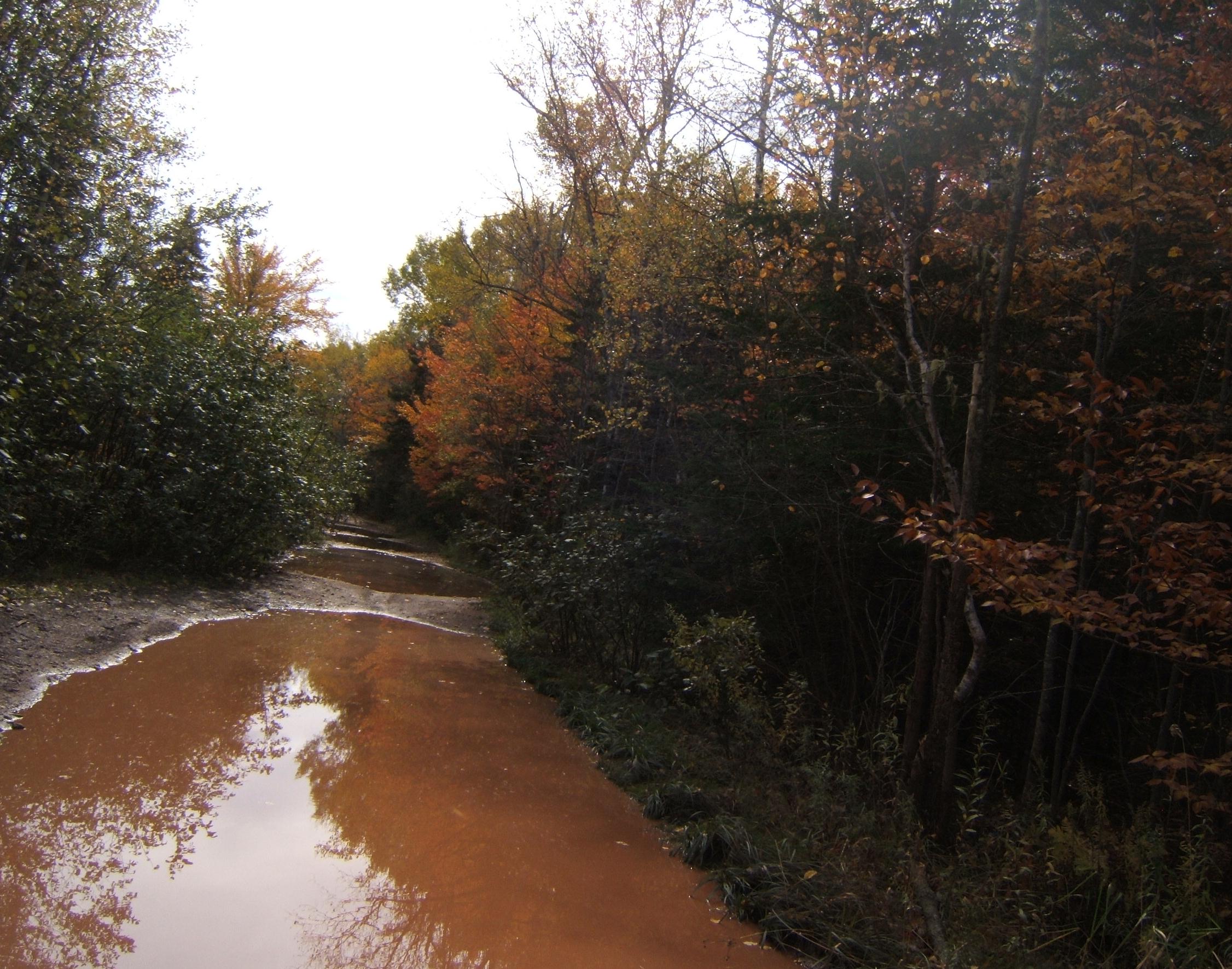
Although the road bed was generally solid, we could feel the tires slipping sideways in a couple of the puddles.

At last, unable to see through the muddy water, and wondering if there were any big rocks lurking there, ready to hang us up, my husband decided to turn back. It was foolish to proceed with summer tires and no winch to help us if we did get stuck. In the old days, we would have pressed on, willing to walk to the nearest main road, but arthritis interferes with foolish bravado!
Later, we’ll try the road from the other end. Perhaps we were through the worst, and pavement was just beyond the next big puddle.
Copyright Jane Tims 2012
www.nichepoetryandprose.wordpress.com
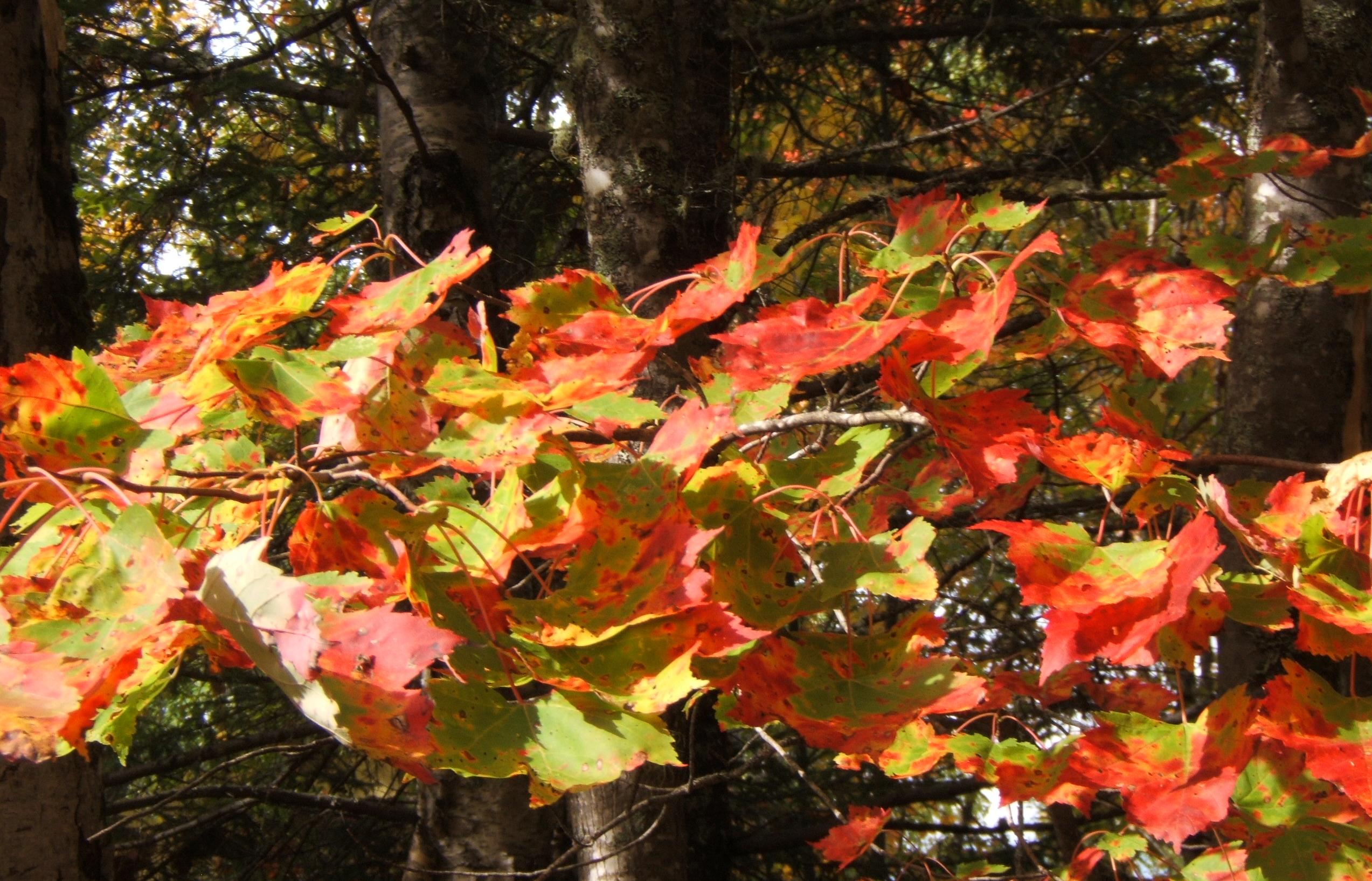
a moment of beautiful – sunset over the St. John River
the space: the St. John River at dusk
the beautiful: sunset over the river
Last evening as we drove home after a visit to my sister’s home, orange was on my mind. I was thinking of the bright orange pumpkins in the gardens, the orange of Japanese Lanterns, the orange of the turning leaves, and the orange of the running lights on the trucks on the highway. Then, as the sun went down, we were treated to the most beautiful orange, the color of the sunset over the St. John River.

A lovely introduction to the month of October……………..

~
~
hauling sun
~
eighteen-wheeled tractor pulls,
hauls the loaded b-train
~
gears down for the grade, snags
light from the sunset, wanes
~
and leaks from the headlamps
pushed forward into night
~
ahead, on the dark road,
a cone of borrowed light
~
~
Copyright Jane Tims 2012
a moment of beautiful – mustard fields in bloom
the space: a field along the St. John River
the beautiful: mustard in bloom
In some of the cultivated fields along the St. John River, acres of mustard are in bloom. Mustard is common here, in both coastal and inland areas, along roads and in fields. In the last weeks, I have found two species, Black Mustard (Brassica nigra (L.) Koch) and Field Mustard (Brassica rapa L.) also known as Rape, or Bird’s Rape.
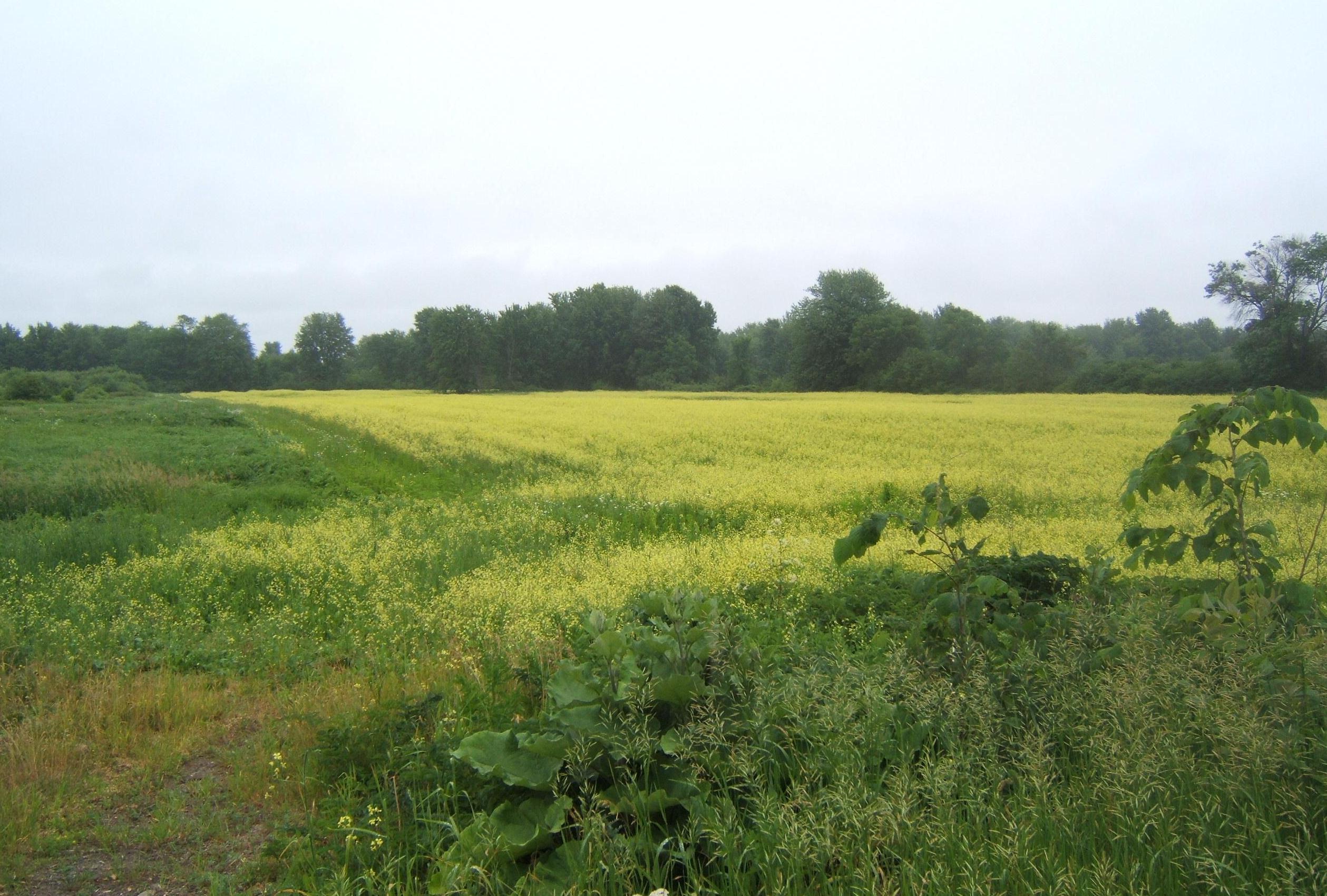
Mustard is an herb of medium size, with pale yellow, four-petalled flowers in terminal clusters, and large lobed leaves. The seeds are contained in pods; each pod ends in an elongated beak.

Mustard is well-known for its uses. The young, basal leaves may be cooked as greens or used in salads. Clusters of unopened flower buds can be cooked like brocolli. The tender seed pods are pickled, or used in salads.
Mustard’s best-known use is as a spice – the seeds are collected, dried and ground to make hot yellow mustard. I have a spot staked out to collect the seeds as they ripen in August, since I want to dry and grind some seeds for my own mustard.
~
~
sandwich
~
green leaves
between brown earth
and summer sky,
finished with
a generous smear
of mustard
~
~
© Jane Tims 2012
Warning: 1. never eat any plant if you are not absolutely certain of the identification; 2. never eat any plant if you have personal sensitivities, including allergies, to certain plants or their derivatives; 3. never eat any plant unless you have checked several sources to verify the edibility of the plant.American Black Duck
On our drives along the St. John River this month, we have tried to identify as many ducks as possible. There are actually not a lot of species to sort through, but we are just learning. Among the ducks we have seen this May are the American Wigeon (Anas americana), the Mallard (Anas platyrhynchos), the Green-winged Teal (Anas crecca), and the American Black Duck (Anas rubripes). These are all Marsh Ducks, surface feeders of ponds and marshes. The species in this Subfamily feed by ‘dabbling’ and ‘upending’… delightful words!
One weekend, we watched a male American Black Duck for quite a while. He flew around a bit, flashing his white wing linings, and then floated slowly along a back passageway through the marsh. He was very dark brown, with a tan head, a yellow beak, and a bluish wing patch. The best part of the experience was his deep croaking, each croak about a second long, and sounding like a little like an unimaginative bullfrog or two pieces of smooth wood being rubbed slowly together.

~
The poem below requires a short explanation. Two months ago, I attended a workshop on climate change at the offices of the North Shore Micmac District Council in Eel Ground, New Brunswick. I was given a gift afterward, a calendar showing the names of the months in the Mi’qmak language. The names are beautiful and describe well characteristics of the natural world during various times of the year. For those of you who do not live in this part of the world, the Mi’kmaq are a First Nations people, indigenous to this region.
~
~
Frog-Croaking Moon – Etquljuikús
(Mi’qmak name for the May moon)
~
under the May moon,
bullfrogs glub-grunk,
underscore spring peeper trill
~
rasp of a Black Duck
rowing in the reeds
~
friction
of fir and maple
grown to lean on one-another
~
~
© Jane Tims 2012




 nichepoetryandprose