Posts Tagged ‘poetry’
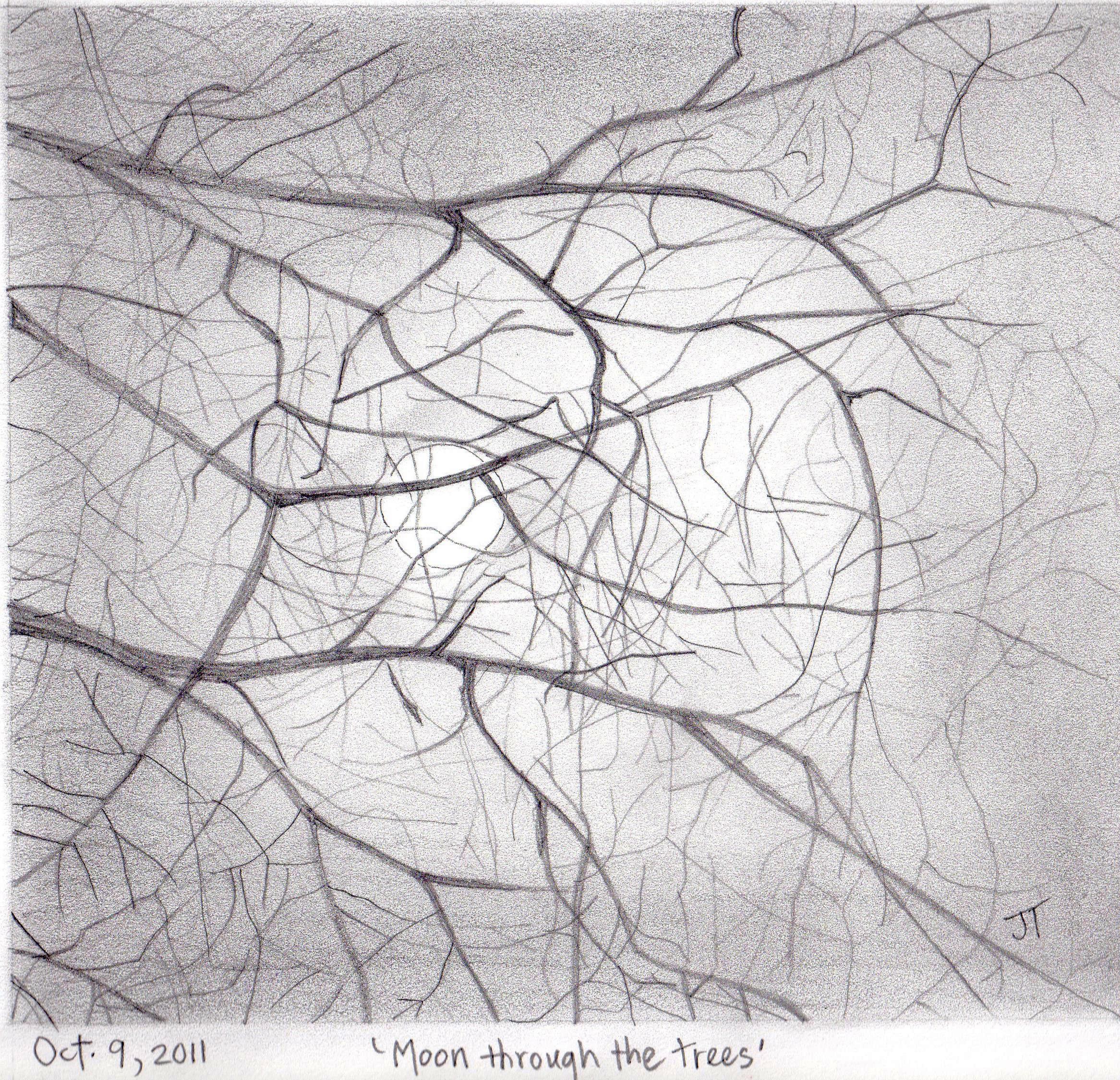
October moon
~
~
moon escape
~
above the woods
in sunset’s dying
the moon rose –
orange
and terrifying
~
caught in the trees
with the night wind’s sighing
drowned in the lake mists –
mystifying
~
captured in the yellow
of a barn owl’s eye
escaping on a wild bird’s
flight to the sky
~
a pool of light
where the hounds are lying
ghosts on the line
where the shirts are drying
~
a silhouette
for a coyote’s cry
~
~

Sunpoke Lake, October 2011
~
Copyright 2014 Jane Tims
harvesting colour – Rough Bedstraw

~
~
Rough Bedstraw
Gallium asprellum Michx.
~
along the sleepy river
green shoreline, plumped and pillowed
rough bedstraw, river trick
~
river and shoreline beckon
you to bed down, settle down
get a little shut-eye, tough
stuff bedstraw, mattress thick
~
shoreline a bedroom, rough
bedstraw, green mattress, blue sky
bedspread, blue river tick
~
~
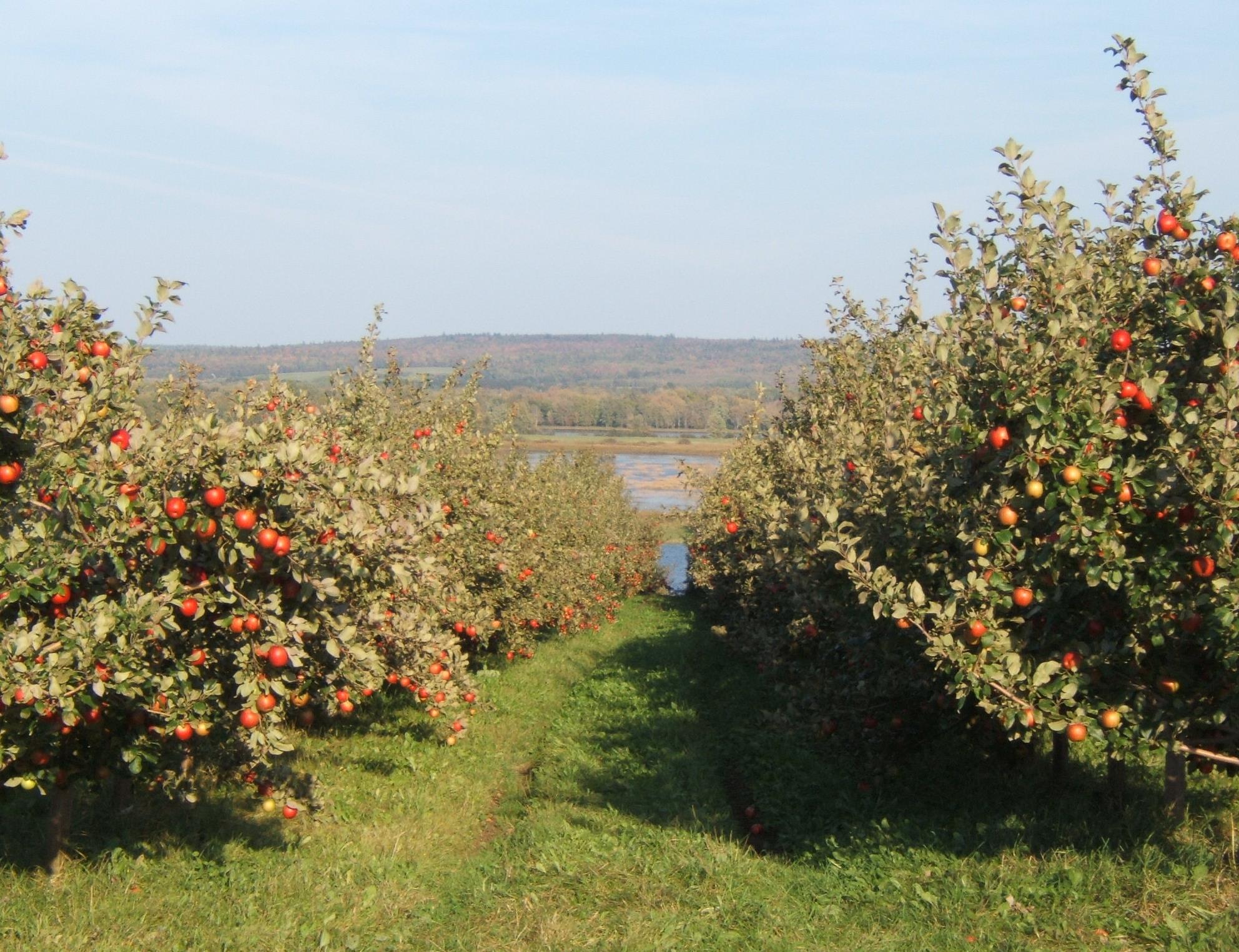
orchard along the Saint John River
~
Published as ‘Rough Bedstraw, Canadian Stories 17 (99),October/November 2014
Copyright 2014 Jane Tims
harvesting colour – Sea Lavender
~

Sea Lavender, picked long ago and woven into a wreath
~
~
Sea Lavender
Limonium Nashii Small.
1.
bunch of lavender, dry
picked at the edge
of the sea
2.
at high tide, overcome
by salt water, linear
leaves buffeted
as rags, tattered purple papers
echoed in oil-slick
mirrors of foam
3.
on-shore breeze, stiff
sprays of Sea Lavender
tremble
~
~
Published as ‘Sea Lavender’, Canadian Stories 17 (99),October/November 2014
Copyright 2014 Jane Tims

dry Sea Lavender
harvesting colour – drop spin

~
drop spindle
~
spin turned maple between
fingers, draft roving to
the texture of cobweb
the wool ravels, the twist
travels the line to the pinch
of thumb and forefinger
fibres teased to almost
breaking, then spun strong
~
park and draft, and colour thickens
energy builds, the spindle
muddles air and the twist
travels between hand and whorl
where fibres embrace one
another, fatten the cop
build a kitten-worthy
ball of yarn
~
~
Previously published as ‘drop spindle’ Canadian Stories 17 (99),October/November 2014
Copyright 2014 Jane Tims
~

~
crossing the brook
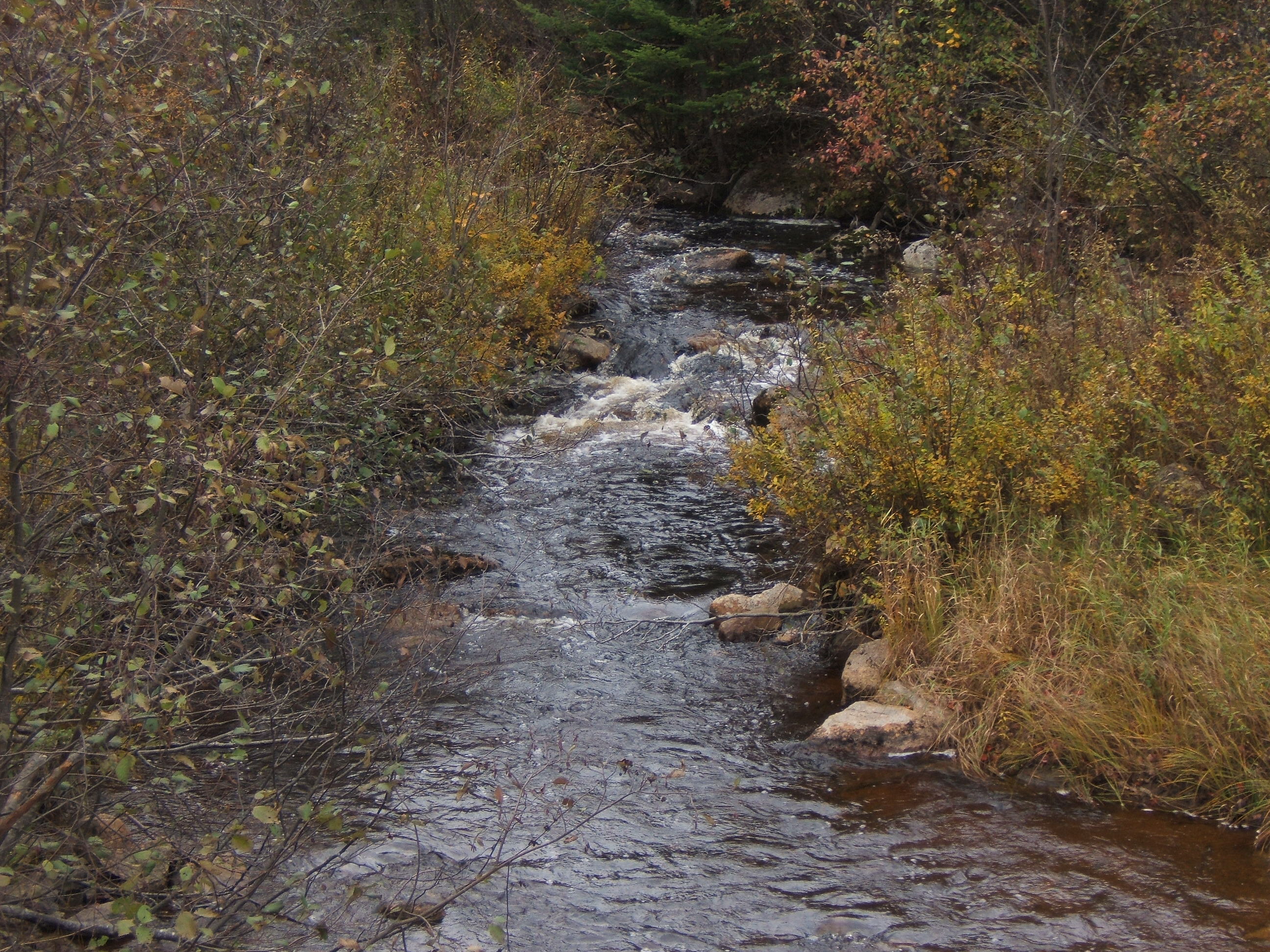
Of all kinds of waterways, I certainly love a brook the best.
~
~
When I was a child, I spent many summer hours playing in the brook at my mother’s ‘old home place’. The brook was in a small wooded valley between farms. The woods around the brook were always cool and shady, especially on a hot summer day.
~
Building stone causeways in the brook was one of my favorite pastimes. I would find flat stones and place them like stepping stones. Then, once the stones were in place, I would plant them with mosses.
~
I haven’t returned to the brook for many years, but I like to think you could still find the grey and green remnants of my causeways at intervals along the brook!
~
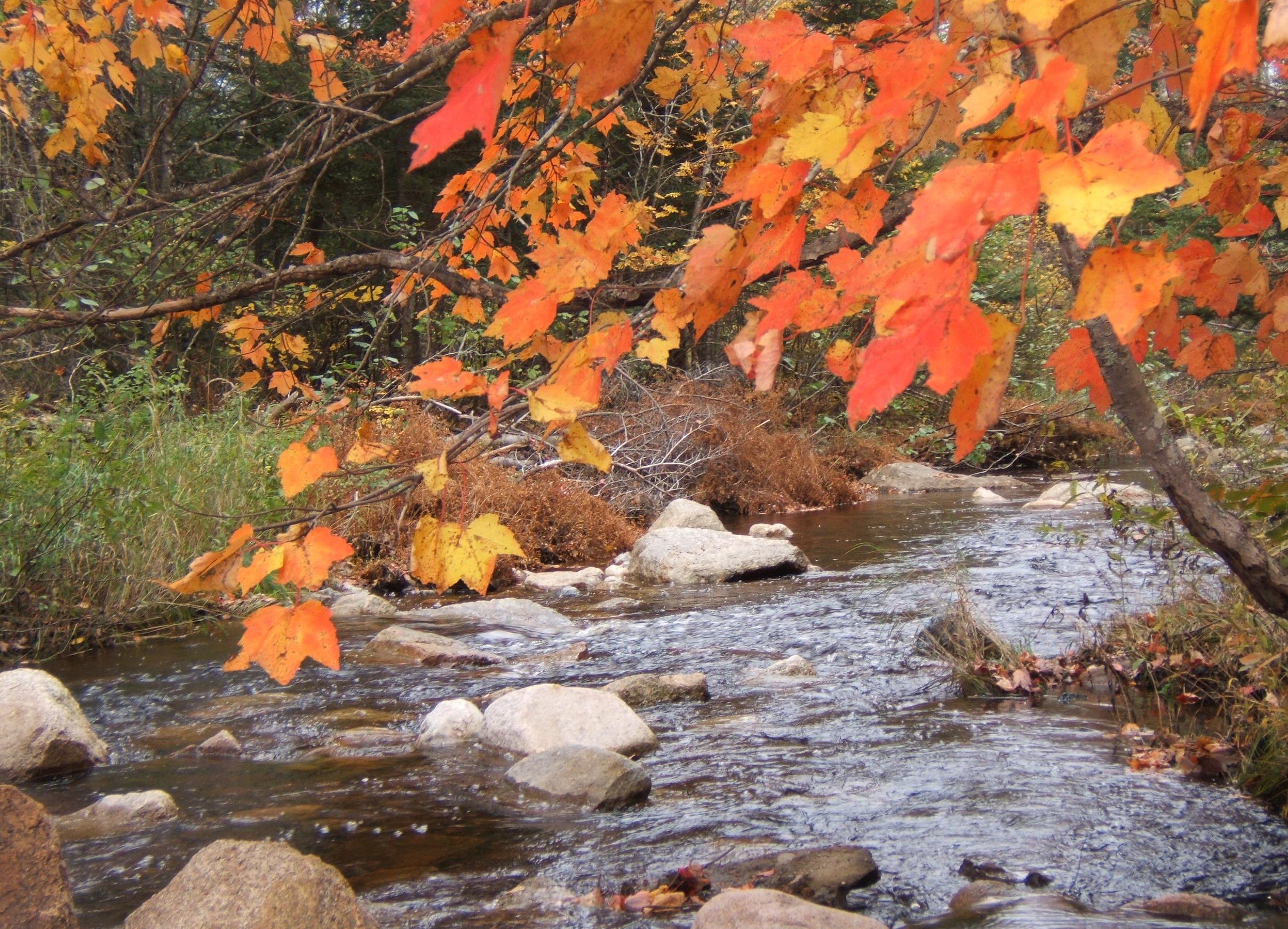
a brook in south-west New Brunswick with its own stepping stones
~
construction of moss and stone
~
in the valley between farms
a brook needs crossing
a freshet-proof ford
lattice-work built
of slate, grey stepping
stones, packed and decked with
moss, hydrophilic flourish
~
~
© Jane Tims 2014
harvesting colour – the poems
After six months of work, I am nearing the ‘end’ of my project ‘harvesting colour’. Although the main product of all my work sometimes seems to be my basket of hand-dyed and hand-spun wool, the actual goal of my plant dyeing adventures is a manuscript of poems.
~

in background, alum-treated wool dyed with rose hips; in the foreground, spun wool dyed with lichen, beet leaves and alder bark
~
I have not shared many of these poems here, since I want to publish as many as possible in literary magazines. This will increase my chances of publishing a book of poems. Most publishers consider poems presented on-line to be already published and will not consider them for their magazines.
~

wool simmering in dyestuff of alder bark
~
At this point I have completed enough poems to be considered a ‘manuscript’. Although I may write more in the coming month, the core of my manuscript will be these 58 poems (60 pages). The poems are included in four sections:
- the imprint of toadflax – 11 poems about the stains left in our lives: the red of cranberries on the tablecloth, grass stains on children’s knees
- take comfort in brown – 12 poems about specific plants and their use as dyestuff
- simmer, never boil – 10 poems about the home-dyeing process: mordanting, dyestuff simmering in the pot, the chemistry of dyeing.
- all the colours of columbines – 10 poems about how the colour of plants intersects with our daily lives – the colour of petals in a bouquet, the relationship between mothers and daughters, unexpected outcomes. In this set are two poems dedicated to my Great-aunt who made her living as a seamstress and my Great-grandmother who used home-dyed fabrics in her hooked rugs.
- the twist travels the line – 15 poems about dyers, spinners and weavers who use natural plant dyes. Some of the poems are about dyers I have met through their blogs.
~

pink wool dyed with blackberries is front and center … other wools are dyed with (clockwise) oak, meadowsweet, bugleweed, tansy, lily-of-the-valley, beet root, and in the center, carrot tops
~
One of the purposes of making this manuscript is certainly to improve my writing and my poems. I have deliberately tried to do two things with these poems:
1. pay attention to line lengths. In most of the poems, I have counted the syllables, using this as a method of improving the rhythm and suggesting new ways of ordering words. I have also considered various ways of ending lines, looking for ways to emphasise the multiple meanings of some words.
2. make the ideas understandable. I have a background in science and I love to use the words of chemistry and biology in poems. Sometimes this makes the poems hard to understand. I am trying to reconcile the two poets within me – one who wants to explore the technical and the other who wants to understand the everyday.
~
I hope I have been able to accomplish these objectives in my poems. The poems are full of gathering and boiling and simmering and I hope these poems feel familiar to dyers and craftspeople, and honor their work. I also want the poems to to be relevant and healing for those who have never stirred a pot of dyestuff.
~
~
olfactory memory
~
wool from the drying rack pale, new
lifted from the vat, well water
and blackberries, dim burgundy
~
the draft of the fibre, the twist
of the spindle, release scent
from the berry patch, the curved space
~
beneath the bend of primocane
floricane drowsy with berries
black and thorn, crisp calyx and leaves
~
drenched bramble, sweet notes and a lilt
dark against palate, the scramble
for a berry, dropped between stems
~
barbed, at the rim
of purple
~

~
Copyright 2014 Jane Tims
star gazing comfort
Usually in mid-August, we go out for an evening or two to get a glimpse of the Perseid meteor shower. This annual meteor shower is the result of the Earth’s passage through the Perseid cloud, debris of the comet Swift-Tuttle. This year I sat at the end of our driveway on the evening predicted to be the peak of the shower and saw one bright and very sparkly meteor streaking from overhead toward the south-east.
~
I have waited a while to do this post because I wanted to take a particular photo. Last week, I finally saw the item I wanted, an old couch put out on the lawn. I wrote the poem below in mid-August several years ago, after I saw a group of students sitting on just such a couch, presumably waiting to see the meteor shower.
~

abandoned sofa on a lawn
~
~
sofa on the lawn
~
seemed a fine idea
comfy spot to watch
the Perseids do
their August light show
but
clouded over
we ran indoors
~
the sofa became
a sponge to sop the rain
a field mouse free-for-all
dog-eared page
from a promising read
worse smell than fleece soaked
in skunky ale
~
epic fail
~
~
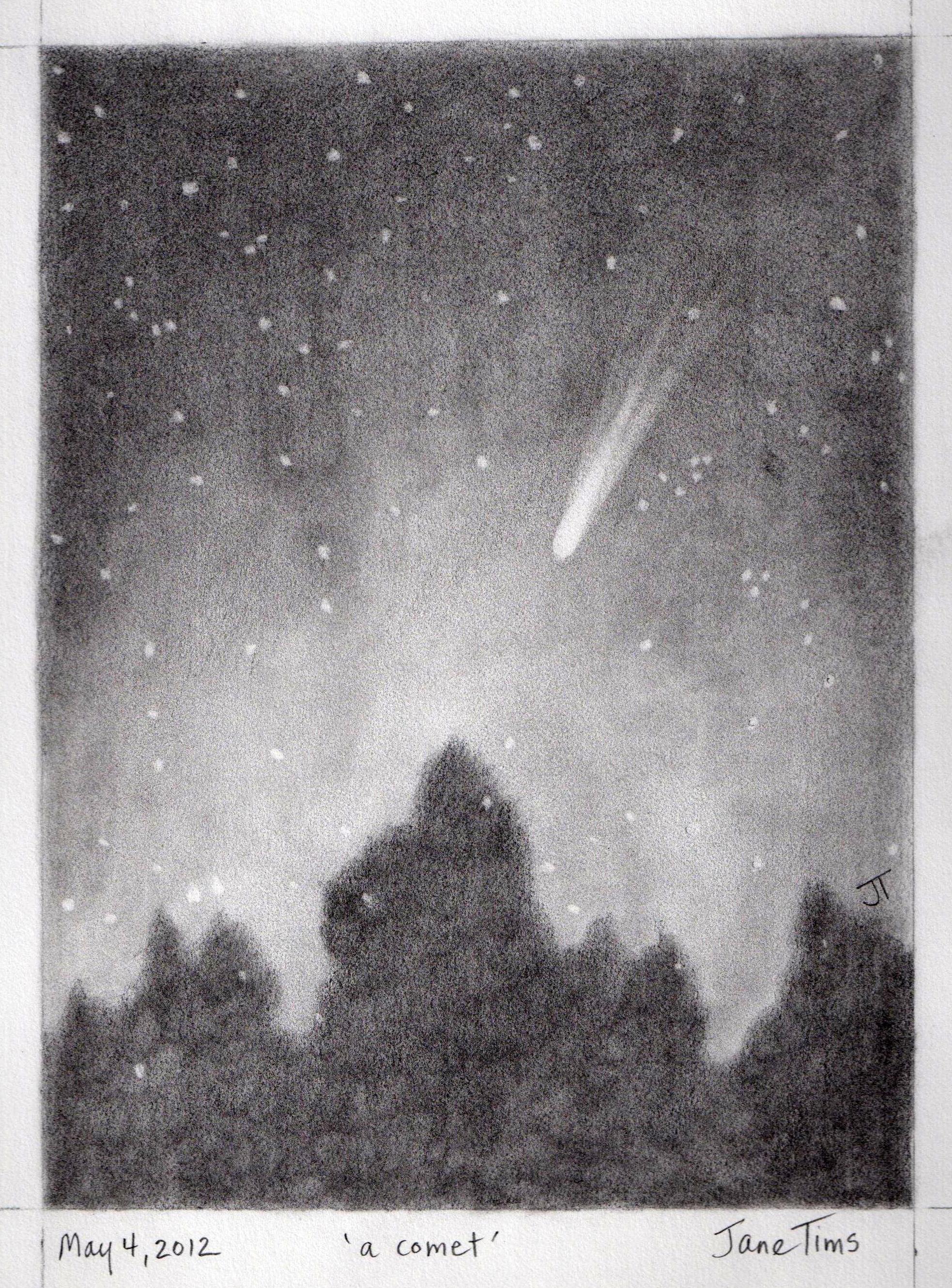
May 4, 2012 ‘a comet’ Jane Tims
~
Copyright 2014 Jane Tims
dry gourds
~

string of dried gourds
~
~
dry gourds
~
shake
bottle and swan
goblin egg and warted
~
absorb the rhythm
the rattle of seeds
in their shells
varnished, on a chord
between cupboards
strand of amber
hardened with hanging
~
a nudge in humidity, the least
damp, breath
or sigh, softens
vibration, appreciation
of percussion
~
~
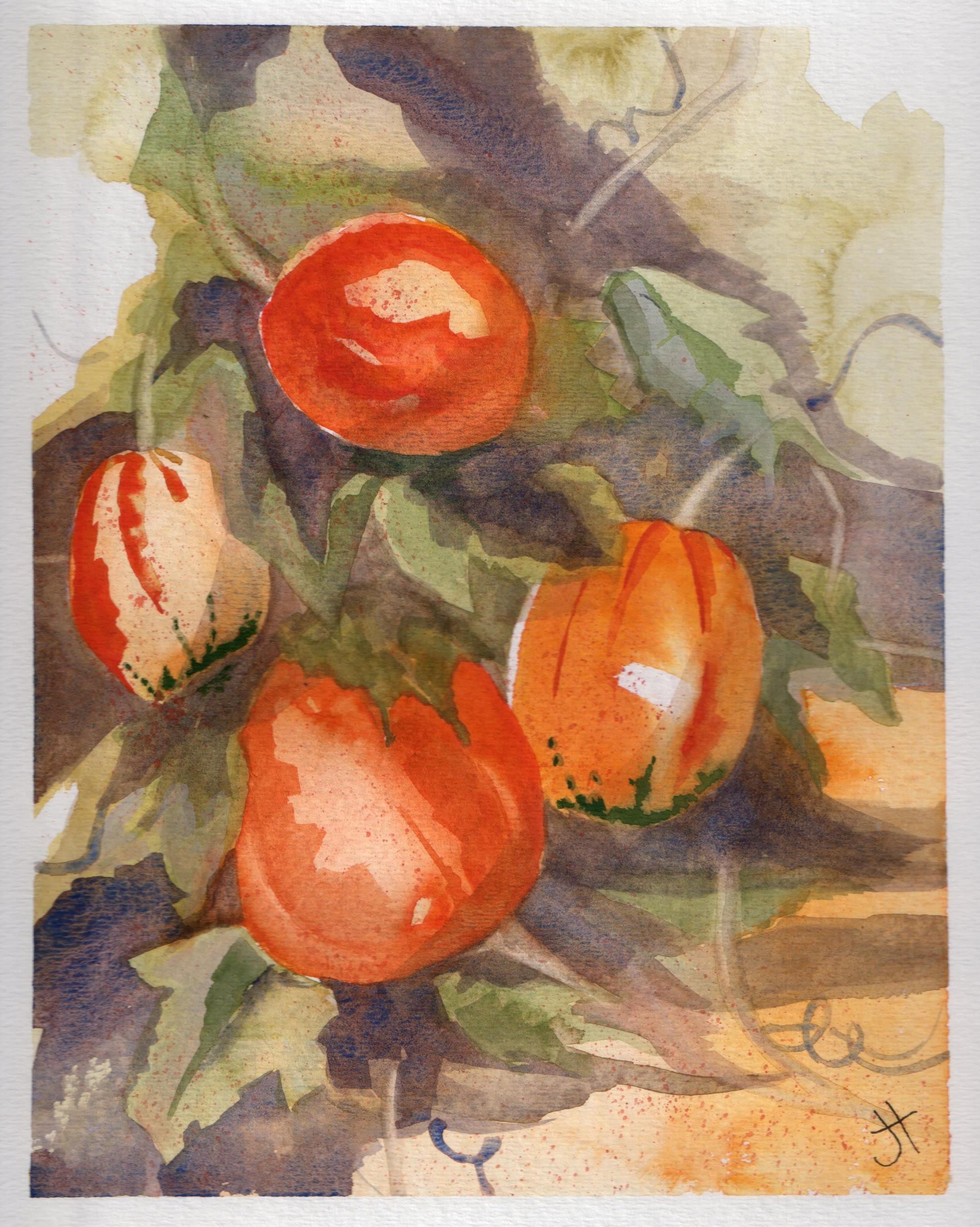
August 31, 2013 ‘squash on the vine #3’ Jane Tims
~
Copyright 2014 Jane Tims
harvesting colour – berries of Daphne
With the help of a friend, I have been able to add Daphne berries to my growing list of plant dye experiments. She invited me to harvest some of the berries from her Daphne bushes, before the birds ate them all. We spent an hour picking berries and catching up with one another. I went home with enough berries for my dye pot and some of her excellent photos of the Daphne berries.
~
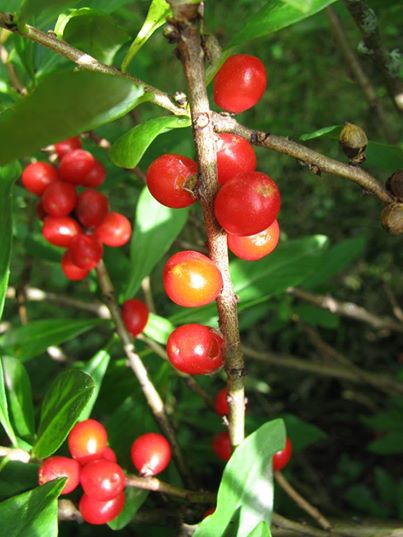
red berries on the bush (photo by L. Cogswell)
~
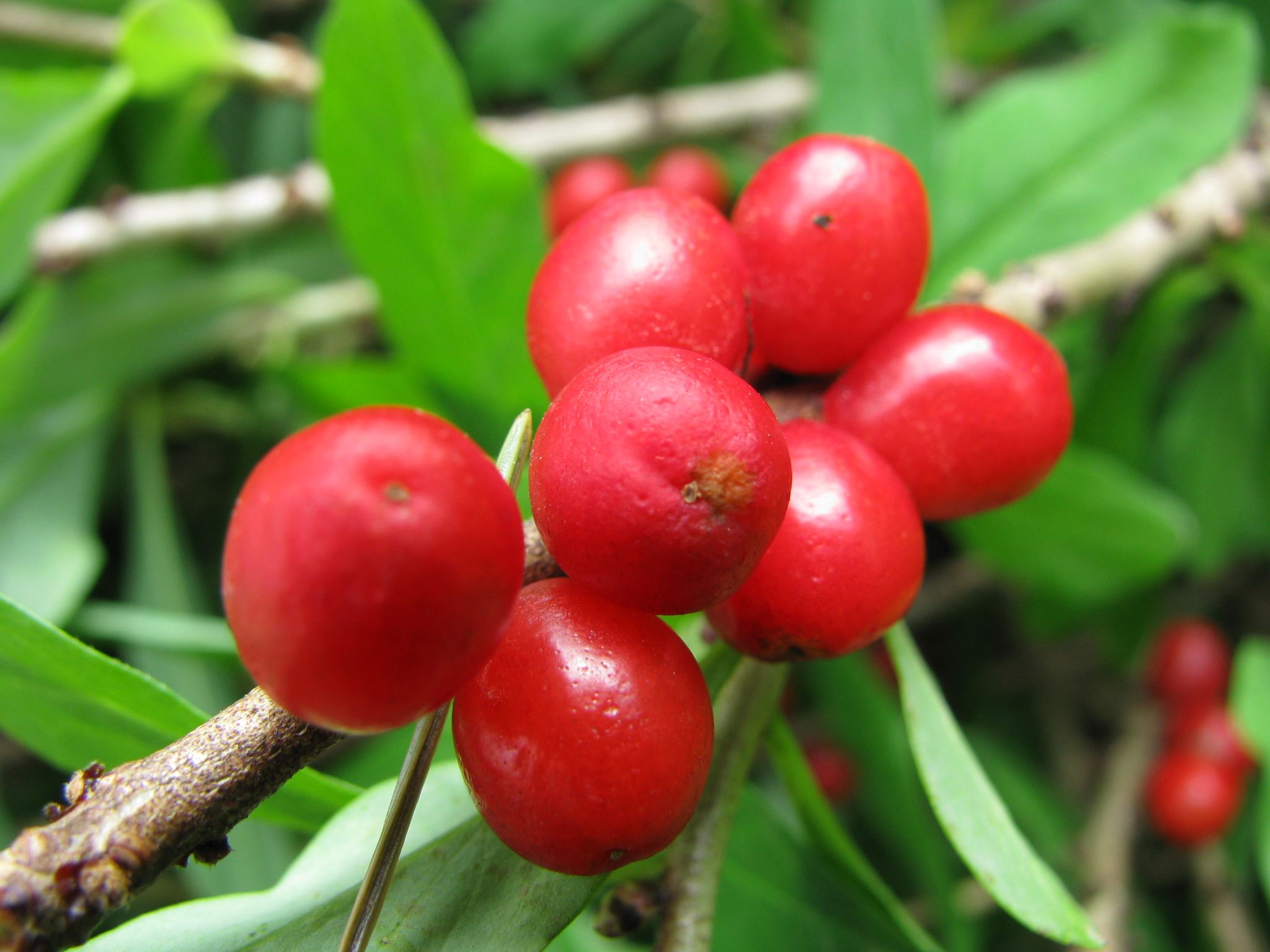
close-up of Daphne berries (photo by L. Cogswell)
~
Daphne’s beautiful crimson berries are poisonous, although the birds love to eat them. I was anxious to see what colour they would bring to my growing collection of home-dyed wool. I know from reading that the leaves and twigs of Daphne produce a yellow dye.
~
In the dye-vat, the berries quickly lost their colour to the boiling water, making a pale rose-coloured dye.
~

~
And the colour of the wool roving after an hour’s simmer in the pot? A lovely yellowish brown …
~

~
~
pretty side of poison
~
exotic, elliptic
berries among laurel
leaves droop vermillion
toxic pills, birds immune
~
spirit of bubbling wells
and water-springs, Daphne
drupes in rainwater seethe
and berries leach rosy
~
waters blush at this strange
use of poison, tint the
roving, wool lifts yellow
brown dye from the kettle
~
~

scarlet Daphne berries
~
Copyright 2014 Jane Tims
harvesting colour – the vegetable stand
Gardens are bursting with fresh produce and we have gone to the farmer’s vegetable stand every couple of days to get our fill of locally grown food. We usually look for new potatoes, yellow wax beans, beets, carrots, green onions and zucchini.
~

vegetables at the farmer’s stand
~
This year, as a result of my ‘harvesting colour’ project, I am more anxious than ever to collect those carrot tops and the abundant leaves of beet and radish. Cooking these leaves in my dyeing ‘cauldron’ fills the air with the savory smell of vegetable soup, and makes me wonder what colour will emerge from the dye pot.
~
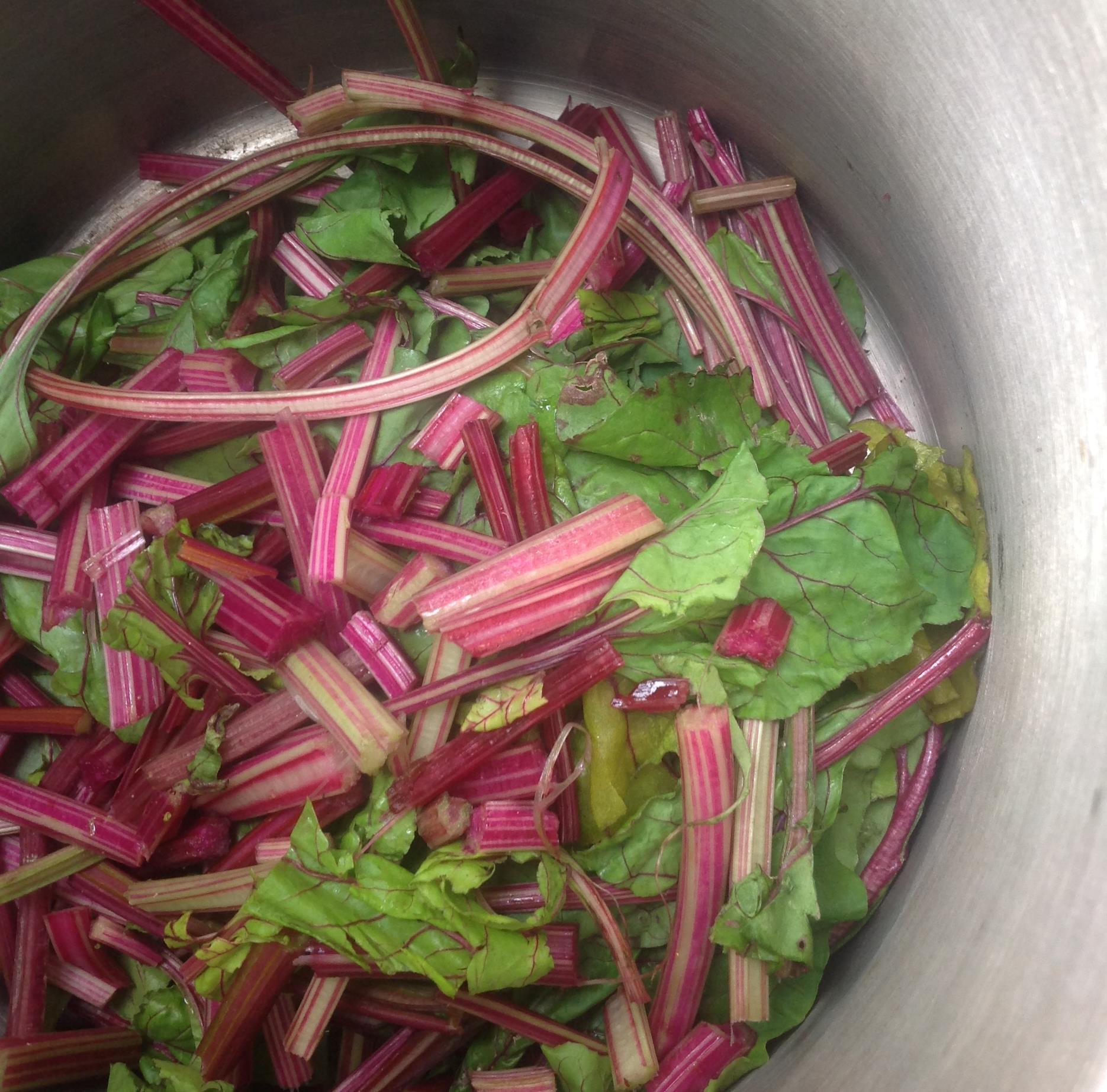
beet leaves and stems ready for the boil
~
Orange carrots, red beets and scarlet radishes … I am sad to say my expectations were low. I was certain every batch of leaves would yield yet another shade of brown. For radishes and beets, I was correct. Beautiful browns.
~
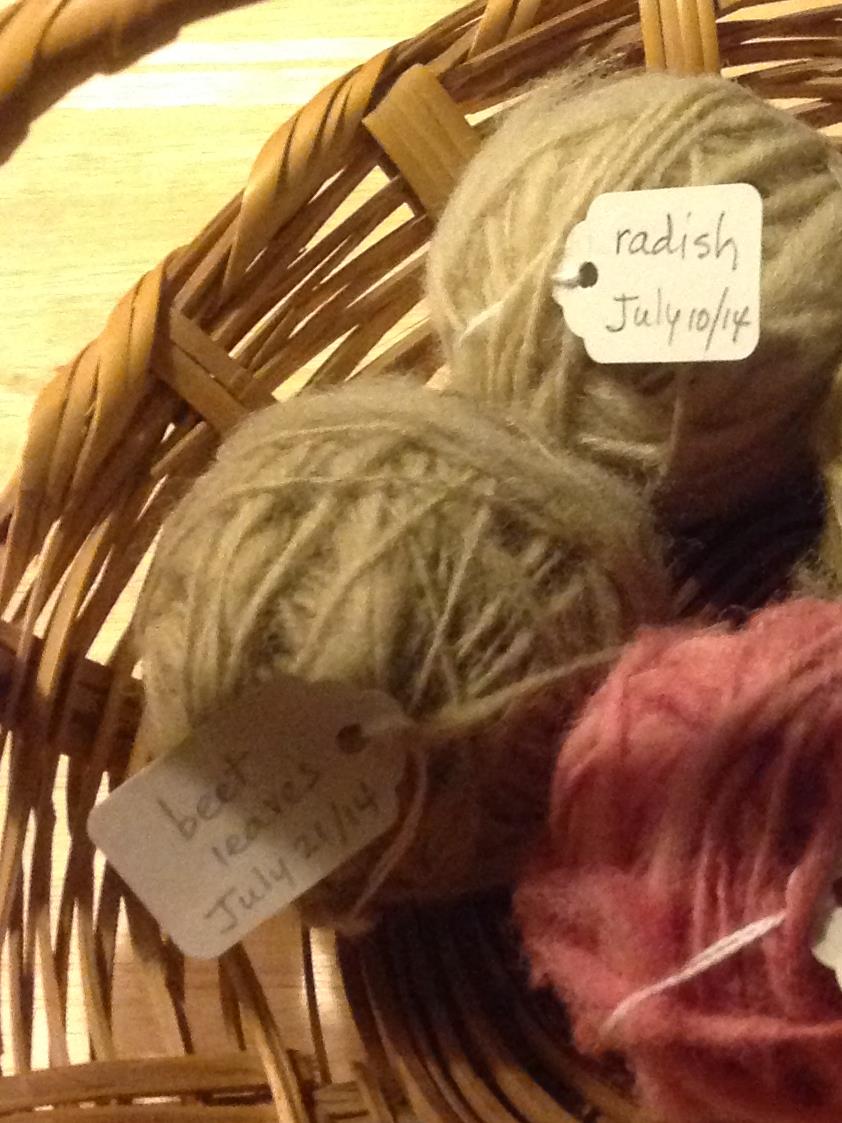
my hand-spun balls of wool from radish and beet leaves … the pink is from my earlier tests with pickled beets
~
Imagine my delight when the carrot leaves yielded a bright celery green!
~
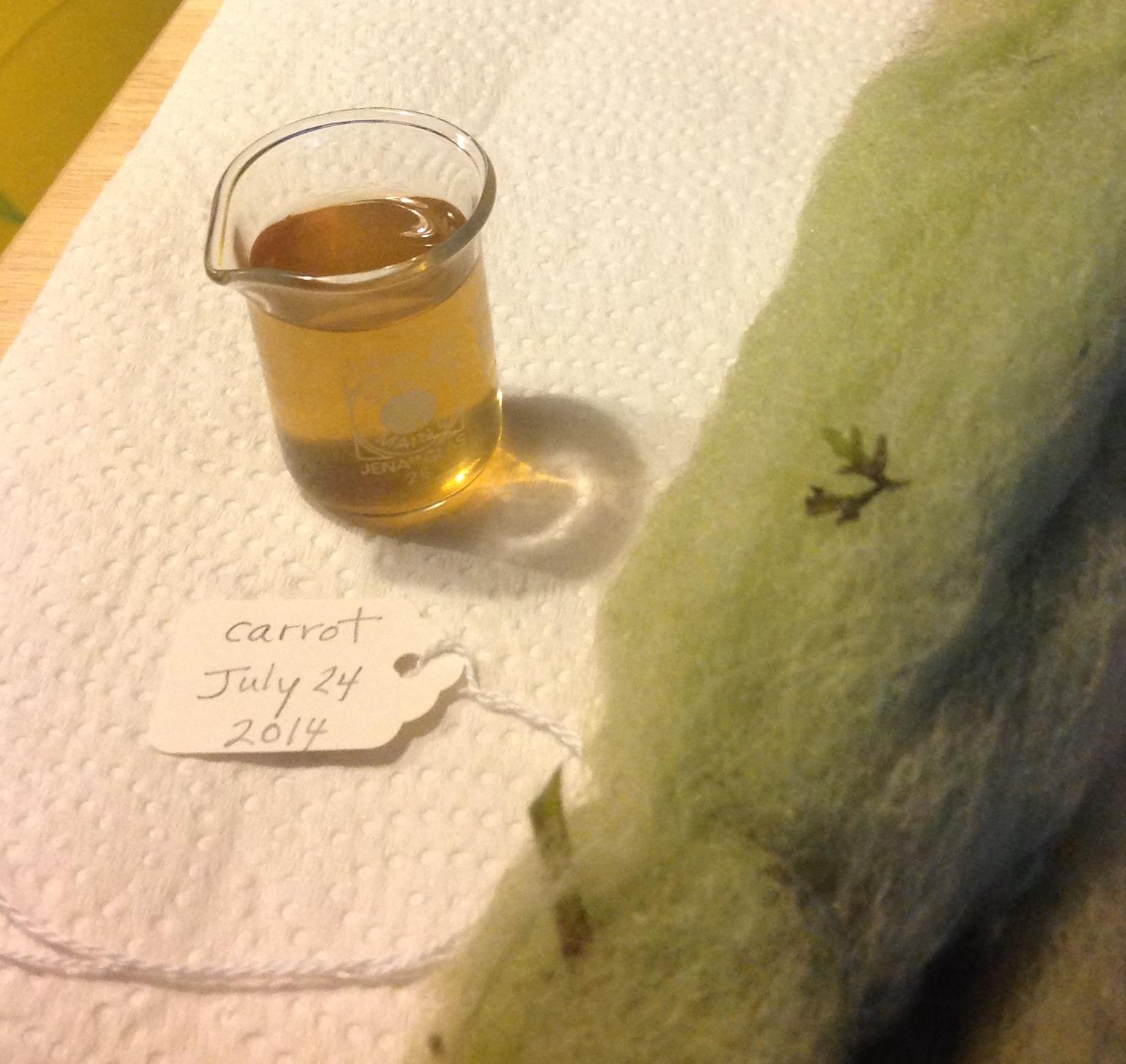
dye and wool roving from a boil of carrot tops
~
I tried to repeat the colour on a second length of wool roving, but the second simmering gave me a gold shade of brown. The dyestuff had offered up all its green colour in the first boil!
~

colours of wool obtained from the first and second boil in a dyestuff of carrot tops
~
vegetable bin
~
most look for
vitamins and
anti-oxidants
seek the colourful plate
look at the farmer’s display and see
carrot orange
radish red
spinach green
~
a dyer looks
for juicy leaves
and the possibility of yet
another shade
of brown
~
~
Copyright 2014 Jane Tims




 nichepoetryandprose