Archive for the ‘along the roadside’ Category
spring flowers – service berry bushes
At this time of year, many ditches and fields in New Brunswick are filled with Serviceberry bushes in bloom. Their delicate white flowers only last a short while but later, in summer, we will be able to pick sweet Serviceberries.
~
 ~
~
the shad are running
~
after hard rain
and thin wind
between cold front and warm
riverbanks overflow
and for dinner we have fiddleheads
potatoes and shad, served
with last summer’s Serviceberry jam
~
Serviceberry bushes are torn fish nets
holes poked through with fingers
white petals scattered over mossy stones
on the river shore
~
~
Published as ‘the shad are running’ in within easy reach, 2016, Chapel Street Editions
~

~
Copyright Jane Tims 2017
spring wildflowers – Trout Lily
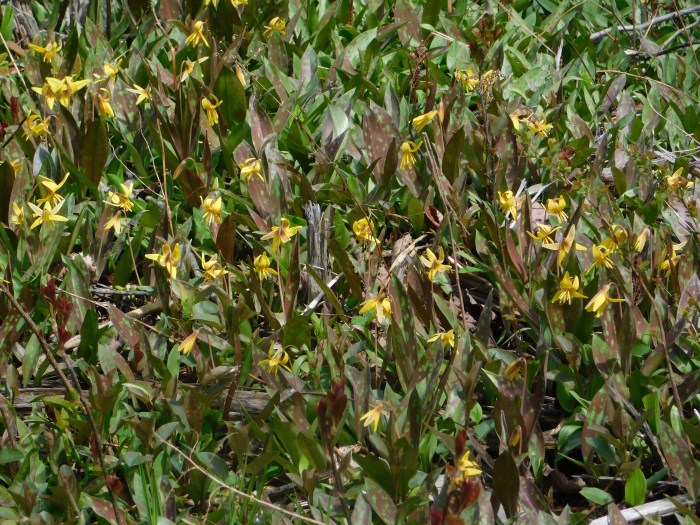
On a drive to Sussex yesterday, we found Trout Lily blooming in many ditches along the back roads.
~
Trout Lily is an herbaceous colonial plant, covering slopes in rich, moist hardwoods. The plant is also known as Dog’s Tooth Violet, Yellow Adder’s-tongue, Fawn-lily, and in French, ail doux. The yellow lily-like flowers bloom in New Brunswick in May. The leaves are mottled in maroon and green. The young leaves and bulb-like ‘corm’ are edible but should only be gathered if the plants are abundant, to conserve the species.

~

~
trout lily
(Erythronium americanum Ker)
~
On a hike in the hardwood
north of the Dunbar Stream
you discover Trout Lily profusion
~
Mottled purple leaves overlap
as the scales of adder or dragon
You know these plants as edible
~
the leaves a salad, or pot-herb
and, deep underground, the corm
flavoured like garlic
~
You fall to your knees
to dig, to gather, and
hesitate
~
examine your motives
You, with two granola bars in your knapsack
and a bottle of water from Ontario
~
~
(published as ‘trout lily’ in “within easy reach“, 2016, Chapel Street Editions)
~

~
~
Copyright Jane Tims 2017
waking from winter …
Not everyone has been snoozing though the colder months …
~

~
Copyright Jane Tims 2017
colour of spring – a palette of twigs
The season is rushing on! Only a week ago the branches were bare of growth and today our red maples have blossomed.
~
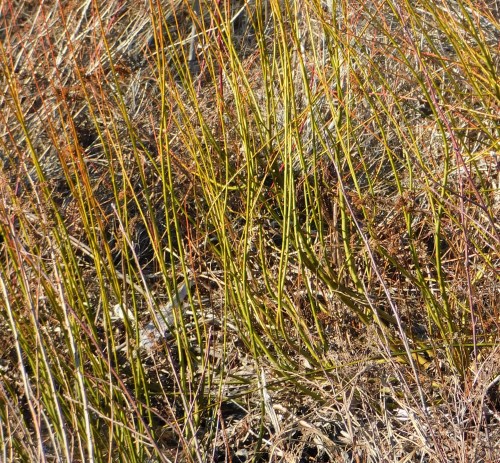
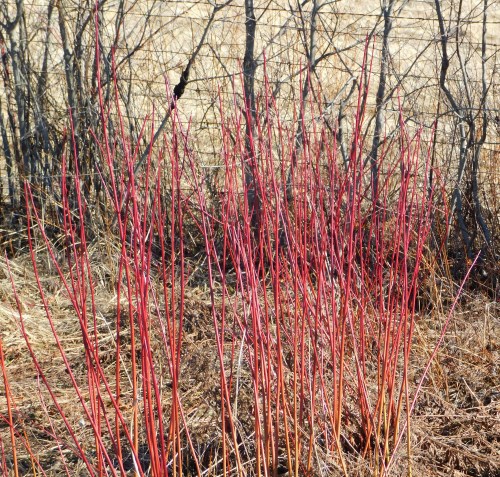
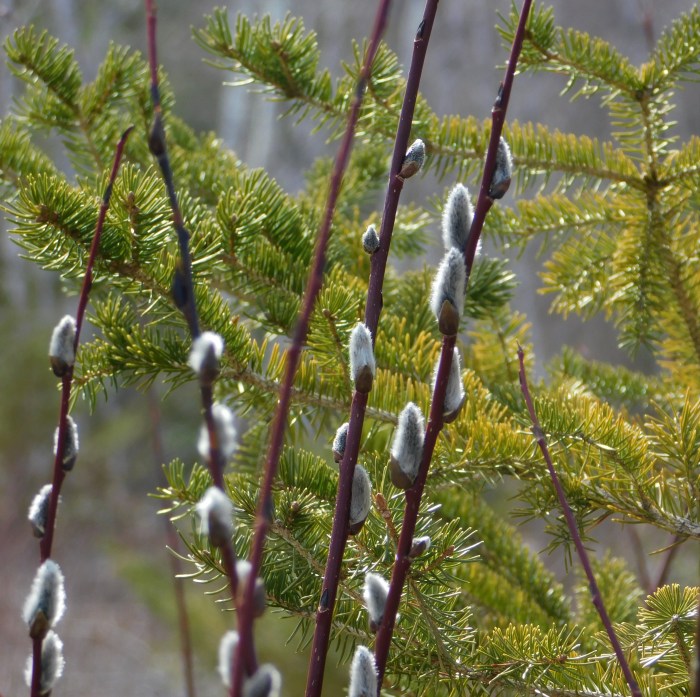
On a recent drive to our cabin, there was still snow in some ditches. But I was thrilled to see the diversity displayed by young woody shoots and saplings.
~
Green of willow …
~
~
Red of dogwood …
~
~
And the silver of pussy willow …
~
~
Happy spring at last!!!!!
~
Copyright Jane Tims 2107
a stone wall

a stone wall
On one of our countryside drives, I watch for this stone wall. Built with care, it serves so many purposes. It provides boundaries for a property and a home. It keeps people out. Perhaps it keeps children safe, away from the highway. It adds beauty to the property, curb appeal. It reminds us of our history.
~
Most of all, I like stone fences for their value as metaphor. In life, fences can represent so many experiences, circumstances and challenges – imprisonment, protection, change.
~
Fences are barriers, keeping one space separate from another. They are also boundaries, transitional, liminal. Just climb over. The fence is a way to transition from outside to inside, from vulnerability to safety. Perhaps a little way along, there will be a gate. Perhaps the fence – a stone fence in particular – is permeable. There are spaces between those solid, expertly-positioned stones. Spaces for insects, water, wind or sound to cross over.
~
Copyright 2016 Jane Tims
getting ready for fall – hops vine
I have completed a few more paintings in the group I’ll take to my fall sale. This one is of the wild hops vine we found in Victoria County. It is acrylic, gallery edges, 12″ X 10″, painted with Titanium White, Paynes Grey, Chromium Oxide Green, Burnt Sienna, Cadmium Yellow Light and a touch of Iridescent Copper.
~

~
Copyright Jane Tims 2016
plants along the roadside – wild hops
When we go for drives to find covered bridges or one room school houses, I always watch the roadside for plants familiar and unfamiliar. This habit comes from years of work as a botanist. As we drive, I name the plants I know. Sometimes there is a huge surprise!
~
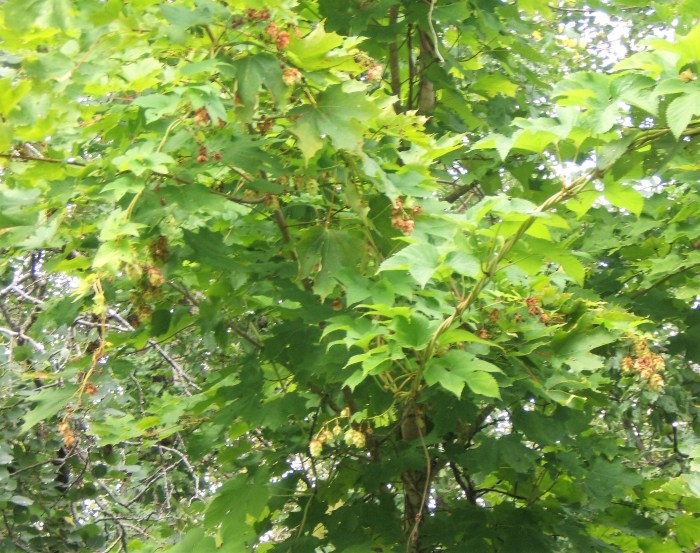
While driving in Victoria County last year, looking for a covered bridge, we travelled a short way on a side road. The road became quite rough and narrow and soon we were searching for a good place to turn. There, away from any habitation, among the vegetation on the side of the road, was something different: large 3 to 5-lobed leaves, climbing tendrils and golden cone-like flowers. A vigorous ‘wild’ hop vine. I was thrilled!
~
~
Hops (Humulus sp.) is well known as a stabilizing and flavouring agent in beer. The hops contain various flavonoids, acids and oils which impart smell and taste to beer.
~

~
When I got home, I went hunting on the Internet and discovered a CBC article describing an Agriculture Canada study about native hops. http://www.cbc.ca/news/canada/prince-edward-island/hops-research-could-aid-beer-industry-1.3136764
The researchers, Jason McCallum and Aaron Mills, were (and still are) asking for the public’s help in locating wild hops in the Maritimes. Needless to say, I contacted them.
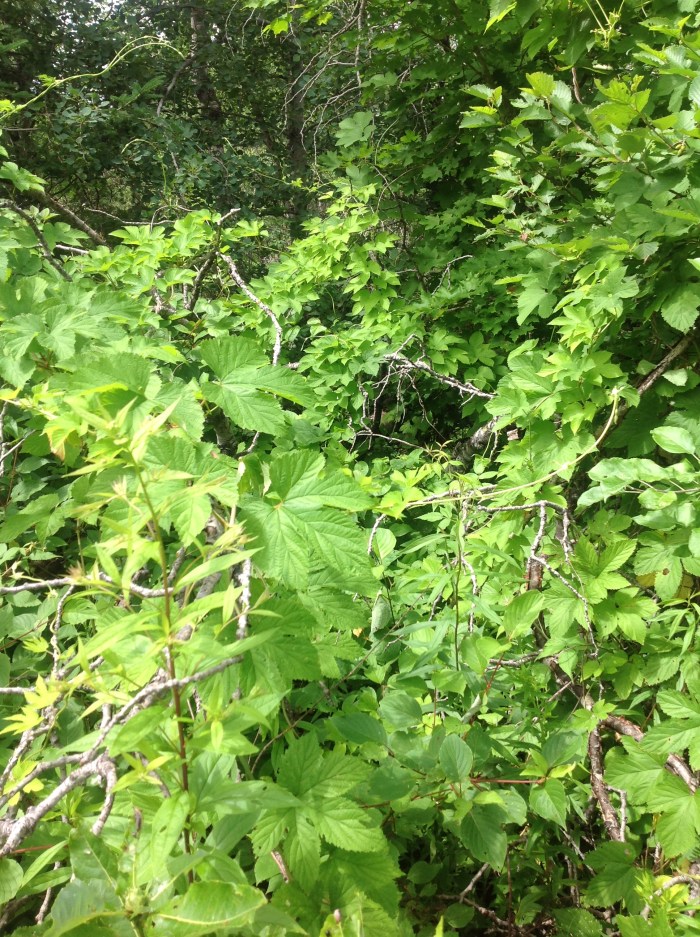
A couple of weeks ago, I learned they were coming to New Brunswick to find my hops plant. To make sure we could give them good directions, my husband and I drove to Victoria County to see if the plant was still there. It was growing more vigorously than ever, climbing among the top branches of a downed tree.
~
~
With our improved directions in hand, the Agriculture Canada team found the hops plant, a couple of hours after a road crew went through with bush saws to widen the road!!! However, the team was able to take the samples they needed and assured me that the plant was so vigorous, it would be able to recover and continue to thrive!
~

~
The researchers at Agriculture Canada will do genetic analyses to determine if the plant is native to North America (var. lupuloides), an escaped European hops (Humulus lupulus) or a hybrid between the two. The purpose of their study is to examine hops native to New Brunswick to see if they have resistance to disease and pests. Discovery of a native hops variety, perhaps with unique properties, flavours and aromas, would be valuable to a local brewing industry.
~
Hops are cultivated around the world. The Agriculture Canada researchers think ‘my’ hops plant may have been grown on a now-abandoned homestead. These folks may have grown the hops as a way of making starter cultures of yeast for bread-making. The elements in hops are toxic to bacteria but tolerated by yeast. Starter cultures resulted when yeasts colonized standing mixtures of hops and a sugar like molasses.
~
This experience has reinforced my passion for ‘ditch-combing’ … I am so lucky to have my husband as driver so I can spend my time scanning the road side. If you live in the Maritimes, keep your eyes open and if you see a wild hops plant, let the researchers at Agriculture Canada know!
~
Copyright Jane Tims 2016
blue in the woodland
About a decade ago, we took a drive from Canterbury to McAdam on a gravel road. The memory I have carried with me for years is of a section of woodland absolutely blue with flowers. I often wondered what the flowers were and if I’d be able to find the spot again. This weekend we tried to find the place and the sea of blue in the woodland.
~

Highway 630 from Canterbury to McAdam in New Brunswick (map from Google Maps)
~
Canterbury, like many rural communities of New Brunswick, has faced a shrinking population over the years. Settled by Loyalists, it was a center for logging and railroad traffic and, in the late 1800s, had a population of over 1000. Today it has only about 340 residents. Nevertheless, it is a charming village and has a newly renovated school, housing all 12 grades.
~
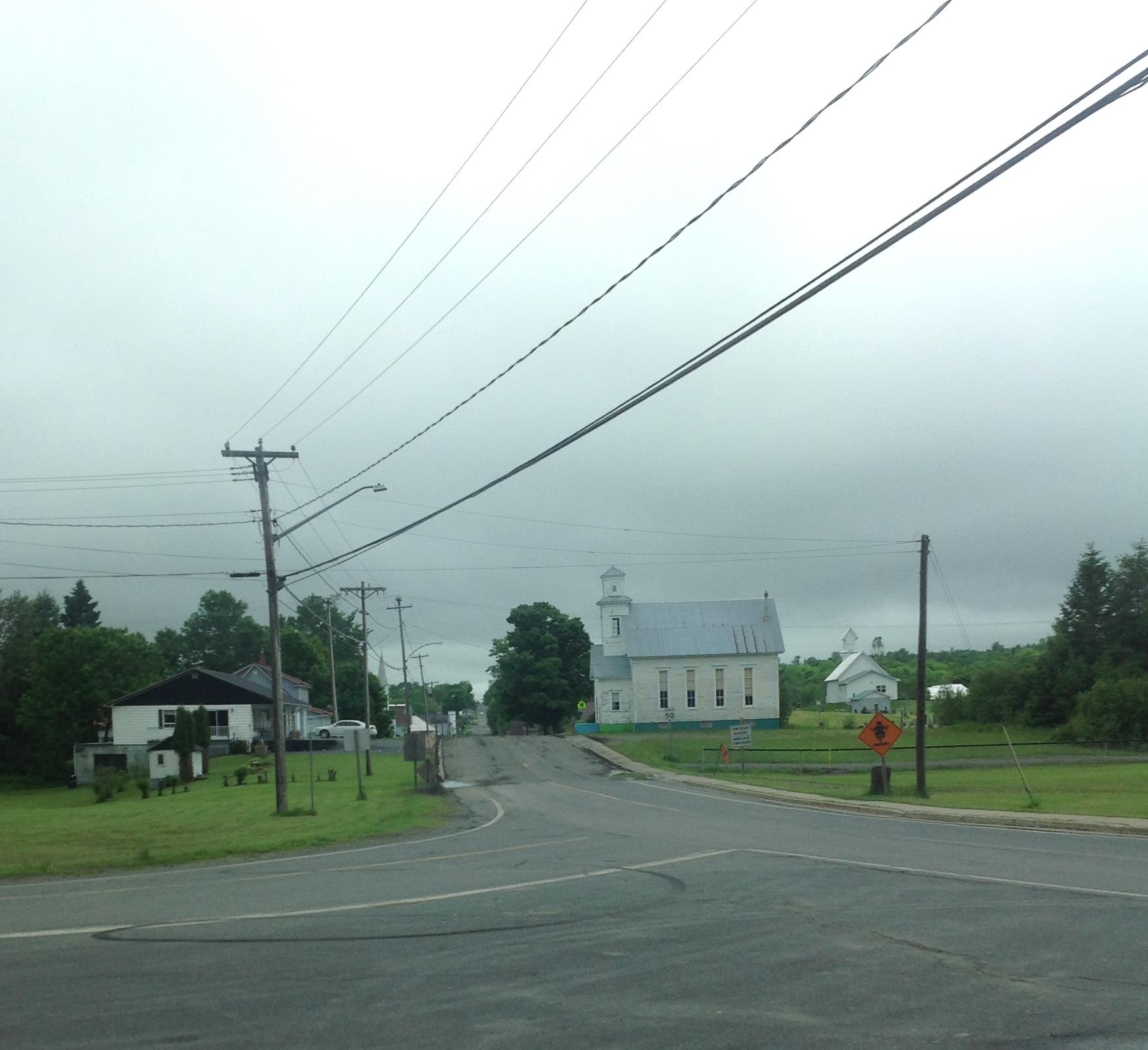
Village of Canterbury at the turn to Highway 630
~
The route from Canterbury toward the south is a numbered road. But Highway 630 is not paved and quite rutted in some sections. In one place we had to ask some ATVers if we were on the right road!
~

Highway 630
~
As we drove, I watched the woods for those blue flowers. Wildflowers were certainly a theme of our drive. By the road we saw Pink Lady’s Slipper (Cypripedium acaule), Bluebead Lily (Clintonia borealis), Bunchberry (Cornus canadensis) and Quaker Ladies (Houstonia caerulea).
~
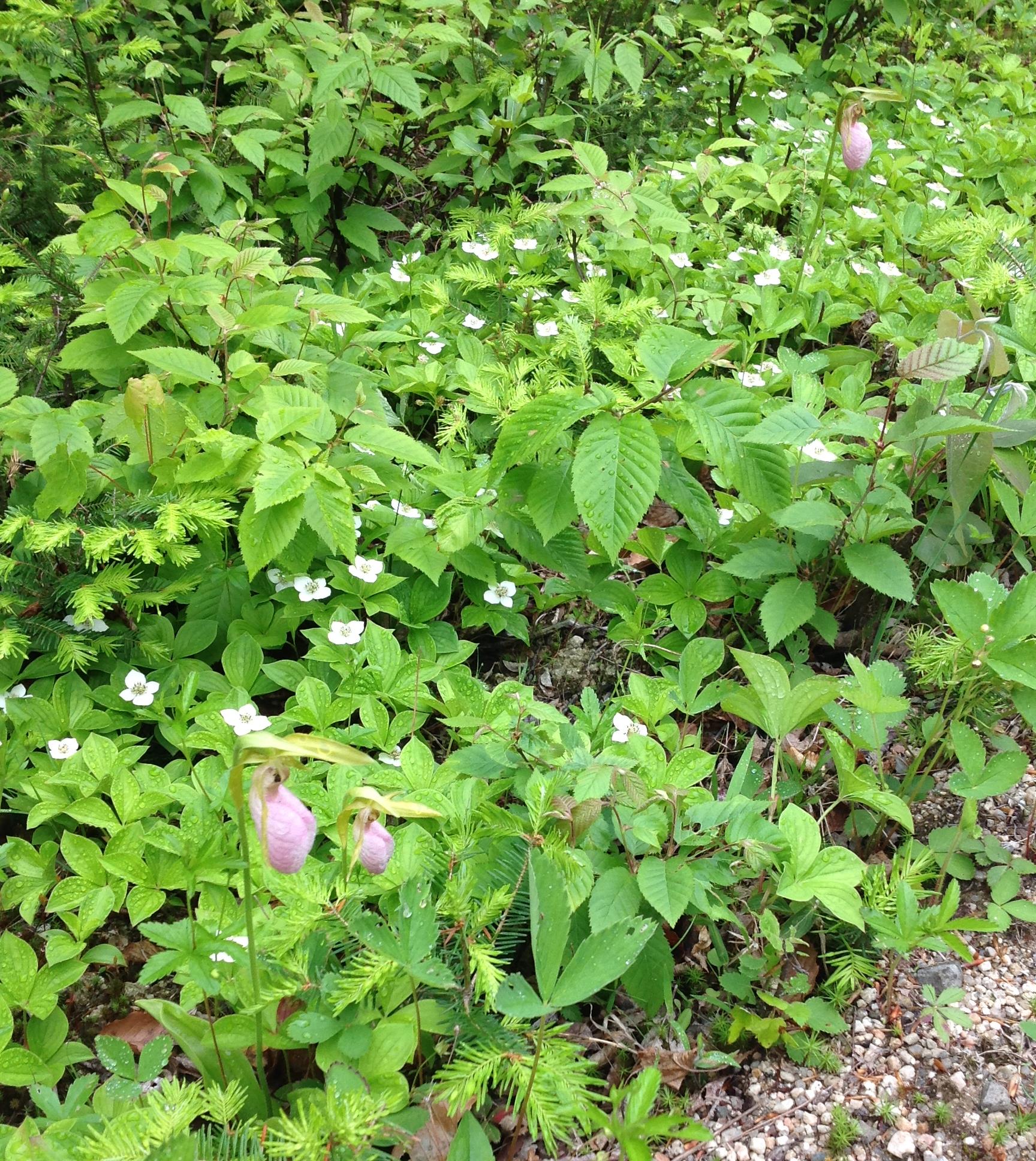
Lady’s Slipper and Bunchberry along the road
~
The map shows a community named Carroll’s Ridge just south of Canterbury. When we reached the location marked on the map, there were no homes or buildings, only a few old roads and cleared areas. But there in the woods was evidence people had once lived there. I found my sea of blue! Forget-me-nots, escaped from some forgotten garden to thrive in the near by woods.
~

Forget-me-nots escaped from an old garden
~
In my memory, the ‘blue’ of the flowers was more intense a decade ago. But we noticed many of the Forget-me-nots there now are a white variety. Who knows if flower colour or memory really changed during those ten years.
~

blue flowers in the woodland
~
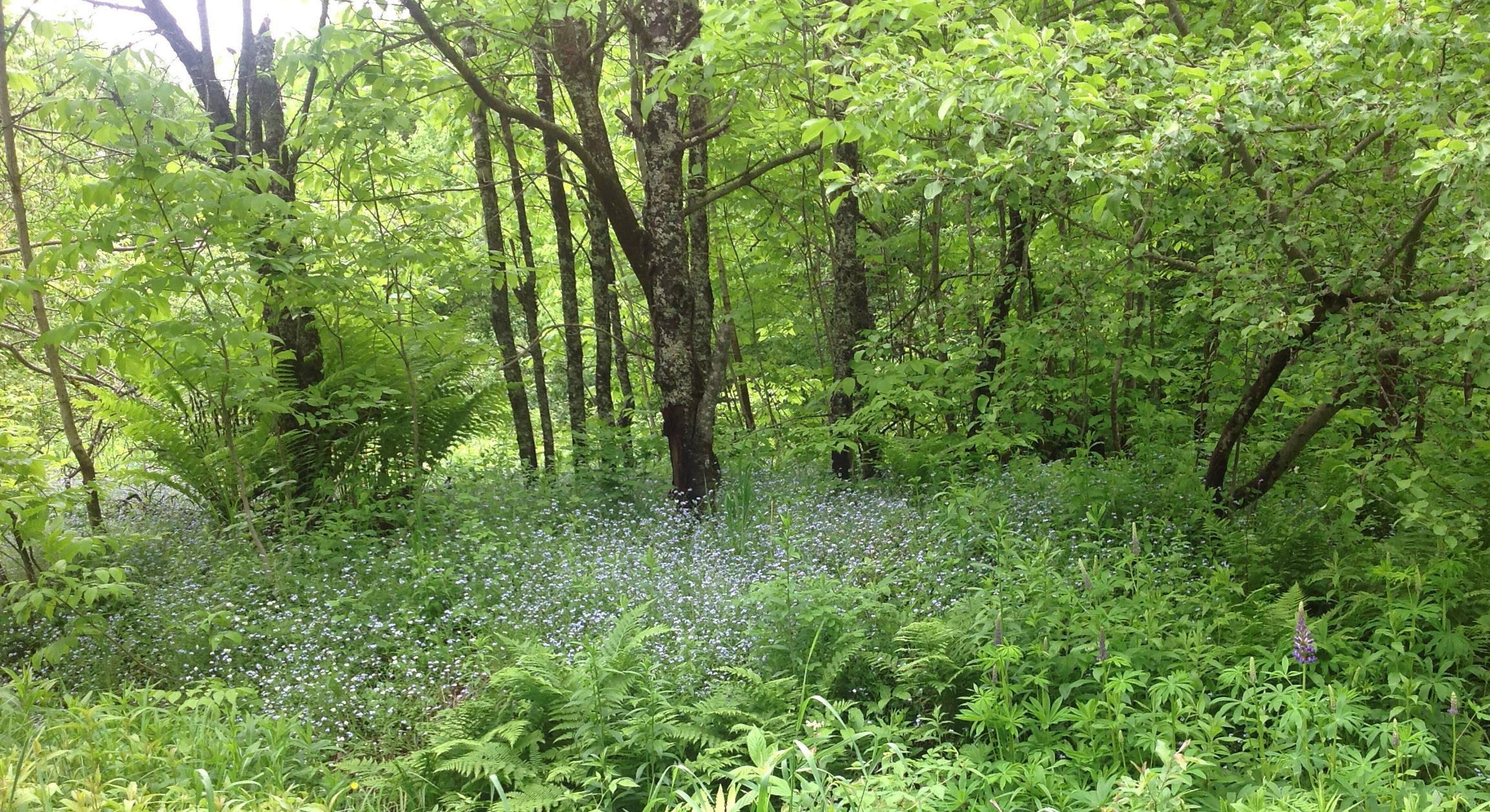
Forget-me-nots in the woods
~
I picked a few of the Forget-me-nots, to try an ‘eco-print’ dyeing experiment in coming days. But what I really took away was another image of a sea of blue flowers in the woods.
~
Copyright 2014 Jane Tims
the colour of October #2 (Tansy yellow)
So many colours! The orange of the big pumpkin on our doorstep. The reds and yellows of the Red Maple leaves in piles under our feet. The bright white of the moon this month. The golden colour of the needles of the Tamarack now falling with every breath of wind.
~
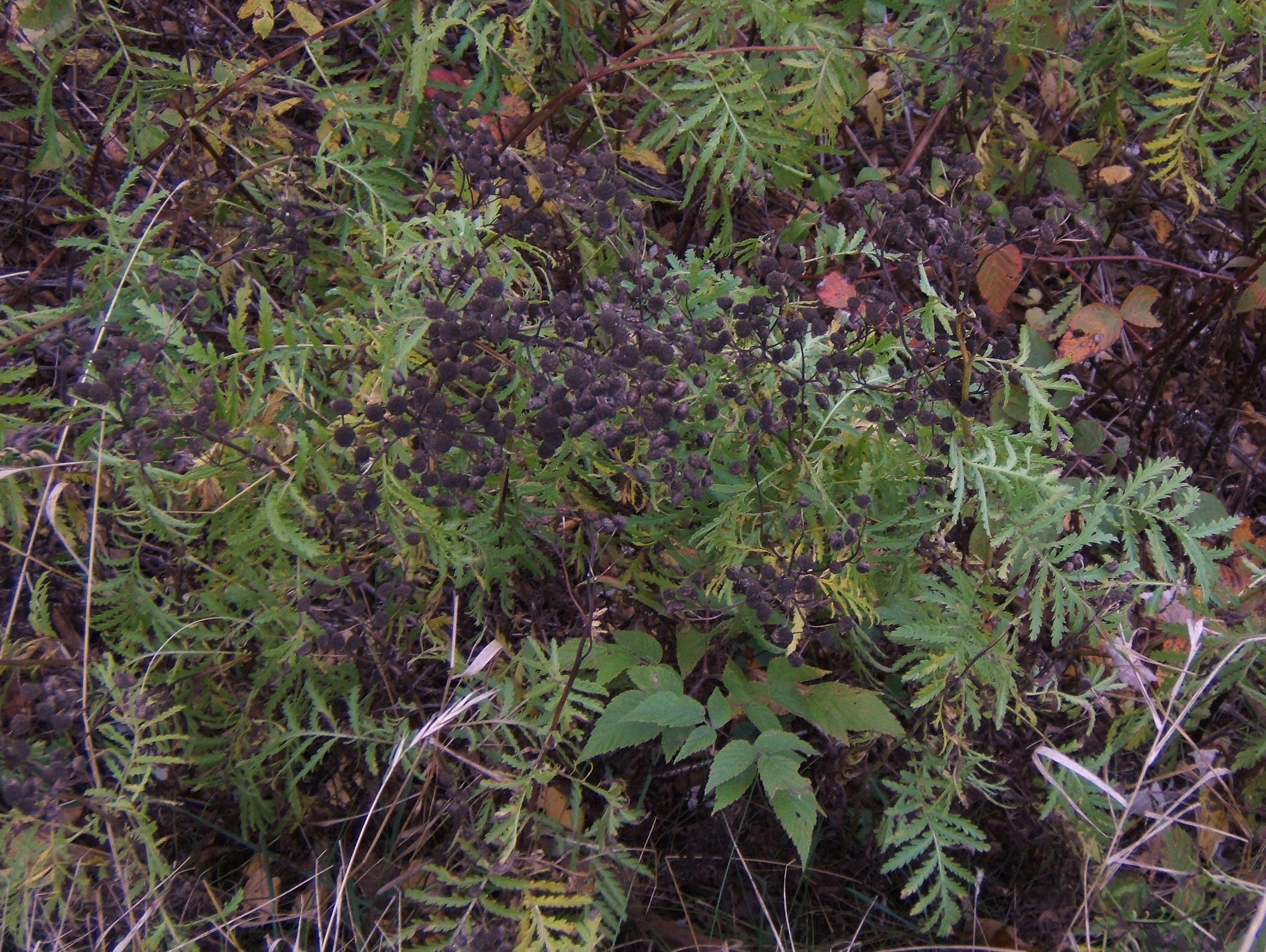
The colour that has inspired me this week is the yellow of Tansy (Tansy vulgare L.) still bright along the road in Fredericton. The flowers are like brilliant yellow buttons.
~

~
I couldn’t duplicate the colour with the yellows in my watercolour palette, but after layers of alternating yellow and white, I have realised how wonderful the yellows of nature really are!
~

October 27, 2013 ‘Tansy’ Jane Tims
~
In a month’s time, the bright yellow heads of the Tansy will be black!
~
~
Copyright 2013 Jane Tims
a quest for poppies 5-5 a
~
On April 27, I took a short detour on my virtual bike tour, to find a field of poppies. I love poppies and I’d like to find a field of them on my virtual visit to central France.
~
~

map showing red field … could it be a field of blooming poppies? (map from Google Maps)
~
I started by scanning the maps to the south of the area I have been visiting. And I found what looked like a red field just south of my bike path. Side trip!!!!
~
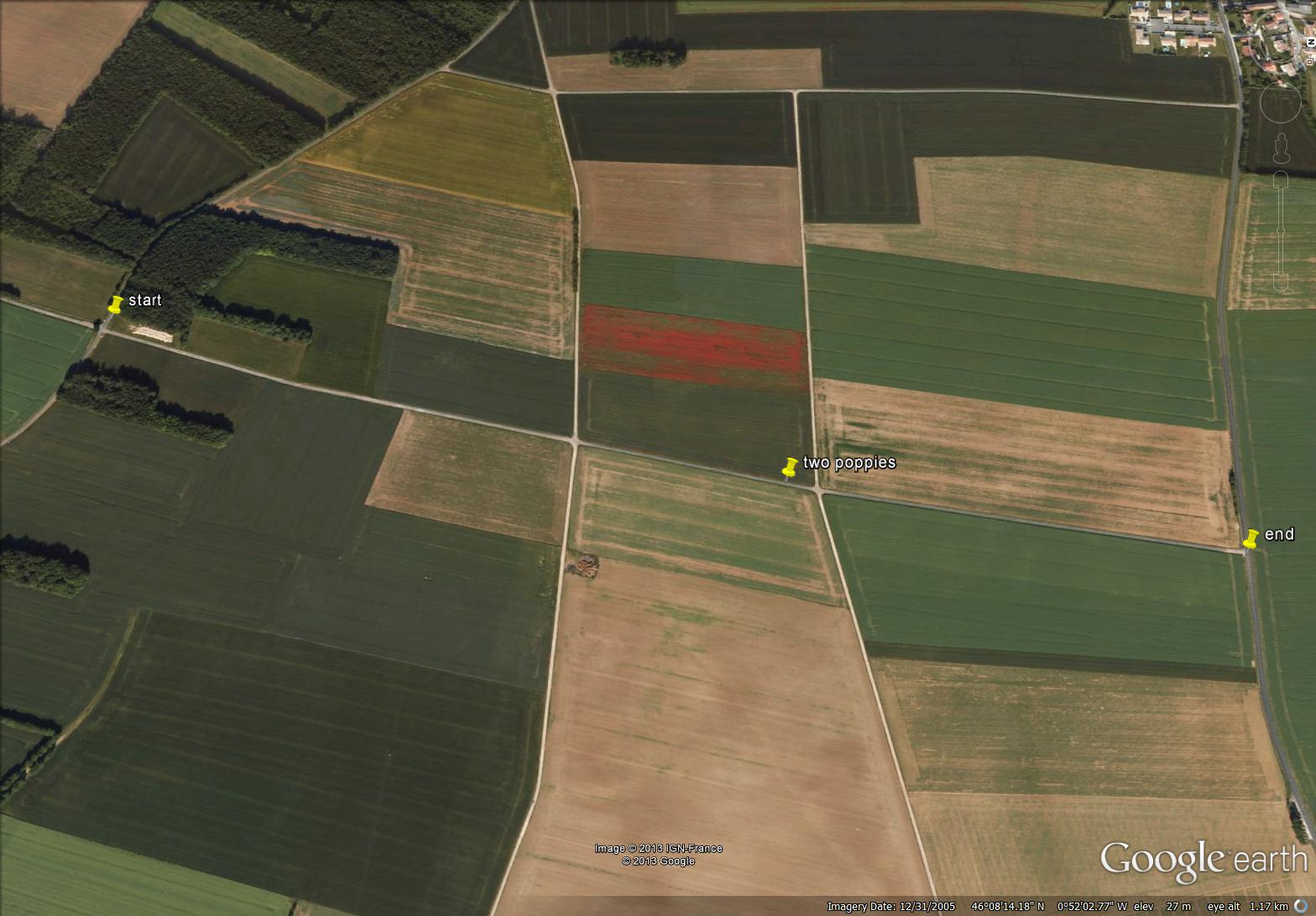
map showing my quest to find a field of poppies (map from Google maps)
~
At the first of my side trip, I saw a lady, picking flowers along the roadside …
~

looks like she is picking daisies … (image from Street View)
~
I stopped to ask her if she knew any poppy fields in the area …
~
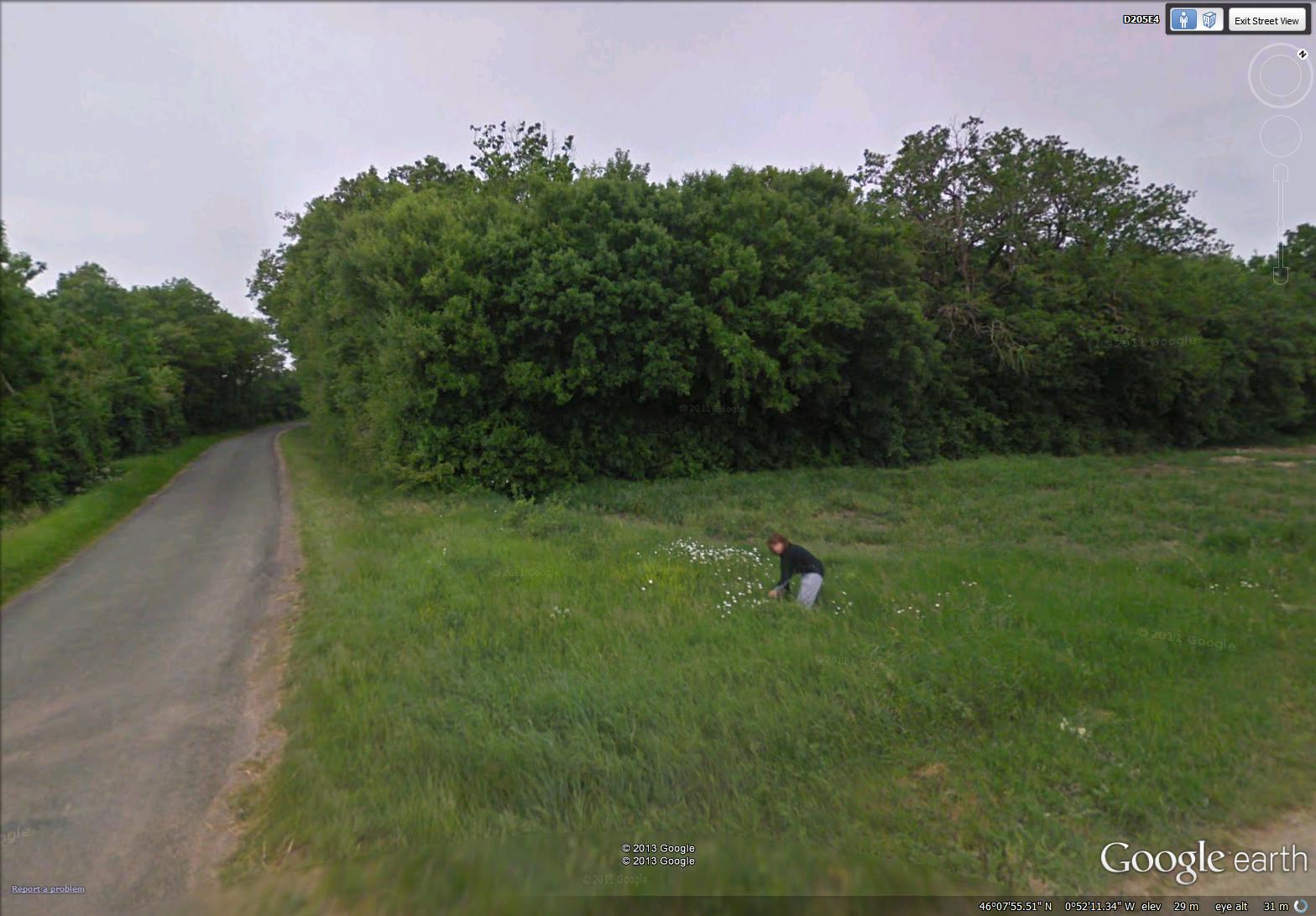
the lady stops to talk (image from Street View)
~
Jane to Lady-picking-flowers: Bonjour Madame! (Hello Madame.)
Lady-picking-flowers: Bonjour! (Hello!)
Jane: Je pense que vous aimez les fleurs! (I think you must like flowers!)
Lady: Oui. Je trouve un bouquet pour la table! (Yes. I am getting a bouquet for the table.)
Jane: Est-ce que vous connaissez s’il y a un champ des coquelicots dans cet territoire? (Do you know if there are any fields of poppies in this area?)
Lady: Oui. Dans le printemps, il y a un grand champ des coquelicots just à côté de cette route. Il n’est que deux kilomètres vers l’est. (Yes. In the spring, there is a big field of poppies just beside this road. It’s only two kilometers to the east.)
Jane: Bon! Merci! Bonjour! (Great! Thanks! Have a good day!)
~
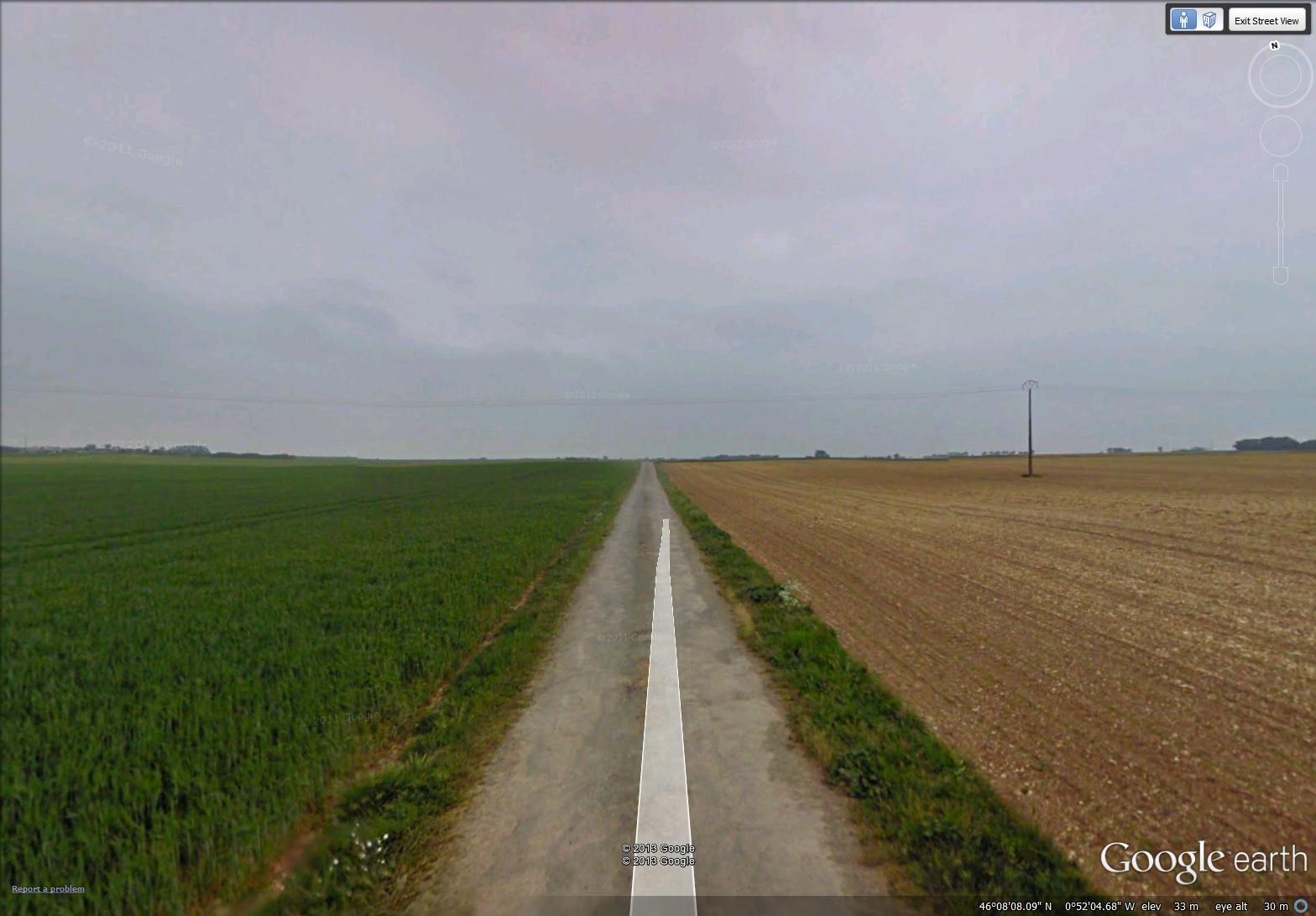
So off I went, peddling madly between fields of grain and plowed soil on a very narrow dirt road …
~
the poppy field must be just up ahead (image from street View)
~
It was boring, but I was watching for that gorgeous field of poppies …
~

it should be just off to the left … (image from Street View)
~
When I got to the area on the map where I was sure there was a poppy field, I saw only plowed field …
~
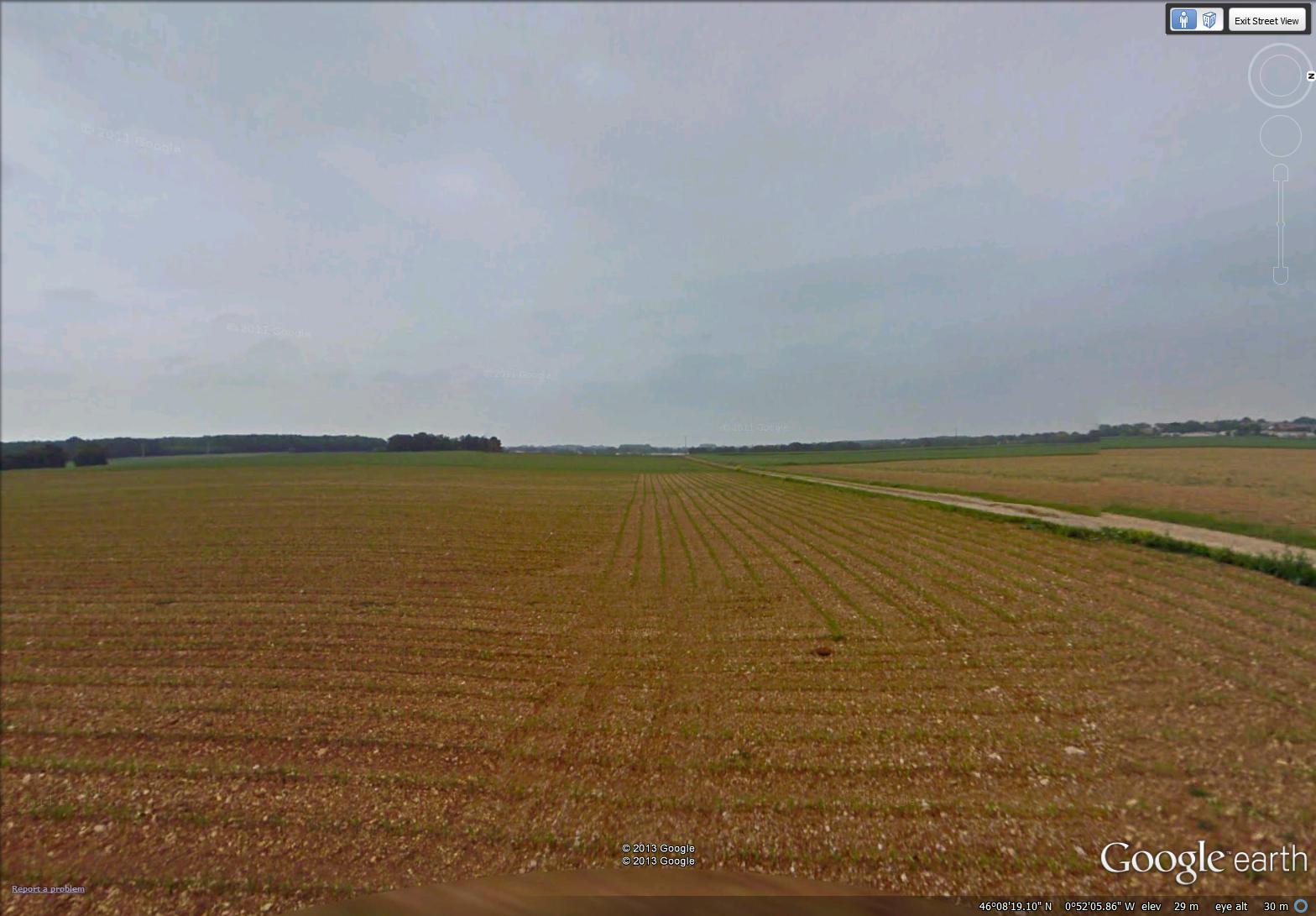
I’m sure they should be just over there (image from Street View)
~
As a reward for my search, I saw two poppy blooms in the grass beside the road …
~
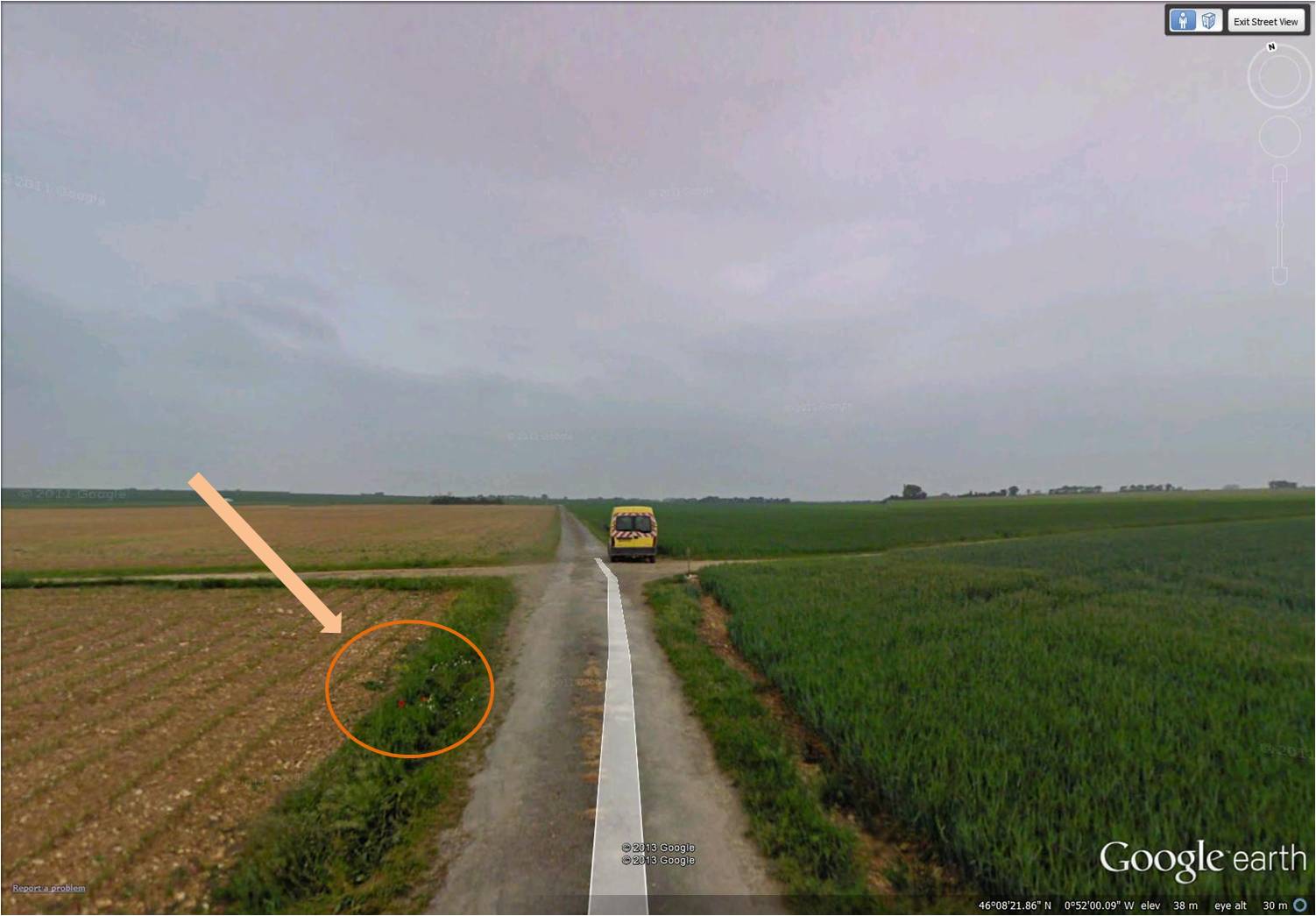
two poppies beside the road (image from Street View)
~
I realised then, the Google Map and the Street View images were taken at different times of the year. So sad.
~
Best View: imaginary poppies …
~
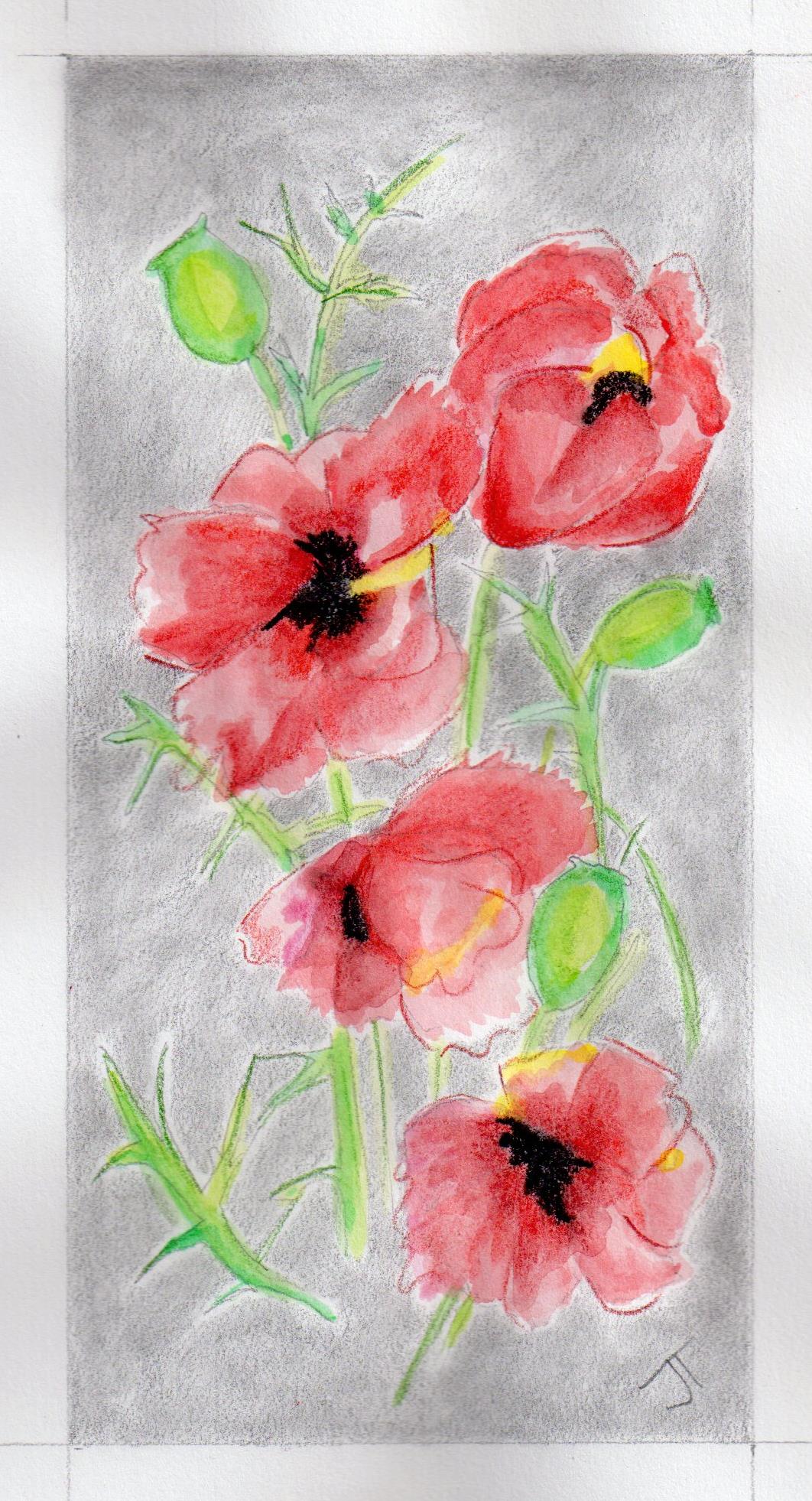
~
Copyright Jane Tims 2013




 nichepoetryandprose