Posts Tagged ‘nature’
harvesting colour … lily of the valley
Now that green is the dominant colour outside my door, I am anxious to try dyeing with every plant I see. I was particularly anxious to see if I could coax colour from the Lily of the Valley crowding around my walkway.
~

leaves of Lily of the Valley and Wild Lily of the Valley
~
The green leaves in the photo above are from two different plants, the smaller single leaves of Wild Lily of the Valley (Maianthemum canadense) and the larger furled Lily of the Valley (Convallaria majalis). The larger Lily of the Valley produces a dye with seasonal qualities – dark green in spring and yellow in fall.
~

‘pips’ of Lily of the Valley
~
The rolled emerging leaves of the Lily of the Valley are called ‘pips’. The pips squeak as they are collected. I think they want to be left alone!
~

Lily of the Valley leaves in water
~
I cut the leaves into one inch pieces and left them for an hour to simmer in water. I added some iron to the mix, to serve as a colour modifier – a square-headed nail, a railroad spike and a rusty horseshoe. The water was pale green at first, but as it began to cool, it became a dark, almost black, green …
~

dark dye from Lily of the Valley
~
Once the water cooled, I strained the liquid and added the wool. After bringing it to a boil, I let it cool gradually – wool hates sudden changes in temperature …
~

wool roving, treated with alum, in the dark Lily of the Valley dye
~
The resulting colour was dark grey. I also did a vat without the addition of iron and the result was a slightly paler grey.
~
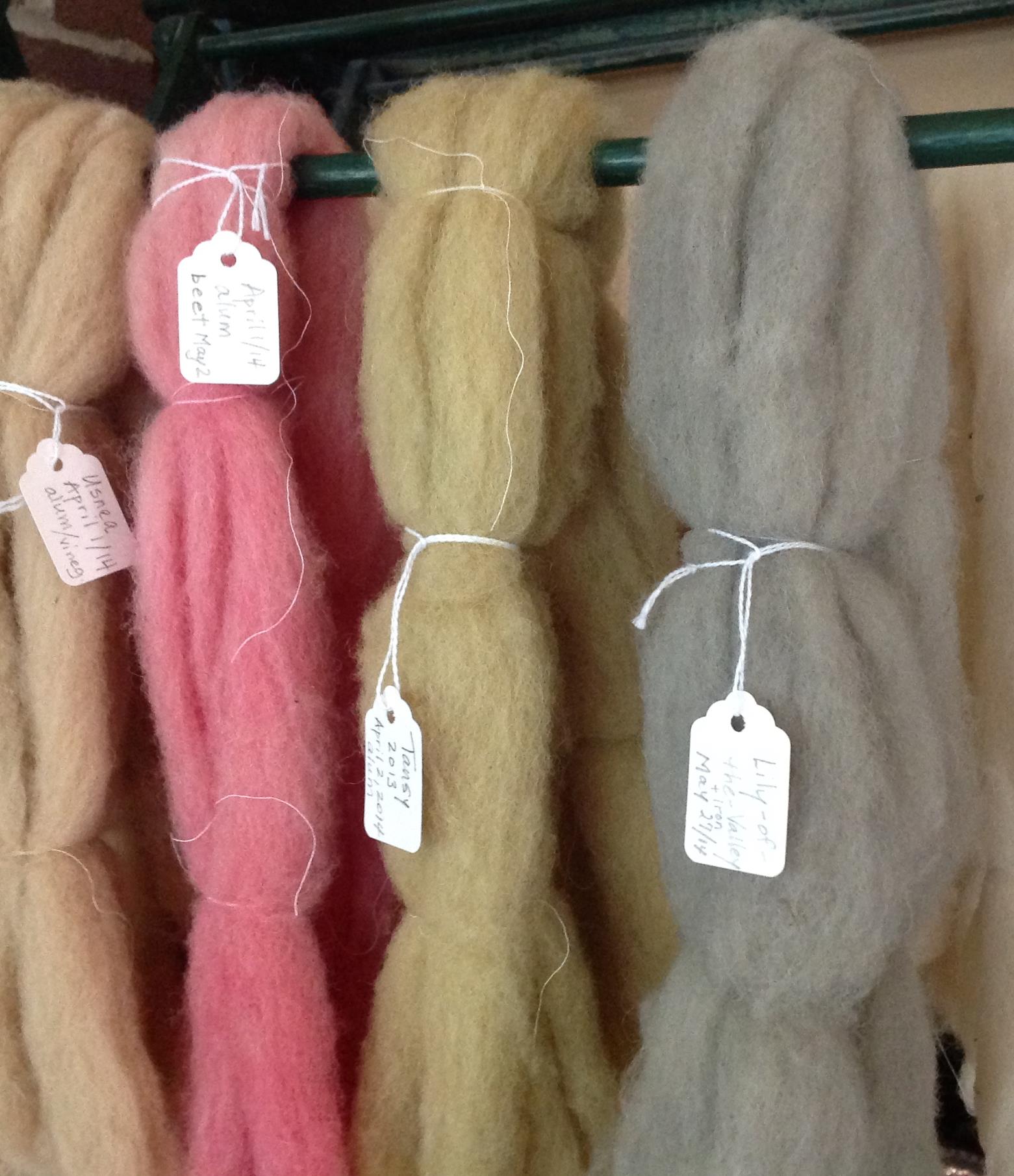
dark grey of wool roving dyed with Lily of the Valley
~
This is my last dyeing experiment with Lily of the Valley. All the parts of the plant are poisonous with compounds known as glycosides. Ingested, these compounds have an effect on the heart and can cause fatal circulatory, gastrointestinal and respiratory problems. If you are a fan of the TV show Breaking Bad, you will know that Walt used Lily of the Valley in a scheme to kill one of his enemies.
~
Although I took precautions, doing the boiling outside and disposing of the liquid in the woods, far from our well or the stream, I was not comfortable working with such a poisonous plant. While the water was boiling, the smell was thick and noxious and my mouth had a metallic taste all day. I was jittery before I went to bed, convinced that breathing the vapours would be the end of me. I am fine today, but I don’t recommend using Lily of the Valley as a dye. The dark grey colour obtained is not worth the risk. And the lovely scent of the Lily of the Valley flowers is the plant’s first, best use.
~
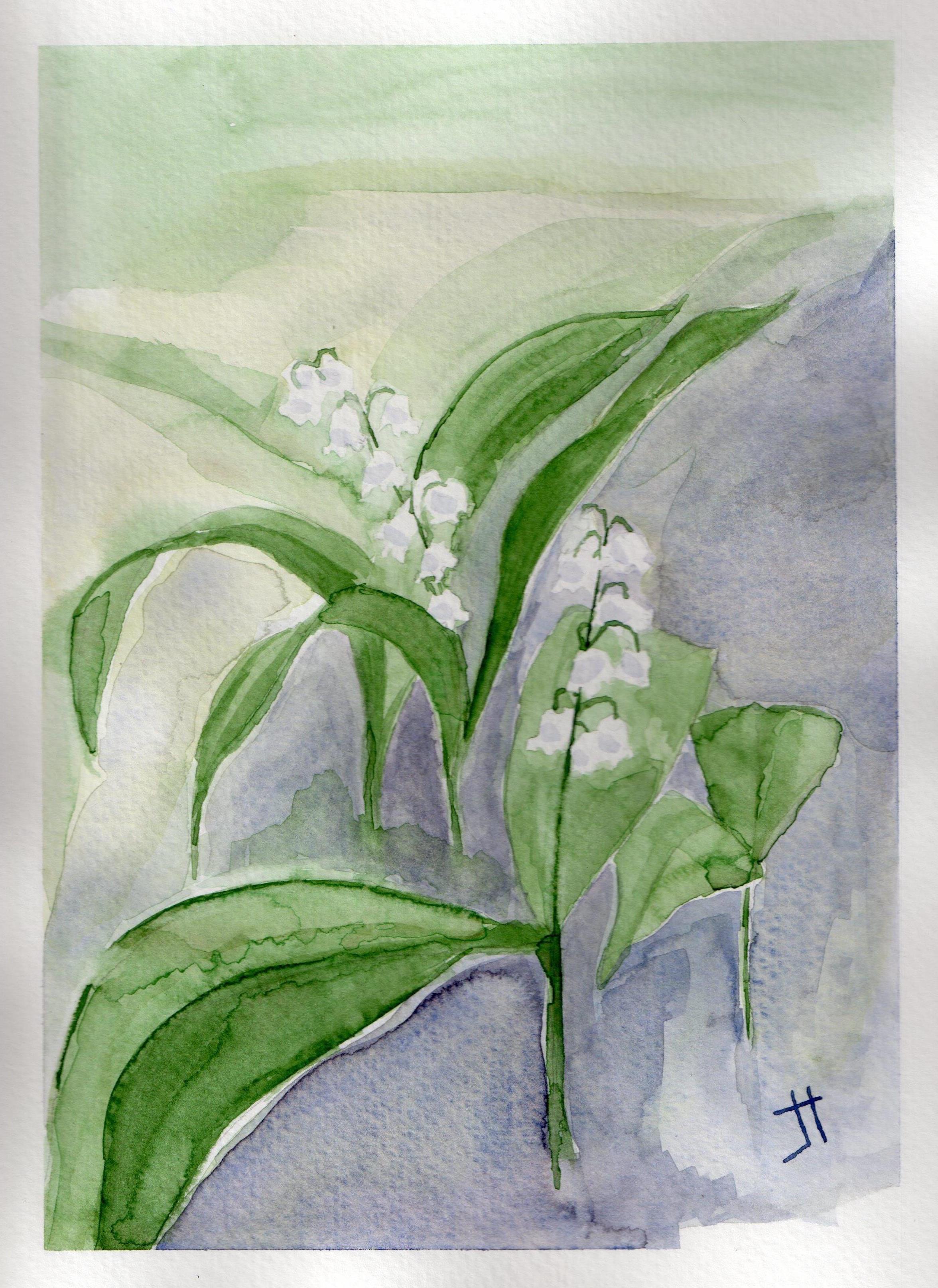
2013 ‘lily-of-the-valley’ Jane Tims
~
Copyright 2014 Jane Tims
harvesting colour – rose petals in a pickle jar – results
On April 9, I tried dyeing white silk with dried rose petals.
~
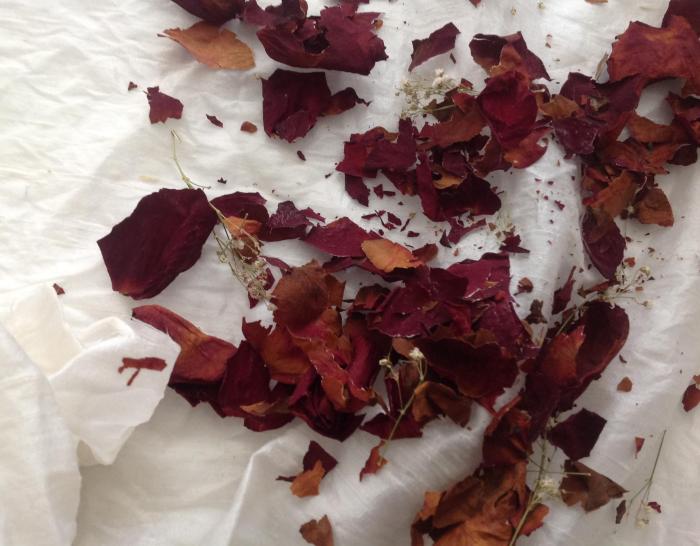
rose petals, scattered on the silk
~
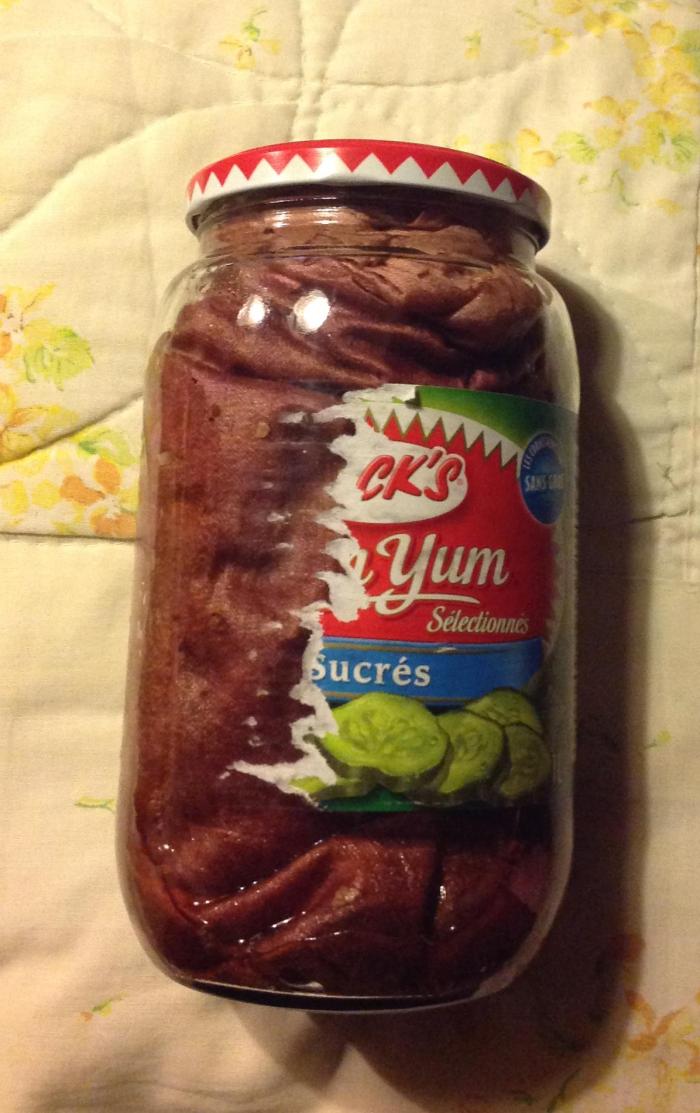
Originally, I intended to let the colour develop for at least a month on the silk in my pickle jar. But curiosity got the better of me after six days. Colour had developed in the first two days, a deep magenta in the vinegar and on the fabric.
~
~
Tonight I opened the jar and rinsed out the silk. The process is a little messy, with lots of petals floating in the rinse water. And the results …
~

silk fabric dyed with dried flower petals … the deep pink is from the extra flowers I added
~
You may remember that I folded a few other flowers into the silk. In retrospect, I should have seen the unnatural pink of some of the flowers … I think the florists did a little dyeing of their own and that is what is making the bright pink on the fabric. It looks a bit artificial for my taste, but I do love the brownish magenta that colours the background of the fabric – that colour seems to be from the rose petals. Silk certainly takes up colour eagerly!
~

the magenta seems to be from the rose petals – a more natural colour
~
Once the fabric is dry, I intend to hem the silk for a tablecloth. I use tablecloths all the time and this one will remind me of a special bouquet!
~
Snippet of a longer poem I wrote after this adventure …
~
~
remnants of the bouquet
~
petal colour
stains fabric
eager to make
an impression
~
~
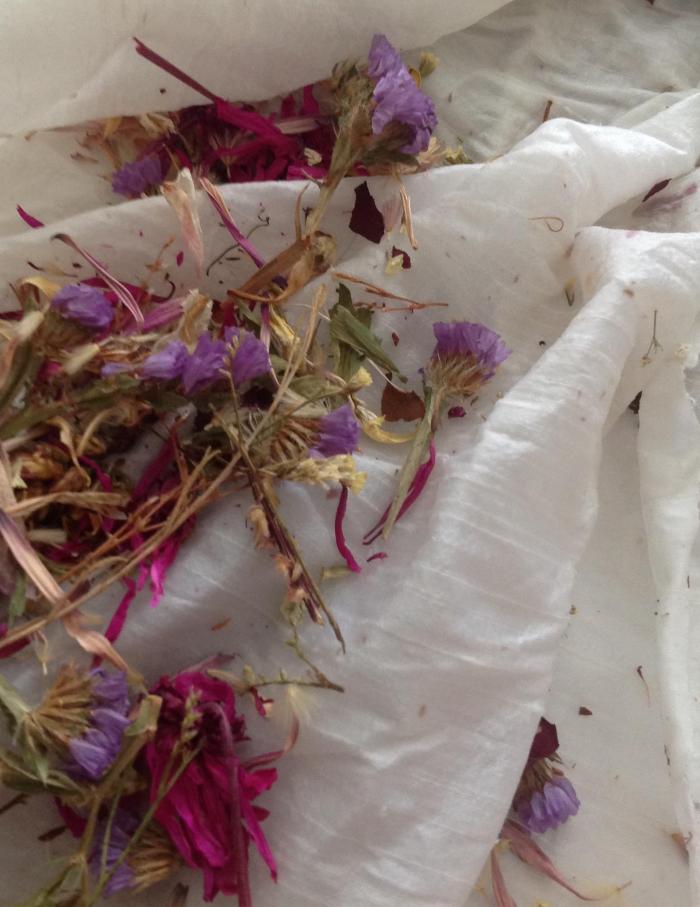
deep pink dried flowers I added to the rose petal mix … I should have realised they were too bright to be ‘real’
~
I have carefully rinsed my pickle jar, intending to use it again!
~
Copyright 2014 Jane Tims
between the salt marsh and the sea (day 21, 22 and 23)
My virtual biking in early March took me along the last length of coast before Bathurst. This is an area of coastal salt marsh and barrier beach. It is also an area where a lot of coastal development has occurred. My bike ride revived many memories of days when I worked on the provincial coastal policy.
~
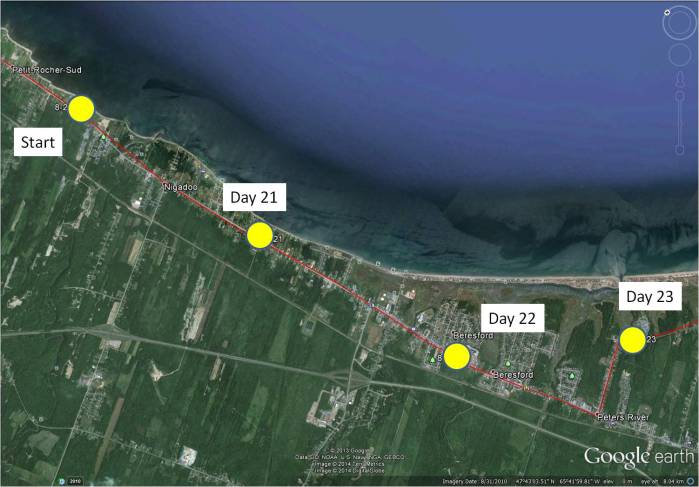
distance travelled (map from Google Earth)
~
8-21 March 1, 2014 40 minutes (Petit-Rocher-Sud to east of Nigadoo)
8-22 March 4, 2014 30 minutes (east of Nigadoo to Beresford)
8-23 March 8, 2014 30 minutes (Beresford to south of Yougall Beach)
~
The prominent landscape feature in the area is a huge coastal salt marsh and a barrier beach. I certainly understand why people would want to live near to the sea. However, the development of the barrier beach can harm the beach environment, puts the health of the ecologically important salt marsh at risk, and sometimes creates a safety issue for the homes and cottages along the beach (people who live along the beach are at risk of coastal erosion, storm surge and walls of ice that build up along this coast).
~

aerial view showing Beresford barrier beach, the coastal salt marsh behind it and the waters of the Baie-des-Chaleurs (map from Google Earth)
~
The community of Beresford has preserved a portion of the beach and marsh, creating the Passerelle, a long boardwalk to enable people to appreciate the marsh and the bird life there. The Passerelle can also be seen in the upper left corner of the aerial view above (a white, curved structure crossing a corner of the marsh pond).
~

a view of the Passerelle boardwalk on the Beresford Marsh (image from Street View)
~
Once private land is developed, either for seasonal or year-round residential use, the only way to protect the beach and salt marsh is to encourage homeowners along the barrier beach to live as gently as possible.
~
Copyright 2014 Jane Tims
harvesting colour – memorable colour
I am starting to think about some of the colours I hope to capture in my dyeing projects. In my reading I have discovered that plant colours come from three groups of plant pigments:
- the porphyrins – includes chlorophyll, the green pigment in plants that enables photosynthesis to occur
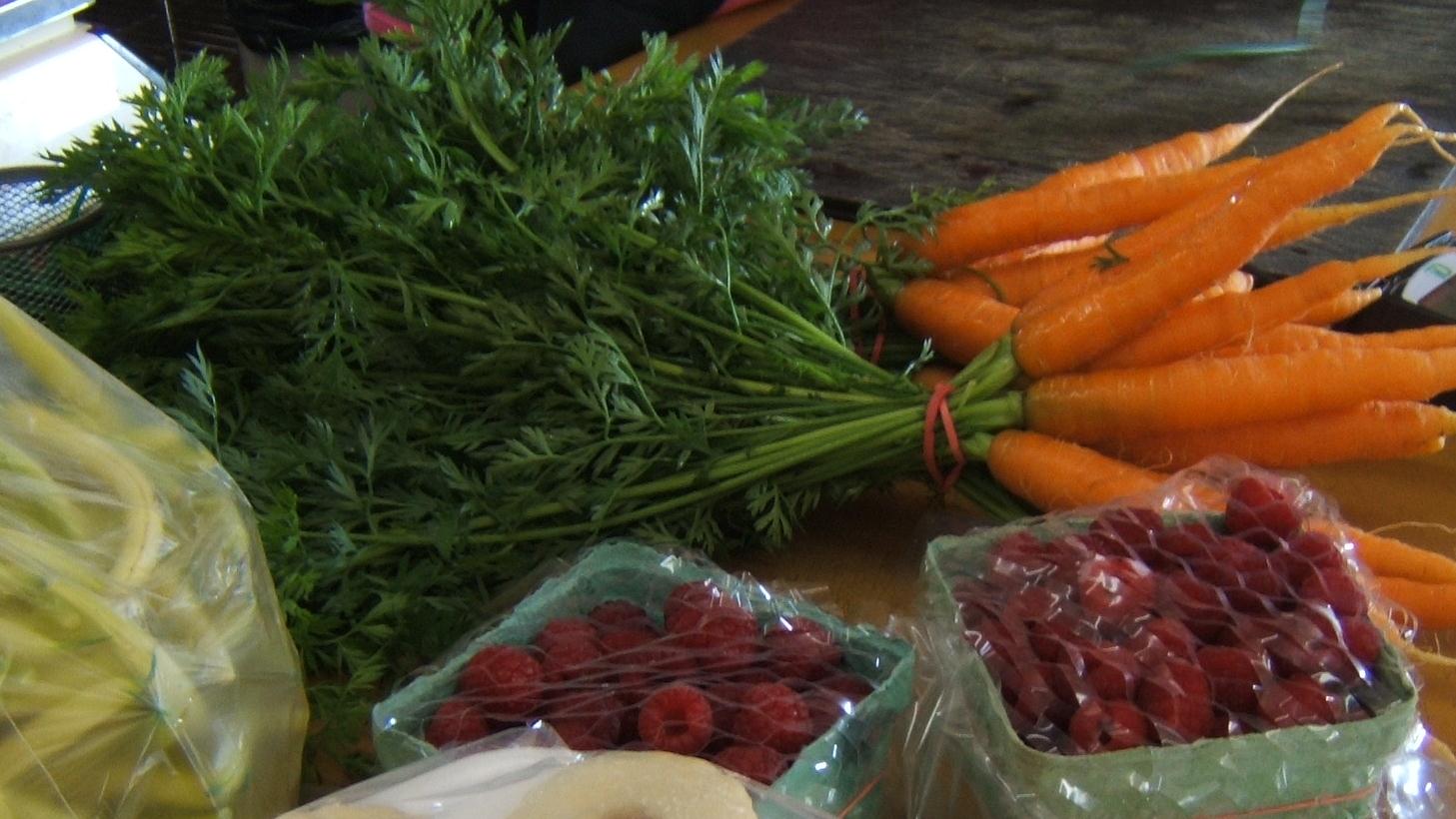
- the carotenoids – includes the yellows of carrots and the red lycopene of tomatoes
- the flavonoids – the yellows of flower petals and the red, blue and purple anthocyanins of strawberries and blueberries
~
~
In my poems, I want to portray these colours with words. A quick look in the thesaurus shows how many words we have for the various colours:
- green: emerald, sage, verdigris, malachite, beryl, aquamarine, chartreuse, lime, olive …
- yellow: ivory, lemon, saffron, gold, sallow, buff …
- red: scarlet, carmine, vermillion, crimson, ruby, garnet, maroon, brick, rust …
- blue: azure, phthalo, cerulean, indigo, sapphire, turquoise, watchet, navy, teal …
- purple: lilac, violet, mauve, magenta, heliotrope, plum, lavender …
~
~
~
~
Copyright 2014 Jane Tims
beech leaves and berries
One more poem about winterberry holly …
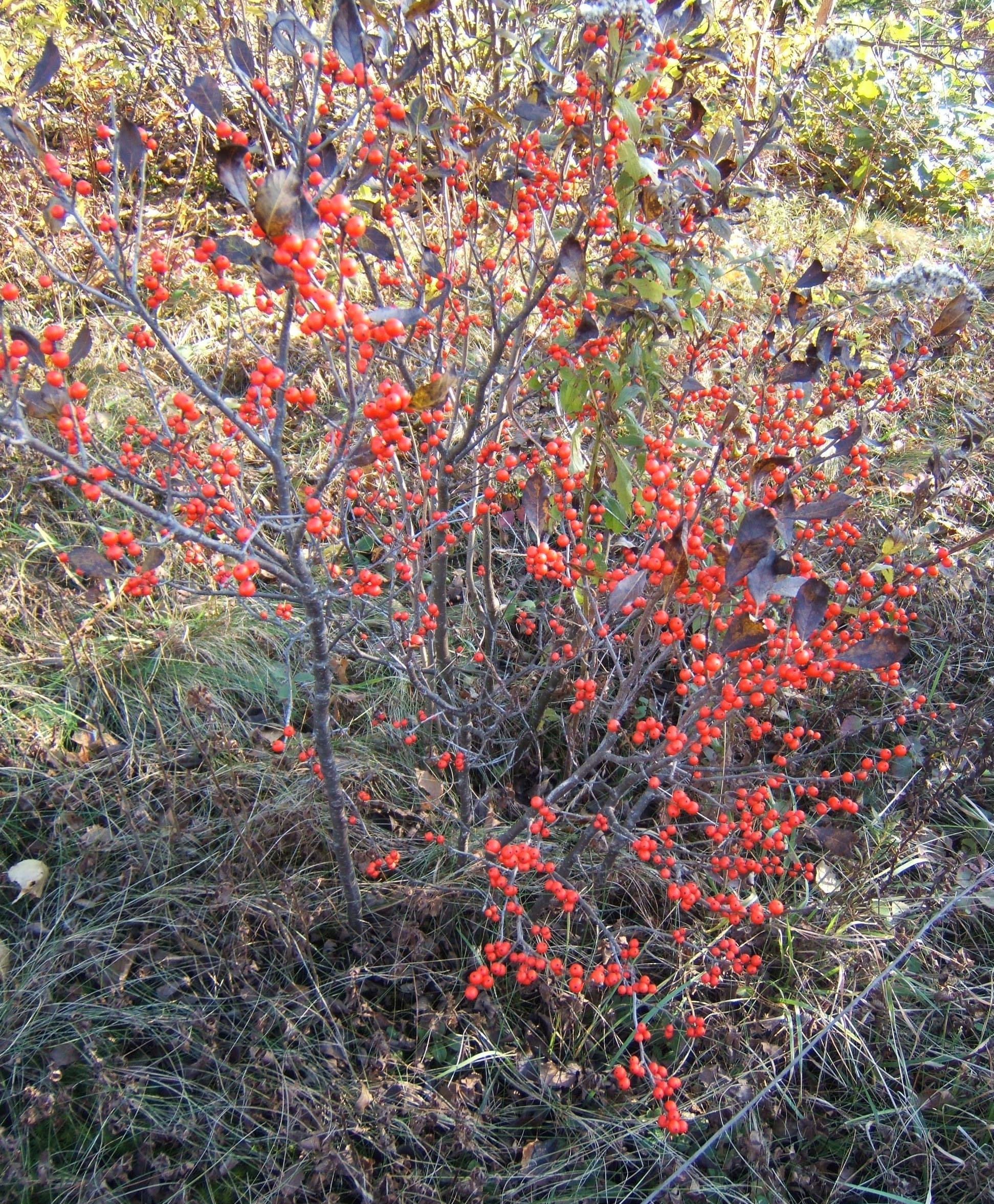
winterberry holly in early winter
~
~
beech leaves and berries
~
watch the wretched shudder
of the second hand, clutch
at the day, a beech leaf, intent
or winterberries persistent
through December
~
peeling paint on the door
of the shed, insistent –
resist new color
parchment leaves and paint chips rattle
~
on a day in January
a grey-green flake of paint
is tumbled by wind
and vermillion berries surrender
drop
by
drop
~
indifferent snow
~
~
Copyright 2014 Jane Tims
winterberries
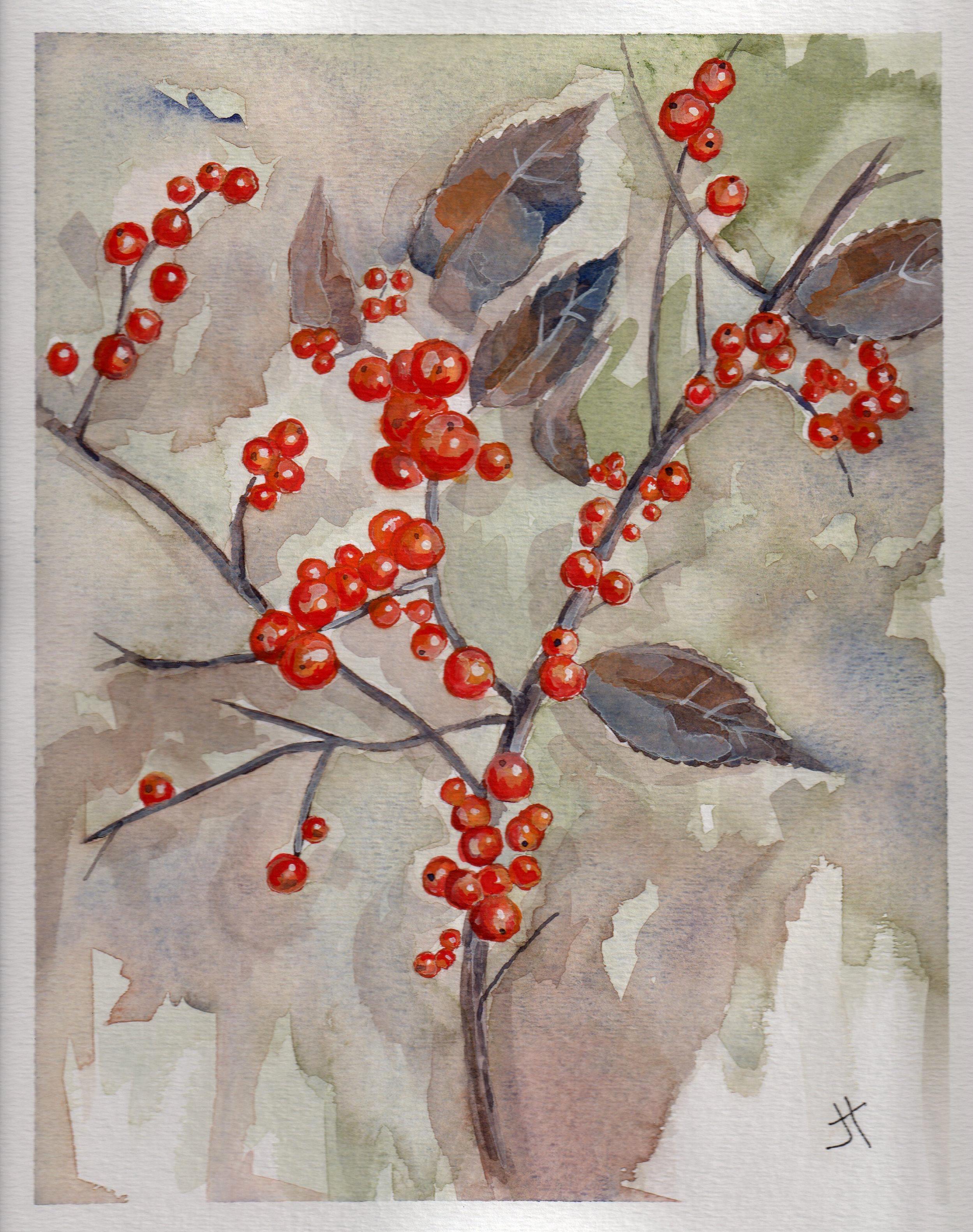
Before the winter snows are entirely gone, I want to share this poem. All through the winter months, winterberry holly clings to its bright orange-red berries, refusing to let go …
~
~
~
winterberries
~
berries of holly persist
long into winter, cling to
the bough, after leaves have fallen
~
grief refuses to let go
~
but what is one berry among
so many – in the end all
berries desiccate and die
~
birds wheel in limitless sky
look below and see
one red pixel punctuates
vast emptiness of snow
~
~
Copyright 2014 Jane Tims
harvesting colour – the formula for colour
My first effort towards my project is to understand what materials I will need. From my early reading, I have learned the end colour for any project using natural dyes is much more than just adding plant material to water. A final colour is the result of so many factors.
~
My simple formula for this complex symphony is:
final colour = source water + utensils + plant material (dyestuff) + mordent + colour modifier + textile fibre
~
No doubt, I will discover I have omitted some important element.
~
In my next posts, I will consider each of these elements and talk about the specific items I intend to use.
~
For example, I will need some textile fibre to dye. My intention is to dye small amounts of material for use in various weaving projects. In my weaving, I use both thread and strips of textiles.
At this early stage, I have three materials I want to dye. I have a small quantity of unspun fleece obtained a couple of years ago during our trip to Upper Canada Village in Ontario. I also have three old cotton shirts – I loved to wear these before they became stained – perhaps I will wear them again, repurposed in rainbow colour! And I have just purchased a meter of white silk (at $37 per meter, it is a splurge!). I will have to do some preparatory cleaning to each of these materials before I use them in my dyeing projects.
~

some materials for dyeing … a meter of silk, three shirts, and a bundle of unspun wool … the shirts have already seen their share of accidental dyeing !!!
~
Behind the scenes, I am finding poetic inspiration as I learn this craft of dyeing. Eventually I will be brave enough to show my poems to you.
~
Copyright 2014 Jane Tims
february chill
memories of a walk on a cold night …
~

~
spaces in the dark
~
white on the pasture
interrupts the night
clings to cold twilight
~
footfalls
beside me
~
a black horse
assembles from shadow
ponders the snow
~
your coat
folded around me
~
the horse lifts its head
knows where deer hesitate
where wings brush against barn boards
where I stand in the snow
and shiver
~
never so warm again
~
chill spaces around me
~
no feathers to fly
~
~

~
Copyright 2014 Jane Tims
harvesting colour
Recently I was awarded an artsnb (New Brunswick Arts Board) Creations grant. My six month project will be to write a book-length poetry manuscript about the experience of using plant dyes for colouring textiles.
The poems will find their inspiration in the activities of collecting plants, extracting their dyes and using them to colour woven fabric.
~
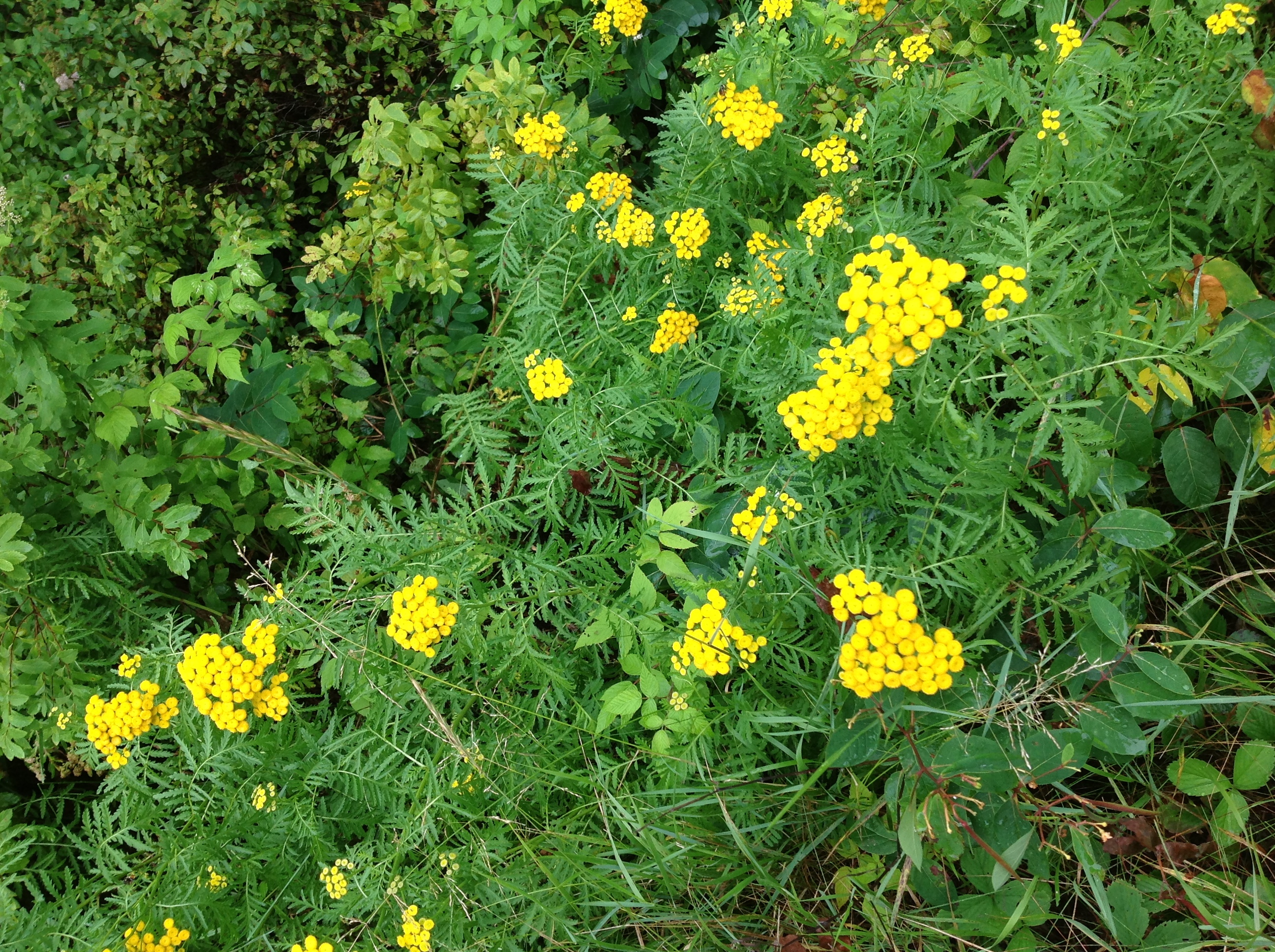
one of the plants I will be using is Tansy (Tanacetum vulgare) – it grows throughout New Brunswick and can be used to make yellow and olive dyes
~
Writing these poems, in many ways, should echo my previous project ‘growing and gathering’. I will do some research about a particular plant, then go forth and find it. For the ‘growing and gathering’ project I had a lot of fun exploring various areas of the province for the plants I needed, so I know I will love this part of the experience. It will be when I get the plant material home that the differences between the two projects will become clear. With ‘growing and gathering’, writing poems about picking berries seemed second nature to me since I’ve spent a lot of my life in berry fields.
~
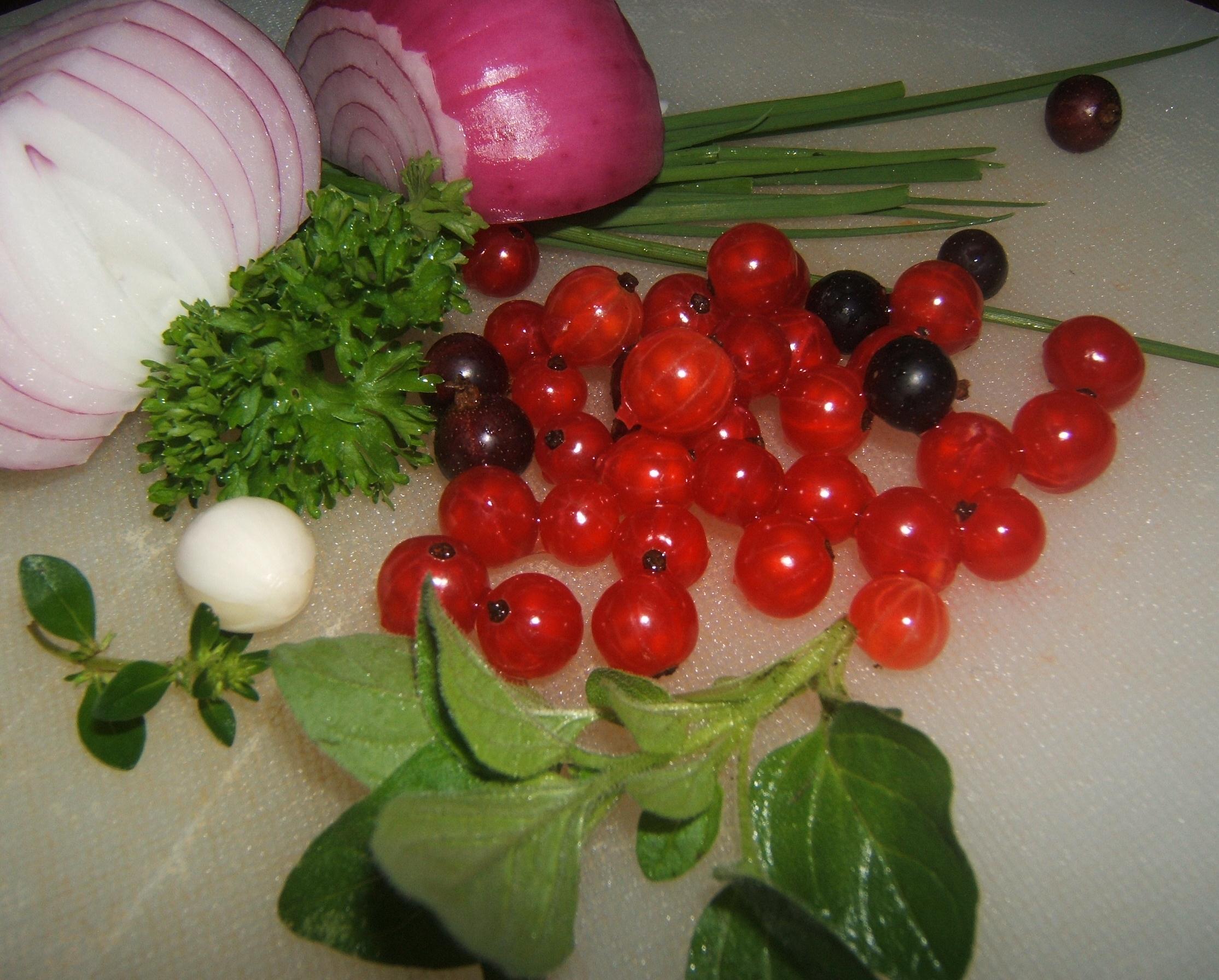
some of the ingredients for a ‘growing and gathering’ salad
~
With ‘harvesting colour’, I will be learning a craft new to me. I’ll be trying to manage the complex alchemy of “pot type plus source water plus plant material plus mordent plus receiving material”. Lots of chemistry and a few colour tragedies, I’m certain. And discovery, as purple plants become yellow dye. I hope to combine making plant dyes with my weaving, an activity I find totally relaxing and steadying.
~

some of my weaving results over the years … it will be fun to see what colours my project will bring to my weaving
~
So where will the poems come from and what will they say? I’ll be looking for metaphors for human experience and emotion. I’ll try to embed ideas about reconnection with nature and about cultural expression through decorating fabric. I’ll use words from botany and chemistry, and a rich colour dictionary. I can hardly wait to explore all the words for yellow, and green, and red.
I want to write poems about ‘saddening’ the colour by adding a pinch of salt, and ruining a dye lot by forgetting to tend it well. I’ll write about oak leaf imprints on cloth, and the different yellows created with apple bark and poplar leaf. I’d also like to write poems about the ordinary life experience of plant dyes – grass stains on knees, the grey Choke-cherry jelly bag, the Cranberry stain on the tablecloth.
I’ll be presenting at least some of my poems here and I’ll certainly be sharing my experiences. I’ll continue to present my virtual travel, novel writing and watercolour posts, but I plan to devote Friday’s post each week to ‘harvesting colour’. Hope you visit regularly to follow me in my project!
~
Copyright 2014 Jane Tims
excusing the difference
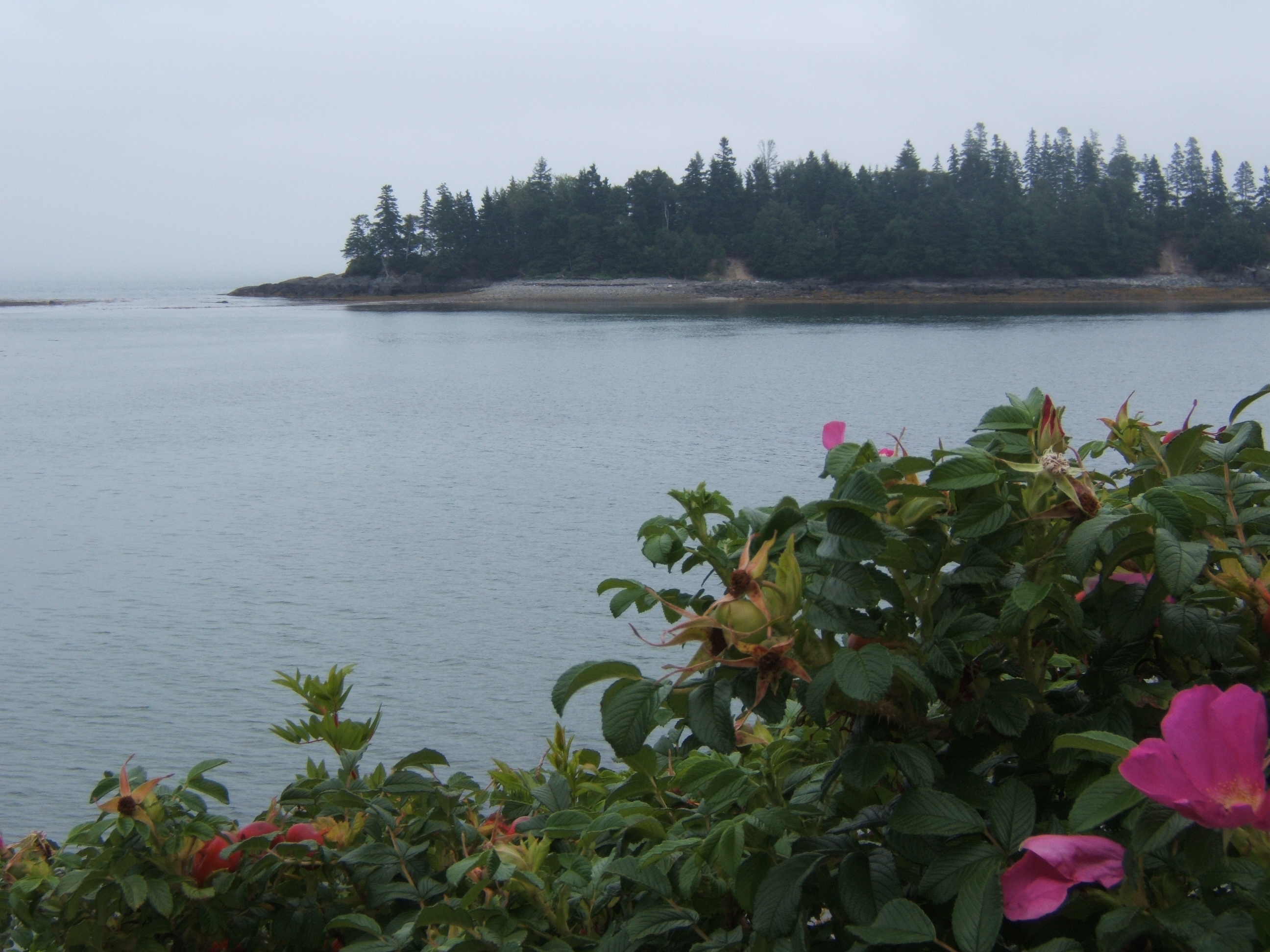
On this cold and wintry day …
~
When my son went to school, we often went to theatrical presentations at the school. The young people were so talented and the presentations so well executed, I often went away with the lines of a poem running through my head.
One evening performance was particularly memorable and inspiring. It was a production of Romeo and Juliet, and in this ‘version’ Rosaline was given an on-stage role. Rosaline is the character who does not appear in Shakespeare’s play but has a background role as Romeo’s first love.
The young lady who played the part of Rosaline was memorable for her costuming and her on-stage presence. She was dressed entirely in black Goth except for her hair – bright pink. I remember her soliloquy – she begged us to look past her difference and see the person within.
~
~
heroine
~
her hair
a stroke of pink
on the brown audience
~
more compelling
than the script
or the decorated stage
not surprising to see her name
on the program
~
Rose
in the part of Rosaline
~
in black but for the hair
even her lips
implore the audience
to pardon the difference
to understand
~
if only he had lived
~
she, of course, the heroic one
not Romeo
or Juliet
~
not the dead
but the left-behind
~
~
Copyright 2014 Jane Tims





 nichepoetryandprose