Posts Tagged ‘poetry’
inside the covered bridge
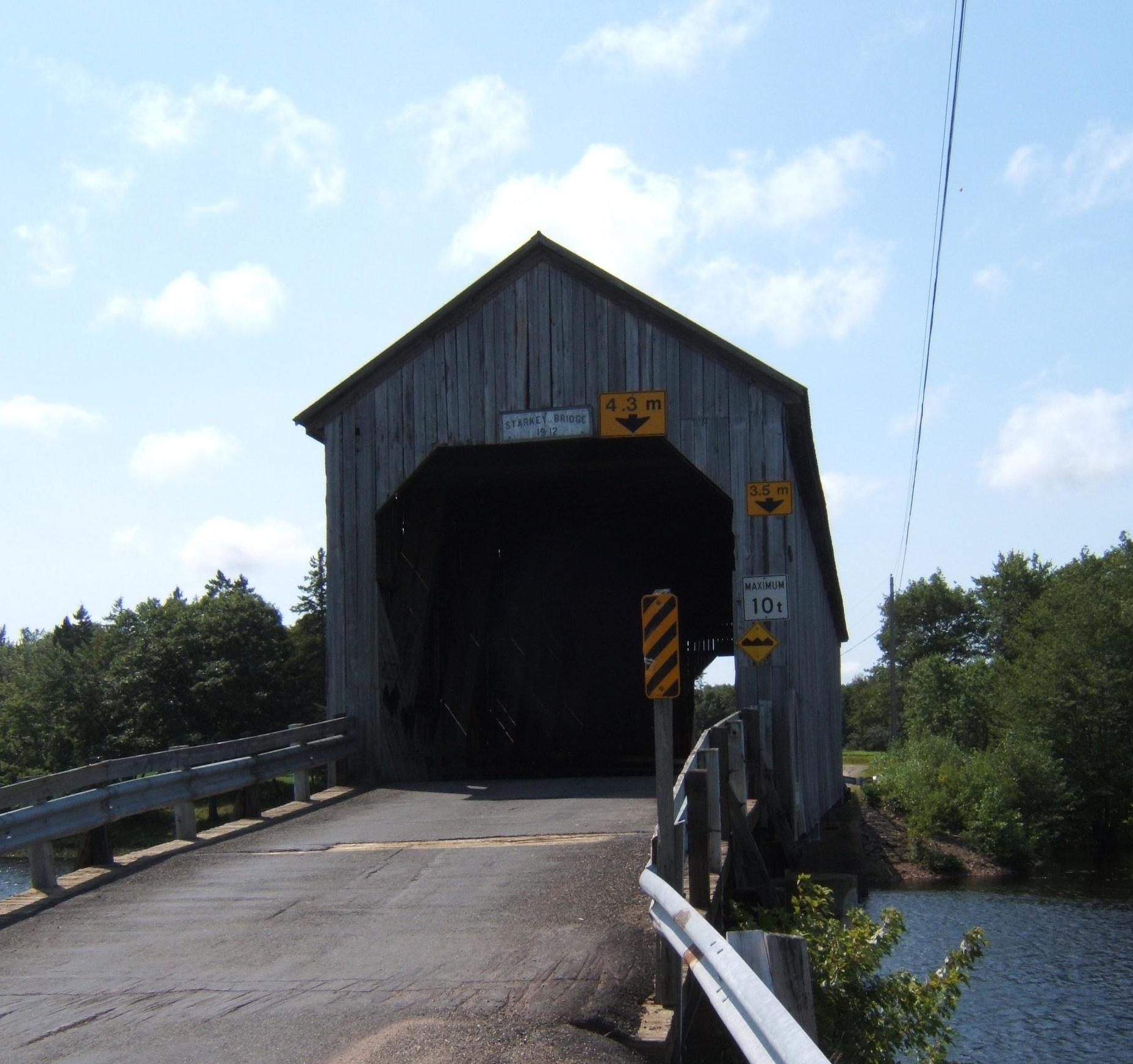
the Starkey Bridge over Long Creek
One of New Brunswick’s ‘claims to fame’ is its covered bridges. A covered bridge is a bridge constructed with high sides and a roof, made to cope with winter snow loads. The covered bridge was designed to be easier to cross in winter. Also, these bridges don’t have to be shovelled free of snow after storms.
There are 60 covered bridges in New Brunswick, one less after the Mangrum Bridge, crossing the Becaguimec River, was destroyed by vandals earlier this month. Communities really love their covered bridges and try to keep them safe by holding watches at Halloween and other times of the year. It is a huge disappointment to anticipate driving across a covered bridge you have visited in the past, only to find it has been burnt and replaced with a metal Bailey Bridge.
Visiting covered bridges is a favourite pastime for many New Brunswickers. On a hot day, the bridges are cool inside and there are usually open ‘windows’ to encourage breezes and allow a view of the river. When a car drives through the bridge, the whole structure vibrates and the car tires make a deep-toned rumble. The floor timbers in a covered bridge are pleasant to walk on and the rafters make interesting study for the carvings and writings people have left as mementos of their visits.
In 1992, my husband and son and I began a project to celebrate Canada’s 125thbirthday. We intended to visit all the covered bridges in the province and make a record of the carvings and graffiti inside each bridge.

we promised to include the ‘Canada 125’ logo whenever we reported on our project, so here it is!
We explored many of the bridges, and made pencil rubbings of some of the more memorable carvings. I particularly remember the girl’s name ‘Phoebe’ carved in elegant lettering in the Wheaton Bridge (bridge installed 1916) over the Tantramar River, and a carving of an old car and the date 1910 in the Maxwell Crossing Bridge over the Dennis Stream (bridge installed 1910).

some of the notations in our record for the Maxwell Crossing Bridge over the Dennis Stream
Other markings were also noteworthy. Inside the Falls Brook Bridge at Nortondale over the Nackawic River were the following words in India ink: ‘Ptarmigan Hunter Ray Brown May 12th 1896 Horse had bad leg”. An expert birder in the area told me Ptarmigan have never been recorded in New Brunswick and this could be a valid record.
Another bit of graffiti I particularly liked were the words I AM THE WIND, printed in yellow in at least three of the bridges in Charlotte County, including the covered bridge on Stillwater Road over the Digedeguash River. This bridge is now gone and a Bailey Bridge was in its place the last time we visited.
I am the wind
~
I am the wind
of the Digedeguash
shaped by valley walls
~
I race trout
lift ferns
blow quick kisses
under the wings of butterflies
~
I am the wind
spoken in the beams
of the covered bridge
slipped into space
between
boards
I rattle the roof, the reeds
vibrate with my breath
~
I am the wind
from the County line
to the Passamaquoddy Bay
I race
~
refreshed by the waterfall, salted
by the rising tide
~
carve my name
on the boards, block
my name in yellow
chalk
~
I am the wind
~
Published as: ‘I am the Wind’, Spring 1995, The Cormorant XI (2)
(revised)
© Jane Tims
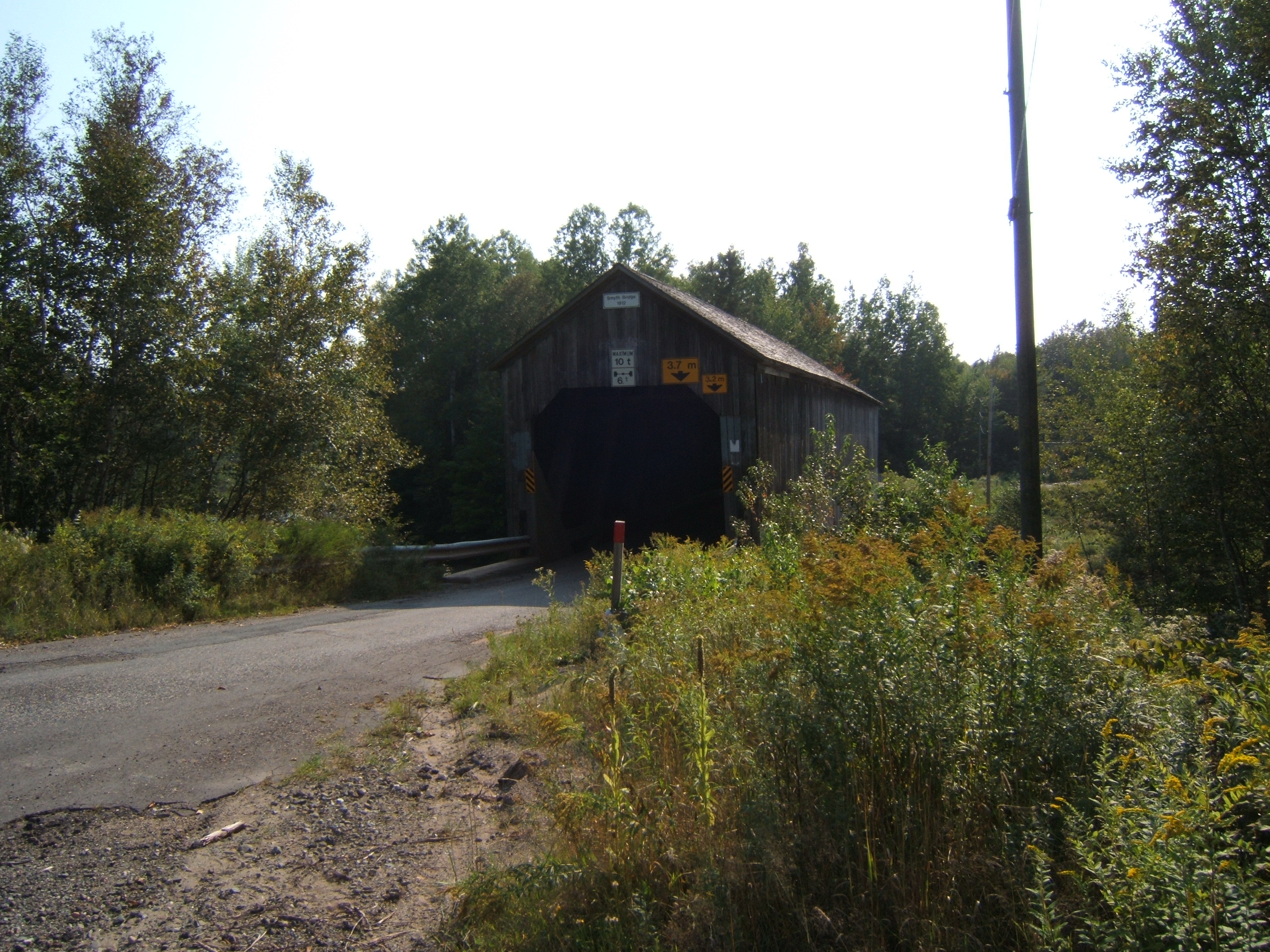
Smyth Bridge, crossing a small tributary of the South Oromocto River
holding on to our space
We are in a competition for space. A population of geckos has moved into our house. They are everywhere:
on the wall…
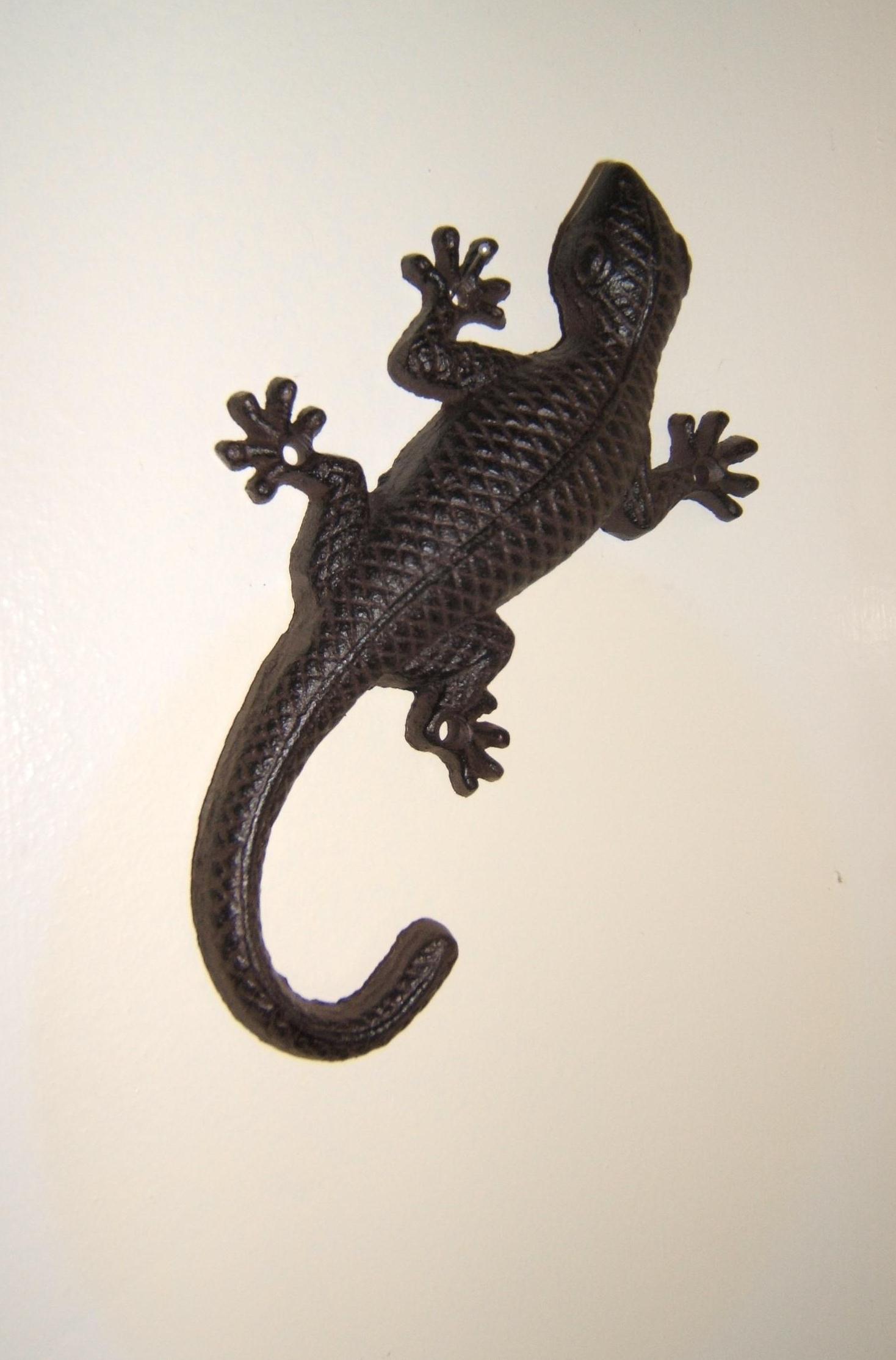
under the cupboard in the kitchen…

on the post in our stairway…
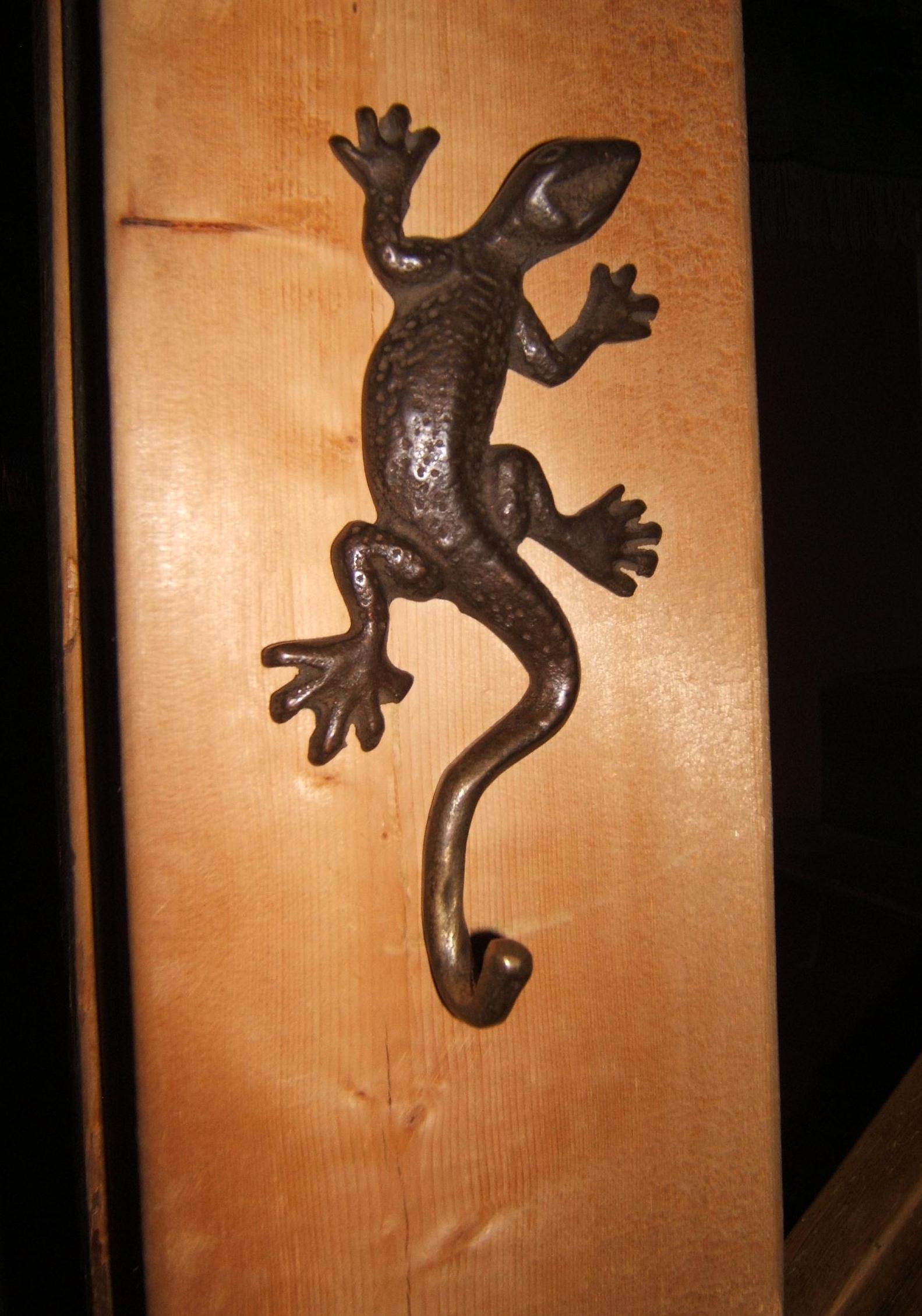
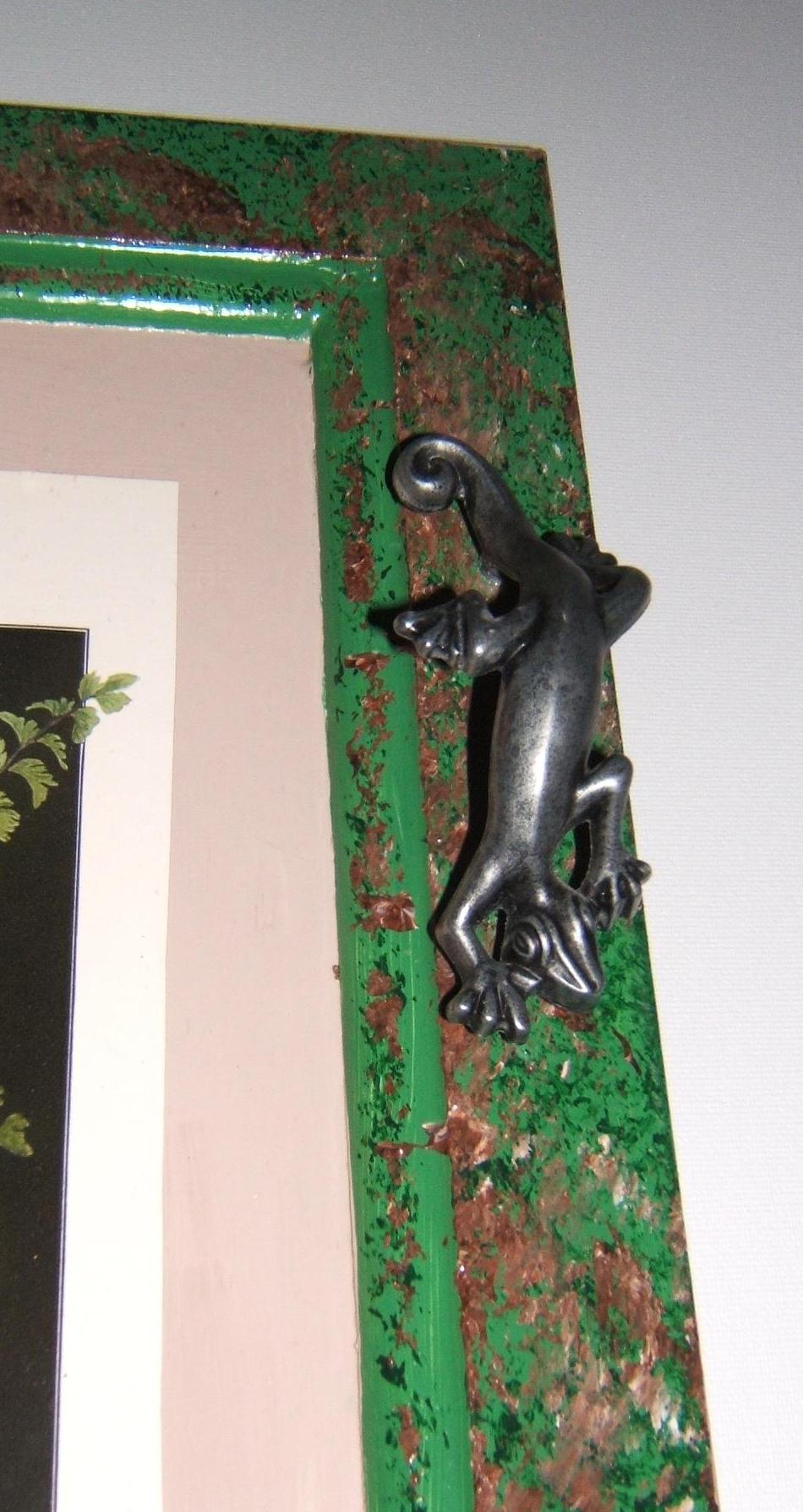
climbing down our picture frames…
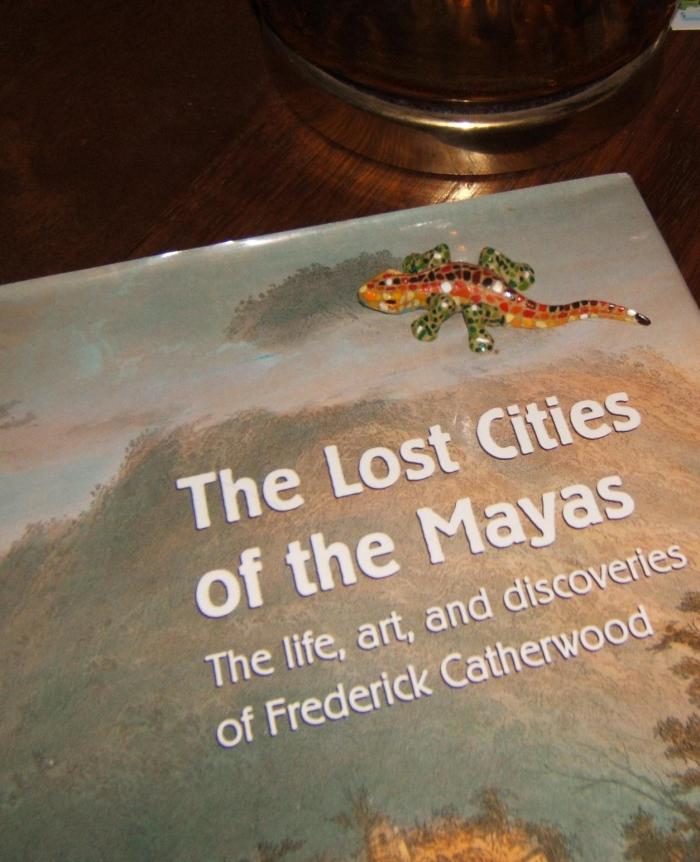
on the books in my study…
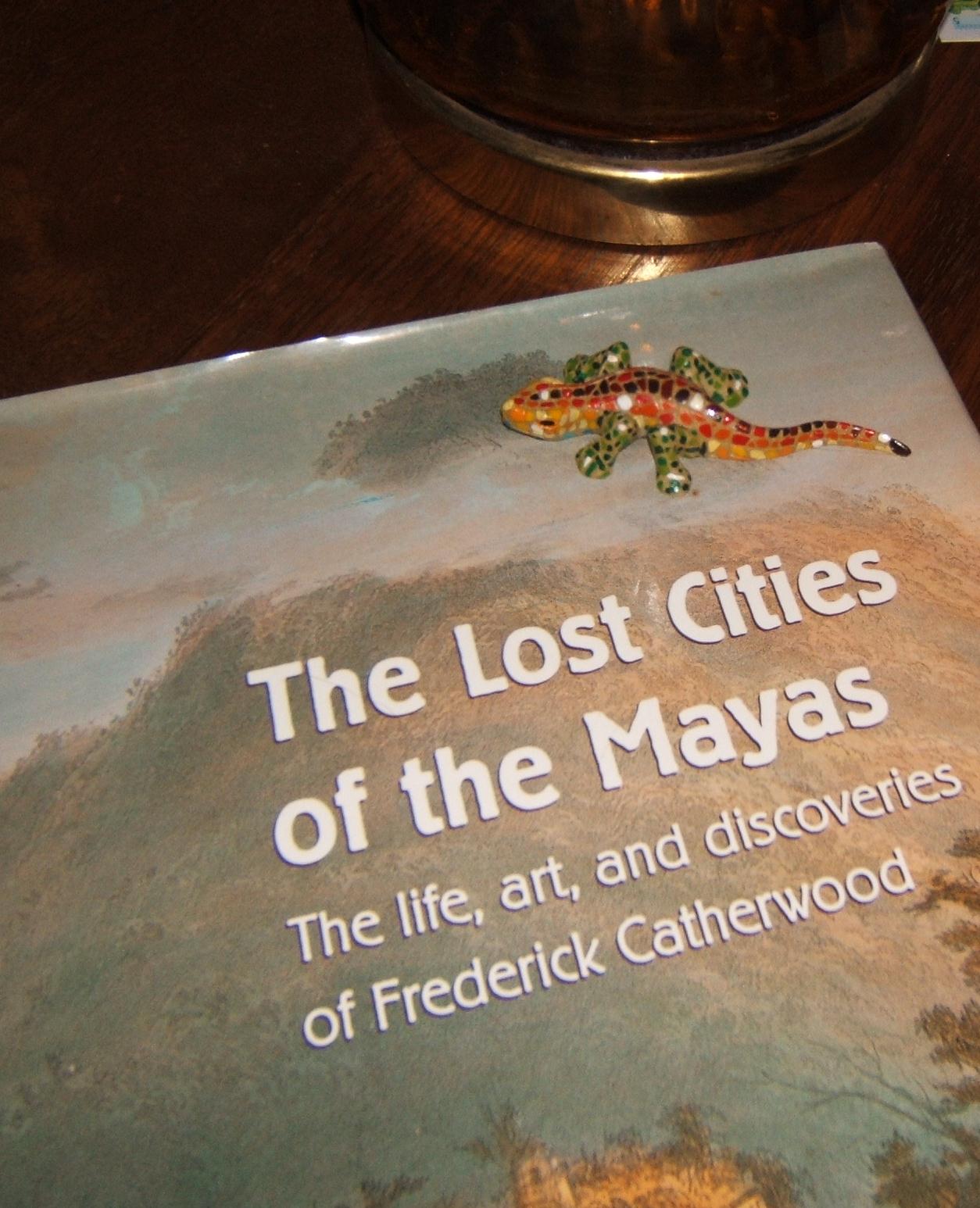
- this little fellow came all the way from Barcelona in Spain

holding on
~
flex knee
reach
determined to stick
~
one foot on wall
will the molecular bond
to adhere
~
reluctant release
of rear foot
now dedicated to
surface past
~
flex knee
reach
~
© Jane Tims 2011
landscape
landscape: inland scenery (Oxford dictionary)
When I see the beaches and headlands of coastal New Brunswick…
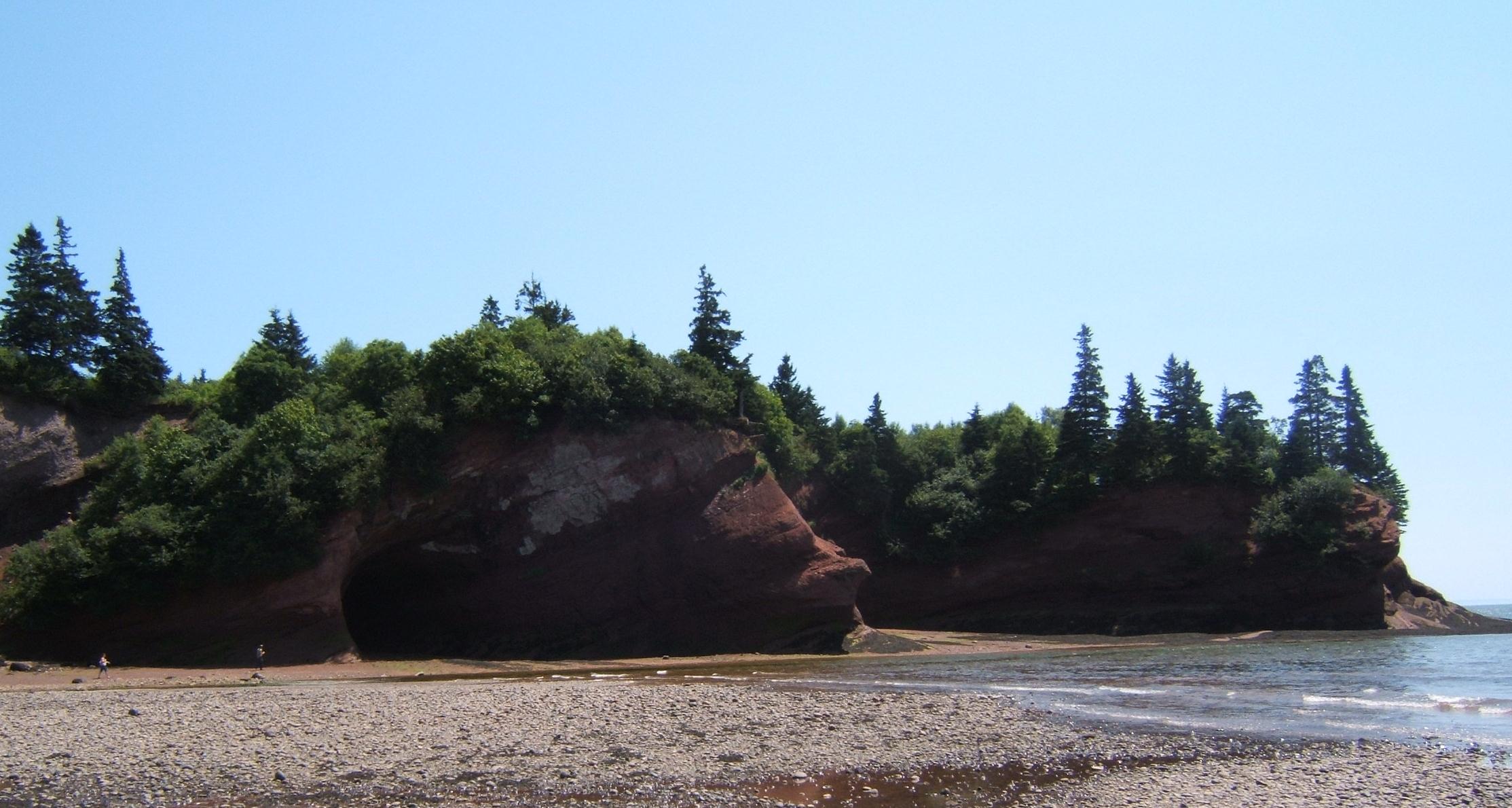
Saint Martins, New Brunswick
or the flatland and grasses of the western Canadian prairie…

prairie in southern Saskatchewan.. a dust storm on a salt lake bed
… I know landscape influences my life.
I also know my life has a landscape of its own, with hills and valleys, places to celebrate and places to hide, paths and roads moving ever forward. When I take the time to be aware of my landscape, to notice the detail and understand nature, I experience the best life has to offer.
landscape
~
a veil
draped across
bones of the earth
pointed tents
supported by forest
and the bent stems of grasses
soft settles in pockets
lichens and mosses
~
beneath the veil
texture
the ways I follow
quick or crawl
hollows elevations
clear eyes
or sorrow
~
the only way to understand
form follows function follows form
is repeated observation
lay myself on the landscape
allow my bones to conform
feel its nuance
~
see a field of grasses
see also awns and panicles and glumes
~
© Jane Tims, 2011

the parts of a grass plant (from Roland and Smith, 1969, page 68)
under the haystack
In our area, late summer is haymaking time. During the past two weeks, almost every field has been at some stage of mowing, bailing, or gathering. Farmers tried to bring their hay in before the August 28 tropical storm (Hurricane Irene), so most fields are now cut and cleared.
Haymaking is a picturesque activity. The cut hay is formed into parallel windrows in the fields, an artist’s lesson in perspective. The cutting and bailing and drying of hay are all fascinating to watch.
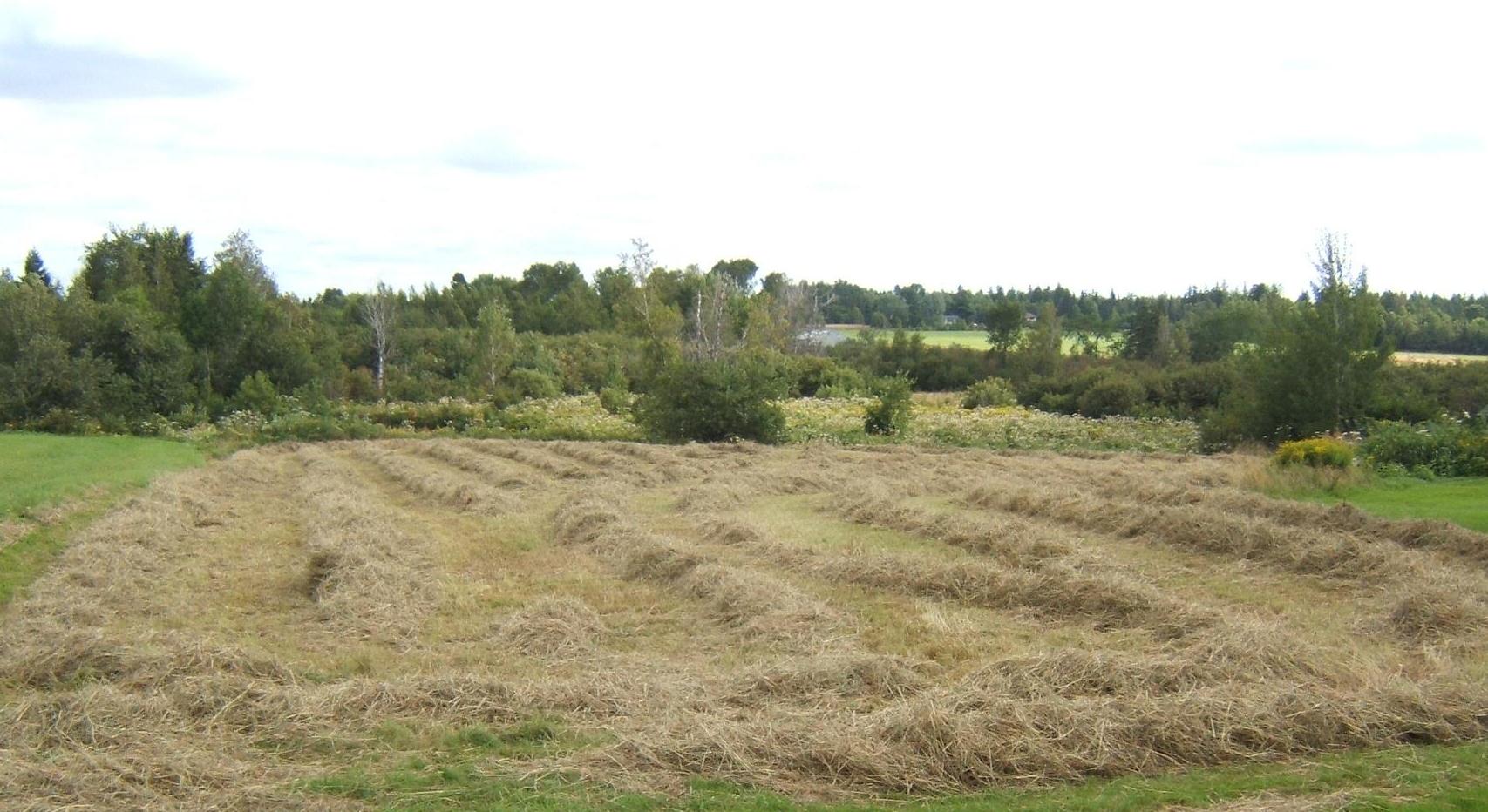
In the 1960s, at my grandfather’s farm, hay was gathered loose into a horse-drawn hay wagon and stored unbailed in the barn. One summer, I was thrilled to be asked to help ‘tramp hay’. As the fluffy hay was forked into the wagon, our work was to compress it by rolling and stomping and jumping.
Haying methods have changed, of course. Collecting loose hay is almost non-existent. Even the smaller square bails are hard to find. The most common are the cylindrical ‘round’ bails or the white plastic-wrapped silage bails.
The round bails look like plump shredded wheat…

and the silage bails are giant marshmallows.
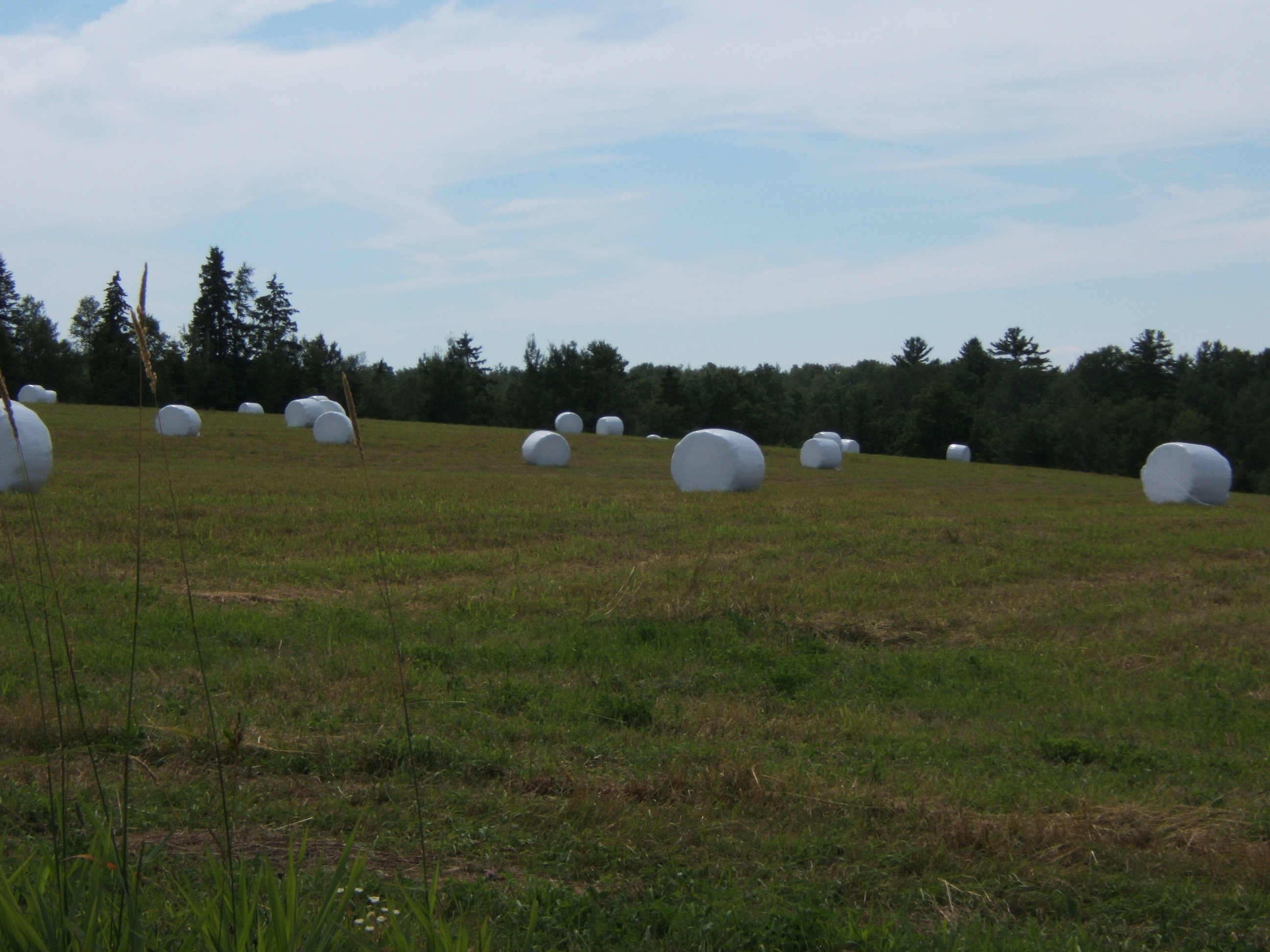
At sunset, the shadows of the round bails make musical half notes on the fields.

'half notes'
Summer Song
~
Sunbury County
sings in its sleep
purple vetch
hop clover
bluegrass
at the roadside
~
hay in rows
a staff
empty of song
awaiting
round bails and their shadows
half notes for an oboe
~
honey bee
ditty in the pink and red-hipped
old fashioned roses
bid country roads
enter the covered bridge
glimpses between planking
rock music on the water
tires drum on loose boards
~
deer look up
cattle low in the meadow
owl to whitethroat
counterpoint
goldenrod pollens the air
rushes by the Rusagonis River
north and south
~
over Sunpoke
big moon crescendo
~
trembles of aspen
diminish
~
Published as: Spring 1995, “Summer Song”, The Cormorant XI (2)
(revised)
© Jane Tims
along the country road #6
How are the giant statue of a Canada goose at WAWA, Ontario, and the roadside plant White Clover associated? Read on…

the giant statue of a Canada goose at Wawa, Ontario
White Clover is a common perennial herb of fields, lawns and roadsides. The plant is also called White Clover or, in French, trèfle blanc. Flowers are borne in globular heads, pure white or tinged with pink. The name Trifolium is from tres meaning three and folium meaning leaf. Repens means creeping, a reference to the long, prostrate stems.
The leaves of clover are in threes, palmately compound, and are occasionally found in fours. According to superstition, finding a four-leaved clover gives good luck to the finder. In the 1960’s, my Dad found a five-leaved clover in the grassy field in front of the giant statue of the Canada goose at WAWA, Ontario.
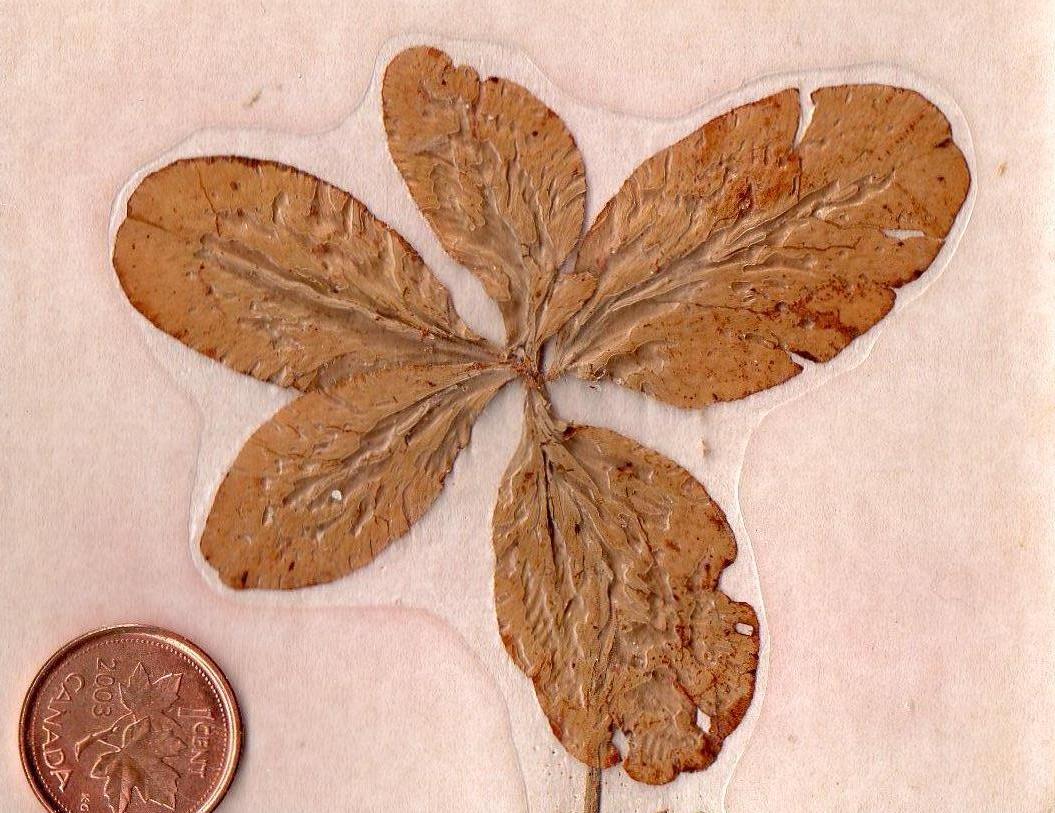
the five-leaved clover my Dad found on the lawn in front of the Canada goose at Wawa almost 45 years ago
Dad pressed the leaves and covered them in a laminating film. The pressed plant is still among my treasures.
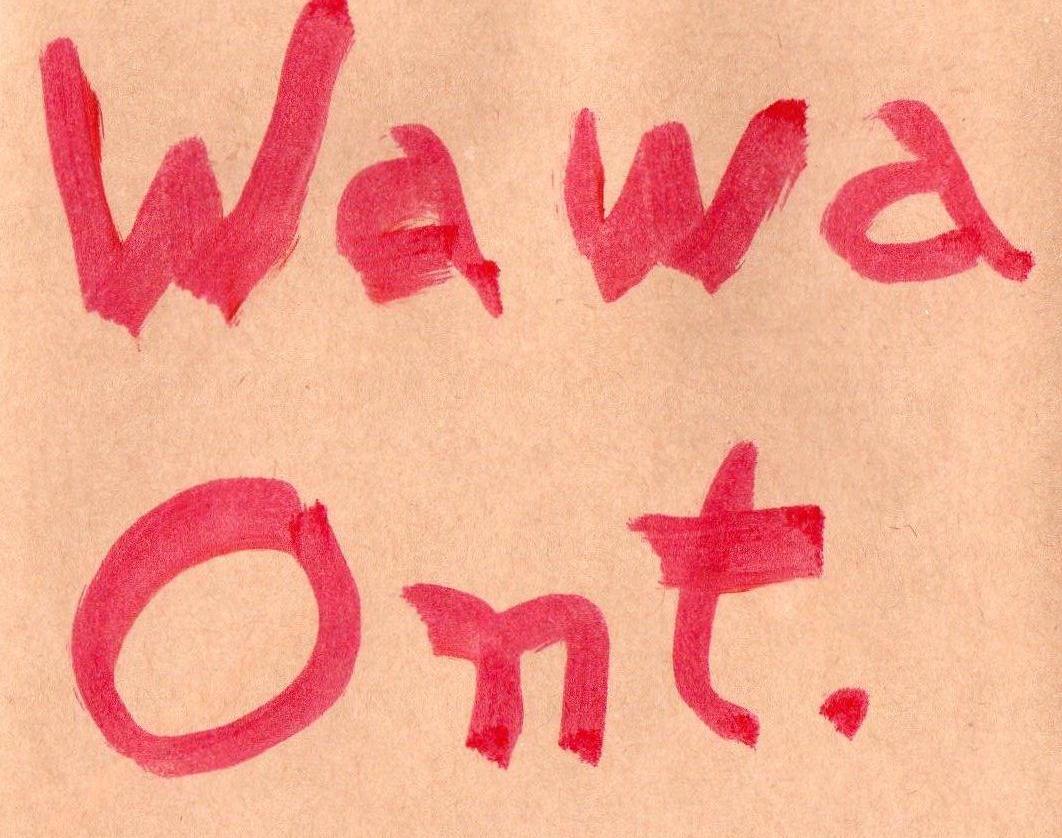
the reverse side of the specimen of five-leaved clover, with my Dad’s printing
We returned in 2002 and searched, but the three-leaved variety was all we found.
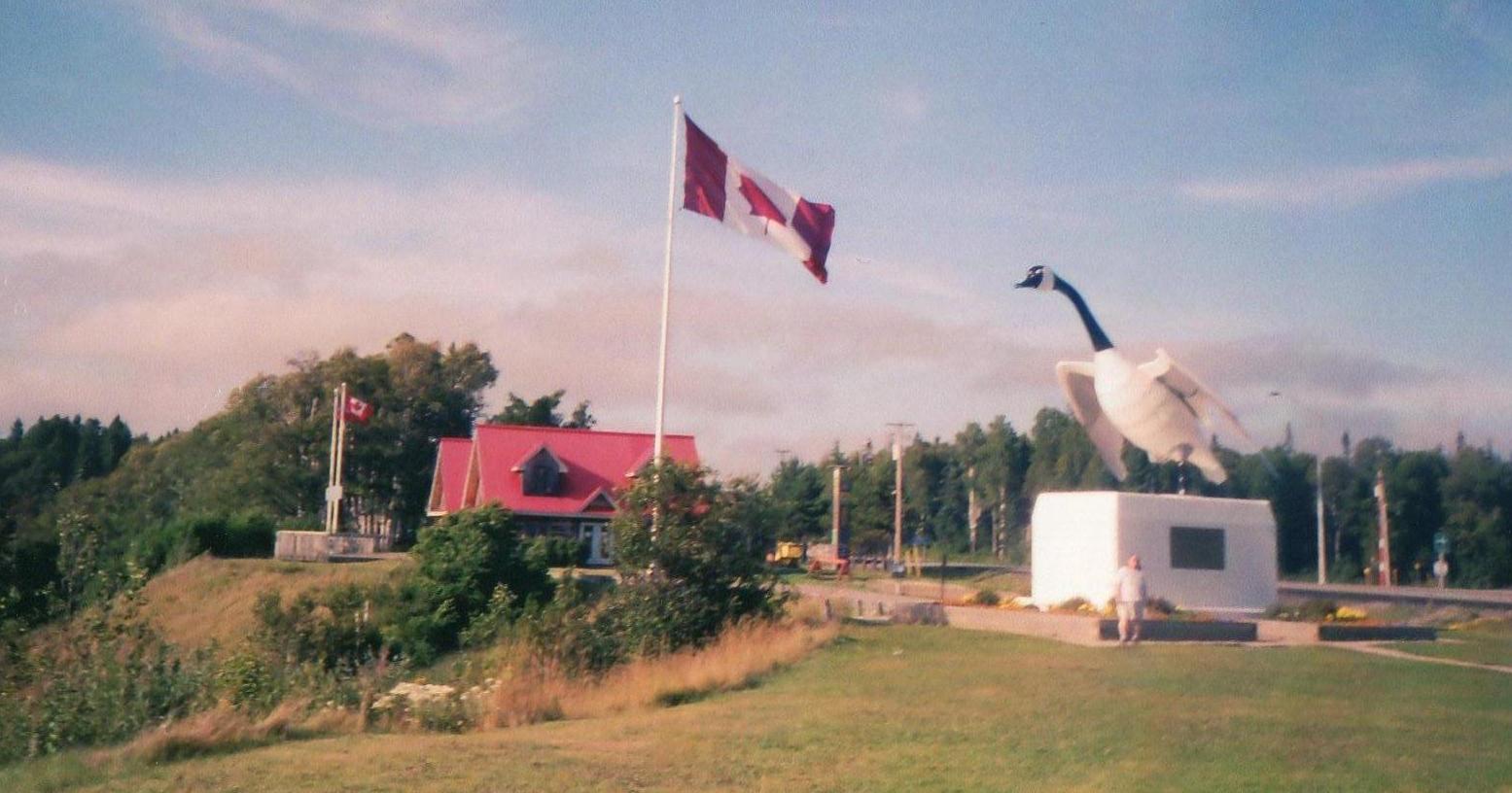
we searched in 2002, but I think the lawn had been replaced
Clover is a useful plant. It ‘fixes nitrogen’, meaning it takes nitrogen from the atmosphere and introduces it into the soil as it grows. The flowers are a source of honey for bees, and I’ve tasted honey made from an infusion of clover flowers. Dried leaves can be used for making tea.
Have you ever found a clover leaf with more than three leaflets? Did it bring you luck?
White Clover
Trifolium repens L.
(Three Leaves and Wishes)
~
only to lie
sweet dreaming in the clover
to pull blossoms
from long stems
toss soft snowballs
at blue-bottle flies
~
bees to visit me
florets for nectar
hair splashed on the clover
scented sweet honey
~
to search three leaves for four
creeping across the lawn
to the roadside
to roll in the fields
of white clover
trèfle blanc
blushing
~
Warning: 1. never eat any plant if you are not absolutely certain of the identification; 2. never eat any plant if you have personal sensitivities, including allergies, to certain plants or their derivatives; 3. never eat any plant unless you have checked several sources to verify the edibility of the plant.
© Jane Tims 2005
the glassed-in porch
My grandfather lived in a big white farmhouse. It had rooms and rooms, but the focus of life was the kitchen. On rainy days, we could play there quietly.
Sometimes we were allowed to spend the afternoon in the glassed-in porch just off the kitchen. It was whitewashed, and had filmy white curtains and wide window ledges.
On those ledges was a fastinating collection of knick-knacks and trinkets. Examining these items was very entertaining although we were not really allowed to touch anything.
I have tried to emulate this magical jumble of artifacts in my own home, but some spaces are impossible to duplicate.

a collection on a window ledge
glassed-in porch in rain
~
rainy day glassed-in porch
tall windows and white step
down from the kitchen
to linoleum wicker table a cot
~
never-used porch door
at the windows, white ledges
keepsakes and trinkets
‘look but don’t touch’
~
big clock in the kitchen ticks
red-eared slider frantic against
the frosted sides of his bowl
rain taps at the window
~
irresistible urge to give the turtle
respite, lift the curtain to admire
the rain, lift the velvet lid
of the purple box, Port Maitland
~
iron pyrite safe inside, encourage
dippy bird to tip and drink
from the glass of water, blue tulips
and a chip in its rim
~
nudge the red and yellow-flocked
parrot above the cot, swing him
on his metal perch, rearrange ceramic chicks
to peck at whitewashed window ledge
~
focus rose bowl ruby light
on china pig, puzzle out flowers
and holes on his back, turn the bud vase over
‘where is Occupied Japan?’
~
pour buttons from the jar, sort
and match Meteghan sea glass, marbles
in a coffee can, take a ship with scallop shells
for sails along the sill
~
trace paths of hesitant rain
droplets on glass
~
© Jane Tims 2011
in hurricane rain
Hurricane Irene is past and the skies are clearing after 44 mm of rain yesterday and a very windy night.
I feel so sorry for those who are left in misery after the storm, but our experience was rather tame. My memories will be:
…bands of rain across the yard…
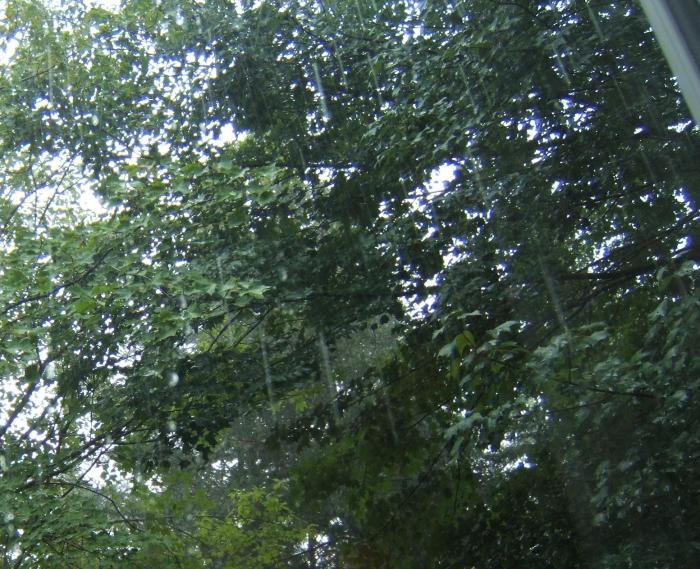
- rain viewed from the window

…waking up to a lawn riddled with leaves…
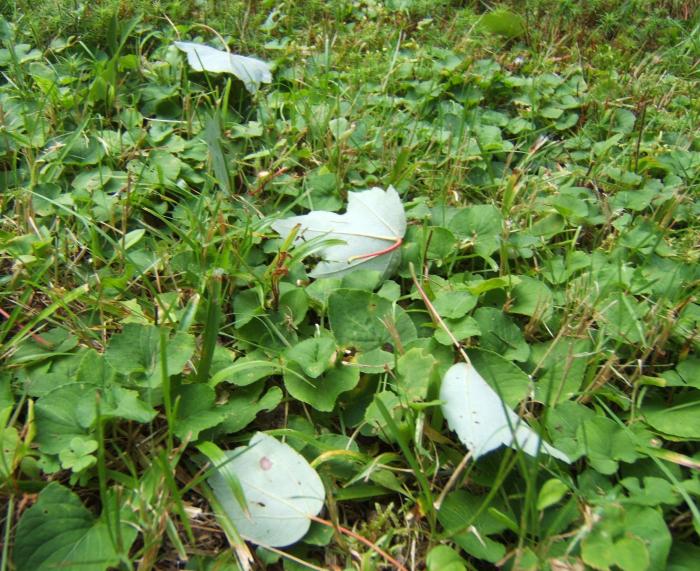
- leaves on our ‘lawn’ of violets…why do they all seem to land upside down?

…a clear sky in the middle of the night. A star was shining through our window, made alternately non-existent and brilliant by the wild movement of the tree branches in the wind. The star was so bright it woke me…
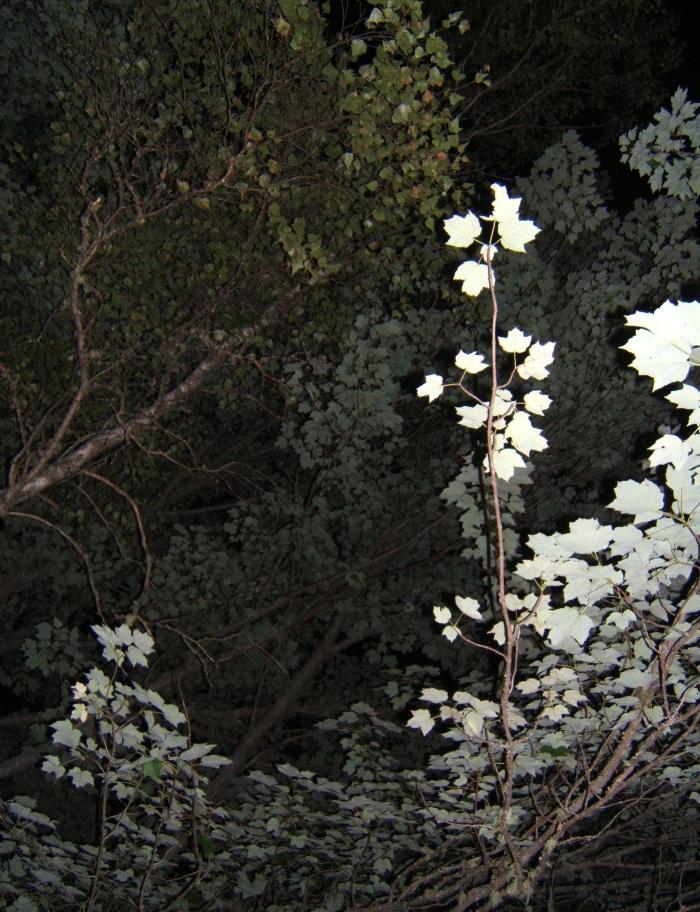
- the trees above our deck rocked wildly all night long
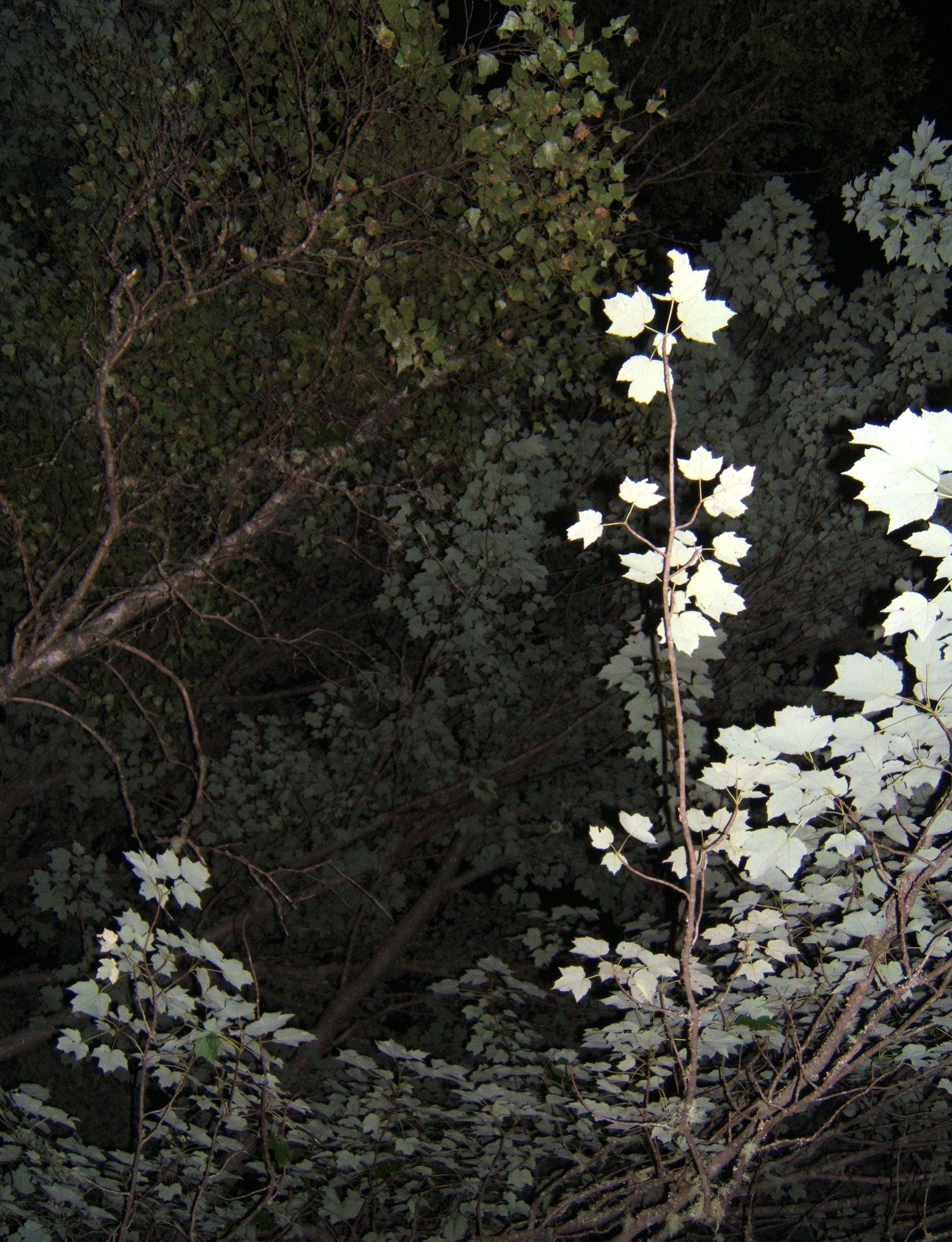
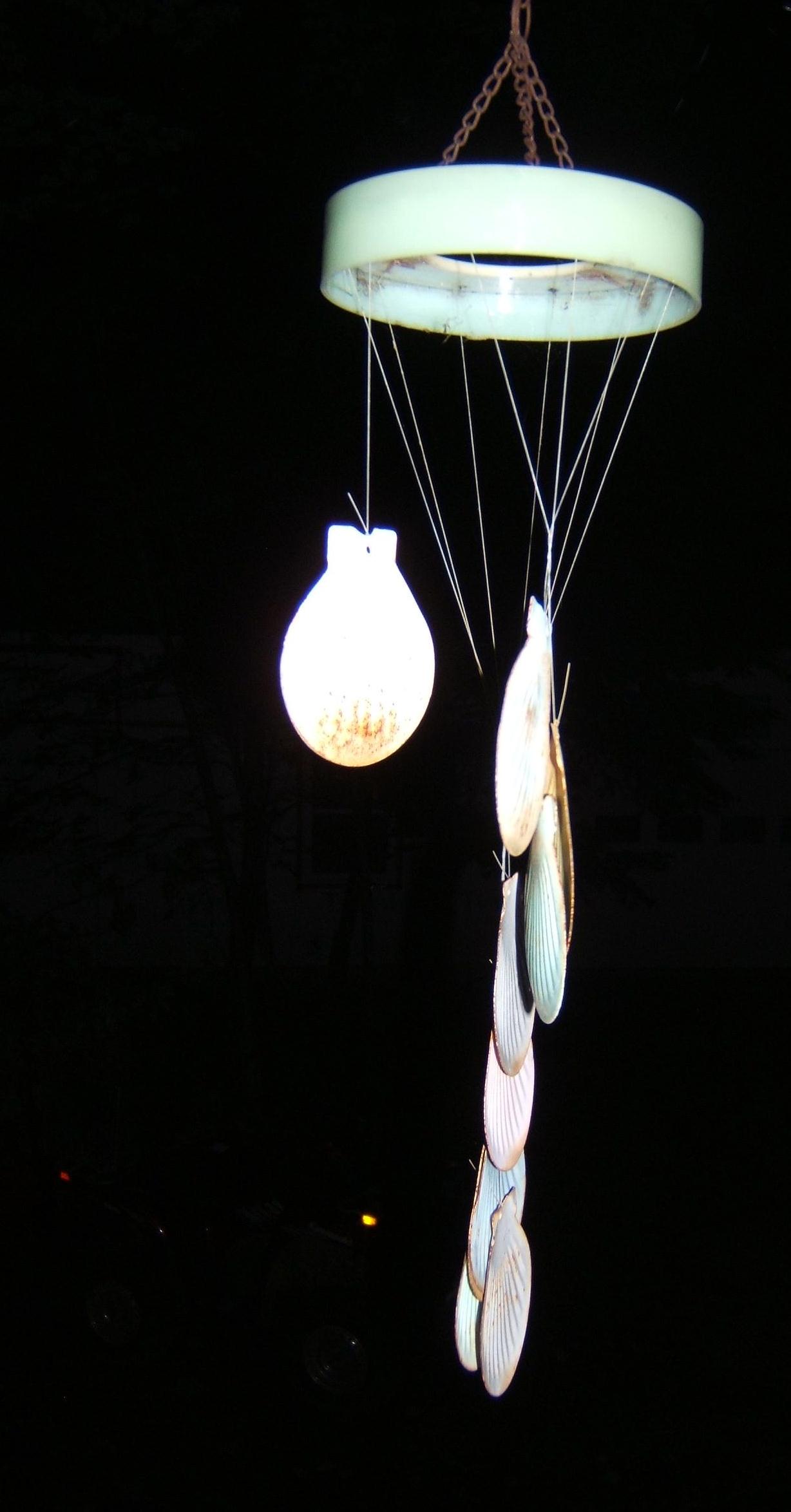
…our demented windchime. A mangle at the best of times, the poor thing is so tangled, it may not be possible for me to figure out the puzzle…

- my poor tangled windchime …yes it is rusty but it makes a lovely sound
…everything saturated, the bird bath full of clean, fresh water and our driveway like soup…
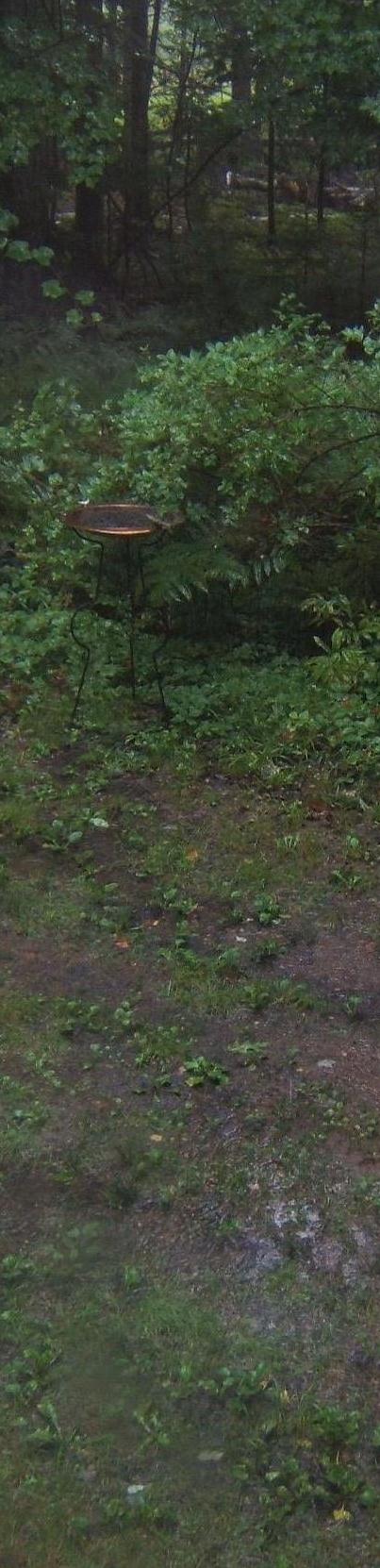
- bird bath and rain
My first knowledge of the power of a hurricane was associated with Hurricane Hazel. I was born the year it hit in 1954 (October 15), but its ‘bad reputation’ lived long enough for me to hear stories of it as a child. In its wake, 81 people in Ontario were dead due to flooding, and 4000 people in southern Ontario were left homeless.
Hurricane
~
Hazel
hurled northward
toward home
and me bewildered
wind at the roof
rain at the glass
faint imitation
of the rage
described in the encyclopaedia
more like the silent eye
~
I turned the page
saw a photograph in disbelief
a straw driven
into the heart of a tree
still standing
~
today, I believe
~
I stand still
while fury lashes around me
and in the quiet, I
am impaled
by a word
~
Published as: ‘Hurricane’, 1993, The Amethyst Review 1 (2)
(revised)
© Jane Tims
edge of lake
Water is essential to my health, not only because I need it to drink. I also need to see water. Whether it’s the water of a stream, river, lake or ocean, being near water comforts and enlivens me.
I like the transitions too, the places where land and water meet – the seashore, the margins of a brook, or the shoreline of a lake. Birds and other animals love ‘edge’ – places where the food is plentiful and cover is available. We go to the lake shore to watch loons diving for fish, deer wading in the marsh grass and ducks ‘dabbling’ along the shore.
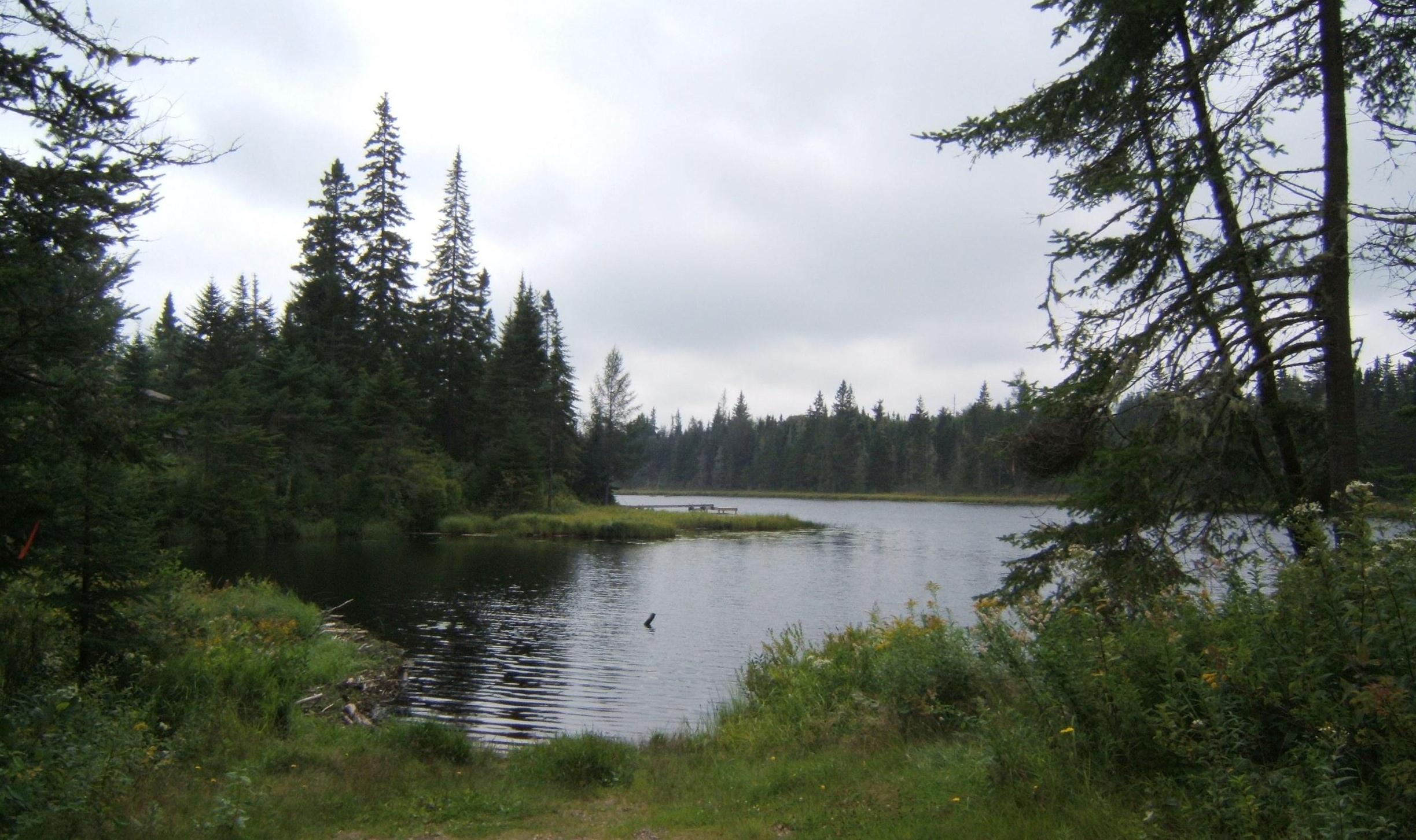
edge of lake
evening edge
~
of lake
a corner torn
from the loaf of hills
red with setting
~
faint click
sun gone
dusk and bread crumbs scattered
~
nasal chuckle
from the farther shore
arrows etched on glass
~
blue-winged teal
under wings a glimpse
of summer night
~
greedy for crust and crumbs
~
© Jane Tims 1998

evening edge of lake
trampled grass on a flat-topped hill
I change the spaces I enter, even when I enter only for a moment. I am an intruder. I am certain feet have scurried into hiding just as I arrive. Sounds have ceased. Scents and tastes have been altered.
Once in a while, my difference can be disguised. I can enter before the space can know I am there. If I am quiet, if I walk softly, some agent will help me pass through the veil and remain unnoticed, just long enough to see and hear and taste the true essence of the place. Often, the generous agent is the wind.
It was a favorite hike, an old cart track winding up the side of a dome-shaped hill in the Elkwater Lake area of the Cypress Hills in southern Alberta. The hill had a flat top and a thick bristle of conifers along the sides. On the flat top was a fescue grass meadow, a bit of prairie perched a layer above the mixed grasslands.
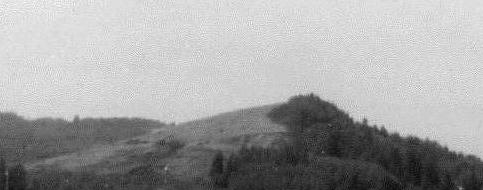
a hill at Elkwater Lake ... coniferous woods and grassland on the same hill
The track was not much more than two ruts, worn into the grass. It curved up the side of the hill, so the approach was gentle, gradual. Then, abruptly, the hilltop. If the wind was right, I could surprise the deer. They yarded there, grazing the grasses, etching paths into the meadow.
If the wind stayed in my favor, the deer would linger, chewing their cuds, watching me, but not registering my difference. As long as the wind blew I could watch, but if it settled, my scent would reach the deer. They would lift their heads and tails and be off in a few zigzag bounds.
deer yard
on a flat-topped hill
~
1.
below the hill is the distant prairie
speargrass and grama grass
and the sweetgrass hills of Montana
~
the grass at my feet is different
fescues of the Cypress Hills
flat-topped remnants of the Great Plateau
untouched by glacier scour
~
2.
bless the wind
it sorts the grasses
lifts each hair
ruffles the limp and fine
~
wind nudges the stubble
the artist’s bristle
the tail hairs of the doe
the chop of fresh grass
~
her gentle cud
her watchful eyes
wind in the spokes
of the mule deer wheel
~
the trampled paths
a game of fox and geese
or the part teased by wind
into sun-blond hair
~
3.
if the wind takes a breath
if the grass or the hair
settles on the shoulder
of the hill
she runs!
~
seeks the safety
of the downslope
downwind
trees
~
4.
fescue
curious on this flat-topped hill
its rightful place
the ancient prairie
~
Published as: “deer yard on a flat-topped hill”, 2010, Canadian Stories 13 (76)
(revised)
© Jane Tims

deer on the grasslands of Nebraska (2002)
a place to wait, out of the rain
My husband and I love to go for drives in the countryside, and we often turn these trips into ‘expeditions for collection’. For example, in 1992, we began a project to see all the covered bridges in the province; of the more than 60 covered bridges in New Brunswick, we have ‘collected’ about three-quarters. Recently, we began a quest to see as many waterfalls as possible (the state of my arthritic knees puts the emphasis on the ‘as possible’).
This spring, we set out with a very reasonable goal, to see the three lychgates at Anglican churches in the Diocese of Fredericton (all of the Parishes in New Brunswick are located in the one Diocese). This idea came from a short article in the New Brunswick Anglican in 1997 by Frank Morehouse (‘Only three lych gates remain in the diocese’). The three lychgates are at St. Anne’s Chapel in Fredericton, St. James Church in Ludlow, and St. Paul’s Church in Hampton.
Lychgates are an architectural remnant of past practice, dating back to the 13th century. They were used as a part of the funeral service, a place for the priest to meet the body of the deceased on its way to burial, and a shelter for the pall bearers to stand out of the rain. The word lychgate comes from the Anglo-Saxon word lych meaning corpse.
A typical lychgate is made of wood, and consists of a roof supported by a framework of two or more posts, and a gate hung from the framework. Lychgates usually stand at the entrance to the church property or the graveyard. They can be architecturally ornate.
Today the lychgate is a picturesque feature of the churchyard, but they also create habitat for wild life. Spiders tuck their webs in the rafters of the structure where they are safe from wind and rain. The shingled roof of a lychgate is often a place where lichens and mosses can grow without competition from other plants.
Our collection of lychgates at Anglican churches in New Brunswick is complete. We found the lychgate in Fredericton on a rainy day in April…
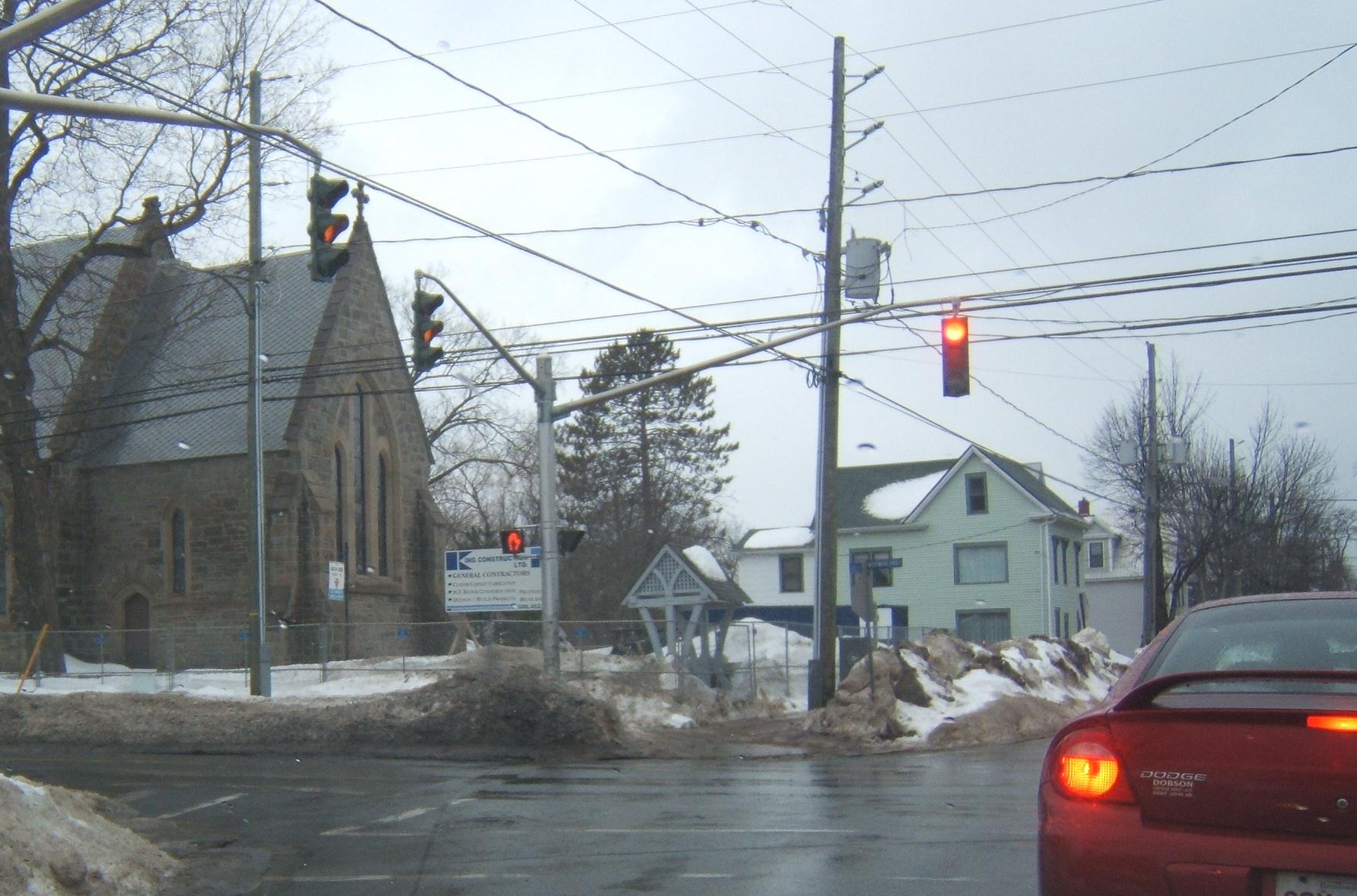
lychgate at St. Anne's Chapel in Fredericton, on a rainy day
… the Ludlow lychgate on a hillside in early July…

- lychgate at St. James Church, Ludlow

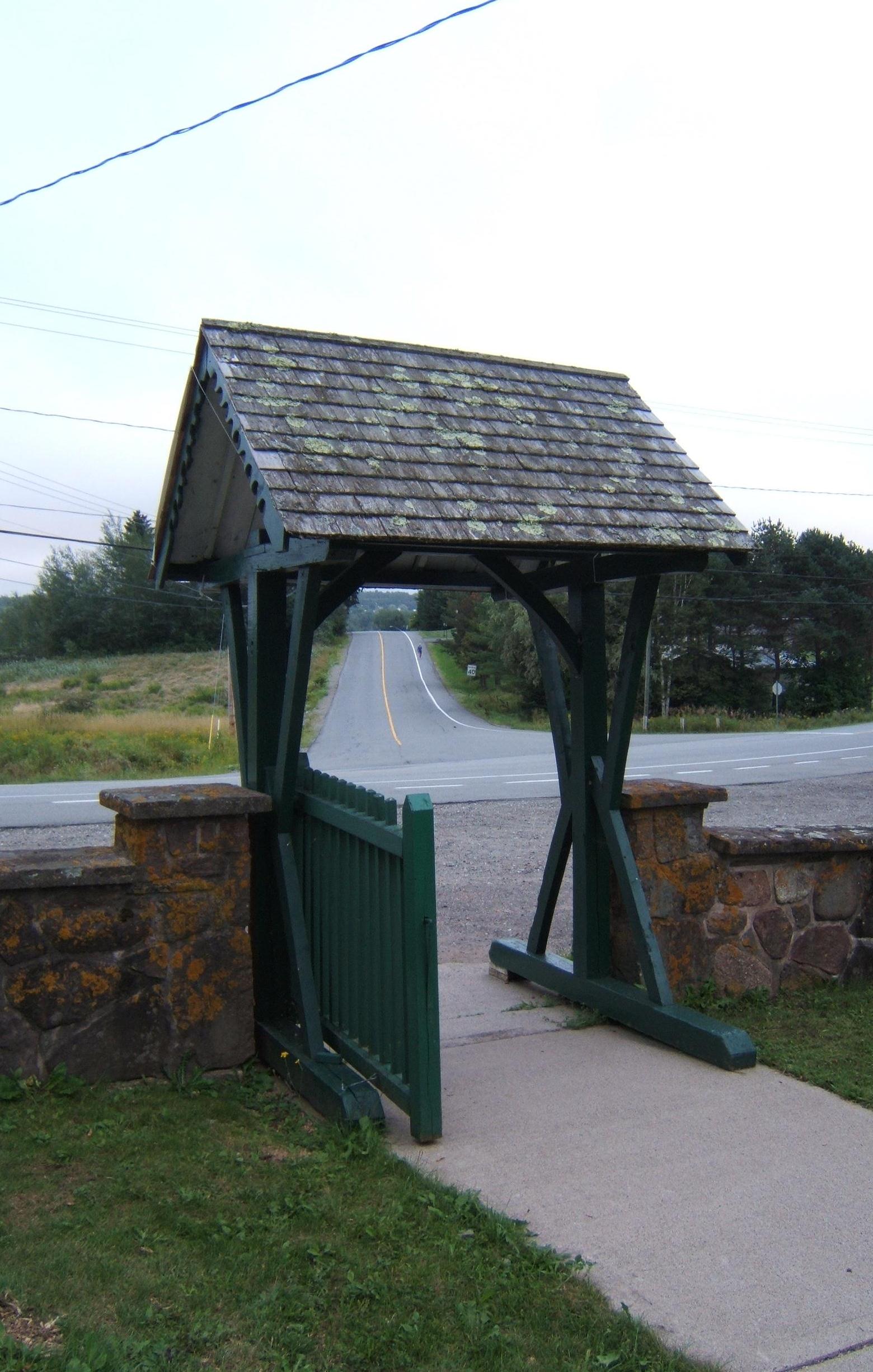
lychgate at St. Paul's Church, Hampton... green lichen on the lychgate roof and orange lichen on the stone wall
a place to wait, out of the rain
~
as if the rain matters
all of us drenched in tears
best for this to be
a grey day
heaven opened
for two way passage
~
the Sentences encourage me
to lift my eyes
and in the rafters of the lychgate a spider
spinning its web
~
as if it were a tale that is told
about a roof that protected me
the sun shall not burn thee by day,
neither the moon by night
neither the rain
~
(quotations in the poem are from The Book of Common Prayer, ‘The Order for the Burial of the Dead’, Canada, 1962)
© Jane Tims 2011




 nichepoetryandprose