Posts Tagged ‘poetry’
old schools in the landscape
In my last few posts, I have focussed on my research toward a new poetry project I will be beginning. I know there are interesting stories to be told about the ‘inside’ of the one room school. Because of my interests in botany and community history, I would like to reflect on the ‘outside’ of the one room school – its surroundings and geographic location.
~
I still have to do some thinking about this project. I know that people who attended one room schools will have stories to tell about how the local terrain and landscape influenced their schooling.
~
A school’s surroundings would have impacted learning in many ways. For example, the view of a lake from the school window may have caused many a pupil to settle into daydreams. Interesting fields, hills, and watercourses would provide the teacher with opportunities for nature study.
~
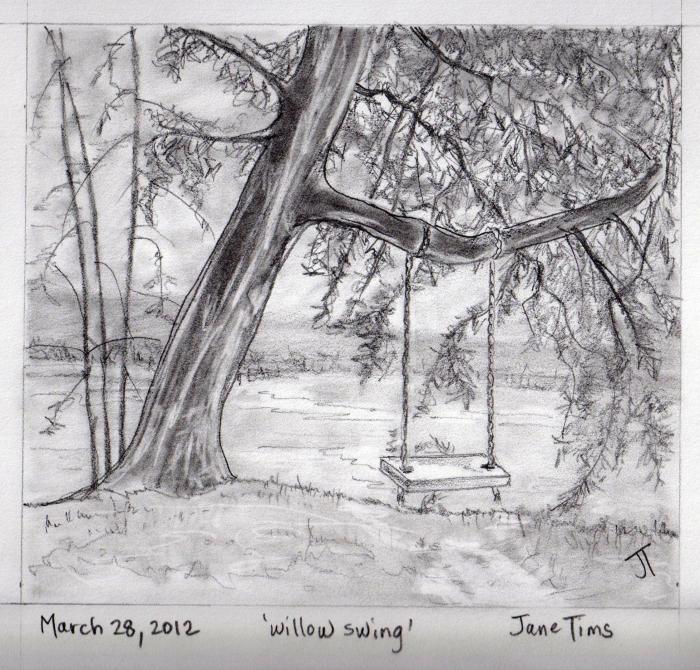
The location of the school would also influence recess and lunch-time activities. My Dad wrote about damming a local stream so they could skate in the winter months. The same stream meant fishing in May and June. A nearby hillside would be great for sledding in January and February. Trees in the school yard? – A place to climb or to hang a swing.
~
~
Students walked to school before the 1950s. The study I made of schools in Upham Parish, New Brunswick suggests that students walked as many as three miles to school in the late 1800s. Hills made the long walk to school more difficult. The winds by a lake or other shore land would be bitter on a winter day. Rivers, lakes and wetlands meant a place to hunt tadpoles. A spring by the road? – A cool drink. My Uncle, forced to wear a hat/scarf he hated, used the bridge on the way to school as a place to hide his headgear!
~
One room schools were located near clusters of houses and various community activities. The walk to school may have passed a church, a post office or a community store. Hardwood forests meant lumber mills and, in spring, maple syrup and the sugar shack. Good land meant farms; grazing land meant cows to outstare.
~
On a drive last weekend, we found an older building along the Saint John River that may have been a school. The Upper Queensbury Community Hall has all the characteristics of a one room school – the steep roof, rectangular footprint, and tall side windows.
~
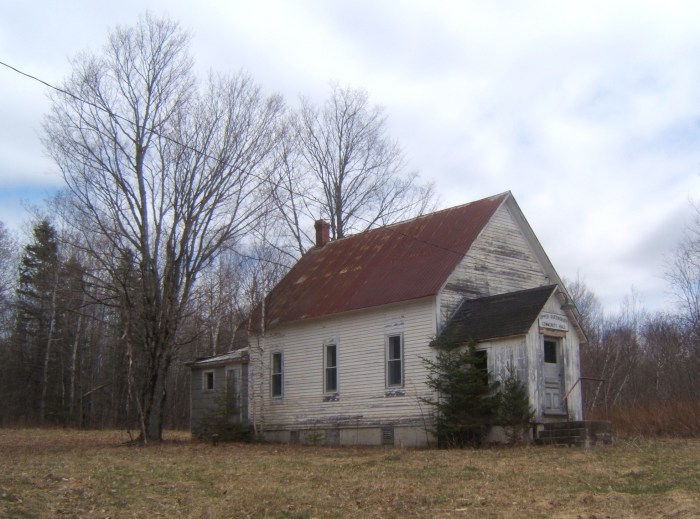
Upper Queensbury Community Hall near Nackawic, New Brunswick. I will have to make some inquiries to find out if it was a school house at one time.
~
A look at a map shows some of the landscape features in the area.
~

Map showing landscape features of part of Queensbury Parish, near Nackawic, New Brunswick. The yellow dot is the location of the Upper Queensbury Community Hall which may have been a one room school.
~
The Saint John River was nearby, although further than it is today since the Mactaquac Dam (built in 1968) has raised the level of the water. The river’s possibilities for fishing, skating and boating were only a downhill trek away. The terrain is gently undulating, as the names of nearby communities (Day Hill and Granite Hill) suggest. Local geographic points the community children may have known include the many-tiered Coac Falls and Coac Lake (an old road runs past the community hall back through the woods to the lake, about a mile away). The aerial photo (taken near the end of September) shows the red of the cranberry bog – picking cranberries may have been a well-known activity. Sugar maples are common in the area, as are old ‘sugar shacks’. When I interview people who went to the one room school I will have to remember to ask them about their memories of these places.
~
Writing poetry about these ideas will be so much fun!
~
~
Copyright 2016 Jane Tims
my poetry book – within easy reach
My new book, within easy reach, is now available.
~
I would like to thank you, the readers of my blog (and my Facebook and Twitter friends), for all your interest and support since I began my blog in 2012! The blog has helped me along the way, developing ideas for my projects, giving me a place to try my poems on a reading audience and giving me a chance to read some beautiful poetry on the blogs I follow. I also love your ‘likes’ and comments.
~
I hope you will buy my book and enjoy reading my poems and seeing my drawings.
~
For the readers of my Blog, I am offering a chance to win the painting on the book’s cover! My painting ‘brambles’ is painted in acrylics, size 10″ by 10″, with gallery edges. The painting is from a photograph of the blackberries growing on our lake property, the berries featured in the poem ‘berries in brambles’, one of the poems in the book.
~
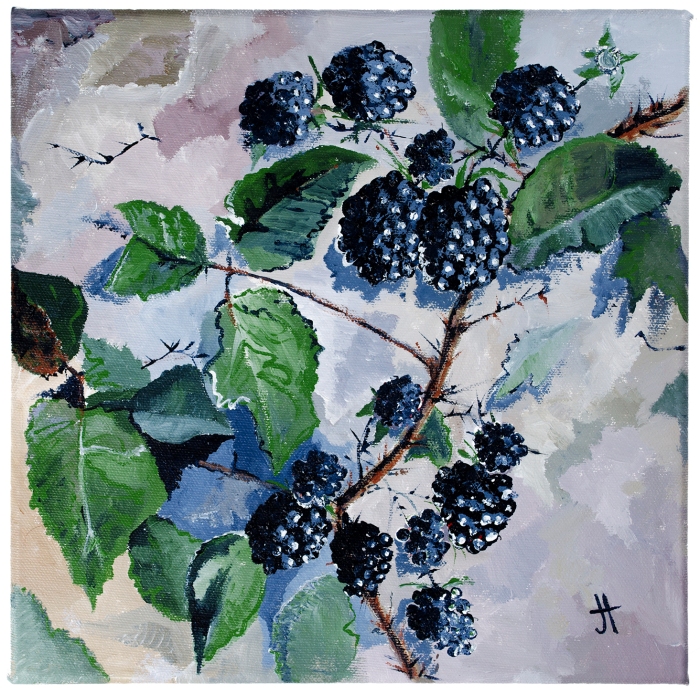
February 29, 2016 ‘brambles’ by Jane Tims
~
To win this painting, you have to do three things.
- Purchase my book through my publisher’s website (www.chapelstreeteditions.com)
- Leave a comment on any of my Blogs (www.nichepoetryandprose.wordpress.com or www.janetims.com or www.janetimsdotcom.wordpress.com) with the words ‘within easy reach’ somewhere in the comment
- Be prepared to send me, via email, a scan of your purchase receipt
~
Your name will be entered once for each book purchased. The contest will run for the first five weeks following the publication date of within easy reach (until June 7, 2016). At the end of the contest, anyone who has purchased a book from the publisher and left the comment as described above will be entered for the draw. I will notify the winner and let the readers of the blog know who has won.
~
I hope you will enjoy my book. And some reader will be the winner of the painting ‘brambles’!
~
Copyright Jane Tims 2016
update: ‘within easy reach’
The date for the release of my poetry book ‘within easy reach’ is very soon! The book includes my poems and drawings about edible wild plants and other local foods. It will be available through my publisher Chapel Street Editions and through Amazon. I’ll be posting details of how and where to order the book and information on where I will be reading during the next weeks.
~
During the first month of ‘within easy reach’ book sales, I will be offering you an opportunity to win the painting on the front cover of the book. The painting, called ‘brambles’, measures 10″ by 10″. It is done in acrylics and has gallery edges.
~
I will post the details about how to get a chance to win the painting within the next few days.
~
February 29, 2016 ‘brambles’ Jane Tims
~
I hope you will love my book, as much as I loved creating the poems and drawings!
~
Copyright 2016 Jane Tims
in the shelter of the covered bridge – not a hummingbird

~
not a humming bird
~
Benton Covered Bridge
Eel River #3
~
wing blur in the lilac
threshold of the bridge
scent-thick and purple
invisible
~
hawkmoth
hummingbird clearwing
Hemaris thysbe
~
lilac thryse to lilac thryse
side-slip, hover
nectar thirst
fierce harvest
~
~
For more information on the hummingbird hawkmoth at the Benton Covered Bridge, see https://janetims.com/2015/06/10/in-the-shelter-of-the-covered-bridge-hummingbird-moths/
~
Copyright 2016 Jane Tims
in the shelter of the covered bridge – lichen garden
~
time-stamped
~
Pont Lavoie (Lavoie Covered Bridge)
Quisibis River #2
~
~
when the end-post
of the guard rail
splits and rots
the broken space
makes room
for rain and pollen
dust and autumn
leaves
other detritus
~
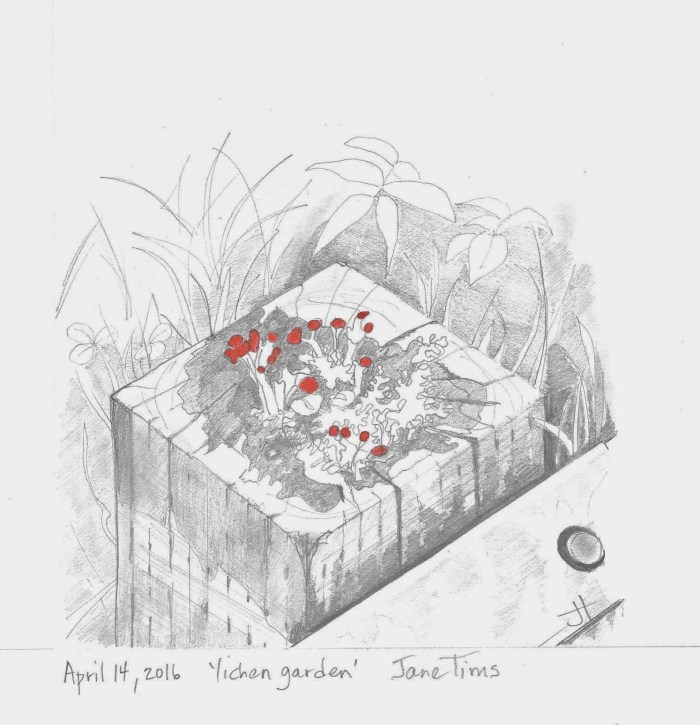
spores find encouragement
and lichens grow
Cladonia cristatella
uniformed in red
Cladina, blue-grey
reindeer lichen
and pyxie cups
~
lichens ageless
bridge not meant
to last forever
~
~
Copyright Jane Tims 2016
one room school houses – hiding in the landscape
Last Friday, we took a drive along the west side of Grand Lake, in the Youngs Cove area of Queens County, New Brunswick. We were searching for old one room school houses. As far as I know, there is no list for these buildings in Queens County, New Brunswick, although a list does exist for nearby Kings County.
~
I had seen one old school in the Whites Cove area, so we began there. This school was operated as a local craft store for a few years but is now a private cottage. The one room school is in good shape, painted bright red. The round plaque in the gable of the roof says 1837. The building had two front doors – one for boys and one for girls.
~
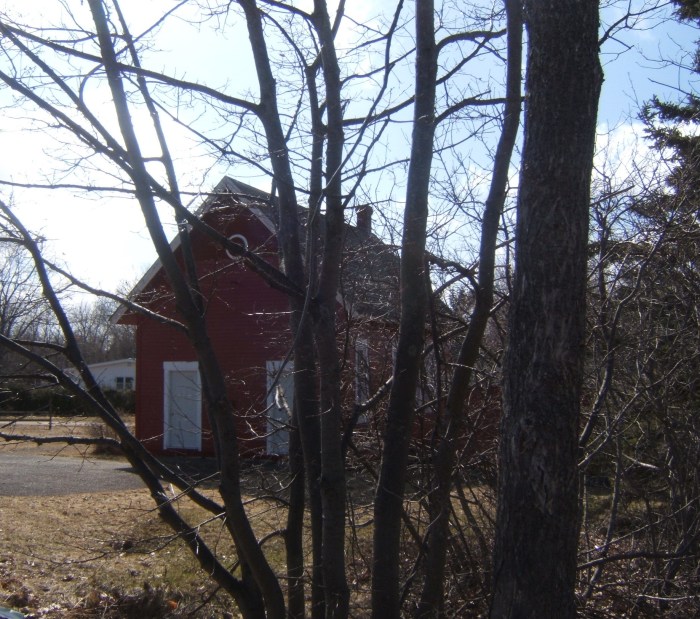
Whites Cove school house
~
We then continued toward Chipman, taking old roads when possible. I know that in the late 1800s and early 1900s, each small community (each Parish) had its own school, so we watched for the tell-tale design of the one room school house – a small, rectangular, one-storey building with a steep-sloped roof and rather high side walls. Each school had two or three tall rectangular windows on each side and one or two front doors. Some New Brunswick schools had a small anteroom or vestibule on the front. The bell-tower common on school houses in the United States was not typical of one room schools in New Brunswick.
~
We followed the road along the shoreline of the peninsulas extending into Grand Lake. In particular, we were watching for the older homes that show what the community may have looked like a hundred years ago.
~
As we came over a hill, we first saw the Rees school house. It had some of the characteristics I describe above. However, I am new to one room school hunting, so I was not really certain this little building had once been a school. And then my husband pointed to the sign on the small road opposite the building – School House Lane. The school house was being used as a cottage and was in poor condition with broken windows and a crumbled brick chimney. But I was happy to see the original stone foundation, a straight roof line, a large flat stone as a threshold, original clapboard on the front of the building, and evidence of the original vestibule.
~

Rees school house
~
Thrilled by our discovery, we continued to the next community and followed a side road. Almost immediately, we saw the Cumberland Bay School, announced by a sign above the door. It was a typical school house design, built on a hill. There was a rock foundation (with some brick) and a straight roof. The building was in good shape with evidence of regular maintenance and use, perhaps as a hall. A cold wind was howling and I felt sorry for the kids who must have come to school in all kinds of bitter weather.
~
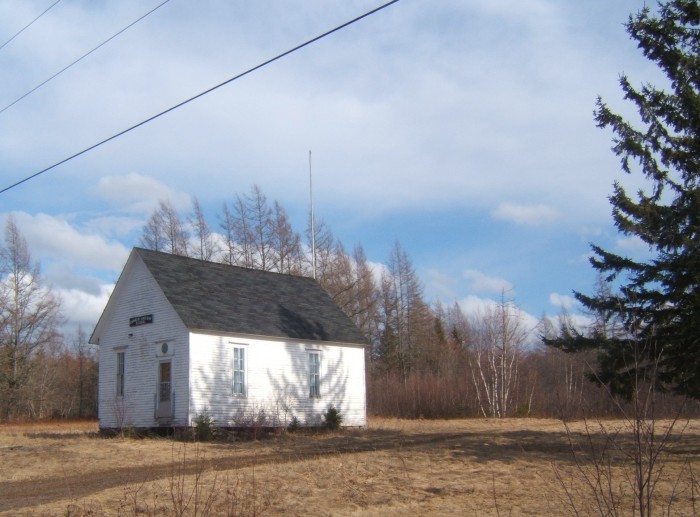
Cumberland Bay school house
~
After seeing three school houses, we felt like pros. We took the next road along the shore, toward Cox Point, and found a school house outside the community of Range. It was set back from the road, used in conjunction with a family cottage. The roof was straight, the side windows were intact and the shingles were in good repair.
~
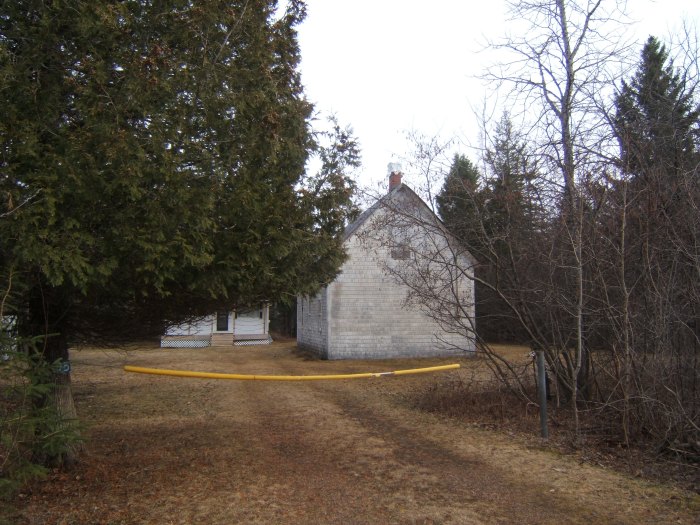
Range school house
~
I was delighted with our drive – we had discovered three school houses we did not know about! I also got a feel for some of the characteristics of these buildings and how they fit into the local landscape.
~

a map showing the old school houses we found … you can see a pattern emerging … I expect there were once school houses in some of the other communities indicated on the map
~
Why am I interested in this topic? My interests in landscape, the environment and history all come into play. I am also beginning to think about my next poetry project and have decided to explore the idea of school houses in the landscape.
~
To do this project, I will think about the setting of the school house in the community and how topography (hills and lakes and rivers), vegetation (fields and forests, orchards and big old swinging-trees) and other built landscape (bridges, churches, stores and farms) would have influenced the students, teachers and members of the community. Visits to old schools, some talk with people who remember attending these old school houses and reading at the Provincial Archives would give me lots of material for my writing.
~
Do you have examples of old one room school houses in your area? Did you attend school in a one room school house? I would love to hear your stories!
~
Copyright 2016 Jane Tims
‘within easy reach’ – the history of a writing project
As I prepare for the publication and launch of my poetry book within easy reach, I am thinking about how long it takes to see a writing project through from beginning to end.
~
Of course, the time depends on the writer, the project and many circumstances beyond the writer’s control. But the way to a book of poems can be long … for me it has not been days or months, but years.
~
2010
For my book, the first idea came in 2010 when my husband and I were exploring our new lake property. We knew so little about the property and were delighted to find blackberries, growing in profusion along the ridge above the lake. I can still taste those plump indigo berries and remember how quickly we filled my husband’s hat (the only container we had for picking). I wrote the first poem for the project (‘berries in brambles’) at the end of the summer. By then I was thinking about combining my interests in local food and botany to write a manuscript of poems about ‘growing and gathering’.
~

blackberries at our lake property
~
2011
The second step in the project came with an application to artsnb for a Creation Grant. Not every writer seeks funding, but I knew, after 35 years of work, that I would produce my best work with a clear purpose and deadlines. I applied to artsnb in March 2011, in time for their April 1st deadline. When I was not successful, I tried again for the October 1st deadline and in December, a few weeks before my retirement, I received the letter saying my project had been approved. I would be able to transition from work into an endeavor I knew I would love!
~
2012
The writing of ‘growing and gathering’ continued through the spring and summer of 2012. I was determined to base my poems on experience, so I spent lots of time hiking and driving to locate and pick the various plants I wanted to write about. That spring we tapped twelve of our red maple trees and planted a small garden. Many of the plants I harvested grow on our properties at home and at the lake, but for some of the plants, we drove the countryside, poking about in the right habitat to find the plants I sought. My best memory is of a spring day along the Dunbar Stream north of Fredericton, discovering mounds of trout lily leaves growing on the floodplains along the brook.
~
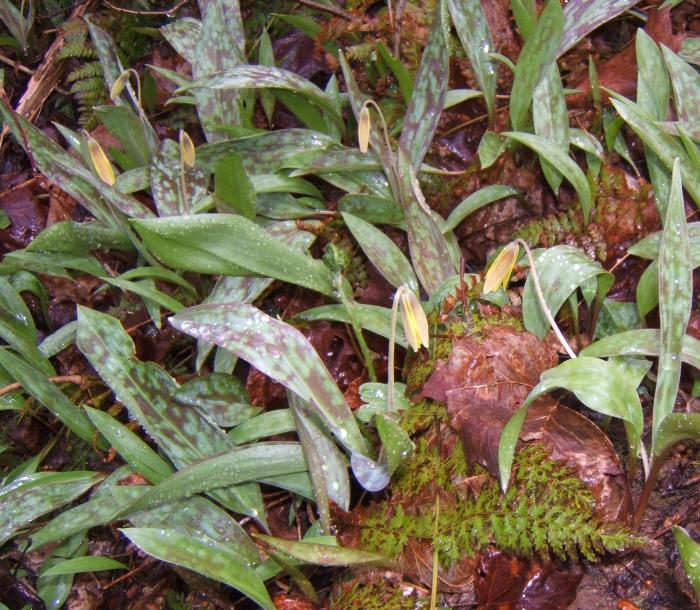
Trout Lily, also known as Dog’s Tooth Violet or Yellow Adder’s-tongue
~
For the next months, I harvested leaves and roots and nuts and berries. I chopped greens. I boiled, simmered and sautéed. I competed, unsuccessfully, with squirrels for hazelnuts. I scraped gum from spruce trees and peeled wild sarsaparilla roots. And, of course, I ate my fill of raspberries, blueberries, dandelion greens, fiddleheads, samphire greens, orach leaves and apples. From my own garden, I harvested rhubarb and herbs, onions and tomatoes. I visited Farmers Markets and roadside stands, sampling the best local produce in the world. I stirred memories from my own family history, recalling days when my dad kept bee hives and when my mom and I went blueberry picking. Really doesn’t sound like work, right?
~

salad ingredients from the garden and market
~
And then I wrote. And did research about the edibility of plants. And wrote some more. And did lots of pencil drawings. As I wrote, I consulted my Floras of New Brunswick and Nova Scotia. I completed my project with a manuscript of 135 poems and 29 pencil drawings. I submitted my manuscript to artsnb in October 2012.
~
2013
For me, the writing is only part of the process. I try to read my poems as often as possible, and I submit regularly for publication. For the ‘growing and gathering’ project, I read poems at eleven events and submitted poems to 12 literary journals. I had some success and, of the poems in the book, twelve have been previously published in seven literary journals. I also submitted the manuscript to the New Brunswick Writers’ Federation writing contest in 2013, winning Honorable Mention. Now that all sounds like work!
~

Orach growing among the rocks at the upper end of the Minister’s Island causeway
~
2014
From the beginning, I knew I wanted a published book of the ‘growing and gathering’ poems. So in 2014, after revisions and paring the poems to a reasonable book length, I began to submit to publishers. I submitted to three publishers and received three kind rejections. Then, in the fall of 2014, at the New Brunswick Writers’ Federation WordsFall, I met Keith Helmuth and Brendan Helmuth of Chapel Street Editions in Woodstock. They were interested in publishing books about the natural and human history of the Saint John River and I wondered if they might be interested in my book. I sent them my manuscript and soon began one of the best partnerships of my life.
~
2015 – 2016
During the last months, Keith and Brendan have worked to prepare my manuscript for publication. I have read every poem 20 times, revisited sources, squinted at Latin names to make certain they are spelled correctly and considered every comma and every line break.
~
Within a few weeks, my poetry book, within easy reach, will be a reality. When I first hold the finished book in my hands, I know I will be experiencing a milestone in my life. I will probably melt into a puddle. And the work will not yet be done! Ahead of me are readings and marketing and signing copies. I hope the rooms where I present my book are crowded with people eager to buy and read, but I know there may be places where I will be hoping a lone bystander will purchase a copy.
~
From beginning to end, my book has taken almost six years to complete. This may sound a bit daunting for a new writer reading this, but it is also encouraging. Your goal, like mine, may be publication. But it may also be to create a body of work representative of your life as a writer. My experience shows that every line, every paragraph, every poem you write, is part of a path towards your goal, whatever it may be. ‘A writer writes.’
~
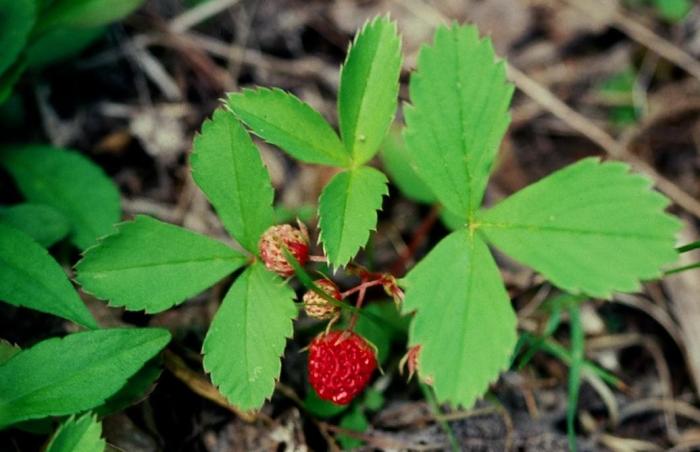
wild strawberries at our lake property
~
Copyright 2016 Jane Tims
after the ice storm

Our drive in the crystal world after the ice storm reminded me of a poem I wrote years ago.
~
It is a rebellious poem (for me), written when I was entering the workforce and unwilling to be viewed from any traditional point of view. Part of the poem uses the metaphor of ‘breaking the glass ceiling’ (Marilyn Davidson and Cary Cooper. Shattering the Glass Ceiling: The Woman Manager. Paul Chapman, Pub., 1992). The poem is about an experience in 1979 of walking in a forest after an ice storm, on one of my earliest dates with my husband. Apparently I didn’t want him to think of me in any traditional role!
~
Breaking the Glass Ceiling
we still see birch
bent in the forest
broken yet grown
fifteen years
since the ice storm
years translucent
as the curtain of fir
you held back for me
I ran ahead
wanted to walk with you
but hoped you knew
how alone I could be
above me branches
burdened
with ice
your hand on my arm
go softly ! (you said)
a touch
will shatter
twigs and tree-tops
chiselled from ice
breathe
and hear a million cymbals
tied to our wrists with ribbon
I wanted to listen with you
but hoped you knew
I would never be
coins in a wishing well
a ballerina bolted to a box of jewels
goblets clinking for a kiss
I will not let you
shelter me
I know only
shards of glass
from the ceiling
(some days I am fragile
only needing warmth
to keep from breaking)
~

~
~
Copyright 2016 Jane Tims
‘within easy reach’ – a painting for the front cover
As the release date for my book of poetry ‘within easy reach’ draws near, I have been doing some painting.
~
I began my project ‘growing and gathering’ and the poems for my book ‘within easy reach’ after my husband and I discovered blackberries on our new property at the lake. For this reason, blackberries seem a fitting subject for a cover painting.
~
I think blackberries are fun to paint:
- a basic berry-shape of Payne’s Grey
- a highlighting of each seed in the drupe with Payne’s Grey mixed with Titanium White
- a spot of white to highlight berries on one side of the drupe
- a background of blues and purples to simulate the shadow in the thicket
- leaves and a stem
~
This is my ‘practice painting’, in acrylics, 5″ by 10″.
~

~
I’ll be showing you the final cover painting soon – 10″ by 10″, a perfect shape for the cover of my book.
~
On a windy, wintery day, it is hard to be patient, waiting for blackberry season!!
~
Copyright Jane Tims 2016
in the shelter of the covered bridge – manuscript completed!!

~
Last year, in the competition of April 1, 2015, I was awarded a Creation Grant from artsnb (The New Brunswick Arts Board). The award was to create a manuscript of poems about plants and animals living in the shelter of covered bridges in New Brunswick.
I have now completed the manuscript and am ready to submit my final report. During the project I visited 28 covered bridges in the drainage basin of the Saint John River and 5 in Charlotte and Westmorland Counties. I was also able to use the notes and records from my visits to some covered bridges in 1992.
~
The final manuscript includes 81 pages, 8 new drawings, and 63 poems, organised into five themes:
liminal spaces – 8 poems about bridges as places of transition and change
notch of a lily pad – 10 poems about the covered bridge as habitat
grit of a blade – 9 poems about engravings and graffiti produced by human visitors to the covered bridge
a blade of grass between thumbs -10 poems about mysterious discoveries in covered bridges
heads of timothy – 6 poems about encounters at the bridge
gaps between boards – 10 poems about deterioration and loss due to vandalism, fire and flood
a loose board rattles – 10 poems about the sounds resonating in a covered bridge
~
Many thanks to artsnb for helping me in the making of the manuscript and for the chance to undertake such an enjoyable project!
~

Copyright 2016 Jane Tims





 nichepoetryandprose