Posts Tagged ‘plants’
‘within easy reach’
This spring, I will celebrate the publication of my first book of poetry!
~
‘within easy reach’ is a result of my 2012 project ‘growing and gathering’ supported by artsnb (the New Brunswick Arts Board). The poems focus on harvesting and eating local foods, especially wild foods. My book will be published by Chapel Street Editions, Woodstock, New Brunswick.
~
The book will include about sixty poems as well as some of my black and white pencil drawings. These are poems about picking blackberries and blueberries, eating coastal favorites like goose tongue greens and samphire, buying smelts from a truck at the roadside and fishing for landlocked salmon. Every poem is based on a personal experience of harvesting and using local foods.
~
During the next few posts, I will tell you more about my book and its poems and drawings. I can’t wait to show it to you!
~

‘fiddleheads’ – a wild food eaten every spring in New Brunswick
~
Copyright 2016 Jane Tims
in the shelter of the covered bridge – drawings
As I complete my manuscript of poems ‘in the shelter of the covered bridge’, I am also working on the drawings to accompany the text. I have made a list of the visuals presented in the poems, so I have a specific idea of what drawings I need. Many are completed since I have a large portfolio of bird drawings, for example …
~

~
Others are still to be done. This morning I completed a rather delicate drawing of the two kinds of roses growing beside the Darlings Island Covered Bridge and captured in my poem ‘tangle’.
~

~
I love to draw. For me, it is like watching a movie as I see my hand lay pencil marks on paper. It is not a calm activity. Perhaps because my hand and arm are moving, I get quite agitated when I draw and I imagine my blood pressure rising as the work progresses.
~
In order to have a body of work to choose from for the final manuscript, I aim to have more than forty drawings. I have completed nineteen. Lots to do !
~
Copyright Jane Tims 2016
Ground cover
The autumn rains have begun and already leaves are changing colour. Before the plants go into their winter sleep, I want to pay tribute to the greens of summer. In particular, I love the ground covers in my garden. They create thick carpets of green and provide a backdrop for other garden colour.
~

~
Periwinkle is my favourite ground cover. In early summer blue flowers dot the shiny green foliage. The plant grows well in our very shady yard and makes a good transition from lawn to woodland.
~
~
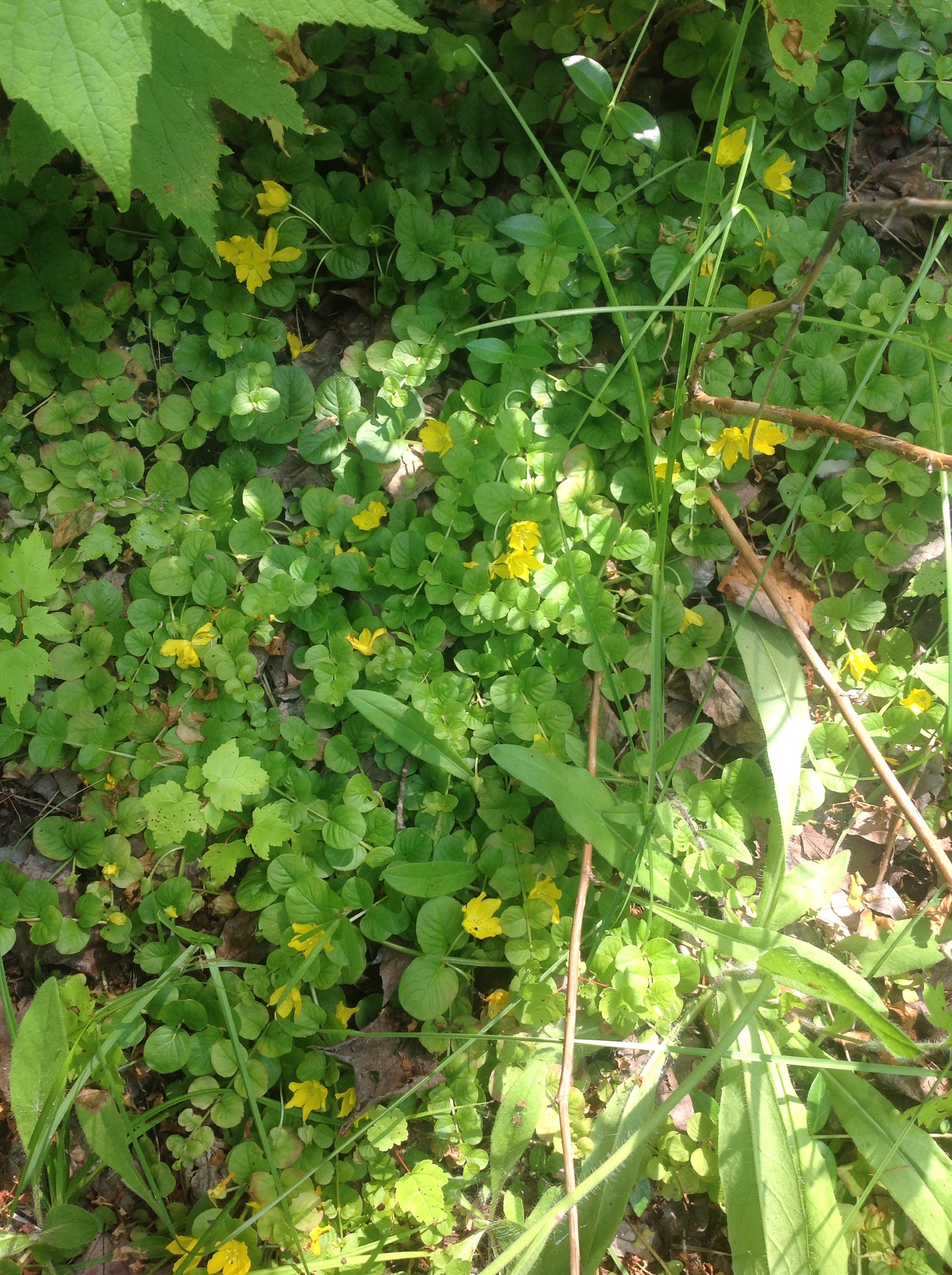
The Creeping Jenny in our yard is a transplant from my grandfather’s farm, probably by way of my mom and dad’s property. The flowers are bright yellow and the leaves grow in pairs of gradually smaller size.
~
~
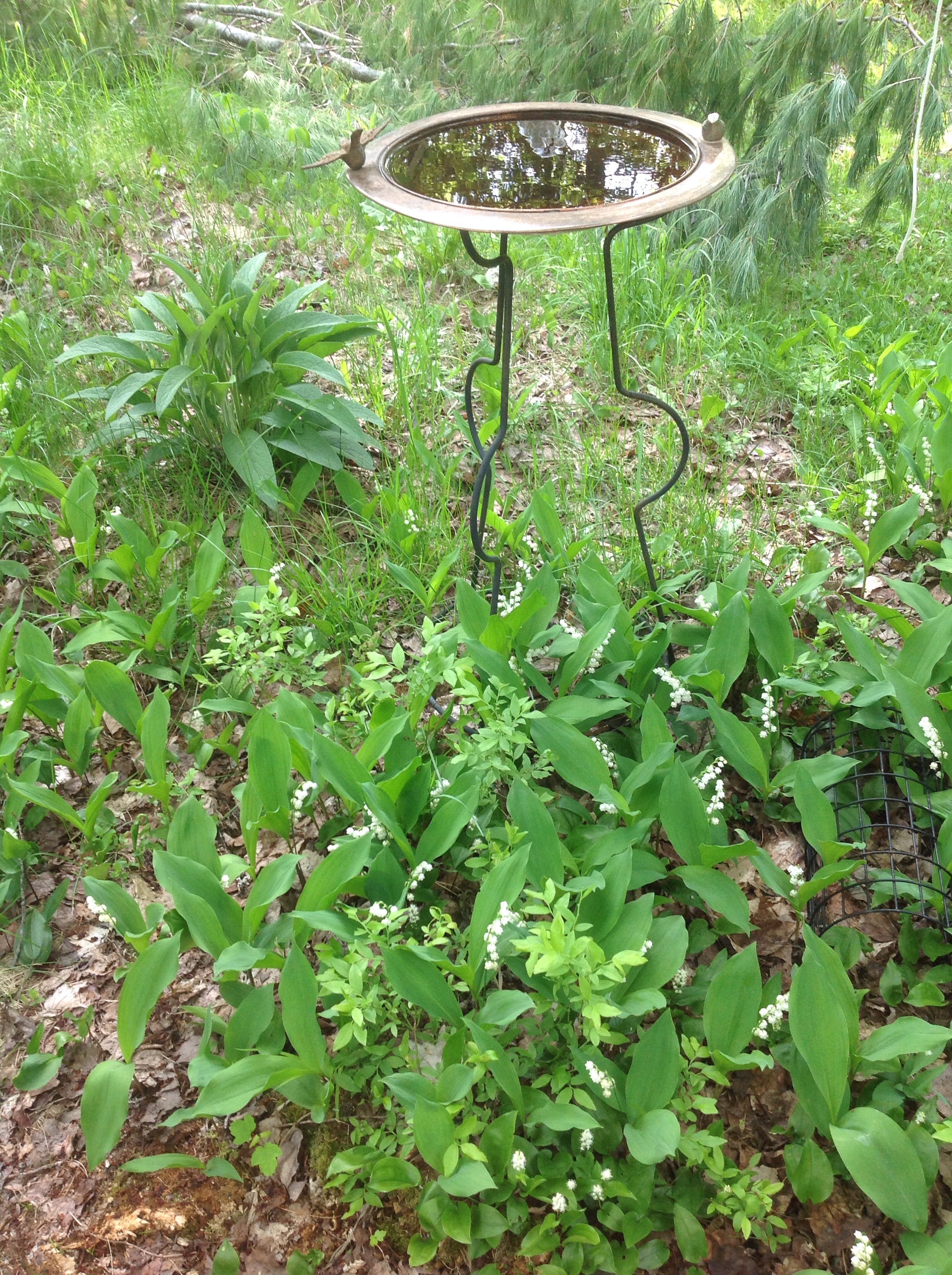
Lily of the Valley grows along the paths in our yard. I love the white flowers and their gentle perfume. Although they are poisonous, the boiled leaves make a pretty grey dye.
~
Soon the ground covers in our area will be layers of autumn leaves and then, blankets of fallen snow. My challenge for next year’s garden will be to find another low-growing cover plant to add to my collection. What are your favourite ground covers?
~
Copyright Jane Tims 2015
along the lake shore

along the lake shore
~
shore verbs
~
water simmers at the edge
waves lounge on the shore
discuss the scudding clouds
~
red pine
catches wind
with sticky fingers
~
violets nod
trout lilies tire
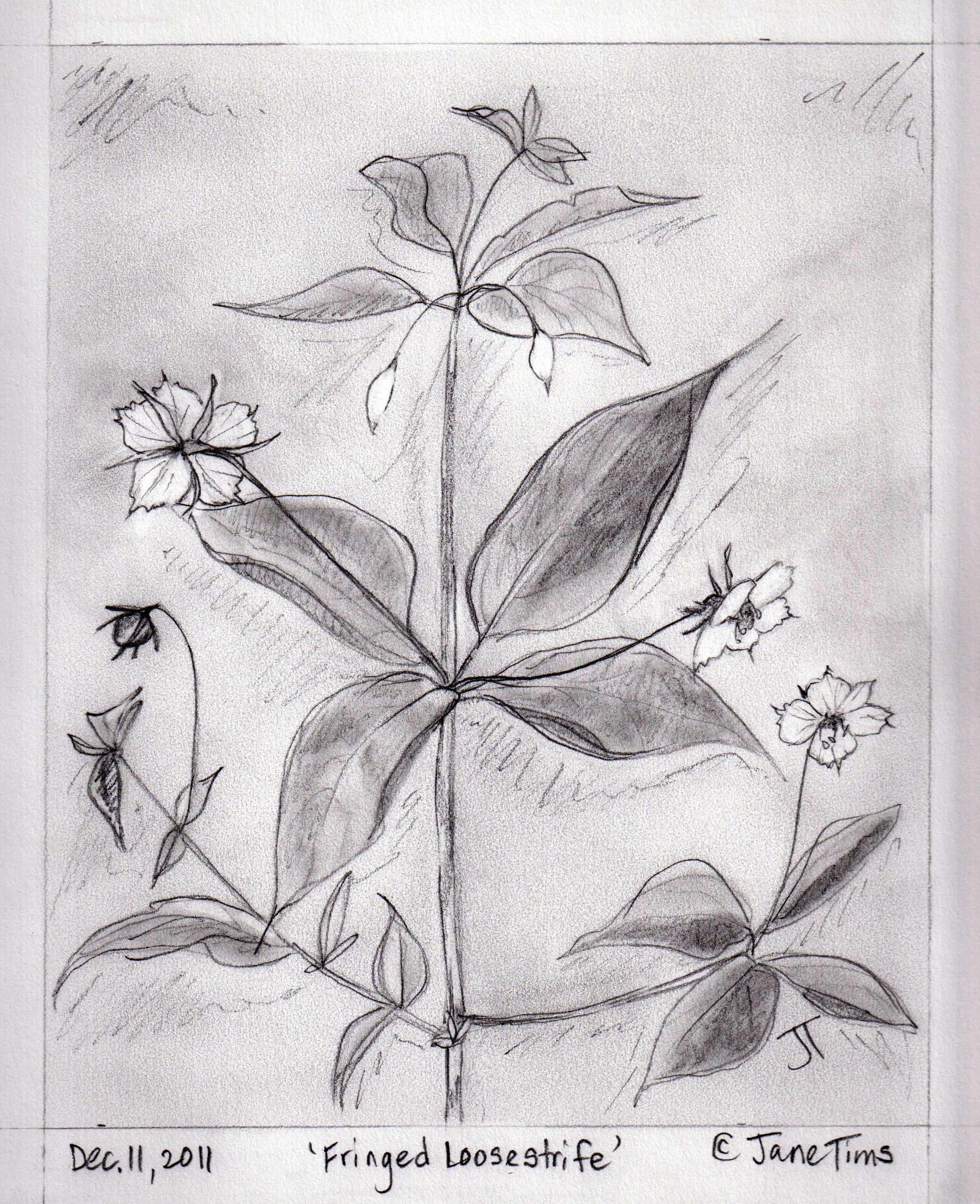
fringed loosestrife
hangs its yellow head
~
a spring leaps from the hillside
~
~
~
Copyright Jane Tims 2015
grant from artsnb
I am so pleased to announce – I have recieved a grant in the field of literary arts (B Category) from artsnb – the New Brunswick Arts Board. The Board has supported my work before, for my poetry manuscripts about ‘growing and gathering local foods’ and ‘harvesting colour’.
~
This new project will be to write a manuscript of poems about plants and animals growing in, around and under covered bridges. ‘In the shelter of the covered bridge’ will explore the natural history of these covered bridges, looking at how covered bridges modify the landscape and create a special environment for plants and animals. Because of my interest in human history, I’ll include poetry about the people who make use of the spaces of the covered bridge.
~
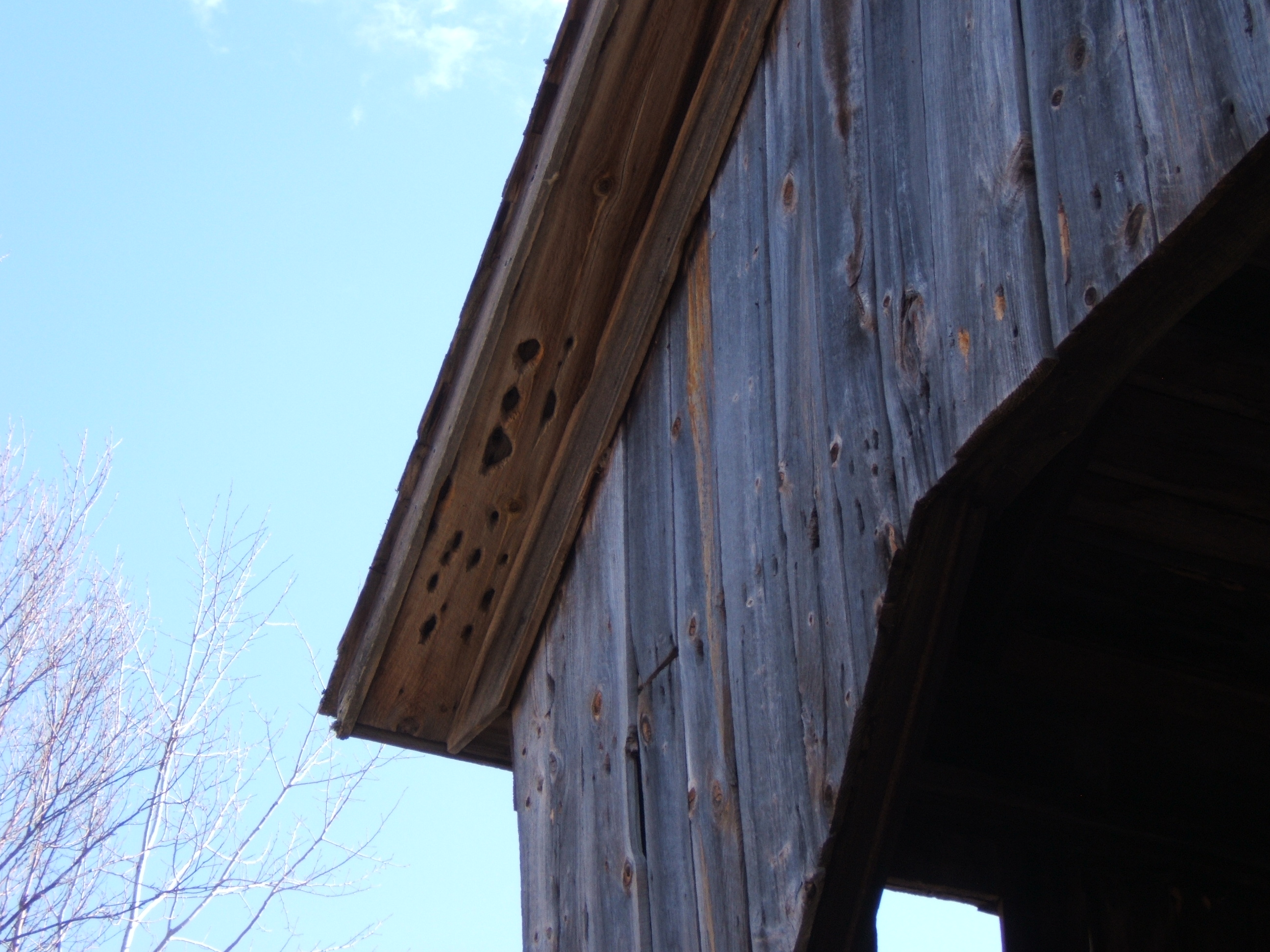
woodpecker holes in an end of the Mill Settlement Covered Bridge – all sorts of possibilities for poetry
~
Since experience is so important to the writing of poetry, one part of my project will be to continue my travels to the covered bridges in the province, especially the 31 covered bridges in the St. John River watershed. Every visit will suggest new subject matter for me to explore with words.
~
Of all the elements of this project, I think I will most enjoy the chance to show how important these bridges are to our natural and cultural history in New Brunswick.
~
Copyright 2015 Jane Tims
linden – linden wing #2

~
~
linden wing #2
~
thin green pale
I hoist my, turn my
tapered, paper sail
to wind-tasks, two
~
first I nudge my mast
of flowers, rudder
to the breeze, my pollen-folk
hitch a ride with the bees
each captured grain a triumph
each launch a score
~
later, I loose my mooring
detach, hoist spinnaker and main
samara of linden
and passenger seeds
sail away
~
~
Copyright 2015 Jane Tims
linden – linden wing #1

the mature linden is heart-shaped like its leaf … this time of year it is filled with flowers, each cluster held on a stem in a long, leaf-like bract
~
linden wing #1
Tilia cordata
~
green, veined tongue
apex and base
alien, unlike leaf, unlike tree
winged though planted
grounded yet ready to fly
~
tiny tree on a bract landscape
wind walks through
shudders still shadow
percussion, tousles unlikely flower
~
olive feather of linnet
tongue and an idea is spoken
cluster of notes
sprinkled on air
~
bitterness flows from basswood
taste bud to taste bud
trail of robin song
~
~
near the center of the photo, you can see the pale green bracts, each holding a stem of several small flowers
~
Copyright 2015 Jane Tims
walk on the shore
~
ignition
Sea-rocket (Cakile edentula Hook.)
~
clumps of Sea-rocket
are splashes of lime on sand
missiles from lavender flowers
~
pepper to tongue
pungent breath of Cakile
cardamom and caraway
~
flavour our laughter
giggles of gulls cross sober sand
intervention in sluggish lives
~
launches from Cape Canaveral
moon-walking on the beach
splash-downs in Sargasso Seas
~
most days are moth-eaten –
paper cuts, missives, e-mails to answer
problems, resolutions without teeth
~
the seawind smooths its sand
begs for someone to take a stick
scratch out a love song
~
~

~
Copyright 2015 Jane Tims
a preface for a poetry manuscript
~
As followers of my Blog will know, I am working during these first months of 2015 to finalise, for eventual publication, a manuscript of the poetry I wrote for my ‘growing and gathering’ project (see the Category ‘growing and gathering’ for more information).
Now that the poetry is ordered within the manuscript, I have to pay attention to the ‘Front Matter’. This includes:
title: ‘within easy reach’
dedication: the manuscript is dedicated to my husband
table of contents: a listing of the poems
acknowledgements: all the people I want to thank and the support of artsnb and the Creations Grant
~
The above four items are straightforward. I needed some information about the next three:
~
foreword
preface
introduction
~
Foreword: written by someone other than the author of the book, usually an authority – celebrates the work and provides credibility.
Preface: written by the author of the book – includes the purpose and scope of the work, explains the origins of the central idea in the book, and may acknowledge those the author wants to thank.
Introduction: written by the author or an editor – includes information on the contents of the book, the author, and the audience.
Source: http://www.quickanddirtytips.com/education/grammar/foreword-versus-forward#sthash.No5DaWpu.dpuf
~
Many of the poetry books I have in my library do not include a Foreword or Preface, and Acknowledgements are often placed in the back of the book. I find this is true of collections where the theme of the poems is not immediately obvious. But collections about a particular subject, such as those about history, often have a Preface or Introduction.
~

~
For example, Jack’s Letters Home (Cynthia Fuller (2006) Stable Cottage, U.K., Flambard Press) includes an Introduction. The book is a collection of gritty poems based on real letters written by a British soldier in the First World War. The Introduction tells the soldier’s history, the story of how the letters were found and a little about the characters in the poems.
~

~
I have two poetry collections by Shari Andrews. Both focus on history. Crucible (Shari Andrews (2004) Canada, Oberon Press) is an insightful collection of poems depicting characters and events in the life of Saint Catherine of Sienna. It includes a Foreword by the poet. The Foreword includes background on Saint Catherine of Sienna, information about the inspiration for the book, and acknowledgements.
~
The Stone Cloak (Shari Andrews (1999) Canada, Oberon Press) is a collection of tactile, sometimes fierce, poems about the lives of settlers of New Denmark in New Brunswick. The Foreword includes information about the poet’s connection to the community and briefly describes the history of New Denmark. It includes acknowledgements.
~

~
Although it is not a book of poetry, in an 1843 edition of A Christmas Carol Charles Dickens includes a brief Preface, consistent with the spirit (!) of his story:
I have endeavoured, in this Ghostly little book, to raise the Ghost of an Idea, which shall not put my readers out of humour with themselves, with each
other, with the season, or with me. May it haunt their houses pleasantly, and no one wish to lay it!Their faithful friend and Servant,
CD.
December 1843.(Source: http://www.themorgan.org/collections/works/dickens/ChristmasCarol/3, accessed February 23, 2015)
~

a ‘grown and gathered’ salad – leaves and flowers of violet, leaves of mint and dandelion, bean sprouts and green onions
~
My poetry manuscript has a very specific theme – the ‘growing and gathering’ of local foods. Since all of the poems are about a particular topic, I think including a Preface is appropriate. I want the Preface for my manuscript to:
- be short (less than a page)
- inspire my audience
- include the purpose of my poems
- provide an overview of the contents
~
When I was young, I always skipped the Preface of any book I read. Now, I read the Preface first, eager to find information about the process the author followed in conceiving of or writing the book.
~
Copyright 2015 Jane Tims
December garlands

~
in December
~
we gather pine cones
wreaths of lion’s paw
hawthorn, cedar boughs
and juniper
~
we walk the wild ways
pruners and scissors
baskets and stout cord
to bind bunches of
branches
~
balsam and holly
berries and garlands
of evergreen, red
rosehips and acorns,
gilded, needles and
thorns
~

~
~
© Jane Tims 2014




 nichepoetryandprose