Posts Tagged ‘plants’
escapes: Virginia creeper
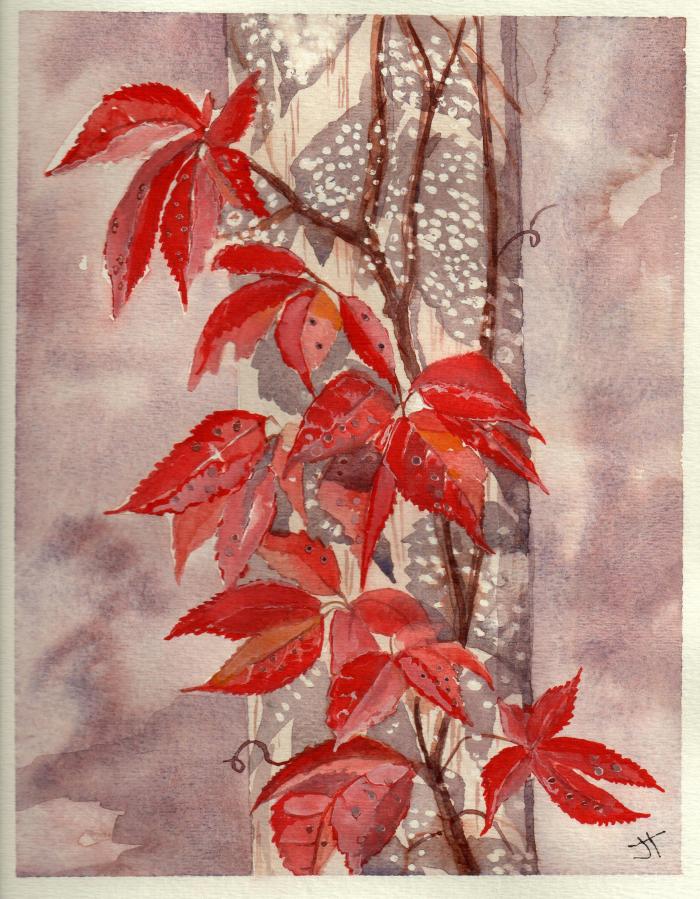
Virginia creeper, also call woodbine, thicket creeper and, in French vinge vierge, is a climbing vine with adhesive discs. Its leaves are palmately five-fingered and turn bright red in autumn. The plant has small purple fruit, poisonous to eat. The vine is common around abandoned homesteads where it persists or escapes to local woodlands.
~

~
Virginia creeper
Parthenocissus quinquefolia (L.) Planch.
~
In woods
on Whites Mountain
woodbine
climbs the ash.
Persistent escape
~
from homesteads
long-gone.
Thicket creeper
navigates itself
to better ground,
~
higher trees.
Thick rhizomes,
adhesive discs.
Five-fingered leaves
spread to cover
~
every inch of bark.
Maximize
exposure to sun.
Ancestral creepers
once draped
~
zig-zag cedar fences
in autumn scarlet.
Caught the attention
of farmers’ wives
on community rounds.
~
~
All my best,
Jane
showy wildflowers along New Ireland Road, Albert County, NB
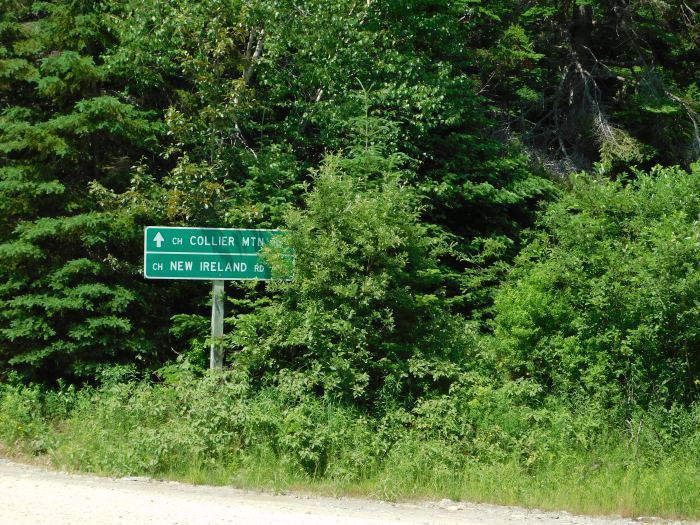
Last week we went for a drive on the New Ireland Road in Albert County, New Brunswick. Our purpose was to visit the graveyard and to see if we could spot any persisting or escaping flower species from flower gardens associated with the now abandoned settlement.
~
~
New Ireland was once a community along the eastern section of the Shepody Road (now called the New Ireland Road).
~
settled in 1816: PO 1857-1892: in 1866 New Ireland was a farming community with 68 families: in 1871 it had a population of 150: in 1898 New Ireland had 1 post office, 1 church and a population of 100: included the community of New Ireland Road: PO 1864-1903: in 1866 New Ireland Road was a farming settlement with approximately 25 families: in 1871 it had a population of 150: in 1898 New Ireland Road had 1 post office and a population of 30: included the community of Kerry which was named for County Kerry in Ireland: PO 1876-1931: in 1898 Kerry was a farming settlement with 1 post office, 1 church and a population of 75: New Ireland was abandoned about 1920 (Source: N.B. Archives, https://archives.gnb.ca/Exhibits/Communities/Home.aspx?culture=en-CA ).
~
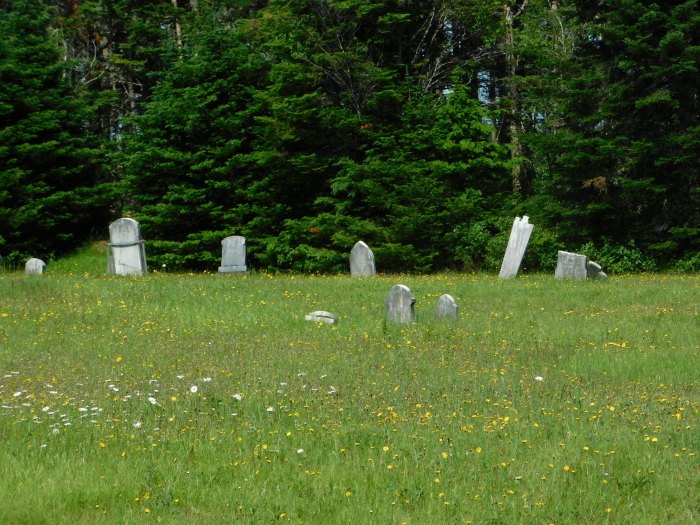
Today, only the graveyard (St. Agatha’s Catholic Cemetery) remains.
~
~
… Farmland has sadly returned to forest. Occasionally you can see a culvert that once led into a farmer’s home or field, and there is the occasional rose bush or wild apple tree struggling to survive amid reforested lands. (Source: http://newirelandnb.ca/irish-migration/ )
~
Although the rose bush did not show itself, we saw old apple trees and two showy species, viper’s bugloss and golden ragwort. These could be garden escapes but perhaps are just wild volunteers on abandoned ground.
~
Viper’s bugloss
~

Viper’s bugloss growing at the Fortymile Brook crossing, not far from the former New Ireland settlement
~
Viper’s bugloss (Echium vulgare) is also known as blueweed, blue thistle, blue devil, snake flower. It is an introduced plant (from Eurasia) and is often cultivated as an ornamental. It is invasive and lives on calcareous or poor soils. At first glance the plant is like a scrawny lupin. Up to a metre in height, it is very bristly-looking. The tall stem has a number of arching lateral floral stalks where one flower blooms at a time. Flowers are briefly pink as they bloom, changing to blue. The stem and sepals are hairy and the long red stamens add to the bristly appearance. Viper’s bugloss is melliferous (honey producing) since it produces nectar and blue pollen loved by bees, bumblebees and butterflies.
~

~
Golden ragwort
~
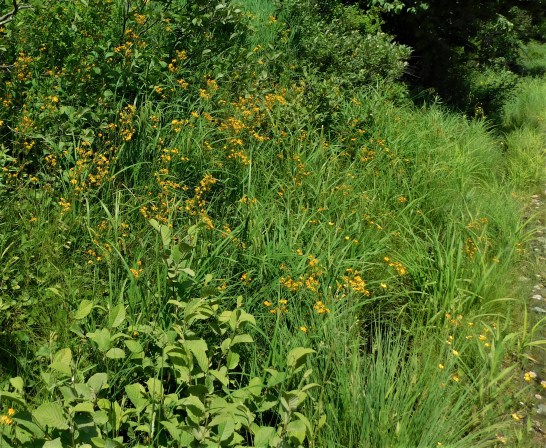
Golden ragwort growing along the New Ireland Road
~
Golden ragwort (Senecio aureus) is a tall composite with flat-topped flower clusters. The flowers are golden with sparse rays. The basal leaves are long-stemmed and heart-shaped; the leaves on the flower stalk are elongated and finely divided. The plant is native, and grows on wet ground, in low woods and in meadows.
~
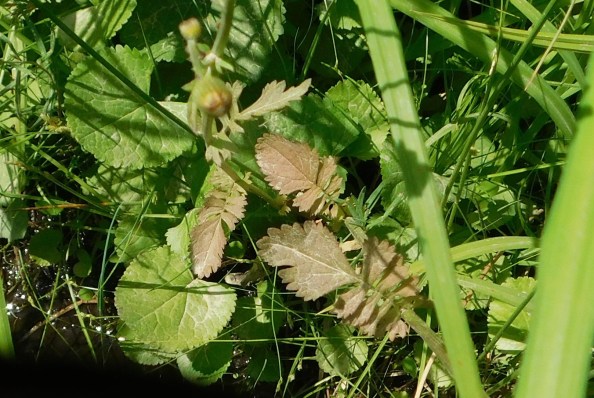
leaf shapes of Senecio aureus – heart-shaped (green leaves) and divided (reddish leaves)
~
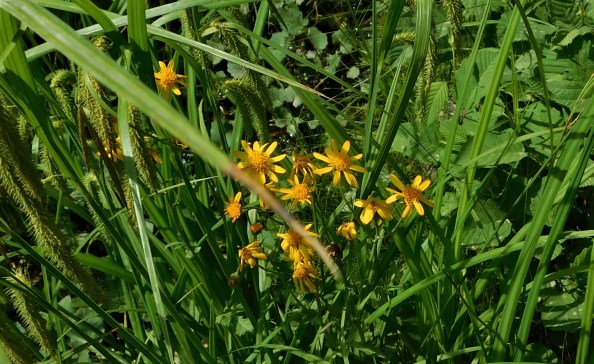
flowers of Senecio aureus
~
These two plants will star in a poem about long-gone flower gardens along the New Ireland Road. Wandering along the road, taking photos and researching the flowers are the first steps to building the poem.
~
I will be sharing the poem once I have a draft!
~
All my best,
Jane
a feast of wild strawberries
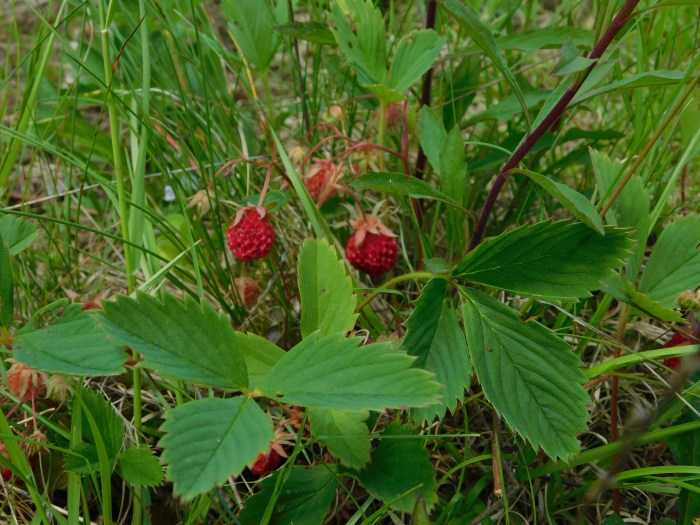
This week at our cabin the wild strawberries are hanging from their stems. When I see them I think of the sweet wild strawberry jam my mom used to make. And, after this weekend, I will think of cedar waxwings.
~
~
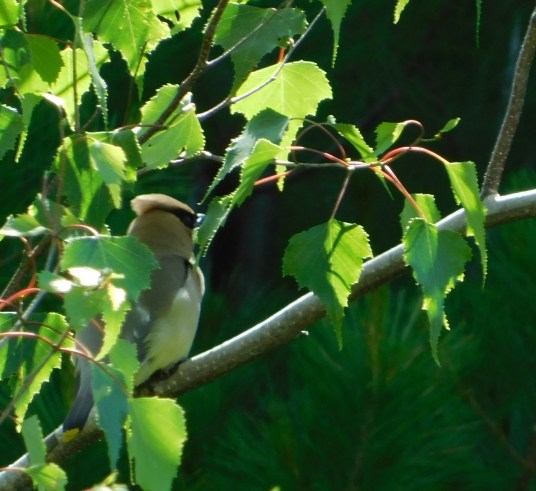
As we sat in the cabin, eating our dinner, we saw a bird making trips between the birch tree in front of the cabin and the grassy field to the side, where the wild strawberries grow.
~

~
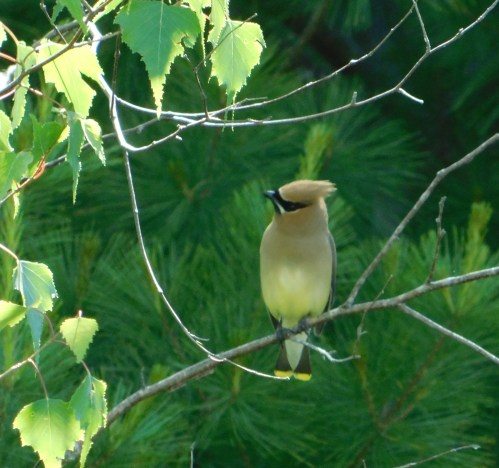
My husband identified the bird and spotted where it perched in the tree. The cedar waxwing is one of the common birds at the cabin. They love to eat fruit and we have wild strawberries, raspberries, blackberries, and blueberries on the property.
~
There were two cedar waxwings on the branch, sharing a meal of wild strawberries. Sharing fruit is a ritual behavior between male and female cedar waxwings.
~

~
~
The cedar waxwings nest in our big white pines and sing in the top branches of other nearby trees. I will never see them without thinking of their little feast of berries.
~
All my best,
Jane
~
rafting event – what to carry when you leave home
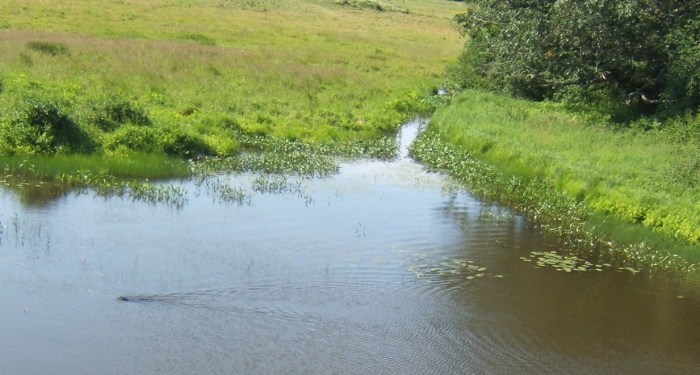
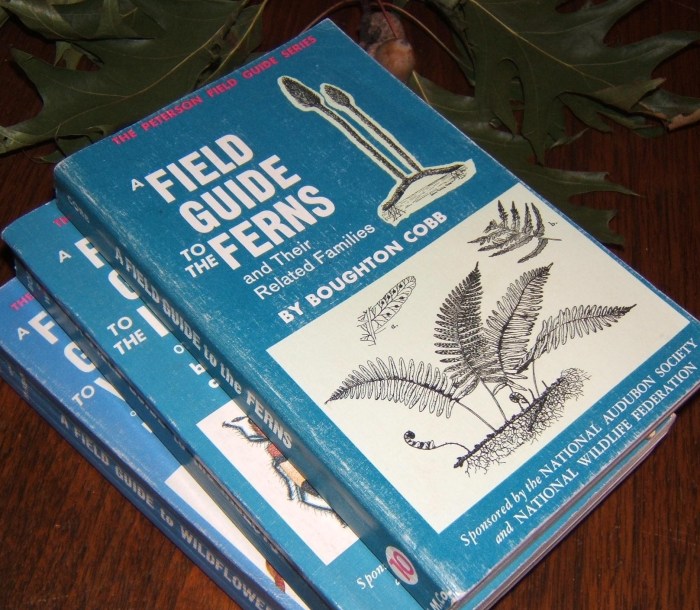
A few years ago, I was thinking of writing a series of poems about plant pollination and dispersal. It seemed a great idea. Poems about bumble bees and butterflies, ultra-violet landing strips and hummingbirds. Poems about burr baskets, rafting events, maple samara and dandelion parachutists. I wrote the poem below and found it so depressing, I abandoned the project. Now, as I sort through my library and wonder which books to keep, the poem seems appropriate.
~
rafting event – a type of biological dispersal that occurs when terrestrial organisms transfer from one land mass to another by way of a water crossing. Often this occurs via large rafts of floating vegetation, sometimes seen floating down major rivers in the tropics and washing out to sea, occasionally with animals trapped on them. (Source Wikipedia)
~
~
rafting event
~
Let the door handle slip
from your hand, leave
the home you’ve tried to know.
~
Behind a deadpan face, dry tears
and palpitations, carry knowledge
away on a frail raft.
~
Peterson Field Guides and Salinger,
a poem by Shelley,
three Shakespearean sonnets.
~
They cling to the raft, these bits
of memory, rely on slippery
fronds of rough-glued vegetation.
~
Recalled when someone asks
the writers you prefer or claim to have read.
You say, ‘the collected works of Heaney’.
~
And is there an island where
new roots can catch and old seeds germinate?
The choice – survival or well-read.
~
Hear the hinges do their work –
the dead bolt slips into the lock,
last home you will ever know.
~
~
 ~
~
Copyright 2018
Jane Tims
herb growing in winter #4
The identity of the odd plant in my AeroGarden is no longer a secret!
~

What is the plant on the right hand side of my garden?
~
The plant in question is the bushy ‘herb’ to the right. It has dark green leaves and a thick stem.
~
As you know, I am a botanist and if this plant was presented to me in any other way, I am sure I would have identified it immediately.
But the label said ‘mint’ and so I expected mint.
My first suggestion of mistaken identity came when I popped a few of the young leaves into my tea. The taste was terrible.
~
Then I took a closer look. The stem was not square – an immediate identifier of the whole mint family.
So I went back to the package material. Possibly I switched the labels. Perhaps it was curly parsley. Deep frown. Didn’t look like curly parsley.
~
All this time, I kept pruning and drying the leaves. My bottle of dried mystery leaves is quite full!
~

What is it?
~
Then I saw the flowers and took a step back. They were yellow and clustered. The leaves were compound, very hairy. The light came on! Tomato!
You will think I am a terrible botanist!
~
So now I am waiting for my first tomatoes. I have discarded the dried leaves (tomatoes are a member of the nightshade family and the leaves contain a poisonous alkaloid).
~

the unopened ‘flowers’ of my tomato plant (the hairy green buds) … in a few days I will have baby tomatoes!
~
Copyright Jane Tims 2018
herb growing in winter #2
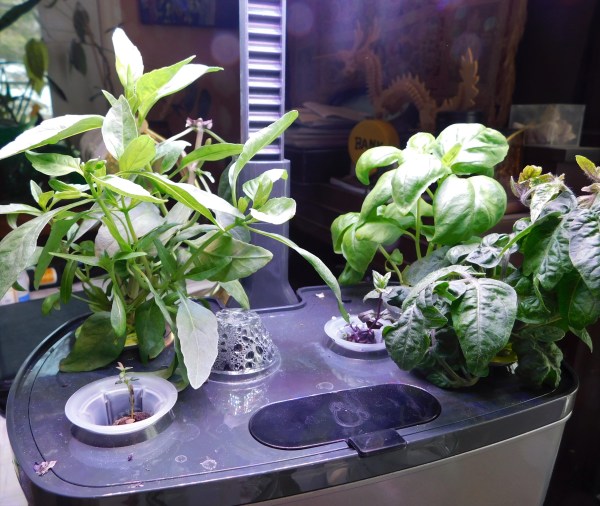
A while ago, I told you I was starting an AeroGarden. The garden grows plants in ‘pods’, with addition of light, water and nutrients. After 54 days, my garden is growing mint and two kinds of basil in profusion. Two of the plants, thyme and another type of basil, are very slow, but growing and healthy. A fifth pod got mold and never grew.
~
~
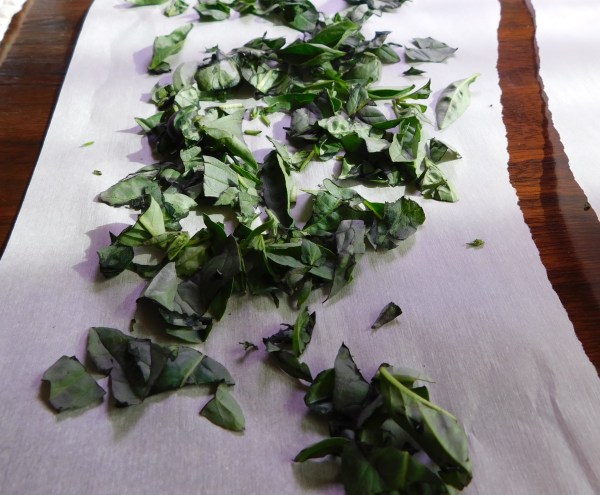
Every three days, I prune about one third of the growth. I remove the leaves, cut them into smaller pieces with scissors and spread them to dry on parchment paper. Our house is very dry and in 24 hours I can crumble the dry leaves and add them to my growing store of herbs.
~
~
Basil is one of my favourite herbs, so I am very pleased with my AeroGarden.
It uses lots of water so I have to remember to add water every day. A little screen tells me how long the pods have been growing and when to add nutrients. Otherwise, as a garden it is trouble-free – no weeds, so I am happy!
~
~
Copyright 2018 Jane Tims
special book offer – in the shelter of the covered bridge
To celebrate my reading at Odd Sundays yesterday, I am selling my book in the shelter of the covered bridge (Chapel Street Editions 2017) at the reduced price of $25 (including postage) from February 16, 2018 until February 28, 2018. If you happen to live in my driving area (within 30 km of Oromocto or Fredericton, New Brunswick), the price for a hand-delivered book is $20. Just email me at timstims@nbnet.nb.ca and we will arrange for payment and delivery.
The book usually sells for $28 so this is a great deal if you love poetry, covered bridges or wild life.
~
in the shelter of the covered bridge is published by Chapel Street Editions (Woodstock) and includes over 70 poems about visits to 54 of New Brunswick’s covered bridges. The book is illustrated with my pencil drawings and has a foreword by Brian Atkinson, a well-known New Brunswick photographer.
~
“… A delightful blend of her poetry and drawings, as well as the natural and cultural history of this province …” Linda Hershey, Moncton Times-Transcript, Nov. 30, 2017, writing about in the shelter of the covered bridge

~
Copyright 2018 Jane Tims
herb growing in winter
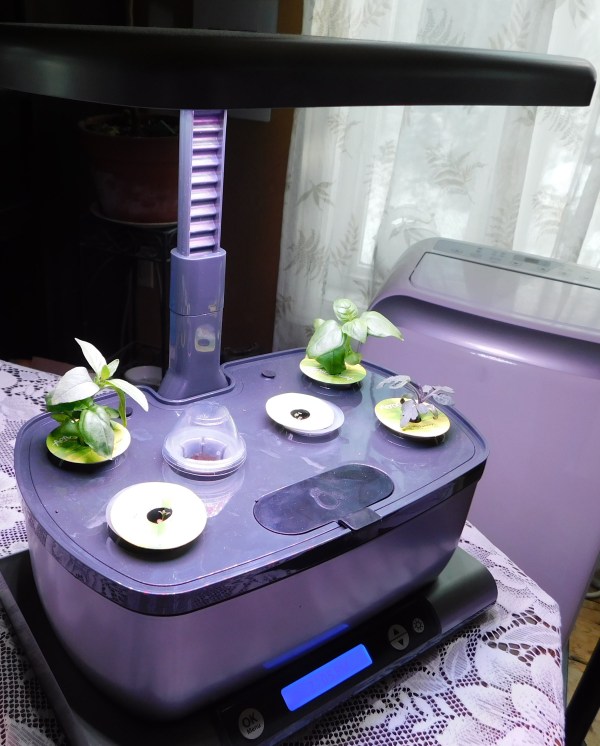
For Christmas, my husband bought me an Aerogarden – a way to grow herbs and other plants hydroponically. My garden has been set up for 19 days and has five plant pods underway – two basil, one parsley, one mint and one thyme. The sixth pod is having some troubles but is now replanted with more basil. I will keep you up to date on my garden’s progress!
~
~
Copyright Jane Tims 2018
fishing under the covered bridge
In the community where I live, there is one covered bridge, the Patrick Owens Bridge, otherwise known as Rusagonis River #2. At one time there were at least four covered bridges across the Rusagonis Stream.
~
The photo below was taken in 1964 and shows my husband as a boy, fishing under the covered bridge on the North Branch of the Rusagonis Stream. In the photo, he is fishing with a home-made pole. That bridge was gone by 1978 when I first moved to New Brunswick.
~

~
I have always loved covered bridges and I am pleased to announce that my new poetry book “in the shelter of the covered bridge” will be out later in 2017, published by Chapel Street Editions, Woodstock. The book is a compilation of my poetry about plants and animals living in the vicinity of some of the covered bridges in New Brunswick. The work was funded by artsnb and includes some of the poems that won the Alfred G Bailey Prize in the Writers’ Federation of New Brunswick Writing Competition in 2016.
~
“in the shelter of the covered bridge” will include poems about many of the covered bridges in the St. John River valley and is illustrated with my own pencil drawings. I’ll let you know as soon as it is available!
~

~
Copyright Jane Tims 2017
red, red, red
October and autumn are upon us. I took a walk around our yard this morning and although my camera was not behaving (I bear no responsibility), I can show you some of the ‘reds’ I saw.
~
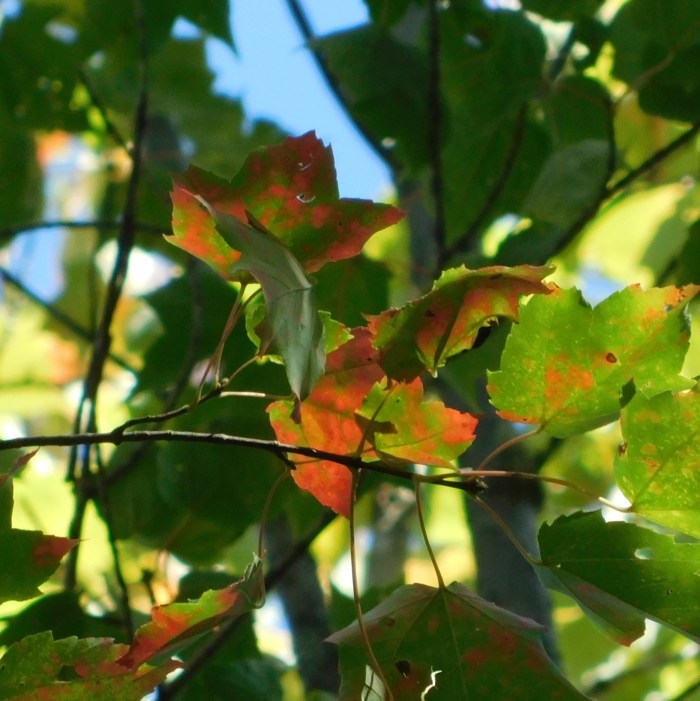
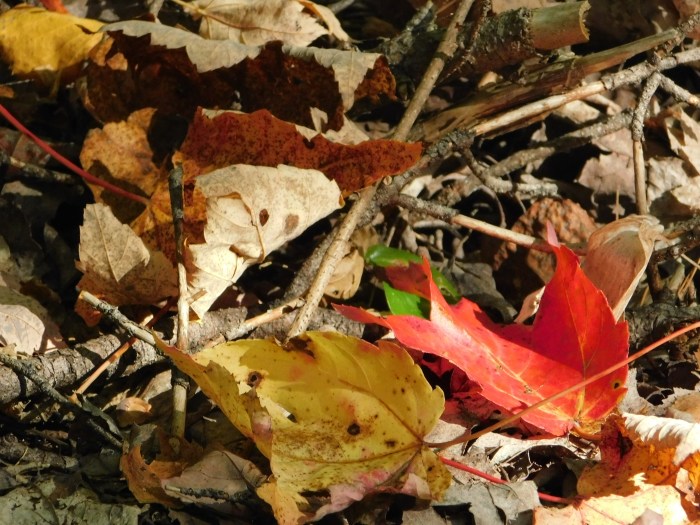
the red of maple leaves turning colour (I always think they look like stained glass) …
 ~
~
the red of the berries on our rose bush …

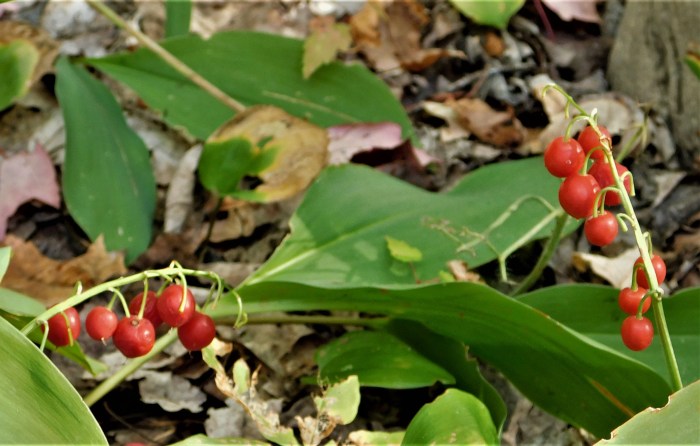
the red of the berries of lily-of-the-valley …
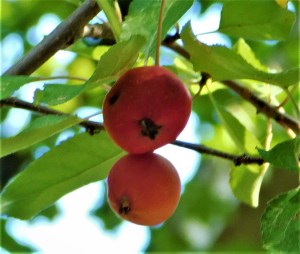
the red of the tiny apples in our flowering crab …
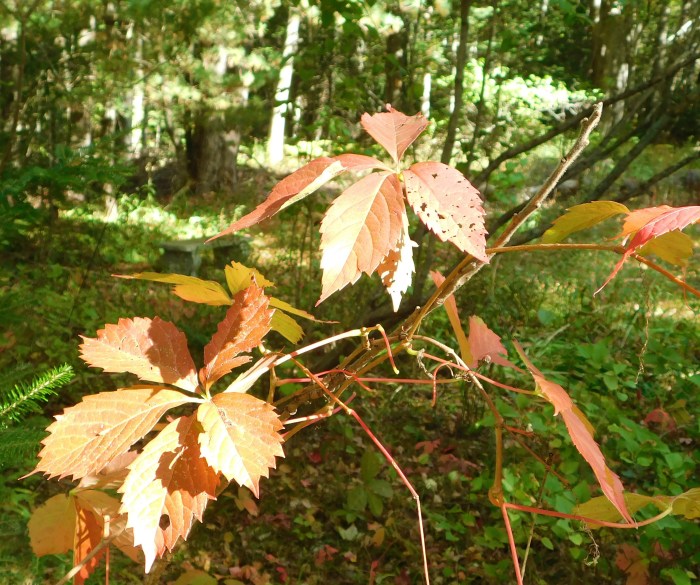
the red of the Virginia Creeper leaves …
Copyright Jane Tims 2017




 nichepoetryandprose