Posts Tagged ‘plants’
the color of September #2 – bunches of radishes
The reward of a recent visit to a local farmer’s vegetable stand – bunches of radishes.
~
Painting with red is very rewarding. First, a little color goes a long way – I am still working with the small tube of paint I bought back in early June. Second, red wakes me up the way no other color can.
I did two paintings, one of the bunch of radishes, fresh from the vegetable stand, and one of an individual radish, fresh from the ground, dirt washed away. Hope you like them!
~

August 31, 2013 ‘a bunch of radish red’ Jane Tims
~
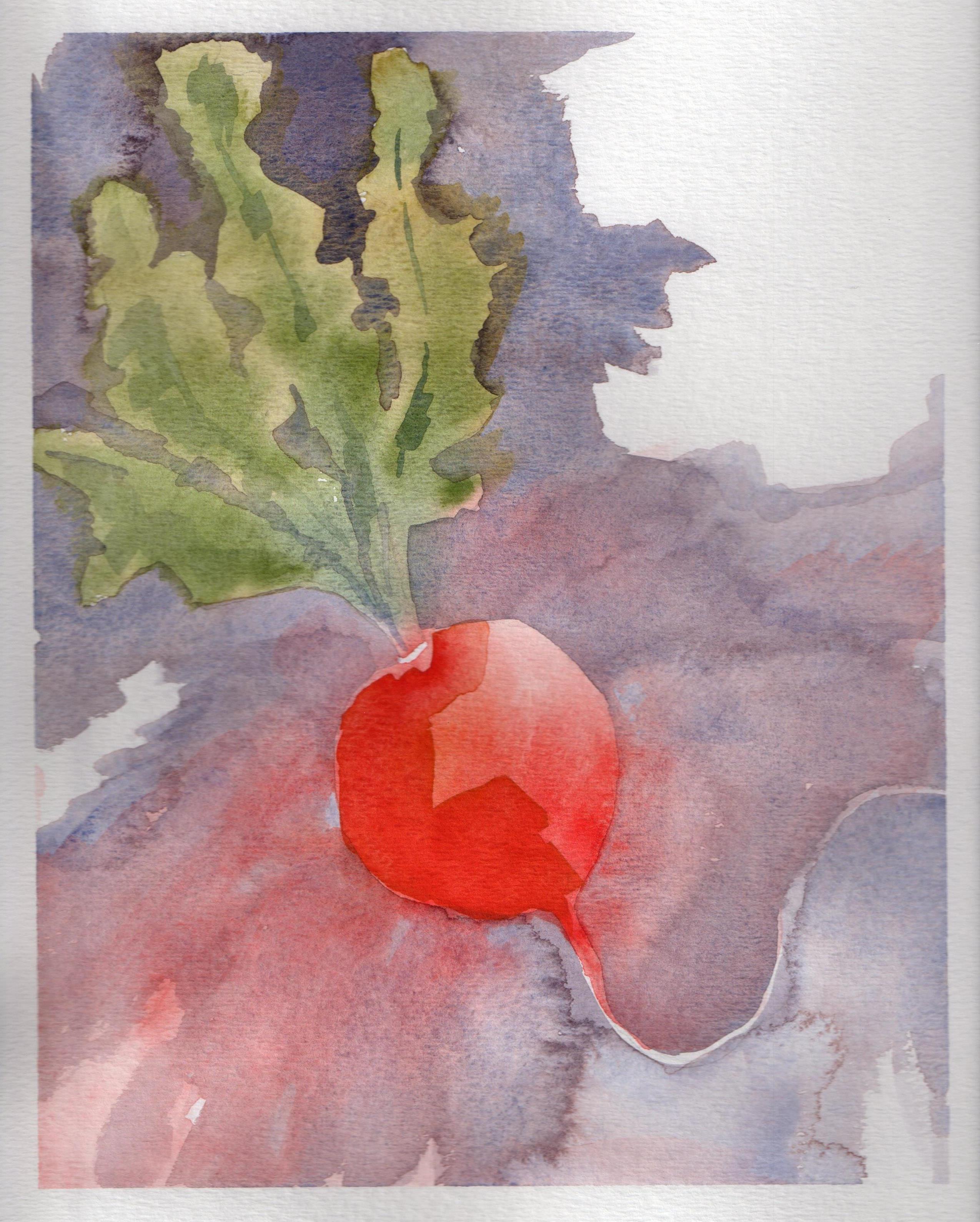
September 1, 2013 ‘radish red’ Jane Tims
~
Copyright 2013 Jane Tims
the color of September #1 – squash on the vine
A visit to a friend’s garden and a look at the riot of squash growing in her compost heap has helped me transition from August summer to the pre-autumn days of September. I love the color orange, but I did not know how much fun it would be to try and capture the orange of the squash in watercolor. I hope you like my trio of September squash-on-the-vine paintings.
~

August 30, 2013 ‘squash on the vine #1’ Jane Tims
~

August 30, 2013 ‘squash on the vine #2’ Jane Tims
~
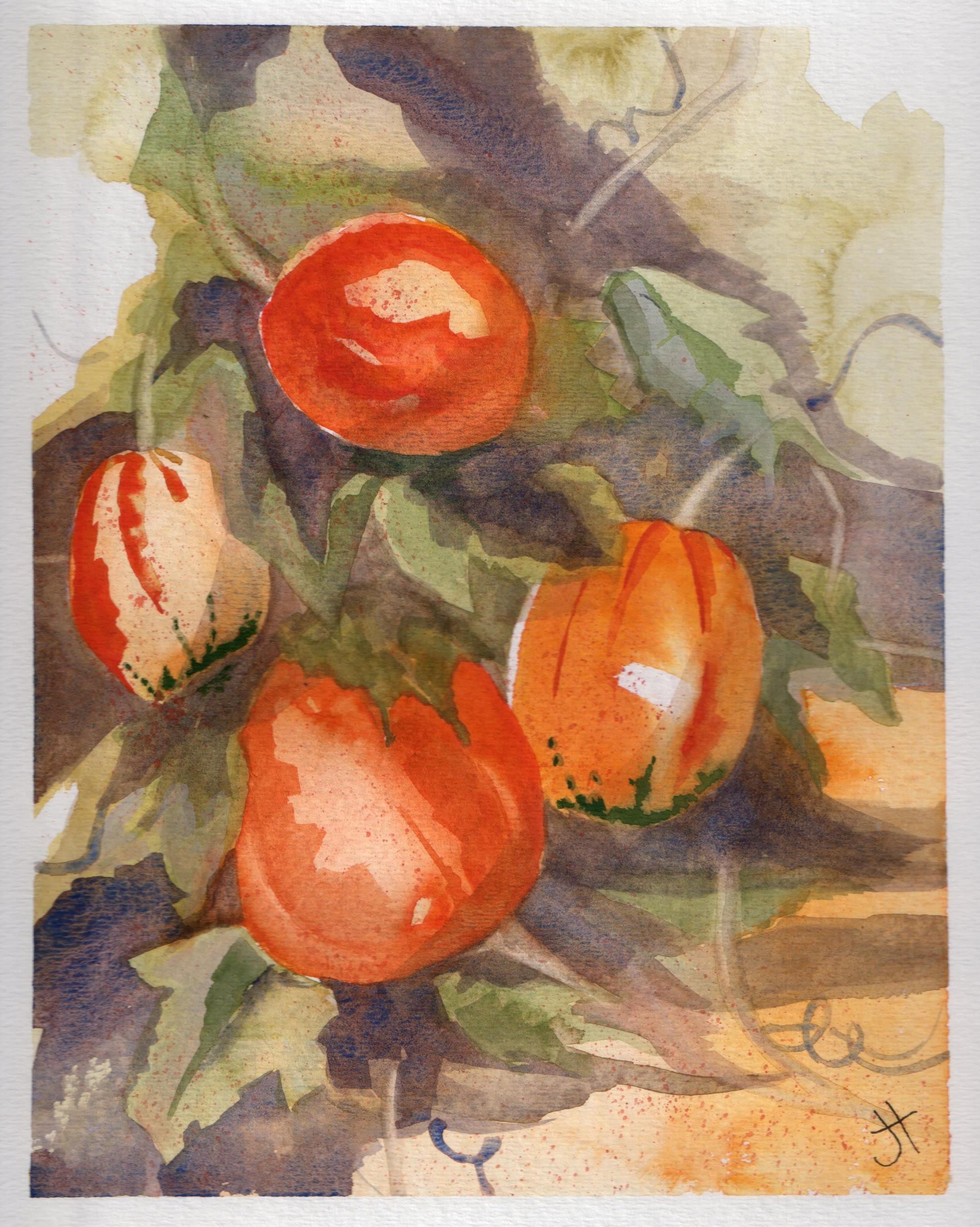
August 31, 2013 ‘squash on the vine #3’ Jane Tims
~
Copyright 2013 Jane Tims
Paper Birch
In the last five months, I have been learning how to paint with watercolors. I’ve painted with acrylics for some time, and I love to draw with pencil, but watercolors always seemed daunting to me.
If you are a follower of my Blog, you will know my early attempts at watercolor have been of views from my virtual cycling trip in central France and on the Ile de Ré. I have also done some studies of New Brunswick wildflowers.
Among the subjects I found fun to paint on Ile de Ré were the vine-covered trees that grow along the road.
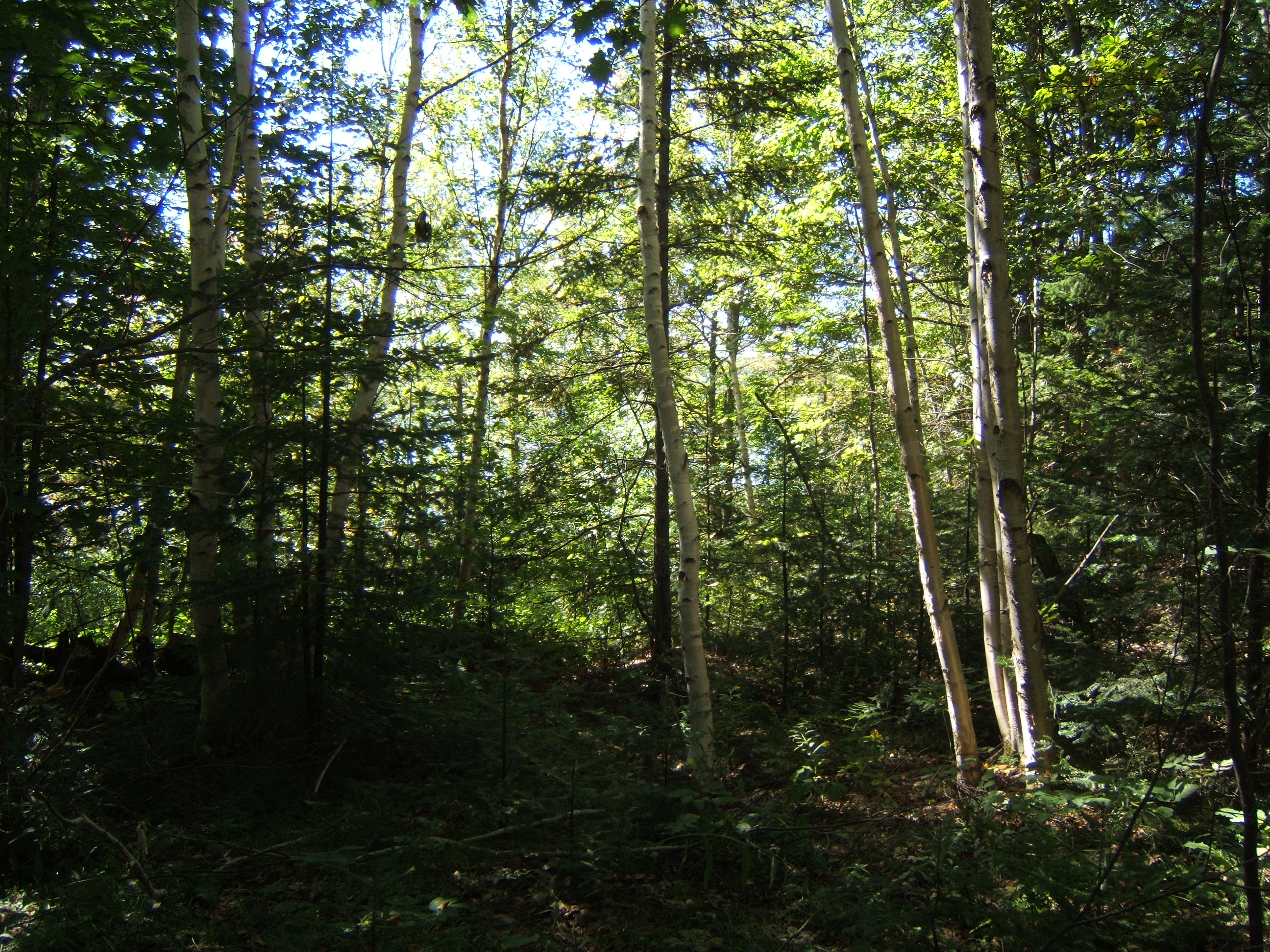
This week, on a trip to see our camp, I studied some of the characteristics of Paper Birch (Betula papyrifera Marsh.), a tree growing everywhere on our property by the lake …
~
~
Some of these trees are actually Mountain Birch (Betula papyrifera Marsh. var. cordifolia (Reg.) Reg.), a variety of the Paper Birch. This variety is quite common in eastern Canada. Its distinguishing characteristic is the heart-shape of its leaves, especially at the base of the leaf.
~
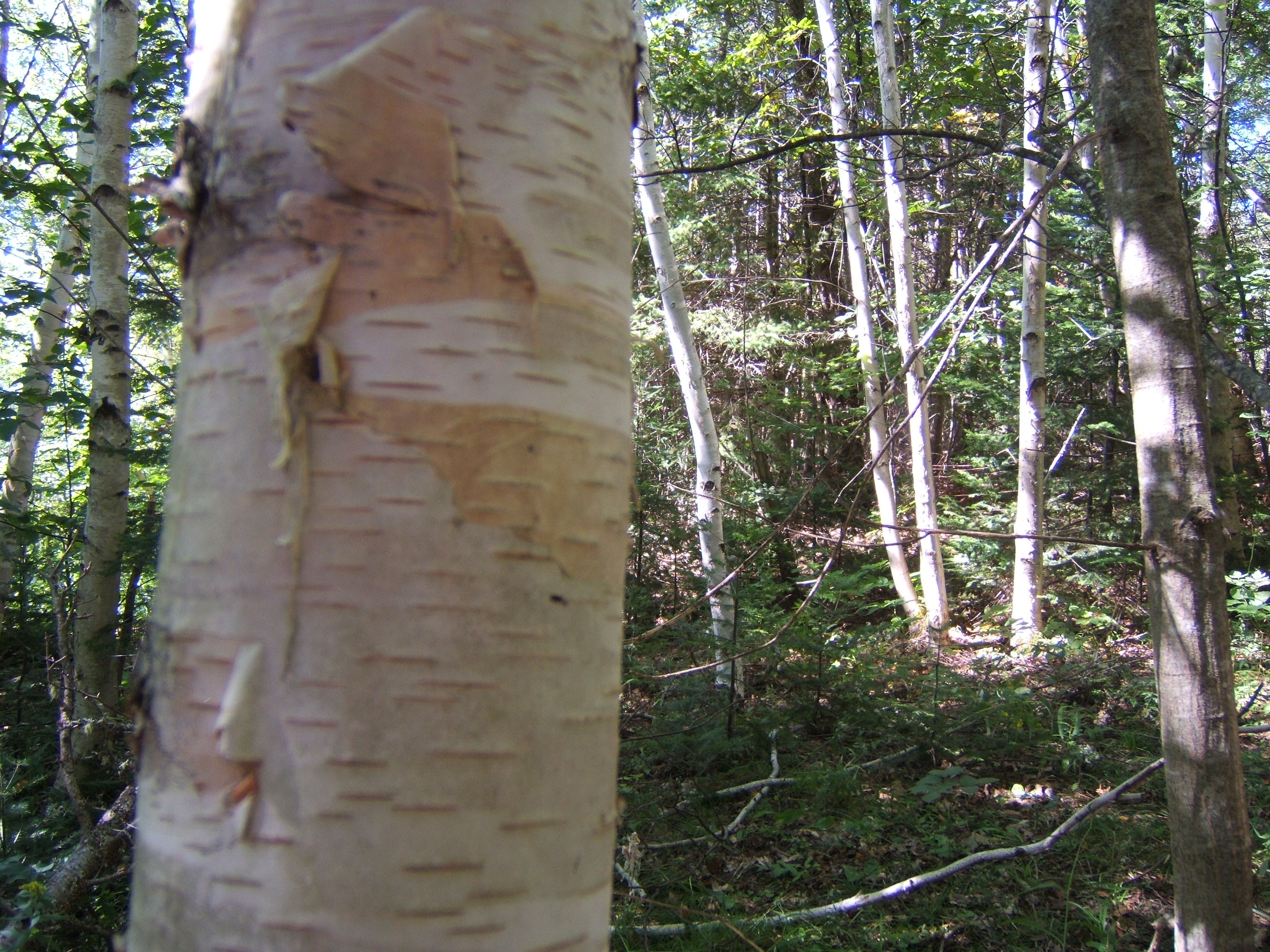
The bark of the Paper Birch and Mountain Birch is predominantly white, although parts of the tree can be yellowish or quite black. Its bark strips readily from the tree, in sheets, leaving a reddish-orange inner bark which turns black with age …
~
~
To paint the birch, I used Painter’s Tape to mask the trunks of the trees. Then I painted the background. Once the background was dry, I stripped the Painter’s Tape away and added the bark details in the white space left behind. Here are three paintings of Mountain Birch …
~
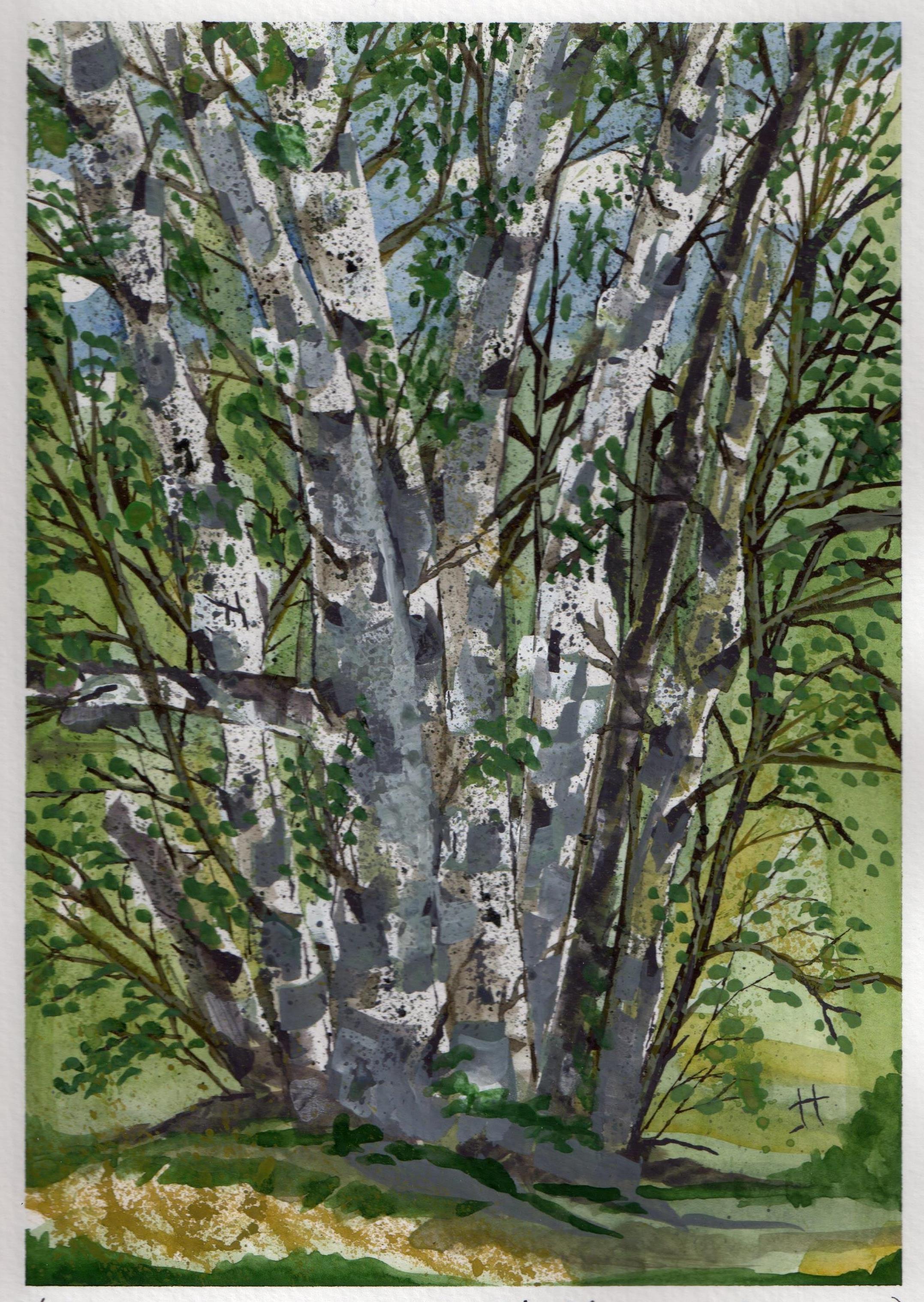
June 21, 2013 ‘Mountain Birch’ Jane Tims
~
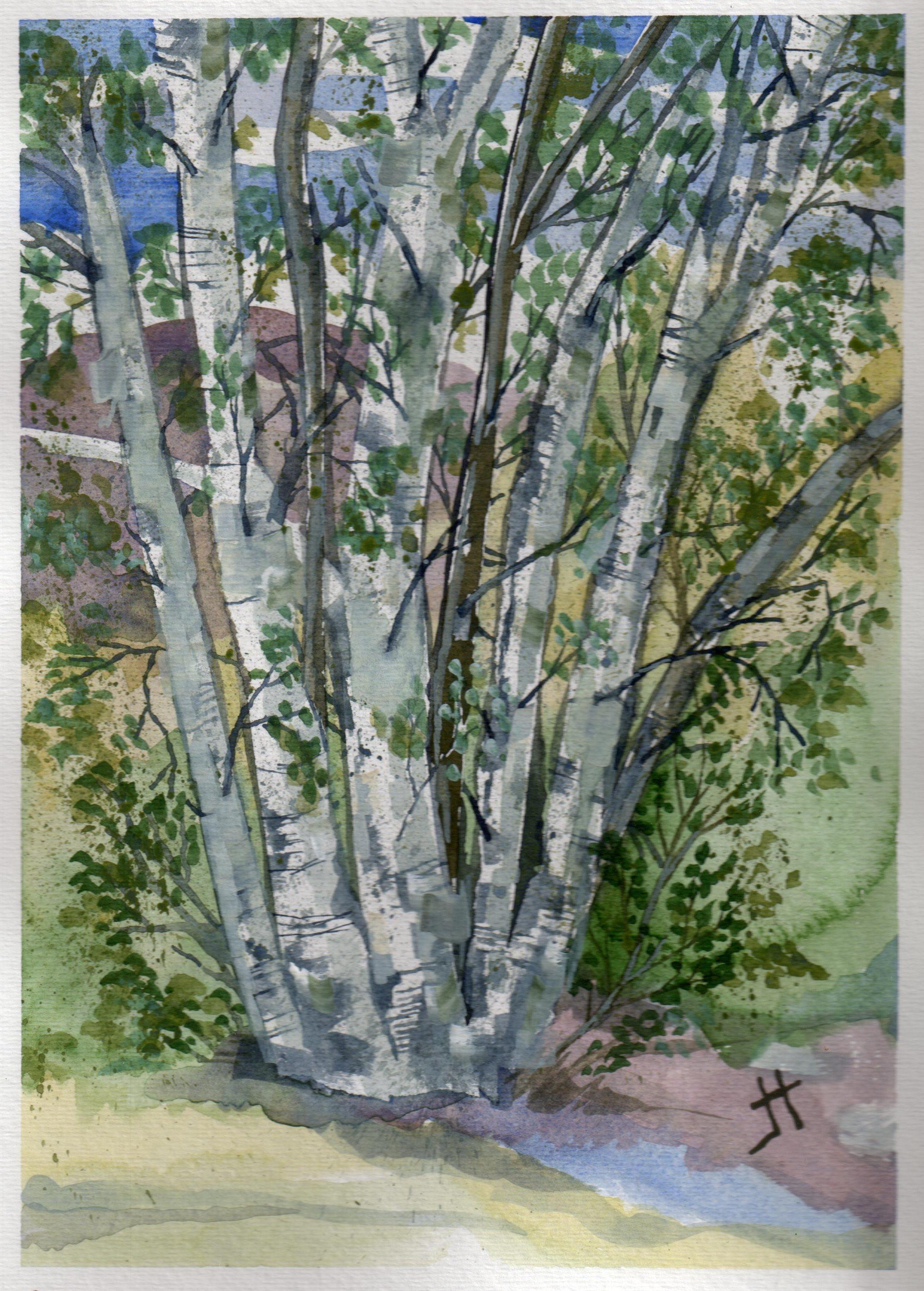
June 22, 2013 ‘Mountain Birch #2’ Jane Tims
~

June 23, 2013 ‘Mountain Birch #3’ Jane Tims
~
Copyright Jane Tims 2013
covering the pumpkins
This year our garden was an unqualified failure. Between the slugs and the shade, none of my poor pumpkin vines made it to the orange pumpkin stage. But in the past, we have had worthy pumpkin patches. One year our pumpkins were so prolific, one of the vines even strayed upward, into a maple tree. In October, we had an orange pumpkin in the tree, about four feet above the ground.

my son with pumpkins from our garden, about 22 years ago
This year, my pumpkin sightings have been in other people’s gardens and in the bins at the grocery store. At least I am spared the desperate efforts of the past, to squeeze one more day of growing from the season, by covering the pumpkins before the frost.
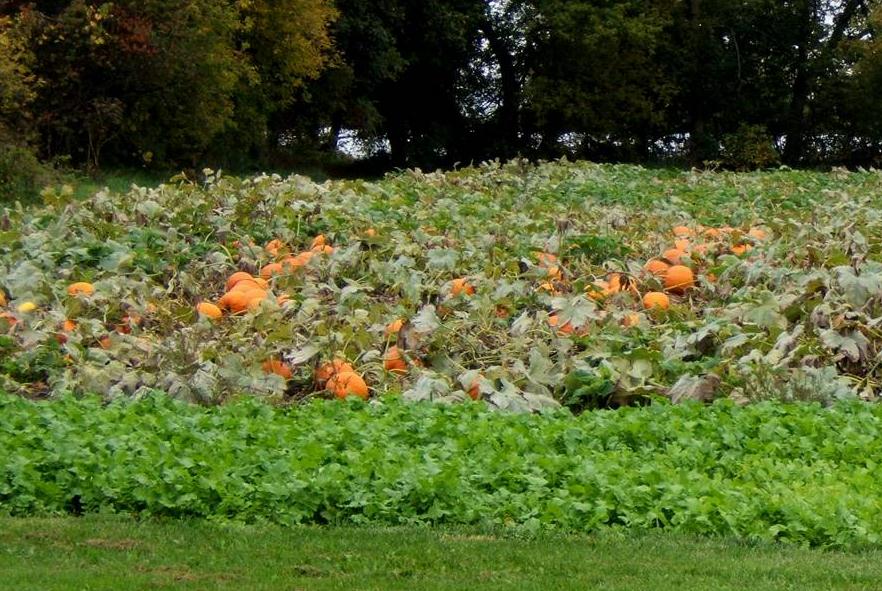
a prolific pumpkin patch, photographed during our visit to Ontario in 2011
~
covering the pumpkins
~
on the mattress, these sheets
are ample, enough for warmth
and twist and tumble
~
spread here, on low-lying ground
they barely cover one of twenty
pumpkins, one loop of vine
~
weather channel warns of frost
will wilt these leaves, cold-kiss
this perfect orange with brown
~
vines stretch, toes creep
from under, beg more time
~
~
Copyright Jane Tims 2012
a moment of beautiful – old-fashioned flowers
the space: the side of a cottage in the late summer sun
the beautiful: a riot of Golden Glow, leaning against the wall
~
Last week, on a drive along the South Branch of the Oromocto River, I noticed the fall flowers have taken over from the summer species. The fields are filled with Goldenrod (Solidago spp.) and the ditches with Pearly Everlasting (Anaphalis margaritacea (L.) C.B. Clarke). In some of the yards were three flowers I think of as ‘old fashioned’ – French Marigolds (Tagetes patula L.), Hollyhock (Alcea spp.), and Golden Glow (Rudbeckia laciniata (L.) var. Hortensia). I love the orange of the Marigolds, the papery pinks and purples of the Hollyhock, and how the Golden Glow leans!

These plants were my first introduction to the concepts of ‘annual’, ‘biennial’ and ‘perennial’. The French Marigold was an annual, and grew only for a single year. The Hollyhock was a biennial (although some are weak perennials), living a year without flowers and then blooming in the second year. The Golden Glow came up year after year without benefit of seeds or fuss, a perennial.
I remember helping my Mom collect seeds so she would always have the Hollyhocks and French Marigolds. If I close my eyes, I can see my hand holding the pointy black French Marigold seeds and the flat Hollyhock seeds with their furry edges.
When we first built our house, I was anxious to have these plants in my garden, but after blooming for a few years at the edge of the house, the Golden Glow died out, and I could never get Hollyhocks to flower. Both need lots of sun and we have only shade to offer. I often grow French Marigolds. I still have the seeds I collected from our first garden here, stuffed in an old metal seed box. I doubt they are still viable, but when I open the box, I see the seeds of the Marigolds that bloomed here 32 years ago!
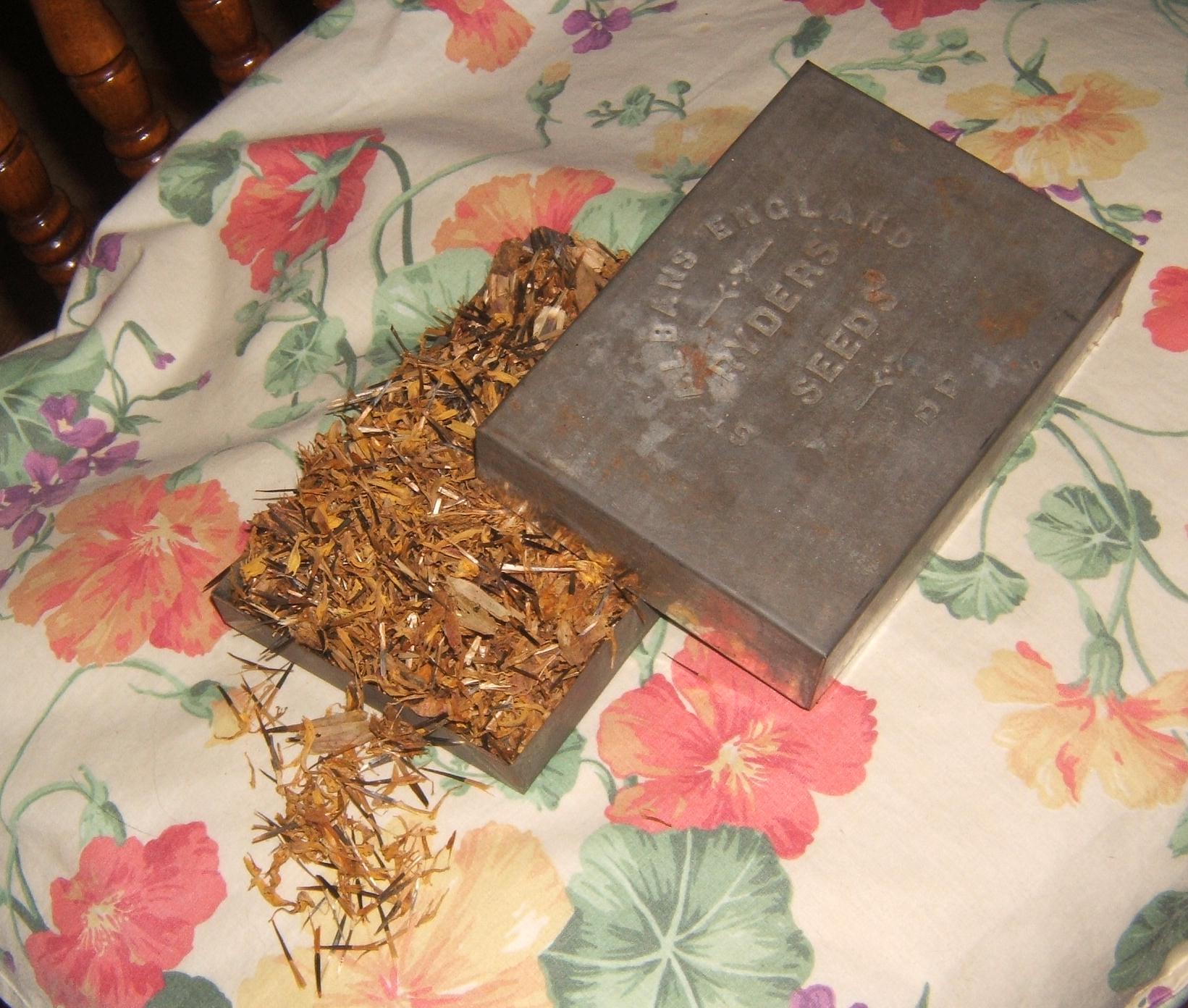
The seeds I collected from our first garden of Marigolds in 1980… they are kept in an antique box marked ‘St. Albans England – Ryders Seed – D.P.’ Ryders was a seed company operated in England beginning in the 1890s. It sold seed in ‘penny packets’ to be affordable for everyone.
What are your favorite ‘old-fashioned’ flowers and do you see them much anymore?
~
~
Pearly Everlasting
Anaphalis margaritacea L.
~
Pearly Everlasting
sign of summer’s passing
yet – immortelle
picked by the road
by the armload
hung from rafters
children’s laughter
runs beneath
~
downy leaf, wooly stem
white diadem
perfectly matched flowers
thatched in gold
dry and old
~
Linnaeus named
for Marguarite
memory sweet
paper petals keep
pale perfume
summer grace
in a winter room
~
~
Published as: ‘Pearly Everlasting’, The Antingonish Review 92, 1993
Copyright Jane Tims 2012
Sea-rocket (Cakile edentula Hook.)
Sea-rocket, also known as Seaside Mustard and caquillier in French, is found on sandy or gravelly beaches along the coast.
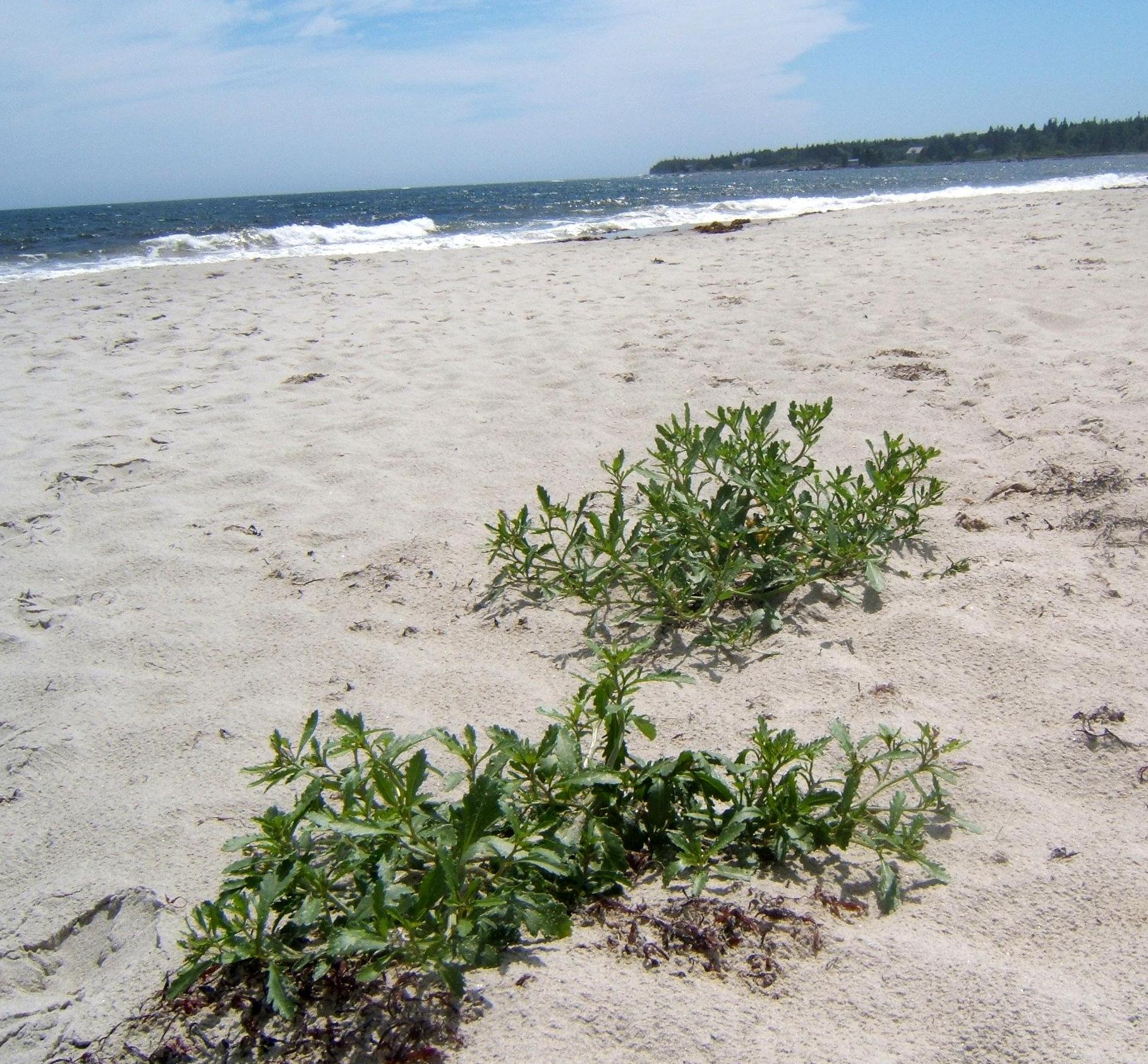
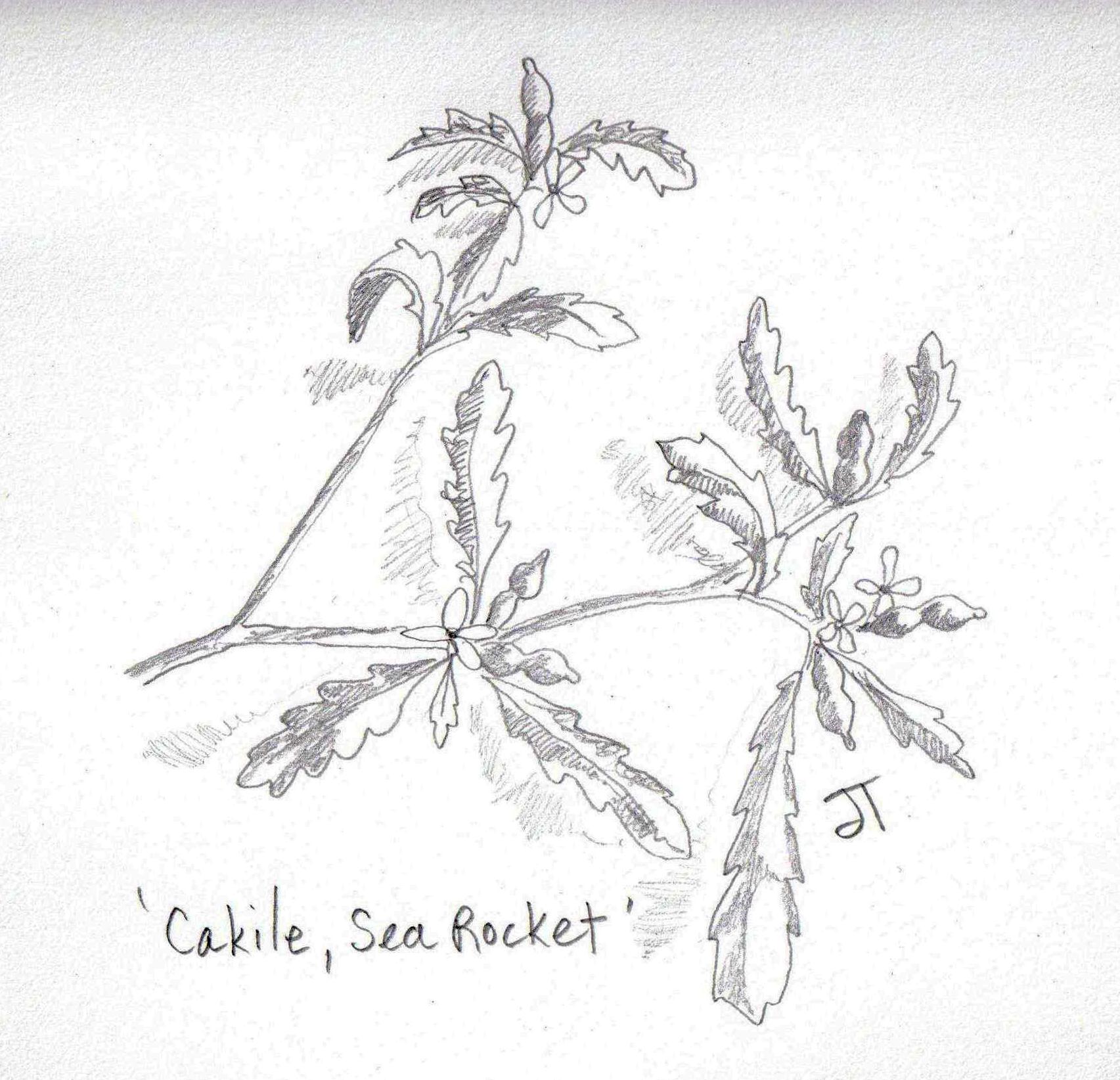
Cakile is a sprawling plant with succulent, branched stems. The leaves are thick and fleshy, with blunt-toothed margins. The four-petalled flowers are small, purple and located at the tip of the stem.
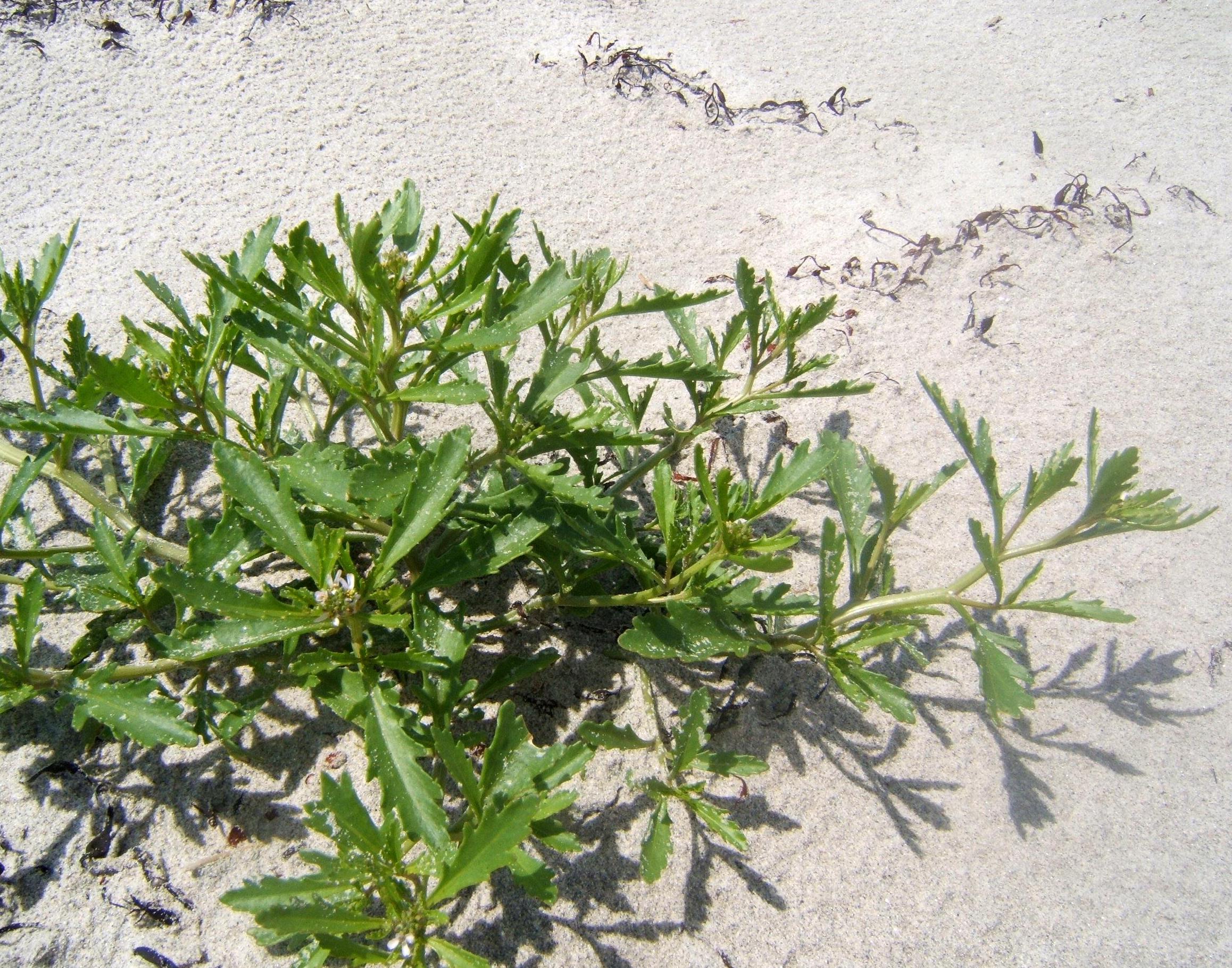
The name Sea-rocket comes from the distinctive shape of the seed pods. These have a narrow base and a pear-shaped tip, like a rocket. Cakile is an old Arabic name and edentula means ‘without teeth’.
Sea-rocket is edible. It has a hot, pungent taste, similar to radish. The stems, leaves and pods can be added to salads or boiled for 5 to 10 minutes to give a milder taste.
~
~
Cakile wind
~
the beach sizzles today
the breeze a peppered wind
the sand Cakile-hot
~
wind scours the shore-bands
of seaweed – rockweed, kelp
bleaches them, crisped and dry
~
sand dries, adheres to skin
brushes away, a rub
a sandpaper polish
~
the tongue too hot for words
the seas too salt for tears
tans ruined, scorched and red
~
~
© Jane Tims 2012
~
Warning:
1. never eat any plant if you are not absolutely certain of the identification; 2. never eat any plant if you have personal sensitivities, including allergies, to certain plants or their derivatives; 3. never eat any plant unless you have checked several sources to verify the edibility of the plant.a botany club excursion
Earlier this summer, we went on a hike with other members of a local botany club to the Cranberry Lake Protected Natural Area, an area protected for its extensive forest community of Red Oak and Red Maple.
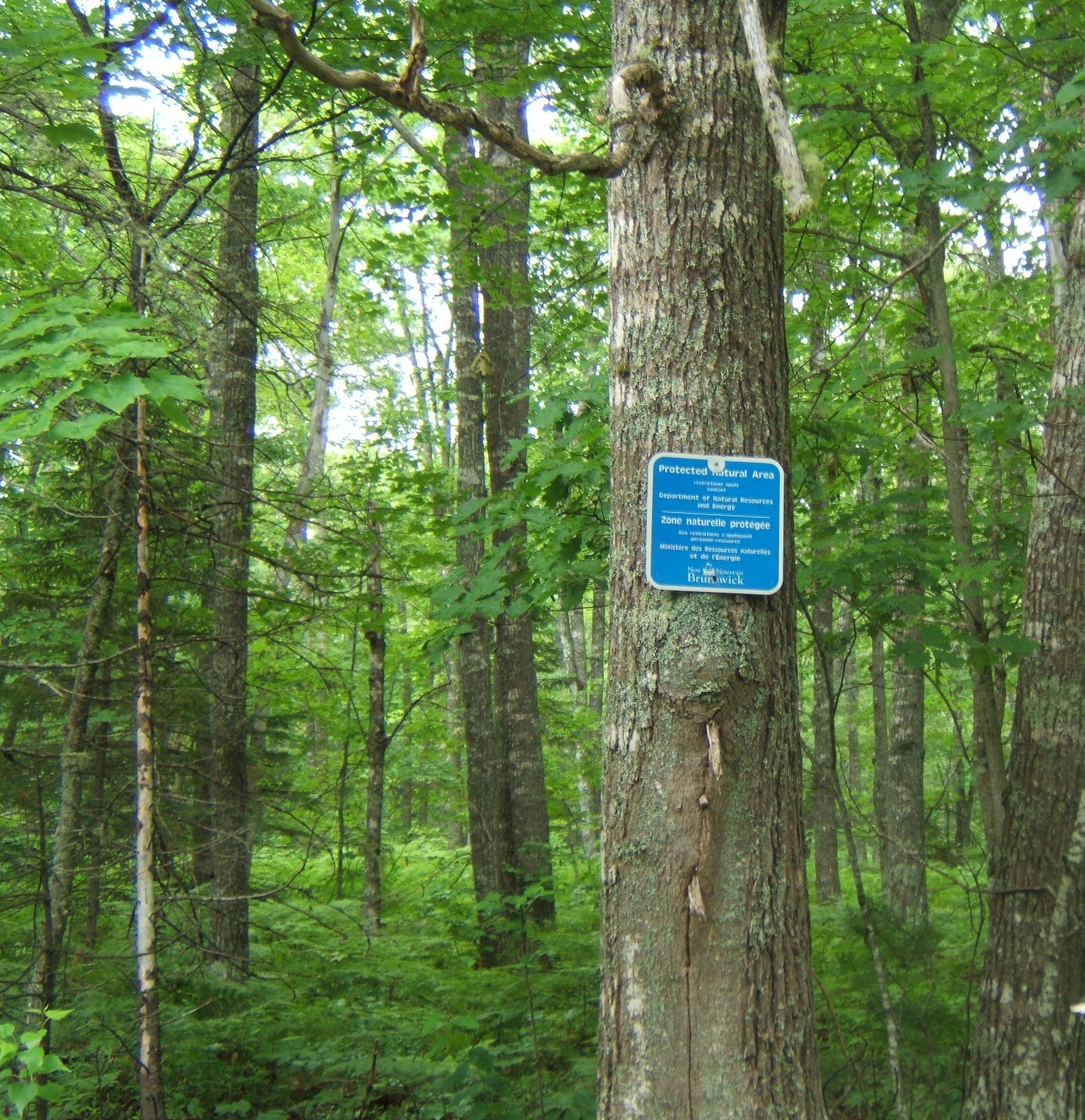
The New Brunswick Department of Natural Resources website describes the Cranberry Lake Protected Natural Area as follows:
An extensive Red Oak forest community. Predominantly Red Oak – Red Maple association. Red Oak make up a large percentage of the regeneration, most likely the Oak component will increase as the stand matures. The individual trees are impressive size.
This type of forest is rare in New Brunswick.
The woods were open with a thick understory of Bracken (Pteridium aquilinum (L.) Kuhn, var. latiusculum (Desv.) Underw. ex A. Heller), Blueberry (Vaccinium spp.), Common Lady’s Slipper (Cypripedium acaule Aiton) and some of the other species of the Canadian Element associated with woodlands in the Maritimes (see my post for April 30, 2012, Trailing Arbutus, https://nichepoetryandprose.wordpress.com/2012/04/30/trailing-arbutus-epigaea-repens-l-var-glabrifolia/ ).

My husband standing in the thick growth of Bracken… it was about waist-height… he says he was standing in a hole!
It was so much fun working with the other botanists and enthusiasts to identify the various species we encountered. The plant lists prepared during the day will be part of an effort by Nature New Brunswick to update a database of Environmentally Significant Areas in New Brunswick. During my years of work, I was privileged to work on the development and use of this database.
I saw many familiar species during the hike, but I was so excited to see three plants I have not seen in a while.
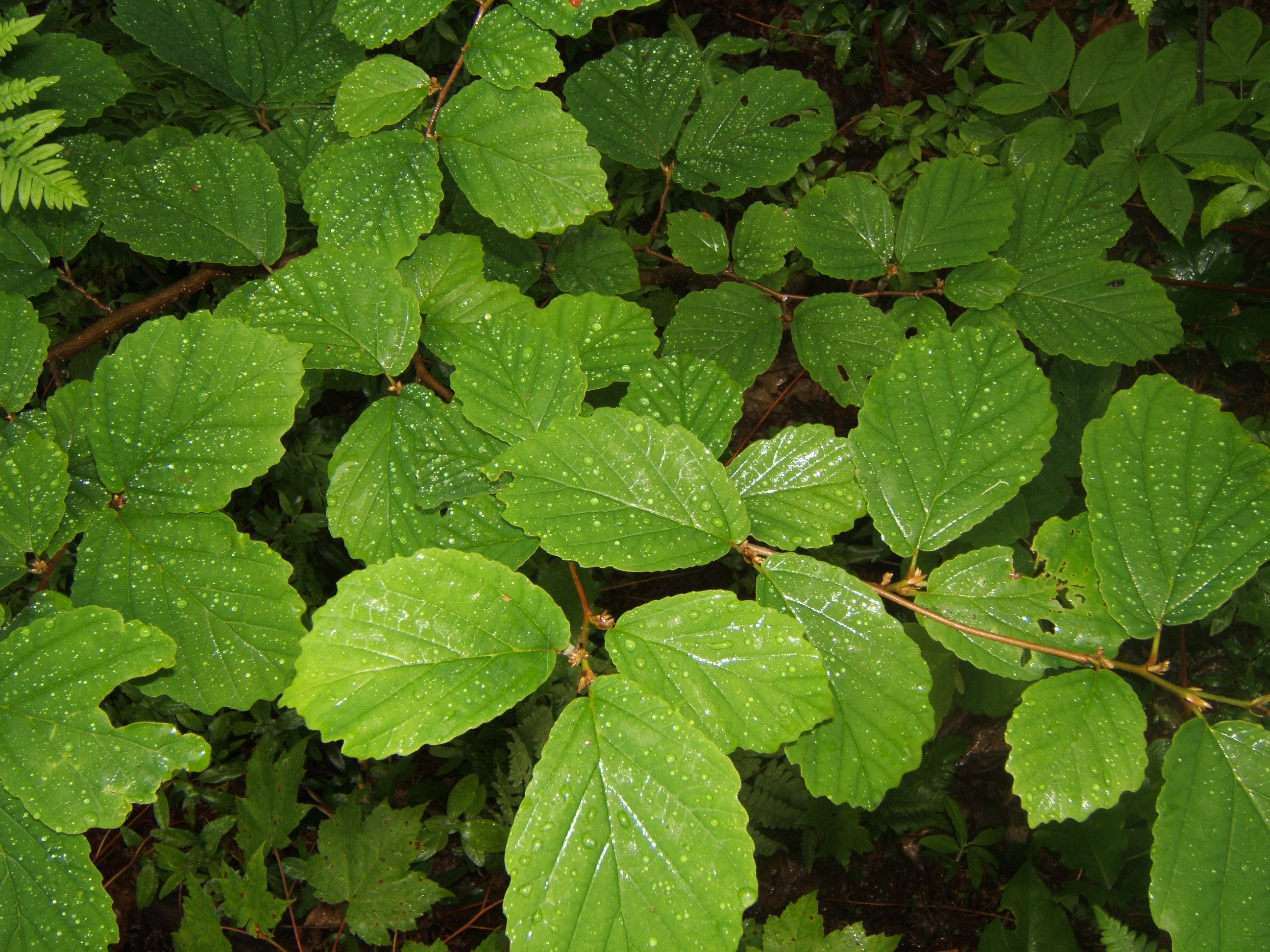
I renewed my acquaintance with Witch-hazel, Hamamelis virginiana L. (notice the asymmetrical shape of the leaves)…
and Shinleaf (Pyrola elliptica Nutt.), identifiable by its thick oval leaves, longer than the leaf-stalks or petioles…

a single plant of Shinleaf, with its straight stem of small creamy flowers, growing among Blueberry, and Red Maple and Red Oak seedlings
I also was introduced to a plant I thought I had never seen before, Cow-wheat (Melampyrum lineare Lam., a branchy variety found in dry woods). When I looked it up in my Flora, though, I found a notation to say I had seen this plant in the summer of 1984. It is always good to record the plants you see and identify!

While there, we saw a perfect example of the interaction of species. A bright orange fungus, known as Chicken of the Woods (Laetiporus sulphureus), growing on an aged Red Oak, was being consumed by a horde of slugs.

A hike with a group is a great way to expand your knowledge and boost your confidence. Everyone benefits from the knowledge of the various participants, and being with like-minded people is good for the soul!
© Jane Tims 2012
Warning: 1. never eat any plant if you are not absolutely certain of the identification; 2. never eat any plant if you have personal sensitivities, including allergies, to certain plants or their derivatives; 3. never eat any plant unless you have checked several sources to verify the edibility of the plant.Blueberries!
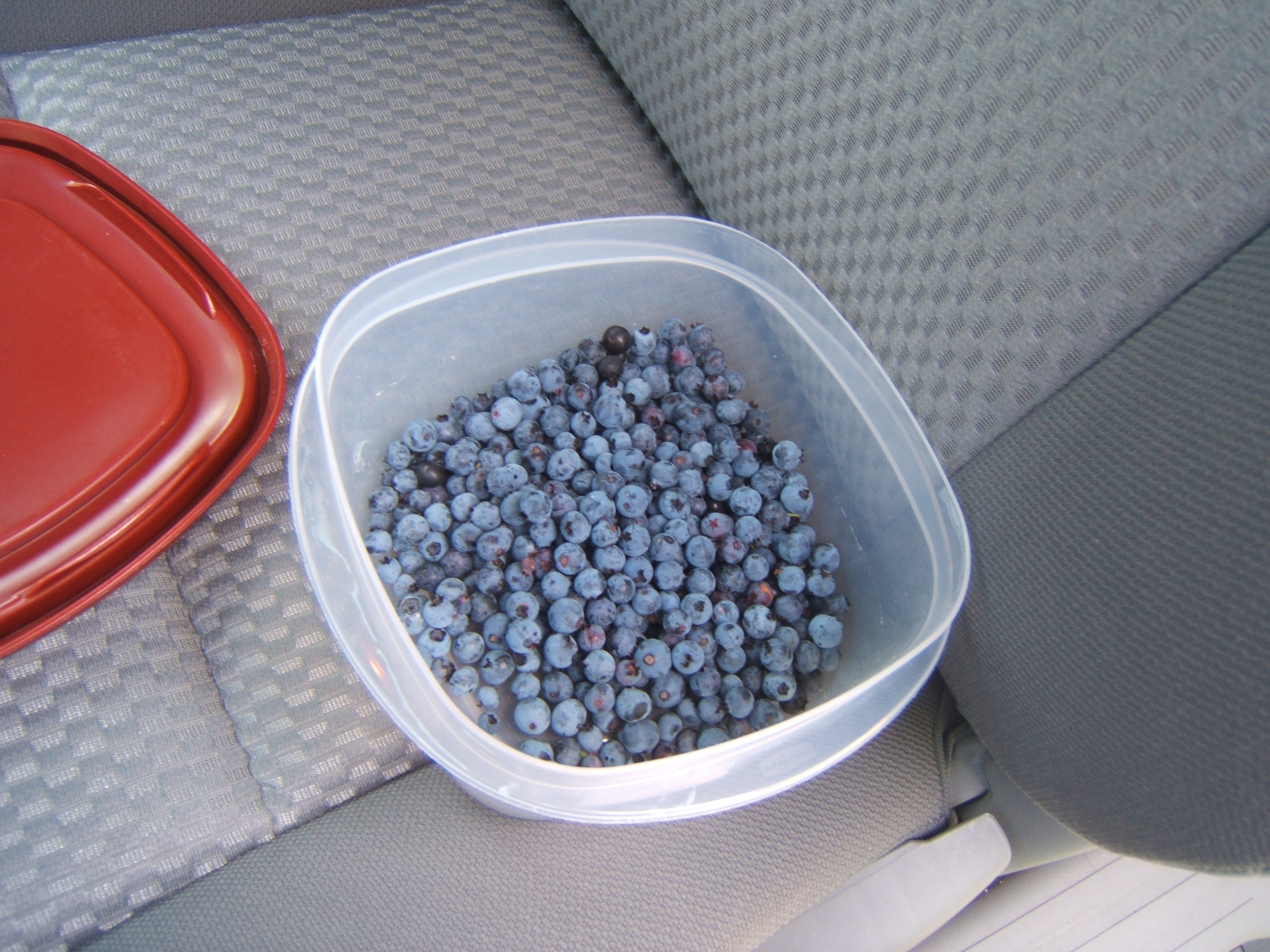
I love blueberries and so I am very happy – our blueberries are blue and ready for the picking at our summer property.

There are two ways to pick blueberries, with your hands…

or with a rake…

My husband bought me my rake years ago, so I use it when there are lots of berries and most are ripe. There is a bit of a knack to harvesting with a rake. The ripe blueberries are loosened and captured with the tines of the rake. The basic technique is to sweep the surface of the bushes, tipping the rake upward as you sweep, since the ripe berries fall into a tine-less part of the pan. The experience of raking berries is very different from picking. The process is less calm, although you do get into a rhythm. Also, the tines of the rake vibrate as you sweep, making a lovely musical sound!
We compared the yields between picking and raking, and we get about five times as many berries per unit effort with the rake (I am sure professional rakers do much better than this). The rake gets lots of leaves and debris along with the berries, so the time saved in raking instead of picking is lost in the cleaning (in a professional operation, the debris is removed with fans or another sorting method).
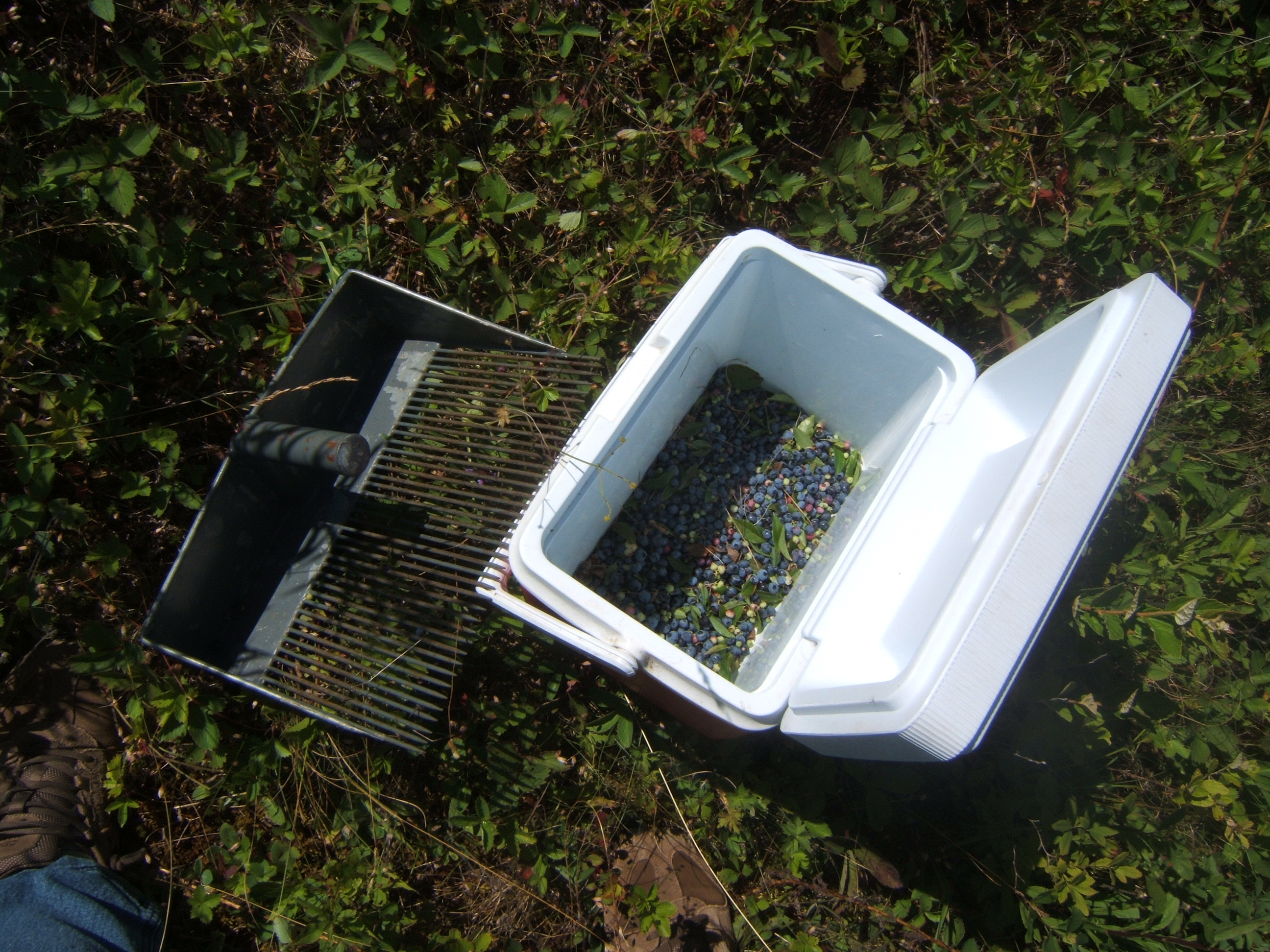
Although we have lots of berries on the property, they are getting fewer each year because the growth of other vegetation crowds the blueberry bushes. But we have a backup plan!
We also travel to the southern part of the province where the berries are in full production this time of year. Our preferred place to get blueberries by the box or by the pie is in Pennfield, at McKay’s Wild Blueberry Farm Stand.

We eat most of our own blueberries almost immediately. They also freeze very well. Our favorite way to use the berries is by making Blueberry Dumplings.
~
Blueberry Dumplings
two to three cups of fresh blueberries 1/2 cup of water 2 tbsp. of sugar (more if you prefer a sweeter dish) ~Bring the berries, sugar and water to a boil.
When the mixture is bubbling, turn down the heat.
Dumplings:
1 cup flour 2 tsp. baking powder 1 tbsp. of shortening, cut into the flour/baking powder mixture 1 tsp. sugar 1/2 cup milk ~Mix well and add by spoonfuls to the top of the cooking blueberries.
Cover the pan tightly with a lid (otherwise, you will have a blue-spattered stove).
Cook at low for about 12-15 minutes or until dumplings are fluffy and done in the middle.
Enjoy!
~
~
raking blueberries
~
the sweep of the rake, the berry
touch, the ring of the tines
vibrato in blue, duet with the wind
in the whispering pines
~
~
© Jane Tims 2012
Warning: 1. never eat any plant if you are not absolutely certain of the identification; 2. never eat any plant if you have personal sensitivities, including allergies, to certain plants or their derivatives; 3. never eat any plant unless you have checked several sources to verify the edibility of the plant. ~poisonous Lathyrus – when ‘wild’ plants are not edible
Yesterday, August 1, 2012, I posted a description of the Beach Pea (Lathyrus japonicus Willd.) and said the peas could be collected, boiled and eaten. This is the advice of the Peterson Field Guide to Edible Wild Plants (1977). My further reading, from more up to date sources, says you should not eat the seeds of Beach Pea or other species of wild pea. Many Lathyrus species contain a neurotoxin that can lead to a condition called lathyrism, a type of paralysis. Although there are other guides saying that Beach Pea is edible in small quantities, I have revised the post to remain on the safe side.
When we choose to include wild plants in our diets, it is very important to know for certain they will not be harmful. In my posts, I have talked about avoiding berries that may look pretty to eat, but contain toxins (for example the bright blue berries of Clintonia (see my post for May 23, 2012, ‘Bluebead Lily’ https://nichepoetryandprose.wordpress.com/2012/05/23/bluebead-lily-clintonia-borealis-ait-raf/ ) or the tomato-like berries of the Common Nightshade (see my post for July 16, 2012, ‘growing and gathering – barriers to eating wild foods’ https://nichepoetryandprose.wordpress.com/2012/07/16/growing-and-gathering-barriers-to-eating-wild-foods/ ).
I have also talked about cases in history of people who risk eating poisonous plants when hunger or famine strike. An example is the making of Missen Bread in Scandinavia, using a long complicated process designed to remove the burning, poisonous crystals contained in the roots of the Wild Calla (see my post for June 4, 2012, ‘keeping watch for dragons #6 – Water Dragon’ https://nichepoetryandprose.wordpress.com/2012/06/04/keeping-watch-for-dragons-6-water-dragon/ ). Poisonous species of Lathyrus (for example Lathyrus sativus, the Grass Pea), in the same genus as the Beach Pea, have been used throughout history for food when people are desperate, in times of drought, famine or poverty.
So, please, take the following steps before you ingest any wild plant:
1. check out as many sources as you can find, to discover the current wisdom and science about ingesting a plant
2. be certain of your identification – many plants look very similar to one-another and can be confused
3. think about your own sensitivities, since you may react to foods that do not bother other people.
4. when in doubt, take the route of caution and safety and do not eat
~
© Jane Tims 2012
Beach Pea (Lathyrus japonicus Willd.)
During our vacation to Nova Scotia, we stopped at several places along St. Margaret’s Bay. All along the beaches, tucked just out of reach of the highest tides, were crowds of Beach Pea. Beach Pea (Lathyrus japonicus Willd.) is a common plant of the coast, growing on sandy and gravelly shorelines and beaches.

This plant resembles the garden pea. It has vine-like, trailing, compound leaves, each composed of 6-8 leaflets. At the base of each leaf is a clasping stipule; at the leaf’s tip is a curling tendril. The flowers are showy, pink and blueish-purple, blooming from June to August.

The seeds of the Beach Pea are podded peas, from 1 to 2 inches long. They are greyish-green and ripen in August.
Some sources, including Peterson’s Field Guide to Edible Wild Plants (1977), say that Beach Peas can be collected, boiled and eaten when they are young and tender. Other sources, more up to date, say they are not edible because they contain a toxic substance that effects the nervous system. In my next post, I’ll talk a bit about being cautious before eating wild plants.
~
~
Beach Pea
Lathyrus japonicus Willd.
~
she feints on the rocks
sighs on the sand
beckons with the tendrils
of her feathery hand
~
ruffles her skirts
in the salted breeze
and squanders her love
on indifferent seas
~
~
© Jane Tims 2012
Warning: 1. never eat any plant if you are not absolutely certain of the identification; 2. never eat any plant if you have personal sensitivities, including allergies, to certain plants or their derivatives; 3. never eat any plant unless you have checked several sources to verify the edibility of the plant.




 nichepoetryandprose