Posts Tagged ‘edible plants’
maple sap soda fountain
For the last two days, the maple sap has been running again. The nights have been below freezing and the days are sunny and warm. Yesterday, we had 12 liters of sap from our 10 trees. The day before, we collected about 5 liters.
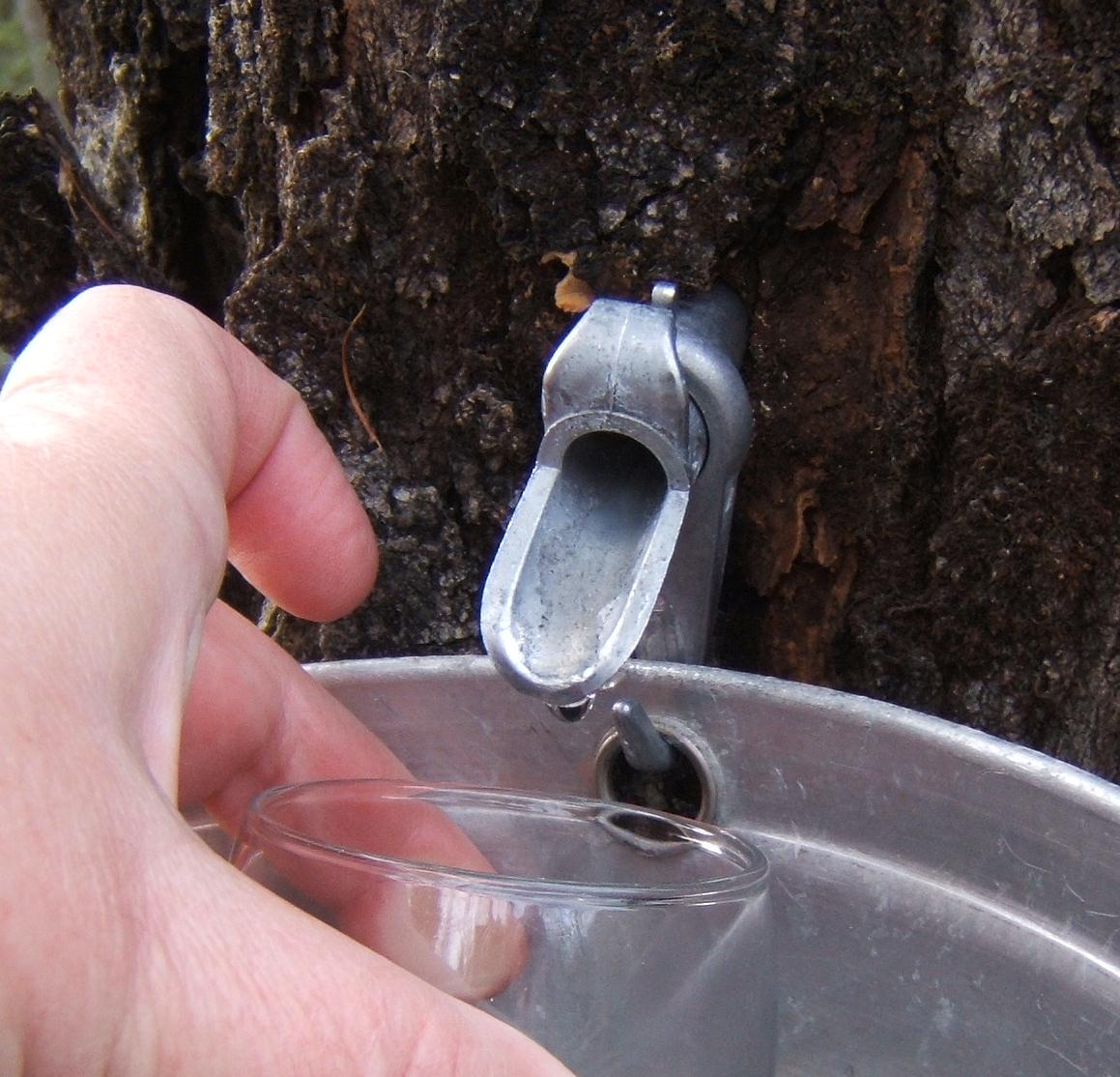
Each tree has its own rhythm of drips. Our best producer today drips at a rate of about 9 drops every 5 seconds, or 108 drops per minute.
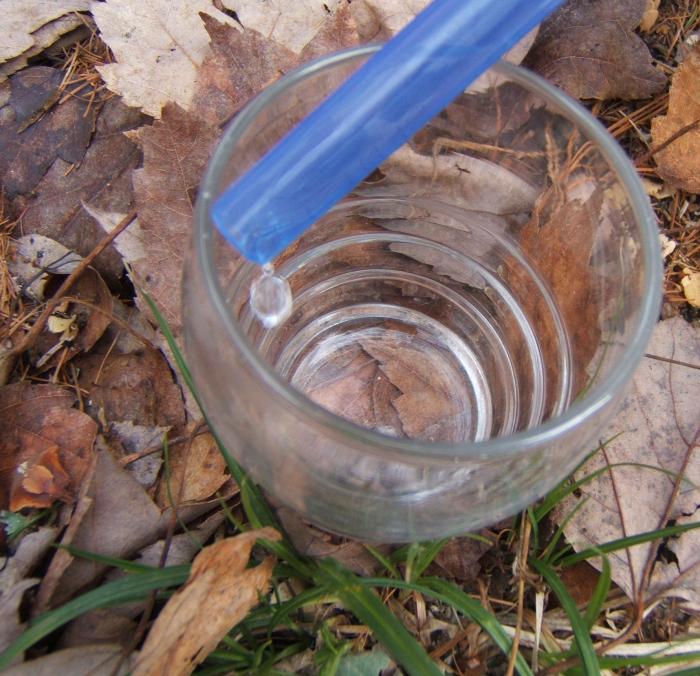
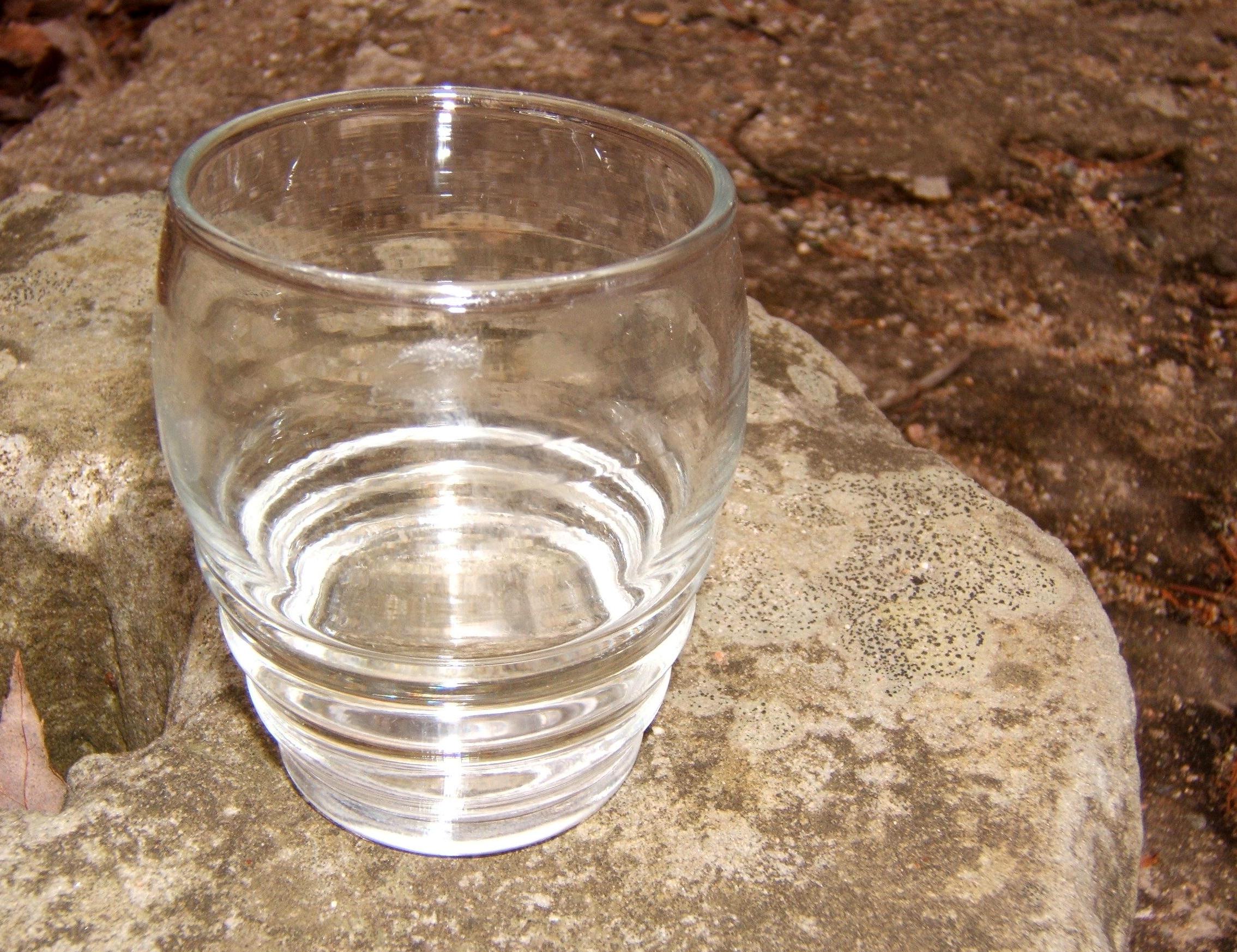
This evening, I had my ‘drink the sap from the tree’ experience. I took a small glass and caught the drips for a couple of ounces of the sweetest water ever. To me, the sap of each tree has its own taste. The sap from the big maple tree by our front door tastes a lot like cream soda without the fizz!
The maple sap is crystal clear, although it will turn dark amber (No. 2 Amber, according to our grading in Canada) once we boil it down to syrup.
~
~
droplet
~
one drop of maple sap
from the spile
~
a seep from slate
at the waterfall edge
~
in rain, a tear
from the margin of a leaf
~
a pause in the envelope
between rough bark and aluminum
~
~
© Jane Tims 2012
maple syrup ups and downs
It may be a short maple syrup season this year. The weather has not been cooperative. In order for the sap to run, warm days are great, but the nights need to be cold. When the temperatures fall below zero, the sap in the tree runs from the crown to the roots. When the day is warm and sunny, the sap runs back up to the canopy. If there is no cold night, no sap.
So far we have collected about 40 liters of sap from our 10 trees and I have 3 bottles (each 500 ml or two cups) of lovely dark syrup! This compares to 136 liters of sap last year on the same date, from 12 trees.
~
~
Cold night, warm day
~
Icicles build
from the spile
sweet sickles of sap
~
~
© Jane Tims 2012

breakfast niche
niche \ ‘nich\ n (F, fr. MF, fr. nicher to nest, fr. (assumed) VL nidicare, from L nidus nest)
1 a : a recess in a wall, especially for a statue;
b : something that resembles a niche;
2 a : a place, employment, or activity for which a person is best fitted;
b : a habitat supplying the factors necessary for the existence of an organism or species;
c : the ecological role of an organism in a community especially in regard to food consumption.
– Webster’s New Collegiate Dictionary, 1979
My niche includes breakfast.
I look forward to my breakfast, sometimes planning it in detail the night before.
The best breakfast, for me, includes all the food groups: protein, grain, milk, fruit, vegetable and fat.
I usually settle for cereal, or toast on days when the cereal box is empty. But the best breakfast involves a piece of whole wheat toast, some yogurt and almonds, stir-fried green peppers, onions and mushrooms…
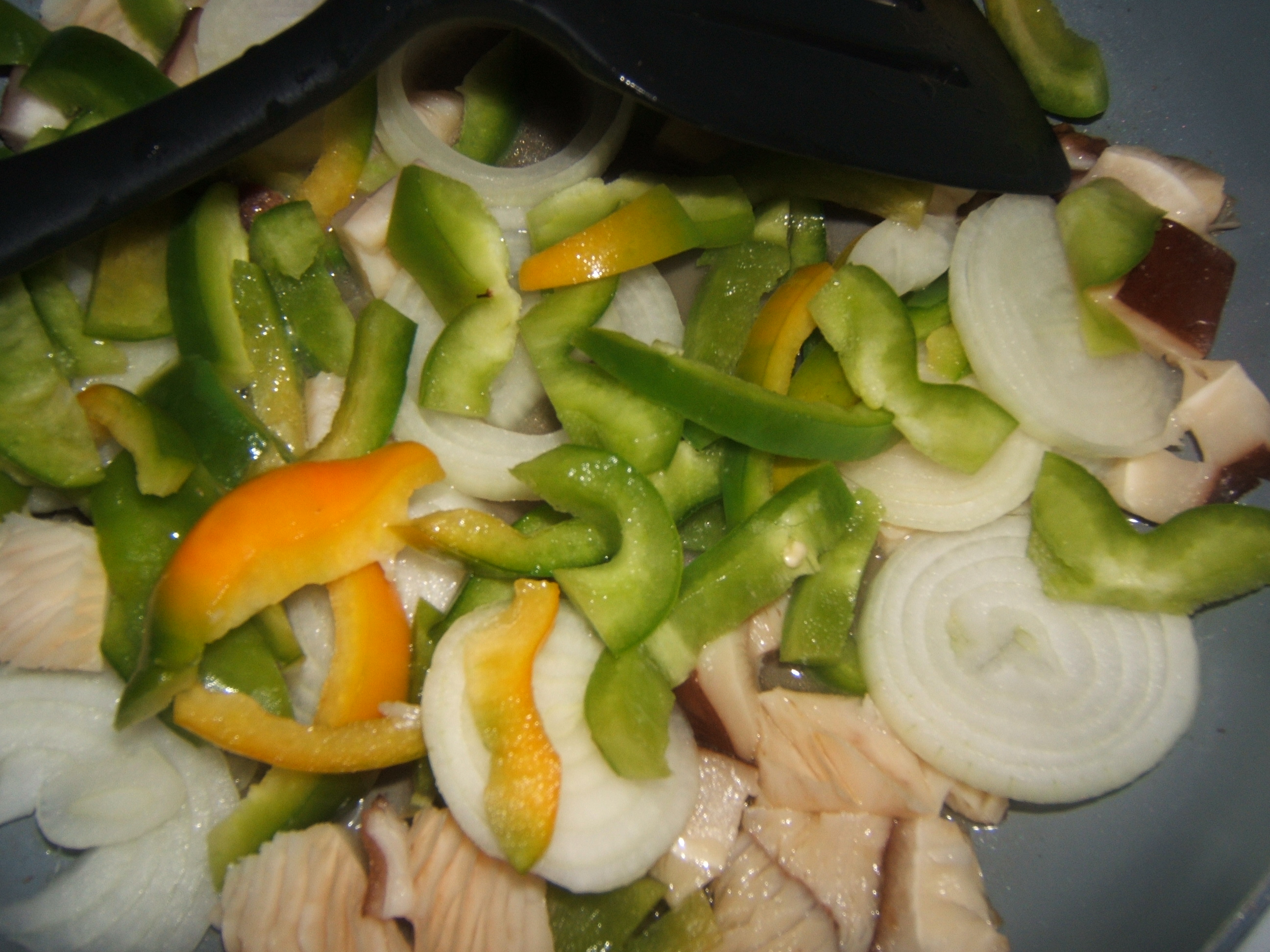
the shitake mushrooms in the stir fry were grown on a log in a friend's woodlot
and an orange…
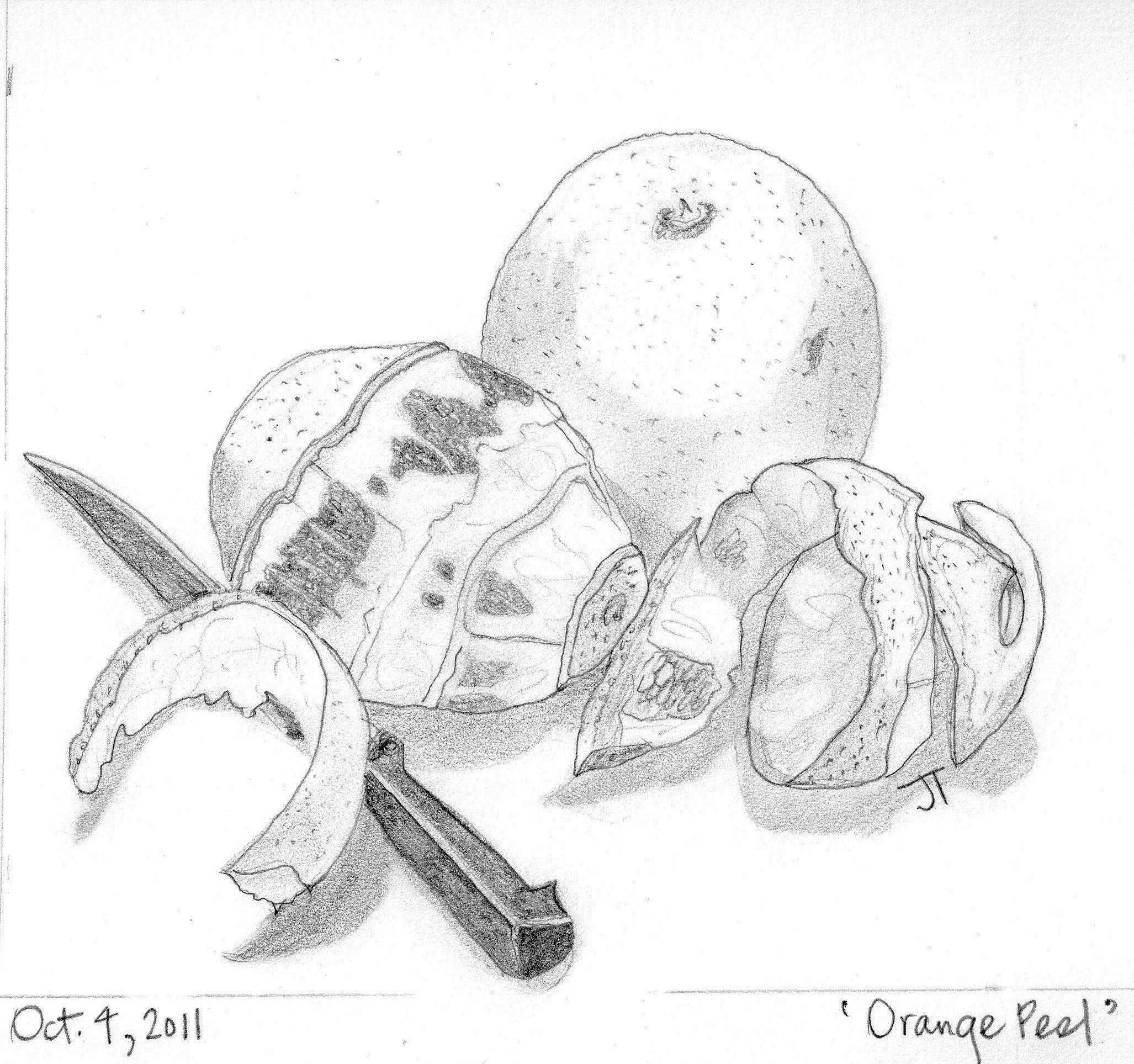
breakfast sun shower
~
clouds pulled apart
thumbs between
sections of sky
sun flashes
from a flat grey knife
light peels back from shadow
~
curl of orange rind forecasts
tart vapour of rain
~
© Jane Tims 2010
course of the creek
Our small cabin is near a lake, an offshoot of the Saint John River. We have what some would consider poor access to the lake, since there is a marsh between us and the lake shore edge. But that marsh is a very special place, ever changing and always interesting.
One way it changes, almost daily and certainly seasonally, is with respect to water level. You could say we are downstream of the entire Saint John River, meaning we are receiver of every fluctuation of the water level in the system. The situation is made complex by the influence of a major hydroelectric dam at Mactaquac.
In spring, the river floods, and the marsh is covered by water…
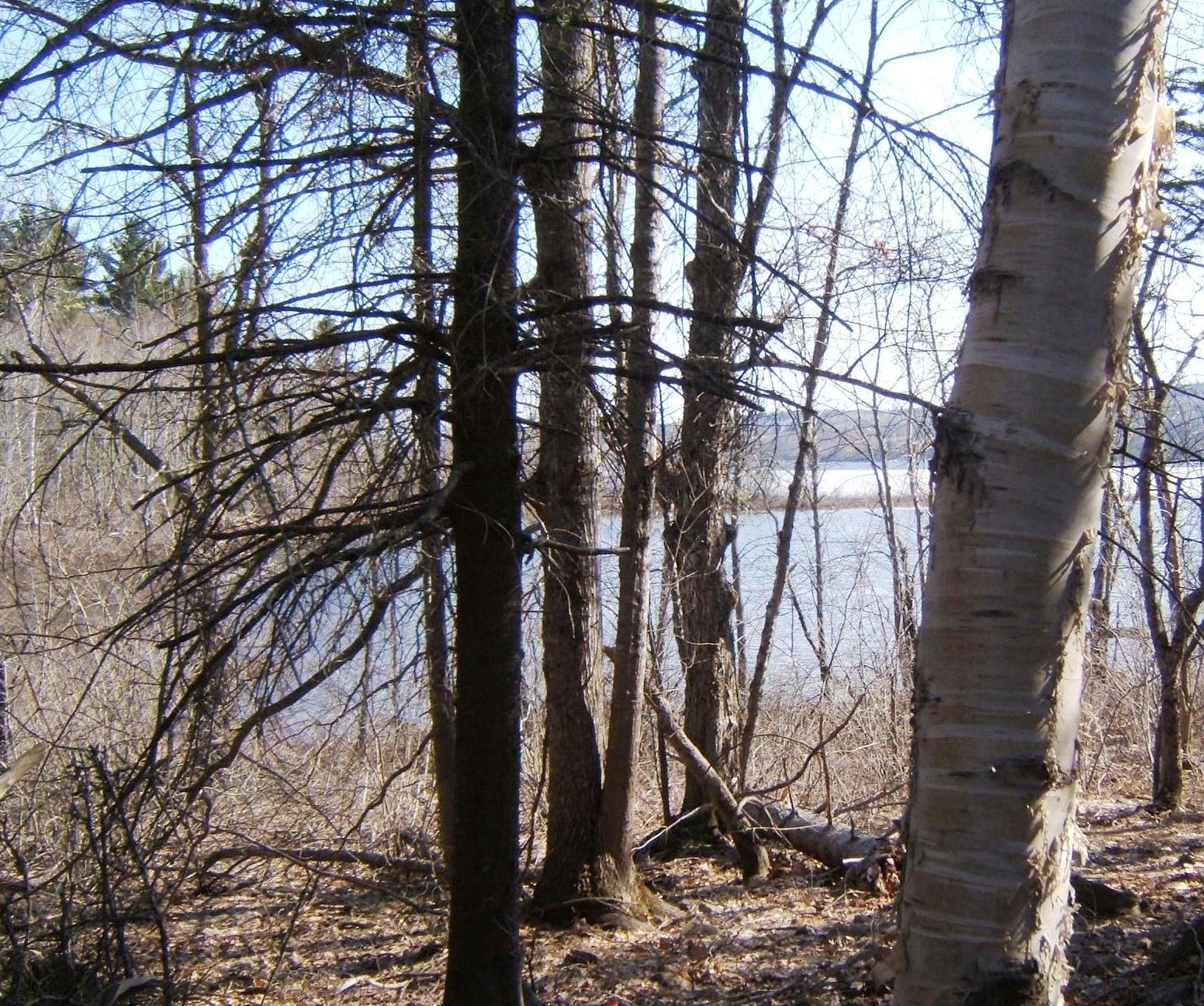
In normal years, the water levels become quite low, and our marsh is high and dry. We can walk on it, to reach the outer shore of the lake…

the green in the foreground is the marsh
In wet years, like this has been, the water stays high and there is a pond between us and the main lake…
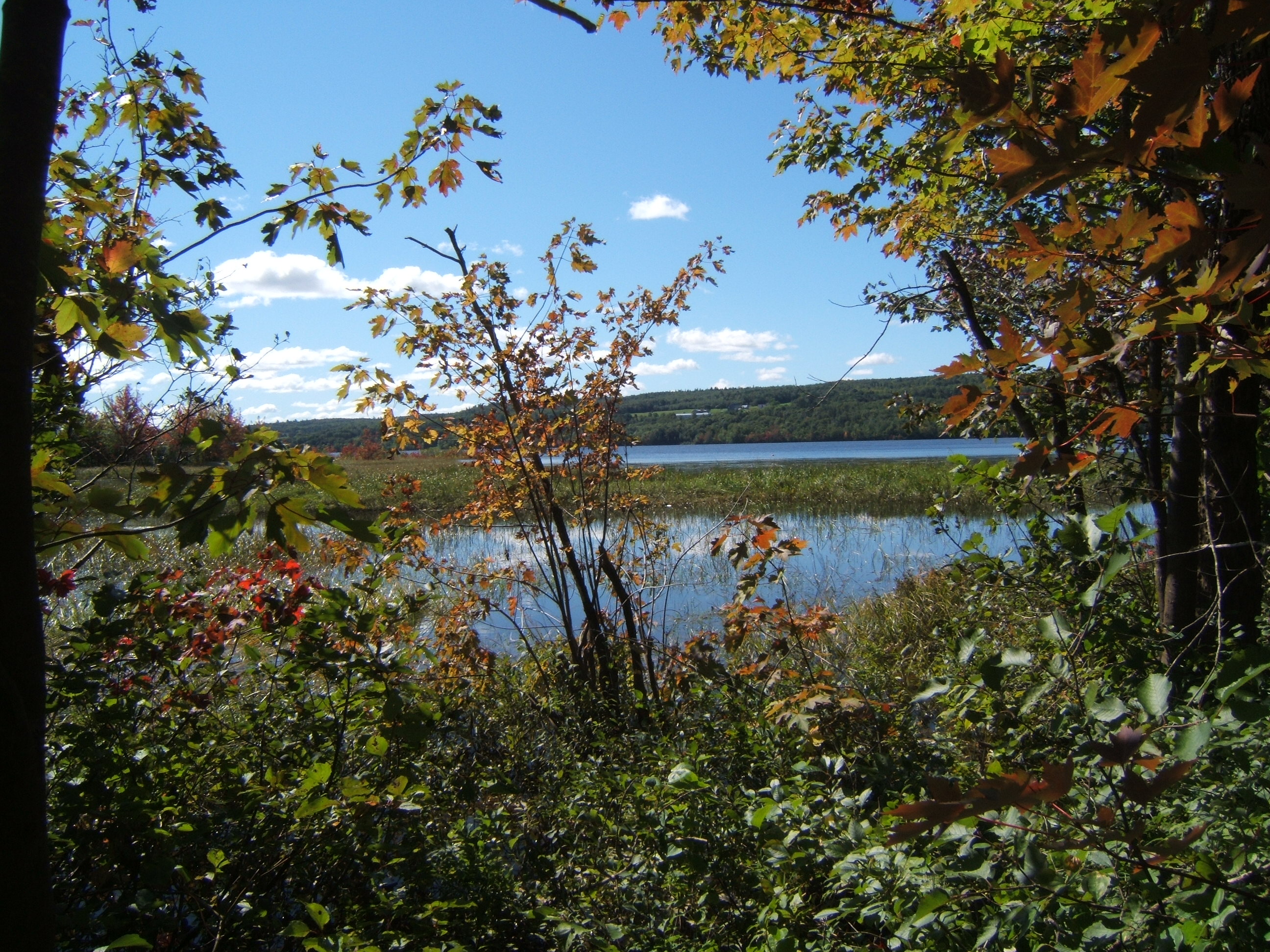
On Saturday, I went rowing on the pond in my small red rowboat. I rowed out to the edge of the lake and then followed the deeper waters of the small winding creek back into the marsh as far as I could go without grounding the boat. Last year I could see pumpkinseed sunfish in the creek water, but not this time.
Most of the grasses in the marsh are Spartina pectinata Link., broad-leaf cord-grass, ordinarily associated with salt marshes. Actually, salt water is characteristic of the lower parts of the Saint John River – the salt water wedge extends as high as Washademoak Lake, and the tidal influence is measurable to above Fredericton!
At the outer shore of the pond, where the creek enters the lake, I was surprised and delighted to find a few stems of wild rice (Zizania aquatica L.). This is not native to New Brunswick, but is often planted along shores to attract waterfowl and is now found all along the Saint John River and in many lakes. The grass is distinctive because the pistillate (female) flowers are in a group near the top of the plant while the staminate (male) flowers are on horizontal banches below.
I am an awkward rower. Usually, to improve my control and reduce my speed, I row the boat backward, stern first! In spite of my lack of speed, it is an adventure to be on the water, to become a bit of an explorer. My need to know the ways of the pond reminds me of my attempts to understand the path my life has taken.
characteristics of creek
~
clumsy row in the marsh pond
to seek the course of the creek
the strand of water’s flow
to nourish pond define
its shape conduit
to the lake
~
a slender S through grass emergent
pondweed and cord-grass vague
deviation from clarity hyaline the interface
of freshwater and salt and pumpkinseed
turn their flat bodies to intercept
the flow find the break in the mat of sedge
narrow simplicity of weed-free bottom
~
search
and find
the inevitable
thread in flow of
story the theme to bind
the words and water into one
~
© Jane Tims 2011
along the country road #6
How are the giant statue of a Canada goose at WAWA, Ontario, and the roadside plant White Clover associated? Read on…
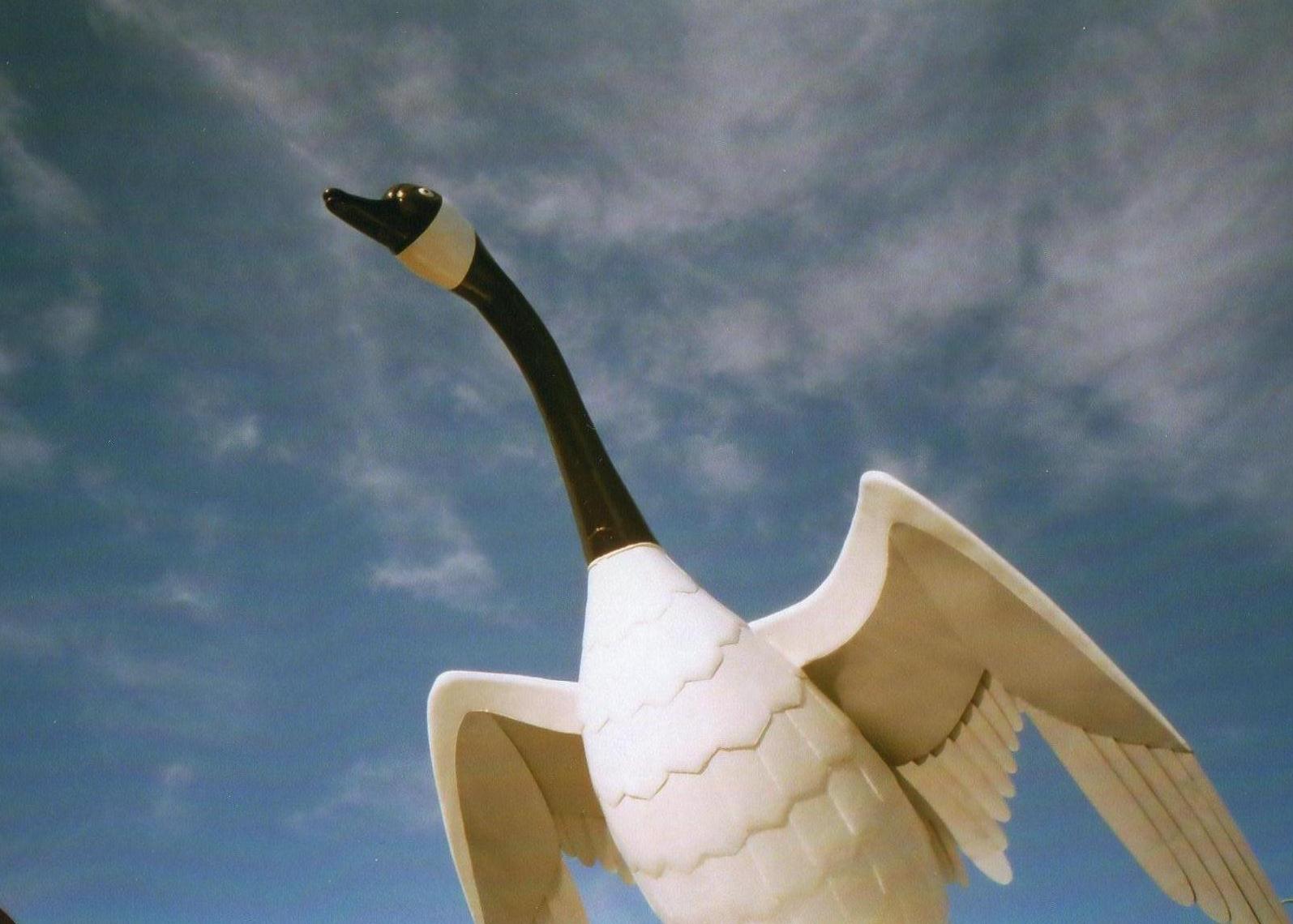
the giant statue of a Canada goose at Wawa, Ontario
White Clover is a common perennial herb of fields, lawns and roadsides. The plant is also called White Clover or, in French, trèfle blanc. Flowers are borne in globular heads, pure white or tinged with pink. The name Trifolium is from tres meaning three and folium meaning leaf. Repens means creeping, a reference to the long, prostrate stems.
The leaves of clover are in threes, palmately compound, and are occasionally found in fours. According to superstition, finding a four-leaved clover gives good luck to the finder. In the 1960’s, my Dad found a five-leaved clover in the grassy field in front of the giant statue of the Canada goose at WAWA, Ontario.
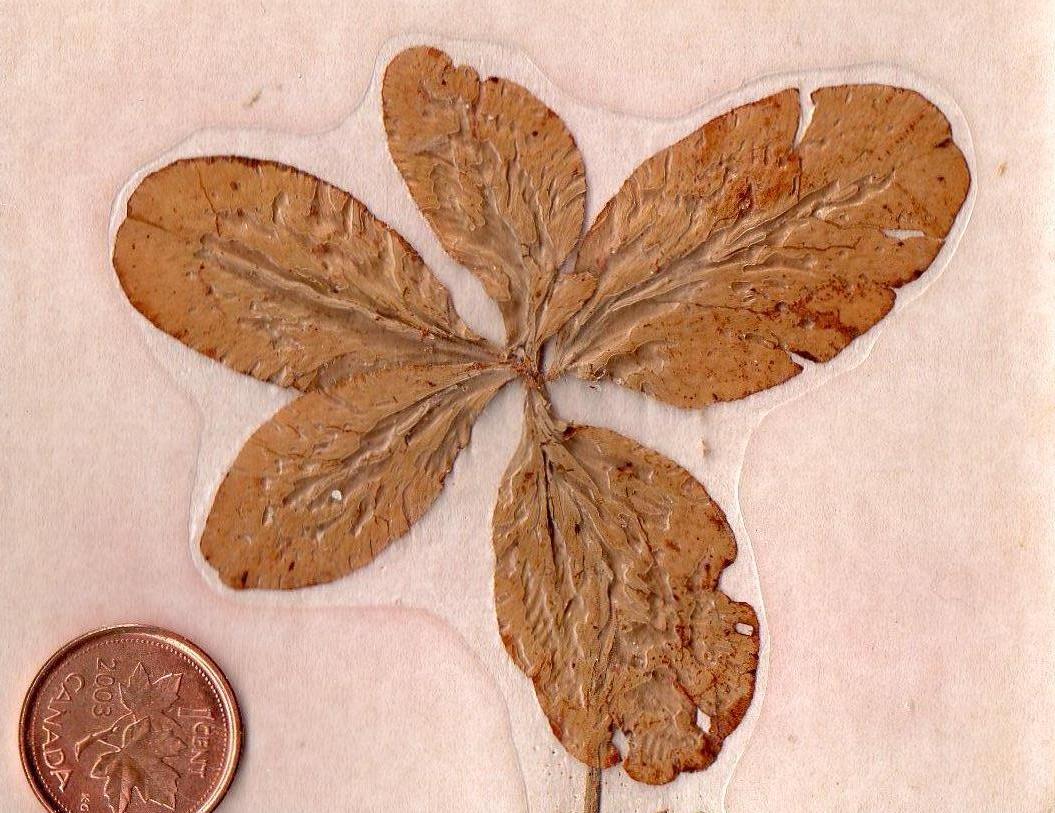
the five-leaved clover my Dad found on the lawn in front of the Canada goose at Wawa almost 45 years ago
Dad pressed the leaves and covered them in a laminating film. The pressed plant is still among my treasures.
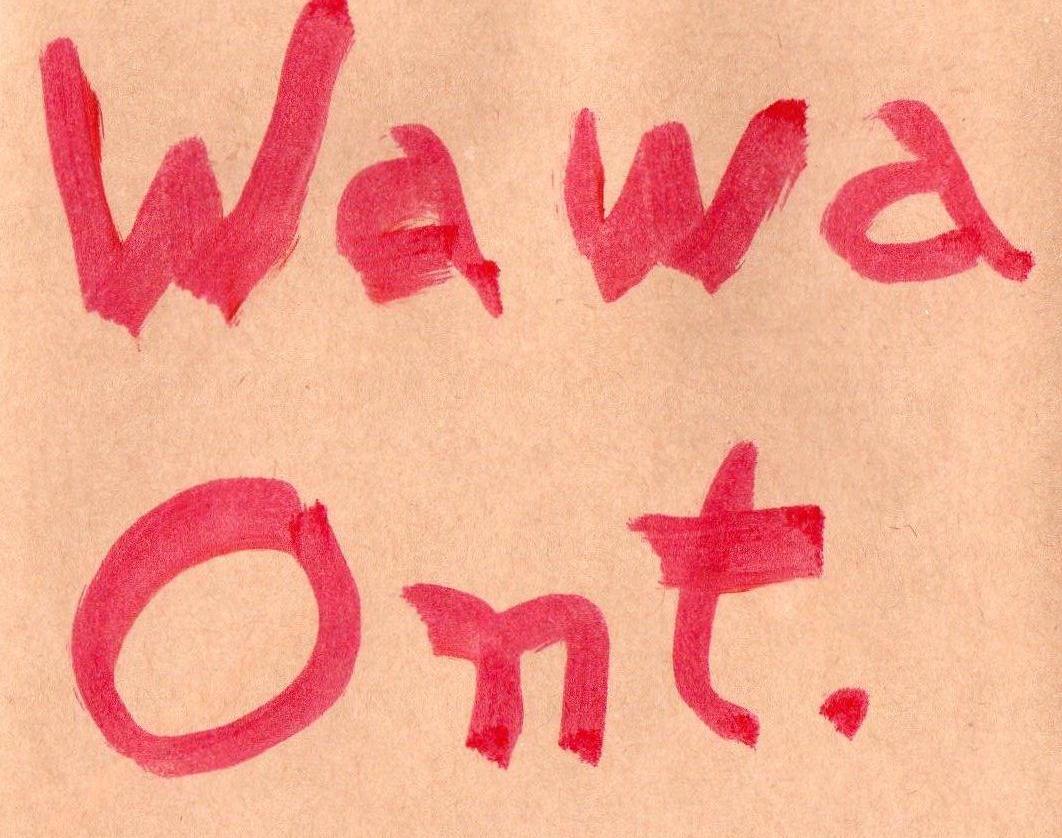
the reverse side of the specimen of five-leaved clover, with my Dad’s printing
We returned in 2002 and searched, but the three-leaved variety was all we found.
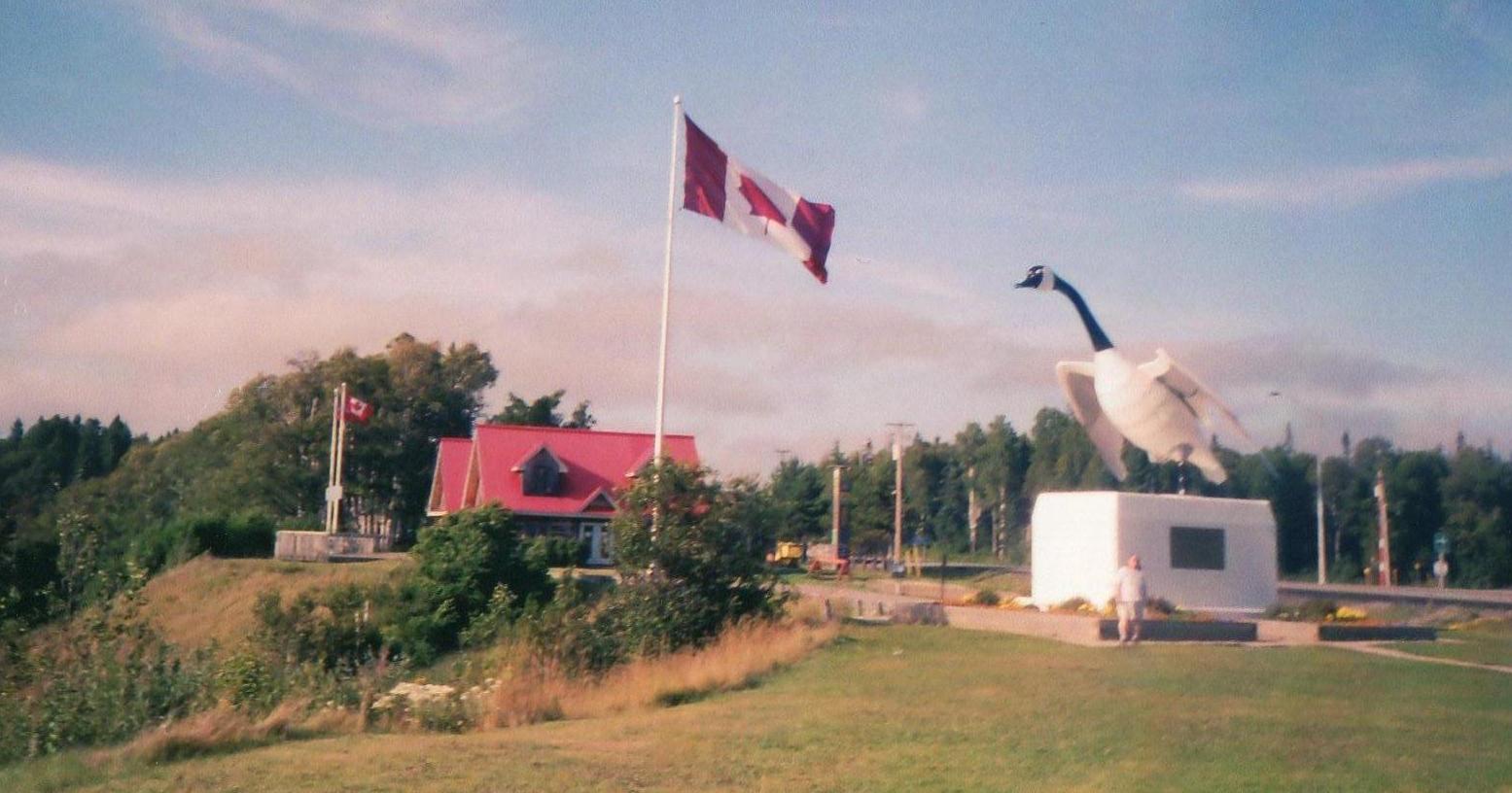
we searched in 2002, but I think the lawn had been replaced
Clover is a useful plant. It ‘fixes nitrogen’, meaning it takes nitrogen from the atmosphere and introduces it into the soil as it grows. The flowers are a source of honey for bees, and I’ve tasted honey made from an infusion of clover flowers. Dried leaves can be used for making tea.
Have you ever found a clover leaf with more than three leaflets? Did it bring you luck?
White Clover
Trifolium repens L.
(Three Leaves and Wishes)
~
only to lie
sweet dreaming in the clover
to pull blossoms
from long stems
toss soft snowballs
at blue-bottle flies
~
bees to visit me
florets for nectar
hair splashed on the clover
scented sweet honey
~
to search three leaves for four
creeping across the lawn
to the roadside
to roll in the fields
of white clover
trèfle blanc
blushing
~
Warning: 1. never eat any plant if you are not absolutely certain of the identification; 2. never eat any plant if you have personal sensitivities, including allergies, to certain plants or their derivatives; 3. never eat any plant unless you have checked several sources to verify the edibility of the plant.
© Jane Tims 2005
competing with the squirrels #2
We watched our hazelnuts carefully every day until August 11, certain the squirrels would not get them ahead of us.

our hazelnuts, almost ready to pick
Then, as humans do, we went on a small vacation, and returned on August 14, only three days later.
As soon as I was out of the car, I went to have a look at my hazelnuts.
And not one remained.

no hazelnuts
The squirrels got the hazelnuts.
No poem can express my dismay.
Next year…
Warning: 1. never eat any plant if you are not absolutely certain of the identification; 2. never eat any plant if you have personal sensitivities, including allergies, to certain plants or their derivatives; 3. never eat any plant unless you have checked several sources to verify the edibility of the plant. © Jane Tims 2012competing with the squirrels #1
The squirrels and I have issues. I say squirrels, because we have at least two species of squirrel (Sciurus sp.) on our property, reds and greys.
The red squirrels were here before we arrived, about 31 years ago. The red squirrels I see here today must be the great-great-great… grandchildren of the little fellow who used to shimmy down a copper wire to get to our feeder. The grey squirrel arrived only a couple of years ago and is as big as a small cat. Both reds and greys compete with the birds for the sunflower seeds and other food we put in the feeder. The two species of squirrels compete with one another for roughly the same ‘niche’ and my reading tells me that the grey squirrels will eventually displace the red.

grey squirrel cleans out feeder
I overlap with the squirrels’ ‘niche’ in one repect: we all love hazelnuts. I have two large shrubs of Beaked Hazelnut (Corylus cornuta Marsh.) in our woods. Beaked Hazelnut is a wiry shrub with large serrated leaves. Its fruit is contained in bristly beaked husks and the nut is edible, to both me and the squirrels.

Beaked Hazelnut shrub with hazelnuts in beaked husks
The question is, when do I pick my hazelnuts? It has to be the day before the squirrels pick their hazelnuts. I ask my husband every day and he says he doesn’t know…..
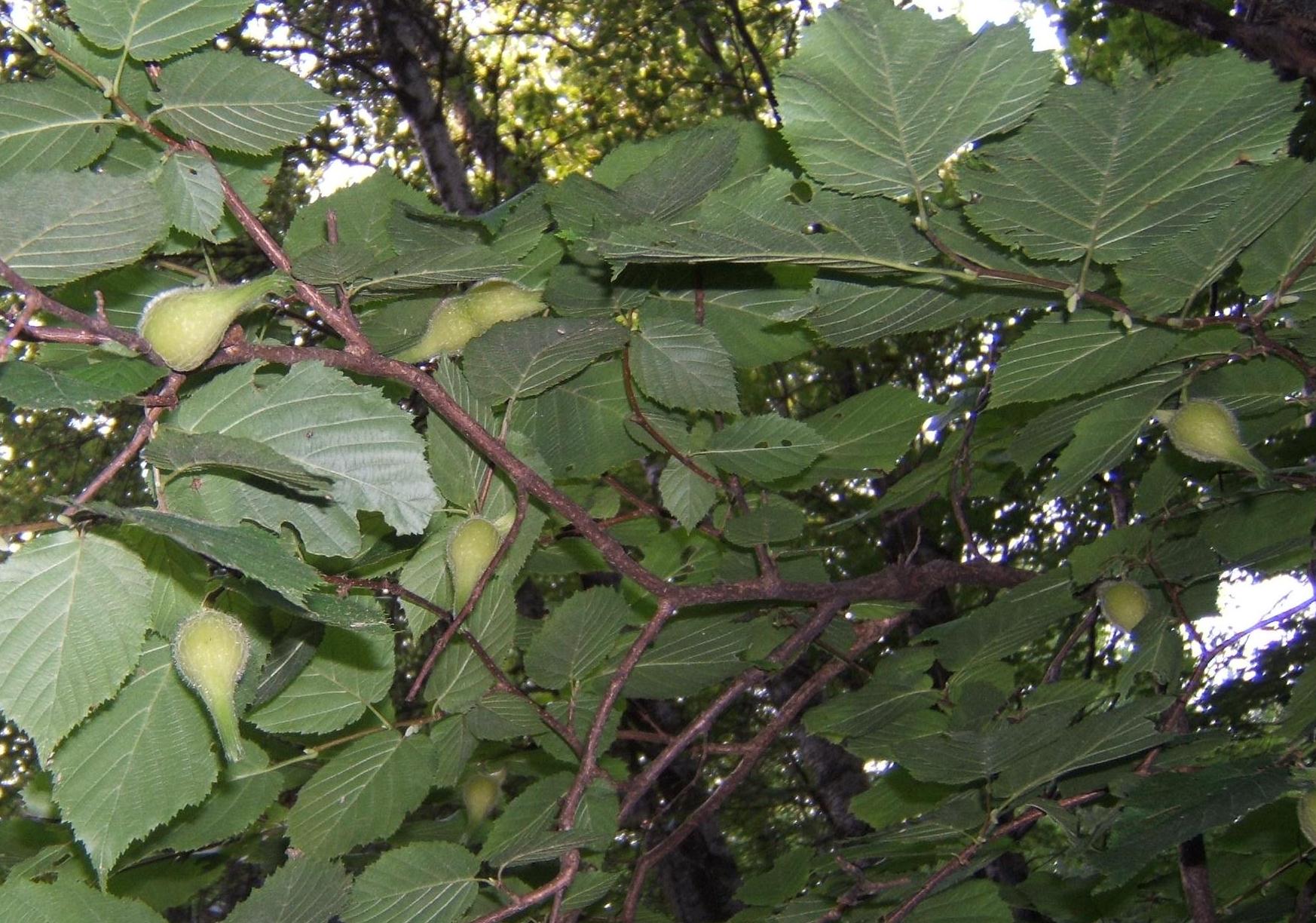
hazelnuts viewed from the underside of the shrub canopy
© Jane Tims
an afternoon in the blueberry field
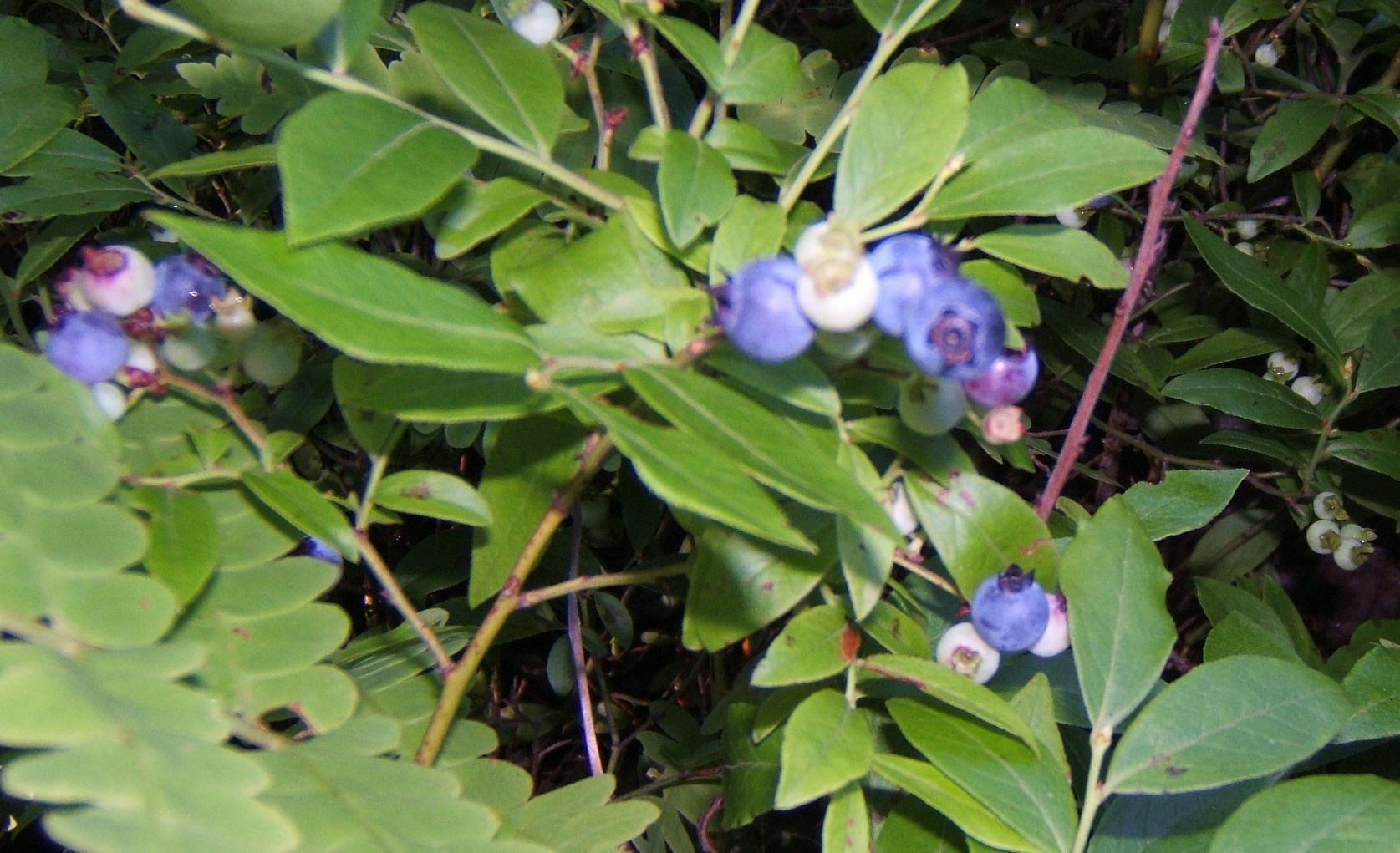
blueberries ripening
One of my favourite places to be is a blueberry field. Nothing is better than lying on your back between islands of blueberry bushes, watching clouds build in the sky and munching on newly picked blueberries.
When I was young, I spent lots of time picking blueberries with my Dad, in the pasture behind my grandfather’s farm. I can still see his hands deftly stripping berries from each branch, and hear the staccato ripple of berries filling his pail. My picking was considerably slower and less productive. In my pail, the berries spoke in single plinks, each separated by several seconds of silence.
Later, when I was a teenager, I went once with my Mom to pick blueberries on our neighbour’s hillside. My berry picking skills had not improved and I know I ate more than I picked. But how I wish I could spend, just one more time, that afternoon with my Mom, picking blueberries on a sun-washed hill.
Today, I pick blueberries every summer, in the field near our cottage. Since I am usually the only one picking, I now aim to be efficient. Sometimes I use my blueberry rake to strip the berries from the branches, quickly and with little waste. Of course, this means picking through the berries by hand, removing leaves and other debris. But the ripe berries are still blue and sweet, and plump with the warmth and fragrance of August.
This poem is in remembrance of my Mom and our afternoon of picking blueberries:
Bitter Blue
of all the silvery summer days we spent none so warm sun on
granite boulders round blue berry field miles across hazy miles
away from hearing anything but bees
and berries
plopping in the pail
beside you I draped my lazy bones on bushes crushed berries and
thick red leaves over moss dark animal trails nudged between rocks
baking berries brown musk rising to meet blue heat
or the still fleet scent
of a waxy berry bell
melting in my mouth crammed with fruit sometimes pulled from
laden stems more often scooped from your pail full ripe blue pulp
and the bitter shock of a hard green berry never ripe
or a shield bug
with frantic legs
and an edge to her shell
Published as: ‘Bitter Blue’, Summer 1993, The Amethyst Review 1 (2)
© Jane Tims
Warning: 1. never eat any plant if you are not absolutely certain of the identification; 2. never eat any plant if you have personal sensitivities, including allergies, to certain plants or their derivatives; 3. never eat any plant unless you have checked several sources to verify the edibility of the plant.




 nichepoetryandprose