Posts Tagged ‘art’
walk on the shore
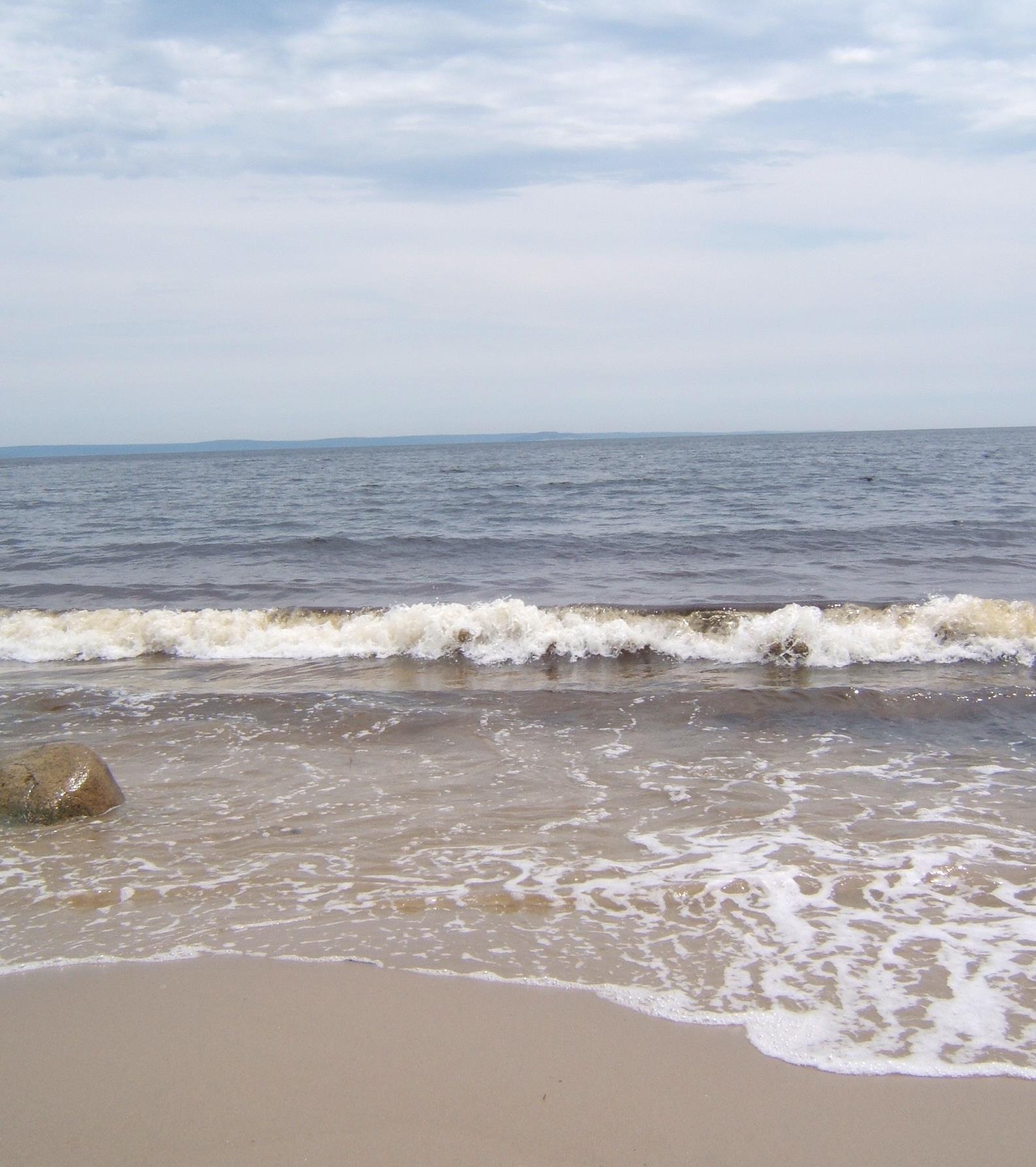
~
ignition
Sea-rocket (Cakile edentula Hook.)
~
clumps of Sea-rocket
are splashes of lime on sand
missiles from lavender flowers
~
pepper to tongue
pungent breath of Cakile
cardamom and caraway
~
flavour our laughter
giggles of gulls cross sober sand
intervention in sluggish lives
~
launches from Cape Canaveral
moon-walking on the beach
splash-downs in Sargasso Seas
~
most days are moth-eaten –
paper cuts, missives, e-mails to answer
problems, resolutions without teeth
~
the seawind smooths its sand
begs for someone to take a stick
scratch out a love song
~
~

~
Copyright 2015 Jane Tims
washday
A few years ago, we took a vacation to les Îles de la Madeleines, also known as the Magdalen Islands, in the Gulf of Saint Lawrence and part of the Province of Quebec. We loved the ferry rides to and from the Islands, the endless white sand beaches, the artisans, and the demonstrations of wind sailing. Most of all, I loved the colourful houses. I always planned to try to capture the beaches and those houses in a painting. I finally completed my tryptic called ‘washday #1’, ‘washday #2’ and ‘washday #3’.
~

June 9, 2015 ‘washday#1’ Jane Tims
~
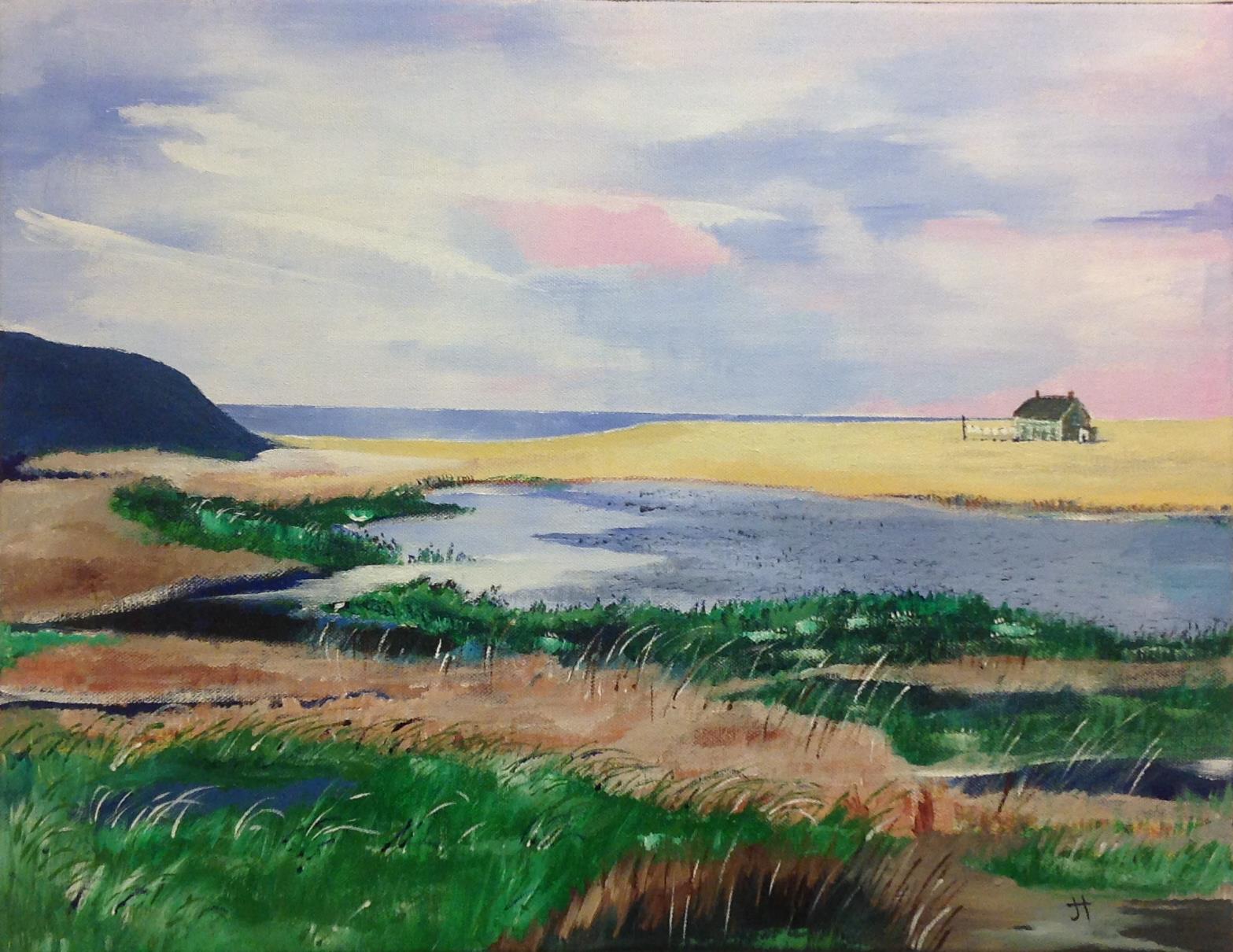
June 9, 2015 ‘washday#2’ Jane Tims
~

June 9, 2015 ‘washday#3’ Jane Tims
~
And the three together:
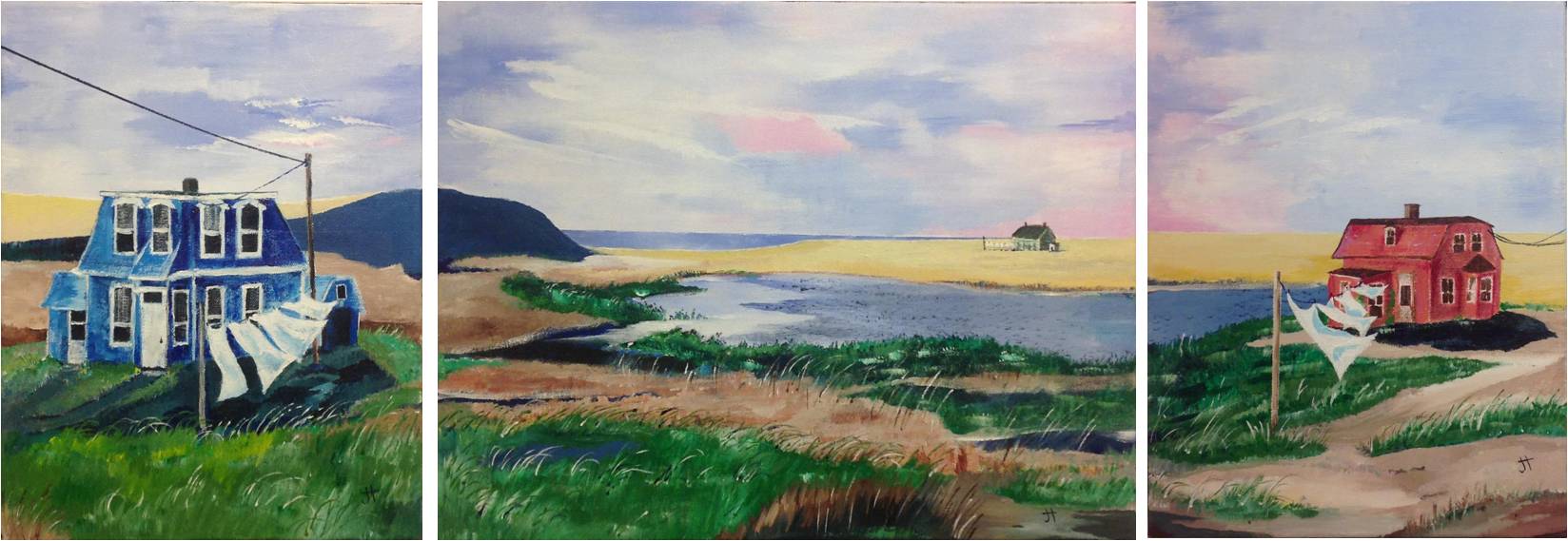
June 9, 2015 ‘washday’ Jane Tims
~
Copyright 2015 Jane Tims
ordinary magic

~
ordinary magic
~
small blue jar
emptied of face cream
reveals a false bottom when held to the light
a bright inverted inner shell
hovers untouchable
~
the peel of an orange
spurts flammable oil
cantrips of fire
~
press a shell to your ear
murmur of ocean
~
~
Copyright 2015 Jane Tims
‘Outside-In No. 2’ – bringing the outside into our homes
I have submitted another painting to Isaac’s Way Restaurant, for their 24th Art Auction and Sale. This event will run from May 24, 2015 to September 20, 2015. The proceeds from the auction go to sponsor kids-in-need for theatre lessons.
~
Looking for a theme for my recent work, I decided to do a series of still life paintings about the many elements of the out-of-doors we bring into our homes. This includes items collected on walks, motifs on fabrics and metals, small statuary and so on. My second painting in the series is ‘Outside-In No. 2’ – a still life of books, a jar of potpourri, a metal bird sculpture, pine cones and my fern curtains.
For the painting, I used Chromium Oxide Green, Burnt Umber, Titanium White, Phthalo Blue, Cadmium Yellow and Quinacridone Magenta. I finished some surfaces in the painting with Golden Polymer Medium (Gloss) to give some items shine and a smooth texture.
~

Jane Tims ‘Outside-In No 2’ May 14, 2015 (24″ X 20″ acrylic, gallery edges)
~
The first painting in the series was ‘outside-in’, currently displayed in the 23rd Art Auction at Isaac’s Way. It features a moss terrarium and dragon sculpture. There are still a few days remaining in the 23rd auction (until May 24, 2015) so if you are local, it is a great way to own some original art and contribute to a worthy cause! The paintings in the auction can be seen at:
~
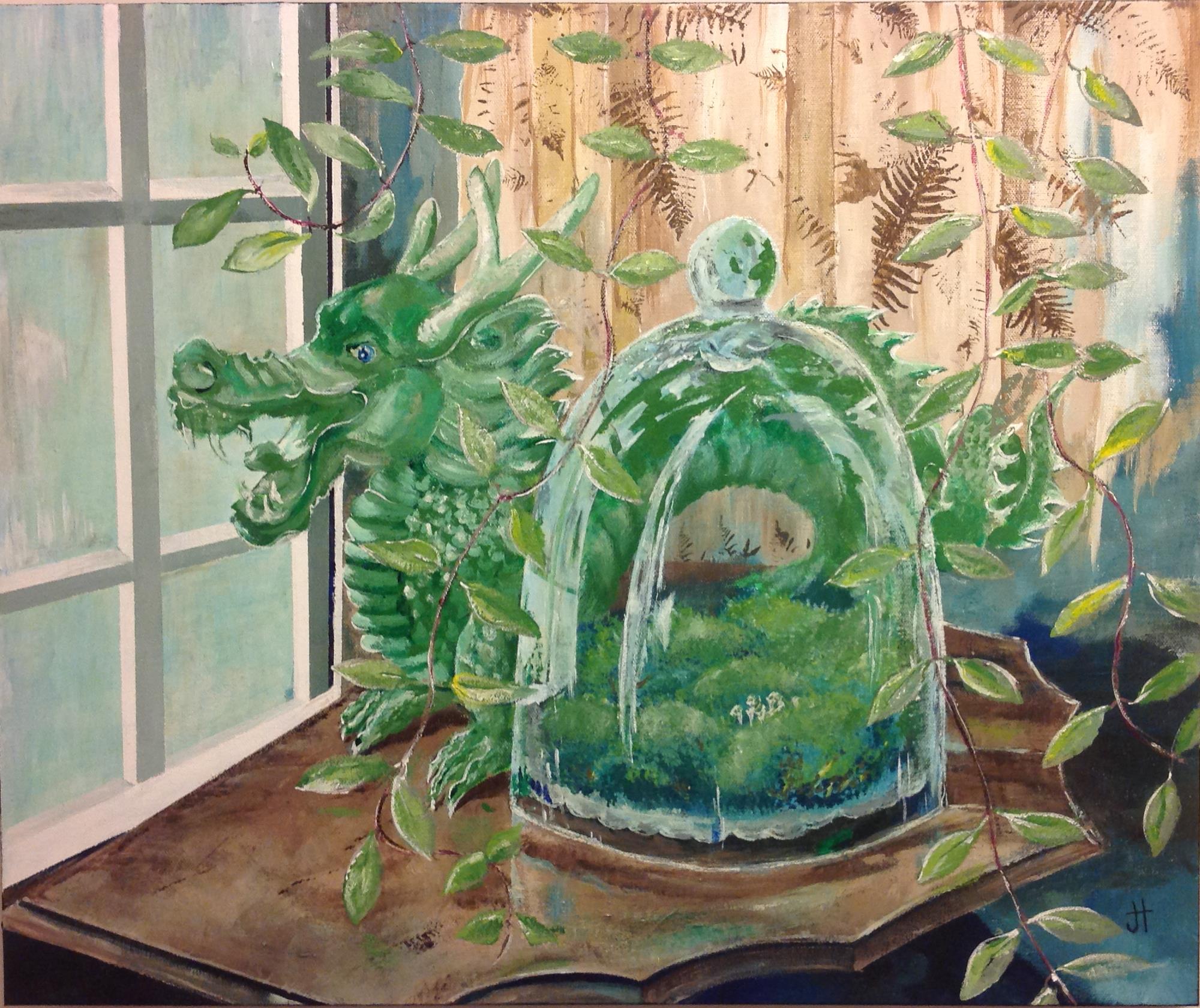
Jane Tims ‘outside-in’ February 12, 2015 (24″ X 20″, acrylic, gallery edges)
~
The canvas for my next painting stands ready on the easel. Now, to look around the house for some out-of-doors items to include in the painting!
~
Copyright 2015 Jane Tims
spring orchestra – downy woodpecker

~
~
sticky tongue, tail prop, zygodactyl feet
~
beneath the key of chained song (chick-a-dee
whistle, robin melodic and whitethroat
mnemonic, wheezy phoebe, junco click) –
grubs mumble, coil in rotting wood
~
beneath low woodwind, blazing brass and string –
jagged percussion and drum roll, Downy
Woodpecker excavates sugar maple
stump, black jackhammer
~
beak throws wood chips, heaps sawdust and splinters
dapper shudders, black and white, a grey smudge
bright head-bars, a red blur, tap a stammer
steady stutter, busyspeak
~
~
Copyright 2015 Jane Tims
spring orchestra – fee-bee

Carving of the name ‘Phoebe’ on a beam of the Tantramar #2 Covered Bridge near Sackville, New Brunswick
~
~
Phoebe
~
unknown, she nudges
her way into Monday –
carved name in the covered bridge
~
Black-capped Chickadee pipes
fee -bee, hey-sweetie
(bored with chick-a-dee-dee-dee)
~
and Eastern Phoebe, rasps fee-bee
whee-zy, Phoe-bee
black bed-head, smuggie throat
~
unknown, Phoebe nudges
her way into Monday
~
~
Copyright 2015 Jane Tims
~

one of the usual visitors to our feeder … the Black-capped Chickadee
woodpeckers and covered bridges

~
Woodpeckers are common in our area. Both Downy and Hairy Woodpeckers visit our feeders in winter. Pileated Woodpeckers hammer on our trees in summer, their flaming heads a blur as they excavate dead trees for insects.
~

~
Woodpeckers don’t confine their tapping to dead trees. I have seen them pounding on telephone poles, metal roof flashing and even the shingles on the side of our house.
Lately, as a result of a project I am planning, I have been thinking about covered bridges and their use as wild life habitat. So, a question …
Do woodpeckers excavate the wood of covered bridges for food?
Last week, we visited three covered bridges in Sunbury County in New Brunswick and, in two of them, we found the answer …
~

woodpecker holes in the soffit at the gable end of the Smyth Covered Bridge near Mill Settlement, Sunbury County (April 2015)
~

old woodpecker excavations on the face of the Bell Covered Bridge near Juvenile Settlement, Sunbury County (April 2015).
~

woodpecker holes inside the Bell Covered Bridge (April 2015)
~
I would love to be in a covered bridge when a woodpecker comes to play his staccato song.
~
Copyright 2015 Jane Tims
in a yellow caravan
The Wind in the Willows by Kenneth Grahame was published in 1908 and has defined the relationship of people to place for four generations. The story of animal friends and their lives along the river is a magical yet down-to-earth tale. It solidifies ideas of home, adventure and longing. It captures (or doesn’t) the insubstantial voice of nature:
… it passes into words and out of them again – I catch them at intervals – then it is dance-music once more, and then nothing but the reeds’ soft thin whispering.
One of the memorable characters of the book is Toad. He is reckless and arrogant, and constantly gets into trouble, but I think his appeal is the adventurer in all of us. Some of his adventures are in a bright yellow caravan …
~

2003 ‘Toad’s yellow cart, Wind in the Willows’ Jane Tims
~
… there, drawn out of the coach house into the open, they saw a gipsy caravan, shining with newness, painted a canary-yellow picked out with green, and red wheels.
‘There you are!’ cried the Toad … ‘There’s real life for you, embodied in that little cart. The open road, the dusty highway, the heath, the common, the hedgerows … The whole road before you, and a horizon that’s always changing …
~
My copy of Wind in the Willows (Kenneth Grahame, 2007, Vancouver: Blue Heron Books) was illustrated by Robert Ingpen (what a name for an artist!). I will leave you with his illustrations of Toad’s yellow caravan …
~

~

~
Copyright 2015 Jane Tims
Daisy’s light
The Great Gatsby by F. Scott Fitzgerald (1925) is a book of excesses and haunting results. It is a cautionary story about the consequences of pursuing wealth without responsibility.
~
My painting is of Jay Gatsby as he looks across the bay to Daisy’s green light on the far shore.
~

Jane Tims ‘Daisy’s light from The Great Gatsby’ 2003 (acrylic)
~
Something in his leisurely movements and the secure position of his feet upon the lawn suggested that it was Mr. Gatsby himself, come out to determine what share was his of our local heavens.
I decided to call to him. Miss Baker had mentioned him at dinner, and that would do for an introduction. But I didn’t call to him, for he gave a sudden intimation that he was content to be alone — he stretched out his arms toward the dark water in a curious way, and, far as I was from him, I could have sworn he was trembling. Involuntarily I glanced seaward — and distinguished nothing except a single green light, minute and far away, that might have been the end of a dock.
from F. Scott Fitzgerald (1925) The Great Gatsby
~
The disposable wealth and carelessness of Gatsby are things most of us will never know. But we can feel for Gatsby who is willing to accept blame in the name of love and loses his life in consequence.
~
~
Copyright 2015 Jane Tims
silence
How many stories written by Edgar Allan Poe can you name? Certainly ‘The Pit and The Pendulum’. Perhaps ‘The Fall of the House of Usher’ and ‘The Purloined Letter’. Perhaps ‘The Murders in the Rue Morgue’.
~
My favorite story by Poe is ‘Silence – A Fable’, published in 1837. As many of Poe’s tales of the macabre, after numerous readings it still has the power to send shivers along the spine. The setting of the story is vividly portrayed with words. These were the inspiration for my painting.
~

Jane Tims (2002) ‘Silence by Edgar Allan Poe’ (acrylic on canvas, 20″ X 26″)
~
The waters of the river have a saffron and sickly hue; and they flow not onwards to the sea, but palpitate forever and forever beneath the red eye of the sun with a tumultuous and convulsive motion. For many miles on either side of the river’s oozy bed is a pale desert of gigantic water-lilies. They sigh one unto the other in that solitude, and stretch towards the heaven their long and ghastly necks, and nod to and fro their everlasting heads. And there is an indistinct murmur which cometh out from among them like the rushing of subterrene water. And they sigh one unto the other.
From Edgar Allan Poe, ‘Silence – A Fable’, 1837
‘Silence – A Fable’ describes the waters of the Zaire River and a strange man who sits on a rock along the river. A Demon in the water, wants the man to get down from the rock. So the Demaon sends all manner of horrors: the hippopotamus and the behemoth, and the tempest with torrential rains, thunder and lightening. But the man will not get off the rock. So what does the Demon do to get the man down from the rock. You need to read the story.
~
For a full text of this wonderful fable, see http://classiclit.about.com/library/bl-etexts/eapoe/bl-eapoe-silence.htm
~
I have a book of stories by Edgar Allan Poe that belonged to my Uncle Alec. The stories are illustrated with wood engravings by Fritz Eichenberg. These engravings are, in themselves, a study in horror. I thought you might like to see a couple of my favorites.
~

Illustration by Fritz Eichenberg of the Edgar Allan Poe story ‘The Fall of the House of Usher’ (Poe, 1944, Tales of Edgar Allan Poe, New York: Random House)
~

Illustration by Fritz Eichenberg of the Edgar Allan Poe story ‘The Black Cat’ (Poe, 1944, Tales of Edgar Allan Poe, New York: Random House)
~
I wonder how Fritz Eichenberg would have illustrated ‘Silence – A Fable’. Perhaps illustrations can never be as frightening as ‘… and the lilies sighed one unto the other in the solemnity of their desolation’. Just try reading the story aloud!
~
Copyright 2015 Jane Tims




 nichepoetryandprose