returning to the shore
Each summer we try to include a visit to the seashore in our vacation plans. This year we explored the coast of Maine and discovered Acadia National Park. Last year, we followed the South Shore of Nova Scotia, stopping at its many public beaches and byways.
The seashore is a magical place. One of the beaches we visited in 2010 was Crescent Beach, near Lunenburg. At the far end of the two kilometre long beach was an outcrop of calcareous rock. This rock had been eroded and pitted by wave action over the millennia. At one spot, the erosion had worn a small hole in the rock, just big enough to put my finger through. For that moment, I was wearing the whole earth as a ring on my finger!!
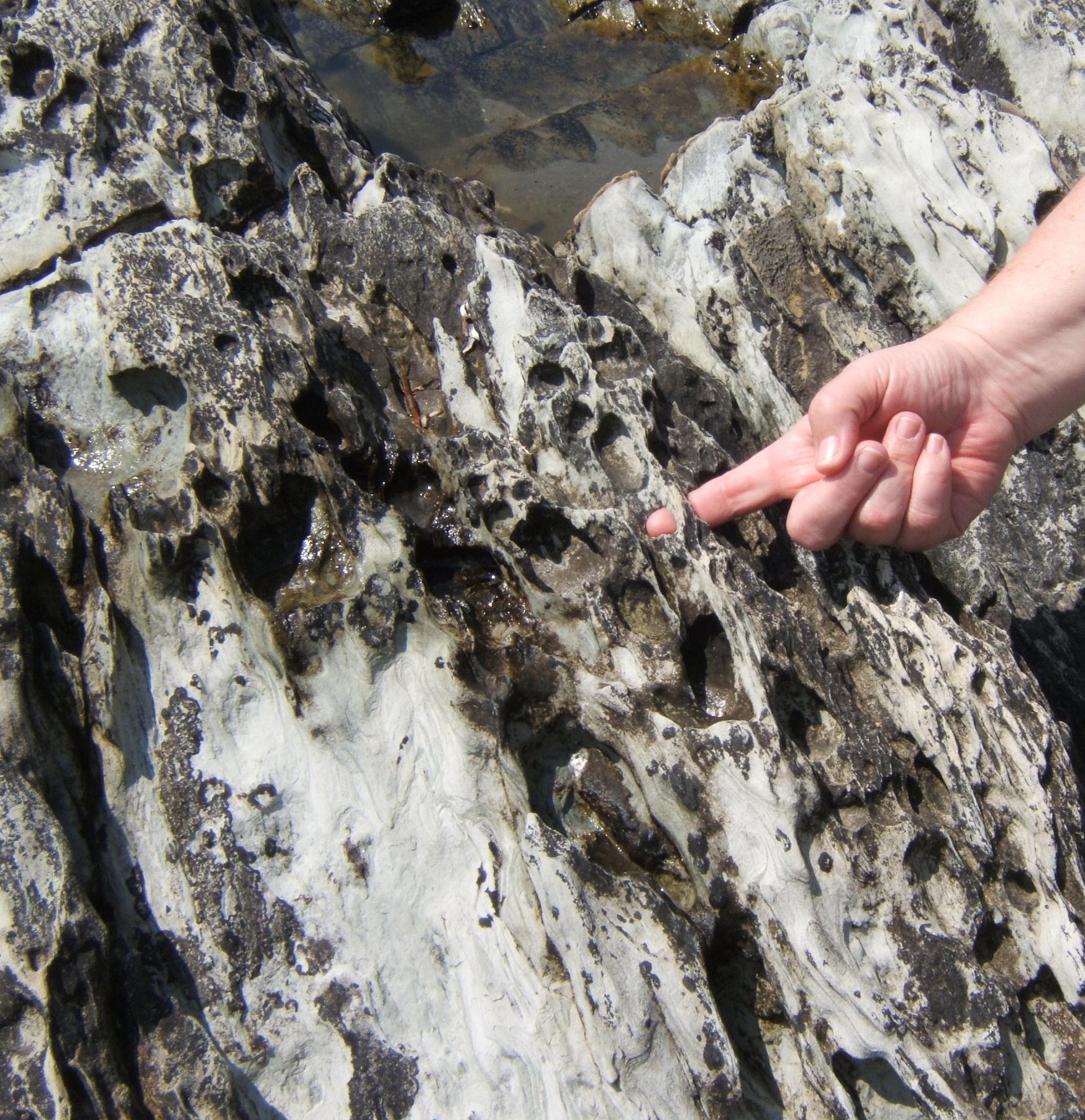
wearing the world on my finger!
The other magical aspect of the seashore is its changeability. In 2009, we followed the Eastern Shore of Nova Scotia and made our second visit to Tor Bay, near Larry’s River. When you stand on the beach at Tor Bay, the energy of the ocean and the drama of the wave action occupies all of your senses, all of ‘self’. The drama had also changed the beachscape significantly between our two visits, shortening its depth and exposing rocks I had not seen on our first visit.

It was as though we were not in the same place at all, but remembering a fable about a beach we had once known. No matter how hard we tried, we could never return to the same beach we had visited before.
fable
~
1.
~
stone
eroded
~
the fragments
layered by water
forged by fire
thrust and folded
into
stone
~
2.
~
this morning
the moon is real
sculpted in wavefoam
smooth as a pebble
random in the clatter
~
real
not a fable of moon
~
the rocks are folded
half-buried in sand
~
on the shore
an igneous man
in his lap a puddle of water
salt crystals
and stars
~
a quartz river
seams his forehead
~
real
not a fable of river
~
3.
~
I place quartz stones
too heavy for the gulls
to gather
~
these stones will shine
in darkness
a long line leading home
~
4.
~
I choose small stones
with smooth and shine
~
stones like eggshell
or potatoes pushed
into ground
~
pearl buttons
turned by a clumsy hand
rice pelting the window
lanterns shining in the dark
~
5.
~
at midnight
I run to the shore
the white pebbles
gather me to the moonlight
a dotted line
on the asphalt road
~
6.
~
the pebbles do not
wait for me
they fade
and scatter
roll over and over
lost
among so many
common stones
~
the wave edge
unravels behind me
~
7.
~
the path home is a fable
not real
~
in my lap is a pool
salt water
and stars
~
© Jane Tims 1998
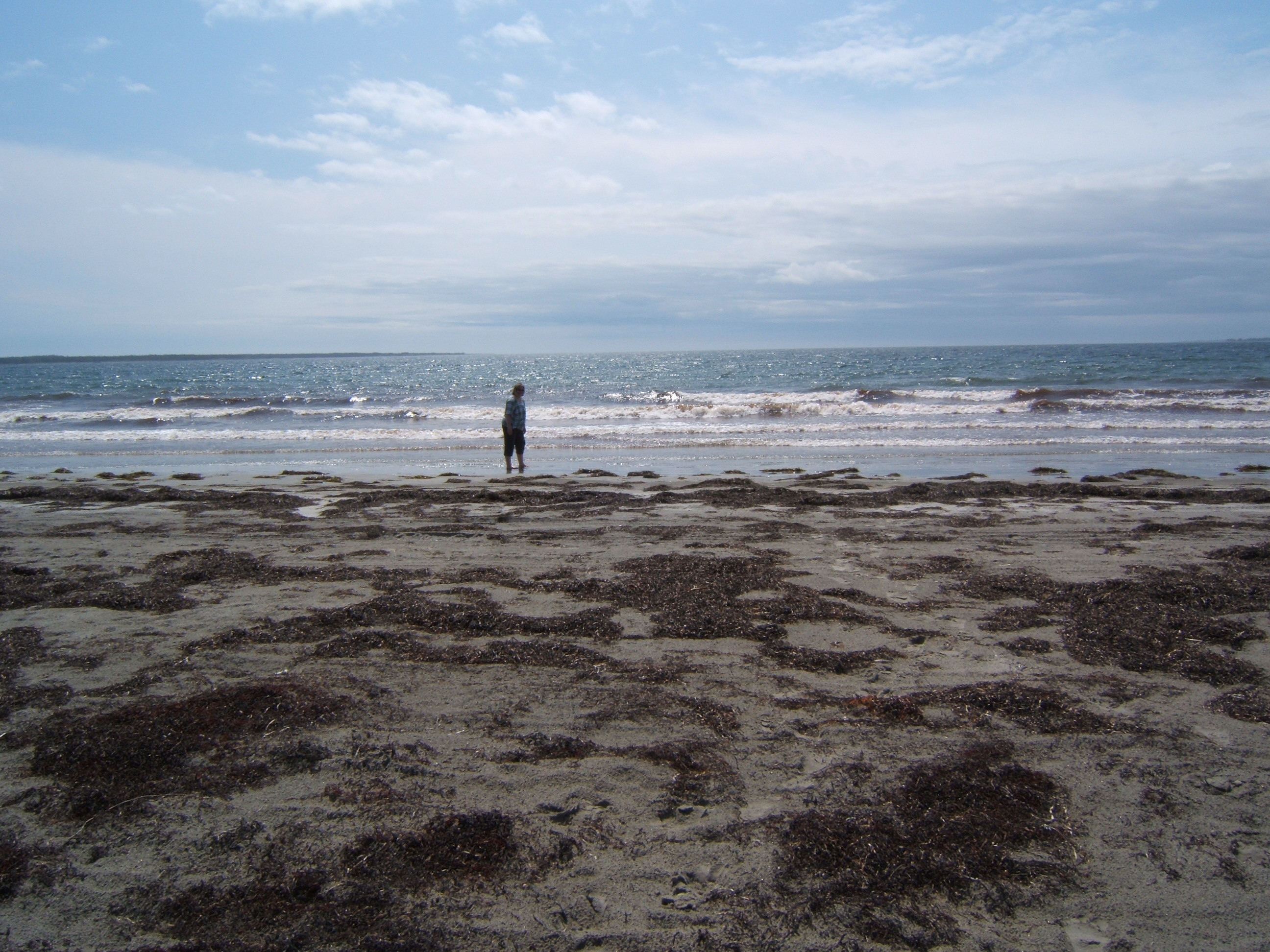
Crescent Beach near Lunenburg, Nova Scotia
autumn along the brook
Behind our house, in the grey woods, is a narrow little brook. It is not much to look at but I like its simplicity. This brook has steep sides (a cross-section like a ‘U’) and grassy banks, and it creates charming little riffles over fallen logs. Until this moment, I have never realised … we have not given this brook a name!

I walked to the brook last Monday evening, to see how high the water was and to look for signs of the changing season.
Autumn is showing its color everywhere. Some of the ferns have turned yellow with the first frost…
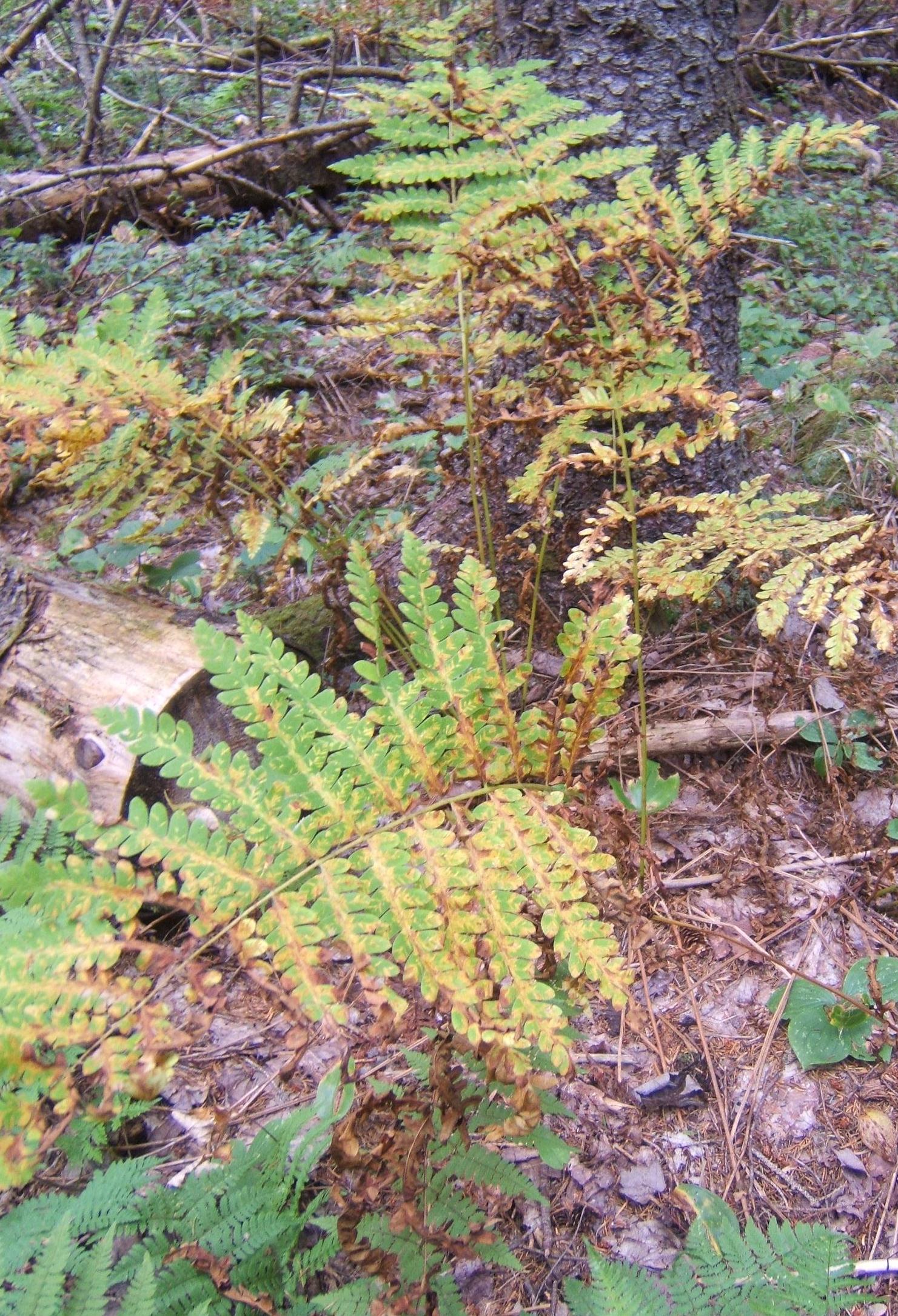
There are fallen red maple leaves on the trail and in the brook…

And the berries of Bunchberry (Cornus canadensis L.) are brilliant red…

- ‘red berries’

end of summer
~
on the path along the brook
one leaf bleeds into water
in town the walks are stony
chaff of linden, seeds
dry ditches overflow with flowers
~
I shrug
(no matter
summer is ended)
~
yellow rattle
pods and grasses
rehearse an incantation
wind sulks in corners of the shed
warmth and sun
paint the orange of pumpkins
knit winter mittens
~
I gather signs of autumn
asters, windfalls, flocks of red wings
frantic in the alders
acorns, hollow galls from oak
~
Orion peeks above the trees
time forgotten, found
and summer with rain never ends
~
I ask for rain
(arms loaded with everlasting)
~
© Jane Tims 2010

'oak leaves and acorns'
the color of niche
What are the color characteristics of niche? Are humans the only species to prefer certain colors for their spaces?
Other species also have color preferences. The best example I know is the preference of insects for color in their interactions with plants. Some insect pollinators, for example, prefer certain colors over others. Bumble bees have been shown to prefer the color purple. Also, flowers appearing monochromatic to us may be perceived quite differently by insects since they also see in the ultraviolet range of the spectrum. Some flowers, such as the yellow Evening-Primrose (Oenothera biennis L.), have ‘runway markers’ on their petals, to help insect pollinators to find their way to the nectar-producing parts of the plant.
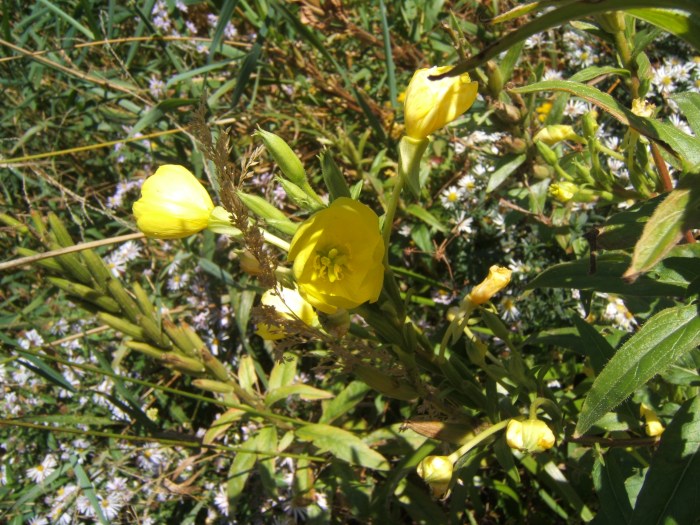
- Evening- Primrose (Oenothera biennis L.) Under uptra-violet light, the central area of the inner petals shows dark ‘runway markers’… if you look closely, you can see some vein-like variation in the yellow of the inner petals

Knowing about color-preference in insects can help us to spend more time in the out-of-doors. Science has shown us that mosquitoes prefer black or other dark colors over lighter colors. Greens, yellows and white are the colors to wear to reduce your attractiveness to mosquitoes.
An early paper on color preference of insects is A.S. Packard, 1903, ‘Color Preference in Insects’, Journal of the New York Entomological Society 11: 132-137. This paper is over one hundred years old but has charming anecdotes of the color preferences of houseflies, butterflies, moths and other insects. It is available on-line at:
http://www.jstor.org/stable/25003044
In the article, Packard reports mosquitoes are attracted to navy-blue, dark red and reddish brown.
My favorite color is definitely green, followed closely by orange. I also find I associate these colors strongly with the seasons: autumn with orange, summer with green. Although I would not select red as a favorite color, I notice my house, not at all color-coordinated, has definite red accents in almost every room.
What is the preferred color of your niche?
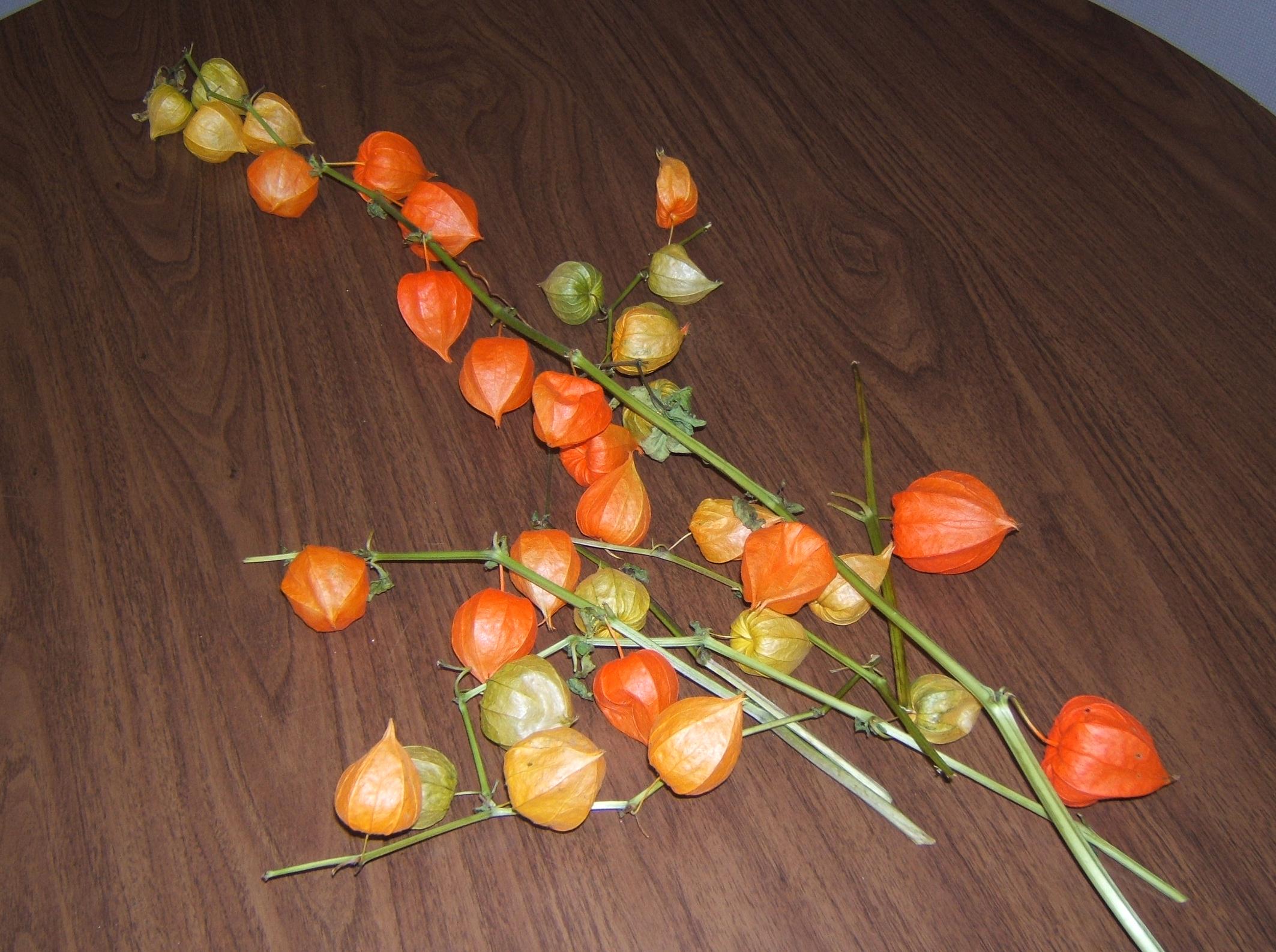
Chinese lanterns (Physalis alkekengi L.) from a friend's garden... also called Bladder cherry or Japanese lantern
orange peel
~
orchard bees
wings of monarch or viceroy
citrus oil, flames spurted in dark
weightlessness of Chinese lanterns, evolution of green
~
jack-o-lantern grin on the compost heap
taste and root-thread trace of carrot
pumpkins on the vine
~
furniture polish stain
on an empty page
~
nothing rhymes
with orange
~
© Jane Tims 2011
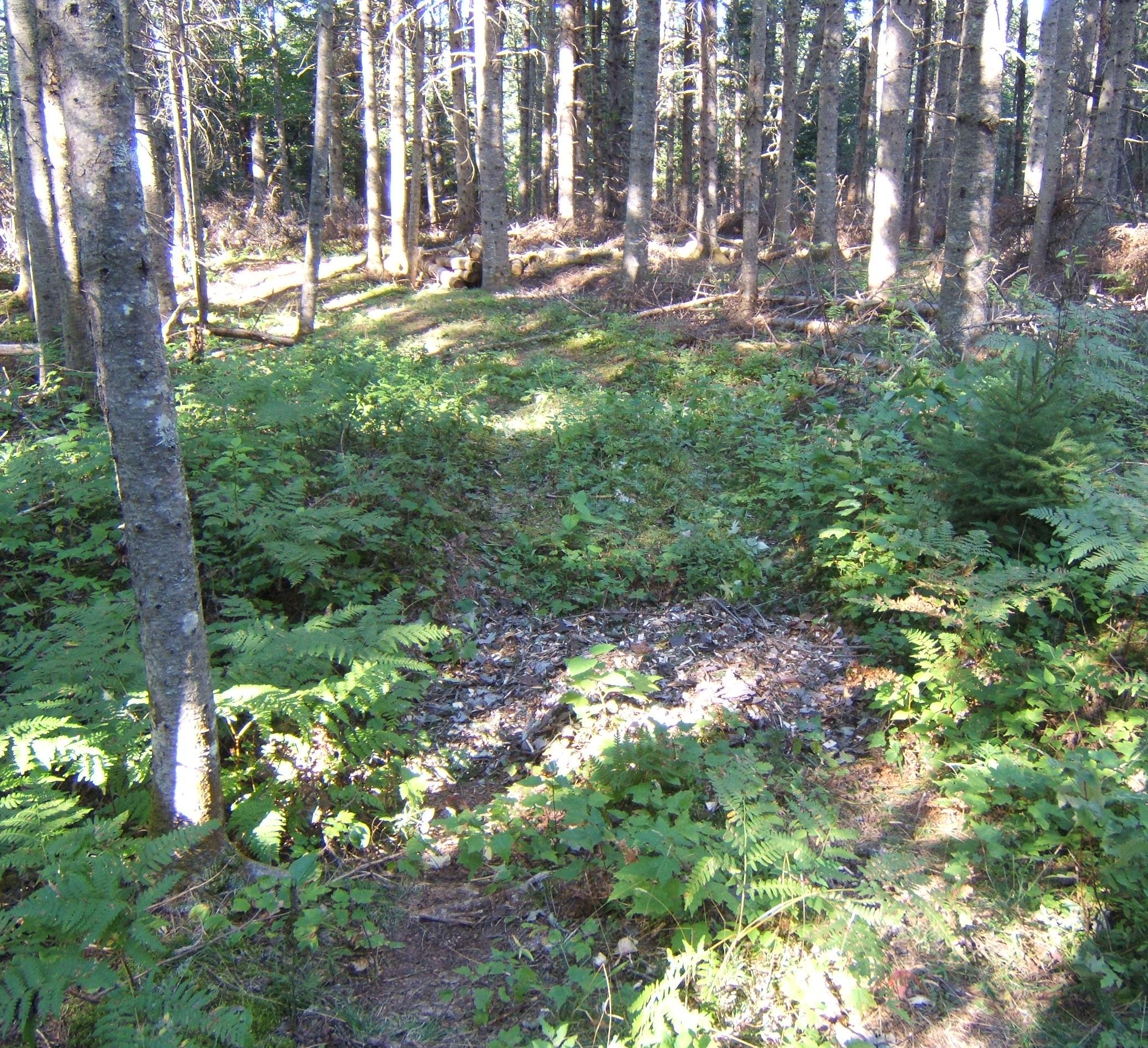
a trail through grey woods
In our grey woods, an old trail follows the top of the slope, between the trees. It takes constant care to keep it free for walking. The spruce are old and every winter takes down a new raft of trees. My husband works at it constantly, cutting a way through the fallen logs and filling the hollows with wood chips.
When I walk there, I always find something I haven’t noticed before. Yesterday I made three discoveries:
A maple seedling sprouting in the cut surface of a maple tree felled for firewood…

A pair of bracket fungi on a fallen birch log (notice the shadows of fern leaf on the surface of the fungi)…

And various other types of fungi, sprung up after the rain…
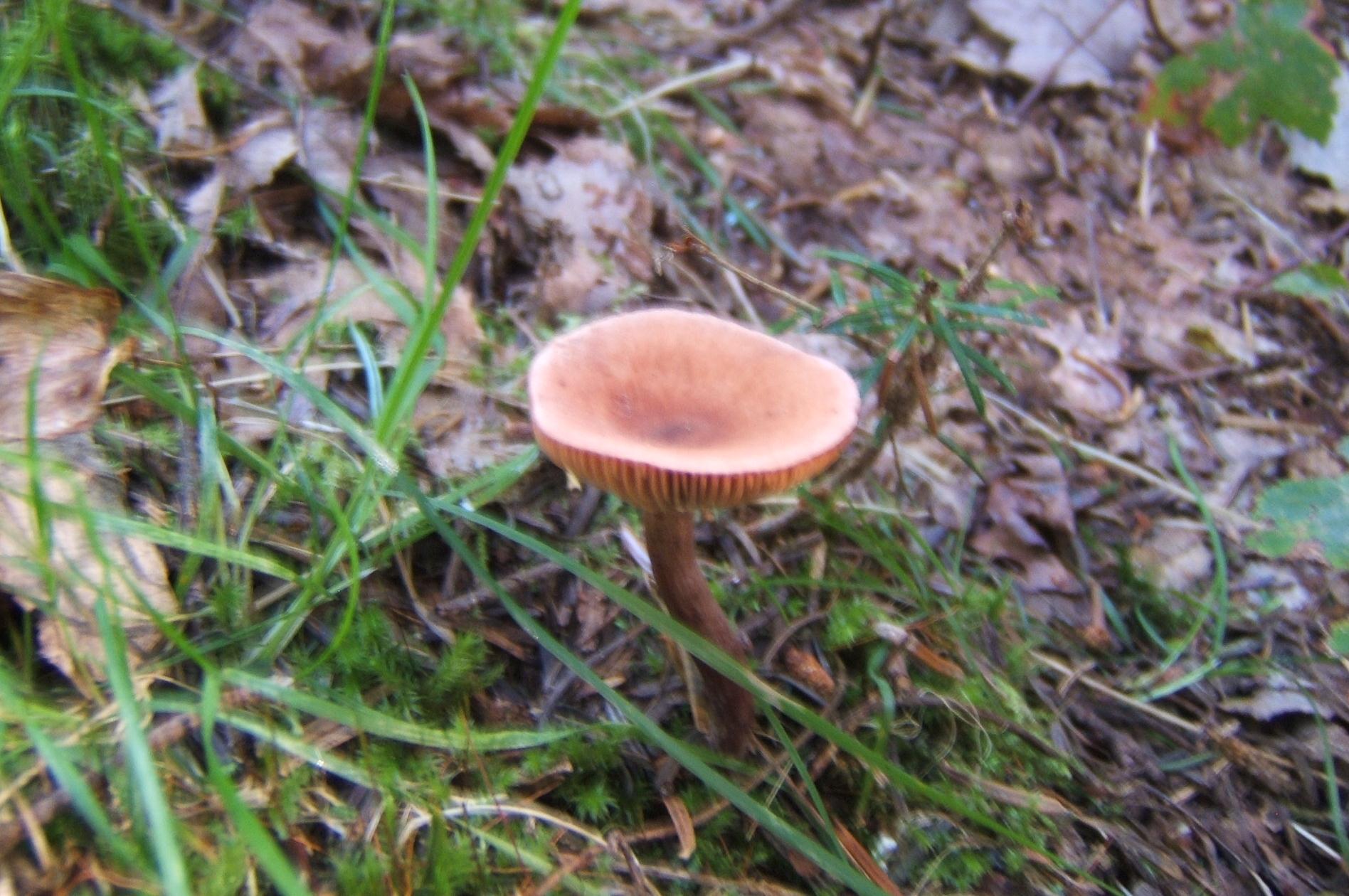
In each case, the discovery was about hope – life from death, new growth from decay.
The woods have so many lessons to teach… I only need to slow down and look closely to learn.
slow walk in the woods
~
1.
more to woods
than a path between trees
slow pace
check perspective
~
2.
discover texture on trunk
scar and indentation
detail in the duff upset
by careless feet
~
note how light scatters
through pollen and powder
now sifts slantwise, shadow
on brackets of fungi
light from lichen
chandeliers
~
3.
slow beat and breath
match the stealth of forest, realise
branches gather rain
an hour before they weep
~
© Jane Tims 2005
crossing the river #2
In the 1970s, when my husband and I had only known each other for about a month, we were stranded for three hours on a ferry that quit half way across the river. The ferryman just shrugged, said he’d be back, and rowed away in the lifeboat.
We were desperate. For an hour, we skipped stones across the water. I don’t believe there was a single stone or pebble or grain of sand left on the ferry deck! We talked, of course, and probably found out how much we had in common. We’ve been together for almost 33 years.
When the ferryman returned, he brought some sandwiches his wife had made for us and the news we would have to wait two more hours for the Coast Guard to come up the river from Saint John to tow us to the shore.
Needless to say, we were eventually rescued. And I have never experienced a ferry breakdown again.

some of these would be excellent for skipping
skipping stones
~
collect your stones
select for flat and smooth
stones with knowledge
embedded flight and float
pile your stones
~
hold your hand
like this, curl your finger
round the stone, flat curve against
your palm, coddled
cover of a book
you never want to end
~
swoop back
arm and index finger
parallel to shore, release
count
the
skips
the way
water
flirts
with edge
of skim
and
sinking
stone
~
concentric rings
connect and scatter
~
select another stone
~
© Jane Tims 2011
sacred spaces #2
One of the repurposed churches I have encountered is the church where my great-grandmother and great-grandfather were married on July 24 in 1886 in Laramie, Wyoming. The church was the First Methodist Episcopal Church on Second Street in Laramie.
The church building, constructed in 1860, still stands at 152 North Second Street, but when my great-grandparents were married there, it stood at a location across the street from its present location. When it was abandoned as a church, it was rolled across the street on logs, where today it is the oldest church building in Laramie.
When we visited Laramie in 2002, we did not find the church immediately because it did not look like a church. When it was rolled across the street, the back of the church faced the street…

A look at the rear of the building shows what the face of the church would have looked like in its previous location…
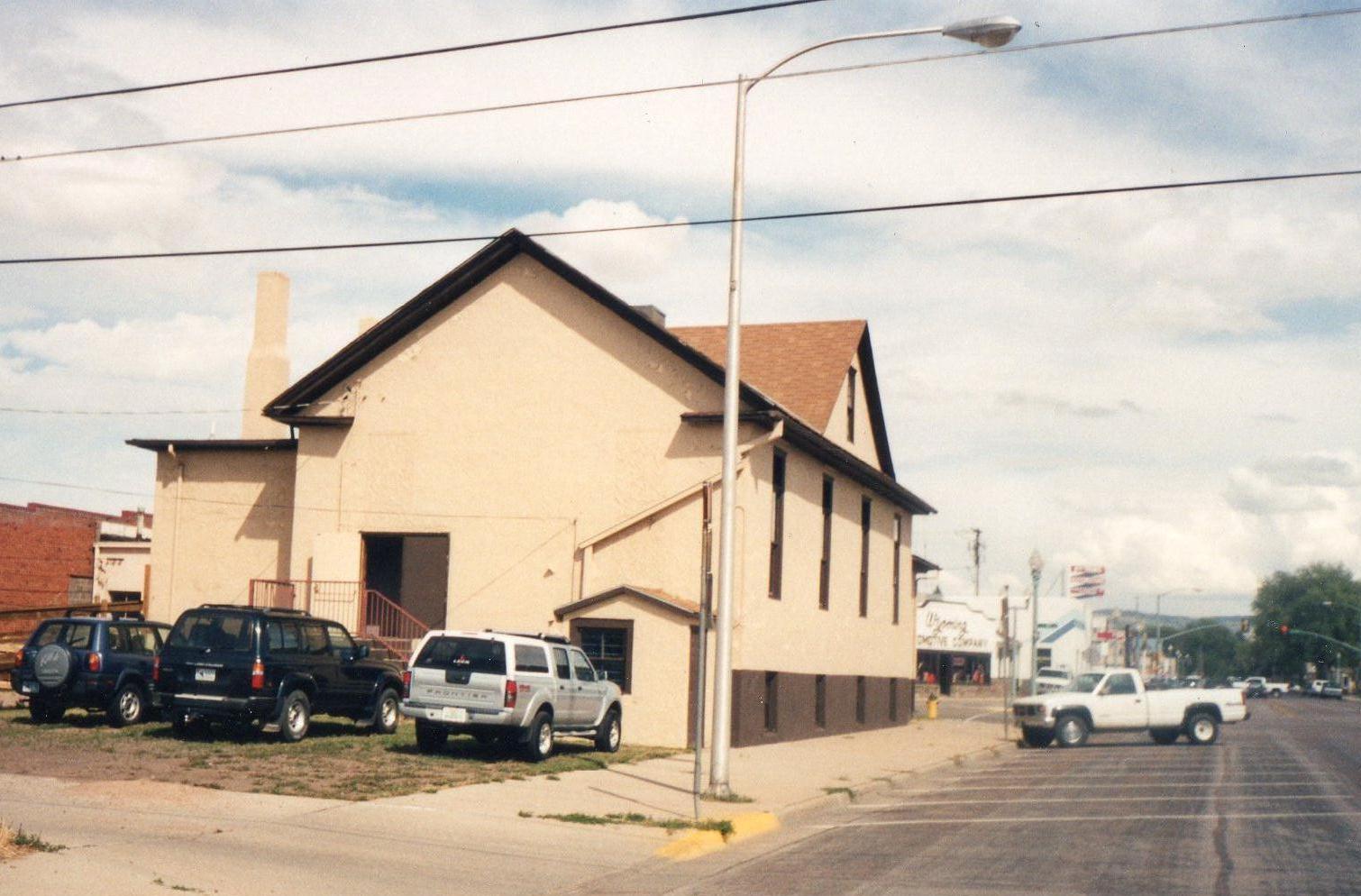
The church has been repurposed and today is used by a distance-training business. Inside the church, I could see the windows overlooking the spot where once my great-grandparents stood to say their vows…
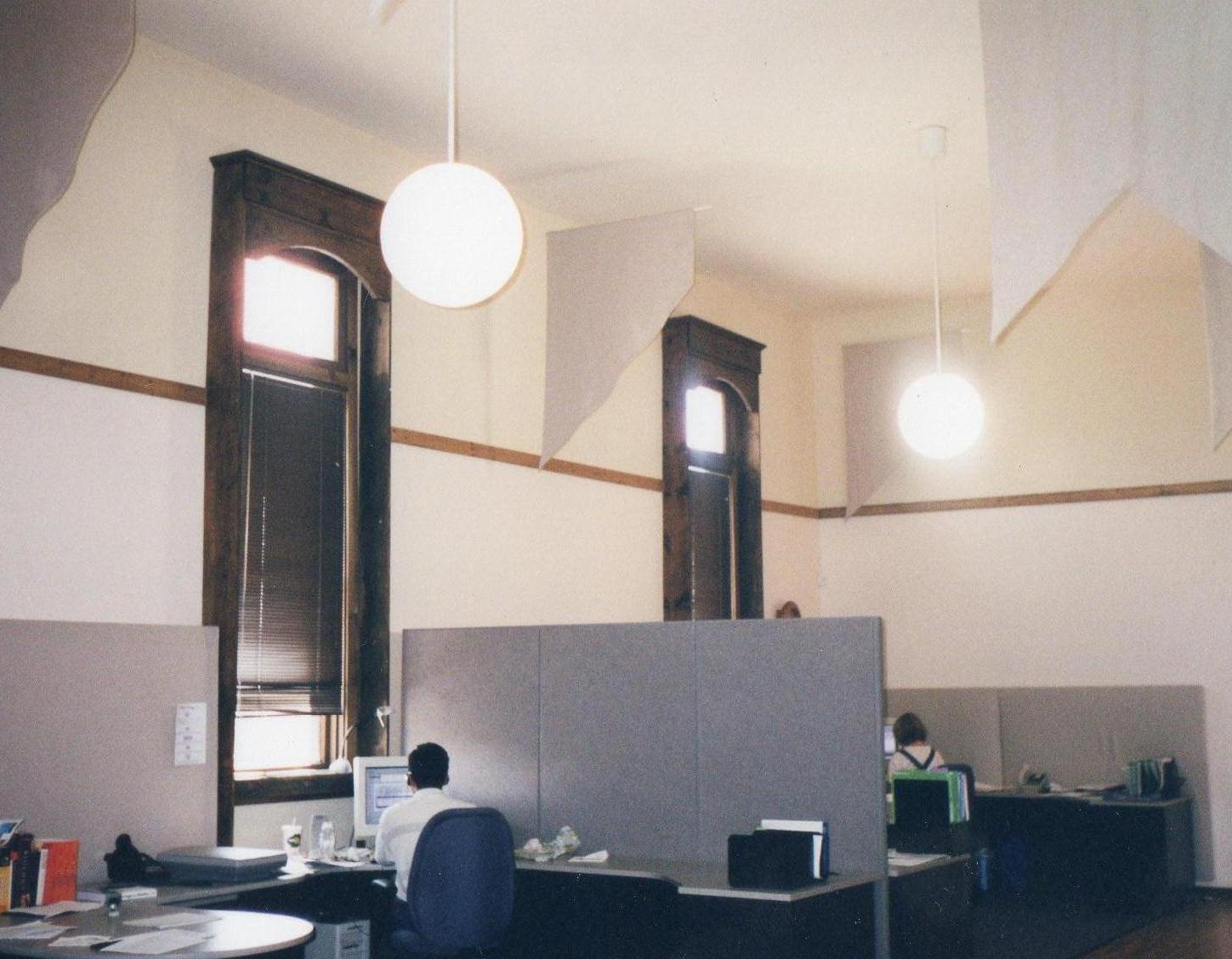
Have you gone on a journey to discover the people in your family history? Have you stood where their feet once stood?
sacred spaces
Abandoned churches are a particularly poignant reminder of how ephemeral our human spaces can be. In most cases, churches are abandoned for reasons of practicality – the maintenance costs are too high and refurbishing costs exceed starting over.
I think about the people who originally planned and built the church. They needed a place to meet and worship. They probably had a hard time pulling together the resources. There would have been a first Sunday service in the new church, perhaps a celebration afterwards with a meal and speeches.
It was probably a heart-wrenching decision to abandon the church. So many baptisms, weddings and funerals. So many personal experiences of being near to God. So many forgotten moments of amusing bored children, nodding-off during sermons, singing off-key, and greeting friends and neighbours.
Some older churches are maintained because of their heritage value, and used occasionally for special services…
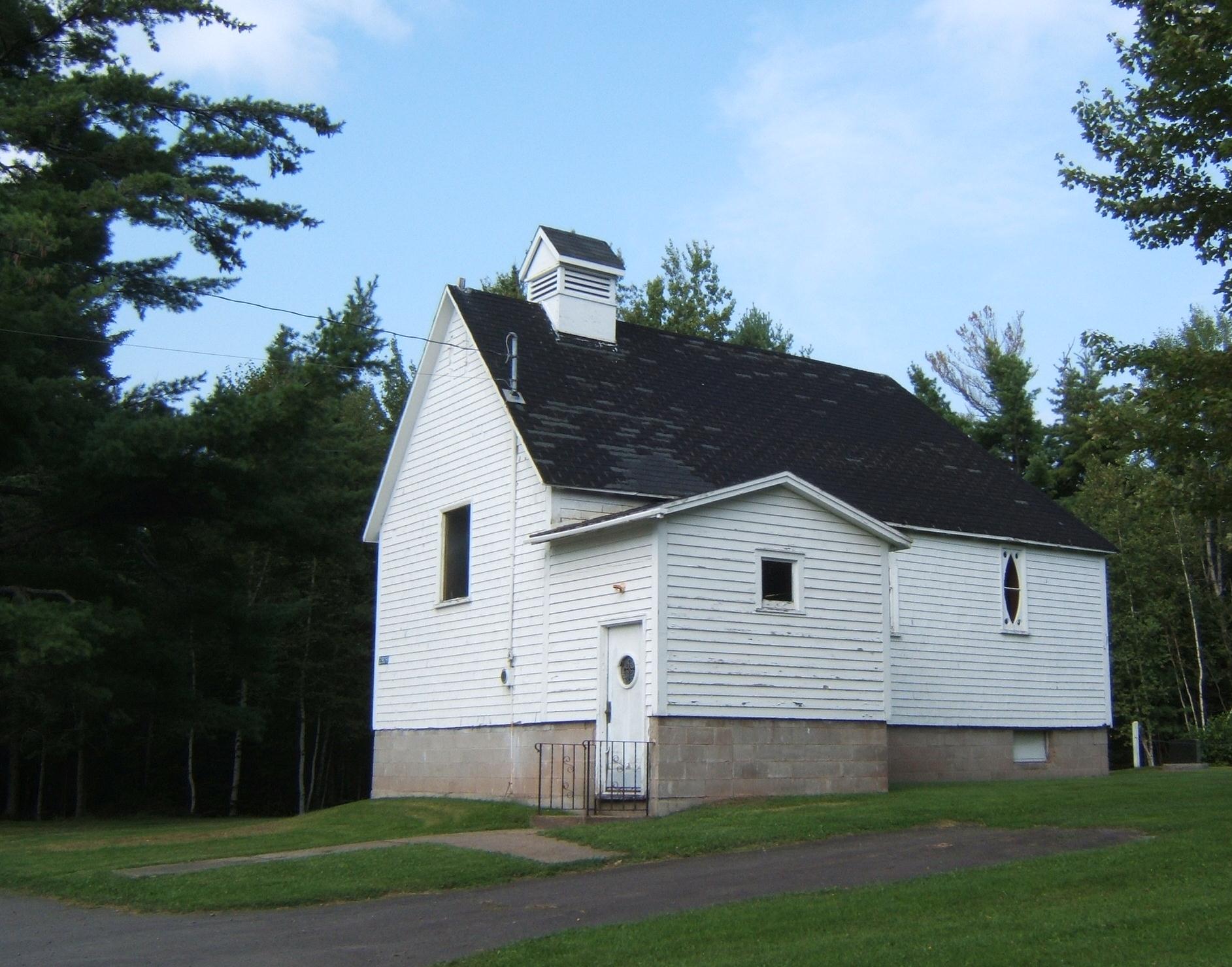
Some churches are sold and repurposed, into office space, or even homes…
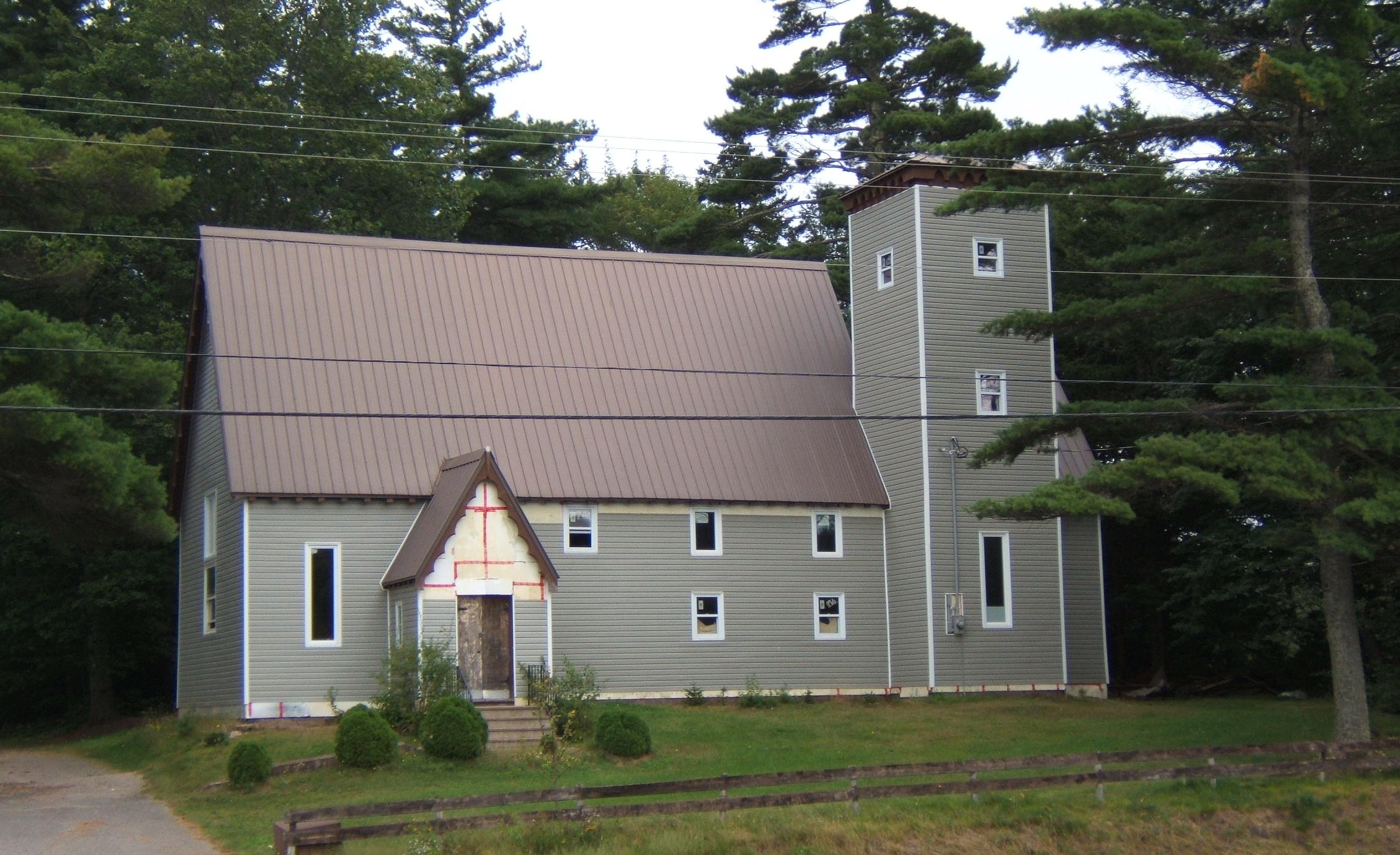
Some churches are abandoned entirely, left as reminders of the landscape of the past…

Although it is vacant, this old church has someone to care for it, evidenced by the mowed lawn.

Crataegus
~
between ruby glass
and hard wood floor
a slide of light and three
~
extinguished candles
smoke lifts from smoulder
each mote a particle
~
of spectral light, mosaic
shard, image
reassembled in three
~
dimensions
shepherd, hawthorn
lamb
~
© Jane Tims 2011

in the apple tree
How many hours did I read in the apple tree in my grandfather’s orchard?
At least a couple of hours every day were spent lost in a book.
I was ten or so and my reading was relatively simple – Nancy Drew, Anne of Green Gables, Blue Castle, animal stories by Thorton W. Burgess , and books about a young adventurer named Madge Morton. Most of these were books my Mom had given me, and a few were borrowed from my aunt’s summer house. Have a look at ‘books about natural spaces’ to see some of my favorites. Are you old enough to remember some of them?
The search for a comfortable place to read has often eluded me. Today I read at my desk or in the car. Anything more soothing and I fall asleep, in spite of the quality of the read.
Where is your favorite place to read a book?

reading in the orchard
~
comfortable limb of
apple tree, how many
books read in the days of
summer, mysteries, tales of
plucky girls, animals personified, sunlight
and apple-shadows highlight words
sentences and paragraphs read at
a glance, breezes turning pages
faster than I read, solve
the crime, blood as red as apples
creaky doors and creepy windows
branches rub together somewhere in
the orchard, forget to go in
for supper, my mother’s voice written into
story, calling
~
© Jane Tims 2011

course of the creek
Our small cabin is near a lake, an offshoot of the Saint John River. We have what some would consider poor access to the lake, since there is a marsh between us and the lake shore edge. But that marsh is a very special place, ever changing and always interesting.
One way it changes, almost daily and certainly seasonally, is with respect to water level. You could say we are downstream of the entire Saint John River, meaning we are receiver of every fluctuation of the water level in the system. The situation is made complex by the influence of a major hydroelectric dam at Mactaquac.
In spring, the river floods, and the marsh is covered by water…
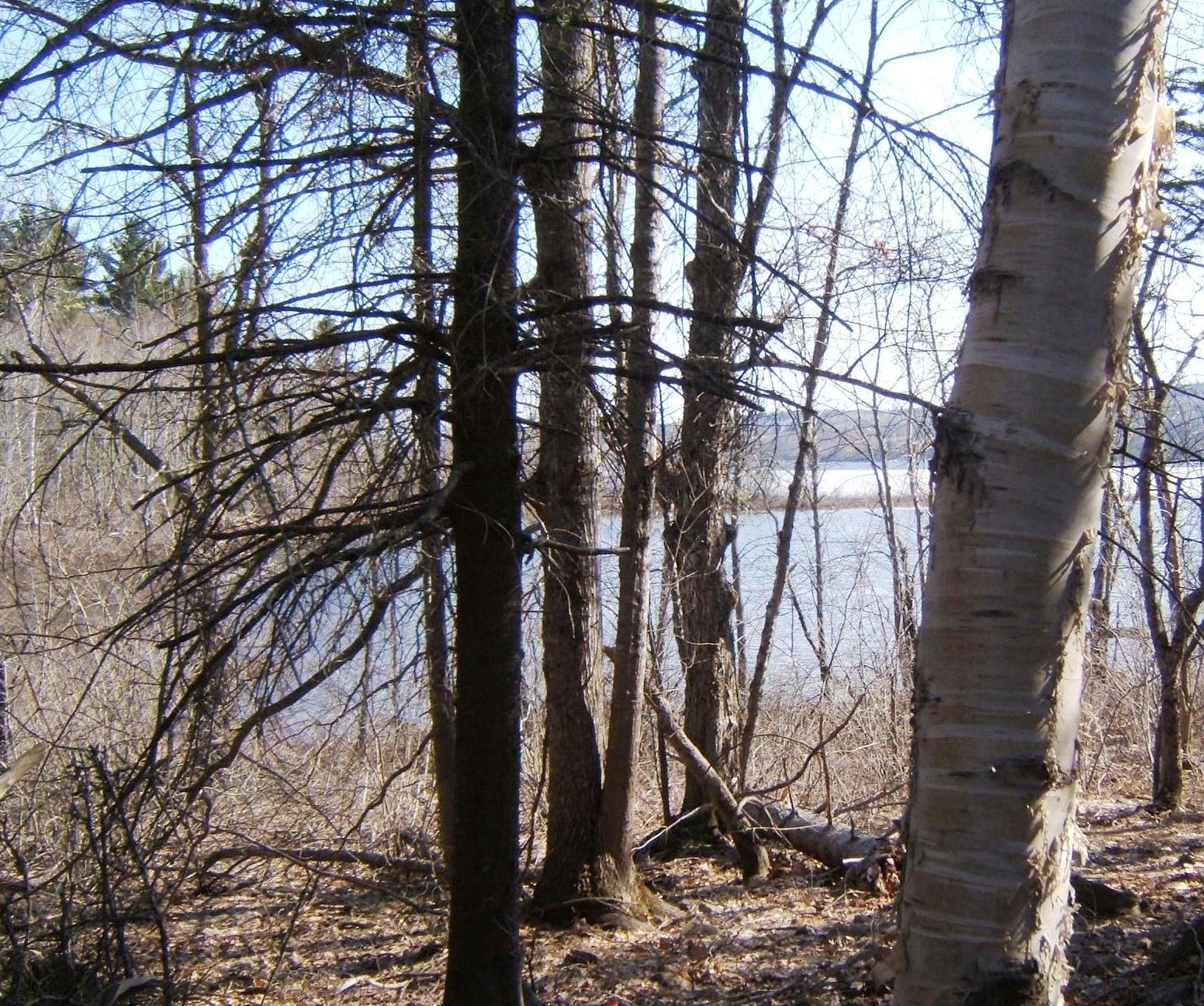
In normal years, the water levels become quite low, and our marsh is high and dry. We can walk on it, to reach the outer shore of the lake…

the green in the foreground is the marsh
In wet years, like this has been, the water stays high and there is a pond between us and the main lake…
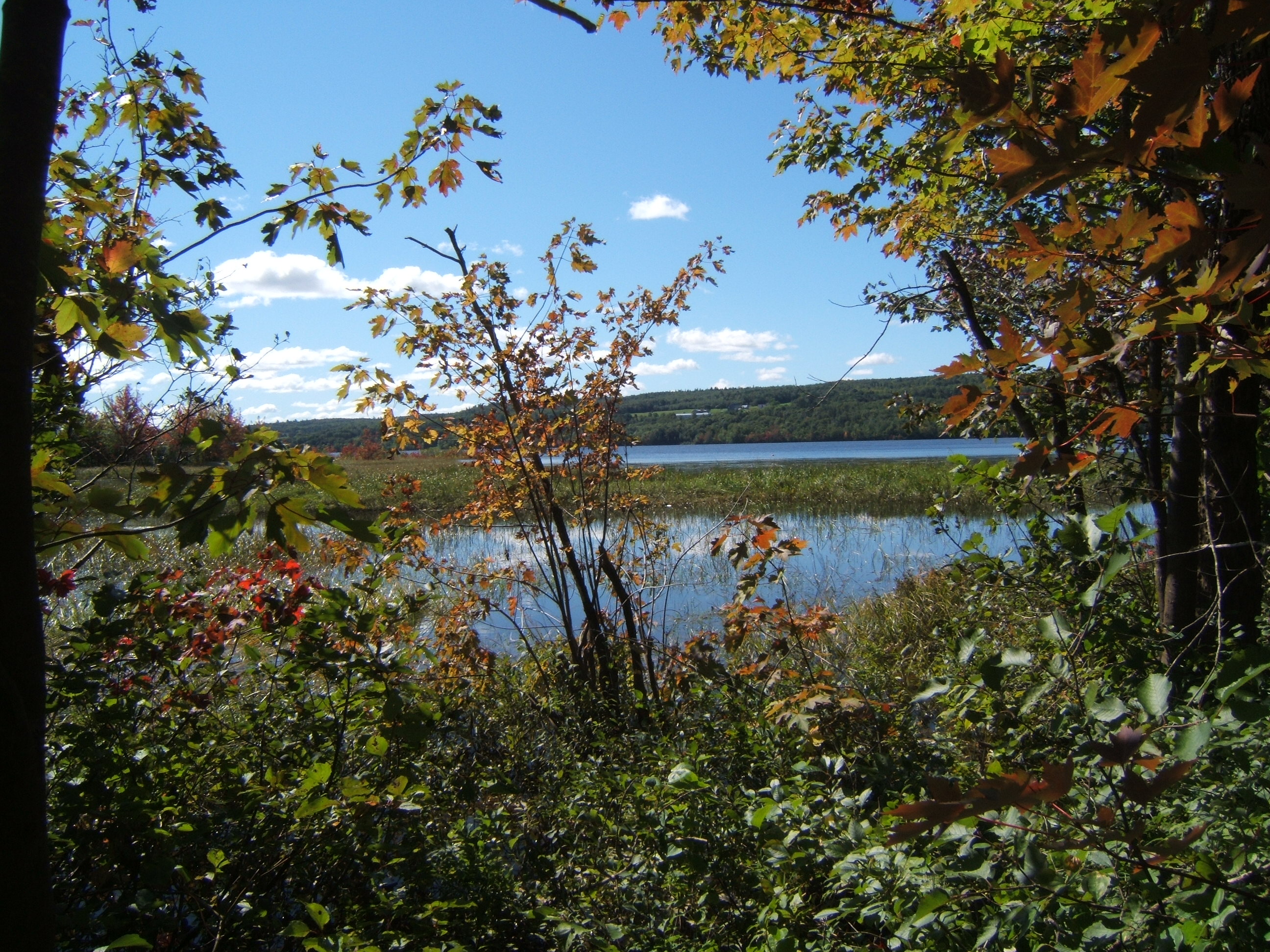
On Saturday, I went rowing on the pond in my small red rowboat. I rowed out to the edge of the lake and then followed the deeper waters of the small winding creek back into the marsh as far as I could go without grounding the boat. Last year I could see pumpkinseed sunfish in the creek water, but not this time.
Most of the grasses in the marsh are Spartina pectinata Link., broad-leaf cord-grass, ordinarily associated with salt marshes. Actually, salt water is characteristic of the lower parts of the Saint John River – the salt water wedge extends as high as Washademoak Lake, and the tidal influence is measurable to above Fredericton!
At the outer shore of the pond, where the creek enters the lake, I was surprised and delighted to find a few stems of wild rice (Zizania aquatica L.). This is not native to New Brunswick, but is often planted along shores to attract waterfowl and is now found all along the Saint John River and in many lakes. The grass is distinctive because the pistillate (female) flowers are in a group near the top of the plant while the staminate (male) flowers are on horizontal banches below.
I am an awkward rower. Usually, to improve my control and reduce my speed, I row the boat backward, stern first! In spite of my lack of speed, it is an adventure to be on the water, to become a bit of an explorer. My need to know the ways of the pond reminds me of my attempts to understand the path my life has taken.
characteristics of creek
~
clumsy row in the marsh pond
to seek the course of the creek
the strand of water’s flow
to nourish pond define
its shape conduit
to the lake
~
a slender S through grass emergent
pondweed and cord-grass vague
deviation from clarity hyaline the interface
of freshwater and salt and pumpkinseed
turn their flat bodies to intercept
the flow find the break in the mat of sedge
narrow simplicity of weed-free bottom
~
search
and find
the inevitable
thread in flow of
story the theme to bind
the words and water into one
~
© Jane Tims 2011
more horizons
horizon: line at which earth and sky appear to meet (Oxford dictionary)
After thinking more about horizons, I looked through our photos for some horizons we have captured in New Brunswick. Once you start to look for them, they are everywhere!

overlooking the hilly area of Sussex... Poley Mountain (a local ski hill) is in the background

a blueberry field and the distant hills of Queens County
- Horizons are made more interesting by the passing seasons…
- in autumn…
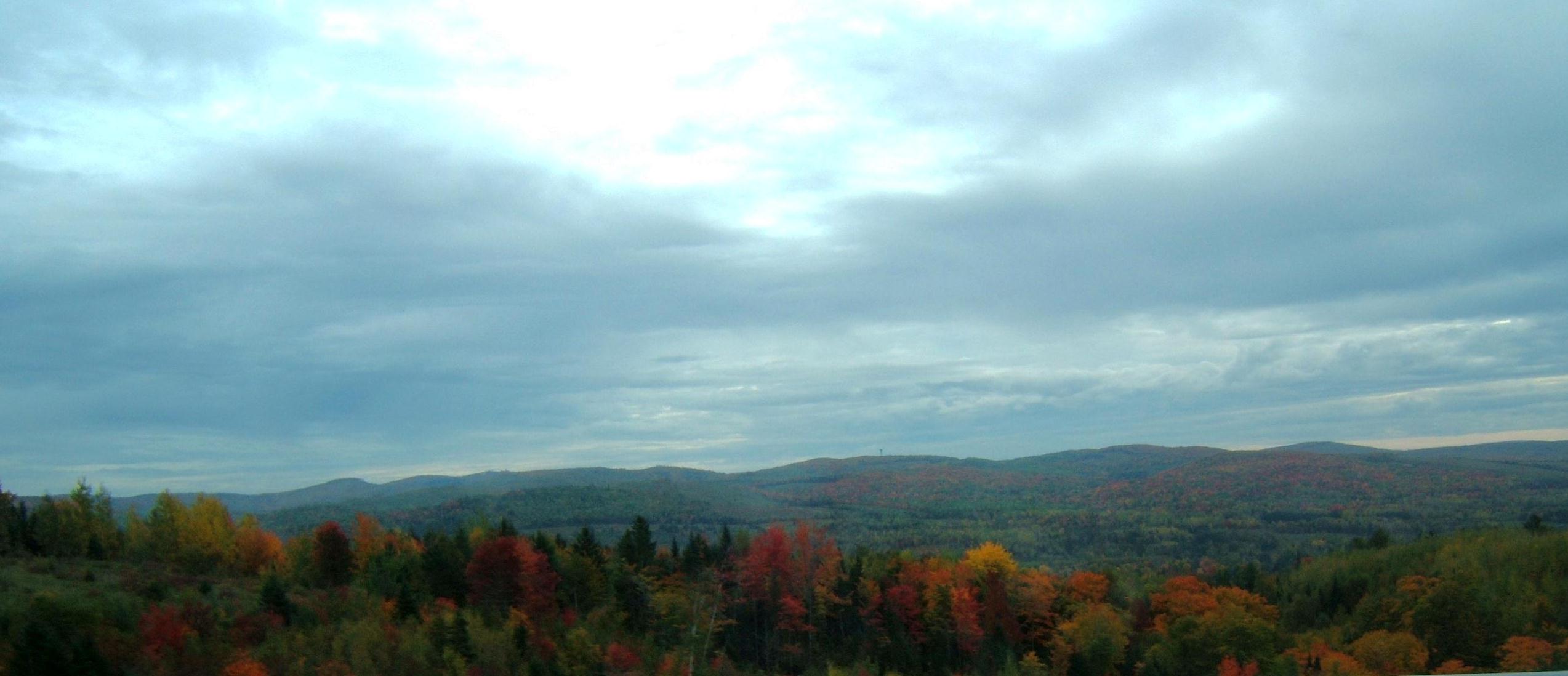
maple trees in autumn costume along the Trans-Canada Highway in Victoria County
…and in winter.

bare trees in the Grand Lake Meadows area in winter... a hawk in the tree and a treed horizon if you look carefully
Of course, I can’t forget the horizon of the Bay of Fundy…

Bay of Fundy at Saint Martins
…the horizon viewed from the ocean…

Charlotte County viewed from the waters of the Bay of Fundy
…and the horizon created by islands.

'The Wolves', special islands in the Bay of Fundy
Look to the hoizon, and see where land and sky, and sometimes water, meet.
horizontal haiku
~
horizon distant intersection land water sky
~
© Jane Tims 2011




 nichepoetryandprose