a moment of beautiful – Blue-eyed Grass
the space: the meadow above the lake
the beautiful: a bright blue flower – Blue-eyed Grass
All grass is not grass. In spring, some of those green blades reveal their true identity. You look down, and a blue eye stares back at you. You have found Blue-eyed Grass, Sisyrinchium montanum Greene.
Blue-eyed grass is not a grass at all, but a member of the iris family. It inhabits moist, open ground in fields and meadows, and blooms in late spring and early summer. The plant is low and slender, with a deep blue flower and a bright yellow center, borne at the top of a straight, usually unbranched, stem. The stem is two-edged, flattened on the margins. The flowers are borne in the axil of a sharp, upheld bract called a spathe. In French, the plant is called Bermudienne. Montanum means ‘of the mountains’.

~
~
Blue-eyed Grass
Sisyrinchium montanum Greene
~
I walk in grass,
but it isn’t grass –
Sisyrinchium
it winks at me
with azure eyes,
and I blink brown at them
~
Blue-eyed Grass
stands straight and still,
staunch Bermudienne
simple maid
with a watchful eye,
and a sword above her head
~
~
© Jane Tims 2012
growing and gathering – names of edible wild plants
As I have worked on my poetry project about eating local foods, I have researched each wild plant, found it in its natural environment, and then written about it. With all this, I am exposed to the words and characteristics of a particular plant and it is never certain which way the ‘muse’ will take me when I write the poem. Sometimes, I end up creating a poem about eating local food, and sometimes, I get a poem about something else. Usually these stray poems are, in some way, about the name of the plant.
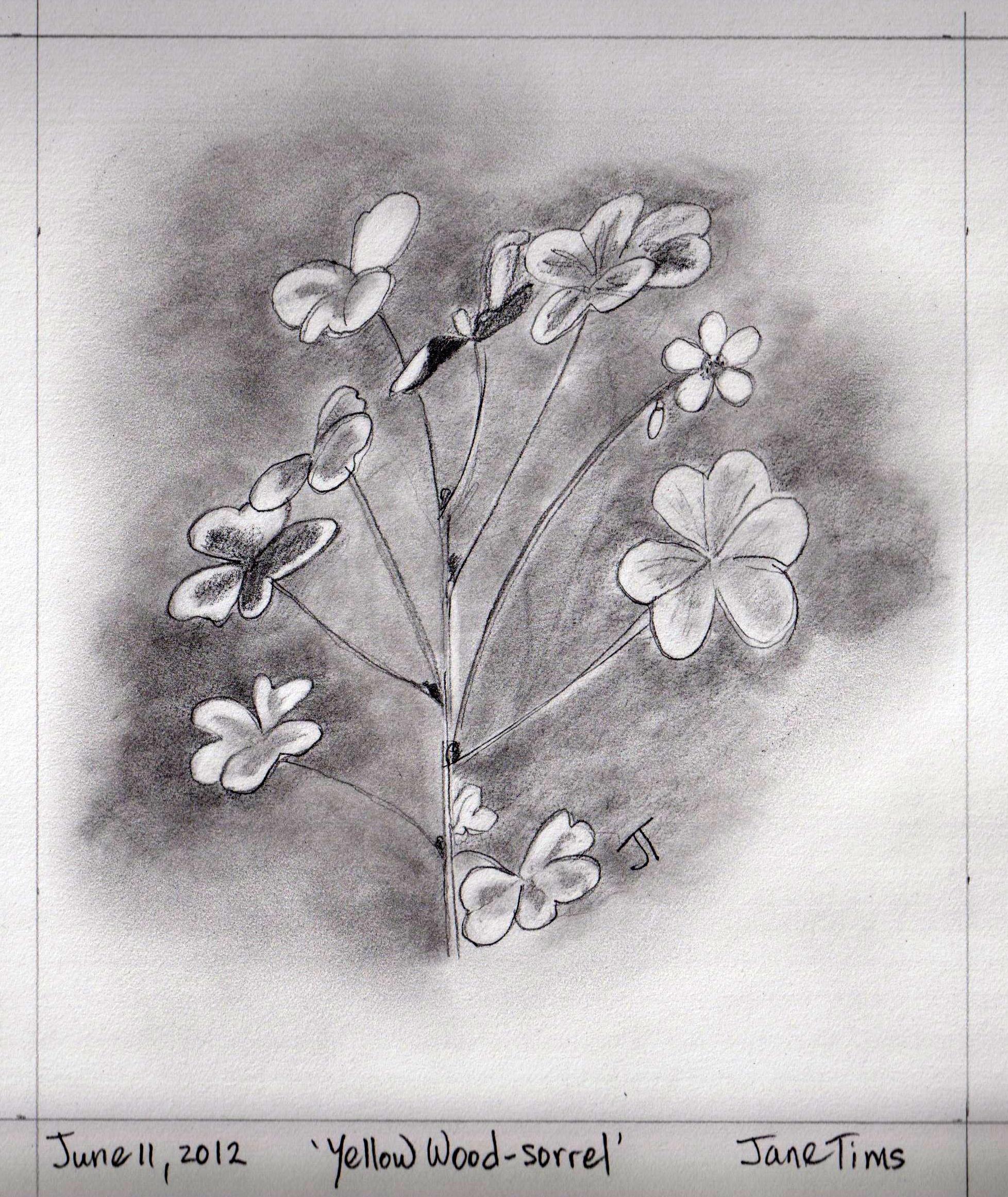
I find the names of plants are very inspiring. First is the Latin or scientific name, familiar to me after years of botanizing, but mysterious to most people. I love to find out about the origins of the name and I usually discover the name is descriptive of the plant. An example is the scientific name for Yellow Wood-sorrel (Oxalis stricta L.), a small yellow-flowered, three-leaved plant of waste areas. The name stricta means ‘erect’, referring to the way the plant grows when young or the way its seed pods are held. The word oxalis is from the Greek oxys meaning ‘sour’, a reference to the taste of the leaves.
The common names of plants are also intriguing. Sometimes these are different for each area where the plant is found. For example, the Cloudberry (Rubus Chamaemorus L.), a small relative of Blackberry with a peach-colored fruit, is known locally (and particularly in Newfoundland) as Bakeapple. Plant names may also refer to a characteristic of the plant. A good example is Heal-all (Prunella vulgaris L.), a small purple flower. It inhabits waste areas and lawns, becoming small and compact if mowed. One of its common names, ‘Carpenter Weed’, comes from this characteristic… Carpenter Weed mends holes in lawns! The name Heal-all comes from the old belief that the plant has medicinal properties.

‘heal-all’ Copyright Jane Tims 2011
So, among my collection of poems about edible plants, I have a group of poems about the plants and their names, but not about their use as local foods. I have to decide whether or not to include them in my collection, or to set them free!
~
~
Heal-all
(Prunella vulgaris L.)
~
snug Prunella, neat little weed
prim and proper, gone to seed
~
first called Brunella: gatherers found
Prunella purple fades to brown
~
a carpenter weed, busy, strong
mends bare patches on the lawn
~
heal-all, self-heal – your name suggests
an herbal secret you possess
~
~
© Jane Tims 2012
one red tree
On a drive to see some covered bridges in York County, we took a logging road along the Pokiok and Little Pokiok Streams.
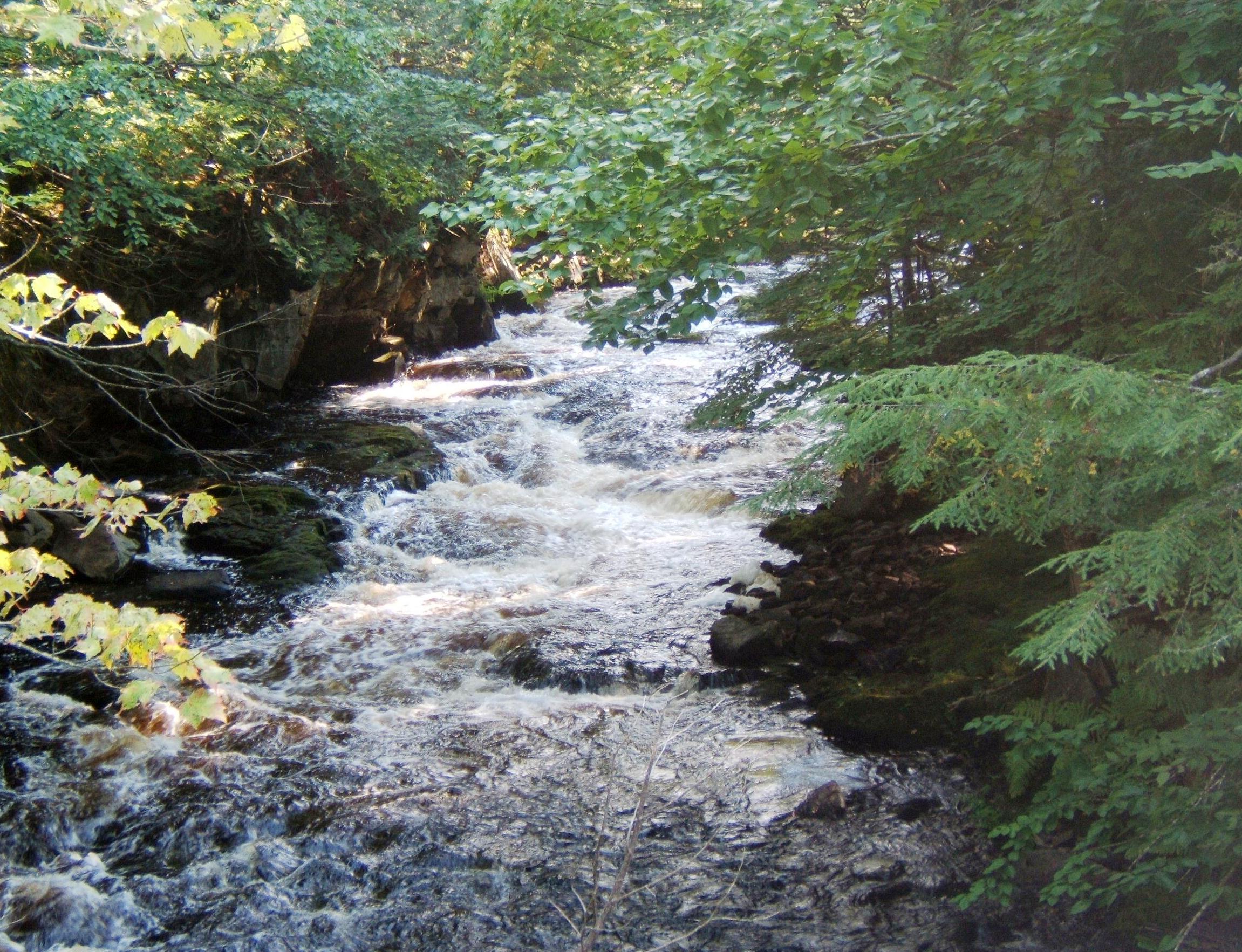
Years ago, on this road, we saw an albino deer. On this recent trip however, the only wildlife we saw were the Flickers. As we drove along the road, a Flicker would fly up and lead us a ways before veering into the woods on the roadside.
It was a good road, maintained by a local forest company. Along the way, we crossed a small metal bridge and I stopped to take a photo of a small stream winding its way through a bog.
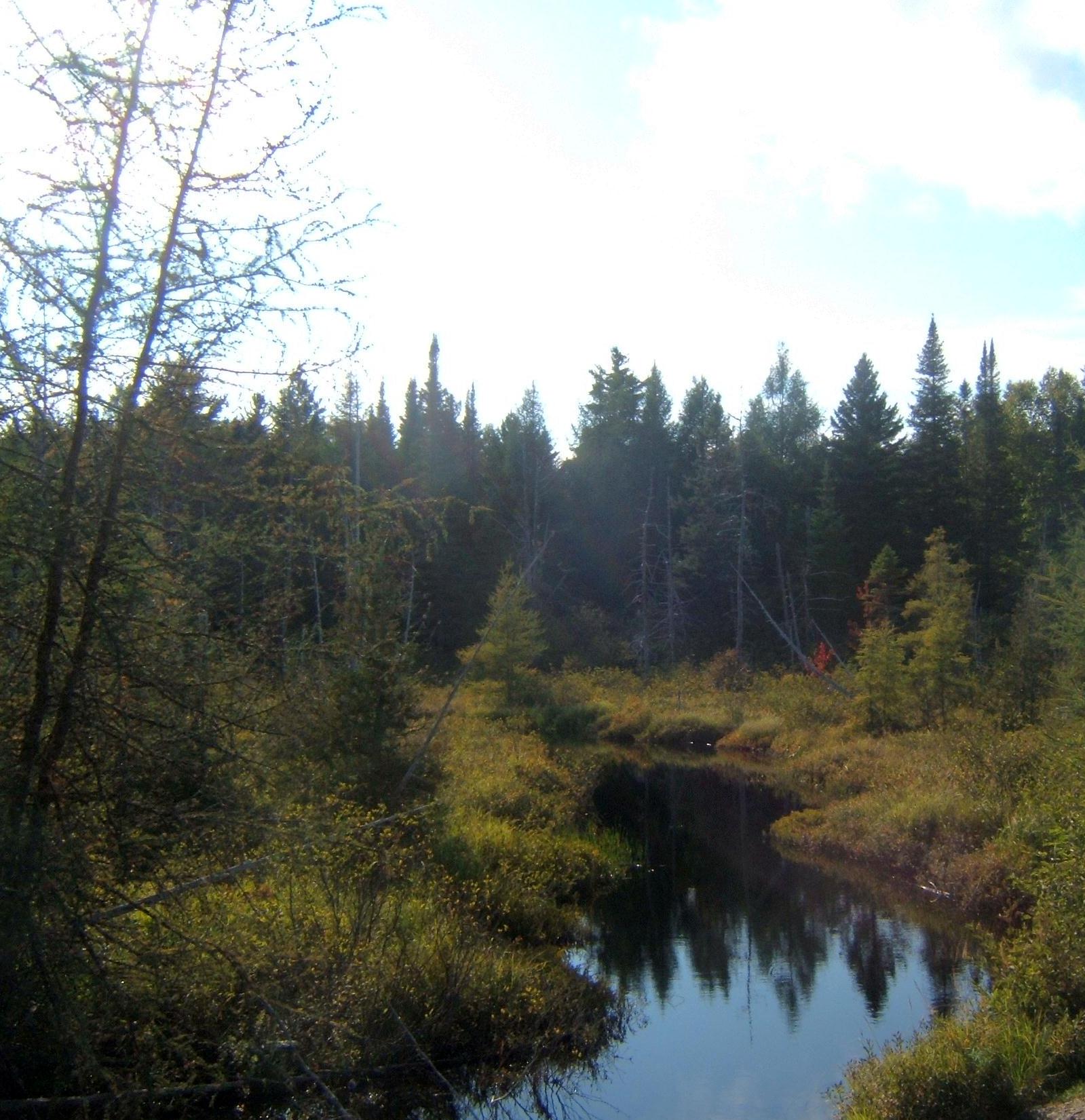
It was a lovely stream, deep and tea-colored. Over in the corner of the bog was one red tree, reminding me that our summer is fading quickly.
~
~
end of summer
~
on the path along the brook
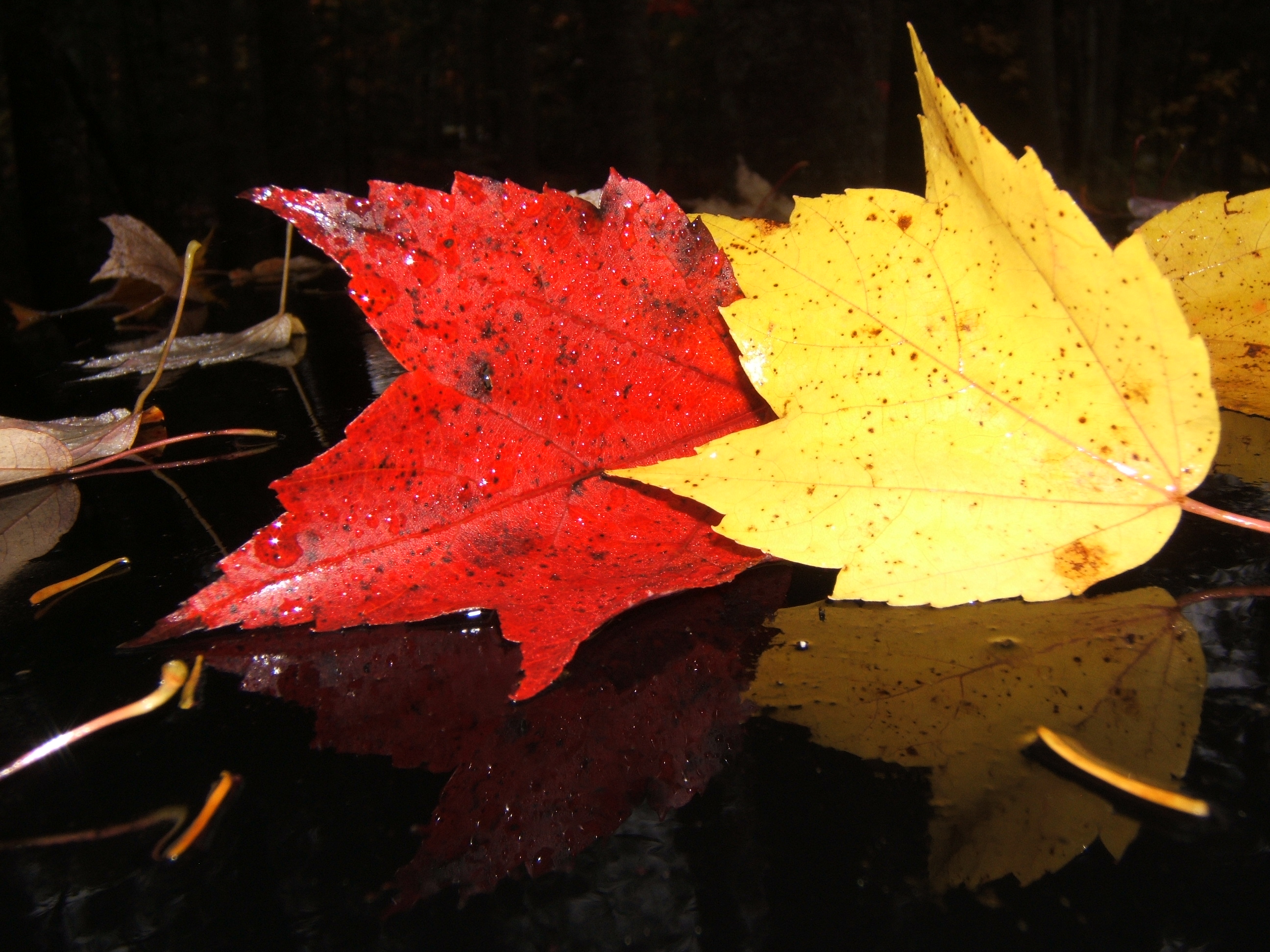
one leaf bleeds into water
in town the walks are stony
chaff of linden, seeds
dry ditches overflow with flowers
~
I shrug
(no matter
summer is ended)
~
yellow rattle
pods and grasses
rehearse an incantation
wind sulks in corners of the shed
warmth and sun
paint the orange of pumpkins
knit winter mittens
~
I gather signs of autumn
asters, windfalls, flocks of red wings
frantic in the alders
acorns, hollow galls from oak
~
Orion peeks above the trees
time forgotten, found
and summer with rain never ends
~
I ask for rain
(arms loaded with everlasting)
~
~
Previously published as ‘end of summer’, Sept. 19, 2011, http://www.nichepoetryandprose.wordpress.com
~
© Jane Tims 2012
a walk through the covered bridge – Falls Brook Covered Bridge, Falls Brook on the Nackawic River
On May 16, 1992, we visited the Falls Brook Covered Bridge in York County as part of our project on covered bridges for Canada’s 125th anniversary. The Falls Brook Covered Bridge, on the Nackawic Siding Road at Nortondale, is also known as the Nackawic Siding Covered Bride, and is formally known as Nackawic River #5. This means that there used to be at least four other covered bridges crossing the Nackawic River or its tributaries, but they have been lost for various reasons.
This past weekend, we visited the Falls Brook bridge again, to see if it is still there. The sign at the end of the road was hopeful, indicating a covered bridge could be found on the road. Most of New Brunswick’s covered bridges are marked by these signs. 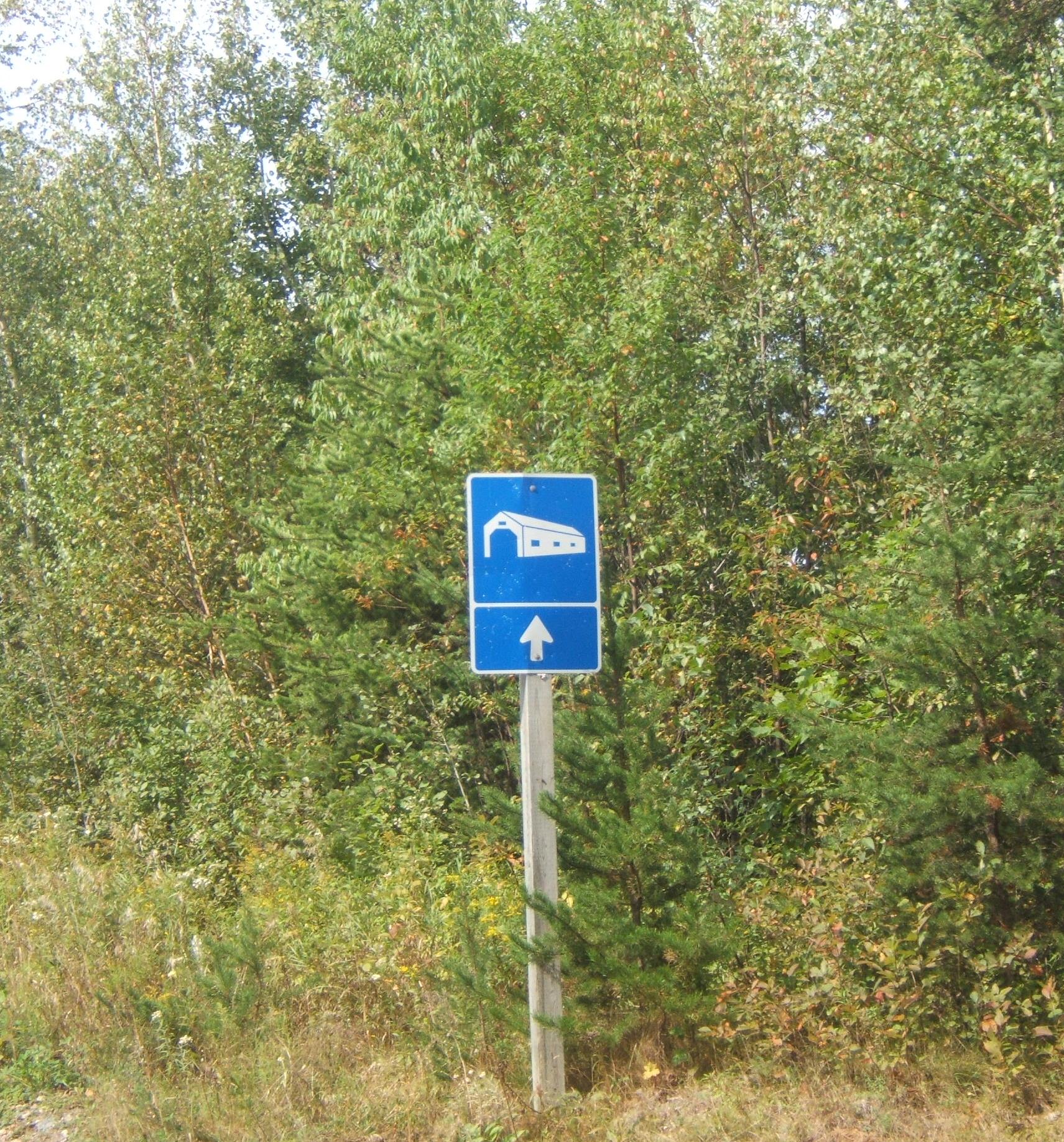
My notes from 1992 said the road to the bridge was in poor shape – ‘spooky but very pretty and other-worldly’ was what I wrote. The road has deteriorated over the years to become a narrow track with deep potholes and large outcroppings of rock.
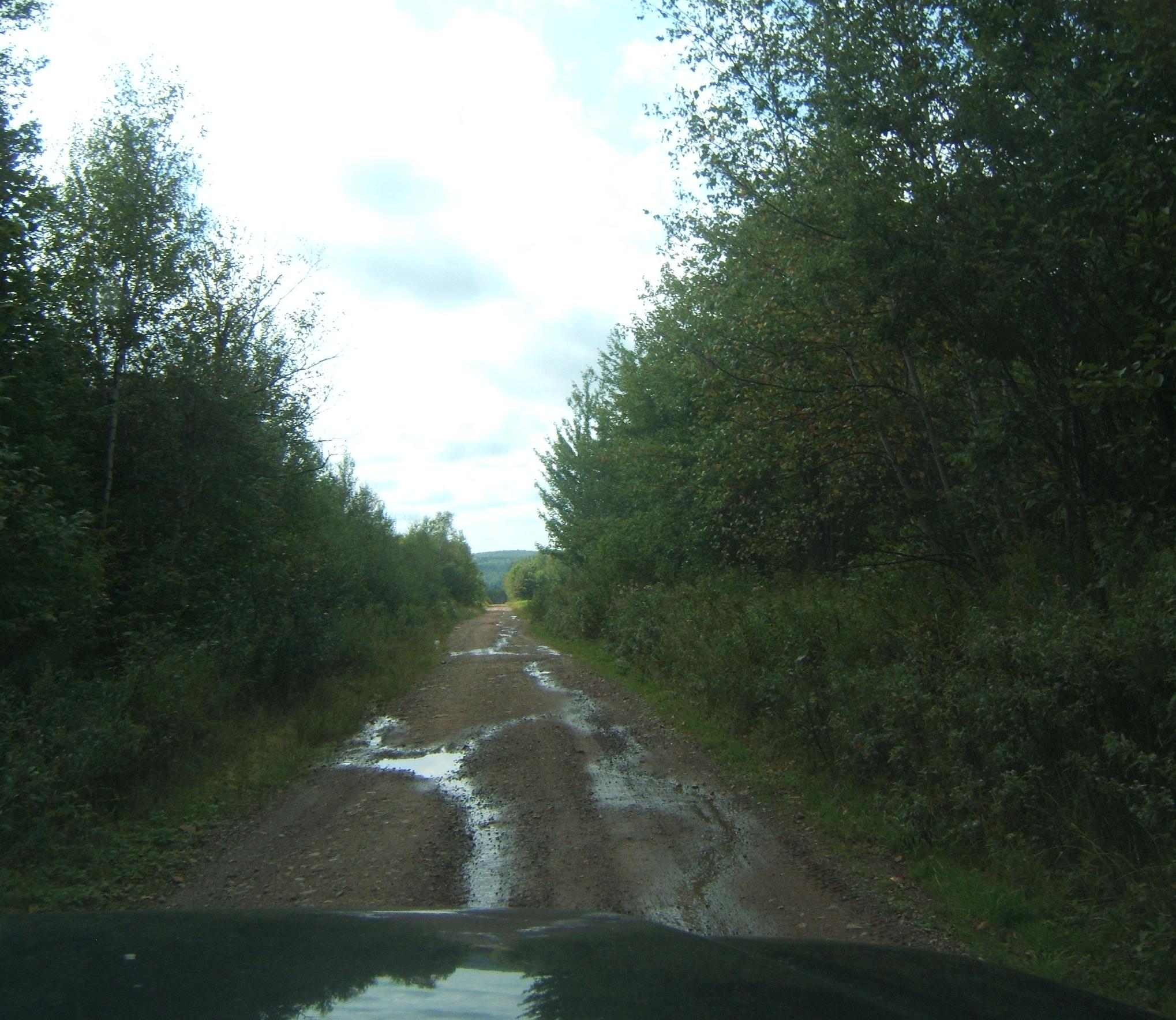
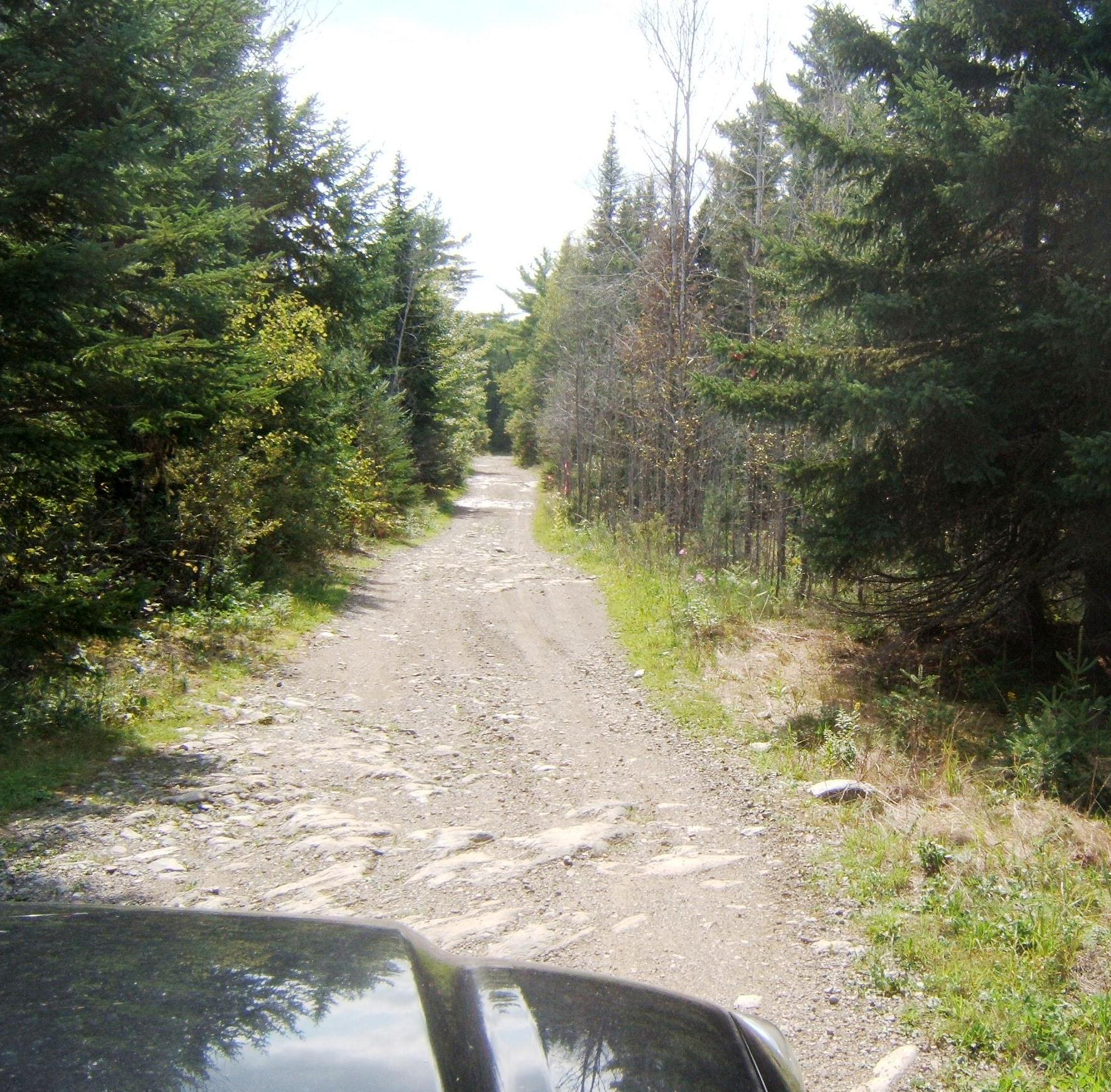
The bridge was still there, tucked in among fir and maple woods. It had been renovated within the last couple of years, based on the presence of some new large timbers and completely new wood siding.

The Falls Brook Covered Bridge was built in 1927. It is 63′ long, with a span of 60′. It is 14′ 10″ wide and has a maximum load of 8 T. The height clearance is 4.0 m. The architecture of the bridge is amazing, showing brace and beam construction with various hardwood joinery.

Unfortunately, the renovations have removed many of the markings we noted in 1992. At that time, the oldest dates were a carved ‘1885’ and, in black ink, ‘Ptarmigan hunter Ray Brown May 12th 1896 Horse had bad leg’. I have asked a well-informed birder about this and he told me there are no other records of ptarmigan in New Brunswick. Other carvings we noted in 1992 included: ‘M.A.K.’, ‘WDH’, ‘Colin + BrenDa’, ‘Could be fishin’ ‘ , ‘D C ‘ and ‘TOGETHER AGANE Betty and Johnathan’.
The markings from the 1800s were gone, but ‘D.C.’ was still there, as well as some interesting new markings.


Some show that height is no barrier to leaving your name!

If you have covered bridges in your area, take note of the markings people have left behind! Your record may be all that survives!

~
Copyright Jane Tims 2012
a walk through the covered bridge – Bell Bridge, South Branch of the Oromocto River
Another covered bridge crossing the South Branch of the Oromocto River is the Bell Bridge near Juvenile Settlement, Sunbury County (listed as South Oromocto Rover #3 in the April 1992 pamphlet ‘Covered Bridges in New Brunswick’, no author indicated). This bridge was built in 1931. It is 126′ 4″ long with a span of 123′ 4″. The roadway width is 15′ 5″, and the load limit is 10 t (6 t for double axle vehicles). The maximum clearance is 3.7 meters and a metal height barrier has been installed to ensure trucks exceeding the clearance cannot proceed through the bridge since this can do significant damage to the bridge structure.
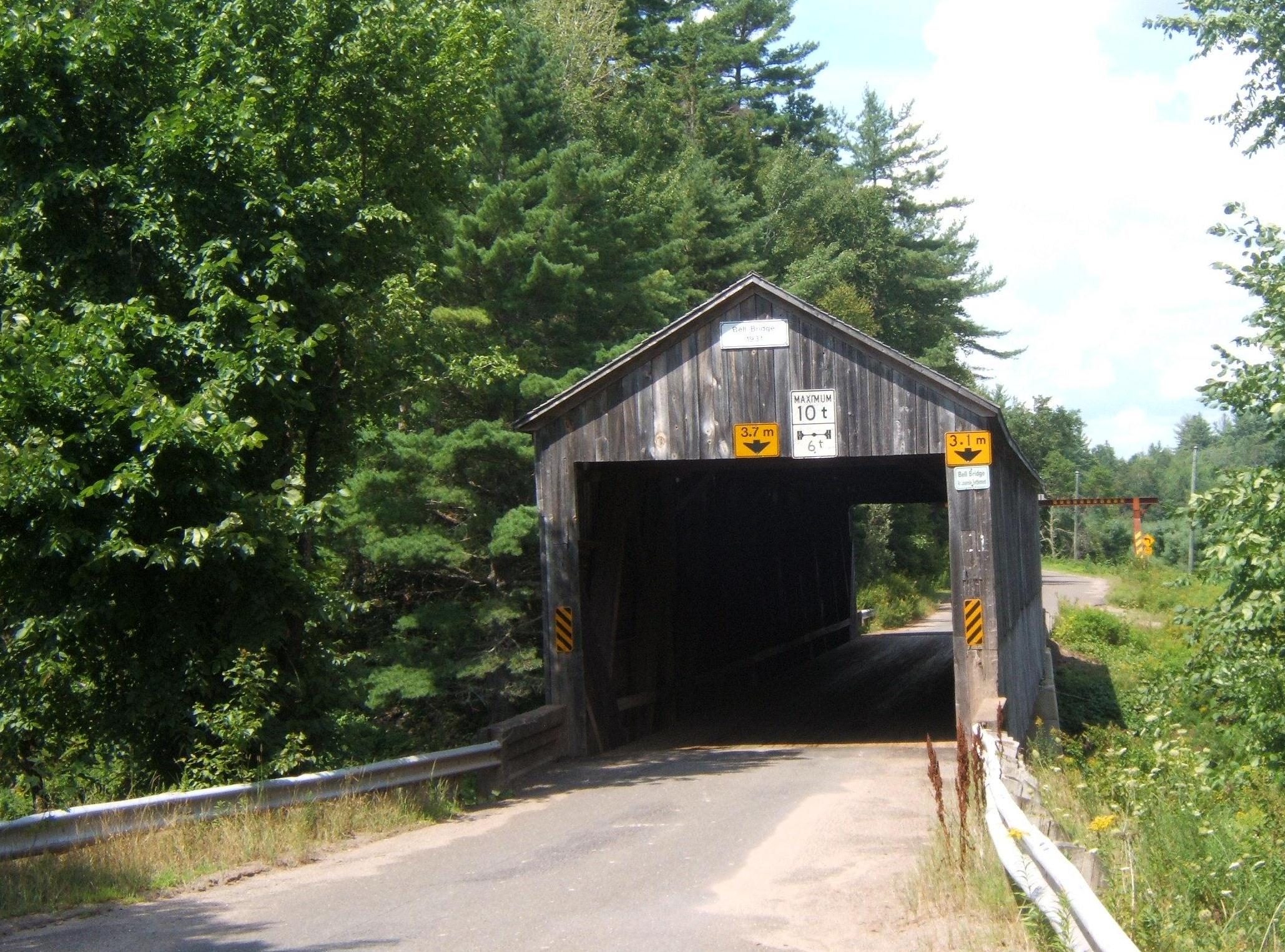
The water at this point in the river is shallow and clear. I watched for a long time to see a fish, but they will be hiding in the cooler waters of the deeper pools.
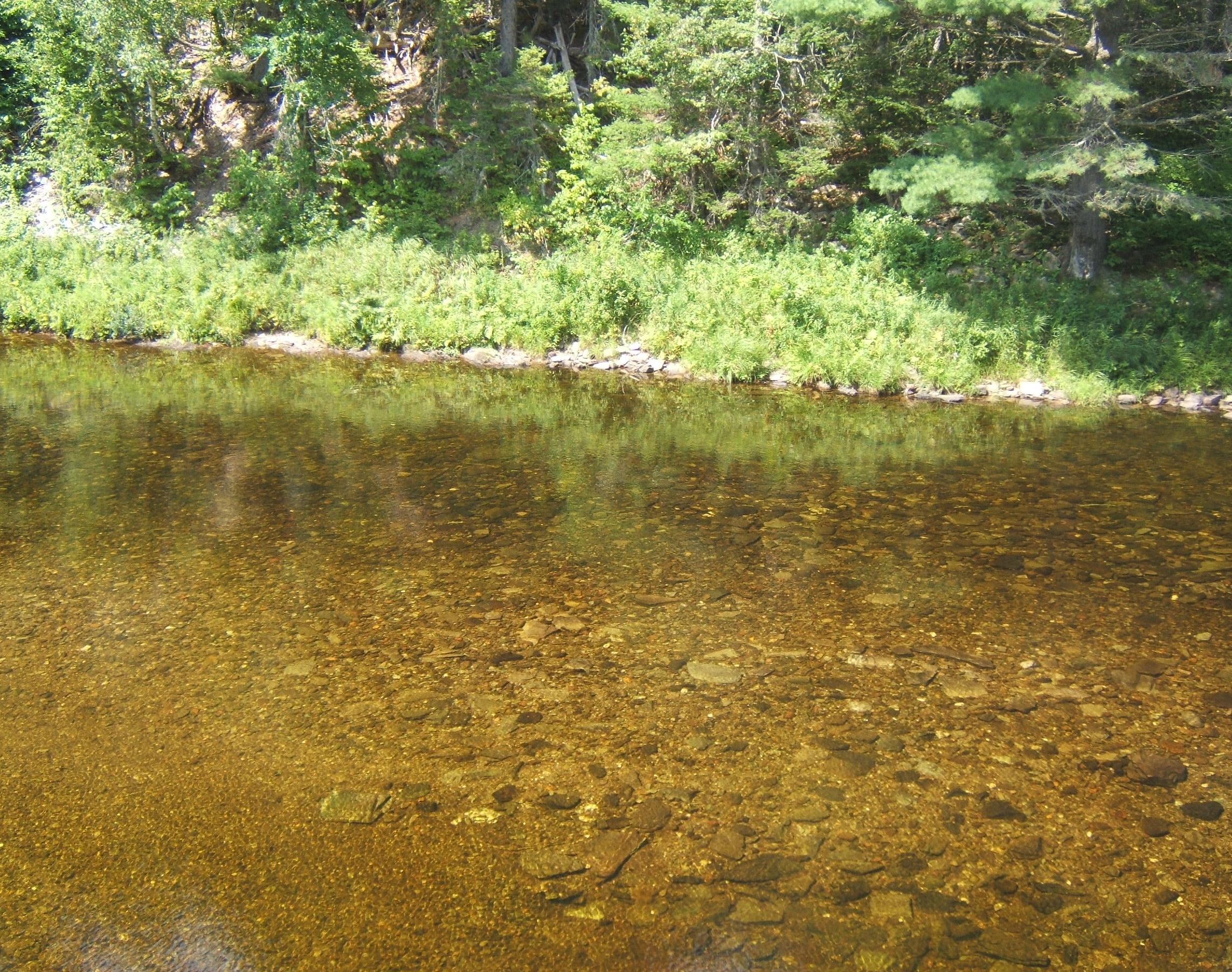
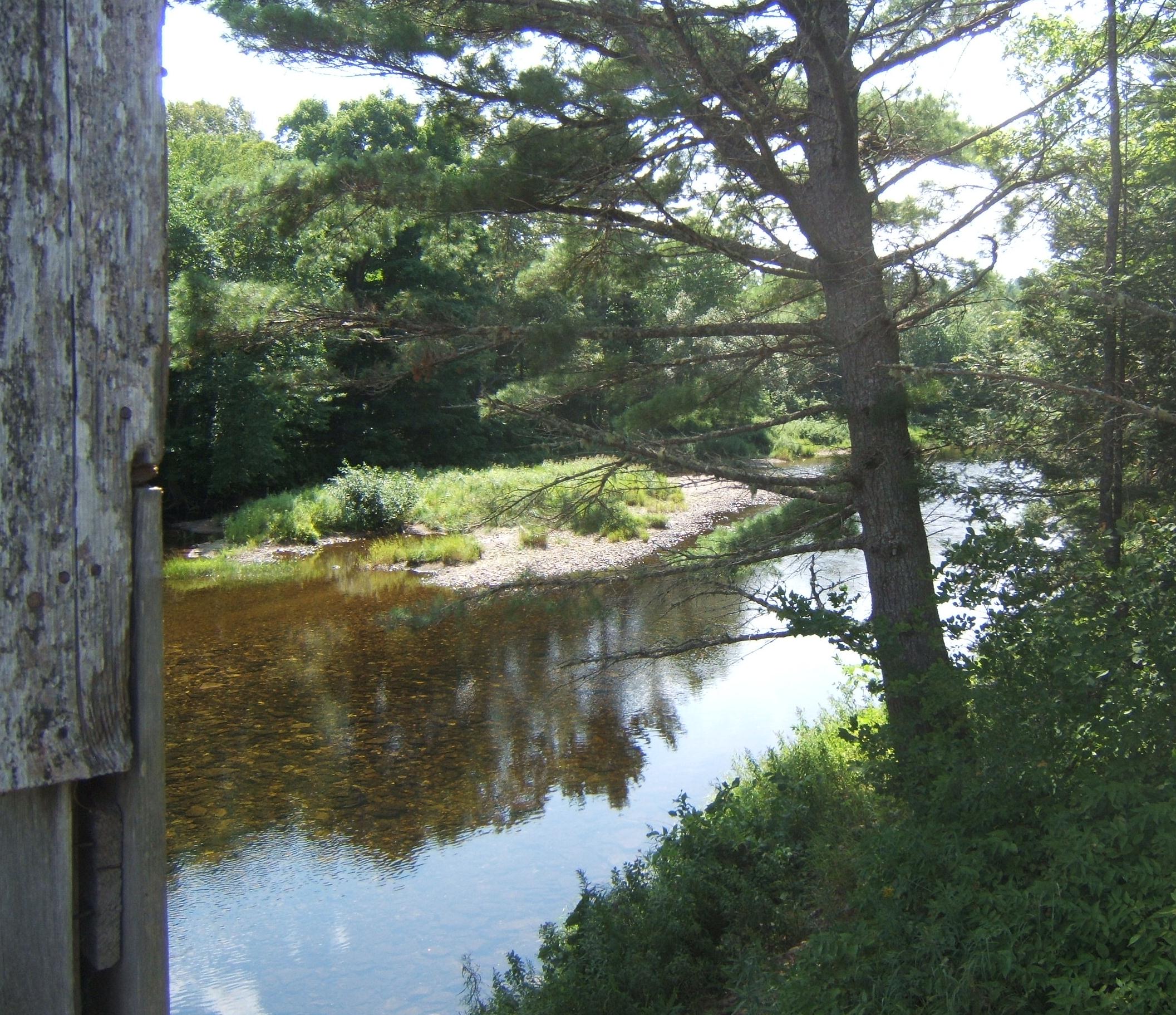
We visited this bridge on April 26, 1992 as part of our Covered Bridge Project for Canada’s 125th anniversary.
In 1992, we found many carved initials inside the bridge, on the various timbers. The oldest date we found was ‘April 3, 1932’. Some of the other initials included ‘LYL May 1, 1932′, RPC [perhaps PRC] June 6 /32’, ‘RS ’77 ‘, ‘ RT MAY 49’, ‘RM AUG 38’, ‘EK’, and ‘AE Mc APR 3/32’. We also found the initials ‘A.K.O.G. APPI 35.’ with the ‘O’ written as a diamond.
On our August drive, I noticed two unrecorded inscriptions: ‘ALIE 69’ and ‘M.O. L R.A.’
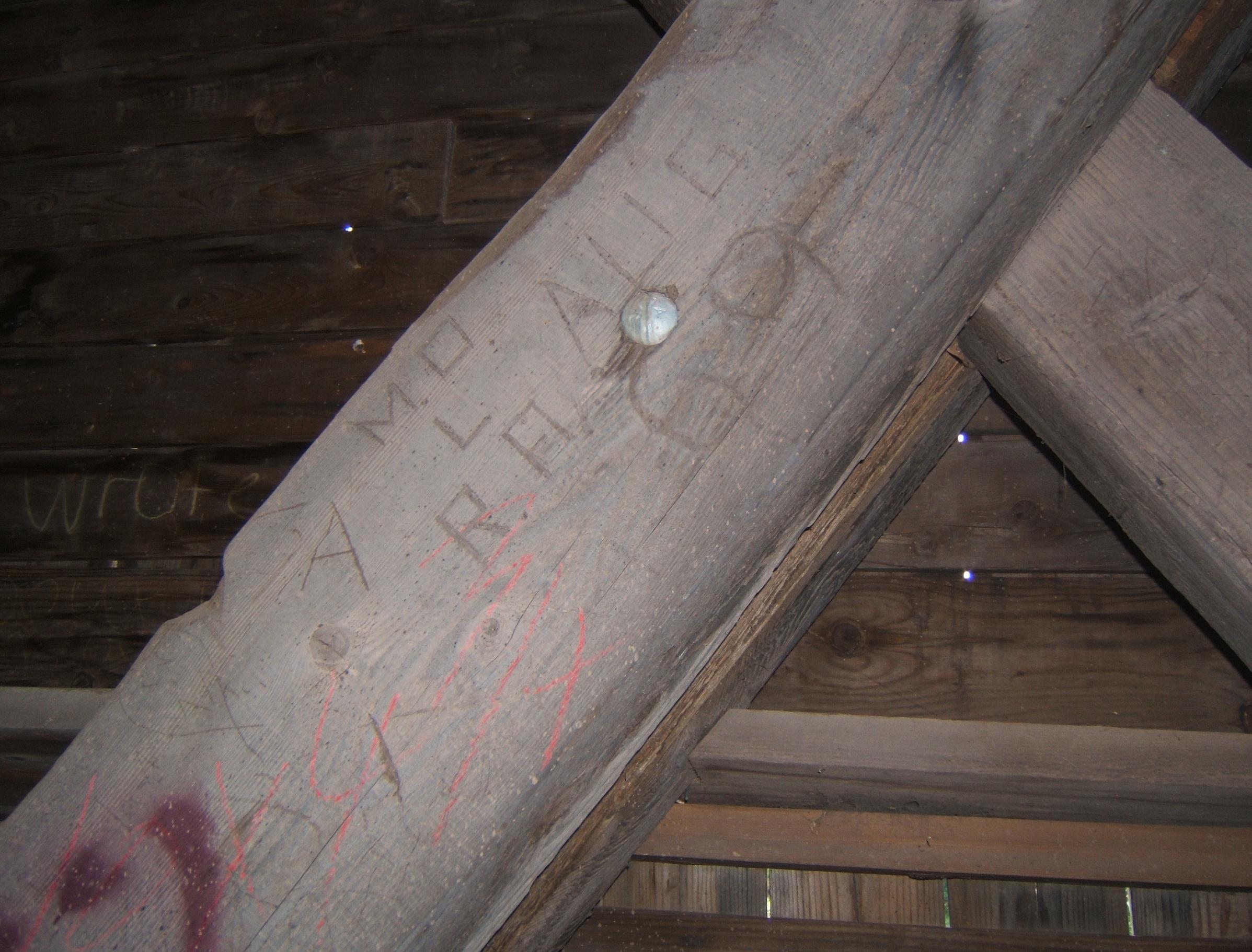
I also found a large carved ‘S’, very hard to see…

the ‘S’ is hard to see, just above the knot and about three times the length
Do you suppose ‘M.O.’ still loves ‘R.A.’ ?
~
~
forever
~
we carve our initials
in the beams of the covered bridge
pledge our love to endure
~
but these words may
outlast the love
even the people
~
~
Copyright Jane Tims 2012
a walk through the covered bridge – Smyth Bridge, South Branch of the Oromocto River
On our August drive along the South Branch of the Oromocto River, we crossed two covered bridges. I love these bridges… they are picturesque and so pleasant to walk through. They are also part of the local history of many communities in New Brunswick. I’ve talked a little about covered bridges before in my Blog – please have a look at https://nichepoetryandprose.wordpress.com/2011/09/05/inside-the-covered-bridge/
One of the bridges we saw on this drive was the Smyth Bridge. It crosses the South Branch of the Oromocto River, near Mill Settlement in Sunbury County (listed as South Oromocto Rover #2 in the April 1992 pamphlet ‘Covered Bridges in New Brunswick’, no author indicated).

Inside the bridge, it is cool and dark. When a car drives through, you hug the side, hoping the driver will see you and slow down. I love the sound of the tires on the timbers making up the floor of the bridge.

Down-river, the shallow water of the river glows in the sun. Most of our local rivers are the color of tea, a consequence of their origins in wetland areas.
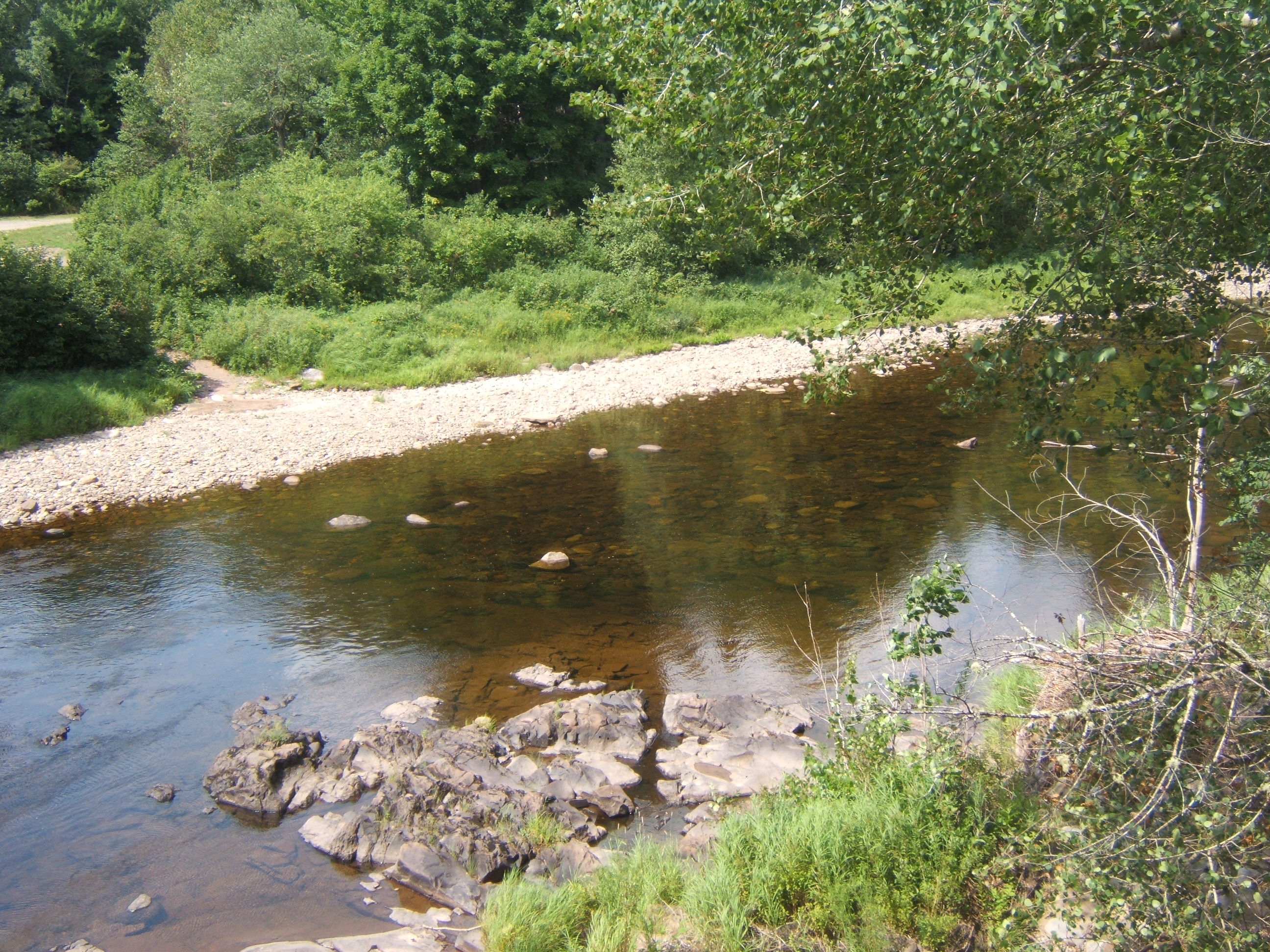
Up-river of the Smyth Bridge is a gravel beach and water for wading and swimming.
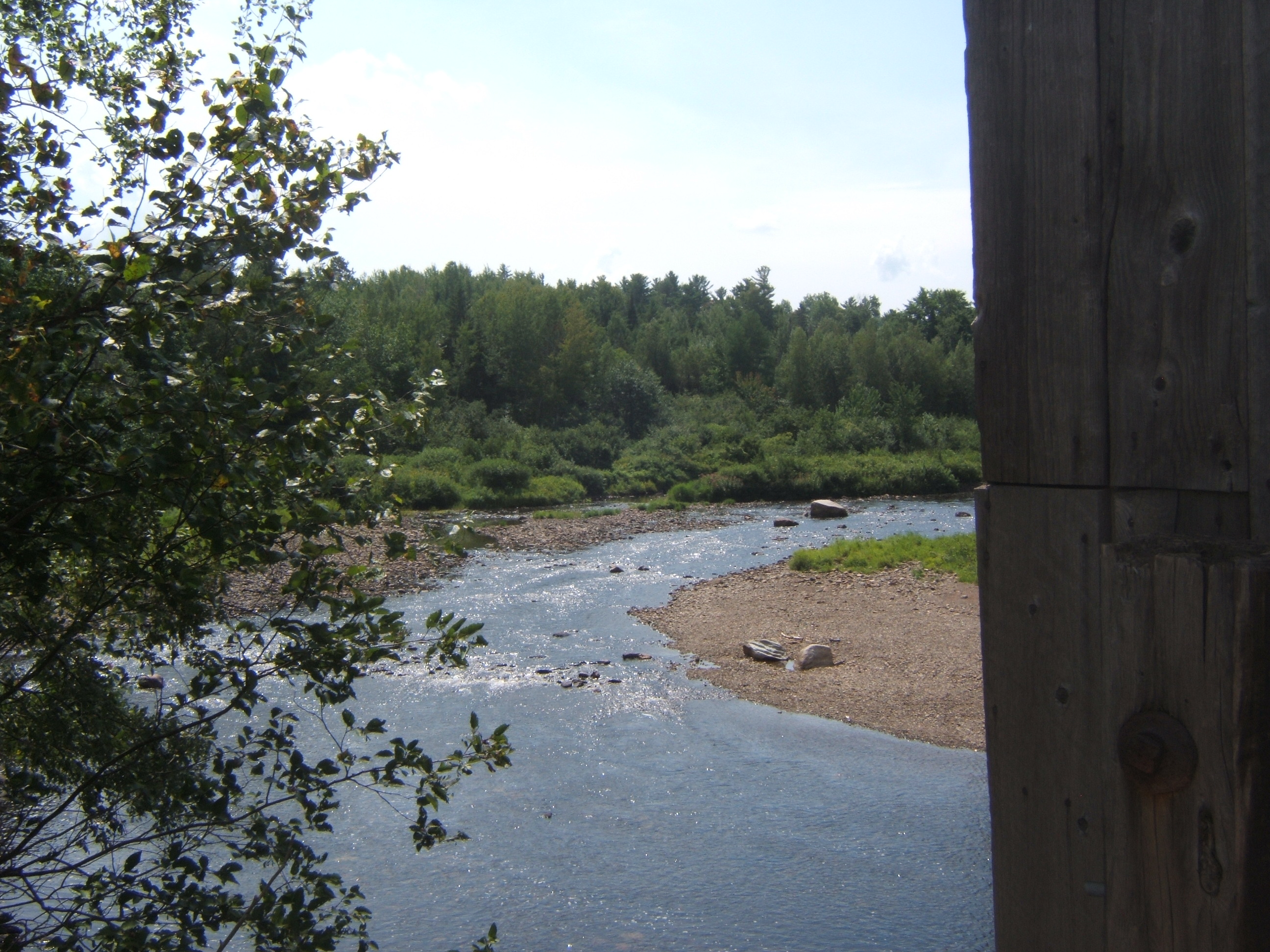
The Smyth Bridge was built in 1912 and has a total length of 139′ 1/2 “, and a span of 136′ 1/2 “. Its roadway width is 14′ 9”. Its Maximum Load is 10 t (6 t for double axle vehicles) and its center clearance height is 3.7 m.
During our Covered Bridge Project for Canada’s 125th anniversary, we visited the Smyth Bridge on April 16, 1992.
In 1992, the oldest dates we could find carved into the bridge were ‘Oct 3, 1915 Sunday’ under the initials ‘R K’ (in pen or pencil) and ‘Feb 1931’ beside the initials ‘LTF’ and ‘LEIK’ to the right of three simple crosses. There was also the totem of a face carved into the south side of the bridge, on the outside corner post. We also found a few other initials, deeply carved: ‘M B’, ‘R H’, ‘C B’, and ‘CED ER May 63’.
Finding these carvings requires patience, a good flashlight and about an hour per bridge, so I didn’t check to see if any of the carvings were still there on our recent visit. Sometimes they are lost when boards are replaced in the bridge during renovations.
I wonder if these people remember leaving their initials in the bridge so long ago?
~
~
‘LEIK’
– initials carved on the boards of the Smyth Covered Bridge, 1931
~
dark
silent
sequestered
~
light leaks between gable
boards, window squares cut high
river water below
sparkles in August sun
~
carved initials announce
the focused presence of
ghosts with knives
~
the clatter of tires
on timbers, as a car
rattles across the bridge
~
~
Copyright Jane Tims 2012
trial and error with mustard seed
On Saturday we took a side trip to see if the mustard is ripe for collecting seeds. We had selected a roadside area in early summer where lots of wild mustard was growing (for more information, see my earlier post about wild mustard –https://nichepoetryandprose.wordpress.com/2012/07/09/a-moment-of-beautiful-mustard-fields-in-bloom/
Although there are still some plants in bloom, the seeds have mostly been set in their long-beaked pods.

I would have been able to show you more, but I nibbled on the green pods the whole way home. They are delicious, crisp and tangy, with a hint of mustard.
There were a few dry seed pods but most need a couple of additional weeks to ripen. Each pod has three to seven well-formed seeds. The seeds take a little work to extract.
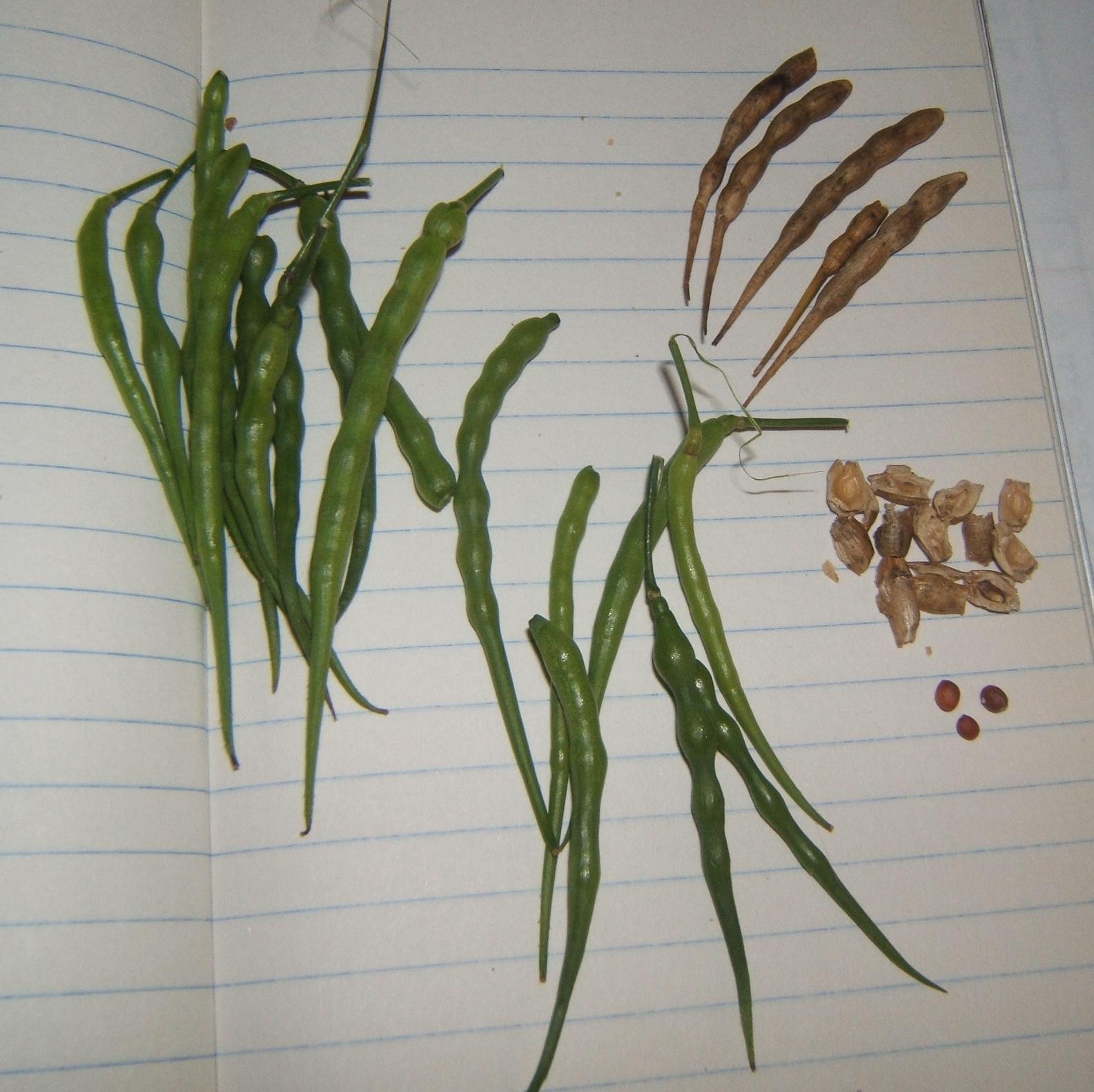
Mustard pods and seeds; green pods, dry brown pods, seed husks and three tiny seeds
I retrieved about 20 ripe mustard seeds from the pods, using a firm tap of the pestle to break the husk. Then I ground the seeds in a half teaspoon of olive oil. To make mustard, all my sources suggest using cold water, but I wanted to see if the seeds would flavour oil.
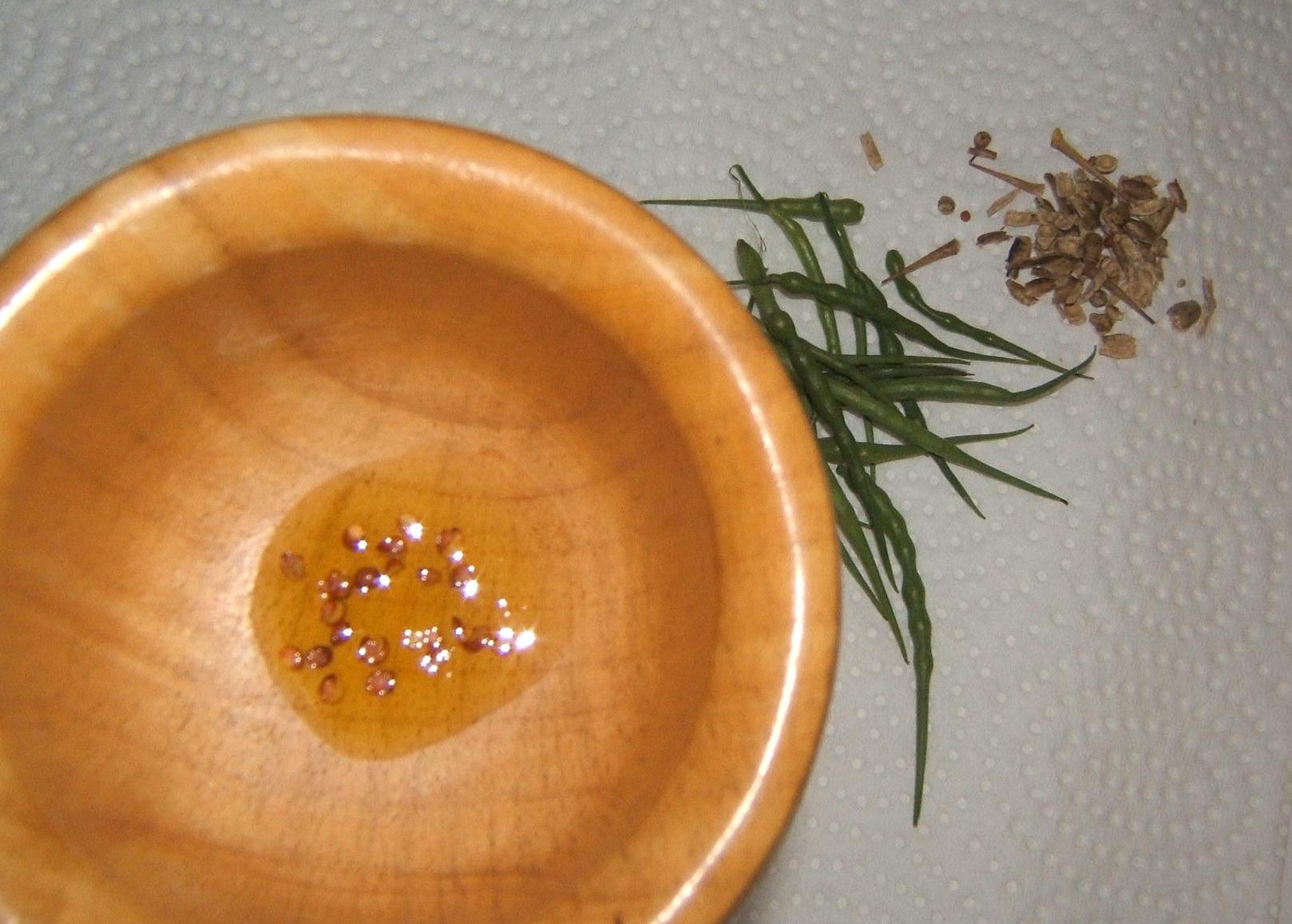
The ingredients almost vanished during the grinding with the pestle, but I got enough ‘mustard’ for a taste.

The verdict: a very mild mustard oil, easily overwhelmed by the salt on the crackers! When the pods ripen, I will pick enough for a few hundred seeds and I will use cold water to extract the flavour, just as the wise ones suggest!!!
~
~
© Jane Tims 2012
~
Warning:
1. never eat any plant if you are not absolutely certain of the identification;
2. never eat any plant if you have personal sensitivities, including allergies, to certain plants or their derivatives;
3. never eat any plant unless you have checked several sources to verify the edibility of the plant.
ponds and pond lilies
Water is a favorite feature of the landscape for many people. On our drives we encounter streams and rivers, lakes and ponds. Thoreau, writing about his Walden Pond, said that water features are the eyes of the landscape. Reflected in those eyes are sky and clouds and the dazzle of the sunlight.
‘A lake is the landscape’s most beautiful and expressive feature. It is earth’s eye; looking into which the beholder measures the depth of his own nature. The fluviatile trees next the shore are the slender eyelashes which fringe it, and the wooded hills and cliffs around are its overhanging brows.’ Henry David Thoreau, Walden, 1854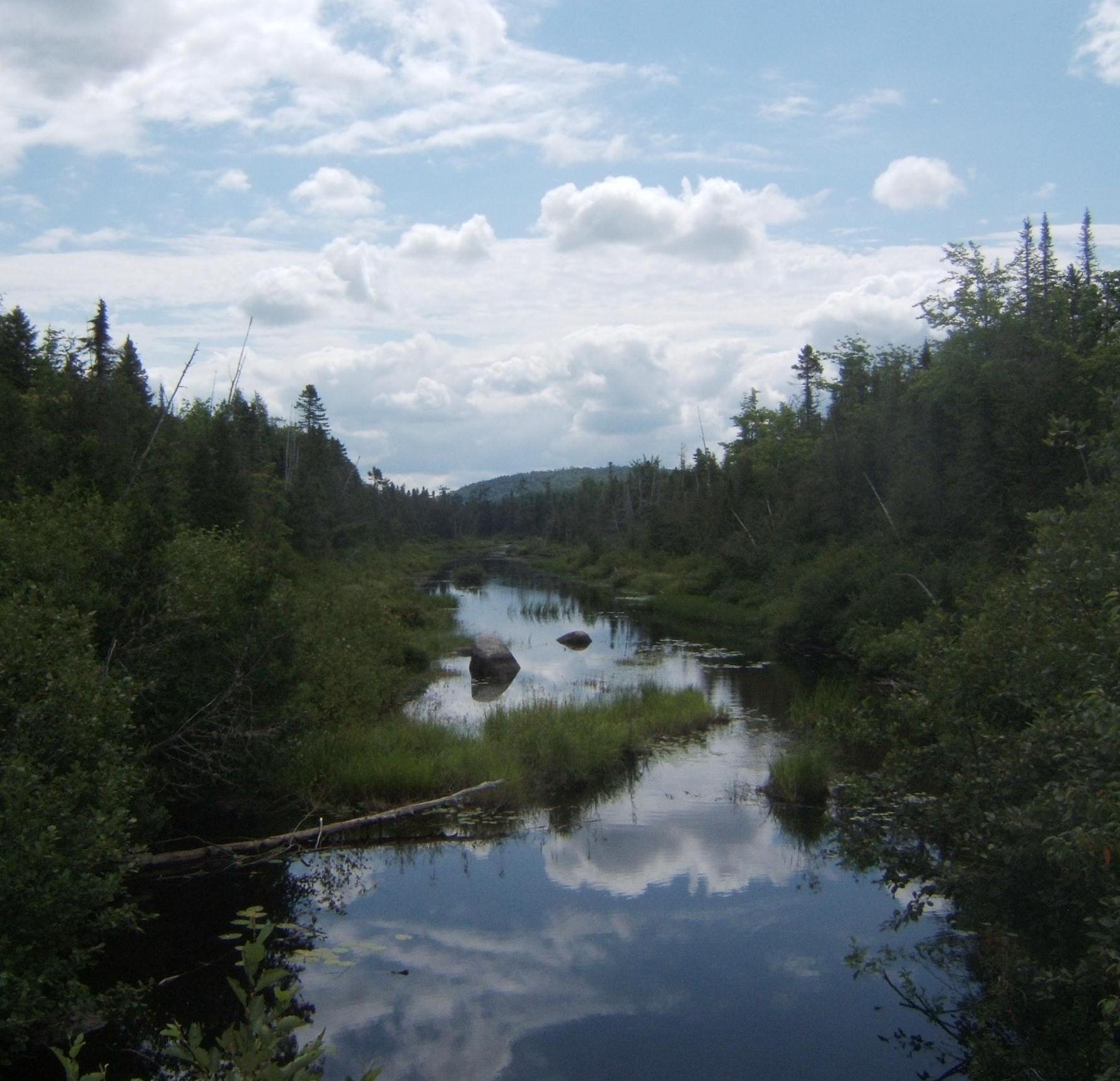
This time of year, pond vegetation is lush and in bloom. Some ponds and wetland waters are alwost covered by Duckweed (Lemna minor L.), Pickerel-weed (Pontederia cordata L.) and Pond-lilies.

Pond lilies are in bloom and their flat pad-like leaves cover the water like pieces of a puzzle. White Water-lilies, Nymphaea odorata Ait., speckle the edge of almost every pond…


and the yellow cup-like blooms of Cow-lily (Nuphar variegatum Engelm.) brighten the sluggish waters of meandering brooks and wetland ponds…
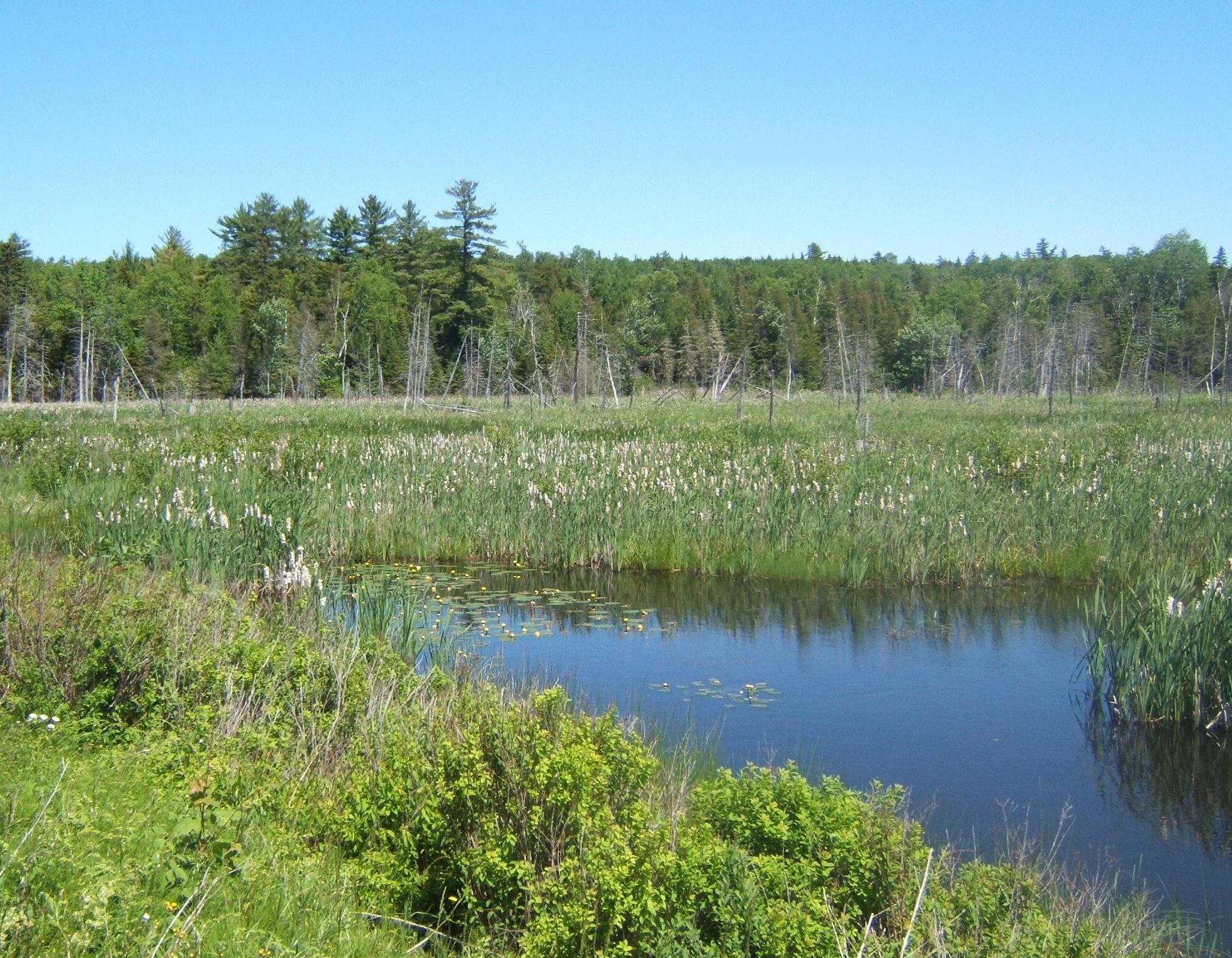
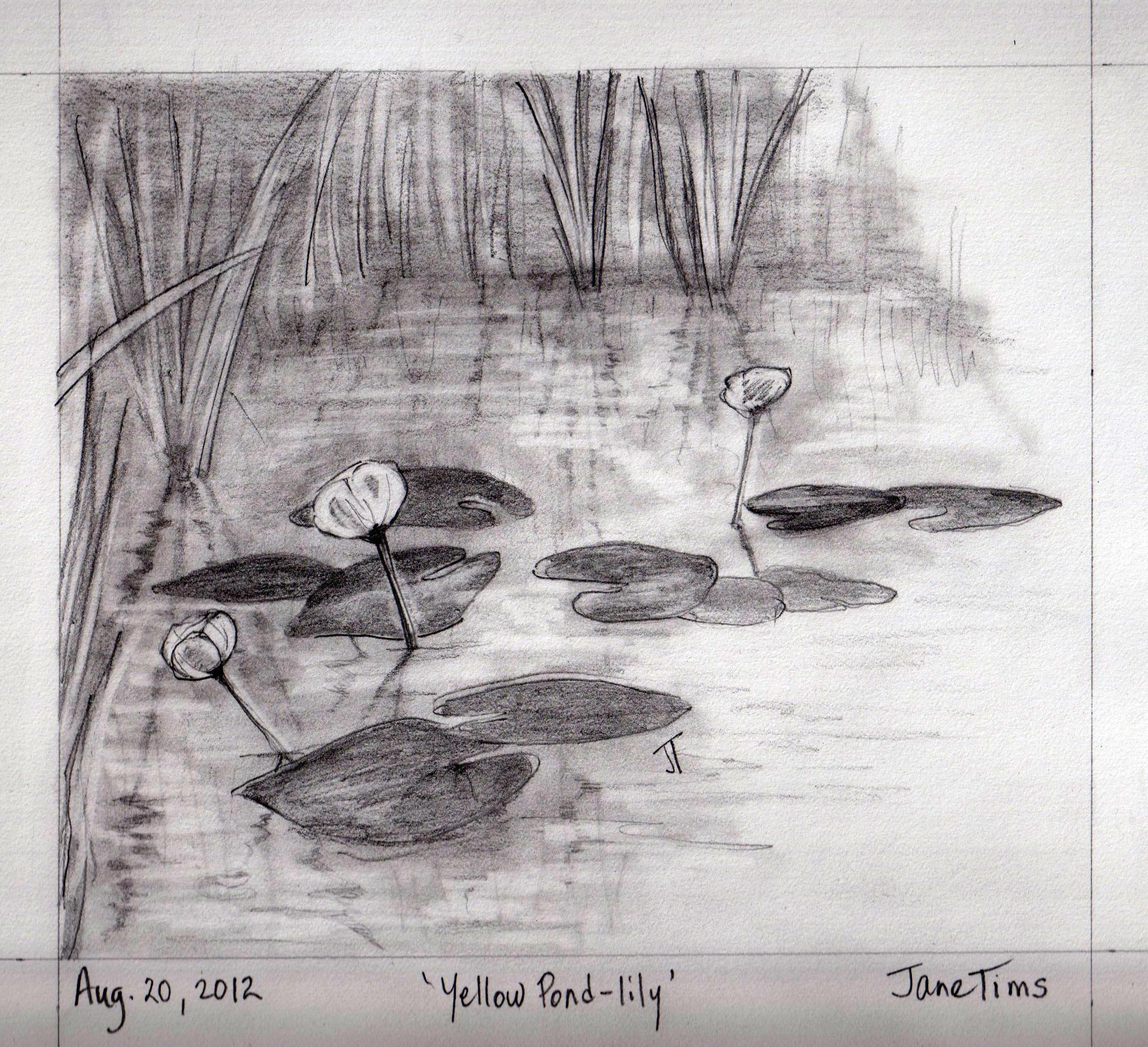
Last week we drove to South Oromocto Lake in Charlotte County and stopped beside the lake outlet where there is a dam, including a water control structure and a fish ladder. The long, red stems of up-rooted Water-shield (Brasenia Schreberi Gmel.) were gathered in tangles at the control structure.
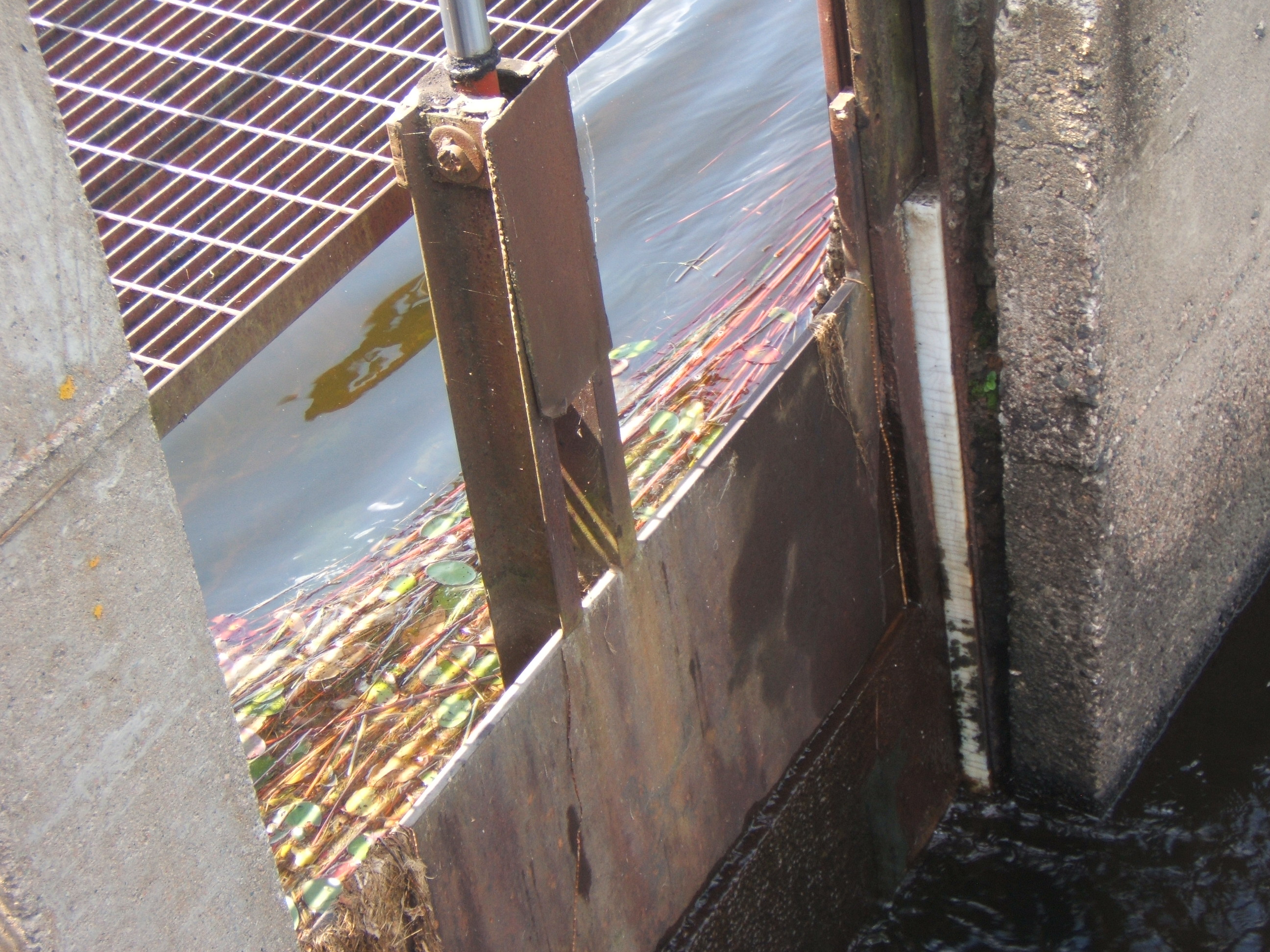
the red stems and green leaves of up-rooted Water-shield, gathered in the dam at the outlet of South Oromocto Lake

Do you have Pond-lilies and Water-shield where you are?
~
Copyright Jane Tims 2012
growing and gathering – years and seasons
As I work on my collection of poems about growing and gathering, I am aware of the passage of time. I am in the revision stage. This means my manuscript will soon be ‘complete’. I will worry over it and list the last things to be done. I will prepare my final report to artsnb (the New Brunswick Arts Board), the source of my Creations Grant, and send it away to them for approval.
The project will be over, but there will still be work to do. I will have to decide what poems should go in the final manuscript, re-order them a few times, do some more revisions and them send them away, to a publisher, hoping I will be able to get a book from all this work.
Then I will be at the end and facing a new beginning, a new project. I have a few to choose from, so I won’t be relaxing for long.
In all this is the dimension of time, with its deadlines and unforgiving rush forward. Even in a project about growing and gathering local foods, there are poems about time.
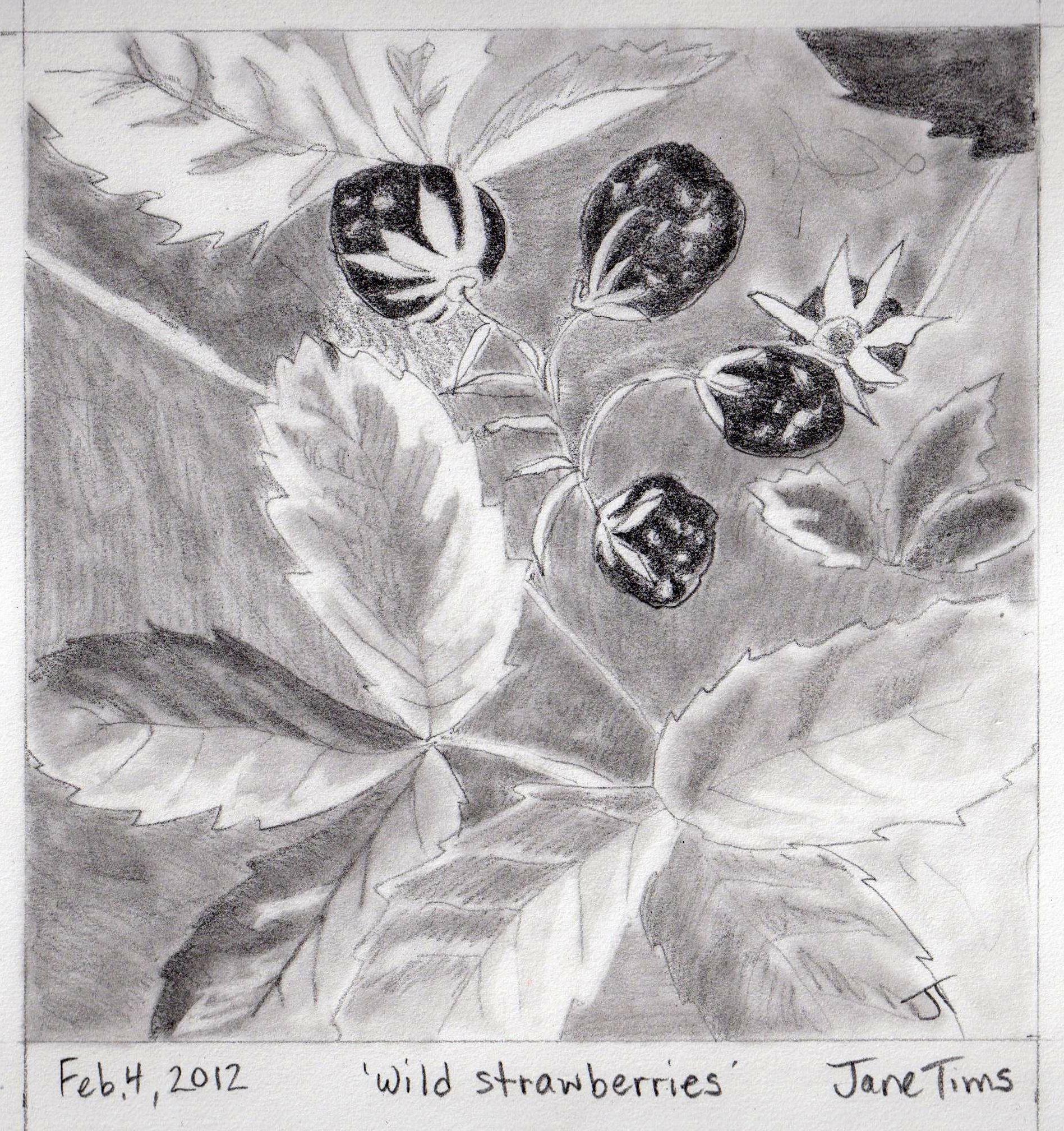
A number of my poems are about the ephemeral nature of local foods. Another way to think of this is ‘eating local foods in season’. In spring, everything is plentiful – new plants arrive in a rush, so fast, you can hardly keep up. Then there is the patient waiting for berries to ripen and, again, a rush… blueberries are quickly followed by blackberries and raspberries and so on. But everything has its season, so leaves become too old to harvest, and berries shrivel and fall to the ground.

This seasonal aspect of local foods can be thought of as as a metaphor for aging, and some of my poems work with this comparison. I have poems about resisting aging, and about the ailments of age including arthritis, lethargy, forgetfulness, and aging memory.
Many of my poems on the theme of ‘time’ overlap with other themes, about ‘companionship’, or changes to ‘place’. For this reason, I find myself shifting poems around in my manuscript. I ask myself if the poems flow well, one to another.
I also find I don’t seem to have many poems about the differences between our historical use of local foods and our present day use. I have lots of source material, particularly among my great-aunt’s diaries… she loved to pick berries. So away I go, to write a few more poems about time!
~
~
Old Man’s Beard
~
Usnea subfloridana Stirt.
~
you and I
years ago
forced our ways
bent through the thicket
of lichen and spruce
~
Usnea
caught in your beard
and we laughed
absurd!
us with stooped backs
and grey hair?
~
found a game trail
a strawberry marsh
wild berries
crushed into sedge
stained shirts
lips
and fingers
strawberries
dusted with sugar
washed down with cold tea
warmed by rum
~
today
an old woman
alone
lost her way in the spruce
found beard
caught in the branches
and cried
~
~
Published as ‘Old Man’s Beard’, The Fiddlehead 180, Summer, 1994
© Jane Tims 2012

a snippet of landscape – glacial erratics and boulder fields
Last week we went for a drive to explore some of the back roads in Sunbury County. As we drove, we encountered large boulders everywhere along the road. I know from my reading and a course years ago, these are a remnant of the glaciers that once covered this area. Large boulders were carried along by the ice and deposited on the landscape far from their place of origin.

In one place, a clear-cut lay the landscape bare and we were able to see how frequently these glacial erratics occurred in the area. In the photo, you can see the boulders scattered in a ‘boulder field’. These boulders would have been deposited here by a glacier, thousands of years ago, perhaps during the Wisconsinan glaciation when almost all of Canada was covered by ice.

It is strange to drive along the road today and know that thousands of years ago, a sheet of ice, perhaps a few kilometers thick, would have covered us.
~
~
gravel pit
~
ten thousand years it took
a glacial stream to set
the sinew of the esker –
cobbles sorted to layers,
screened by a giant hand
~
ten scant years to sever
esker snake from his tail –
the excavator bucket
reaching, fingers lifting sand,
pit-run, ready for road
~
~
Copyright Jane Tims 2012




 nichepoetryandprose