Archive for the ‘wildflowers’ Category
in the shelter of the covered bridge – drawings
As I complete my manuscript of poems ‘in the shelter of the covered bridge’, I am also working on the drawings to accompany the text. I have made a list of the visuals presented in the poems, so I have a specific idea of what drawings I need. Many are completed since I have a large portfolio of bird drawings, for example …
~

~
Others are still to be done. This morning I completed a rather delicate drawing of the two kinds of roses growing beside the Darlings Island Covered Bridge and captured in my poem ‘tangle’.
~

~
I love to draw. For me, it is like watching a movie as I see my hand lay pencil marks on paper. It is not a calm activity. Perhaps because my hand and arm are moving, I get quite agitated when I draw and I imagine my blood pressure rising as the work progresses.
~
In order to have a body of work to choose from for the final manuscript, I aim to have more than forty drawings. I have completed nineteen. Lots to do !
~
Copyright Jane Tims 2016
the colour of October #2 (Tansy yellow)
So many colours! The orange of the big pumpkin on our doorstep. The reds and yellows of the Red Maple leaves in piles under our feet. The bright white of the moon this month. The golden colour of the needles of the Tamarack now falling with every breath of wind.
~
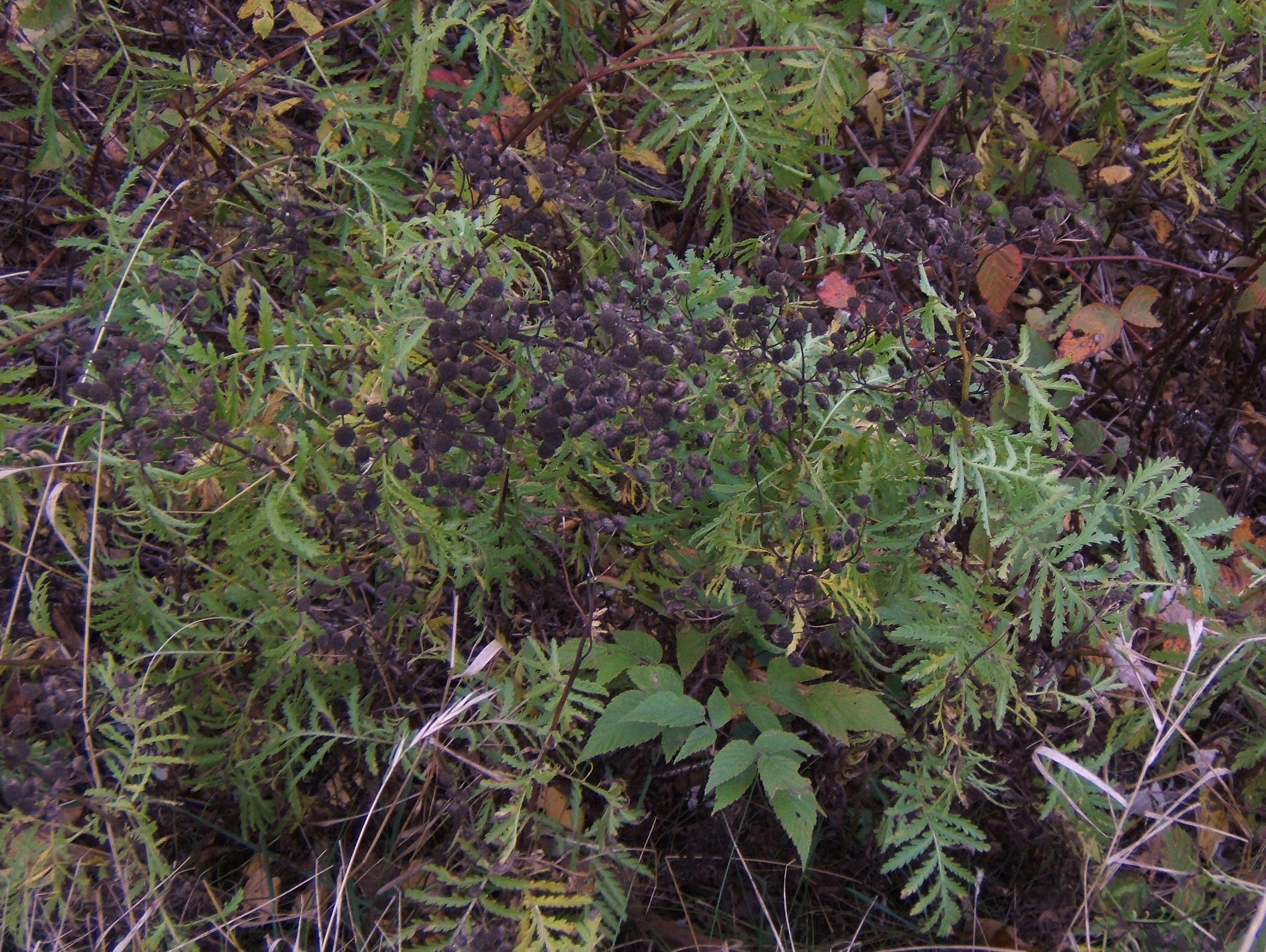
The colour that has inspired me this week is the yellow of Tansy (Tansy vulgare L.) still bright along the road in Fredericton. The flowers are like brilliant yellow buttons.
~

~
I couldn’t duplicate the colour with the yellows in my watercolour palette, but after layers of alternating yellow and white, I have realised how wonderful the yellows of nature really are!
~

October 27, 2013 ‘Tansy’ Jane Tims
~
In a month’s time, the bright yellow heads of the Tansy will be black!
~
~
Copyright 2013 Jane Tims
Highbush Cranberry (Viburnum trilobum Marsh.)
Like miniature fireworks, bright bunches of the berries of Highbush Cranberry (Viburnum trilobum Marsh.) burst along our roadsides in late summer. Highbush Cranberry is also called Cranberry, Pimbina, and in Quebec, quatres-saisons des bois.
The Highbush Cranberry is a large deciduous shrub, found in cool woods, thickets, shores and slopes. It has grey bark and dense reddish-brown twigs. The large lobed leaves are very similar to red maple.

In spring and summer, the white flowers bloom in a cyme or corymb (a flat-topped or convex open flower-cluster). Most flowers in the cluster are small, but the outermost flowers are large and showy, making the plant attractive for insect pollinators.
The fruit is a drupe, ellipsoid and brightly colored red or orange. The juicy, acidic fruit has a very similar flavour to cranberry (Vaccinium spp. L.) and is used for jams and jellies. The preserves are rich in Vitamin C.

~
~
fireworks, quatres-saisons
(Viburnum trilobum Marsh.)
~
~
against a drawing paper sky
some liberated hand
has sketched fireworks
~
remember precursors in spring?
blowsy cymes, white sputter
of a Catherine wheel
~
now these berries, ready to pick
bold, spherical outburst
of vermillion sparks
~
a pyrotechnic flash of red
strontium detonates
in receptive dark
~
a four-season celebration
spring confetti, berries,
fireworks in fall
~
cranberry preserves – acidic,
tart blaze of summer sky
winter ignition
~
~
© Jane Tims 2012

© Jane Tims 2012
a moment of beautiful – Blue-eyed Grass
the space: the meadow above the lake
the beautiful: a bright blue flower – Blue-eyed Grass
All grass is not grass. In spring, some of those green blades reveal their true identity. You look down, and a blue eye stares back at you. You have found Blue-eyed Grass, Sisyrinchium montanum Greene.
Blue-eyed grass is not a grass at all, but a member of the iris family. It inhabits moist, open ground in fields and meadows, and blooms in late spring and early summer. The plant is low and slender, with a deep blue flower and a bright yellow center, borne at the top of a straight, usually unbranched, stem. The stem is two-edged, flattened on the margins. The flowers are borne in the axil of a sharp, upheld bract called a spathe. In French, the plant is called Bermudienne. Montanum means ‘of the mountains’.

~
~
Blue-eyed Grass
Sisyrinchium montanum Greene
~
I walk in grass,
but it isn’t grass –
Sisyrinchium
it winks at me
with azure eyes,
and I blink brown at them
~
Blue-eyed Grass
stands straight and still,
staunch Bermudienne
simple maid
with a watchful eye,
and a sword above her head
~
~
© Jane Tims 2012
ponds and pond lilies
Water is a favorite feature of the landscape for many people. On our drives we encounter streams and rivers, lakes and ponds. Thoreau, writing about his Walden Pond, said that water features are the eyes of the landscape. Reflected in those eyes are sky and clouds and the dazzle of the sunlight.
‘A lake is the landscape’s most beautiful and expressive feature. It is earth’s eye; looking into which the beholder measures the depth of his own nature. The fluviatile trees next the shore are the slender eyelashes which fringe it, and the wooded hills and cliffs around are its overhanging brows.’ Henry David Thoreau, Walden, 1854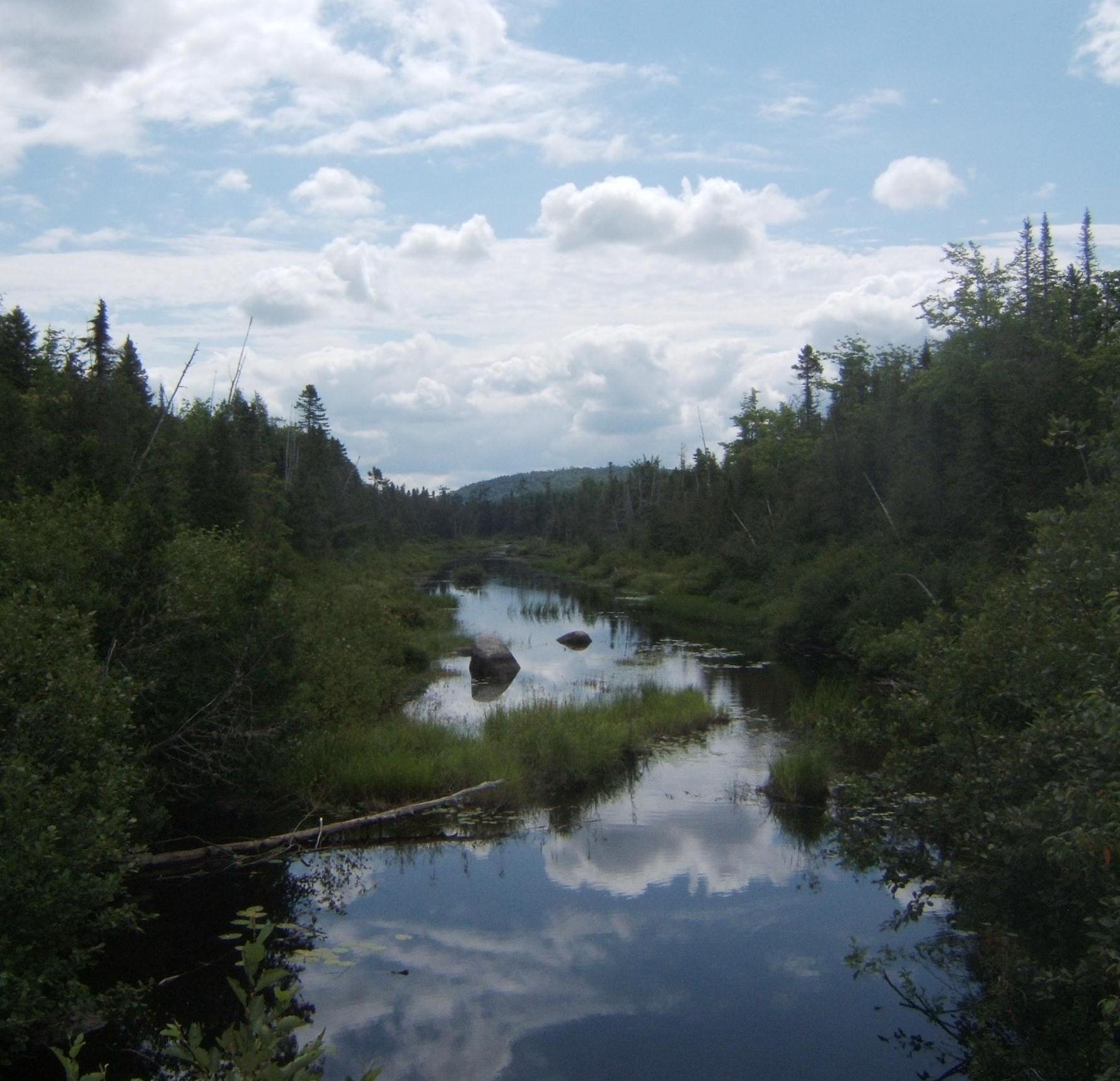
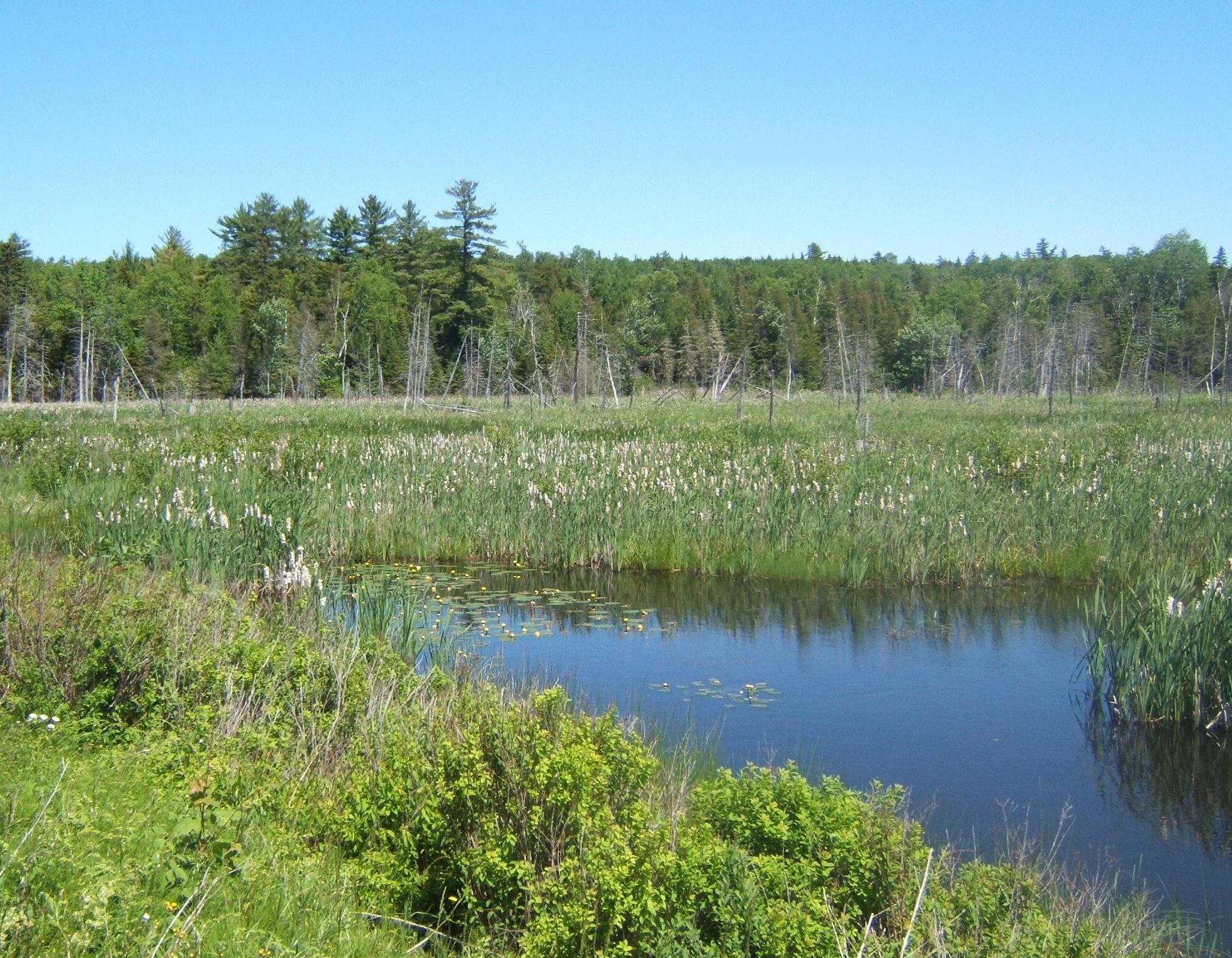
This time of year, pond vegetation is lush and in bloom. Some ponds and wetland waters are alwost covered by Duckweed (Lemna minor L.), Pickerel-weed (Pontederia cordata L.) and Pond-lilies.

Pond lilies are in bloom and their flat pad-like leaves cover the water like pieces of a puzzle. White Water-lilies, Nymphaea odorata Ait., speckle the edge of almost every pond…


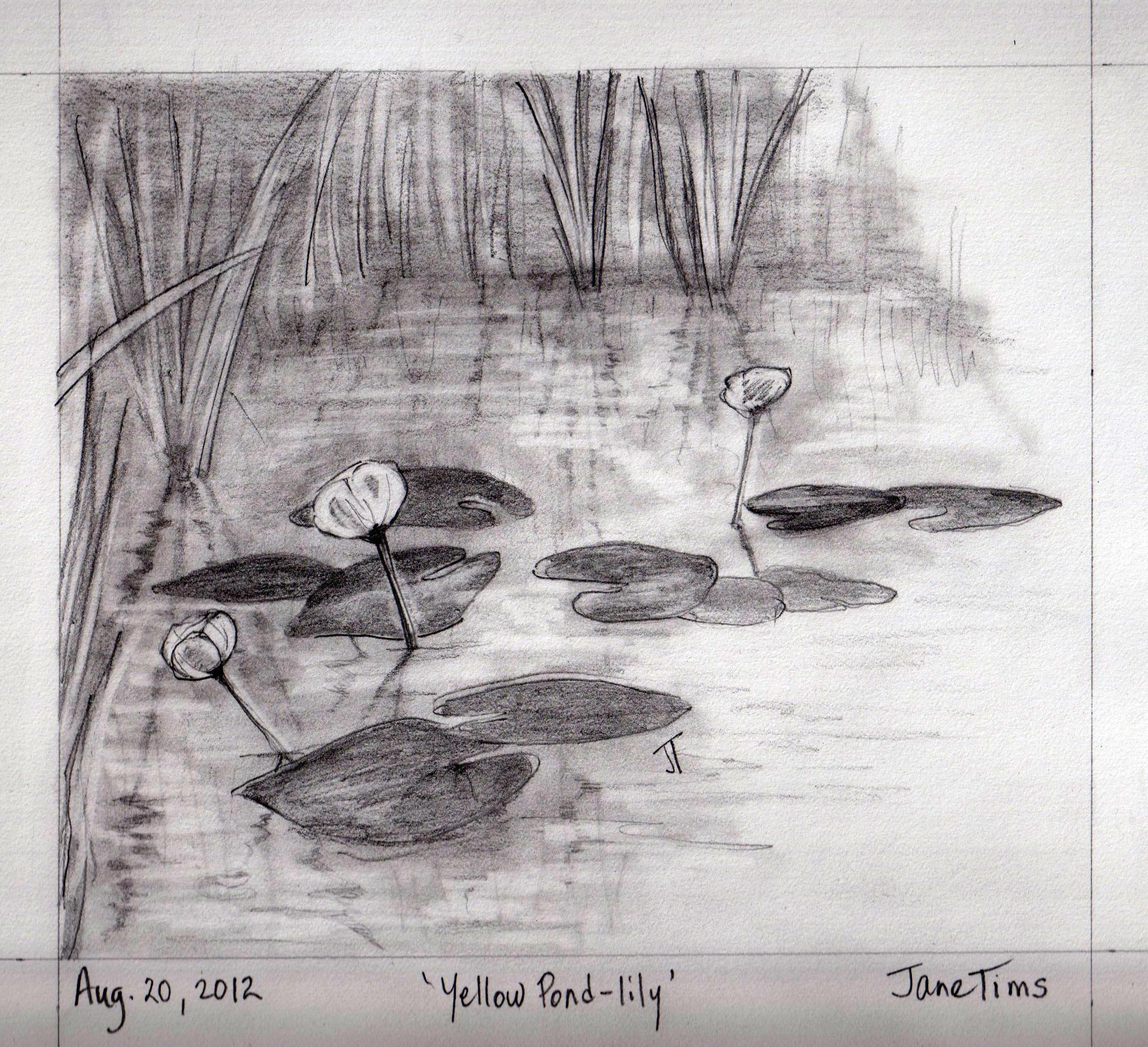
and the yellow cup-like blooms of Cow-lily (Nuphar variegatum Engelm.) brighten the sluggish waters of meandering brooks and wetland ponds…
Last week we drove to South Oromocto Lake in Charlotte County and stopped beside the lake outlet where there is a dam, including a water control structure and a fish ladder. The long, red stems of up-rooted Water-shield (Brasenia Schreberi Gmel.) were gathered in tangles at the control structure.
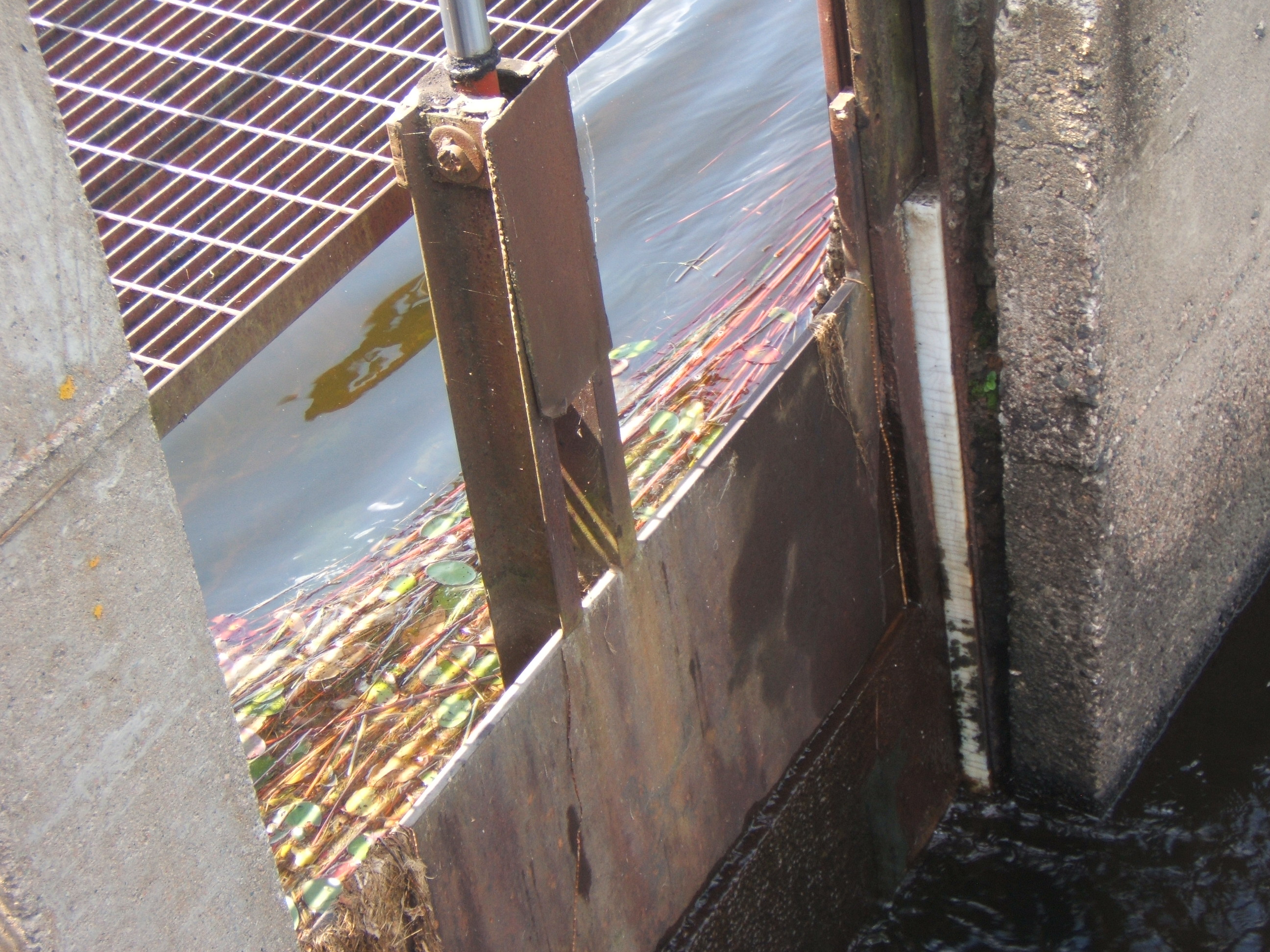
the red stems and green leaves of up-rooted Water-shield, gathered in the dam at the outlet of South Oromocto Lake

Do you have Pond-lilies and Water-shield where you are?
~
Copyright Jane Tims 2012
a botany club excursion
Earlier this summer, we went on a hike with other members of a local botany club to the Cranberry Lake Protected Natural Area, an area protected for its extensive forest community of Red Oak and Red Maple.
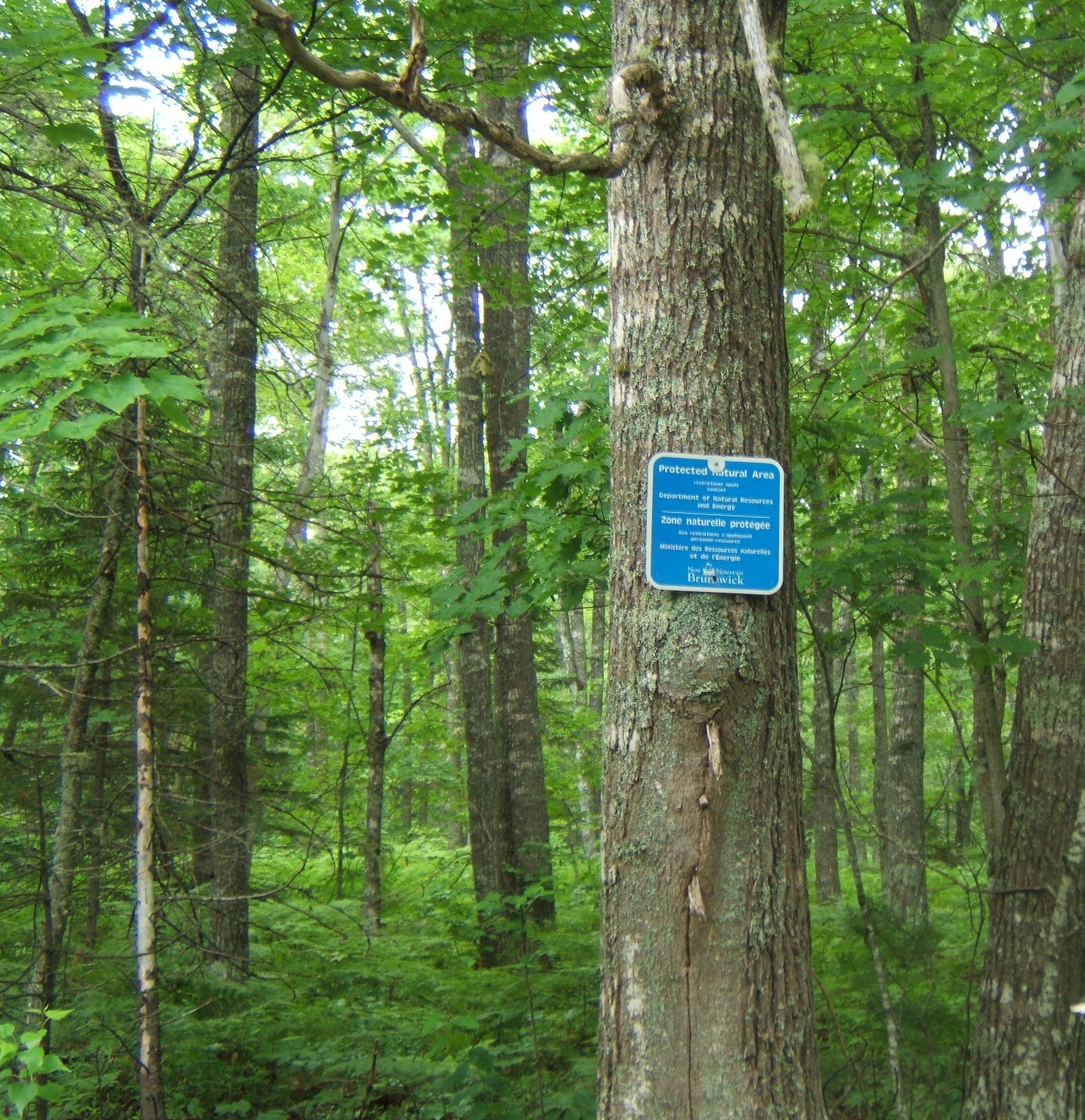
The New Brunswick Department of Natural Resources website describes the Cranberry Lake Protected Natural Area as follows:
An extensive Red Oak forest community. Predominantly Red Oak – Red Maple association. Red Oak make up a large percentage of the regeneration, most likely the Oak component will increase as the stand matures. The individual trees are impressive size.
This type of forest is rare in New Brunswick.
The woods were open with a thick understory of Bracken (Pteridium aquilinum (L.) Kuhn, var. latiusculum (Desv.) Underw. ex A. Heller), Blueberry (Vaccinium spp.), Common Lady’s Slipper (Cypripedium acaule Aiton) and some of the other species of the Canadian Element associated with woodlands in the Maritimes (see my post for April 30, 2012, Trailing Arbutus, https://nichepoetryandprose.wordpress.com/2012/04/30/trailing-arbutus-epigaea-repens-l-var-glabrifolia/ ).

My husband standing in the thick growth of Bracken… it was about waist-height… he says he was standing in a hole!
It was so much fun working with the other botanists and enthusiasts to identify the various species we encountered. The plant lists prepared during the day will be part of an effort by Nature New Brunswick to update a database of Environmentally Significant Areas in New Brunswick. During my years of work, I was privileged to work on the development and use of this database.
I saw many familiar species during the hike, but I was so excited to see three plants I have not seen in a while.
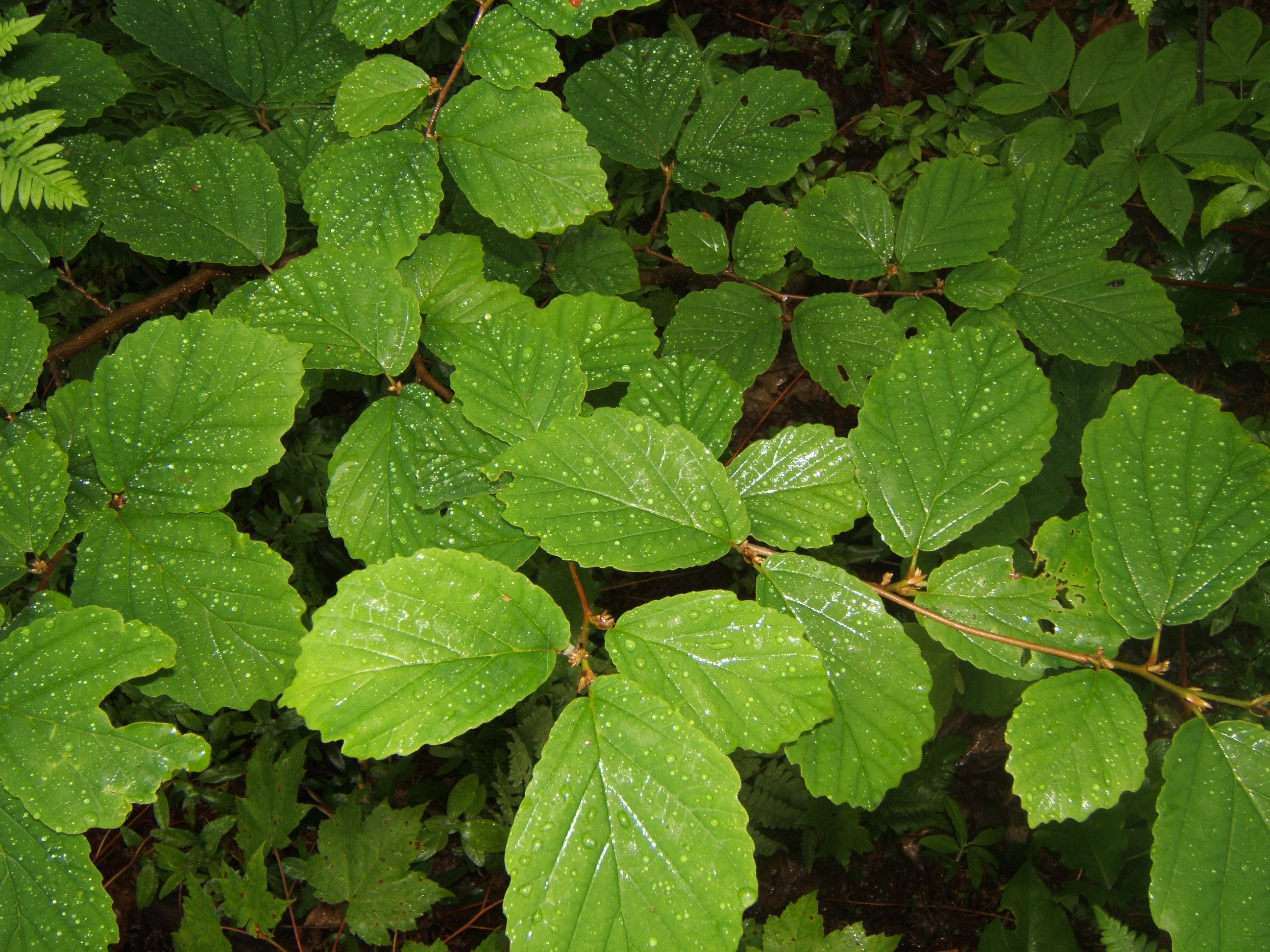
I renewed my acquaintance with Witch-hazel, Hamamelis virginiana L. (notice the asymmetrical shape of the leaves)…
and Shinleaf (Pyrola elliptica Nutt.), identifiable by its thick oval leaves, longer than the leaf-stalks or petioles…

a single plant of Shinleaf, with its straight stem of small creamy flowers, growing among Blueberry, and Red Maple and Red Oak seedlings
I also was introduced to a plant I thought I had never seen before, Cow-wheat (Melampyrum lineare Lam., a branchy variety found in dry woods). When I looked it up in my Flora, though, I found a notation to say I had seen this plant in the summer of 1984. It is always good to record the plants you see and identify!

While there, we saw a perfect example of the interaction of species. A bright orange fungus, known as Chicken of the Woods (Laetiporus sulphureus), growing on an aged Red Oak, was being consumed by a horde of slugs.

A hike with a group is a great way to expand your knowledge and boost your confidence. Everyone benefits from the knowledge of the various participants, and being with like-minded people is good for the soul!
© Jane Tims 2012
Warning: 1. never eat any plant if you are not absolutely certain of the identification; 2. never eat any plant if you have personal sensitivities, including allergies, to certain plants or their derivatives; 3. never eat any plant unless you have checked several sources to verify the edibility of the plant.poisonous Lathyrus – when ‘wild’ plants are not edible
Yesterday, August 1, 2012, I posted a description of the Beach Pea (Lathyrus japonicus Willd.) and said the peas could be collected, boiled and eaten. This is the advice of the Peterson Field Guide to Edible Wild Plants (1977). My further reading, from more up to date sources, says you should not eat the seeds of Beach Pea or other species of wild pea. Many Lathyrus species contain a neurotoxin that can lead to a condition called lathyrism, a type of paralysis. Although there are other guides saying that Beach Pea is edible in small quantities, I have revised the post to remain on the safe side.
When we choose to include wild plants in our diets, it is very important to know for certain they will not be harmful. In my posts, I have talked about avoiding berries that may look pretty to eat, but contain toxins (for example the bright blue berries of Clintonia (see my post for May 23, 2012, ‘Bluebead Lily’ https://nichepoetryandprose.wordpress.com/2012/05/23/bluebead-lily-clintonia-borealis-ait-raf/ ) or the tomato-like berries of the Common Nightshade (see my post for July 16, 2012, ‘growing and gathering – barriers to eating wild foods’ https://nichepoetryandprose.wordpress.com/2012/07/16/growing-and-gathering-barriers-to-eating-wild-foods/ ).
I have also talked about cases in history of people who risk eating poisonous plants when hunger or famine strike. An example is the making of Missen Bread in Scandinavia, using a long complicated process designed to remove the burning, poisonous crystals contained in the roots of the Wild Calla (see my post for June 4, 2012, ‘keeping watch for dragons #6 – Water Dragon’ https://nichepoetryandprose.wordpress.com/2012/06/04/keeping-watch-for-dragons-6-water-dragon/ ). Poisonous species of Lathyrus (for example Lathyrus sativus, the Grass Pea), in the same genus as the Beach Pea, have been used throughout history for food when people are desperate, in times of drought, famine or poverty.
So, please, take the following steps before you ingest any wild plant:
1. check out as many sources as you can find, to discover the current wisdom and science about ingesting a plant
2. be certain of your identification – many plants look very similar to one-another and can be confused
3. think about your own sensitivities, since you may react to foods that do not bother other people.
4. when in doubt, take the route of caution and safety and do not eat
~
© Jane Tims 2012
Beach Pea (Lathyrus japonicus Willd.)
During our vacation to Nova Scotia, we stopped at several places along St. Margaret’s Bay. All along the beaches, tucked just out of reach of the highest tides, were crowds of Beach Pea. Beach Pea (Lathyrus japonicus Willd.) is a common plant of the coast, growing on sandy and gravelly shorelines and beaches.

This plant resembles the garden pea. It has vine-like, trailing, compound leaves, each composed of 6-8 leaflets. At the base of each leaf is a clasping stipule; at the leaf’s tip is a curling tendril. The flowers are showy, pink and blueish-purple, blooming from June to August.

The seeds of the Beach Pea are podded peas, from 1 to 2 inches long. They are greyish-green and ripen in August.
Some sources, including Peterson’s Field Guide to Edible Wild Plants (1977), say that Beach Peas can be collected, boiled and eaten when they are young and tender. Other sources, more up to date, say they are not edible because they contain a toxic substance that effects the nervous system. In my next post, I’ll talk a bit about being cautious before eating wild plants.
~
~
Beach Pea
Lathyrus japonicus Willd.
~
she feints on the rocks
sighs on the sand
beckons with the tendrils
of her feathery hand
~
ruffles her skirts
in the salted breeze
and squanders her love
on indifferent seas
~
~
© Jane Tims 2012
Warning: 1. never eat any plant if you are not absolutely certain of the identification; 2. never eat any plant if you have personal sensitivities, including allergies, to certain plants or their derivatives; 3. never eat any plant unless you have checked several sources to verify the edibility of the plant.Silvery Cinquefoil (Potentilla argentea L.)
Last month, whenever I went to get the mail, I was waylaid by a little plant sprawling next to the row of boxes. He was so charming, once I forgot to get my mail because I was examining his flowers and leaves! There should be a sign saying ‘No Loitering’.
The plant was Silvery Cinquefoil (Potentilla argentea L.). As its name suggests, Silvery Cinquefoil is covered with fine silver hairs, giving it a downy appearance. It has fine-toothed, five-fingered leaves, palmately compound, and five-petalled yellow flowers.
I have always liked the various species of Potentilla, interesting for the variety of their leaves. You can see how diverse these shapes are in a page from Roland and Smth’s Flora of Nova Scotia. The reddish pressed leaf in the scanned book, for example, is Silverweed (Potentilla Anserina L.). My post for July 13, 2012, ‘coastal barren, coastal bog’, shows the Three-toothed Cinquefoil (Potentilla tridentata Ait.) https://nichepoetryandprose.wordpress.com/2012/07/13/coastal-barren-coastal-bog/ .
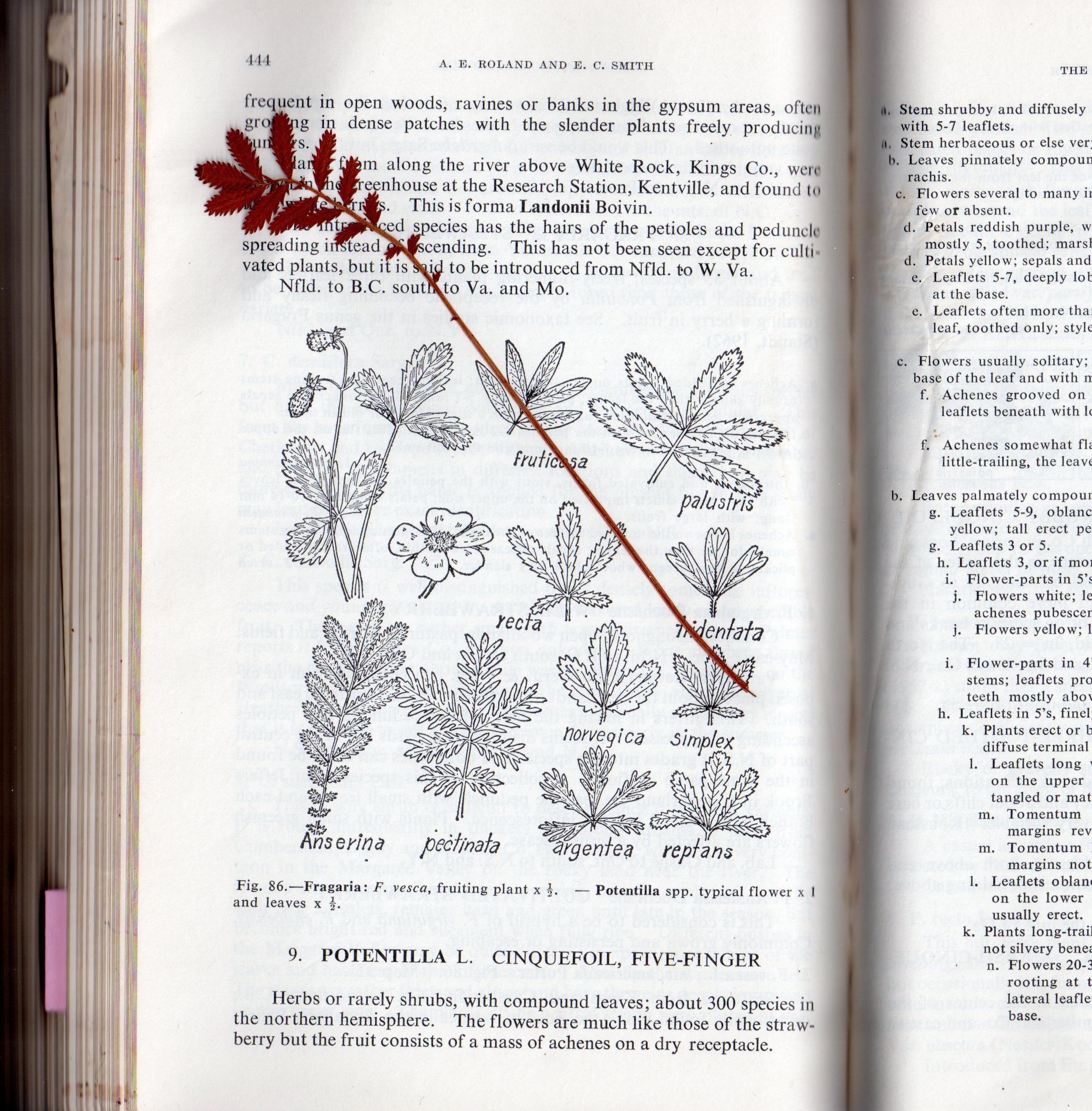
various leaf shapes of Potentilla in a page of The Flora of Nova Scotia (A.E. Roland and E.C. Smith, Nova Scotia Museum, Halifax, 1969) … the pressed leaf is from Potentilla Anserina or Silverweed, a coastal species of Potentilla.
~
~
Five-Finger
~
metal leaf and yellow,
he leans on the post-box
palms extended
potent, persuasive
a bit of a thug
want your mail?
pay me,
in silver
~
~
© Jane Tims 2012

Grove-sandwort (Arenaria lateriflora L.)
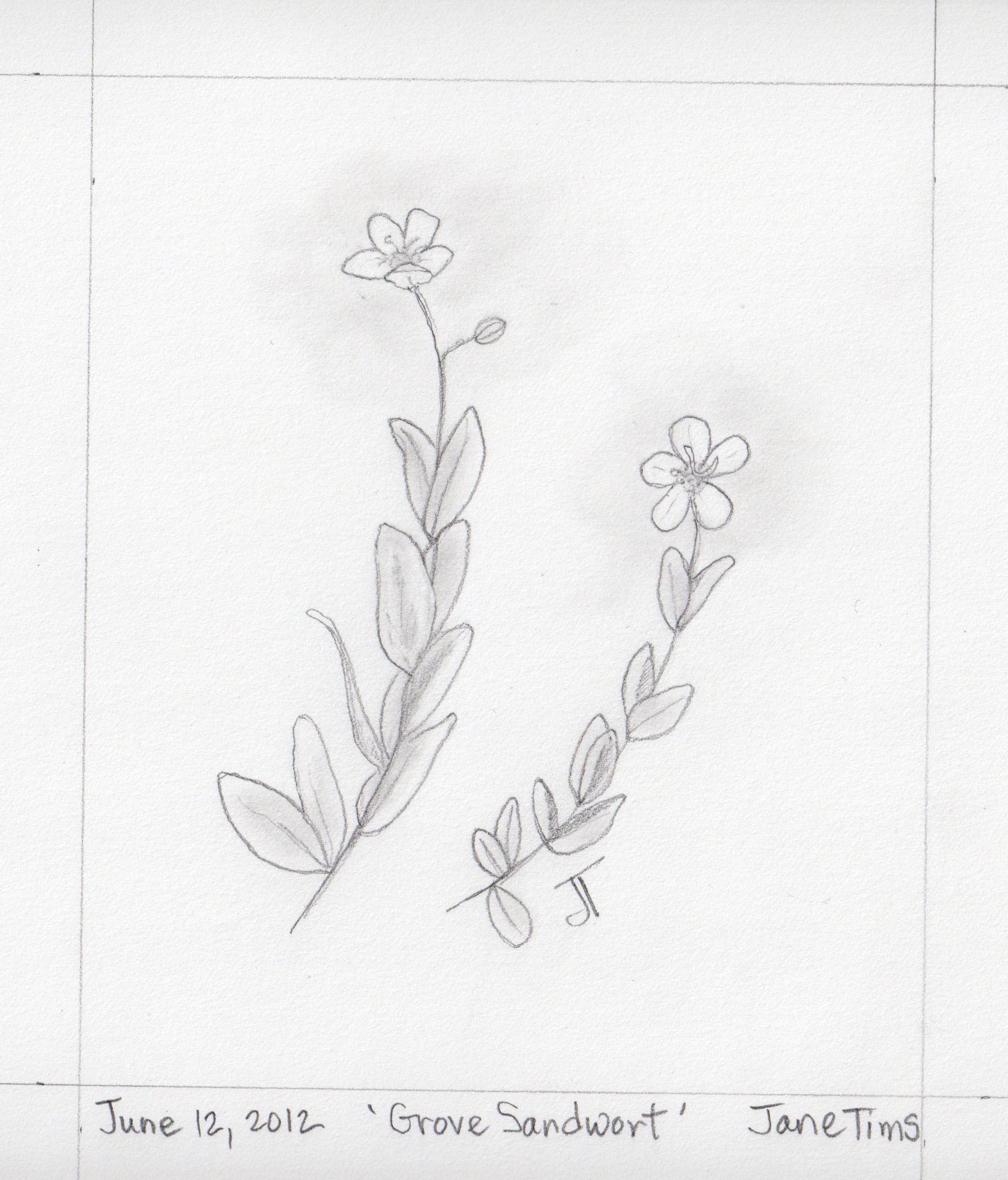
Our summer property is a constant source of learning for me. Every year I seem to find at least one new plant. This year the plant is Grove-sandwort (Arenaria lateriflora L.).
Grove-sandwort is a common plant, found in meadows, along shorelines and at the borders of woods. It is a low-growing herb, first noticeable in June. The starry, white flowers each have five petals and grow near the top and along the sides of a simple stem. The leaves are elongated, elliptical, and in pairs.

Arenaria comes from the Latin arena meaning ‘sand’, where many of the members of the genus grow. The specific name lateriflora means ‘flowering on the side’.
Have you learned to identify any new plants this summer?
~
~
new neighbor
Grove-sandwort (Arenaria lateriflora L.)
~
met her in the meadow
by the split-rail fence
strewing the grove
with flowers
~
her leaves paired,
clapping hands,
delighted only ‘to be’
a bystander in the arena
~
~
© Jane Tims 2012




 nichepoetryandprose