Archive for the ‘in the grey woods’ Category
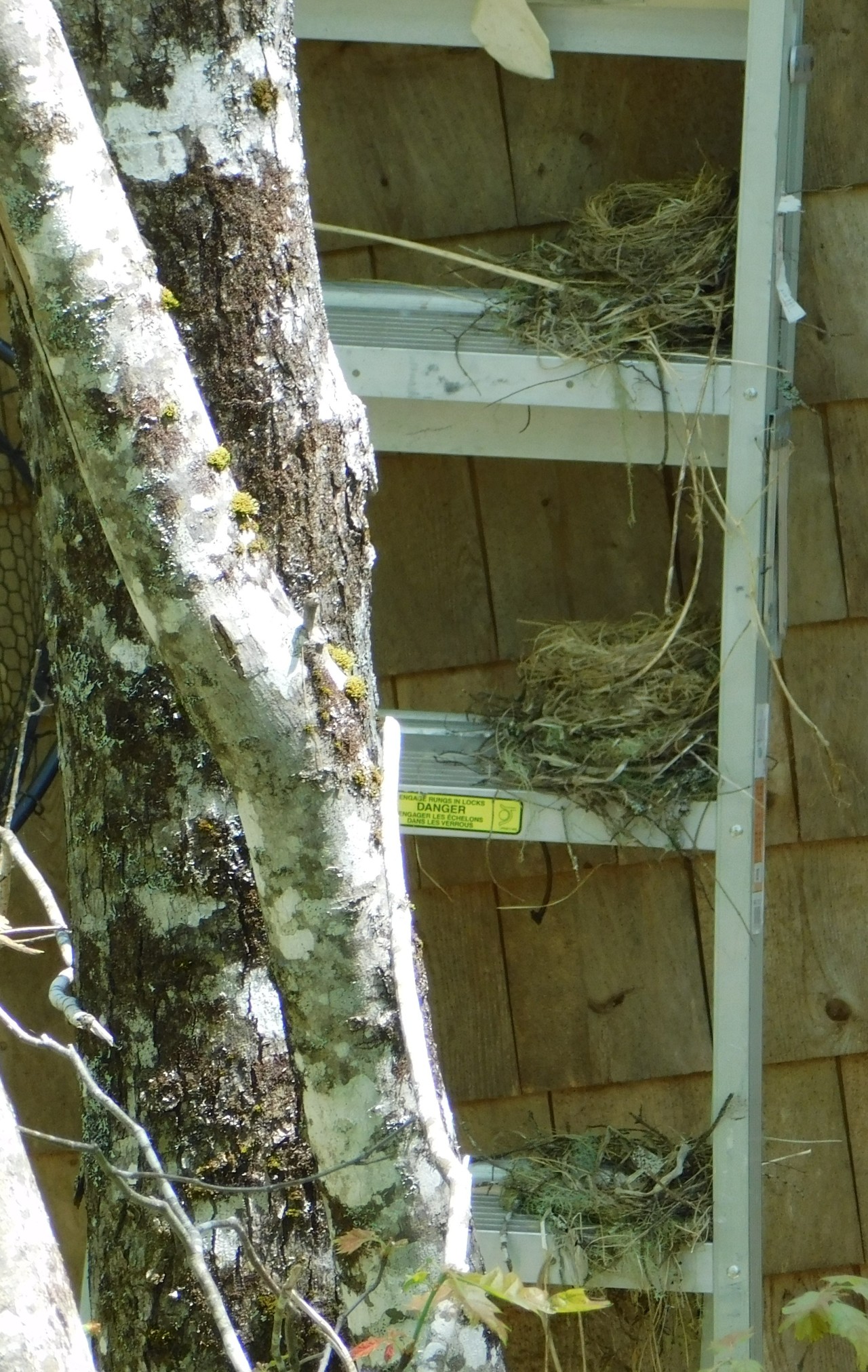
three robin’s nests
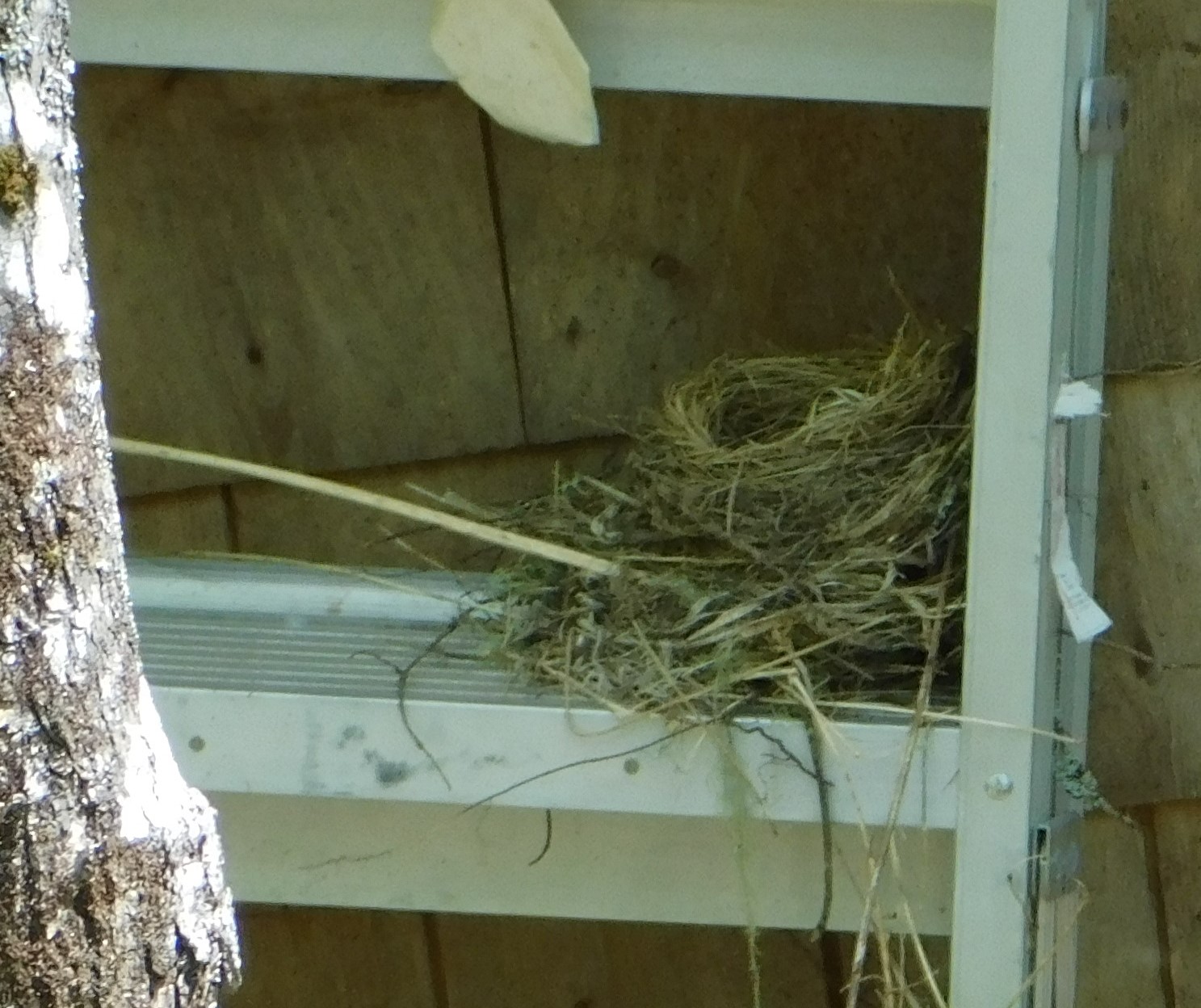
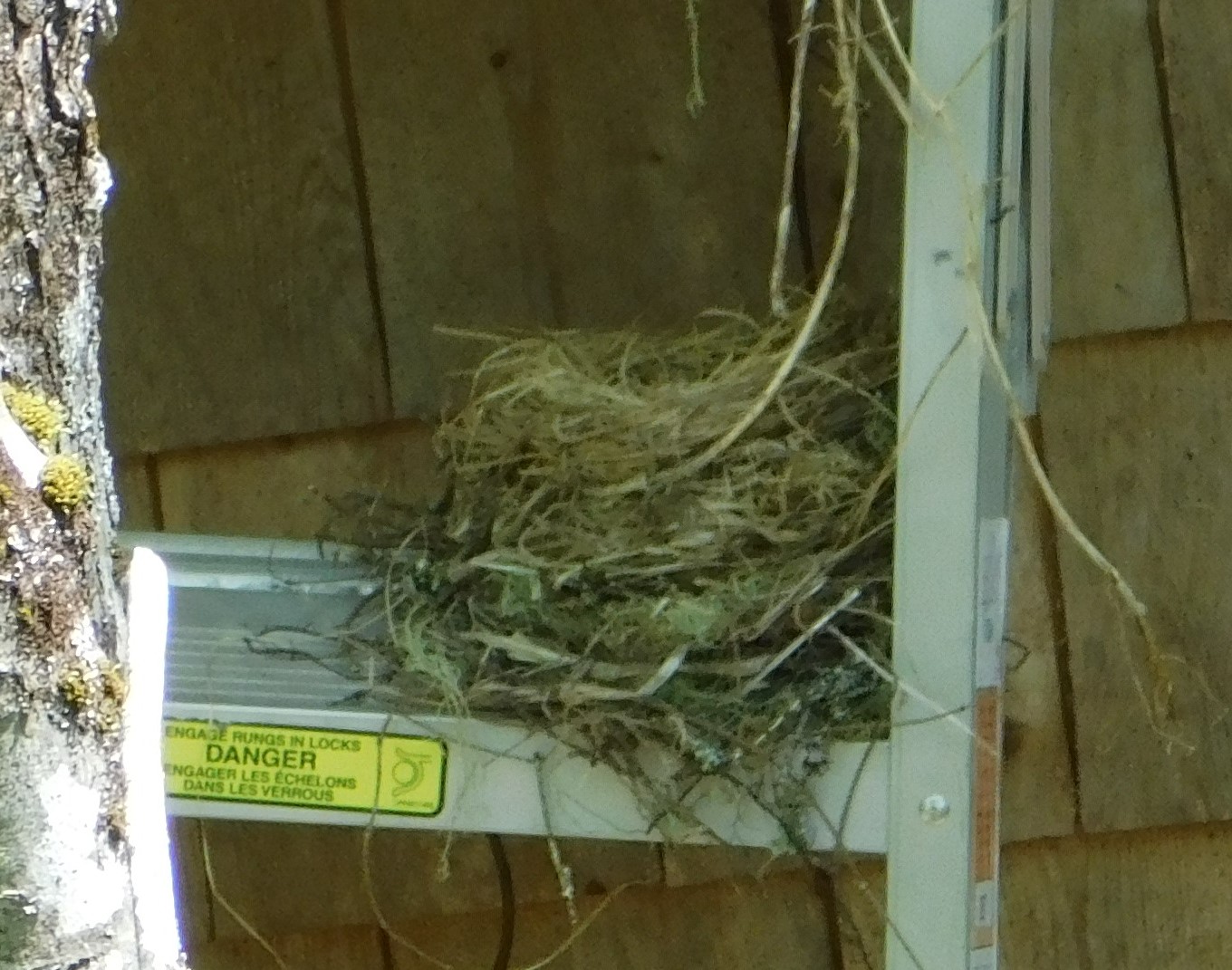
A robin has built three nests on the ladder leaning against our garage! The top two are well-formed and intact. The lower nest looks disarranged, as though construction was abandoned or a predator has pulled it apart.
~
~
Bird nests are built during a period of a few days using grasses and twigs, mud for a lining. They are used for incubation of eggs and brooding of young. Adult robins don’t use the nest as a bed, but roost on a tree branch. For a great description of how the nest is built, see allabout birds.org.
~
~
We have watched the nests on the ladder, but there is no sign of eggs or baby birds. Every day, we hear the robin singing nearby, ‘cheery, cheer-up, cheer-up, cheeree.’ I hear the robin singing as I type!
~
~
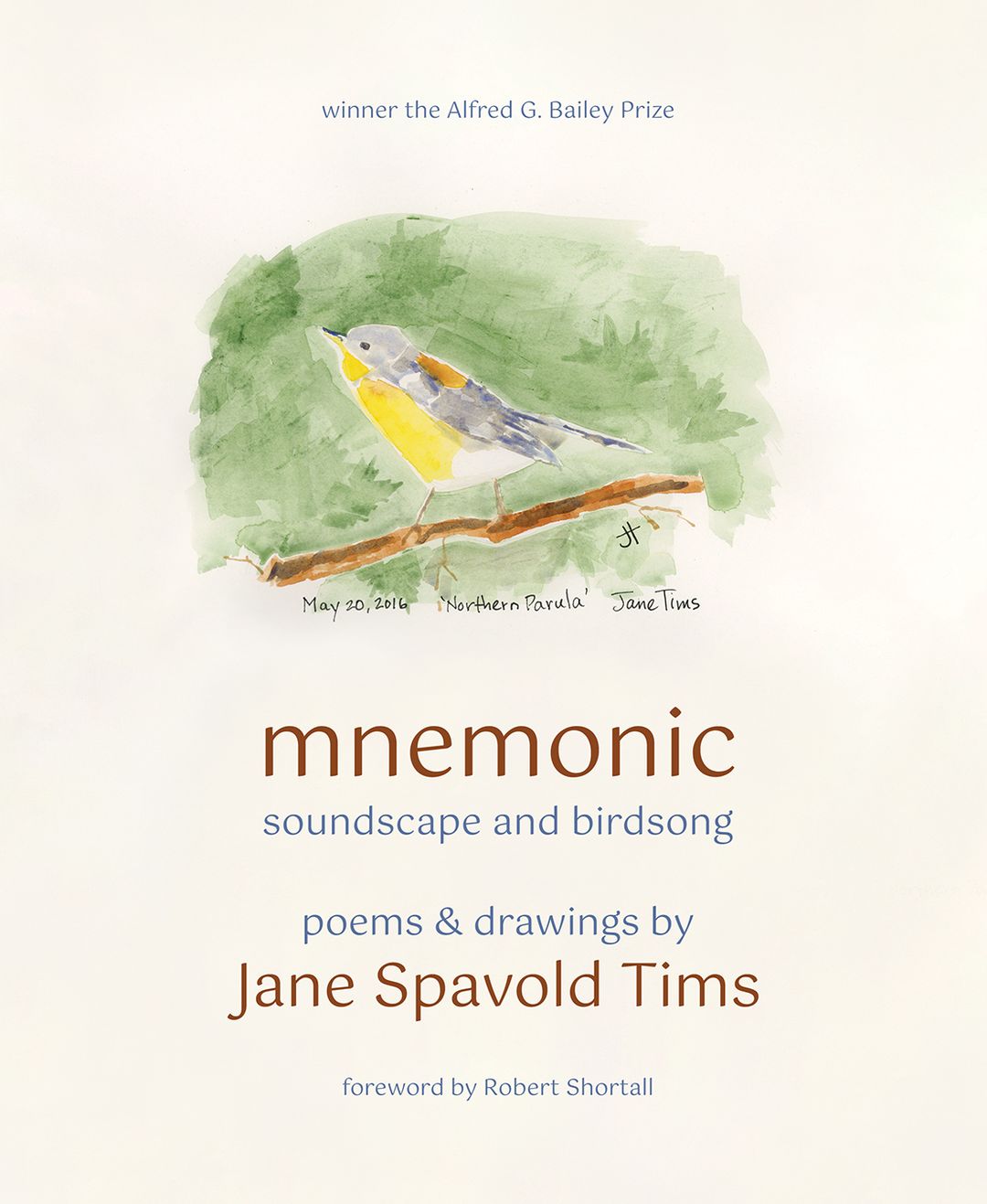
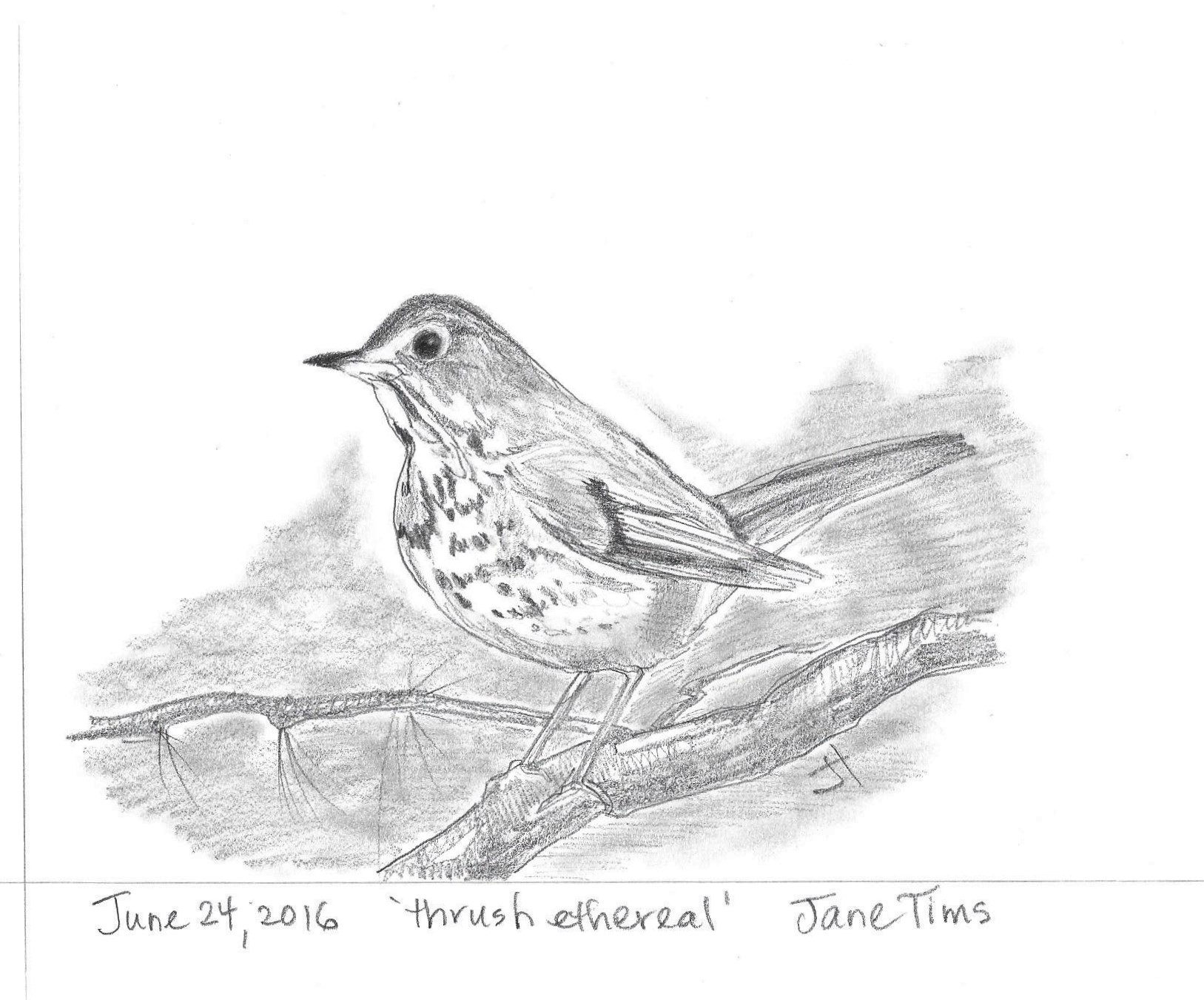
If you love birds and enjoy watching them through the seasons, you might like my new poetry book: ‘mnemonic: soundscape and birdsong.’ The book includes 53 poems about birdsong, bird behaviour, my experiences with birds, birdsong as a life metaphor, and celebration of other sounds in nature. I have also included 15 of my black and white drawings of birds. To get your copy of the book, click here to go to Chapel Street Edition’s (the publisher’s) website. If you would like to purchase the book on Amazon, click here. You can also find my book in several New Brunswick bookstores, including Westminster Bookmark in Fredericton and Dog Eared Books in Oromocto.
~
~
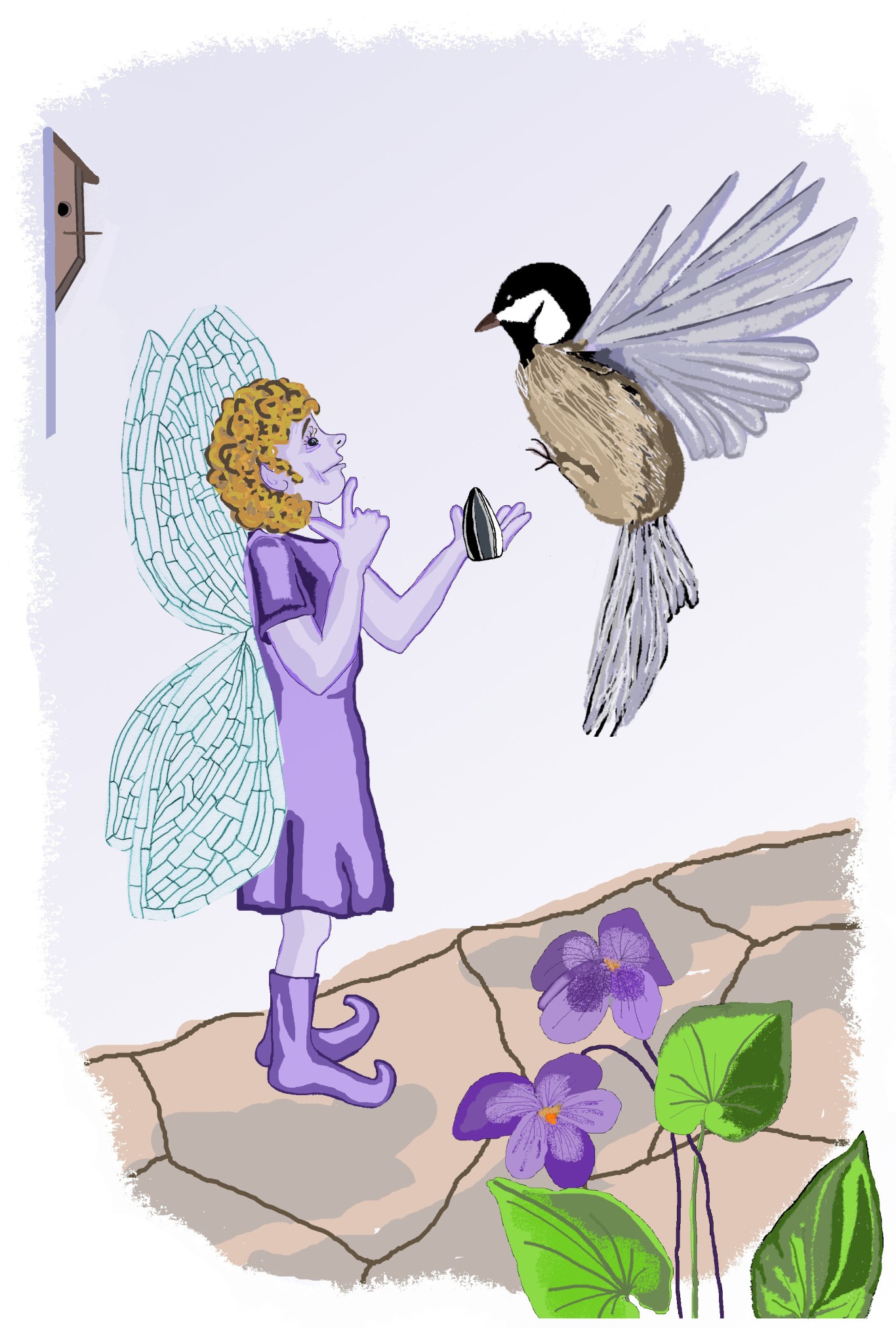
I want to write a story about the robin building nests in our ladder. I have decided to write a third book in my children’s books about ‘Wink.’ The first of these is ‘Wink in the Rain’ (available here), a story about a garden elf and his adventures in finding the perfect umbrella. The second book, ‘Wink and the Missing Sidewalk Chalk,’ a story of the hunt for a thief in the garden, will be published later this year. The story about ‘Wink and the Garden Ladder’ is written and I will soon be doing its illustrations.
~
~
Will our robin use the nests on the ladders to raise a family? I will keep you up to date.
~
All my best!
Jane
the rock project: plans for 2024
As I have said in past posts, one of our long term projects on our property has been to develop a woods side road to be a turning loop for the driveway and an easy walking trail for me.
~

~
This year, I have three things to do to move the ‘rock project’ a little more towards completion.
~
1. Clean-up of wind storm debris:
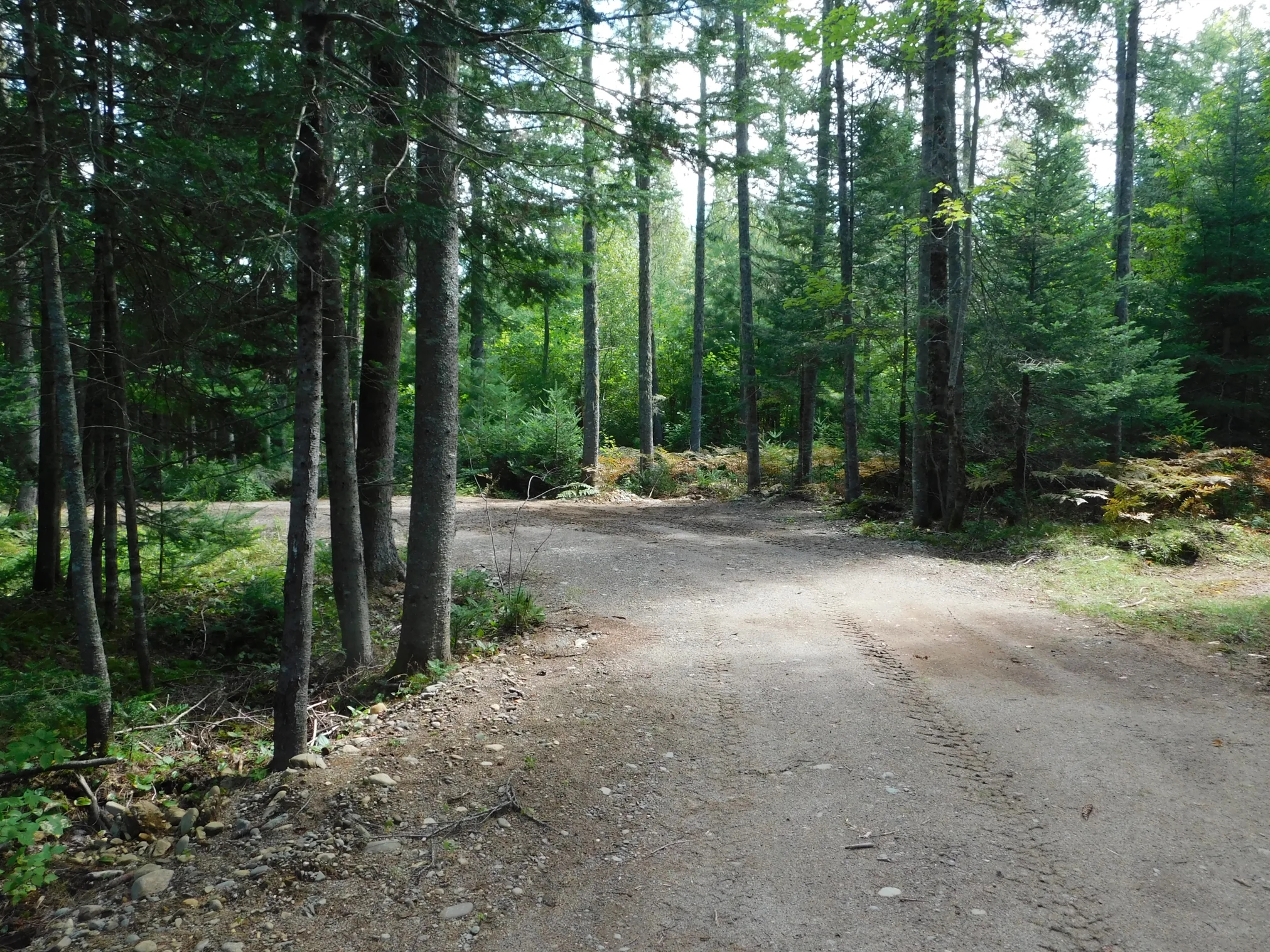
- Over the past winter, we have had a couple of storms that made a shambles of our ‘walking loop.’ After the wind storm on December 18 and 19th, 2023, we had 18 softwood trees fall across the roadway! After a little chain saw work, the roadway is clear again, but it may never return to the tidy woods we once had. I am a biologist and I realize that trees are always falling in the forest, but I think we will do some clean-up. Just putting branches and bigger tree chunks into brush piles in the woods will suit me well, because I know animals will use a decaying pile for shelter and habitat. My plan is to gather stray branches and sticks when I go for my walks around the ‘loop.’ I will deliver them to a convenient brush pile and get my exercise at the same time.
~
~
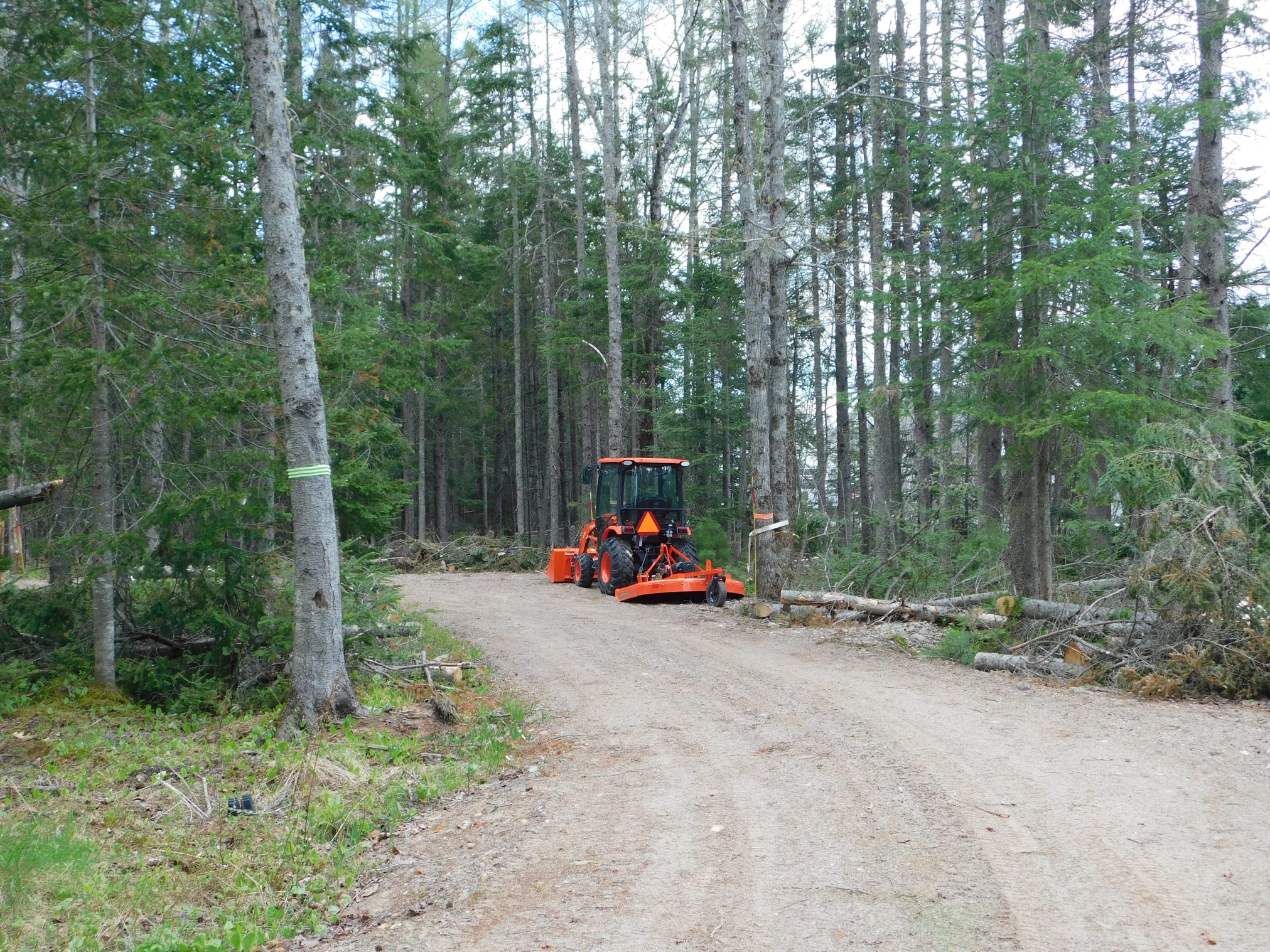
and to the right
~
2. Collection of a few more rocks for the rock wall:
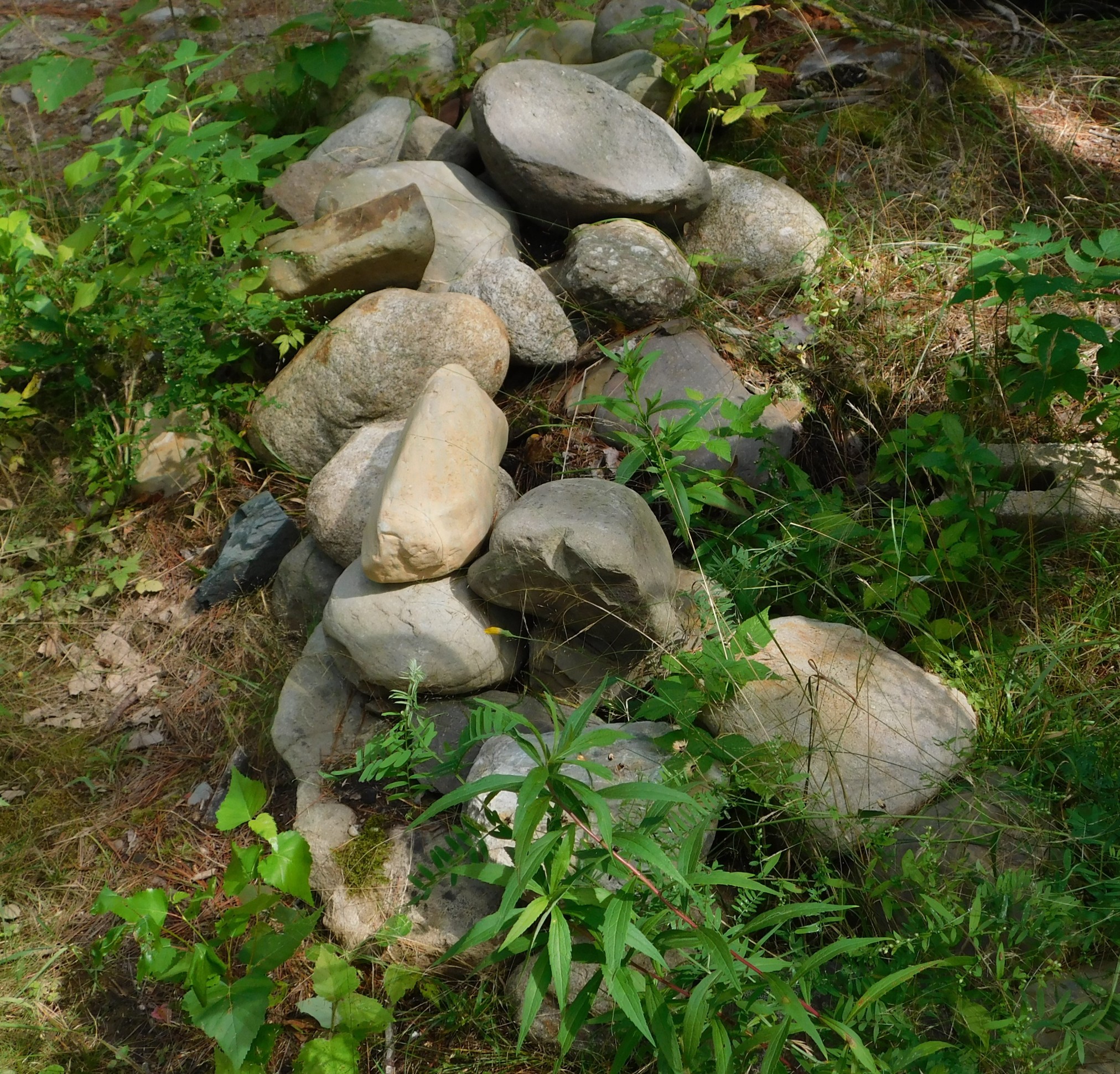
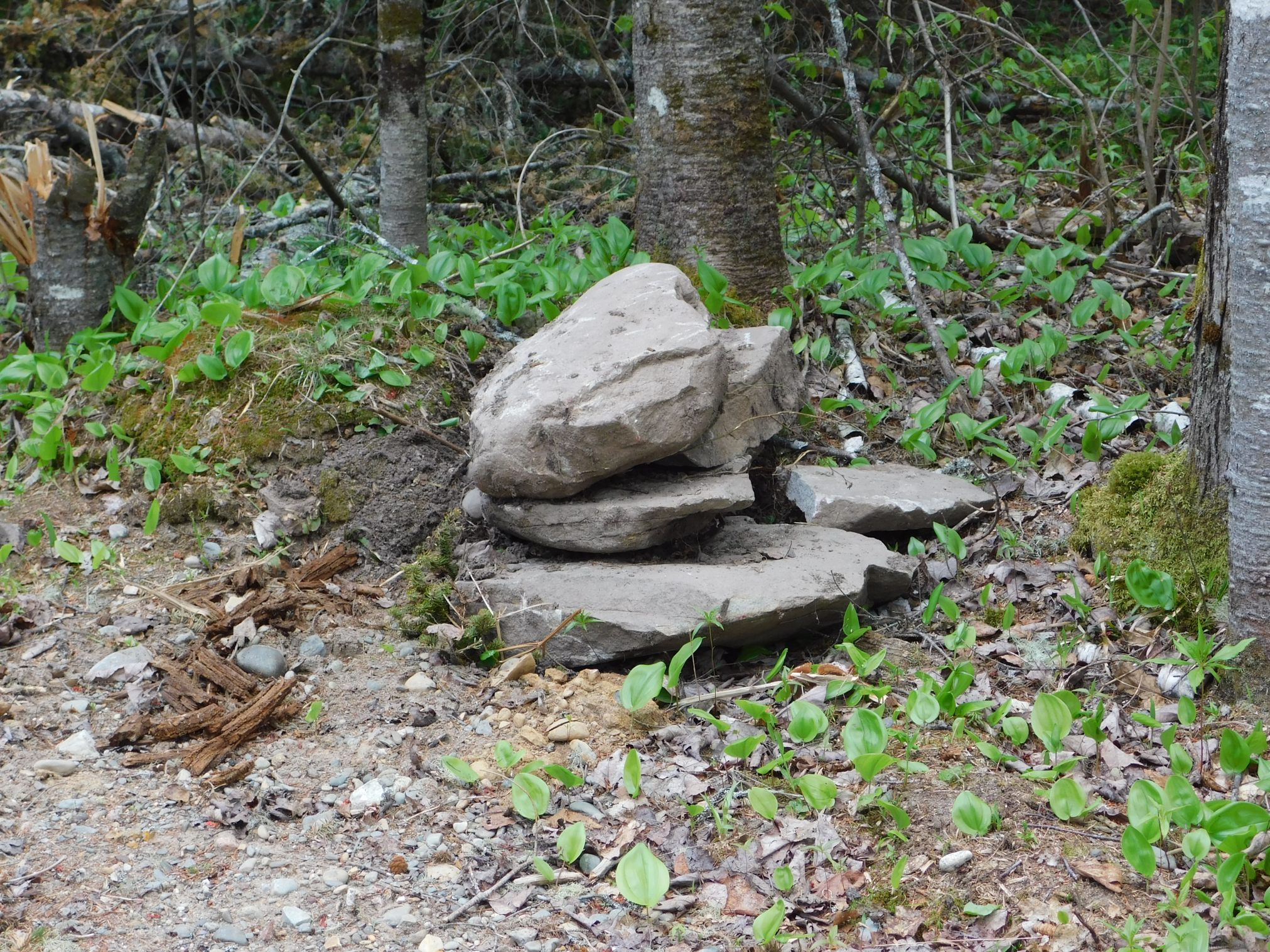
- On every drive we take, I bring back a souvenir rock from a ditch, a bit of landscape to contribute to our ‘rock project.’ I have always loved aspects of geology. I understand the role of landscape, and geomorphology in our lives. When we go on drives, we think about the terrain we move within. Since New Brunswick has a glacial history, I know that elements of landscape have glacial origins … small hills are parts of eskers, the sediments once deposited by rivers and streams flowing within a melting glacier. Some elements of landscape display a sedimentary history … as we drive, we see cuts through bedrock, exposed when the highway was built. The rocks we collect remind me of our many drives through the New Brunswick landscape.
~
~
~
3. Continue creating interesting stops along the walk:
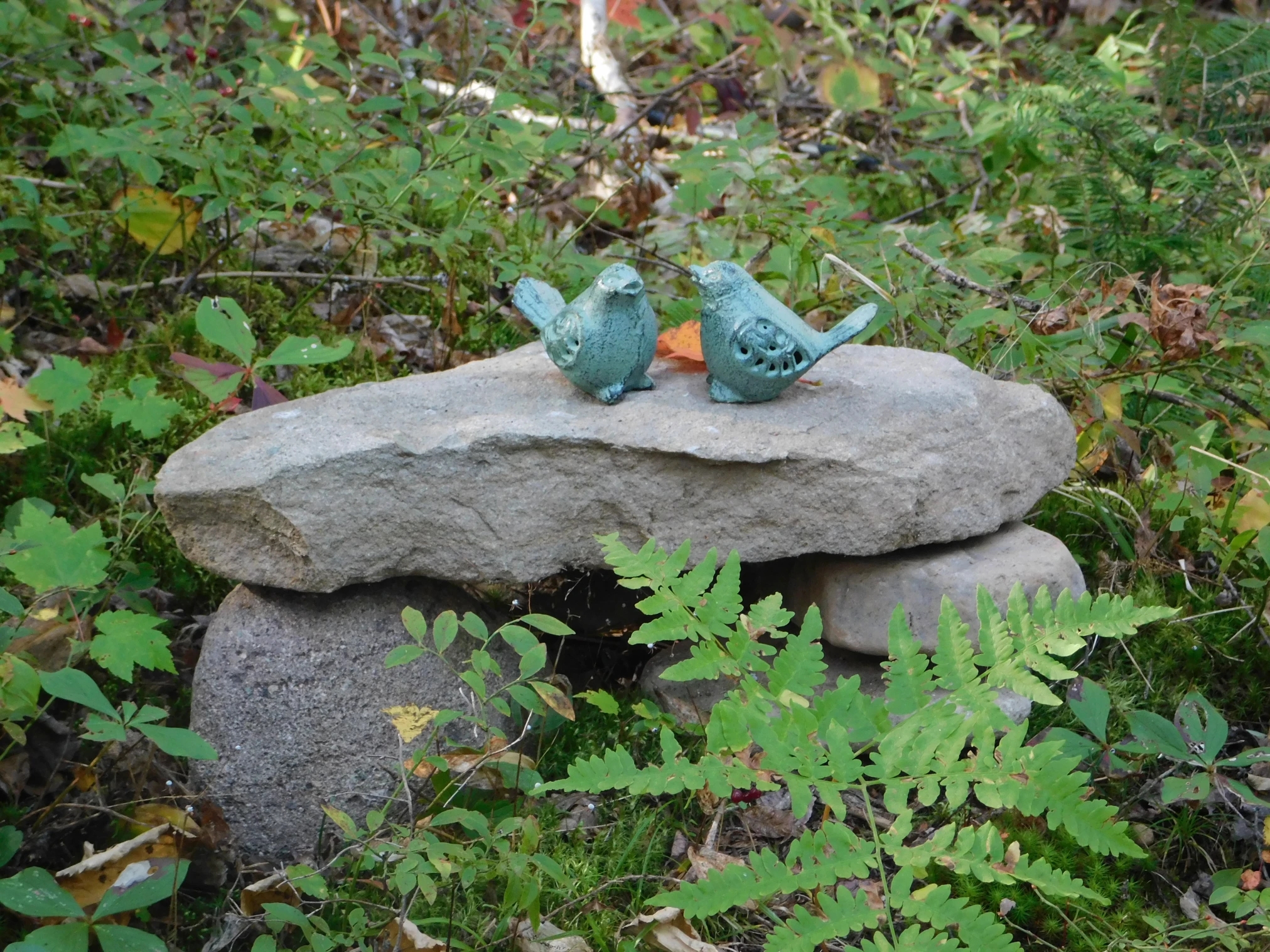
- this year we want to purchase a concrete bench for the loop, at the half-way mark. I have my name for one at Scotts Nursery, to arrive in a week or so. I also want to improve the small stone pile where my iron lantern sits to make it more like the stone platform I made last year for two small meal birds.
~
~
If you would like to see more about the history of our ‘rock project’ have a look here.
~
All my best!
Jane (a.k.a. Alexandra)
drear November: Project #3 – preparing a new trail
A week ago, my husband gave me this year’s Christmas present – a new length of trail for us to walk. He flagged some trees to open up an old trail in our grey woods. Then he hired some local men to fell the trees, cut them in four foot lengths, and set them to the side of the trail. Today he was out with the tractor, taking out some of the high spots.
~
Last weekend, he took me for a walk to scope out the new walkway. It’s still very rough but you can see the final trail if you use your imagination. Over the winter and next spring, he will clear the stray branches, smooth the bumps, and fill the hollows. The trail is 750 steps from beginning to end. It loops the back half of our acre lot and extends to an old road on the property behind us which we also own..
~

~
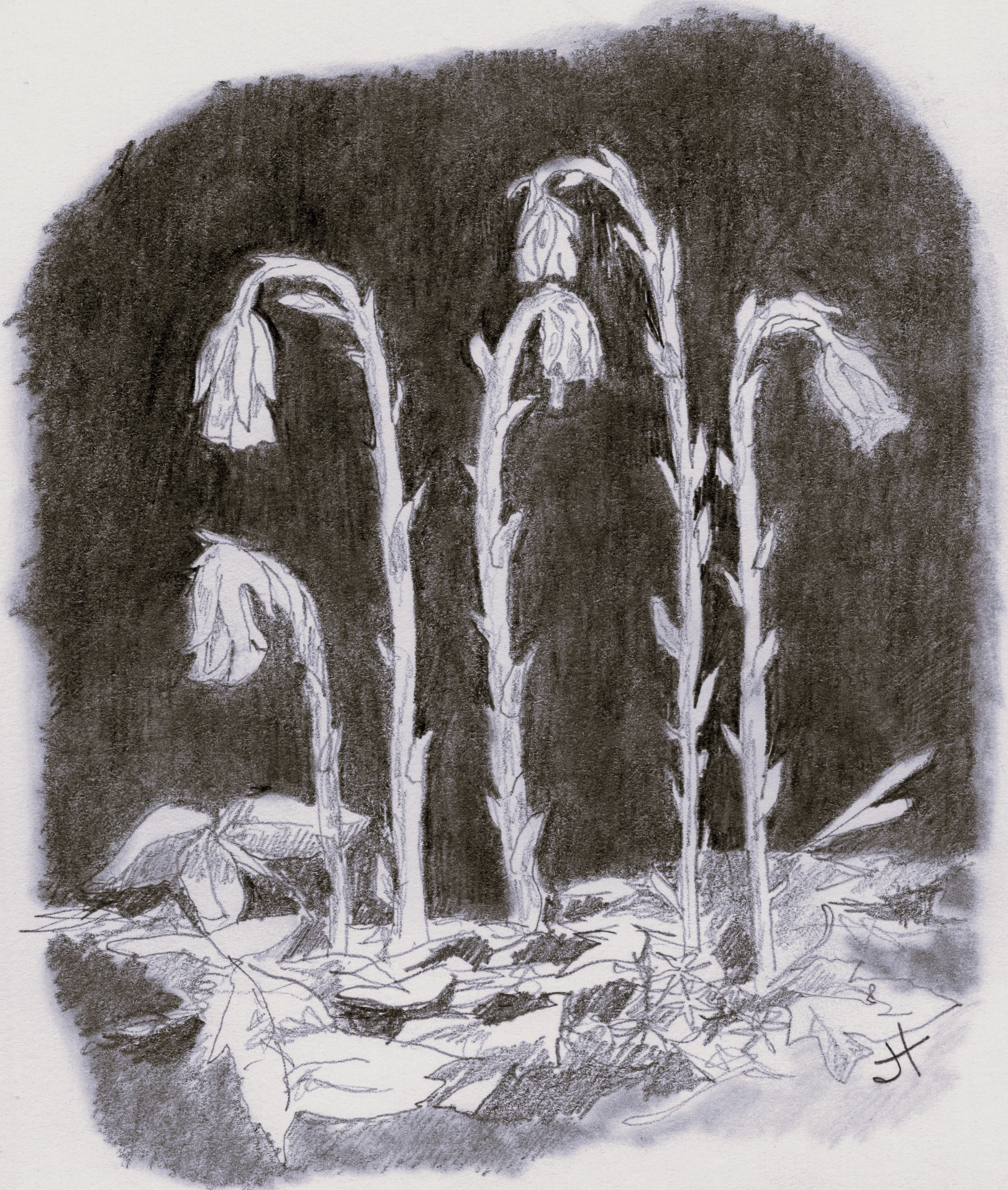
One of my favourite parts of the trail is a small clearing I visited with my Mom years ago. She found Ghost Pipe, also called Indian Pipe (Monotropa uniflora), growing there. This is an odd plant that does not contain chlorophyll. It is white in colour and the flower has between 3 and 8 waxy white petals. The flower occurs, as the name suggests, at the top of a stem bent like a pipe. Mom loved her find so much, she put a ring of shingles around the plants to protect them from trampling.
~
~
In later years I have visited the site regularly although I have never seen the Ghost Pipes again. A few years ago, I put an iron bird feeder there on the surface of a big hardwood tree. The feeder has the image of Saint Francis of Assisi.
~

~
I think of this little grove as ‘Mom’s Park.’ My mom has been gone more than 20 years but her love of plants, and her aim to protect them, is with me every day.
~
I have written about Mom’s Park in the past ( here ) and repeat the poem I wrote for that post here:
~
ghost pipe
~
in grey woods
Saint Francis
cast in iron
watches wild
life pass by
~
red squirrel
ceaseless jitter
white-tailed deer
pauses, listens
a chipmunk
runs the log
fallen tree
~
time also
passes by
Aralia
and bracken
replace white
ghost pipe, once
grew here, all
nature a mirror
of our lives
~
When the path is more defined, I will put a small bench in Mom’s Park where I can sit and enjoy our grey woods.
~

~
With this post, I will thank my husband for such a thoughtful gift. These days, walking in our woods is synonymous with keeping up my health. But our grey woods will always be my favourite place to meet with nature.
~
All my best,
Jane (a.k.a. Alexandra )
the rock project – update
It sometimes takes years to make progress on a project. That has certainly been the case with ‘the rock project,’ begun November 2011 and reported here https://janetims.com/2011/11/13/plans-for-a-rocky-road/
~
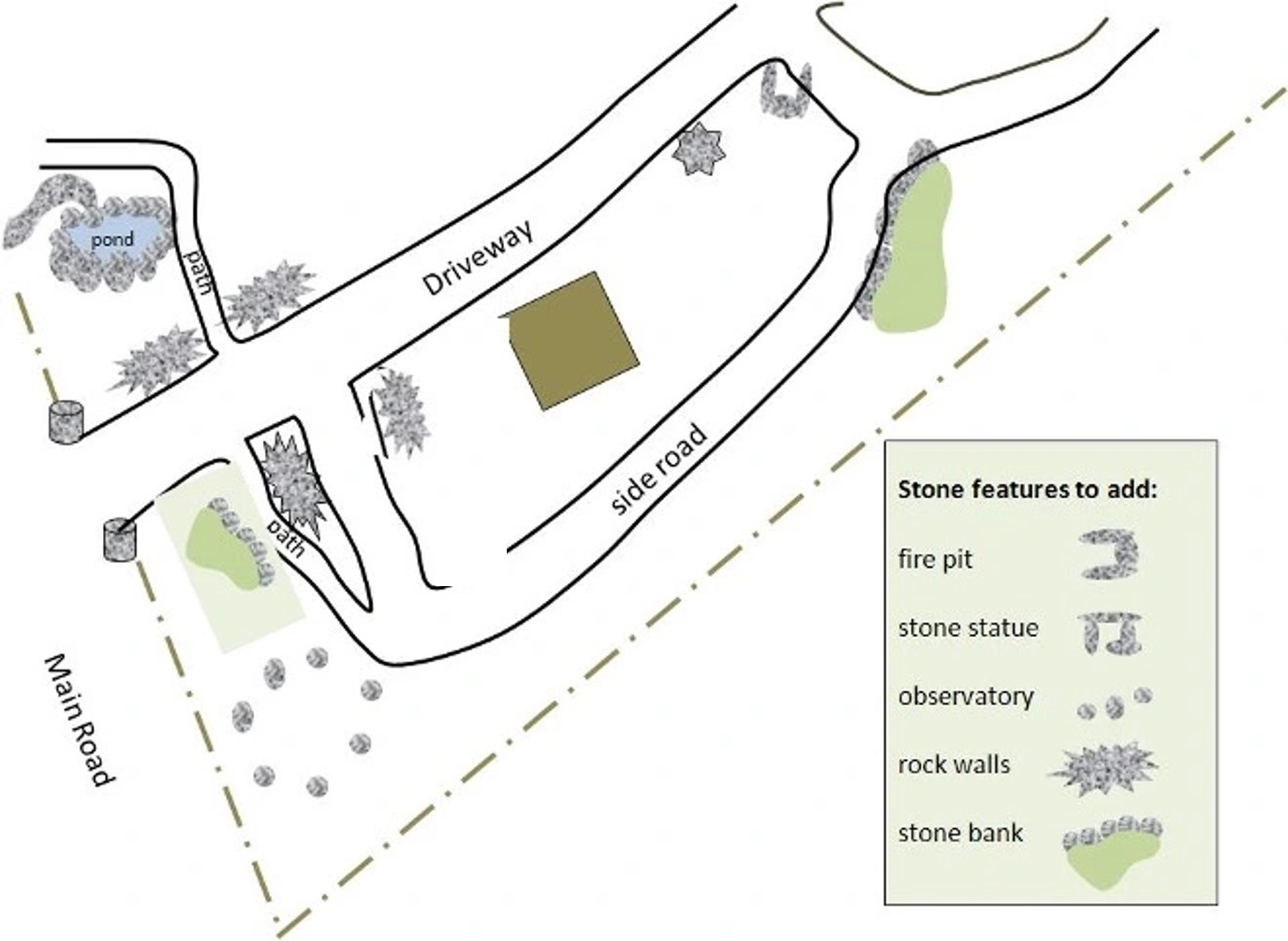
The original project was to add a circular component to the driveway and to install a few rock features along the way. In part, this was to allow us to avoid backing out to the road in front of our house. It was also meant to give us an interesting walking ‘trail’ as we get older. This was the feature map as it existed in 2011.
~

~
Over the years, we built a rock fireplace and added a concrete bench. And, last summer, we brought in gravel and rock to finish the circular roadway and a rock feature I refer to as ‘rockhenge.’
~

~
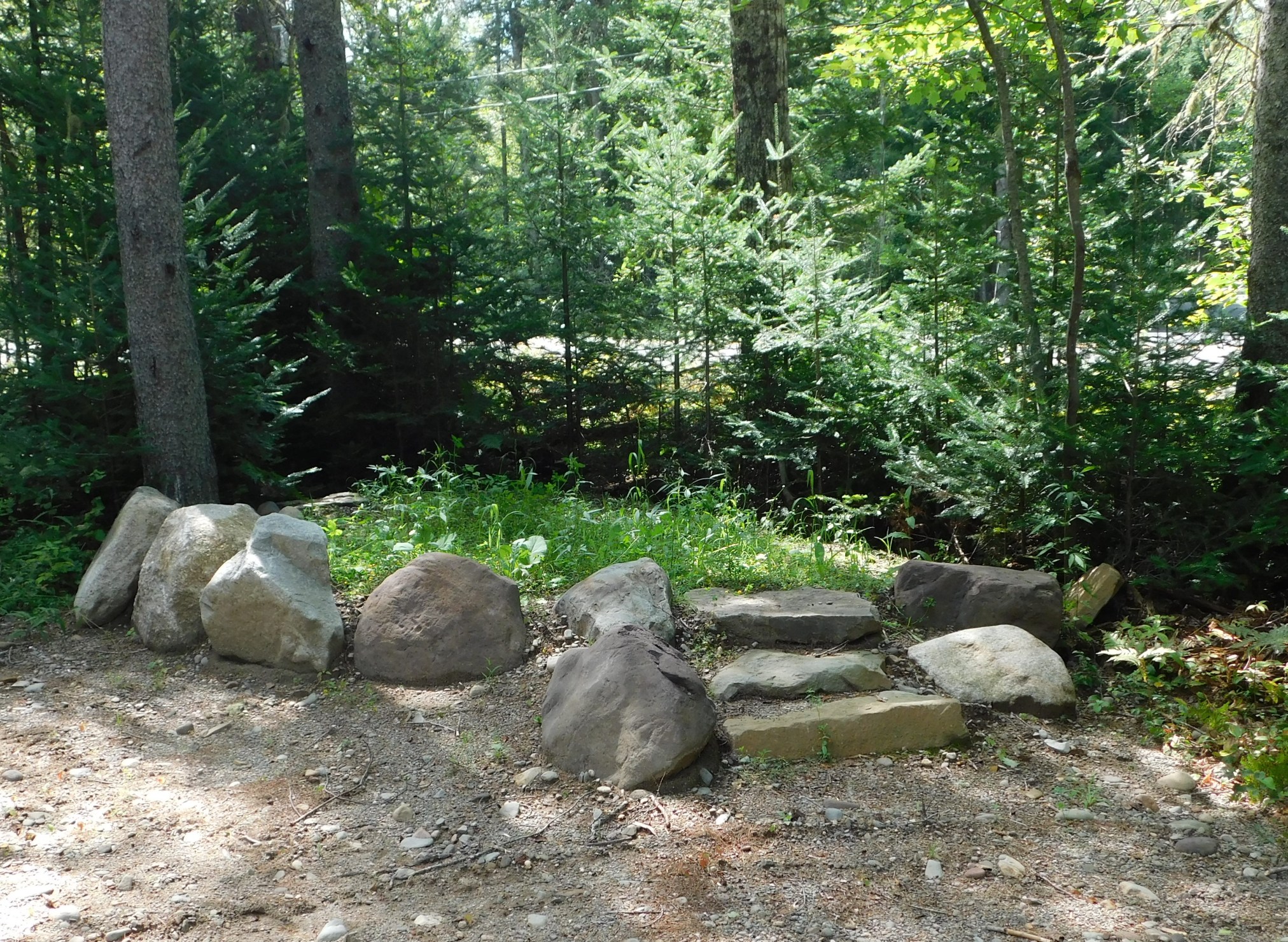
‘Rockhenge’ consists of a platform, fronted by six very large rocks and accessed by a stone stair. Eventually it will be planted in periwinkle and moss.
~
The roadway allows a pleasant walk in the grey woods.
~

~

~
Now that the road is done, we have more plans for the rock project.
~
~
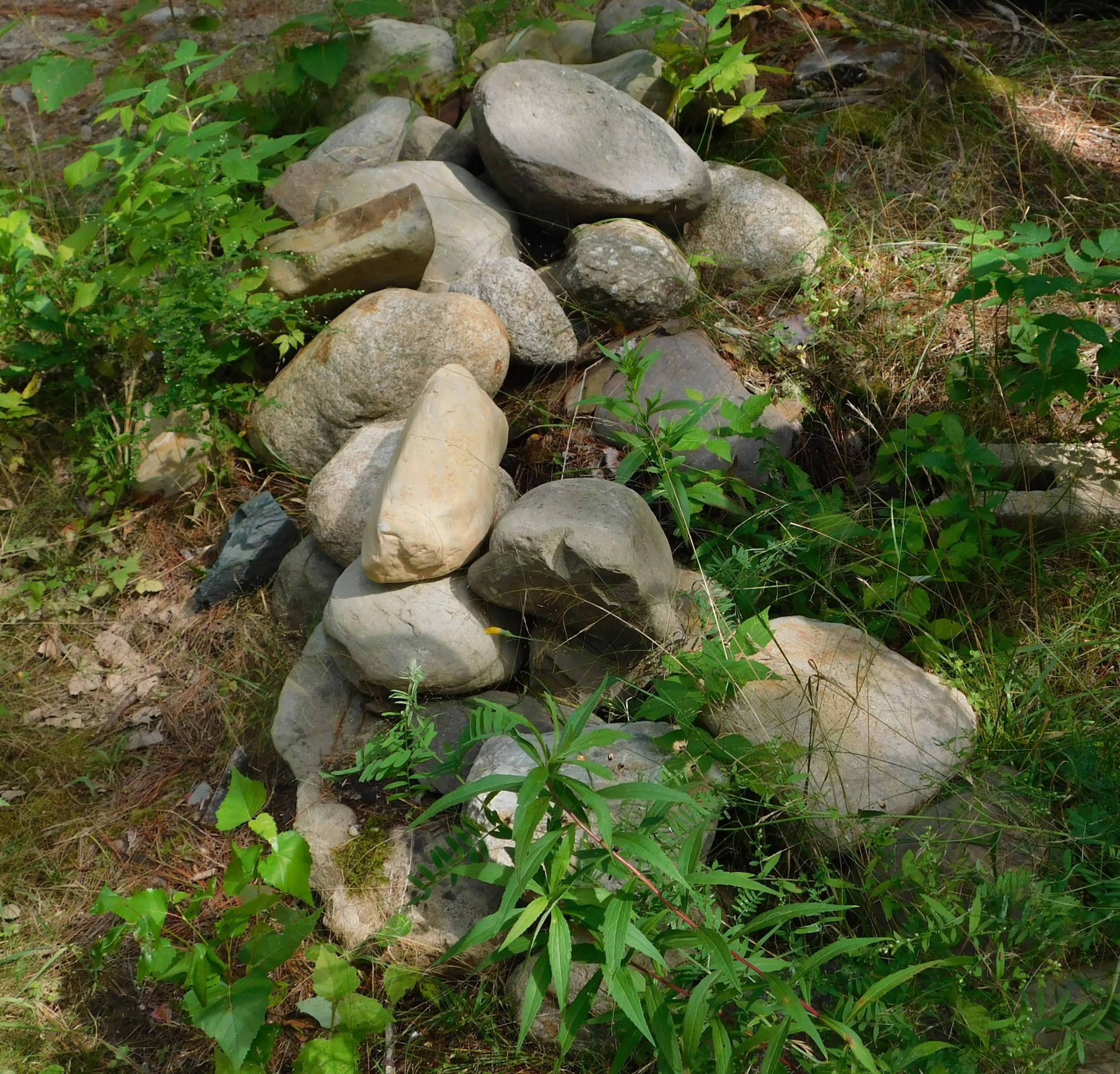
This summer, every time we go for a drive, I bring back one or two rocks towards the building of a stone wall along the front of the area where I feed the birds. I also added two small solar-powered lanterns; they shine every night and make the woods less dark.
~
The next step in our project has begun, with the creation of a small platform, a flat surface to put another concrete bench. It will be a place to sit and watch the woods and occasional wildlife.
~

~
A future part of the plan will be to build a narrow roadway through the grey woods, to the back of our property.
~

~
Not having to back out of our driveway has made life better and safer for us. The circular drive is also an exercise opportunity — every day I try to find the time to walk the loop. Every evening I watch the little lanterns flicker and shine. I love this place where we have lived now for 43 years. And with the ‘rock project’ ongoing, I love it even more.
~
All my best,
Jane
(a.k.a. Alexandra)
Taking part in the Nature Conservancy of Canada’s ‘Small Acts of Conservation’
As part of an effort to enjoy these last days of winter and take a mindful approach to experiencing winter-bound nature, I have joined the Nature Conservancy Canada ‘Small Acts of Conservation Challenge.’
~
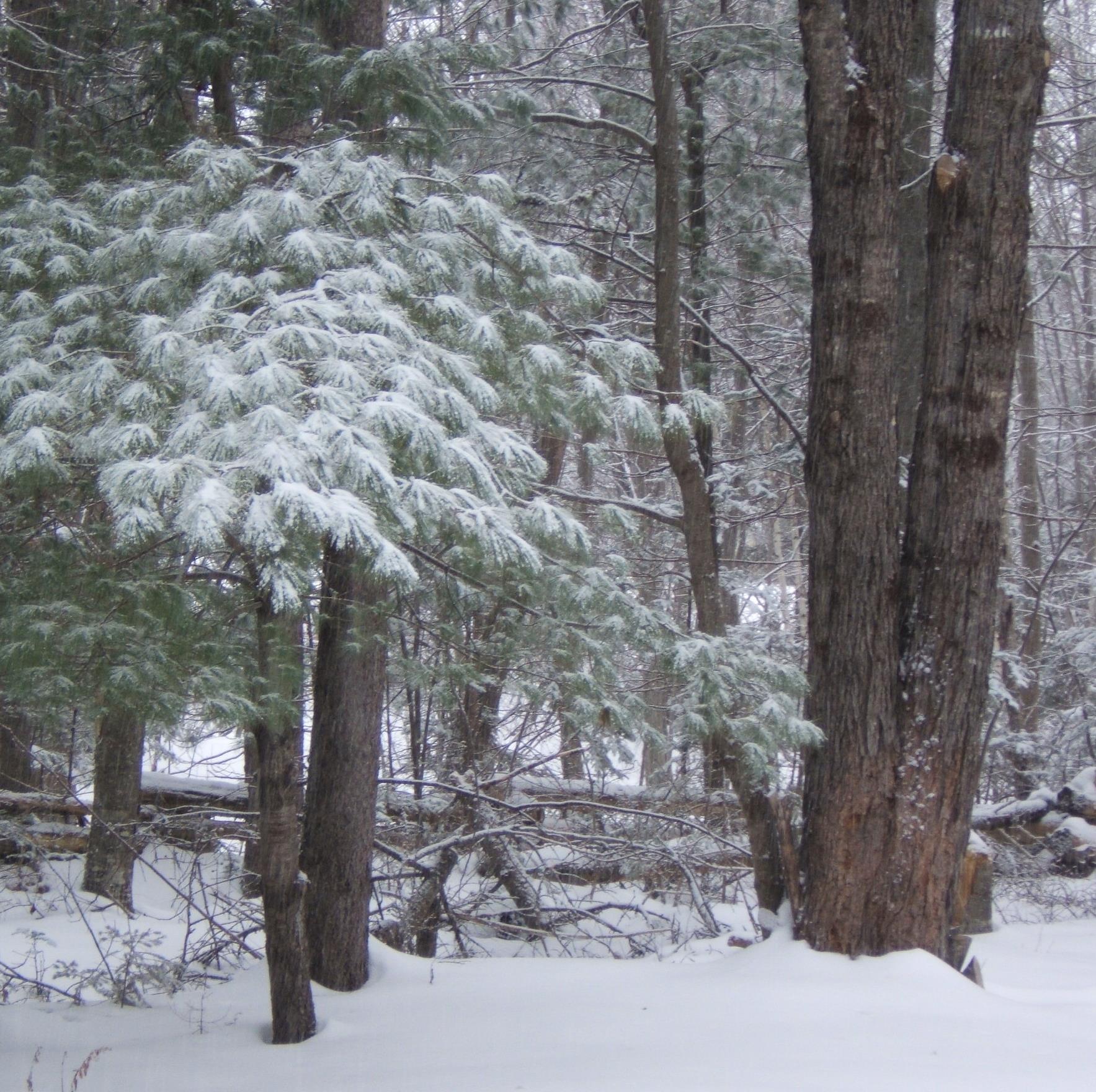
The first unit in the challenge is ‘Explore a Winter Wonderland.’ I don’t do as much hiking as I once did, mostly due to the arthritis in my knees. However, we have a large property and lots of opportunities to take a walk in winter.
~
One of my favorite short walks in the woods is a roundabout we completed last summer. The Rocky Road lets us turn around safely in our driveway. The roundabout is in the woods and driving through it is like a mini-exploration: there are birds to see since our feeders are nearby; there are always lots of animal tracks (deer, red and grey squirrel, mice, rabbit); in summer, we can see mosses, ferns, wetland plants, various shrubs and tree species (white pine, balsam fir, spruce, red maple and red oak).
~

~
Although the Rocky Road is part of our driveway, it is also meant as a hiking path where I can walk safely, using a cane or my walker if needed. It is part of the ‘rocky road’ project started many years ago and described on this blog https://janetims.com/2011/11/13/plans-for-a-rocky-road/
~
~
The first unit in the Nature Conservancy Challenge is ‘to follow trail etiquette and learn how you can stay safe during winter hikes.’
~
Before I took the unit, I brainstormed what I knew about rules for the trail:
- leave only tracks, take away nothing but photos;
- follow the trail and limit incursions into wild areas;
- move slowly and deliberately and do not fall;
- use all your senses — seeing, hearing, smell, taste, touch
- focus on the ground but don’t forget to look upward and outward.
~
~
The Nature Conservancy says:
- Enjoy the peace and quiet, and be respectful of others and the wildlife around you;
- Minimize your impact. Stay on the trail and pack out what you pack in;
- Respect nature. Take pictures only, and leave flowers, plants, rocks and wood behind for the enjoyment of others and for the integrity of the local ecosystem.
~
To help me with my explorations of our rocky trail, I have found my book on identifying animal tracks in winter. Next time, I’ll follow the Nature Conservancy’s suggestion to use iNaturalist to help identify plants and animals I see on the trail.
~
All my Best
Jane
Tree down!
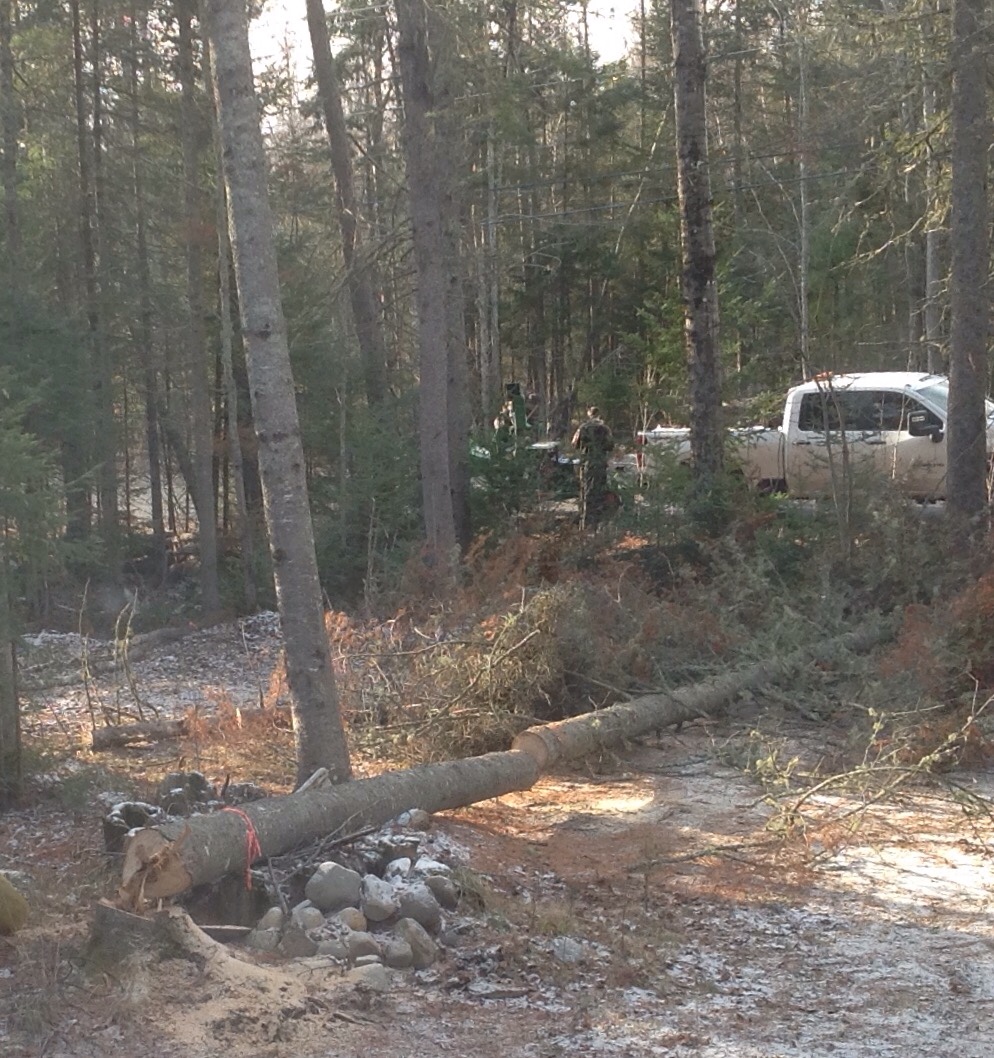
Today is the first day in a long time I have not written a line. I am preoccupied, watching as a local company removes some trees from our yard.
~
Some of these trees were already down but have been decorating our ditch since a storm last winter. One tree was still standing.
~
The standing tree, a big old spruce, worried me. In last week’s wind storm, the top of it broke and flew like a javelin to land in our front yard. The rest of it was dead and leaning towards the house and power lines. It stood at the corner of our shed.
~

the tree last winter
~
The men working knew what they were doing. They tied the tree in the direction they wanted it to fall. They used our tractor to reach high into the tree to brace it in the required direction. Then the tree cutter did his cuts. And the tree fell exactly where he planned. We will be getting ‘The Bushwackers” to do some more tree cutting here.
~
~
I am still too wired to write.
~
~
All my best,
stay safe,
Jane
mayflowers
In spring it is always fun to put all your senses together and search out the elusive mayflower, also known as trailing arbutus. Epigaea repens grows in the open woods where I live. You usually have to search for the trailing leaves and lift them to find the flowers.
~

~
touch: the leaves are furry on the underside and smooth above; the petals of the flower are waxy.
~
smell: the flowers are fragrant with a sweet, almost heady perfume.
~
sight: the flowers are white to faintly pink; leaves are green with coppery brown surfaces and edges.
~

~
Trailing Arbutus
(Epigaea repens L.)
~
on the slope, new leaves
Trientalis, Gaultheria
Star-flower, Wintergreen,
vines of Partridge-berry creep
Maianthemum unfurls
~
beneath the din, a melody
weeps Epigaea, evergreen
pressed to the hillside
leather armour, thickened leaves
weather-beaten, worn
~
waxy bloom resists
subtle shadow
predator
unrelenting rain
~
~

~
all my best,
staying at home,
Jane
talking trees

~
~
trees in conversation
~
they say
if trees communicate
they do so
beneath the ground
communication network
of rootlets
and mycelia
~
I still listen
above ground
to the friction squeal
of trunks
rubbing together
flutter of birch bark
whisper of leaves
~
I think they try
to learn my language
speak to me
of longevity, the cycle
of the story in layers
added year to year
bilingual trees
~

~
~
All my best,
Jane
Waiting for wild life to pass by
Back in our Grey Woods is a tiny ‘park’. Just an area I try to keep clean of dead-falls. Years ago, my Mom loved this little area. She found ‘ghost pipe’, also called ‘Indian pipe’ (Monotropa uniflora), growing there. These are parasitic plants without chlorophyll. They are small, less than 20 cm high. The ‘pipe’ is an excellent descriptor since a plant consists of a nodding head on a slender stem.
~
My Mom tried to protect these uncommon plants from trampling by putting shingles in the ground to mark the location.
~
The ghost pipes no longer grow there. The shingles have rotted and disappeared. Change is inevitable and in this little park, change is likely related to nutrient conditions. My Mom is also gone but I keep the little park to remember the day she tried to save the ghost pipe.
~
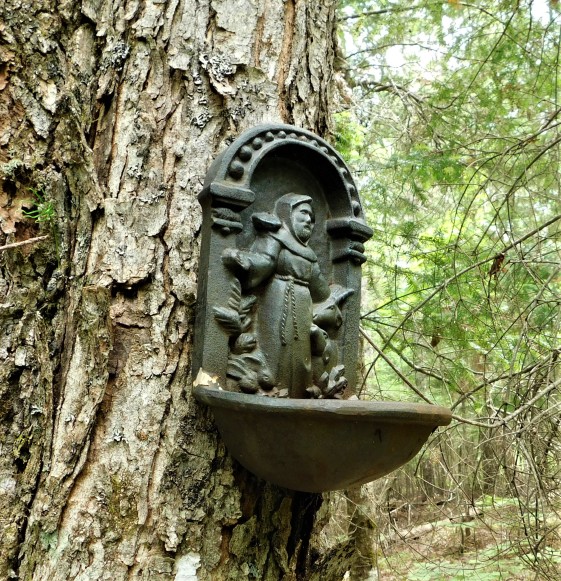
One addition I made to the area is a small bird feeder. I installed the feeder on an old red maple tree. The feeder is painted iron, moulded in the form of Saint Francis of Assisi. Saint Francis lived in Italy at the turn of the thirteenth century and is known for his love of animals and the natural environment. He believed nature was the mirror of God and the animals were his brothers and sisters. He even preached to the birds (Source: Wikipedia).
~

~
ghost pipe
~
in grey woods
Saint Francis
cast in iron
watches wild
life pass by
~
red squirrel
ceaseless motion
white-tailed deer
pauses, listens
a chipmunk
runs the log
fallen tree
~
time also
passes by
Aralia
and bracken
replace white
ghost pipe, once
grew here, all
nature a mirror
of our lives
~
~
All my best,
Jane
Pileated Woodpecker excavations
The Pileated Woodpecker (Dryocopus pileatus) is a common visitor in our yard. The size of the woodpecker and its triangular red crest are impossible to miss. The male also has a red stripe on the side of its face.
There is a big spruce tree in our grey woods where the Pileated Woodpecker loves to visit. The hole in the tree and the pile of woodchips below the hole say this woodpecker has been very busy. The woodpeckers drill these holes to get insects.
On a drive to see the Smyth Covered Bridge near Hoyt, New Brunswick, we found a roadside tree with evidence of the Pileated Woodpecker’s industry. The holes are almost a foot in length and deep enough to hide a hand.
~

~

~
To humans, the best forests may seem to be woods with healthy trees. To provide good habitat for the Pileated Woodpecker, a forest should have lots of dead and fallen trees, to provide food and nesting sites.
~

~
Copyright Jane Tims 2018




 nichepoetryandprose