Archive for the ‘growing and gathering’ Category
coastal barren, coastal bog
On our vacation to Nova Scotia last month, we revisited the Peggy’s Cove area near Halifax. I spent a lot of time along this coast years ago, but I had forgotten the unique wildness and beauty of this landscape.

We explored two habitat types, the dry and rocky barrens, and the wet coastal bog. As we found each new plant, I felt like I was greeting old and well-loved friends.
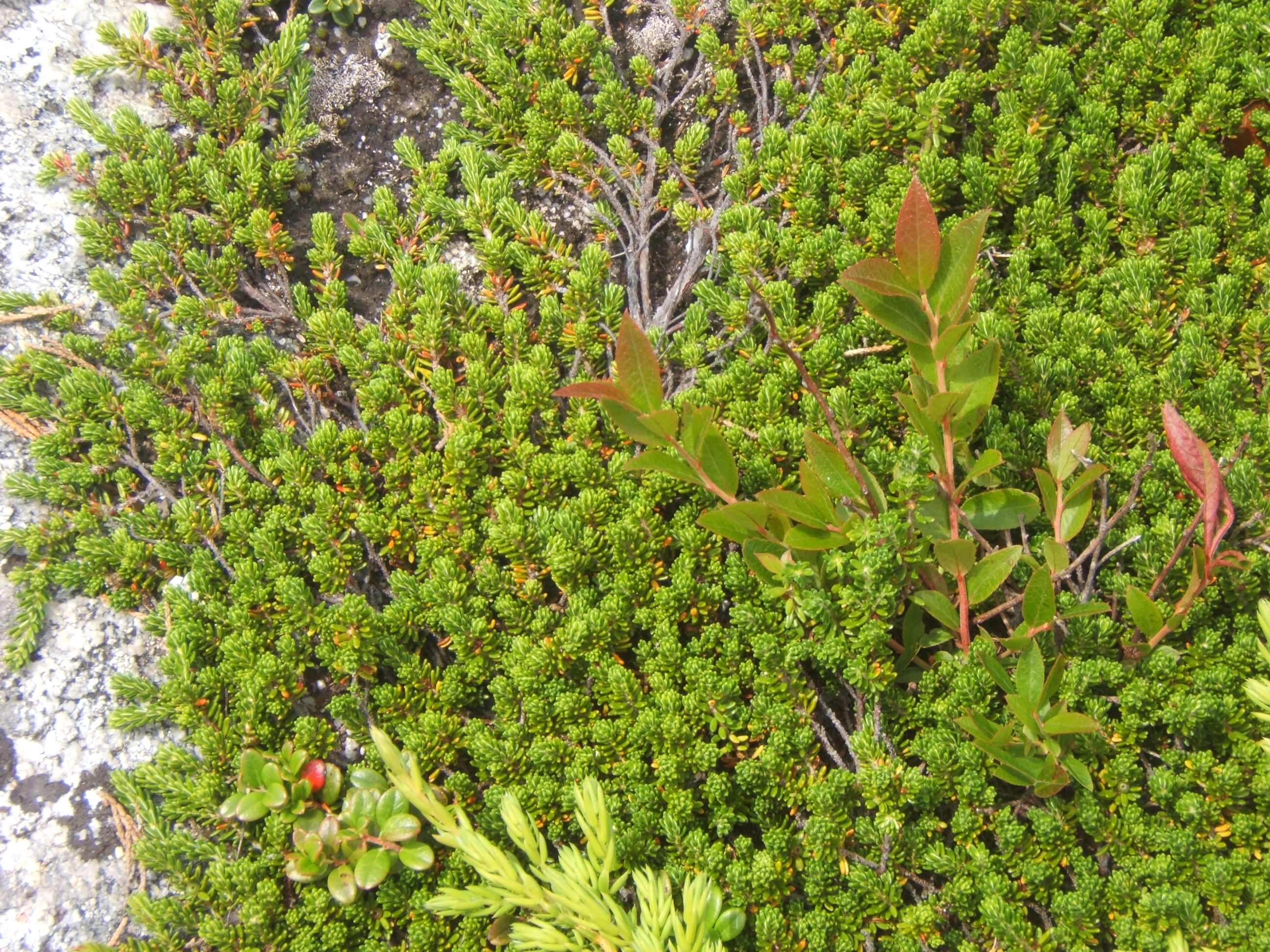
On the higher areas, growing in the thin soil on the bedrock were several species. One of these included Crowberry (Empetrum nigrum L.), a small moss-like plant with spiky leaves and small pink flowers. Later in the season, these will bear edible back berries.
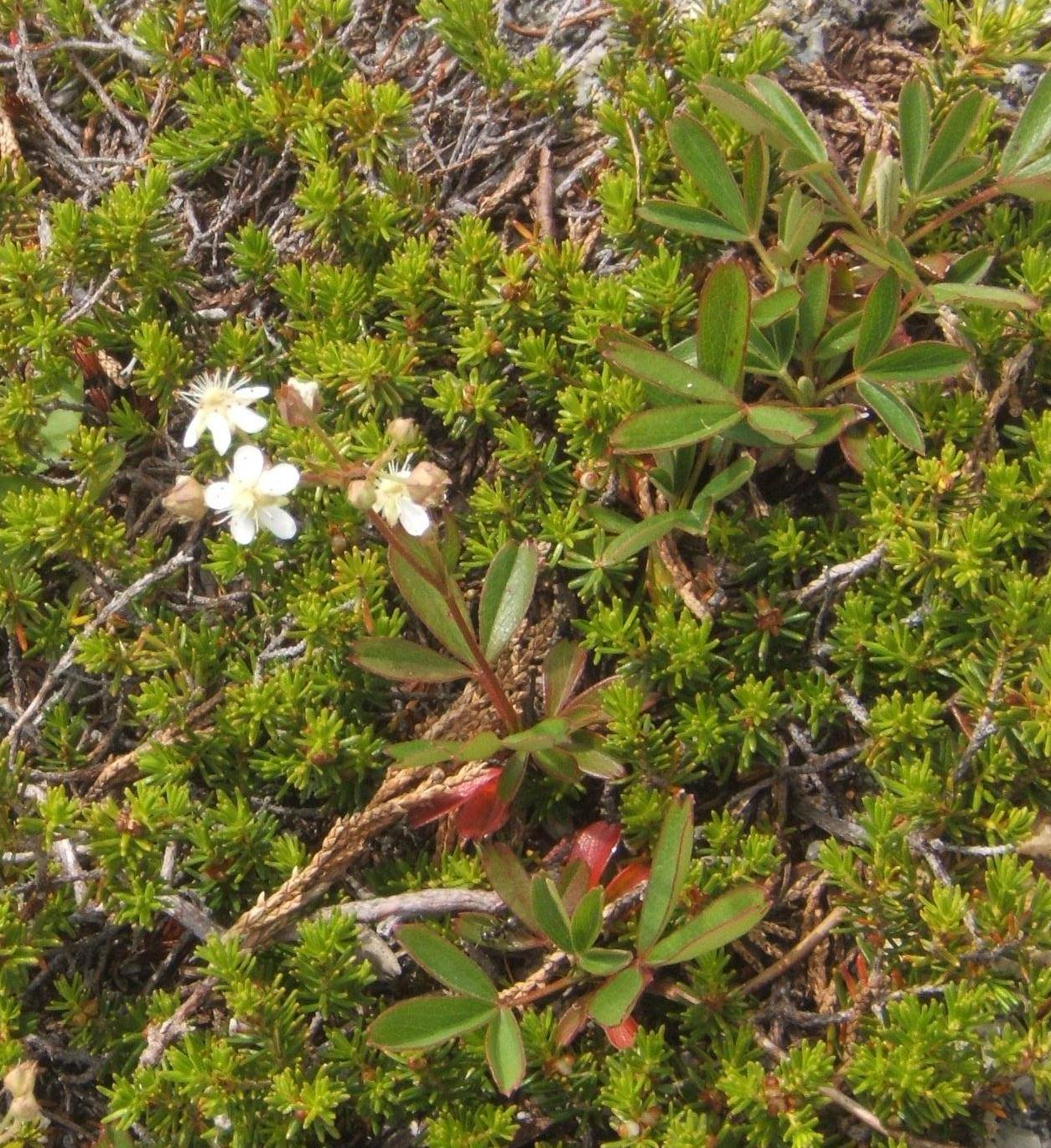
We also found Three-toothed Cinquefoil (Sibbaldia tridentata (Aiton) Paule & Soják) with its three leaflets and the characteristic three teeth at the tip of each leaf. The leaves are thick and outlined in red at this time of year. Later in the year the leaves turn bright red. The white flowers each have five petals, and are starry with stamens.
In the low-lying, boggy areas, we found a ‘merriment’ (my word) of Pitcher-plants (Sarracenia purpurea L.).

The leaves of these insectivorous plants are shaped like vessels. Insects climbing into the leaves encounter downward pointing hairs. They are trapped! Eventually they drown and are digested in the water at the base of the ‘pitcher’.
We also found another carnivorous plant, the Round-leaved Sundew (Drosera rotundifolia L.). The leaves of these plants are covered with tiny hairs… these exude a sticky liquid and trapped insects are slowly digested. For more information on the Sundew, please visit my post for October 31, 2011, ‘Round-leaved Sundew’. https://nichepoetryandprose.wordpress.com/2011/10/
All was not gruesome. We also found Arethusa (Arethusa bulbosa L.), a member of the orchid family. This beautiful pink orchid is also known as the Dragon’s Mouth.

Overall, our trip to Peggy’s Cove was a wonderful adventure. We plan to return in the early fall, when the Crowberry and the other edible plants we saw have set their berries.
Have you ever been to Peggy’s Cove and what did you think of the coastal landscape and the plants growing there?
~

© Jane Tims 2012
Warning: 1. never eat any plant if you are not absolutely certain of the identification; 2. never eat any plant if you have personal sensitivities, including allergies, to certain plants or their derivatives; 3. never eat any plant unless you have checked several sources to verify the edibility of the plant.the growing part of ‘growing and gathering’
So far in my posts, I have talked mostly about harvesting wild edibles. I am starting to get a little produce from my garden, so I thought I’d do a post for the ‘growing’ side of ‘growing and gathering’.
I have only a small garden, laughable by many standards. We have too much shade and since I won’t allow the nearby trees to be cut, I must be content with spindly carrots, sorrowful pea vines and a plethora of slugs. However, I also have lots of perennials and a small herb garden, enough to keep us in regular small harvests of additions for our dinners.
On Monday, I decided to prepare my favourite lunch, couscous, with a gathering from my garden. I used:
~ a handful of black and red currants (just ripening this week!)
~ a sprig of thyme
~ a few leaves of oregano
~ a small spray of parsley
~ a handful of chives
~ one clove of garlic from the shadowy garden.
To this I added a small purple onion from the grocery store…

I chopped the onion and the herbs quite fine…

I sautéed everything in olive oil, very briefly (to keep it all crisp and keep the currents from going mushy)…
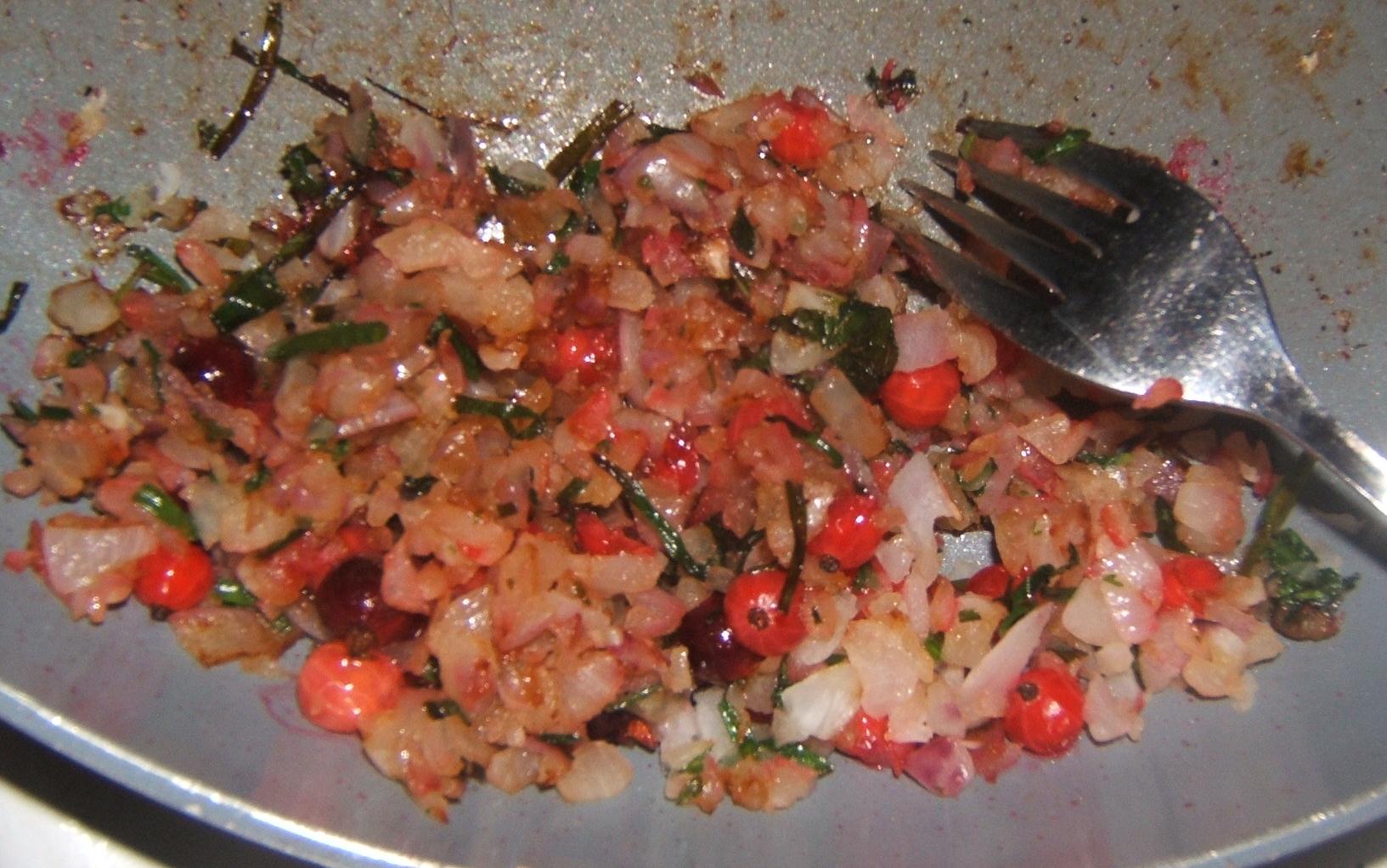
and added the mixture to my couscous, prepared with boiling water and a quarter teaspoon of powdered chicken bullion.
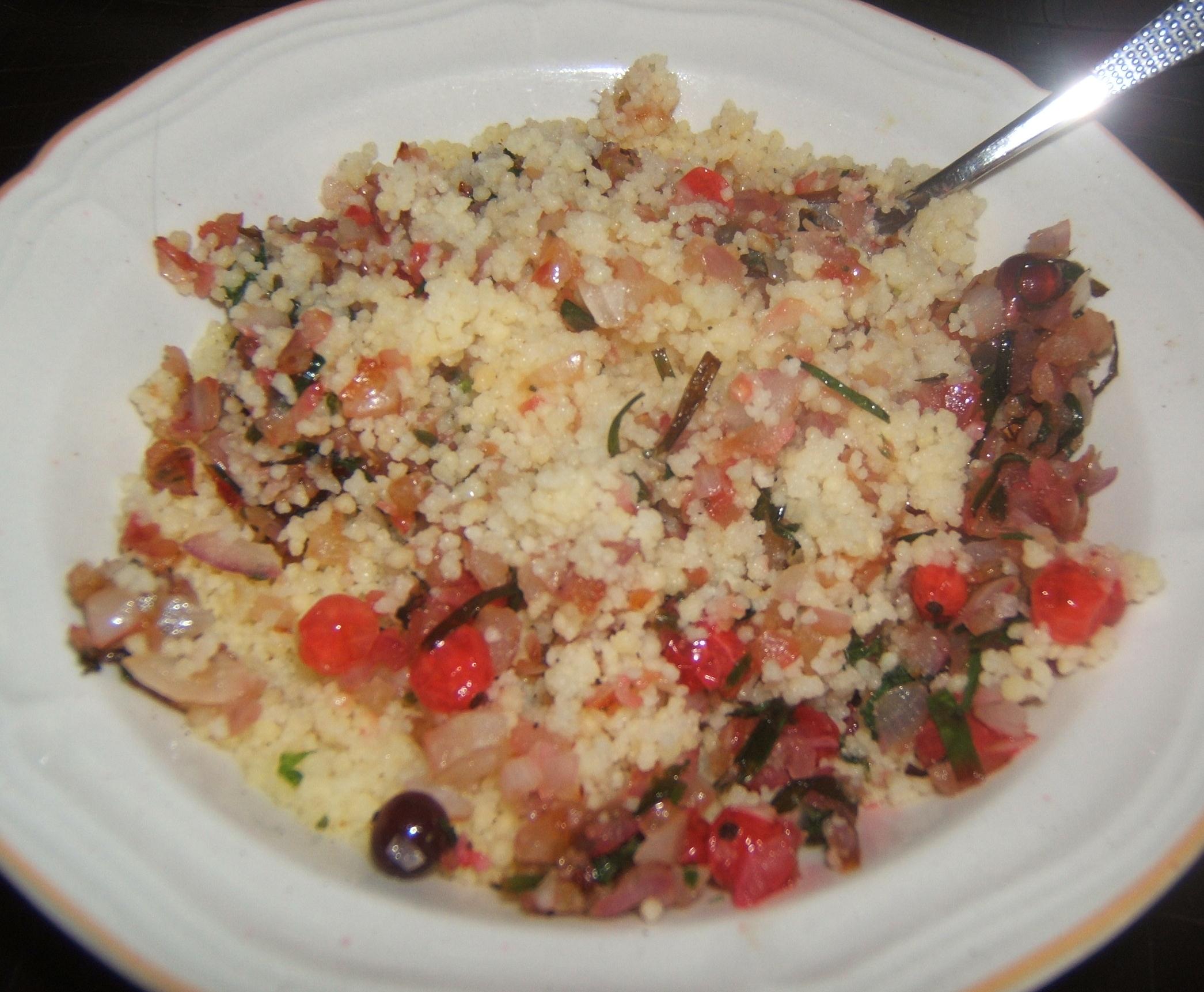
A delicious dinner, a little tart, but perfect for my taste buds!!!!
© Jane Tims 2012
a moment of beautiful – mustard fields in bloom
the space: a field along the St. John River
the beautiful: mustard in bloom
In some of the cultivated fields along the St. John River, acres of mustard are in bloom. Mustard is common here, in both coastal and inland areas, along roads and in fields. In the last weeks, I have found two species, Black Mustard (Brassica nigra (L.) Koch) and Field Mustard (Brassica rapa L.) also known as Rape, or Bird’s Rape.
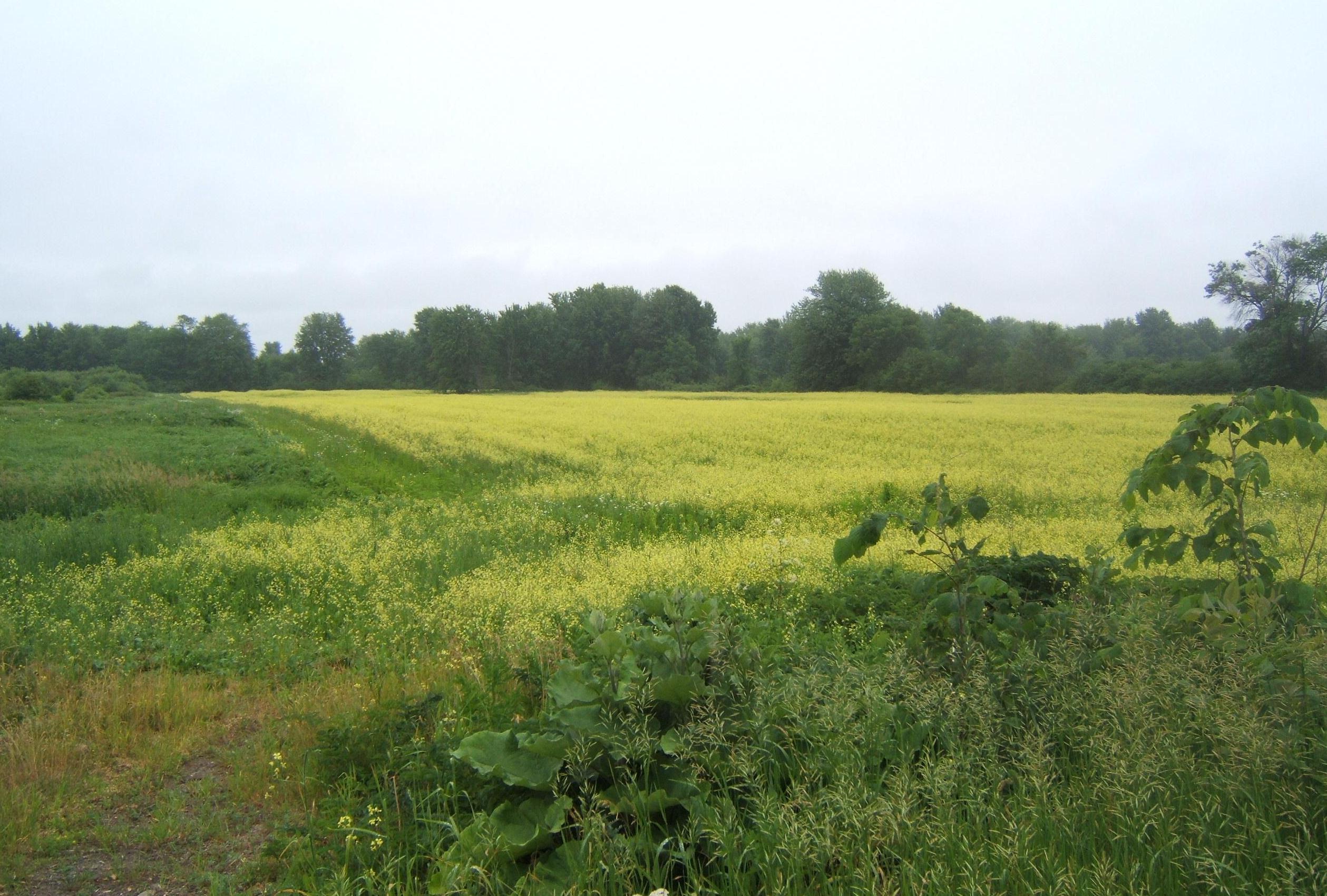
Mustard is an herb of medium size, with pale yellow, four-petalled flowers in terminal clusters, and large lobed leaves. The seeds are contained in pods; each pod ends in an elongated beak.

Mustard is well-known for its uses. The young, basal leaves may be cooked as greens or used in salads. Clusters of unopened flower buds can be cooked like brocolli. The tender seed pods are pickled, or used in salads.
Mustard’s best-known use is as a spice – the seeds are collected, dried and ground to make hot yellow mustard. I have a spot staked out to collect the seeds as they ripen in August, since I want to dry and grind some seeds for my own mustard.
~
~
sandwich
~
green leaves
between brown earth
and summer sky,
finished with
a generous smear
of mustard
~
~
© Jane Tims 2012
Warning: 1. never eat any plant if you are not absolutely certain of the identification; 2. never eat any plant if you have personal sensitivities, including allergies, to certain plants or their derivatives; 3. never eat any plant unless you have checked several sources to verify the edibility of the plant.growing and gathering – picking berries with friends
As I am deciding how to organise my poetry manuscript on ‘growing and gathering’ local foods, I am considering the themes of the various poems. I think these themes will become the sections in my manuscript.
One of the first themes to emerge, perhaps the easiest to examine, is about ‘relationships’.
Although I have often picked berries alone, my best memories are of picking berries with members of my family. Both my Mom and Dad loved to pick berries. My Dad was a fast picker and I was always in silent competition with him to pick the most berries… I never won. My Mom picked berries quickly, but took the time to enjoy the fresh air, the blue sky and the expanse of the berry field. When I think of picking berries with her, I feel calm and a little lazy. My relationship with my mother-in-law was also shaped by our many berry-picking experiences; when I pick raspberries, I hear her quiet laughter in the breeze.
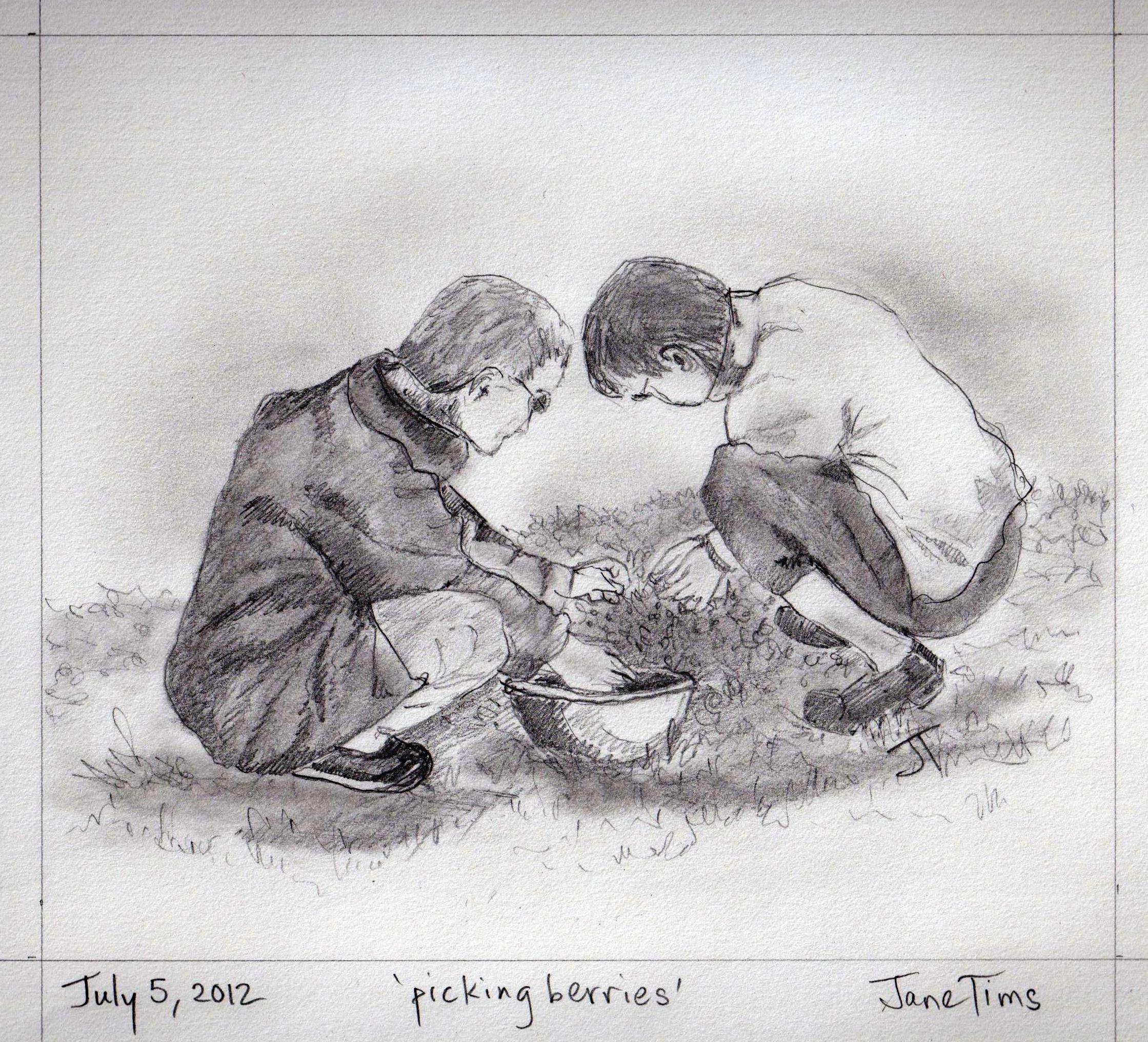
As I write poetry for my ‘growing and gathering’ manuscript, I have explored my relationships with the various people in my life.
Some of these are based on real experiences I have had picking berries or gathering greens. Examples include poems about trying to find an old berry field, now grown over, or how changes in a relationship can be observed over the years in the annual picking of berries. Although most of the poems are about plants, I have included production of other local foods – so a poem about beekeeping, for example, explores how two people interact during a small emergency.
In other cases, the gathering of local foods is a metaphor for some aspect of a relationship, whether good and bad. At least some of these metaphors are related to the characteristics of plants or animals – for example, the serrated edges of leaves, the slipperiness of a trout, the gentle feel and fragrance of Bedstraw, or the bitterness of taste common to so many ‘salad’ greens.
Some of the metaphor is based on the place where plants grow. Examples include the seclusion of many berry-picking spots, or the physical spaces created by rows of corn plants.
As I look over the Table of Contents for my manuscript, I realise some poems will be stronger if placed within another theme. So I have moved, for example, a poem about picking berries over a three-week period from the theme on ‘relationships’ to a theme about ‘change’.
This consideration of the themes in my poetry has given me a good start to organising the poems, and identifying gaps I have to fill. I know now there are lots of gaps, and many poems yet to write!
~
~
Bitter Blue
~
of all the silvery summer days we spent none so warm sun on
granite boulders round blue berry field miles across hazy miles
away from hearing anything but bees
and berries
plopping in the pail
~
beside you I draped my lazy bones on bushes crushed berries and
thick red leaves over moss dark animal trails nudged between rocks
baking berries brown musk rising to meet blue heat
or the still fleet scent
of a waxy berry bell
~
melting in my mouth crammed with fruit sometimes pulled from
laden stems more often scooped from your pail full ripe blue pulp
and the bitter shock of a hard green berry never ripe
or a shield bug
with frantic legs
and an edge to her shell
~
~
Published as: ‘Bitter Blue’, Summer 1993, The Amethyst Review 1 (2)
Published on www.nichepoetryandprose.wordpress.com on July 31, 2011
© Jane Tims 2012
Warning: 1. never eat any plant if you are not absolutely certain of the identification; 2. never eat any plant if you have personal sensitivities, including allergies, to certain plants or their derivatives; 3. never eat any plant unless you have checked several sources to verify the edibility of the plant.Pineapple Weed (Matricaria matricarioides (Less.) Porter.)
I bear weeds no ill-will. When I pull them in my garden, I am just helping my vegetables to get an edge in the great competition. Also, as you now know, I consider many ‘weeds’ to be edible and delicious. But, in one case, I cheerfully stomp on the weeds and consider the benefits to outweigh the sorrow.
When I went to meetings at our provincial Department of Agriculture, Aquaculture and Fisheries, I had to follow a wide path of concrete slabs to get to the door of the building. In the cracks between the slabs grew a small, rather pretty weed. I loved to step on this weed, or pick it, to smell its fragrance. The weed is Pineapple Weed and, crushed, it smells just like pineapple. Its scent is also reminiscent of Garden-camomile, or Hay-scented Fern.
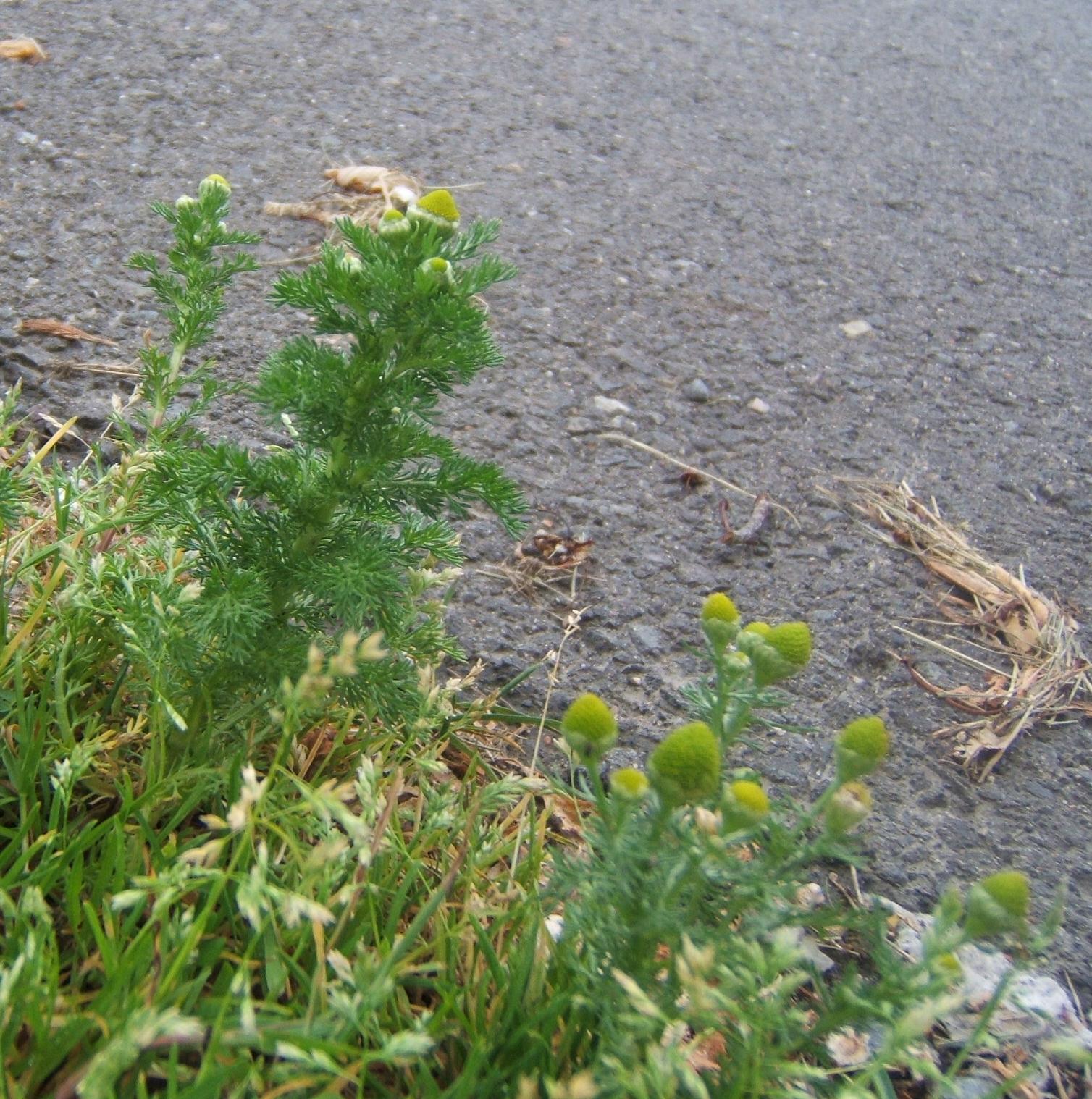
Pineapple Weed grows along roadsides and in waste places, wherever the soil is disturbed and competition from other plants is low. It is an inconspicuous cousin of Garden-camomile (Anthemis nobilis L.) and looks a little like Camomile except the flowers have no white ray-florets. The leaves of Pineapple Weed are very finely divided and feather-like.
The generic name Matricaria comes from the Latin word matrix, meaning ‘womb’, a tribute to its reputed medicinal properties. The specific name matricarioides means ‘like Matricaria’ since it was originally considered to be another species.
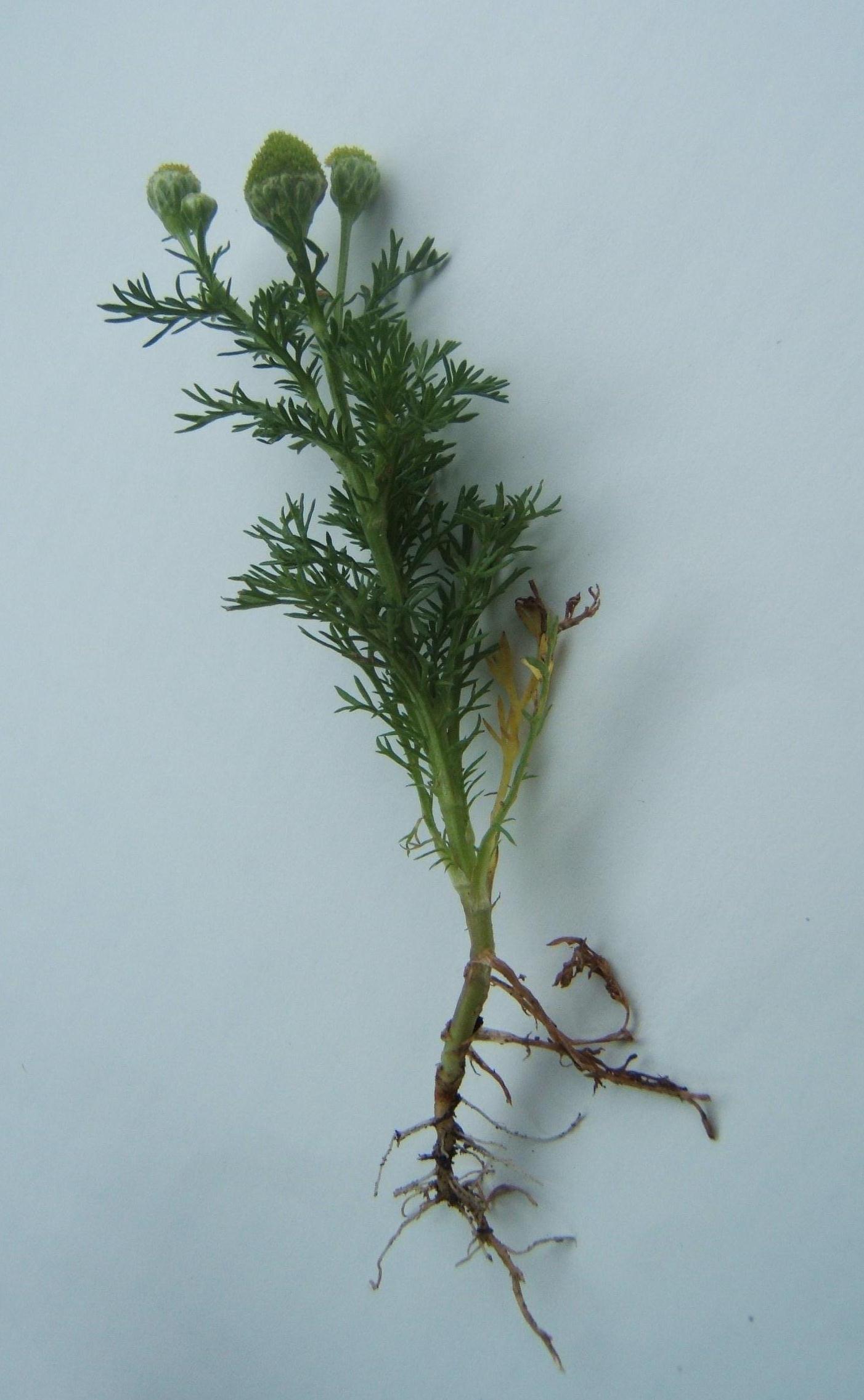
My husband tells me, as a child, he used plants of Pineapple Weed as miniature trees when he played with his Dinky cars!
To make a pale yellow, pineapple-scented tea, steep the fresh or dried flowers of Pineapple Weed in hot water.
Warning: 1. never eat any plant if you are not absolutely certain of the identification; 2. never eat any plant if you have personal sensitivities, including allergies, to certain plants or their derivatives; 3. never eat any plant unless you have checked several sources to verify the edibility of the plant.
~
~
Matricaria
~
two in the morning
and the canister of Camomile
yawns empty
~
crush Matricaria
steep a sprinkle of flowers
in water, tea the color
of straw
~
surround of pineapple
hay-scented fern
sleep
~
~
© Jane Tims 2012

Ground Juniper (Juniperus communis L. var depressa Pursh)
Last fall, when I made our Christmas wreaths, one of the greens I gathered was Ground Juniper. It was so prickly and difficult to handle, I decided not to use it again. However, since I am now looking at plants from the point of view of edibility, I want to take another look at the Common Juniper bushes growing on our lake property.
Ground Juniper (Juniperus communis L. var depressa Pursh) is a low, evergreen shrub, growing in bogs and on barren soils in abandoned pastures. The specific name of Ground Juniper, communis, means ‘in clumps’. The branches of Ground Juniper take the form of a dense, oval mat, spreading horizontally across the ground.

Ground Juniper is also known as genévrier in French. The name of the spirit ‘gin’is derived from this word since the oil of the Juniper berry is used to flavor gin.
The needles of Ground Juniper are a yellowish-green. They are flattish, three-sided and have a whitened stripe on the lower surface.

one branch of the shrub turned over to show the white stripe on the underside of the needles
The bluish, waxy berries are actually cones. They are light green at first and mature over three years to a dark blue. The berries of Juniper appear covered by a whitish powder.
The berries of Ground Juniper are woody and hard, but edible in small quantities as a spice for meat, especially game. They have a resinous odor and a sweet taste, and are crushed, dried and ground to release the flavour.
The young berries and young leaves can be also boiled in water for ten minutes and then steeped for another ten minutes to make a tea.
The berries are known for their medicinal properties and so should be used sparingly and with caution.
Warning: 1. never eat any plant if you are not absolutely certain of the identification; 2. never eat any plant if you have personal sensitivities, including allergies, to certain plants or their derivatives; 3. never eat any plant unless you have checked several sources to verify the edibility of the plant.~
~
Ground Juniper (Juniperus communis L. var depressa Pursh)
~
boughs spread horizontal,
hug the ground
~
cones disguised as berries,
leaves as needles
all, dusted with powder
~
waxy berries glow
like blue planets, offer themselves –
we harvest, reach, mindful of sharps
and moon-dust, the true distance
between pasture and sky
~
meat spiced with wooden berries, ground
and sorrows drowned in jiggers of gin
~
~
© Jane Tims 2012

limits of the tide #4 – Orach (Atriplex patula L.)
Orach (Atriplex patula L.) is a common inhabitant of coastal areas in New Brunswick. It lives in sheltered locations on the upper shore, out of reach of the highest tides.
The leaves of Orach are fleshy and arrow-shaped. The margins of the leaves are variously toothed and the lowest teeth point outward (‘hastate’, similar to the leaves of Sheep Sorrel in the June 8, 2012 post under the category ‘growing and gathering’). The leaves are grey to bright green and lighter on the underside of the leaf. Orach is a highly variable and poorly known species with respect to taxonomy.

Orach flowers from July to August. The flowers are like many seaside plants, inconspicuous and small, in the axils of the leaves.
Orach is tasty and salty. It can be used in salads, or cooked in boiling water for 15 minutes and served like spinach.
Warning: 1. never eat any plant if you are not absolutely certain of the identification; 2. never eat any plant if you have personal sensitivities, including allergies, to certain plants or their derivatives; 3. never eat any plant unless you have checked several sources to verify the edibility of the plant.
~
~
hunting the orach
~
I know the place where the orach hides –
out of the way of the rising tides
between the rocks and deep in the sand,
with his halberd drawn, he makes his stand
~
~
© Jane Tims 2012
limits of the tide #3 – Sea-blite (Sueda maritima (L.) Dumort.)
Another edible coastal plant is Sea-blite (Sueda maritima (L.) Dumort.). Sea-blite is a low-growing plant, often forming mats on the shore. Sea-blite can also be found at inland locations, near salt springs.
Sea-blite has thick, linear leaves. The flowers are small and fleshy, and grow in the axils of the stem. At this time of year, Sea-blite is still a small, inconspicuous plant. Later it will grow to between 3 and 5 dm.

The leaves of Sea-blite are very salty, and can be used as a source of salt in soup or stew, or an ingredient in salads. Used as a pot-herb, they should be cooked for 10 to 12 minutes in two to three changes of boiling water, to reduce the salt content.
Warning: 1. never eat any plant if you are not absolutely certain of the identification; 2. never eat any plant if you have personal sensitivities, including allergies, to certain plants or their derivatives; 3. never eat any plant unless you have checked several sources to verify the edibility of the plant.~
~
persuasion
Sea-blite (Sueda maritima (L.) Dumort.)
~
fingers of Sea-blite
poke the salt air,
rebuke the salt sea
crave attention –
pick me! pick me!!
~
fingers of Sea-blite
point politely at the pot
propose, diplomatically,
add a little more salt
~
~
© Jane Tims 2012

limits of the tide #2 – Seaside Plantain (Plantago juncoides Lam.) – Goosetongue greens
One of the edible plants we found at Oak Bay (near St. Stephen, New Brunswick) was Seaside Plantain, also known locally as Goosetongue.

Seaside Plantain, also known as Goosetongue, ready to pick… they have to be rinsed well since the outgoing tide has left a thick layer of sediment behind…
Seaside Plantain (Plantago juncoides Lam.) grows in thick clumps, forming an intermittent carpet across the shore. The succulent, linear leaves of Seaside Plantain are grey-green in color. Inconspicuous green flowers, not present until later in June, rise from the rosette of leaves in a terminal spike. Seaside Plantain is in the same genus as Common Plantain (see the post for June 13, 2012, ‘Common Plantain’ under the category ‘growing and gathering’). Plantago is from the Latin for ‘footprint’ and juncoides means ‘rush-like’.
Goosetongue greens are pleasantly salty and are a local delicacy, eaten as a salad or pickle, or cooked like green beans and served with butter. For a vivid description of the experience of gathering and preparing Goosetongue greens, see Nature of Words (www.natureofwords.com/2011/07/goosetongue-greens/) by Deborah Carr, and the post for July 14, 2011, entitled ‘Goosetongue greens’.
Warning: 1. never eat any plant if you are not absolutely certain of the identification; 2. never eat any plant if you have personal sensitivities, including allergies, to certain plants or their derivatives; 3. never eat any plant unless you have checked several sources to verify the edibility of the plant.~
~
Sunday Dinner at Maces Bay
Seaside Plantain (Pantago juncoides Lam.)
~
dig right in
says your father
and nudges the pitcher of water
in my direction
~
I study the ‘goosetongue greens’ –
mound of green spaghetti
between spuds and chicken,
green eels diving
for the bottom of the plate
~
two things not in their favour –
they’re green,
they look a little like
the tongues of geese
~
I watch your Dad –
he adds a dollop of butter,
he weaves his fork to catch a little of each,
potato, greens and chicken,
chews with his eyes closed,
reaches for his glass of water
~
I sigh
and taste –
salt air and butter-cream,
crisp, the perfect crush,
mouth-feel, amazing
please pass the water
~
~
© Jane Tims 2012
Warning: 1. never eat any plant if you are not absolutely certain of the identification; 2. never eat any plant if you have personal sensitivities, including allergies, to certain plants or their derivatives; 3. never eat any plant unless you have checked several sources to verify the edibility of the plant.limits of the tide #1 – edible plants
Last week, our travels took us to the edge of the sea, where I looked for more edible wild plants. I found what I was looking for at Oak Bay, near St. Stephen. At the end of a little-used road, we came out on a gravelly spit of land jutting into the Bay.

mid-tide at Oak Bay… at high tide, most of the foreshore will be covered by salt water… at low tide, the clam-flats will be exposed
There, on the shoreline, were four plants to add to my larder of edible wild.
Three of the species formed a small community near the upper reaches of the shore: Seaside Plantain, Sea-blite and Samphire. All three are in the photo below… can you find them?

The Seaside Plantain (also known as Goosetongue) is the dense clump of long, thick, linear leaves in the photo above…
The Sea-blite is just starting to grow. Later in the season it will be as large or larger than the Seaside Plantain. In the enlargement below, Sea-blite is the small green plant to the right of the clump of Seaside Plantain…

The Samphire is also very small this time of year. Later it will be as large as the Sea-blite or Seaside Plantain. In the photo enlargement below, it is at the base of the clump of Seaside Plantain, at exactly 6 o’clock.
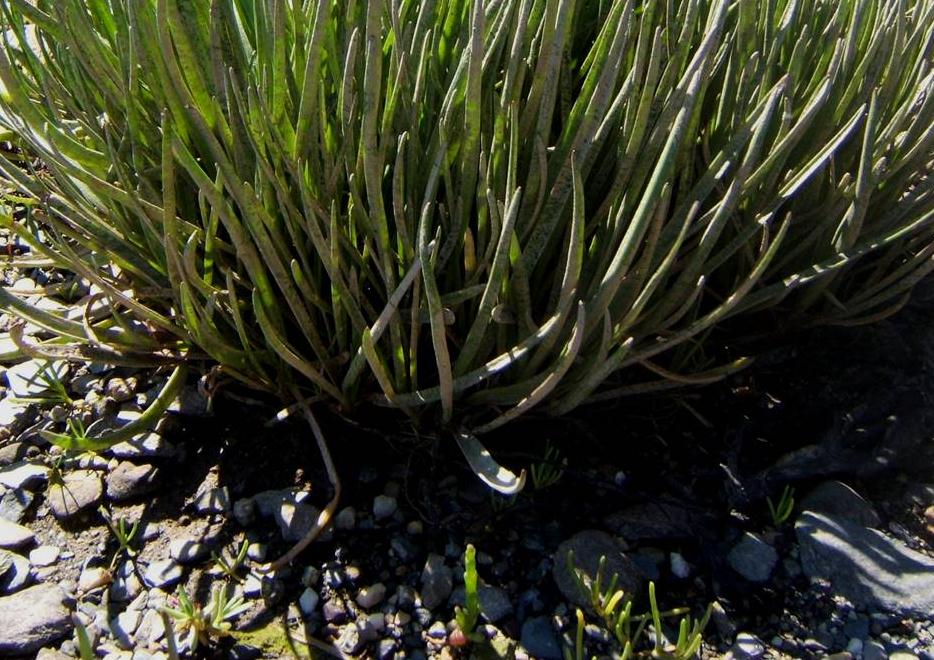
The fourth edible plant at Oak Bay is Orach. It grows on the upper shore, above the Seaside Plantain and beyond the limit of the tide. These plants often grow together along the coast, on salt marshes, tidal flats, dykelands and beaches.

Since the plants were not plentiful and not yet ready to pick, I took only one plant of each, for my drawings. I also took a bite of each type of leaf. Although there are subtle differences, all four were crisp and salty in flavour, a delightful nibble of the salty sea.
These are just a few of the edible plants living in coastal areas of New Brunswick. Over the next posts, I will explore these four species and a few others.
© Jane Tims 2012
Warning: 1. never eat any plant if you are not absolutely certain of the identification; 2. never eat any plant if you have personal sensitivities, including allergies, to certain plants or their derivatives; 3. never eat any plant unless you have checked several sources to verify the edibility of the plant.




 nichepoetryandprose