Archive for the ‘covered bridges’ Category
in the shelter of the covered bridge – Baker Brook #2
Of the 60 covered bridges in New Brunswick, most are in the southern part of the province. Last week we went to see the three remaining covered bridges in Madawaska County in the north-western part of the province.
~
One of these was Baker Brook #2. It crosses the Baker Brook west of Edmunston and is no longer in service. The bridge has been protected in a small park with a parking area. Bird boxes, flags and hanging flower baskets show there is local stewardship of the bridge.
~

Baker Brook #2 in Madawaska County, New Brunswick
~
The Baker Brook #2 bridge was the essence of quiet. As we entered the bridge, the only sound was the patter of rain and the trickle of water under the bridge.
~
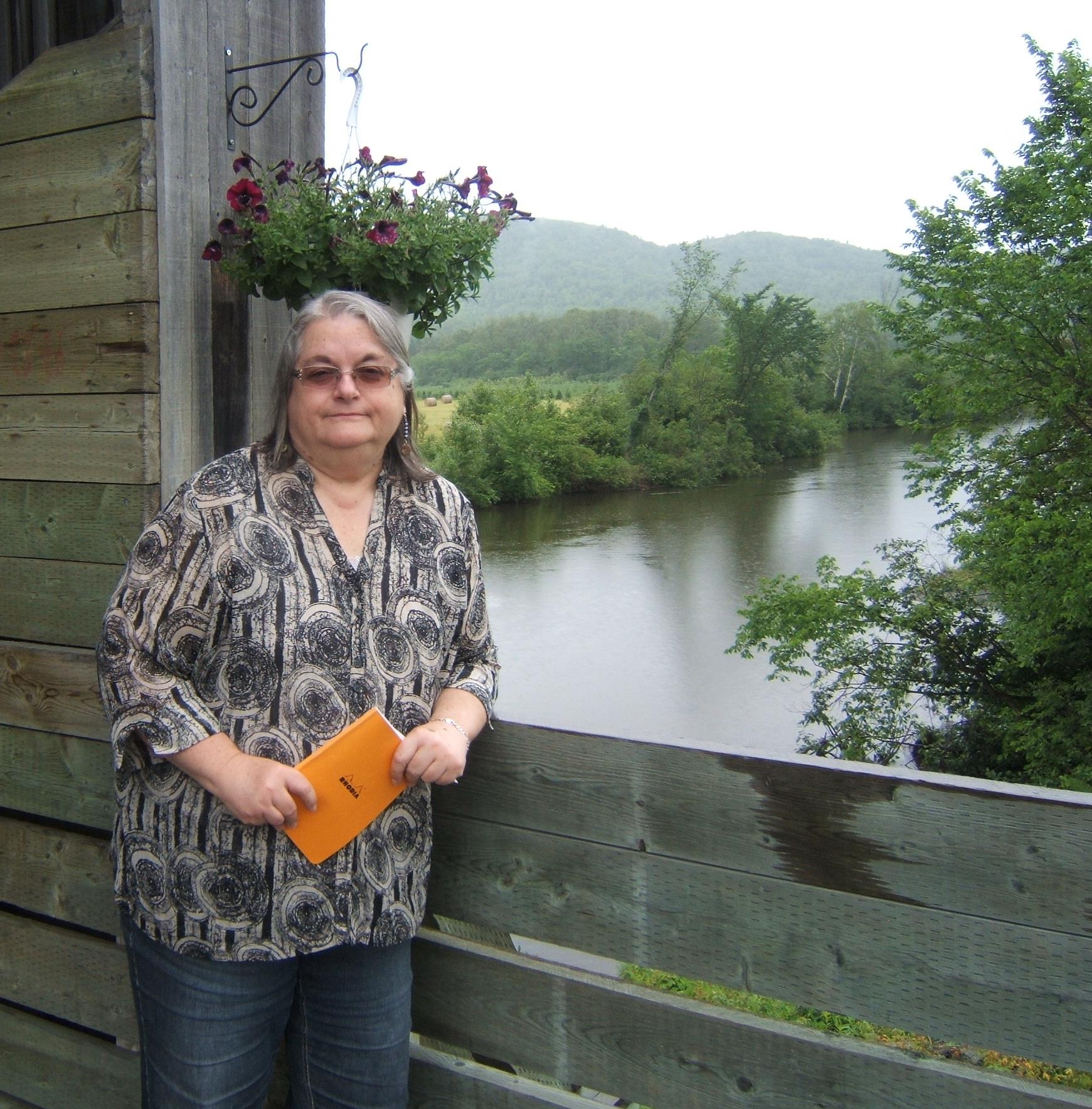
I don’t get many photos of myself, but this is a good one – I am ready to take notes on the plants and animals I see in the Baker Brook # 2 covered bridge … these notes and my photos and memories become the basis for future poems
~
The bridge is set against a backdrop of tranquil hills and fields. A deer watched us from a hayfield at the north end of the bridge. A white-throated sparrow called once and a crow made a few comments from the top of a round bale of hay. Otherwise, we were alone.
~

~
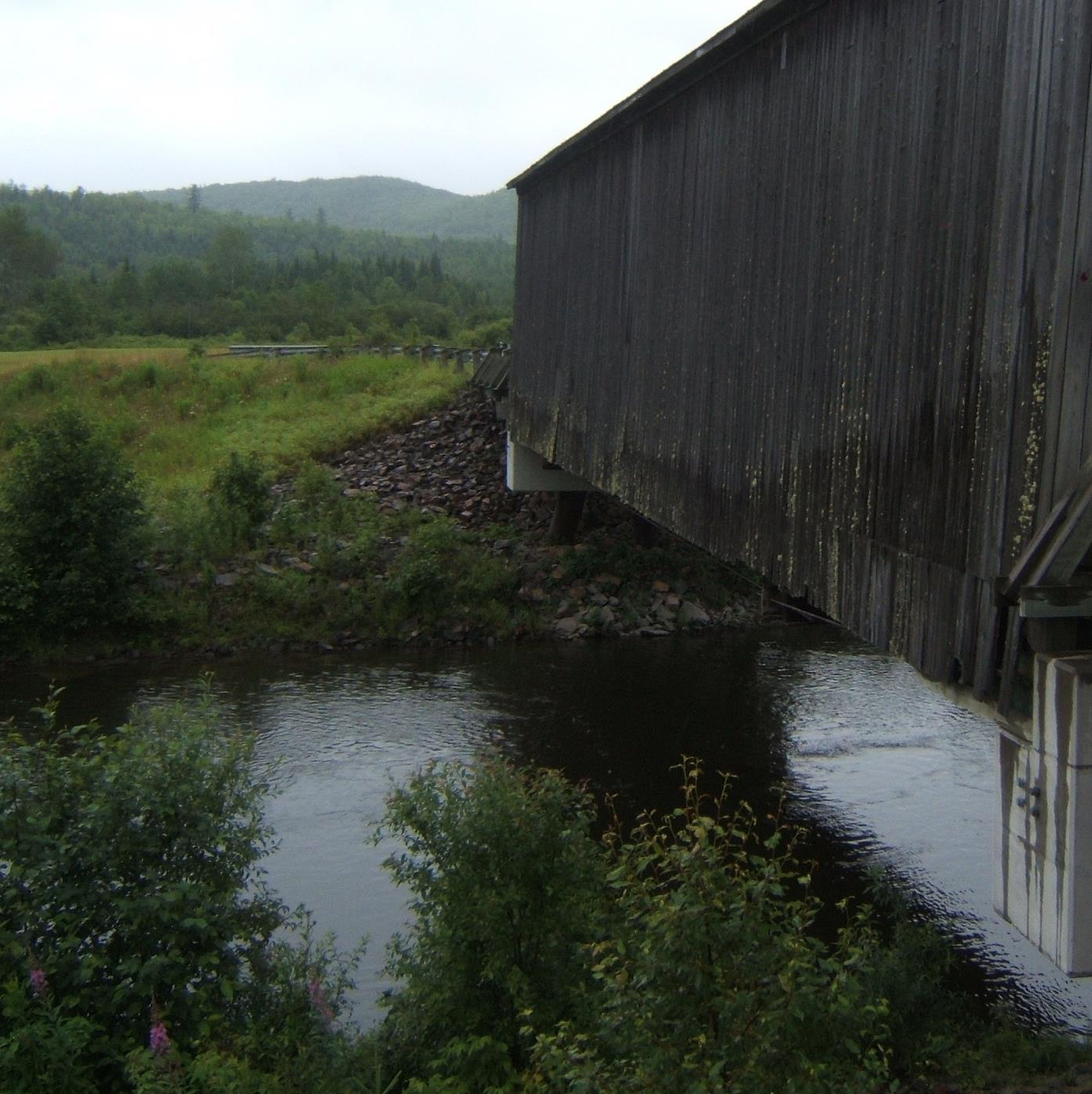
I love the way the lichens have colonized the bridge and follow the boards, like rain, in lines down the outer walls.
~
~
Some visitor had left a small collection next to the outer wall of the bridge. Three rocks and a broken bit of glass…
~

~
Copyright Jane Tims 2015
beaver slap – Bloomfield Creek Covered Bridge
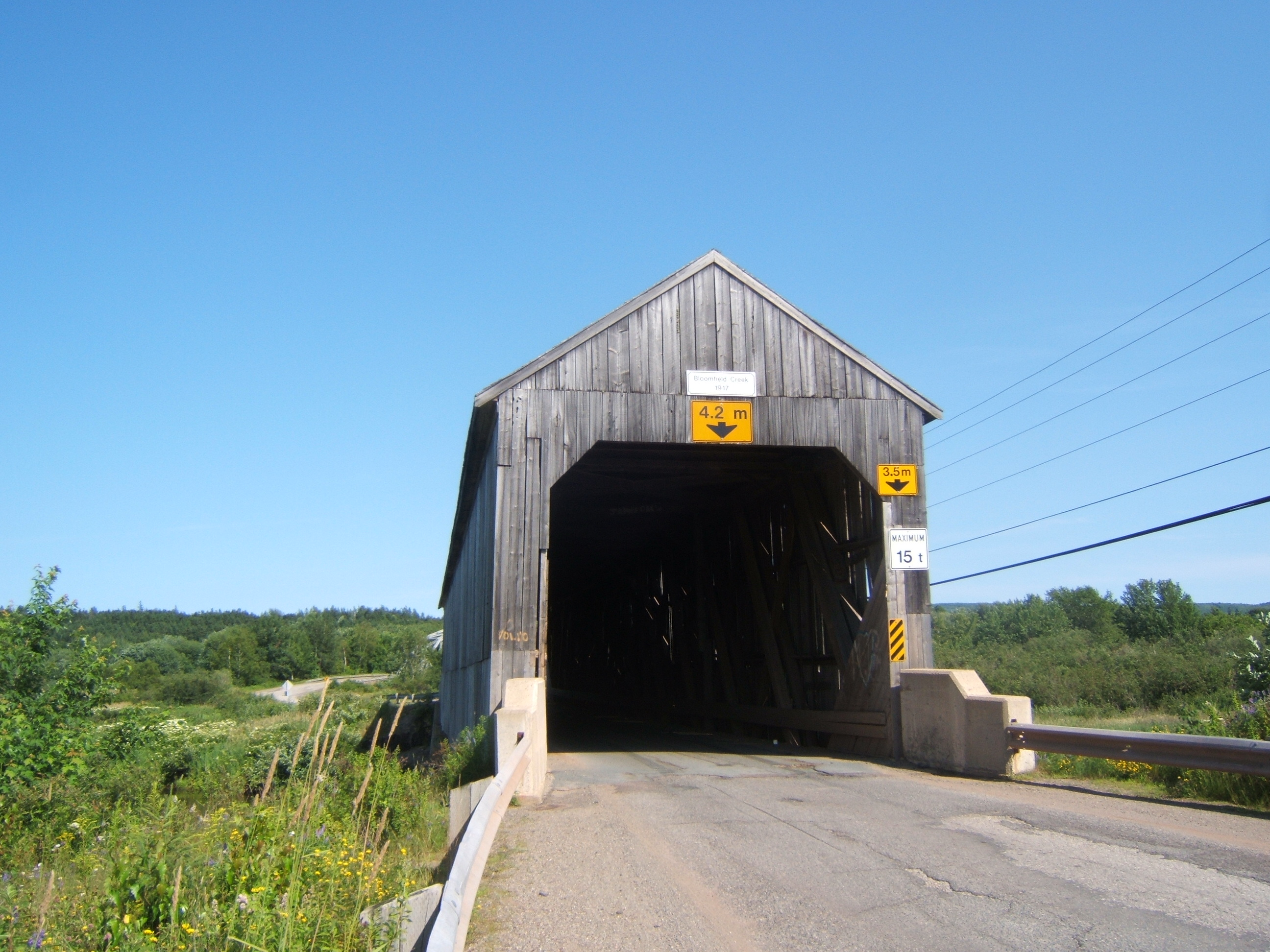
On a recent weekend tour of four covered bridges in southern Kings County in New Brunswick, we stopped at Bloomfield Creek. Built in 1917, this bridge is busy and well-used. It crosses a broad creek, very pond-like with its growth of lily pads (the yellow pond-lily Nuphar) and pickerel weed (Pontederia).

~
Along the grassy banks of the creek is a beaver lodge.
~
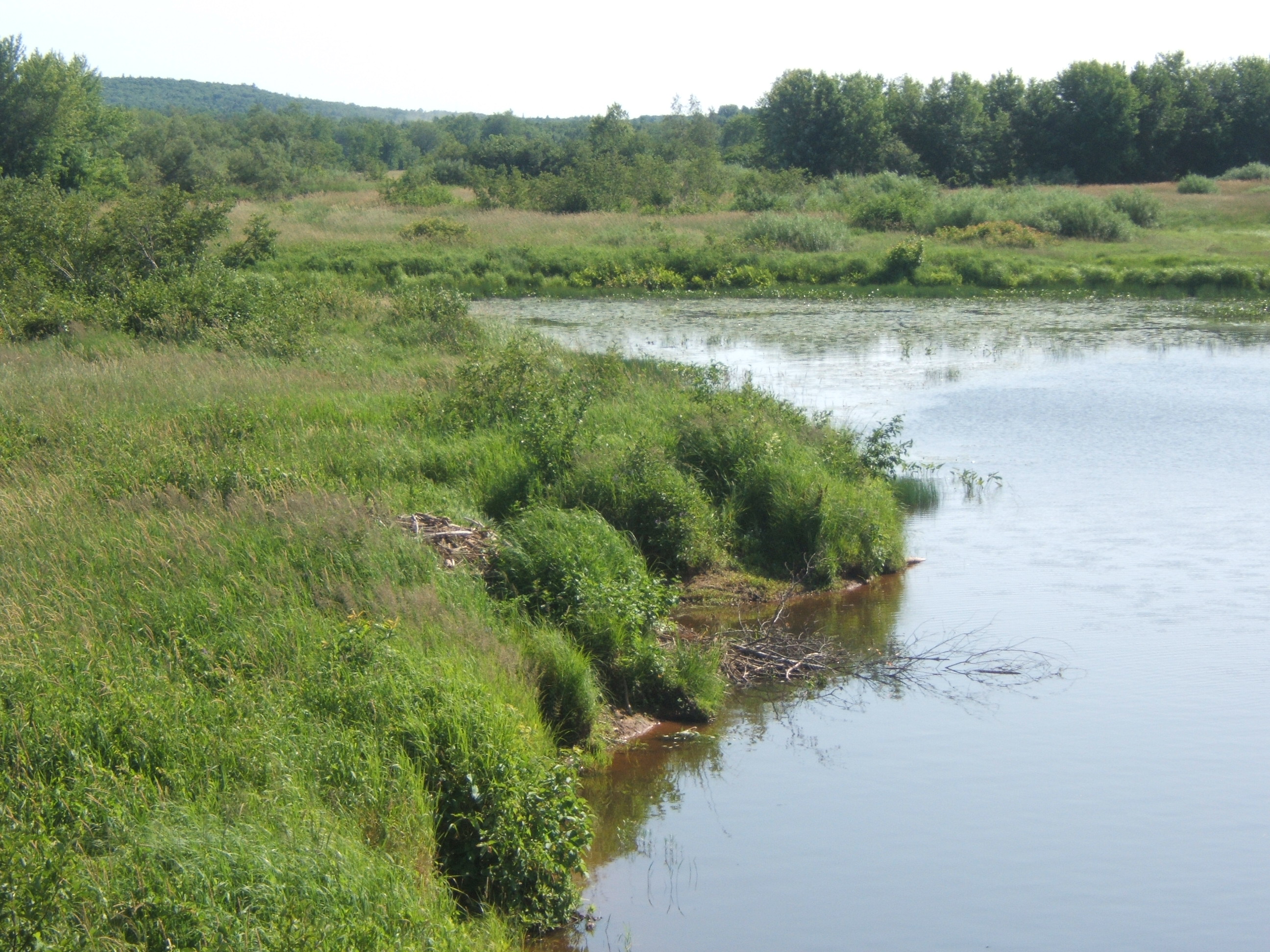
beaver lodge on the bank of the creek – the beaver has dragged lots of extra branches to keep near the underwater opening of his home
~
A large beaver kept us company while we visited the bridge. He swam back and forth along the river, in a course we were certain was designed to confuse and hide the location of his lodge. Most of the time he stayed on the surface – so soothing to watch his smooth brown body ‘towing’ a ‘V’ across the water. Every few minutes he would pause in his swim, arch his body, scissor his tail and lift it perpendicular to the water surface. Then he would slap the water and produce a loud ‘k-thud’ before he dove beneath the surface. In a minute or so, he would reappear to swim as calmly as before.
~
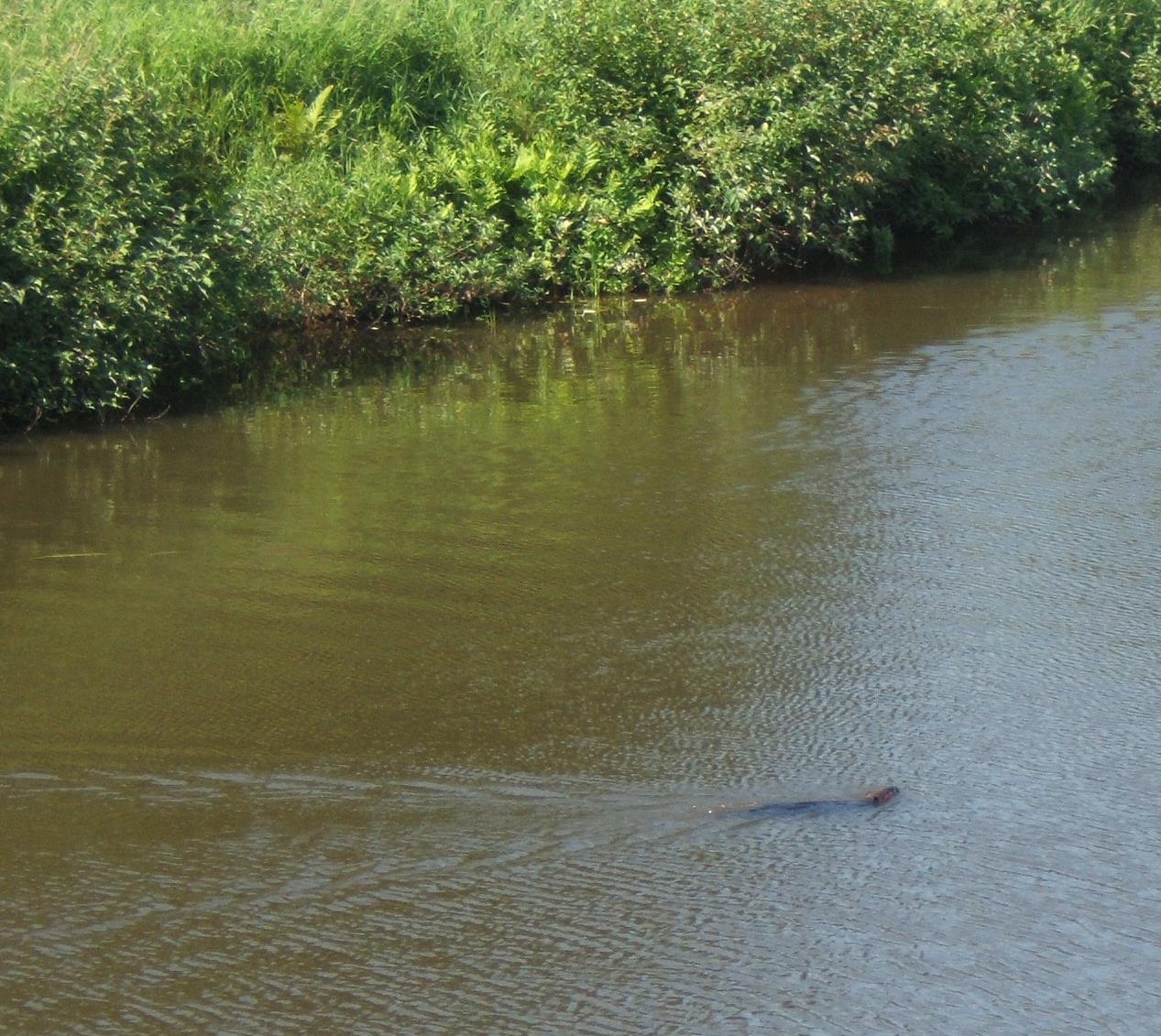
close-up of the beaver towing the ‘V’

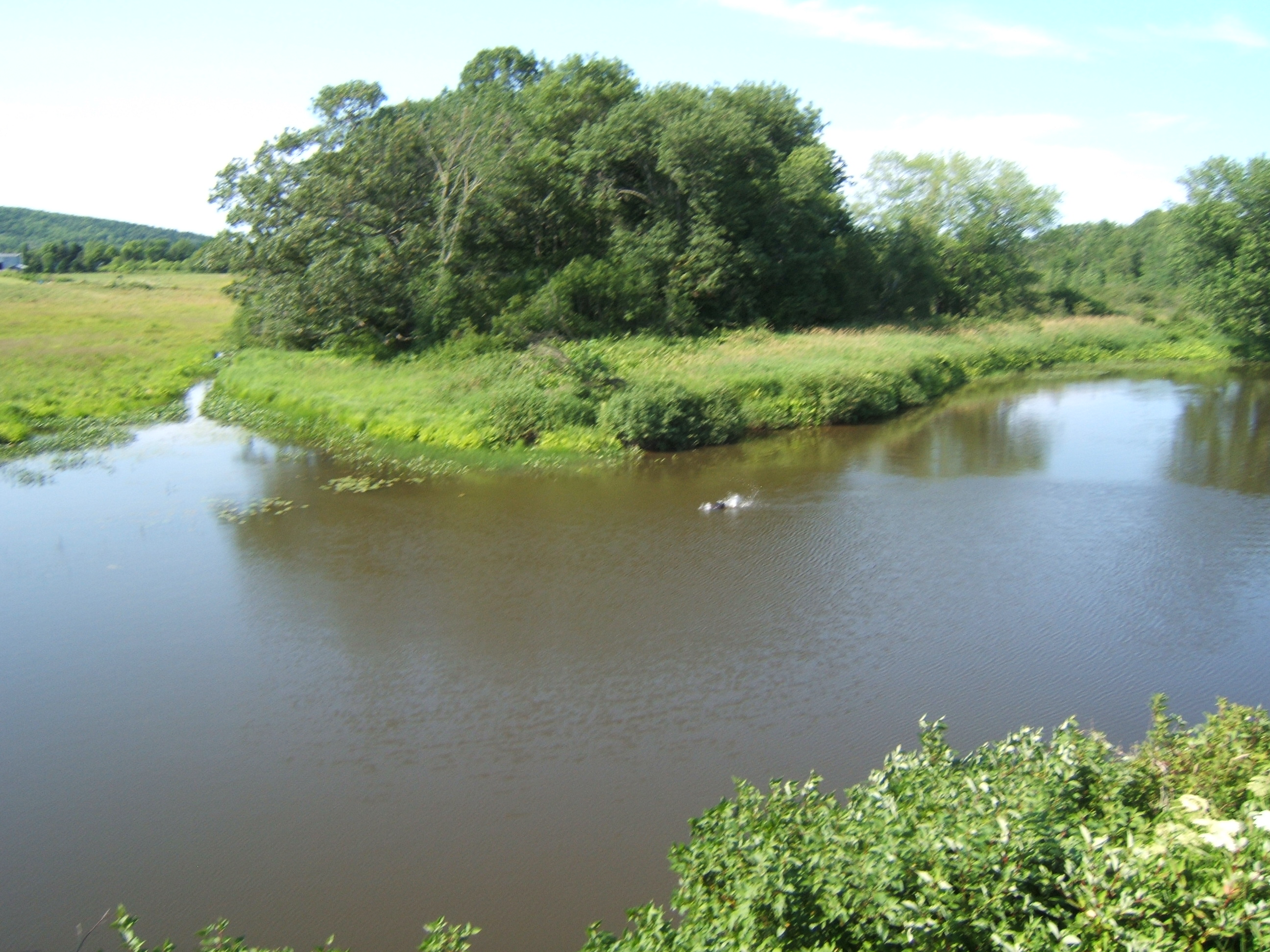
big splash as the beaver slaps its tail on the water
~
Copyright 2015 Jane Tims
grant from artsnb
I am so pleased to announce – I have recieved a grant in the field of literary arts (B Category) from artsnb – the New Brunswick Arts Board. The Board has supported my work before, for my poetry manuscripts about ‘growing and gathering local foods’ and ‘harvesting colour’.
~
This new project will be to write a manuscript of poems about plants and animals growing in, around and under covered bridges. ‘In the shelter of the covered bridge’ will explore the natural history of these covered bridges, looking at how covered bridges modify the landscape and create a special environment for plants and animals. Because of my interest in human history, I’ll include poetry about the people who make use of the spaces of the covered bridge.
~
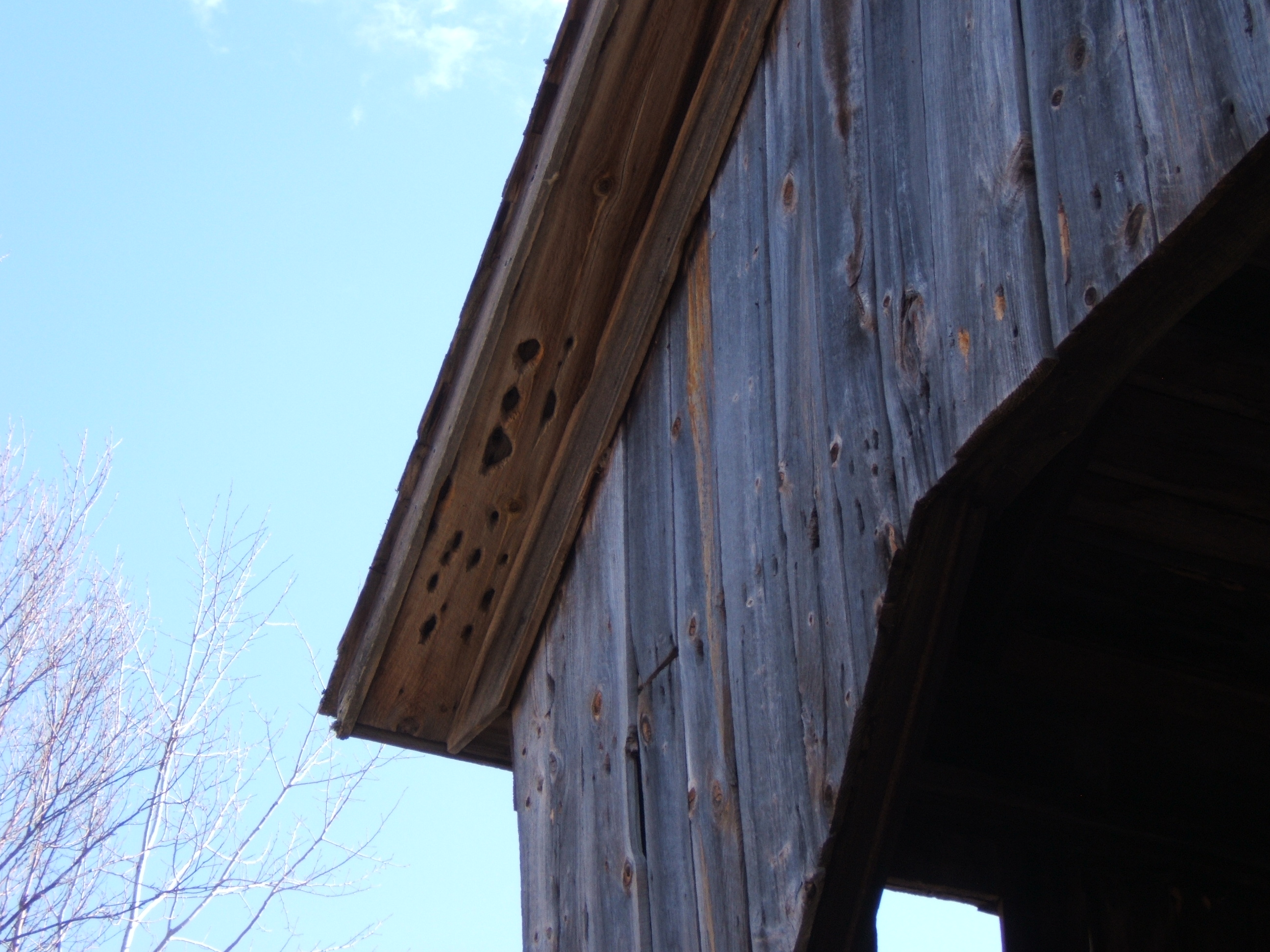
woodpecker holes in an end of the Mill Settlement Covered Bridge – all sorts of possibilities for poetry
~
Since experience is so important to the writing of poetry, one part of my project will be to continue my travels to the covered bridges in the province, especially the 31 covered bridges in the St. John River watershed. Every visit will suggest new subject matter for me to explore with words.
~
Of all the elements of this project, I think I will most enjoy the chance to show how important these bridges are to our natural and cultural history in New Brunswick.
~
Copyright 2015 Jane Tims
in the shelter of the covered bridge – Milkish Inlet
We continue to drive around to look at covered bridges in New Brunswick. Eventually, I would like to write a series of poems about the plants and animals living in or around a covered bridge.
~
Last Saturday we visited a covered bridge on the Kingston Peninsula at Bayswater. The Milkish Inlet #1 (Bayswater Covered Bridge) was built in 1920. At 66.5 meters, it is the longest covered bridge in Kings County, New Brunswick. It is by far the busiest bridge I have seen – it was hard to amble through the bridge since there always seemed to be a car going through and a car waiting.
~

~
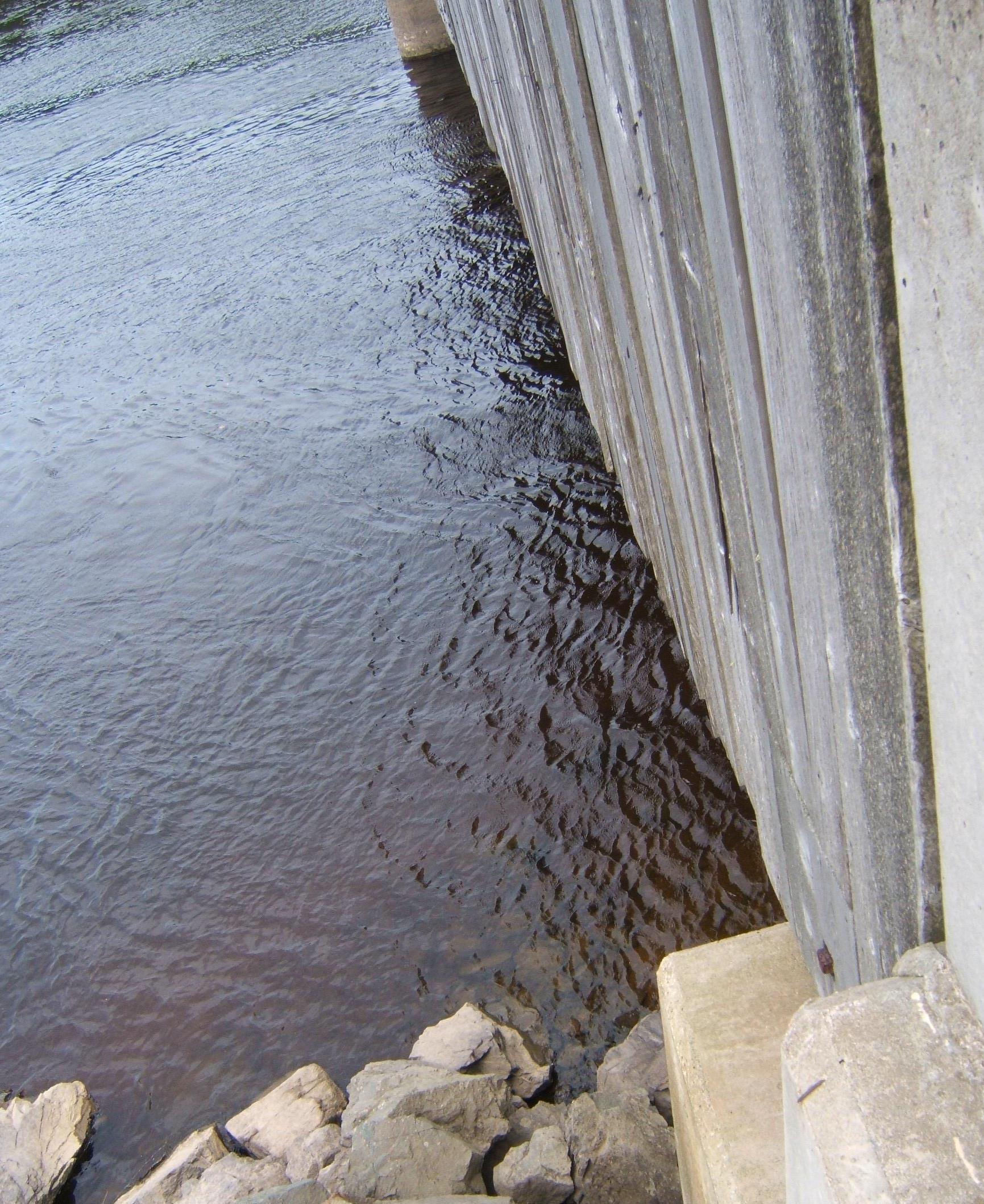
The bridge crosses the Milkish Inlet at Bayswater. The water here is under the influence of the tides.
~
~
Swimmers, wanting to dive from the height of the bridge, have removed a section of the bridge’s wall boards.
~

~
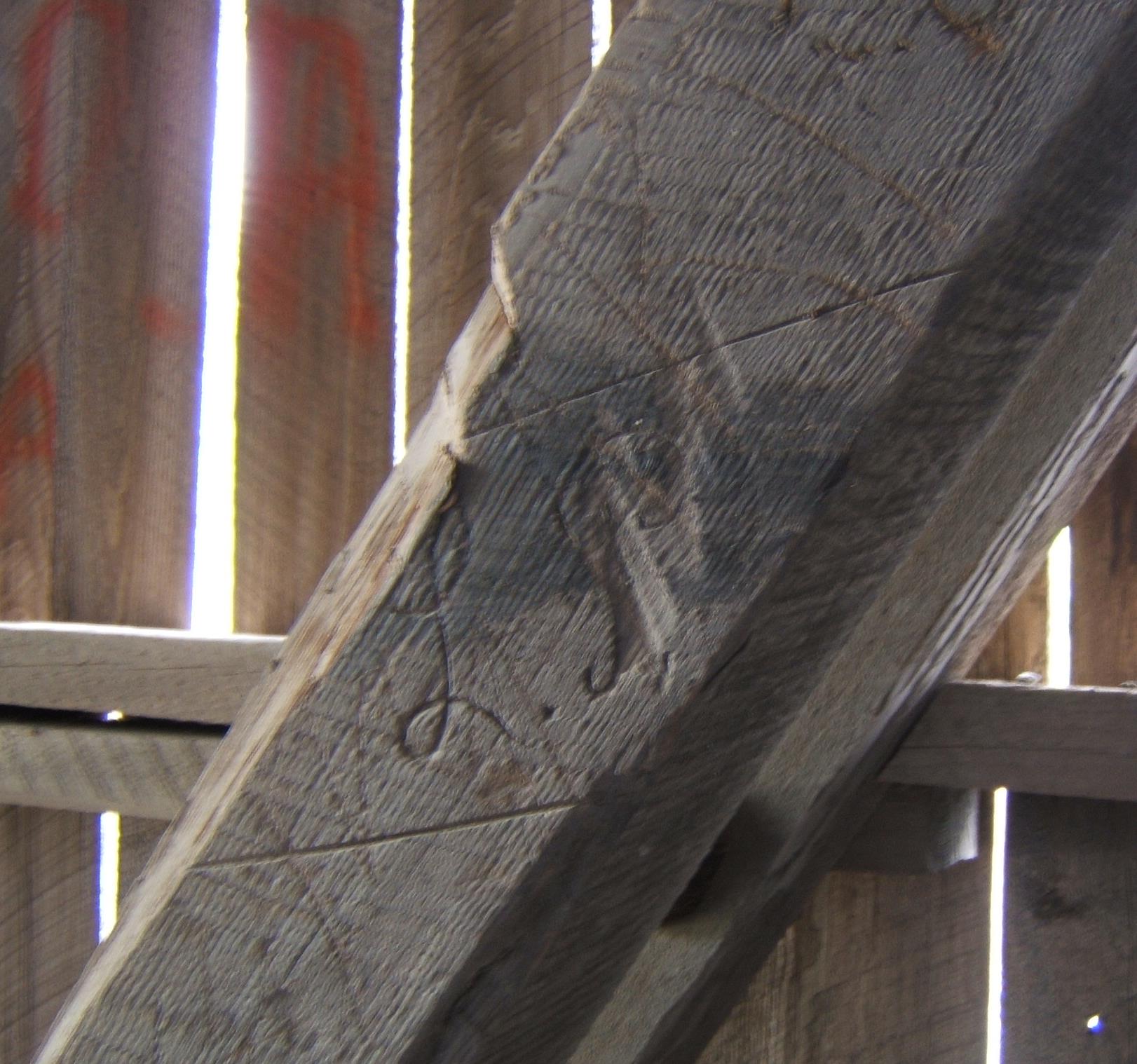
There are many carvings inside the bridge, including this rather charming L. P.
~
~
Another covered bridge once crossed Milkish Creek, but it has been replaced by a causeway.
~
I wondered about the name of the Inlet. The water is not ‘milkish’ in colour!
~
I have discovered the name is from a First Nations word meaning ‘the place where food is dried’ (Source: http://coveredbridgevic.com/festival/Bridges.htm ).
~
Copyright 2015 Jane Tims
writing a novel – draft by draft
Title: Unknown
Working Title: ‘Crossing at a Walk’
Setting: a writers’ retreat – the renovated Landing Church, the hall and the rectory – now used as a Learning Center, a Sleeping Hall and a home/base of operations
Characters: main character Sadie, a writer and manager of a weekend writers’ retreat; her husband Tom, a retired welder; people from the community; writers participating in the first weekend of the writers’ retreat
Plot: Some of the participants in the writer’s retreat become interested in the carving of a woman’s name in a local covered bridge
Story: Sadie works to make the first writers’ retreat go smoothly, but forgets to keep her own life on track
~

Wheaton Bridge (Tantramar River #2) in Westmorland County, New Brunswick. This is the bridge where I found the PHOEBE carving in 1992. We re-visited the bridge in early June and the carving no longer exists, probably lost to necessary bridge maintenance.
~
As I complete work on the fifth draft of my novel ‘Crossing at a Walk’, I am planning how to further improve the book. I am now at about 82,000 words. I have defined the story and the plot. Now I have to complete the editing phase.
~
This blog has proven to be a valuable tool in writing. It helps me to check my progress against my first book, and to make sure I don’t forget steps in the editing process. To help with this process, I have made the table below to chart my progress through the various drafts.
~
| Number of words | Tools used | Objectives | |
| Draft #1 | 32,000 |
|
|
| Draft #2 | 54,000 |
|
|
| Draft #3 | 65,000 |
|
|
| Draft #4 | 77,000 |
|
|
| Draft #5 | 83,000 |
|
|
| Draft #6 |
|
|
|
| Draft #7 |
|
|
|
~
During Draft #5, I began reading my book to my husband and to the members of my two writing groups. Reading aloud is the first test of my audience and helps me find many errors. In particular, I am able to hear words I have repeated in near proximity to one another.
~
Also during Draft #5, I have used a tool I found useful in the writing of my first book. This is SmartEdit for Word (http://www.smart-edit.com/) a ‘first-pass-editing tool’ designed to help identify errors and problems with writing. It is Word compatible and works directly with my Word documents. It identifies clichés, adverbs, repeated words and phrases, punctuation errors and so on. Although it doesn’t take the place of a human editor, it shows the writer possible areas for improvement. SmartEdit for Word can be used free for 10 days or can be purchased for a reasonable price. I have found it to be trouble-free and worth the cost.
~
As I begin Draft #6, my objectives are to make elements in the book consistent. This includes listening for the way characters speak, making certain settings are described completely, and ensuring the story arcs are coherent. I also have to think a little about the third book in the series, so I know what characters I will need and know if I have to make small plot adjustments.
~
Have you ever used editing software to help with your writing?
~
Copyright 2015 Jane Tims

Carving of the name Phoebe on a beam of the Tantramar #2 Covered Bridge near Sackville, New Brunswick



in the shelter of the covered bridge – messages left in the bridge
On our latest drive to see the covered bridges in the watershed of the St. John River, we visited four bridges near Sussex.
~
The Urney Covered Bridge (Trout Creek #4) is a relatively small bridge (20.1 meters in length) built in 1905.
~
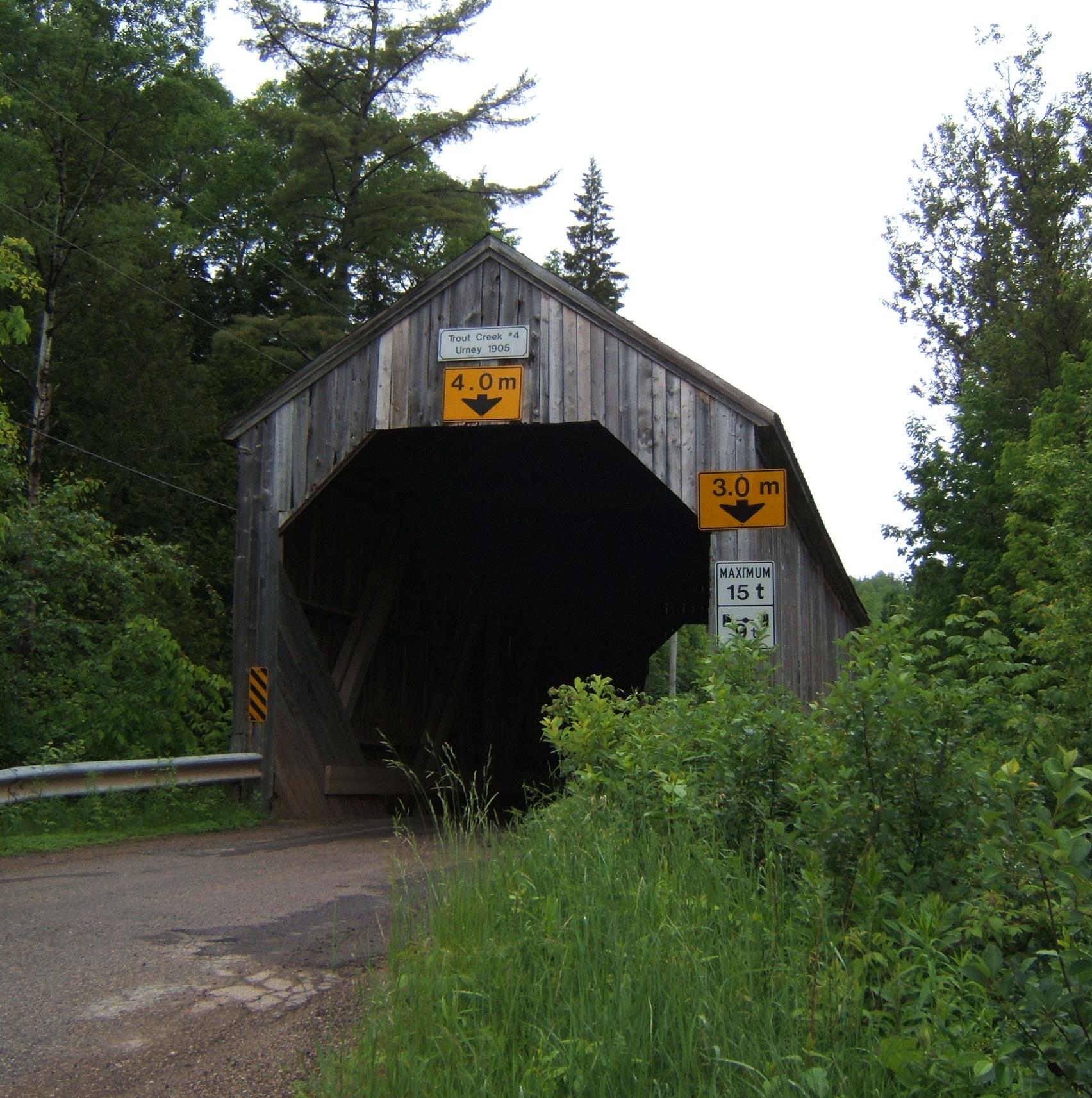
The Urney Covered Bridge (Trout Creek #4) in Kings County. New Brunswick
~
The water of Trout Creek is clear and cold – at one end of the bridge is a small sandy beach. The bottom of the stream is mottled with bands of pink bedrock.
~

sandy beach along the Trout Creek, at the Urney Bridge 2015
~
When my husband and I visit a covered bridge, we look for three things. First, we look at the structure of the bridge (is the roof sheathed in metal or cedar shingles? what is the roof type? do the timbers show signs of damage?). Next, we look at the plant life growing in, on and around the bridge, and any signs of animals using the bridge. Then, we look at the markings on the bridge.
~

The roof of the Urney Bridge is rafter construction with a ridge board. The roof is sheathed in metal.
~
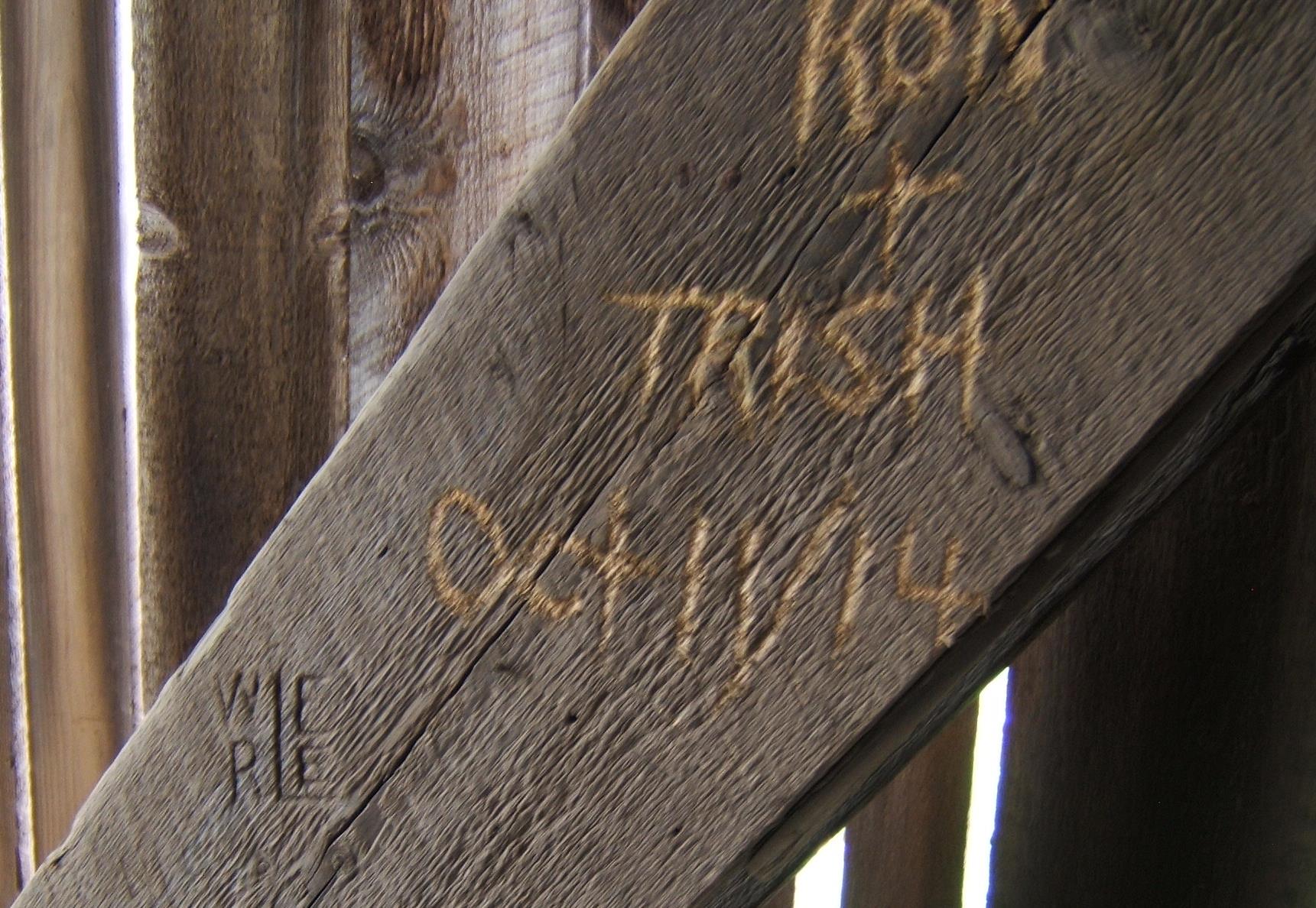
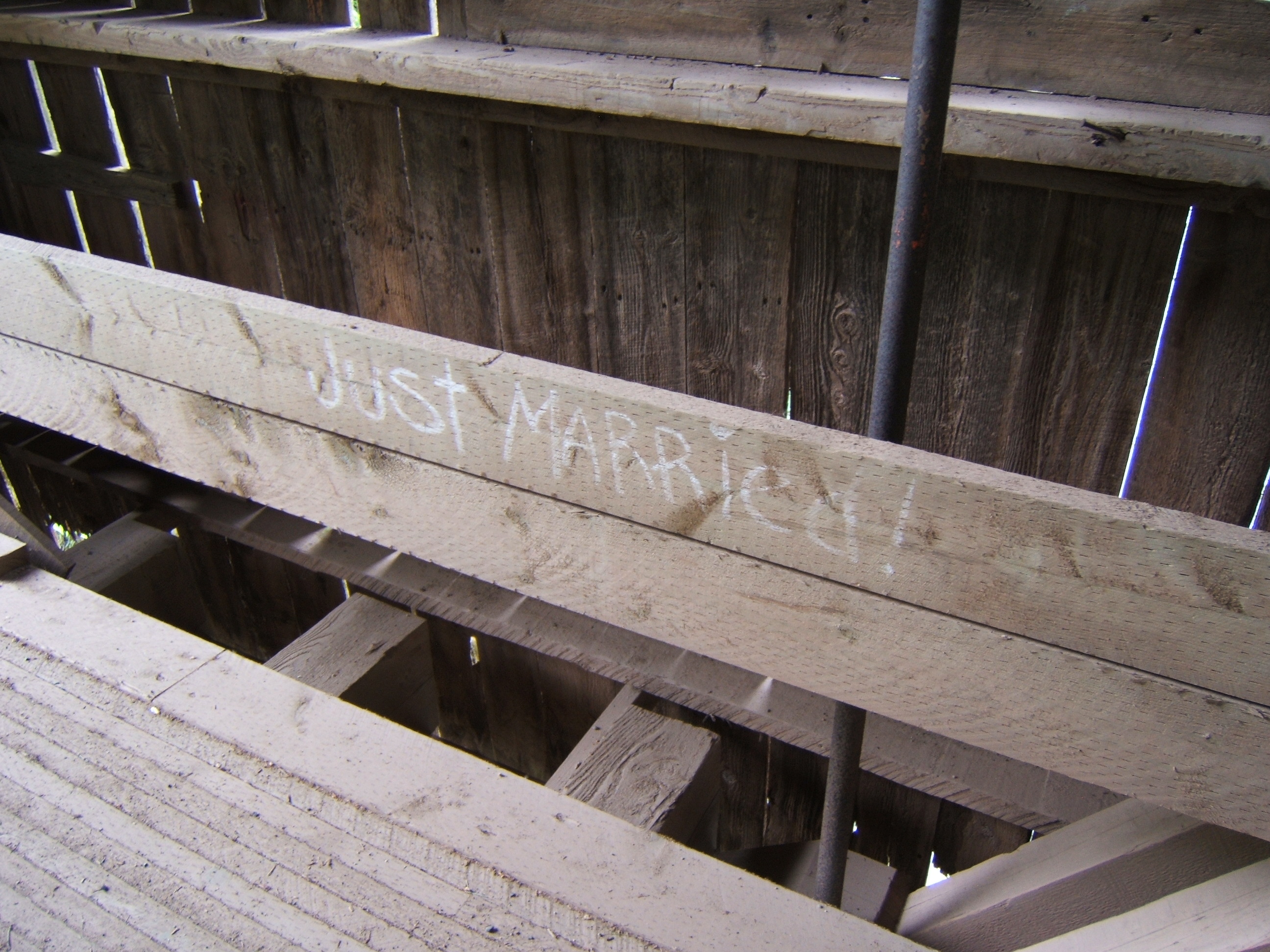
Markings tend to be of three types: carving, paint and chalk. To me, some of these markings are more destructive than decorative – spray paint in various shades of fluorescent paint is more and more common. Carvings made in the wood with knives or other sharp instruments seem more decorative to me. Chalk is more ephemeral. All have historical statements to make. I think the spray paint is a commentary on ‘modern’ times – a tendency to choose the quick and easy. Carvings take effort and are characteristic of a less time-constrained age. All these ‘tags’ tell a story. The stories I like the best include initials, an indication of relationship and a date (J. T. + G. T. 2015).
~

A symbol in spray paint on the Urney Bridge.
~
Some of the messages left in a bridge are unique. I like the simple carving below. Perhaps it is meant to represent a house or the covered bridge itself. It looks unfinished, as though the carver was interrupted, or meant to return to finish the carving. To me it is a portrayal of the importance of shelter in all our lives.
~
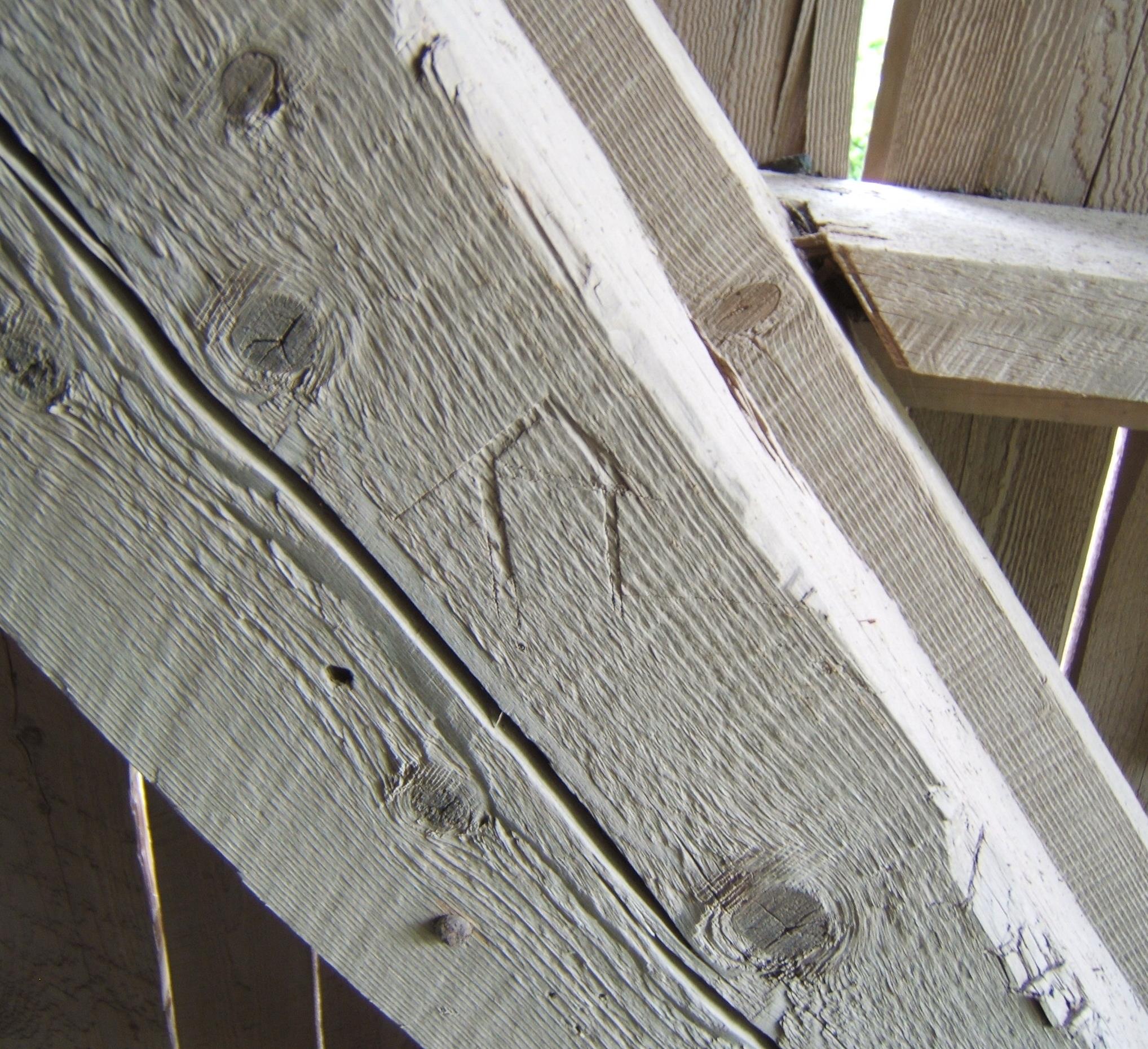
simple carving of a shelter on the Urney Covered Bridge 2015
~
Copyright 2015 Jane Tims
in the shelter of the covered bridge – hummingbird hawkmoths
At one end of the Benton Covered Bridge (Eel River #3) is a large Lilac bush.
~

Lilac by the Benton Bridge
~
Since I was looking for wild life in the vicinity of the bridge, I was delighted to see what appeared to be bumblebees or hummingbirds busy gathering nectar from the Lilac blossoms.
~

moth getting nectar from the flowers – you can see his orangy body and dark antennae
~
As we approached, we realised these were not bumblebees or hummingbirds, but a type of ‘hummingbird hawkmoth’. They behaved like hummingbirds, darting among the flowers, backing up and slipping sideways. Their transparent wings were a blur, they moved so fast. Their bodies were striped in gold and black and their bodies were very hairy.
~

hummingbird hawkmoth, his wings a blur, gathering nectar
~
Although my photographs are not very clear, with help from the New Brunswick Museum staff, I now know these are Hummingbird Clearwing moths (Hemaris thysbe). Although I listened carefully, I could not hear the sound their wings made, since the rippling of the water in the river was so loud!
~
There were hundreds of moths in the Lilac bush. The hummingbird hawkmoths shared their feast with a group of very nervous Canadian Tiger Swallowtail butterflies (Papilio canadensis).
~
The Lilac scent was overwhelming, thick and sweet. If that scent was a room, it would be a Victorian parlour. If it was a textile it would be deep-purple satin. If it was weather, it would be a sultry August evening. If it was a light, it would be a Moroccan lantern … and so on.
~

~
Copyright 2015 Jane Tims
in the shelter of the covered bridge – Stonefly nymphs
These days, I am having a great time visiting some of the covered bridges in New Brunswick. I have visited many of the bridges before, but mostly to learn about their history. Now I am planning a project to look at the plants and animals living in or around covered bridges, so I am trying to get a feel for the subject to see what species I am likely to meet.
~
Benton Covered Bridge (Eel River #3)
~
This weekend, we visited the Benton Covered Bridge (Eel River #3) in west-central New Brunswick. Benton is a small community on the Eel River. The bridge, 31.9 meters long, was built in 1927.
~
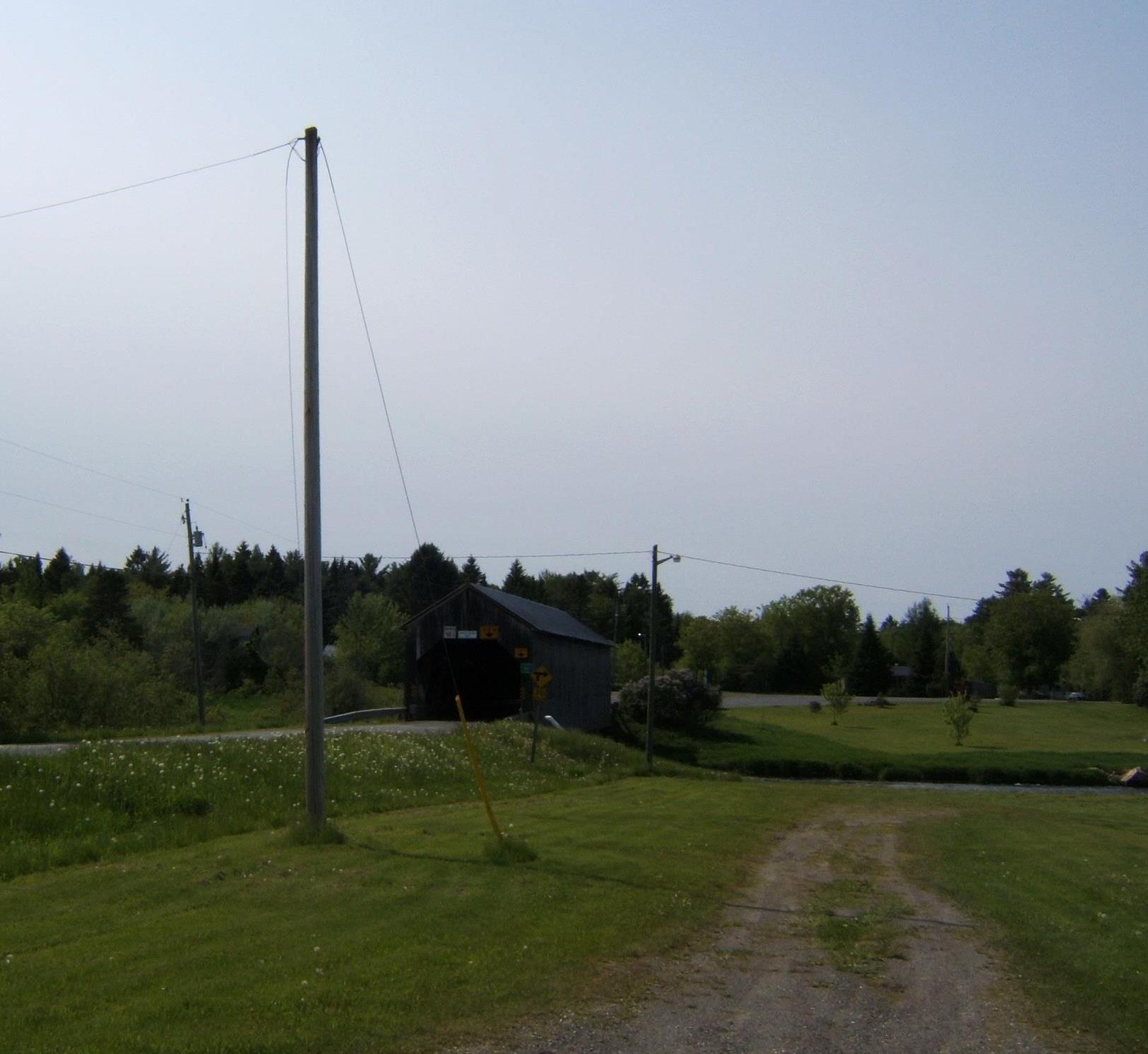
Benton Bridge on Eel River showing part of the community park on one side
~
The Eel River is a pleasant shallow river. When we were there, people were fishing with rod and reel. We noticed a digger log had been installed in the river, often done as a way of encouraging the river to dig deeper pools and improve fish habitat.
~

Eel River – a digger log has been installed in the river, the long line of flowing water above the center of the photo, running from 8:00 to 2:00 – the log causes the water downstream to dig a deeper pool and simulates the action of fallen trees in a natural river
~
My search for wild life in and around the bridge was rewarded by the discovery of Stonefly nymphs clinging to the wooden walls of the bridge.
~

Two Stonefly nymphs on the wall at the end of the bridge – the cerci are hard to see – they are a pair of extensions at the end of the abdomen, pointing upward in the photo, between the hind pair of legs – the cerci are almost as long as the insect itself
~
Not particularly beautiful to me, the nymph is a life-stage on the way to the adult form. Stoneflies (Order Plecoptera) are identified by their narrow bodies and the long pair of cerci at the end of the abdomen (cerci are long appendages on the rear abdomen of many insects). I was never any good at insect identification when I worked in the field of water quality, so I am not certain which Family of the Order Plecoptera they belong to.
~
There were Stonefly nymphs all over the bridge walls, inside and out. I was happy to see these insects because they are an indicator of good to excellent water quality. Anglers love to see these insects in a stream or river because it usually means good fishing.
~
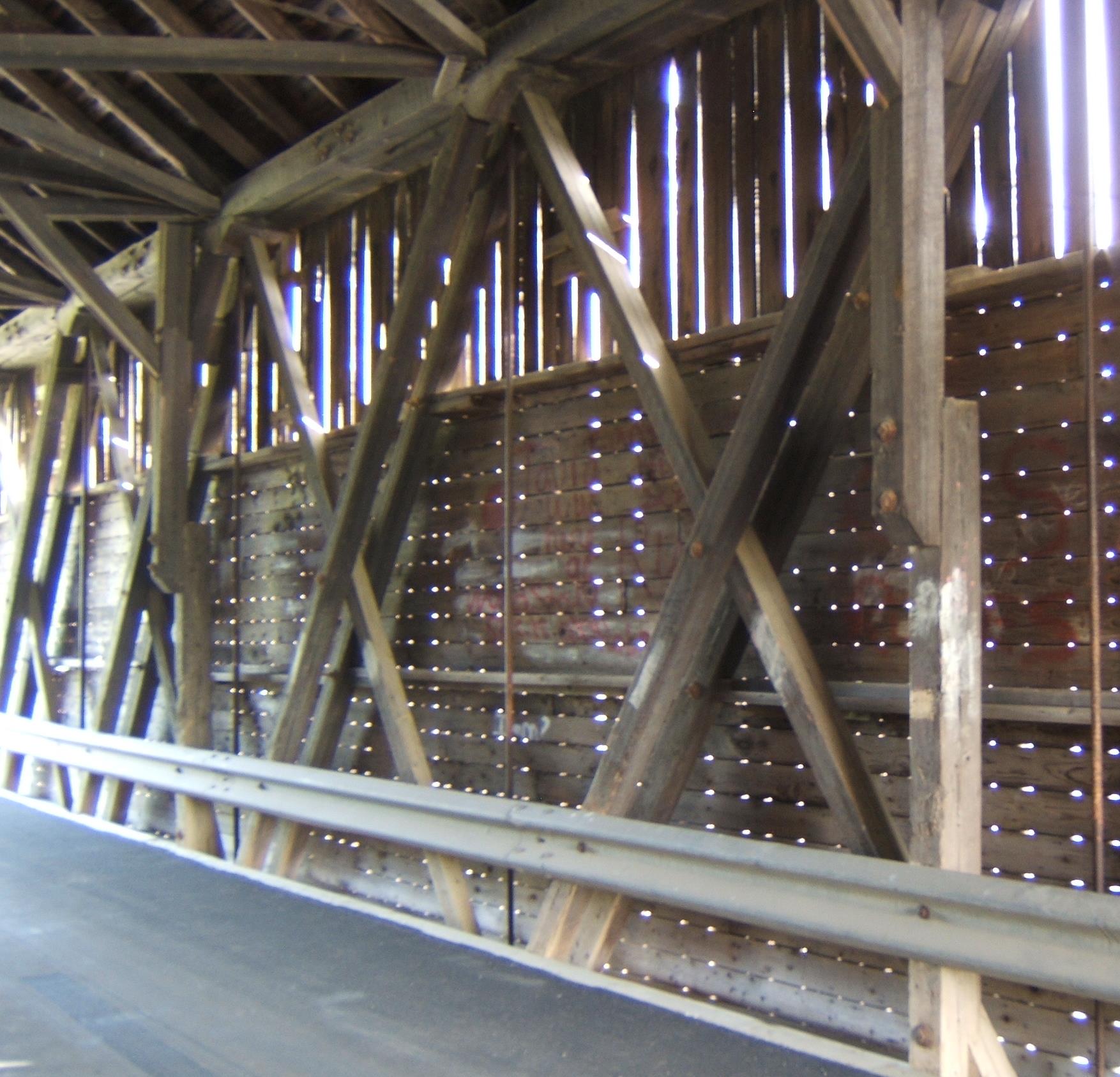
inside the Benton Bridge
~
I nudged one of the nymphs with a pen and he did not budge a millimeter. In spite of his inaction, I am certain he will be the hero of a future poem about life in the shelter of the covered bridge!
~
Copyright 2015 Jane Tims
spring orchestra – fee-bee
Carving of the name ‘Phoebe’ on a beam of the Tantramar #2 Covered Bridge near Sackville, New Brunswick
~
~
Phoebe
~
unknown, she nudges
her way into Monday –
carved name in the covered bridge
~
Black-capped Chickadee pipes
fee -bee, hey-sweetie
(bored with chick-a-dee-dee-dee)
~
and Eastern Phoebe, rasps fee-bee
whee-zy, Phoe-bee
black bed-head, smuggie throat
~
unknown, Phoebe nudges
her way into Monday
~
~
Copyright 2015 Jane Tims
~

one of the usual visitors to our feeder … the Black-capped Chickadee




 nichepoetryandprose