Posts Tagged ‘writing’
writing a novel … next (brave) step
For the past two years, I have been working on a novel. The working title of the book is ‘Saving the Landing Church’ – the actual title is ‘Open to the Skies’. For more information about the process of writing ‘Open to the Skies’, have a look at the category ‘writing a novel’. https://nichepoetryandprose.wordpress.com/2012/12/03/writing-a-novel-telling-a-story/
~
The book is about a woman who falls in love with an old church and decides to save it from demolition, in spite of active resistance from members of the community.
~
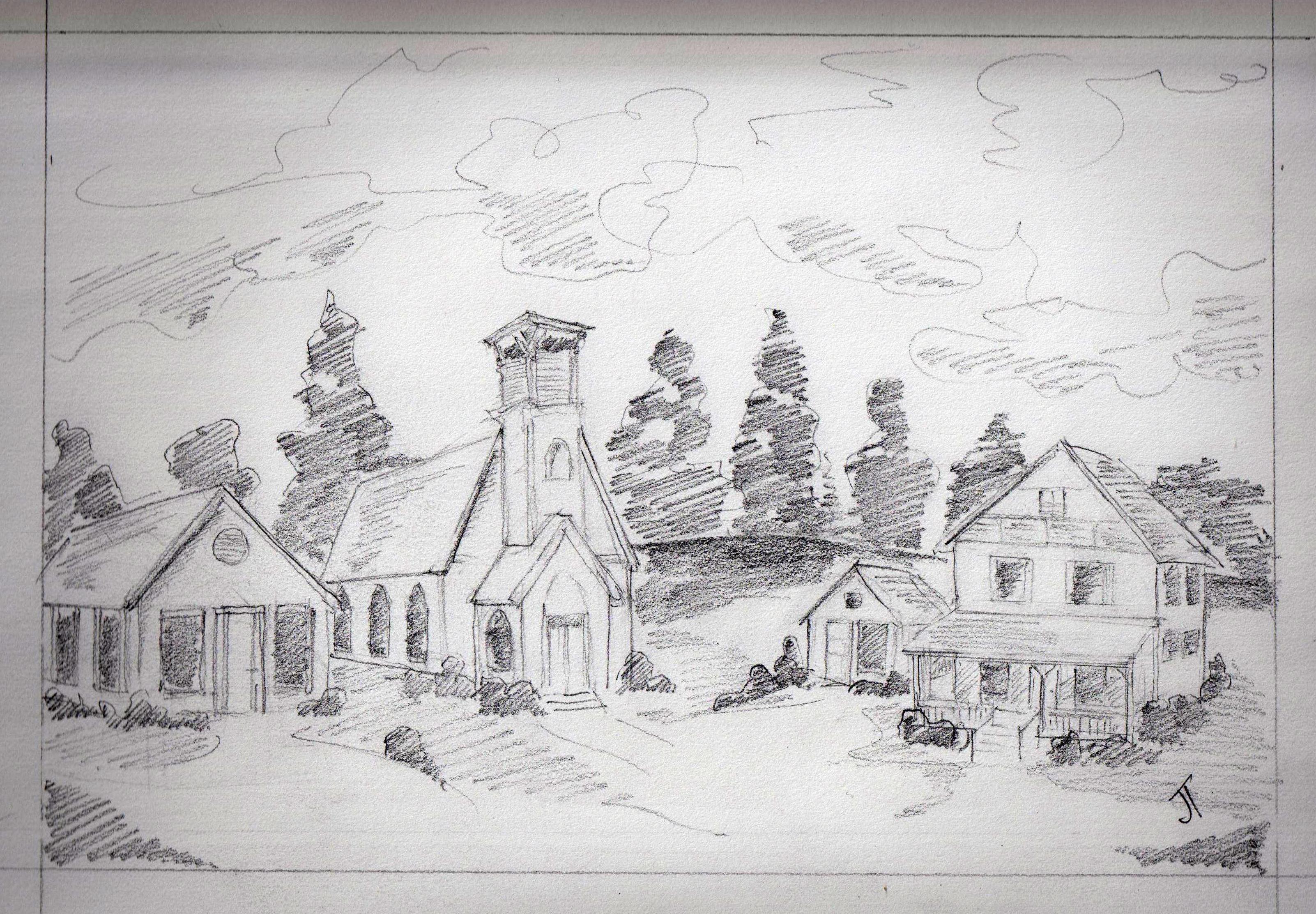
the setting for my novel … an old church and its hall and rectory are moved to a new location along the St. John River to create a writers’ retreat …
~
After taking my book through nine drafts, numerous readings of bits with my writing groups, and a third-party edit, I have taken the next (brave) step. I am sending my novel to three publishing companies. I chose the publishers based on their dedication to Canadian authors and subjects, their willingness to read unsolicited manuscripts, and their current book lists.
~
It will be a long wait. I know from past experience that I may not hear from them for six to eight months, and then it will likely be ‘no’. This is not lack of confidence or uncertainty about my skill. It is reality – most book publishers get up to a thousand submissions per year and, of course, can only choose a few of these to publish. However, on my side is the characteristic of doggedness.
~
I will be sure and let you know what happens next with ‘Open to the Skies’. Meanwhile, I’ll be busy working on a sequel to the first book and, of course, on my poetry.
~
Copyright 2015 Jane Tims
a preface for a poetry manuscript
~
As followers of my Blog will know, I am working during these first months of 2015 to finalise, for eventual publication, a manuscript of the poetry I wrote for my ‘growing and gathering’ project (see the Category ‘growing and gathering’ for more information).
Now that the poetry is ordered within the manuscript, I have to pay attention to the ‘Front Matter’. This includes:
title: ‘within easy reach’
dedication: the manuscript is dedicated to my husband
table of contents: a listing of the poems
acknowledgements: all the people I want to thank and the support of artsnb and the Creations Grant
~
The above four items are straightforward. I needed some information about the next three:
~
foreword
preface
introduction
~
Foreword: written by someone other than the author of the book, usually an authority – celebrates the work and provides credibility.
Preface: written by the author of the book – includes the purpose and scope of the work, explains the origins of the central idea in the book, and may acknowledge those the author wants to thank.
Introduction: written by the author or an editor – includes information on the contents of the book, the author, and the audience.
Source: http://www.quickanddirtytips.com/education/grammar/foreword-versus-forward#sthash.No5DaWpu.dpuf
~
Many of the poetry books I have in my library do not include a Foreword or Preface, and Acknowledgements are often placed in the back of the book. I find this is true of collections where the theme of the poems is not immediately obvious. But collections about a particular subject, such as those about history, often have a Preface or Introduction.
~

~
For example, Jack’s Letters Home (Cynthia Fuller (2006) Stable Cottage, U.K., Flambard Press) includes an Introduction. The book is a collection of gritty poems based on real letters written by a British soldier in the First World War. The Introduction tells the soldier’s history, the story of how the letters were found and a little about the characters in the poems.
~

~
I have two poetry collections by Shari Andrews. Both focus on history. Crucible (Shari Andrews (2004) Canada, Oberon Press) is an insightful collection of poems depicting characters and events in the life of Saint Catherine of Sienna. It includes a Foreword by the poet. The Foreword includes background on Saint Catherine of Sienna, information about the inspiration for the book, and acknowledgements.
~
The Stone Cloak (Shari Andrews (1999) Canada, Oberon Press) is a collection of tactile, sometimes fierce, poems about the lives of settlers of New Denmark in New Brunswick. The Foreword includes information about the poet’s connection to the community and briefly describes the history of New Denmark. It includes acknowledgements.
~

~
Although it is not a book of poetry, in an 1843 edition of A Christmas Carol Charles Dickens includes a brief Preface, consistent with the spirit (!) of his story:
I have endeavoured, in this Ghostly little book, to raise the Ghost of an Idea, which shall not put my readers out of humour with themselves, with each
other, with the season, or with me. May it haunt their houses pleasantly, and no one wish to lay it!Their faithful friend and Servant,
CD.
December 1843.(Source: http://www.themorgan.org/collections/works/dickens/ChristmasCarol/3, accessed February 23, 2015)
~

a ‘grown and gathered’ salad – leaves and flowers of violet, leaves of mint and dandelion, bean sprouts and green onions
~
My poetry manuscript has a very specific theme – the ‘growing and gathering’ of local foods. Since all of the poems are about a particular topic, I think including a Preface is appropriate. I want the Preface for my manuscript to:
- be short (less than a page)
- inspire my audience
- include the purpose of my poems
- provide an overview of the contents
~
When I was young, I always skipped the Preface of any book I read. Now, I read the Preface first, eager to find information about the process the author followed in conceiving of or writing the book.
~
Copyright 2015 Jane Tims
first and last and in between

~
This past Saturday, I worked to create a manuscript of some poems I have written on the theme of discarded and abandoned elements of life and landscape.
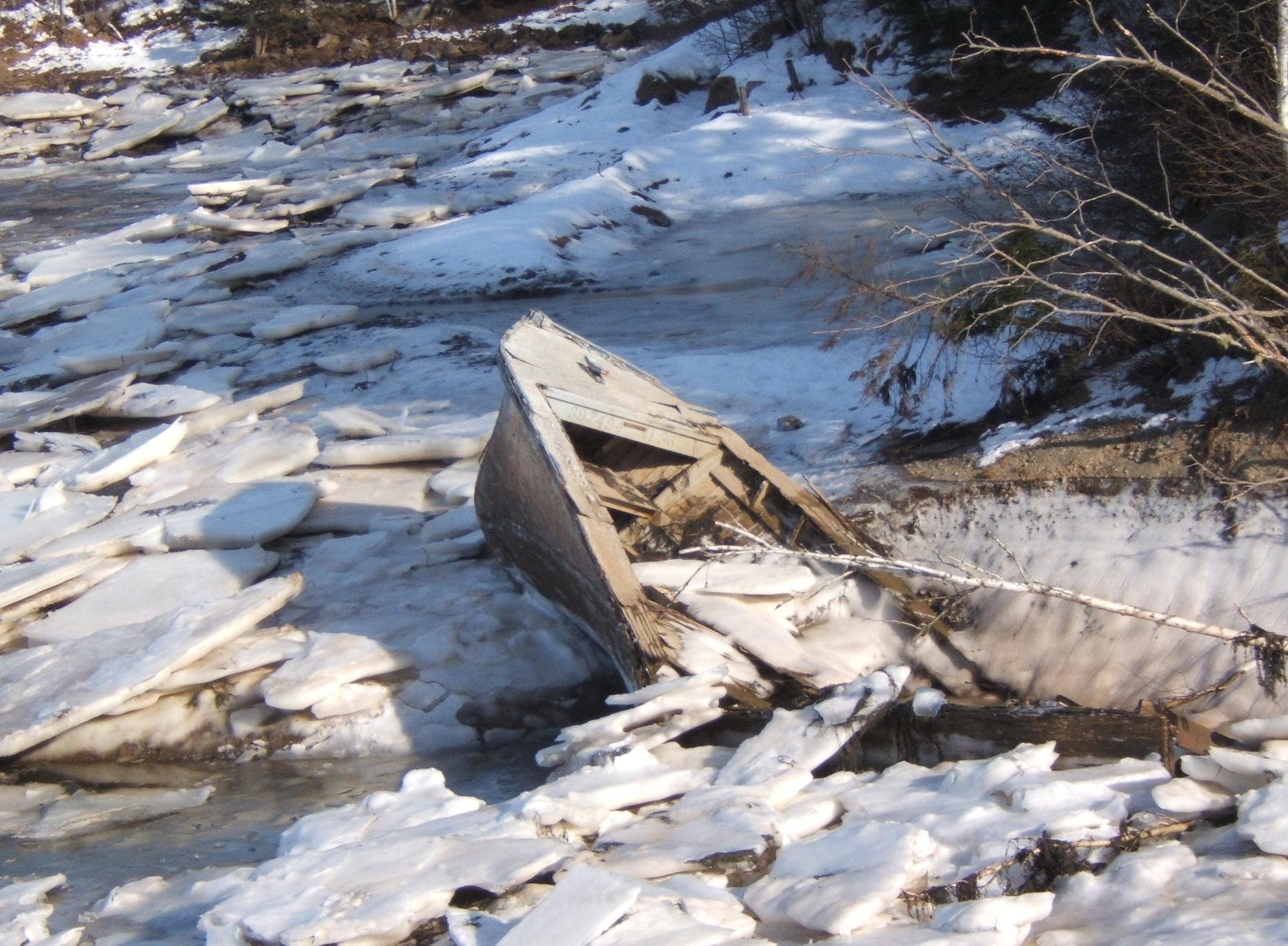
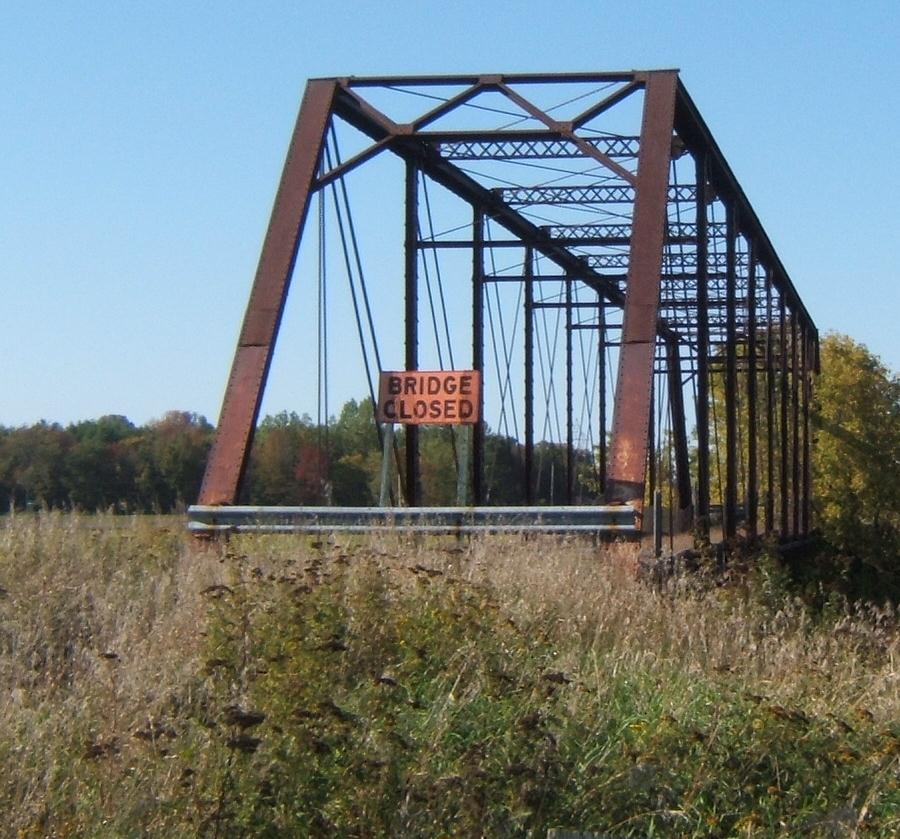
There are 38 poems in the rough manuscript, making up about 50 pages. The poems are a study of change. They include poems about abandoned boats, roads, churches, toolboxes, sheds, trucks, bridges and so on.
I have published a few of these on this blog … for an example, see ‘Foggy Molly’, a poem about an abandoned boat (https://nichepoetryandprose.wordpress.com/2013/01/30/abandoned-boat/ ).
~
~
Part of creating this manuscript is to put the poems in order. I find it hard to decide how to arrange 38 poems so they flow, one into the other, and so they tell a story.
~

~
1. My first step is to print a table of contents of the rough manuscript. I read each poem through and assign a couple of key words to describe it, jotting these into the table of contents. For my 38 poems on abandonment, I obtained 27 key words. Many of these are shared by various poems, but a few are unique to one or two poems. My key words are, in no particular order:
lost ways, regret, grown over, barriers, evidence, sadness, history, haunted, adaptation, voice, intention, anger, change, memory, denial, improvement, new life, lost function, buildings, items, understanding, cruel, resistance, life/death, shock, keeping past, lost/misplaced, broken
~
~
2. Next, I put everything into a table, with Xs to show which key words fit each poem. This does not take too long to do and helps me consider the meaning of each poem. Below is just a small section of my table:
| Poem Title | lost ways | regret | grown over | barriers | evidence | sadness | history | haunted | adaptation |
| Recovery | X | X | X | X | |||||
| Reason for Leaving | X | X | X | X | X | ||||
| South Nation Bridge | X | X | X | ||||||
| Outfield | X | X | |||||||
| Diverted road | X | X | |||||||
| Invitation to tea | X | X | X | X | X | ||||
| Lane | X | X | |||||||
| Abandoned church | X | X |
~
3. Once I have the table created, I tally the Xs in the columns and decide which key words are most common. Key words occurring in more than 10 poems are shown in bold:
lost ways, regret, Grown over, barriers, evidence, sadness, history, haunted, adaptation, decay, intention, anger, change, memory, denial, improvement, new life, lost function, buildings, items, understanding, cruel, resistance, life/death, shock, keeping past, lost/misplaced, broken
The words that apply to almost every poem usually speak to the theme of the poetry collection: in this case, the words ‘change’, ‘memory’ and ‘lost function’ were very common, no surprise in a collection about things abandoned. Other key words, common to a few poems, suggest possible themes for the sub-sections.
~

~
4. My next step is to look at the key words and see what themes ‘speak’ to me. I also want to have a progression of ideas through the manuscript. In this case, some of the poems are sad and rather hopeless, while some show how abandonment leads to understanding, and, in some cases, to new purpose and new life. From the key words, I selected six sub-sections: ‘lost ways’, ‘decay’, ‘haunted’, ‘broken’, ‘understanding’ and ‘new life’.
~
5. Now comes the long work of re-ordering the manuscript. I create a new document and, one at a time, transfer the poems into their new sections.
~
6. I like to name each section, taking the name from a line in one of the poems in the section. These may change later, but for now, they give me a reference within each group of poems:
lost ways – ‘overgrown …’
decay – ‘left to rust …’
haunted – ‘ghosts are lonely here …’
broken – ‘dry putty, broken glass …’
understanding – ‘the rock to stand on …’
new life – ‘a turn towards horizon …’
~

February 11. 2014 ‘old shed near Charlo’ Jane Tims
~
Today, I will begin a read of the manuscript to see how the poems flow within their sections. Many revisions are ahead, but this is my favorite part of the work!
~
Have you ever gathered poems into a manuscript and did you use any particular method to decide the order of the poems?
~
Copyright 2015 Jane Tims
harvesting colour – drop spin

~
drop spindle
~
spin turned maple between
fingers, draft roving to
the texture of cobweb
the wool ravels, the twist
travels the line to the pinch
of thumb and forefinger
fibres teased to almost
breaking, then spun strong
~
park and draft, and colour thickens
energy builds, the spindle
muddles air and the twist
travels between hand and whorl
where fibres embrace one
another, fatten the cop
build a kitten-worthy
ball of yarn
~
~
Previously published as ‘drop spindle’ Canadian Stories 17 (99),October/November 2014
Copyright 2014 Jane Tims
~

~
beet pink
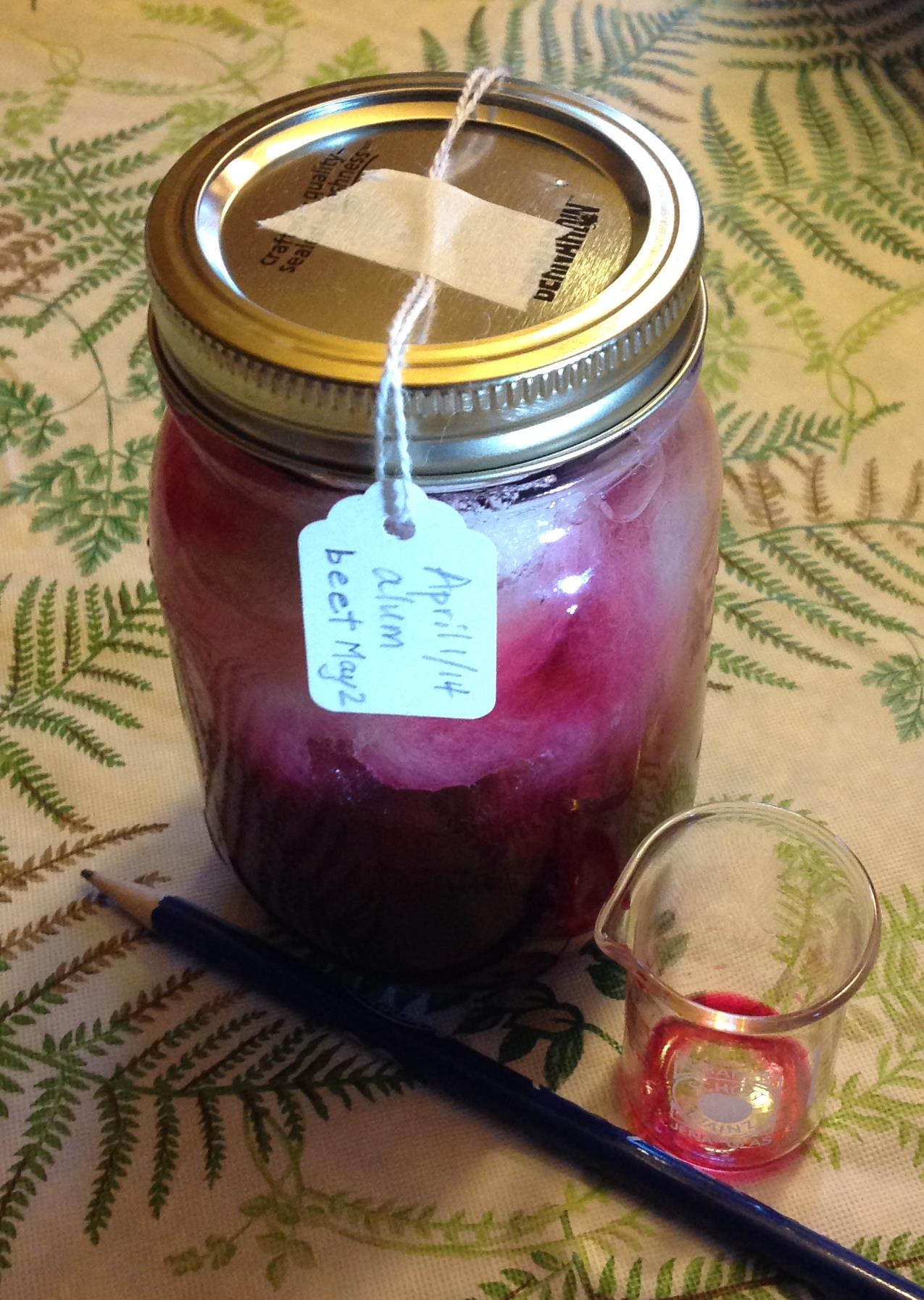
Last week, I tried dyeing some wool roving with the juice of pickled beets …
~
~
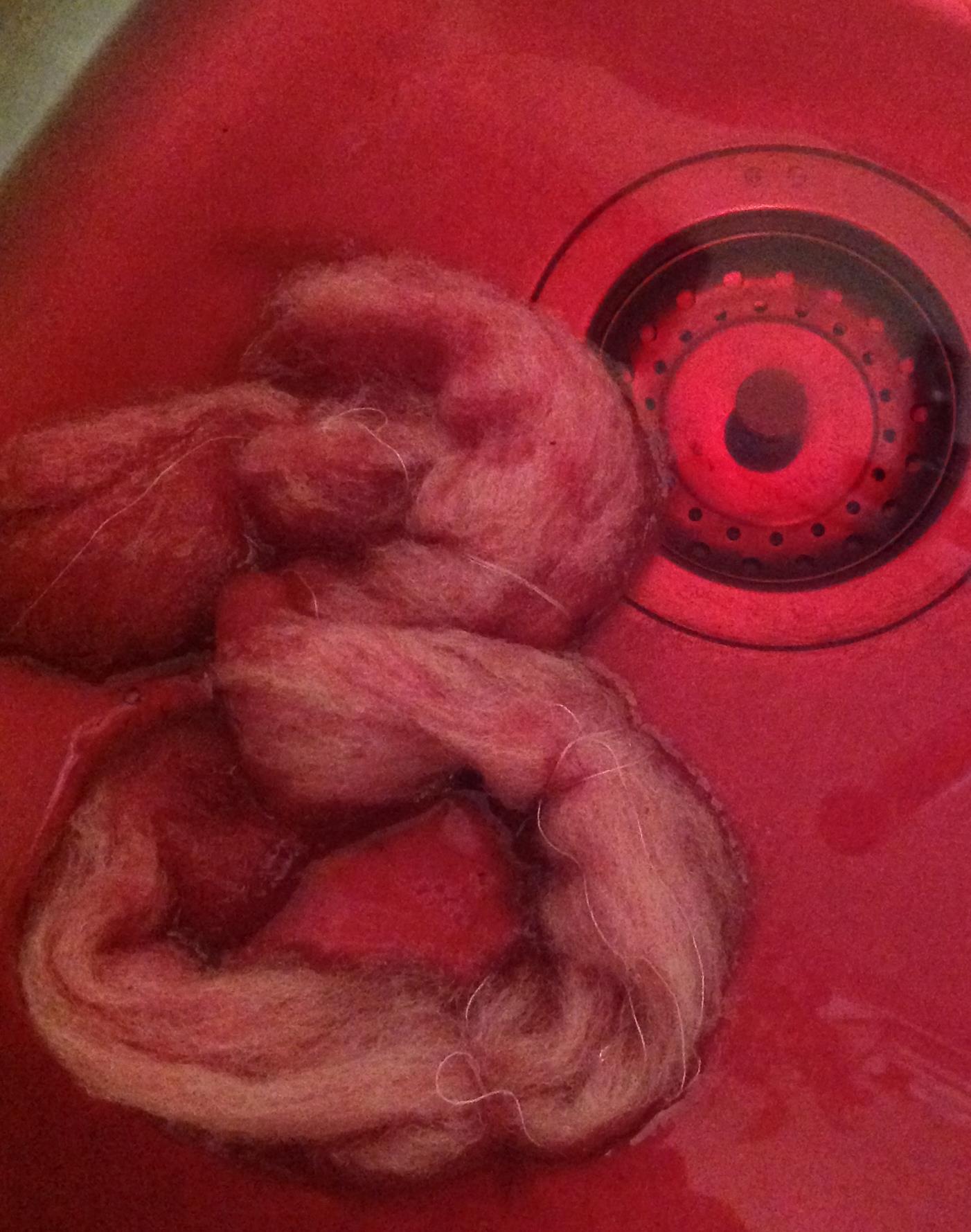
Yesterday I opened the jar and rinsed the wool in cool water. Looks like a lot of the colour still went down the drain …
~
~
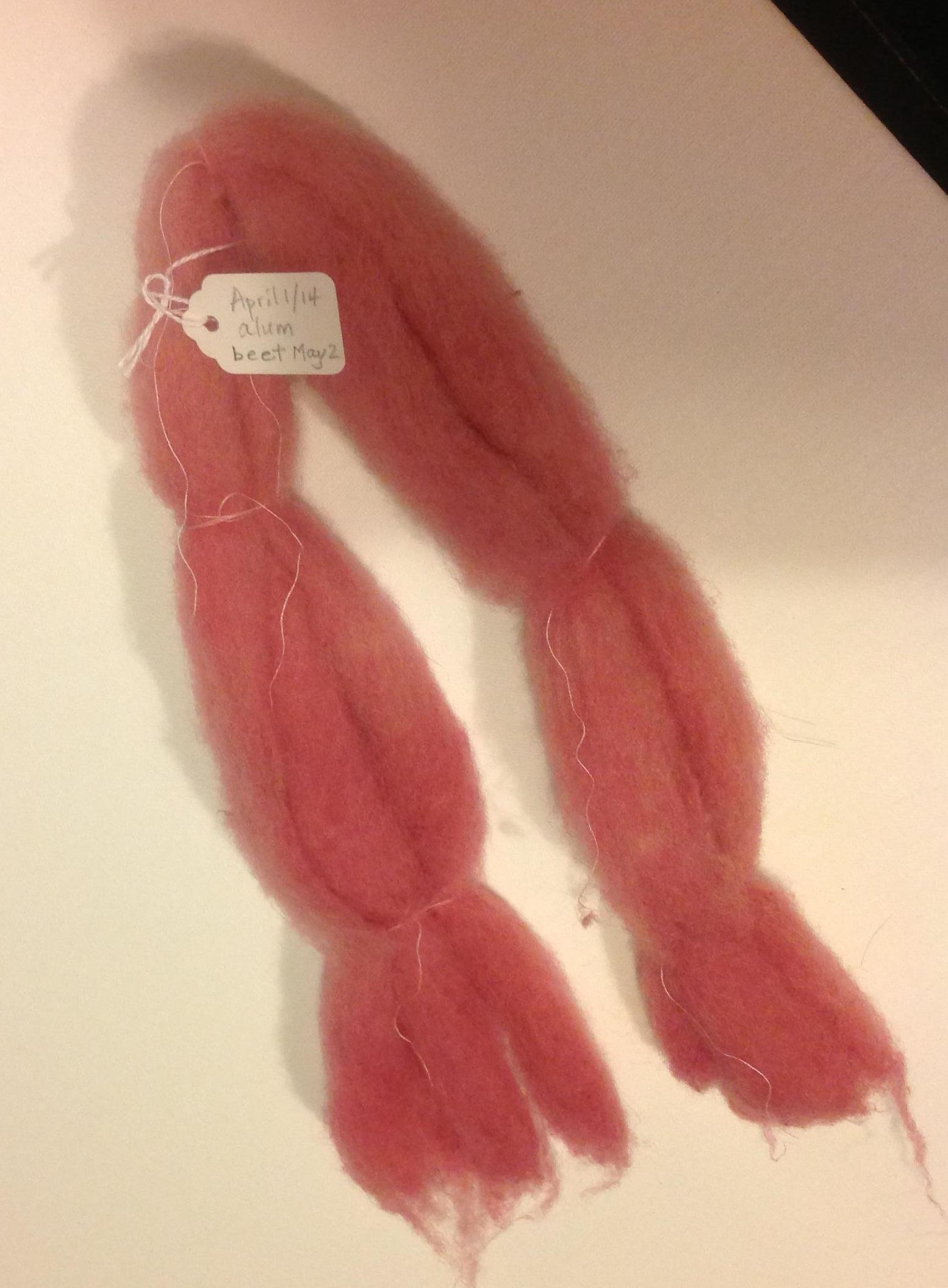
And the final result? A pretty pink. Reminds me of the pink batts of insulation we installed in our walls! The wool is not scratchy at all, but soft and fragrant.
~
~
Gradually I am building a rainbow of colour on my drying rack …
~

from right to left: wool roving prepared with alum as a mordant; wool dyed with Tansy; wool dyed with Old Man’s Beard lichen; and wool dyed with pickled beet juice
~
I am still working on the poem to capture this experience … it’s not quite ready to share.
~
Copyright 2014 Jane Tims
The Light Never Lies – A Guest Post from Francis Guenette
I am so pleased to welcome a guest in this post. Francis Guenette is a Canadian writer, the author of two books, ‘Disappearing in Plain Sight’ ( FriesenPress, 2013) and ‘The Light Never Lies’ (Huckleberry Haven Publishing, 2014). When I read ‘Disappearing in Plain Sight’, I was drawn to the setting – Crater Lake, the cabins and the garden. In this post, Frances writes about the setting, its origins and how the setting influences the story. Welcome Frances! And thank you so much for your Crater Lake Series of books!
~
 To begin – a synopsis of The Light Never Lies:
As circumstances spiral out of control, Lisa-Marie is desperate to return to Crater Lake. The young girl’s resolve is strengthened when she learns that Justin Roberts is headed there for a summer job at the local sawmill. Her sudden appearance causes turmoil. The mere sight of Lisa-Marie upsets the relationship Liam Collins has with trauma counsellor, Izzy Montgomery. All he wants to do is love Izzy, putter in the garden and mind the chickens. Bethany struggles with her own issues as Beulah hits a brick wall in her efforts to keep the organic bakery and her own life running smoothly. A native elder and a young boy who possesses a rare gift show up seeking family. A mystery writer arrives to rent the guest cabin and a former client returns looking for Izzy’s help. Life is never dull for those who live on the secluded shores of Crater Lake. Set against the backdrop of Northern Vancouver Island, The Light Never Lies is a story of heartbreaking need and desperate measures. People grapple with the loss of cherished ideals to discover that love comes through the unique family ties they create as they go.
~
My first order of business is to extend many thanks to Jane for inviting me over to her blog. Jane thought it would be interesting to hear how architectural and garden elements of the setting for Disappearing in Plain Sight and The Light Never Lies contributed to the story.
~
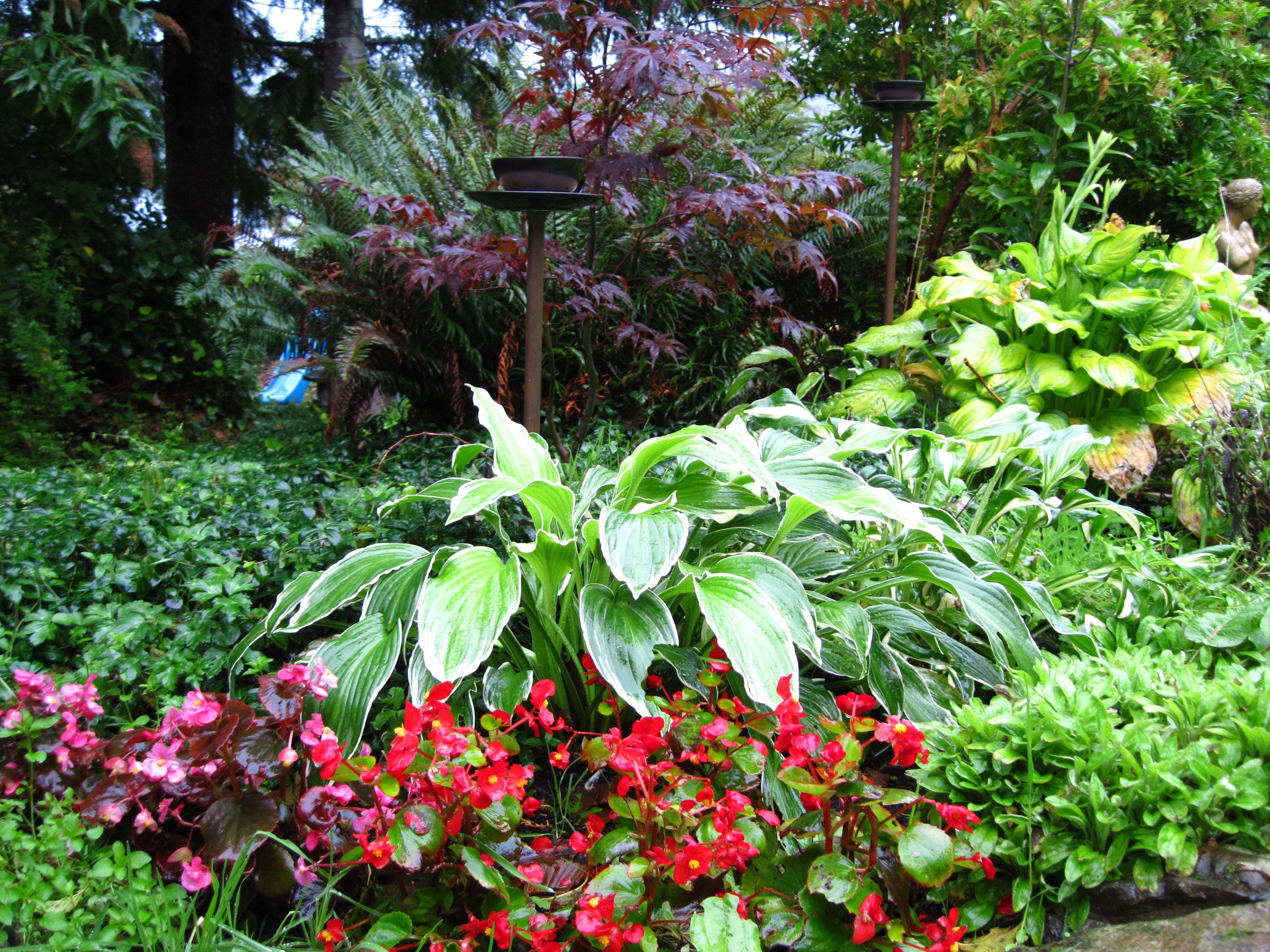
Write what you know. It’s a common sense piece of advice. After all, fiction writers have enough work in the making-things-up department. When I first envisioned writing a novel, it was because a group of characters had made a sudden appearance in my imagination. I always knew they would live in a rural setting, on the shores of a lake, some in elaborate cabins with expansive gardens and some in more rustic dwellings. Fiction mirroring reality – where I live is somewhere in the grandiose middle.
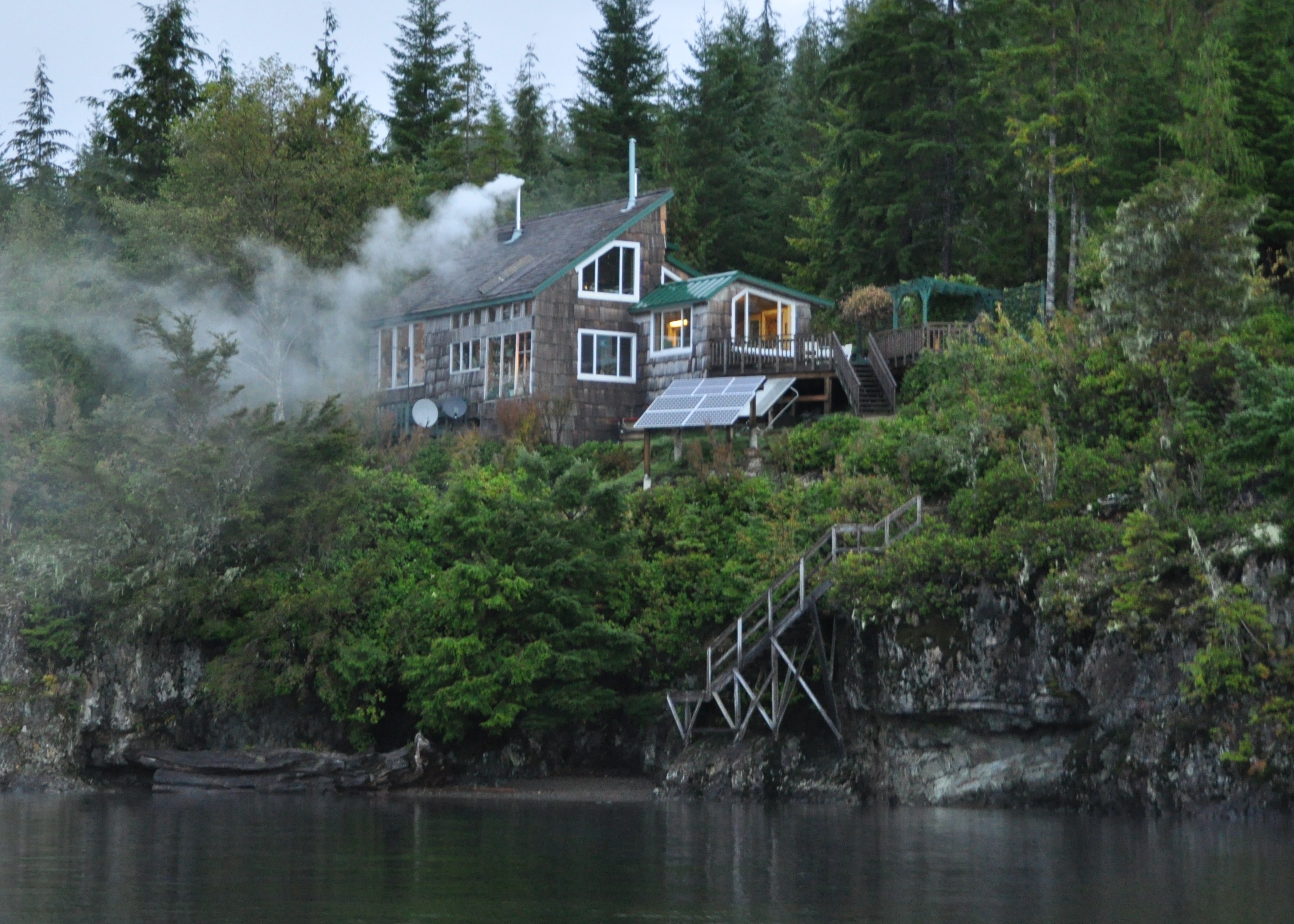
I thought about my own home and a few cabins in the vicinity and from there I embellished, stretched and massaged the reality of these settings into a small community on the shores of a fictional place called Crater Lake.
I have lived on the shores of a lake, in a cabin, with a garden in the wilderness for over twenty years. I’ve walked the trails around this place so many times my feet have worn smooth my route. In many ways, it’s hard for me to separate my own environment from that of the books – except to stress that Crater Lake is fictional, Micah Camp is a product of my imagination, the characters likewise. The cabins and gardens described are all altered, sometimes to a grander scale, sometimes to include elements not present anywhere but in my imagination. I suspect many writers have gone through a similar process.

Living in a particular place shapes people. A rural, semi-isolated setting, homes that reflect local materials open to multiple views of lake, mountains and trees, gardens and small businesses carved out of wild landscapes – all of these factors make the characters in my books the people they are and dictate (to a degree) the situations they find themselves in.
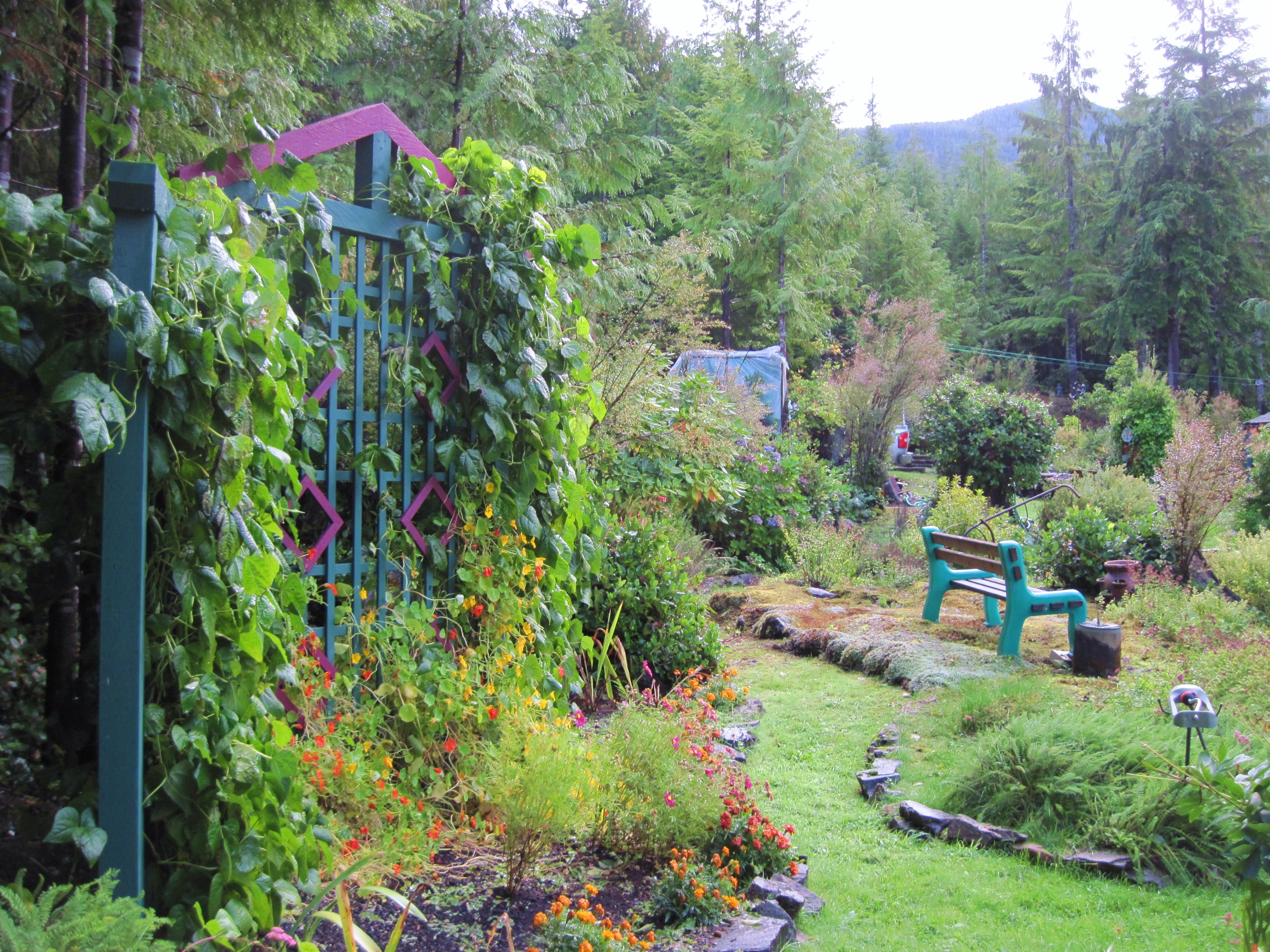
I have a couple of anecdotes that illustrate well a juxtaposition of fiction and reality. A close friend who has never visited our lakeside home, read Disappearing in Plain Sight and she loved it. When her husband managed a quick visit last summer, he told me he would tell his wife that our cabin and the view were just like walking into the book. The view perhaps – the cabin not so close, but close enough to resonate.
I recently ran into a woman who borrowed one of my books from her daughter. She and her husband had bought some land out in the wild and were getting ready to build. She asked me it the architect Caleb used to design his cabin in Disappearing in Plain Sight was based on a real person. She shrugged and said, “Oh, I suppose that would be too much to ask, but I want a place like the one you described in that book.”

Here is a dichotomy, for sure. If you come and visit me, at first glance you will recognize, in broad brush strokes, the setting of Disappearing in Plain Sight and The Light Never Lies. But don’t go looking for more. You’ll only end up disappointed. It is in the fine details that fiction has taken off to soar away from the landing strip of reality.
~
~

Francis Guenette has spent most of her life on the west coast of British Columbia. She lives with her husband and finds inspiration for writing in the beauty and drama of their lakeshore cabin and garden. She has a graduate degree in Counselling Psychology from the University of Victoria, British Columbia, Canada. She has worked as an educator, trauma counsellor and researcher. The Light Never Lies is her second novel. Francis blogs over at http://disappearinginplainsight.com and maintains a Facebook author page. Please stop by and say hello.

http://www.amazon.com/dp/B00I8XKIDK
harvesting colour – the formula for colour
My first effort towards my project is to understand what materials I will need. From my early reading, I have learned the end colour for any project using natural dyes is much more than just adding plant material to water. A final colour is the result of so many factors.
~
My simple formula for this complex symphony is:
final colour = source water + utensils + plant material (dyestuff) + mordent + colour modifier + textile fibre
~
No doubt, I will discover I have omitted some important element.
~
In my next posts, I will consider each of these elements and talk about the specific items I intend to use.
~
For example, I will need some textile fibre to dye. My intention is to dye small amounts of material for use in various weaving projects. In my weaving, I use both thread and strips of textiles.
At this early stage, I have three materials I want to dye. I have a small quantity of unspun fleece obtained a couple of years ago during our trip to Upper Canada Village in Ontario. I also have three old cotton shirts – I loved to wear these before they became stained – perhaps I will wear them again, repurposed in rainbow colour! And I have just purchased a meter of white silk (at $37 per meter, it is a splurge!). I will have to do some preparatory cleaning to each of these materials before I use them in my dyeing projects.
~

some materials for dyeing … a meter of silk, three shirts, and a bundle of unspun wool … the shirts have already seen their share of accidental dyeing !!!
~
Behind the scenes, I am finding poetic inspiration as I learn this craft of dyeing. Eventually I will be brave enough to show my poems to you.
~
Copyright 2014 Jane Tims
harvesting colour – a reference library
To begin my poetry project ‘harvesting colour’, I have created a small reference library. I will keep my library by my desk in the loft I use as my studio. I wrote most of the poems for my ‘growing and gathering’ manuscript there.

on my desk
To decide what books to order, I followed some suggestions made by Pia, an experienced dyer (follow her dyeing adventures at Colour Cottage – www.colourcottage.wordpress.com).
~
I started with three books:
Rita Buchanan, 1999, A Dyer’s Garden (Dover Publications)
Jenny Dean, 2010, Wild Color: The Complete Guide to Making and Using Natural Dyes (Watson-Guptill Publications)
India Flint, 2010, Eco Colour: Botanical Dyes for Beautiful Textiles (Interweave Press)
~
I am sure I will be adding others as my project goes on, but for now these books have lots of great advice for a beginning dyer. Along with these books, I have my entire library of illustrated botanical guides, including floras of New Brunswick, Nova Scotia and North America to help me identify the plants I will need.
~
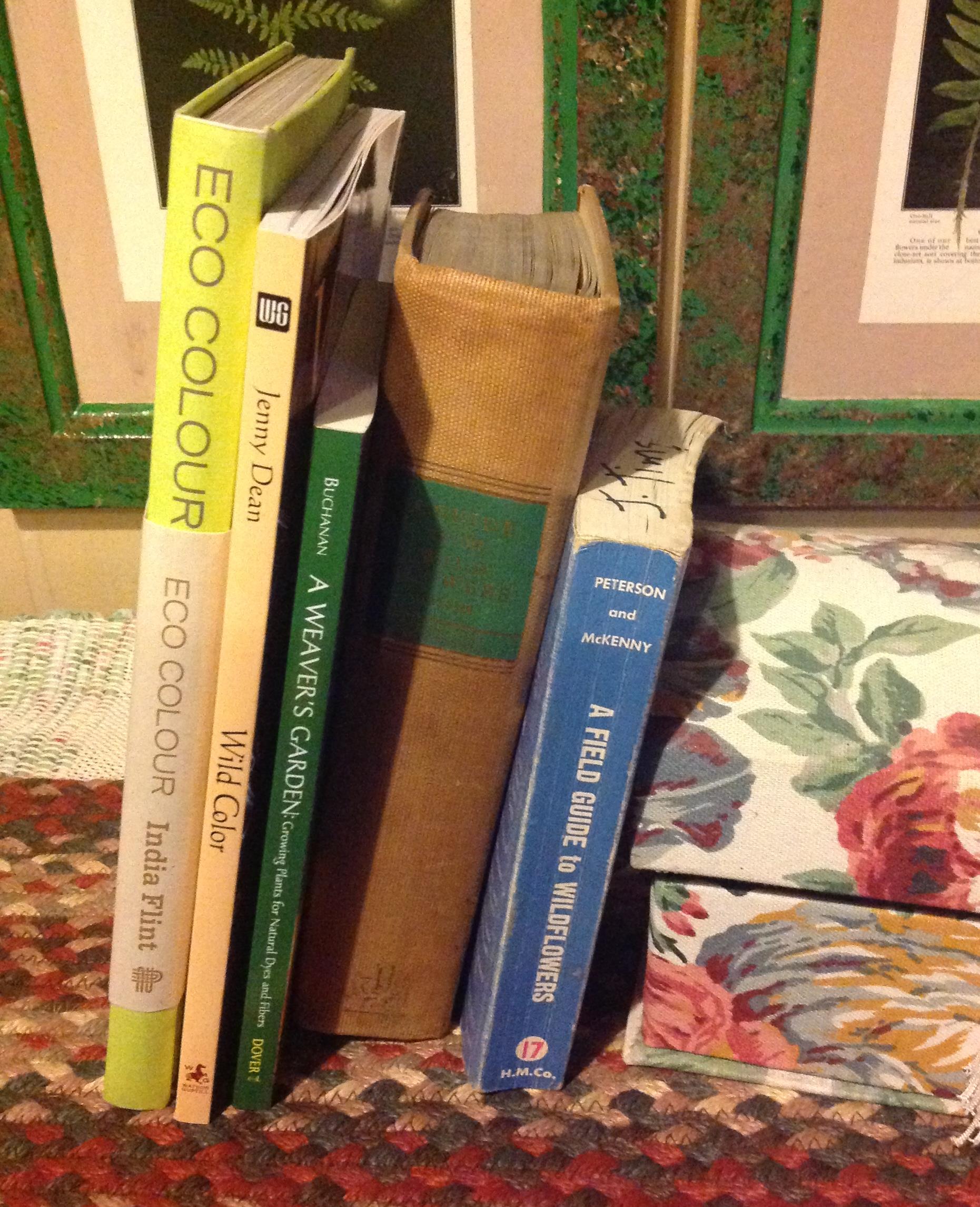
my growing dyers library
~
Roaming through these books as an ‘armchair dyer’ reminds me of the thrill of looking over seed catalogues while the snows of winter are falling.
Although I have not read any of these books in their entirety, I will give you a brief description of each:
~
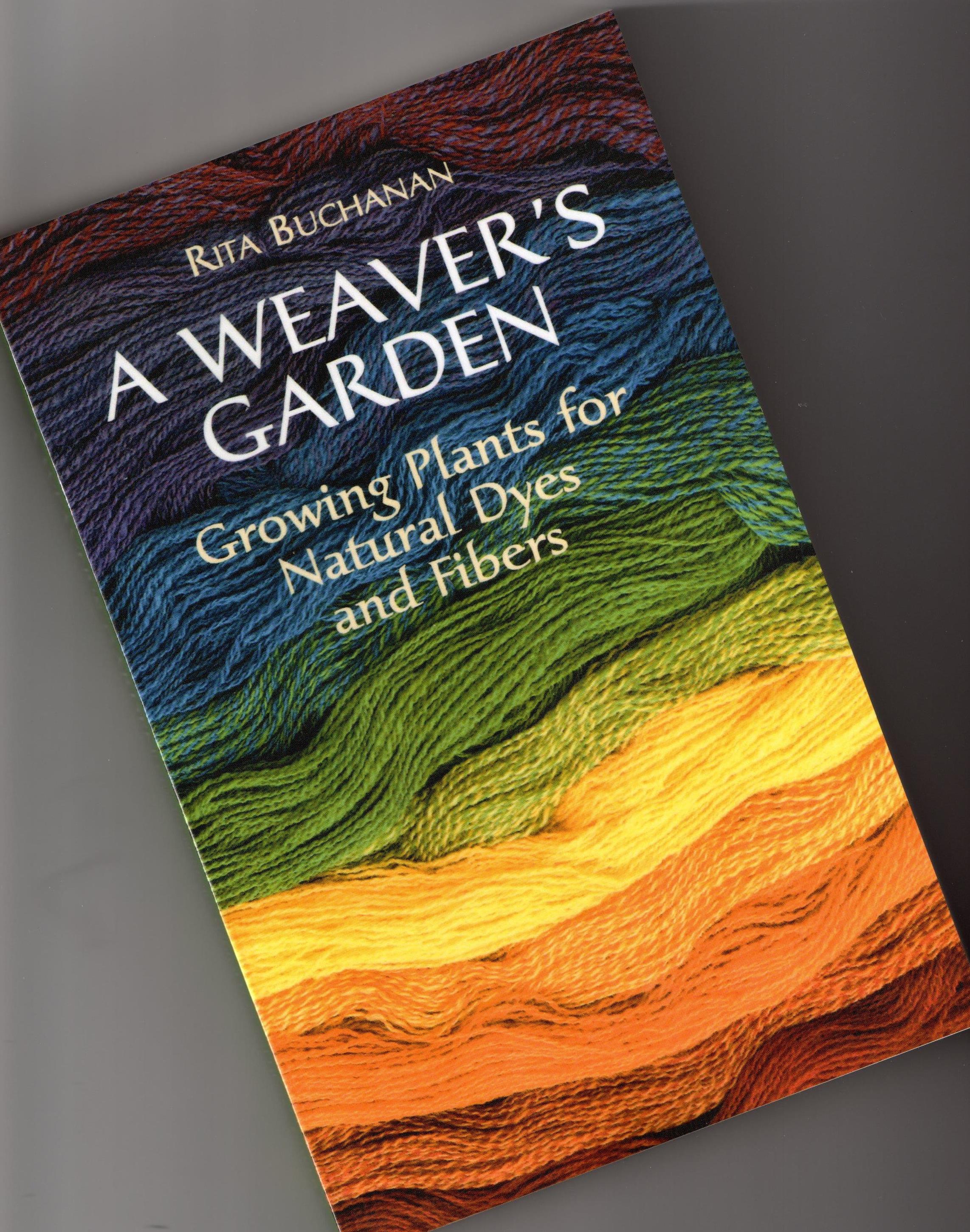
Rita Buchanan, 1999, A Dyer’s Garden (Dover Publications)
~
Rita Buchanan’s A Dyer’s Garden is a straightforward guide to using plants for various cottage craft purposes. The guide includes information on using plants as dyes, as well as for stuffing, soap-making and a source of fragrance. The chapter on dyes provides a step by step method, as well as an in-depth description of various plants useable for dyes. I love the black and white line drawings for some of these plants. The book includes practical information throughout on growing these plants and on the history of their use.
~
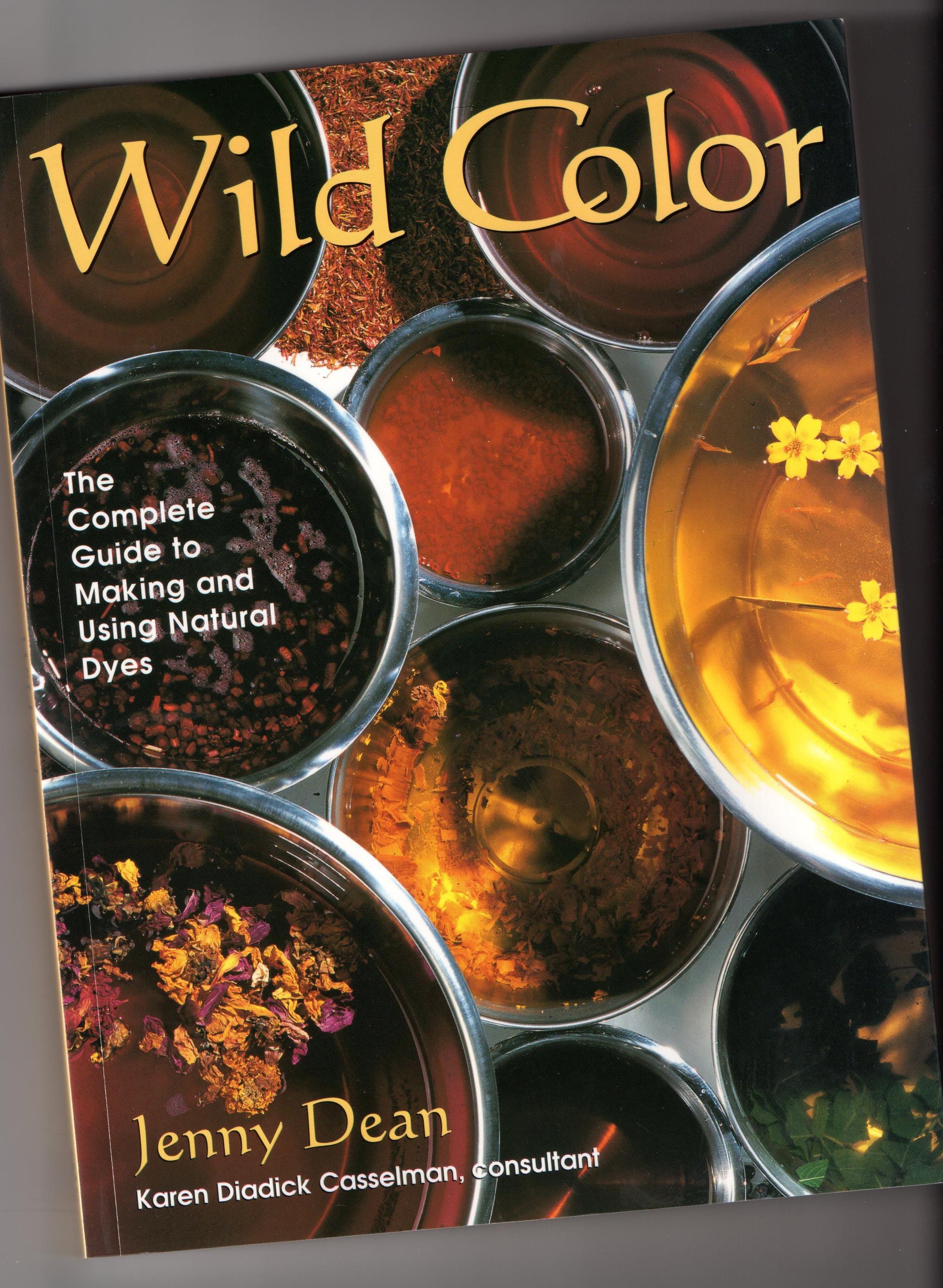
Jenny Dean, 2010, Wild Color: The Complete Guide to Making and Using Natural Dyes (Watson-Guptill Publications)
~
Jenny Dean’s book, Wild Color, is a riot of colour. Easy to flip through, it has detailed sections on various stages of the dyeing process. A useful feature for me will be her illustrated guide to some common plants used as dyestuffs. I particularly like her colour charts of results obtained with various dyestuff, mordants and modifiers. She also includes some background material on the history of dyers and dyeing.
~

India Flint, 2010, Eco Colour: Botanical Dyes for Beautiful Textiles (Interweave Press)
~
Eco Colour by India Flint is a well-illustrated book, full of photos of the author’s work with plants and fabrics. You can tell she has been there every step of the way – included in the photos are her handwritten notes. She describes well the process of dyeing and provides practical information. She also includes lots of examples of colour transfers (eco prints) – leaves are applied directly to the cloth to make colour prints. The book includes an extensive list of plants sorted by the colours they produce.
~
I can hardly wait to thoroughly read these three books. Besides looking for a step by step approach, I will be on the hunt for words from the dyer’s vocabulary to include in my poems.
~
Another resource I will use for my project will be the Internet. I read the blogs of a few dyers regularly, to learn something from their experiences, to get their advice and to better know these people who turn their appreciation of colour in nature into capturing colour. I’m sure you will enjoy these blogs about dyeing and fabrics as much as I do:
http://colourcottage.wordpress.com
http://whatzitknitz.wordpress.com/
~
Now that I have my reference library underway, I am gathering ideas about what I will need to begin my project. My next post will show you some of the items I will be using.
~
Copyright 2014 Jane Tims
harvesting colour
Recently I was awarded an artsnb (New Brunswick Arts Board) Creations grant. My six month project will be to write a book-length poetry manuscript about the experience of using plant dyes for colouring textiles.
The poems will find their inspiration in the activities of collecting plants, extracting their dyes and using them to colour woven fabric.
~
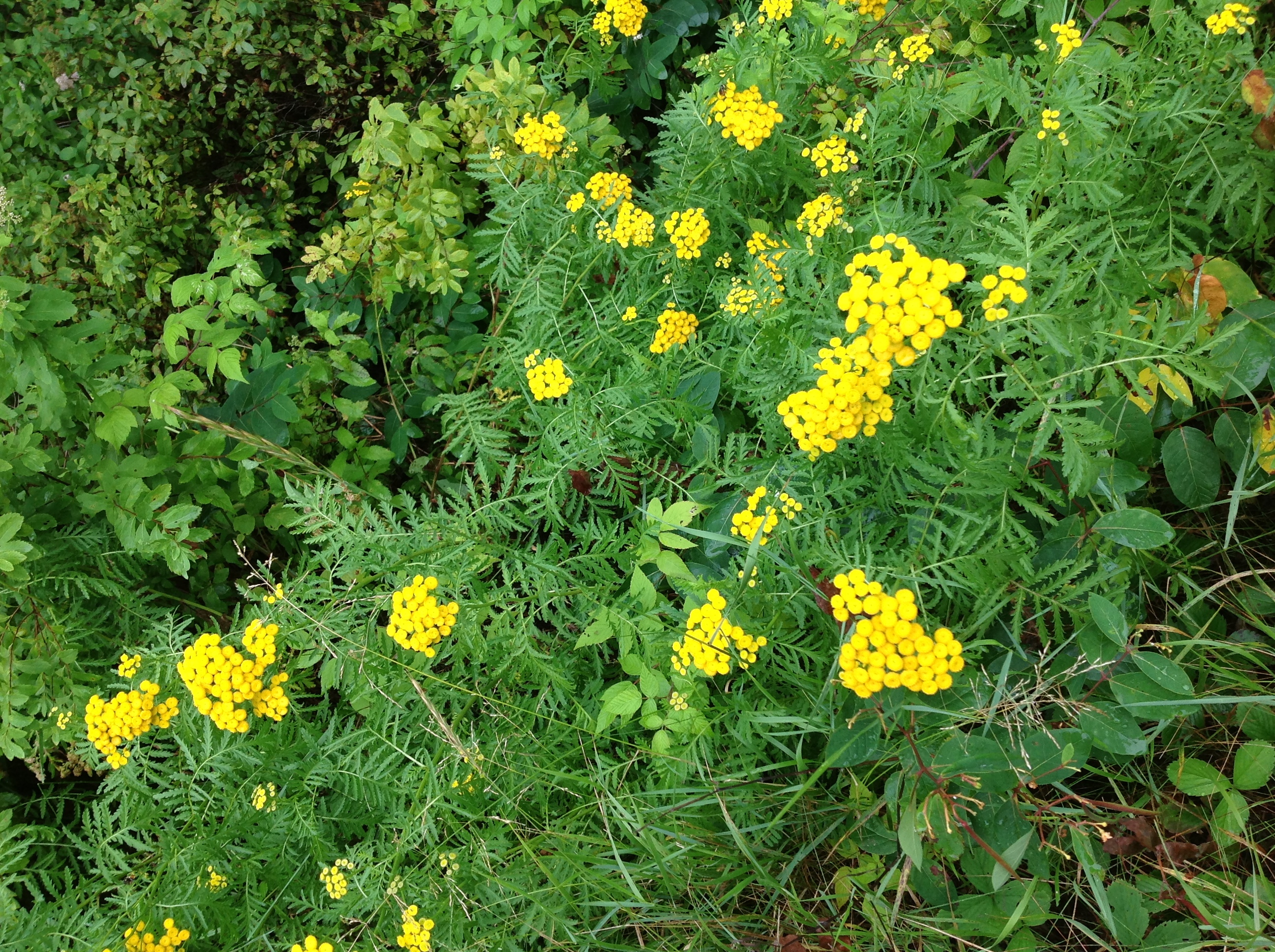
one of the plants I will be using is Tansy (Tanacetum vulgare) – it grows throughout New Brunswick and can be used to make yellow and olive dyes
~
Writing these poems, in many ways, should echo my previous project ‘growing and gathering’. I will do some research about a particular plant, then go forth and find it. For the ‘growing and gathering’ project I had a lot of fun exploring various areas of the province for the plants I needed, so I know I will love this part of the experience. It will be when I get the plant material home that the differences between the two projects will become clear. With ‘growing and gathering’, writing poems about picking berries seemed second nature to me since I’ve spent a lot of my life in berry fields.
~
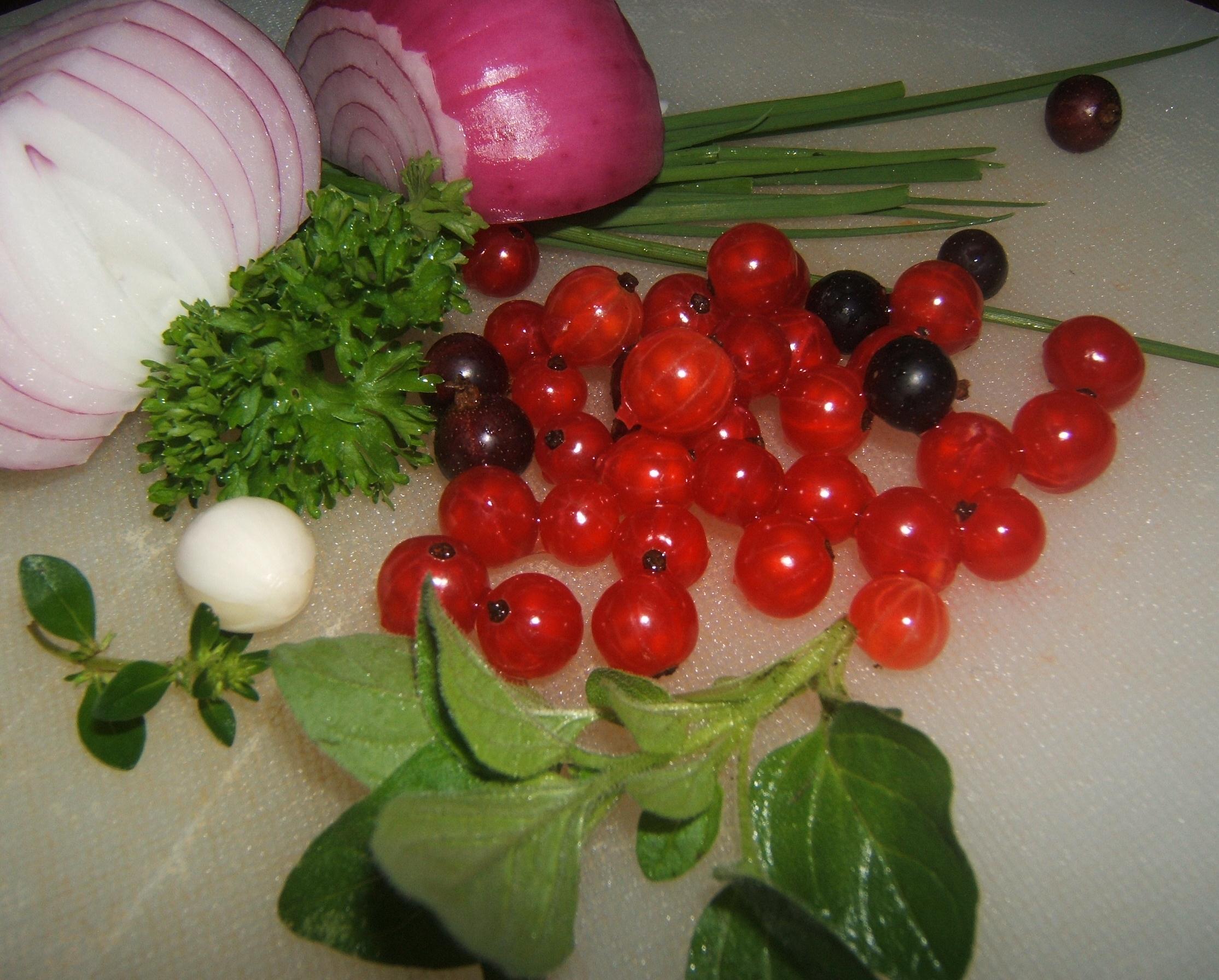
some of the ingredients for a ‘growing and gathering’ salad
~
With ‘harvesting colour’, I will be learning a craft new to me. I’ll be trying to manage the complex alchemy of “pot type plus source water plus plant material plus mordent plus receiving material”. Lots of chemistry and a few colour tragedies, I’m certain. And discovery, as purple plants become yellow dye. I hope to combine making plant dyes with my weaving, an activity I find totally relaxing and steadying.
~

some of my weaving results over the years … it will be fun to see what colours my project will bring to my weaving
~
So where will the poems come from and what will they say? I’ll be looking for metaphors for human experience and emotion. I’ll try to embed ideas about reconnection with nature and about cultural expression through decorating fabric. I’ll use words from botany and chemistry, and a rich colour dictionary. I can hardly wait to explore all the words for yellow, and green, and red.
I want to write poems about ‘saddening’ the colour by adding a pinch of salt, and ruining a dye lot by forgetting to tend it well. I’ll write about oak leaf imprints on cloth, and the different yellows created with apple bark and poplar leaf. I’d also like to write poems about the ordinary life experience of plant dyes – grass stains on knees, the grey Choke-cherry jelly bag, the Cranberry stain on the tablecloth.
I’ll be presenting at least some of my poems here and I’ll certainly be sharing my experiences. I’ll continue to present my virtual travel, novel writing and watercolour posts, but I plan to devote Friday’s post each week to ‘harvesting colour’. Hope you visit regularly to follow me in my project!
~
Copyright 2014 Jane Tims
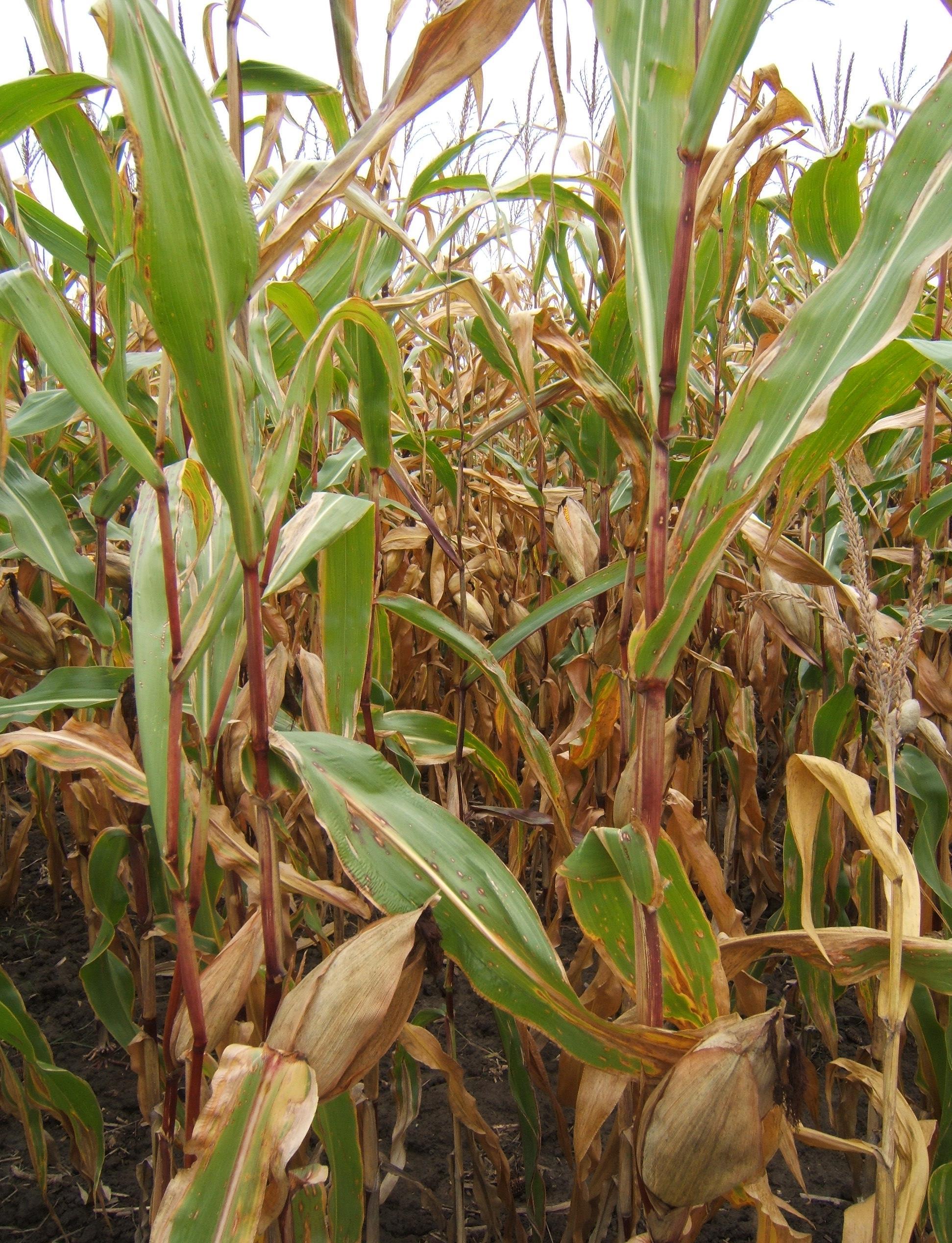
cornrows
~
~
cornrows
~
at the first rustle
of shadow on skin
I wake beside him
~
I slide from the bed
flip the latch, climb through
the window, he will
be angry
the thought delights me
~
I cross to the cornfield
silken rows of ribbon
higher than my head
an army, khaki-clad
could march here
one row over
and we could all
have solitude
~
I shift rows
suddenly
catch a glimpse
of tassels
chevrons
boot heels
click into the next row
ribbons quiver
~
takes nine minutes
to find a cornrow
north to south
leads back to the house
I cross the yard
pause on the threshold
I hesitate
a stranger
~
the cornstalks whisper
~
I raise my fist
hammer on the door
~
~
Published as: ‘cornrows’, Spring 2013, The Antigonish Review 173
~

~
Copyright 2013 Jane Tims




 nichepoetryandprose