Posts Tagged ‘wildflowers’
keeping watch for dragons #7 – Bog Dragon
Some dragons like to live in bogs.
When we were in Nova Scotia, near Peggy’s Cove, imagine my delight when I found, among the Pitcher-plants, a species of the orchid family, Arethusa (Arethusa bulbosa L.), also known as the Dragon’s Mouth Orchid.
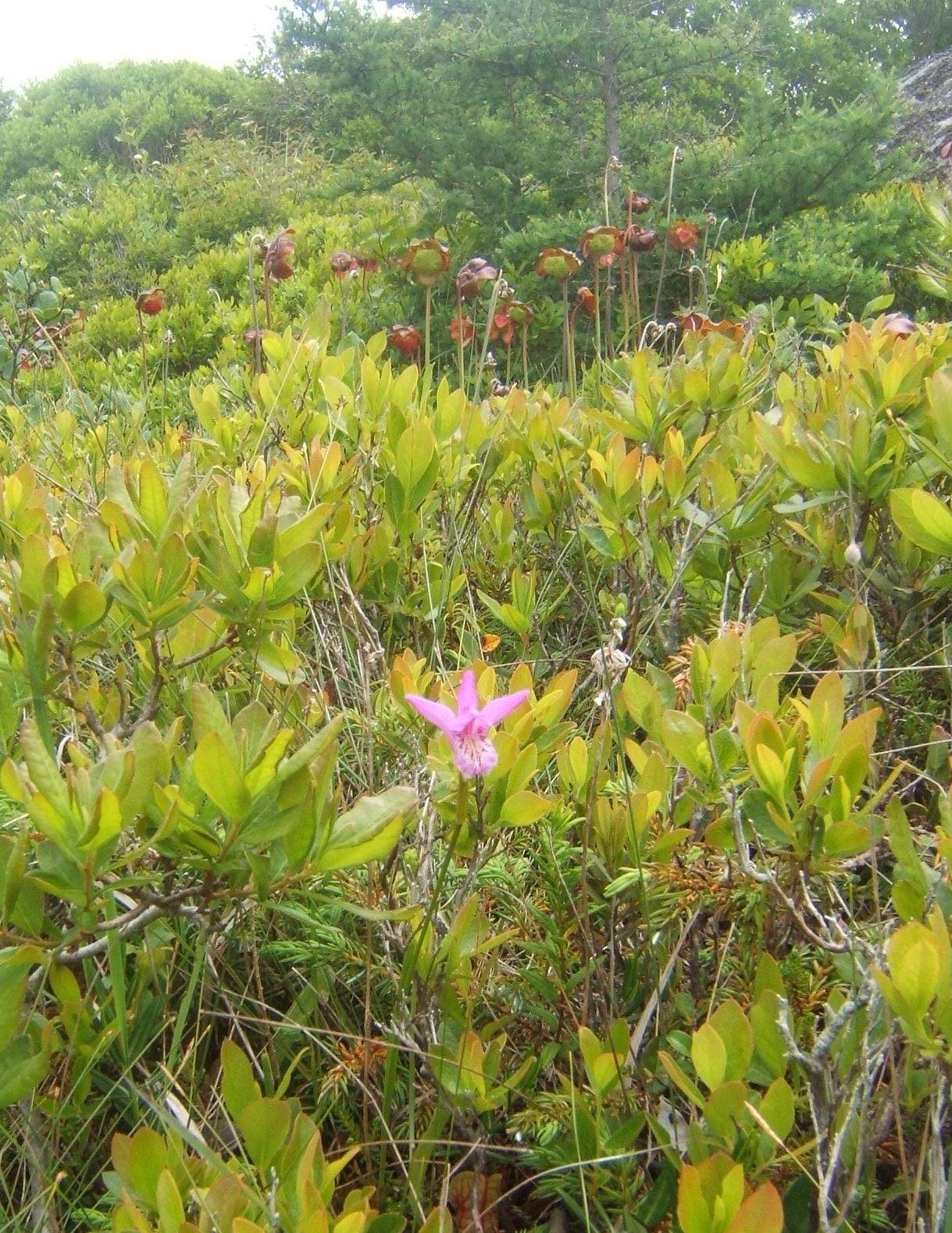
Arethusa loves wet, boggy conditions. Among the greens and reds of the low-lying bog, it surprises a visitor with its splash of pink. Even the Pitcher-plants in the photo above look a little over-come with the beauty of the Dragon’s Mouth!
This orchid has a complex flower, with three thin flaring upper petals, two in-turned petals guarding its ‘mouth’ and a lower lip with yellow and white fringed crests.

Arethusa is named after a Naiad in Greek mythology. The Naiads were nymphs associated with fresh water features such as springs, wells, fountains and brooks. Nymphs, like plants, were dependant on their habitat… if the water where they lived dried up, they perished.
Perhaps a Bog Dragon is also absolutely dependant on the water held within the bog!!!
~
~
Bog Dragon
Arethusa bulbosa L.
~
naiad
masquerades as dragon,
claps her hands across her mouth,
sorry to have spoken –
her voice, her pink, her petals
lure them,
their large feet and tugging hands
too near
~
~
© Jane Tims 2012
coastal barren, coastal bog
On our vacation to Nova Scotia last month, we revisited the Peggy’s Cove area near Halifax. I spent a lot of time along this coast years ago, but I had forgotten the unique wildness and beauty of this landscape.

We explored two habitat types, the dry and rocky barrens, and the wet coastal bog. As we found each new plant, I felt like I was greeting old and well-loved friends.
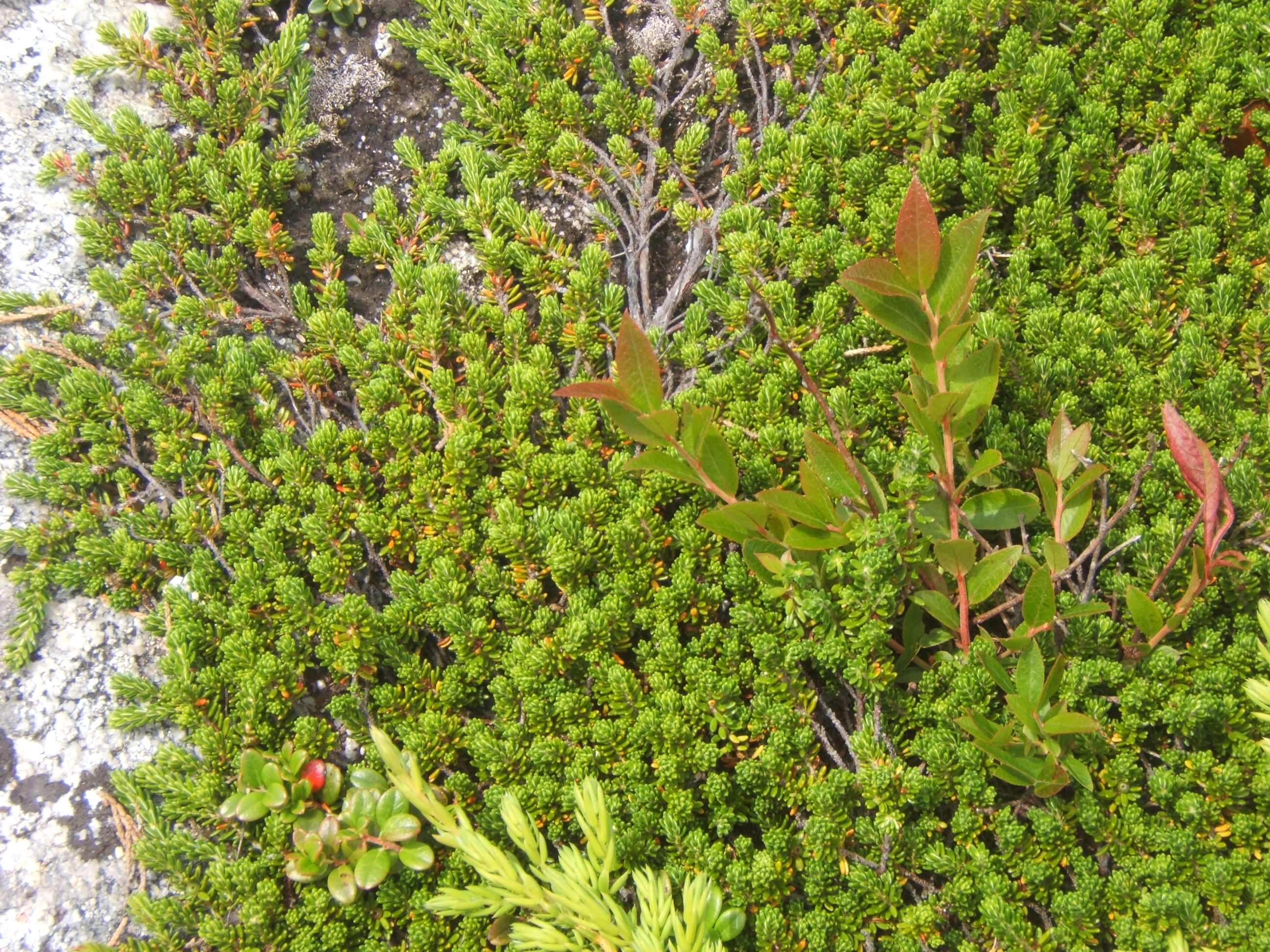
On the higher areas, growing in the thin soil on the bedrock were several species. One of these included Crowberry (Empetrum nigrum L.), a small moss-like plant with spiky leaves and small pink flowers. Later in the season, these will bear edible back berries.
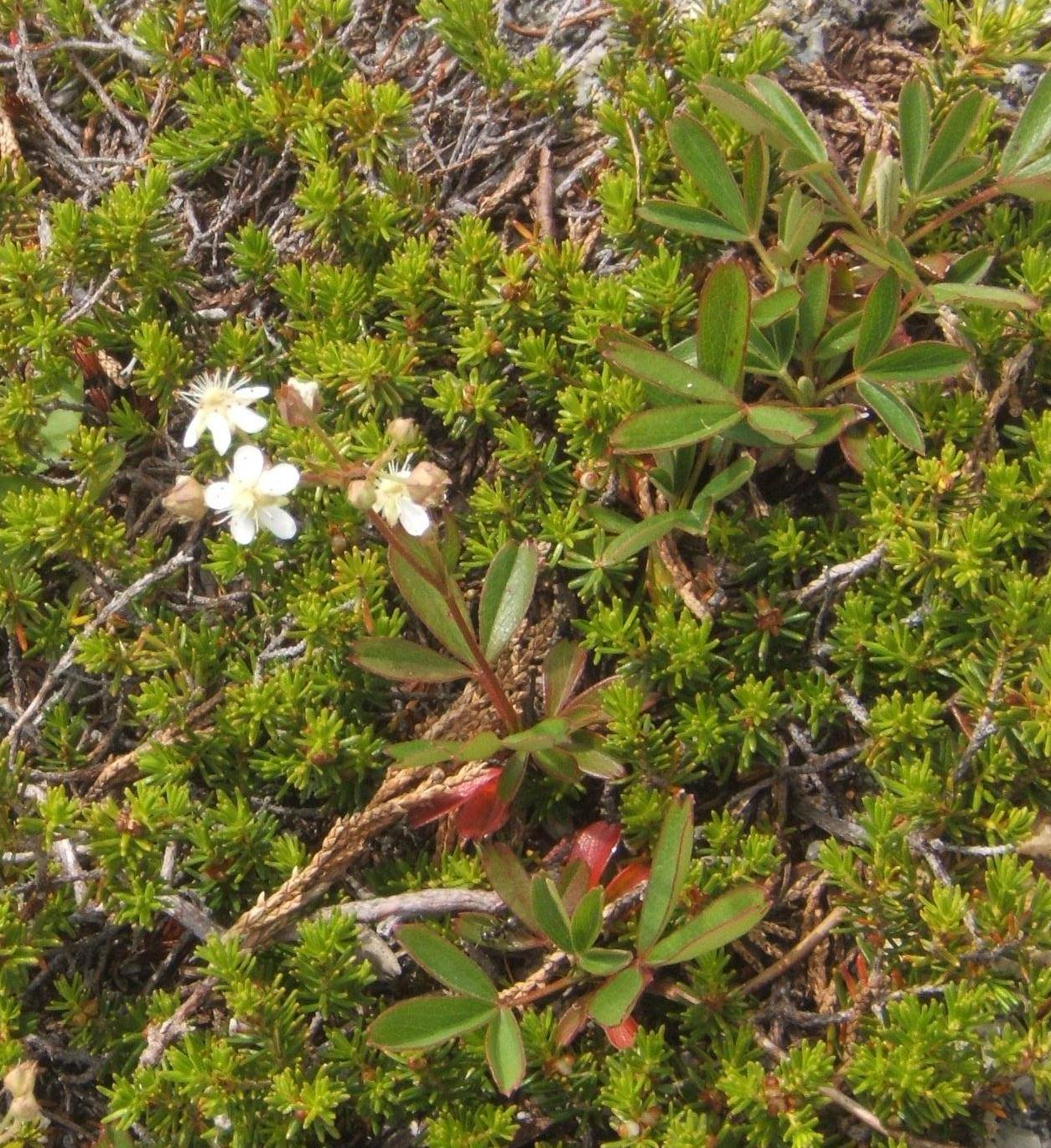
We also found Three-toothed Cinquefoil (Sibbaldia tridentata (Aiton) Paule & Soják) with its three leaflets and the characteristic three teeth at the tip of each leaf. The leaves are thick and outlined in red at this time of year. Later in the year the leaves turn bright red. The white flowers each have five petals, and are starry with stamens.
In the low-lying, boggy areas, we found a ‘merriment’ (my word) of Pitcher-plants (Sarracenia purpurea L.).

The leaves of these insectivorous plants are shaped like vessels. Insects climbing into the leaves encounter downward pointing hairs. They are trapped! Eventually they drown and are digested in the water at the base of the ‘pitcher’.
We also found another carnivorous plant, the Round-leaved Sundew (Drosera rotundifolia L.). The leaves of these plants are covered with tiny hairs… these exude a sticky liquid and trapped insects are slowly digested. For more information on the Sundew, please visit my post for October 31, 2011, ‘Round-leaved Sundew’. https://nichepoetryandprose.wordpress.com/2011/10/
All was not gruesome. We also found Arethusa (Arethusa bulbosa L.), a member of the orchid family. This beautiful pink orchid is also known as the Dragon’s Mouth.

Overall, our trip to Peggy’s Cove was a wonderful adventure. We plan to return in the early fall, when the Crowberry and the other edible plants we saw have set their berries.
Have you ever been to Peggy’s Cove and what did you think of the coastal landscape and the plants growing there?
~

© Jane Tims 2012
Warning: 1. never eat any plant if you are not absolutely certain of the identification; 2. never eat any plant if you have personal sensitivities, including allergies, to certain plants or their derivatives; 3. never eat any plant unless you have checked several sources to verify the edibility of the plant.Pineapple Weed (Matricaria matricarioides (Less.) Porter.)
I bear weeds no ill-will. When I pull them in my garden, I am just helping my vegetables to get an edge in the great competition. Also, as you now know, I consider many ‘weeds’ to be edible and delicious. But, in one case, I cheerfully stomp on the weeds and consider the benefits to outweigh the sorrow.
When I went to meetings at our provincial Department of Agriculture, Aquaculture and Fisheries, I had to follow a wide path of concrete slabs to get to the door of the building. In the cracks between the slabs grew a small, rather pretty weed. I loved to step on this weed, or pick it, to smell its fragrance. The weed is Pineapple Weed and, crushed, it smells just like pineapple. Its scent is also reminiscent of Garden-camomile, or Hay-scented Fern.
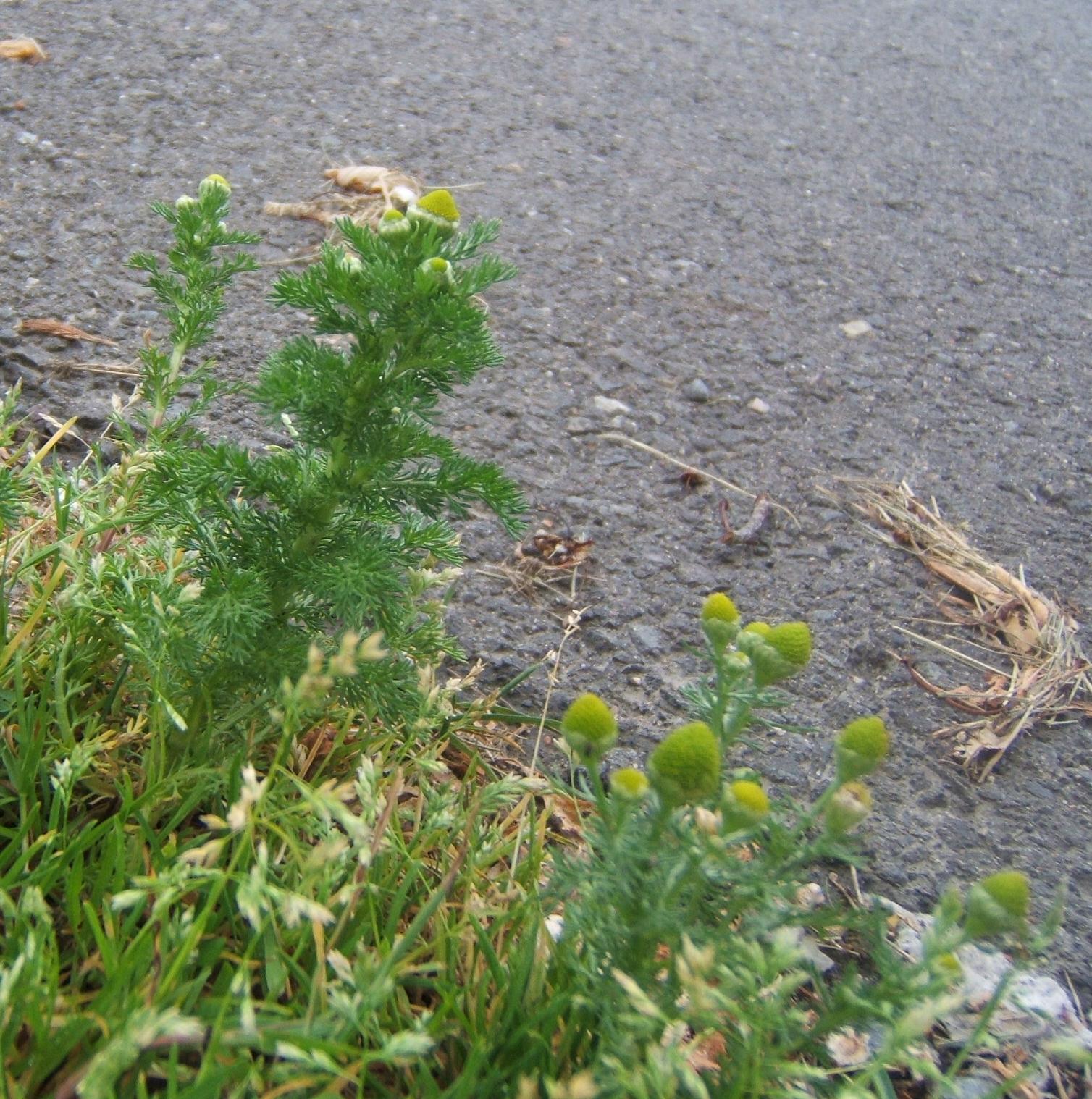
Pineapple Weed grows along roadsides and in waste places, wherever the soil is disturbed and competition from other plants is low. It is an inconspicuous cousin of Garden-camomile (Anthemis nobilis L.) and looks a little like Camomile except the flowers have no white ray-florets. The leaves of Pineapple Weed are very finely divided and feather-like.
The generic name Matricaria comes from the Latin word matrix, meaning ‘womb’, a tribute to its reputed medicinal properties. The specific name matricarioides means ‘like Matricaria’ since it was originally considered to be another species.
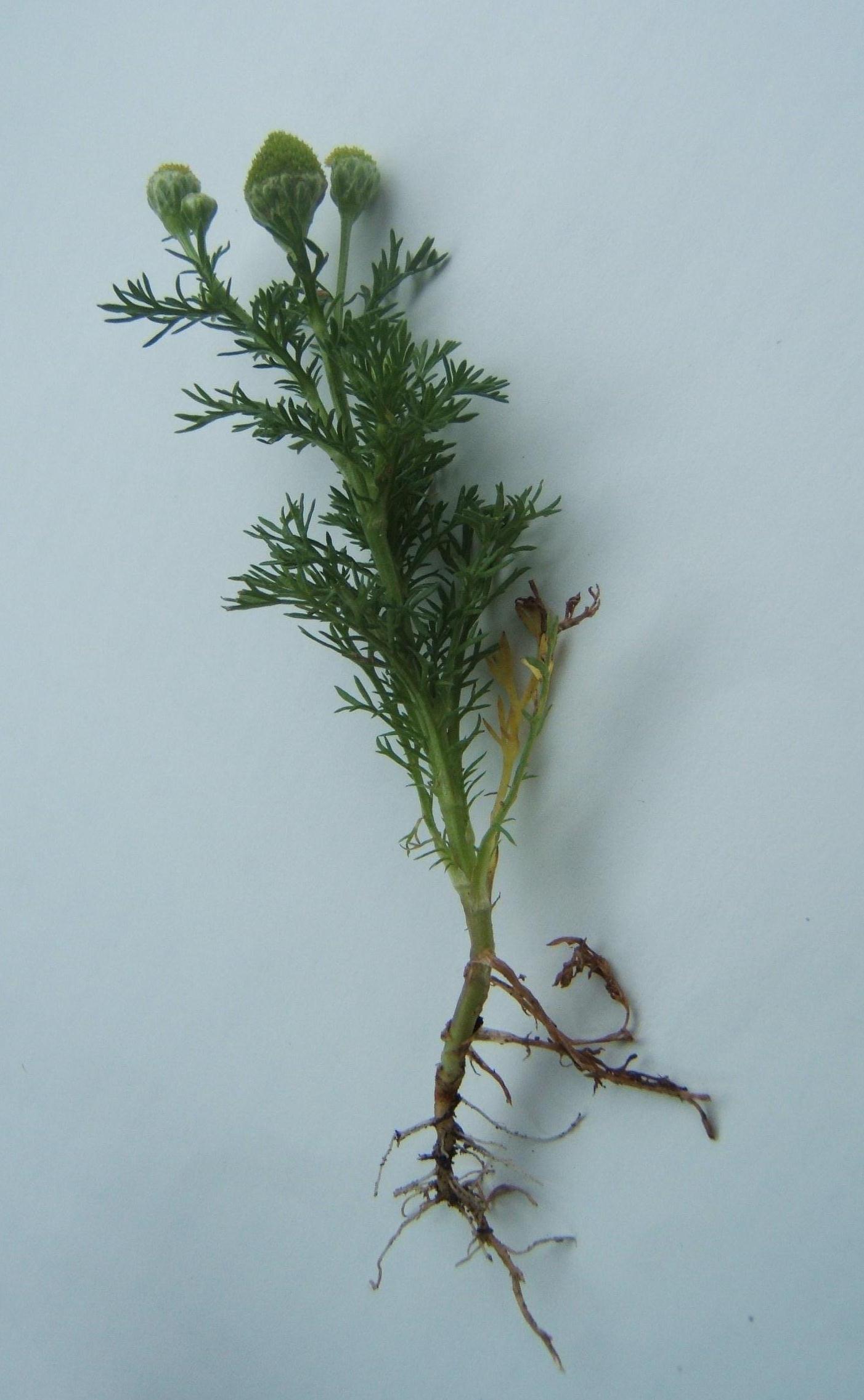
My husband tells me, as a child, he used plants of Pineapple Weed as miniature trees when he played with his Dinky cars!
To make a pale yellow, pineapple-scented tea, steep the fresh or dried flowers of Pineapple Weed in hot water.
Warning: 1. never eat any plant if you are not absolutely certain of the identification; 2. never eat any plant if you have personal sensitivities, including allergies, to certain plants or their derivatives; 3. never eat any plant unless you have checked several sources to verify the edibility of the plant.
~
~
Matricaria
~
two in the morning
and the canister of Camomile
yawns empty
~
crush Matricaria
steep a sprinkle of flowers
in water, tea the color
of straw
~
surround of pineapple
hay-scented fern
sleep
~
~
© Jane Tims 2012

Rough Bedstraw (Galium asprellum Michx.)
Rough Bedstraw (Galium asprellum Michx.) is a common sprawling weed. It forms a tangle across low pastures, brooksides and ditches. The tangle looks springy and comfortable, the perfect mattress stuffing, but feels rough and sticky when rubbed backwards from stem to flowers, due to the plant’s rasping, hooked prickles.
Other names for bedstraw are Cleavers and, in French, gaillet. The generic name is from the Greek gala meaning ‘milk’, since milk is curdled by some species.
Rough Bedstraw is one of a number of common Galium species. They all have the same general habit… small narrow leaves are arranged in whorls of six or eight around the stem. They are all useful plants. They were used as stuffing because of their physical characteristics and because the smell of the dried plant repels fleas.
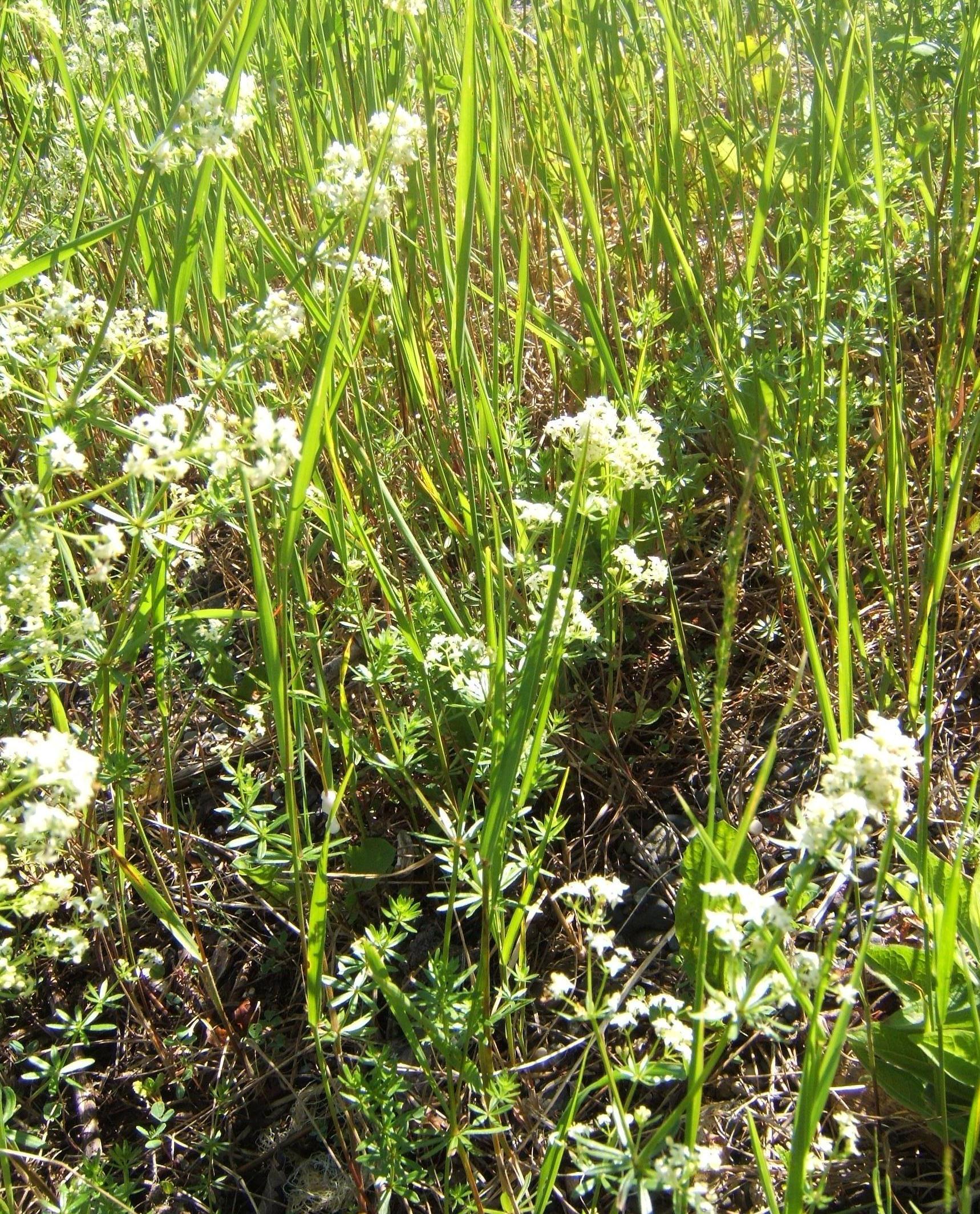
To identify the species of Galium mentioned below:
~ smell the plant in question
~ count the leaves
~ look for the color of the flowers
~ determine if the plant is rough or smooth
~
~
Galium asprellum Michx.
Rough Bedstraw has its leaves in sixes, and is rough with recurved bristles. Its flowers are white. This species has weak stems and reclines on other vegetation. Asprellum means ‘somewhat rough’. It has been used to stuff mattresses.
Galium triflorum Michx.
Sweet-scented Bedstraw or Fragrant Bedstraw grows in forested areas. It has white flowers arising along the stem and its leaves in sixes. It reclines and clings, but is not as bristly as Rough Bedstraw. Fragrant Bedstraw is used for stuffing mattresses and has the smell of vanilla when it dries.
Galium verum L.
Lady’s Bedsraw or Yellow Bedstraw has yellow flowers borne at the top of the upright stem, and leaves in sixes or eights. The plant is hairy but not clinging. The word verum means ‘true’, derived from the Christian tradition that Yellow Bedstraw lined Jesus’ manger at Bethlehem. The roots also make a red or yellow dye.
Galium aparine L.
Cleavers, Goose-grass, Stickywilly, or (in Ireland) Robin Run the Hedge is bristly and has white flowers and leaves in eights. Aparine is the old generic name and probably means to ‘scratch, cling or catch’. The young shoots can be cooked as greens or used as a salad. The nuts are roasted and ground for a coffee substitute.
Galium mollugo L.
White Bedstraw, Hedge Bedstraw, or Wild Madder has white flowers and its leaves mostly in eights. It is smooth, without bristles and stands upright. A red dye is made from the roots. Its leaves are edible as a potherb or salad. It has a mildy astringent taste.
Most of the Galium along the roadsides in our area is Wild Madder (Galium mollago L.).

~
~
Rough Bedstraw
(Galium asprellum Michx.)
~
Our mattress is lumpy, as though stuffed
with Rough Bedstraw, fragrant as new sheets
but uncomfortable
~
I sleep poorly
and a spring sticks in my back,
just where arthritis begins, along the spine
~
Small back-pointed bristles
thwart my turning, bed-clothing tacky
on this humid night
~
~
© Jane Tims 2012
Warning: 1. never eat any plant if you are not absolutely certain of the identification; 2. never eat any plant if you have personal sensitivities, including allergies, to certain plants or their derivatives; 3. never eat any plant unless you have checked several sources to verify the edibility of the plant.snippets of landscape – evidence of old roads
This week, we drove to the south-west corner of the province and spent a little time at the Ganong Nature and Marine Park, at Todd’s Point near St. Stephen. The area is managed by the Quoddy Futures Foundation and is the former property of Eleanor and Whidden Ganong (Whidden Ganong was President of the Ganong Bros. candy factory in St. Stephen). The property is beautiful and good for the soul. We walked through the fields, identified wildflowers, listened to the birdsong, and were returned to a simpler time.
The fields along the path were yellow with Buttercup (Ranunculus sp.) and the largest population of Yellow Rattle (Rhinanthus Crista-galli L.) I have ever seen. The flowers of the Yellow Rattle were bright yellow, but the inflated calyx was tinged with red, giving the field a stippled glow (for more information on Yellow Rattle, see my post for August 3, 2011, ‘along the country road #1’ ).

Yellow Rattle among the field flowers… the fused sepals are tinged and veined with red
The Buttercups were everywhere, but concentrated in certain areas of the field. One area in particular seemed to mark the path of an abandoned road. The Buttercups have found some aspect of the old road to their liking. Perhaps the soil is compacted and they have a competitive ‘edge’ on the other plants. Perhaps the hidden track provides some alteration in the water regime or a place where certain types of seeds concentrate as they are dispersed. Perhaps there are subtle differences in the soil chemistry.
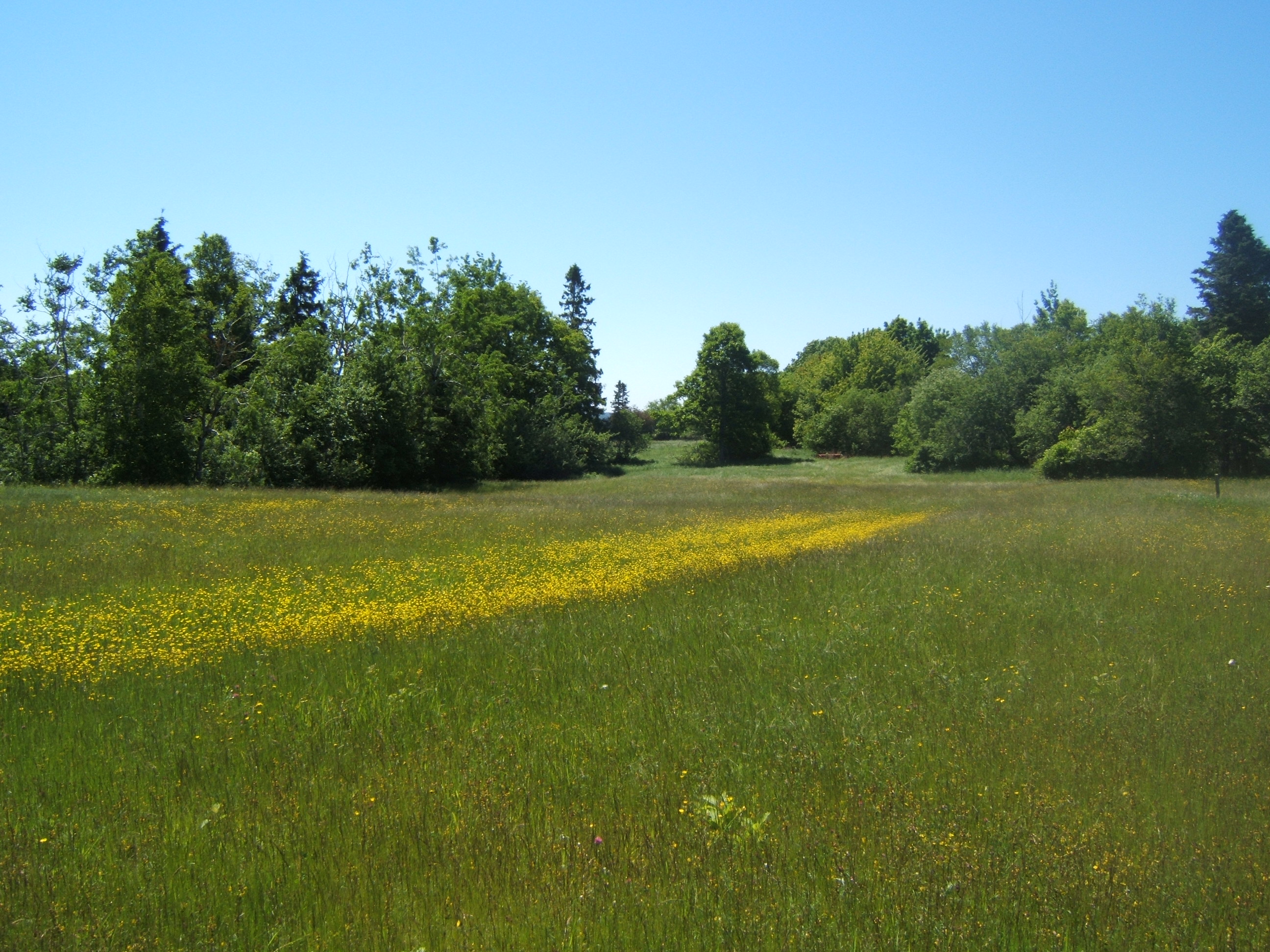
an abandoned track marked in Buttercups… the red tint in the foreground is from the reddish coloration of the Yellow Rattle
Years ago, I visited a property where the roadway to a back field was clearly marked with Bluets (Houstonia caerulea L.). The owner of the property said he thought they grew there because he always took his lime in an open cart back to his fields, and enough had spilled to make the way especially attractive to the Bluets.
Perhaps you will have a look in your landscape for wildflower clues to past activities.
~
~
Invitation to Tea
~
in the afternoon,
I huddle over tea
and watch
the road
~
an old road,
rarely used –
walks scarcely part
the tangle of fern
~
I scan the woods,
I love the look
of ancient trunk
and horizontal green
~
and always,
in the corner of my eye,
the road
~
overgrown –
a narrow course of saplings
intercepts
the sameness
of maturity
~
I watch
expectantly
~
but the road is abandoned –
cart-tracks worn
to rivulets,
culverts buried
by fallen leaves,
rusted oil tins,
depressions in the mould
~
~
© Jane Tims 2012
Wood-sorrel (Oxalis spp.)
When I walk around our property, whether in the woods or in the open areas, I often overlook a little group of plants I am certain grows almost everywhere. The leaves are like those of clover, but the five-petalled flowers of the genus Oxalis are as delicate as any spring wildflower.

I am familiar with two Wood-sorrels, one a plant of the woods and one a plant of more open areas.
Common Wood-sorrel (Oxalis acetosella L.) grows in damp woods. Other names for this plant are Wood-shamrock, Lady’s-sorrel, and, in French, pain de lièvre (literally, rabbit bread). The flowers of Common Wood-sorrel are white with pale red veins and can be found blooming from June to August.
The Yellow Wood-sorrels (Oxalis stricta L. and Oxalis europaea Jord.) are low-growing weeds, found in waste places, along roadsides, in thickets, or in lawns and meadows. The Yellow Wood-sorrels are known by many names, including Lady’s-sorrel, Hearts, Sleeping-Beauty, and, in French, sûrette or pain d’oiseau (bird-bread). The flowers of Oxalis stricta and Oxalis europaea are yellow and bloom May to October. Oxalis stricta and Oxalis europaea are considered separate species, but there is a lot of ambiguity in the various references, probably since both are called Yellow Wood-sorrel. According to Grey’s Botany, Oxalis stricta has a tap-root, whereas Oxalis europeae has spreading and subterranean stolons.
The leaves of both Common and Yellow Wood-sorrels are pale green and clover-like. Each leaf consists of three heart-shaped leaflets. At night, the leaves fold downward.
The generic name oxalis comes from the Greek oxys meaning ‘sour’. The common name ‘sorrel’ comes from the French word for ‘sour’. Leaves of all species of Oxalis have a pleasant, tart taste and can be included in a salad as greens. The leaves are also used in a tea, to be served as a cold drink.
Oxalic acids cause the plants’ sour taste. Use caution ingesting this plant since it can aggravate some conditions such as arthritis, and large quantities can affect the body’s absorption of calcium.

To make a tea and a cold drink from Oxalis leaves, first pick, sort and wash the leaves…

Pour hot water on the leaves. They turn brown instantly! I left the tea to steep for about 10 minutes.

Strain and pour the sorrel-ade over ice cubes. The Wood-sorrel tea makes a pleasant cold drink, with a tart taste and a familiar but elusive flavour. Enjoy!
Warning: 1. never eat any plant if you are not absolutely certain of the identification; 2. never eat any plant if you have personal sensitivities, including allergies, to certain plants or their derivatives; 3. never eat any plant unless you have checked several sources to verify the edibility of the plant.~
~
Common Wood-sorrel
Oxalis montana Raf.
~
Oxalis montana
carpets the grove
three green leaflets
lined in mauve, held low
in folds at night
narrow petals
creamy white, fragile
veins inked in red
Lady’s sorrel
nibbled, sour
rabbit bread
~
~
© Jane Tims 2012

Sheep Sorrel (Rumex Acetosella L.)
At this time of year, some of the fallow fields adjacent to our Federal-Provincial Agricultural ‘Farm’ in Fredericton are shadowed with bright red. Closer inspection shows these fields are filled with Sheep Sorrel, in scarlet bloom.

The common Sheep Sorrel (Rumex Acetocella L.) is a small, slender plant, less than a foot high, with distinctive leaves shaped a little like an arrowhead or halberd. The lobes at the base of each ‘arrowhead’ leaf point backwards, a shape described in botany as ‘hastate’.
Sheep Sorrel is considered a weed, growing along roadways and in fields. It prefers acidic, ‘sour’ soils and is considered an indicator of these soils.
Sheep Sorrel (Rumex Acetosella ) is also known as Common Sorrel, Field Sorrel, Red Sorrel, and Sour Weed. In French it is called surette or oseille. The old generic name Acetosella means ‘little sorrel’. Sheep Sorrel is from the Buckweat Family of plants.

The flowers of Sheep Sorrel are small, distributed in an open cluster along the stem. The female flowers are maroon and the male flowers are brownish-green.
The leaves of Sheep Sorrel are well-known as an edible plant. They have a pleasantly tart, sour flavour and make a good nibble, an iced tea, or an addition to a salad. They can also be used as a pot-herb – when cooked they reduce in size like spinach, and they lose the acid taste. The Sheep Sorrel plant has a chemical called oxalate so cannot be consumed in large quantities. Long-term consumption can affect calcium absorption in the body. As always, please be sure of your identification before you consume any wild plant.
Warning: 1. never eat any plant if you are not absolutely certain of the identification; 2. never eat any plant if you have personal sensitivities, including allergies, to certain plants or their derivatives; 3. never eat any plant unless you have checked several sources to verify the edibility of the plant.~
~
red field
~
walk in the field with the scarlet flowers
arrowheads and halberds surely leave
a sour taste on the tongue
titration with alkaline needed
to sweeten the ground, dilute the red
return the soil
to more productive ways
~
~
© Jane Tims 2012

wildflowers in the rich spring hardwoods
On our drive and hike along the South Branch Dunbar Stream, north of Fredericton, we encountered many spring wildflowers. The Trout Lily (Erythronium americana Ker) was everywhere, in extensive carpets, especially in hummocky areas (see my post for June 1, 2012). The delicate Wood Anemone was just beginning its bloom, also in dense carpets of feathery foliage. Other plants in these woods included the Purple Trillium and Green Hellebore.
The Wood Anemone (Anemone quinquefolia L.) is one of our less common plants. Its leaves are deeply toothed with 3 to 5 parts. The ‘flower’ is white and five-petalled, not really a flower at all, but the white sepals of the plant.
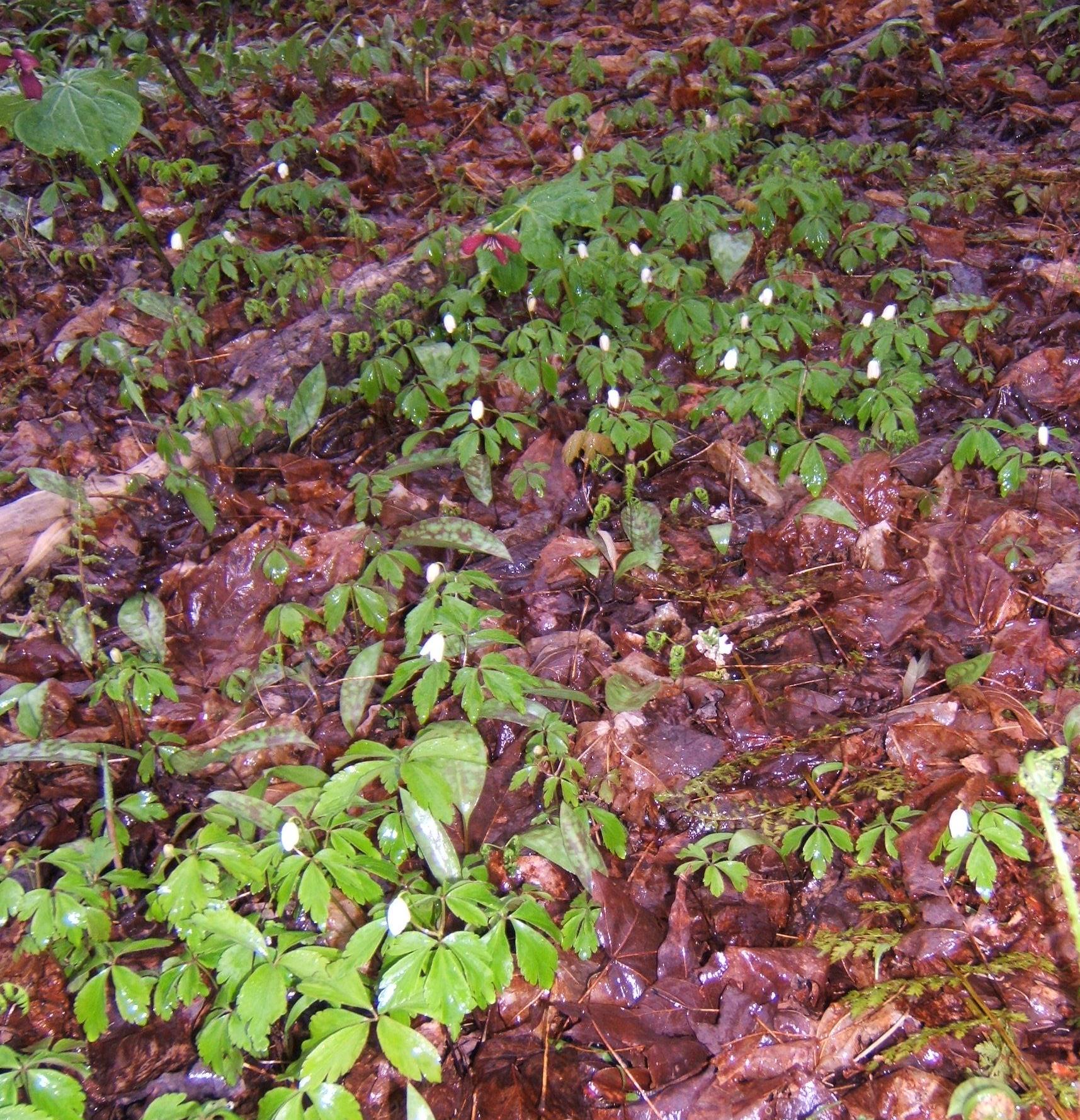
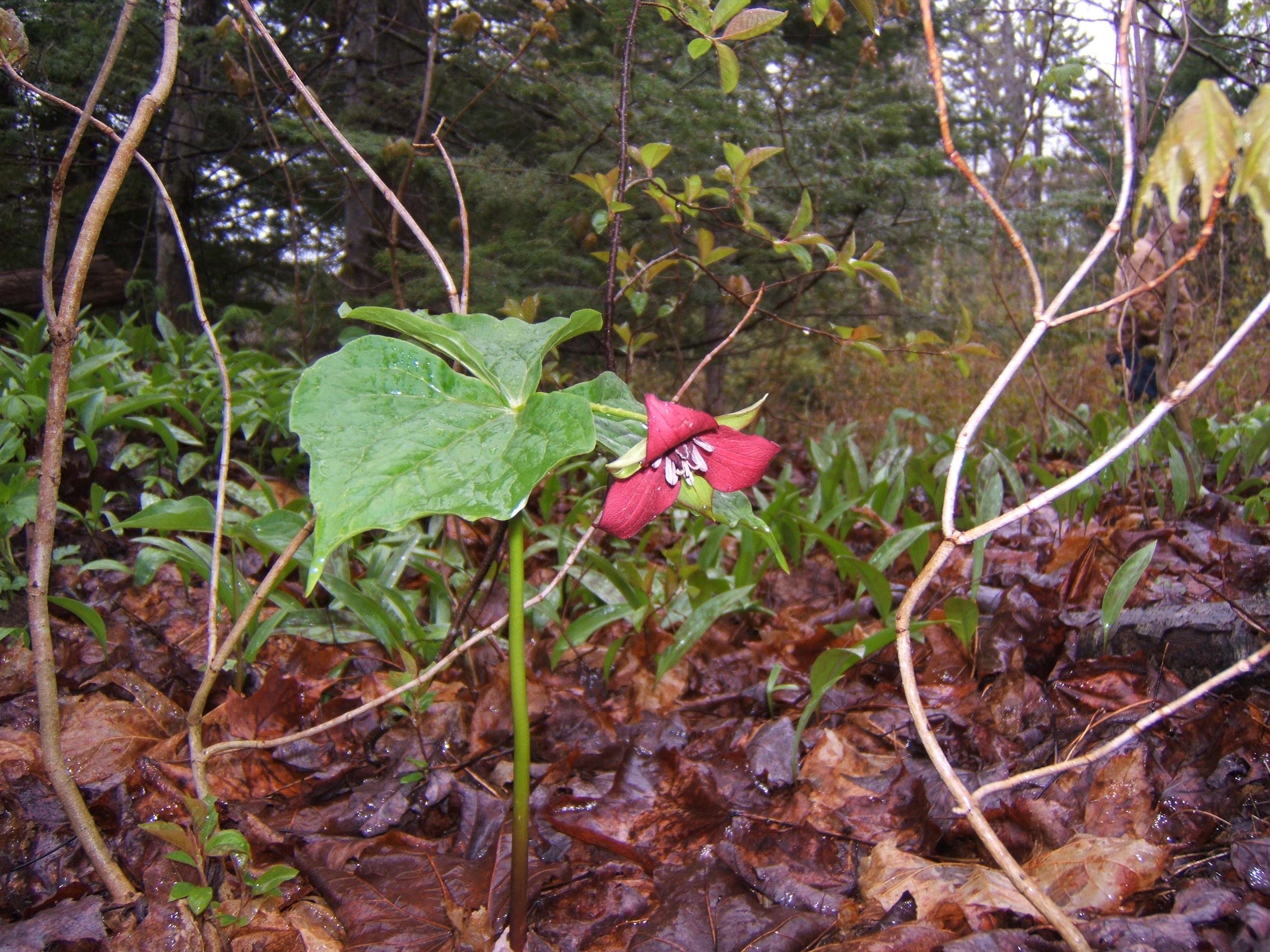
The Purple Trillium (Trillium erectum L.), also known as the Wakerobin, is a showy plant with the parts in three’s. The flower is maroon or purple, and, as in our case, may be nodding, in spite of the name (erectum meaning erect). The flower is known by its purple ovary (female part of the flower) and its nasty odor. You can eat the very young leaves of the Purple Trillium, but they are not usually in large abundance, so to protect the plants, I recommend just enjoying their bloom.
The light green leaves of Green or False Hellebore (Veratrum viride Ait.) were also conspicuous in the woods, I see them in woods along rivers all over our area. They are large plants, made up of heavily ribbed, pleated, clasping leaves. The leaves are parallel veined and do not smell like skunk, unlike the Skunk-Cabbage which has netted veins in the leaves and a skunky odor. Later, the Green Hellbore will have large clusters of yellow-green star-shaped flowers. This plant is poisonous.

We enjoyed our hike, and saw a beaver tending his dam and a narrow, raging waterfall pouring into the South Branch of the Dunbar, probably only a trickle in summer after the heavy spring rains are gone.

~

© Jane Tims 2012
Trout-lily (Erythronium americanum Ker)
Two weeks ago, we had a memorable drive and hike along the South Branch Dunbar Stream, north of Fredericton. The wet hardwoods along the intervale areas of the stream were green with understory plants and dotted with spring wildflowers. One of the plants growing there in profusion is the Trout Lily. The Trout Lily is colonial, covering slopes in rich, moist hardwoods. Its red and green mottled leaves grow thick on the hummocks, beside the Wood Anemone and Purple Trillium. The area where we were hiking was not far from the stream and there was evidence it had been flooded earlier in the year.
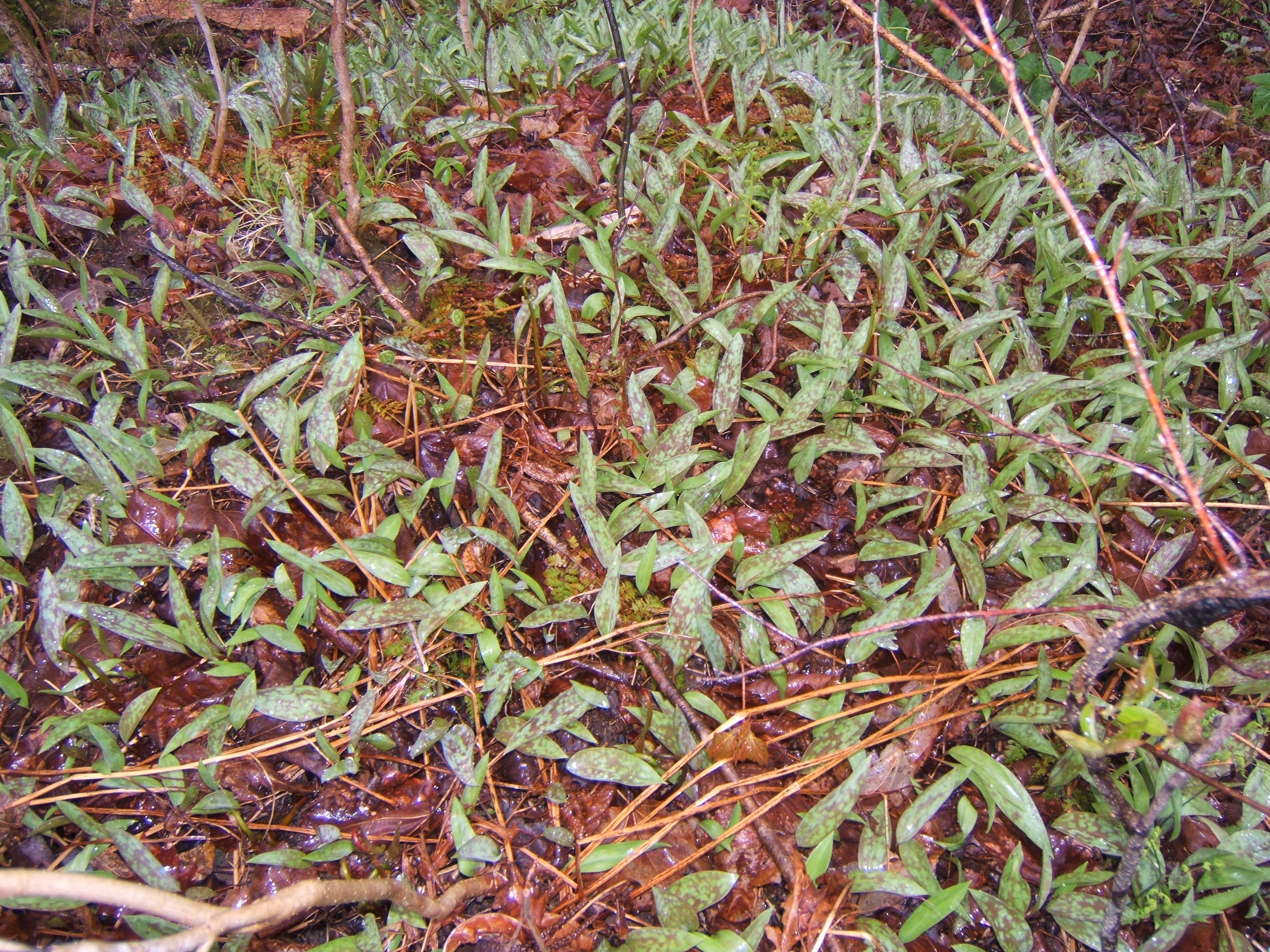
Trout Lily (Erythronium americanum Ker) is also known as the Dog’s Tooth Violet, Yellow Adder’s-tongue, Fawn-lily, and, in French, ail doux. Its generic name is from the Greek erythros meaning ‘red’, a reference to the purple-flowered European species.
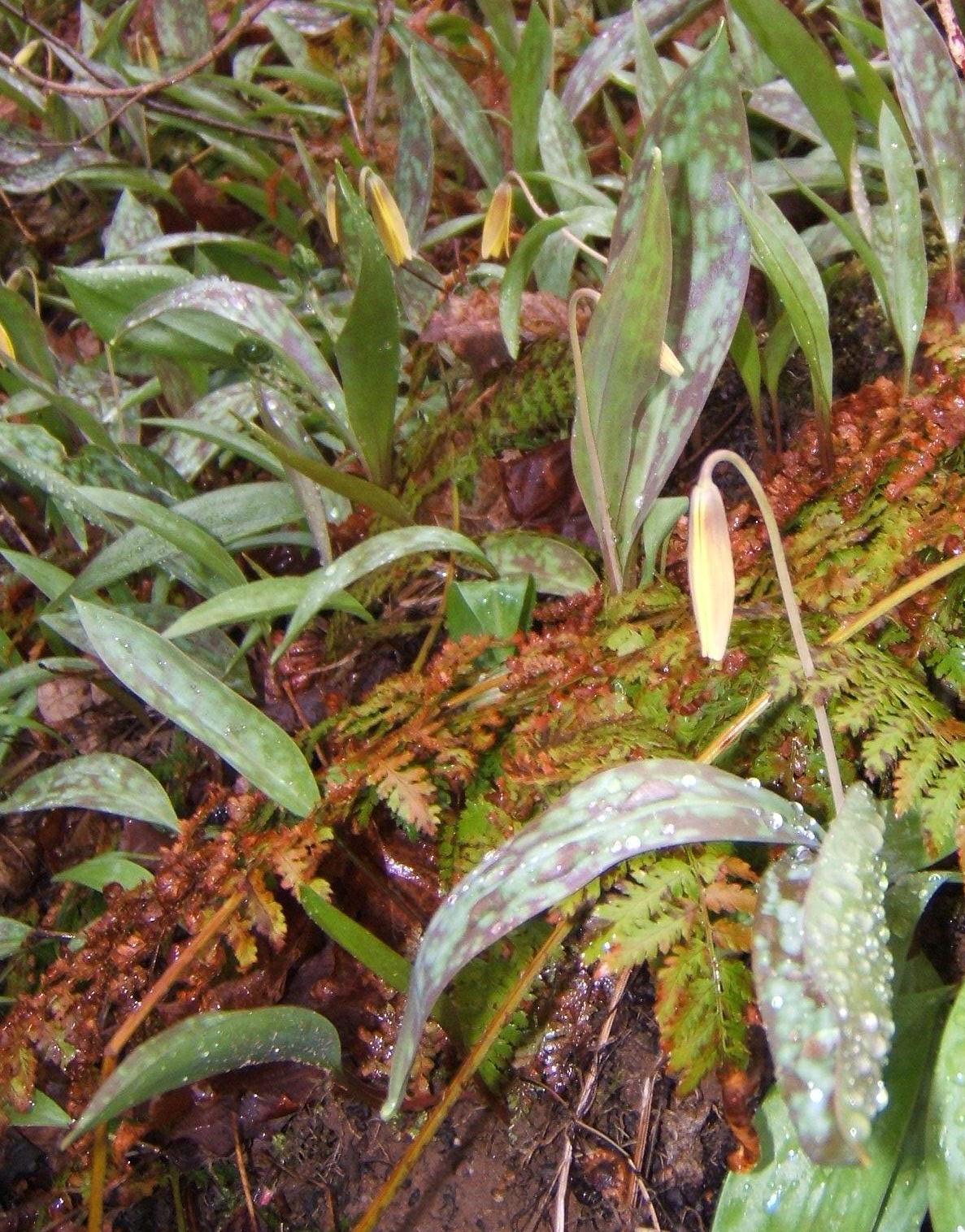
The Trout Lily was barely beginning its blooming when we were there, but it will be almost over by now. The flowers usually bloom from March to May. They are yellow and lily-like, with six divisions. The petals curve backward as they mature.

The young leaves are edible but should only be gathered if they are very abundant in order to conserve the species. To prepare the leaves for eating, clean them, boil them for 10 to 15 minutes and serve with vinegar. The bulb-like ‘corm’ is also edible; it should be cooked about 25 minutes and served with butter. Again, the bulbs should only be gathered if the plant is very plentiful, and only a small percentage of the plants should be harvested to enable the plant to thrive. Also, the usual warning applies, only harvest if you are absolutely certain of the identification.
~
~
Trout Lily
(Erythronium americanum Ker)
~
on a hike in the hardwood
north of the Dunbar Stream
you discover Trout Lily in profusion
mottled purple, overlapping
as the scales of adder, dinosaur or dragon
~
you know these plants as edible
the leaves a salad, or pot-herb
and, deep underground, the corm
flavoured like garlic
~
you fall to your knees
to dig, to gather
and hesitate,
examine your motives –
you, with two granola bars in your knapsack
and a bottle of water from Ontario
~
~
© Jane Tims 2012

Wild Lily-of-the-Valley (Maianthemum canadense Desf.)
This time of year, the floor of our Grey Woods is carpeted in the leaves and blooms of Wild Lily-of-the-Valley (Maianthemum canadense Desf.). The leaves first poke through the dry leaves in mid-April and literally unfurl …

By May the forming flowers are visible…

… by late-May they are in full bloom.

I cannot get a good photo of a white flower, but this shows their star-like quality
The Wild Lily-of-the-Valley, also known as False Lily-of-the-Valley and Canada Mayflower, grows in woods and clearings, and is one of the first plants to appear in the coniferous woods understory. The leaves are heart-shaped, cleft to fit around the floral stem. Flowers are white, contained in a compact elliptical raceme. Each little flower is four-pointed.
The berries of Maianthemum canadense are edible, first appearing as whitish-green with small spots and gradually turning to red.
~
This post is dedicated to Barbara Rodger’s mother, who loved Lily-of-the-Valley, the flower the Wild Lily-of-the-Valley gently resembles!
~
~
Wild Lily-of-the-Valley
– Maianthemum canadense Desf.
~
slim emerald flames
burn through dry leaves,
ignite sparklers
of stamen stars,
puffs of smoke,
white berries heat to red
embers in forest
~
~




 nichepoetryandprose