Posts Tagged ‘plants’
harvesting colour – onion skin yellow
About a month ago, I stuffed an old white cotton shirt into a pickle jar with onion skins and cider vinegar (https://nichepoetryandprose.wordpress.com/2014/02/21/harvesting-colour-onion-skins-in-a-pickle-jar/). It was all I could do not to open the jar early to see how everything was progressing, but I was patient. On Friday, I opened the jar to see the results!
~

the pickle jar containing cider vinegar, my old shirt, and a few handfuls of onion skins
~

cotton shirt and onion skins released to the sink
~

onion skins picked away to reveal yellow and maroon
~

a rinse with water
~

and my ‘new’ shirt hanging on the line to dry!
~
I am so pleased with the results. The yellows are bright and an old shirt is wearable again. The dried cloth is soft and smells clean and fresh. And, most important, I have another poem to add to my growing collection.
~
~
transformation
~
cotton shirt
soft and comfortable
but stained, unwearable
~
stuffed into
a pickle jar
onion skin and vinegar
~
thirty days –
yellow cheer,
saffron and sienna
~
stains concealed
tears dried
~
~
Copyright 2014 Jane Tims
harvesting colour – memorable colour
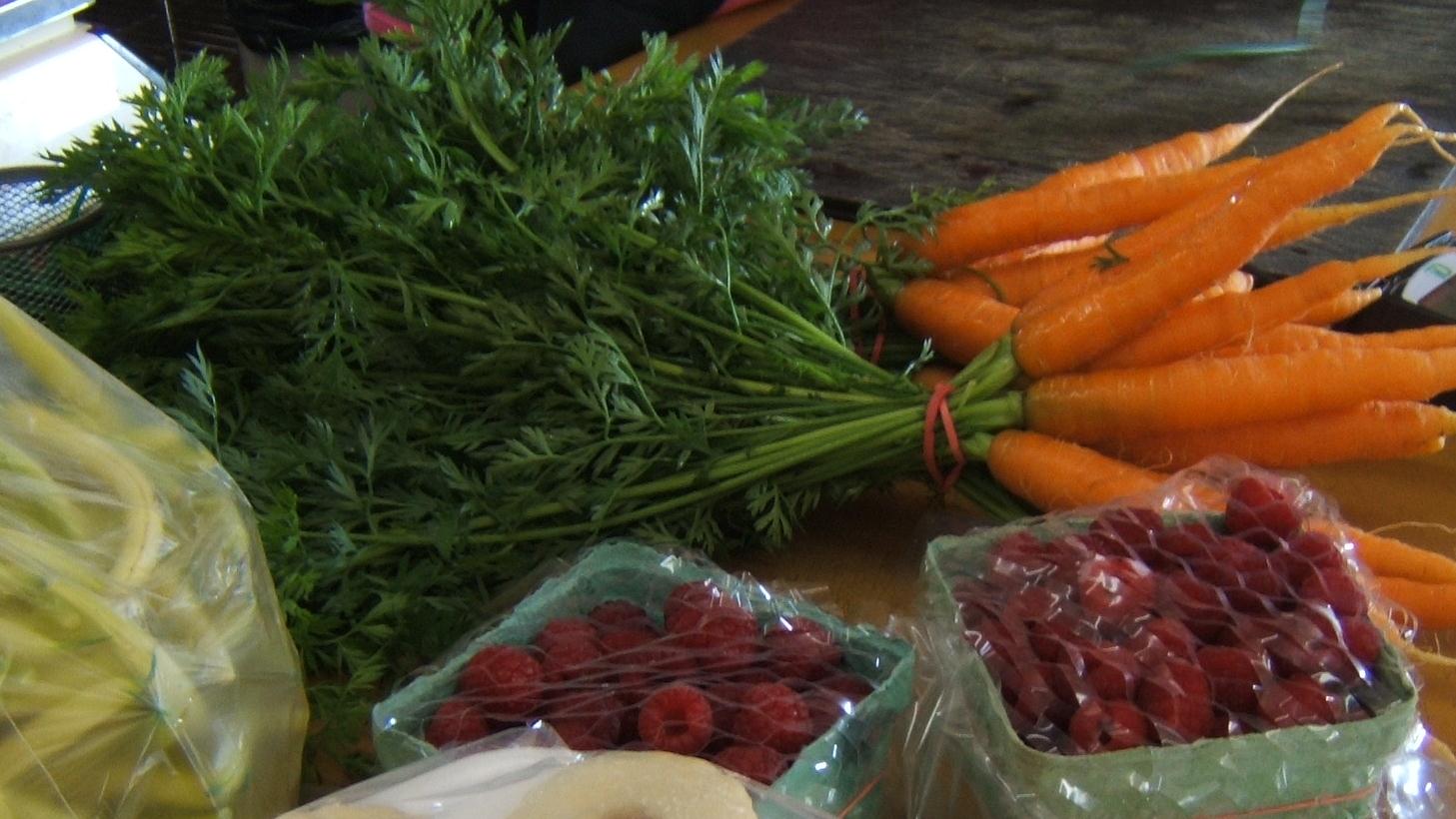
I am starting to think about some of the colours I hope to capture in my dyeing projects. In my reading I have discovered that plant colours come from three groups of plant pigments:
- the porphyrins – includes chlorophyll, the green pigment in plants that enables photosynthesis to occur
- the carotenoids – includes the yellows of carrots and the red lycopene of tomatoes
- the flavonoids – the yellows of flower petals and the red, blue and purple anthocyanins of strawberries and blueberries
~
~
In my poems, I want to portray these colours with words. A quick look in the thesaurus shows how many words we have for the various colours:
- green: emerald, sage, verdigris, malachite, beryl, aquamarine, chartreuse, lime, olive …
- yellow: ivory, lemon, saffron, gold, sallow, buff …
- red: scarlet, carmine, vermillion, crimson, ruby, garnet, maroon, brick, rust …
- blue: azure, phthalo, cerulean, indigo, sapphire, turquoise, watchet, navy, teal …
- purple: lilac, violet, mauve, magenta, heliotrope, plum, lavender …
~
~
~
~
Copyright 2014 Jane Tims
beech leaves and berries
One more poem about winterberry holly …
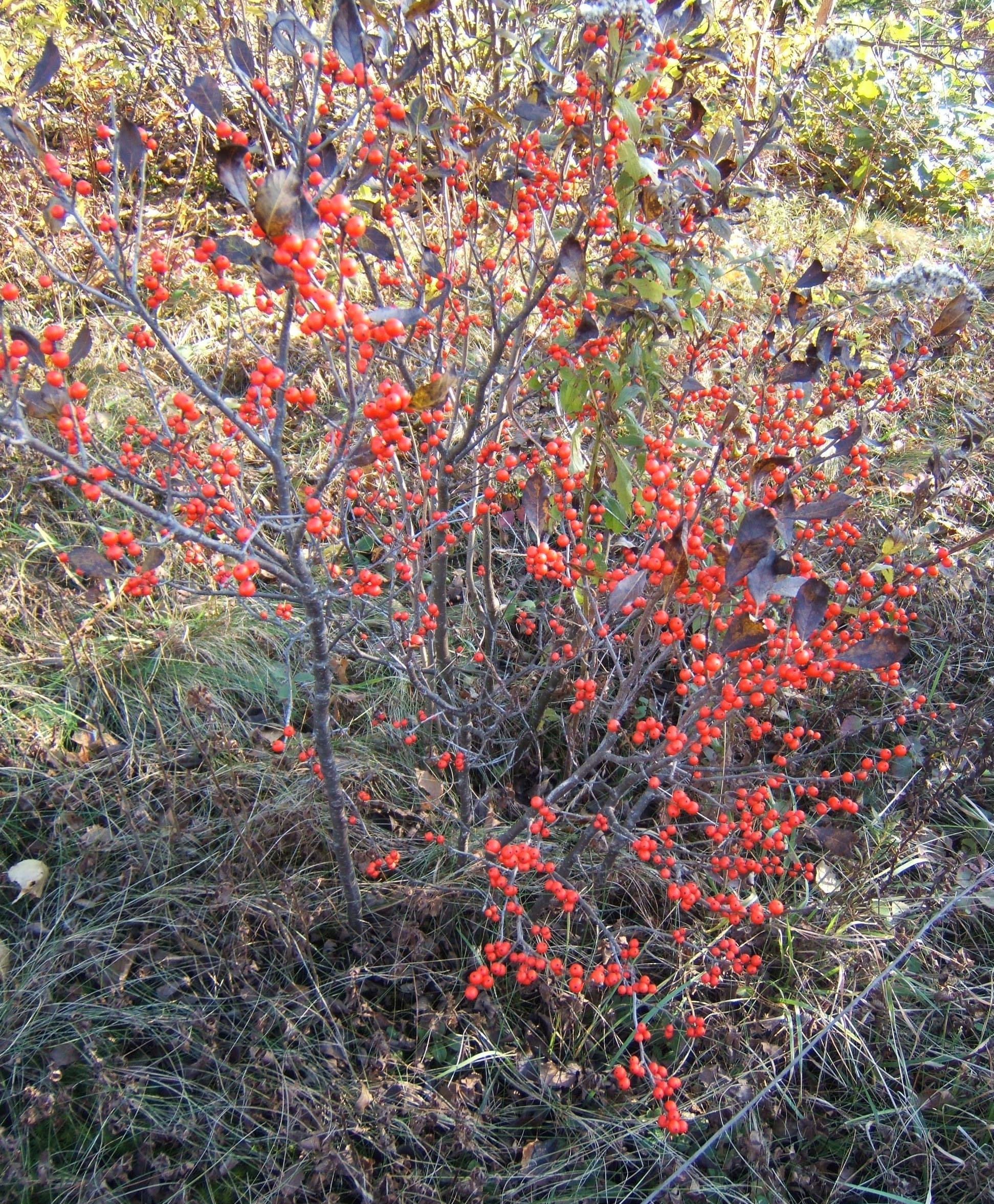
winterberry holly in early winter
~
~
beech leaves and berries
~
watch the wretched shudder
of the second hand, clutch
at the day, a beech leaf, intent
or winterberries persistent
through December
~
peeling paint on the door
of the shed, insistent –
resist new color
parchment leaves and paint chips rattle
~
on a day in January
a grey-green flake of paint
is tumbled by wind
and vermillion berries surrender
drop
by
drop
~
indifferent snow
~
~
Copyright 2014 Jane Tims
harvesting colour – mordants and modifiers
Dyeing textiles involves more than just the dyestuff. Simmering cloth in a dye bath may initially produce a beautiful colour, but without help, the colour may fade in sunlight, or over time.
~
Mordants: Mordants are substances that assist the dyeing process by improving the colour-fastness of dyes (to washing and light), and by modifying the strength and quality of colour. Mordants bond with both dyestuff and fibre so the resulting colour is more permanent. Mordants include metals such as aluminum, copper and iron. I have a quantity of a safe mordant, alum (aluminum sulphate) and I may try other mordants as I become more experienced.
Colour modifiers: After a fibre is dyed, colour modifiers can be used to increase the range of colour possibilities. In some cases this means changing the pH with modifiers such as vinegar. Modifiers also include after-mordants (additions of copper or iron). Adding iron as a modifier results in ‘saddening’ of the colour … for example, a brown obtained from a tannin-rich dye can become almost black.
~
My reading about mordents and modifiers made me think about keeping colours vivid in memory. Perhaps, when we remember a particular scene in full vibrant colour, there is some ‘memory-mordent’ involved !!! In the poem, the mordants aluminum, copper and iron are there in the coastal environment, strengthening memory …
~
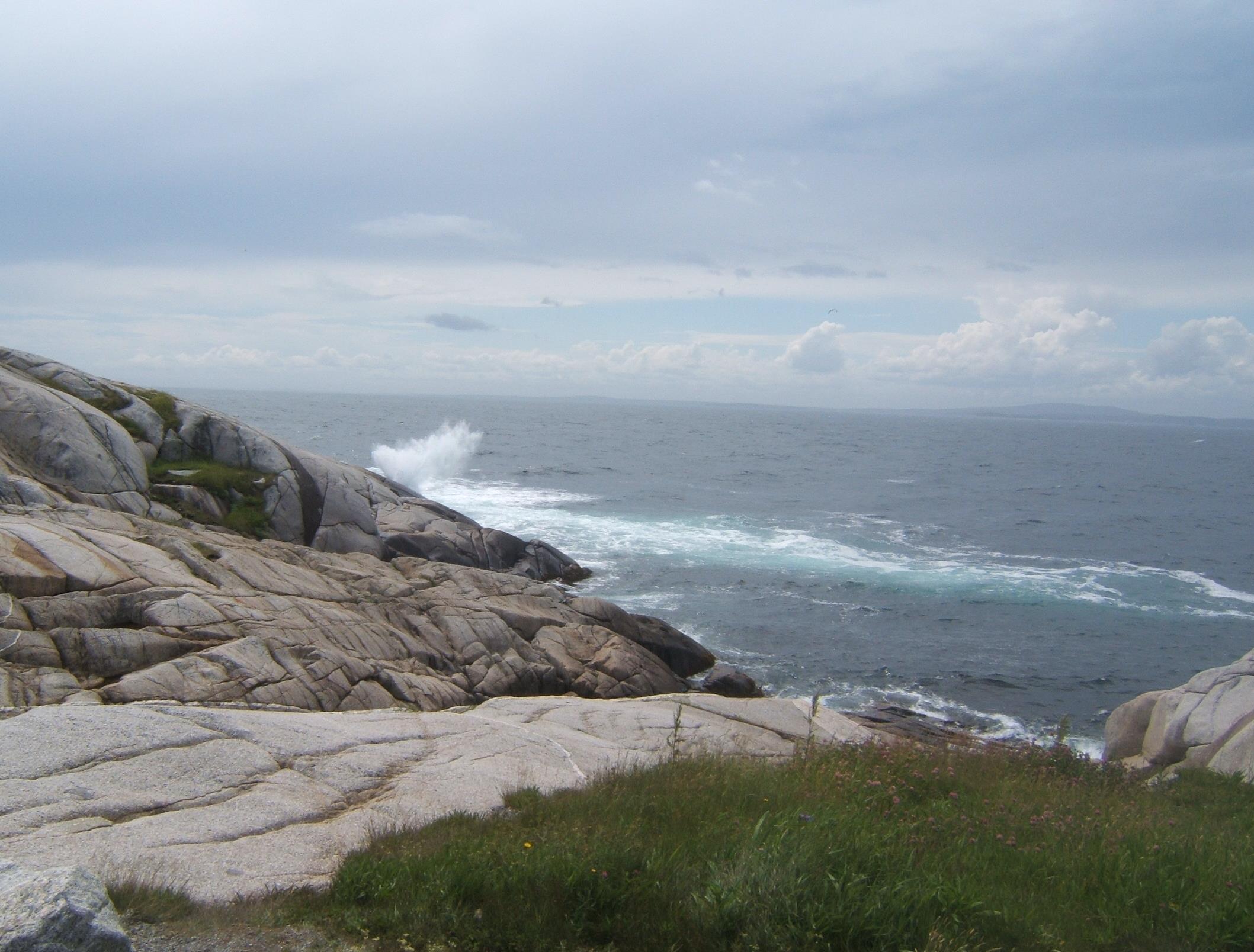
Peggy’s Cove, Nova Scotia
~
~
colourfast
~
how do I explain
the being present
the exquisite memory
the precise phthalo
of ocean, the cobalt
of sky, salt breeze,
viridian horizon
~
perhaps some mordant made
this memory strong – aluminum
from my morning tea, copper sulphate
patina from the weathervane
pointed landward
~
and the boathouse
mooring, rusted
saddened the colour
~
~
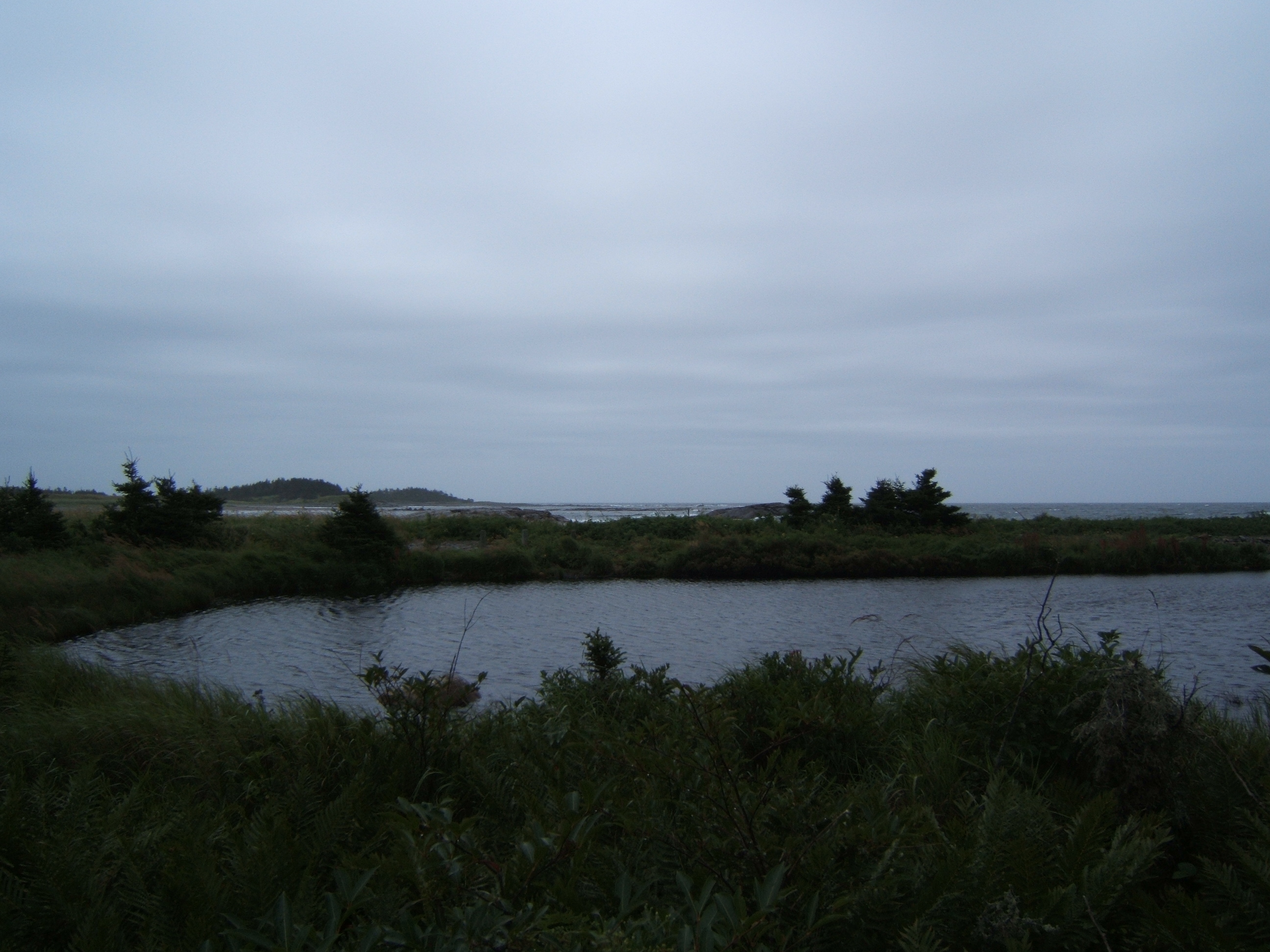
near Torr Bay, Nova Scotia
~
Copyright 2014 Jane Tims
harvesting colour – the chemistry of colour
I have done a lot of reading this week, mostly to brush up on some basic chemistry in preparation for my project on using plant dyes.
~
It took me a couple of years in university to discover that chemistry was not my forté. I loved the mathematics of first year inorganic chemistry but I met my match with organic chemistry in my second year. I came to the conclusion that chess, music theory and organic chemistry have something in common … Jane cannot win a chess match against a cat. Jane cannot transpose music. And Jane cannot figure out elimination and substitution reactions in organic chemistry. I did try.
~
In spite of my theoretical difficulties, I loved the labs in chemistry. Creating little quantities of limonene and caffeine and aspirin was fun. And I loved the visuals of the chemistry lab – the colours of the various chemicals, the architecture of the glassware and the various drips and sizzles and, occasionally, puffs of smoke.
~
My first introduction to chemistry lab was a simple titration demonstration, showing a way to use the colour of an indicator to determine an unknown concentration. It seemed magic as I swirled the flask and watched for the solution to change its colour from clear to pink. I saw the parallels to botany right away. Today, I never look at a shrub of Hydrangea without thinking about the connection between the colour of the flowers and the acidity of the soil. Alkaline soils promote pink flowers. Increased acidity makes more aluminum available to the plant and the flowers turn blue as the aluminum associates with the plant pigment anthocyanin. These are the kinds of interactions I expect to see in my dyeing projects.
~
And so, here is my first offering of poetry in the theme of ‘harvesting colour’. It is not about dyeing fabric, but explores the idea of colour change as a metaphor for trying to understand human emotion.
~
~
titration
– to determine the concentration of an unknown solution, we watch for change
~
all summer she sits, the sag of a meniscus
on the stair of the veranda, tucked,
at the start-point of the burette,
into stems of hydrangea
~
mopheads droop and rain adjusts
the soil, basic to acidic, drop by drop
pink petals turn violet
first titration always an estimate
~
as the corymb favours blue, we realise –
basic words and helpful anecdotes will not be
enough, the situation is complex, not merely a matter
of pH, but the interaction, aluminum with anthocyanin
~
titration demands a practiced hand, a careful
eye to mark the end-point when colour prevails
and makes sad chemistry, on the last day of August
when hydrangea succumbs to blue
~
~

detail of Aug. 10, 2013 `hydrangeas, Carlyon Bay` Jane Tims
~
Copyright 2014 Jane Tims
harvesting colour – gathering more materials
As I get ready for my first experiences with dyeing, I have thought about the materials I will be using. I don’t want to get too complicated and sabotage my real aim, the poetry I will write. I will try to keep it simple and generate lots of fuel for my writing.
Textile fibre: As I explained in my previous post on ‘harvesting colour’, I will use both plant (three old cotton shirts) and animal fibres (unspun wool and silk fabric).
Source water: I will be using our well water – slightly acidic and high in several minerals. Our water is so acid, it reacts with the copper piping in our house to stain all the drains in our house a copper sulphate blue. I know that the acidity of the source water influences the colour outcome. For some of the plant dyes I will use (for example madder), I will want to adjust the water acidity to get a full range of possible colours.
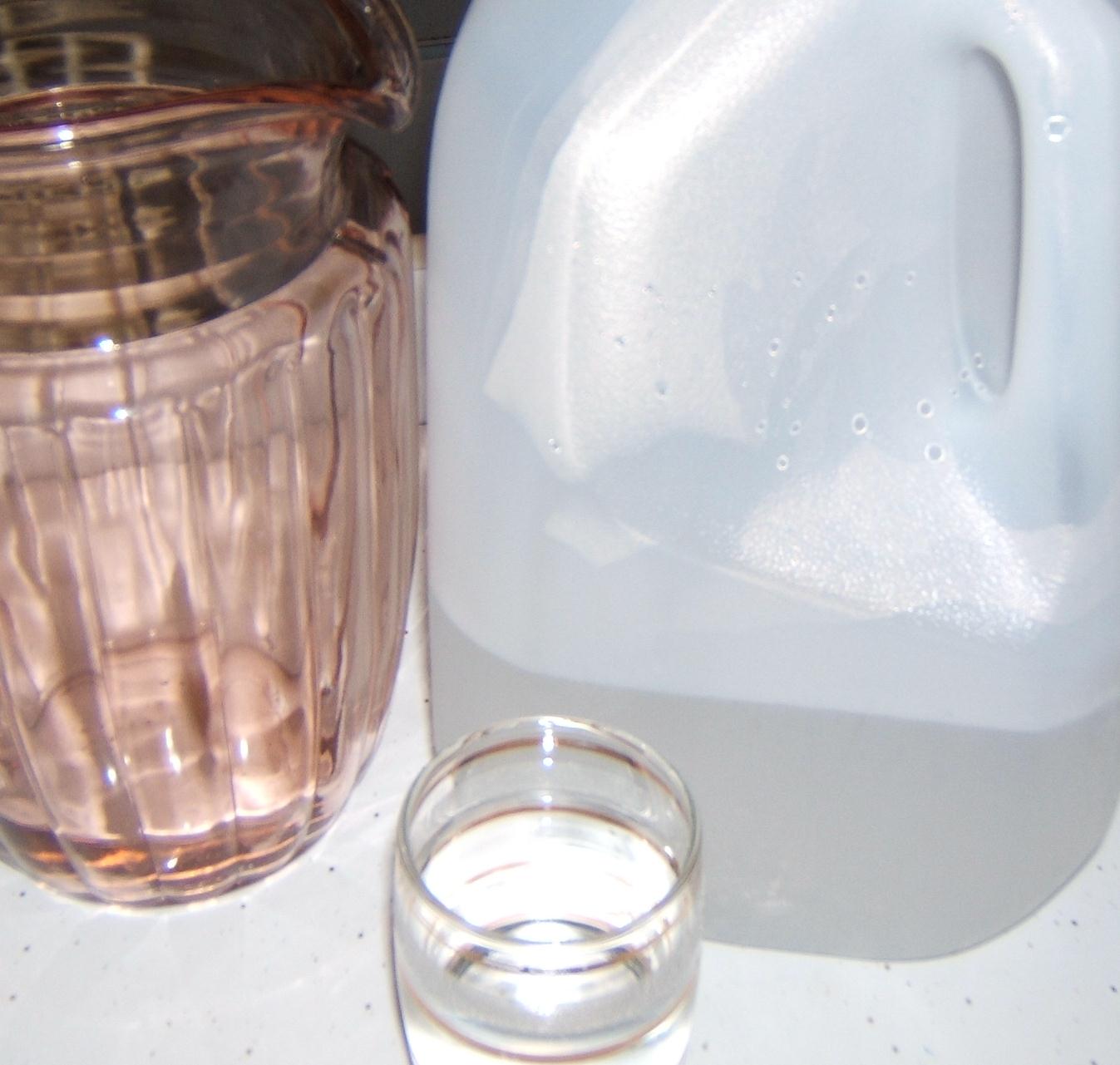
during our problems with our pump and well in 2013, we missed our tasty well water
~
Utensils: Last fall I bought myself a large stainless steel pot for my dyeing projects since I know it is important to keep my dying utensils separate from our cookware. I also have my Mother-in-law’s copper teapot if I want to add some ‘copper kettle’ to my dye projects (copper is a mordant, an addition that helps keep textiles colourfast).
~

my mother-in-law’s copper kettle – since my husband doubts it is solid copper, I may have to add some copper pennies to get the mordant effect of copper
~
Plant material: Even in winter, I have access to many plant materials for dying. I have various flower petals and other plant material from my various botanizing adventures. The drying line in my kitchen has a bouquet of tansy gathered last fall and a net bag of onion peelings I have collected since Christmas. I have acorns collected last fall and, outside, access to the bark of various trees, including birch (I am anxious to try this since I understand birch bark can dye in hues of red). In my freezer, I have frozen berries, including a tub of red currents picked by my Mom over ten years ago – I plan to use her berries to dye material for my weaving, after I have gained a little experience. As for in-season plants, I know my husband is looking forward to being dragged all over the countryside in search of various kinds of plants (he was a very helpful participant in my ‘growing and gathering’ project.
~

oak leaves with a cluster of acorns
~
For next Friday’s ‘harvesting colour’ post, I’ll talk a little about mordants and colour modifiers and I think I’ll post my first poem in the series!
~
Copyright 2014 Jane Tims
harvesting colour – onion skins in a pickle jar
According to India Flint (Eco Colour: Botanical Dyes for Beautiful Textiles, Interweave Press, 2010) the principal ingredient in any natural dyeing project is time (and patience). Now, while I am still getting organized, I have decided to begin with a simple project that can take all the time it needs.
I have chosen a cotton shirt for this project. I wore it for a couple of years and loved its iridescent buttons, rows of ruffles and embroidered details. Then it became stained and I put it away.
~

my 100% cotton shirt
~
Today, I scattered the onion skins I have saved across its surface – some from Yellow Onions and some from Red Onions. As I worked, I sprayed apple cider vinegar to wet the fabric. Then I rolled it up tightly and poked it into a big pickle jar. For at least a month, I will leave the jar to sit on my window sill and cook in the sun. If it starts to grow mold, I am going to stuff it in the freezer. The biggest challenge was getting all that material to fit in the jar!
~
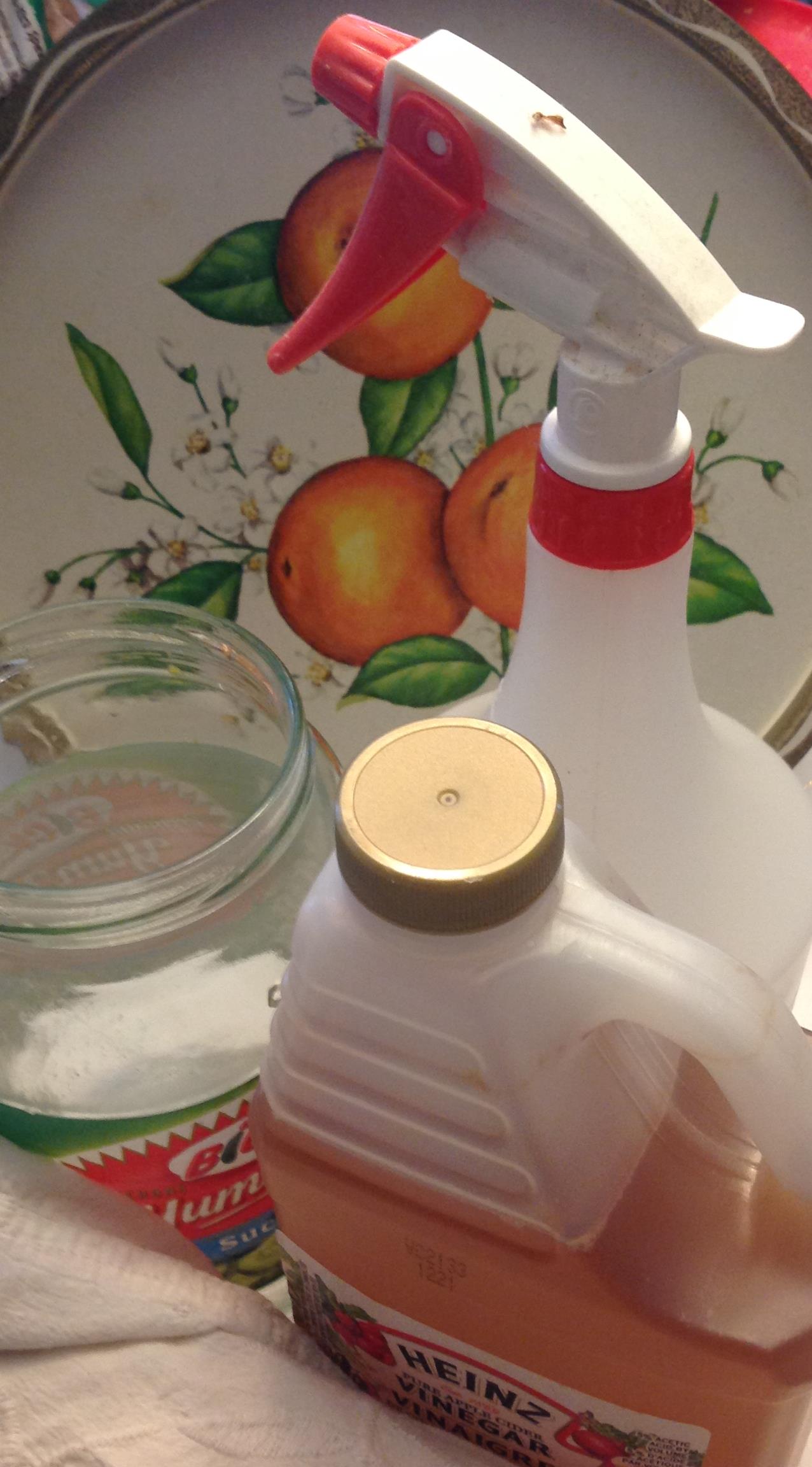
materials for my onion skin dyeing project – the platter is so you cannot see my messy kitchen …
~

all I can say is ‘yum’ …
~
If you hear of a smelly house for sale in rural New Brunswick, you will know something went terribly wrong. I will show you the results, as well as the poem this generates, in about a month’s time …
~

detail of the machine embroidery on my cotton shirt
~
Copyright 2014 Jane Tims
harvesting colour – the formula for colour
My first effort towards my project is to understand what materials I will need. From my early reading, I have learned the end colour for any project using natural dyes is much more than just adding plant material to water. A final colour is the result of so many factors.
~
My simple formula for this complex symphony is:
final colour = source water + utensils + plant material (dyestuff) + mordent + colour modifier + textile fibre
~
No doubt, I will discover I have omitted some important element.
~
In my next posts, I will consider each of these elements and talk about the specific items I intend to use.
~
For example, I will need some textile fibre to dye. My intention is to dye small amounts of material for use in various weaving projects. In my weaving, I use both thread and strips of textiles.
At this early stage, I have three materials I want to dye. I have a small quantity of unspun fleece obtained a couple of years ago during our trip to Upper Canada Village in Ontario. I also have three old cotton shirts – I loved to wear these before they became stained – perhaps I will wear them again, repurposed in rainbow colour! And I have just purchased a meter of white silk (at $37 per meter, it is a splurge!). I will have to do some preparatory cleaning to each of these materials before I use them in my dyeing projects.
~

some materials for dyeing … a meter of silk, three shirts, and a bundle of unspun wool … the shirts have already seen their share of accidental dyeing !!!
~
Behind the scenes, I am finding poetic inspiration as I learn this craft of dyeing. Eventually I will be brave enough to show my poems to you.
~
Copyright 2014 Jane Tims
harvesting colour
Recently I was awarded an artsnb (New Brunswick Arts Board) Creations grant. My six month project will be to write a book-length poetry manuscript about the experience of using plant dyes for colouring textiles.
The poems will find their inspiration in the activities of collecting plants, extracting their dyes and using them to colour woven fabric.
~
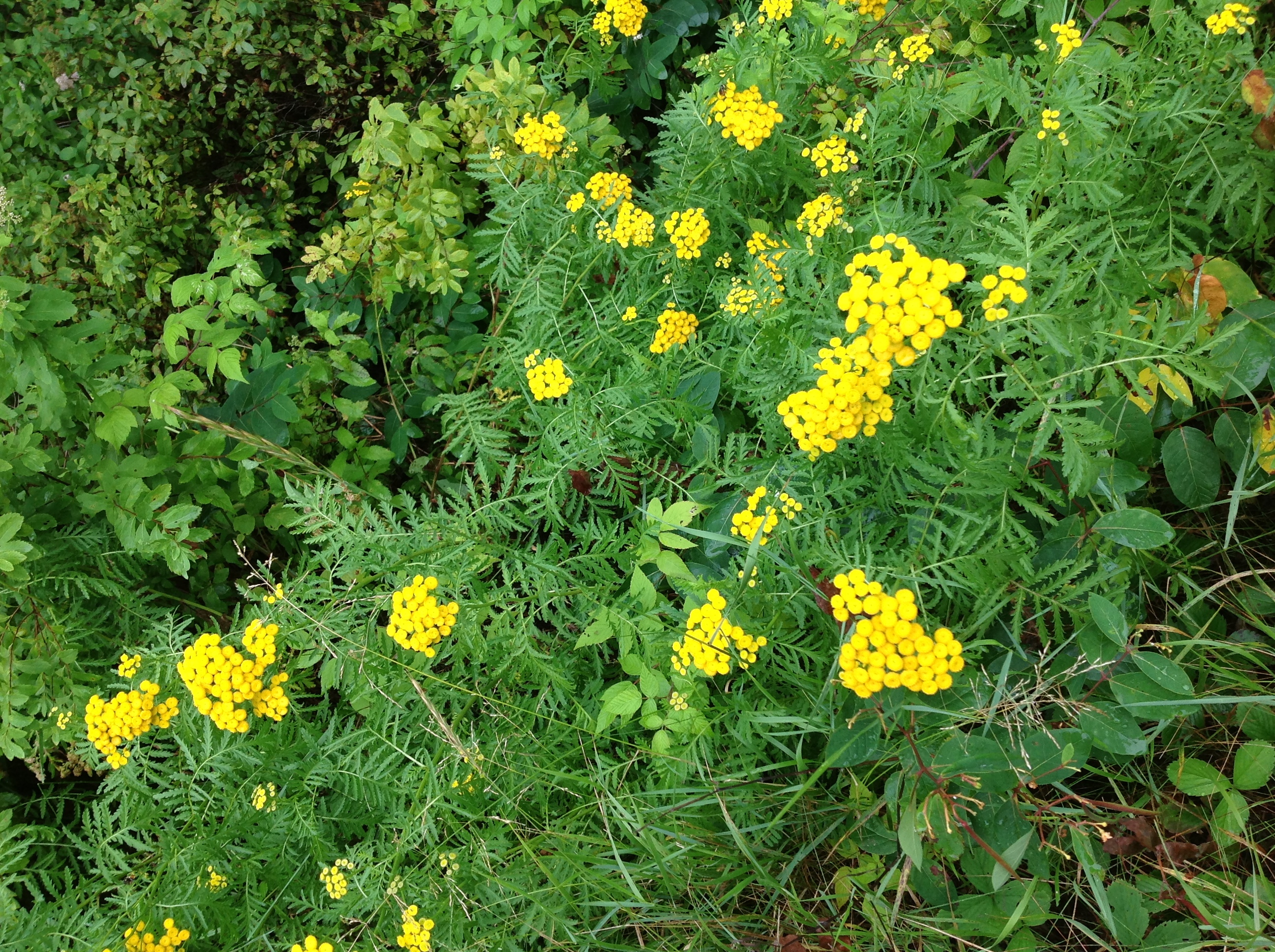
one of the plants I will be using is Tansy (Tanacetum vulgare) – it grows throughout New Brunswick and can be used to make yellow and olive dyes
~
Writing these poems, in many ways, should echo my previous project ‘growing and gathering’. I will do some research about a particular plant, then go forth and find it. For the ‘growing and gathering’ project I had a lot of fun exploring various areas of the province for the plants I needed, so I know I will love this part of the experience. It will be when I get the plant material home that the differences between the two projects will become clear. With ‘growing and gathering’, writing poems about picking berries seemed second nature to me since I’ve spent a lot of my life in berry fields.
~
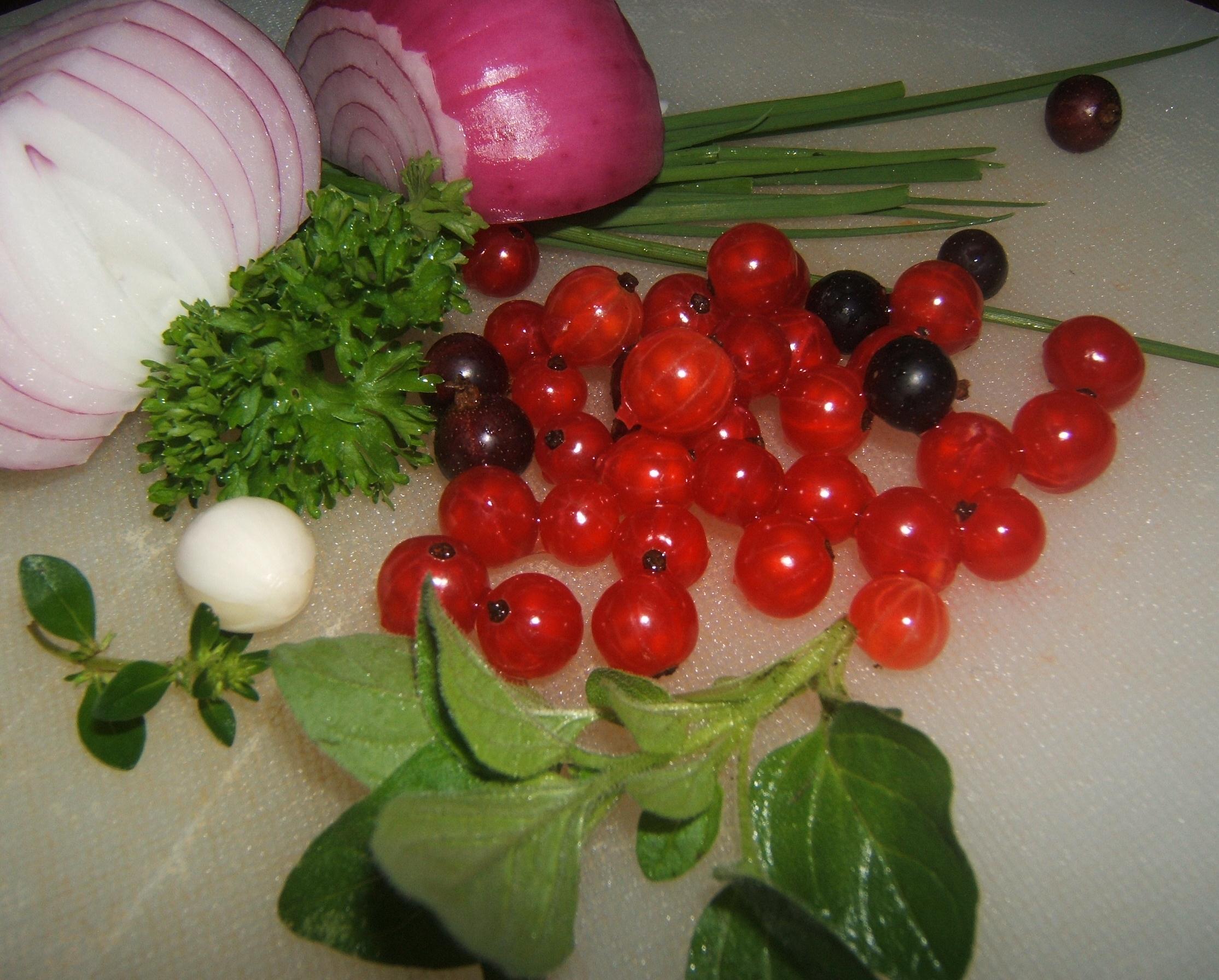
some of the ingredients for a ‘growing and gathering’ salad
~
With ‘harvesting colour’, I will be learning a craft new to me. I’ll be trying to manage the complex alchemy of “pot type plus source water plus plant material plus mordent plus receiving material”. Lots of chemistry and a few colour tragedies, I’m certain. And discovery, as purple plants become yellow dye. I hope to combine making plant dyes with my weaving, an activity I find totally relaxing and steadying.
~

some of my weaving results over the years … it will be fun to see what colours my project will bring to my weaving
~
So where will the poems come from and what will they say? I’ll be looking for metaphors for human experience and emotion. I’ll try to embed ideas about reconnection with nature and about cultural expression through decorating fabric. I’ll use words from botany and chemistry, and a rich colour dictionary. I can hardly wait to explore all the words for yellow, and green, and red.
I want to write poems about ‘saddening’ the colour by adding a pinch of salt, and ruining a dye lot by forgetting to tend it well. I’ll write about oak leaf imprints on cloth, and the different yellows created with apple bark and poplar leaf. I’d also like to write poems about the ordinary life experience of plant dyes – grass stains on knees, the grey Choke-cherry jelly bag, the Cranberry stain on the tablecloth.
I’ll be presenting at least some of my poems here and I’ll certainly be sharing my experiences. I’ll continue to present my virtual travel, novel writing and watercolour posts, but I plan to devote Friday’s post each week to ‘harvesting colour’. Hope you visit regularly to follow me in my project!
~
Copyright 2014 Jane Tims
a moment of beautiful – blooming plants for Christmas
the space – the east-facing window in our dining room
the beautiful – brilliant red flowers of the Lipstick Plant
A couple of my houseplants have given me an early Christmas gift. I had a hearty blooming of my Christmas Cactus early in December, and then, last week, my Lipstick Plant (Basketvine) (Aeschynanthus pulcher) burst into brilliant red blooms. Aeschynanthus is a subtropical genus from the same family as African Violets. This is the second time it has bloomed for me in the last two years.
~
I am sure this plant is wishing me, and you, a Merry Christmas !!!
~
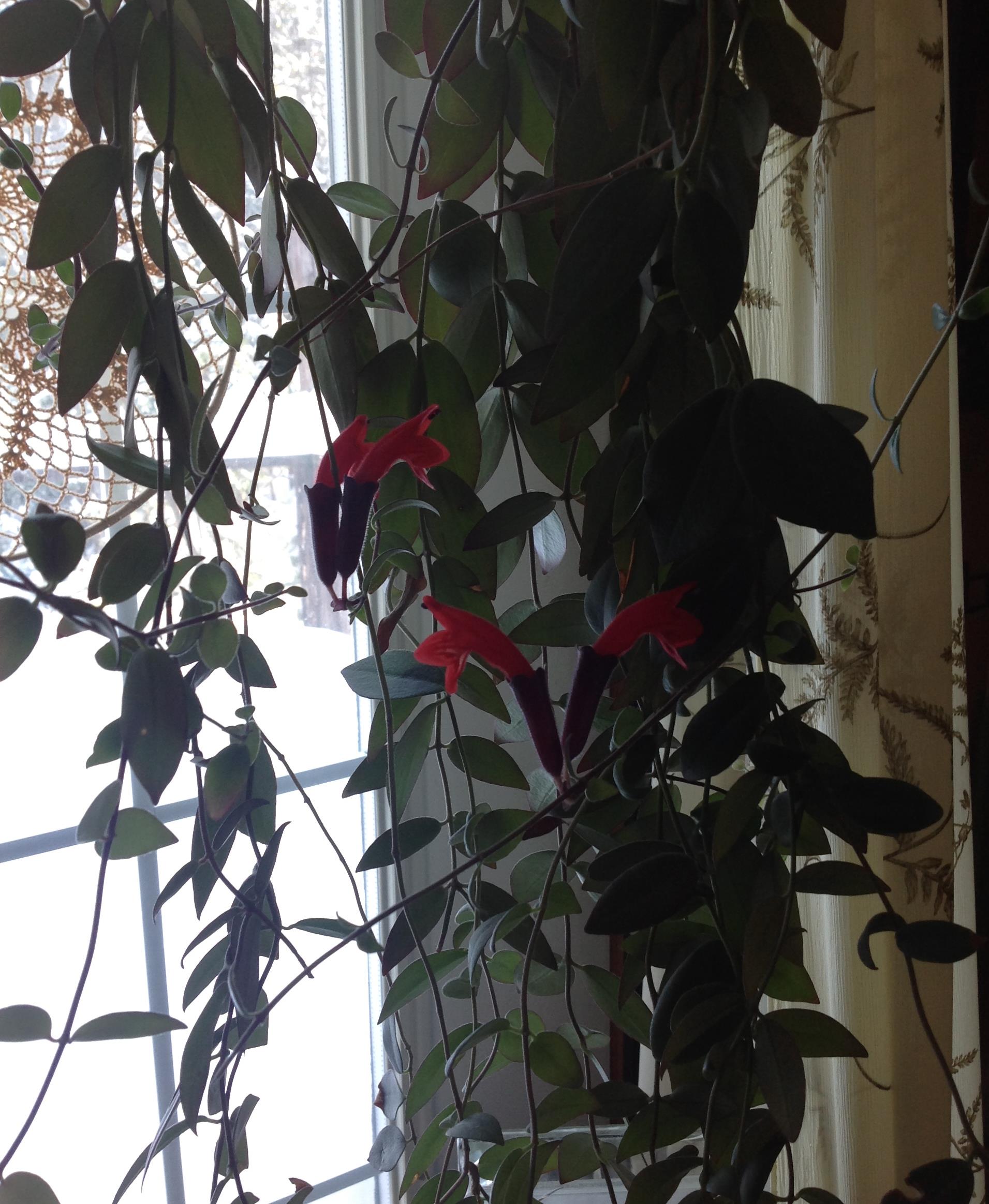
Lipstick plant in bloom
~
Copyright 2013 Jane Tims




 nichepoetryandprose