Posts Tagged ‘nature’
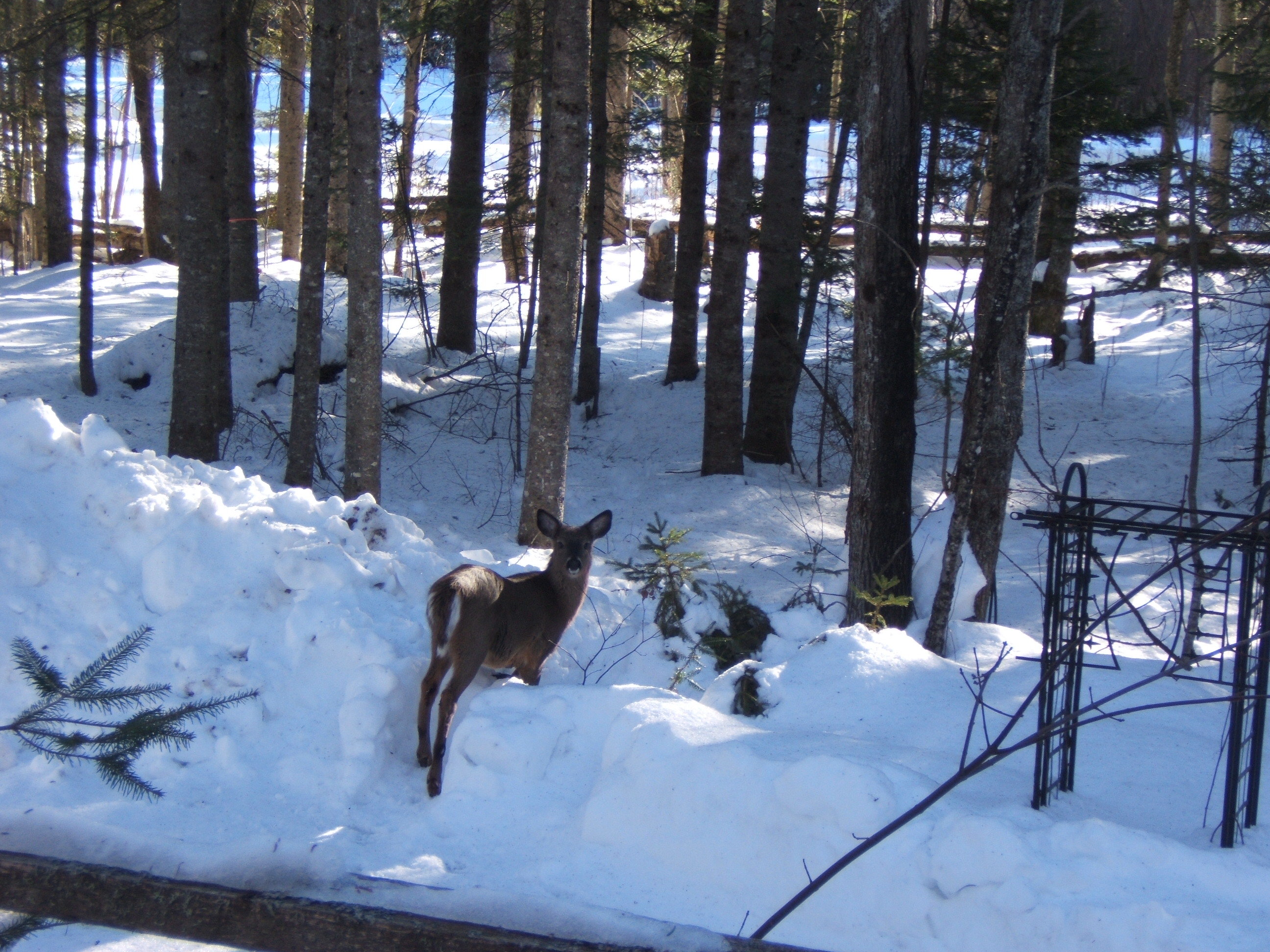
dear deer
This year, I moved our feeders to our front yard.
They are not so easy to see from the house, although I have a good view from the window of our library.

The deer have liked the new feeding station. We see them almost every day. They empty the feeder too quickly and also visit the compost pile. We don’t deliberately feed the deer, but they visit the feeders anyway.

~
deep and delicate, hoof print
evidence, this space is shared
~
deer, eat peelings by moonlight
one floor up, we sleep, unaware
~
lulled by winter carbs
carrots and potatoes in the supper stew
~
Copyright Jane Tims 2013
a moment of beautiful – icicles
the space: drip line of a house on a winter day
the beautiful: icicles
~
On the day after an increase in temperature, when the snow from the roof is melting, the front of our house, on the south side and in full sun, is always dripping and making icicles.
They glitter and sparkle, sculptural wonders of frozen water.
~

~
~
ice storm
~
for three days
freezing rain and willow
have hung uncertain magic
along the river
~
ice in layers
laid on the bones
of the tree tops, branches break
candy-coats crack in the sun
~
I refuse the sparkle
resist the awe
worry
the bones will not recover
~
~
© Jane Tims 2009
in the circle of the evergreen wreath
Every year, during Advent, I either purchase or make a wreath of evergreens to celebrate the coming of Christmas. Last year, making the wreath, I had a little help. Zoë decided the perfect place to perch herself was within the circle of the wreath.
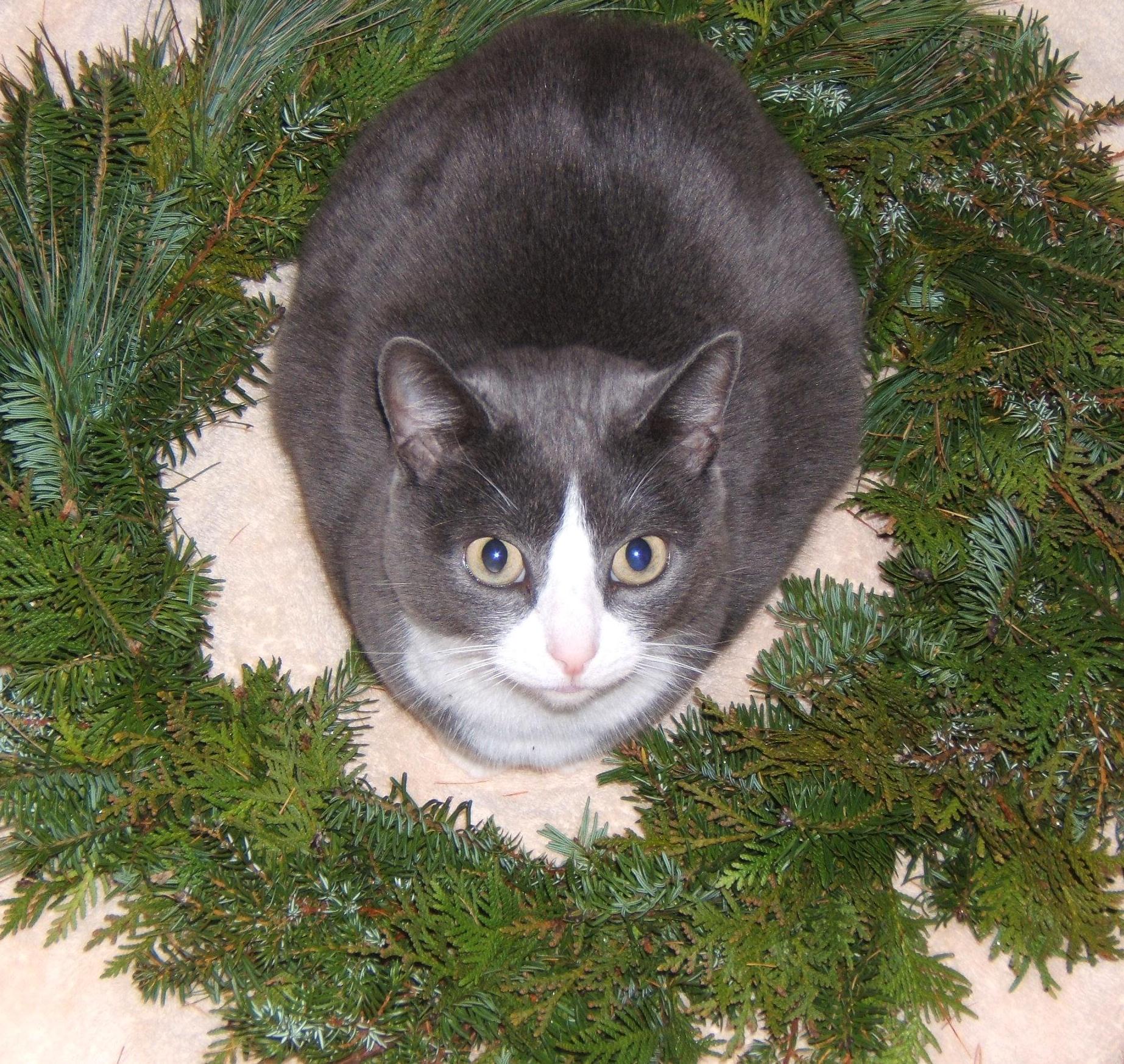
Our wreath materials were all obtained on our lake property. The species we used for our wreath were:
- White Pine (Pinus Strobus L.)
- White Cedar (Thuja occidentalis L.) also known as Arbor Vitae
- Balsam Fir (Abies balsamea (L.) Mill.)
- Common Juniper (Juniperus communis L.) -the variety we used was too prickly and I won’t use it again.
~
At this time of Advent, we wait in the darkest days of the year for Christmas. The wreath is one of the most endearing symbols of this wait. Made of evergreens, it speaks to the concept of everlasting love. To count down the Sundays before Christmas, we light purple and pink candles to symbolize ideas of Hope, Peace, Joy and Love. The lighted candles also represent bringing light into the world.
The wreath is another of those symbols borrowed from pagan times, when the circle represented the ever-changing seasons and the circle of life. The evergreen stood for the part of life that survives the winter season and candles symbolized light shining through darkness.
~
~
gathering green
~
in the space between solstice
and the whisper of stars
in a herded sky
daylight shrinks, always one hour
short of rested
~
in the thicket we gather
armloads, garlands of green
fragrances of cedar and pine
red dogwood twigs
stems of red berry, alder cones
curved boughs of fir
~
flexible as mattress coils, piled on ground
to rest, await brief
overlap, longest night
and feathering of angel down
~
watch, through the trees
the struggle
planet light
and pagan fire
~
~
© Jane Tims 2012
abandoned bridge – South Nation River
In south-east Ontario, the South Nation River winds through farmland…

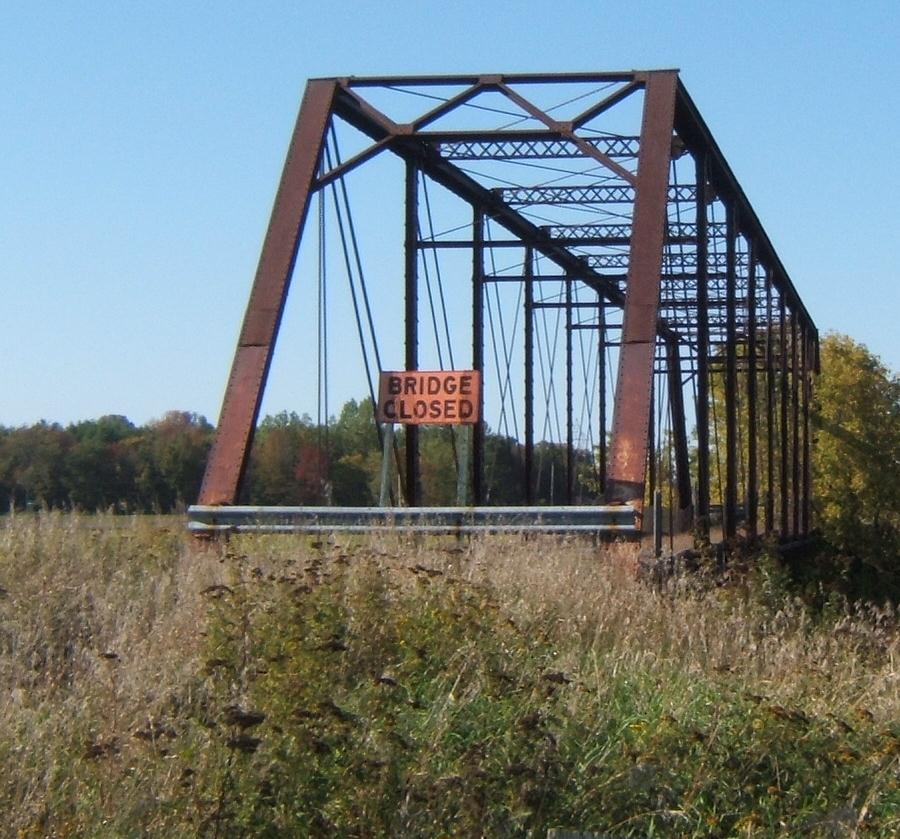
Driving along the river in October of 2012, we found an old metal bridge, closed to traffic. Although left to rust, this bridge was beautiful in its simple construction. The deck of the bridge was rotted, but wildflowers had taken hold in the debris.
According to the South Nation River link at http://www.nation.on.ca/en/geocaching/ (South Nation Conservation), the bridge has now been removed.
~
~
abandoned bridge, South Nation River
~
years since I crossed the metal bridge –
we take the long way now,
over that engineered, concrete
contrivance, upstream
~
the old bridge CLOSED, of course
trusses red with rust, corroded
pitted as the river bank
and its swallow-burrows
~
once we walked those girders
leaned from the railings
amused ourselves by pitching rocks down
into the duckweed
~
wouldn’t be safe today, the deck
rotted where hawkweeds bloom
all summer, cheerful
you’d think they’d been planted
~
~
Published as ‘abandoned bridge, South Nation River’, Canadian Stories 15 (85), June 2012.
Copyright Jane Tims 2012

windy October drive
On Monday, I went on a drive to Cambridge Narrows, to visit an antique store and a roadside market. My goal: to buy some Nancy Drew mystery books for my collection and some pumpkins for Halloween.
It was a blustery day, windy enough to put some whitecaps on the St. John River…
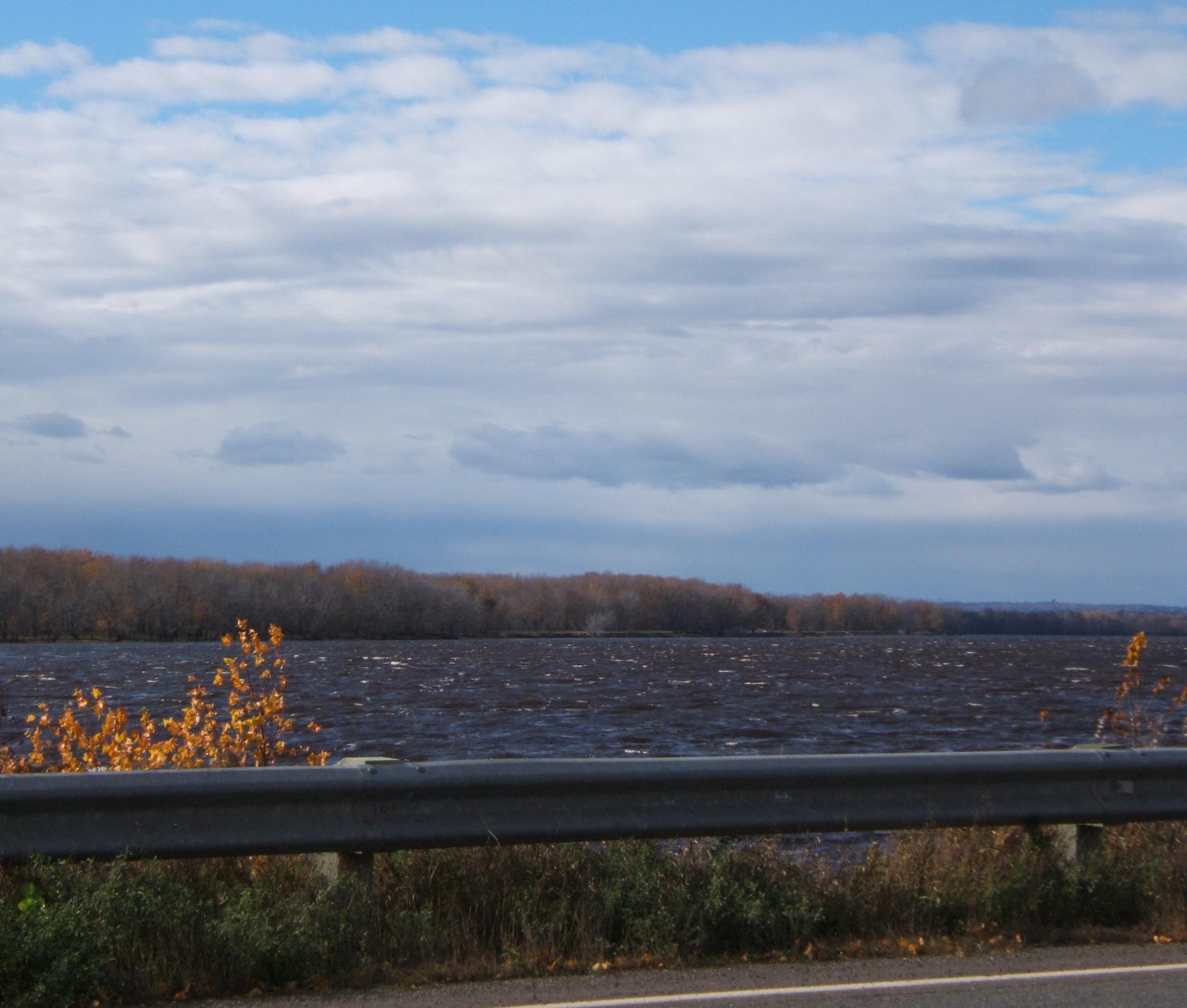
The wind was especially evident along the former Trans-Canada Highway, where dry leaves have gathered in all the ditches. Since only a few vehicles use this older highway, the leaves blow into the roadway…

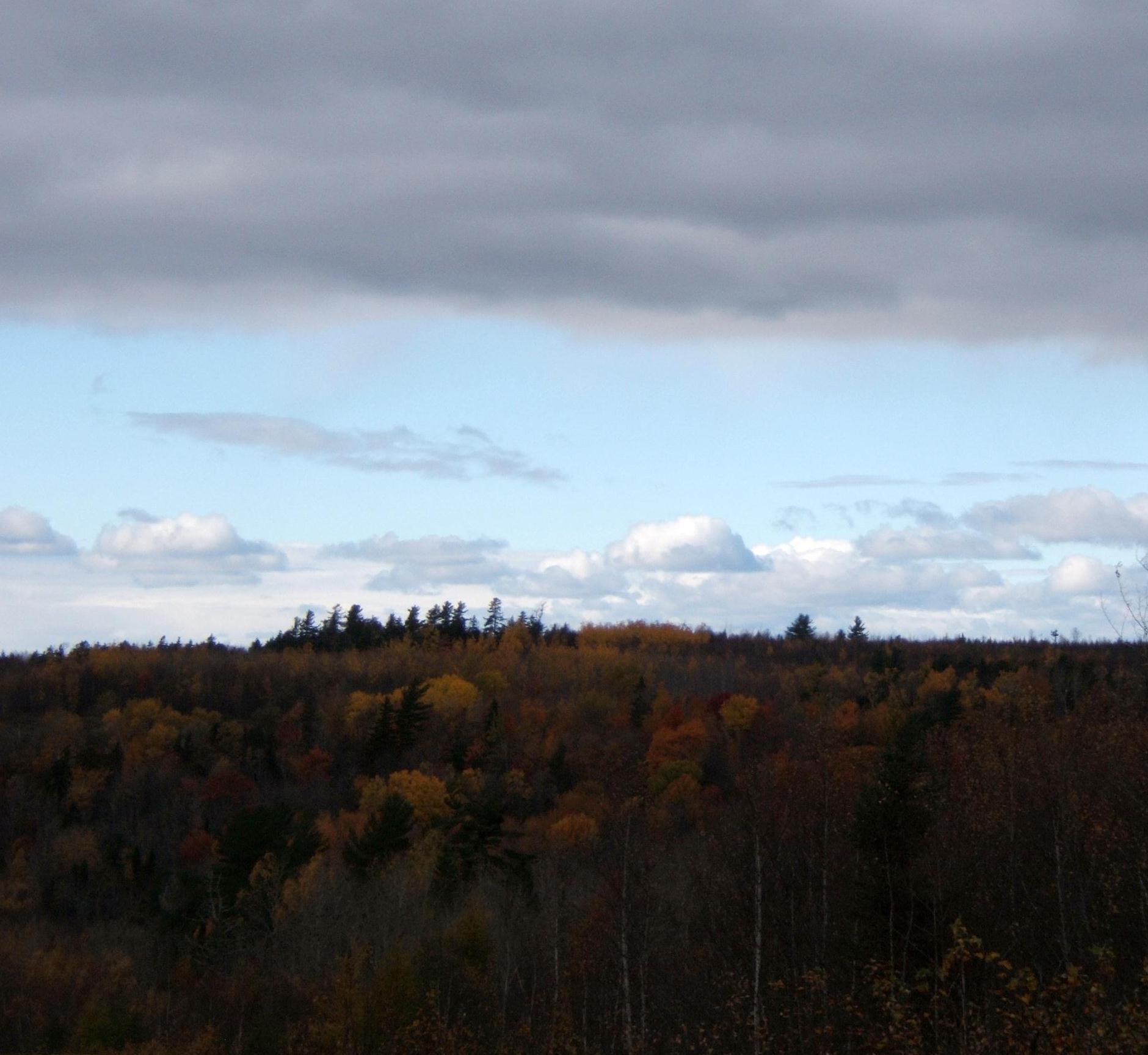
The day had a luminous quality, in spite of the wind. Most of the reds are gone from the trees, leaving the yellows of the poplars, the rusty-orange of the oaks and the gold of the tamaracks…
I had a successful day. I bought some small pumpkins at a roadside stand…

three little pumpkins from the roadside vegetable stand (the faint eyes in the background are the amber eyes of our owl-andirons)
I also added five books to my collection of Nancy Drew mysteries…
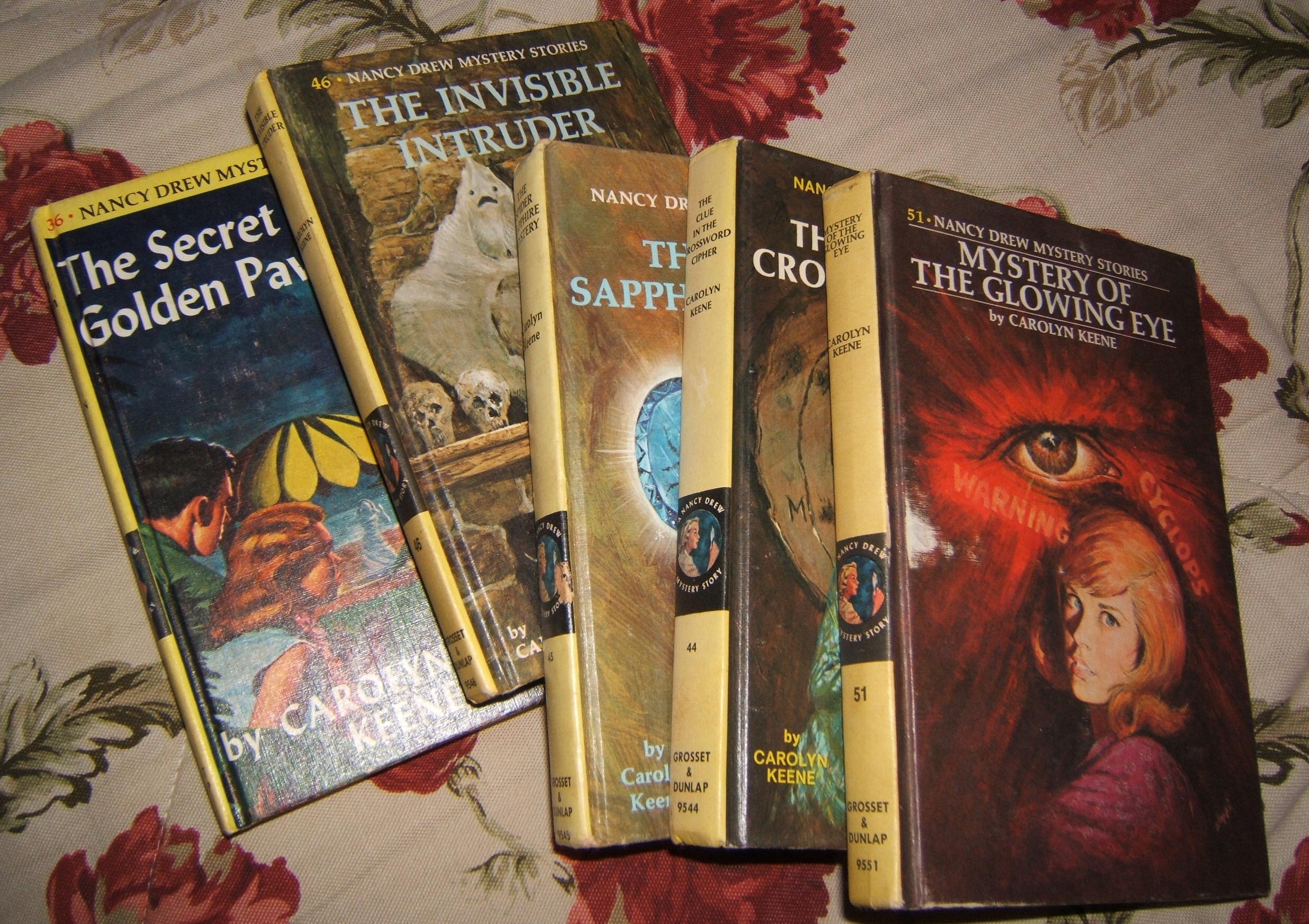
five new mysteries for my collection… enough ghosts and glowing eyes for a spooky Halloween
~
~
andiron
~
wrought owl with amber eyes
perches on the hearth
hears a call in the forest
six syllables and silence
~
Great-horned Owl, light gathered
at the back of his eyes,
and the oscillating branch
after wings expand and beat
~
iron owl longs for a glimpse
of the sickle moon
the shadow of a mouse
sorting through dry leaves
~
in this cramped space
night woods are brought to their essence
fibre and bark, sparks and fire
luminous eyes
~
~

Copyright Jane Tims 2012
a moment of beautiful – Blue-eyed Grass
the space: the meadow above the lake
the beautiful: a bright blue flower – Blue-eyed Grass
All grass is not grass. In spring, some of those green blades reveal their true identity. You look down, and a blue eye stares back at you. You have found Blue-eyed Grass, Sisyrinchium montanum Greene.
Blue-eyed grass is not a grass at all, but a member of the iris family. It inhabits moist, open ground in fields and meadows, and blooms in late spring and early summer. The plant is low and slender, with a deep blue flower and a bright yellow center, borne at the top of a straight, usually unbranched, stem. The stem is two-edged, flattened on the margins. The flowers are borne in the axil of a sharp, upheld bract called a spathe. In French, the plant is called Bermudienne. Montanum means ‘of the mountains’.

~
~
Blue-eyed Grass
Sisyrinchium montanum Greene
~
I walk in grass,
but it isn’t grass –
Sisyrinchium
it winks at me
with azure eyes,
and I blink brown at them
~
Blue-eyed Grass
stands straight and still,
staunch Bermudienne
simple maid
with a watchful eye,
and a sword above her head
~
~
© Jane Tims 2012
ponds and pond lilies
Water is a favorite feature of the landscape for many people. On our drives we encounter streams and rivers, lakes and ponds. Thoreau, writing about his Walden Pond, said that water features are the eyes of the landscape. Reflected in those eyes are sky and clouds and the dazzle of the sunlight.
‘A lake is the landscape’s most beautiful and expressive feature. It is earth’s eye; looking into which the beholder measures the depth of his own nature. The fluviatile trees next the shore are the slender eyelashes which fringe it, and the wooded hills and cliffs around are its overhanging brows.’ Henry David Thoreau, Walden, 1854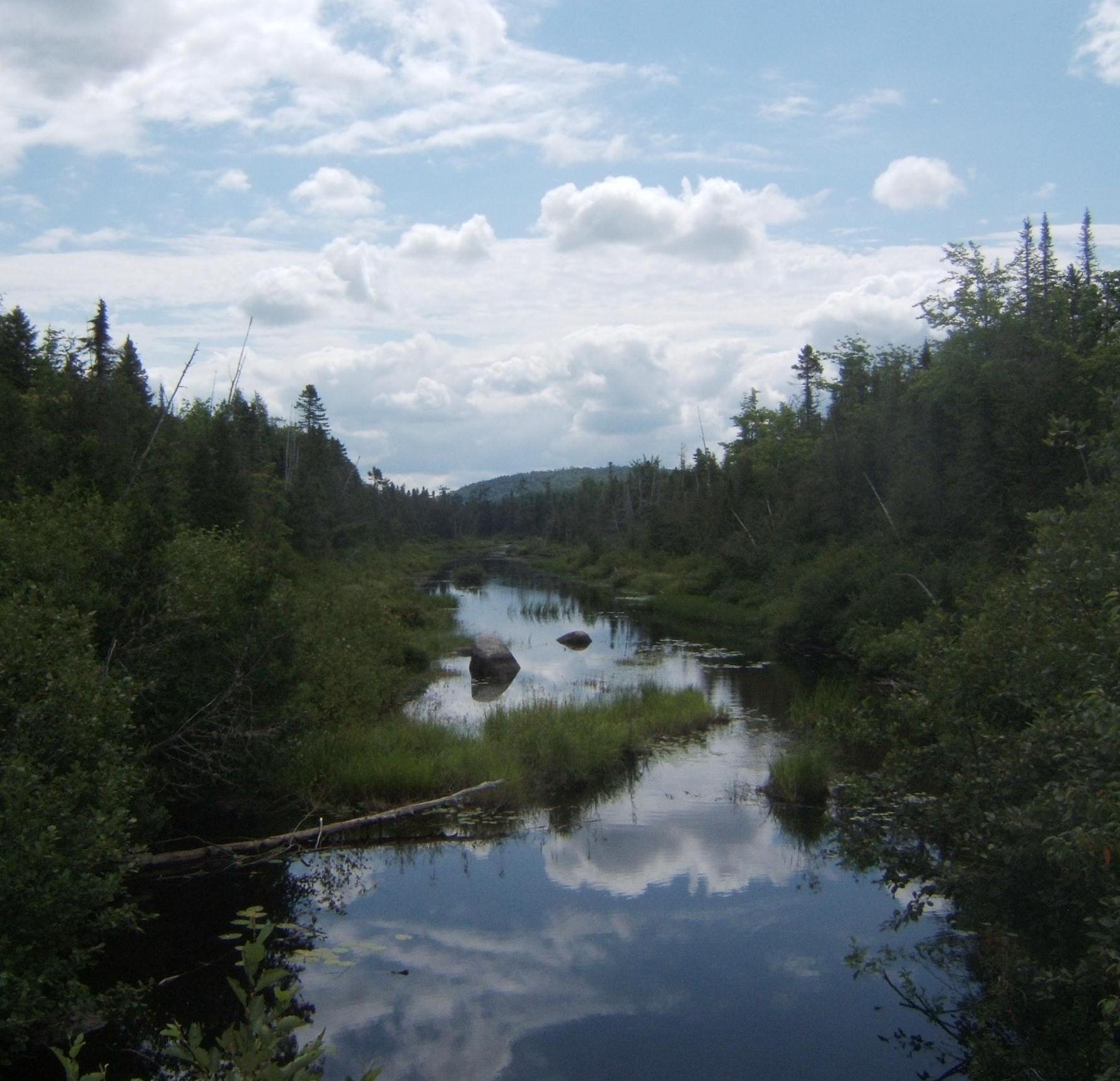
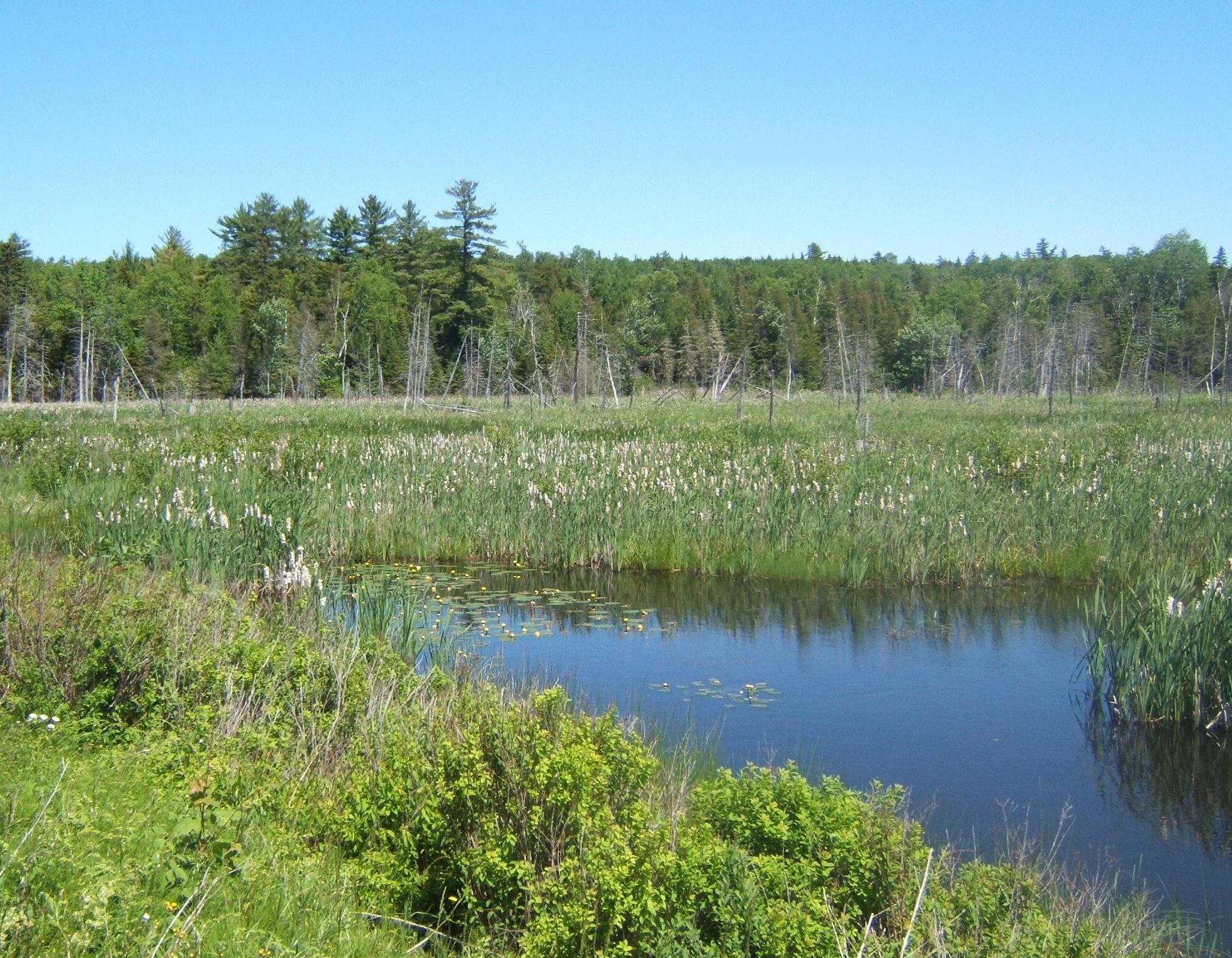
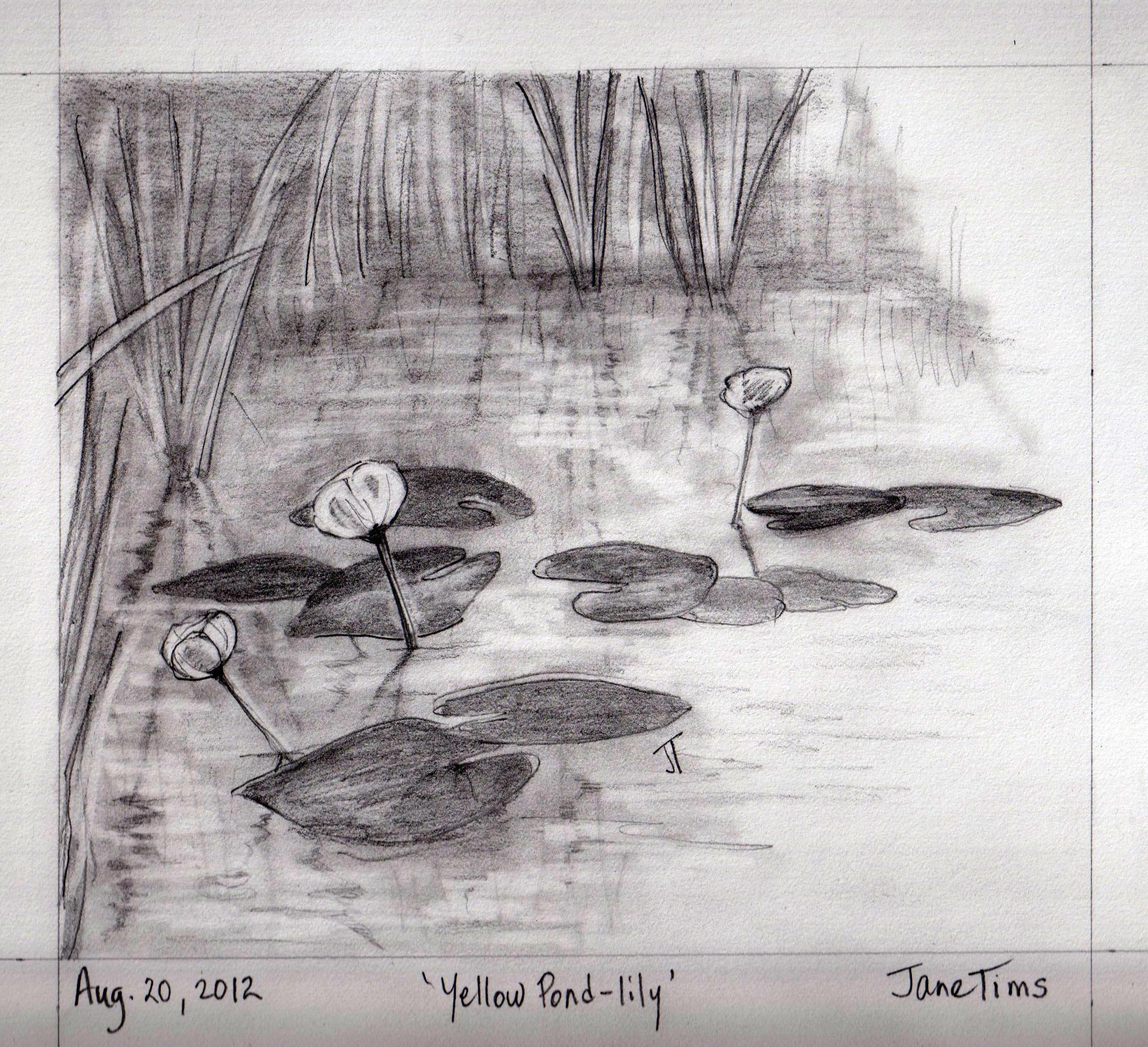
This time of year, pond vegetation is lush and in bloom. Some ponds and wetland waters are alwost covered by Duckweed (Lemna minor L.), Pickerel-weed (Pontederia cordata L.) and Pond-lilies.

Pond lilies are in bloom and their flat pad-like leaves cover the water like pieces of a puzzle. White Water-lilies, Nymphaea odorata Ait., speckle the edge of almost every pond…


and the yellow cup-like blooms of Cow-lily (Nuphar variegatum Engelm.) brighten the sluggish waters of meandering brooks and wetland ponds…
Last week we drove to South Oromocto Lake in Charlotte County and stopped beside the lake outlet where there is a dam, including a water control structure and a fish ladder. The long, red stems of up-rooted Water-shield (Brasenia Schreberi Gmel.) were gathered in tangles at the control structure.
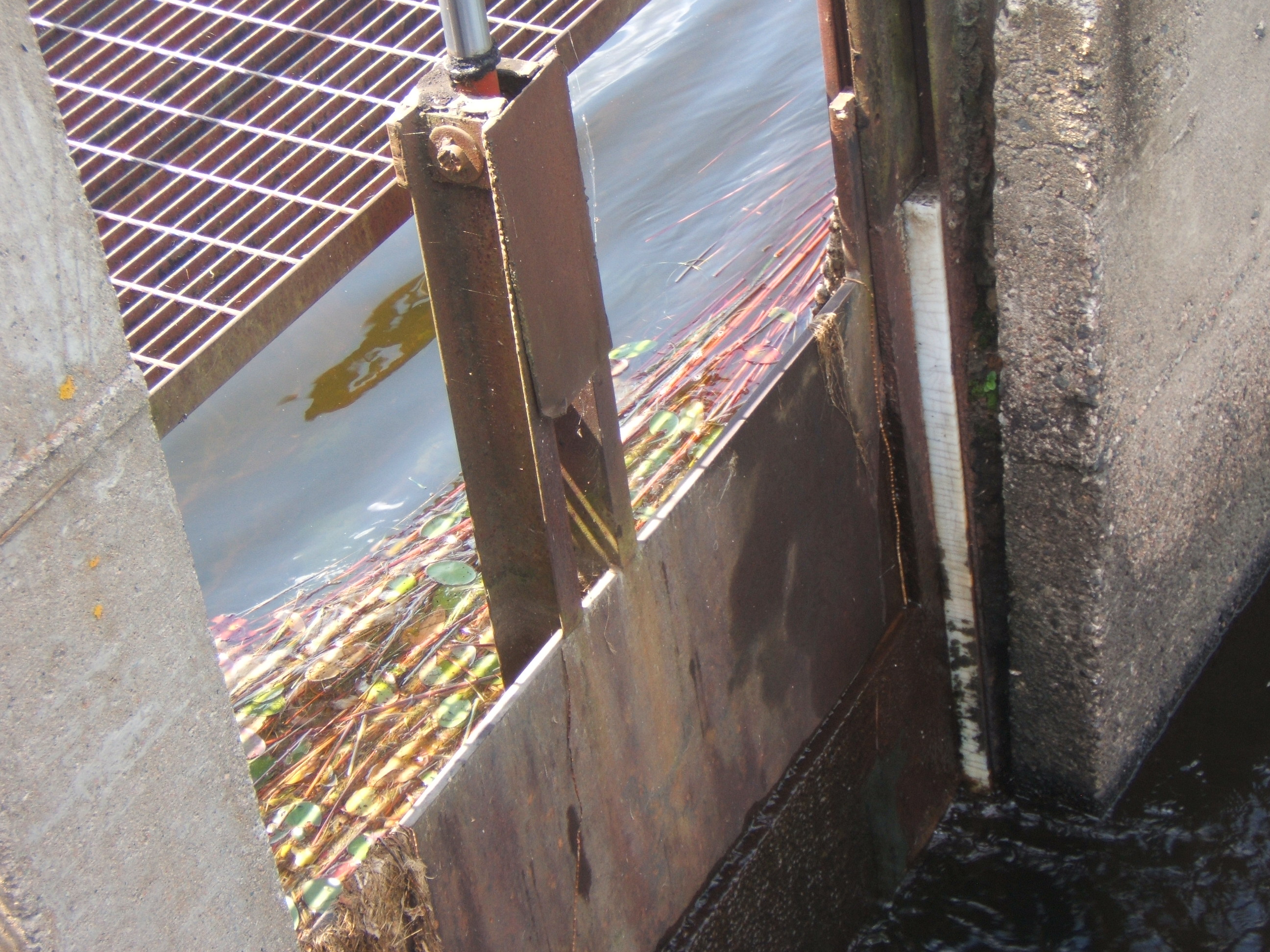
the red stems and green leaves of up-rooted Water-shield, gathered in the dam at the outlet of South Oromocto Lake

Do you have Pond-lilies and Water-shield where you are?
~
Copyright Jane Tims 2012
competition for space
One of the discouraging aspects of our lake property is how fast everything grows. In 2005, we bought 7 1/2 acres of field…
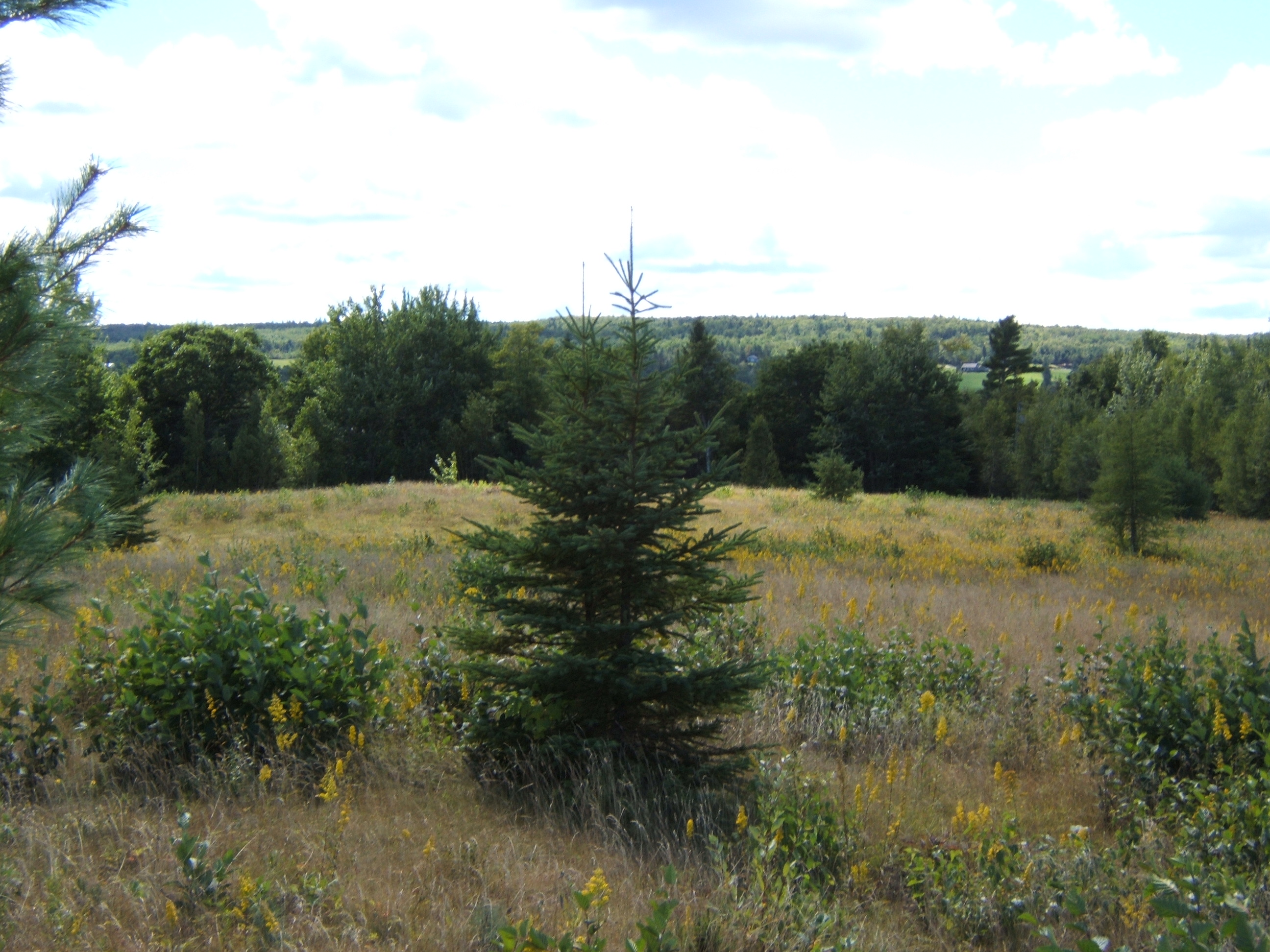
in 2012, we have 7 1/2 acres of alders and young trees…
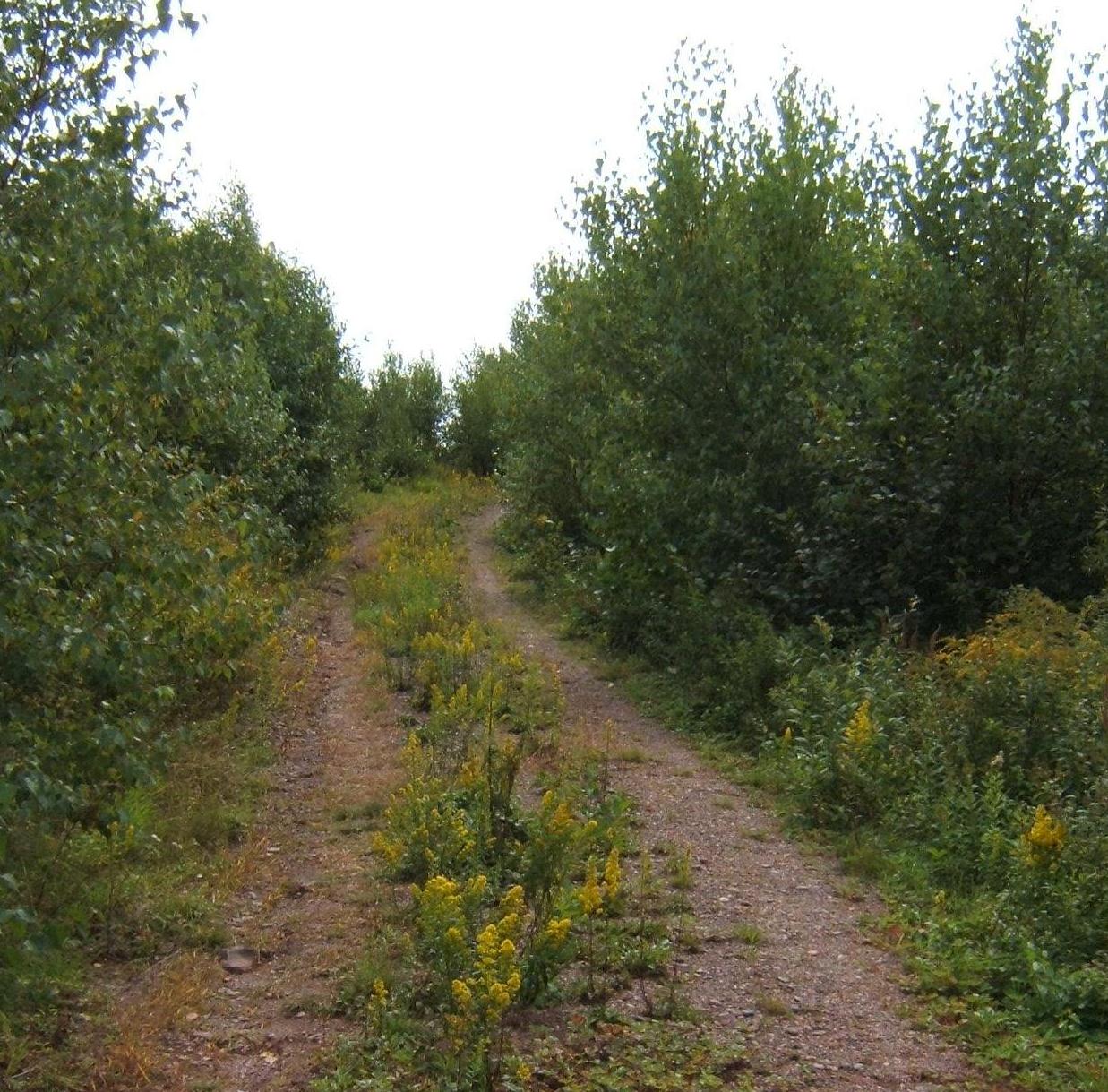
I actually like the lush vegetation and we intend to always keep the forest of trees down by the lake, to help protect the lake environment. But we humans need a little room to move!!! Although we knew we would eventually have more trees than field, we always thought we’d be able to:
- keep the road and turning area at the lake end of the property clear of weeds and wide enough for a vehicle
- keep the area around the camp clear
- have some trails for walking and access to the various parts of the property
- keep our blueberries – they have trouble competing with the taller vegetation
- begin to groom some specific groves of maple and birch
- keep a small area of field so I can watch the grasses blowing in the wind.
The farmer next door was willing, for a price, to continue bush-hogging the area, just as he had done for years. But there were trees and various herbaceous species we wanted to keep, so we bravely set out to manage things on our own.
For me, that means snipping away with my shears. I get tired/bored very easily, so I am not much help. I mostly spend my time discovering new plants to protect and putting wooden stakes up to mark their position!
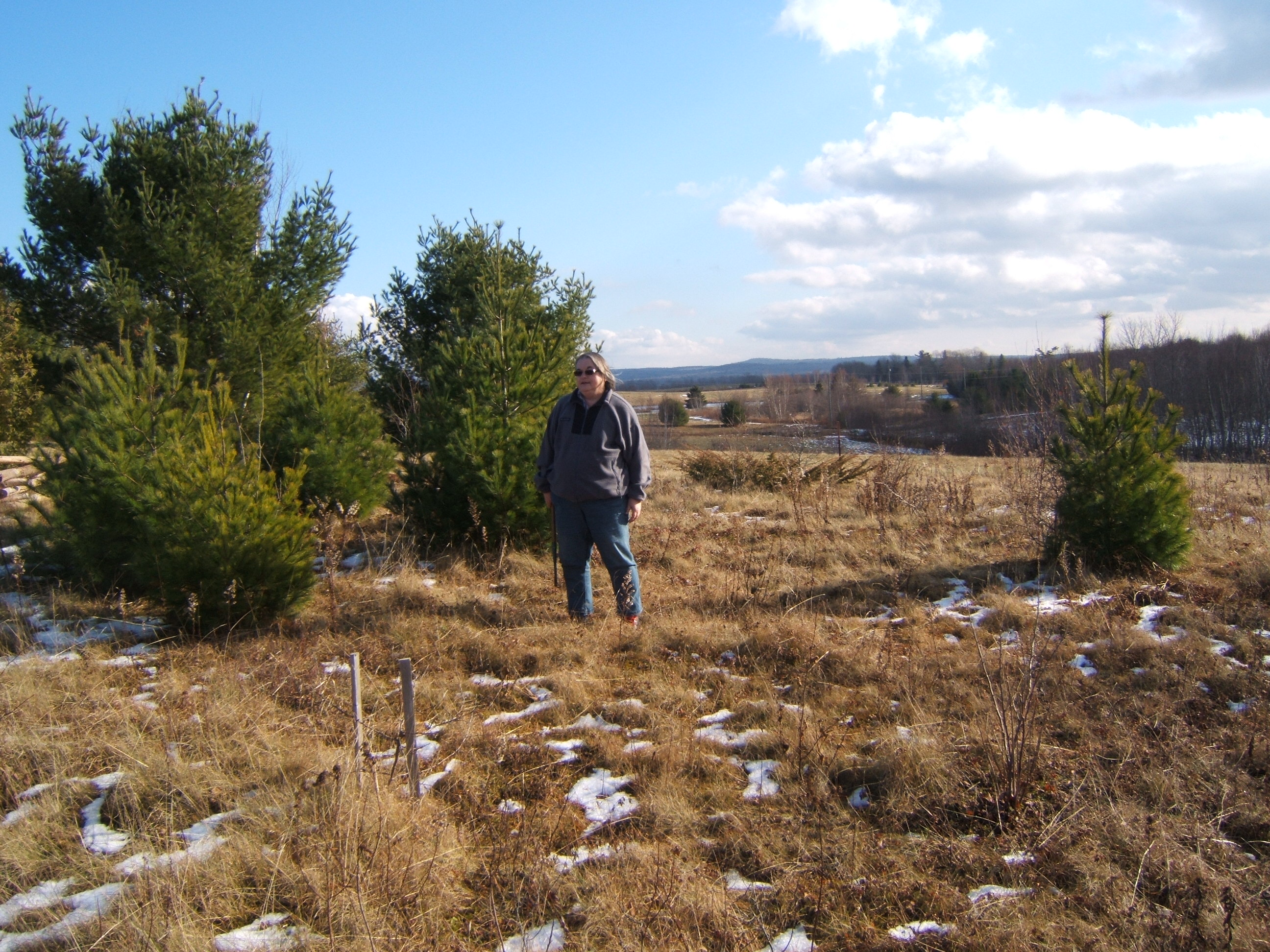
me with trimmers and marking plants with stakes
My husband has tried to keep back the growth with his bush-saw, and last year he was able to keep the road clear and even cut a new trail to access our blackberries. But progress is slow and within a few weeks, the alders, saplings and weeds have all grown back!

Finally, we became so discouraged, we began to think of alternatives. In the last two years, we have tried pulling the alders and I planted beans in the holes left all over the place. The deer really enjoyed my bean plants!
Now, we have the solution. We bought a rough mower that pulls behind the ATV. It is awesome! My husband has fun and is able to make huge progress. In just a couple of days, we have our road clear, there is a labyrinth of trails where we can walk, we have trimmed a selection of blueberry patches and we have our turning area restored at the lake end of the property. Notice the use of the word ‘we’, although my husband does all the work!
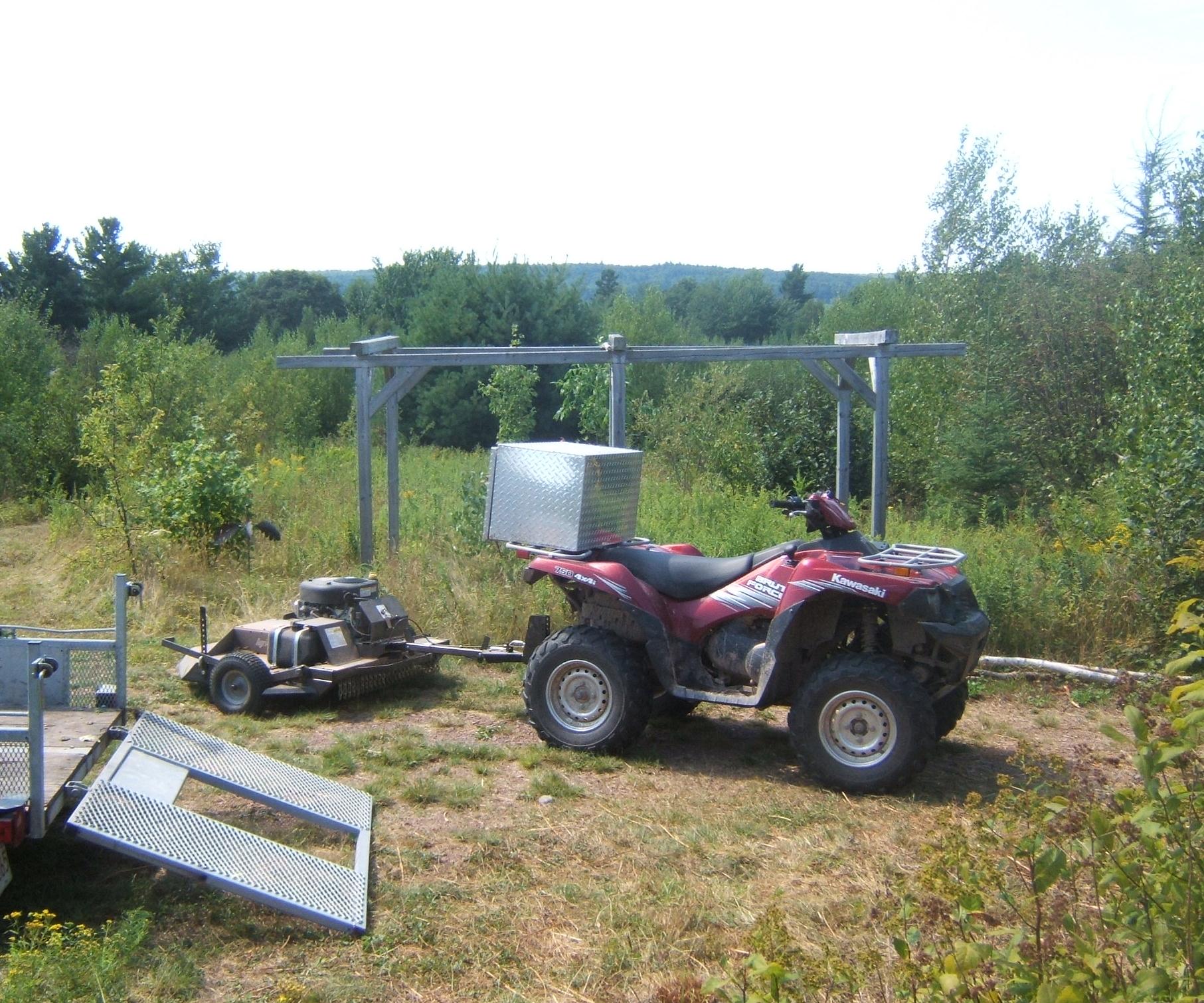
our new Agri-Fab Rough Cut Mower, designed for use behind an ATV
You can see the before and after shots of the road trimming in the three photos below. What you can’t see in the middle photo is the smile on my husband’s face as he mows! He was able to trim, in a few minutes, the trail it took him days to cut with the bush-saw last year.


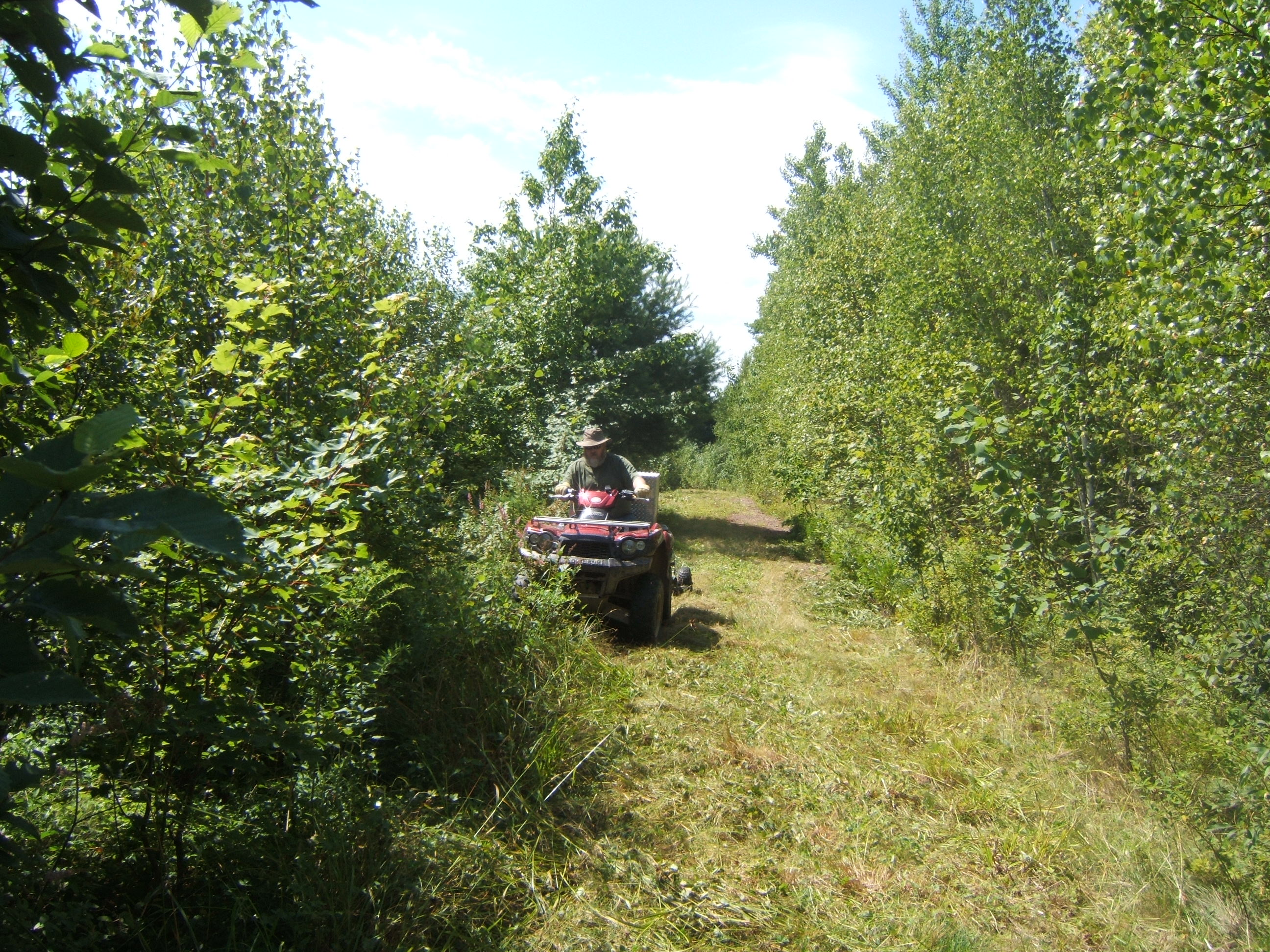
Now, my husband can use his bush-saw time to work on his groves of maple and birch.
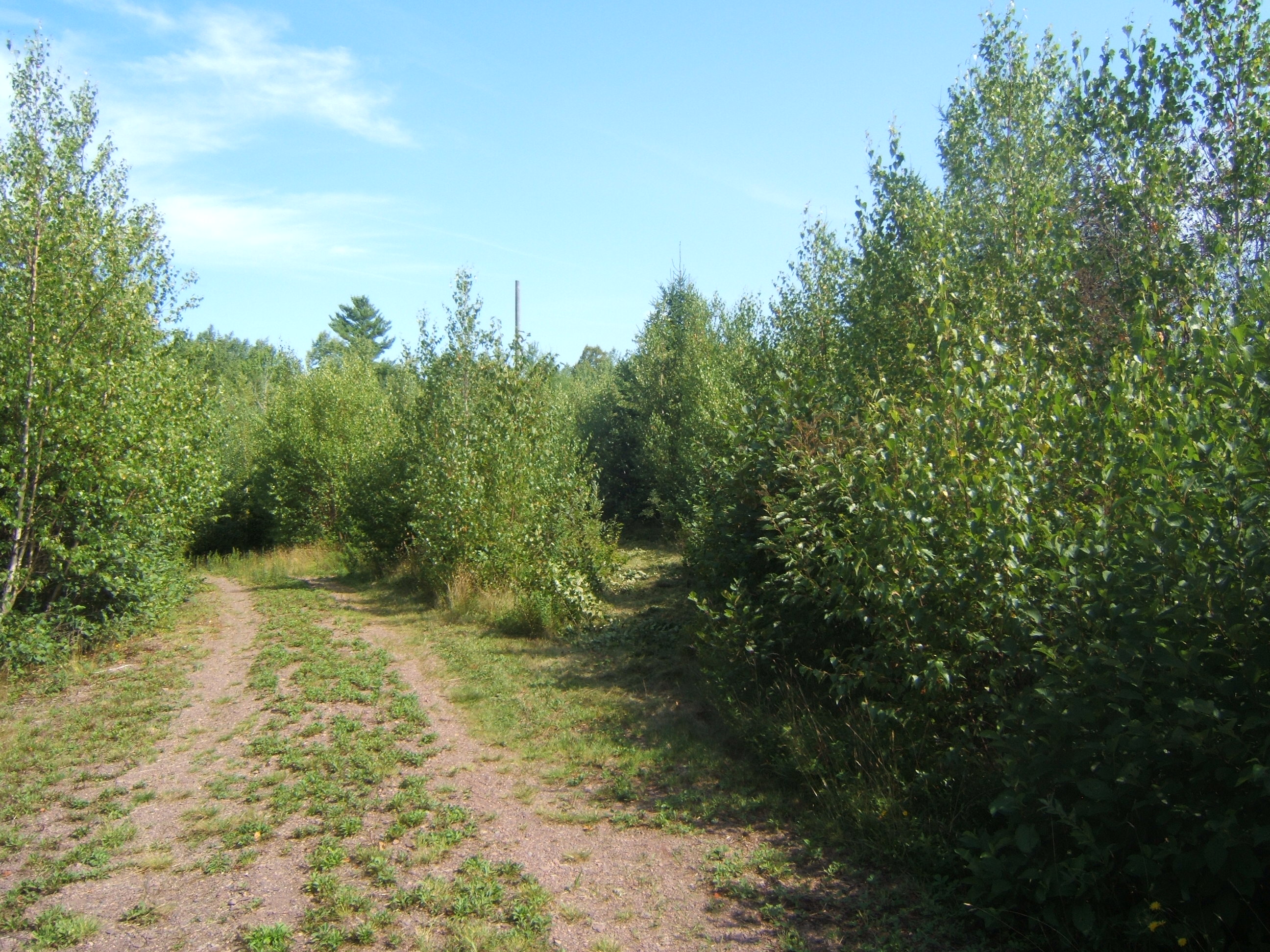
the first path cut by the new mower, to the right of the road
The only problem so far has been the hawthorns. We had a very flat tire on the mower after the first day. The man who fixed it said it looked like a porcupine on the inside, it had been punctured by so many thorns! Now, we are having each tire filled with foam!

5 cm thorns on the Hawthorn easily punctured the mower tires

© Jane Tims 2012
growing and gathering – value
These days I am working to complete my manuscript of poems on the subject of ‘growing and gathering’ local foods.
As I sort my poems, I find several are about the ‘value’ of wild plants as food.
Sometimes this value is simple value for money. Every cup of blueberries I pick is one I don’t have to buy. When I pick enough berries to freeze, I can have blueberries or blackberries when they cost a fortune to buy fresh at the store. I am also bringing the warm summer and its memories forward into the chill of winter.

A few of my poems focus on the value of substitution. For example, I will never run out of tea leaves for my daily tea break. I have Pineapple Weed, Sorrel and Sweet-fern teas to make. Thanks to my sister and brother-in-law, and my own little herb garden, I have a rack of fresh herbs drying, including Camomile and several varieties of Mint. If I run out of salad ingredients, I have a stash of salad greens just outside my door.

Storage is the subject matter of a few of my poems. When I was young, my Mom showed us how to collect Spruce Gum from the trees for a sticky but tasty chew. During my project, I learned that some woodsmen make little wooden boxes for the gum, to keep it for later use. I also have a few poems about making jelly and jam.
Thinking about the value of food, I can’t forget the people for whom growing and gathering local foods is an occupation, not just a ‘hobby’. I have written poems about the people who sell shad and fiddleheads and lobster from their roadside trucks, about children who earn their summer money by picking and selling berries, and, of course, about the farmer.
Last but not least, there is just the joy of finding or producing and eating your own food. I always say, the best part of a home garden is the taste of the first carrot or the snap of the first wax bean!
What do you think is the greatest value associated with growing and gathering local foods?
Warning: 1. never eat any plant if you are not absolutely certain of the identification; 2. never eat any plant if you have personal sensitivities, including allergies, to certain plants or their derivatives; 3. never eat any plant unless you have checked several sources to verify the edibility of the plant.© Jane Tims 2012
a snippet of landscape – moose habitat
Not far from Gagetown, on Route 102 in New Brunswick, is an interesting bit of wetland. Sometimes there is water in this small area but more often it is just wet mud. During periods of little rain, the mud becomes cracked and dry. The area never seems to grow any of the grasses or other wetland plants typical of wet areas.

The reason can be discovered through two pieces of evidence. The first thing you notice about the area is… the mud is carved with the tracks of a large animal. The second thing you notice is the Moose Crossing sign not far away, along the highway.
I have seen a moose in this muddy place. It is a dangerous place for a moose to be hanging out, because it is so near the road.
Moose visit these muddy areas for several reasons. They need water, of course. Also, salts from the road accumulate and moose use the wet areas as ‘licks’ to replenish their body salts. Sometimes these waters are naturally high in salt content.
We have seen moose quite often this summer. We watched a moose and her calf for about a half an hour during our trip to the Cranberry Lake area in July.

a moose and her calf
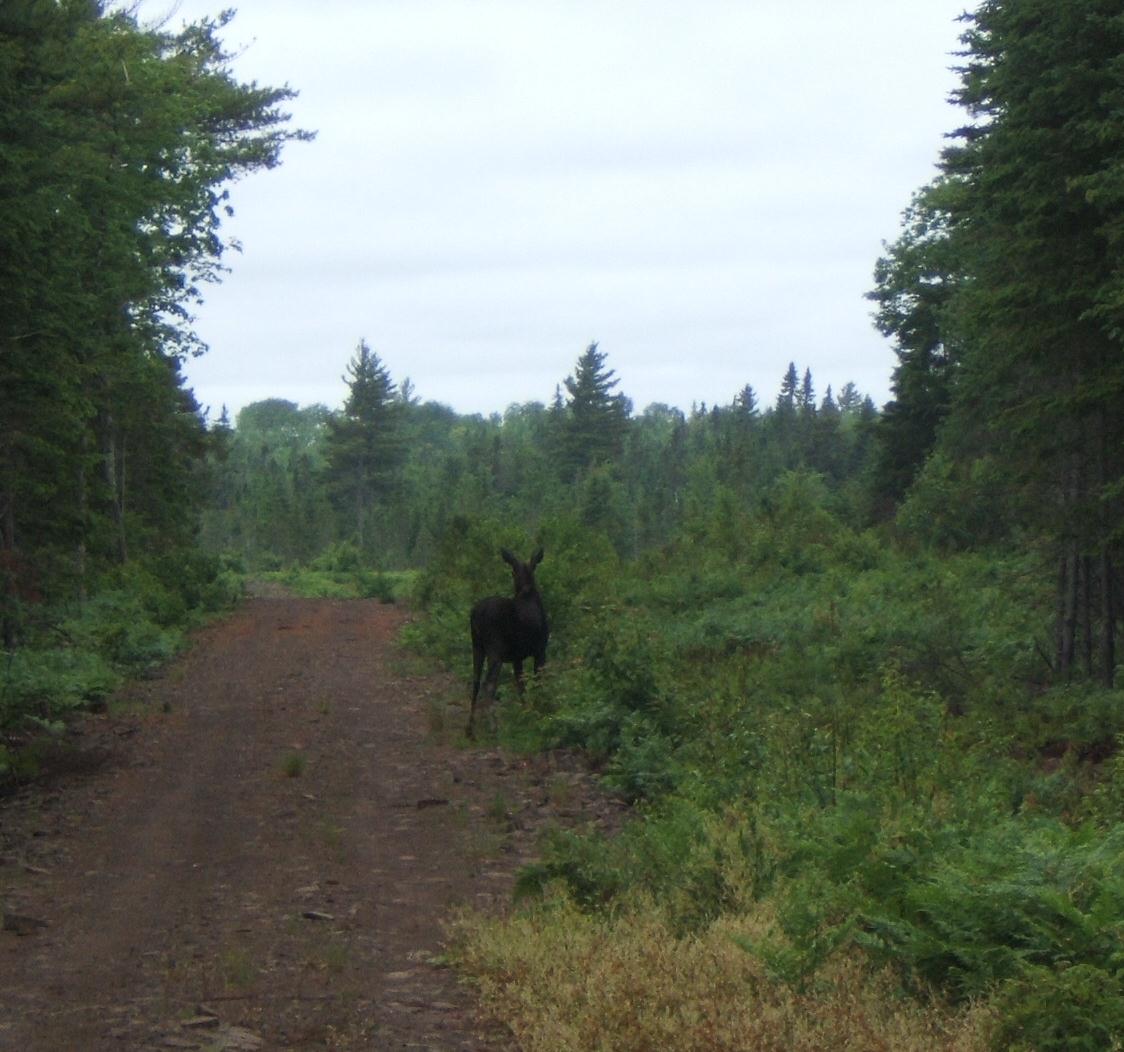
the moose sent her calf into the woods to hide and grazed quite a while, only a little concerned by us
Do you see moose where you are?
© Jane Tims 2012







 nichepoetryandprose