Posts Tagged ‘nature’
impressions of the day – early morning
Every morning, after waking, I spend a little time in my guest room. I get myself ready for the day – doing a few stretches, looking from the window, greeting Zoë (our cat), planning my day.
~
Usually this happens just before sun-up and I am able to watch the sun rise behind the woods in our back yard. I am always amazed at the shift in the location of sun rise, season to season. These November days, it is to the south of where it rose in early summer.
~
This morning the sunrise was brilliant, a fire of orange behind the trees. The flaming colours burst through small gaps in the darker trees – inspiration to get out my watercolours!
~

November 3, 2015 ‘morning fire’ Jane Tims
~
Copyright Jane Tims 2015
Ground cover
The autumn rains have begun and already leaves are changing colour. Before the plants go into their winter sleep, I want to pay tribute to the greens of summer. In particular, I love the ground covers in my garden. They create thick carpets of green and provide a backdrop for other garden colour.
~

~
Periwinkle is my favourite ground cover. In early summer blue flowers dot the shiny green foliage. The plant grows well in our very shady yard and makes a good transition from lawn to woodland.
~
~
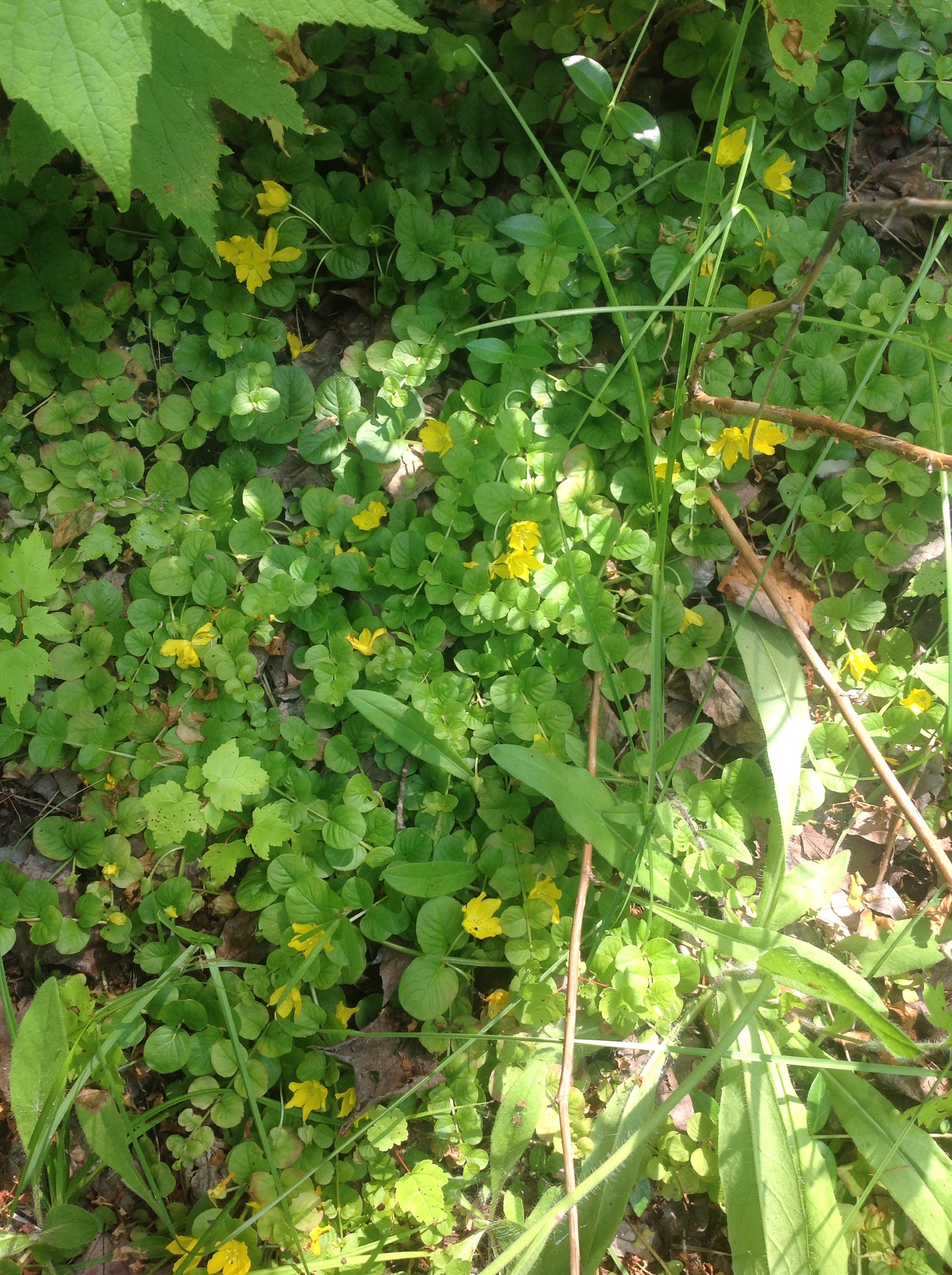
The Creeping Jenny in our yard is a transplant from my grandfather’s farm, probably by way of my mom and dad’s property. The flowers are bright yellow and the leaves grow in pairs of gradually smaller size.
~
~
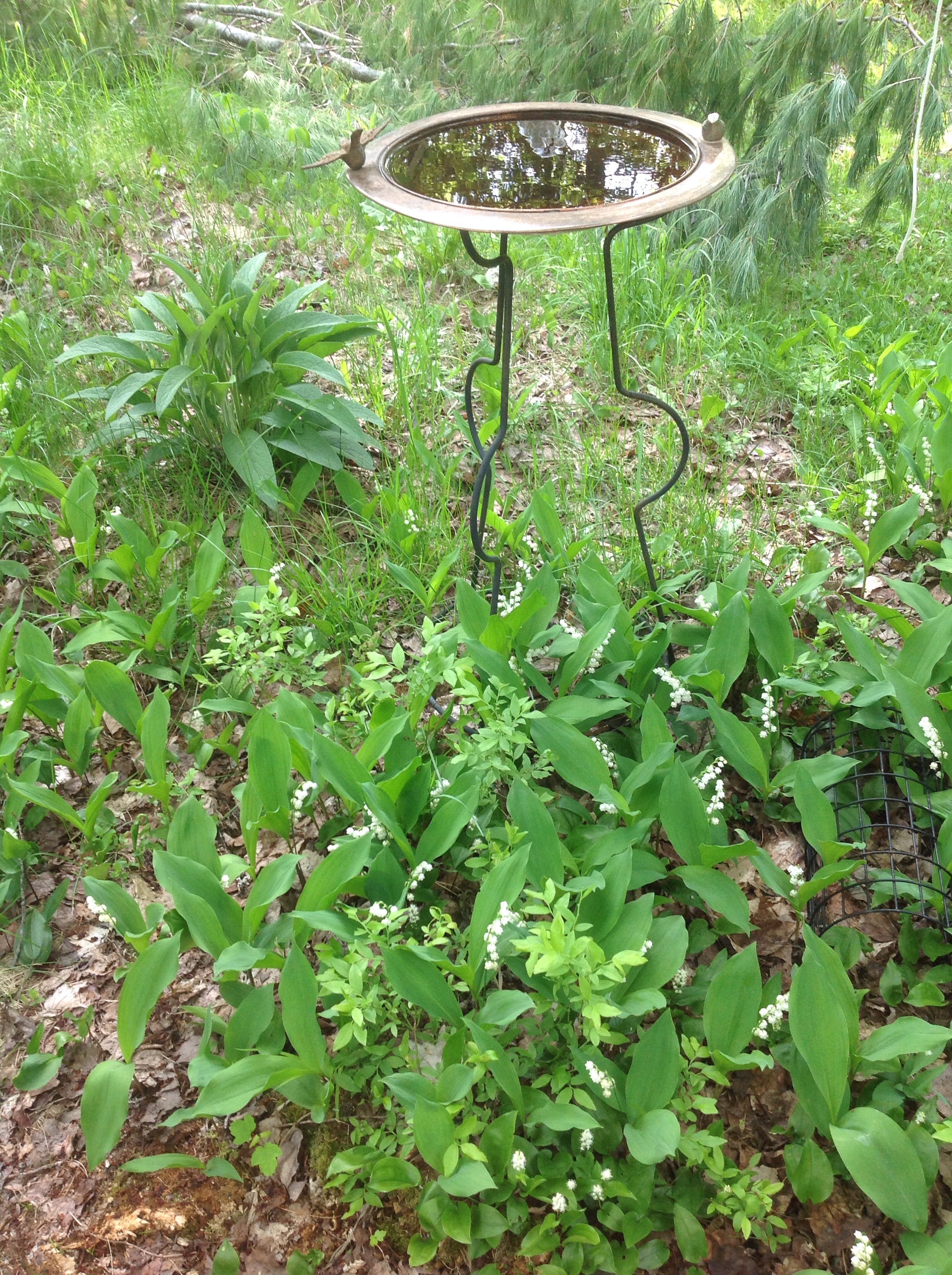
Lily of the Valley grows along the paths in our yard. I love the white flowers and their gentle perfume. Although they are poisonous, the boiled leaves make a pretty grey dye.
~
Soon the ground covers in our area will be layers of autumn leaves and then, blankets of fallen snow. My challenge for next year’s garden will be to find another low-growing cover plant to add to my collection. What are your favourite ground covers?
~
Copyright Jane Tims 2015
art auction – new painting

September 17, 2015 ‘Outside-In #3 – Far from the Sea’ Jane Tims
~
I have submitted another painting to Isaac’s Way Restaurant, for their 25th Art Auction and Sale. This event will run from September 27, 2015 to late January, 2016. The proceeds from the auction go to sponsor kids-in-need. My latest painting is titled ‘Outside-In #3 – Far from the Sea’.
~
The painting is the third in a series of still life paintings I have done about the many elements of nature we bring into our homes. This includes items collected on walks, motifs on fabrics and metals, small statuary and so on. My first painting in the series was ‘Outside-In’, a Chinese dragon hiding behind a glass cloche. The second painting was ‘Outside-In #2’ , a still life of a potpourri jar.
~
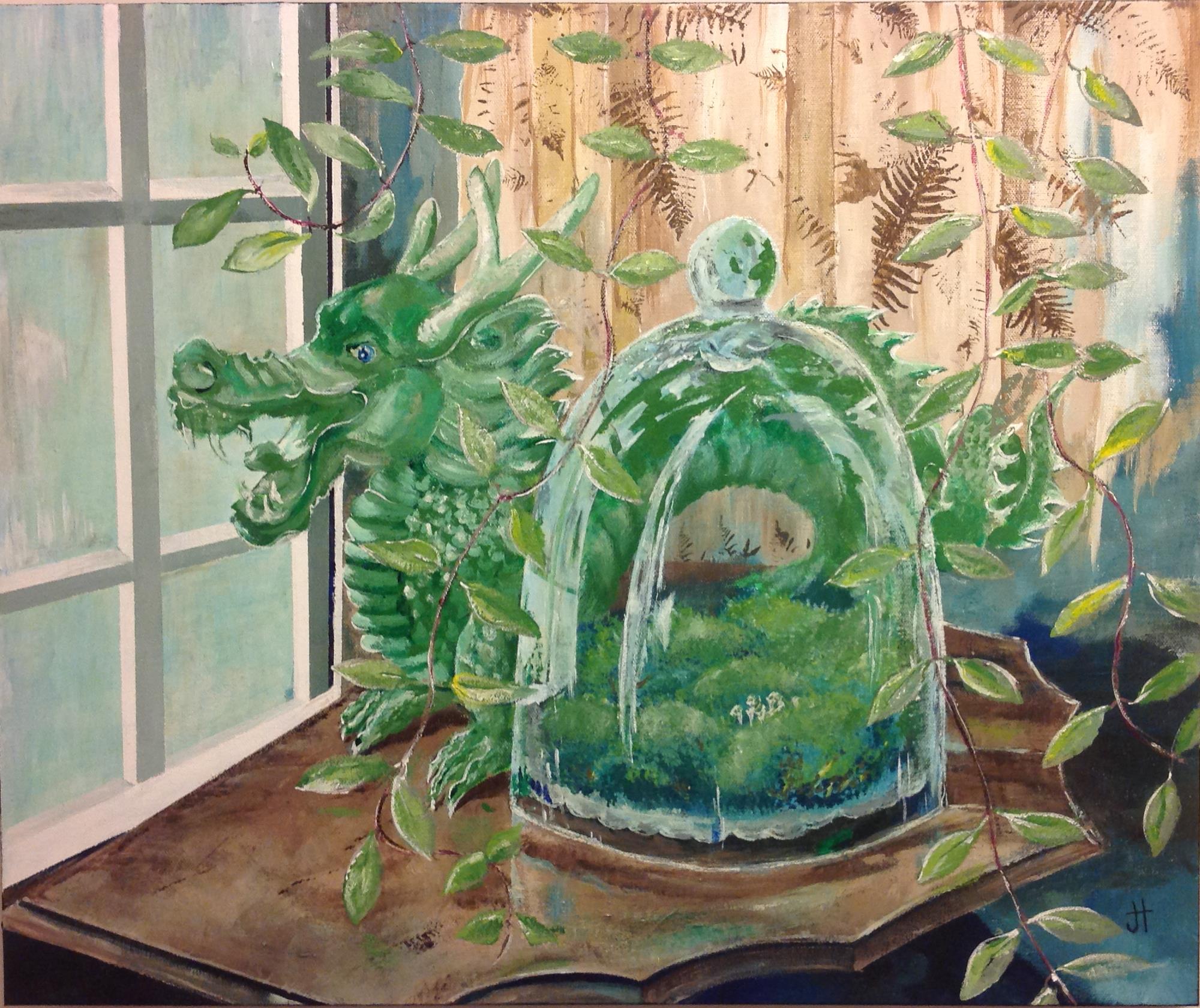
February 12, 2015 ‘Outside-In’ Jane Tims
~

May 2015 ‘Outside-In #2’ Jane Tims
~
For the new painting, I used Chromium Oxide Green, Burnt Umber, Titanium White, Phthalo Blue, Cadmium Yellow, Quinacridone Magenta and Cadmium Red.
~
If you are in the Fredericton area, please drop in to Isaac’s Way. Their food is delicious and over fifty artists have their paintings on display. Bid and you could take home a piece of original art!
~
Copyright Jane Tims 2015
in the shelter of the covered bridge – a villanelle
I have been working at my series of poems on the plants and animals living around covered bridges in New Brunswick. I decided to try a new form (for me) – the villanelle.
~
The villanelle is a structured poem with 19 lines and a prescribed rhyming scheme – A1 b A2 / a b A1 / a b A2/ a b A1/ a b A2 / a b A1 A2 . A famous villanelle is by Dylan Thomas – ‘Do not go gentle into that good night’.
~
The poem below is based on my observations at the Marven Bridge (Belleisle Creek #2) in Kings County, New Brunswick. I have taken liberties with the form, most obviously in using words beginning with the same letter in place of rhyming. I would appreciate any comments, including for improvement of the poem.
~

Marven Bridge, Belleisle Creek #2, in New Brunswick
~
~
wobble
~
Belleisle Creek #2 (Marven Covered Bridge)
~
bridge shudders as we walk
spaces between boards cast light on the floor
photos out of focus, faint tremble
~
cribwork and rafters, new wood
old nails work loose, grey walls frail
bridge shakes as we walk
~
in the rafters, the paper nest of a wasp
in the mud, ephemeral, the tracks of a fox
photos out of focus, faint tremble
~
a blue jay calls thief across brown water
at the shoreline, sensitive fern
bridge shivers as we walk
~
on the ledge, bones, bleached white
skeleton of a bear, backbone and fingers
photos out of focus, faint tremble
~
orange graffiti, letters round and wide
initials carved on the beams are faded
bridge quivers as we walk
photos out of focus, faint tremble
~
~
Copyright Jane Tims 2015
in the shelter of the covered bridge – Baker Brook #2
Of the 60 covered bridges in New Brunswick, most are in the southern part of the province. Last week we went to see the three remaining covered bridges in Madawaska County in the north-western part of the province.
~
One of these was Baker Brook #2. It crosses the Baker Brook west of Edmunston and is no longer in service. The bridge has been protected in a small park with a parking area. Bird boxes, flags and hanging flower baskets show there is local stewardship of the bridge.
~

Baker Brook #2 in Madawaska County, New Brunswick
~
The Baker Brook #2 bridge was the essence of quiet. As we entered the bridge, the only sound was the patter of rain and the trickle of water under the bridge.
~
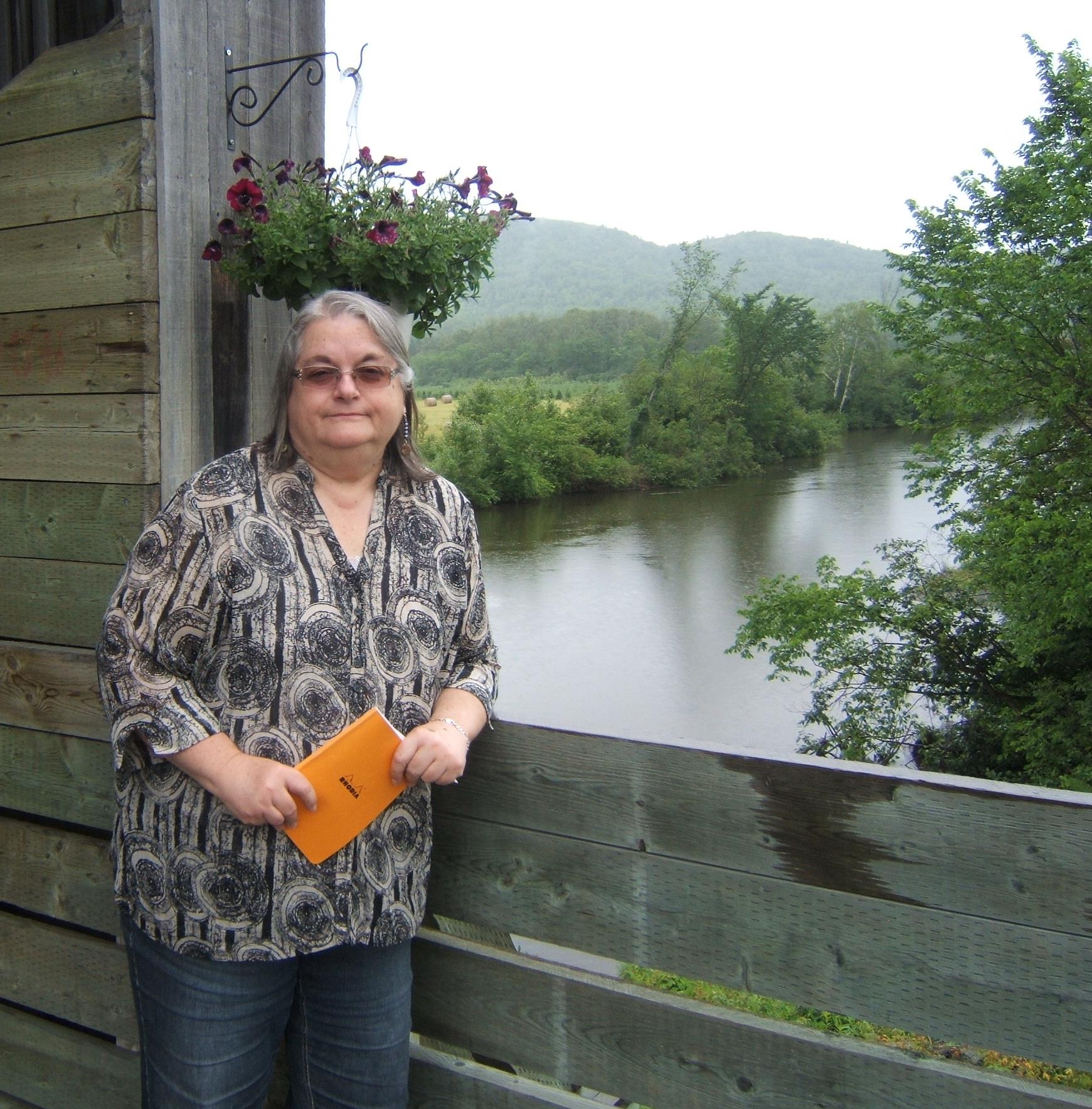
I don’t get many photos of myself, but this is a good one – I am ready to take notes on the plants and animals I see in the Baker Brook # 2 covered bridge … these notes and my photos and memories become the basis for future poems
~
The bridge is set against a backdrop of tranquil hills and fields. A deer watched us from a hayfield at the north end of the bridge. A white-throated sparrow called once and a crow made a few comments from the top of a round bale of hay. Otherwise, we were alone.
~

~
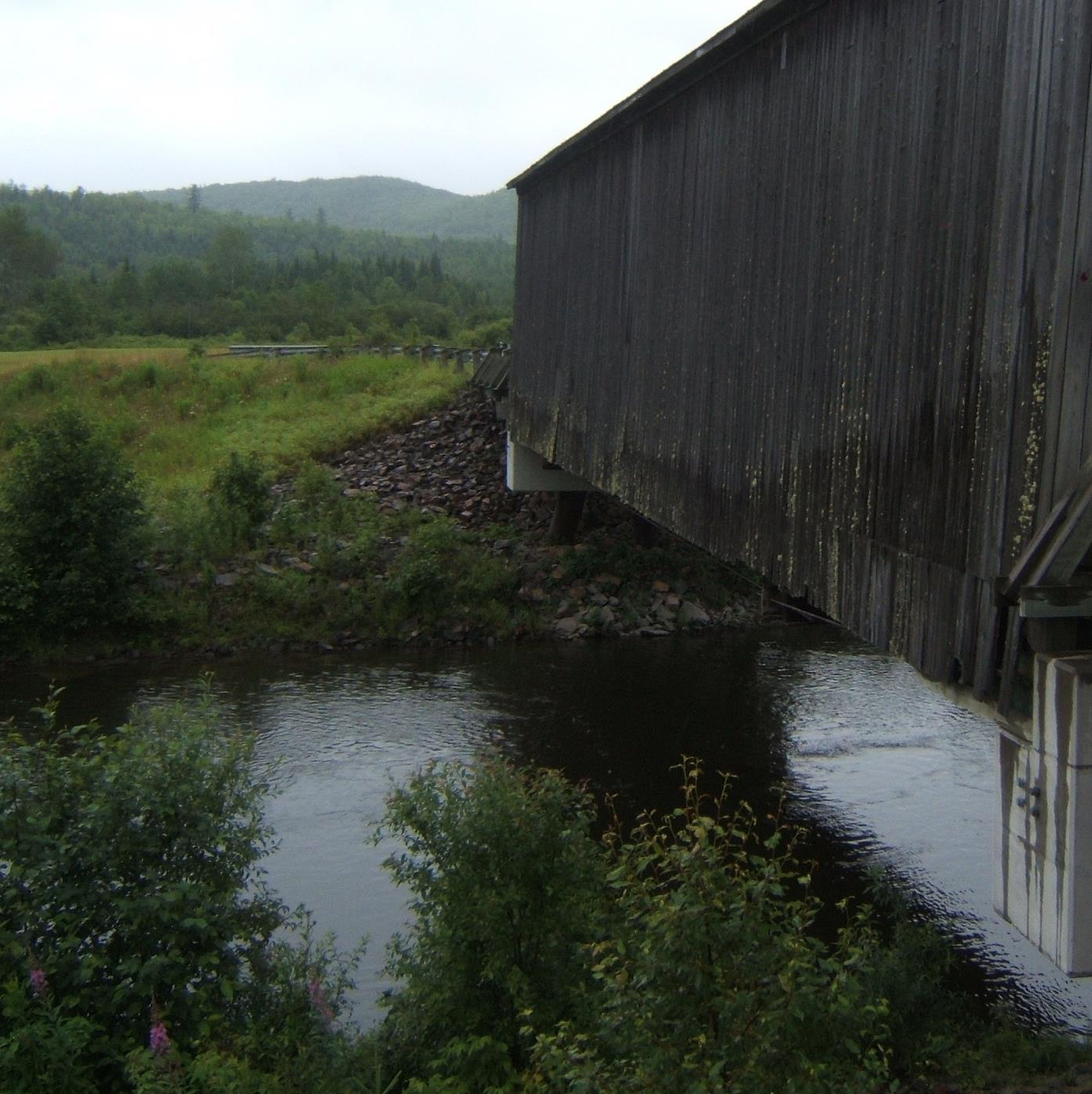
I love the way the lichens have colonized the bridge and follow the boards, like rain, in lines down the outer walls.
~
~
Some visitor had left a small collection next to the outer wall of the bridge. Three rocks and a broken bit of glass…
~

~
Copyright Jane Tims 2015
along the lake shore

along the lake shore
~
shore verbs
~
water simmers at the edge
waves lounge on the shore
discuss the scudding clouds
~
red pine
catches wind
with sticky fingers
~
violets nod
trout lilies tire
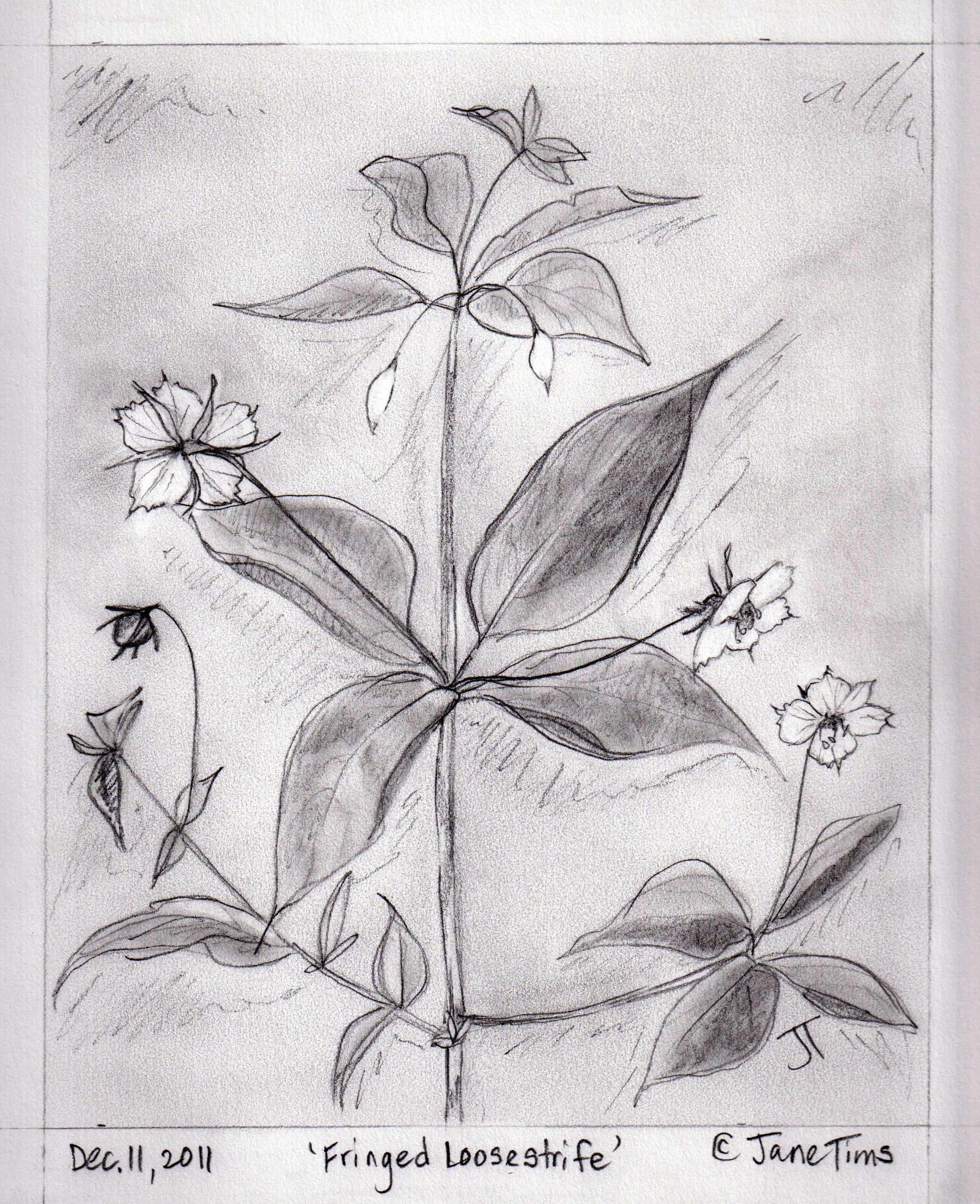
fringed loosestrife
hangs its yellow head
~
a spring leaps from the hillside
~
~
~
Copyright Jane Tims 2015
beaver slap – Bloomfield Creek Covered Bridge
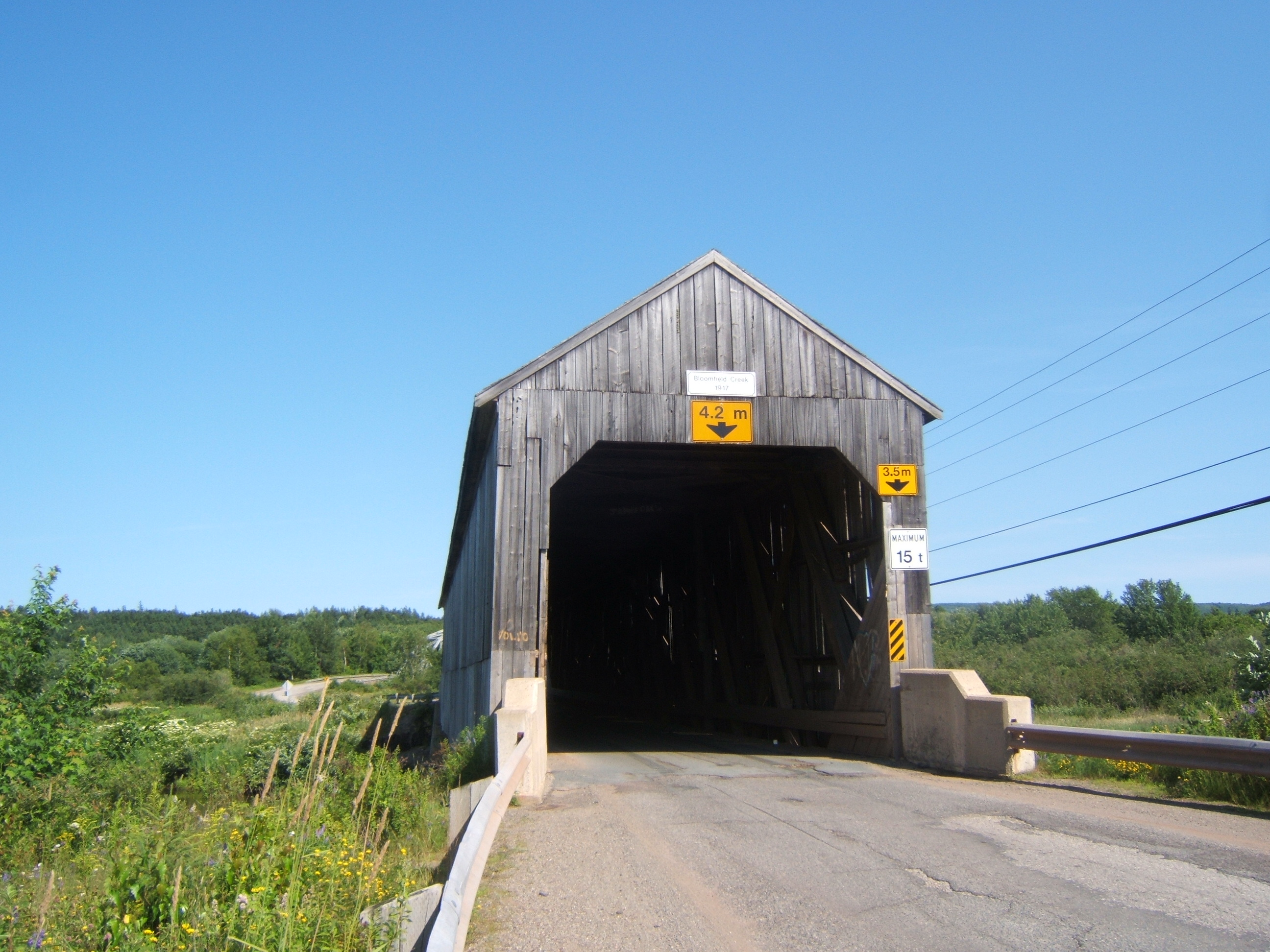
On a recent weekend tour of four covered bridges in southern Kings County in New Brunswick, we stopped at Bloomfield Creek. Built in 1917, this bridge is busy and well-used. It crosses a broad creek, very pond-like with its growth of lily pads (the yellow pond-lily Nuphar) and pickerel weed (Pontederia).

~
Along the grassy banks of the creek is a beaver lodge.
~
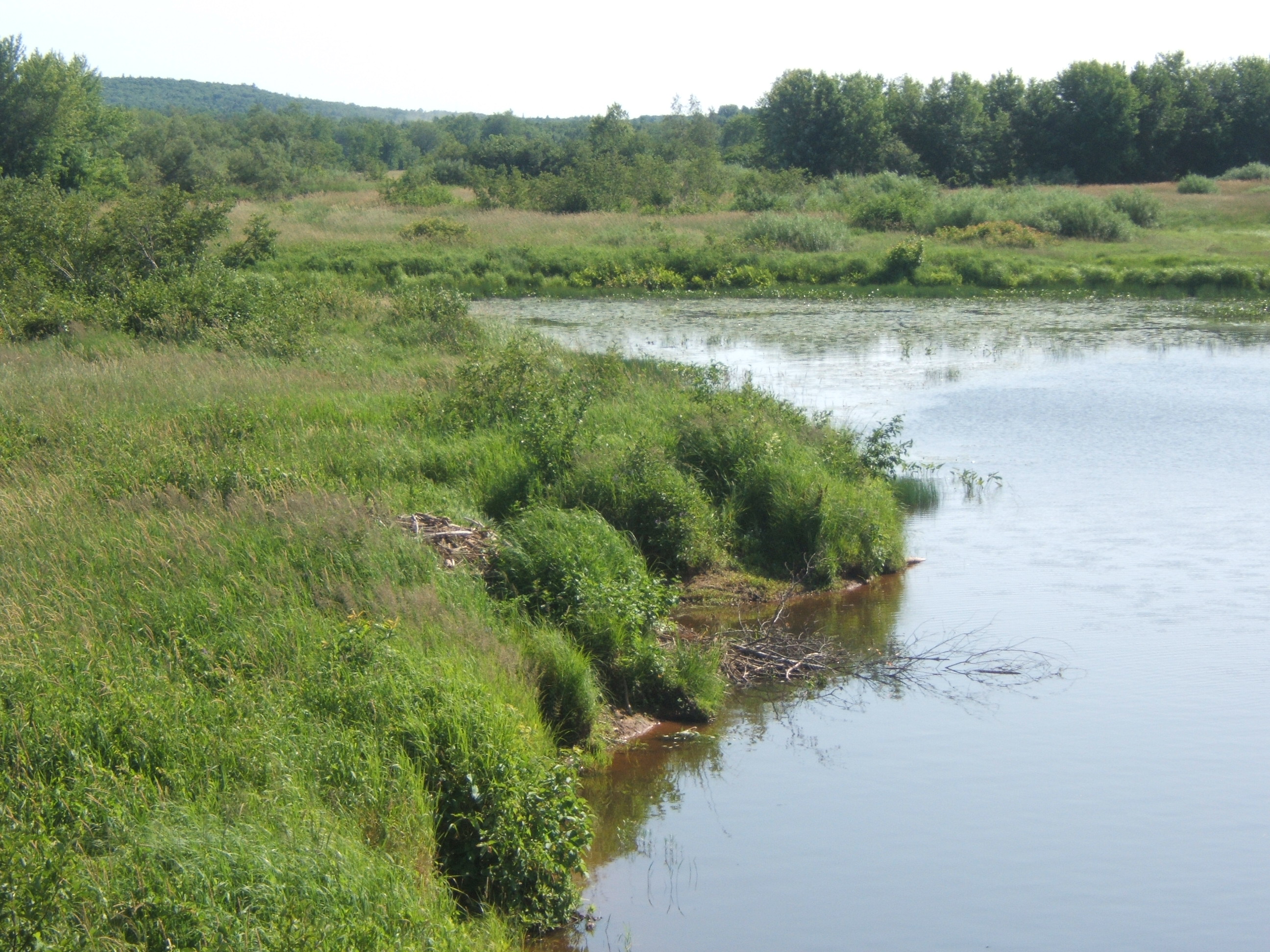
beaver lodge on the bank of the creek – the beaver has dragged lots of extra branches to keep near the underwater opening of his home
~
A large beaver kept us company while we visited the bridge. He swam back and forth along the river, in a course we were certain was designed to confuse and hide the location of his lodge. Most of the time he stayed on the surface – so soothing to watch his smooth brown body ‘towing’ a ‘V’ across the water. Every few minutes he would pause in his swim, arch his body, scissor his tail and lift it perpendicular to the water surface. Then he would slap the water and produce a loud ‘k-thud’ before he dove beneath the surface. In a minute or so, he would reappear to swim as calmly as before.
~
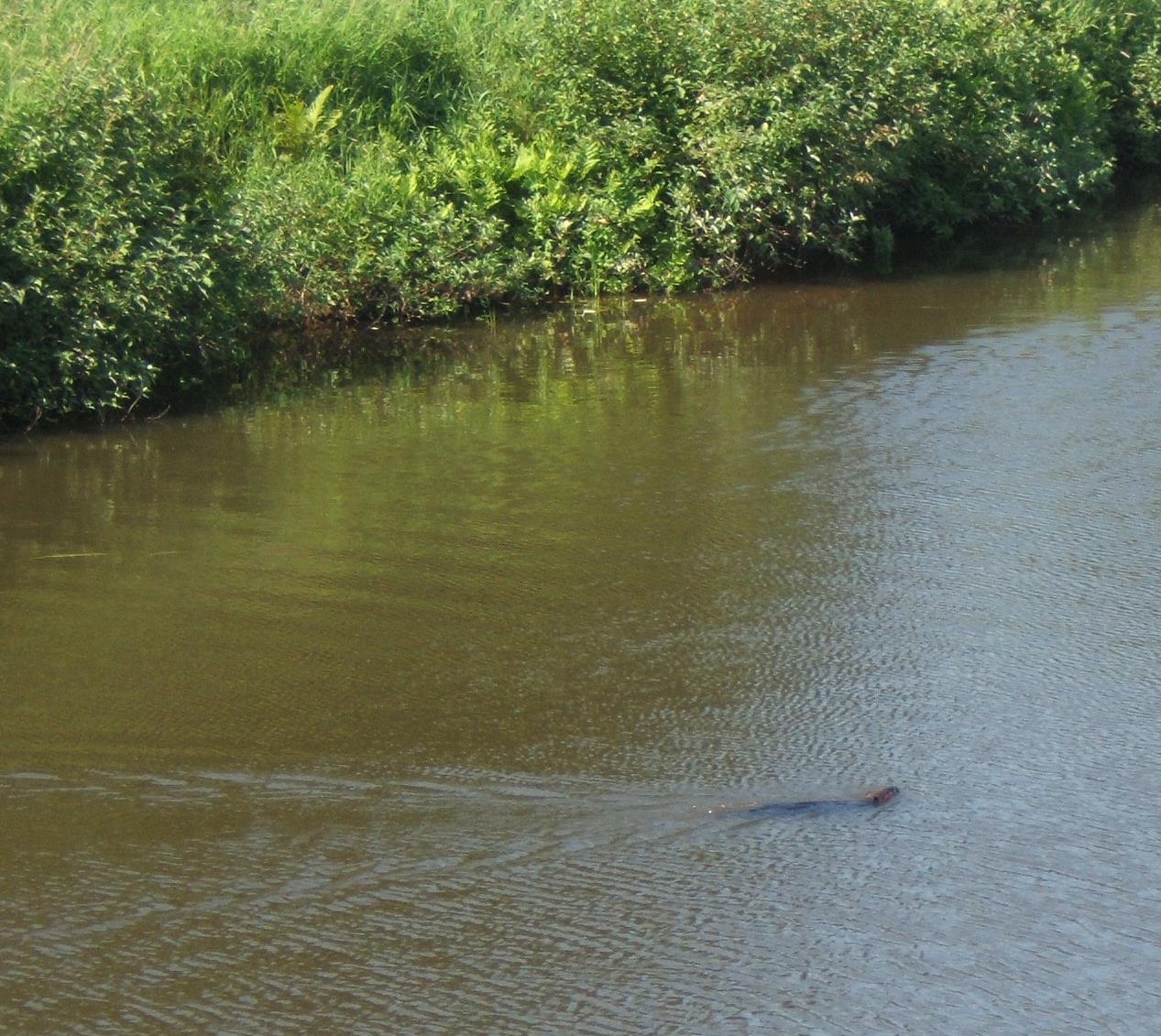
close-up of the beaver towing the ‘V’

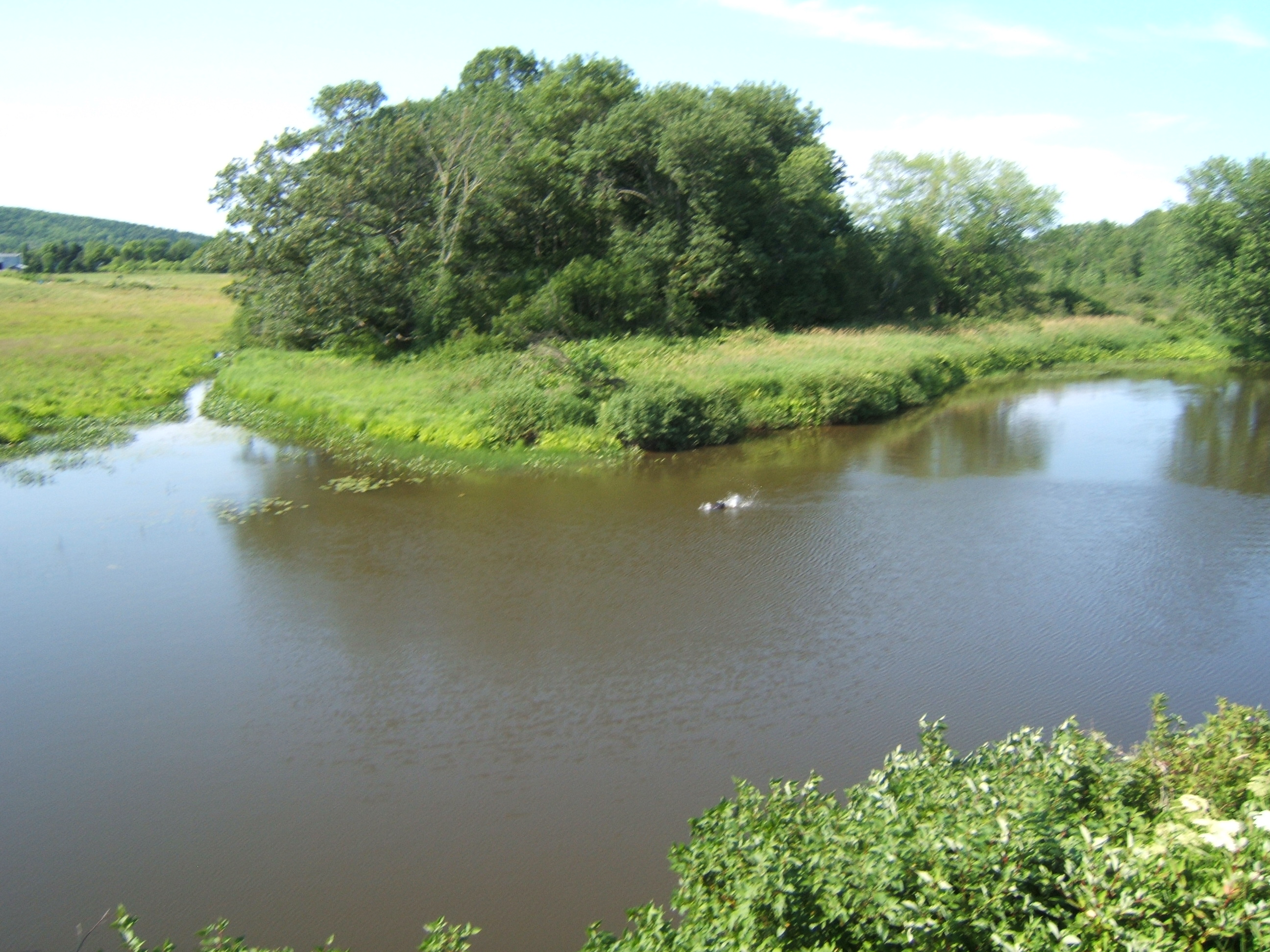
big splash as the beaver slaps its tail on the water
~
Copyright 2015 Jane Tims
morning chorus
Each morning I have a short quiet time after rising. I spend this time in my guest bedroom. I do some stretching. I watch the sun rise among the trees. And I try to sort out the morning bird chorus.
~

~
The morning bird chorus is known to be a complex social interaction among birds of various species – a communication we humans can listen to with wonder, but little understanding.
~
We have lots of birds in our area and the woods are thick with birdsong. Although ours is a residential area, we have many hundred acres of woodland behind us and no houses between us and the river. Our back woods are mixed conifer and hardwood, mostly balsalm fir, spruce, red maple and white birch. We have nearby wetlands and, of course, the river.
~

~
I now regret not learning to identify the birds from their songs earlier in my life. Although I can name many birds by sight, I have a feeling I know many more by their sounds. This summer I have tuned up my ears and spent lots of hours trying to learn to recognise the birds by their songs. Perhaps because of their variety and complexity, learning the songs is more difficult than just listening and comparing. Once I have heard a few birds, my memory becomes jumbled trying to distinguish between them.
~
I use three main tools to help me identify and remember bird sounds.
- mnemonics – short phrases to describe and remember various bird songs. These phrases help narrow down the possibilities when I hear a bird sing. Many lists of bird song mnemonics exist, but I like the simple listing from the Fernbank Science Center in Georgia http://www.fernbank.edu/Birding/mnemonics.htm
- recorded songs – although there are many sites with bird song recordings, the one I like the best is Dendroica- NatureInstruct http://www.natureinstruct.org/dendroica/spec.php/Dendroica+Canada#sp_select . Once you select a bird, you can hear calls recorded by birders in various parts of the range.
- a list of the calls I know and new songs I hear, described in my own words and with a diagram of the way the song progresses, in a shorthand of my own. I use words like: trill, flute, scratch, liquid, repetitive, bored, delirious …
~
The Cornell Lab of Ornithology has some excellent tips for those who would like to learn the songs of local birds.
http://www.allaboutbirds.org/Page.aspx?pid=1189#_ga=1.202457239.768663648.1437046200
They suggest listening for rhythm, tone, pitch and repetition of a bird song. By listening for these qualities, one at a time, you can start to make sense of the variability and help your memory.
~
Here is a list of the participants in this morning’s bird chorus outside my window:
- odd high-pitched sound at the first grey light of morning, probably not a bird
- immediately, an American Robin – ‘chirrup, cheerup, cheery cheer-up’ – we have a nest of robins at the start of our woods road
- a Mourning Dove, intermittent – ‘oo-oo-hoooo’ – very sad sound – a pair perches on the wires along our main road
- a White-throated Sparrow – ‘I love dear Canada-Canada-Canada’
- a Hermit Thrush – an ethereal, flute-like phrase, repeated over and over, each time at a new pitch – close at first and then gradually moving further away
- an Eastern Phoebe – a nasal ‘fee-bee’, repeated – a nest in the eaves of our shed
- a Red-breasted Nuthatch – a monotonous low-key ‘yank yank yank yank’, like a cross between a bored duck and a bullfrog
- the ‘caw caw caw’ of a Crow
~
I wonder if you ever listen to the morning bird chorus. What birds do you hear?
~
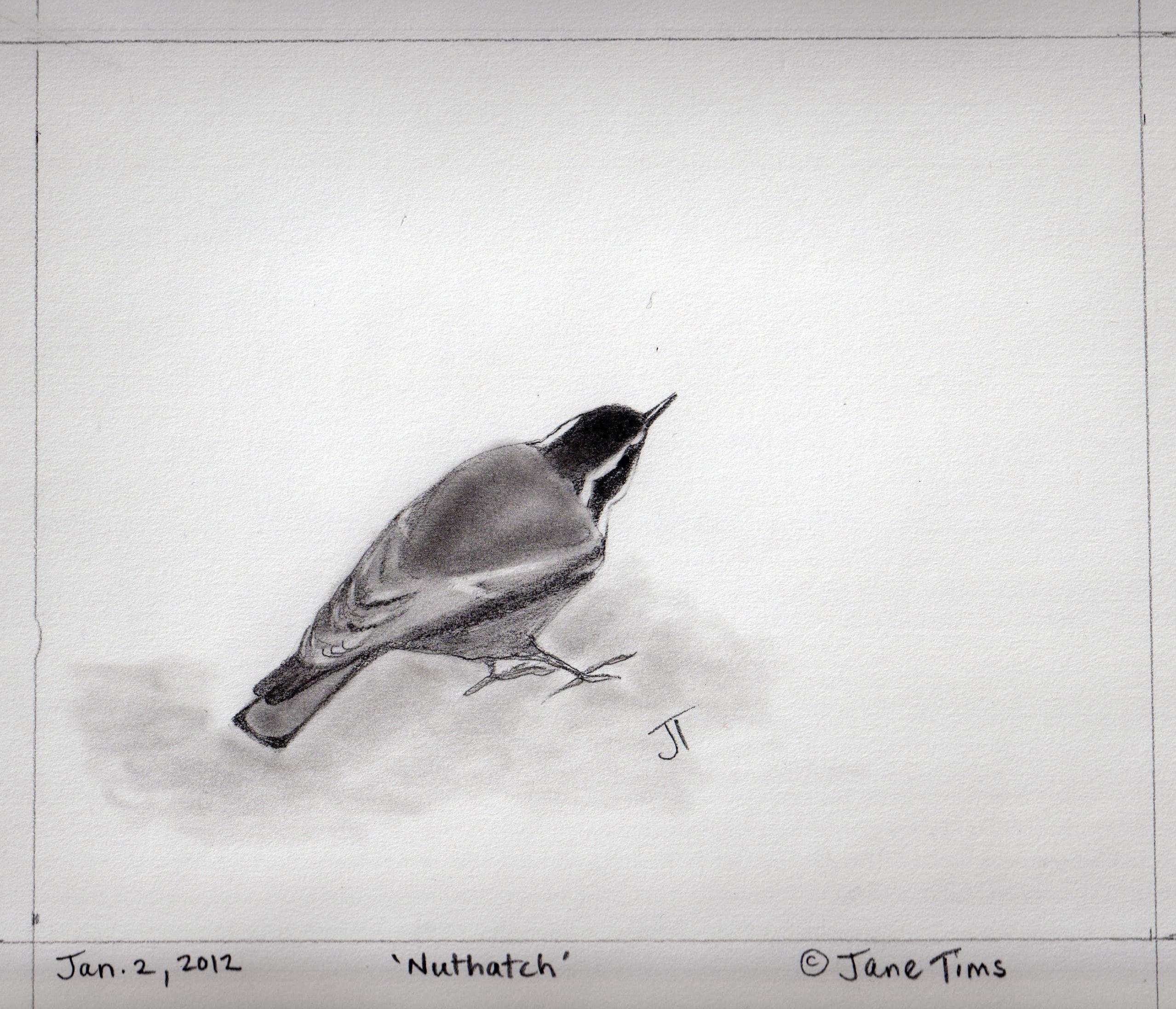
~
Copyright 2015 Jane Tims
grant from artsnb
I am so pleased to announce – I have recieved a grant in the field of literary arts (B Category) from artsnb – the New Brunswick Arts Board. The Board has supported my work before, for my poetry manuscripts about ‘growing and gathering local foods’ and ‘harvesting colour’.
~
This new project will be to write a manuscript of poems about plants and animals growing in, around and under covered bridges. ‘In the shelter of the covered bridge’ will explore the natural history of these covered bridges, looking at how covered bridges modify the landscape and create a special environment for plants and animals. Because of my interest in human history, I’ll include poetry about the people who make use of the spaces of the covered bridge.
~
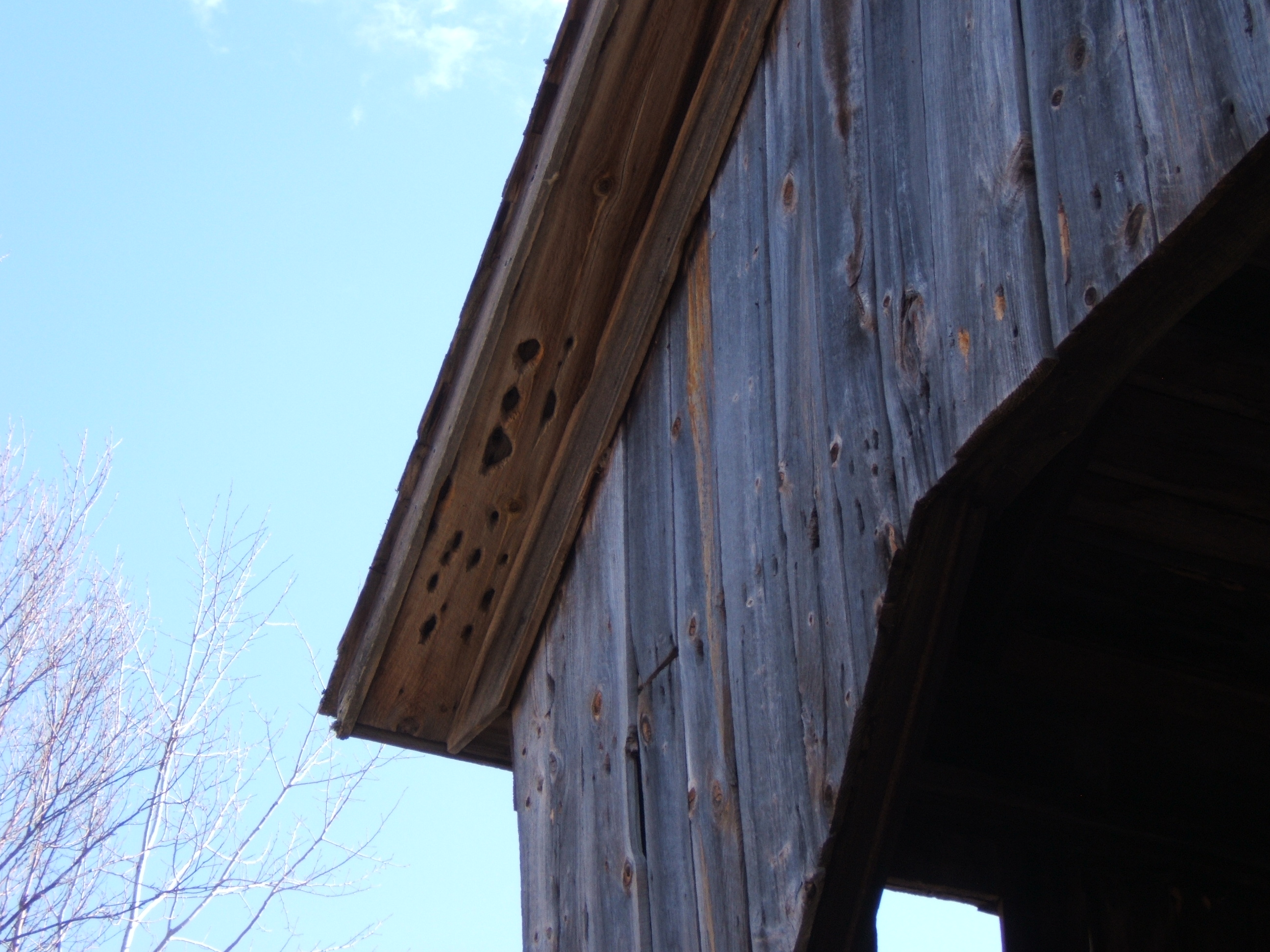
woodpecker holes in an end of the Mill Settlement Covered Bridge – all sorts of possibilities for poetry
~
Since experience is so important to the writing of poetry, one part of my project will be to continue my travels to the covered bridges in the province, especially the 31 covered bridges in the St. John River watershed. Every visit will suggest new subject matter for me to explore with words.
~
Of all the elements of this project, I think I will most enjoy the chance to show how important these bridges are to our natural and cultural history in New Brunswick.
~
Copyright 2015 Jane Tims
linden – linden wing #2

~
~
linden wing #2
~
thin green pale
I hoist my, turn my
tapered, paper sail
to wind-tasks, two
~
first I nudge my mast
of flowers, rudder
to the breeze, my pollen-folk
hitch a ride with the bees
each captured grain a triumph
each launch a score
~
later, I loose my mooring
detach, hoist spinnaker and main
samara of linden
and passenger seeds
sail away
~
~
Copyright 2015 Jane Tims




 nichepoetryandprose