Posts Tagged ‘landscape’
competition for space
One of the discouraging aspects of our lake property is how fast everything grows. In 2005, we bought 7 1/2 acres of field…
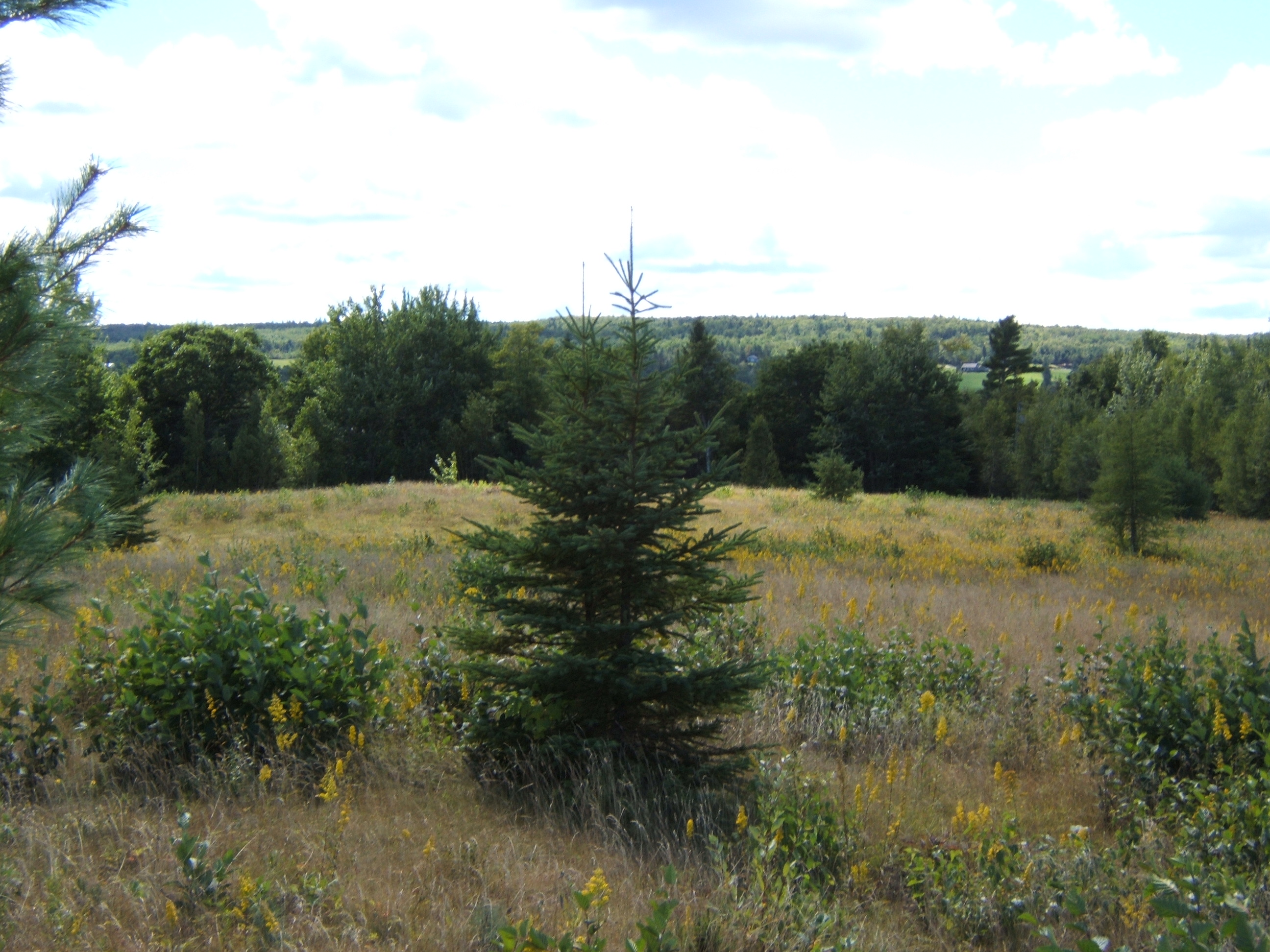
in 2012, we have 7 1/2 acres of alders and young trees…
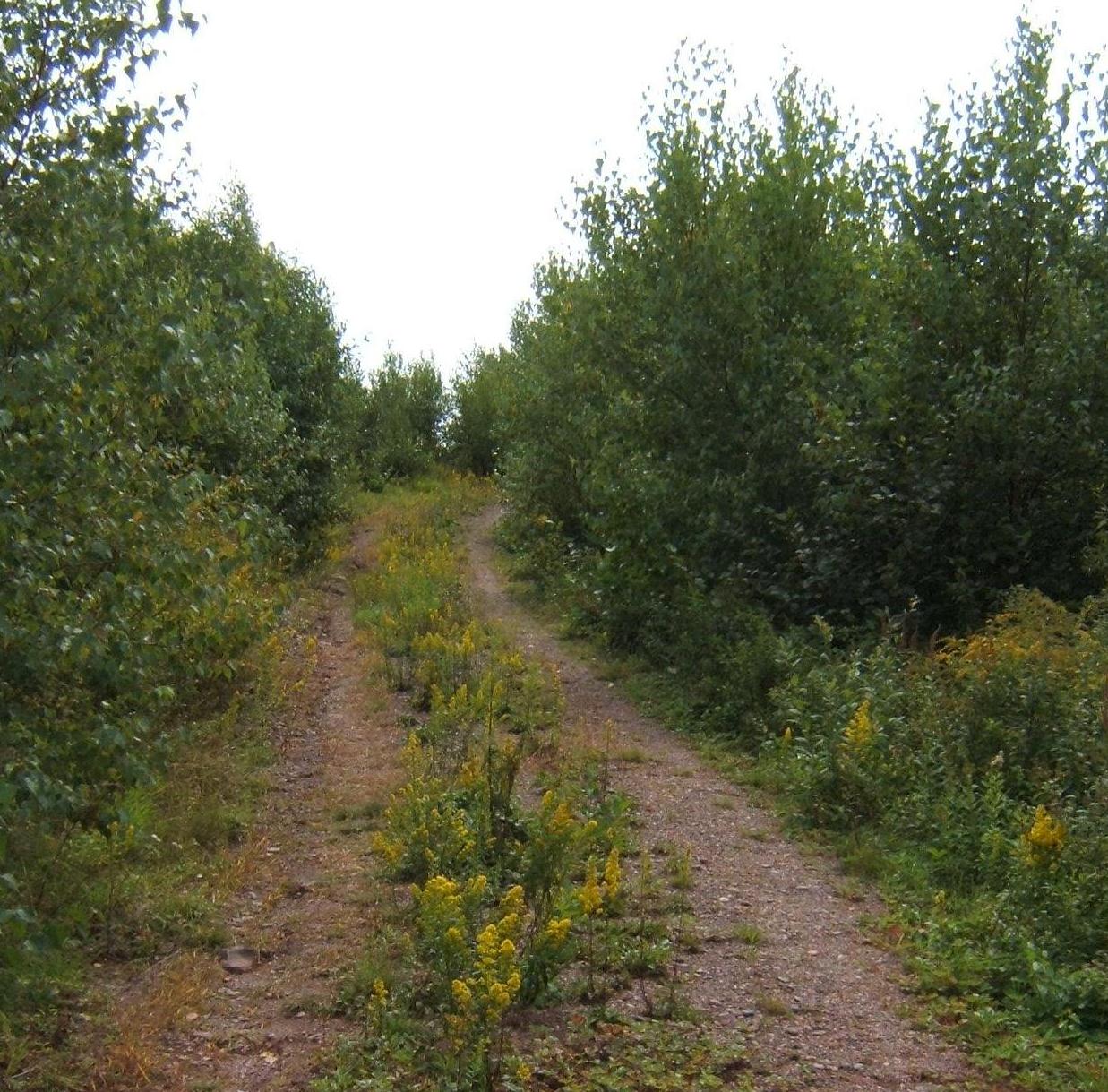
I actually like the lush vegetation and we intend to always keep the forest of trees down by the lake, to help protect the lake environment. But we humans need a little room to move!!! Although we knew we would eventually have more trees than field, we always thought we’d be able to:
- keep the road and turning area at the lake end of the property clear of weeds and wide enough for a vehicle
- keep the area around the camp clear
- have some trails for walking and access to the various parts of the property
- keep our blueberries – they have trouble competing with the taller vegetation
- begin to groom some specific groves of maple and birch
- keep a small area of field so I can watch the grasses blowing in the wind.
The farmer next door was willing, for a price, to continue bush-hogging the area, just as he had done for years. But there were trees and various herbaceous species we wanted to keep, so we bravely set out to manage things on our own.
For me, that means snipping away with my shears. I get tired/bored very easily, so I am not much help. I mostly spend my time discovering new plants to protect and putting wooden stakes up to mark their position!
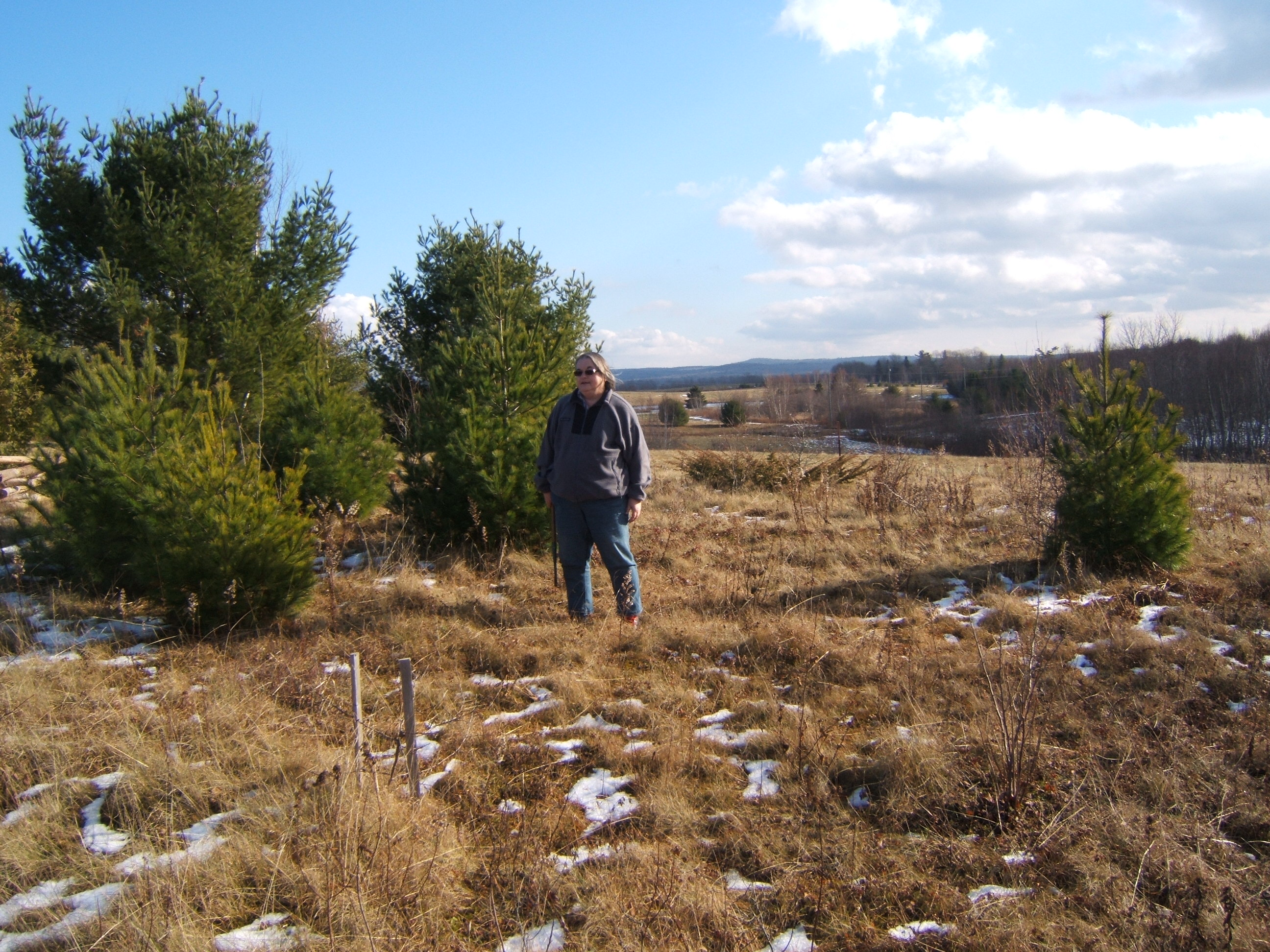
me with trimmers and marking plants with stakes
My husband has tried to keep back the growth with his bush-saw, and last year he was able to keep the road clear and even cut a new trail to access our blackberries. But progress is slow and within a few weeks, the alders, saplings and weeds have all grown back!

Finally, we became so discouraged, we began to think of alternatives. In the last two years, we have tried pulling the alders and I planted beans in the holes left all over the place. The deer really enjoyed my bean plants!
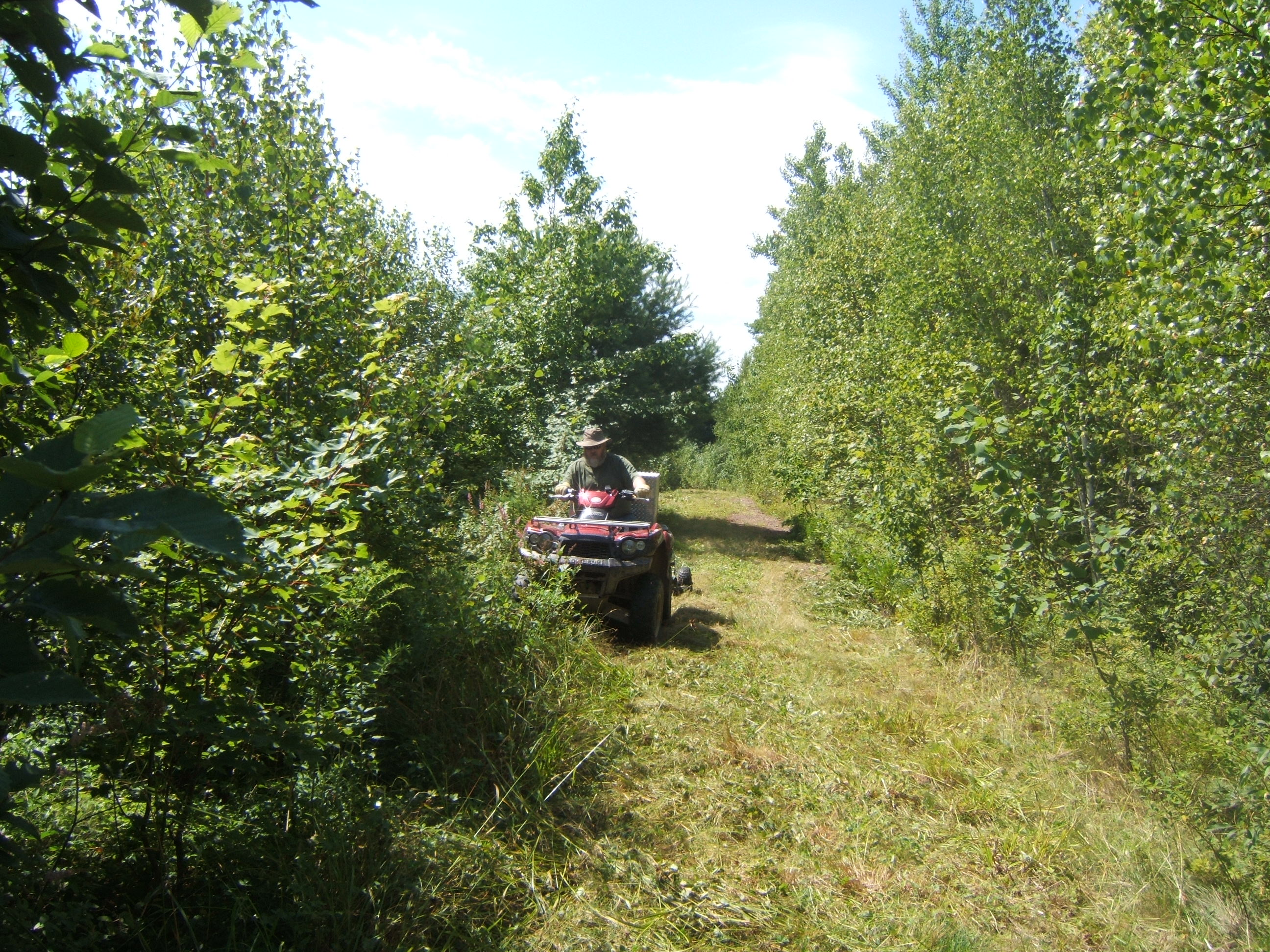
Now, we have the solution. We bought a rough mower that pulls behind the ATV. It is awesome! My husband has fun and is able to make huge progress. In just a couple of days, we have our road clear, there is a labyrinth of trails where we can walk, we have trimmed a selection of blueberry patches and we have our turning area restored at the lake end of the property. Notice the use of the word ‘we’, although my husband does all the work!
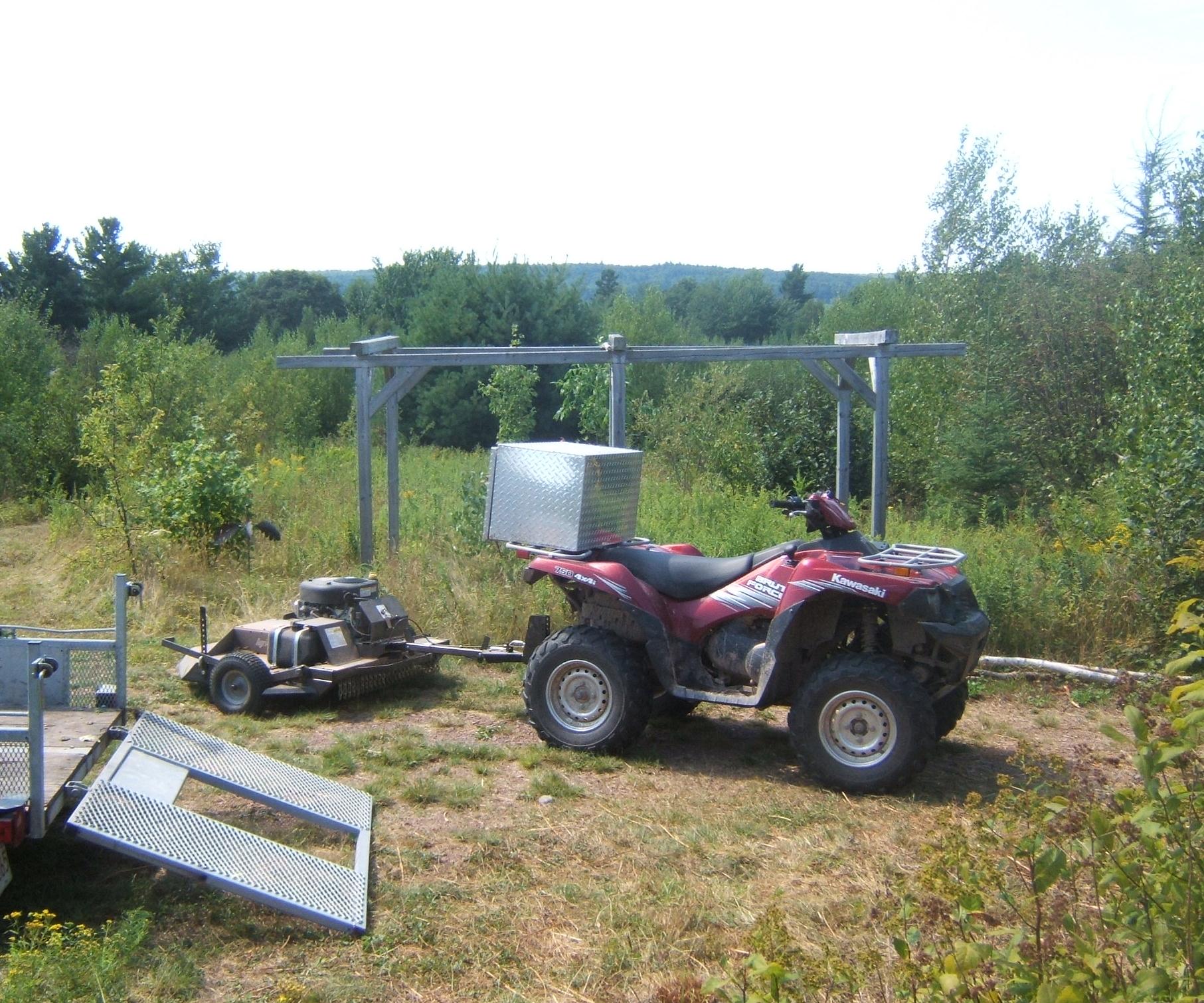
our new Agri-Fab Rough Cut Mower, designed for use behind an ATV
You can see the before and after shots of the road trimming in the three photos below. What you can’t see in the middle photo is the smile on my husband’s face as he mows! He was able to trim, in a few minutes, the trail it took him days to cut with the bush-saw last year.


Now, my husband can use his bush-saw time to work on his groves of maple and birch.
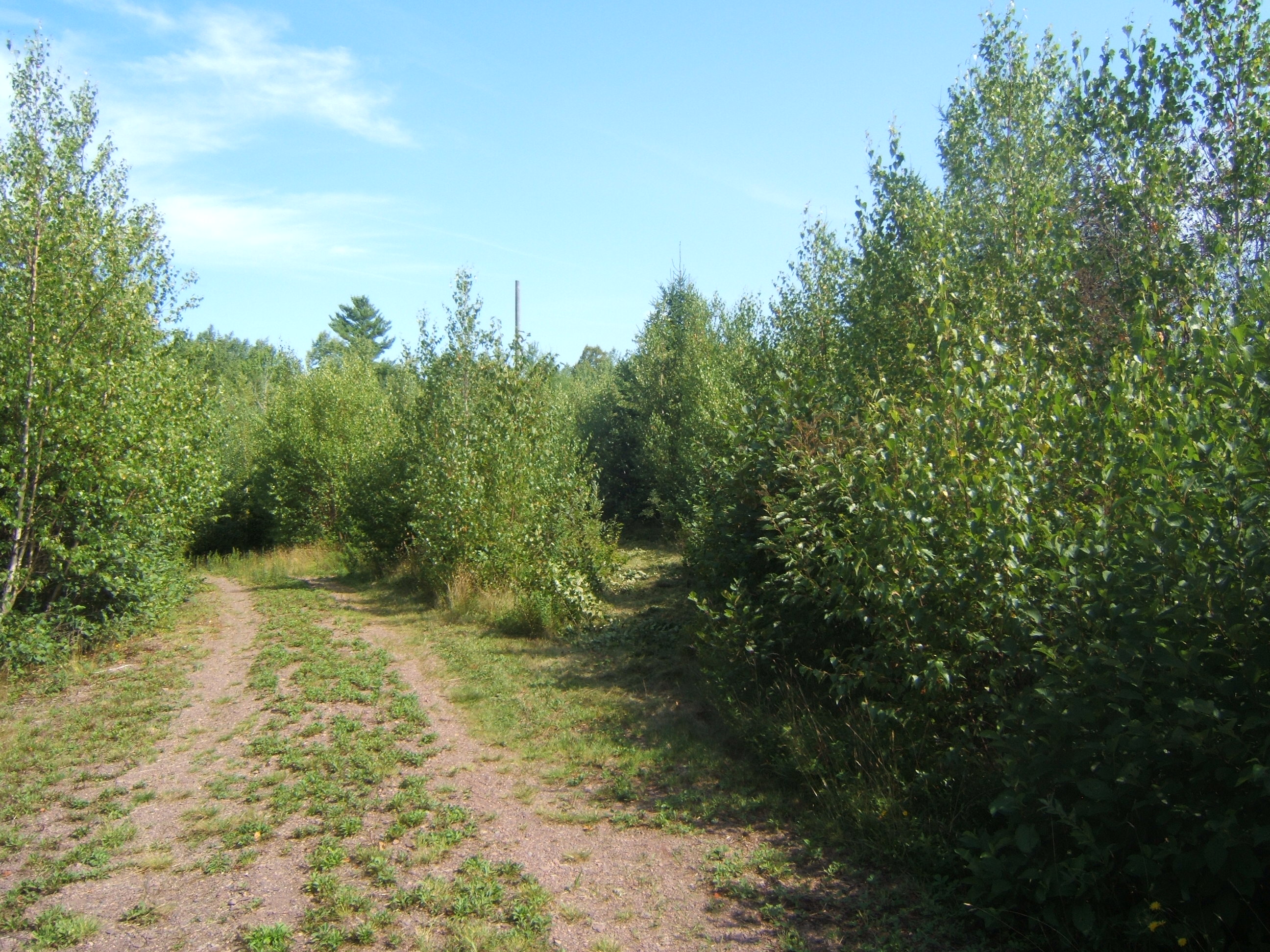
the first path cut by the new mower, to the right of the road
The only problem so far has been the hawthorns. We had a very flat tire on the mower after the first day. The man who fixed it said it looked like a porcupine on the inside, it had been punctured by so many thorns! Now, we are having each tire filled with foam!

5 cm thorns on the Hawthorn easily punctured the mower tires

© Jane Tims 2012
growing and gathering – a sense of place
The theme of eating local foods has its essence in the idea of ‘place’. The book ‘The 100 Mile Diet – A Year of Local Eating’ by Alisa Smith and J.B. MacKinnon (2007), introduced many to the idea of eating foods grown within a certain radius of home. Eating local is also place-based in terms of the settings we associate with local foods – the woods, the blueberry field, the home garden, the local farm, the roadside stand, and, of course, the farmers market are all places associated with obtaining food from local sources.
‘Place’ is a complex topic. Most of my poems about ‘growing and gathering’ include at least a little information about the ‘place’ where foods are found. Some poems, however, are specifically about ‘place’, and I want to group these together in my manuscript.
The poems I will include under the theme of ‘place’ will be focused on habitat, landscape, local food traditions, and the people-based concept of ‘home’.
~
1. the ‘place’ where plants grow
Plants, of course, depend on their habitat to live. The ideal ‘place’ for a plant is determined by the availability of moisture, light and nutrients. These factors are, in part, the result of climate, soil type, slope, exposure, and interactions with other plants and animals. In my collection, I have poems about the habitat of seaside plants, the need for water in landscapes where water is scarce, and why woodland plants often bloom in the early spring, when light is most available.
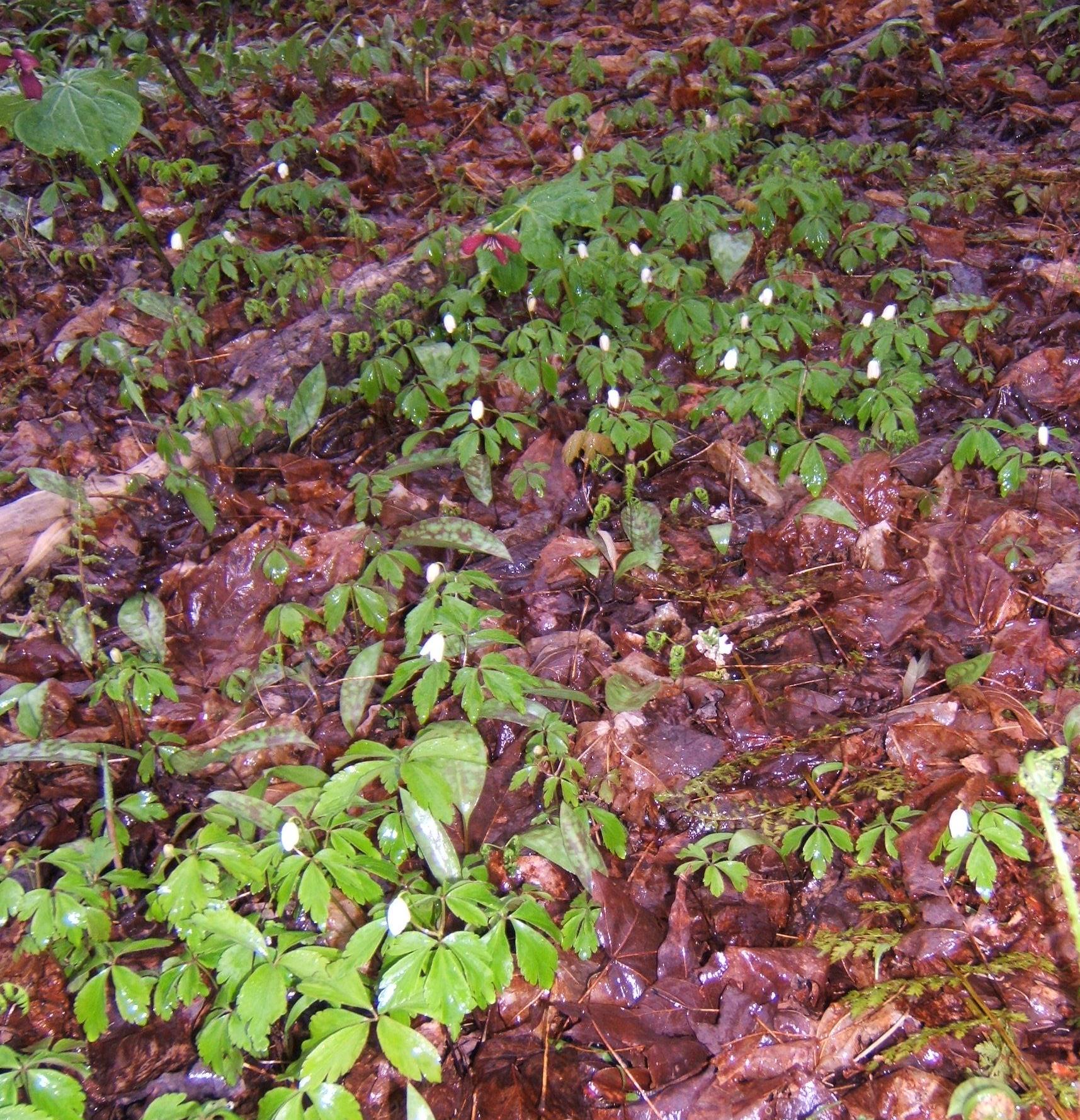
2. plants shape their surroundings and their landscape
Plants create habitat, modifying the regimes of moisture, light and nutrients in a local space. Plants also help to create the broader landscape. I have poems about how ripening apples change the space under an apple tree, how large and small-scale characteristics affect the value of a property, and how plants contribute to the way landscape appears.
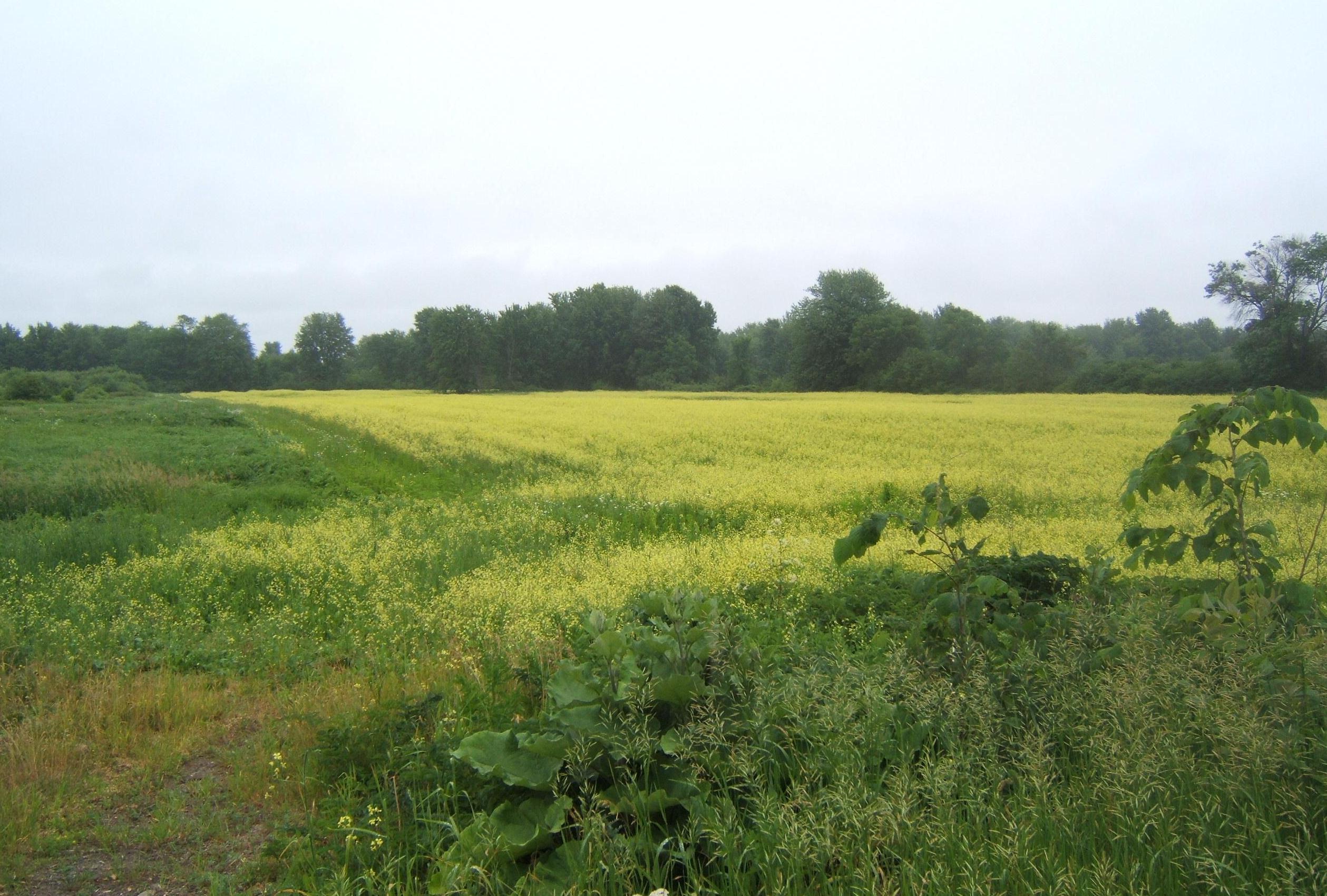
3. ‘place-based’ food traditions
As a result of the interaction between wild life and the landscape, people have access to different kinds of foods and develop area-specific wild food traditions. In New Brunswick, fiddleheads of the Ostrich Fern (Matteuccia Struthiopteris (L.) Todaro) are abundant in the spring, along the banks of rivers and wetlands, and many New Brunswickers consider a feed of cooked fiddleheads to be a rite of spring. In Newfoundland, a relative of the blackberry, the Bakeapple (Rubus Chamaemorus L.), is common in the bogs and barrens. Children often stand beside the road, their arms out-stretched, to sell their bottles of yellow Bakeapples packed in water. I have poems about these two local foods as well as others about traditional local foods.

4. ‘place’ as a metaphor for home
Plants and their ‘place’ can be a metaphor for the relationships between humans and the spaces where they are raised, or where they live. ‘Place’ may imply ‘home’ and ideas of belonging or familiarity. Several of my poems are about this aspect of ‘place’.

As I am working on the theme of ‘place’, a song by the 1990’s band Toad the Wet Sprocket is going around in my head:
‘…show me your home
Not the place where you live
But the place where you belong…’
Toad the Wet Sprocket, ‘Something to Say’, Fear, 1991
Exploring the theme of ‘place’ with you has helped me to organise my poems, to revise them, and to understand that I still have a few poems to write toward my manuscript. I am so grateful for this blog and for all my readers!
~
~
landscape
~
a veil draped across bones of the earth
pointed tents supported by forest
settles in pockets, lichens and moss
~
beneath the cloth is texture, the way
I know life on the land, fast or slow,
near or far, through clear eyes or through tears
~
to know form follows function – practice
repeated, detailed observation
see the sweep of a field of brambles
also the berries, also the thorns
~
Published as ‘landscape’ on www.nichepoetryandprose.wordpress.com September 3, 2011
Revised
© Jane Tims 2012
coastal barren, coastal bog
On our vacation to Nova Scotia last month, we revisited the Peggy’s Cove area near Halifax. I spent a lot of time along this coast years ago, but I had forgotten the unique wildness and beauty of this landscape.
We explored two habitat types, the dry and rocky barrens, and the wet coastal bog. As we found each new plant, I felt like I was greeting old and well-loved friends.
On the higher areas, growing in the thin soil on the bedrock were several species. One of these included Crowberry (Empetrum nigrum L.), a small moss-like plant with spiky leaves and small pink flowers. Later in the season, these will bear edible back berries.
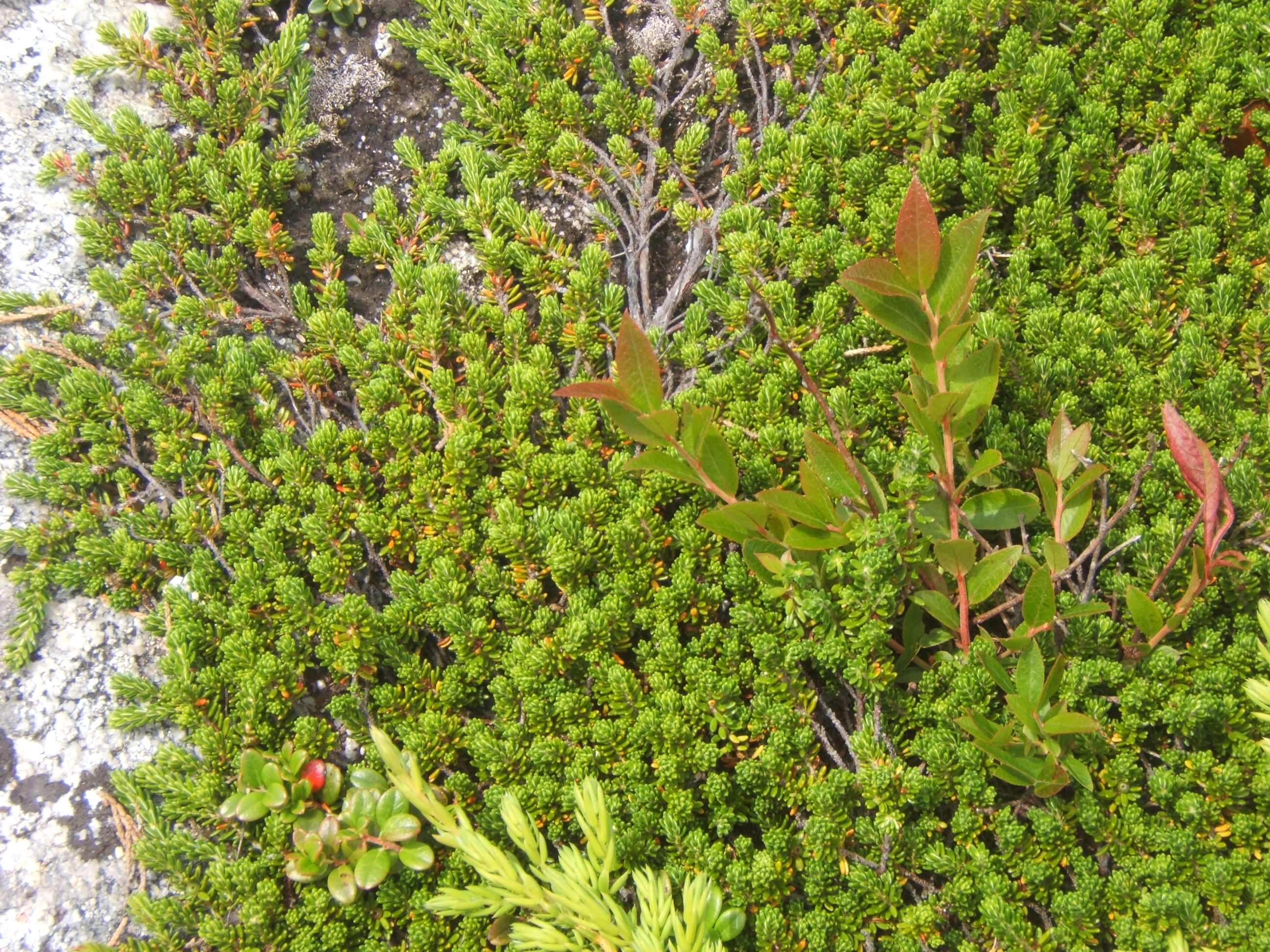
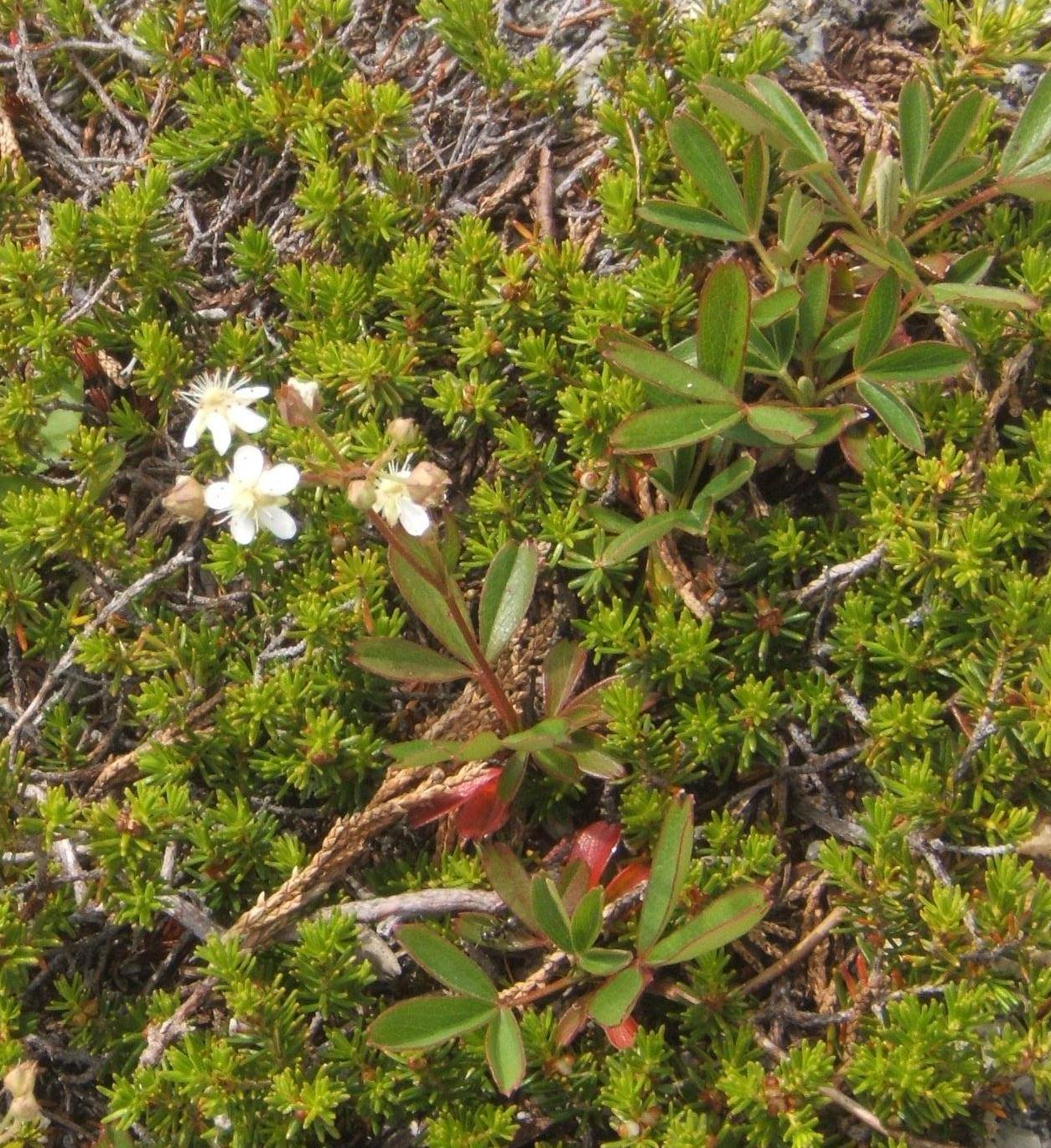
We also found Three-toothed Cinquefoil (Sibbaldia tridentata (Aiton) Paule & Soják) with its three leaflets and the characteristic three teeth at the tip of each leaf. The leaves are thick and outlined in red at this time of year. Later in the year the leaves turn bright red. The white flowers each have five petals, and are starry with stamens.
In the low-lying, boggy areas, we found a ‘merriment’ (my word) of Pitcher-plants (Sarracenia purpurea L.).

The leaves of these insectivorous plants are shaped like vessels. Insects climbing into the leaves encounter downward pointing hairs. They are trapped! Eventually they drown and are digested in the water at the base of the ‘pitcher’.
We also found another carnivorous plant, the Round-leaved Sundew (Drosera rotundifolia L.). The leaves of these plants are covered with tiny hairs… these exude a sticky liquid and trapped insects are slowly digested. For more information on the Sundew, please visit my post for October 31, 2011, ‘Round-leaved Sundew’. https://nichepoetryandprose.wordpress.com/2011/10/
All was not gruesome. We also found Arethusa (Arethusa bulbosa L.), a member of the orchid family. This beautiful pink orchid is also known as the Dragon’s Mouth.

Overall, our trip to Peggy’s Cove was a wonderful adventure. We plan to return in the early fall, when the Crowberry and the other edible plants we saw have set their berries.
Have you ever been to Peggy’s Cove and what did you think of the coastal landscape and the plants growing there?
~

© Jane Tims 2012
Warning: 1. never eat any plant if you are not absolutely certain of the identification; 2. never eat any plant if you have personal sensitivities, including allergies, to certain plants or their derivatives; 3. never eat any plant unless you have checked several sources to verify the edibility of the plant.oldfield
In my posts this summer, the space I expect to feature prominently is our summer property.
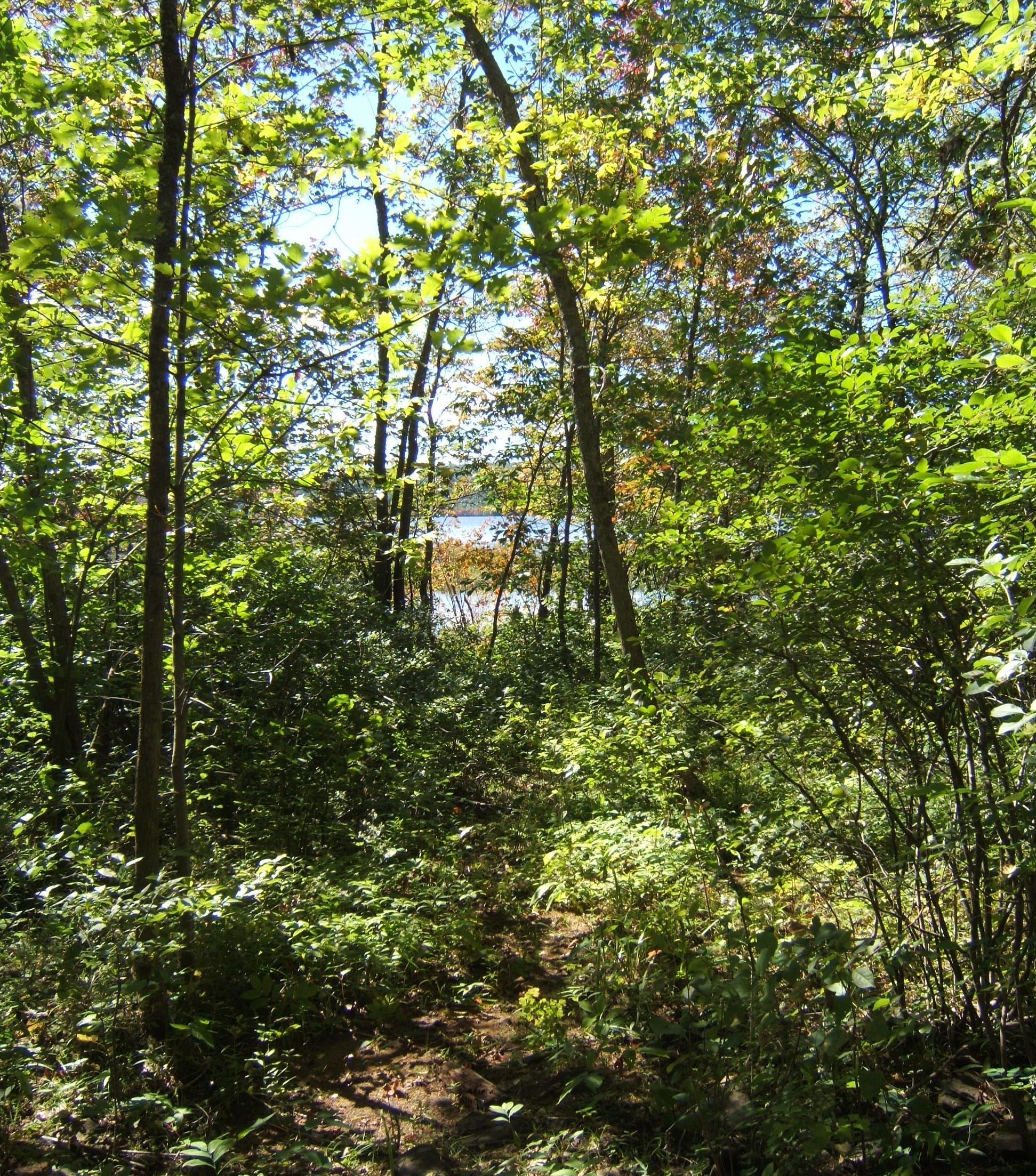
I’ve talked about this place before. One end of the property is along a lake (see ‘course of the creek’, September 12, 2012, and ‘ice is nice’, December 21, 2011, both under the category ‘waterways’). The lake edge is a bright forest of cedar, hemlock, birch and oak, and includes a beautiful marsh. We sit on our bench in the woods and look out at the lake, watching loons and deer and ducks. Once I saw an eagle plummet from the sky and dive into the water with a huge splash, to emerge with a good-sized fish in his talons.

Most of the property was/is an oldfield. When we bought the property in 2004, we bought an open field, thick with blueberry bushes and grass that rippled in the ever-present wind. There were a few trees, mostly bushy pine, spared year after year by the farmer’s bushhog. The field had been home to a herd of buffalo (bison) and we still find the dry, dusty evidence of their wallows.
The keyword in the last paragraph is ‘bushhog’! The farmer offered to keep the field mowed, but we are very independent. We were certain we could keep ahead of the various trees and alders sprouting everywhere.

The result has been the usual progress of an oldfield in the process of succession. Today our pines still punctuate the property, and there are enough blueberries to keep us satisfied, but other spaces have emerged… the alder swale, the maple grove, the path through the birches, the blackberry barrens, and, of course, our tiny cottage. There is a bit of grassy field still remaining and we struggle to keep it intact.

east boundary of our property, with our cedar rail fence, looking toward our neighbor's mowed field
When we go to the property I like to think about how it is changing, right before our eyes. Those buffalo would have a hard time recognising the place.
~
~
evidence of buffalo
~
“…in this field, years ago, I kept buffalo….”
beef farmer, selling his land
~
massive posts brace a page fence
woven with wire birch
dusty wallows where soil is crushed
and only lichen will grow
~
three apple trees trodden
parallel to ground
grey feed trough
strung together with nails
~
cedar waxwings search the fence
coarse hairs for their nests
winds nuzzle and whisper
through the brush of pine
~
~
© Jane Tims 2012
snippets of landscape – beaver lodges and beaver dams
Everywhere along streams in New Brunswick there are dams and lodges the beaver have built. The North American Beaver (Castor canadensis) is a clever engineer, building dams to create ponds as habitat. The still, deep water provides safety from predators and enables the beaver to float branches and logs to be used as building materials and food.
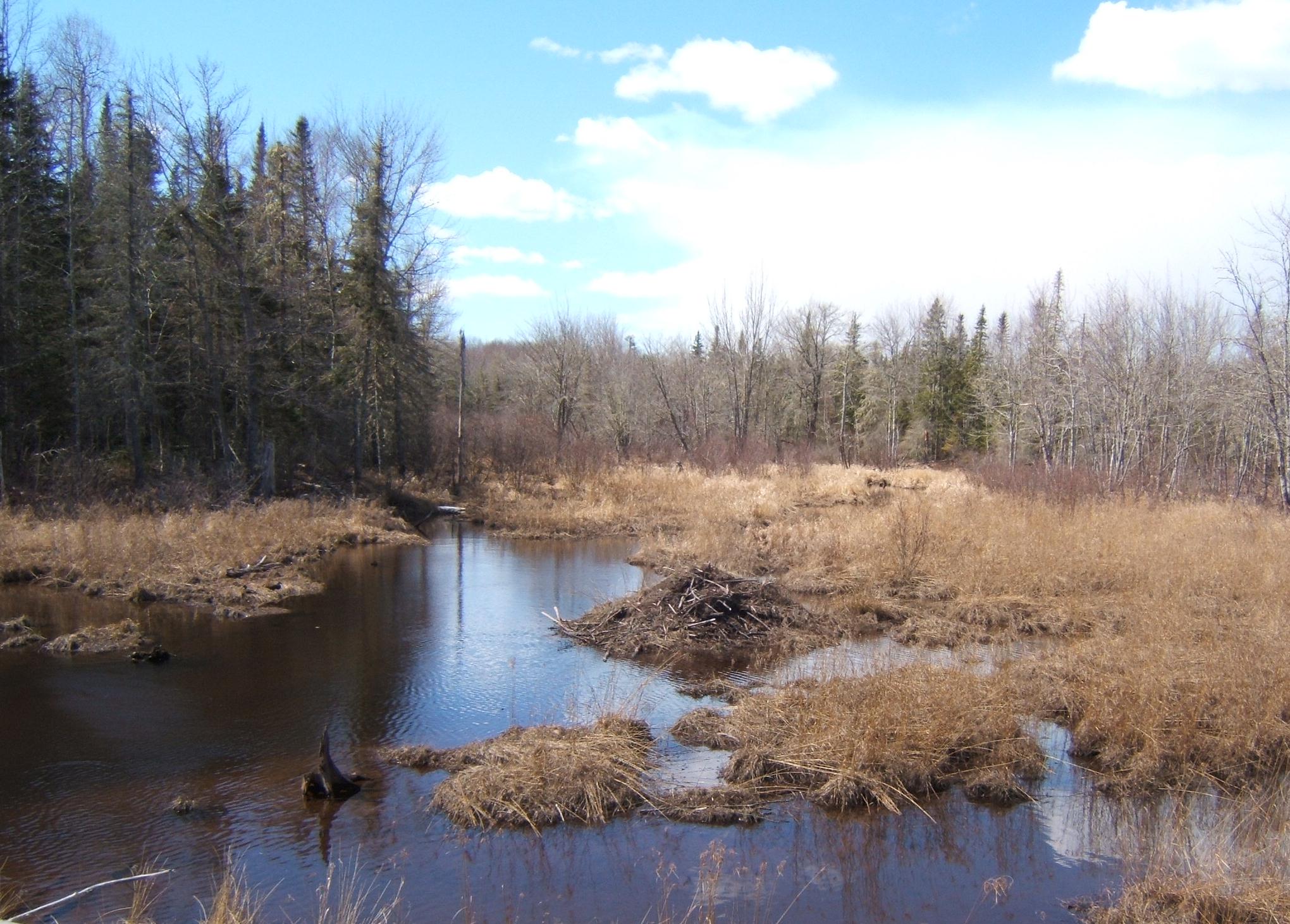
a beaver pond near our cabin ... notice the two ducks on the shore to the left...
Unfortunately, the subsequent flooding of roads and other land means the beaver’s talents are not always appreciated. However, beaver dams help create and maintain wetlands, important for providing habitat for other animals and storage areas for water.
~
~
Bear Creek Meadow by Canoe
~
from the river
we portage
across the beaverdam
over poles and patted mud
up
to the quiet pond
~
and the bow
scoured by rocks
parts green
~
and our paddles
pitted by snags
spoon soup
~
dignity quiets our paddles
hushed voices heed
the diminishing echo
~
pliant as stems of pickerel weed
we honour the whisper
of wild rice
the edgewise touching
of nymphaea and nuphar
amphibian eyes
in the harbour-notch of lily pads
~
we are threaded by dragonflies
drawn by water striders
gathered in a cloak of water shield
~
oval pads a puzzle
part in silence
return to their places
~
no trace of our passing
~
~
Published as ‘Bear Creek Meadow by Canoe’, Canadian Stories 14 (79), 2011.
© Jane Tims 2011
snippets of landscape – ice falls on rock walls
When highways are built, they often cut through the bedrock, leaving rock walls along the margins of the road. If these intersect a brook or seep of water, the result is a waterfall on the face of the rock. In spring or summer, rains can create wild cataracts. In winter the water freezes, building frozen walls of blue-shadowed ice. In sunlight, especially when they begin to melt, these ice falls are dazzling.

~
~
one warm hand
~
icicles seep between
layers of rock frozen
curtains separate
inner room from winter storm
glass barrier between blue
light and sheltered eyes
memory of water flows
along the face of the rock
one warm hand melts ice
consolation, condensation
on the inward glass
~
~
© Jane Tims 2012

snippets of landscape – the bogan
Along the St. John River are sluggish side-streams, flooded in spring to form full tributaries of the river, but isolated and stagnant in low-water conditions, sometimes completely cut off from the main river. These are known as bogans, a word of Algonquian origin. The words logan and pokelogan have a similar origin and meaning.
My favorite bogan is a strip of water next to the Trans-Canada Highway near Jemseg. The bogan creates an island, Thatch Island, in the St. John River. Old Silver Maple trees lean over the still water, creating reflections and shadows.

bogan along Thatch Island
On maps of the St. John River, a bogan on Sugar Island, just north of Fredericton, is called the Sugar Island Padou.

bogan (padou) on Sugar Island
~
~
bogan
~
appendage of river
footnote on water
predictable as the day we walked
the dead-end backroad
and retraced our steps to return
~
in spring, by canoe, at high water
or on ice skates in winter
in summer sluggish
stagnant, secluded
~
we lurk, eavesdrop on whispered
conversation
we are river folk
unwelcome
~
~
© Jane Tims 2012
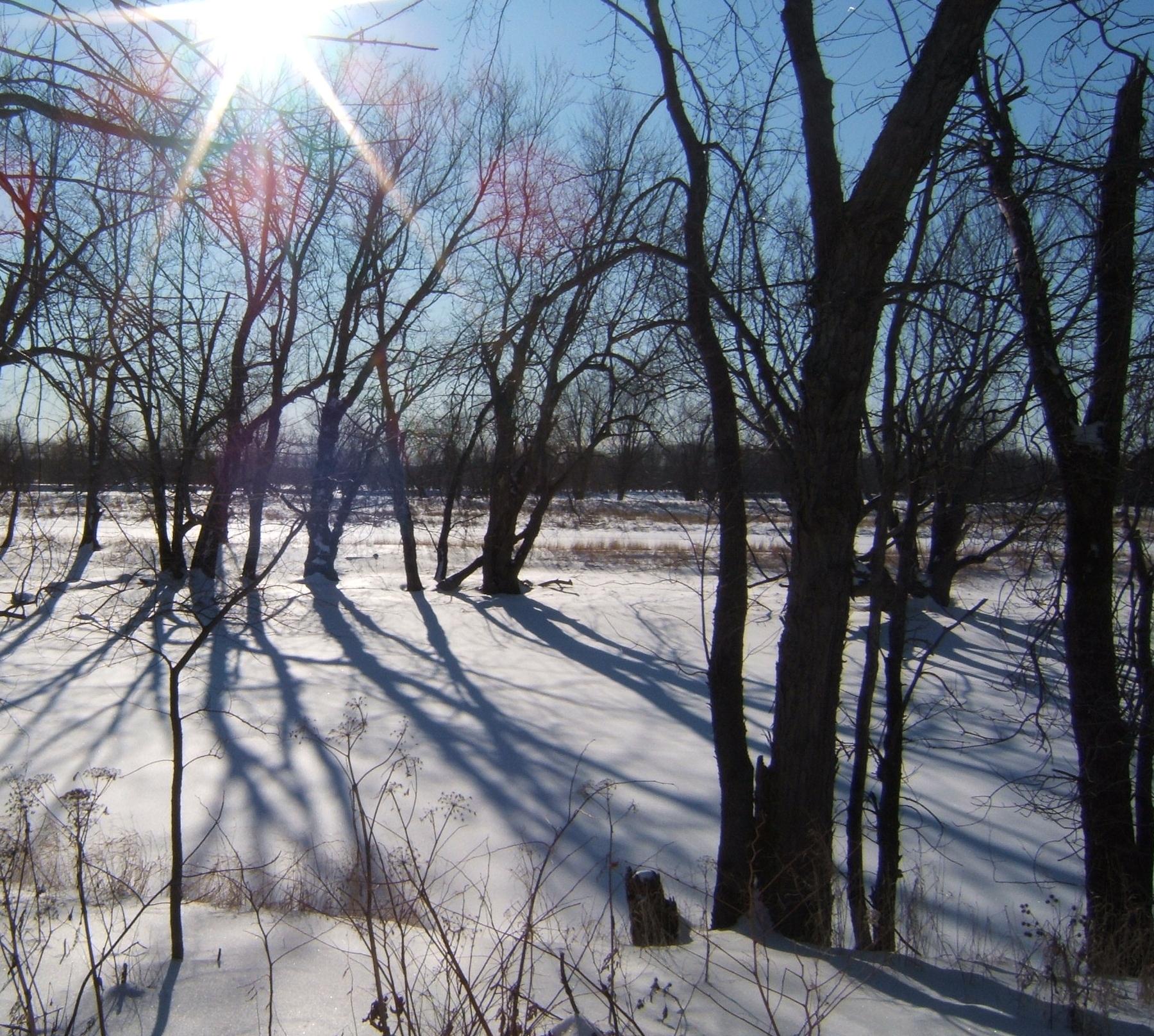
snow-bound bogan to the north of Thatch Island on the St. John River
‘blue’berry fields in autumn
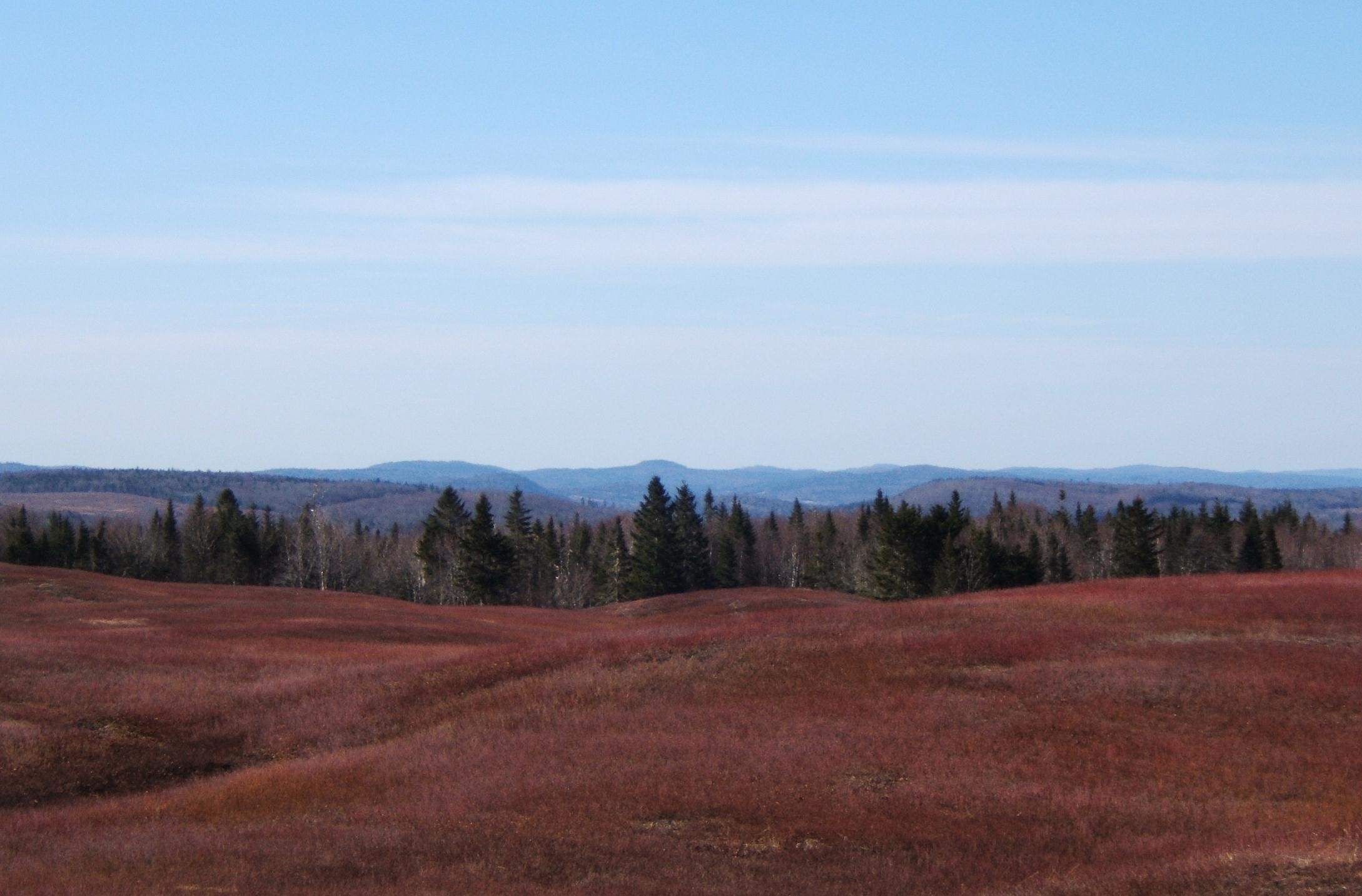
This time of the year, the only thing ‘blue’ about our blueberry fields is the blue sky above them. The fields themselves are a blanket of scarlet and orange.
These are a few scenes of the October blueberry fields in south-west New Brunswick…


legacy
~
remaining in the room
a well-used blanket
red with two black stripes
inexpensive facsimile of
~
a white
three-beaver blanket
stripes red, yellow, green
~
a blue sky
two vapor contrails
~
the yellow double line
on an asphalt road
~
a band of stars
across a light-starved sky
~
a red leather book
with black ribbons
mark passages for giving
thanks:
look down from heaven
upon the fields, now white
unto the harvest
~
a crimson blueberry field
in October, draped across bones
of the landscape
double tracks leading away
over the horizon
~
© Jane Tims 2011

comparing landscapes
When you are visiting an area away from home, what do you notice about the landscape?
As we were driving the roads of south-east Ontario, I was always comparing the scenes I was seeing with the landscapes of home in south-central New Brunswick.
Both areas are hilly and rural, with a strong agricultural base. Both are forested wherever farmland is not the main land use. The trees in south-eastern Ontario are predominantly hardwood with some cedar, fir and pine, whereas ours are mostly mixed wood with a stronger component of conifers (spruce, fir and pine).
Probably the thing I noticed most about the Ontario farming landscape was the predominance of corn as a crop. When we were there, the ‘eating’ corn had already been harvested, but corn for silage (mostly used for cattle) was growing everywhere. It stood tall in golden fields, mostly broadcast, without corn-rows.
The corn was ready for harvest, the corn kernels held in stout, starchy ears. I think ‘ears’ is such an apt word for corn since the sense of hearing is shaken awake when you stand in a cornfield. This time of year, the long leaves are dry and rustle in the slightest breeze, carrying on a whispering conversation in an unknowable language.
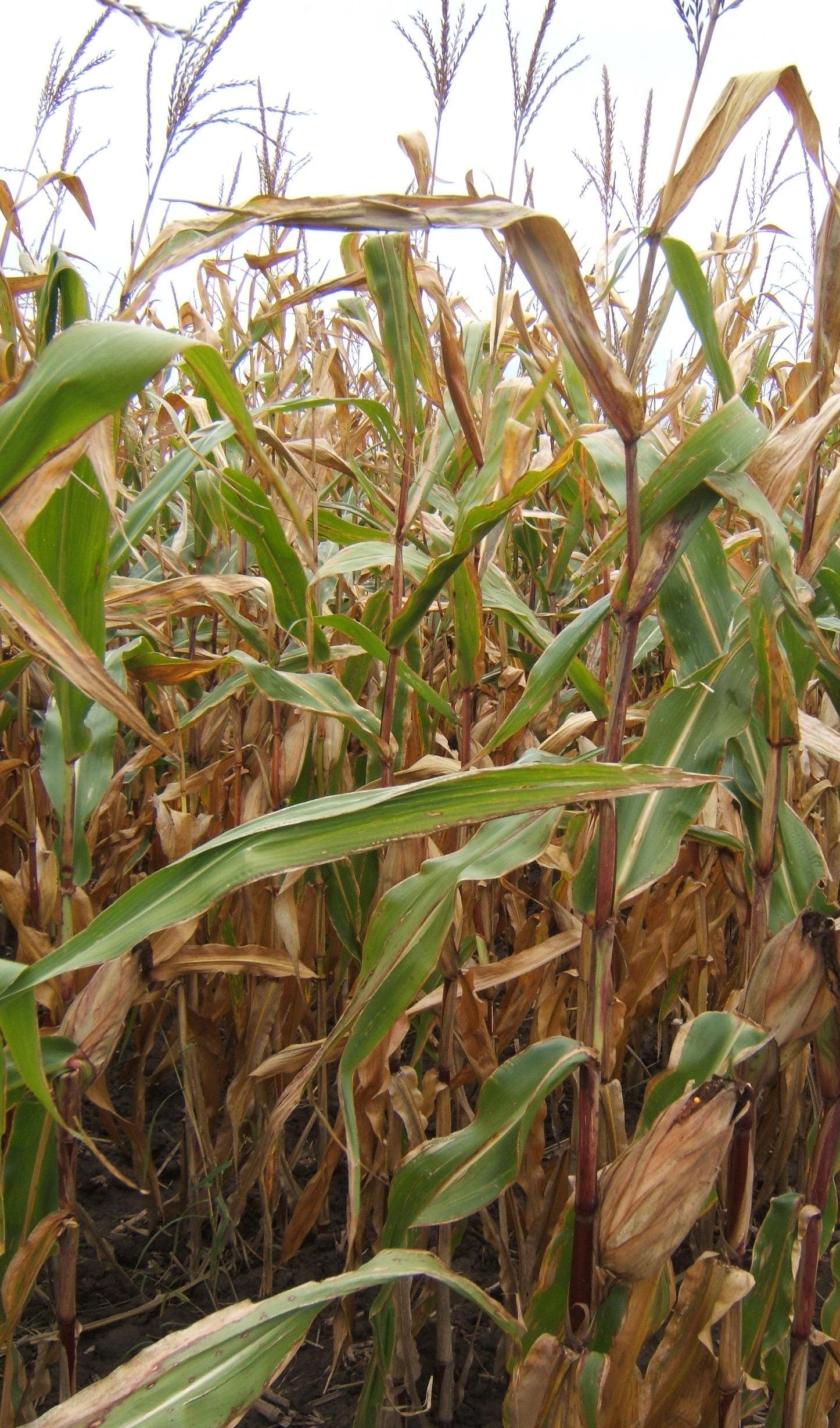
gossip
~
cattle-corn rustles
silage close-standing
whispers and secrets
wind-syllables
murmurs and sighs
rumours
no single
discernable
voice
~
© Jane Tims 2011
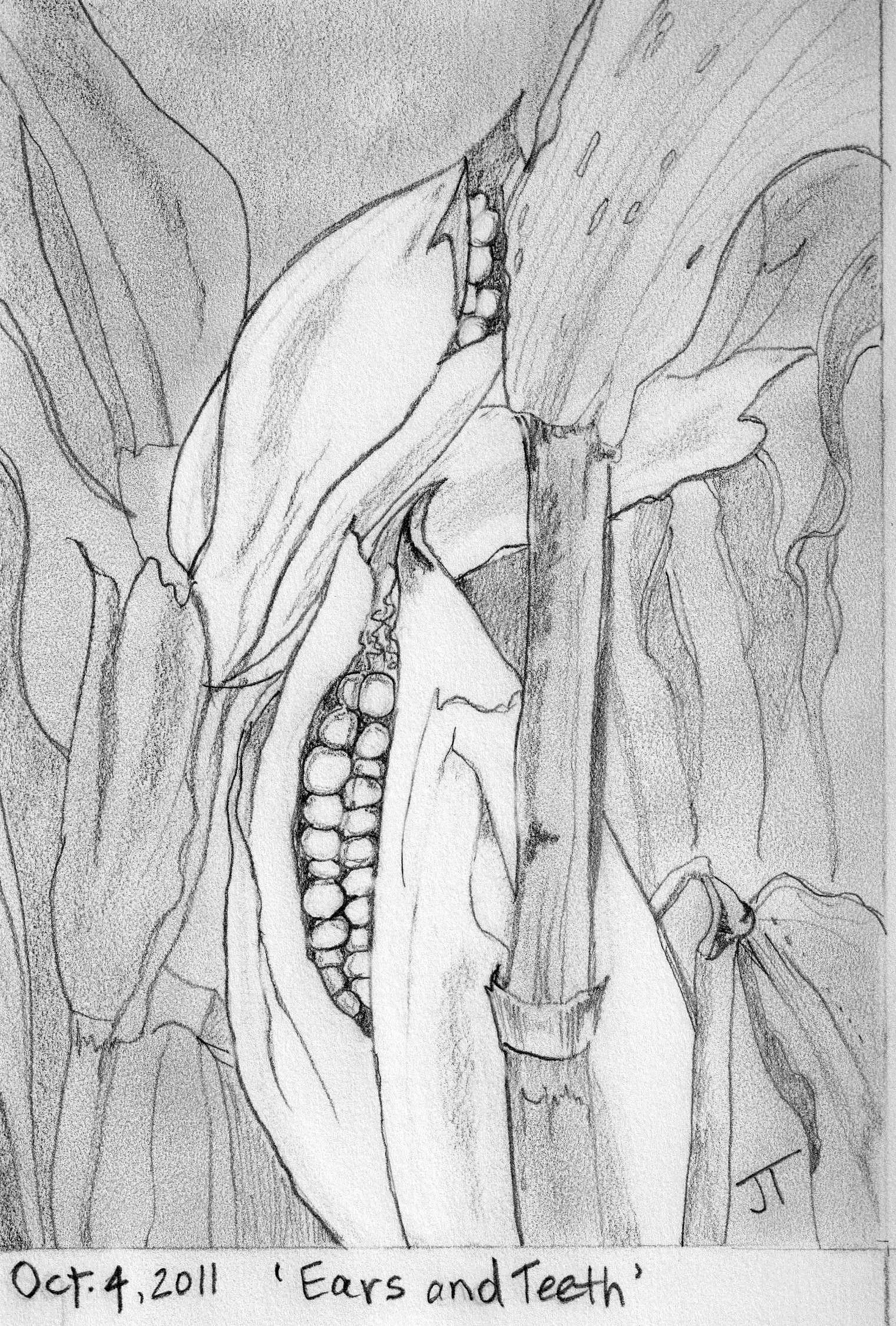
more horizons
horizon: line at which earth and sky appear to meet (Oxford dictionary)
After thinking more about horizons, I looked through our photos for some horizons we have captured in New Brunswick. Once you start to look for them, they are everywhere!

overlooking the hilly area of Sussex... Poley Mountain (a local ski hill) is in the background

a blueberry field and the distant hills of Queens County
- Horizons are made more interesting by the passing seasons…
- in autumn…
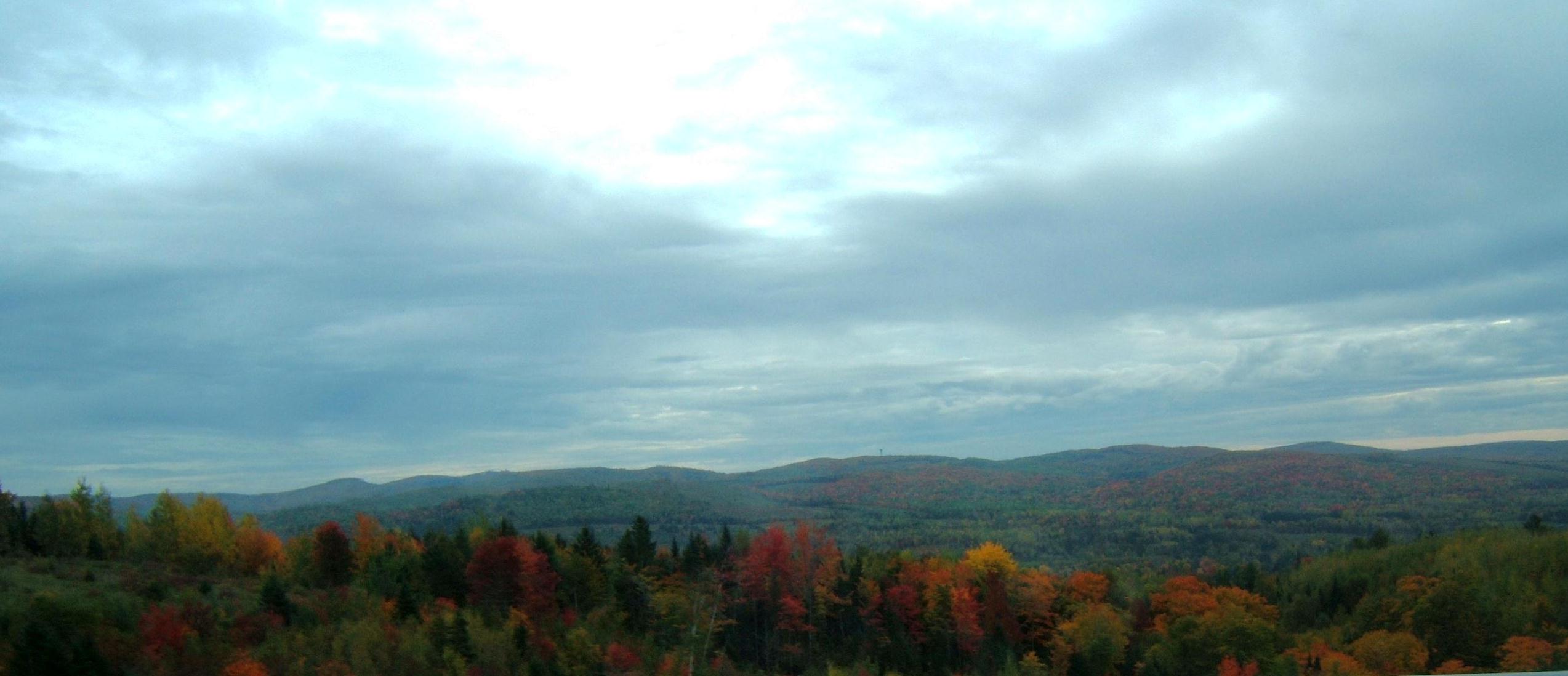
maple trees in autumn costume along the Trans-Canada Highway in Victoria County
…and in winter.

bare trees in the Grand Lake Meadows area in winter... a hawk in the tree and a treed horizon if you look carefully
Of course, I can’t forget the horizon of the Bay of Fundy…

Bay of Fundy at Saint Martins
…the horizon viewed from the ocean…

Charlotte County viewed from the waters of the Bay of Fundy
…and the horizon created by islands.

'The Wolves', special islands in the Bay of Fundy
Look to the hoizon, and see where land and sky, and sometimes water, meet.
horizontal haiku
~
horizon distant intersection land water sky
~
© Jane Tims 2011




 nichepoetryandprose