Posts Tagged ‘history’
Christmas post cards – greetings from the past
I’ve sent almost all of my Christmas cards. They are pretty to send, and I love to receive them in return.
But I also love the examples of greetings from Christmas past, my small collection of Christmas post cards.
So, no matter who they were originally intended for, here are some Christmas wishes for you, from years gone by…
From little Rose Marie…

From cousin Virginia…
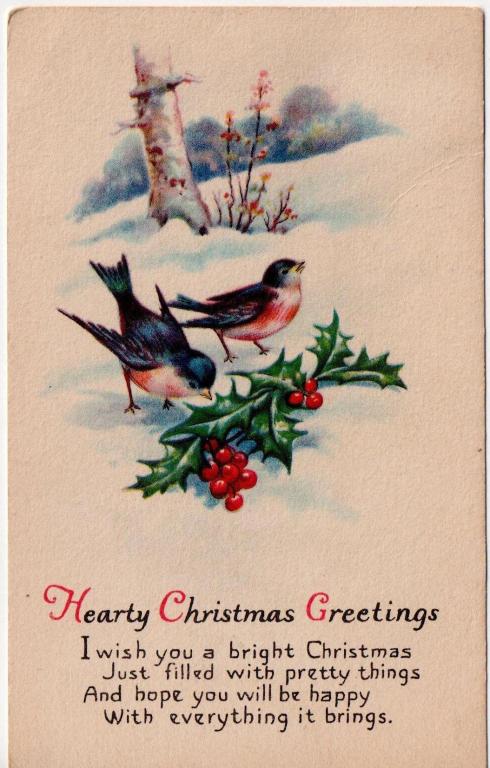
From 1913… (the back of this one says, in part… ‘don’t forget that rabbit stew we are all to have when one of you chaps snares one.’)
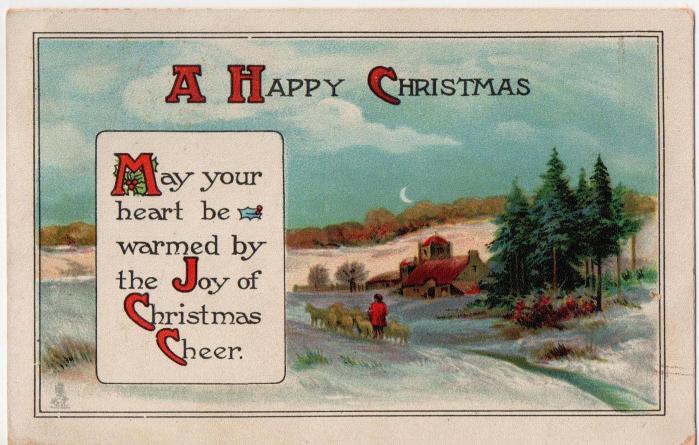
In 1912…

And from Uncle and Auntie…
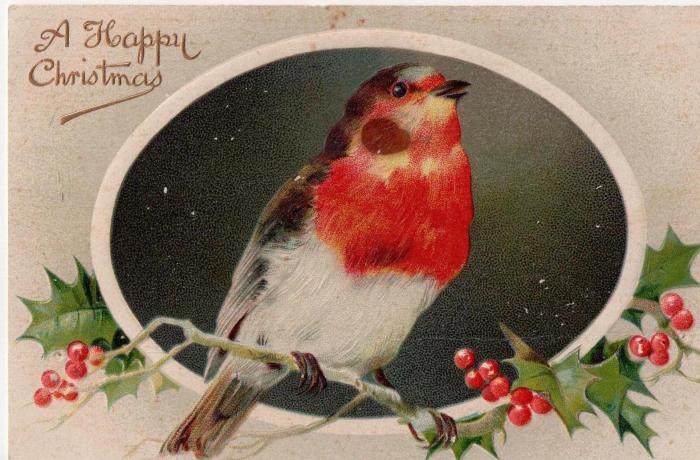
Merry Christmas, everyone!
Copyright Jane Tims 2012
writing a novel – the community as a character
One of the first things I did as I was beginning my novel is create character sketches for the people in my book. By knowing as much as possible about the characters, I knew how they would react in any circumstance.
As I wrote, I began to wonder of the community itself could be a character in my book. Communities certainly have characteristics… they may be tolerant or intolerant, modern or traditional, rural or urban and so on. Sometimes a community has a mixture of these characteristics.
Famous examples of books where the community has character include Harper Lee’s To Kill a Mockingbird (J. B. Lippincott & Co., 1960) and Peyton Place by Grace Metalious (Julian Messner, Inc., 1956).
People in the community in my book will respond to the abandonment and disposal of a church both as individuals and as members of the community. In any community, places of worship are important. Churches are important to the community for their religious significance, but also for their historical connections.
Communities in rural New Brunswick, as elsewhere, are not homogeneous. In my own community, there are people whose families have lived here for generations. Other families have just moved here, attracted by the community’s rural character and by its nearness for commuting to work. Sometimes this heterogeneity is a source of divisiveness in a community. More often people from these different parts of community live together in harmony, coming together for school events, community sports or just neighborliness.
The community in my novel will also be heterogeneous, composed of people of different backgrounds and interests. For simplicity’s sake, I am thinking of them in three categories.
1. Many of the characters in the community will be part of the ’embedded community’, people whose families have lived in the community for generations. These will include most of the members of the church congregation.
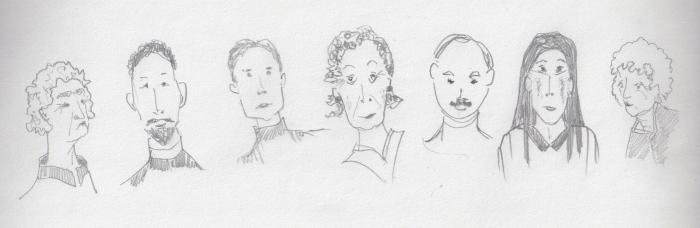
folks who were born and raised in the community
they all have good eyesight or wear contacts
second from the left is the Minister, Oliver Johnston
2. Other characters will belong to the ‘commuter community’. These will be people who have moved into the community from away. They love its rural qualities. The community is also near enough to the city for them to be able to work there.
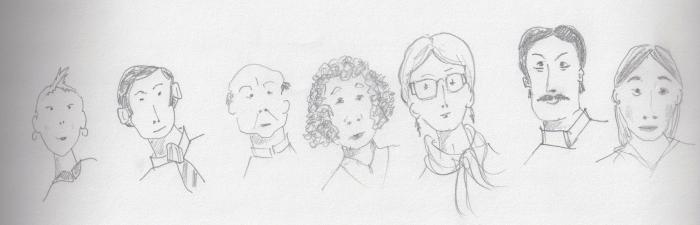
the one on the right is my main character
the man to the left of my main character is her husband… looks a little like a movie star from the 50s
I went to university with the lady on the far left
Of course, within these groups will be people who have their own interests and loyalties. For example, there may be members of the commuter community who fit very well with the embedded community. There will be those who are part of the congregation of the Landing Church and those who are not, those who will be interested in the church because of its historic importance and those who are not that interested in preserving its history.
3. There will also be a negative element in the community in my book. This element will behave very badly and I think of this as the ‘aberrant community’.

Ed Blake, the ‘bad guy’ in my novel
my sister will say he looks like Spock from Star Trek
~
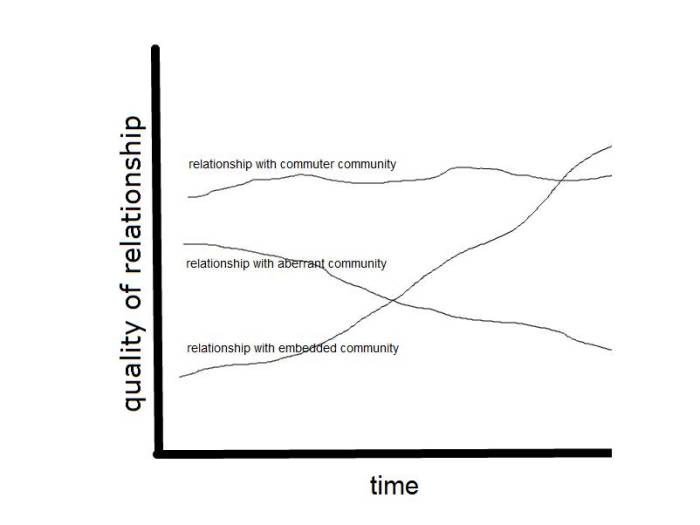
To help me plan the interactions between these three community components and the main character, I made a graph to guide my main character’s relationships through the book.
~
I want the protagonist’s relationship with the aberrant component of the community to begin on a neutral note and deteriorate with time.
Her relationship with the commuter component of community will begin high and remain that way throughout the book.
A main source of tension in the book will be her relationship with the embedded component of community. At first, she is an outsider who thinks she can solve everything by moving and re-purposing the church, and her relationship with the embedded community is very poor. However, during the book, she learns to be more understanding about the community and they learn she is not really so bad after all. This relationship will grow in a positive direction during the book.
As I write, I will check with my time-line to see if the relationships I am writing about are staying true to my graph.
~
Copyright Jane Tims 2012
writing a novel – stories about abandoned churches
My husband and I were married in an older local church. I remember its lovely flower garden, the church bell, the woodwork, the organ, and the beautiful stained glass windows. Our wedding day began an extremely successful marriage… so far we have been married almost 33 years!
The church was deconsecrated in 1995 and torn down. The congregation moved to a new church not far away. The new church incorporated the furniture, hanging lights and stained glass windows from the old church.
Even today, almost twenty years after the demolition, I drive past the empty space and I always feel badly. Sometimes there is a car parked on the very spot where we said our vows.

Once I took my son to the now-empty site of the old church and showed him where it once stood. He asked, as a joke, ‘Does that mean you and Dad aren’t married any more?’
His question seemed funny at the time, but now I think about how closely our lives are linked with the spaces where we celebrate. If a space disappears or changes, it may seem profoundly sad. But it doesn’t negate the actions taken there. The best things in our lives supersede the physicality of their associations.
~
Copyright Jane Tims 2012
writing a novel – re-purposing a church
~
So the poet has decided to write a novel…
~
Title: unknown
Working Title: Saving the Landing Church
Setting: a writers’ retreat and an abandoned church
Characters: main character – a writer who operates a writers’ retreat
Plot: moving a church? (in part)
~
Since the main character in my novel is a writer, it makes some sense that she would like to earn her living as a writer. However, she has not yet published her first book, so there are no book deals or royalty cheques. She turns to an occupation pursued by many talented writers, the education of other writers.
In my book, I want to establish a situation that could eventually lead to other books. So, I have given my protagonist the dream of establishing a writer’s retreat. Her idea is to hold writing workshops at this retreat, perhaps every weekend once she establishes herself. She will be able to teach writing techniques at the retreat, or hire other writers to carry out workshops. She wants to sponsor reading events for the community, to encourage interest in local writers. Now, all she needs is a place to carry out her plan. She does a little research, selects a community where the artistic sentiment has established itself, and purchases a piece of land nearby.
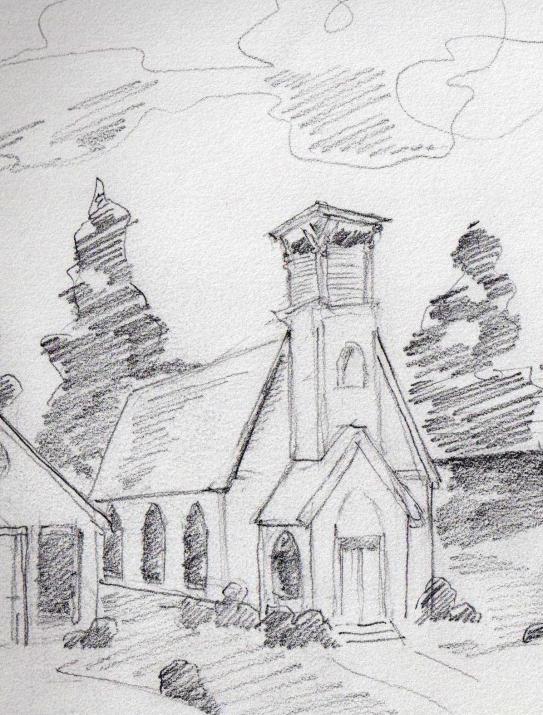
detail of a larger drawing Jane Tims November 29, 2012
And then she sees the Landing Church, about to be abandoned by its congregation. She falls in love with the church. She re-imagines it as a perfect place to hold her writing retreat. A serene, tranquil place for writers to think and write. A place with good acoustics for readings. A place 10 kilometers away.
Now, how is she going to get that lovely little church to her own property???
~
Copyright Jane Tims 2012
tough to follow
In high school, in Nova Scotia, I belonged to a history club. We did an interesting project in about 1971, tracing the route of an old stagecoach trail through the woods between Lower Sackville and Fall River. We were able to follow the road since it had been raised above wet ground. We also found old culverts still intact. One of the things we made was a relief map of the area, with the hills built up in plaster and the old road marked in red. The project created, for me, a lifelong interest in old roads.

old trail obscured by a Bracken understory
~
tough to follow
~
the old road at the edge
of the hill is tough to follow
no clues, no footprints, no bent twigs
~
eventually all familiar ways
grow over
~
a layer of bracken
covers the track
like a cloth over biscuits
at the dinner table
~
primo-canes of bramble
claw you back
your mother reminding you
to wear your sweater
~
better to look up
follow the ribbon of sky
marked by the absence of branches
~
~
Published as ‘tough to follow’, Canadian Stories 15 (85), June 2012
Copyright Jane Tims 2012
abandoned bridge – South Nation River
In south-east Ontario, the South Nation River winds through farmland…

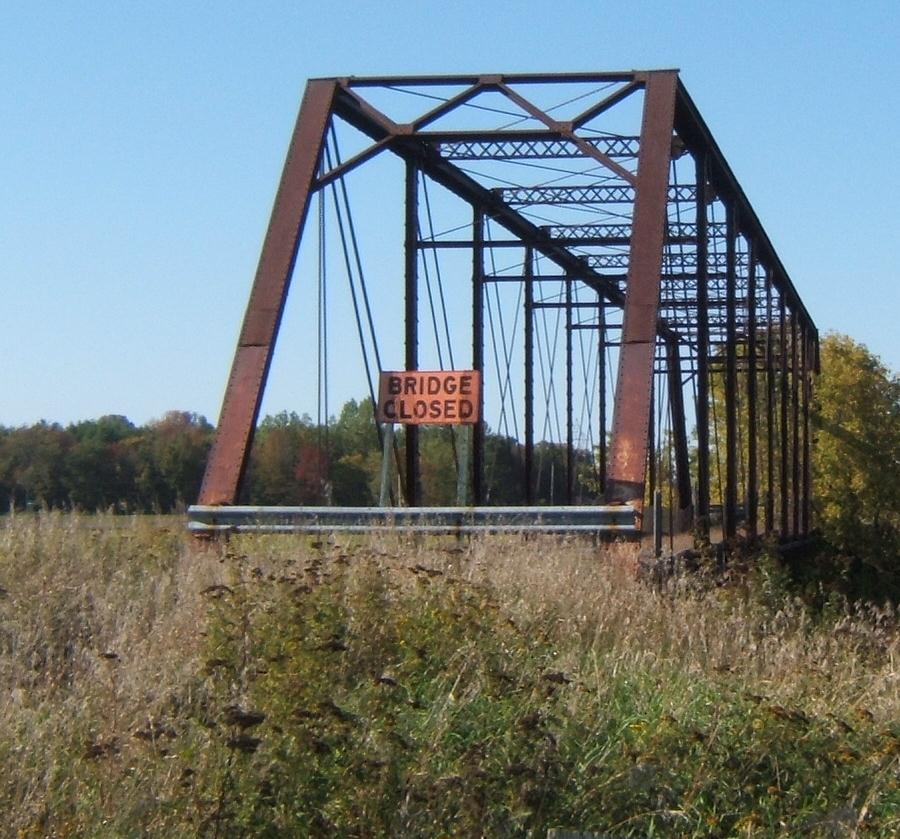
Driving along the river in October of 2012, we found an old metal bridge, closed to traffic. Although left to rust, this bridge was beautiful in its simple construction. The deck of the bridge was rotted, but wildflowers had taken hold in the debris.
According to the South Nation River link at http://www.nation.on.ca/en/geocaching/ (South Nation Conservation), the bridge has now been removed.
~
~
abandoned bridge, South Nation River
~
years since I crossed the metal bridge –
we take the long way now,
over that engineered, concrete
contrivance, upstream
~
the old bridge CLOSED, of course
trusses red with rust, corroded
pitted as the river bank
and its swallow-burrows
~
once we walked those girders
leaned from the railings
amused ourselves by pitching rocks down
into the duckweed
~
wouldn’t be safe today, the deck
rotted where hawkweeds bloom
all summer, cheerful
you’d think they’d been planted
~
~
Published as ‘abandoned bridge, South Nation River’, Canadian Stories 15 (85), June 2012.
Copyright Jane Tims 2012

Happy Halloween
In Canada, October is a month for celebration. We have our Thanksgiving in mid-October, and, on the 31st, Halloween.
I have a few Halloween-themed post cards. I display these over our fireplace, on a string, attached by clothespins. They make a festive banner to complement the orange pumpkins and other decorations.
Halloween symbols are spooky…

but some witches are not so terrifying….
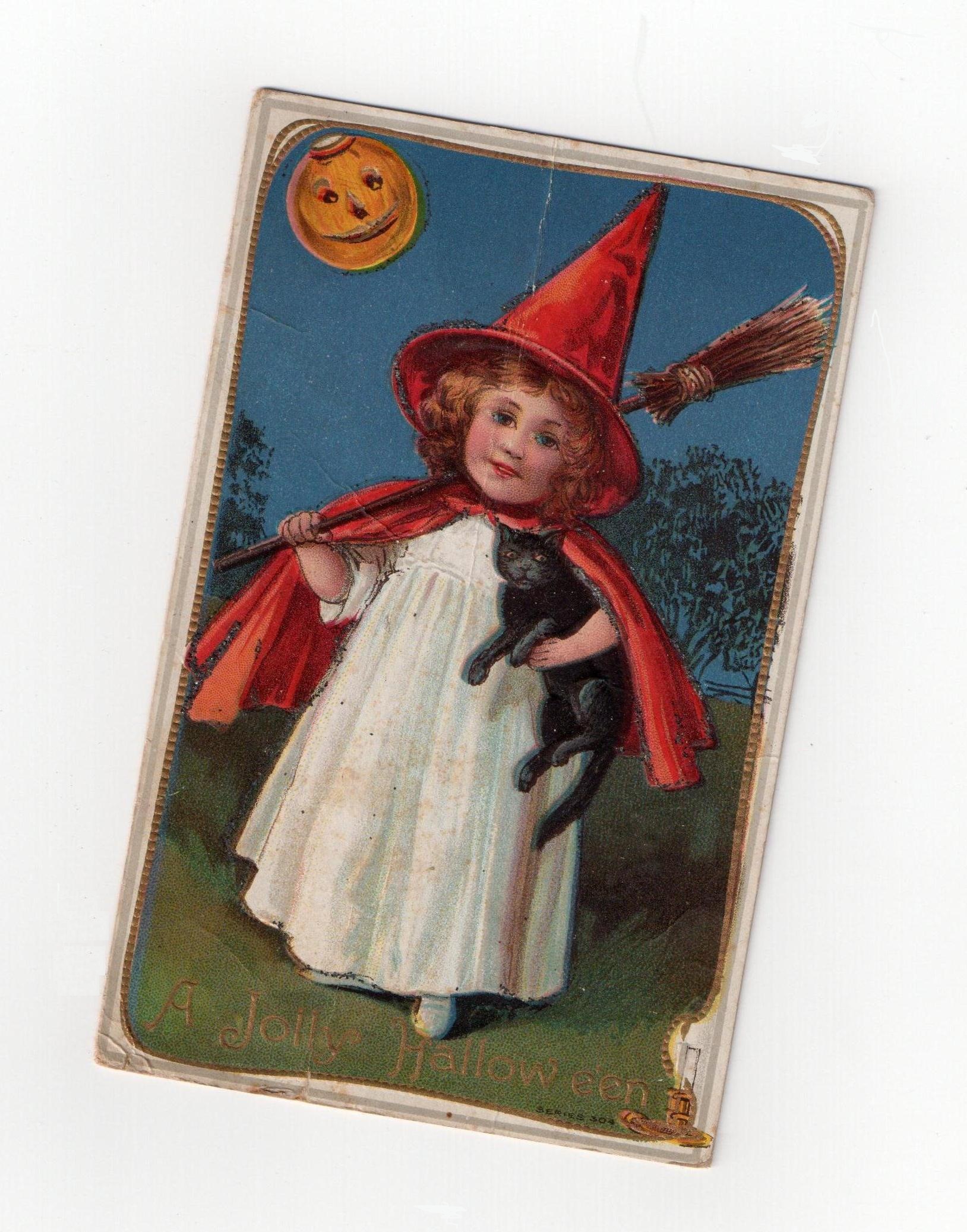
and the light of a Jack-o-lantern helps make the paths less eerie…

Happy Halloween!!!!
Copyright Jane Tims 2012
log cabins and humble beginnings
In a recent post (October 17, 2012), I wrote about my shoemaker great-great-grandfather, Josiah Hawk, and his daughter, my great-grandmother, Ella Hawk.
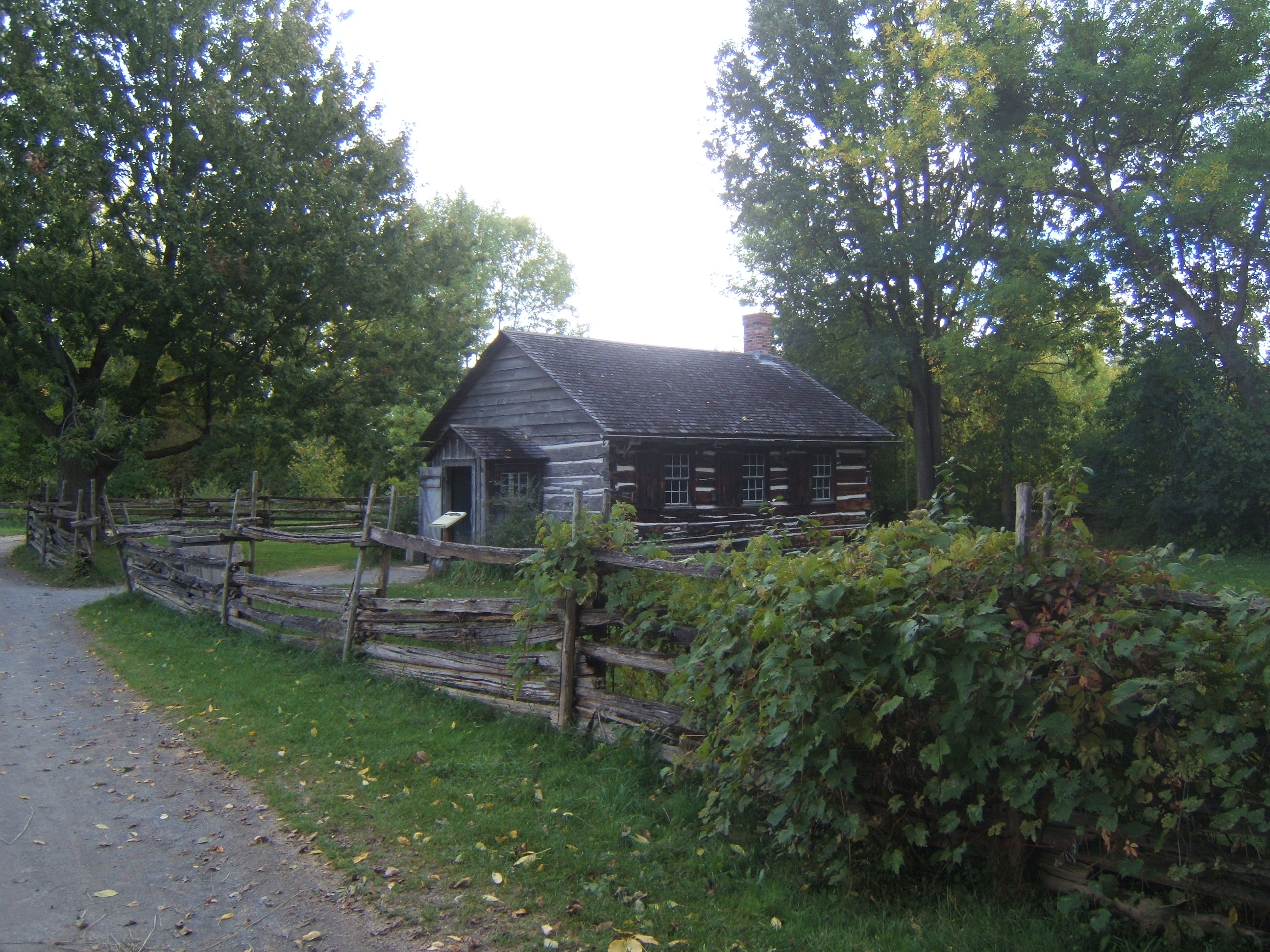
schoolhouse in Upper Canada Village, Ontario
When I was in Upper Canada Village in Ontario in September, I saw many houses and a way of life that reminded me of Ella’s family history.
Ella’s story begins before she was born, with the Hawk and Kresge families of Monroe County, Pennsylvania. I know a lot about these families, since both families have relatively complete genealogies.
Both the Kresges and Hawks were part of a large community of German immigrants who lived in the vicinity of Gilbert, Monroe County, from the late 1700s onward. In 2004, my husband, son and I visited the area and I went to church in the community. The congregation welcomed me warmly and I was told many of the people in the church shared my ancestry!

pioneer home in Upper Canada Village, Ontario
The Census of 1790 lists both of Ella’s great-grandfathers, Coonrod Crase (Conrad Kresge) and Conrad Hawke. Conrad Kresge had a son Johannes whose daughter Sarah Ann, was Ella’s mother. Conrad Hawke had a son Michael Hawk, whose son Josiah (the shoemaker) was Ella’s father.
The Kresges and Hawks were true pioneers and life for them was difficult. In about 1777, while clearing land, Conrad Kresge lost one of his sons at the hands of a band of Native Americans, who carried out raids on the community. This story is depicted in a memorial to Conrad Kresge in the Gilbert cemetary.

Memorial in Gilbert cemetary, depicting story of Conrad Kresge clearing land, and his son who was killed by an arrow
Although no other stories have survived the years, I have been able to learn quite a bit about these people from the genealogies. For example, I can piece together something of my great-great-great grandfather Michael Hawk’s life in Middle Creek, Pennsylvania. For example, for the year 1807, when he was 13 years old, he was the youngest of nine children. Of his five brothers and three sisters, only his older brothers John (19 years old) and Peter (16) remained at home. Siblings Nicholas (25) and Suzanna (23) had been married the year before, and on October 29, 1807, Suzanna gave birth to a set of twins, no doubt an exciting family event. His much older brother John George (37), living in the community of Effort, and his sister Anne Margaret (33), in Chestnut Hill, must have seemed a generation away, since John George’s daughter Elizabeth, Michael’s niece, was only four years his junior.
~
~
Michael, alone
(Middle Creek, 1807)
~
November has worked its way
into the wood pile, I use Papa’s axe
to split kindling, I blow rings into
the cold air, everyone is away, gone to
Chestnut Hill to see
Suzanna’s twins
~
everyone leaves –
they become like strangers
Catherine, run off to Seneca Lakes,
Nicholas married last year,
John and Peter, itching to go
~
Mama calls me her baby
well, I’m the same age as the Kresge boy,
killed by an arrow thirty years ago –
but that’s an old story
~
I look across the cornfield
to the oak woods where leaves still cling,
they glow like copper
noone lurks there now
~
Copyright Jane Tims 2012
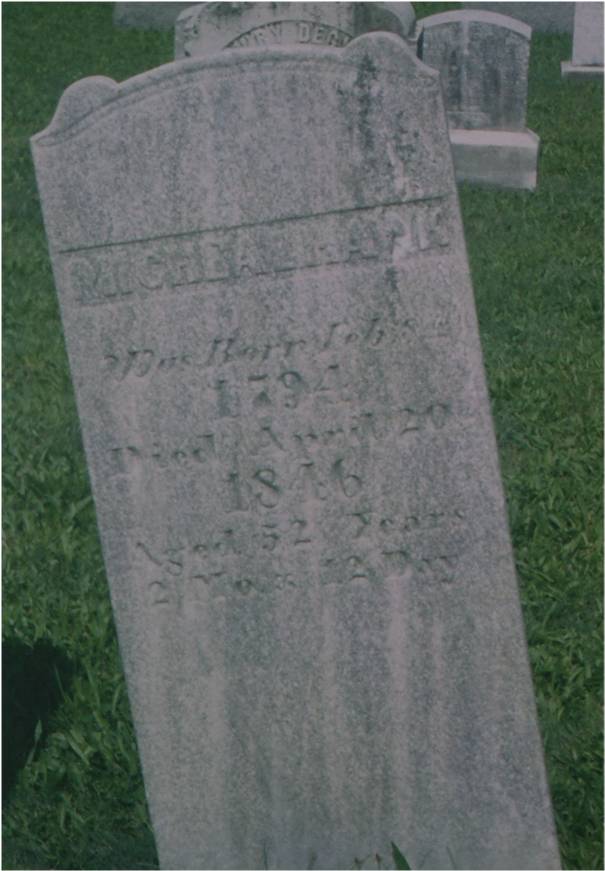
gravestone reads: Michael Hawk – was born Feb 8th 1794 – died April 20 1846 – Aged 52 years 2 months 12 day
making a quilt
One of the things I love to do as winter approaches is to make a quilt. My quilts are not the beautiful, hand-stitched, carefully patterned quilts I admire. My quilts are usually patchwork and often machine sewed, although some I quilt by hand, with long, uneven stitches.

a few of the quilts I’ve made, mostly lap-sized quilts for winter evenings
This fall, I am working on a quilt for our bed, in the theme of ferns and poppies. I have used an old blanket covered in blue roses as the batting, given to me years ago by my uncle. It has a large tea stain in one corner and is not as warm as our modern bedding, but I would like to keep it for sentimental reasons, so I am using it as the base for my new quilt.
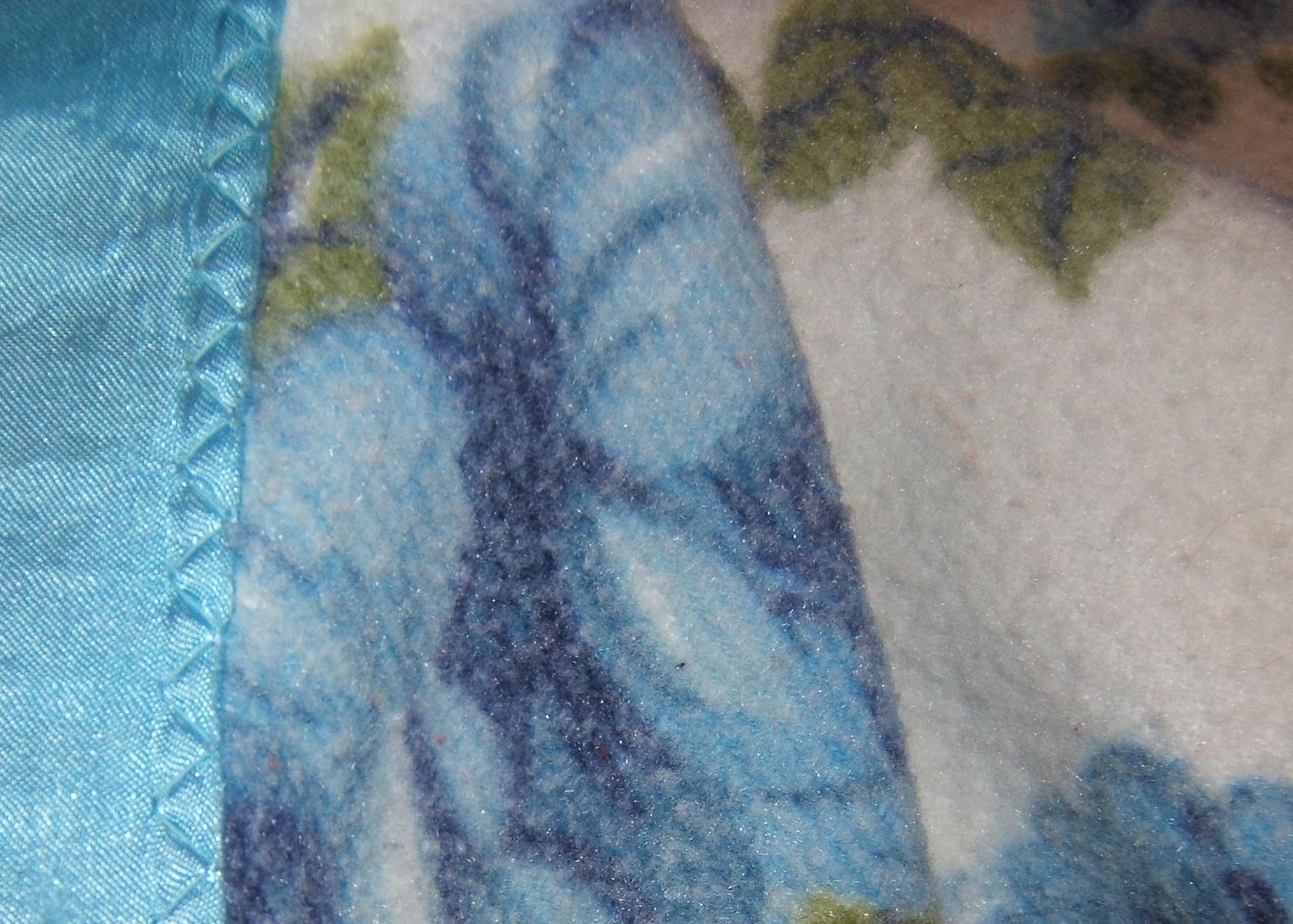
For the fabric, I am using various bits and pieces I have collected over the years. I can’t resist fabrics and when I visit the store, I often leave with a half meter of a fabric I love, even if I have no planned project.
I am planning to make the quilt entirely by machine, following a method my Dad told me his mother used. She would take an old blanket and sew the patches on by hand, one at a time, covering the adjacent seams as she went.
First, I chose a width for the patches and cut a piece of sturdy cardboard for the template. I marked the fabric with bands in the width of the template, to use as an inked guideline to keep my fabrics straight…

Then I cut my fabrics the width of the template and arrange them, right sides together and pin them to the blanket, making sure the edges of my fabric follow the inked guidelines…

Then I sew a seam…

When each piece is sewn, I open it to the right side to reveal a neatly attached patch…

Once I have worked my way around the blanket, attaching one row of patches, I will add another row, leaving one inked guideline row empty.

After I have finished the rows of patches, I will add long strips of fabric to fill in the empty rows and to cover the rough edges left by the first rows of patches.

I will have to pin and top-sew the other edge of this strip of fabric, to cover all the raw edges.
Then, when all the edges are hidden or turned in, I will top-quilt all of the patches with the machine.
The last step will be to select a fabric to cover the other side of the blanket. I think I will attach this layer with ties, another old-fashioned method of making a quilt.
I’ll show you the quilt when it is completed, probably next year!!!
Do you make quilts and what is your method???
~
~
Copyright Jane Tims 2012
Happy Thanksgiving!!!!

This Thanksgiving, I am grateful for:
water, clear fresh water (we just got our well back after 7 days!)…

my family and the chance to share Thanksgiving dinner with at least some of them…

the glow surrounding our house this time of year (from all the maple leaves, changing color)…
the wind that blows on the hills above the lake…
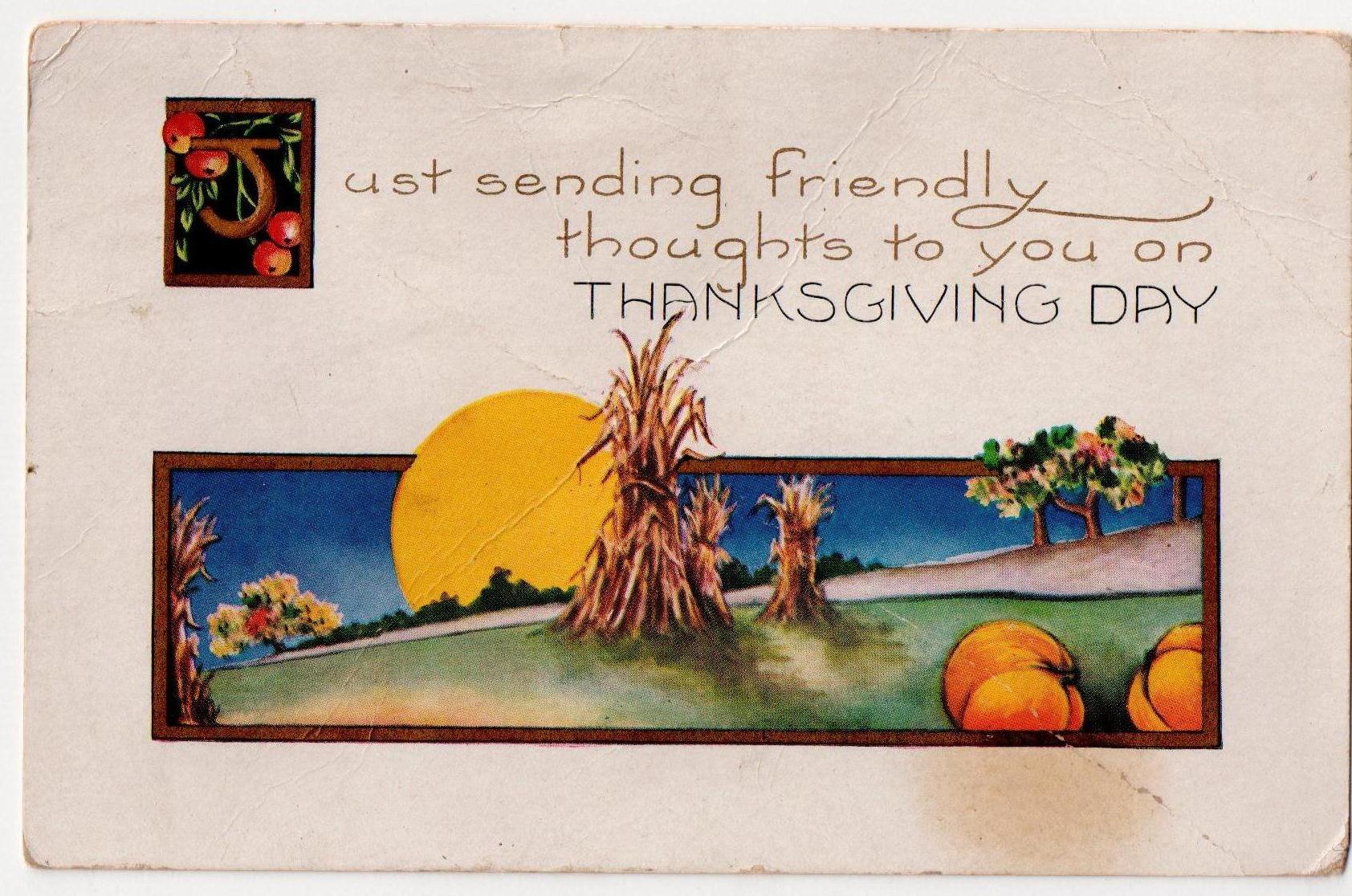
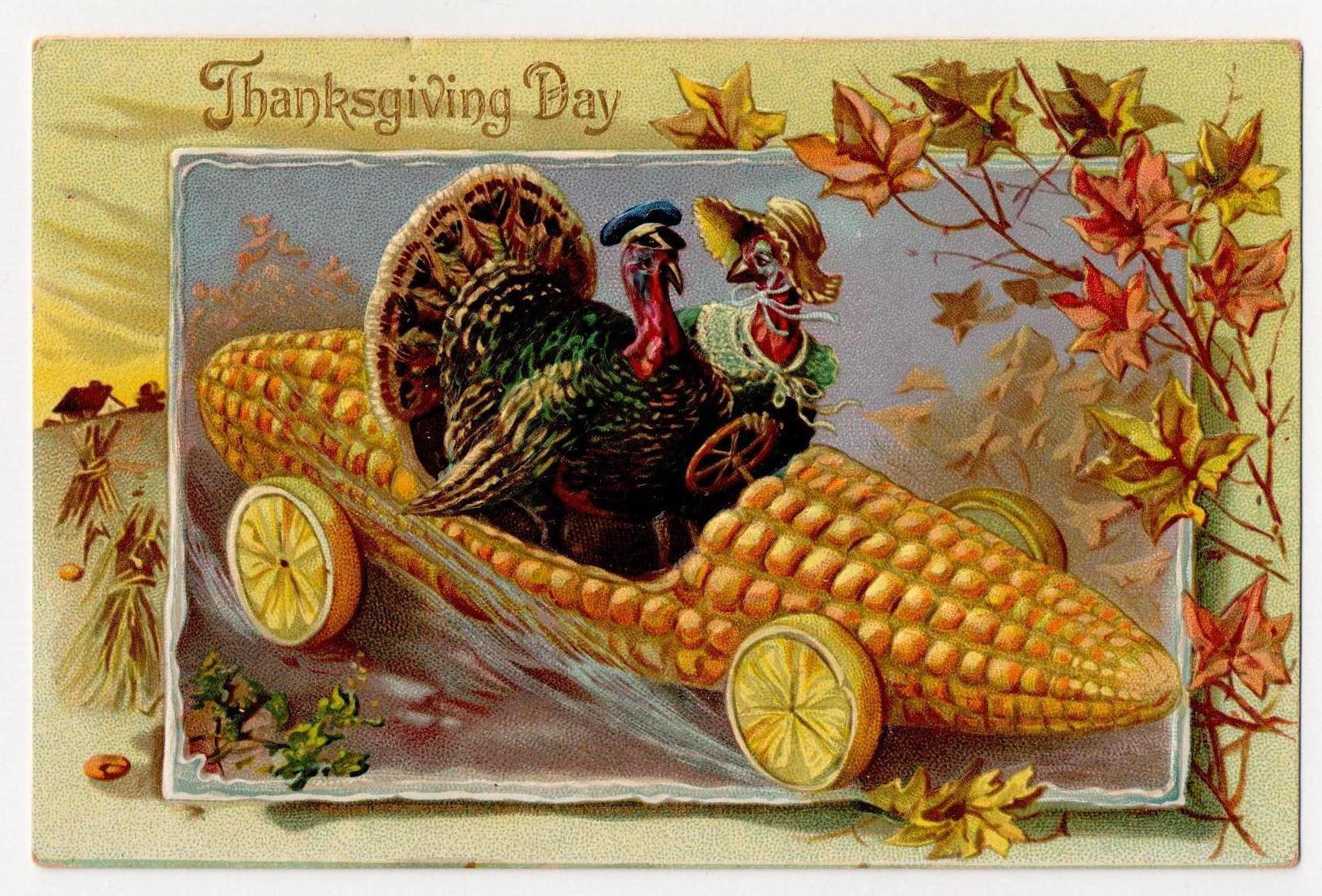
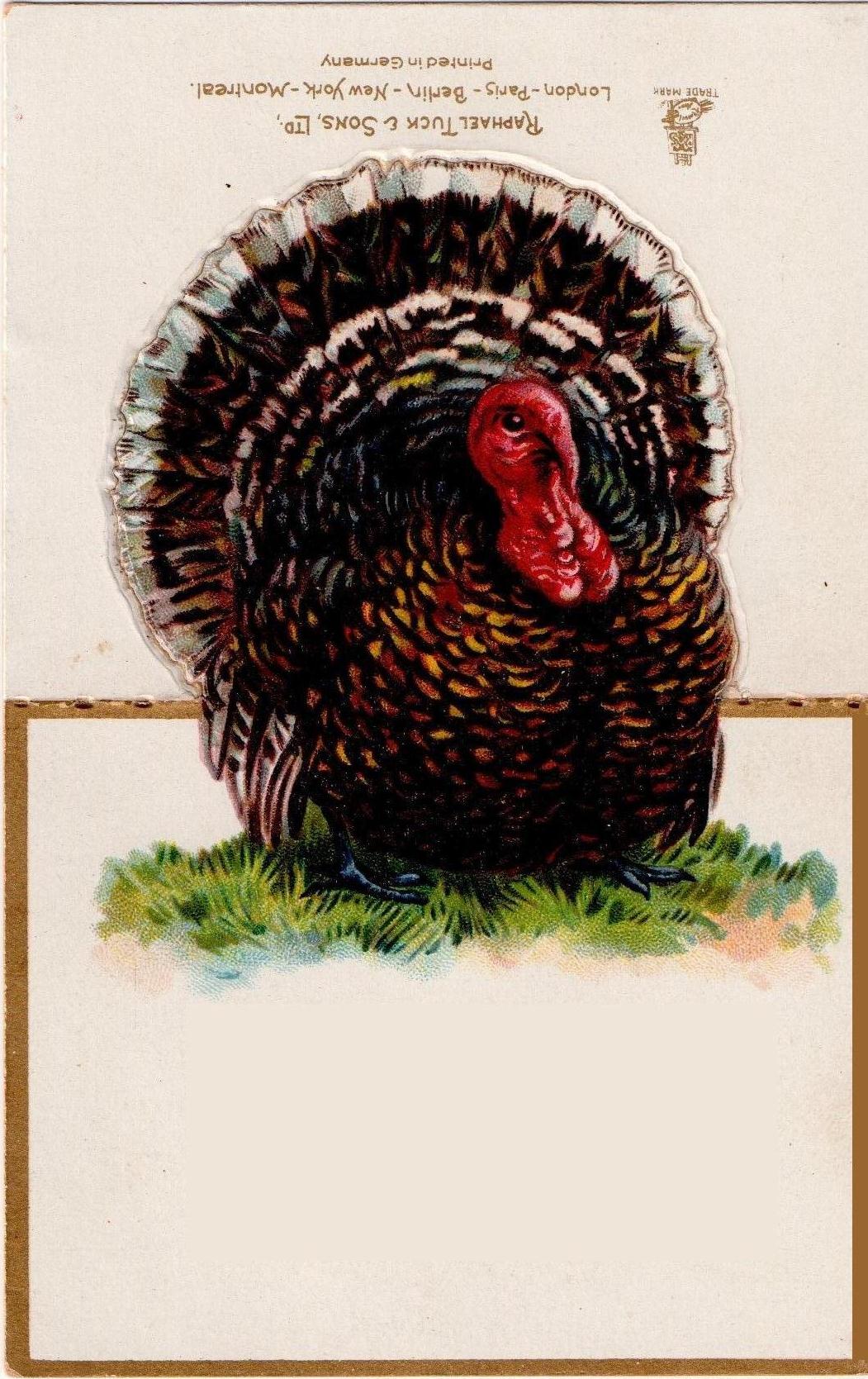
and my collection of Thanksgiving post cards….

Happy Thanksgiving Day to everyone!!!
Copyright Jane Tims 2012




 nichepoetryandprose