Posts Tagged ‘history’
restoring an old church 5-9
~
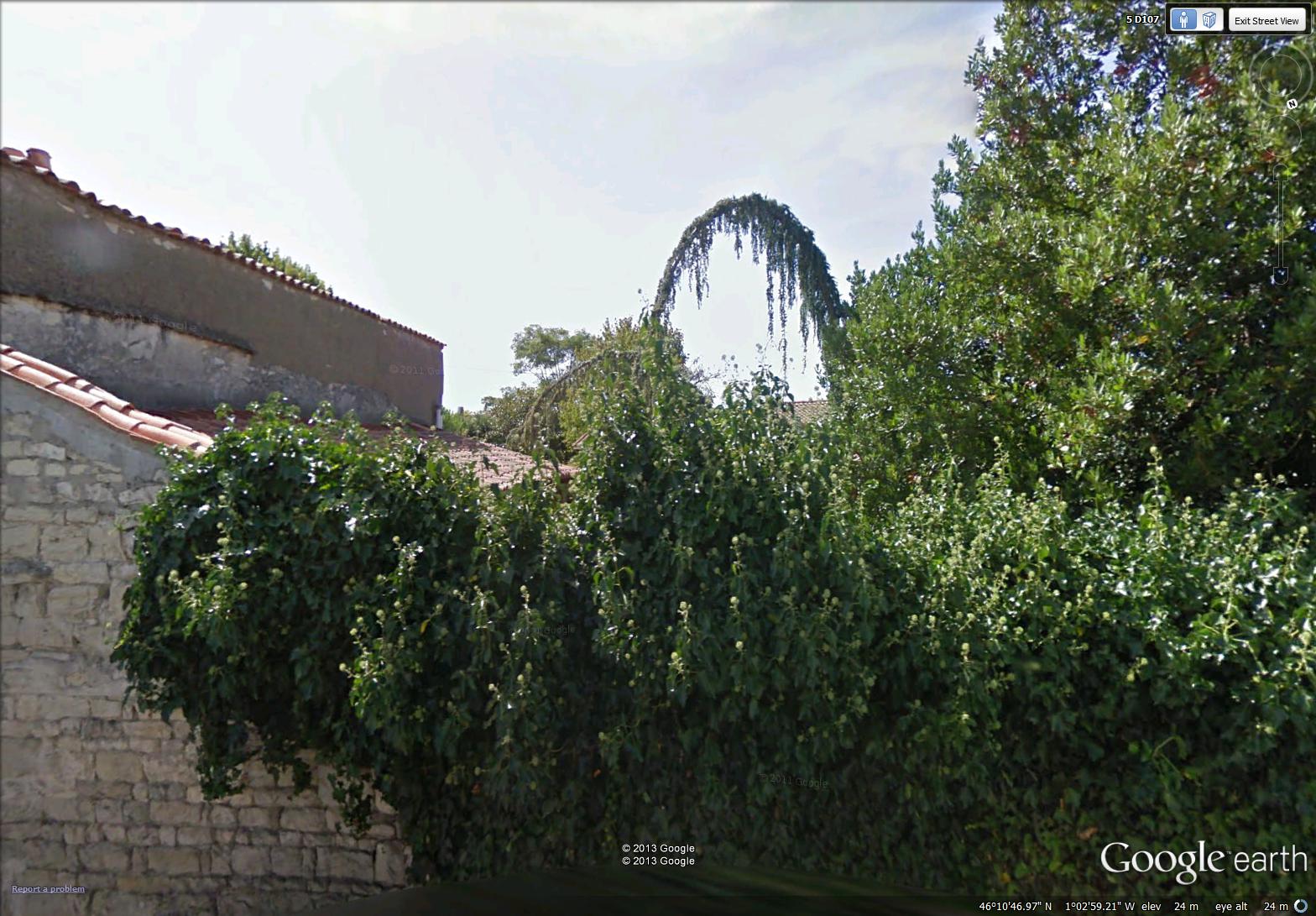
vine-covered arch in enclosed garden in Belle Croix (image from Street View)
~

~

map showing distance travelled (map from Google Maps)
~
On May 7, I took my virtual bike through the area of Dompierre-sur-Mer and saw so many interesting sights. The gardens were lush and green. Even the traffic circles were small oases of interesting plants …
~
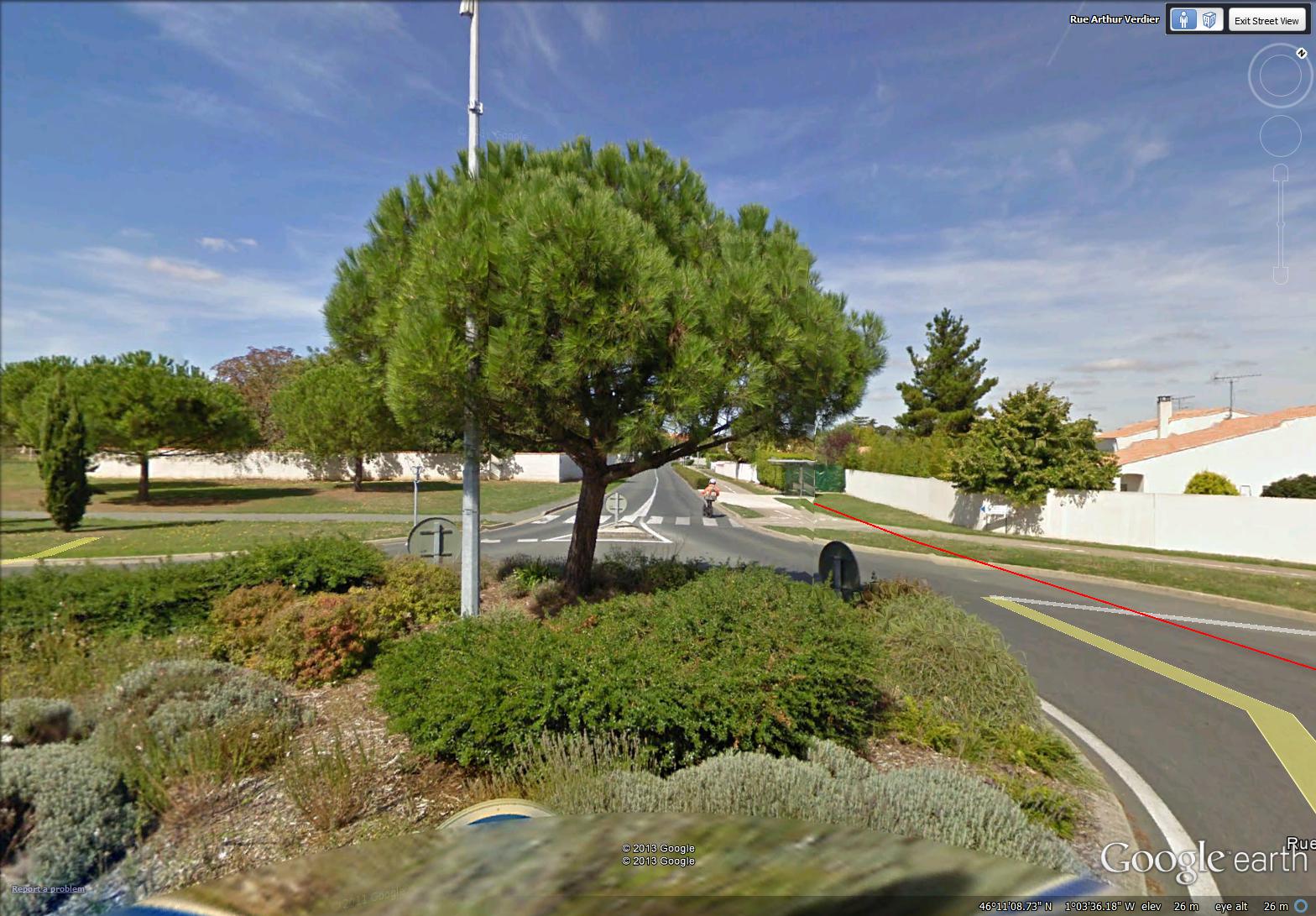
planted traffic circle in Dompierre-sur-Mer (image from Street View)
~
In the town, I was very interested to see an old church, the Prieuré Saint-Pierre, in the process of restoration. Thanks to the magic of Street View, I could see a photo of ‘before’ …
~
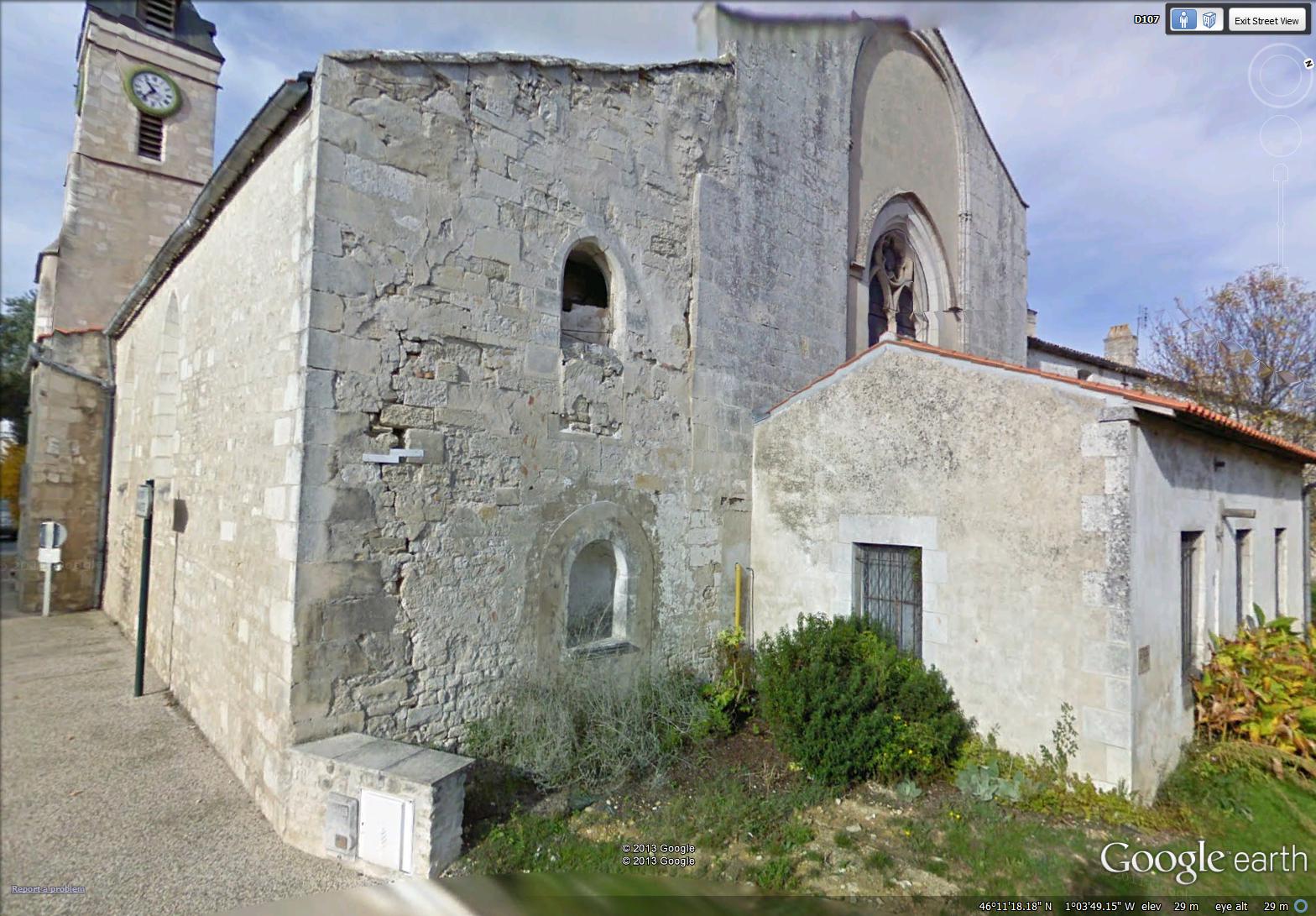
Prieuré Saint-Pierre before restoration in October of 2009 (image from Street View)
~
and ‘during’ …
~

Prieuré Saint-Pierre during restoration in September 2010 – the small building at the rear of the church has been demolished and the restoration of the back wall is underway (image from Street View)
~
The Prieuré Saint-Pierre in Dompierre-sur-Mer was founded in the 11th century by the monks of the Abbey of Maillezais. I ‘visited’ this abbey in the post for April 24, https://nichepoetryandprose.wordpress.com/2013/04/24/a-side-trip-to-an-old-abbey/ .
~
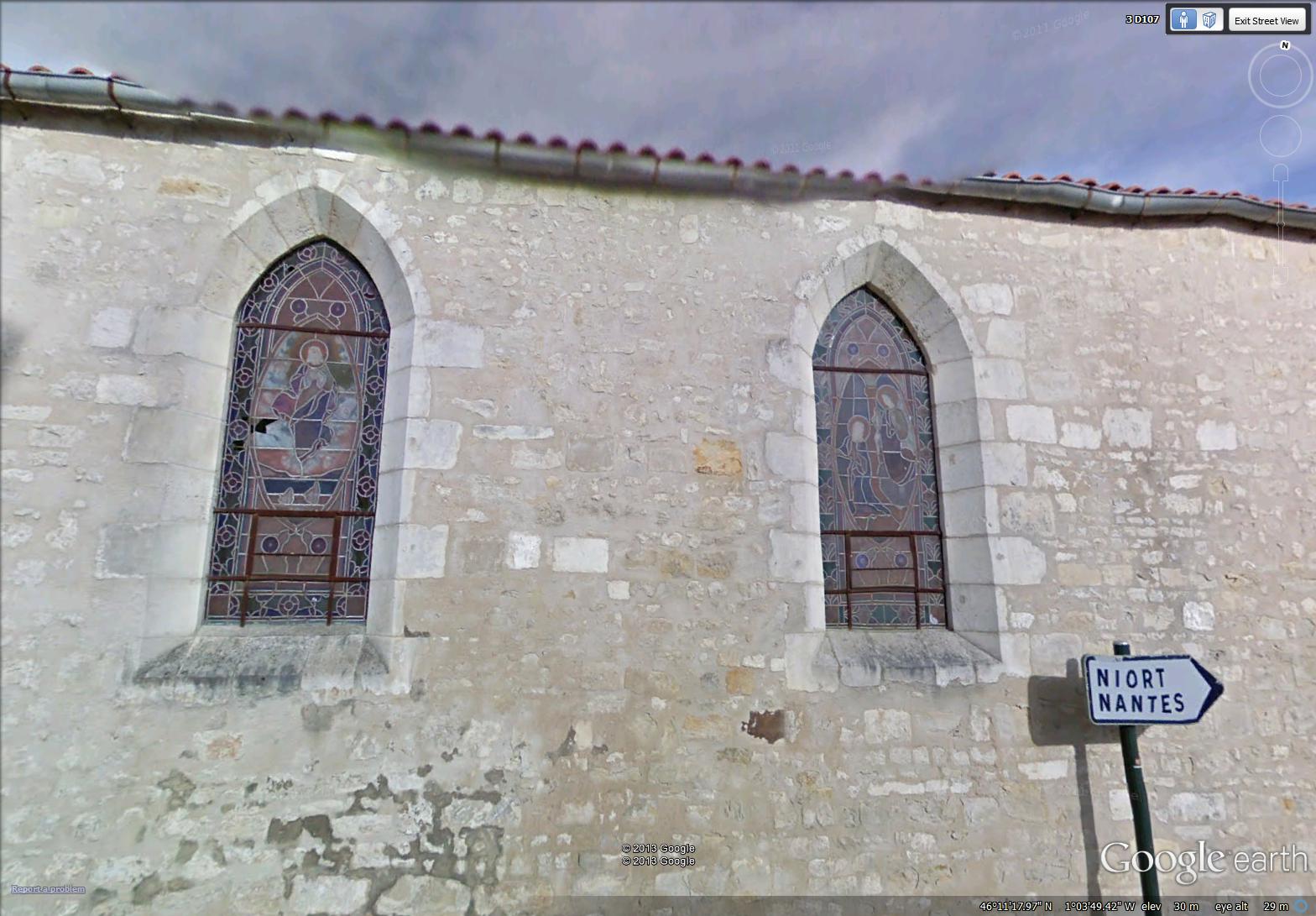
I could see the outside of some of the stained glass windows …
~
~
and the Bell Tower. From my reading, I learned a spiral staircase provides access to this tower …
~
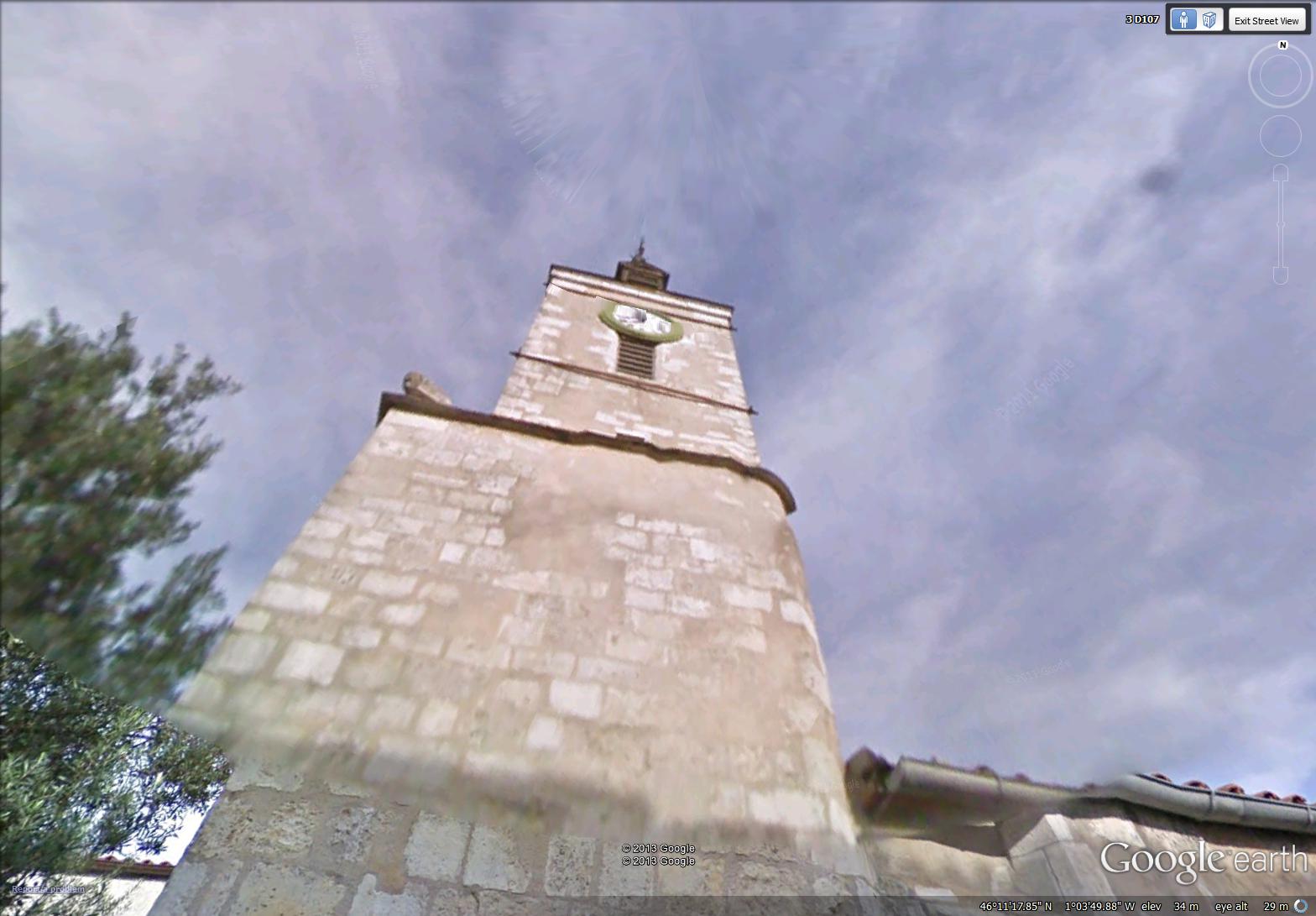
~
As I passed the church, I looked back to see a worker restoring the entryway of the church …
~

~
A description of this entry is found in a short account of the church’s architecture and its long history of collapse and restoration at http://en.patrimoine-de-france.com/charente-maritime/dompierre-sur-mer/prieure-saint-pierre-2.php
~
The account reads, in part: ‘The western façade has a triangular pediment surmounted by a Latin cross. The entrance gate is a double leaf door surmounted by a tympanum in carpentry, highlighted by an arcade basket. A molded headband short above the door. Above is drilled an oculus …’
~
You can see each of these features in the image above. A ‘pediment’ is an element of classical architecture, a triangular gable. A ‘tympanum’ is the decorated element over a door, above the lintel. An ‘oculus’ is a central opening in a wall, allowing light to enter the building.
~
Best View: the outside of a stained glass window in the Prieuré Saint-Pierre. The scene in the window depicts the Ascension of Jesus …
~

~
Copyright Jane Tims 20131
a ford in the river 5-3
~

houses in Le Gué d’Alleré (image from Street View)
~

~
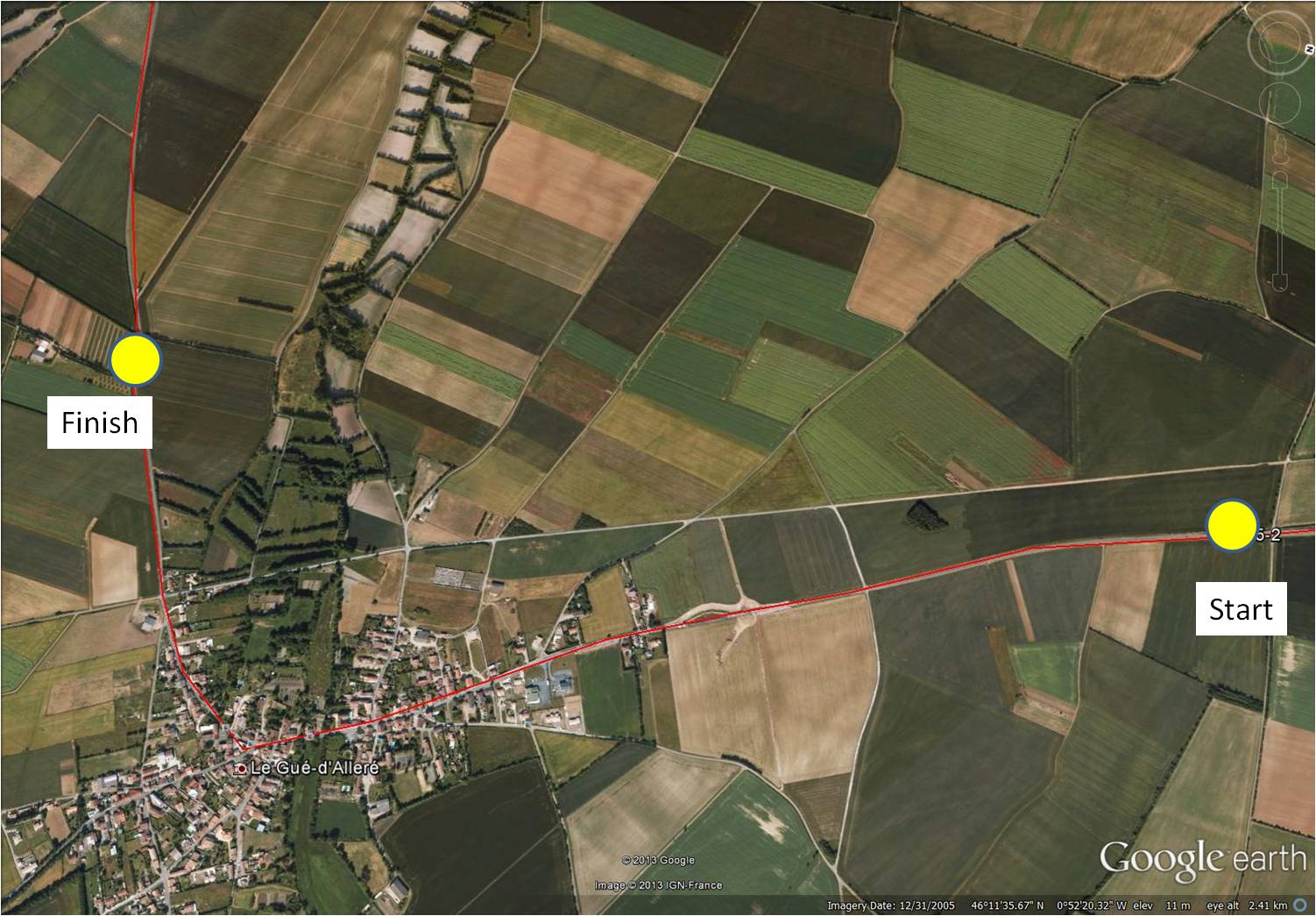
map showing distance travelled (map from Google Maps)
~
April 18’s virtual bike ride took me through the town of Le Gué d’Alleré. A ‘gué’ is a place on a river where the water is shallow enough to allow easy passage, in other words, a ford.
The river in Le Gué d’Alleré was so shallow, it had no water at all. I know this river sometimes holds water since there is an image embedded in Street View showing the river full of water!
~
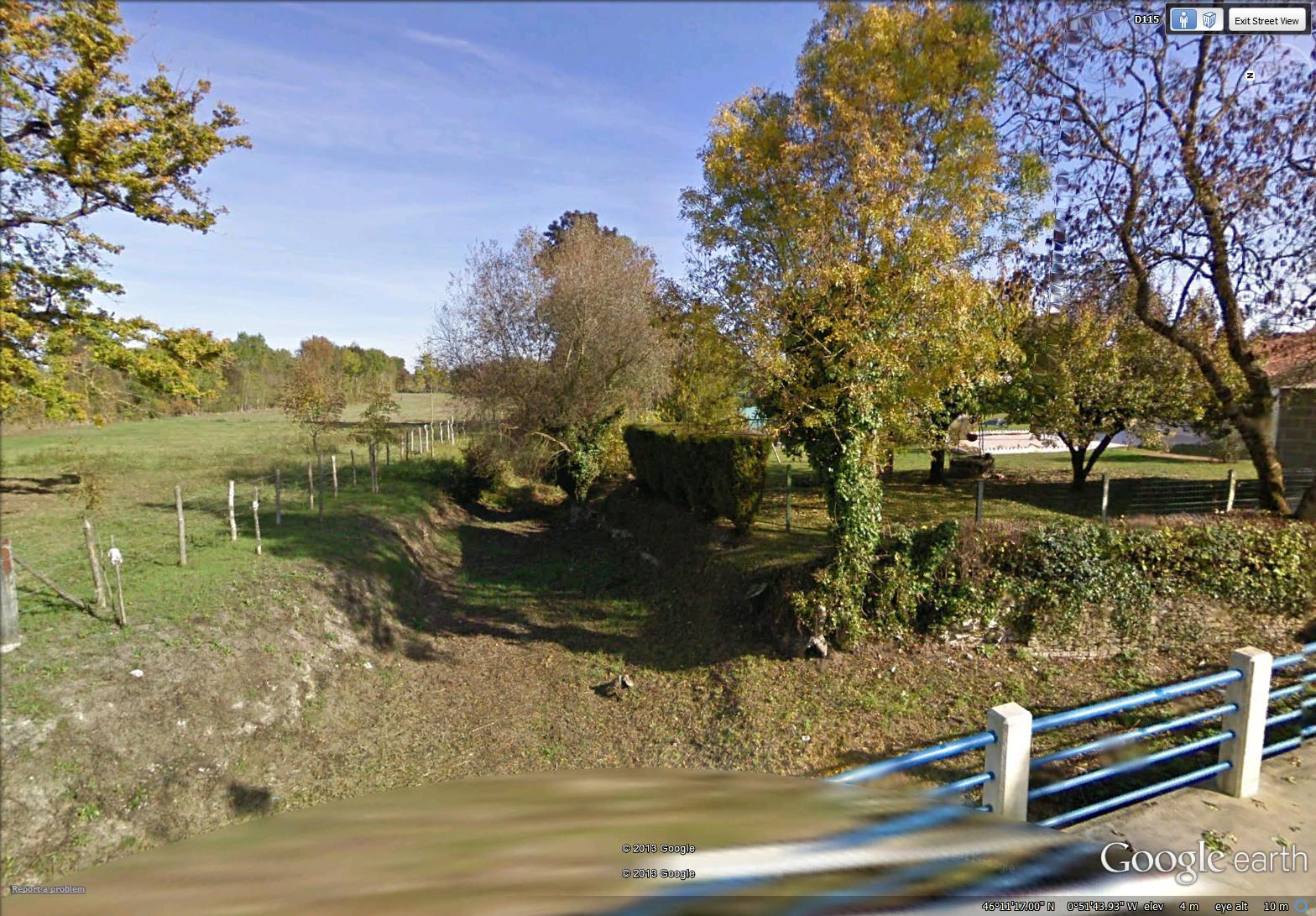
river in Le Gué d’Alleré (image from Street View)
~
When I was young, we often visited my grandfather’s farm in Nova Scotia. One of the places I remember well was the ford across the stream at the end of his road. The water was shallow at this spot and people from the community would bring their cars to the ford to wash them. It would not have been good for the environment. Soap suds and leaking oil and gasoline would pollute the downstream water, probably harming the aquatic life, including the fish people liked to catch.
~
~
ford
~
at the intersection
of the lane and the County Road,
a ford crossed the stream–
flat stones and riffles
~
in the shade of serviceberry and maple
we watched as distant cousins
washed their cars,
all suds and Daisies
~
then took clean cars
further down the road
(further down the stream),
for an hour of fishing
~
~
~
Best View: an image from my memory …
~

~
Copyright Jane Tims 2013
sculpting land and trees
~
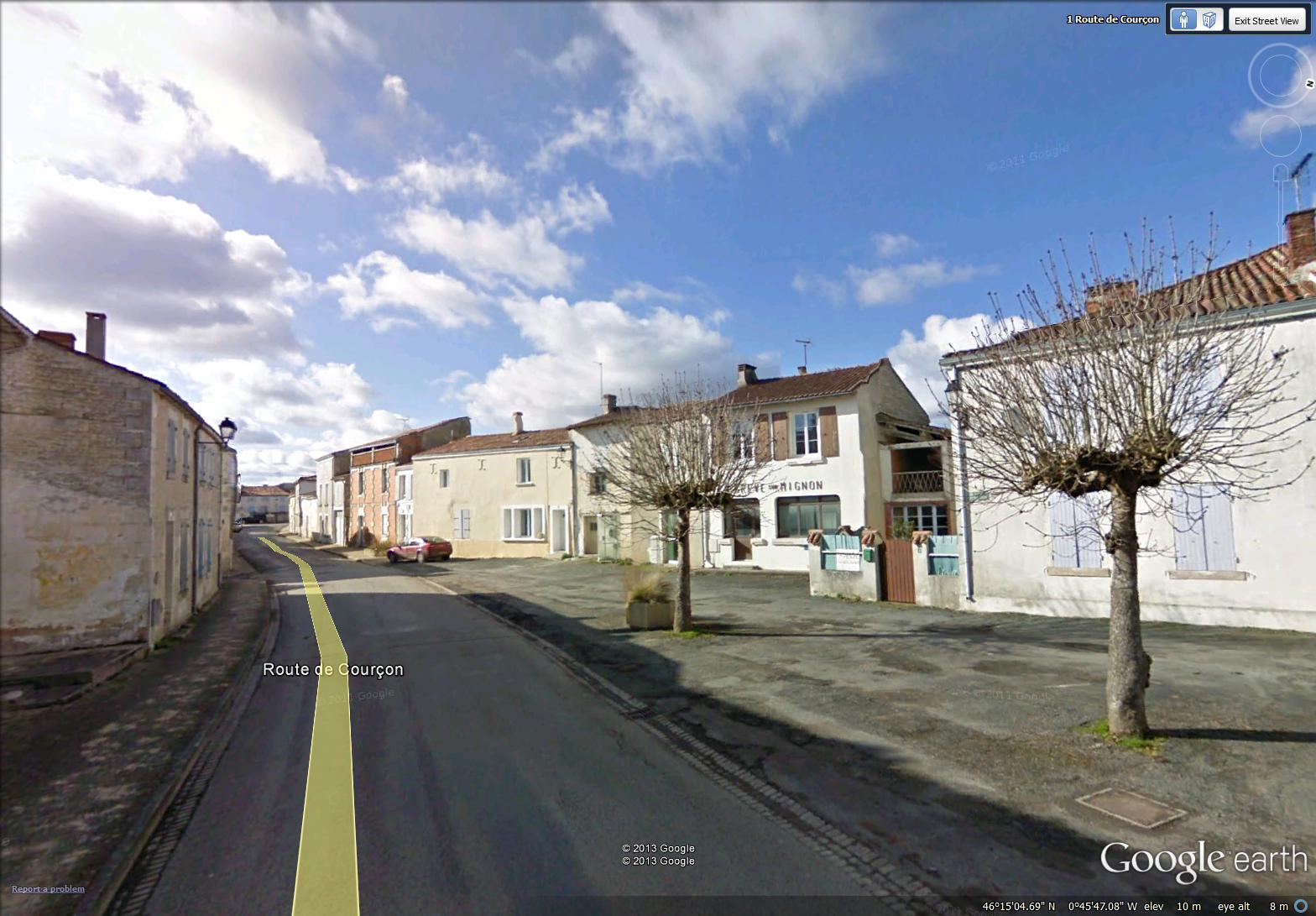
sculptured trees in La Grève-sur-Mignon (image from Street View)
~

~

map showing distance travelled (map from Google Earth)
~
During my virtual travels in France, I have noticed the way nature has been modified to suit people. We do this in North America too, pruning trees to take elaborate shapes, pulling weeds and planting domesticated plants, modifying the edges of lakes to be more ‘beach-like’, straightening watercourses, and so on.
~
In France, I have particularly noticed how canal-like the watercourses are in the area of La Venise Verte. This is a result of the area’s history. When the marshes of the Marais Poitevin were settled, people needed dry land to farm and live. In the tenth century, there was a huge effort to dig canals and reclaim the land. The result is the canal system I am seeing on my virtual bike ride. The waterways are straight and their banks are steep. Canals intersect at right angles …
~

intersecting waterways (image from Street View)
~
Other elements of the natural landscape are also shaped by human hands. For example, older trees are pruned to take on unnatural shapes. This may be in order to rejuvenate older trees by encouraging new growth. It may also be for aesthetics …
~
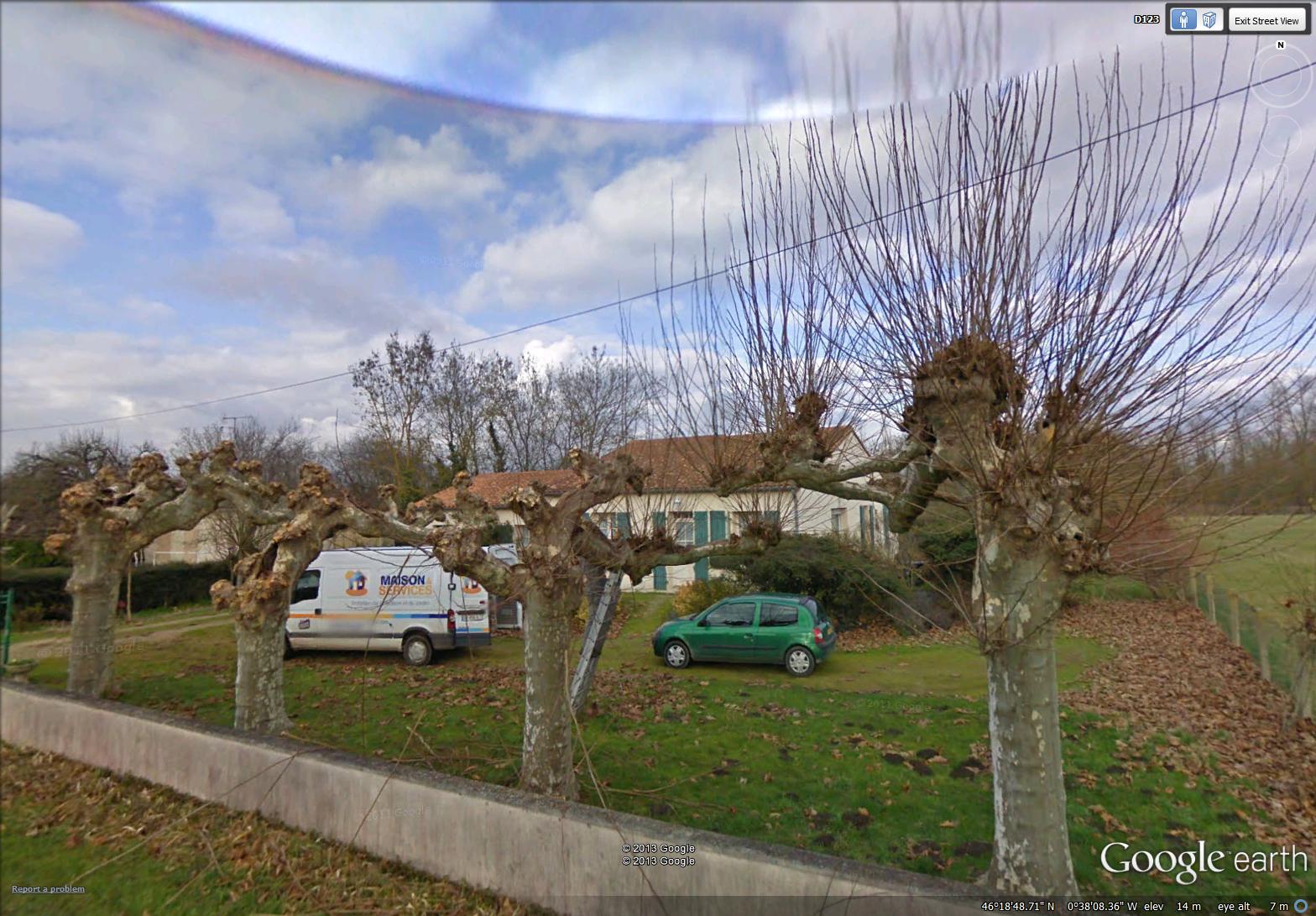
some weirdly pruned trees near Balanger
~
A man was out pruning these trees as I ‘drove’ by …
~
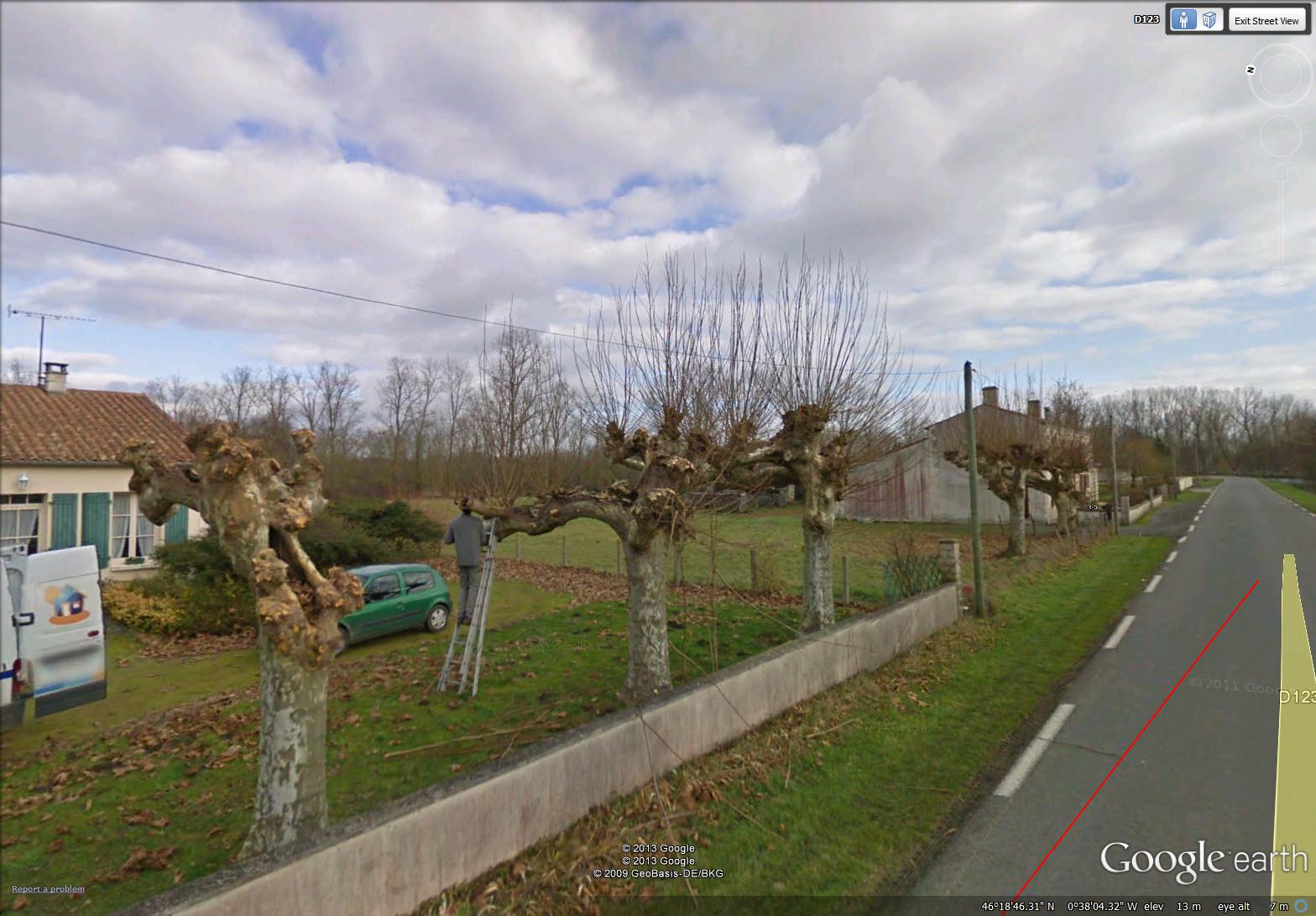
man working on trees near Balanger – he has removed all the sucker branches on the tree nearest the camera (image from Street View)
~
I saw some of the most bizarre of these pruned trees in Niort …
~

weird trees in Niort (image from Street View)
~
I have no idea which tree species these are. they could be willow, or even olive …
~
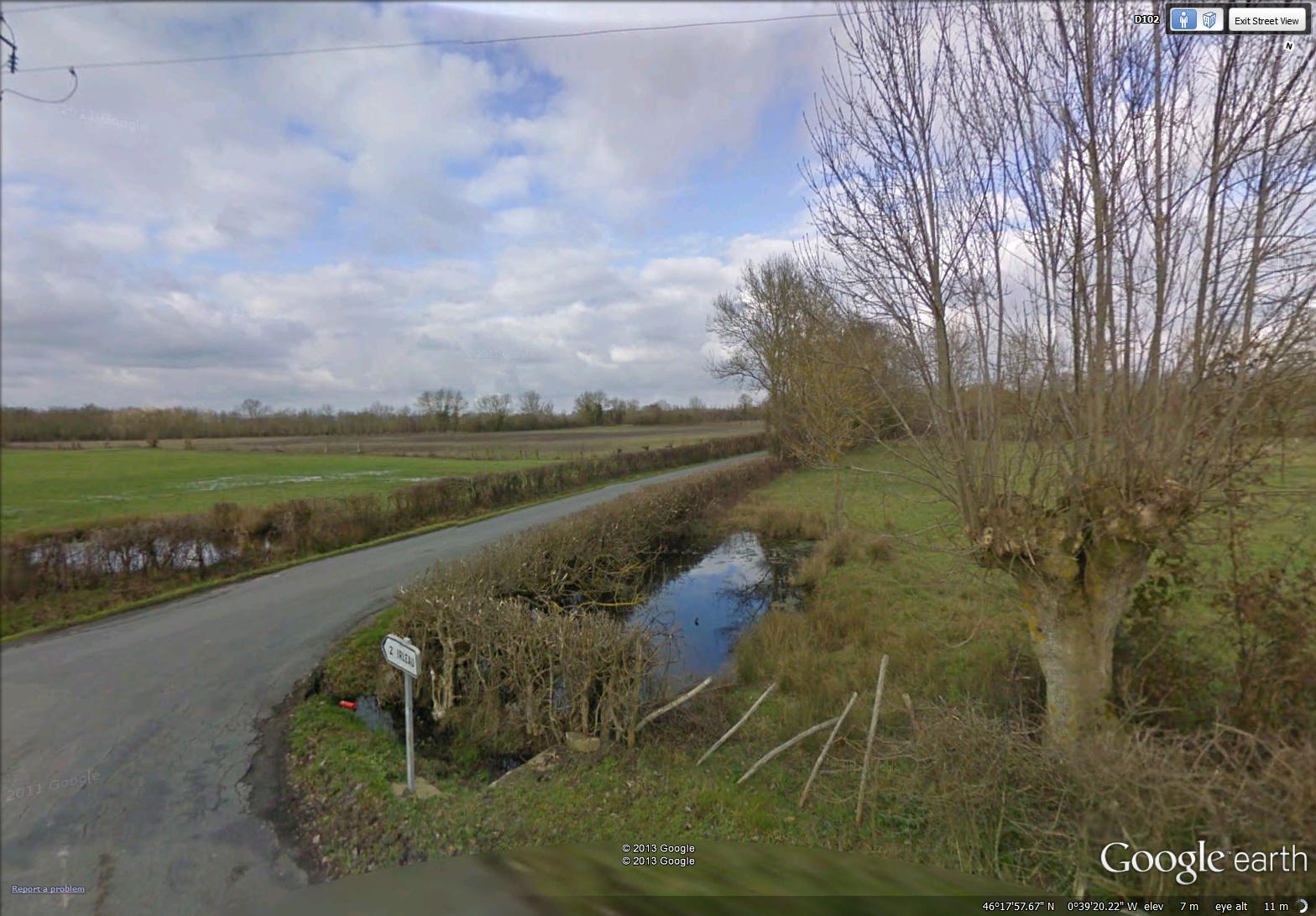
severely pruned tree in rural area near Irleau
~
Do you know which species of tree is being pruned?
~
Best View: pruned trees near La Grève-Sur-Mignon …
~

~
Copyright Jane Tims 2013
fields of green and marble statues

fields of green on the road to Saint-Hilaire-la-Palud (image from Street View)
~

~
~
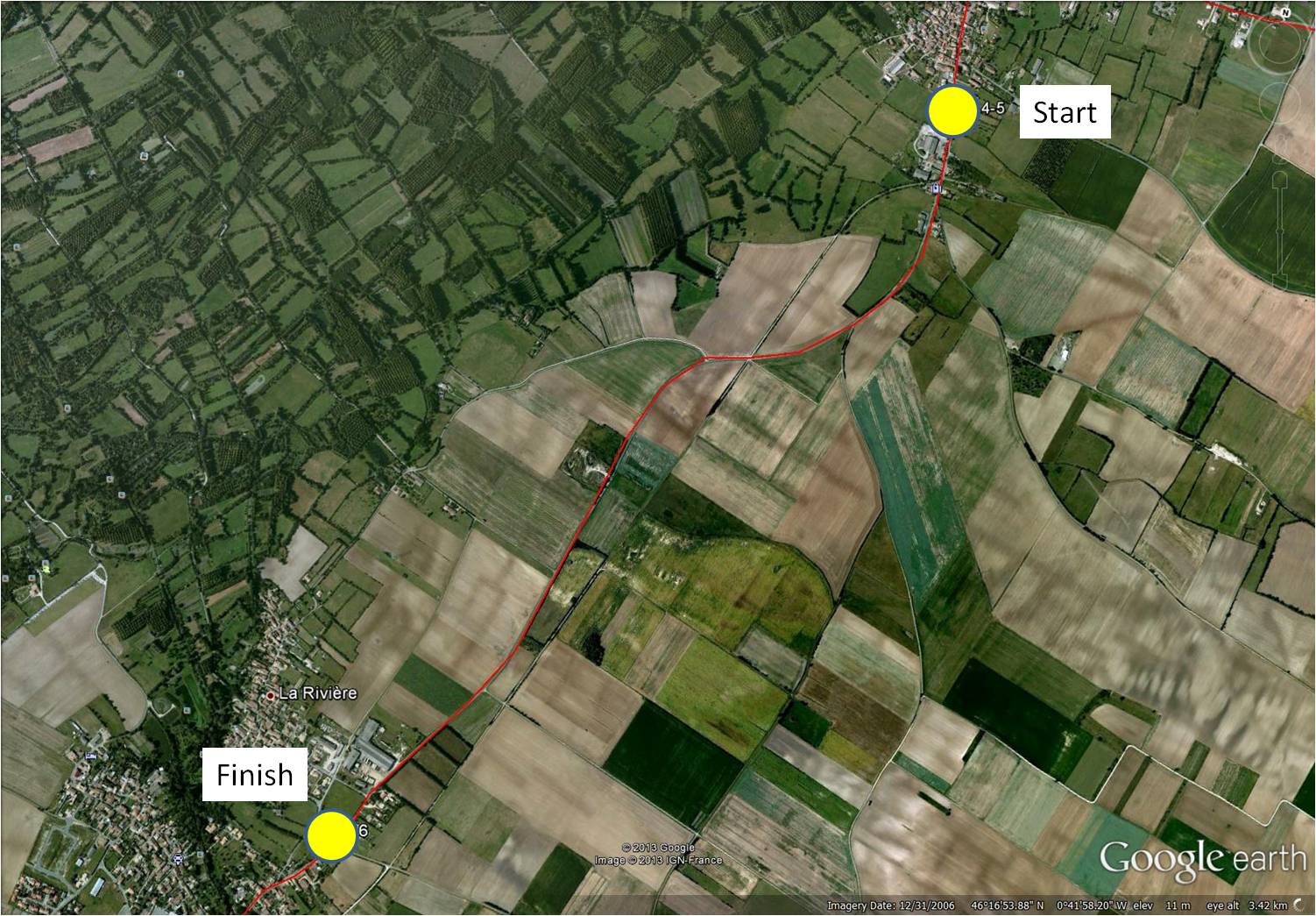
On April 1, I biked along the road to La Rivière and Saint-Hilaire-la-Palud. Lots of green fields and flat land …
~

~
At an intersection, I saw a shrine, indicating the strong Catholic roots of the area. I have seen these shrines at several locations in central France on my virtual travels. Sometimes the shrine is a crucifix …
~

shrine on road to Saint-Hilaire-la-Palud (image from Street View)
~
sometimes a statue of Christ …
~

a statue of Christ at corner near La Roche (image from Street View)
~
Sometimes the shrine shows a Saint. In Maillezais is a statue of Mary holding the body of her son Jesus in her lap, after the Crucifixion. It is similar to the famous 15th century statue of the Pietà by Michelangelo…
~

statue in Maillezais of Mary holding Jesus in her lap – the image is not easy to see, but Google ‘Pieta’ to see the beautiful statue by Michelangelo (image from Street View)
~
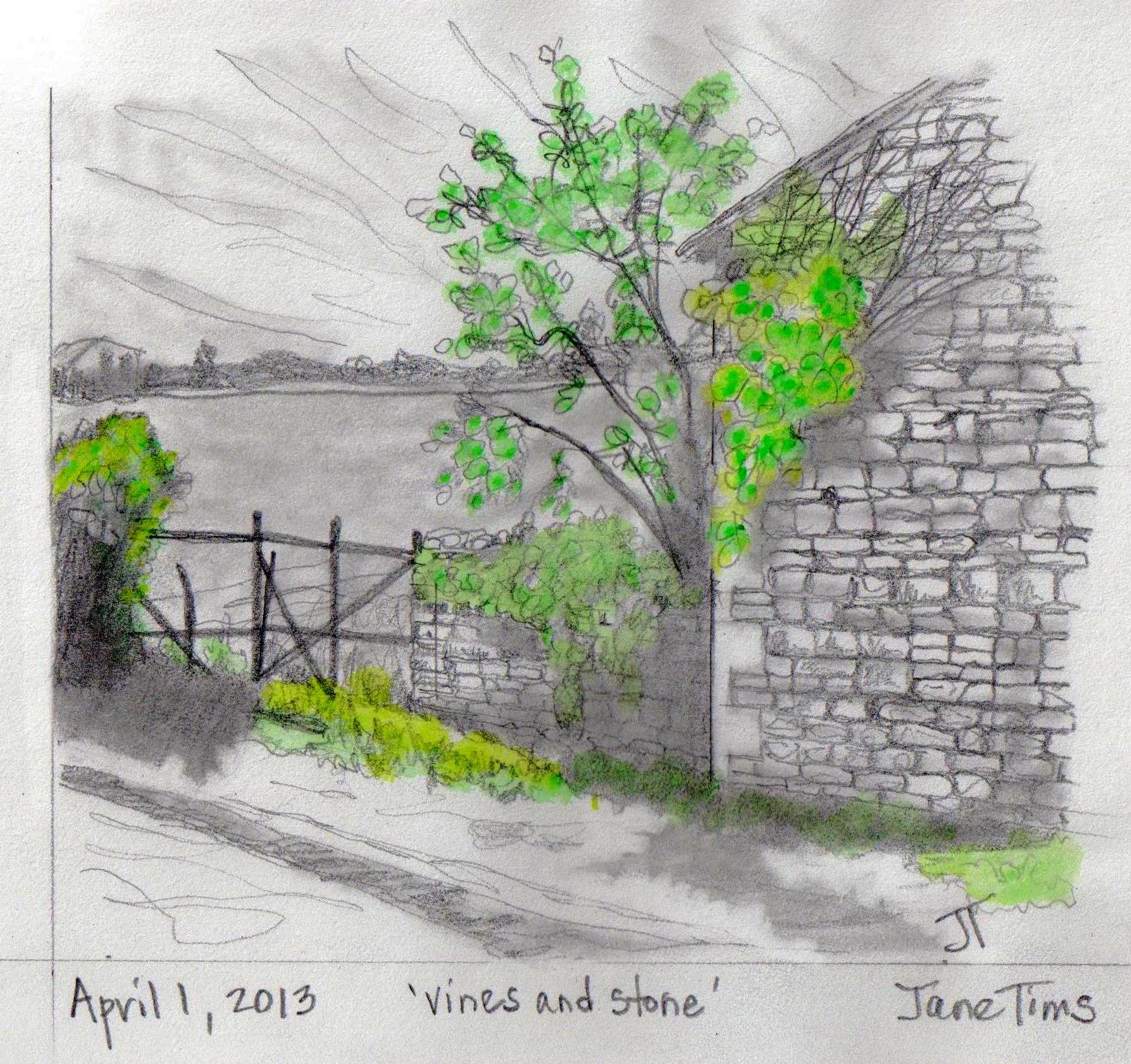
Best View: entry to a field by a vine-covered building…
~
~
Copyright Jane Tims 2013
a side trip to an old abbey
~
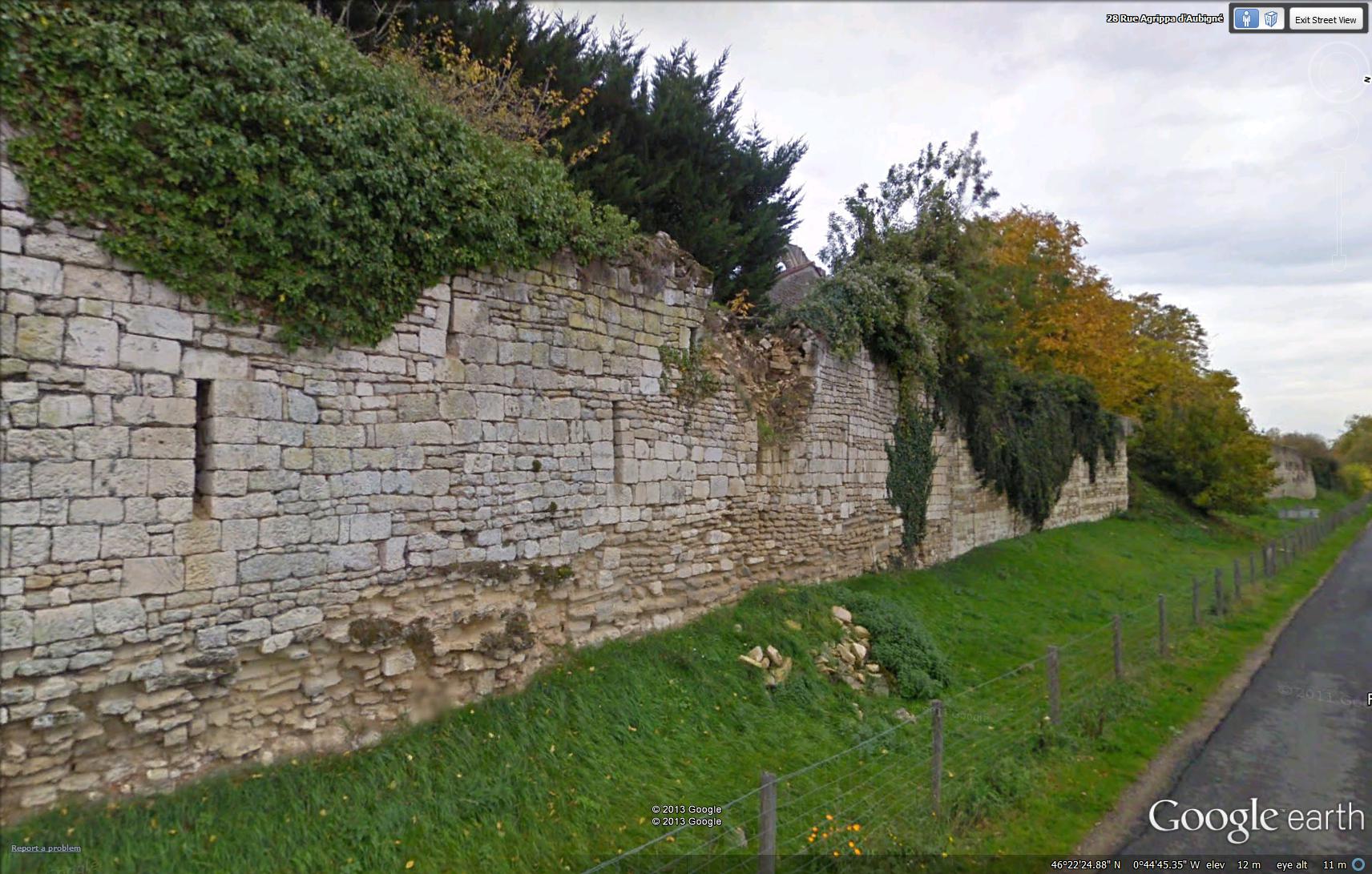
wall around abbey in Maillezais (image from Street View)
~

~

map showing distance travelled (map from Google Maps)
~
On March 29, I completed my side trip to see the Abbaye St Pierre in Maillezais. Maillezais is a charming town with the narrow streets I am growing used to…
~
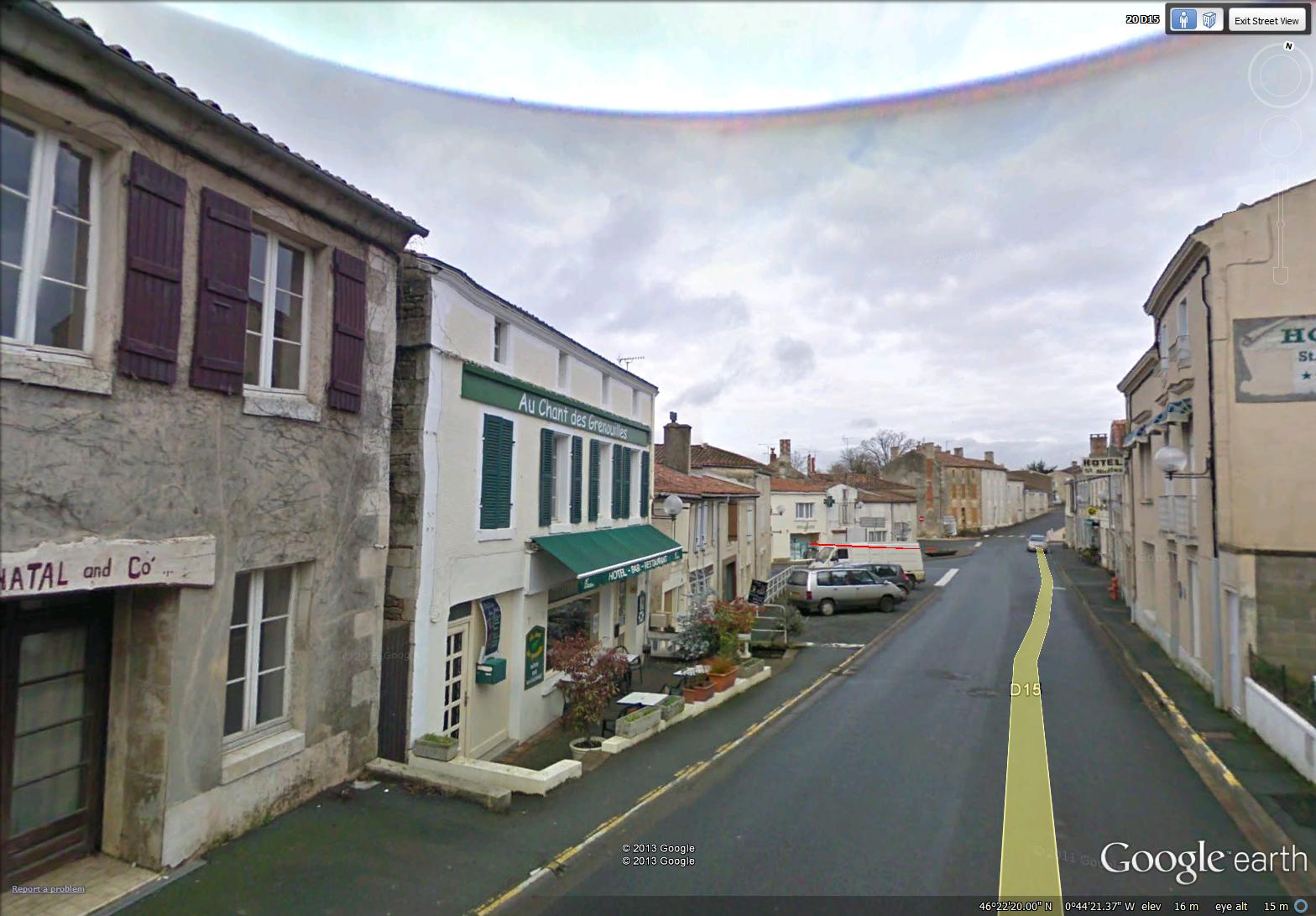
street in Grande Bernegoue (image from Street View)
~
Not much greenery in this town – this vine looks like it is hanging on by a thread…
~
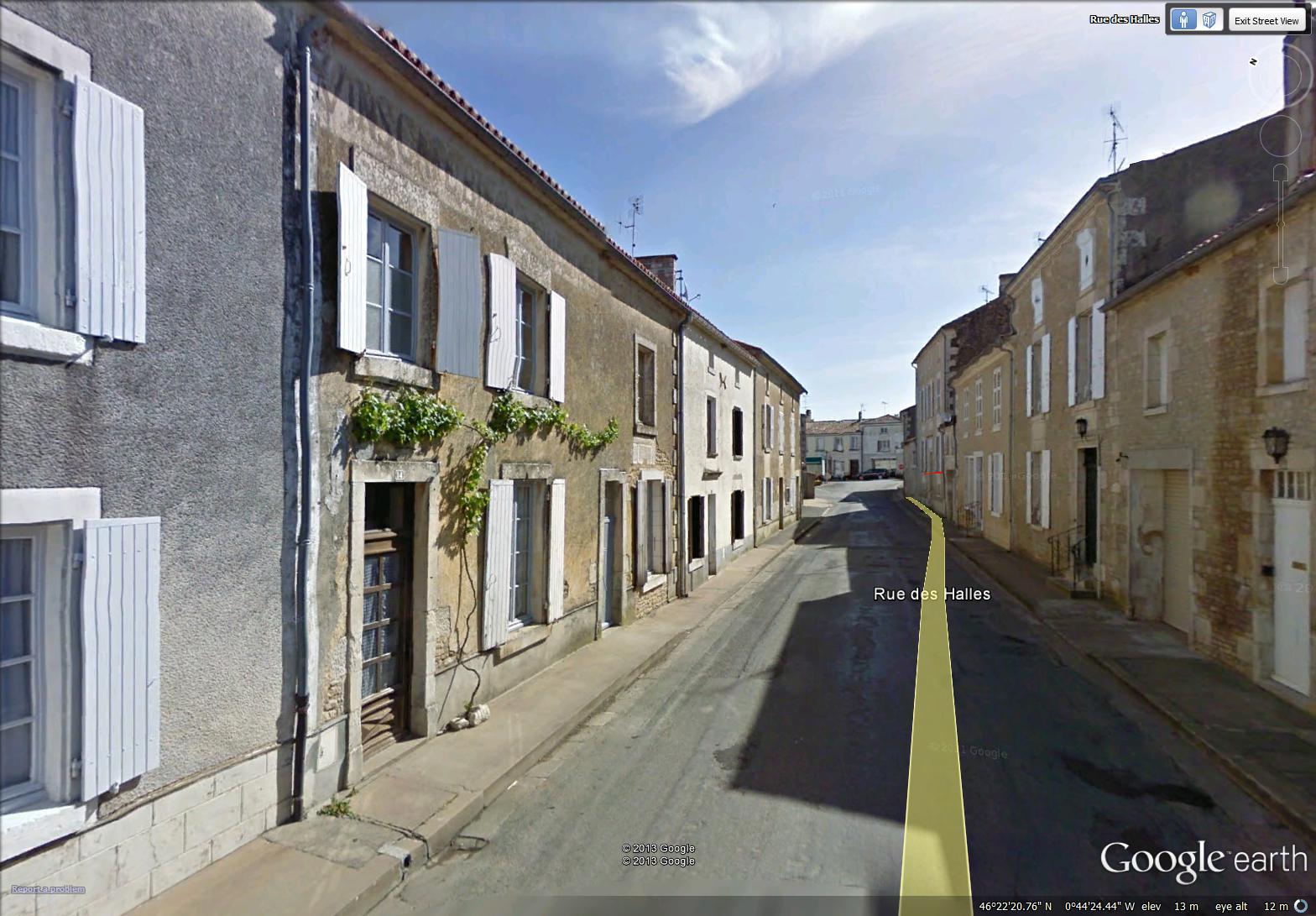
vine struggling to survive (image from Street View)
~
The Abbey St Pierre was certainly worth the virtual side trip. It was built in 989 AD on an island, a rocky outcrop, in the Marais Poitevin (the Poitevin Marsh). The Benedictine Abbey and Cathedral were destroyed in 1562 during fighting between French Catholics and Protestants.
~
At the entryway to the Abbey grounds is an old building, one of a few still standing on the site…
~
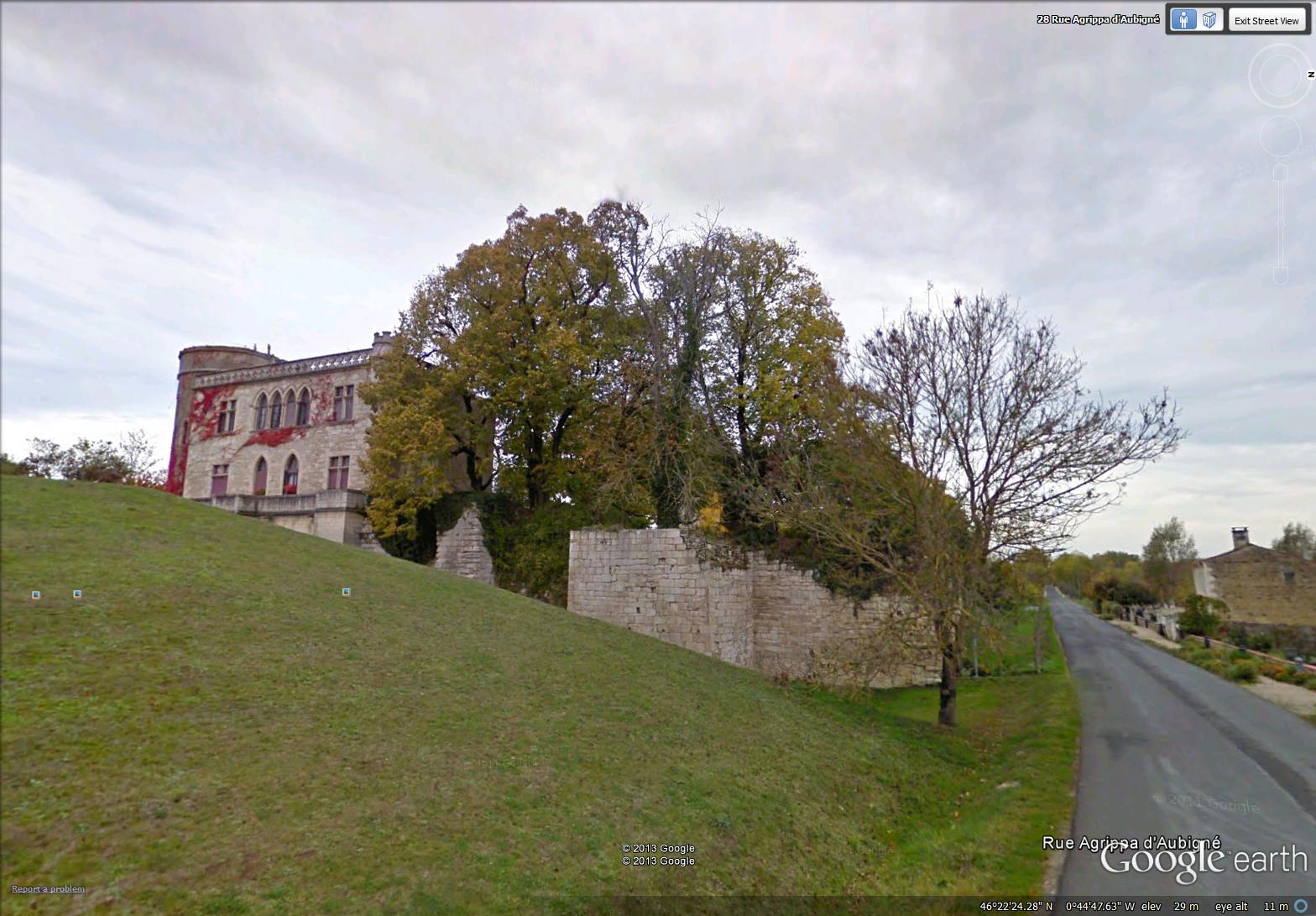
view of entryway to Abbey (image from Street View)
~
The aerial view of the grounds shows the extent of the Abbey …
~
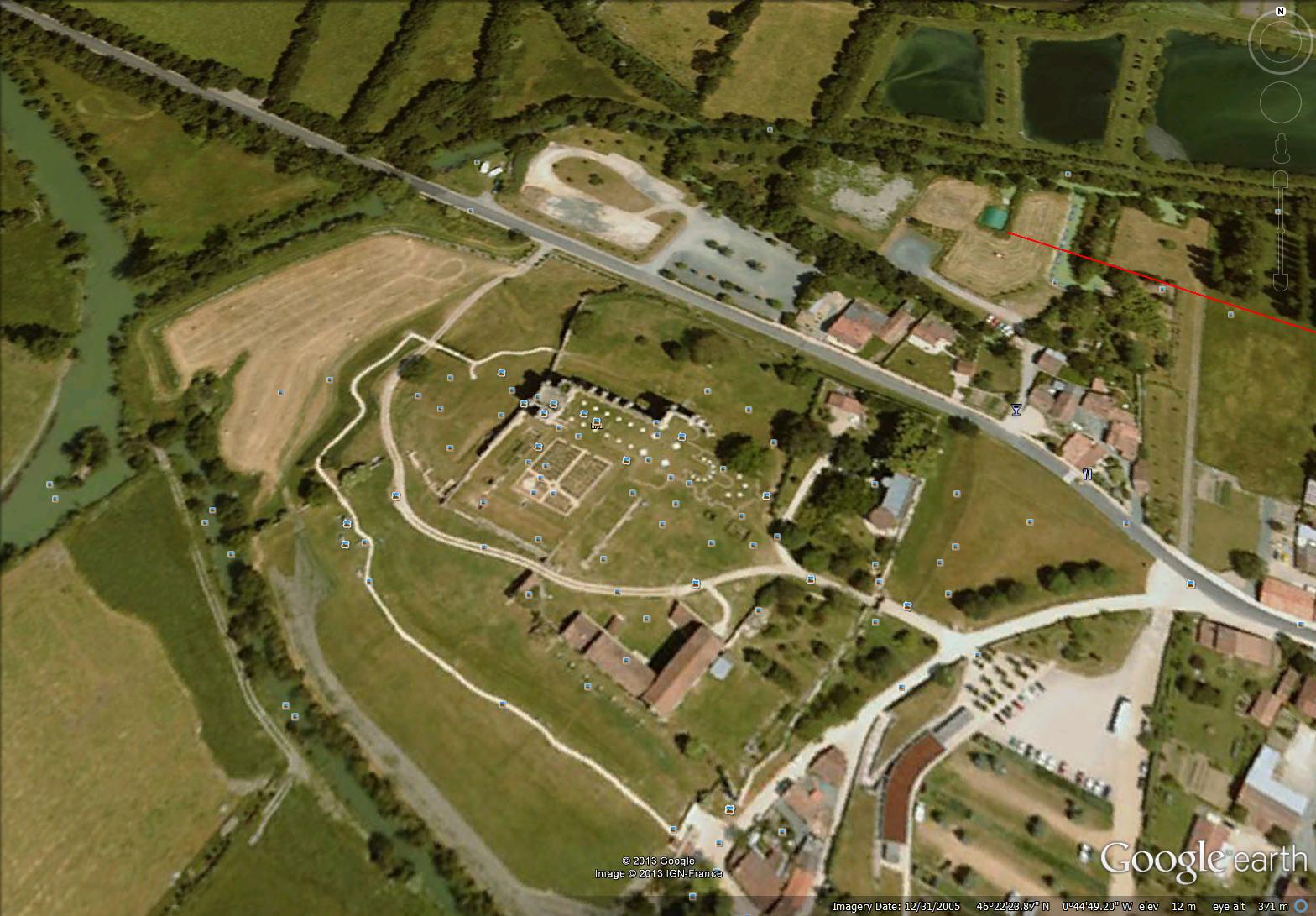
map of abbey – the standing cathedral ruins are the dotted area and the grey wall to the upper edge of the ‘dots’ (former cathedral pillars) (map from Google Maps)
~
The ruins of the abbey form a majestic silhouette above the walls surrounding the site…
~

ruins of cathedral (image from Street View)
~
Best View: the silhouette of the Abbey
~

~
Copyright Jane Tims 2013
an abandoned house
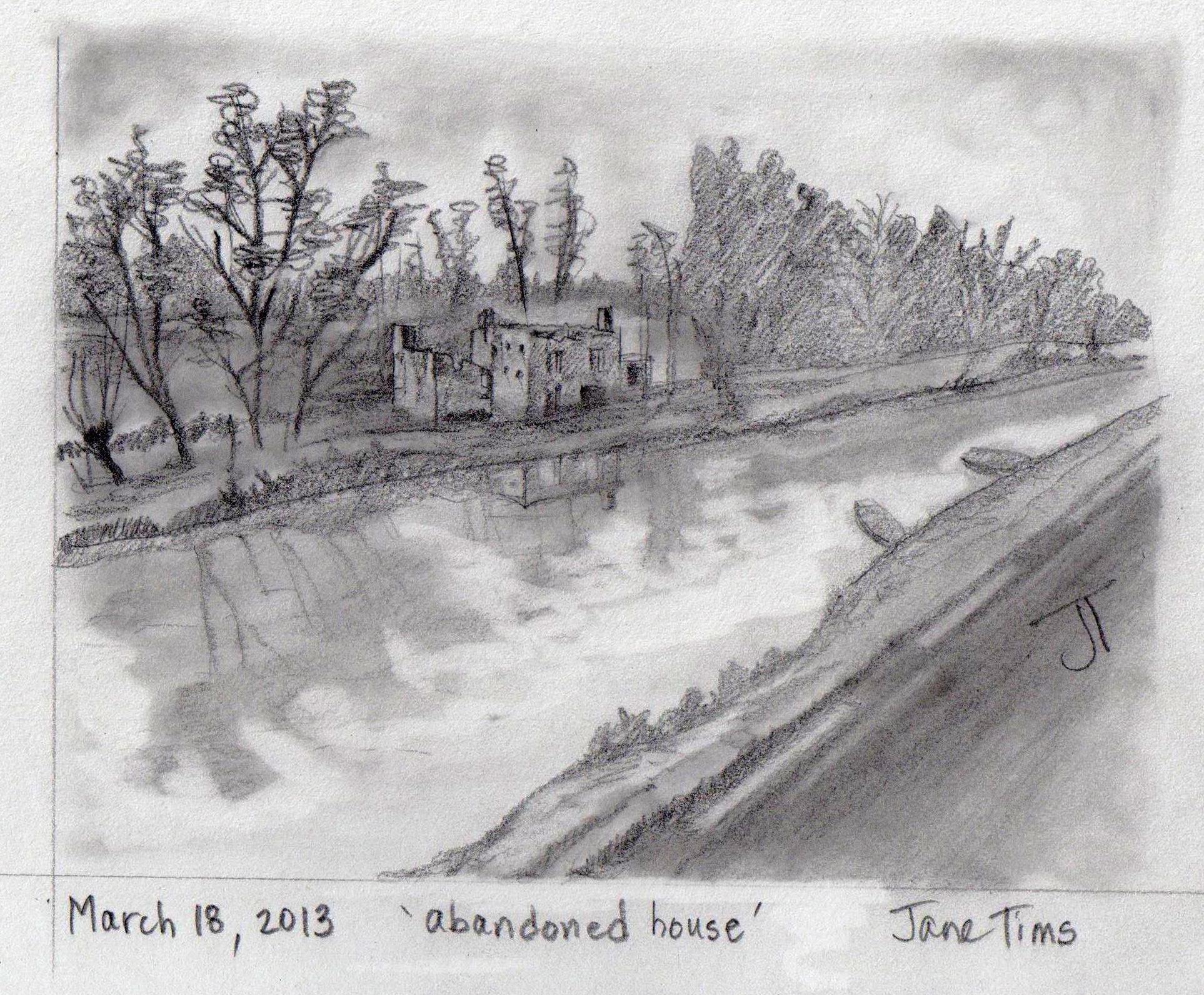
On my virtual biking trip along the Sèvre Niortaise in central France, I saw an abandoned house. Its roof had collapsed, its side buildings were reduced to ruined stone walls and its windows and doors were empty eyes …
~
~
It reminded me of a painting of an abandoned house by Liam Rainsford (published as ‘Abandoned’ on his Blog on April 15, 2012). You can see his painting at http://liamrainsford.com/2012/04/14/abandoned-oil-painting/
~
I have been writing a series of poems on the theme of abandonment and Liam’s haunting painting inspired this poem:
~
~
abandoned house
– response to the painting ‘Abandoned’ by Liam Rainsford (April 15, 2012)
~
stone ruin,
vacant, a shell
disinterested (since they went away)
in the state of the road
or comings and goings
~
only the fence posts have opinions
one, a stoic, is the neighbor’s boy,
waits by the gate
one post swoons in disbelief –
roof fallen in, garden weedy,
fields overgrown
what’s a good fence for, but to keep hunger away?
keep people in?
fence wires lead off, toward the east
~
walk through the front door, into open air
views unobstructed
tree tops, remote hills, expanses of sky
~
ghosts are lonely here,
peering into windows, entering
the lean-to door
with a basket of eggs,
over and over
~
~
Copyright Jane Tims 2013
the mysterious ‘x’
On my virtual biking trip along the Sèvre Niortaise in central France, I have encountered a mystery. On many of the houses I see, there is an ‘X’ on the side of the house. Occasionally there are two. Sometimes the ‘X’ appears to be made of iron. Sometimes it is pressed into the structure of the wall.
~

an ‘X’ on the wall of a house (image from Street View)
~

another ‘X’ (image from Street View)
~
At first, I thought they might mark the location of some feature, such as an underground water line…
~

a pair of ‘X’s (image from Street View)
~
Do you know the meaning of the mysterious ‘X’?
~

another mysterious ‘x’ (image from Street View)
~
I think I have figured it out, based on the photo below which shows a bolt in the center of the ‘X’. I think, at some time in the past, the metal ‘X’ was part of the method of shoring up an older house with bowed walls, in danger of collapse. I think the ‘X’ is the outside part of a cable that runs through the walls of the house. The ‘X’ is a kind of cleat, distributing the pressure over the outside walls, preventing the cable from pulling through the wall.
Do you think I am right?
~

yet another mysterious ‘x’ (image from Street View)
~
Copyright Jane Tims 2013
Tomato Ware
One of my favorite collections is my odd set of bright orange-red Tomato Ware dishes.

They are usually marked ‘Made in Occupied Japan’ or ‘Made in Japan’ and were made in the late 1940s and the 1950s. Two of my pieces are marked Maruhon Ware (with a K surrounded by a circle). Maruhon Ware was made from the 1920s to 1950s. ‘Made in Occupied Japan’ means the piece was made from 1945 to 1952.

The pieces in my collection are shaped like tomatoes (I have one set of salt and peppers shaped like long peppers). They are glazed pottery, coloured in an over-bright green and an orangy red. Most have green leaves as decorations, clasping the base of handles or teapot spouts. My collection is in good shape, the only flaws being a large chip out of the spout of one teapot and a broken handle on one creamer.
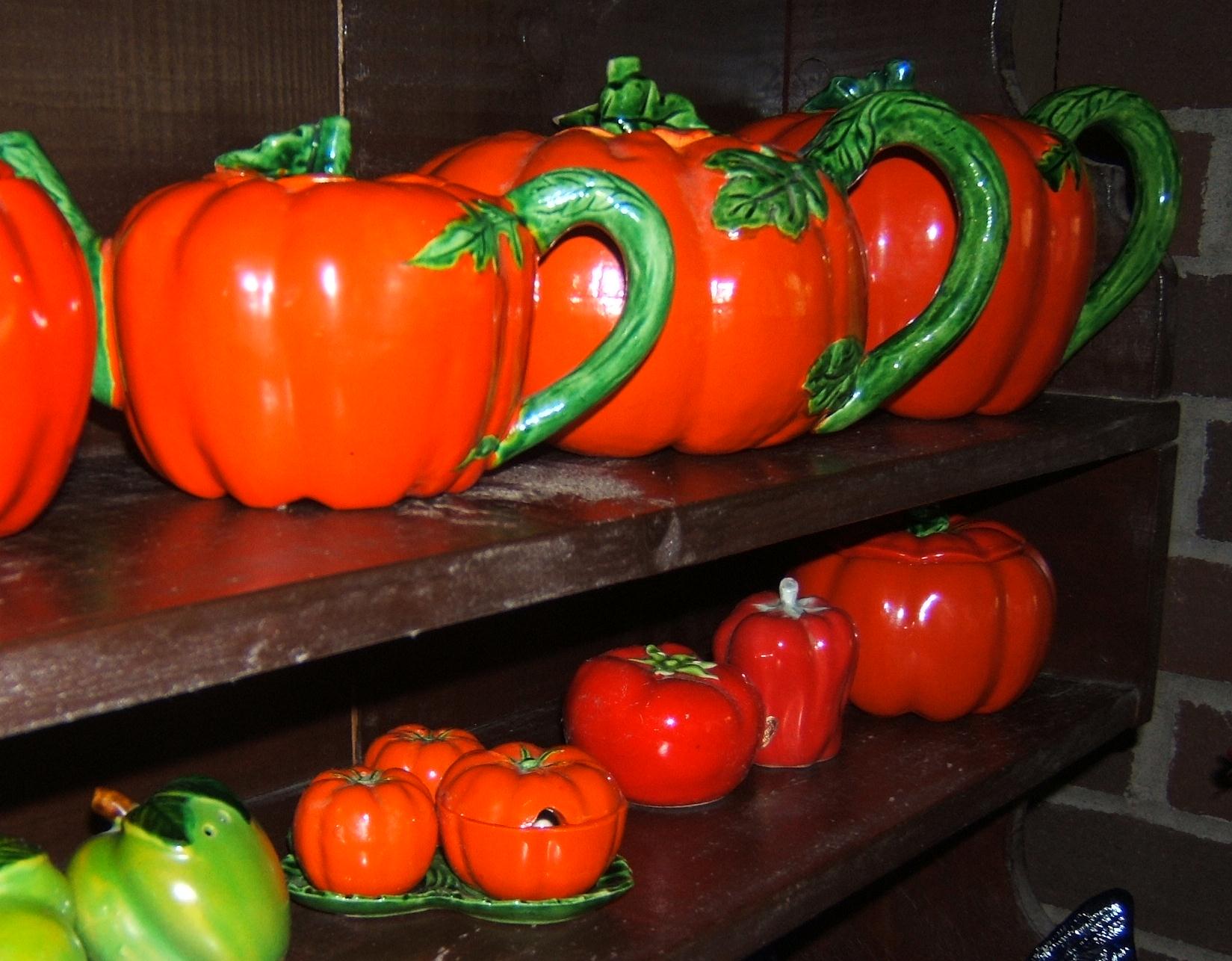
three Tomato Ware teapots (the green apples and the larger salt and pepper shakers, 2nd and 3rd from right, are modern pieces)
~
I have:
2 jam pots
2 cups/tumblers
3 teapots (one marked with the K surrounded by a circle)
3 pair cream and sugars
1 pair cream and sugar with a tray, and one lone creamer
1 set of salt and peppers
1 set of salt and papers with a tray
1 set of salt and peppers on a tray with a basket handle (belonged to my mother)
1 lone salt shaker
1 set of pepper-shaped salt and peppers
2 tea cups and saucers (both marked Maruhon Ware)

The dishes are very bright and provide an accent color for my very green living room.

~
Do you have any pieces of Tomato Ware?
~
Copyright Jane Tims 2013
collecting glass animals
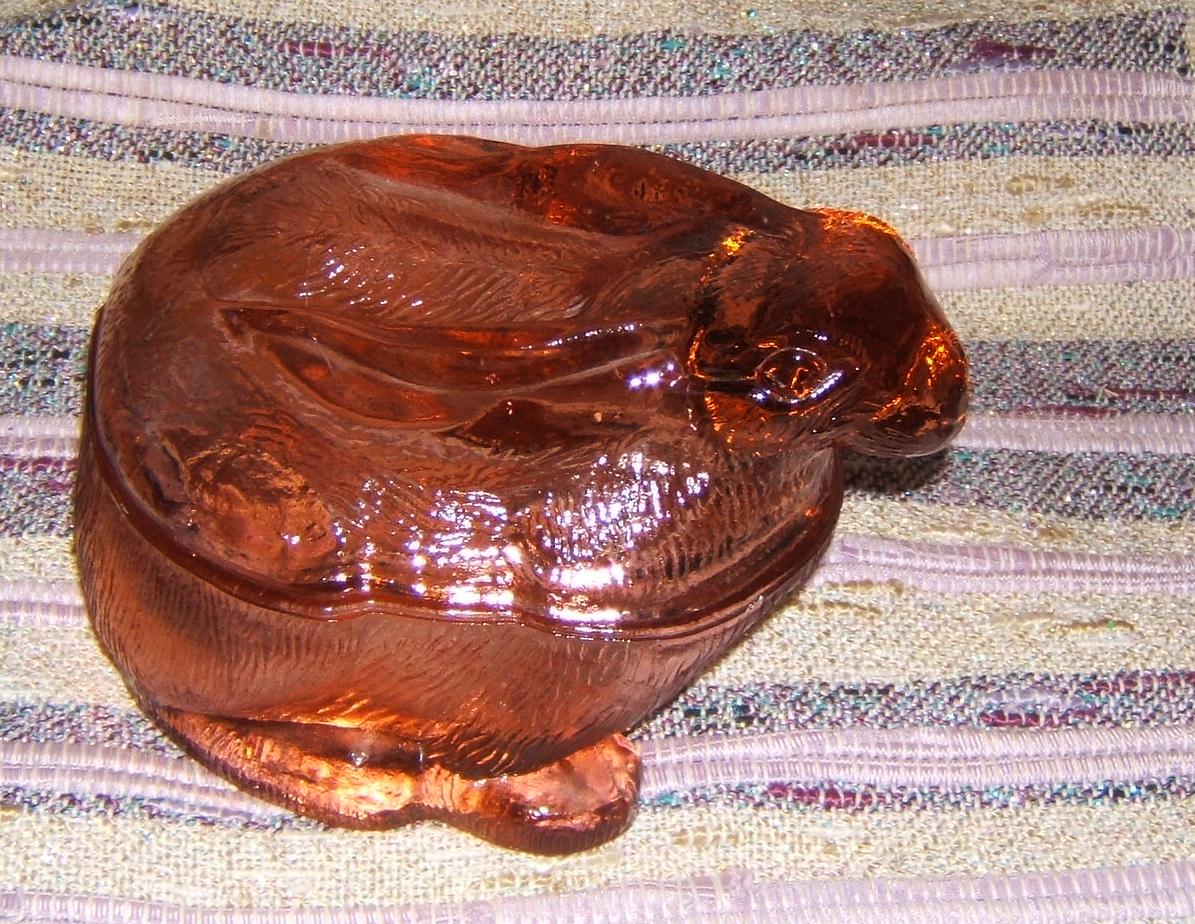
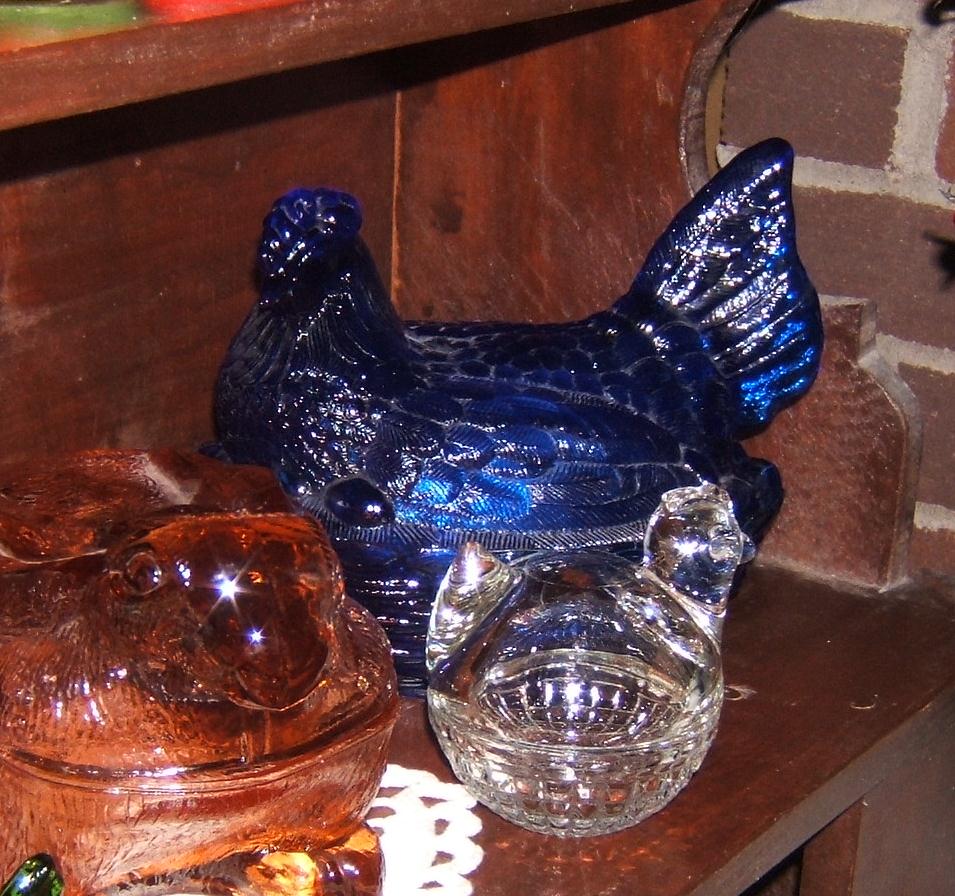
Today, I cleaned my collection of glass animals. Cleaning them takes a long time since I don’t clean them often. I wash each piece in soapy water and air dry it on a towel. As I work, I enjoy their sparkle and I think about how I got each piece. Since most of them are second-hand, I think about the unknown people who owned them before me.
Most of the animals in my collection belong in one of three categories: covered dishes, candle holders and dresser jars. A couple of the pieces belonged to my Mom. A couple of them are pieces she gave me as gifts. The rest, I found over the years at antique stores or auctions.

The covered dishes are mostly hens or chickens…
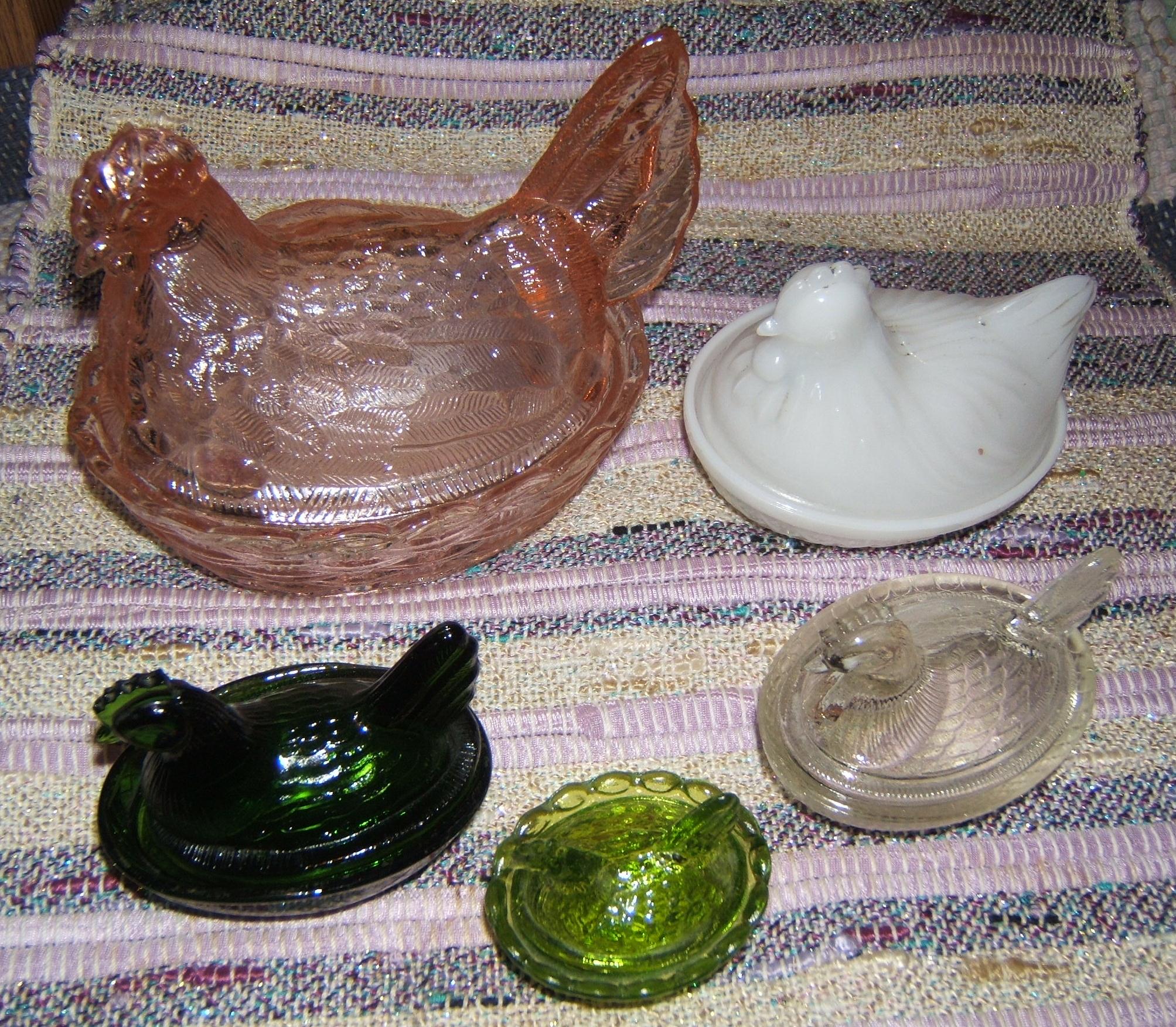
My favorite hen dish is a funny round chicken in clear glass…

I also have a rabbit in this collection…
and a duck…

I have a few glass birds of various colors. Each bird has a berry in its beak, and a hollow in its back to hold a candle…

I’ll show you some of my dresser jars in the next post.
Do you have a hen dish among your dishes?
~
Parting the Collection
~
1.
to collect: to gather together
these prisms
of glass and light
took a lifetime
what will become of them
when what becomes of me?
~
2.
collect: a short prayer
from a mouth like dust
~
I bid for each
between Limoges and Occupied Japan
with a steady hand
and a palpitating heart
~
3.
sapphire
feathers pressed into glass
bird in the house
at the window
~
cut crystal
edge of flight
from the menagerie
~
ruby swan
amethyst bee
topaz duck
~
glazed eyes
~
4.
lenses rise in your throat
siliceous gasses
burst from your beak
as a berry
~
past and future
transparent
~
shards of glass
shared among
my daughters
do not understand
the meaning
of collection
~
do not know
a Sybil
rises in your beak
~
~
Published as ‘Parting the Collection’, The Antigonish Review 95, Autumn 1993
Revised

~
Copyright Jane Tims 2013
writing a novel – another look at old churches
As I write my novel, I am amazed at how many instances of abandoned churches I have encountered in my life. I have come to think that I live at a time that will be remembered for a great turnover in our churches. With the need for energy efficiency and financial stability, congregations are actively seeking the ideal ‘place’.
I understand why this should be so. But I still love the idealized rural church of the nineteenth and twentieth centuries.
Earlier this month, we took a drive to Saint Martins. Near Garnett Settlement, we saw yet another re-purposed church.
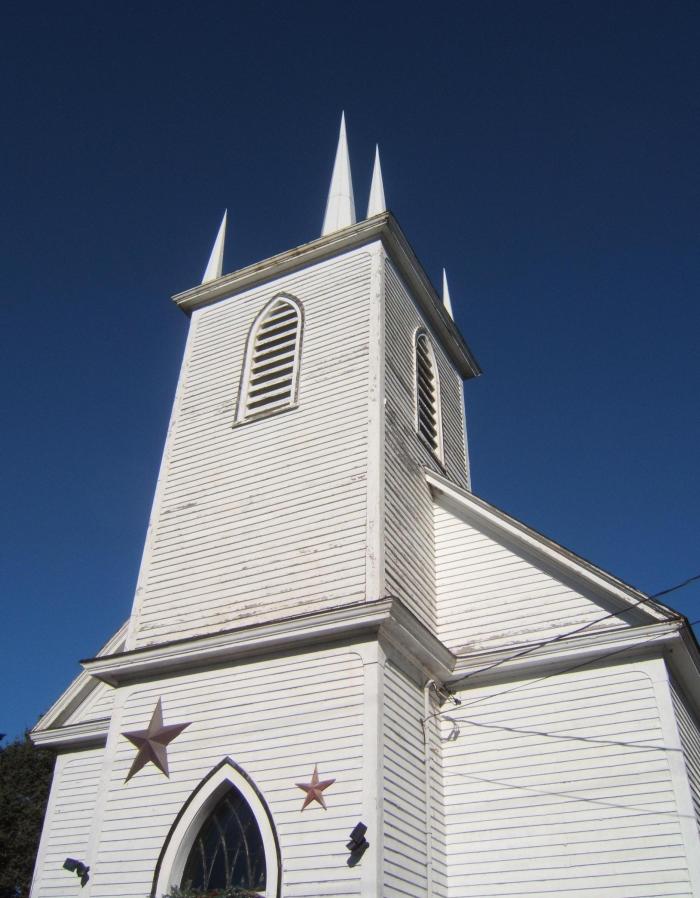
This one was abandoned a few years ago, after there were only four parishioners to keep it going. It was sold and has been turned into a country treasures gift store called the ‘Old Fangled Steeple’.
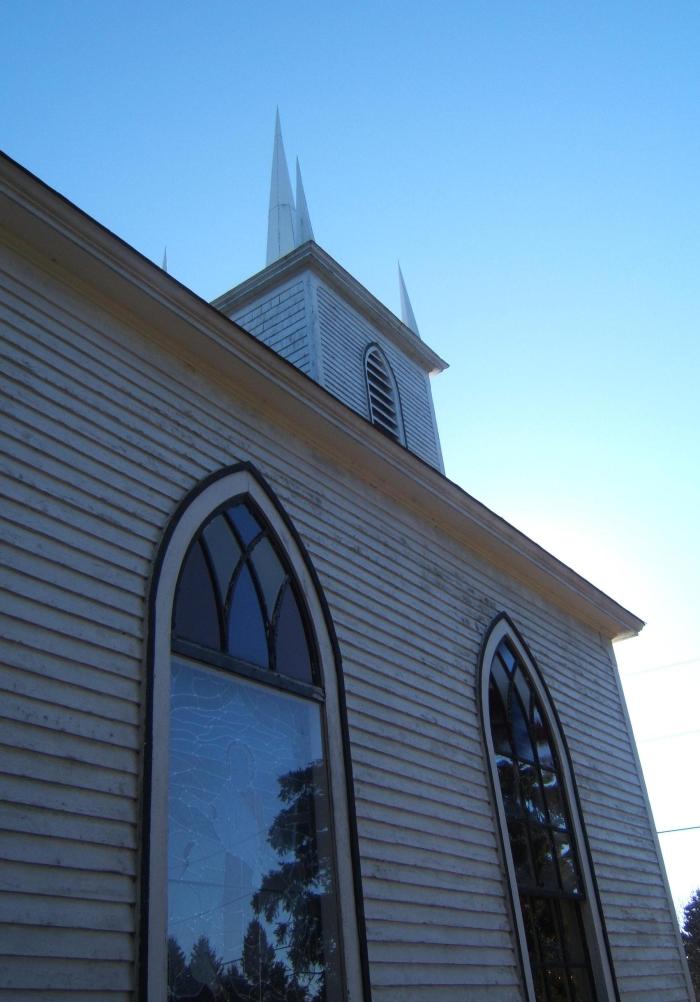
The church still has almost all of its stained glass windows intact.

~

~
For some beautiful images of abandoned churches, have a look at:
http://pinterest.com/patiluhayes/old-churches/
For a rather sad tour of the inside of some abandoned churches, see:
http://www.environmentalgraffiti.com/news-abandoned-churches?image=23
~
Copyright Jane Tims 2012