Posts Tagged ‘autumn’
one red tree
On a drive to see some covered bridges in York County, we took a logging road along the Pokiok and Little Pokiok Streams.
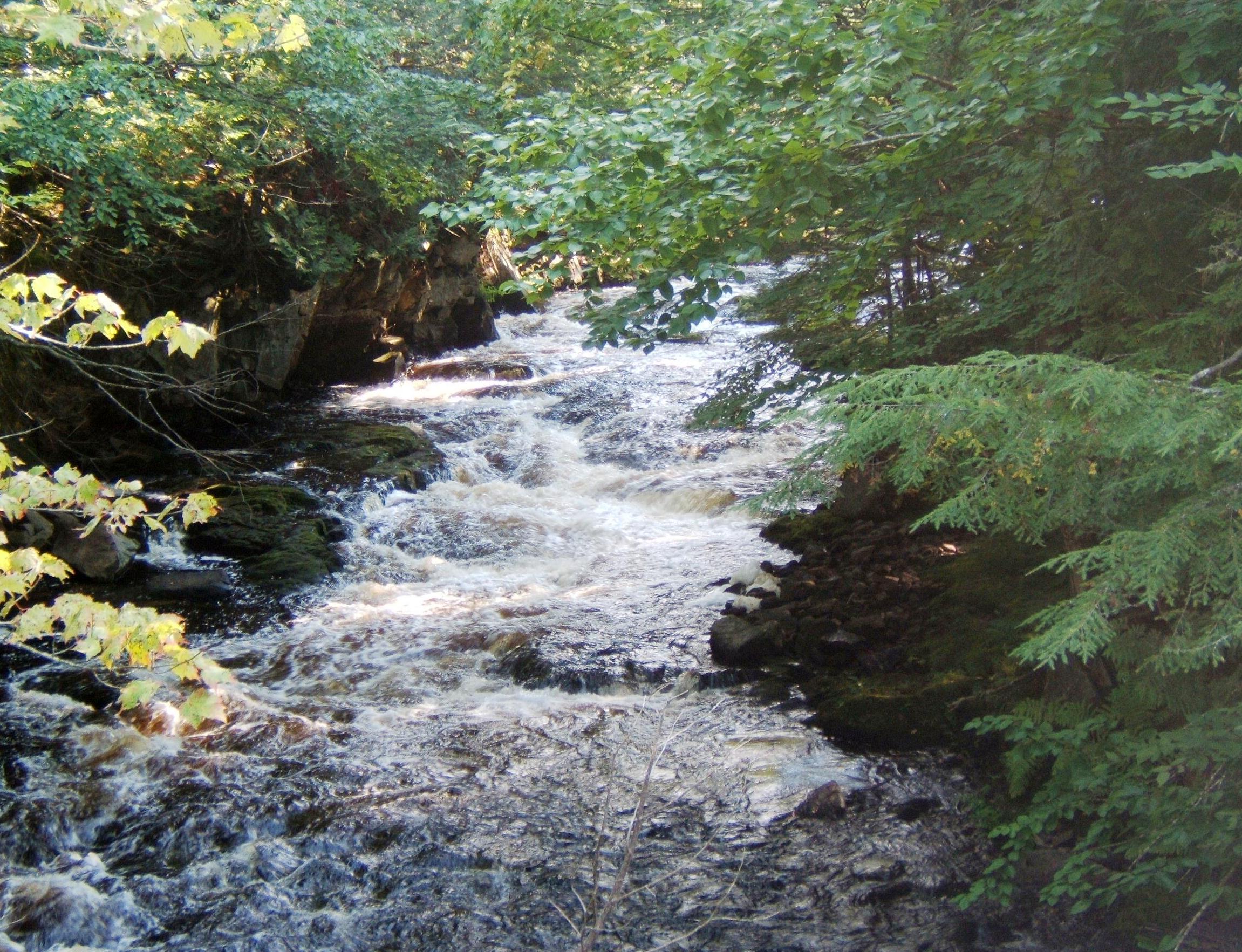
Years ago, on this road, we saw an albino deer. On this recent trip however, the only wildlife we saw were the Flickers. As we drove along the road, a Flicker would fly up and lead us a ways before veering into the woods on the roadside.
It was a good road, maintained by a local forest company. Along the way, we crossed a small metal bridge and I stopped to take a photo of a small stream winding its way through a bog.
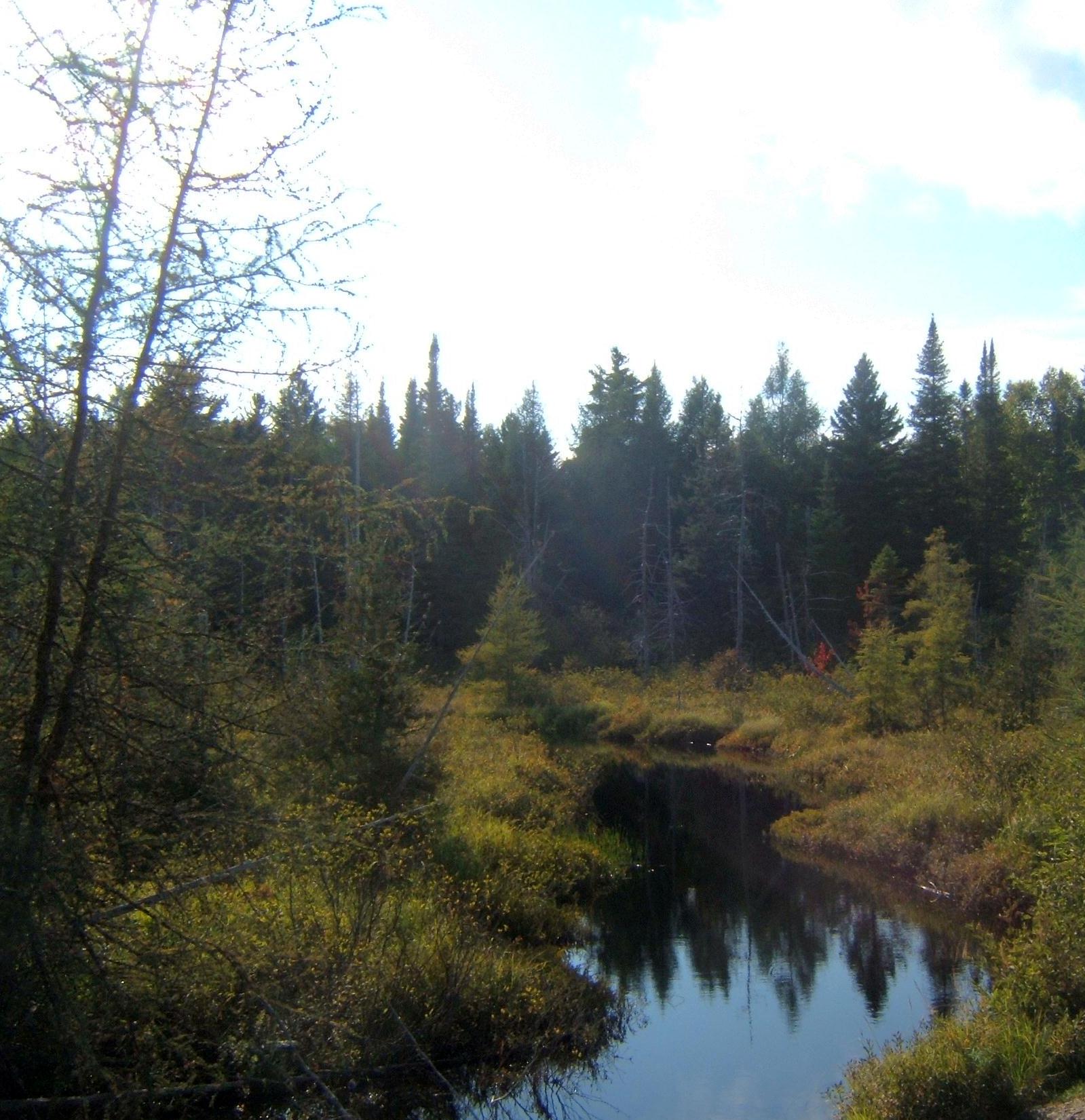
It was a lovely stream, deep and tea-colored. Over in the corner of the bog was one red tree, reminding me that our summer is fading quickly.
~
~
end of summer
~
on the path along the brook
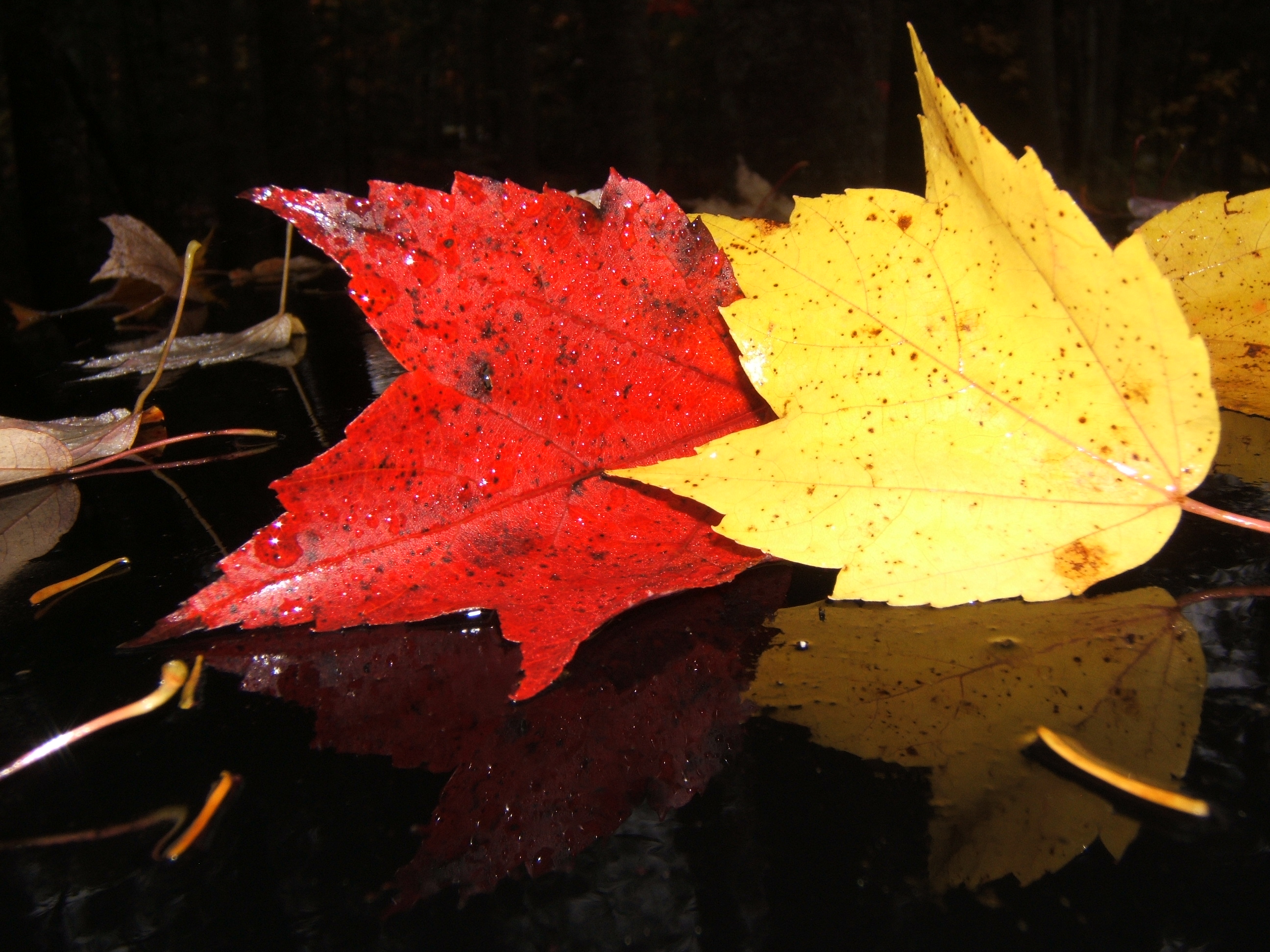
one leaf bleeds into water
in town the walks are stony
chaff of linden, seeds
dry ditches overflow with flowers
~
I shrug
(no matter
summer is ended)
~
yellow rattle
pods and grasses
rehearse an incantation
wind sulks in corners of the shed
warmth and sun
paint the orange of pumpkins
knit winter mittens
~
I gather signs of autumn
asters, windfalls, flocks of red wings
frantic in the alders
acorns, hollow galls from oak
~
Orion peeks above the trees
time forgotten, found
and summer with rain never ends
~
I ask for rain
(arms loaded with everlasting)
~
~
Previously published as ‘end of summer’, Sept. 19, 2011, http://www.nichepoetryandprose.wordpress.com
~
© Jane Tims 2012
Staghorn Sumac (Rhus typhina L.)
One of the berry bushes common in our area is Staghorn Sumac (Rhus typhina L.). Its leaves and berries turn brilliant red in autumn, and its berries are displayed in distinctive red ‘horns’.
Staghorn Sumac is a small tree or shrub found at forest edges and in wastelands. The shrub has a flat crown and an umbrella-like canopy. It has pinnately compound leaves and toothed leaflets.
Staghorn Sumac is a ‘pioneer’ species, often one of the first plants to invade an area after the soil is disturbed. Although it reproduces by seed, it also grows from its vigorous underground root system, and forms dense colonies with the oldest trees at the centre. In this way, it causes dense shade to out-compete other plants.
The flowers of Staghorn Sumac are greenish-yellow and occur in spiked panicles from May to July. The berries are velvety, hairy red drupes, and ripen in June to September, often persisting through winter. The berries are held in dense clusters or spikes at the ends of tree branches.

Staghorn Sumac is also called Velvet Sumac, or Vinegar-tree, and Vinaigrier in Quebec.
The common name of Staghorn sumac is derived from the velvet feel of its bark, reminiscent of the texture of deer antlers. The word sumac comes from the words for red in Latin (sumach) and Arabic (summāq). The specific name ‘typhina’ means ‘like Typha’ (cat-tail), a reference to its velvety branches.
The Staghorn Sumac provides food for birds including Evening Grosbeaks and Mourning Doves, and its twigs are eaten by White-tailed Deer.
It has many human uses, including for medicine, decoration, tanning and dyes. Staghorn Sumac berries are used to make a lemon-flavored ‘sumac-ade’ or ‘rhus juice’. Remember, before you consume any wild plant, be certain of your identification.
Sumac lemonade
Pick and clean the berries (removing them from the stem)
Soak berries in cool water
Rub the berries to extract the juice
Strain
Add sugar to taste
~
~
Staghorn Sumac
Rhus typhina L.
~
from a single stem
and subterranean creep
a crowd of sumac
~
umbrellas unfurl
roof by roof
shield the hillside
from ministrations of sky
~
shadowed ways beneath
to shelter and imitate
a gathering of deer
with velvet antlers lift
~
an occidental village
red spires like minarets
insist on sky
~
~
Warning: 1. never eat any plant if you are not absolutely certain of the identification; 2. never eat any plant if you have personal sensitivities, including allergies, to certain plants or their derivatives; 3. never eat any plant unless you have checked several sources to verify the edibility of the plant. © Jane Tims 2012autumn black and white
Roaming around the countryside, the weekend before last, deluged by color from orange and yellow trees and crimson fields of blueberry, I was interested by the contrast in the ditches. A month ago, they were a riot of yellow or purple as the goldenrods, tansies and asters presented themselves, species by species. Now, they are done with blooming and are in the business of releasing their seeds.
To attract pollinators for setting their seeds, flowers put on a competitive display of color and form. But dispersing their seeds is a different process altogether. Many depend on the wind to carry their seeds to ideal sites for next year’s bloom and the wind is color-blind. Grey, white and even black are the dominant colors in the ditches.

Seeds dispersed by wind either flutter to the ground, or float in the air. Often, they are assisted by a special seed form. For example, maple keys are flattened and aerodynamic so they spin and travel some distance as they fall. Seeds of goldenrod and aster have feathery white bristles (called the pappus, a modified sepal) to help them float through the air. The term pappus comes from the Latin pappus meaning ‘old man’, an apt description of the white heads of the flowers, gone to seed.

Another species in the ditch, Common Tansy (Tanacetum vulgare L.), also known as Golden-buttons, ordinarily has bright yellow flowers in a flat head. Now, it has joined the black and white revue, showing black seed-heads against feathery leaves.

The seeds of Tansy, in a form called an achene, have no special adaptation for flight. This time of year, these seeds are dry and ready for dispersal by gravity.
autumn black
~
dry leaves
silent
colorless
wonder withdrawn, into the vortex of
no hue, no delight
cones suppressed, rods perceive
absence, black seed in heads of Tansy
absorb all light, feathered foliage
darkest green, approaching black
~
© Jane Tims 2011

refections on the water
I have realised there is a sequence to the vanishing of the autumn colour.
First the maples lose their leaves in the early autumn winds. The next will be the poplars, now glowing with banana colours. The oak leaves, ruddy and slick with reds and oranges, will succumb by late October. Tamarack, a deciduous conifer, will lose its amber needles in early November. The beech trees will keep their ochre, papery leaves all through the winter, finally losing them in spring when the new leaves emerge.
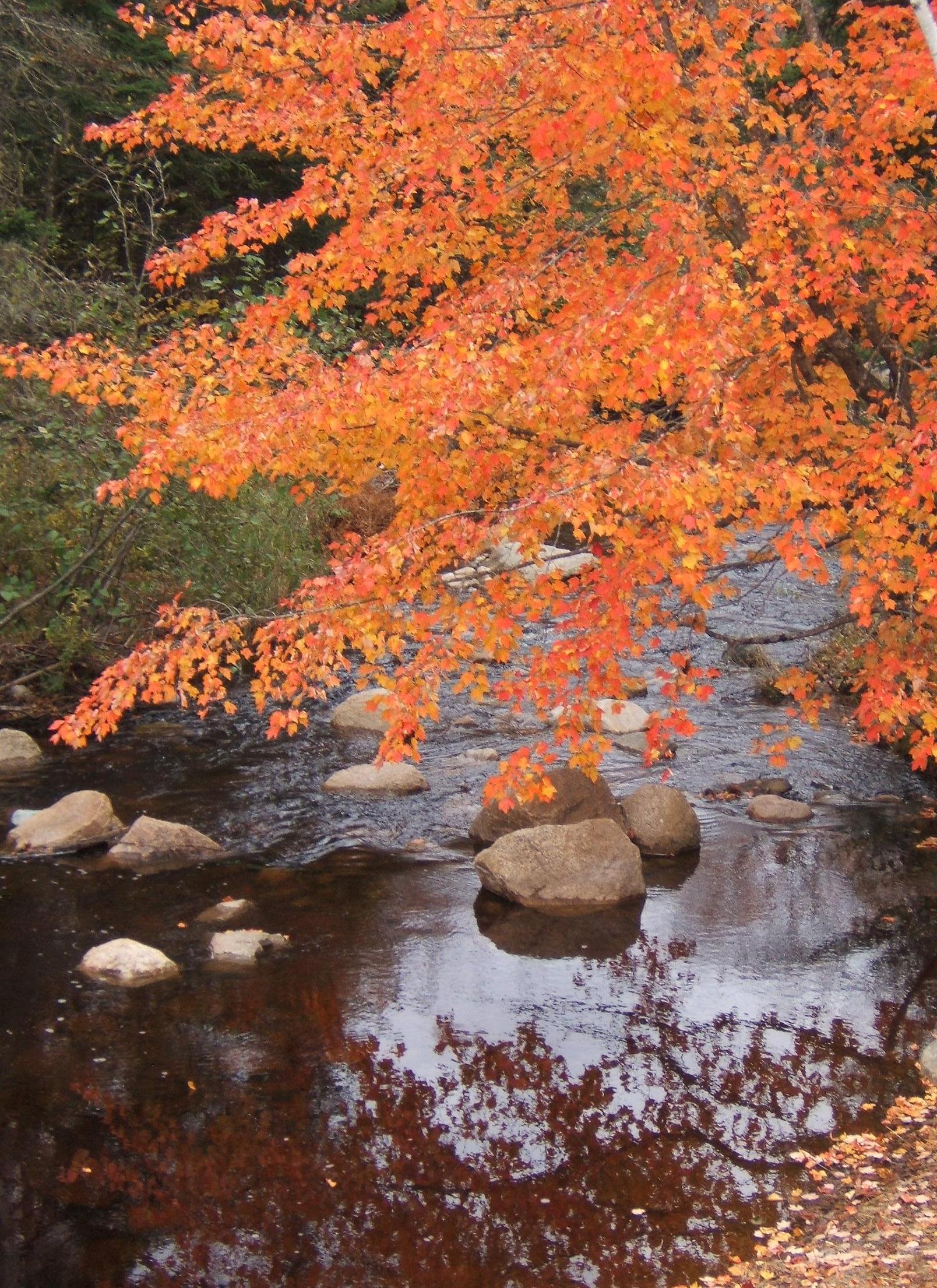
This past weekend, we found some maples still in autumn garb. At Watty Brook, flowing into McDougall Lake in south-west New Brunswick, at least one maple has taken longer than most to lose its leaves. At its sheltered location in the low valley of the brook, the tree has eluded the winds. It was reflected clearly in the brook, and its orange and gold were captured in the rocks showing through the tea-coloured water.

In spite of the movement of the water, the tree was reflected in all its splender.
in the millstream
~
upstream
deer are drinking
and the raindrops
swell the running
this I know
from bubbles
rising
~
I am a rock
in the millstream
seasons and freshets
have smoothed
my edges
~
once I met the water
a cleaver
divisive
now I ask the water
to flow
around me
~
© Jane Tims 2003

‘blue’berry fields in autumn
This time of the year, the only thing ‘blue’ about our blueberry fields is the blue sky above them. The fields themselves are a blanket of scarlet and orange.
These are a few scenes of the October blueberry fields in south-west New Brunswick…


legacy
~
remaining in the room
a well-used blanket
red with two black stripes
inexpensive facsimile of
~
a white
three-beaver blanket
stripes red, yellow, green
~
a blue sky
two vapor contrails
~
the yellow double line
on an asphalt road
~
a band of stars
across a light-starved sky
~
a red leather book
with black ribbons
mark passages for giving
thanks:
look down from heaven
upon the fields, now white
unto the harvest
~
a crimson blueberry field
in October, draped across bones
of the landscape
double tracks leading away
over the horizon
~
© Jane Tims 2011

under the red maple
We have a huge red maple (Acer rubrum L.) in front of our house. It forces a turn in the walkway, but I love to greet it every morning and watch it through the seasons. When we first lived here 30 years ago, the tree was small enough to encircle with thumb and finger. Now I can’t fit my arms around its girth.

Autumn inspires this tree. It takes its time, gradually turning yellow, red and orange over several days. Then it gives up all its leaves within a day.
When I drive my car away the next morning, a dark rectangle of driveway remains, within the circle of new-fallen leaves.
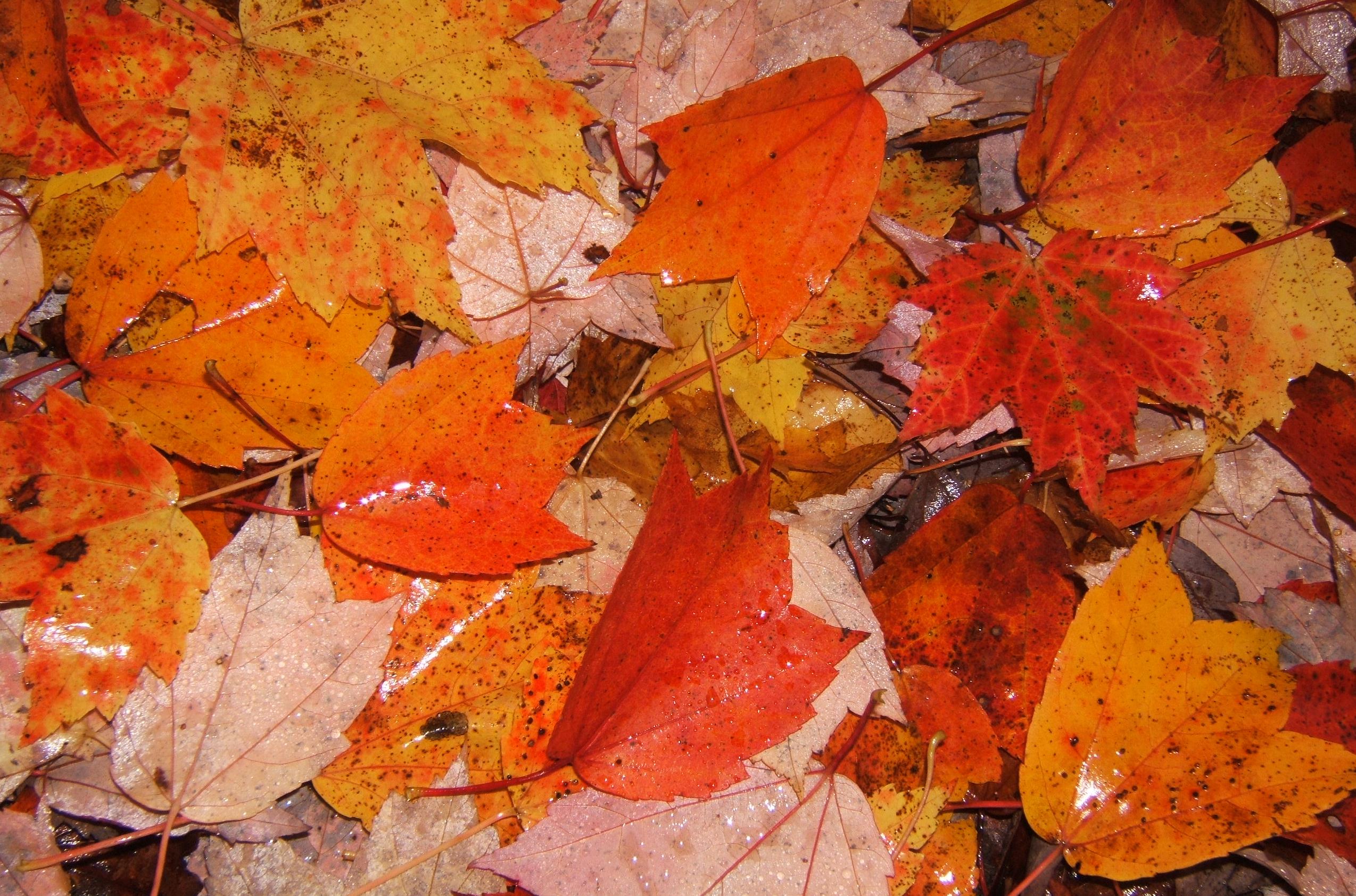
summer in flames
~
suddenly
leaf fall
embers settle
on the walkway
patio table and chairs
~
suddenly
impossible
to walk in silence
red flames
and careful steps
a conflagration
~
suddenly
shadows lost
and branches
scratch the sky
sun bright
hands warm before the fire
~
© Jane Tims 2011

reflection
reflection n. 1: reflecting or being reflected; reflect light, heat, colour or image;
2: reflex action;
3: censure; thing bringing discredit on;
4: reconsideration;
5: mental faculty dealing with products of sensation and perception;
6: idea arising in the mind, mental or verbal comment.
Oxford dictionary, 1950.
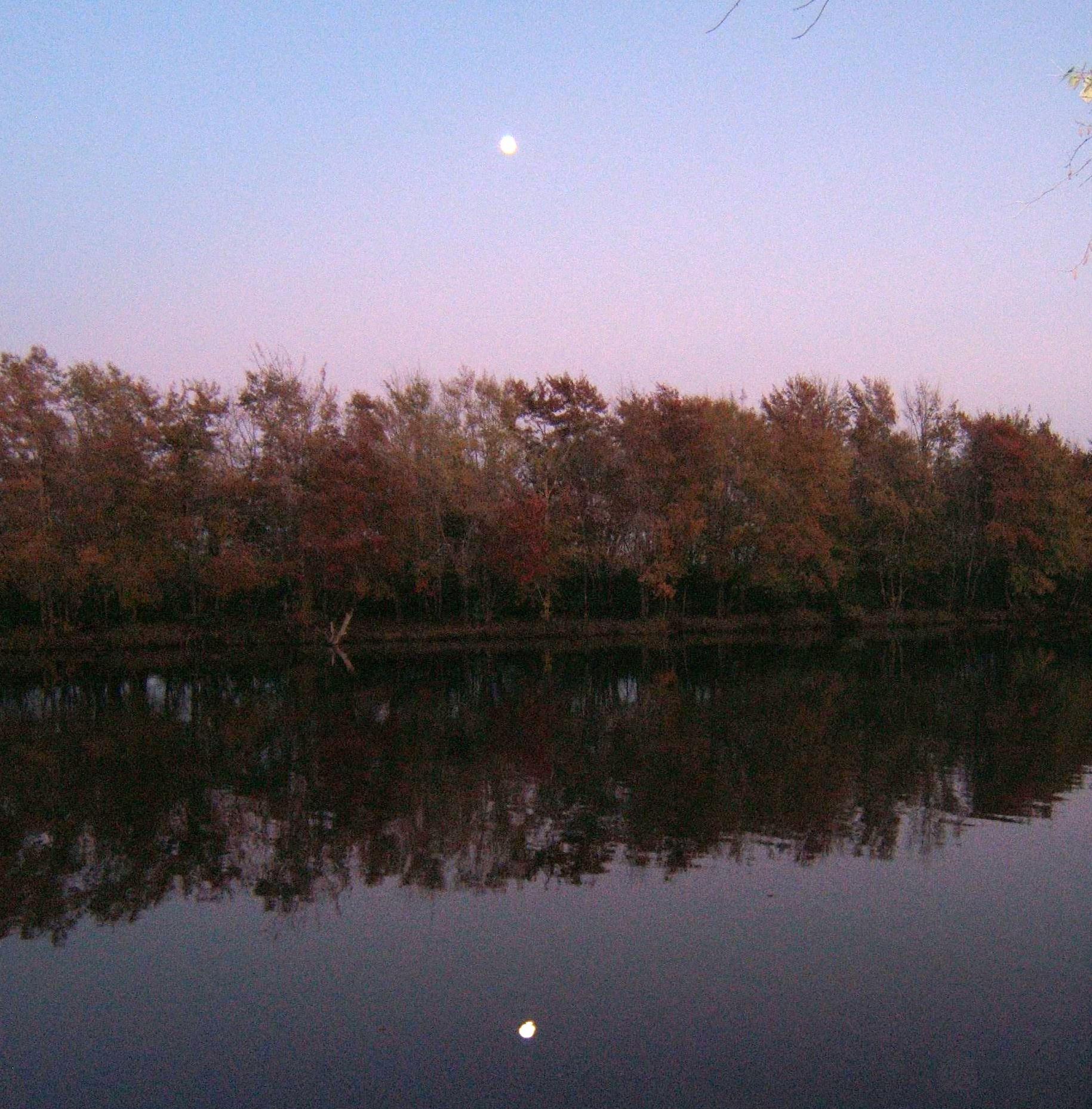
In autumn, I seek out rivers and lakes because they reflect the colour of the trees and magnify the effect of autumn fire.

Reflections are tricky. Sometimes they are so clear, you can turn a picture upside down and be momentarily confused about which way is up. Reflections are true, but show the inverse of self… the left side is on the right, the right side on the left. Refections take on the characteristics of the mirroring surface… in a mirror, a flaw in the glass will create a distorted image… in the water this results in wavy or doubled images as the water is disturbed.
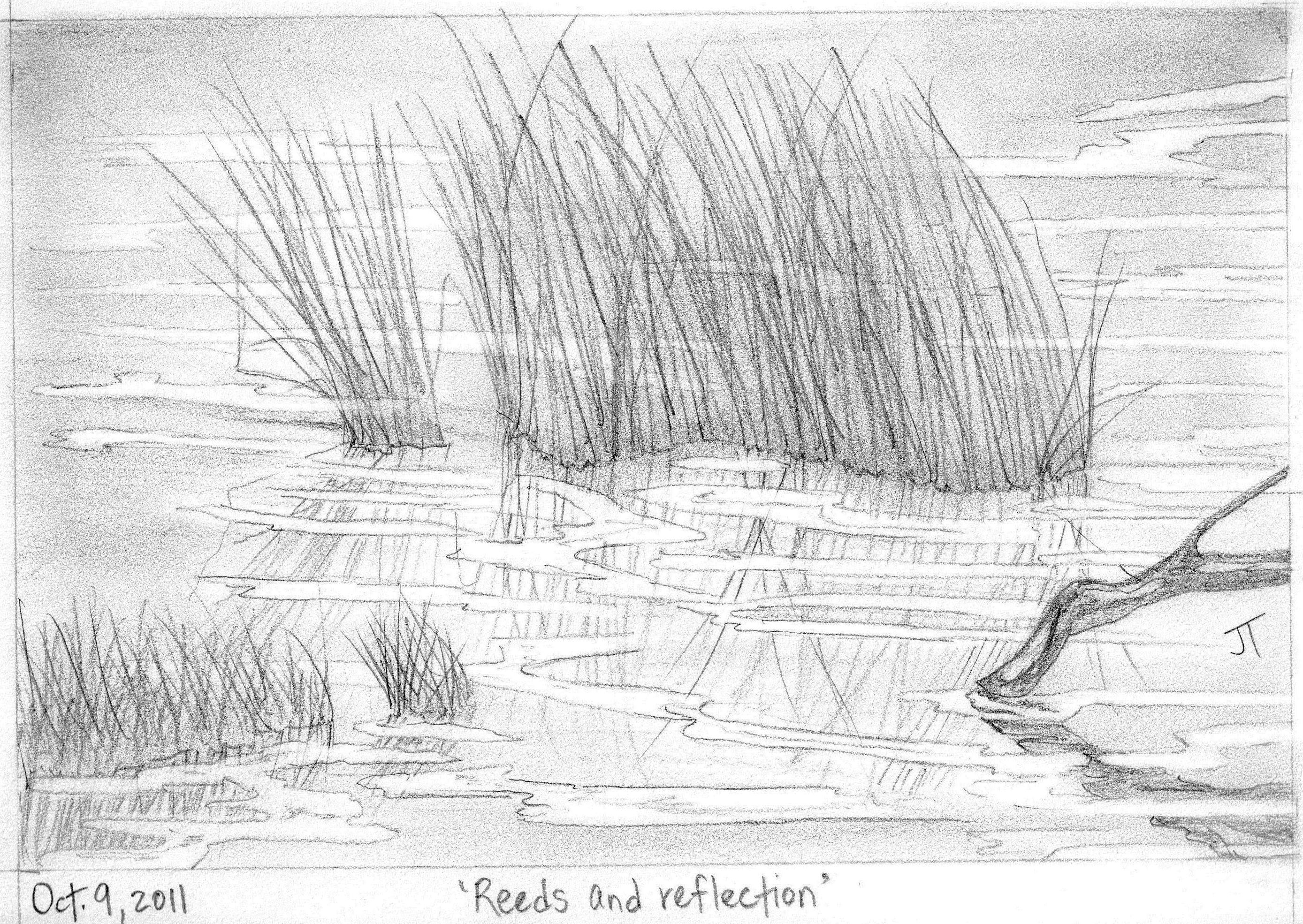
search for the essence of sun
~
1.
~
the river is molten
brimming with sunset
part water part sun imprisoned
by river reeds
~
2.
~
I am empty
less the thickness of reflection
~
the hollow
in begging hands
the void in the pipe
after the note has faded
darkness in the cradle of the moon
~
3.
~
if I had a straw
I could drink this sun
if the light would lift in folds
I could wrap it around my brain
tie it like a bandana
or I could scoop it into my hands
let it run honey and golden
along my arms
cut it with a knife
keep one half
to show my lover
~
I could sink into the river
rise through the sun’s reflection
slip it over my shoulders like raiment
~
4.
~
I could take the sun
in all these ways
weave it through me
like ribbon
~
but that would be only
the image of sun
not warm
~
© Jane Tims 1990
comparing landscapes
When you are visiting an area away from home, what do you notice about the landscape?
As we were driving the roads of south-east Ontario, I was always comparing the scenes I was seeing with the landscapes of home in south-central New Brunswick.
Both areas are hilly and rural, with a strong agricultural base. Both are forested wherever farmland is not the main land use. The trees in south-eastern Ontario are predominantly hardwood with some cedar, fir and pine, whereas ours are mostly mixed wood with a stronger component of conifers (spruce, fir and pine).
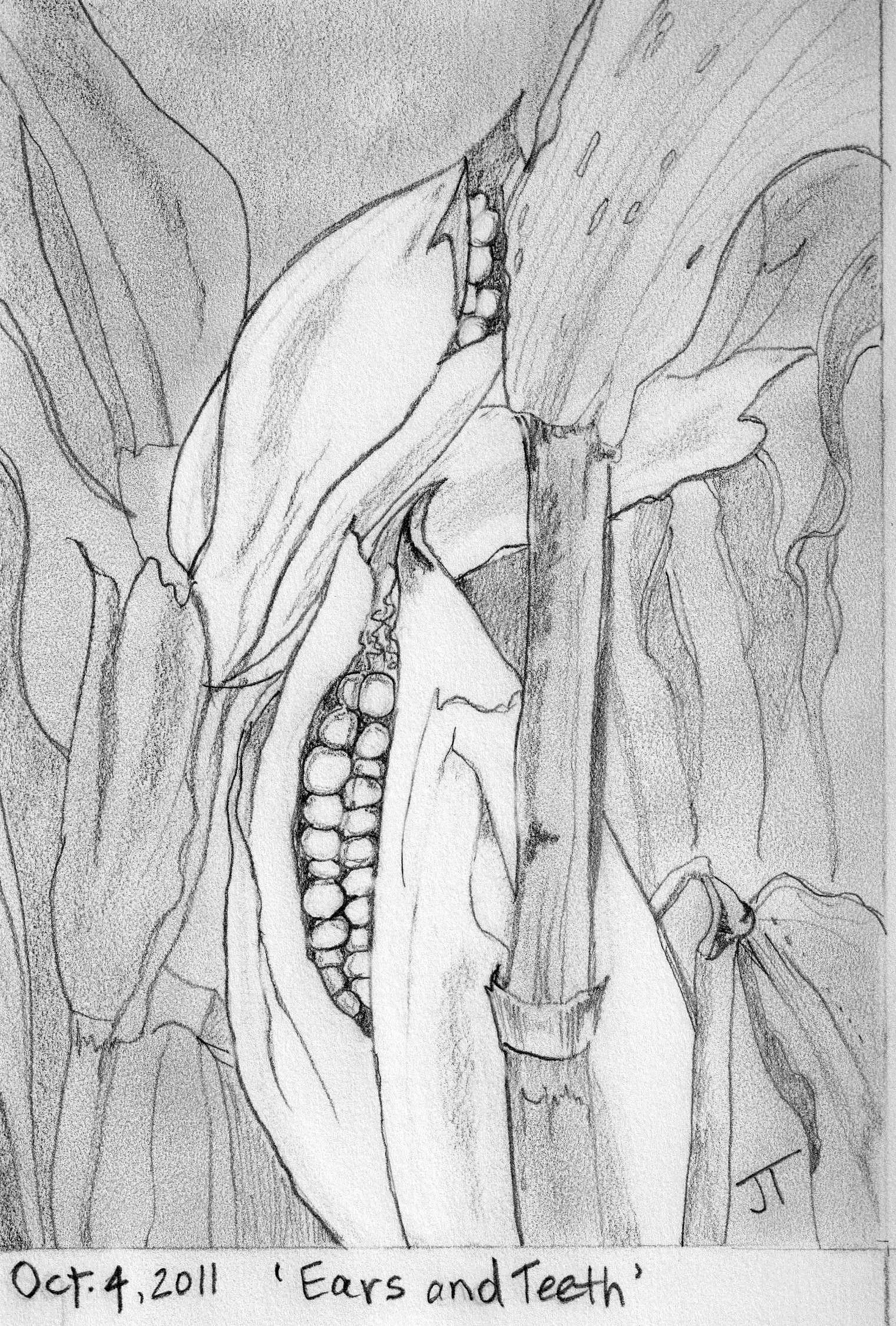
Probably the thing I noticed most about the Ontario farming landscape was the predominance of corn as a crop. When we were there, the ‘eating’ corn had already been harvested, but corn for silage (mostly used for cattle) was growing everywhere. It stood tall in golden fields, mostly broadcast, without corn-rows.
The corn was ready for harvest, the corn kernels held in stout, starchy ears. I think ‘ears’ is such an apt word for corn since the sense of hearing is shaken awake when you stand in a cornfield. This time of year, the long leaves are dry and rustle in the slightest breeze, carrying on a whispering conversation in an unknowable language.
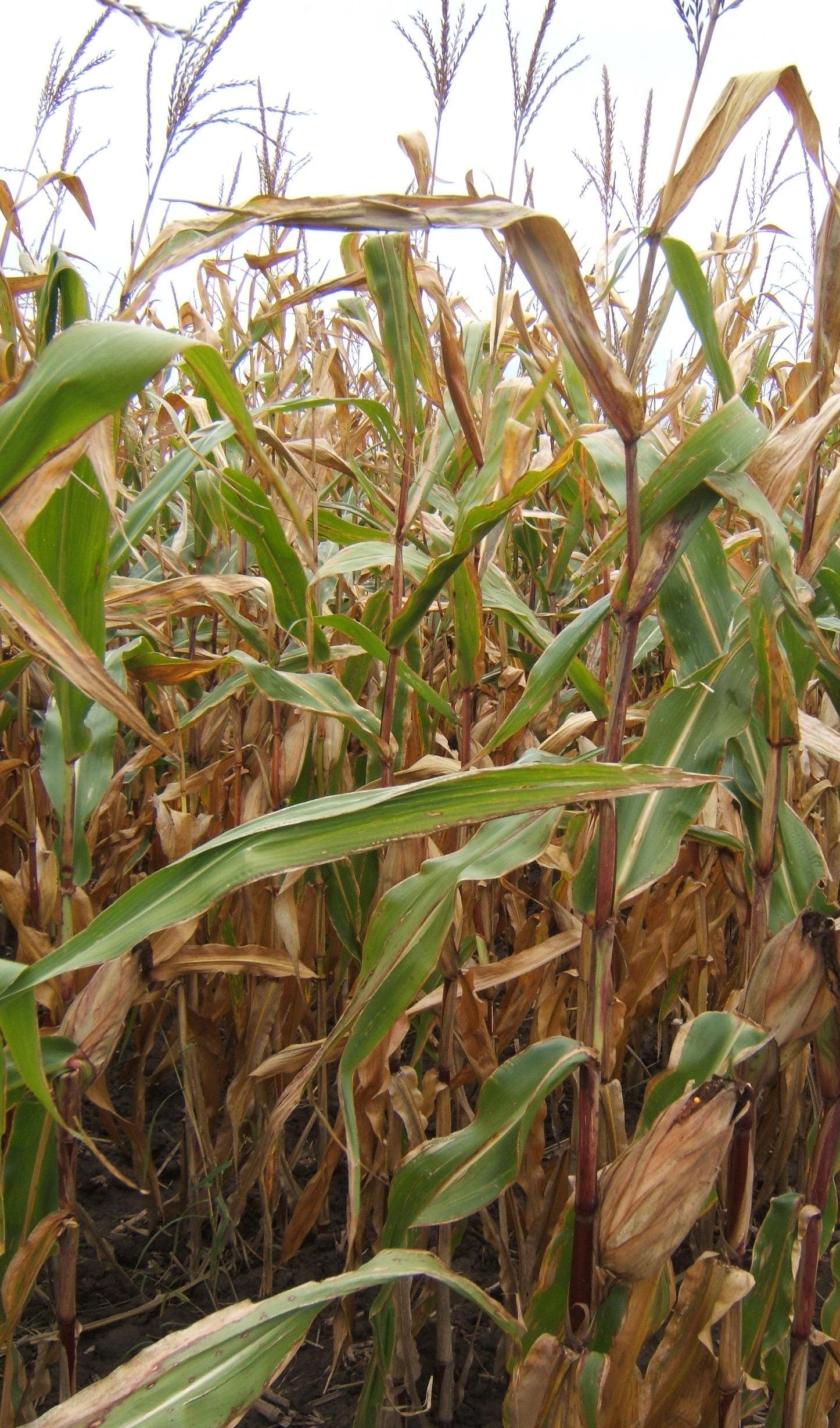
gossip
~
cattle-corn rustles
silage close-standing
whispers and secrets
wind-syllables
murmurs and sighs
rumours
no single
discernable
voice
~
© Jane Tims 2011
fords across the river
During a week of vacation last month in south-eastern Ontario, I was able to get to know some of its rivers.
The water is low this time of year and the rivers run still and quiet. Pond lilies and duckweed cover the surface, joined by early falling leaves. The country roads cross and re-cross the rivers, giving a view of each river at several points along the way.
I was also reminded of another means of crossing a shallow river or stream – the ford. This is a place where the water is shallow enough to cross on foot or by vehicle, without a bridge. Sometimes the ford depends on the natural stones or solid bottom for its footing; sometimes the bottom is built up by adding stone.
The fords on the South Branch of the Raisin River in South Glengarry County were built to last, of stone. They make a charming pause in the run of the river, allowing passage of the water and a safe way to cross.

A local person familiar with the river told me this: in spring, when the river runs deep enough to allow canoes to paddle, the fords can still be seen, white stones shining up through the water.

~
crossing the South Branch Raisin River, South Glengarry County
~
weedy South Branch Raisin River water-dry
stream-bed wizened wild grapes purple-weighted
sun-dried field rock
fords and fences
rain and rising
leaf-spun river
surface winds reflected
elm, nymphaea
ash, nuphar
~
© Jane Tims 2011
autumn along the brook
Behind our house, in the grey woods, is a narrow little brook. It is not much to look at but I like its simplicity. This brook has steep sides (a cross-section like a ‘U’) and grassy banks, and it creates charming little riffles over fallen logs. Until this moment, I have never realised … we have not given this brook a name!

I walked to the brook last Monday evening, to see how high the water was and to look for signs of the changing season.
Autumn is showing its color everywhere. Some of the ferns have turned yellow with the first frost…
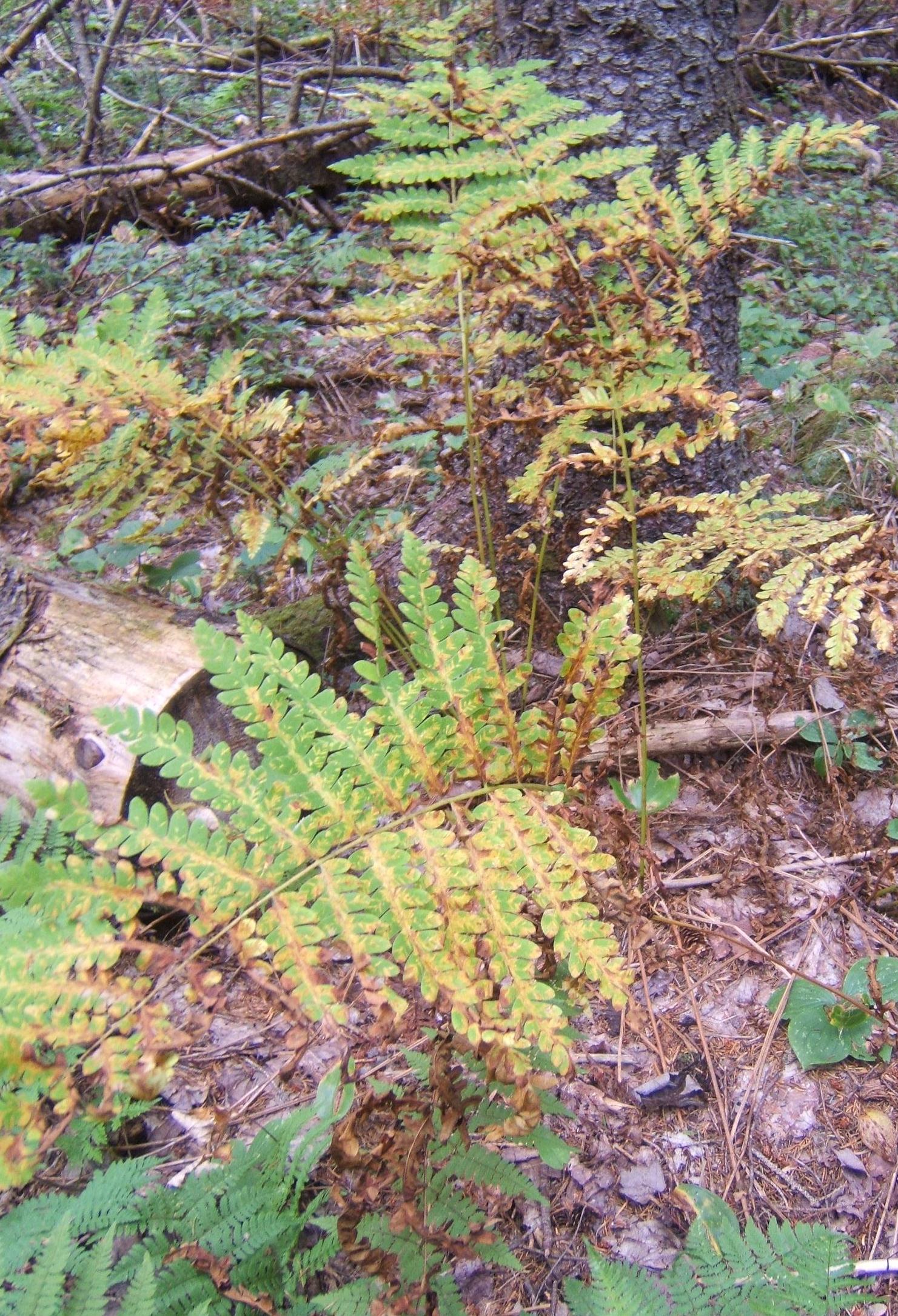
There are fallen red maple leaves on the trail and in the brook…

And the berries of Bunchberry (Cornus canadensis L.) are brilliant red…

- ‘red berries’

end of summer
~
on the path along the brook
one leaf bleeds into water
in town the walks are stony
chaff of linden, seeds
dry ditches overflow with flowers
~
I shrug
(no matter
summer is ended)
~
yellow rattle
pods and grasses
rehearse an incantation
wind sulks in corners of the shed
warmth and sun
paint the orange of pumpkins
knit winter mittens
~
I gather signs of autumn
asters, windfalls, flocks of red wings
frantic in the alders
acorns, hollow galls from oak
~
Orion peeks above the trees
time forgotten, found
and summer with rain never ends
~
I ask for rain
(arms loaded with everlasting)
~
© Jane Tims 2010

'oak leaves and acorns'




 nichepoetryandprose