writing a novel – taking a break from the draft
On Friday of this week, I begin a weekend Maritime Writer’s Workshop with the University of New Brunswick’s College of Extended Learning. I will work with a dozen other writers at revision of our written work under the leadership of Joan Clark. Joan is an award-winning novelist of both adult and children’s fiction, and I am anxious to find out what she thinks of my work.
I have chosen to submit ten pages of my novel ‘Saving the Landing Church’ to be examined during the weekend. I will get some good insight into how other writers respond to my writing. No doubt, I will also discover some aspects of my writing that need improvement. I hope the other writers will find my work interesting and help me discover some strengths as well as weaknesses.
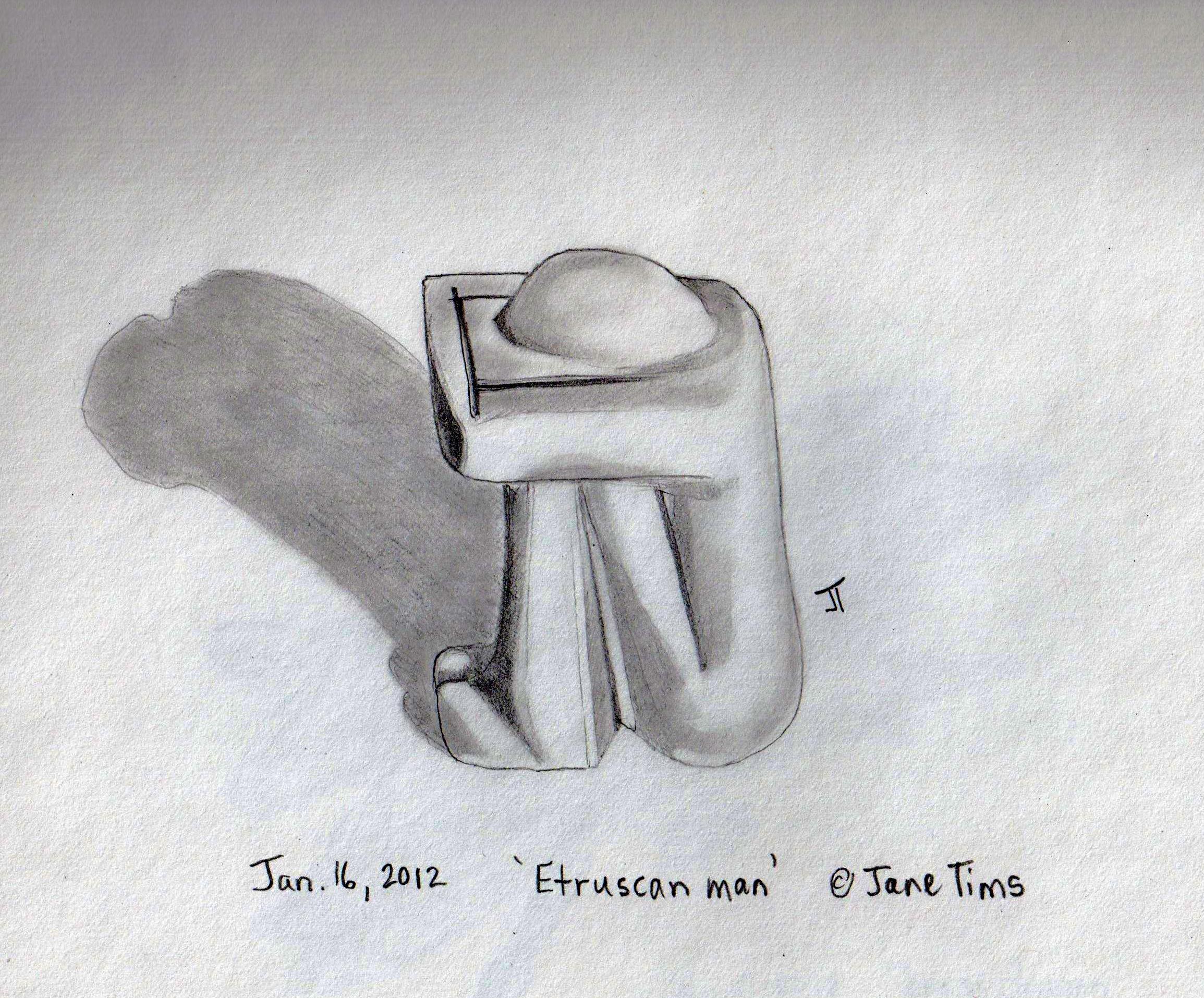
Sometimes it is difficult for me to hear criticism about my writing, but I have to listen carefully and keep an open mind …
I will also read and comment on the work of the other writers. This will help me to hone my own editing skills and discover more about what readers like in written work.
Once I have done the workshop and incorporated various comments into the draft, I will take a three-week break from my novel. I will put the current (third) draft away. During that time, I will not read the draft and I will try not to think about it. Then, after March 4, I will spend a couple of days reading a paper-printout of my novel. The theory is, it will be new to my brain after the break and I will see, with great clarity, what I certainly should have seen before.
~
I expect to find:
simple edits (Sadie takes a drive on the car, rather than in the car)
discontinuities in the action (Sadie goes for a hike a week after cracking her ribs)
slip-ups in characterization (Nicola suddenly has blue eyes instead of green)
cases of inverted time (July cames before June)
~

I may discover that Tom and Sadie are going for a walk and listening to the rustle of the leaves in the birch trees in the dead of winter….
~
From these observations, I will make some changes and then will come a series of decisions about how to get my novel published.
~
on the road to novel publication
~
Copyright Jane Tims 2013
winter water-scape
On our drive to Black’s Harbour this past Monday, we took the cross-country highway #785. It travels directly to the southern part of the province through the woods.
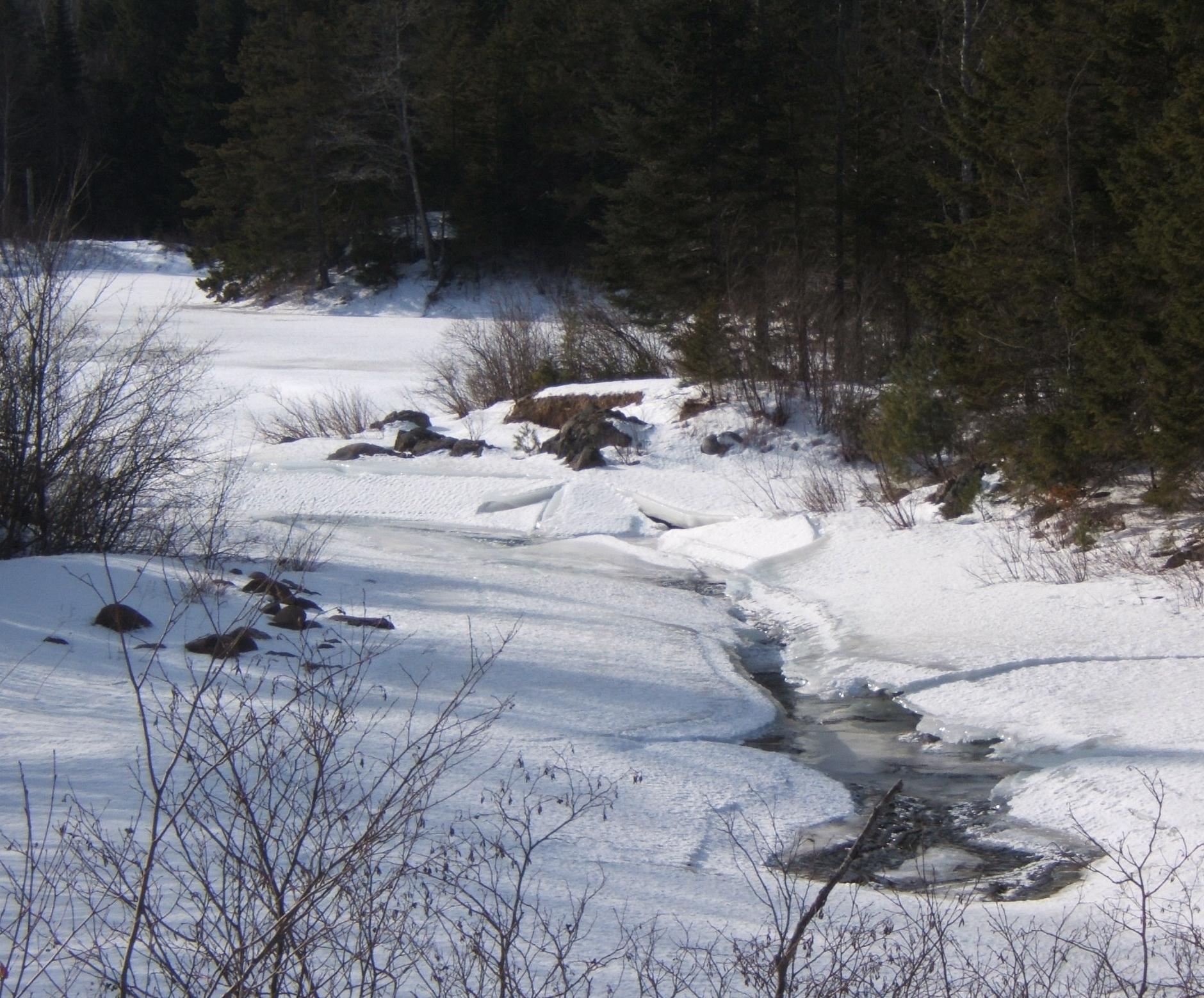
Many streams cross the roadway. All are lined in snow, but the center channel is just a sheet of ice away in most streams and rivers. In some cases, the water is moving so swiftly, the ice has been breached by the flow. The result is a carved ice-world of frozen water. At these openings in the frozen river, you can catch a glimpse of the winter water-scape: the layers of ice, the icicles and frosted caverns beneath the smooth upper layer of ice and snow.
~
winter water-scape
~
under the ice
the river registers
its sinew
~
carves a crystal path
between layers
of frost
~
transparent panes
of polished glass,
lofted by pillars of ice
~
ice caverns, edged by froth
a mingling of winter breath
and river tears
~
Copyright Jane Tims 2013
abandoned boat
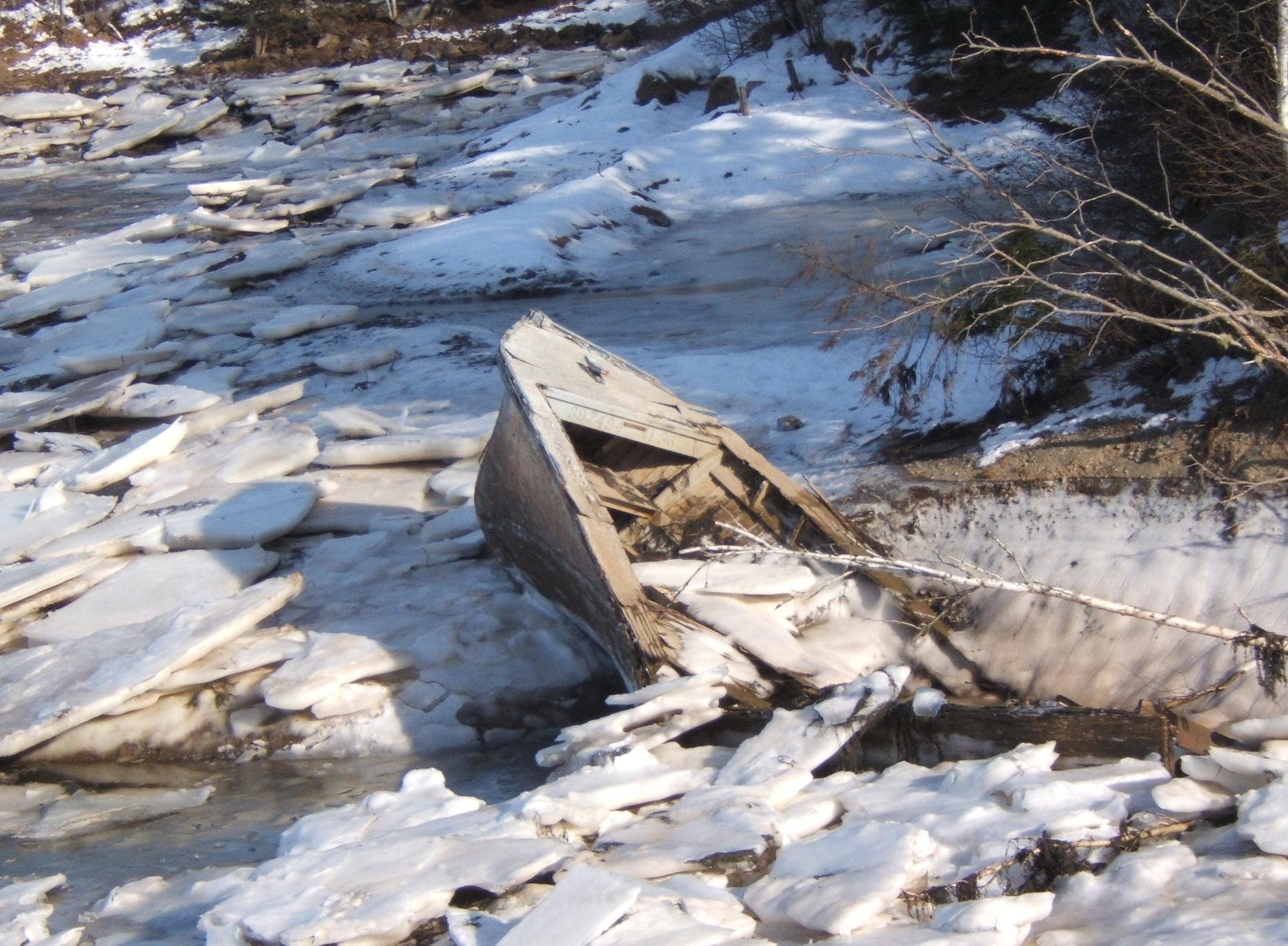
On Monday, we drove to Black’s Harbour. On the new highway, where it crosses the inland dregs of Oak Bay, the ice was broken into big sheets along the shore. There, in the icy debris, was an abandoned fishing boat, a wreck. Although I have never seen it before, it has probably been there a long time.
~
Foggy Molly
~
she had a sixth sense –
kicked in on a grey day
when mists lobbed across the bow
and thickened her passage
she loved flat water
and a blanket of fog
~
she was nervous of a big sea,
preferred to be tied, snug
to the wharf,
to lift and settle,
to lift and settle
moved by the inhalation,
the exhalation
of the tides
~
ironic – she broke up
at berth, waiting for a re-fit
smashed by a nor’easter
and cleavers of ice
~
~
Copyright Jane Tims 2013
messages on a still winter day
 ~
~
intentions
~
snow, crystal-quiet
a sluggish breeze
riffles the woodland
sunrise lost in a rose sky
~
listen to the rustle
of paper on wood
the mutter of unwritten lines
birch-bark, deckle-edged
~
tatters and shreds
sorted by a sluggish wind
words I meant to write
letters ready for the mail
~
misplaced
behind parcels
wait for postage
brown paper and string
~
~
~

Copyright Jane Tims 2013
dazzled by dresser jars
Dresser jars have always been an interest of mine. You often see them at antique stores and at auctions.
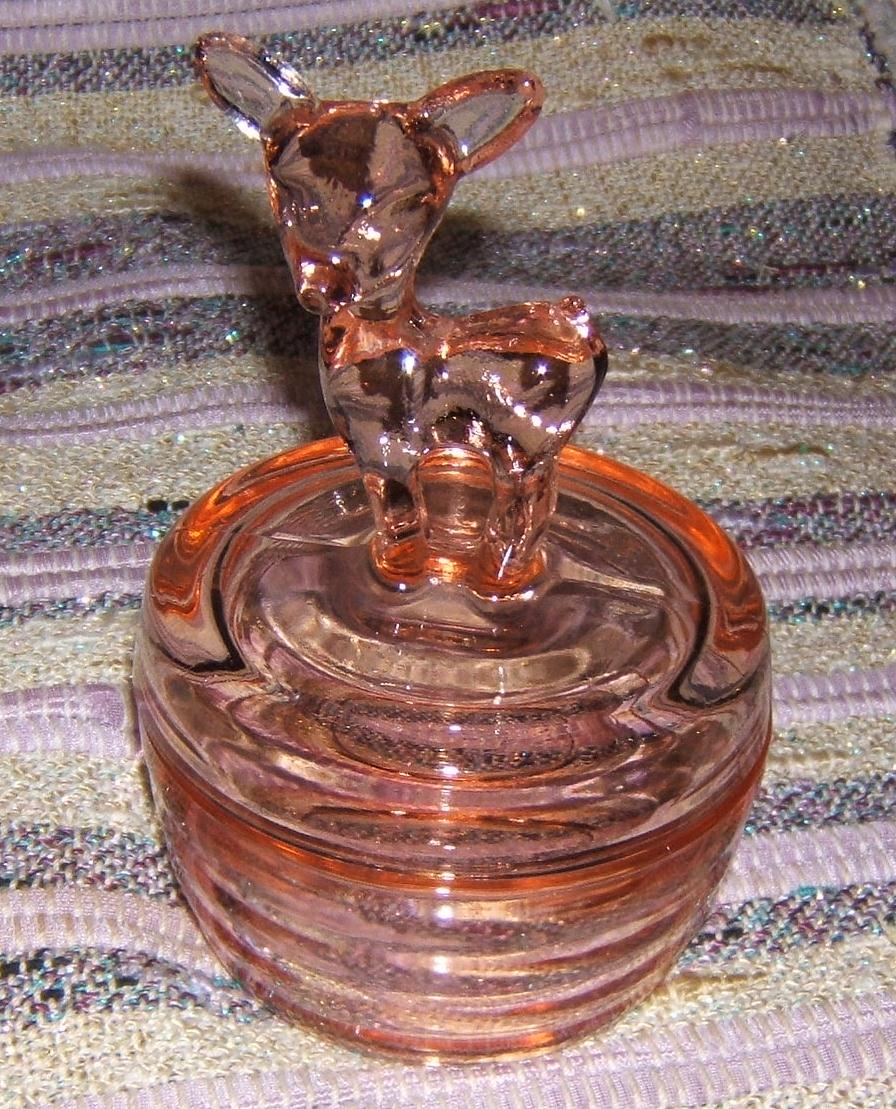
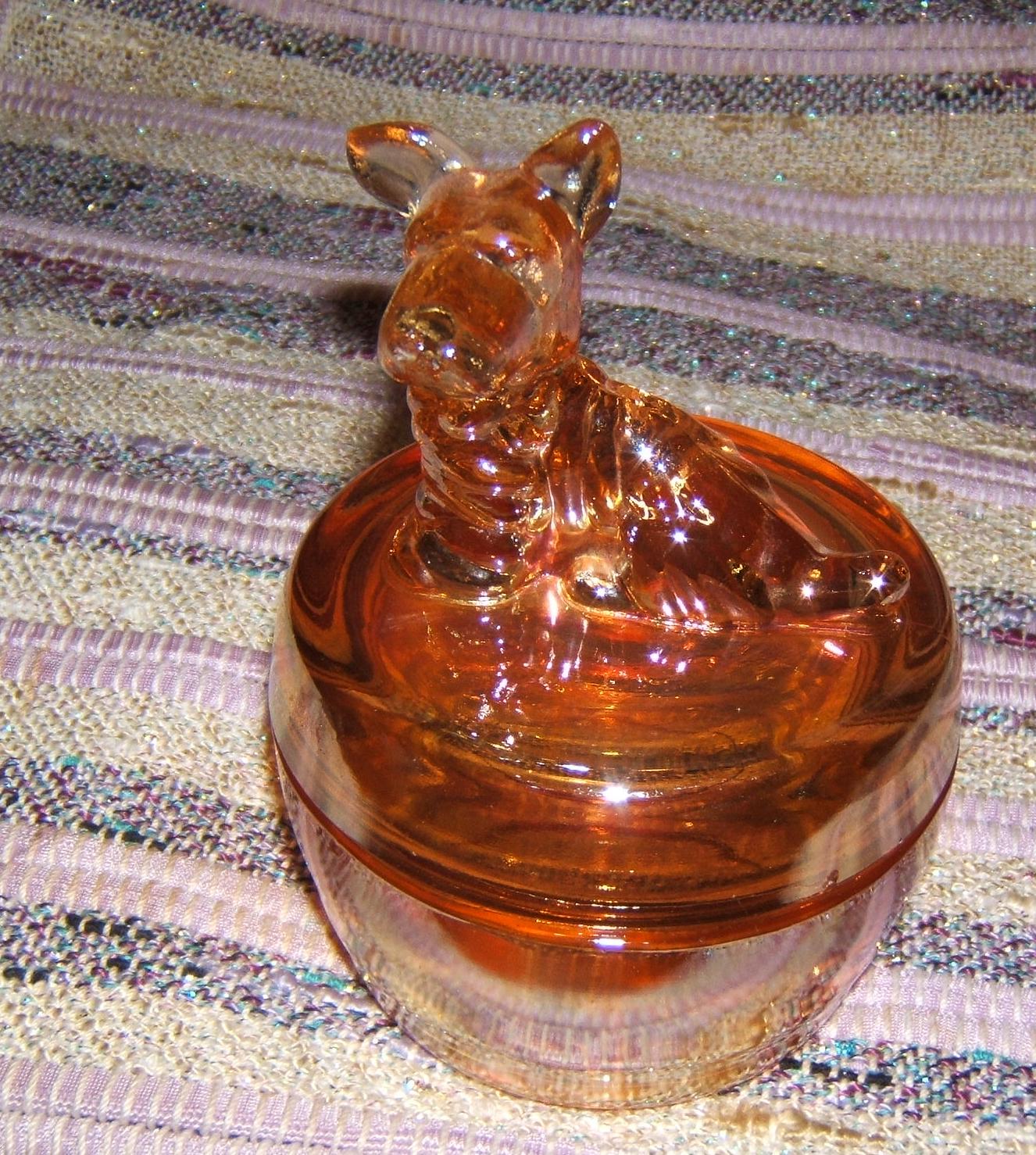
My Mom had an iridescent peach-colored dresser jar with a glass terrier on top and a pink-colored dresser jar with a young deer.
My collection of dresser jars is one of my favorite possessions. The collection includes several dresser jars of a type made in the 1930s to 1950s (by the Jeannette Glass Company). They are all round, made with clear or iridescent glass. They were used as jars for women’s dressers, to hold powder.
I have four young deer (or ‘Bambi’) dresser jars, two iridescent peach-colored, one pink and one clear…
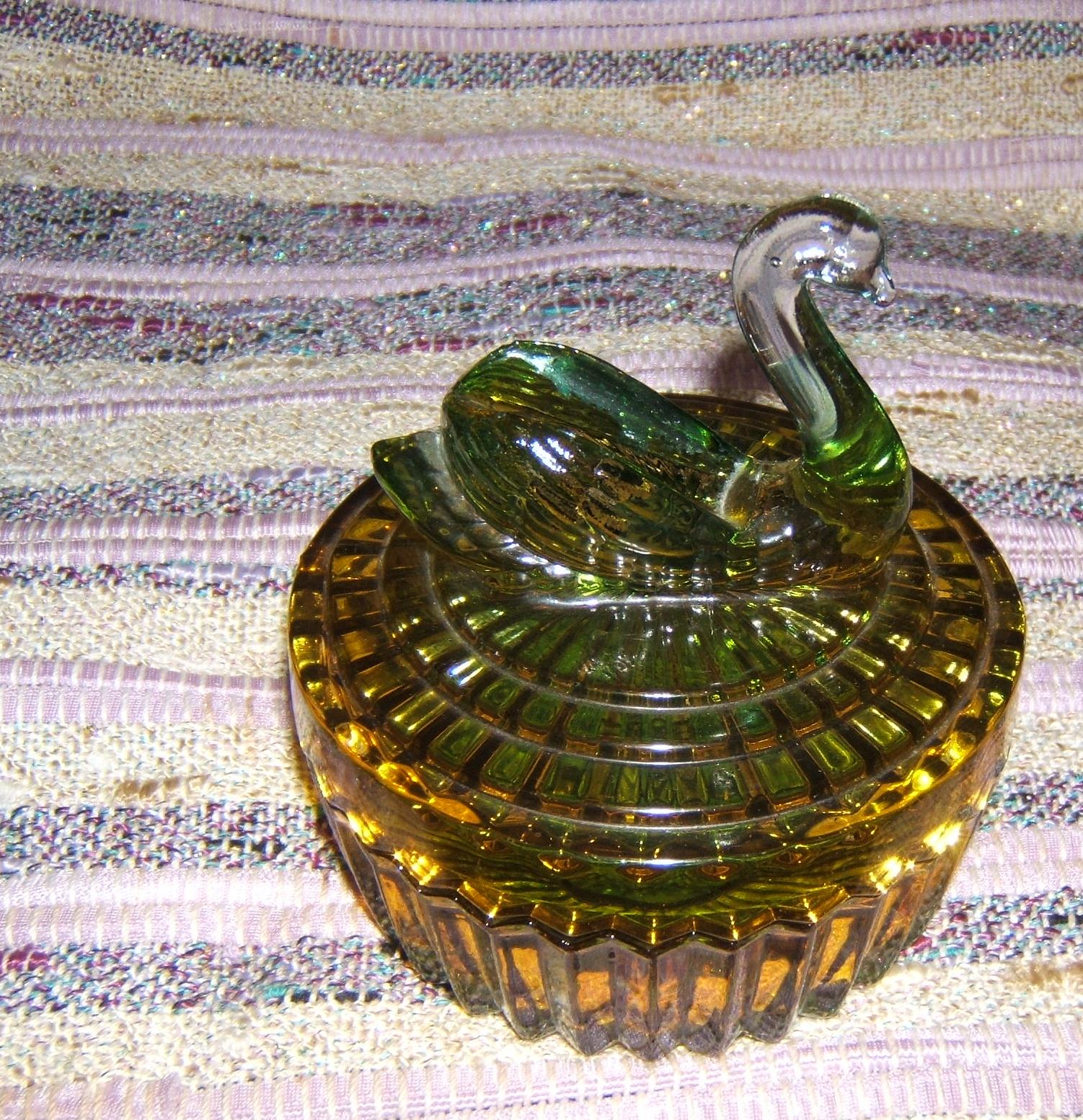
three swans, one green, one blue-green green and one amber (the swans have a cut-glass base and a hollow in their backs to hold lipstick)… I also have a clear swan, top only…
two terrier dog dresser jars, both peach-colored and iridescent…
and one poodle dresser jar, peach-colored and iridescent…

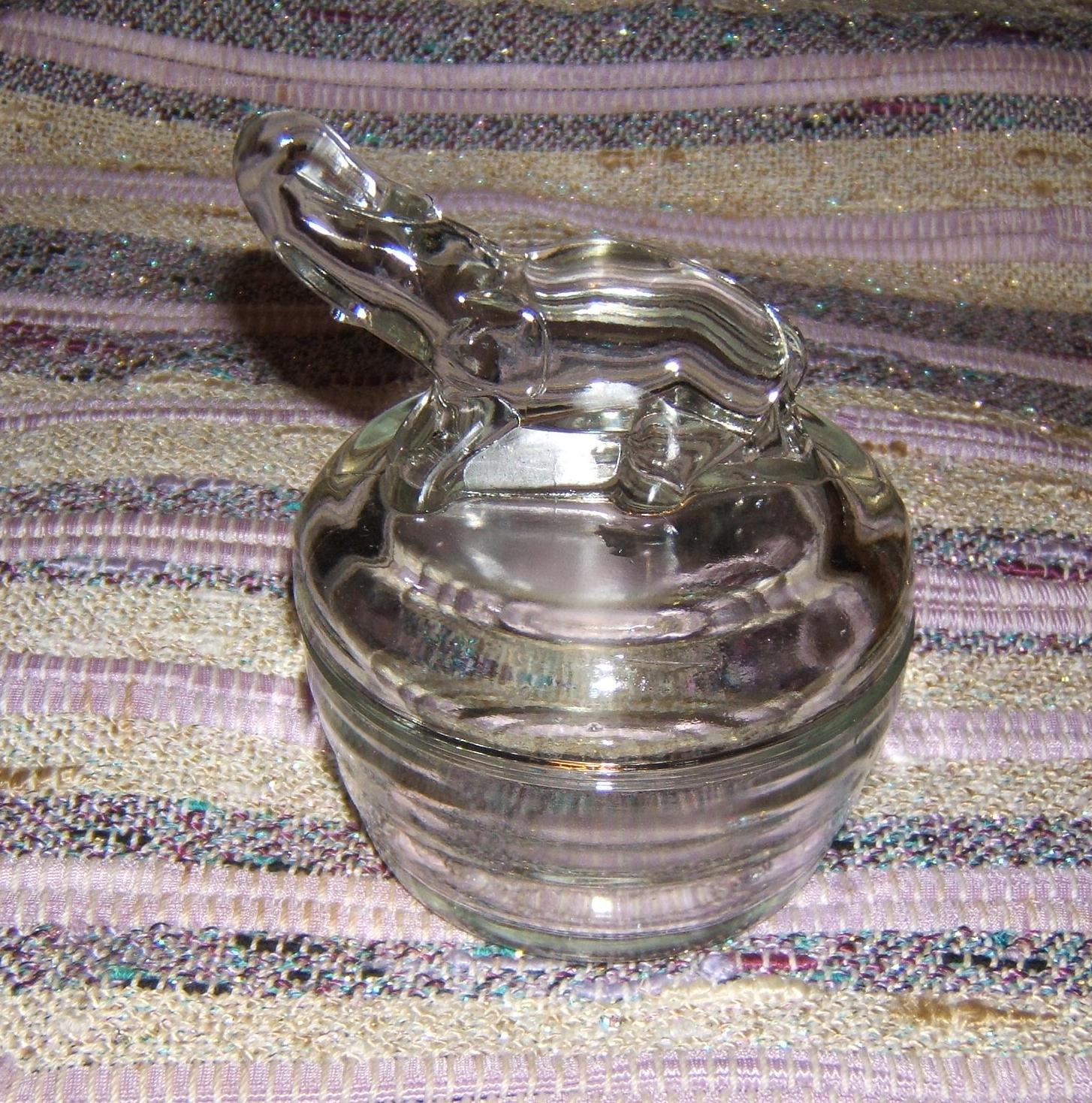
This year, I added an elephant dresser jar made of clear glass to my collection.
~
Do you know of any other designs in this type of dresser jar?
~
Copyright Jane Tims 2013
collecting glass animals
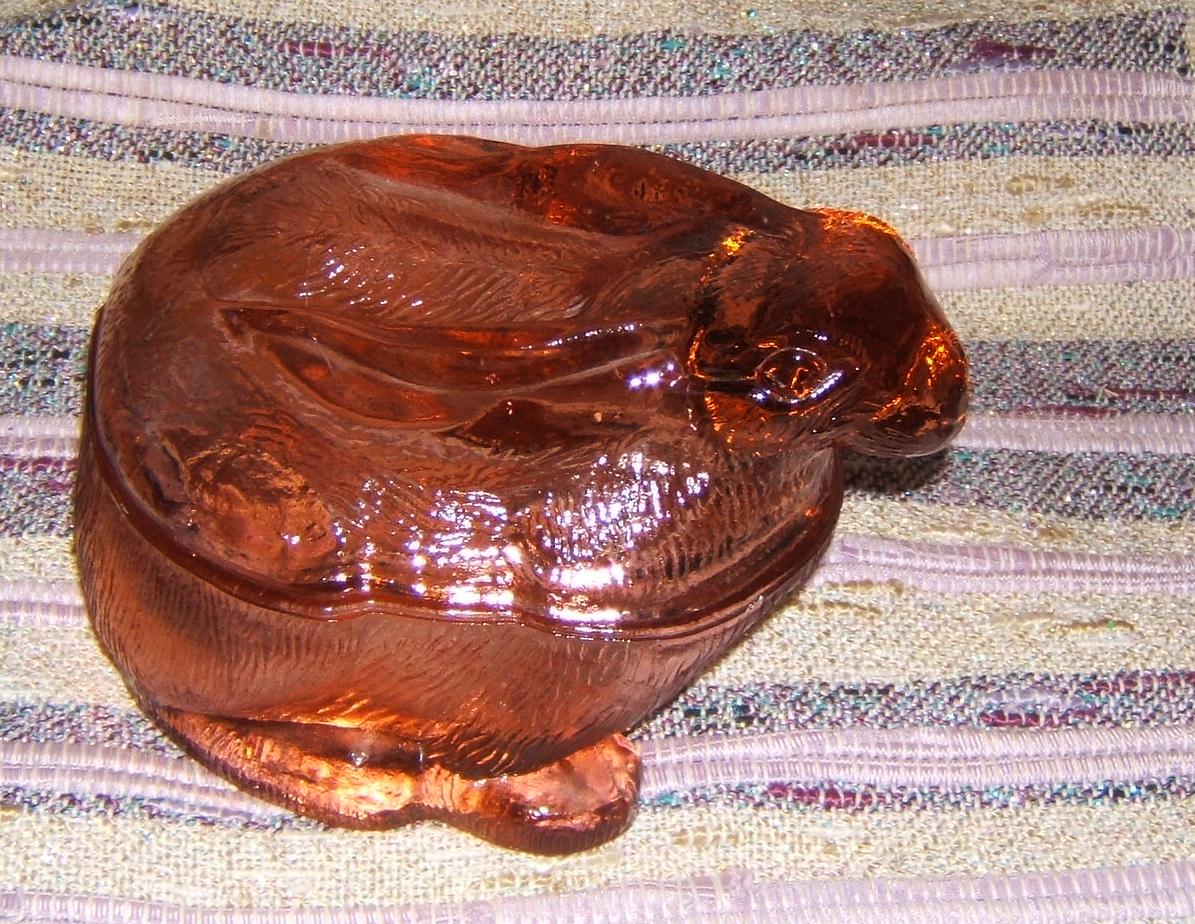
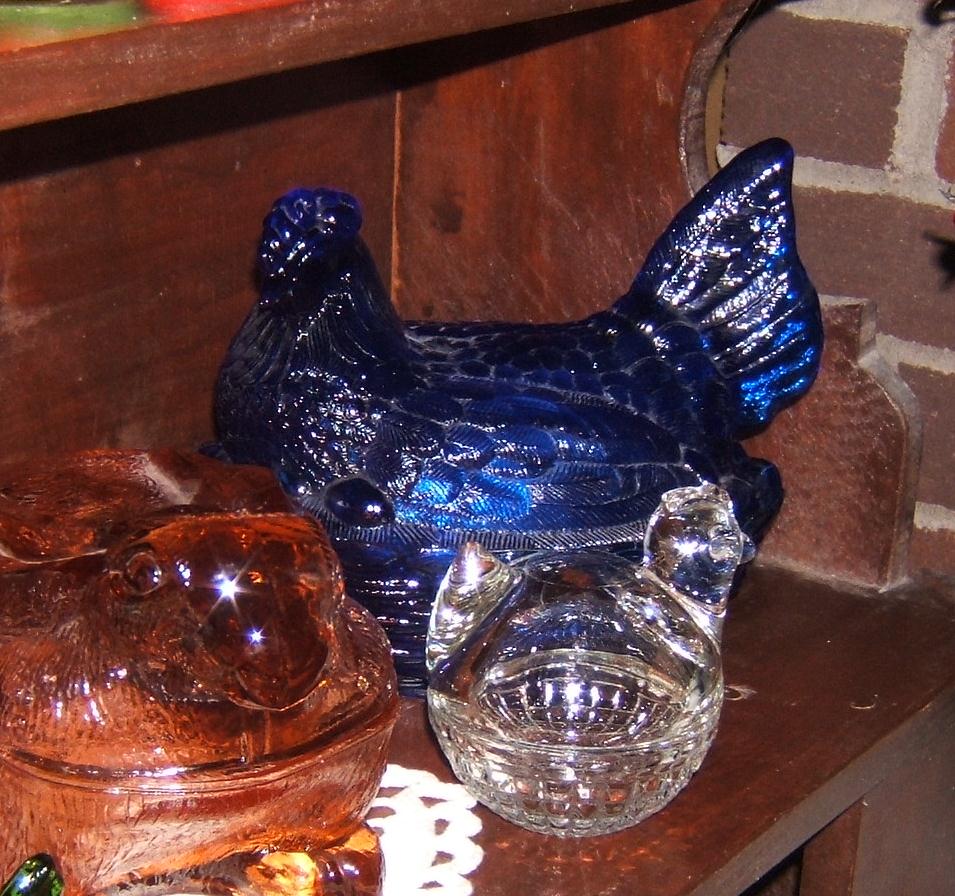
Today, I cleaned my collection of glass animals. Cleaning them takes a long time since I don’t clean them often. I wash each piece in soapy water and air dry it on a towel. As I work, I enjoy their sparkle and I think about how I got each piece. Since most of them are second-hand, I think about the unknown people who owned them before me.
Most of the animals in my collection belong in one of three categories: covered dishes, candle holders and dresser jars. A couple of the pieces belonged to my Mom. A couple of them are pieces she gave me as gifts. The rest, I found over the years at antique stores or auctions.

The covered dishes are mostly hens or chickens…
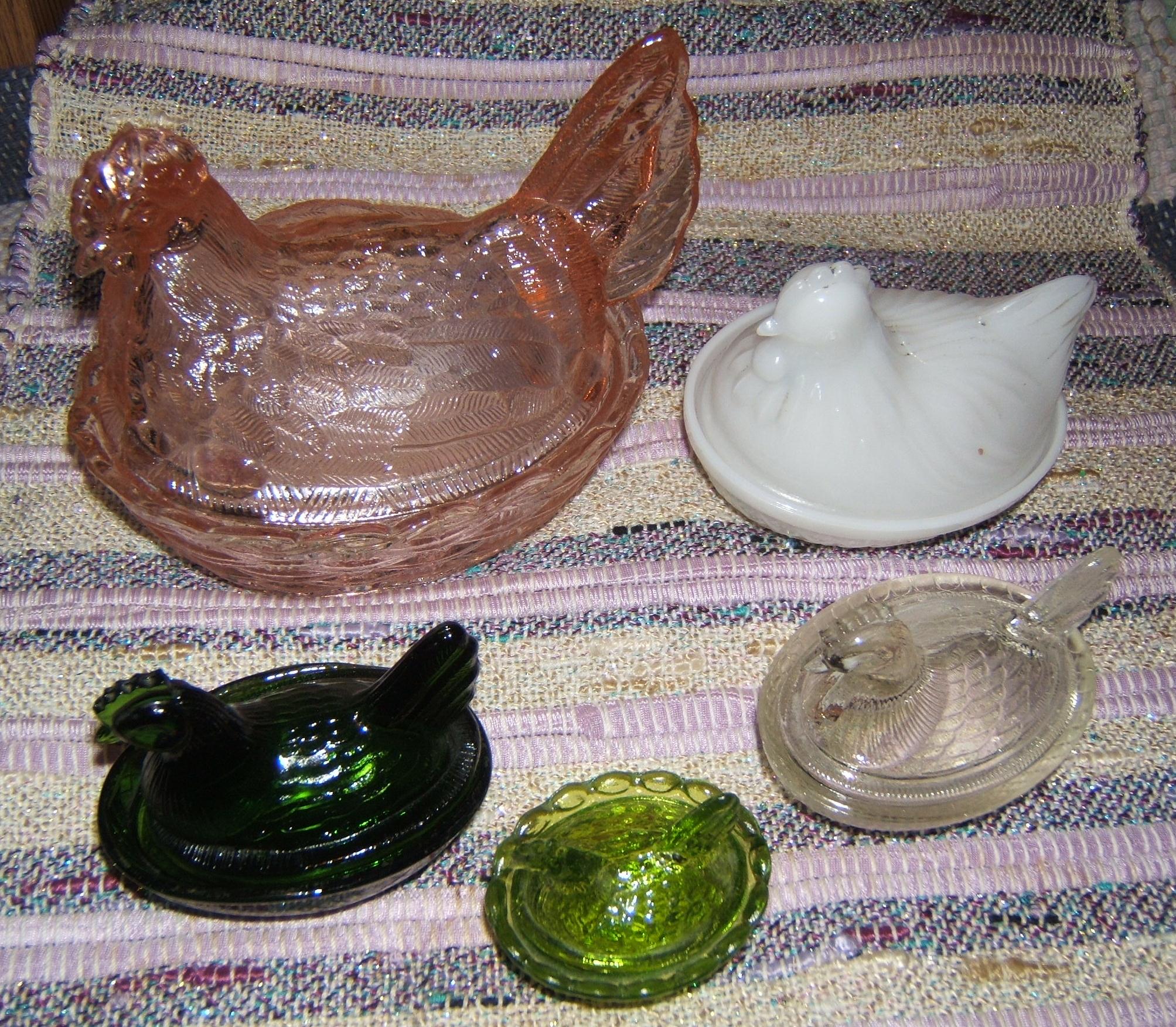
My favorite hen dish is a funny round chicken in clear glass…

I also have a rabbit in this collection…
and a duck…

I have a few glass birds of various colors. Each bird has a berry in its beak, and a hollow in its back to hold a candle…

I’ll show you some of my dresser jars in the next post.
Do you have a hen dish among your dishes?
~
Parting the Collection
~
1.
to collect: to gather together
these prisms
of glass and light
took a lifetime
what will become of them
when what becomes of me?
~
2.
collect: a short prayer
from a mouth like dust
~
I bid for each
between Limoges and Occupied Japan
with a steady hand
and a palpitating heart
~
3.
sapphire
feathers pressed into glass
bird in the house
at the window
~
cut crystal
edge of flight
from the menagerie
~
ruby swan
amethyst bee
topaz duck
~
glazed eyes
~
4.
lenses rise in your throat
siliceous gasses
burst from your beak
as a berry
~
past and future
transparent
~
shards of glass
shared among
my daughters
do not understand
the meaning
of collection
~
do not know
a Sybil
rises in your beak
~
~
Published as ‘Parting the Collection’, The Antigonish Review 95, Autumn 1993
Revised

~
Copyright Jane Tims 2013
dear deer
This year, I moved our feeders to our front yard.
They are not so easy to see from the house, although I have a good view from the window of our library.

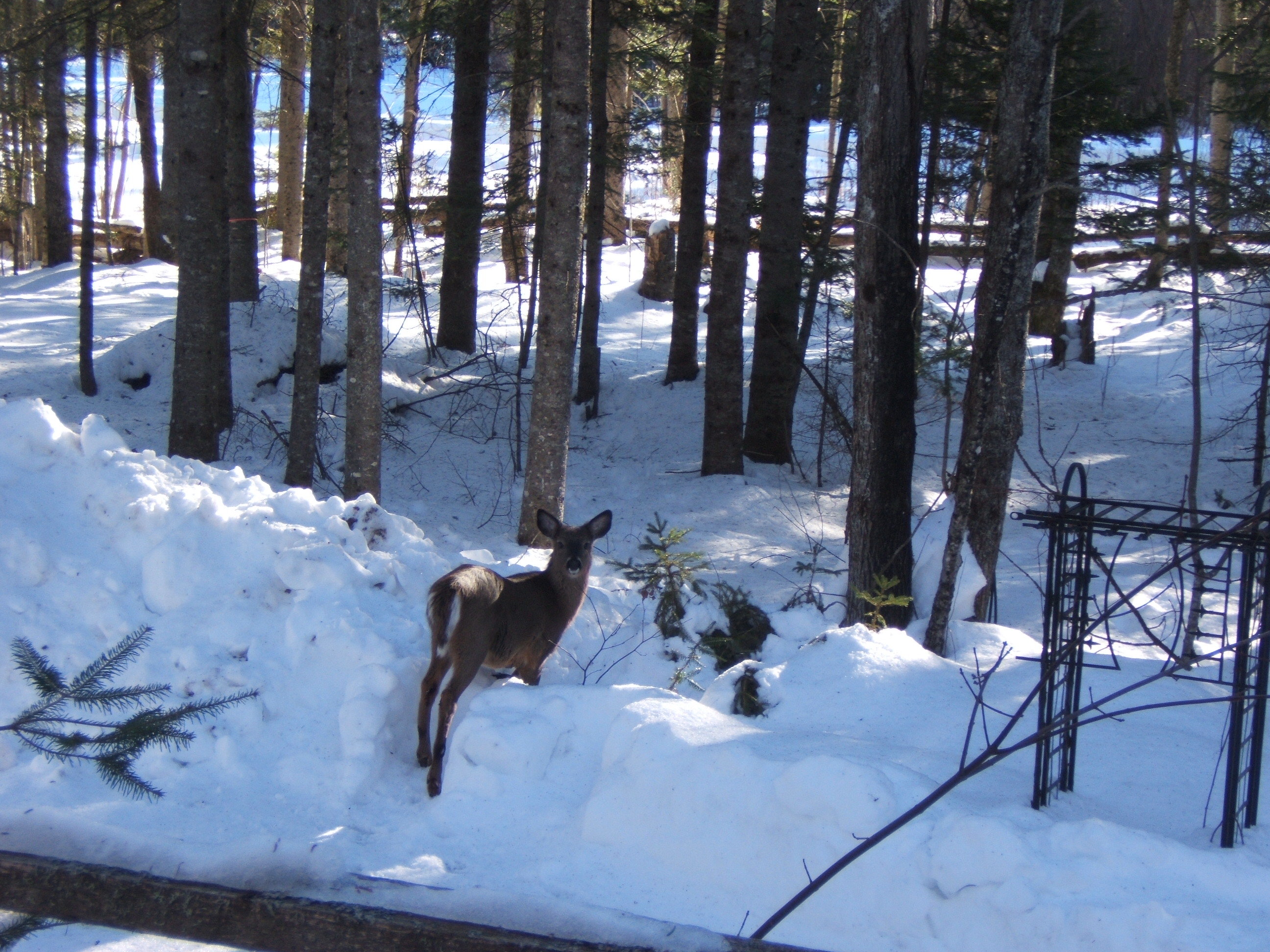
The deer have liked the new feeding station. We see them almost every day. They empty the feeder too quickly and also visit the compost pile. We don’t deliberately feed the deer, but they visit the feeders anyway.

~
deep and delicate, hoof print
evidence, this space is shared
~
deer, eat peelings by moonlight
one floor up, we sleep, unaware
~
lulled by winter carbs
carrots and potatoes in the supper stew
~
Copyright Jane Tims 2013
featuring a 1941 International truck
I have had a few poems accepted for publication recently. These include ‘abandoned resort hotel, Devil’s Head’; ‘Berries in Cellophane’; and ‘1941 International K-4’. They appear in Issue 10 (Spring, 2013) of The Lion’s Head Magazine (online). You can have a look at these three poems at http://lionsheadpress.blogspot.ca/
~
‘Berries in Cellophane’ is from my manuscript on growing and gathering local foods.
The poems ‘abandoned resort hotel, Devil’s Head’ and ‘ ‘1941 International K-4’ are both part of a series, not yet completed, on abandonment. This series began my interest in abandoned churches, and lead to the novel I am now working on – ‘Saving the Landing Church’.
~
The poem ‘1941 International K-4’ was inspired by an old International truck, seen in a wood lot in southern New Brunswick in the fall of 2011. It was set up on steel drums and looked like it was no longer used. Rusted and out-of-commission, she was still elegant to behold. The poem came easily, written in the ‘voice’ of the truck, recalling its various adventures.
Have a look at the poem in Lion’s Head Magazine and let me know what you think.

~

Copyright Jane Tims 2013
editing to remove the passive voice
I am still editing my novel, aiming for the third draft. Today is about finding and eradicating the passive voice. When I find an instant of the passive voice, I try to find a better, more active way to present the idea.
The passive voice occurs when the object of an action is expressed as the subject. ‘The book was read by Jane’ (passive voice) … instead of … ‘Jane read the book’ (active voice).
The passive voice is often accompanied by a form of the verb ‘to be’. A simple example: ‘The text had been edited by the teacher’ (passive voice) … ‘The teacher had edited the text’ (active voice).
The active voice is usually preferred because it’s direct, energetic and less wordy. Sometimes the passive voice is Ok to use – for example, if the agent of an action is unknown or unimportant: ‘The letters were misdirected to Toronto.’
~
Here are examples of some of the changes I have made:
~
Passive : The louvers of the belfry were splintered where they had been damaged by the move.
Active: The move had damaged the louvers of the belfry, splintering the wood.
~

louvers in a belfry, the wood not splintered!!!
~
Passive: Our taste buds were teased by names like the Pickle in the Barrel Pub, Heavenly Hash, and Bob’s Country Diner.
Active: Names like the Pickle in the Barrel Pub, Heavenly Hash, and Bob’s Country Diner teased our taste buds.
~

if there were such a place as ‘Heavenly Hash’, they might serve a salad like this!!!!
~
Passive: The deconsecration has been approved by the Diocese
Active: The Diocese has approved the deconsecration.
~
~
I treat my edits of dialogue a little differently with respect to the passive voice. People often speak in the passive and so I am careful to edit for what sounds natural rather than what is grammatically correct!
~
Copyright Jane Tims 2013
the case of the missing…
My Mom always loved her belongings and kept excellent care of them. She also tried to keep track of them, but with four children (especially me), occasionally items went missing.
Once she called me in great distress. She had been all over her property and could not locate the second wheel from a pair of wagon wheels she knew she had.
I said she didn’t have to worry. I had taken the wheel as a decoration for my yard.
Today, I can look out at my winter garden, and see Mom’s missing wagon wheel.
 ~
~
Copyright Jane Tims 2013




 nichepoetryandprose