islands and gorges (day 13 and 14)
My virtual bike ride continues with a ride from Blackland to Belledune …
~
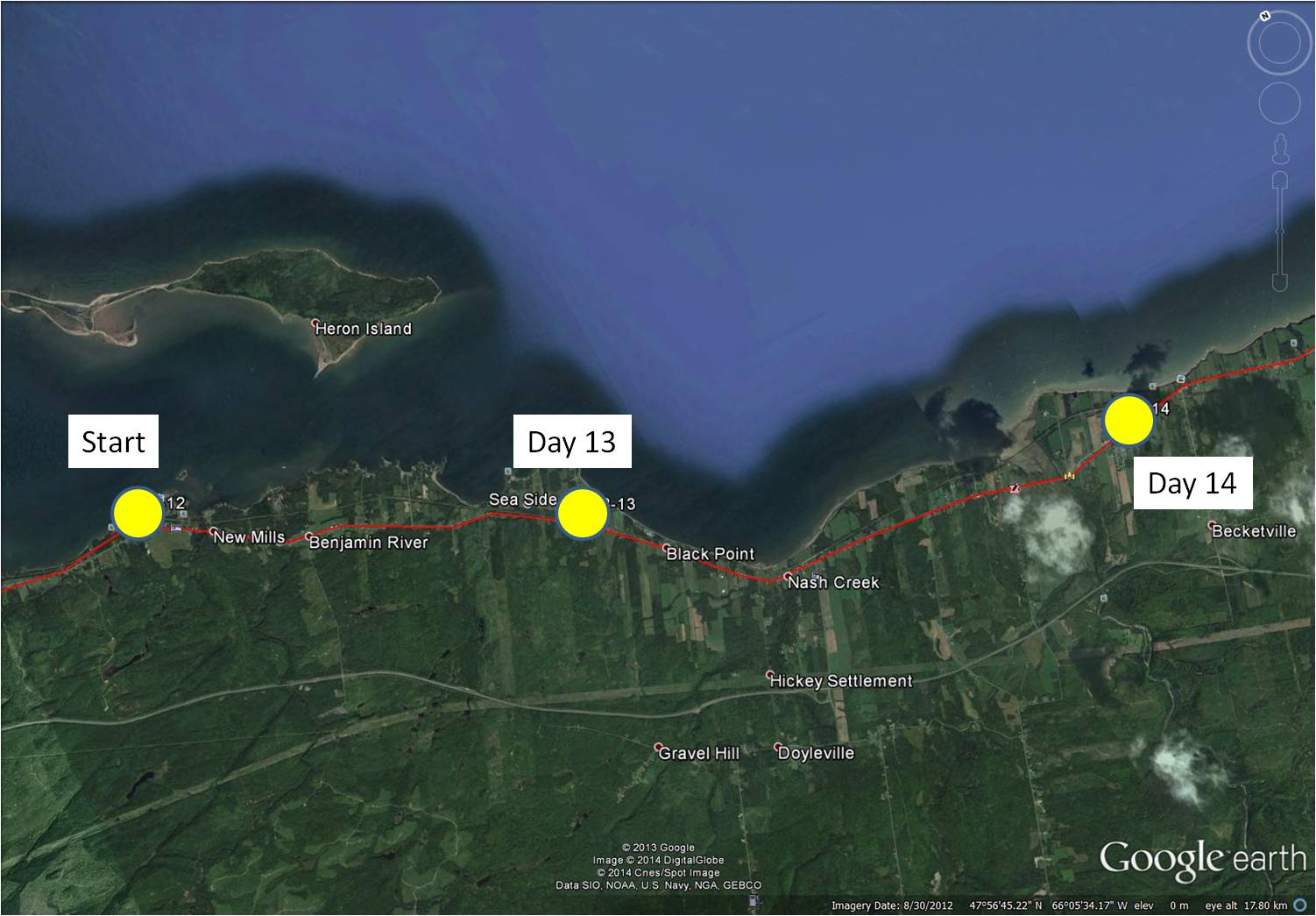
distance travelled (map from Google Earth)
~
8-13 February 5, 2014 20 minutes 3.0 km (Blackland to Sea Side)
8-14 February 8, 2014 35 minutes 7.0 km (Sea Side to west of Belledune)
~
As I have said, I have often visited the area I am ‘biking’ through as part of my past work. In the 1970s and 1980s, we visited many sites in the area to measure the levels of air pollutants in local lichens. We collected lichens of the genus Cladina (reindeer lichens) since they absorb all of their nutrition from the air and air pollutants accumulate in their tissues …
~

species of the lichen ‘Cladina’ grow in tufts on high elevation, rocky areas and in low-lying bogs
~
One of our sampling locations was Heron Island, an island 3.5 km long, lying just off the coast …
~
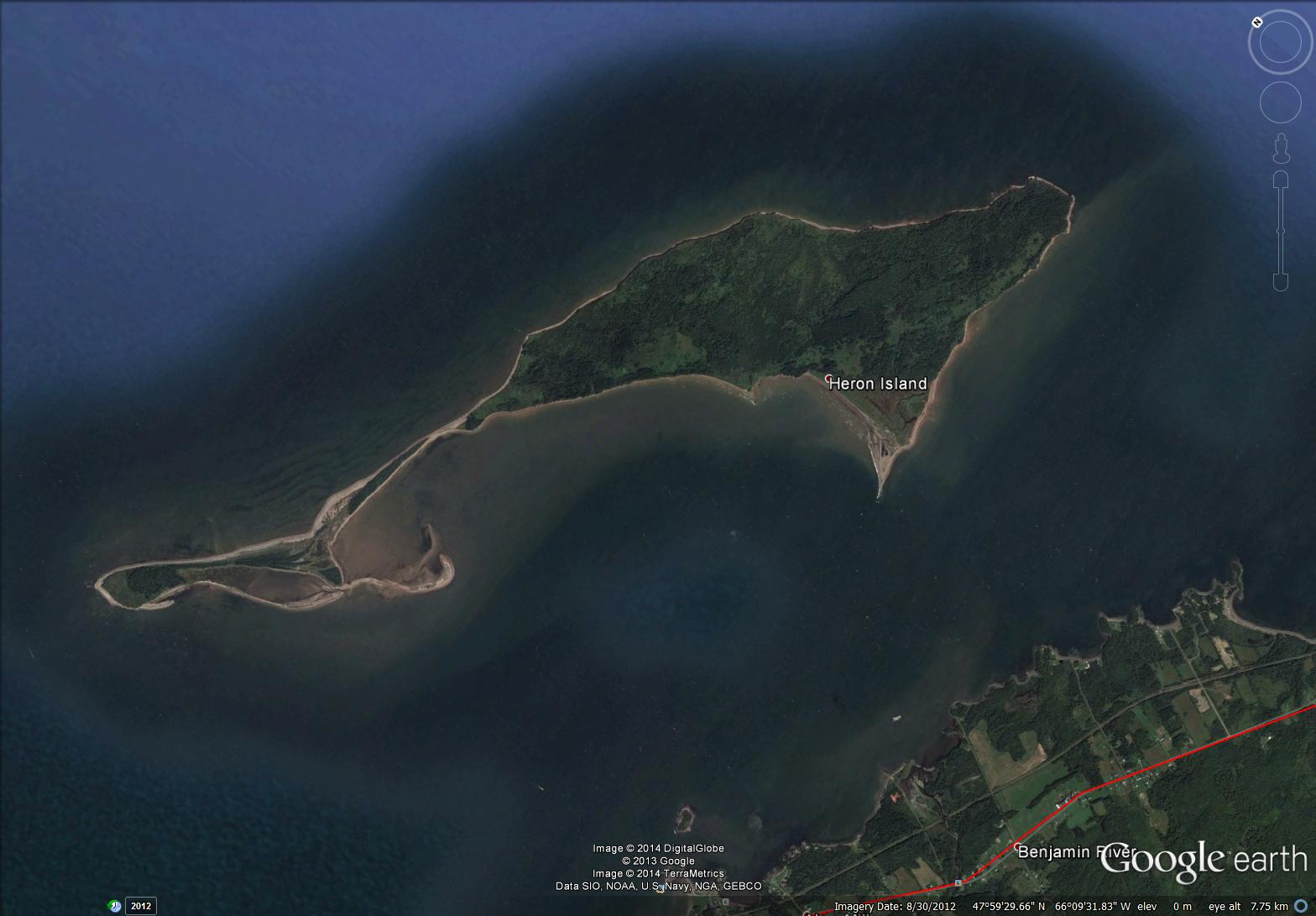
satellite image of Heron Island (map from Google Earth)
~
I have been on the island several times … it was a good place to collect lichens since there are not many local emissions to contaminate the sample (no cars, dusty roads, and so on).
~
The island is a landscape of low-lying salt marsh and beach as well as forested and grown-over old-field areas. On the boat on the way to the island, I remember watching scallop fishermen working on their barges in the shallow waters. Although people have lived on the island as recently as 1940, the island is now protected and co-managed by the provincial government and First Nations peoples who have traditionally used the island as a summer residence.
~
Today’s painting is of a rather stormy day along the bay shore just east of Heron Island …
~

February 11, 2014 ‘Baie des Chaleurs’ Jane Tims
~
Also in the area where I was ‘biking’ is the very hilly landscape of the Jacquet River. The high elevation plateau has been deeply eroded by the Jacquet River – the river and its tributaries flow through deep gorges. The 26,000 hectare ‘Jacquet River Gorge’ is one of New Brunswick’s Protected Natural Areas. Reaching the locations of our lichen collections took us deep into the area and I remember how steep the hills (and the roads) were as we went to our collection sites.
~

February 17, 2014 ‘lower Jacquet River’ Jane Tims
~
Copyright 2014 Jane Tims
harvesting colour – the formula for colour
My first effort towards my project is to understand what materials I will need. From my early reading, I have learned the end colour for any project using natural dyes is much more than just adding plant material to water. A final colour is the result of so many factors.
~
My simple formula for this complex symphony is:
final colour = source water + utensils + plant material (dyestuff) + mordent + colour modifier + textile fibre
~
No doubt, I will discover I have omitted some important element.
~
In my next posts, I will consider each of these elements and talk about the specific items I intend to use.
~
For example, I will need some textile fibre to dye. My intention is to dye small amounts of material for use in various weaving projects. In my weaving, I use both thread and strips of textiles.
At this early stage, I have three materials I want to dye. I have a small quantity of unspun fleece obtained a couple of years ago during our trip to Upper Canada Village in Ontario. I also have three old cotton shirts – I loved to wear these before they became stained – perhaps I will wear them again, repurposed in rainbow colour! And I have just purchased a meter of white silk (at $37 per meter, it is a splurge!). I will have to do some preparatory cleaning to each of these materials before I use them in my dyeing projects.
~

some materials for dyeing … a meter of silk, three shirts, and a bundle of unspun wool … the shirts have already seen their share of accidental dyeing !!!
~
Behind the scenes, I am finding poetic inspiration as I learn this craft of dyeing. Eventually I will be brave enough to show my poems to you.
~
Copyright 2014 Jane Tims
harvesting colour – a reference library
To begin my poetry project ‘harvesting colour’, I have created a small reference library. I will keep my library by my desk in the loft I use as my studio. I wrote most of the poems for my ‘growing and gathering’ manuscript there.

on my desk
To decide what books to order, I followed some suggestions made by Pia, an experienced dyer (follow her dyeing adventures at Colour Cottage – www.colourcottage.wordpress.com).
~
I started with three books:
Rita Buchanan, 1999, A Dyer’s Garden (Dover Publications)
Jenny Dean, 2010, Wild Color: The Complete Guide to Making and Using Natural Dyes (Watson-Guptill Publications)
India Flint, 2010, Eco Colour: Botanical Dyes for Beautiful Textiles (Interweave Press)
~
I am sure I will be adding others as my project goes on, but for now these books have lots of great advice for a beginning dyer. Along with these books, I have my entire library of illustrated botanical guides, including floras of New Brunswick, Nova Scotia and North America to help me identify the plants I will need.
~
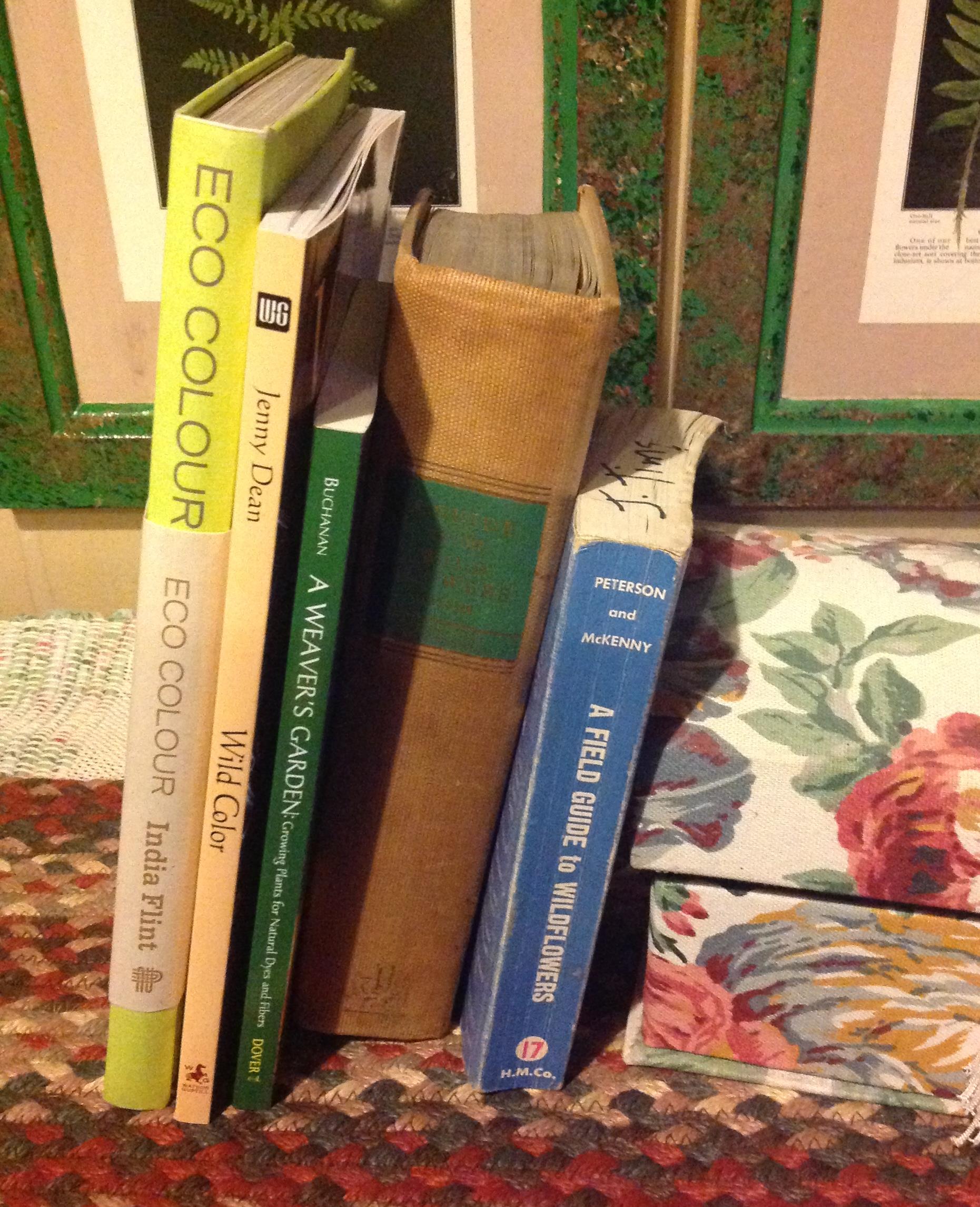
my growing dyers library
~
Roaming through these books as an ‘armchair dyer’ reminds me of the thrill of looking over seed catalogues while the snows of winter are falling.
Although I have not read any of these books in their entirety, I will give you a brief description of each:
~
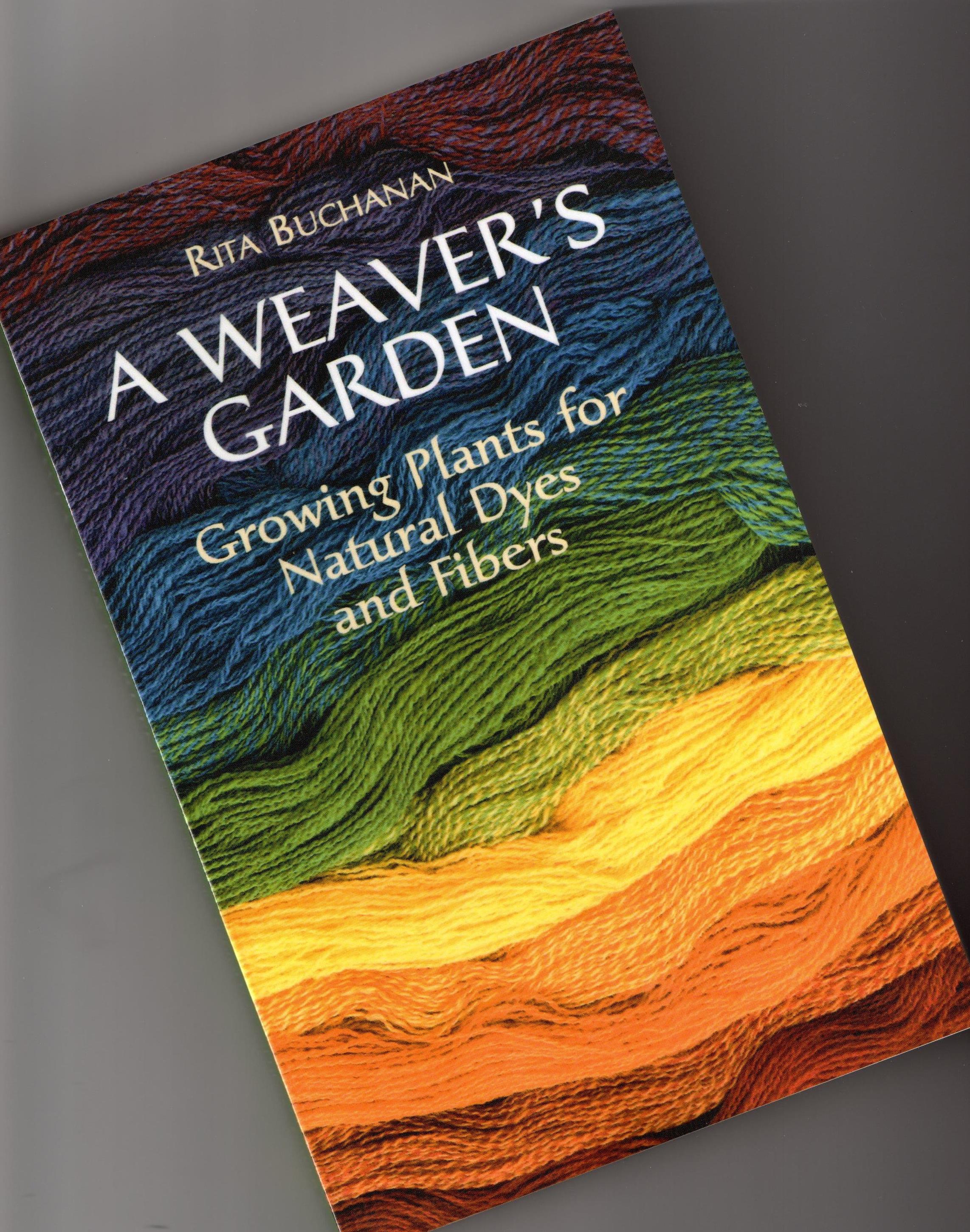
Rita Buchanan, 1999, A Dyer’s Garden (Dover Publications)
~
Rita Buchanan’s A Dyer’s Garden is a straightforward guide to using plants for various cottage craft purposes. The guide includes information on using plants as dyes, as well as for stuffing, soap-making and a source of fragrance. The chapter on dyes provides a step by step method, as well as an in-depth description of various plants useable for dyes. I love the black and white line drawings for some of these plants. The book includes practical information throughout on growing these plants and on the history of their use.
~
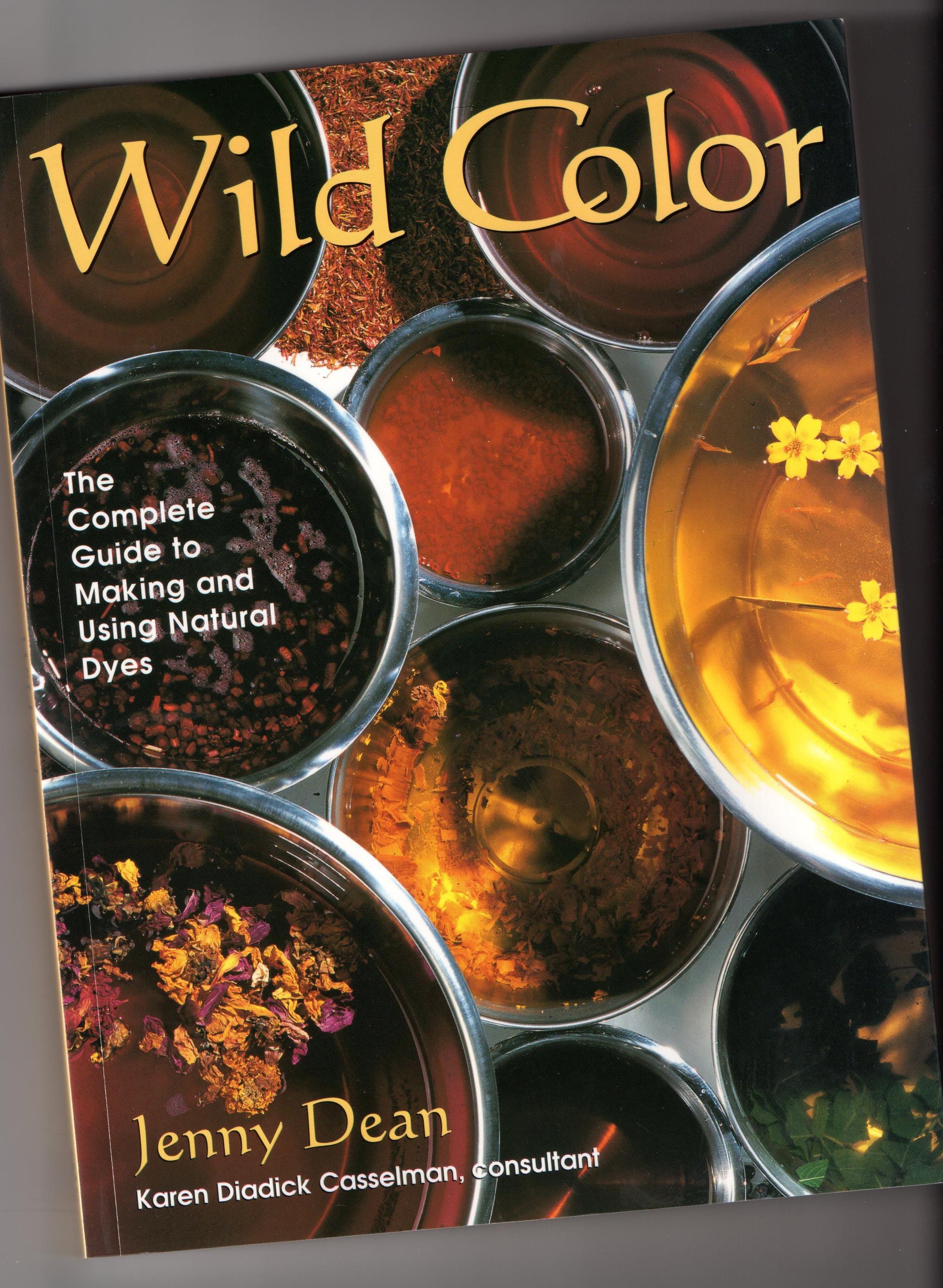
Jenny Dean, 2010, Wild Color: The Complete Guide to Making and Using Natural Dyes (Watson-Guptill Publications)
~
Jenny Dean’s book, Wild Color, is a riot of colour. Easy to flip through, it has detailed sections on various stages of the dyeing process. A useful feature for me will be her illustrated guide to some common plants used as dyestuffs. I particularly like her colour charts of results obtained with various dyestuff, mordants and modifiers. She also includes some background material on the history of dyers and dyeing.
~

India Flint, 2010, Eco Colour: Botanical Dyes for Beautiful Textiles (Interweave Press)
~
Eco Colour by India Flint is a well-illustrated book, full of photos of the author’s work with plants and fabrics. You can tell she has been there every step of the way – included in the photos are her handwritten notes. She describes well the process of dyeing and provides practical information. She also includes lots of examples of colour transfers (eco prints) – leaves are applied directly to the cloth to make colour prints. The book includes an extensive list of plants sorted by the colours they produce.
~
I can hardly wait to thoroughly read these three books. Besides looking for a step by step approach, I will be on the hunt for words from the dyer’s vocabulary to include in my poems.
~
Another resource I will use for my project will be the Internet. I read the blogs of a few dyers regularly, to learn something from their experiences, to get their advice and to better know these people who turn their appreciation of colour in nature into capturing colour. I’m sure you will enjoy these blogs about dyeing and fabrics as much as I do:
http://colourcottage.wordpress.com
http://whatzitknitz.wordpress.com/
~
Now that I have my reference library underway, I am gathering ideas about what I will need to begin my project. My next post will show you some of the items I will be using.
~
Copyright 2014 Jane Tims
rural relics (day 10 to 12)
On my virtual bike trip along the north coast of New Brunswick, I am seeing many aspects of rural New Brunswick that are almost relics in our modern world.
~

distance travelled (map from Google Earth)
~
8-11 January 31, 2014 45 minutes 3.0 km (Eel River Bar to Charlo)
8-12 January 28, 2014 30 minutes 7.0 km (Charlo to Blackland)
~
relic:
- object that is interesting because of its age or association
- surviving custom, belief or object from a past age
(Oxford dictionary)
~
One of these relics is the rural mailbox. Amid controversy, the single mailbox at the end of a driveway is gradually being replaced, so there are very few end-of-drive mailboxes along the route I am travelling.
~
We had a mailbox for many years and it was always fun going to the end of the drive to get our mail. Once when I was at my grandfather’s farm for a vacation, my Aunt Anna sent me a parcel so I would have the fun of getting a box in the mail. I remember well reaching up to get the parcel and I remember what was inside – a snow globe!

getting a parcel at my grandfather’s mailbox
~
About ten years ago, we were shifted to a community mail box. We have a key and an assigned box. It is still fun to get the mail, but less convenient …
~
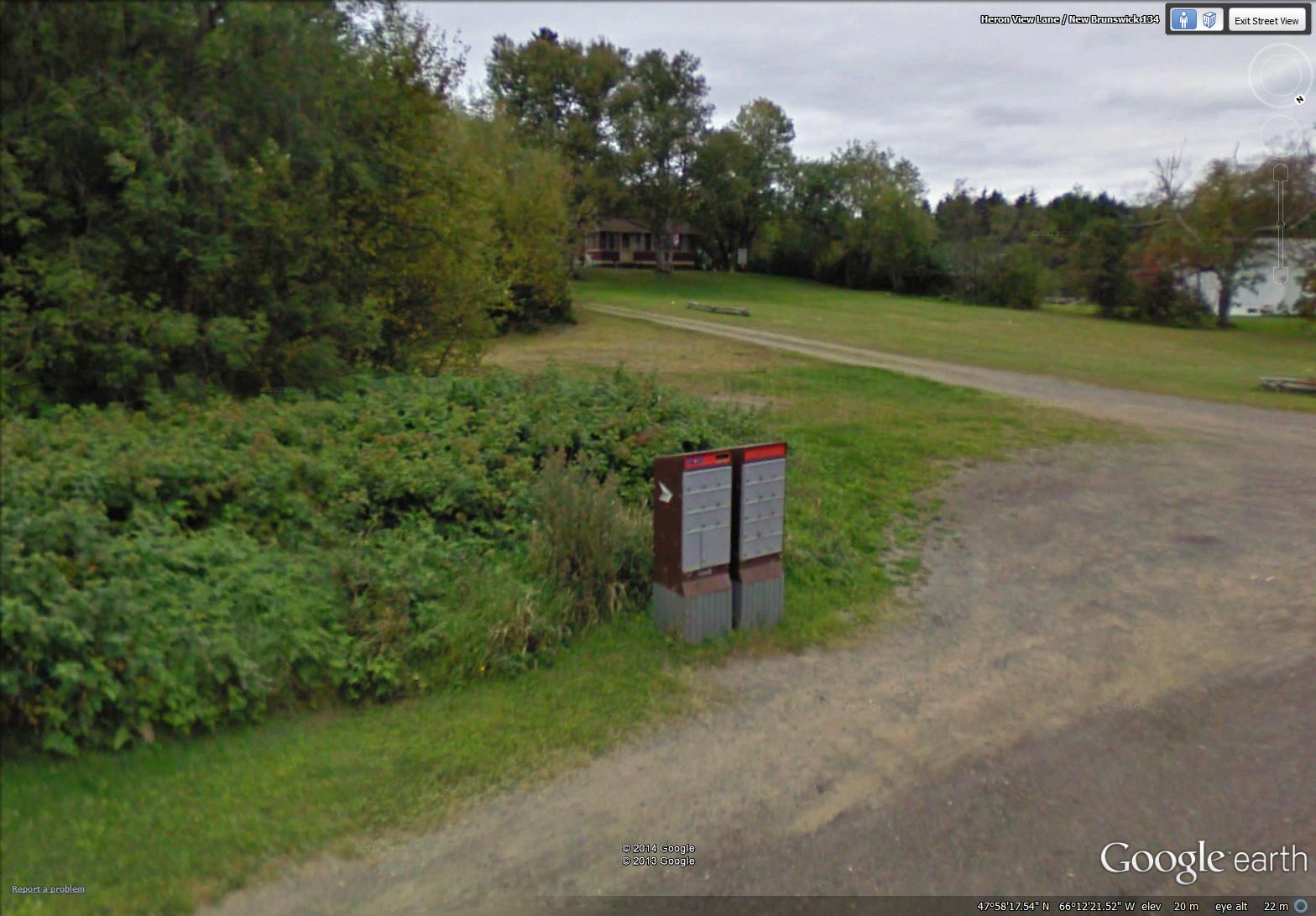
mailboxes near New Mills (image from Street View)
~
Another relic of a more self-sufficient way of life is the remnant apple orchard. In some cases, the apples are still used by thrifty families, but often the fallen fruit is left for the deer …
~

orchard near Blackland (image from Street View)
~
I also see derelict barns and sheds along the road, abandoned as people give up farming and a more rural way of life …
~

February 11. 2014 ‘old shed near Charlo’ Jane Tims
~
Do you encounter remnant bits of our past in your travels? Do they bring back memories?
~
Copyright 2014 Jane Tims
february chill
memories of a walk on a cold night …
~

~
spaces in the dark
~
white on the pasture
interrupts the night
clings to cold twilight
~
footfalls
beside me
~
a black horse
assembles from shadow
ponders the snow
~
your coat
folded around me
~
the horse lifts its head
knows where deer hesitate
where wings brush against barn boards
where I stand in the snow
and shiver
~
never so warm again
~
chill spaces around me
~
no feathers to fly
~
~

~
Copyright 2014 Jane Tims
harvesting colour
Recently I was awarded an artsnb (New Brunswick Arts Board) Creations grant. My six month project will be to write a book-length poetry manuscript about the experience of using plant dyes for colouring textiles.
The poems will find their inspiration in the activities of collecting plants, extracting their dyes and using them to colour woven fabric.
~
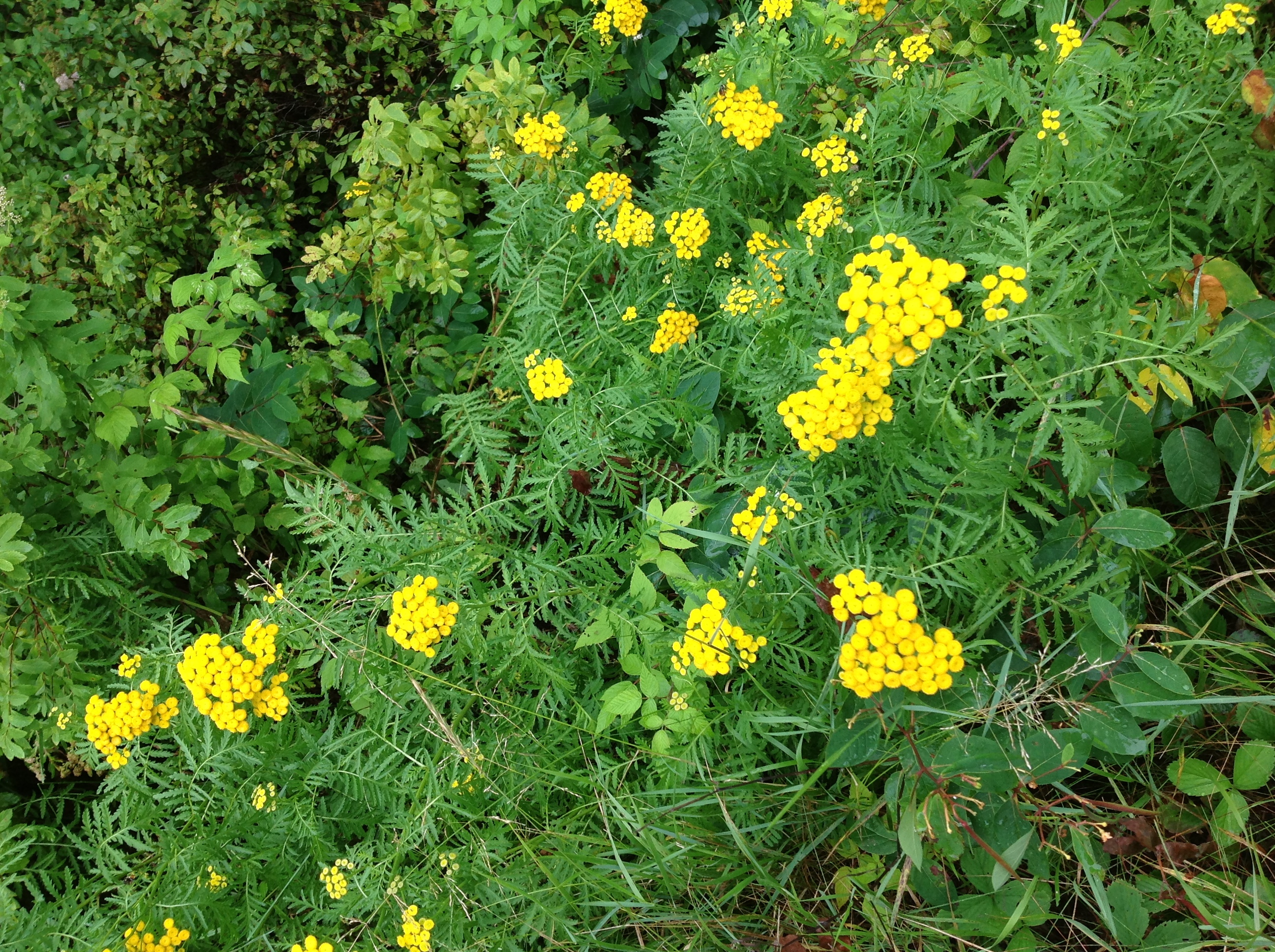
one of the plants I will be using is Tansy (Tanacetum vulgare) – it grows throughout New Brunswick and can be used to make yellow and olive dyes
~
Writing these poems, in many ways, should echo my previous project ‘growing and gathering’. I will do some research about a particular plant, then go forth and find it. For the ‘growing and gathering’ project I had a lot of fun exploring various areas of the province for the plants I needed, so I know I will love this part of the experience. It will be when I get the plant material home that the differences between the two projects will become clear. With ‘growing and gathering’, writing poems about picking berries seemed second nature to me since I’ve spent a lot of my life in berry fields.
~
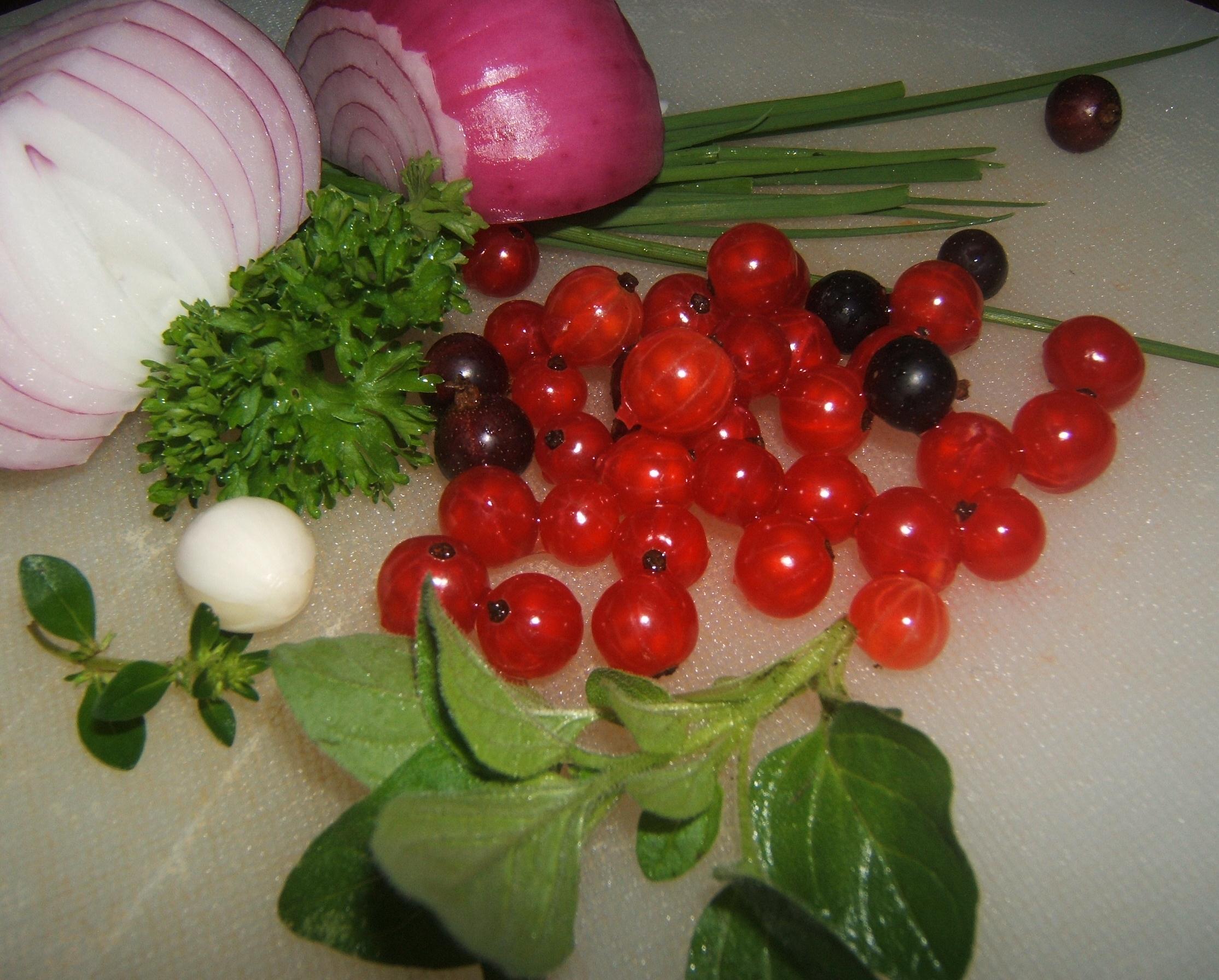
some of the ingredients for a ‘growing and gathering’ salad
~
With ‘harvesting colour’, I will be learning a craft new to me. I’ll be trying to manage the complex alchemy of “pot type plus source water plus plant material plus mordent plus receiving material”. Lots of chemistry and a few colour tragedies, I’m certain. And discovery, as purple plants become yellow dye. I hope to combine making plant dyes with my weaving, an activity I find totally relaxing and steadying.
~

some of my weaving results over the years … it will be fun to see what colours my project will bring to my weaving
~
So where will the poems come from and what will they say? I’ll be looking for metaphors for human experience and emotion. I’ll try to embed ideas about reconnection with nature and about cultural expression through decorating fabric. I’ll use words from botany and chemistry, and a rich colour dictionary. I can hardly wait to explore all the words for yellow, and green, and red.
I want to write poems about ‘saddening’ the colour by adding a pinch of salt, and ruining a dye lot by forgetting to tend it well. I’ll write about oak leaf imprints on cloth, and the different yellows created with apple bark and poplar leaf. I’d also like to write poems about the ordinary life experience of plant dyes – grass stains on knees, the grey Choke-cherry jelly bag, the Cranberry stain on the tablecloth.
I’ll be presenting at least some of my poems here and I’ll certainly be sharing my experiences. I’ll continue to present my virtual travel, novel writing and watercolour posts, but I plan to devote Friday’s post each week to ‘harvesting colour’. Hope you visit regularly to follow me in my project!
~
Copyright 2014 Jane Tims
new-fallen snow
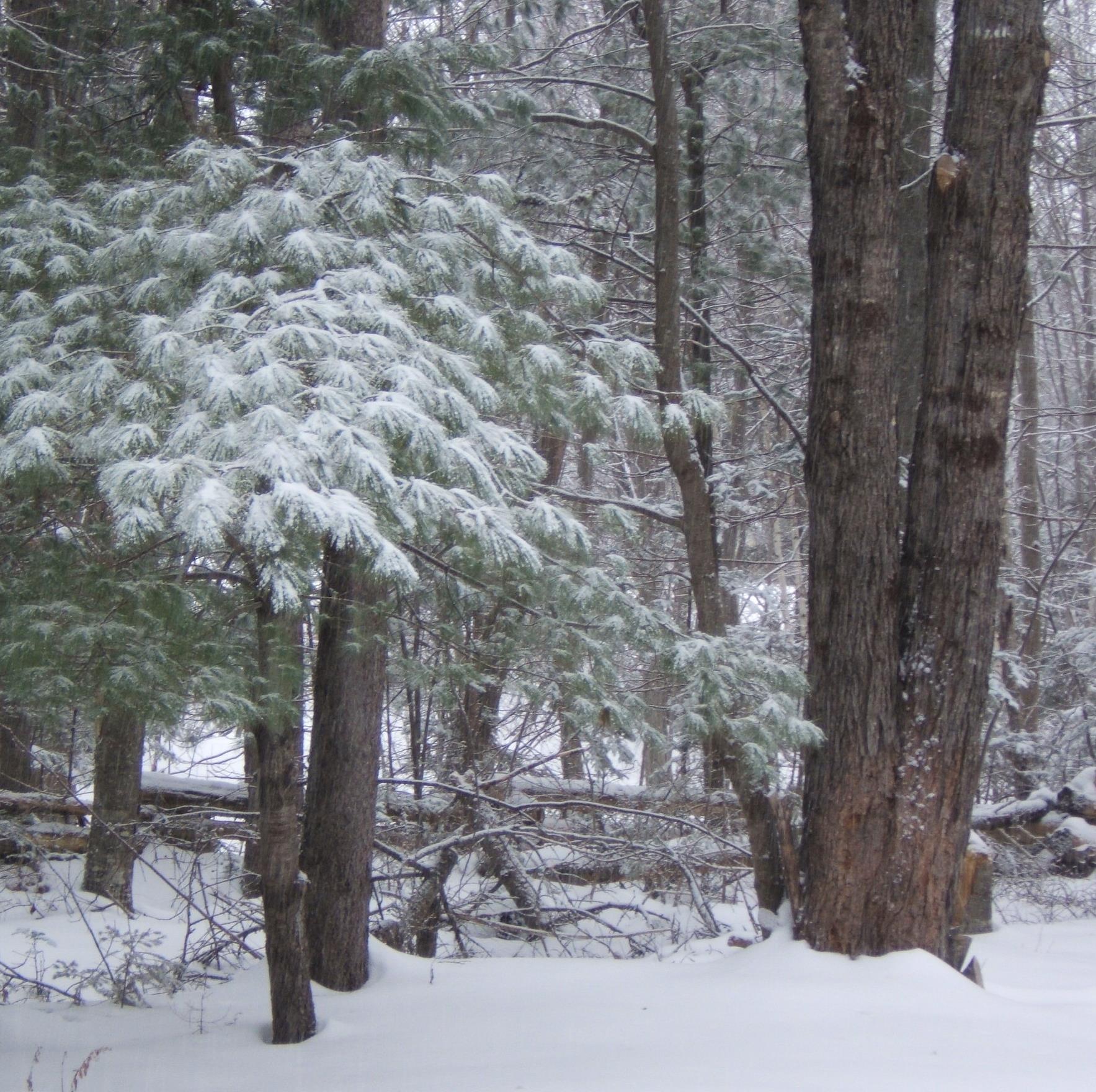
On this wintry day … finding the right words to describe new-fallen snow …
~

~
newfall: words escape me
~
the white ephemeral
perhaps frost
the fir boughs divided
the sculptured steel
of a flake of snow
~
try again
~
paper stencil
on chocolate cake
powdered sugar
sifted on the rills
of the new plowed field
~
again
~
sweet in my mouth
the bitter melted in morning sun
white hot on my cheek
the writing lamp
~
a lamp to the left
casts no shadow
(the shadow of a pen
or a hand)
~
(unless you are wrong-handed)
~
chimney shadow
on a fresh-snowed roof
or trees on the eastern edge of the road
where the sun cannot warm
~
the morning
dusting of ice
~
try again
~
~
Published as ‘newfall – words escape me’, the Fiddlehead 196, Summer 1998
~

~
~
Copyright 2014 Jane Tims
a bay and a bar (day 7 to day 10)
Today I am happy to announce – it has been one year since I began my virtual travel, as part of my efforts to exercise and to motivate me to ride my stationary bike more regularly. Although I have really only biked in my tiny exercise room in our basement, I have travelled, with the help of Street View (Google Earth) to central France, to the south coast of Cornwall and, now, to northern New Brunswick. During the past year, I biked 143 days (an average of 30 minutes on each day) and over 530 kilometers. I am so proud of myself!!
~
During the last four days of my virtual biking, I went through the Town of Dalhousie, at the mouth of the Restigouche River. At this point, the river opens into the Bay of Chaleur (la Baie des Chaleur) …
~
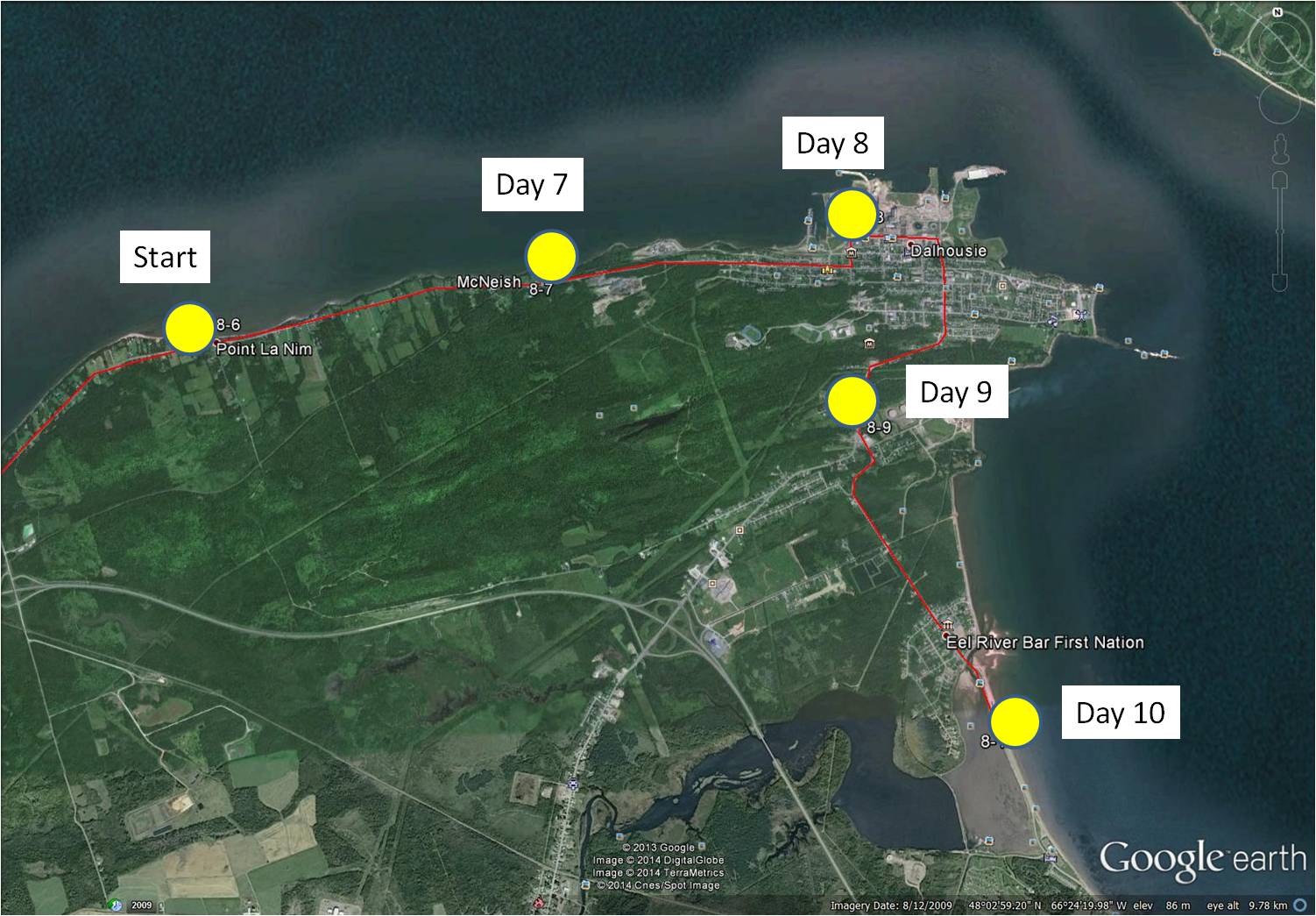
8-7 January 21, 2014 30 minutes 3.0 km (Point La Nim to McNeish)
8-8 January 23, 2014 30 minutes 3.0 km (McNeish to Dalhousie)
8-9 January 25, 2014 30 minutes 3.0 km (Dalhousie to Darlington)
8-10 January 28, 2014 35 minutes 3.0 km (Darlington to Eel River Bar)
~
One of the sights along this part of my journey is the 315 MW power generating station at Dalhousie, once operated by NB Power. This generating station was decommissioned in 2012 but remains interesting to me since I was hired in 1978 to monitor the biological effects of air emissions of the various industries in the Province. One of the reasons I travelled in northern New Brunswick was to carry out a monitoring program to study the effects of the Dalhousie power generating station.
~

Dalhousie power generating station (image by Street View)
~
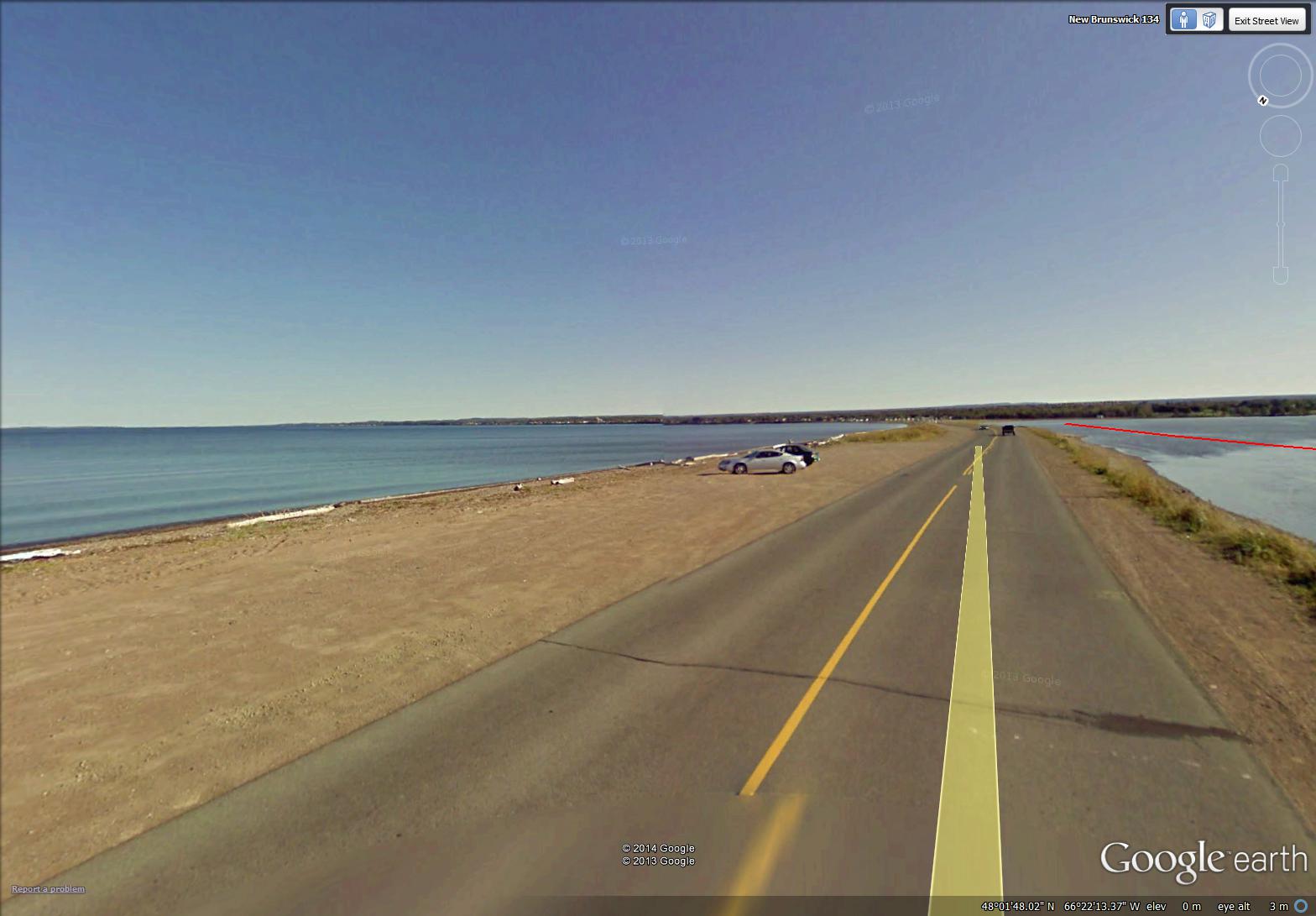
At the end of my four day ‘virtual travel’ last week, I crossed the beautiful Eel River Bar. This is the location of the Eel River Bar First Nation (Mi’kmaq people). The sandy bar is a barrier beach and one of the longest natural sand bars in the world. Water on one side of the Bar is salt and on the other is fresh. The highway is built directly on the Bar …
~
~
Across the Bay from the Bar is the low-lying peninsula of Miguasha, Quebec and the backdrop of the hills and mountains of the Gaspé peninsula. Boats at the entrance to Eel River are tethered as part of a fish netting system …

February 2, 2014 ‘boats at Eel River Bar’ Jane Tims
~
Copyright 2014 Jane Tims
dressing in black
on this wintry day …
~
Rebecca
~
in black
advances
down the middle
of the street
oblivious to traffic
~
dark mists
and Avalon
the perfect rupture of sky
~
from her fingers
black threads
spin skirt
and widow’s weeds
~
black painted nails
blackened sockets of eye
her lips black also
from a feast of berries
~

~
Copyright 2000 Jane Tims
excusing the difference
On this cold and wintry day …
~
When my son went to school, we often went to theatrical presentations at the school. The young people were so talented and the presentations so well executed, I often went away with the lines of a poem running through my head.
One evening performance was particularly memorable and inspiring. It was a production of Romeo and Juliet, and in this ‘version’ Rosaline was given an on-stage role. Rosaline is the character who does not appear in Shakespeare’s play but has a background role as Romeo’s first love.
The young lady who played the part of Rosaline was memorable for her costuming and her on-stage presence. She was dressed entirely in black Goth except for her hair – bright pink. I remember her soliloquy – she begged us to look past her difference and see the person within.
~
~
heroine
~
her hair
a stroke of pink
on the brown audience
~
more compelling
than the script
or the decorated stage
not surprising to see her name
on the program
~
Rose
in the part of Rosaline
~
in black but for the hair
even her lips
implore the audience
to pardon the difference
to understand
~
if only he had lived
~
she, of course, the heroic one
not Romeo
or Juliet
~
not the dead
but the left-behind
~
~
Copyright 2014 Jane Tims




 nichepoetryandprose