Free e-Book Promotion: Break into the Meniscus Science Fiction Series
Want to give yourself a free gift during this Christmas season? If you are staying at home and would love some down-time with a good book, here is your opportunity.
~
~
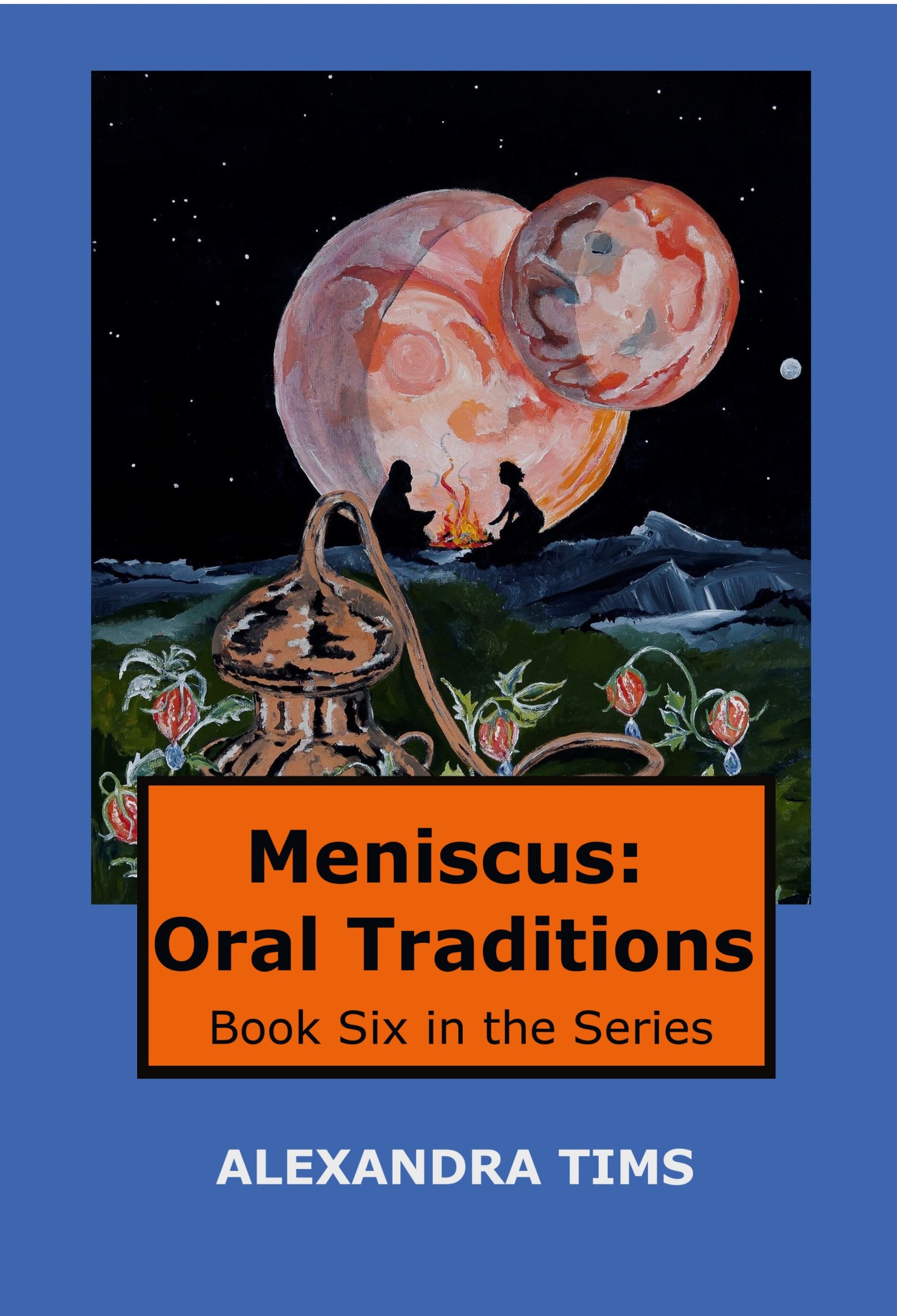
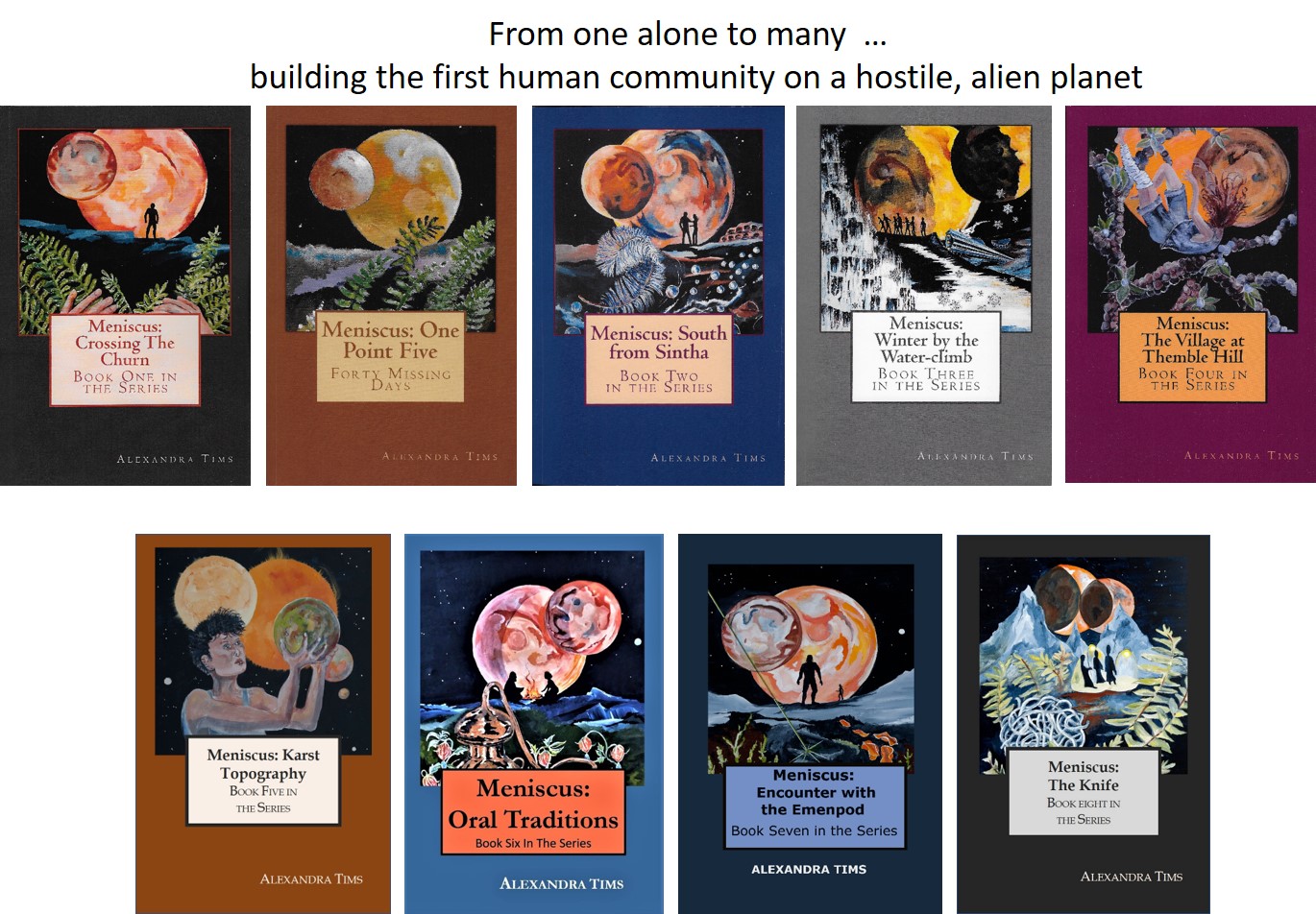
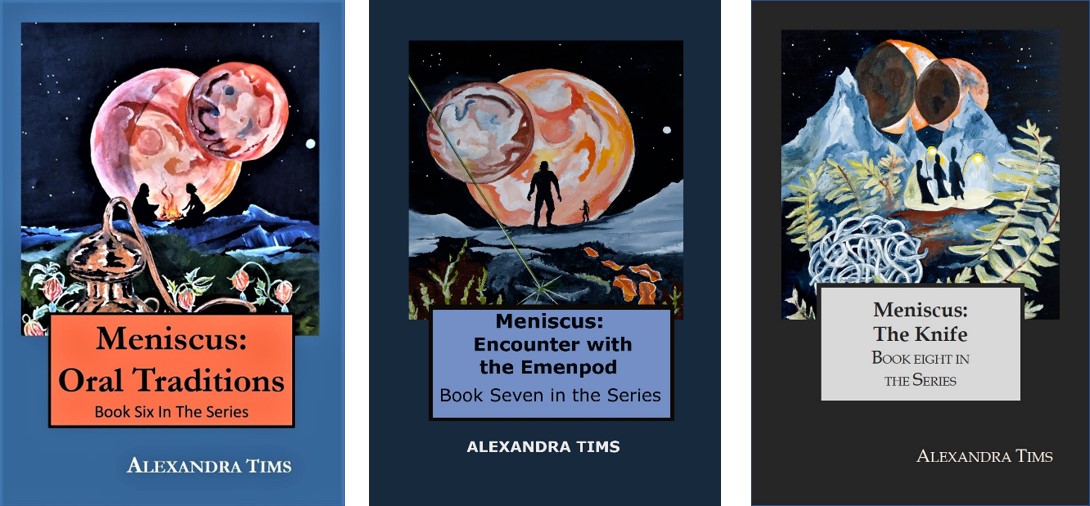
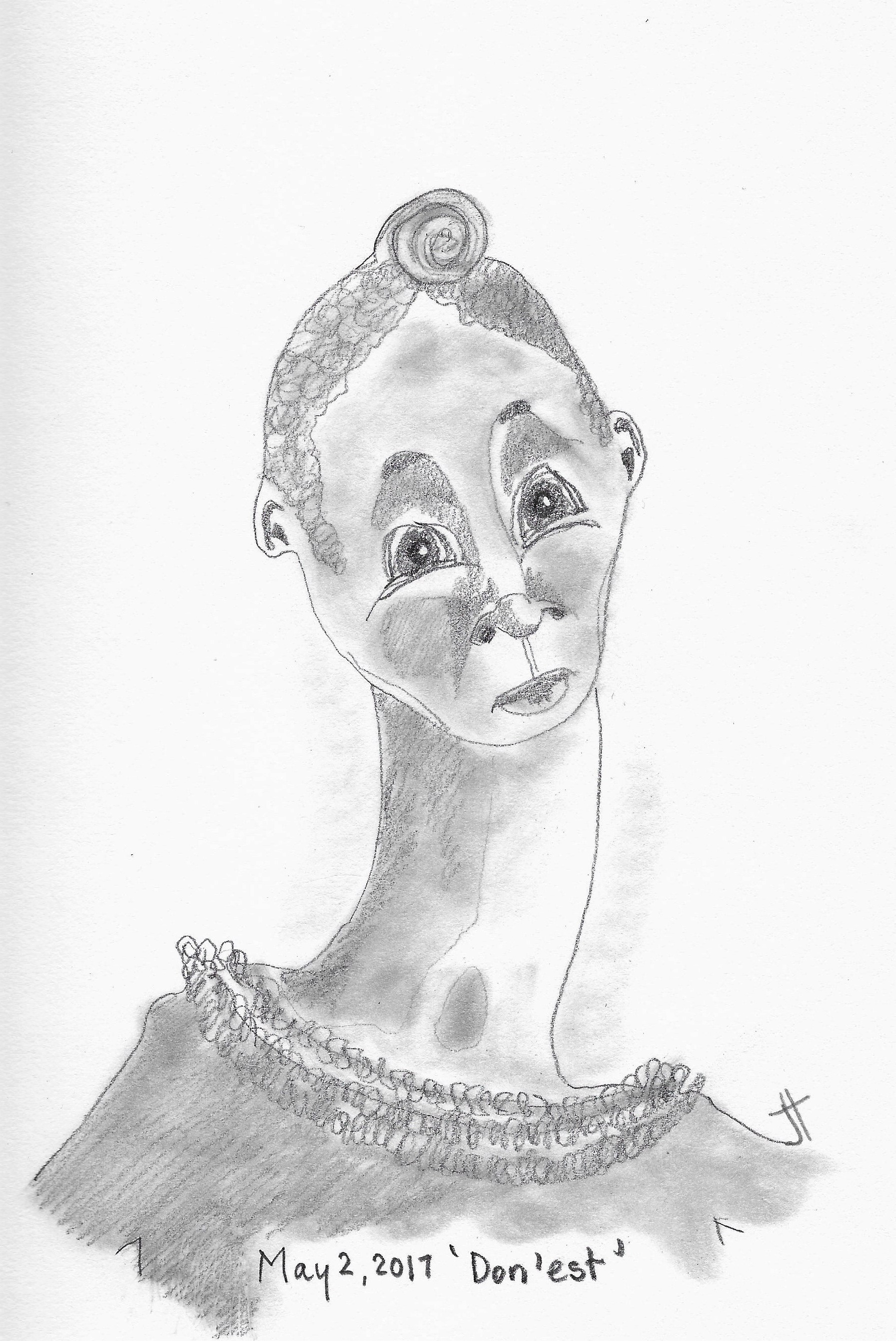
The Meniscus Science Fiction Series follows the adventures of humans trying to build a life and a community in an alien, dystopian world. The first five books focus on Odymn and Daniel the Slain as they flee from the Dock-winders and find love in the strange Meniscus landscapes. Book 6 … Meniscus: Oral Traditions … introduces two new characters and the unique problem they encounter as they get to know one another in the streets of the alien city Sintha.
~

~
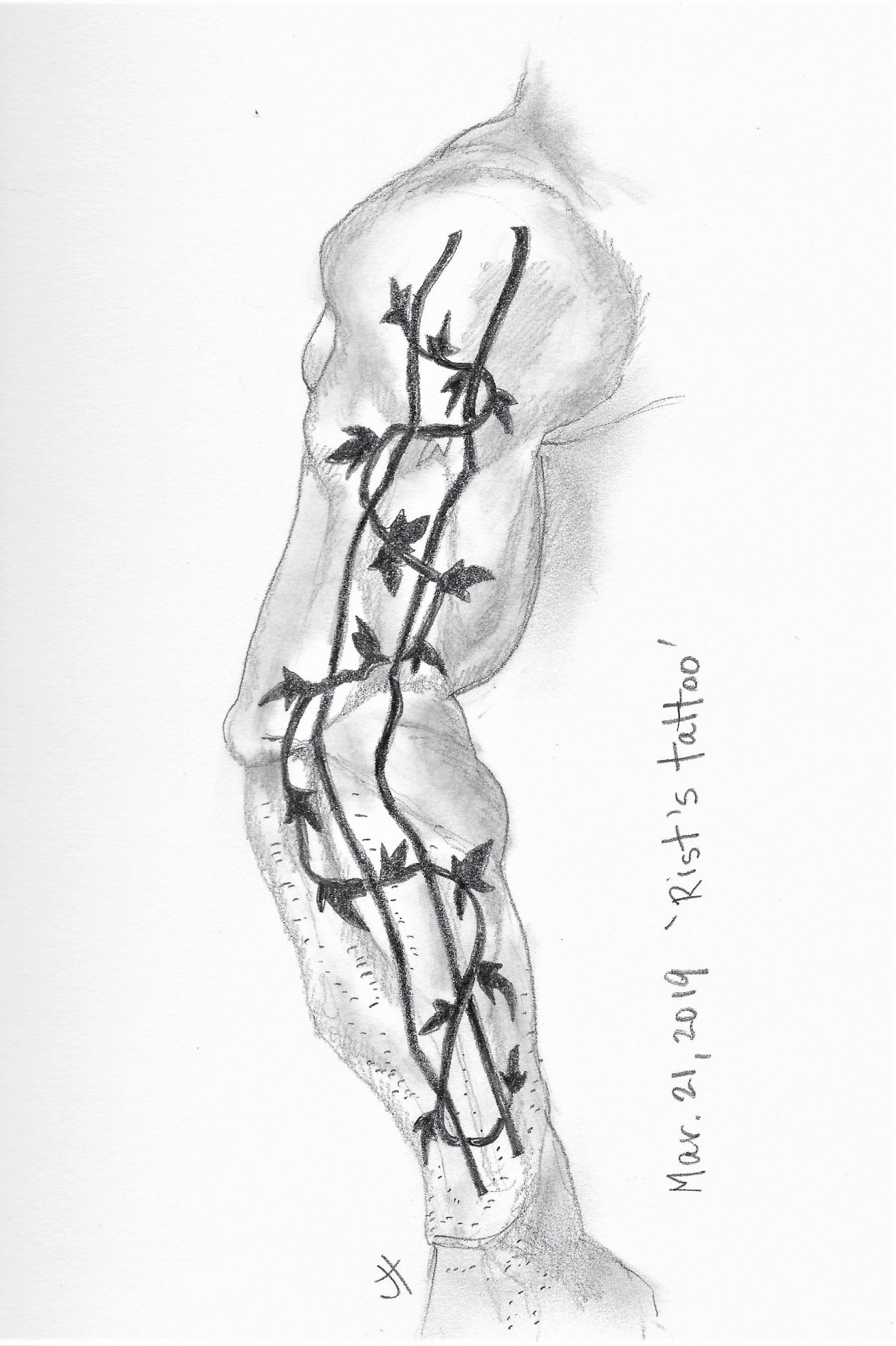
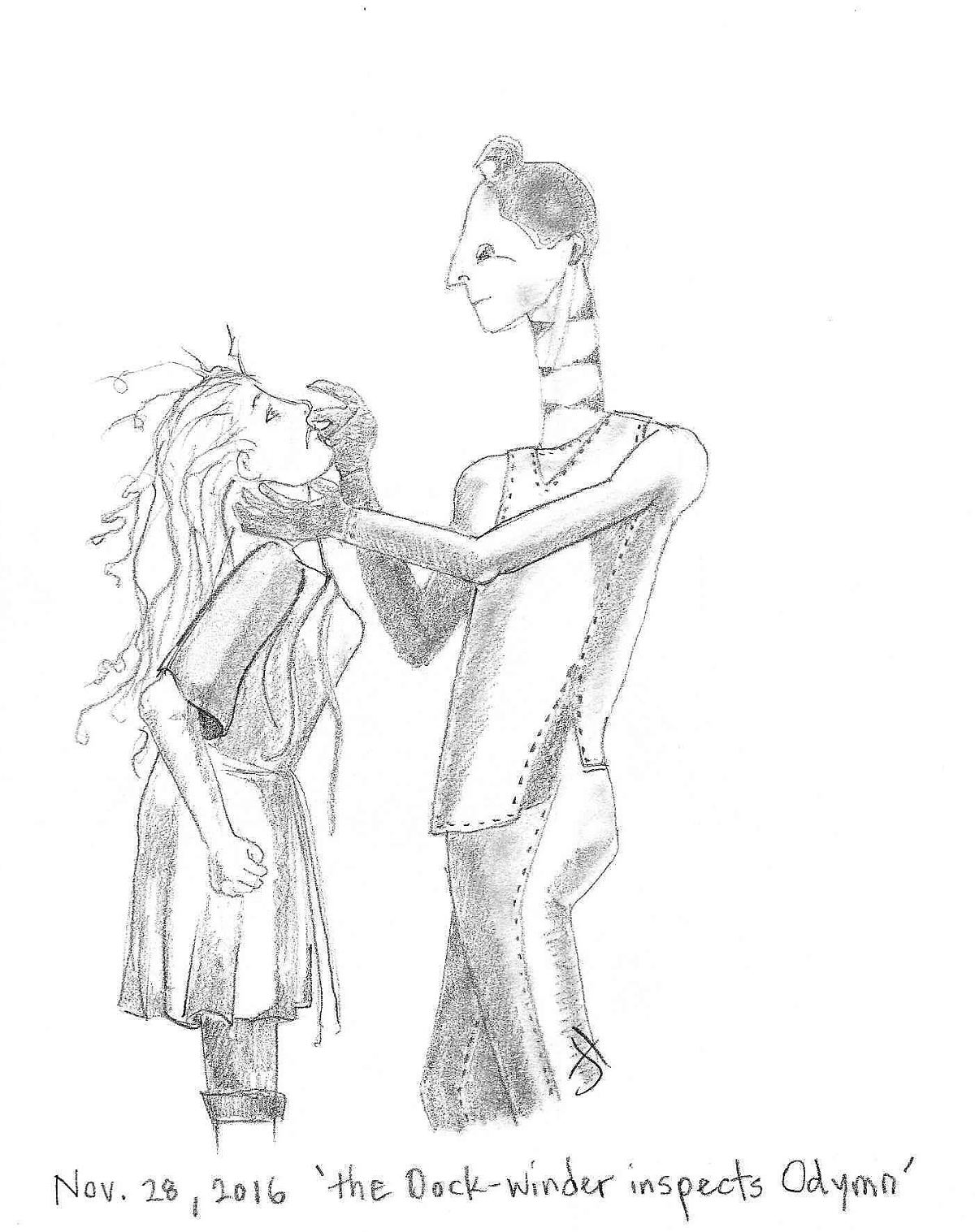
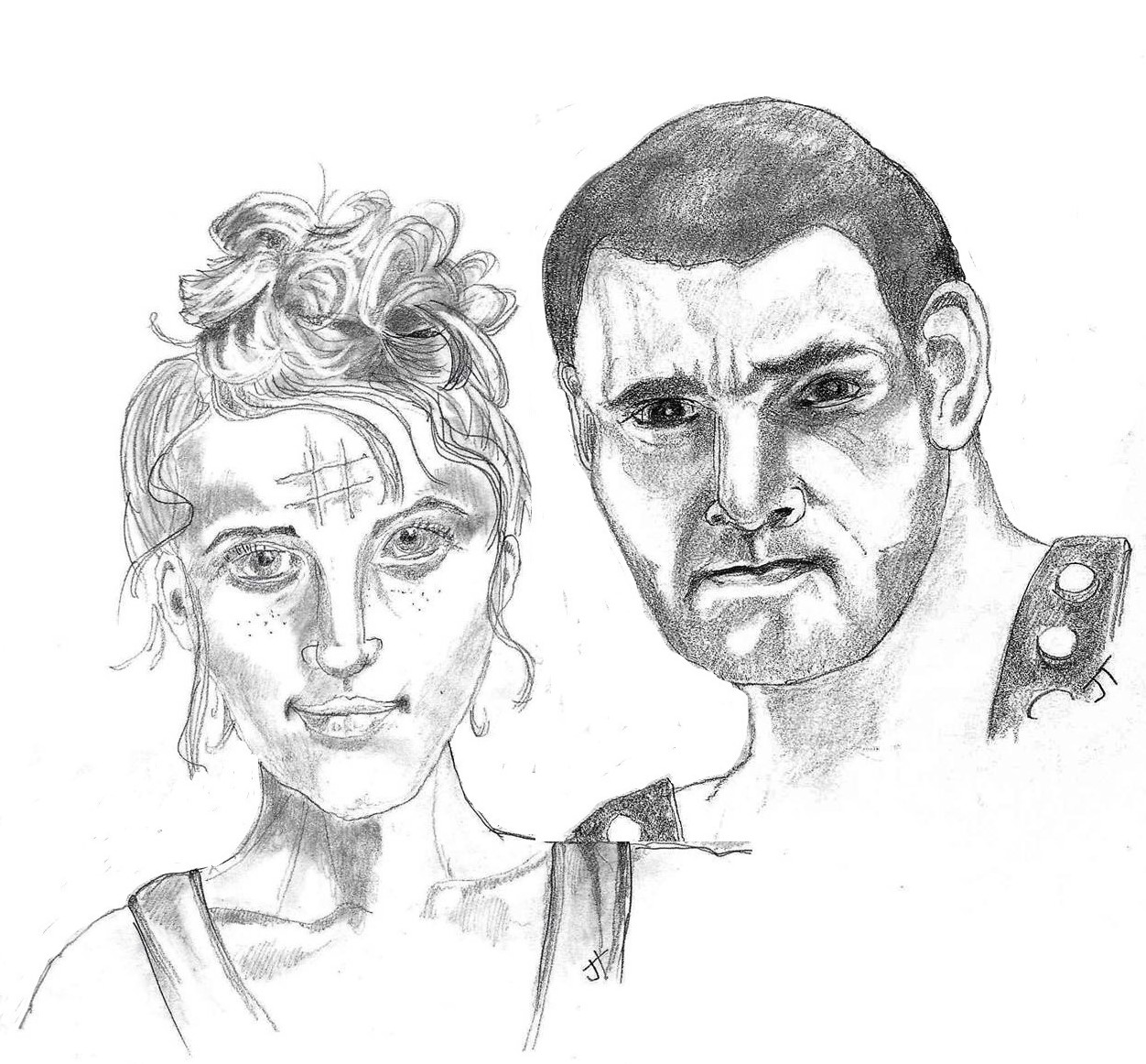
The story focuses on Tagret, newly kidnapped from Earth, as she opens her eyes on Meniscus and tries to understand the weird world she discovers. A world where taking a drink of water is a challenge and the local sentients are purple Dock-winders and transparent green Gel-heads. Then she meets the Slain, Rist, and comes to understand what those tattoos on his arms really mean.
~
~
Get your free e-ook copy of Meniscus: Oral Traditions on Amazon.com from December 7 (Monday) to December 11 (Friday). The book is written in narrative poetry and is illustrated with my drawings. It is a quick read and includes maps, a glossary and a Gel-speak dictionary. Just click here.
~
~
Enjoy your reading!
~
All my best,
Jane (a.k.a. Alexandra)
Meniscus: The Knife
If you have been waiting to get a paperback copy of Meniscus: The Knife and find out all about Tagret’s quest to find Rist, the book is available now at Westminster Books, Fredericton. Signed copies! Both paperback and ebook are also available through Amazon, just click here.
~

~
All my best!
Jane (a.k.a. Alexandra) Tims
Book Review: ‘Deficiency’ by S. C. Eston
Deficiency by S. C. Eston, December 2, 2020
~
How far would you go to keep your dreams alive?
Reading this book is your ticket to another world. You will be able to explore its layers, its technology and the characters who live there. From the start, you will wonder where Detel has gone, the identity of the secret leading to her downfall and whether her brother, Artenz, and his wife, Keidi, will be able to escape the forces that brought Detel to her knees. This book will draw you in. You will love the code-speak, the intricacy of the technology, the time/ date markers and the characters. The pace is fast with moments of reflection. Even the antagonists are complex, with motivations of their own. The author does not disappoint, taking each character through his or her own story arc. This book has all the sci-fi extras: a character guide, a glossary, a map, intricate technologies and relics of dystopia. You will enjoy this book!
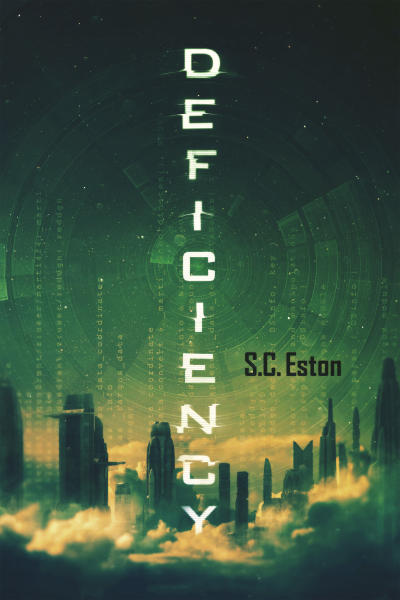
Deficiency will be available December 2, 2020 and is available for pre-order! Just click here! I am a lucky reader of an advance copy. If you enjoy this book, you will also like S. C. Eston’s other books: The Conclave and The Burden of the Protector.
~
All my best,
stay safe,
Jane Tims
Starting a new book 2
Today, I finished the rough draft of my new book in the Meniscus Series. This book will deal with discovery of a secret that will bring down the nasty Dock-winders.
The working title of the book is Meniscus: Resistance.
Before you become amazed at my productivity, remember that my Meniscus stories are in narrative poetry and are a quick read. At this early stage, this book has 11,600 words.
~
The next step in my process is tedious, but very helpful.
~
I create a Table of Chapters. Each ‘Chapter’ in the table is described by ‘What happens,’ ‘Setting.’ ‘Point of view,’ ‘Characters,’ and ‘Theme Progress.’ I can work through my entire document:
- change all the place holders to actual Chapter numbers;
- make certain the setting is described in detail;
- ensure point of view in each chapter is clear and does not waver;
- list the characters in the chapter and ensure everyone has a role to play; and,
- check on progress made towards resolution of the story.
Table of Chapters for Meniscus: of Resistance
| Chapter | What happens | Setting | Point of View | Characters | Theme Progress |
| Prologue | James escapes | Space dock | James | James, D, DW, GH, Drag’on | Introduce antagonists |
| 1. | Trath crawls from mine | base of Flame Mtn | Trath | Trath | Trath escapes |
| 2. | Abra finds six glyphs | obelisk at The Tip | Abra | Abra | Abra finds glyphs |
| 3. | Evening meal at Hath’men | Village of Hath’men | Omniscient | James, Drag’on villagers | Drag-on set apart |
| etc. |
~
If the story is missing an ending, or has continuity issues, this building of the table helps me to focus on the story progress and, by the time the table is completed, the story is more complete.
~
Once these tasks have been done, the Table of Chapters can be set aside and used later for any stage of the revision process. For example, I can check each chapter for phases of the moon, so the full moon doesn’t occur two days before the crescent moon! I also use the table to make certain the illustrations are evenly distributed throughout the text.
~
~
Off I go, to fill out the Table of Chapters and to find an ending for my book.
~
All my best!
Stay safe.
Jane
Next Authors Coffee House
Every two months, we hold an Authors Coffee House at our church– a non-denominational outreach activity for the community.
Invited authors read from their work, sell their books, answer questions about the writing process and enjoy one-another’s company.
The next event will be Thursday, November 26 at 2 PM. Our author is Neil Sampson, winner of the 2018 Bailey Poetry Prize (Writers’ Federation of New Brunswick) for his manuscript “Apples on the Nashwaak.” His book will appeal to anyone with a bit of Irish in their heart! Hope to see you there!
Neil’s book is available for purchase at Chapel Street Editions (click here).

starting a new book
I love working on multiple writing projects at once. So it is no surprise to me that I have books and projects at all stages in development:
- The next book in my Kaye Eliot Mysteries is in final draft (‘Land Between the Furrows,’ release date March 2021)
- The next of my poetry books (‘niche‘) is in proof stage (release December 2020)
- I have just released the next book in the Meniscus Science Fiction Series (Meniscus: The Knife) and the next is in final Draft (‘Meniscus: Meeting of Minds,’ release date May 2021).
~

~
So, this week, in the narrow crack between revisions, I have started to draft another in the Meniscus Series. Tentatively entitled ‘Meniscus: Resistance,‘ this will be the last in the Meniscus Series (she says).
~
It has been so long since I started a new book, I have forgotten how the process unfolds.
~
~
1. A long time thinking, while doing other things, about the theme … how this book will connect with the last, who the characters will be, where the action will occur and so on.
2. A few sleepless nights, staring at the ceiling, thinking about opening scenes, how my characters are feeling and precipitating events.
3. Eventually I am ready to start the first drafting. For this, I need a relaxing, familiar space. I like to sit on the sofa in my living room, so most of the drafting will be on my iPad in the Word app. At some points, I may shift my focus and do some writing in longhand.
4. Even during drafting, I start revising. I go back and forth, moving details around, gleaning from earlier books to avoid inconsistencies, refining ideas. Some days I turn to the main computer to do a read-through and correct spelling and syntax, and to start to refine the poetry of the story-telling.
~

~
Of all the parts of the writing process, the early drafting is my favourite. It is also (for me) the quickest. By starting a new project, I have resolved to follow through with later revision work, illustration (including the cover art), formatting and marketing.
~
So, here I am in happy land, pushing my characters around, and sometimes trying to catch up to them …
~


~
All my best,
Jane
Meniscus: The Knife … now in paperback and e-book
If you have been reading my Meniscus Series (science fiction adventure), you will be wondering what happened to Tagret and Rist after they said goodbye in Meniscus: Encounter with the Emenpod.
~

~
The sequel is now available! Meniscus: The Knife tells the story of Tagret’s quest to find Rist before he is captured and killed by the Brotherhood.
~

~
The book is available at Amazon (click here) as both paperback and e-book. If you live in the Fredericton area, I will have author copies in a week, so contact me to arrange delivery!
~
Every story in the Meniscus Series takes the reader to new places and introduces new characters. The books also take the Humans of Themble Hill a little further in their journey. Every book has a glossary, a dictionary of Gel-Speak words, a description of characters, maps to follow the characters in their adventures and my original illustrations.
~
Here is a map showing Tagret’s journey to The Knife and the city of Nebul-nan:

And a view of the strange, half-inundated city of Nebul-nan:

~
Hope you enjoy my book!
~
All my best,
stay safe!
Alexandra Tims (a.k.a. Jane)
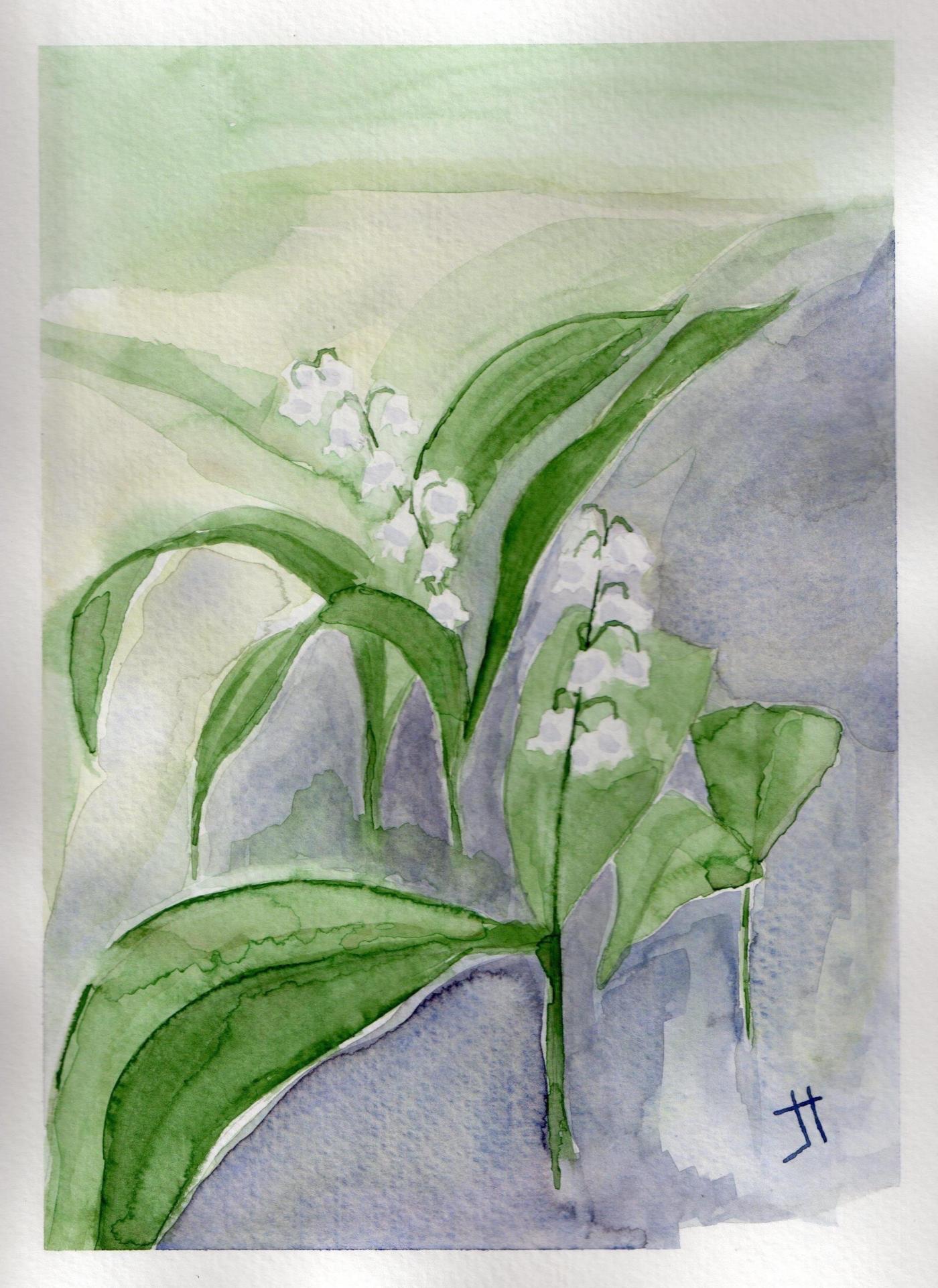
lily-of-the-valley
~
lily-of-the-valley
~
Convallaria majalis L.
~
where they came from
I do not know, perhaps
~
from my mother’s old home
in a shovel-full of lilac
a sheet of white writing paper
in a green box crammed with letters
~
perhaps from my grandfather’s farm
tucked in beside the creeping Jenny
a green and white plate printed
with a saying about home
~
perhaps from a seed in the gravel
spread on the paths or the road
a line of red pebbles
in a spill of quartz
~
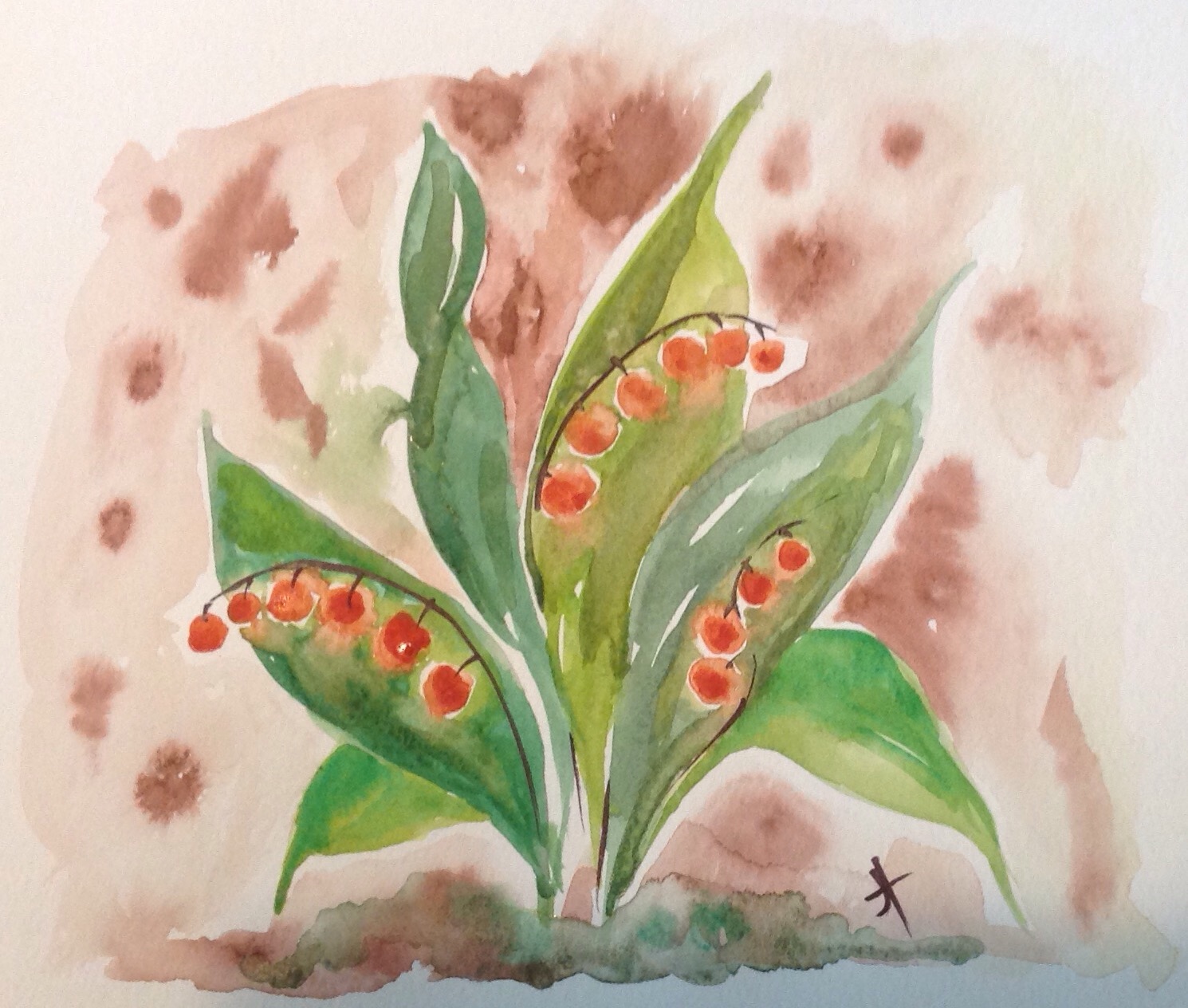
every summer the colony spreads
green flames lick at gravel
white bells, delicate perfume
scarlet berries
~
a letter not written
a plate hung on the wall
a pathway leading home
~
~
All my best!
Stay safe!
Jane
scraps of paper
Occasionally I tackle a stack of stray papers. These are usually bits saved years ago, once thought important. Sometimes I find a scrap of poetry among receipts and old letters. Poetry scribbled when an idea occurs, on any scrap within reach.
~

~
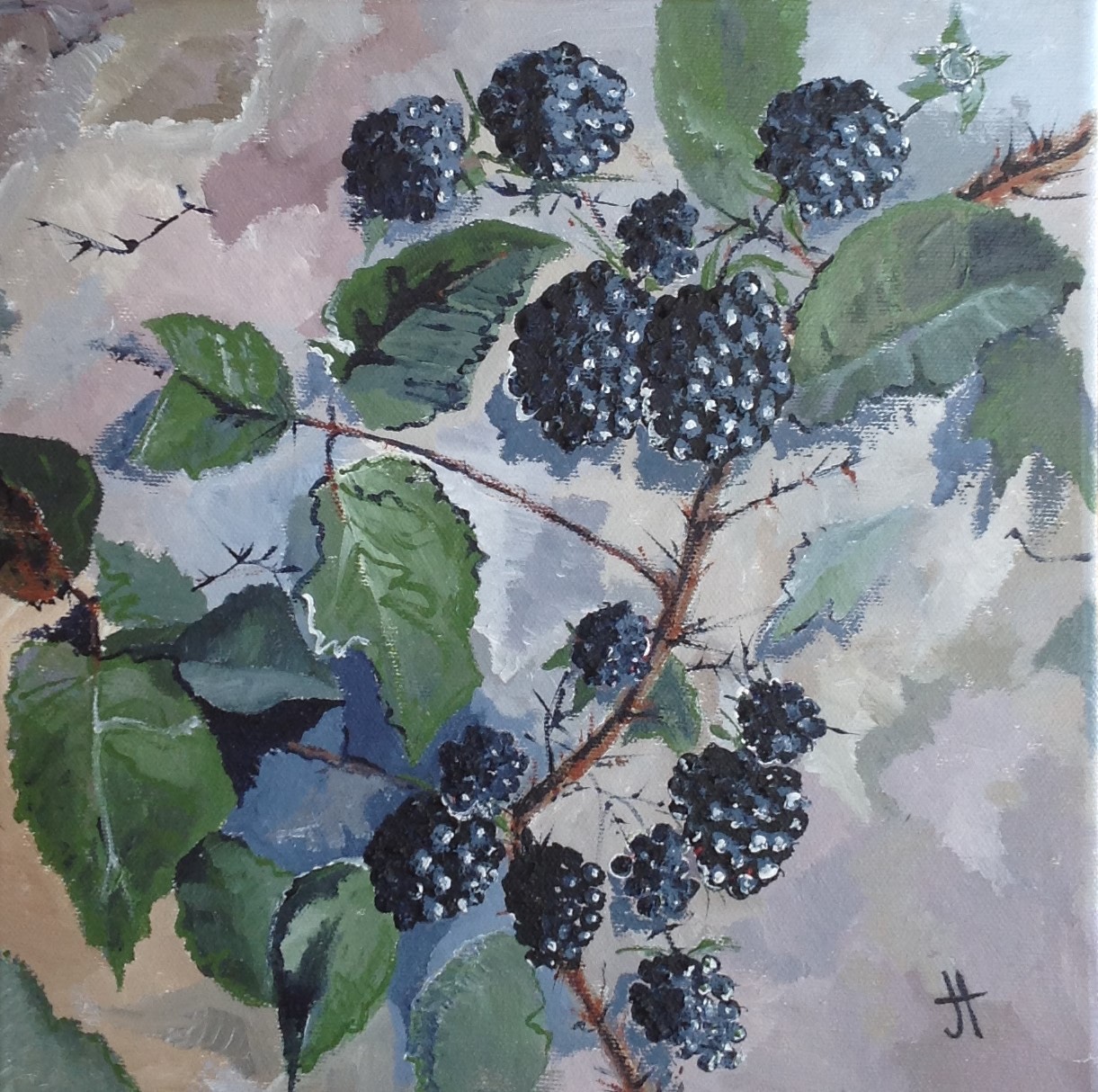
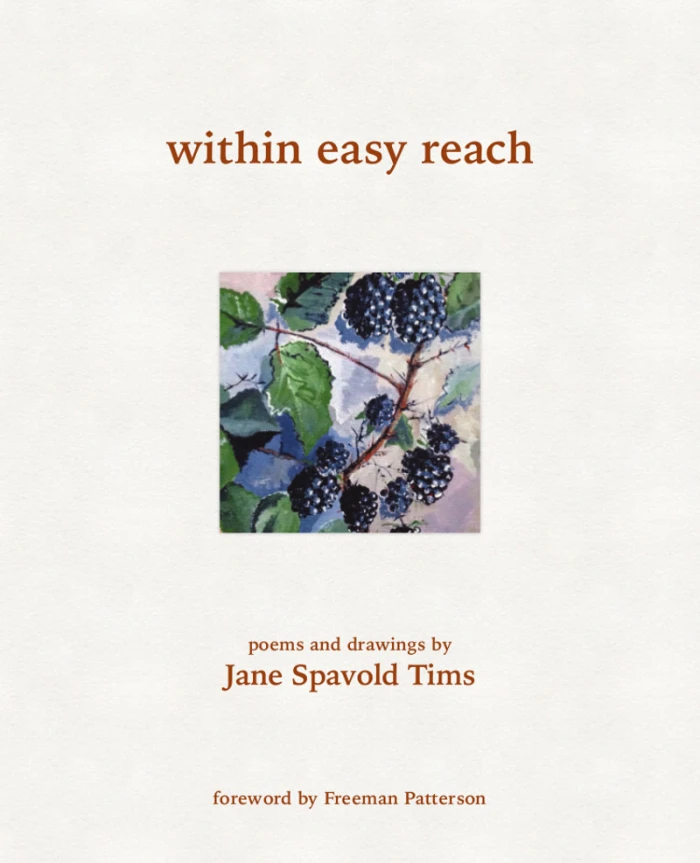
This week I found a draft poem about following rules and the evidence left behind by bad behavior. I have always loved picking blackberries, so it is no surprise to me that picking blackberries was used as a metaphor in the poem.
~

~
~
defiance
~
no denying
the evidence —
pulled threads
and stained fingers
~
one drupe
with all its packets
could never mark
so well, each finger
~
rolled across the page
indigo tongue
and purple lips, words
blackberry-spoken
~
the rule — never take
the path through woods
stick to the road, resist
blueberries, blackberries
~
avoid the risk
of bears and brambles
hints of danger
in faerie tales
~
~
~
Last spring I spent time pulling together some of my many poems into three upcoming books of poetry. This poem will fit well into my manuscript titled ‘niche,’ poems about the spaces plants, animals and people occupy.
~
All my best!
Follow the rules of social distancing!
Stay safe!
Jane
~
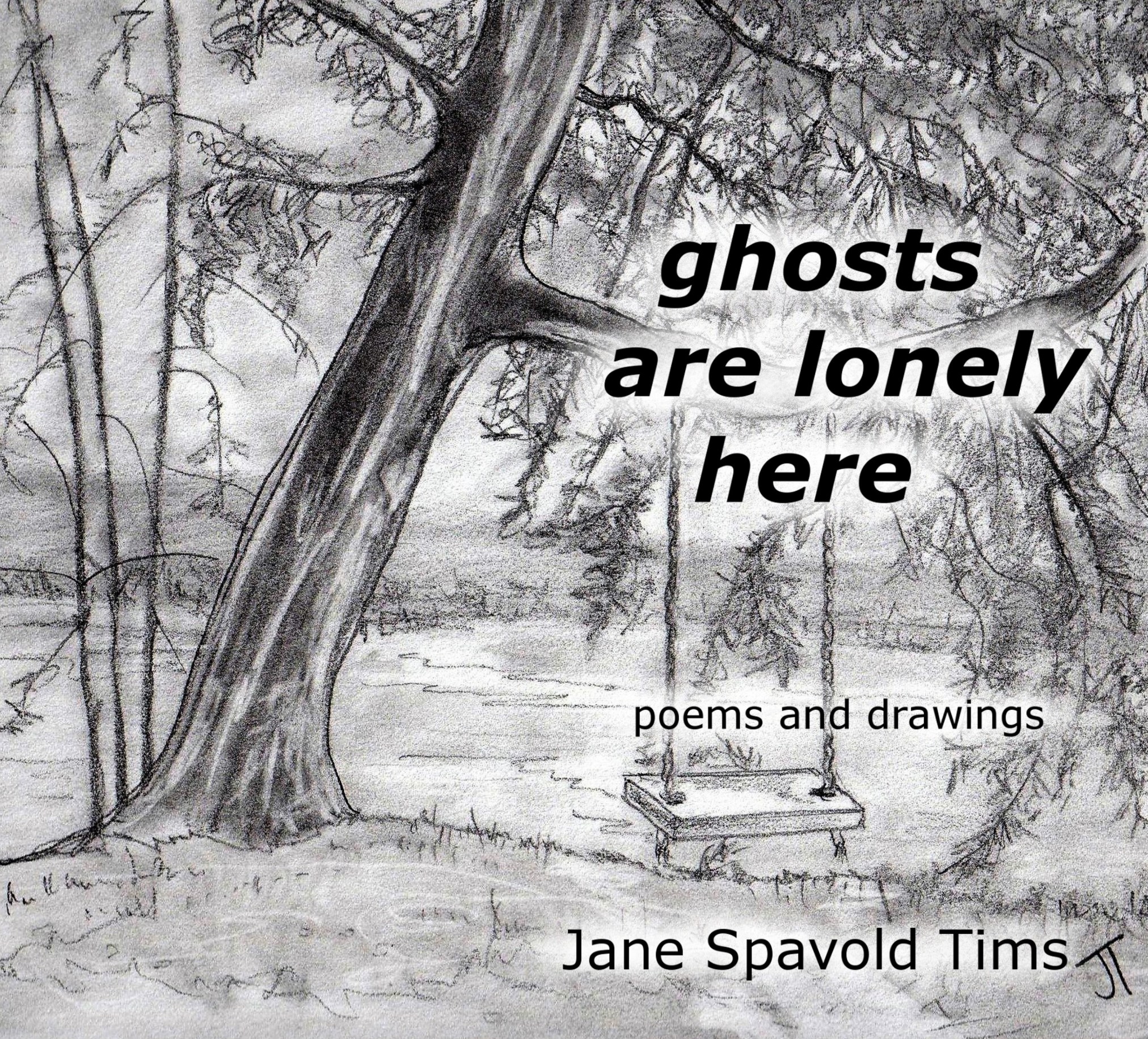
ghosts are lonely here ….. new poetry collection
This spring, I began to gather together the various poems I have written over the years. One of my recurring interests has been abandoned buildings and other discarded human-built structures. And now, here is my book of poems about abandoned humanscape … ghosts are lonely here.
~
My book is available in paperback and includes 45 poems and 14 of my original pencil drawings. Most of the poems are about abandoned structures in New Brunswick, Canada.
~

~
We live in a time when built landscape is often in a state of abandonment: old churches, old bridges, old schools, old buildings. Add to this abandoned vehicles, abandoned boats and deteriorating stone walls, over-grown roads and decommissioned rail lines, and we exist in a landfill of nineteenth and twentieth century projects, abandoned to time. These poems listen to the histories and stories of the abandoned. The poems are sometimes sad, sometimes resentful, always wise.
~
~

~
To order ghosts are lonely here, click here.
~
Have a great day.
Jane






 nichepoetryandprose