maple blossoms
This week, as Red Maple (Acer rubrum) flowers bloom, the woodland blushes scarlet. In the driveway, a tree-shadow of blossoms has begun to form, as the flower clusters reach their peak and then drop to the ground.
Each flower is a puff of reddish-pink bracts surrounding the male and female flower parts. The stamens (the male part of the flower) consist of a thin filament topped by a dark anther where the pollen is formed. The pistil (the female part) is made of a style topped by a stigma; once fertilised by pollen, the maple seeds will form here. Red maple flowers may have both stamens and pistils, or may be only male or only female. The flower looks like a tiny fireworks, the burst-effect created by a bundle of stamens or stigmas.
When I went to Dalhousie University in Halifax, I always loved the flowering of the Norway Maples (Acer platanoides) in spring. Their flowers are green and most people mistake them for new leaves. I used to wonder what the ecosystem consequences might be if the flowers were bright orange or purple instead of green.
~
~
red maple blossoms
~
across brown sky
strontium bursts of bright
sparks bloom
against dark
~
~
© Jane Tims 2012

keeping watch for dragons #5– river dragon
It’s like getting an old song stuck in your head… I am now seeing dragons… everywhere.
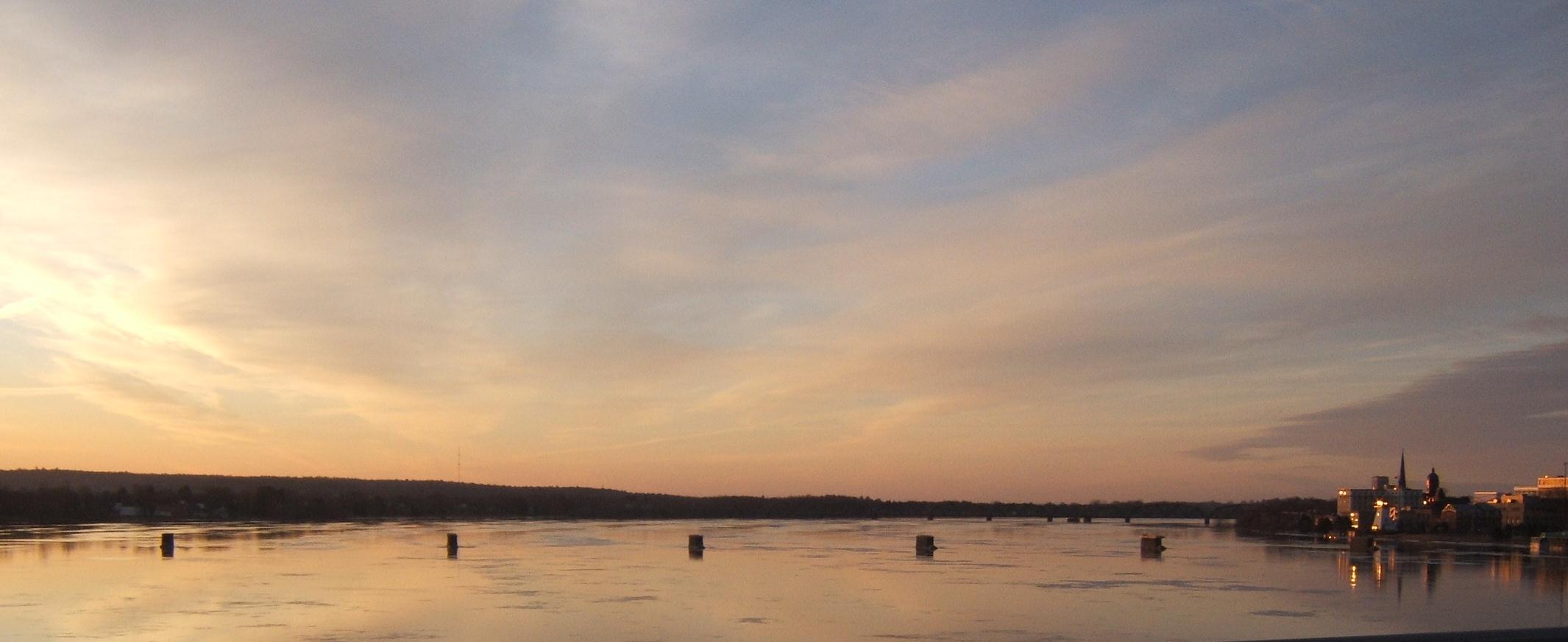
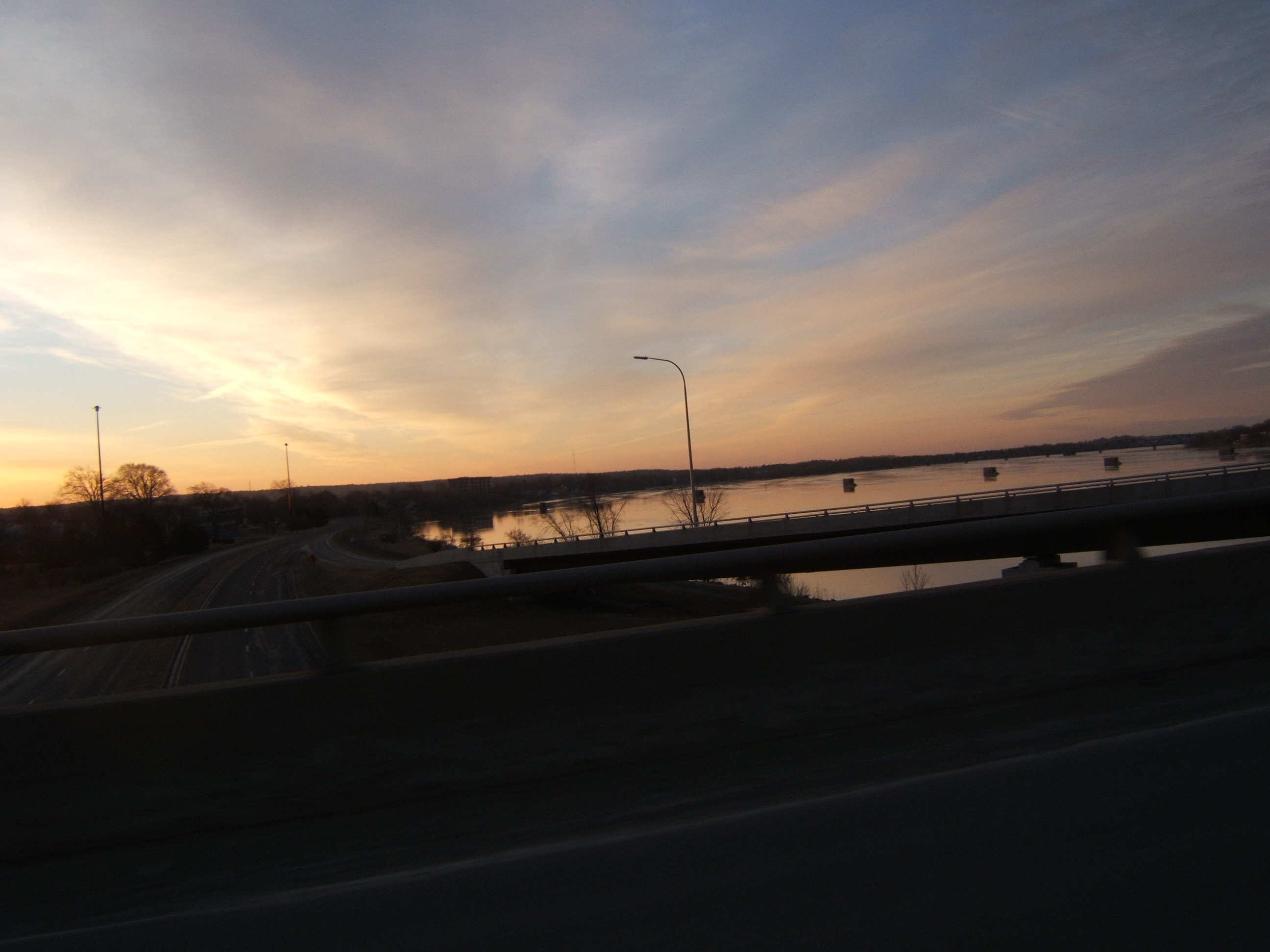
Yesturday, as I crossed the bridge on the way to my work, I saw the piers of the old bridge and their reflections in the water. To me they were the protruding plates along the spine of a river dragon, resting in the water.
Have you seen any dragons lately?
~
~
river dragon
~
eight bevelled piers
(only remains of the old bridge)
idle in still water, reflections rigid
plates along the spine of a spent dragon
lolling on his side
taking a break in the river
~
~
© Jane Tims 2012
snippets of landscape – vernal pools and the spring migration
At the edges of our Grey Woods are several places where ‘vernal pools’ form. As a result, these spring evenings are alive with the peeping and croaking of various frogs and toads.
‘Vernal pools’ are temporary accumulations of water in depressions. This water may originate from snow accumulations or from rising water tables. The word ‘vernal’ comes from the Latin ver meaning spring.
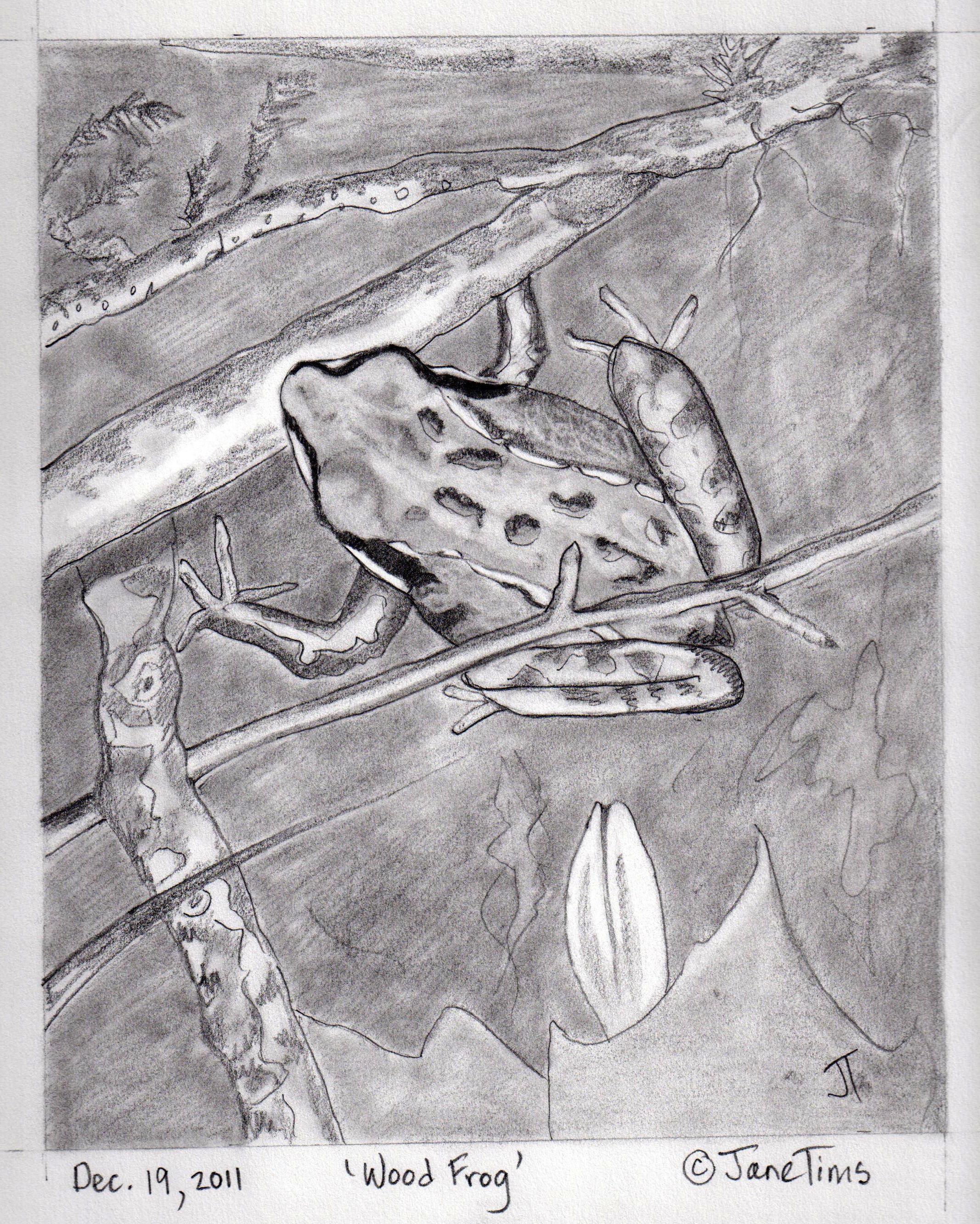
Although vernal pools are ephemeral, they create habitat for many animals, including insects and amphibians, often at critical life stages. Amphibians such as Wood Frogs (Rana sylvatica), Spotted Salamanders (Ambystoma maculatum), and Blue Spotted Salamanders (Ambystoma laterale) depend on vernal pools for laying their eggs and development of tadpoles. Other amphibians you may encounter in a vernal pool include Spring Peepers, Grey Tree Frogs and Bull Frogs.
During a rainy night in late April or early May, you may be fortunate enough to observe the early spring migration of Wood Frogs and other species as they make their way to breeding locations. These frogs have remained all winter in hibernation and have unthawed in the early spring rains. Unfortunately, many must cross roads to get to the ponds and vernal pools where they will lay their eggs, and many become casualties of their attempts to cross the road.

~
~
an uncertain spring migration
~
if it rains
the night road
leads home
to lowlands
and hollows
vernal pools
north of the highway
swollen with rain
~
mists crawl
towards me
vignettes
sweep the windshield
frogs cross the roadway
follow ancestral memory
blurred by rain
~
some nights
the tail-lights ahead
are my only family
red streamers on wet pavement
tadpoles from the eggmass
grow legs
absorb their tails
follow the road
~
I watch
the phone poles
the potholes
the hidden driveways
the headlight echo on trees
frog legs
crushed on the pavement
mailboxes with uncertain names
~
the centre line is a zipper
seals the left side
to the right
the coming home
with the leaving
frogs plead
from the wetlands
never saying goodbye
~
Published as: ‘an uncertain spring migration’, Spring 1997, Green’s Magazine XXV (3).
revised
© Jane Tims 2011
~
from the pages of an old diary – blueberries and other local foods
My new writing project, ‘growing and gathering’, focuses on local foods and finding food close to home.
A source of information and inspiration for me is the set of my great-aunt’s diaries, written from 1943 to 1972. From her diaries, I have a very good idea of how they obtained their food, and how they used local foods to supplement their needs.
Most of their food was obtained from the grocery store – in 1957, there was at least one grocery store in the community, and by 1967, they had an IGA. There is no doubt some goods came from ‘away’. For example, my great-aunt wrote about making coconut and pineapple squares for a Women’s Missionary Society meeting (Sept. 30, 1957).
Local goods, however. were used whenever possible. For example, my great-aunt bought eggs from her sister, and chickens from her brother. She also obtained vegetables and raspberries from her brother’s farm, apples from friends and relatives, deer meat from friends and relatives, and lobsters from Wallace, a near-by community. By 1967, my great-aunt and great-uncle also kept a garden at her brother’s farm, a few miles away.
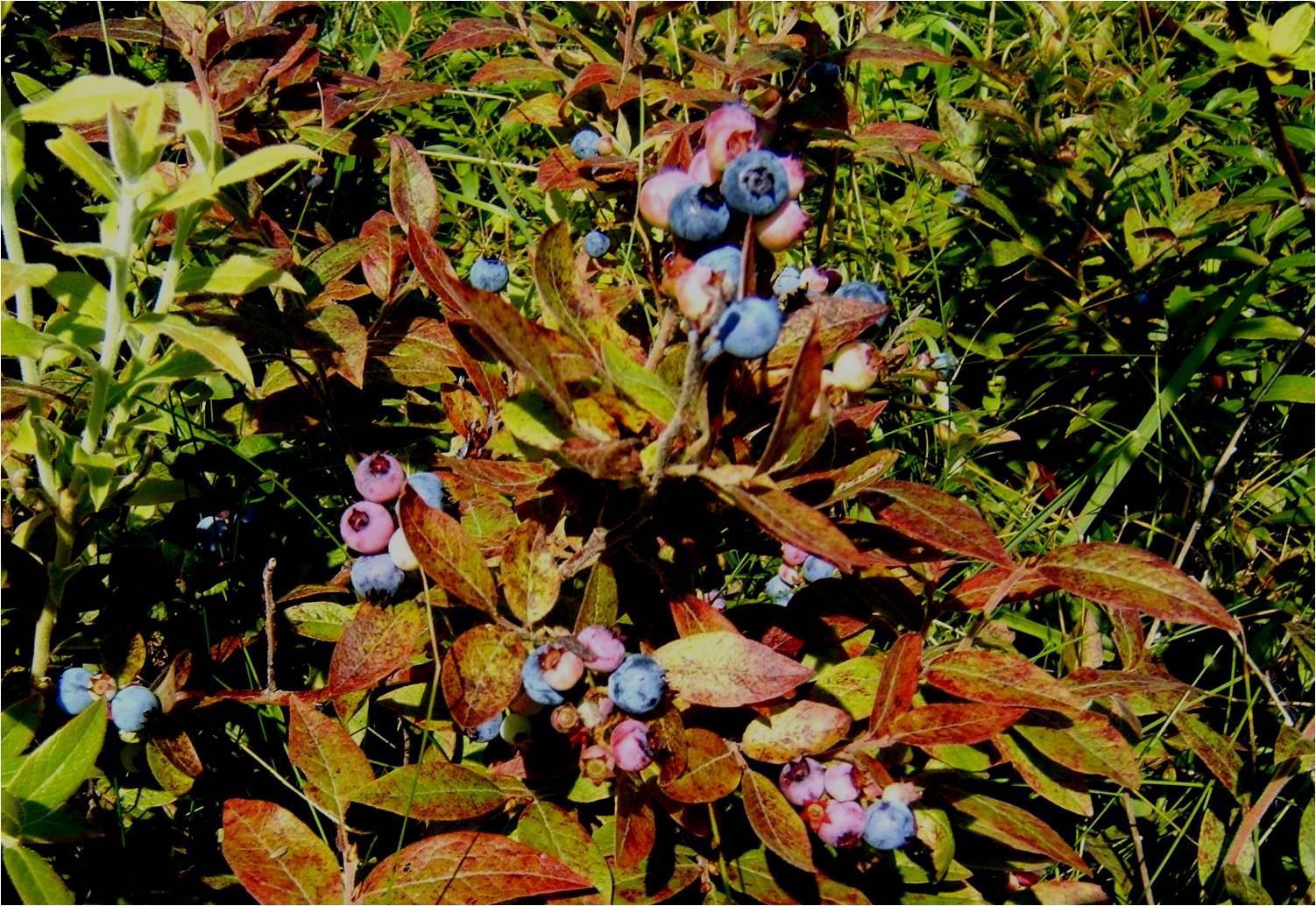
Obtaining local foods included picking local berries. In July and August of 1957, my great-aunt went four times for wild blueberries. Her gratitude and pleasure at getting these berries comes through in her words: ‘ got quite a few’ (July 31, 1957) and ‘got a nice lot.’ (Aug. 21, 1957). She also wrote about picking grapes and currants.

Some of the berries were eaten right away – for example, my great-aunt made a blueberry pie on August 1, 1957. The rest was preserved for the winter. On August 16, 1957 my great-aunt put up 5 quarts of blueberries, to supplement the applesauce, pears, peaches, sweet cucumber pickles, and tomato chow she mentions preparing on other days. Others in the family also made preserves and shared them with her – in 1967, her nephew (my uncle) brought her three bottles of peach, apple and choke cherry jelly he had made.
~
~
an offering of berries
~
she stands on the stoop
offers a box
a brimming pint
of berries
~
I take her hand, we ripple
through the pasture, strew
blue ribbons over bushes, stir
a blueberry jelly sky, dance
with dragonflies
~
she waits on the stoop
her brow a riddle, please
take this gift, blueberries
in a simple
wooden
basket
~
~
Warning: 1. never eat any plant if you are not absolutely certain of the identification; 2. never eat any plant if you have personal sensitivities, including allergies, to certain plants or their derivatives; 3. never eat any plant unless you have checked several sources to verify the edibility of the plant.
© Jane Tims 2012

accents in red
We are still in the greys and browns of spring.
There are a few wildflowers blooming. The Coltsfoot is spreading carpets of yellow along the roadside. And flowers in the deep hardwoods have begun to display their delicate beauty. But most places are drab and colorless.
I watch for red this time of year. There are a few red berries, still clinging to their branches after winter.
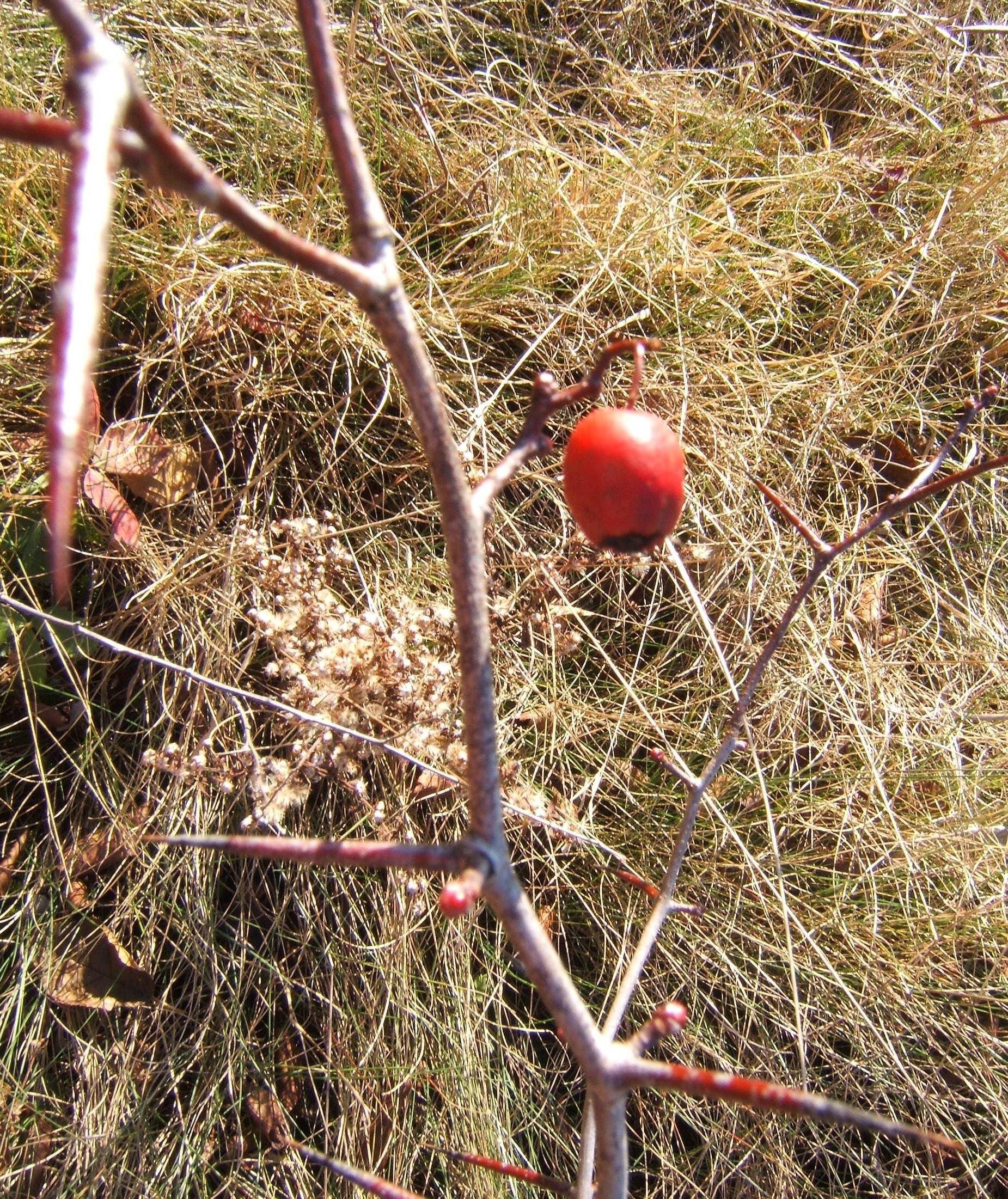

And the stems of Red Osier Dogwood (Cornus stolonifera Michx.) are brilliant in the fields and ditches.

My favorite ‘red’ of spring is the muted red of the blueberry fields.

~
~
fancy
~
the blueberry barren
is faded scarlet
red osier in ditches
rosebush and hawthorn
a single berry, a single haw
Earth in brown
toenails red
~
© Jane Tims 2012
oldfield
In my posts this summer, the space I expect to feature prominently is our summer property.
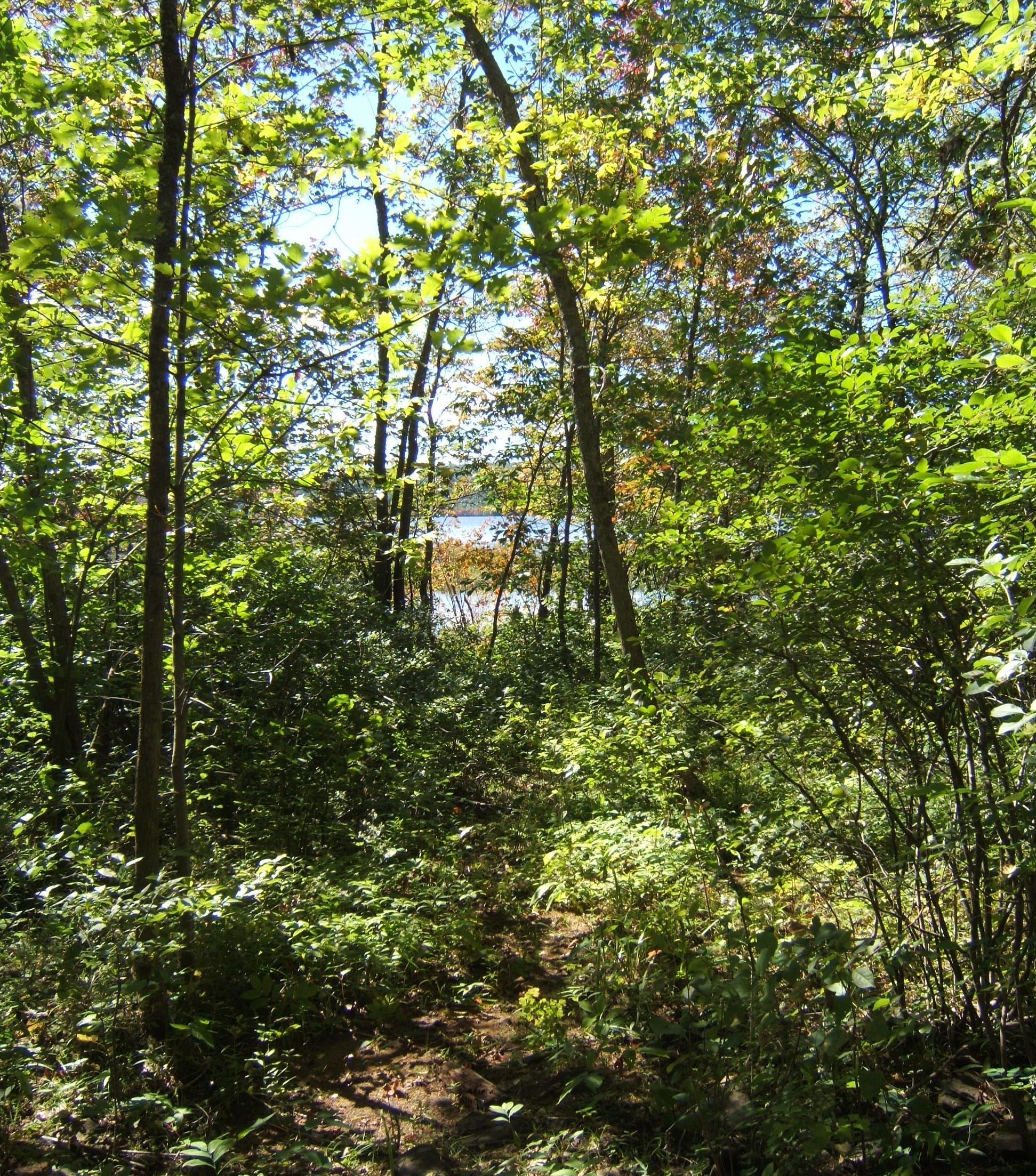
I’ve talked about this place before. One end of the property is along a lake (see ‘course of the creek’, September 12, 2012, and ‘ice is nice’, December 21, 2011, both under the category ‘waterways’). The lake edge is a bright forest of cedar, hemlock, birch and oak, and includes a beautiful marsh. We sit on our bench in the woods and look out at the lake, watching loons and deer and ducks. Once I saw an eagle plummet from the sky and dive into the water with a huge splash, to emerge with a good-sized fish in his talons.

Most of the property was/is an oldfield. When we bought the property in 2004, we bought an open field, thick with blueberry bushes and grass that rippled in the ever-present wind. There were a few trees, mostly bushy pine, spared year after year by the farmer’s bushhog. The field had been home to a herd of buffalo (bison) and we still find the dry, dusty evidence of their wallows.
The keyword in the last paragraph is ‘bushhog’! The farmer offered to keep the field mowed, but we are very independent. We were certain we could keep ahead of the various trees and alders sprouting everywhere.

The result has been the usual progress of an oldfield in the process of succession. Today our pines still punctuate the property, and there are enough blueberries to keep us satisfied, but other spaces have emerged… the alder swale, the maple grove, the path through the birches, the blackberry barrens, and, of course, our tiny cottage. There is a bit of grassy field still remaining and we struggle to keep it intact.

east boundary of our property, with our cedar rail fence, looking toward our neighbor's mowed field
When we go to the property I like to think about how it is changing, right before our eyes. Those buffalo would have a hard time recognising the place.
~
~
evidence of buffalo
~
“…in this field, years ago, I kept buffalo….”
beef farmer, selling his land
~
massive posts brace a page fence
woven with wire birch
dusty wallows where soil is crushed
and only lichen will grow
~
three apple trees trodden
parallel to ground
grey feed trough
strung together with nails
~
cedar waxwings search the fence
coarse hairs for their nests
winds nuzzle and whisper
through the brush of pine
~
~
© Jane Tims 2012
playing the parlour organ
Within my grandfather’s house were rooms we were not allowed to enter, except under very special circumstances. One of these was the parlour.
My ‘need’ to practice the piano allowed me access to this sanctum. For each day of our vacation, I was allowed to practice on the old pump organ. The organ belonged to my grandmother and my Dad could remember sitting on her lap while she played.

I was not an eager player and spent a lot of time testing the effect of the various ‘stops’ on the organ. These were white knobs with mysterious black words printed on each. When you pulled a stop, various connections were created to make the organ sound a certain way. Now for a memory I am not sure is true or only something I imagined – one of the stops, if pulled, would make the keys play an octave below where I was playing. They moved of their own accord and made me feel I was playing a duet with a ghostly partner!

One of the songs I chose to play on the organ was Evening Chimes. It was an easy song and made a good impression.
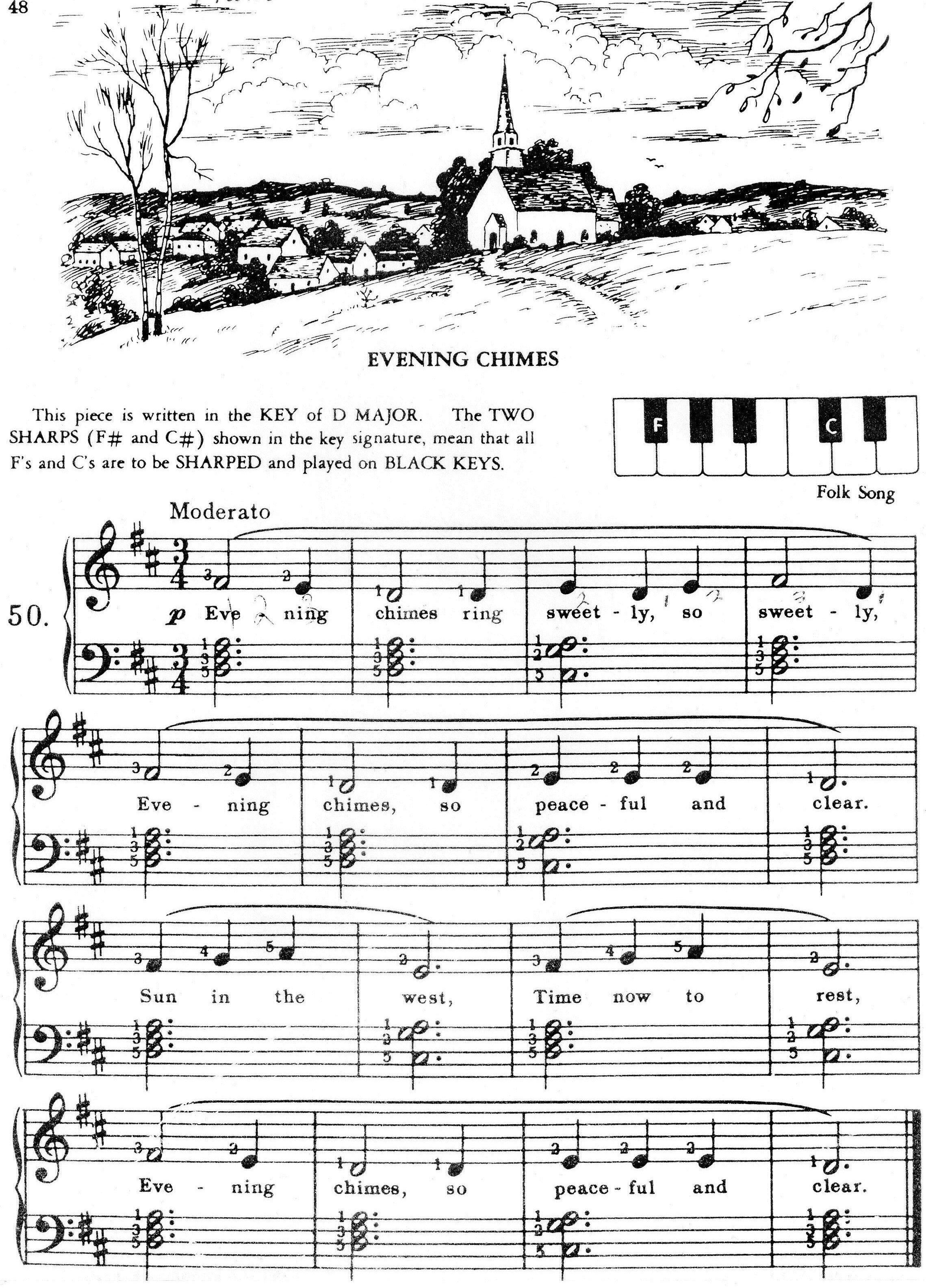
'Evening Chimes', Michael Aaron Piano Course - Grade One. Mills Music Inc., New York. 1945.
Since I knew Evening Chimes by heart, my eyes could wander over the embellishments of the Victorian-aged organ as I was playing. Its designs included flowers, leaves, exclamation marks, serpent-like creatures and four stylised figures of an octopus! This last I could ascribe to a childish imagination, but since my sister now has my grandmother’s parlour organ, I can verify the existence of those odd oceanic figures on the front of the organ!
~
~
Vox Angelica 8 Fţ
~
practice required
repeated bars and D.C. al fine
the E flat I could never
remember, stretch that little
finger, make it behave, do
tricky slurs and grace notes
~
to coax these from the organ
was like pounding on felt
and my feet
unused to pumping
supplied inappropriate pace
~
so I played Evening Chimes, folk song
over and over
rang church bells
imitated angels, impressed
my pious grandfather
and demonstrated piano prowess
~
© Jane Tims 2011

end of the maple syrup season
On Monday, we finished our last lot of maple syrup for the season. The whole house was filled with the sweet smell of syrup at boil. I finish the syrup on our electric kitchen stove, in a pan made particularly for the purpose. Made of aluminum, it has a narrow base and a flared top. I thought it was a terrible extravagance at $268, but it really has improved both the boiling time and the process, and it will last for many years.
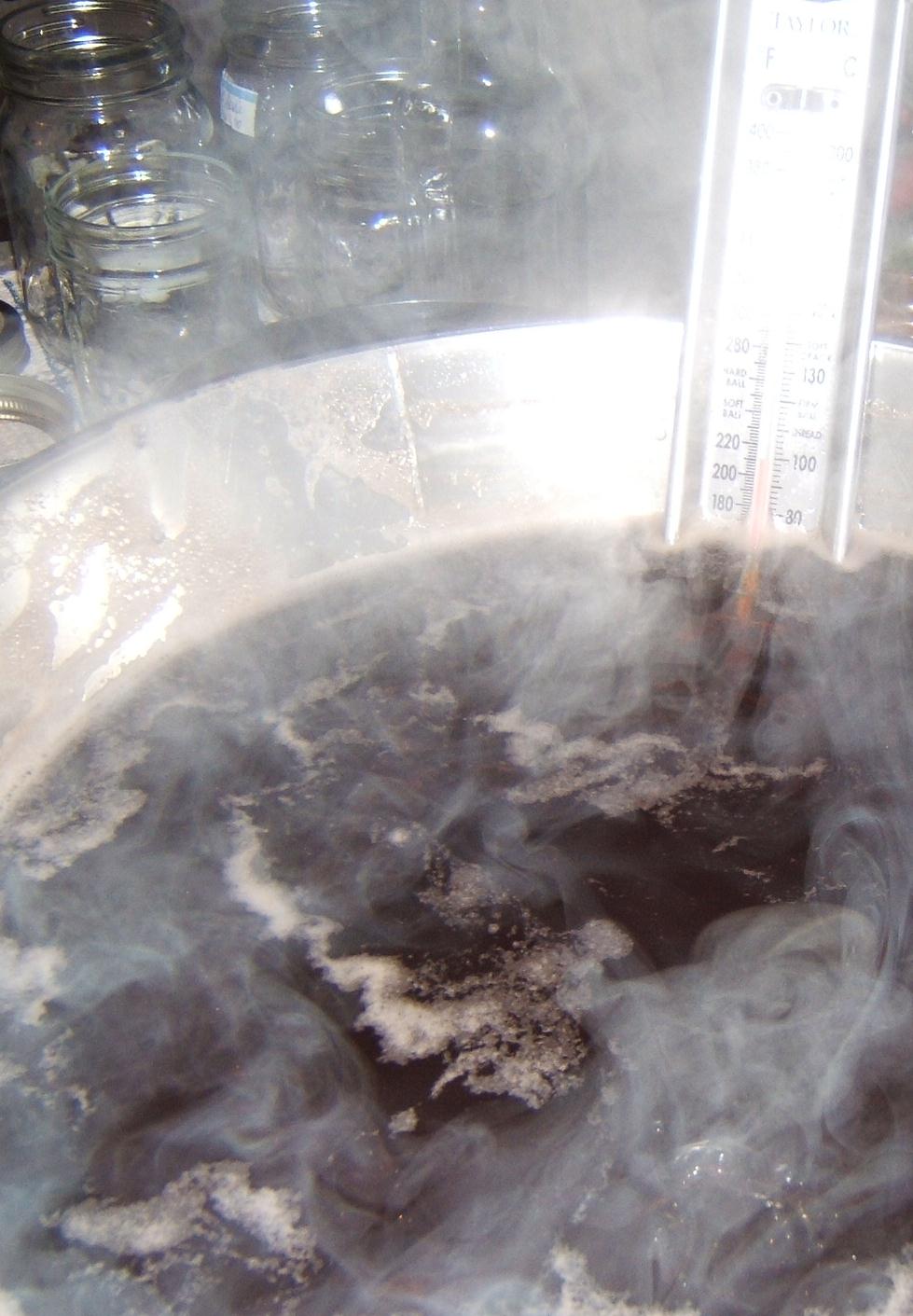
I love the final boiling. The smell of the steam is amazing and the boil of the syrup is fascinating to watch. While the sap is boiling, I skim the foam with a slotted spoon, a very soothing activity. Then, the temperature rises suddenly on the candy thermometer, and those huge candy bubbles start to form. The part I like best is hearing the seal ‘pop’ on the Mason jars and knowing we have produced enough syrup for our pancakes and muffins and a few gifts for family and friends, enough for the whole year.
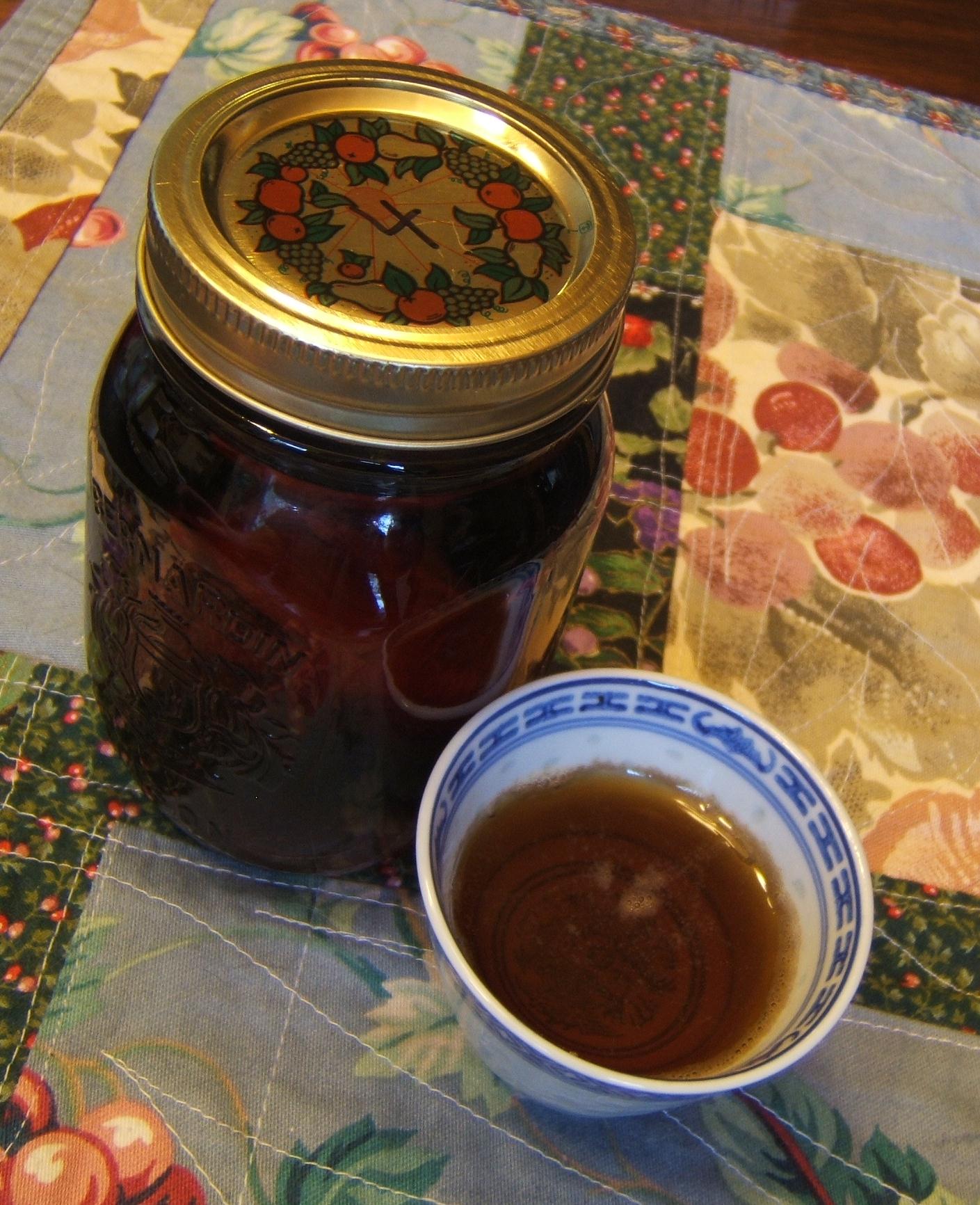
This was not our best year but we are so used to the routine, it seemed painless. We tapped 10 Red Maple trees, collected 167 liters of sap (compared to 329 liters last year) from March 12 to April 6, and prepared 14 pints of syrup. The syrup was dark this year but very sweet and flavorful.
~
~
sugartime slow
~
in the rain
maples bloom
small red fireworks
slate sky
~
drip slow
time slow
sap runs bitter
hardly worth the boil
~
~
© Jane Tims 2012
snippets of landscape – beaver lodges and beaver dams
Everywhere along streams in New Brunswick there are dams and lodges the beaver have built. The North American Beaver (Castor canadensis) is a clever engineer, building dams to create ponds as habitat. The still, deep water provides safety from predators and enables the beaver to float branches and logs to be used as building materials and food.
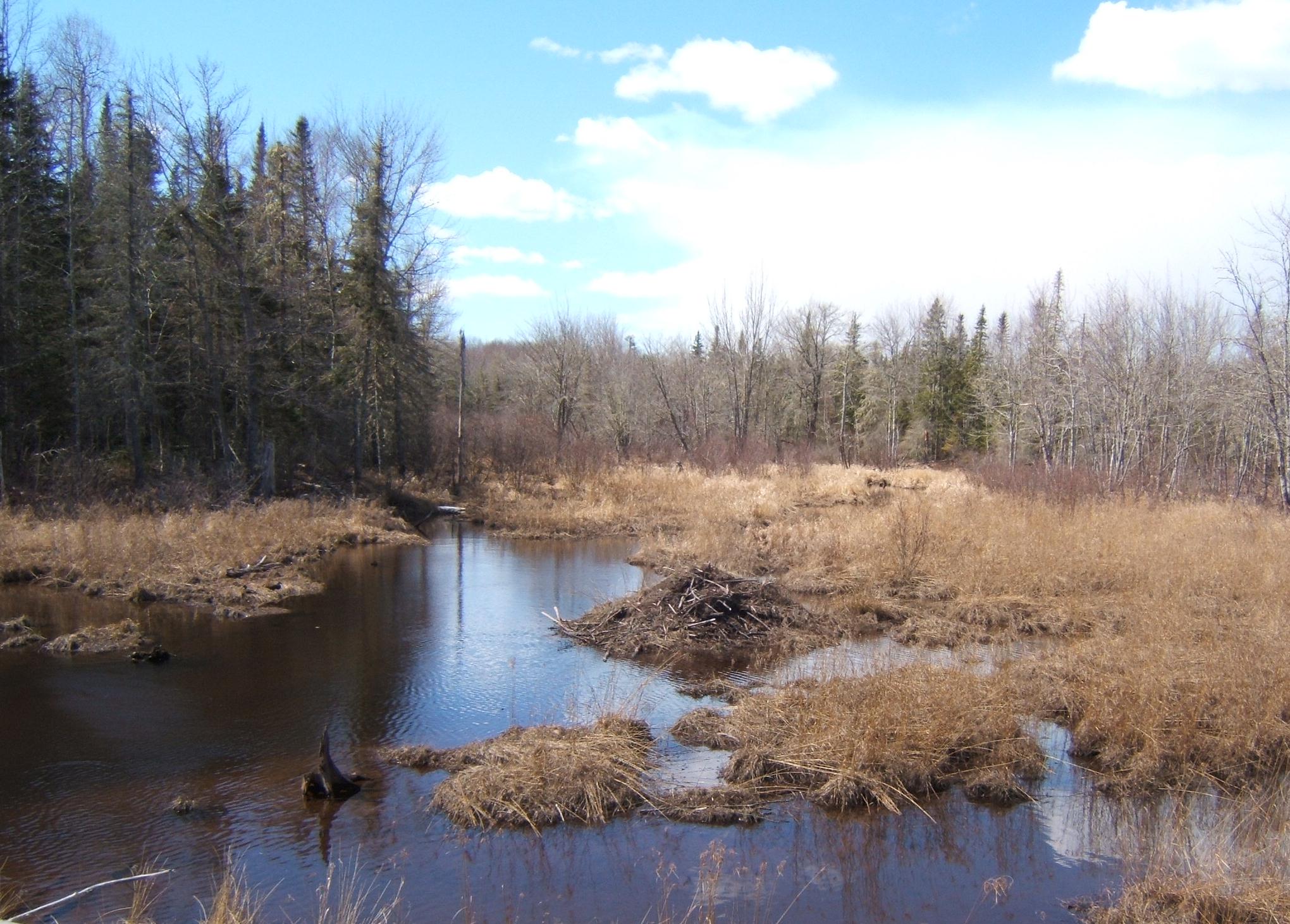
a beaver pond near our cabin ... notice the two ducks on the shore to the left...
Unfortunately, the subsequent flooding of roads and other land means the beaver’s talents are not always appreciated. However, beaver dams help create and maintain wetlands, important for providing habitat for other animals and storage areas for water.
~
~
Bear Creek Meadow by Canoe
~
from the river
we portage
across the beaverdam
over poles and patted mud
up
to the quiet pond
~
and the bow
scoured by rocks
parts green
~
and our paddles
pitted by snags
spoon soup
~
dignity quiets our paddles
hushed voices heed
the diminishing echo
~
pliant as stems of pickerel weed
we honour the whisper
of wild rice
the edgewise touching
of nymphaea and nuphar
amphibian eyes
in the harbour-notch of lily pads
~
we are threaded by dragonflies
drawn by water striders
gathered in a cloak of water shield
~
oval pads a puzzle
part in silence
return to their places
~
no trace of our passing
~
~
Published as ‘Bear Creek Meadow by Canoe’, Canadian Stories 14 (79), 2011.
© Jane Tims 2011
Easter greetings from the past
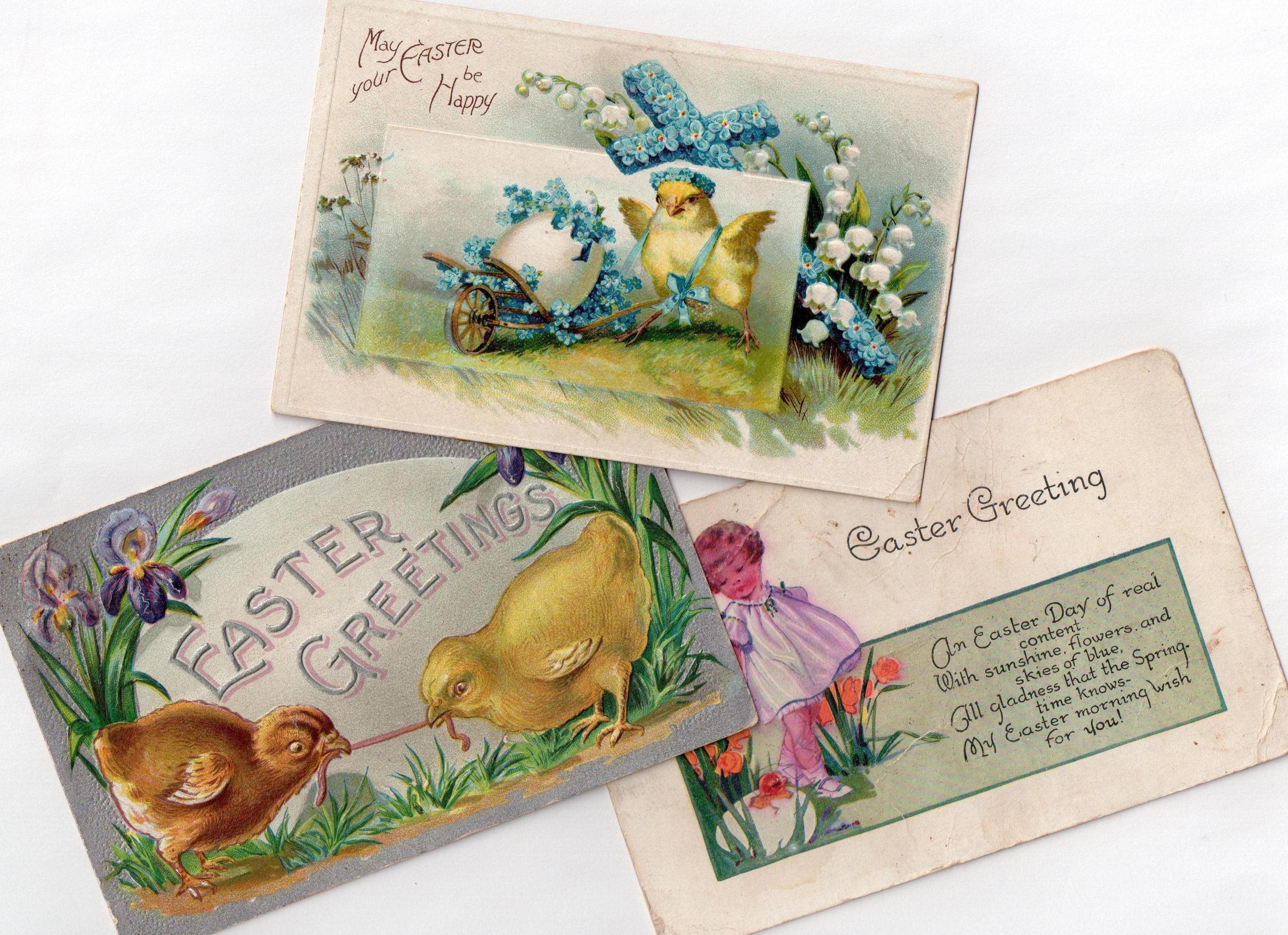
In my collection of old post cards, I have quite a few Easter greetings. The postmarks range in date between 1912 and 1922. Some of the cards are not postmarked, so they must have been delivered personally.
I like the hand-written message on the back of one. It says, very briefly, ‘write me a good long letter’ !
Post cards are even rarer than letters in our world of emails and tweets. But a card is so much fun to receive. My brother and sister-in-law often send me greeting cards through the year and I keep a string in the corner of the living room to display them.
The ‘chick’ is a popular theme on the post cards. I thought I would share them with you…

© Jane Tims 2012




 nichepoetryandprose