Archive for the ‘picking berries’ Category
Highbush Cranberry (Viburnum trilobum Marsh.)
Like miniature fireworks, bright bunches of the berries of Highbush Cranberry (Viburnum trilobum Marsh.) burst along our roadsides in late summer. Highbush Cranberry is also called Cranberry, Pimbina, and in Quebec, quatres-saisons des bois.
The Highbush Cranberry is a large deciduous shrub, found in cool woods, thickets, shores and slopes. It has grey bark and dense reddish-brown twigs. The large lobed leaves are very similar to red maple.

In spring and summer, the white flowers bloom in a cyme or corymb (a flat-topped or convex open flower-cluster). Most flowers in the cluster are small, but the outermost flowers are large and showy, making the plant attractive for insect pollinators.
The fruit is a drupe, ellipsoid and brightly colored red or orange. The juicy, acidic fruit has a very similar flavour to cranberry (Vaccinium spp. L.) and is used for jams and jellies. The preserves are rich in Vitamin C.

~
~
fireworks, quatres-saisons
(Viburnum trilobum Marsh.)
~
~
against a drawing paper sky
some liberated hand
has sketched fireworks
~
remember precursors in spring?
blowsy cymes, white sputter
of a Catherine wheel
~
now these berries, ready to pick
bold, spherical outburst
of vermillion sparks
~
a pyrotechnic flash of red
strontium detonates
in receptive dark
~
a four-season celebration
spring confetti, berries,
fireworks in fall
~
cranberry preserves – acidic,
tart blaze of summer sky
winter ignition
~
~
© Jane Tims 2012

© Jane Tims 2012
Blueberries!
I love blueberries and so I am very happy – our blueberries are blue and ready for the picking at our summer property.

There are two ways to pick blueberries, with your hands…

or with a rake…

My husband bought me my rake years ago, so I use it when there are lots of berries and most are ripe. There is a bit of a knack to harvesting with a rake. The ripe blueberries are loosened and captured with the tines of the rake. The basic technique is to sweep the surface of the bushes, tipping the rake upward as you sweep, since the ripe berries fall into a tine-less part of the pan. The experience of raking berries is very different from picking. The process is less calm, although you do get into a rhythm. Also, the tines of the rake vibrate as you sweep, making a lovely musical sound!
We compared the yields between picking and raking, and we get about five times as many berries per unit effort with the rake (I am sure professional rakers do much better than this). The rake gets lots of leaves and debris along with the berries, so the time saved in raking instead of picking is lost in the cleaning (in a professional operation, the debris is removed with fans or another sorting method).
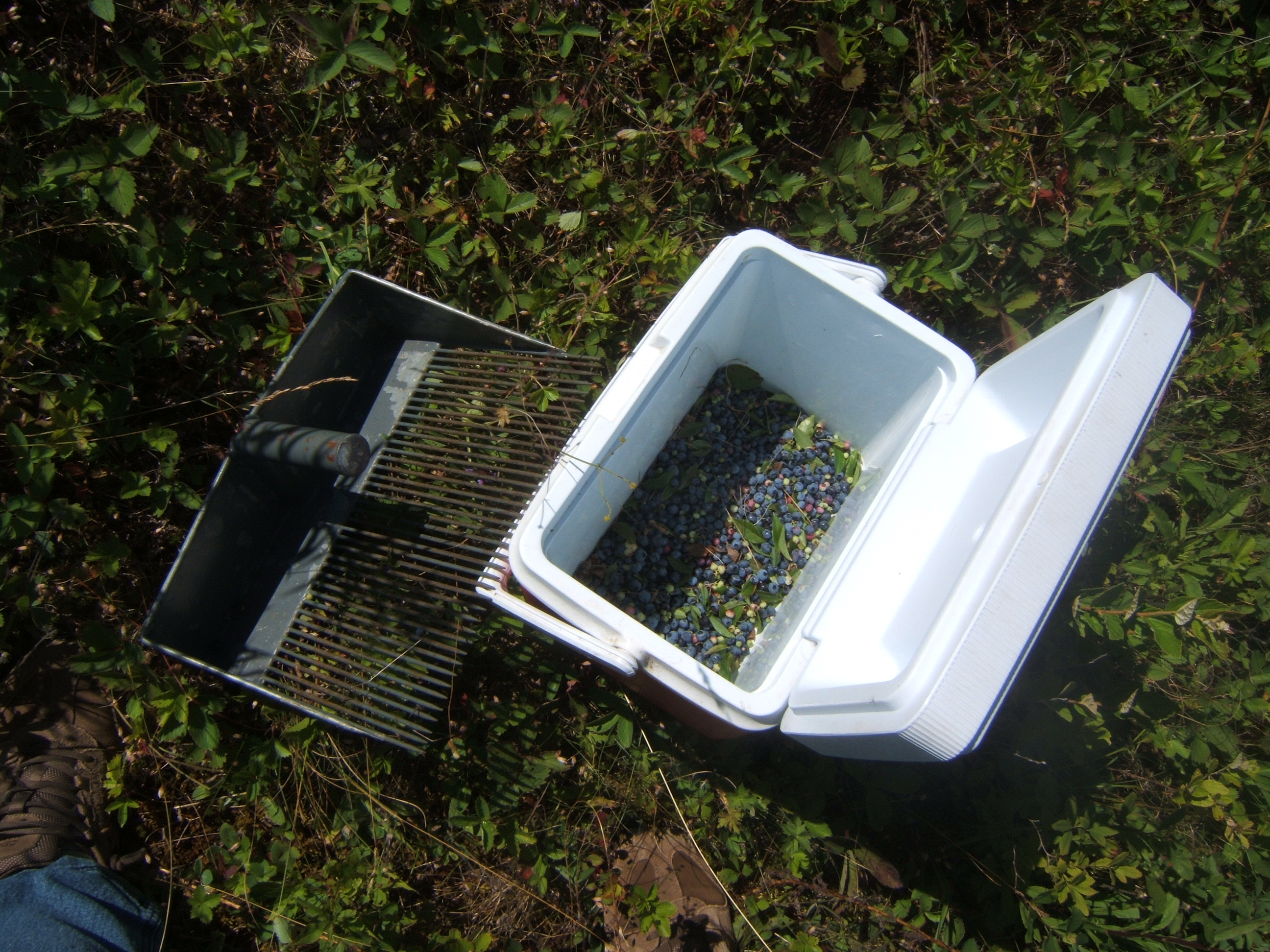
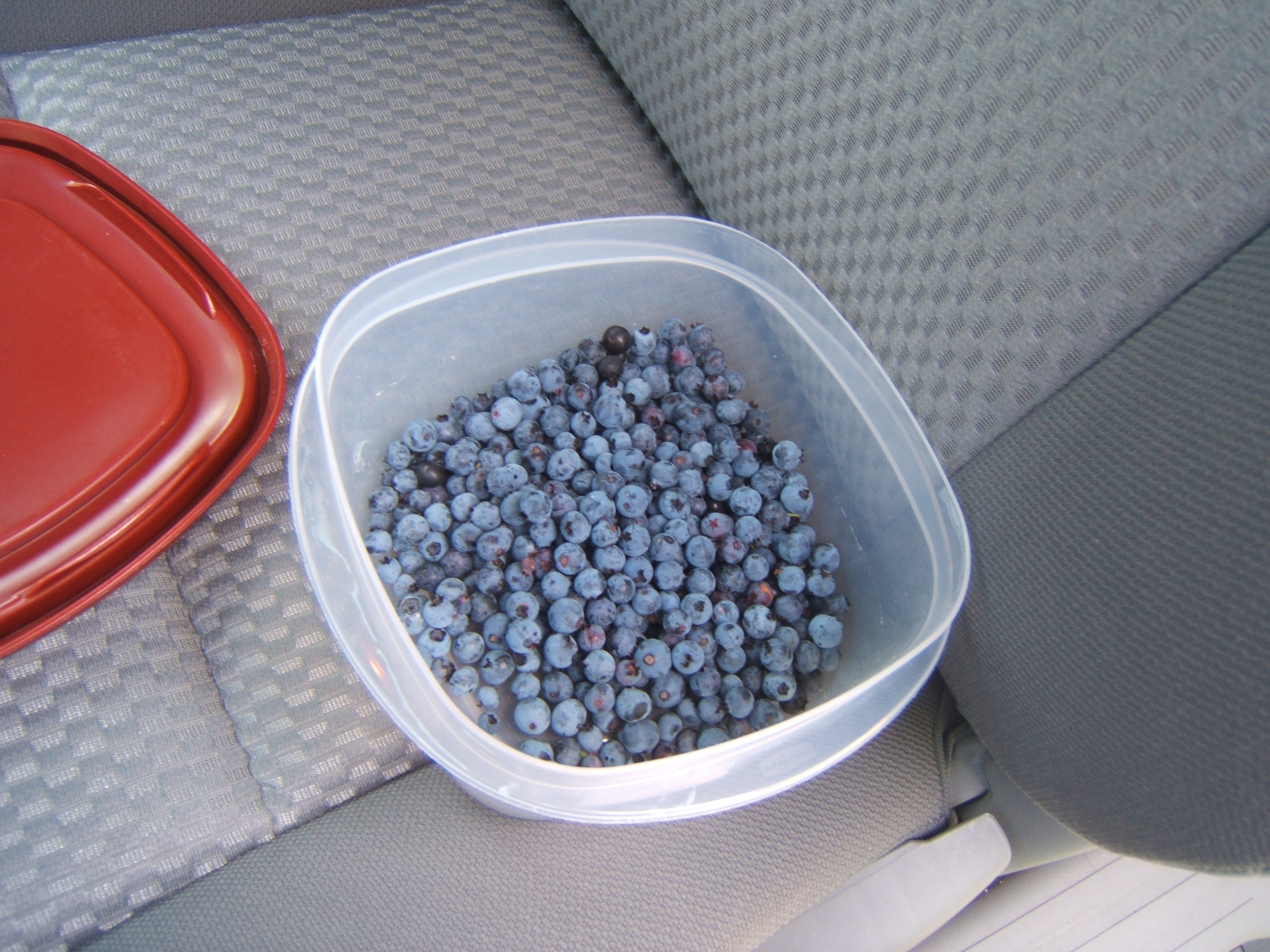
Although we have lots of berries on the property, they are getting fewer each year because the growth of other vegetation crowds the blueberry bushes. But we have a backup plan!
We also travel to the southern part of the province where the berries are in full production this time of year. Our preferred place to get blueberries by the box or by the pie is in Pennfield, at McKay’s Wild Blueberry Farm Stand.

We eat most of our own blueberries almost immediately. They also freeze very well. Our favorite way to use the berries is by making Blueberry Dumplings.
~
Blueberry Dumplings
two to three cups of fresh blueberries 1/2 cup of water 2 tbsp. of sugar (more if you prefer a sweeter dish) ~Bring the berries, sugar and water to a boil.
When the mixture is bubbling, turn down the heat.
Dumplings:
1 cup flour 2 tsp. baking powder 1 tbsp. of shortening, cut into the flour/baking powder mixture 1 tsp. sugar 1/2 cup milk ~Mix well and add by spoonfuls to the top of the cooking blueberries.
Cover the pan tightly with a lid (otherwise, you will have a blue-spattered stove).
Cook at low for about 12-15 minutes or until dumplings are fluffy and done in the middle.
Enjoy!
~
~
raking blueberries
~
the sweep of the rake, the berry
touch, the ring of the tines
vibrato in blue, duet with the wind
in the whispering pines
~
~
© Jane Tims 2012
Warning: 1. never eat any plant if you are not absolutely certain of the identification; 2. never eat any plant if you have personal sensitivities, including allergies, to certain plants or their derivatives; 3. never eat any plant unless you have checked several sources to verify the edibility of the plant. ~growing and gathering – barriers to eating wild foods
One of the themes in the poems I have written for my manuscript on ‘growing and gathering’ local foods concerns the ‘barriers’ to eating local foods, especially wild local foods. Edible wild plants are everywhere around us… why don’t people make more use of them?
The barriers to gathering and eating wild foods are:
1. knowledge – although most people can recognise and even name a few plants, only a few can identify and name every plant they see with certainty. It you eat a plant, you need to know you won’t be the victim of mistaken identity. Sometimes very closely related plants are quite different when it comes to their edibility. A simple example is the Tomato: the species we eat is Solanum lycopersicum Lam.; a plant from the same genus is the poisonous Common Nightshade (Solanum ptychanthum L.). The fear of mis-identification and poisoning oneself is a barrier to eating local wild plants. Also, people can vary greatly in their sensitivity. One person can eat a plant without effect while another cannot because arthritis is aggravated.

berries of Common Nightshade are poisonous… later in the season, they are red and quite beautiful… children should be warned that all red berries are NOT good to eat
2. access – in order to eat wild plants, you have to know where they grow, you have to be able to go there, and you must have access. Many people live in urban or sub-urban areas where some species of wild plants just aren’t found. Even if you have transportation or live in a rural area, access may be a problem. There may be a lush field of raspberries just up the road, but if there is a locked gate, better get permission!

3. peril – sometimes picking wild plants for food has an unpleasant or dangerous side. Some plants are poisonous. Picking berries may mean avoiding sharp thorns! Sometimes berry picking takes you on a heads-down journey far from the point where you began… you may get lost! You can look up and not recognise where you are or how to return to your point of origin!

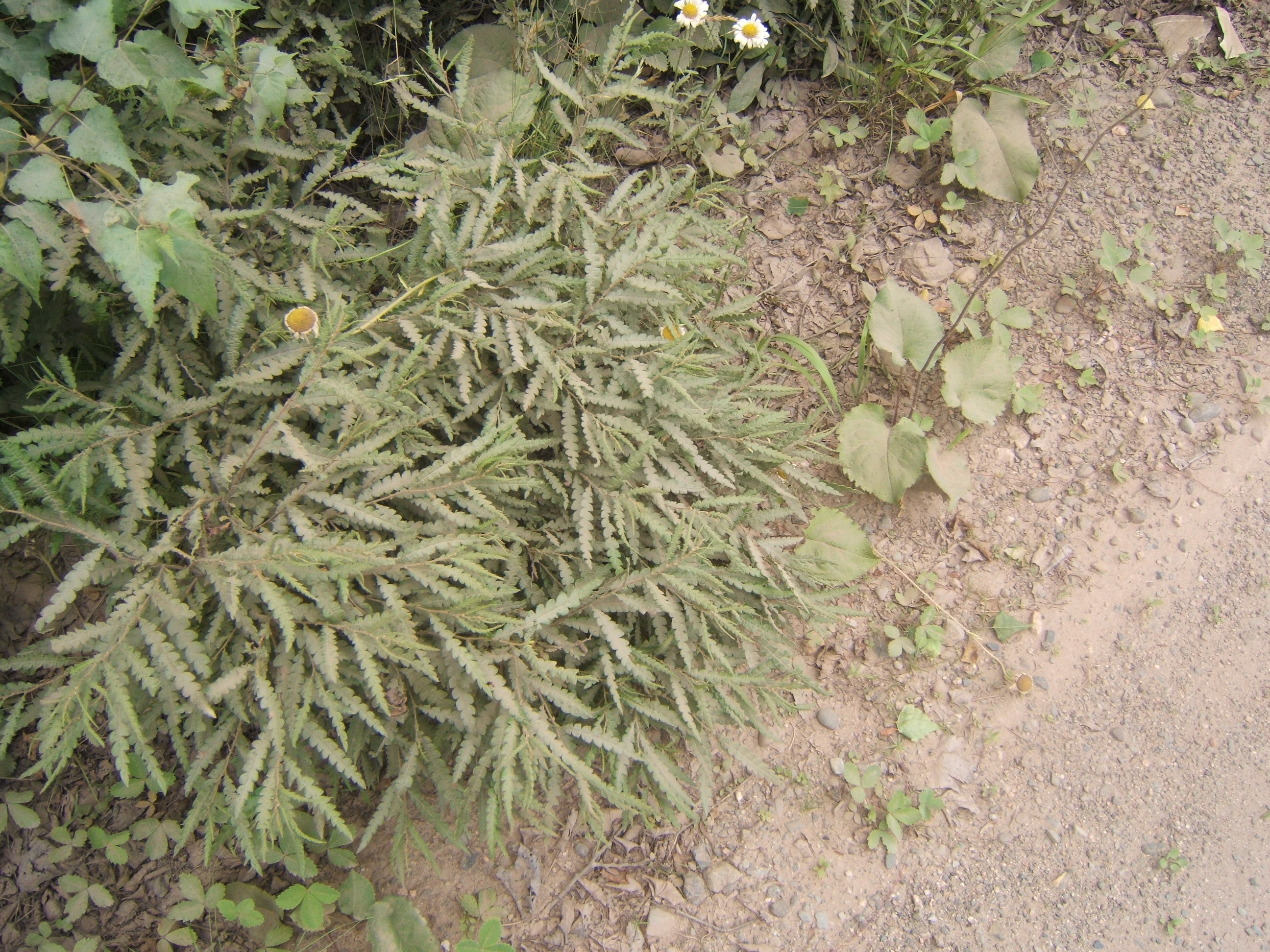
4. contaminants – some locations may not be suitable for collecting and eating wild plants. For example, plants along busy highways may have high levels of some contaminants. Berries or other plants growing along the roadside may carry a burden of dust, making them unpalatable. I wouldn’t make a cup of Sweet Fern tea from the dusty leaves in this photo!
5. convenience – Sometimes gathering or producing wild foods is too demanding of time and energy. I love collecting maple sap and boiling maple syrup each spring, but it is hard work and takes days to accomplish. Sometimes you know there is a patch of berries just down the road, but other demands on time take precedence.
6. competition – Wild animals also like edible wild plants. You may run into a bear while picking berries, or face a moral dilemma when you realise you are keeping the squirrels from a food source! My garden is always under attack and the battle often seems to outweigh the benefits of having a garden. This year the enemies are slugs, bunny rabbits and shadows (too much shade).

7. complacency – Sometimes I think, most of the barriers I’ve listed above could be overcome. But a barrier not so easy to negotiate is one of separation from nature and the associated complacency. It has become normal not to seek our food in the natural spaces around us. We go to the grocery store, pick up what we need, and take the easiest route in our exhausted lives. Even gardens are not as common as they once were. In my mother’s generation, gardens were the norm. This partly came from long traditions of growing food, but also from the concept of the ‘Victory Garden’, begun during World War II in order to conserve resources and boost morale.

World War II poster promoting the Victory Garden (Source: Wikimedia Commons, original art by Morley)
~
The only way I know to return to a simpler life is to take small steps and take them often, so they become habit. Here are some suggestions:
- visit the Farmers Market in your community, to obtain fresh produce and to know the history of your food;
- stop at those market stands along the road and buy produce in season. In our area, vendors sell lobster, smelt, fiddleheads, strawberries and apples this way;
- if you have an apple tree in your yard, or wild raspberries in a field nearby, pick them and enjoy;
- if your apple tree needs pruning and some TLC, talk to a knowledgable person and find out how to return it to production;
- dig the fishing tackle from the garage and take the kids fishing;
- grow a pot of fresh herbs on your back deck;
- learn about one wild plant, find a place where it grows, be certain of the identification, and use it! Then find another!
the growing part of ‘growing and gathering’
So far in my posts, I have talked mostly about harvesting wild edibles. I am starting to get a little produce from my garden, so I thought I’d do a post for the ‘growing’ side of ‘growing and gathering’.
I have only a small garden, laughable by many standards. We have too much shade and since I won’t allow the nearby trees to be cut, I must be content with spindly carrots, sorrowful pea vines and a plethora of slugs. However, I also have lots of perennials and a small herb garden, enough to keep us in regular small harvests of additions for our dinners.
On Monday, I decided to prepare my favourite lunch, couscous, with a gathering from my garden. I used:
~ a handful of black and red currants (just ripening this week!)
~ a sprig of thyme
~ a few leaves of oregano
~ a small spray of parsley
~ a handful of chives
~ one clove of garlic from the shadowy garden.
To this I added a small purple onion from the grocery store…

I chopped the onion and the herbs quite fine…

I sautéed everything in olive oil, very briefly (to keep it all crisp and keep the currents from going mushy)…
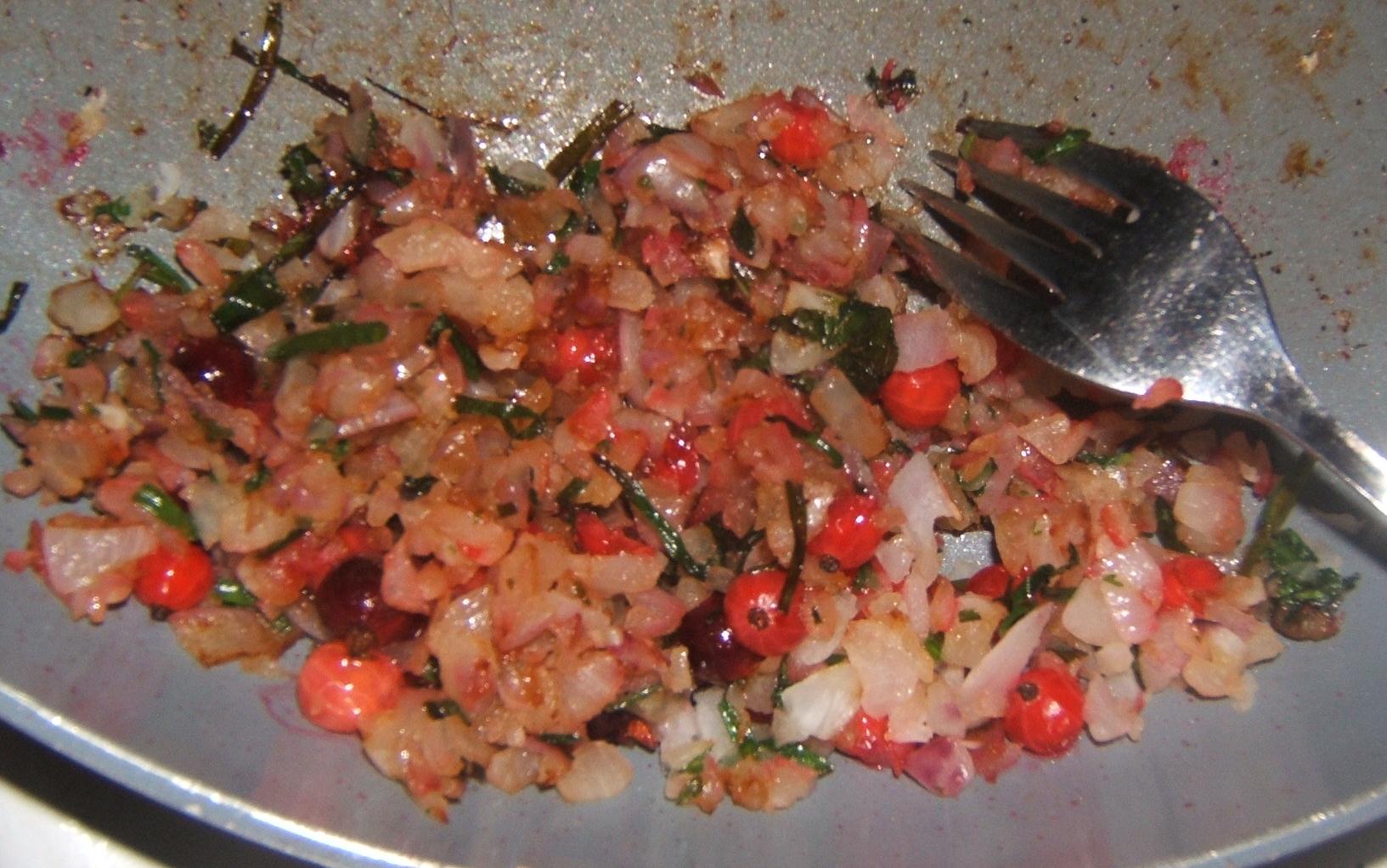
and added the mixture to my couscous, prepared with boiling water and a quarter teaspoon of powdered chicken bullion.
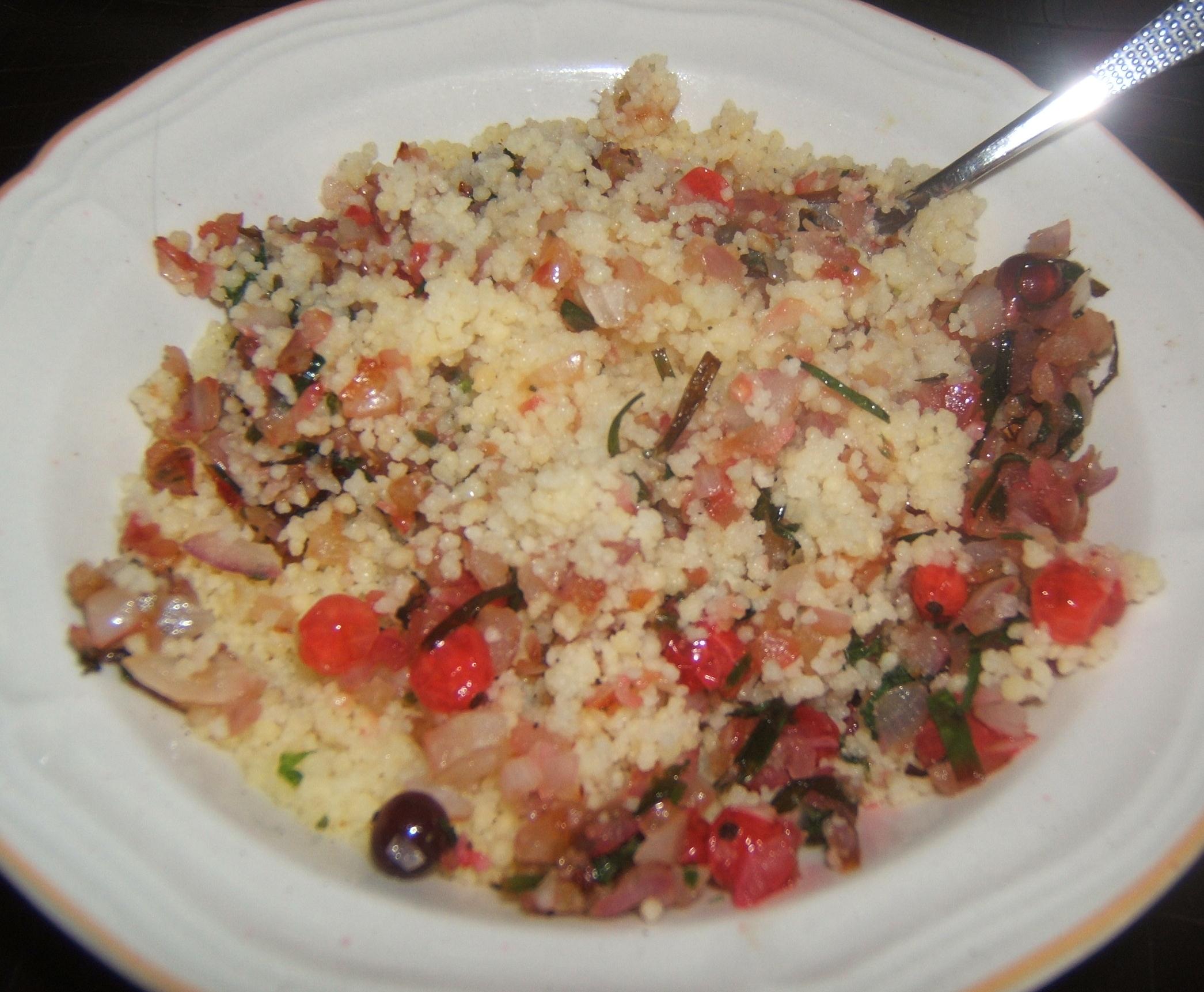
A delicious dinner, a little tart, but perfect for my taste buds!!!!
© Jane Tims 2012
growing and gathering – picking berries with friends
As I am deciding how to organise my poetry manuscript on ‘growing and gathering’ local foods, I am considering the themes of the various poems. I think these themes will become the sections in my manuscript.
One of the first themes to emerge, perhaps the easiest to examine, is about ‘relationships’.
Although I have often picked berries alone, my best memories are of picking berries with members of my family. Both my Mom and Dad loved to pick berries. My Dad was a fast picker and I was always in silent competition with him to pick the most berries… I never won. My Mom picked berries quickly, but took the time to enjoy the fresh air, the blue sky and the expanse of the berry field. When I think of picking berries with her, I feel calm and a little lazy. My relationship with my mother-in-law was also shaped by our many berry-picking experiences; when I pick raspberries, I hear her quiet laughter in the breeze.
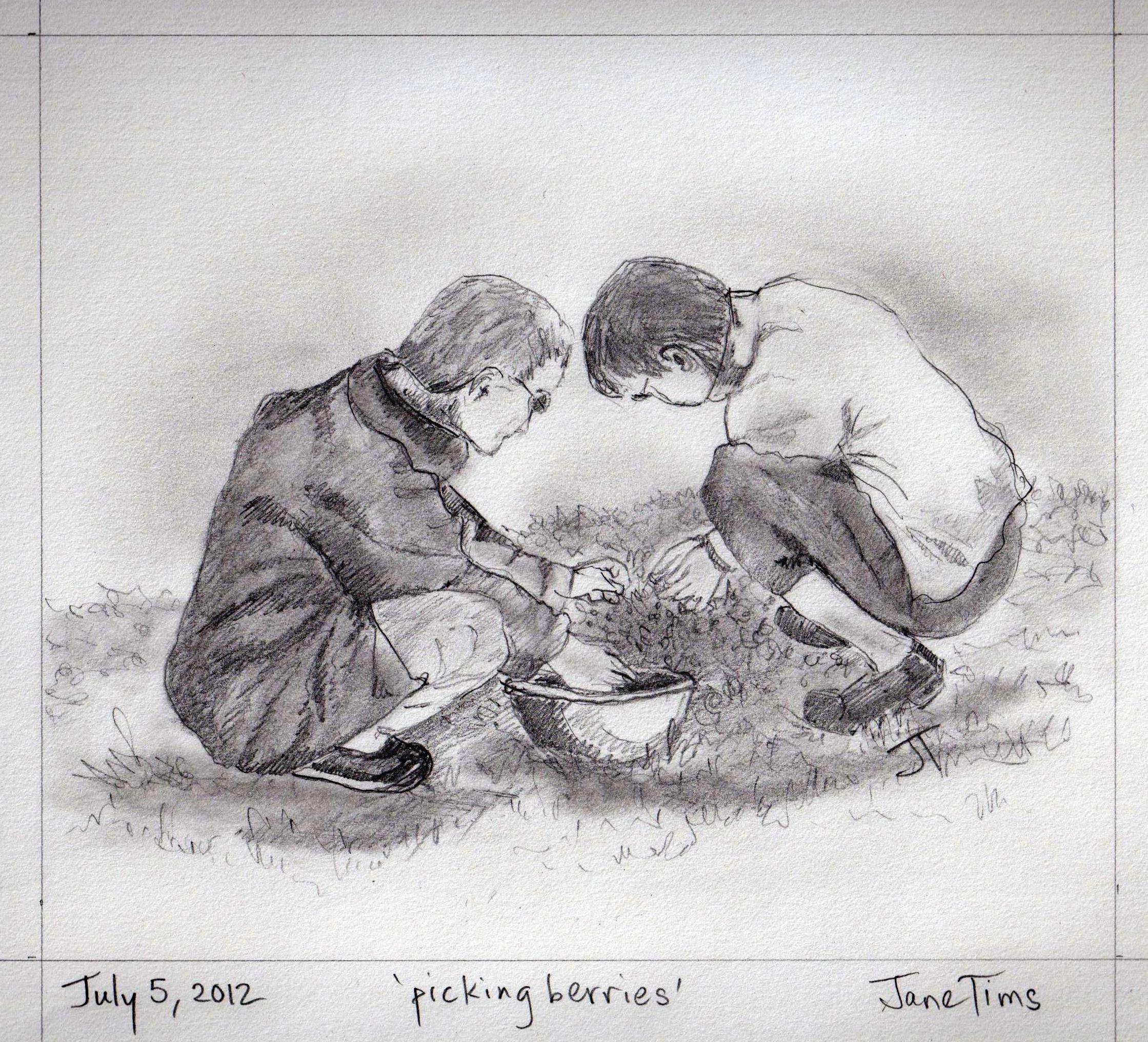
As I write poetry for my ‘growing and gathering’ manuscript, I have explored my relationships with the various people in my life.
Some of these are based on real experiences I have had picking berries or gathering greens. Examples include poems about trying to find an old berry field, now grown over, or how changes in a relationship can be observed over the years in the annual picking of berries. Although most of the poems are about plants, I have included production of other local foods – so a poem about beekeeping, for example, explores how two people interact during a small emergency.
In other cases, the gathering of local foods is a metaphor for some aspect of a relationship, whether good and bad. At least some of these metaphors are related to the characteristics of plants or animals – for example, the serrated edges of leaves, the slipperiness of a trout, the gentle feel and fragrance of Bedstraw, or the bitterness of taste common to so many ‘salad’ greens.
Some of the metaphor is based on the place where plants grow. Examples include the seclusion of many berry-picking spots, or the physical spaces created by rows of corn plants.
As I look over the Table of Contents for my manuscript, I realise some poems will be stronger if placed within another theme. So I have moved, for example, a poem about picking berries over a three-week period from the theme on ‘relationships’ to a theme about ‘change’.
This consideration of the themes in my poetry has given me a good start to organising the poems, and identifying gaps I have to fill. I know now there are lots of gaps, and many poems yet to write!
~
~
Bitter Blue
~
of all the silvery summer days we spent none so warm sun on
granite boulders round blue berry field miles across hazy miles
away from hearing anything but bees
and berries
plopping in the pail
~
beside you I draped my lazy bones on bushes crushed berries and
thick red leaves over moss dark animal trails nudged between rocks
baking berries brown musk rising to meet blue heat
or the still fleet scent
of a waxy berry bell
~
melting in my mouth crammed with fruit sometimes pulled from
laden stems more often scooped from your pail full ripe blue pulp
and the bitter shock of a hard green berry never ripe
or a shield bug
with frantic legs
and an edge to her shell
~
~
Published as: ‘Bitter Blue’, Summer 1993, The Amethyst Review 1 (2)
Published on www.nichepoetryandprose.wordpress.com on July 31, 2011
© Jane Tims 2012
Warning: 1. never eat any plant if you are not absolutely certain of the identification; 2. never eat any plant if you have personal sensitivities, including allergies, to certain plants or their derivatives; 3. never eat any plant unless you have checked several sources to verify the edibility of the plant.Wild Strawberry (Fragaria virginiana Duchesne)
Soon, the fields at our summer place will be jeweled with Wild Strawberries.
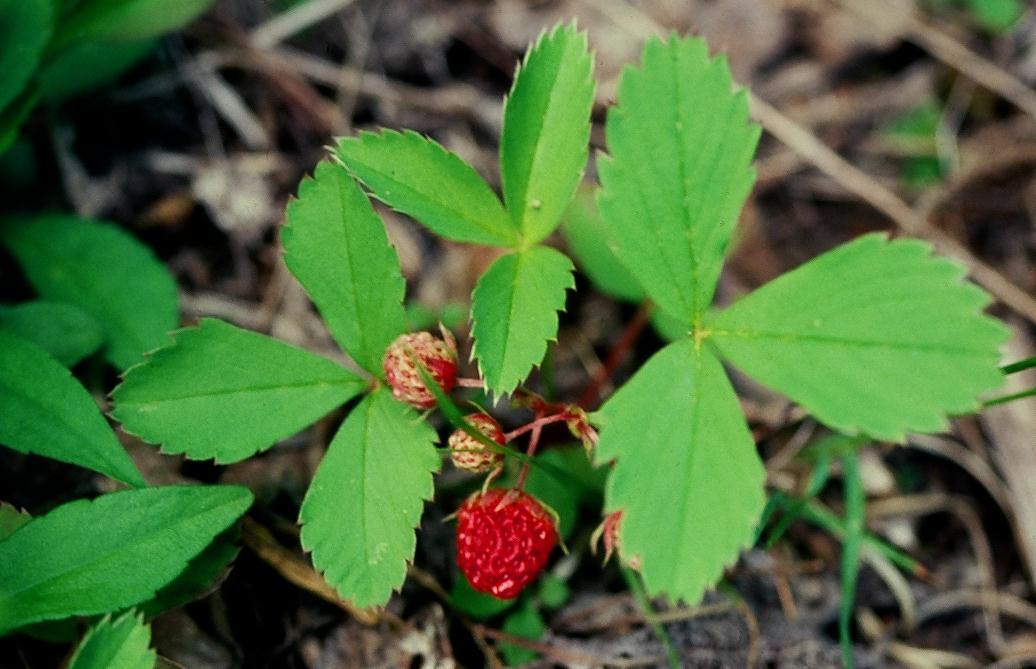
Wild Strawberry (Fragaria virginiana Duchesne) grows in open woodlands, fields and barrens. It is also known as Virginia Strawberry, Common Strawberry and, in French, fraisier. The name Fragaria comes from the Latin word for strawberry, fraga meaning fragrance.
The leaves of Wild Strawberry grow on slender stalks, and occur in threes. They are hairy and coarsely toothed. Plants are stoloniferous, meaning they produce ‘stolons’ or runners, freely-rooting basal branches.
The flower of the Wild Strawberry is white, with five petals and numerous stamens and pistils. Right now, our fields are spangled with them. The flowers occur in an open cluster of two or more flowers. In this species, the flower stalk is not longer than the leaf stalk.
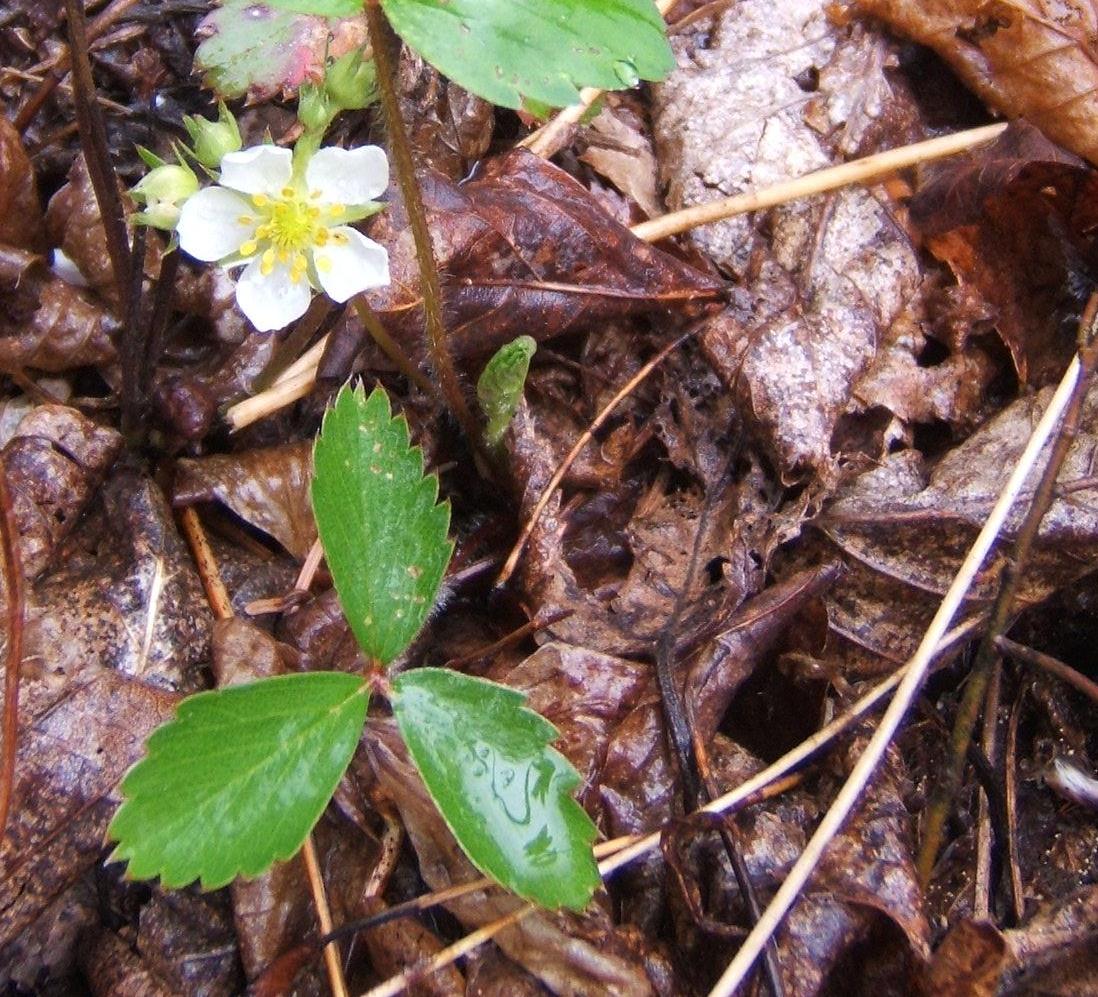
The berries are red and ovoid, covered with small pits and seeds. They are more delicate and sweeter than the domestic strawberry. They appear in late June and may last until August, but the best berry-picking is at the first of summer.
In the book ‘The Blue Castle’ by Lucy Maude Montgomery, the heroine says one of her greatest pleasures is to eat berries directly from the stem:
Here they found berries … hanging like rubies to long, rosy stalks. They lifted them by the stalk and ate them from it, uncrushed and virgin, tasting each berry by itself with all its wild fragrance ensphered therein. When Valancy carried any of these berries home that elusive essence escaped and they became nothing more than the common berries of the market-place–very kitchenly good indeed, but not as they would have been, eaten in their birch dell …
(from L.M. Montgomery, The Blue Castle, Chapter 30, McClelland and Stewart Limited, 1972)
~
The berries of the Wild Strawberry are delicious in jam. The leaves also make a fragrant tea, high in Vitamin C. To make the tea, put a handful of green leaves into two cups of boiling water, steep, strain and enjoy!
~
~
too early to pick
~
last week of June
roadside red with leaves
and ripening wild
strawberries hang
still green except
where sepal contrast
shows sweet berry
~
patience, wait
a few days and every berry
ripe and a thimble pot
of berry jam
~
can’t wait?
sour green flesh
grit of tiny seed
~
~
Copyright Jane Tims 2012

Serviceberry (Amelanchier sp.)
In the corner of our property is a usually-inconspicuous bush struggling to become a tree. This time of year it comes out of anonymity in full bloom. Today it is covered in white flowers – in a week it will be a scattering of confetti on the ground.
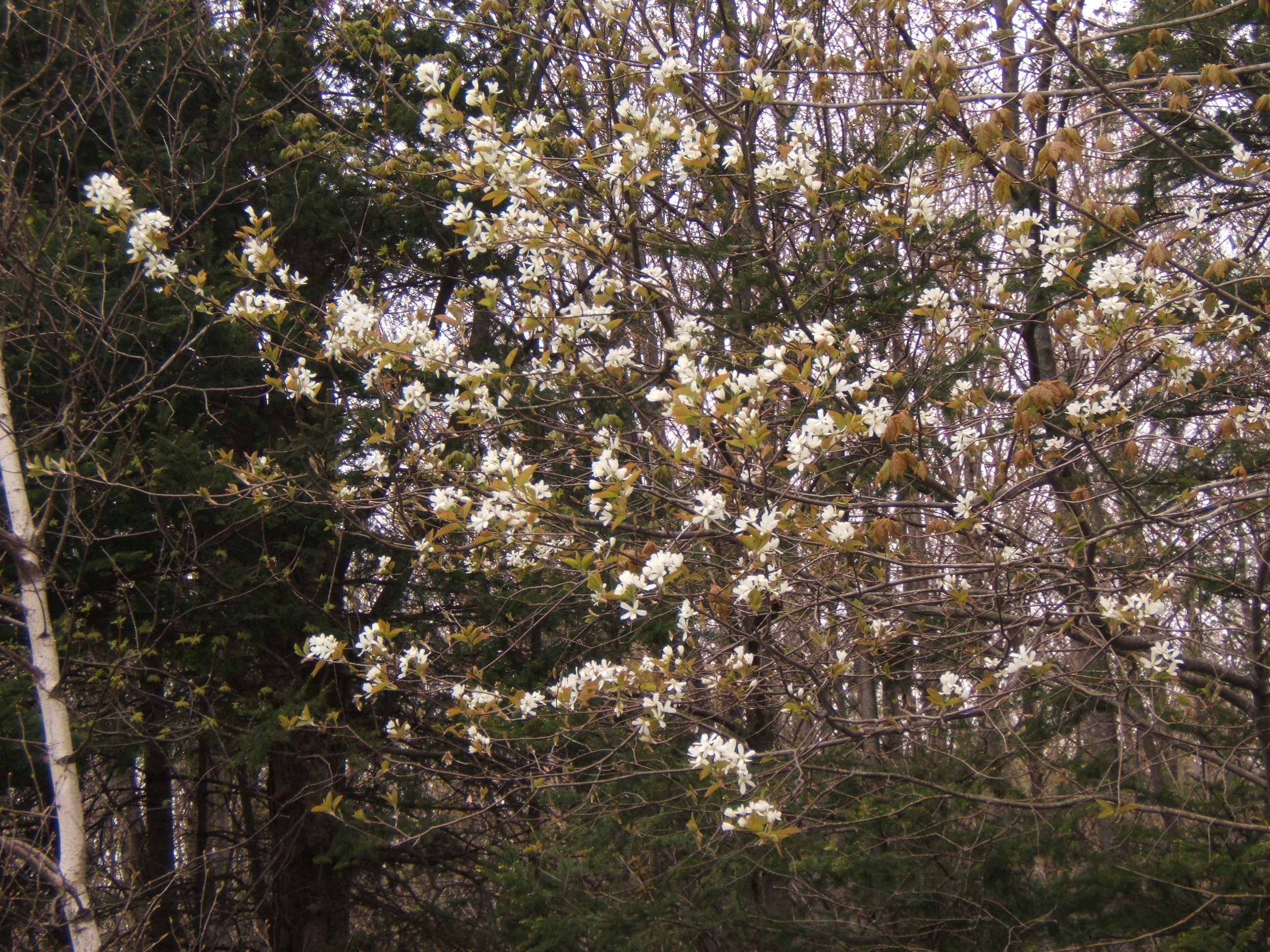
This bush is one of the Amelanchier species, probably Amelanchier sanguinea var. alnifolia (Nutt.) P. Landry. Amelanchier is perplexing to identify to species because of hybridization and other complex genetics. It has many common names, including Serviceberry, Wild Pear, Juneberry, Shadbush, Wild Plum, Sugar Pear, Saskatoon, and Chuckley Pear. In French it is called poiriers or petites poires. It is called Shadbush because it blooms at the same time the shad are running. The American Shad is an anadromous fish caught as it makes its way up the rivers for spawning.
Amelanchier is often found on disturbed sites, along roadways and fields. It also likes the edges of thickets and wet areas. This time of year, it beautifies the landscape with frail white bloom.
The fruit of Amelanchier is a berry-like pome, dark purple in color. Each berry contains 10 seeds and the sepal is persistent on the blossom end of the berry. The berries are edible and sweet, and can be eaten raw or used to make jam.
~
~
the shad are running
~
after the hard rain
and the wind between cold front and warm
the river runs brown
and for dinner we have fiddleheads
new potatoes and shad,
and last-July’s Serviceberry jam
~
Serviceberry bushes are torn fish nets
holes poked through with fingers
petals scattered on mossy stones
along the river shore
~
~

Warning: 1. never eat any plant if you are not absolutely certain of the identification; 2. never eat any plant if you have personal sensitivities, including allergies, to certain plants or their derivatives; 3. never eat any plant unless you have checked several sources to verify the edibility of the plant. © Jane Tims 2012
Staghorn Sumac (Rhus typhina L.)
One of the berry bushes common in our area is Staghorn Sumac (Rhus typhina L.). Its leaves and berries turn brilliant red in autumn, and its berries are displayed in distinctive red ‘horns’.
Staghorn Sumac is a small tree or shrub found at forest edges and in wastelands. The shrub has a flat crown and an umbrella-like canopy. It has pinnately compound leaves and toothed leaflets.
Staghorn Sumac is a ‘pioneer’ species, often one of the first plants to invade an area after the soil is disturbed. Although it reproduces by seed, it also grows from its vigorous underground root system, and forms dense colonies with the oldest trees at the centre. In this way, it causes dense shade to out-compete other plants.
The flowers of Staghorn Sumac are greenish-yellow and occur in spiked panicles from May to July. The berries are velvety, hairy red drupes, and ripen in June to September, often persisting through winter. The berries are held in dense clusters or spikes at the ends of tree branches.

Staghorn Sumac is also called Velvet Sumac, or Vinegar-tree, and Vinaigrier in Quebec.
The common name of Staghorn sumac is derived from the velvet feel of its bark, reminiscent of the texture of deer antlers. The word sumac comes from the words for red in Latin (sumach) and Arabic (summāq). The specific name ‘typhina’ means ‘like Typha’ (cat-tail), a reference to its velvety branches.
The Staghorn Sumac provides food for birds including Evening Grosbeaks and Mourning Doves, and its twigs are eaten by White-tailed Deer.
It has many human uses, including for medicine, decoration, tanning and dyes. Staghorn Sumac berries are used to make a lemon-flavored ‘sumac-ade’ or ‘rhus juice’. Remember, before you consume any wild plant, be certain of your identification.
Sumac lemonade
Pick and clean the berries (removing them from the stem)
Soak berries in cool water
Rub the berries to extract the juice
Strain
Add sugar to taste
~
~
Staghorn Sumac
Rhus typhina L.
~
from a single stem
and subterranean creep
a crowd of sumac
~
umbrellas unfurl
roof by roof
shield the hillside
from ministrations of sky
~
shadowed ways beneath
to shelter and imitate
a gathering of deer
with velvet antlers lift
~
an occidental village
red spires like minarets
insist on sky
~
~
Warning: 1. never eat any plant if you are not absolutely certain of the identification; 2. never eat any plant if you have personal sensitivities, including allergies, to certain plants or their derivatives; 3. never eat any plant unless you have checked several sources to verify the edibility of the plant. © Jane Tims 2012from the pages of an old diary – blueberries and other local foods
My new writing project, ‘growing and gathering’, focuses on local foods and finding food close to home.
A source of information and inspiration for me is the set of my great-aunt’s diaries, written from 1943 to 1972. From her diaries, I have a very good idea of how they obtained their food, and how they used local foods to supplement their needs.
Most of their food was obtained from the grocery store – in 1957, there was at least one grocery store in the community, and by 1967, they had an IGA. There is no doubt some goods came from ‘away’. For example, my great-aunt wrote about making coconut and pineapple squares for a Women’s Missionary Society meeting (Sept. 30, 1957).
Local goods, however. were used whenever possible. For example, my great-aunt bought eggs from her sister, and chickens from her brother. She also obtained vegetables and raspberries from her brother’s farm, apples from friends and relatives, deer meat from friends and relatives, and lobsters from Wallace, a near-by community. By 1967, my great-aunt and great-uncle also kept a garden at her brother’s farm, a few miles away.
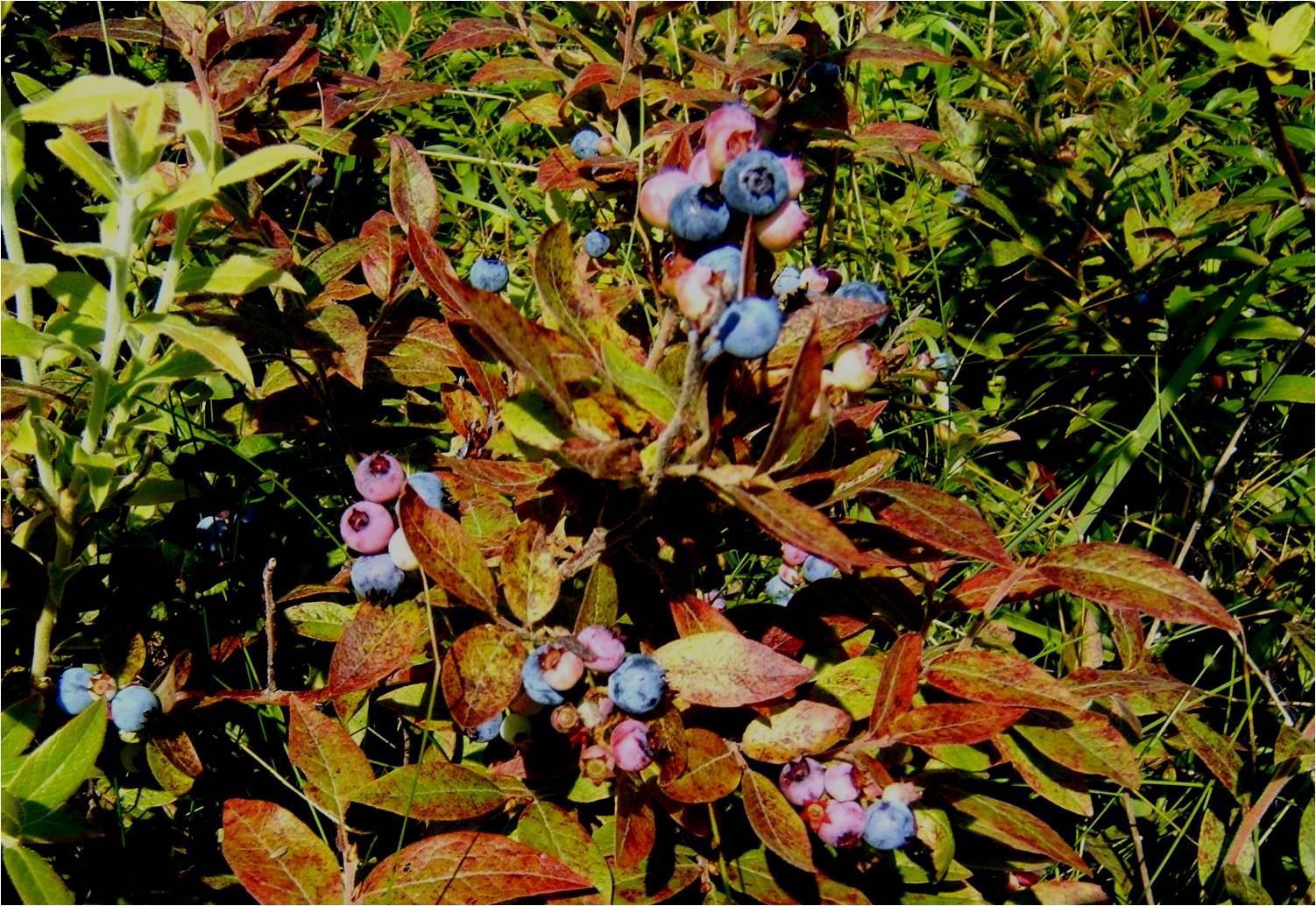
Obtaining local foods included picking local berries. In July and August of 1957, my great-aunt went four times for wild blueberries. Her gratitude and pleasure at getting these berries comes through in her words: ‘ got quite a few’ (July 31, 1957) and ‘got a nice lot.’ (Aug. 21, 1957). She also wrote about picking grapes and currants.

Some of the berries were eaten right away – for example, my great-aunt made a blueberry pie on August 1, 1957. The rest was preserved for the winter. On August 16, 1957 my great-aunt put up 5 quarts of blueberries, to supplement the applesauce, pears, peaches, sweet cucumber pickles, and tomato chow she mentions preparing on other days. Others in the family also made preserves and shared them with her – in 1967, her nephew (my uncle) brought her three bottles of peach, apple and choke cherry jelly he had made.
~
~
an offering of berries
~
she stands on the stoop
offers a box
a brimming pint
of berries
~
I take her hand, we ripple
through the pasture, strew
blue ribbons over bushes, stir
a blueberry jelly sky, dance
with dragonflies
~
she waits on the stoop
her brow a riddle, please
take this gift, blueberries
in a simple
wooden
basket
~
~
Warning: 1. never eat any plant if you are not absolutely certain of the identification; 2. never eat any plant if you have personal sensitivities, including allergies, to certain plants or their derivatives; 3. never eat any plant unless you have checked several sources to verify the edibility of the plant.
© Jane Tims 2012

roses of summer
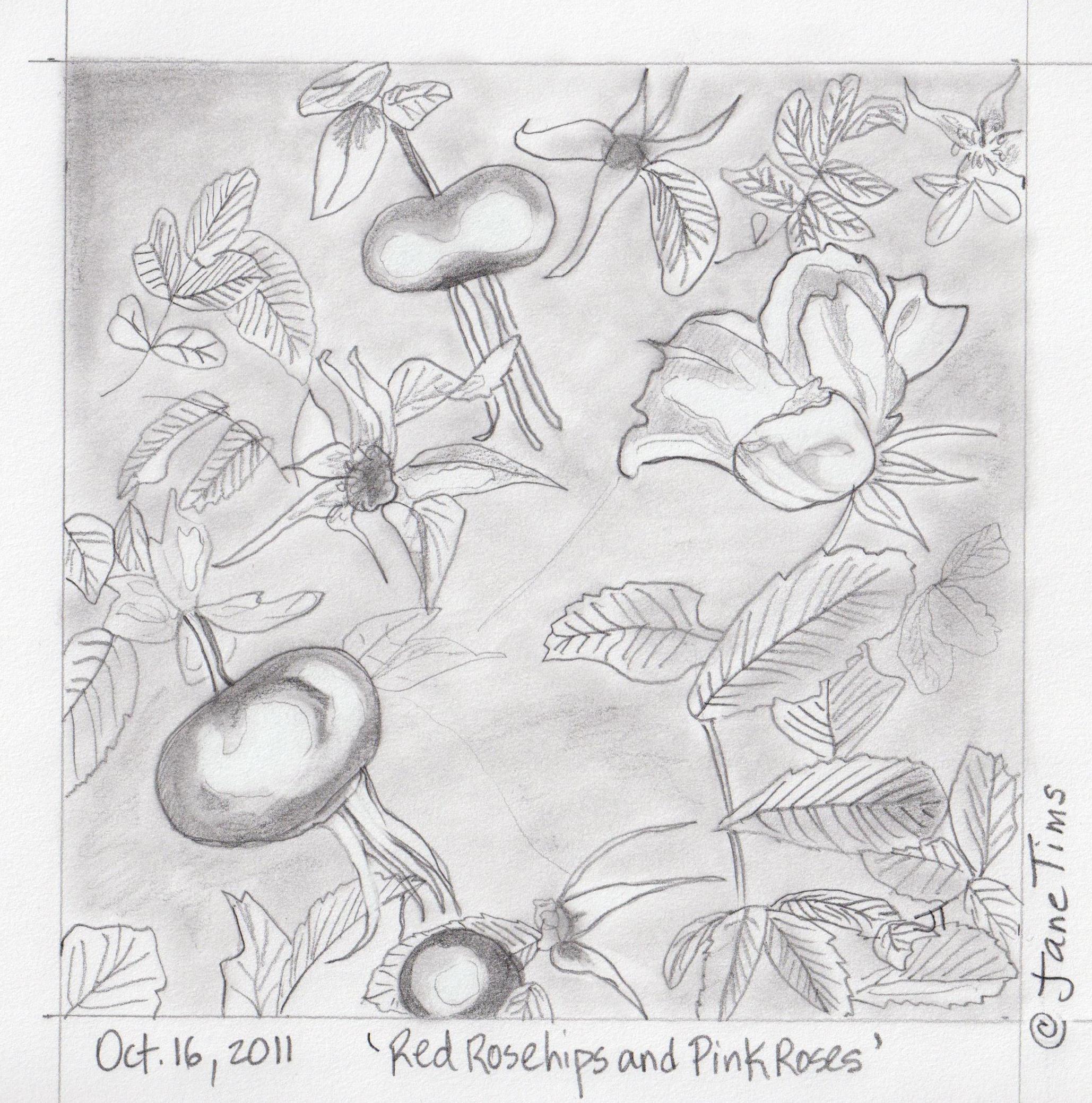
When I go for a walk this time of year, I visit our rosebush and I think of how rosebushes have been a part of my life:
- the little bush beside our road at the lake, delicate pink double roses and small rosehips… my husband loves this little bush and is always very careful not to cut it when he trims the lane…
- the huge rosehips on the rose bush (Rosa rugosa Thunb.) at Castalia Beach on Grand Manan Island, rigor in the harshest conditions; once I tried to bring a slip of the bush home in a banana peel (to keep the moisture) but, although it lived and grew, it only survived a few seasons…
- a tunnel of rosebushes and huge rosehips next to a parking lot where we stopped in Matane, Quebec on our trip to Gaspé a decade ago…
- a pair of long-gone rosebushes at my Mom’s old home place – when she and my Aunt were little girls, they called the rosebushes Mrs. Pears and Mrs. Rhodes and would visit them with their doll carriages to collect the red rosehips.
~
~
fragments from a walk
~
brambles and bedstraw
insect frass and dew
the petals of a wild rose
a rosehip
a red gall
swollen as a nose with crying
~
Nuphar and Nymphaea
lily leaves a plate
offering yellow to the sun
~
familiar trees
suddenly grown tall
~
© Jane Tims 2008




 nichepoetryandprose