Archive for the ‘growing and gathering’ Category
covering the pumpkins
This year our garden was an unqualified failure. Between the slugs and the shade, none of my poor pumpkin vines made it to the orange pumpkin stage. But in the past, we have had worthy pumpkin patches. One year our pumpkins were so prolific, one of the vines even strayed upward, into a maple tree. In October, we had an orange pumpkin in the tree, about four feet above the ground.

my son with pumpkins from our garden, about 22 years ago
This year, my pumpkin sightings have been in other people’s gardens and in the bins at the grocery store. At least I am spared the desperate efforts of the past, to squeeze one more day of growing from the season, by covering the pumpkins before the frost.
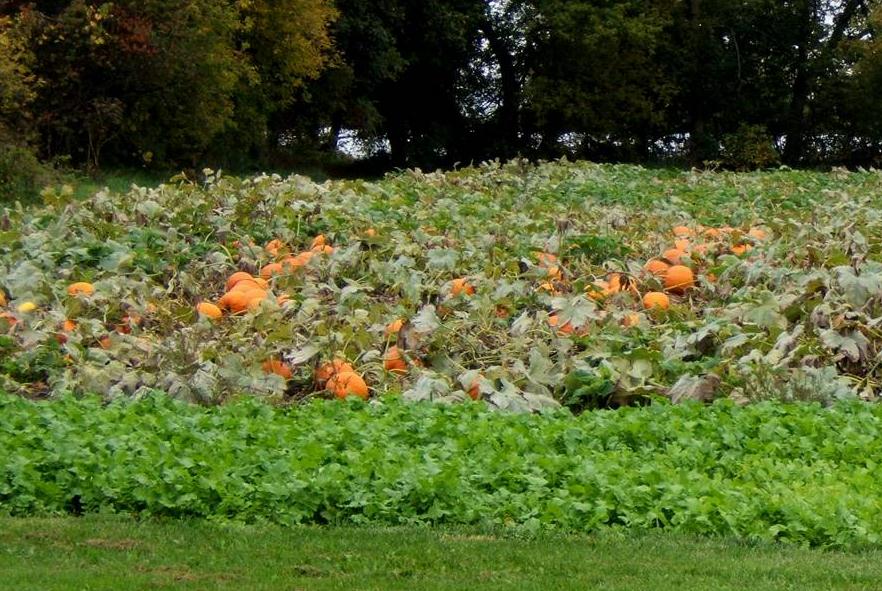
a prolific pumpkin patch, photographed during our visit to Ontario in 2011
~
covering the pumpkins
~
on the mattress, these sheets
are ample, enough for warmth
and twist and tumble
~
spread here, on low-lying ground
they barely cover one of twenty
pumpkins, one loop of vine
~
weather channel warns of frost
will wilt these leaves, cold-kiss
this perfect orange with brown
~
vines stretch, toes creep
from under, beg more time
~
~
Copyright Jane Tims 2012
apple picking time
October has taken hold and now signs of autumn are everywhere. Color seems to be the theme… the orange of pumpkins and gourds, the yellows and reds of the maple leaves, and the red of ripe apples.
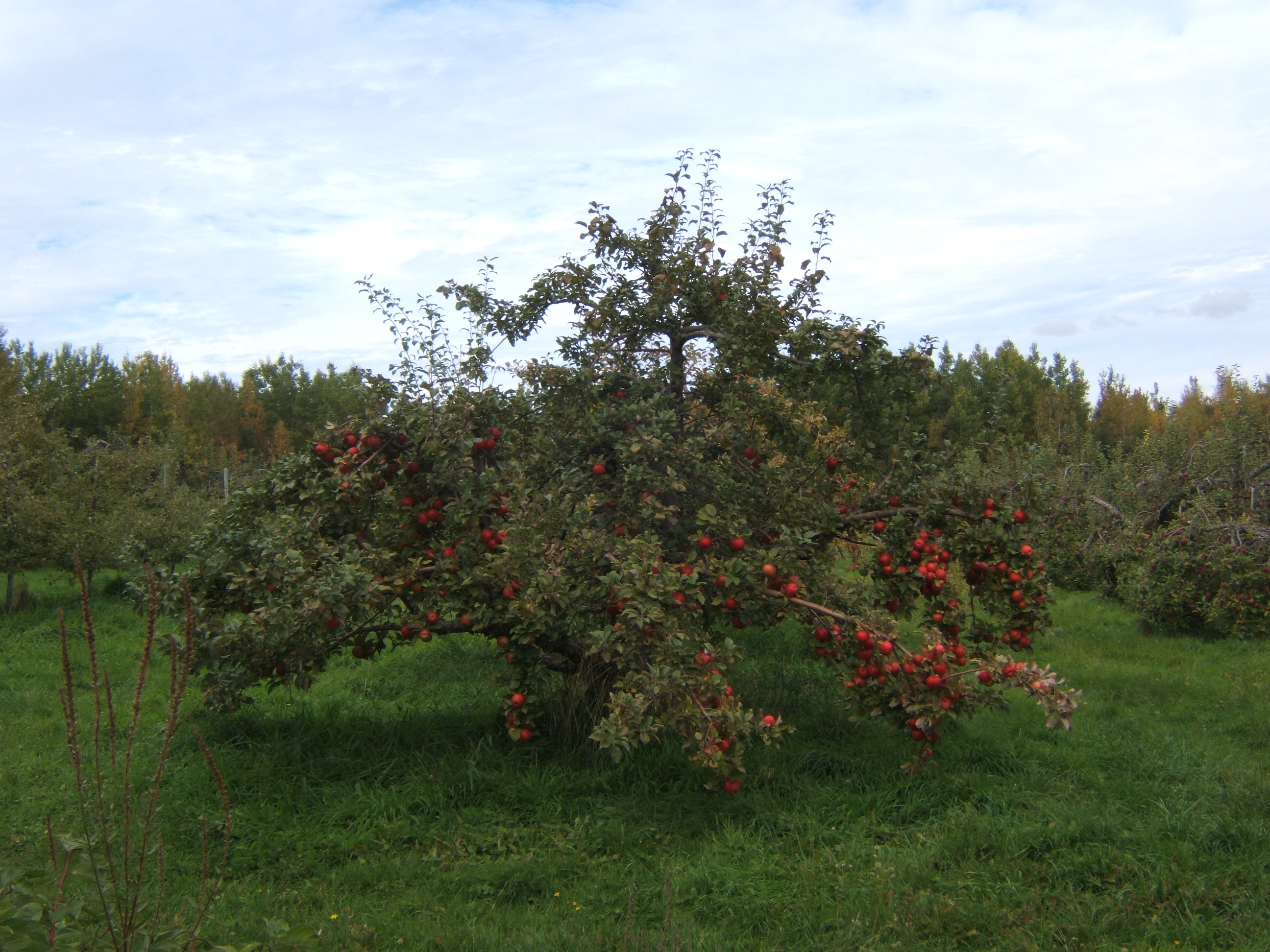
On our way to the lake, we drive past orchards of apples. Most of the apples have been picked, but some trees are still laden with fruit. For me, the orchards are full of memories, of picking apples with my family when we were younger. I remember how much fun we had, my son and niece and nephew excited to be able to run free and pick the apples, and the adults thinking about the apple pie possibilities from those loaded trees.
~
~
orchard outing
~
wooden bushel baskets
of laughter, the delirious tumble
down the avenue of trees, shadows ripple
among the dapples, Cortlands tied
with scarlet ribbons and boughs burdened
to reach for us, my son grown tall
on his father’s shoulders,
stretches to pick the McIntosh
with the reddest shine,
small hand barely able
to grip the apple
~
~
Copyright Jane Tims 2012
two last pages to write
Once the poems are written, and the footnotes are proofread, and the poems are snug in their sections, there are still two pages to write.
The first is the Acknowledgements page. I have so many people to thank. They include all the people who have helped me along the way. These will include the members of my two writing groups, who listened to me read from my work, month after month, and who offered lots of comments and suggestions. I will also thank my writing coaches who have given me specific criticism on particular poems and have improved my writing immensely with their mentoring. I will also thank the readers of my Blog, you, who have read my writing, given me huge encouragement and a way to work through my ideas. I will also be thanking the members of my family, particularly my son… they have listened to my poems and read them and suffered through the long story of my project from beginning to end. And, of course, I have to extend a huge thank you to the New Brunswick Arts Board, artsnb, for the Creations Grant that supported me during the project.
The second page to write is the Dedication. There is no contest for this one. This manuscript will be dedicated to my husband. In spite of self-proclaimed disinterest in the world of the arts, he has listened to every poem, often in multiple versions, helped me find words when they eluded me, and suffered my elation, moping and bad moods. He has also driven me all over the country-side to find edible plants, sat through an orchid identification course, and mingled with the botanists on a couple of field excursions. He has been there in the audience at public poetry readings and never complained about the hours I spend at courses and meetings and writing workshops. He flatly refused to eat any of my gatherings and concoctions, but I believe this was so he could call the paramedics if any of my plant identifications ever proved incorrect!
For his endless love and support, this manuscript is dedicated to my husband.

Copyright Jane Tims 2012
apple tree shadow
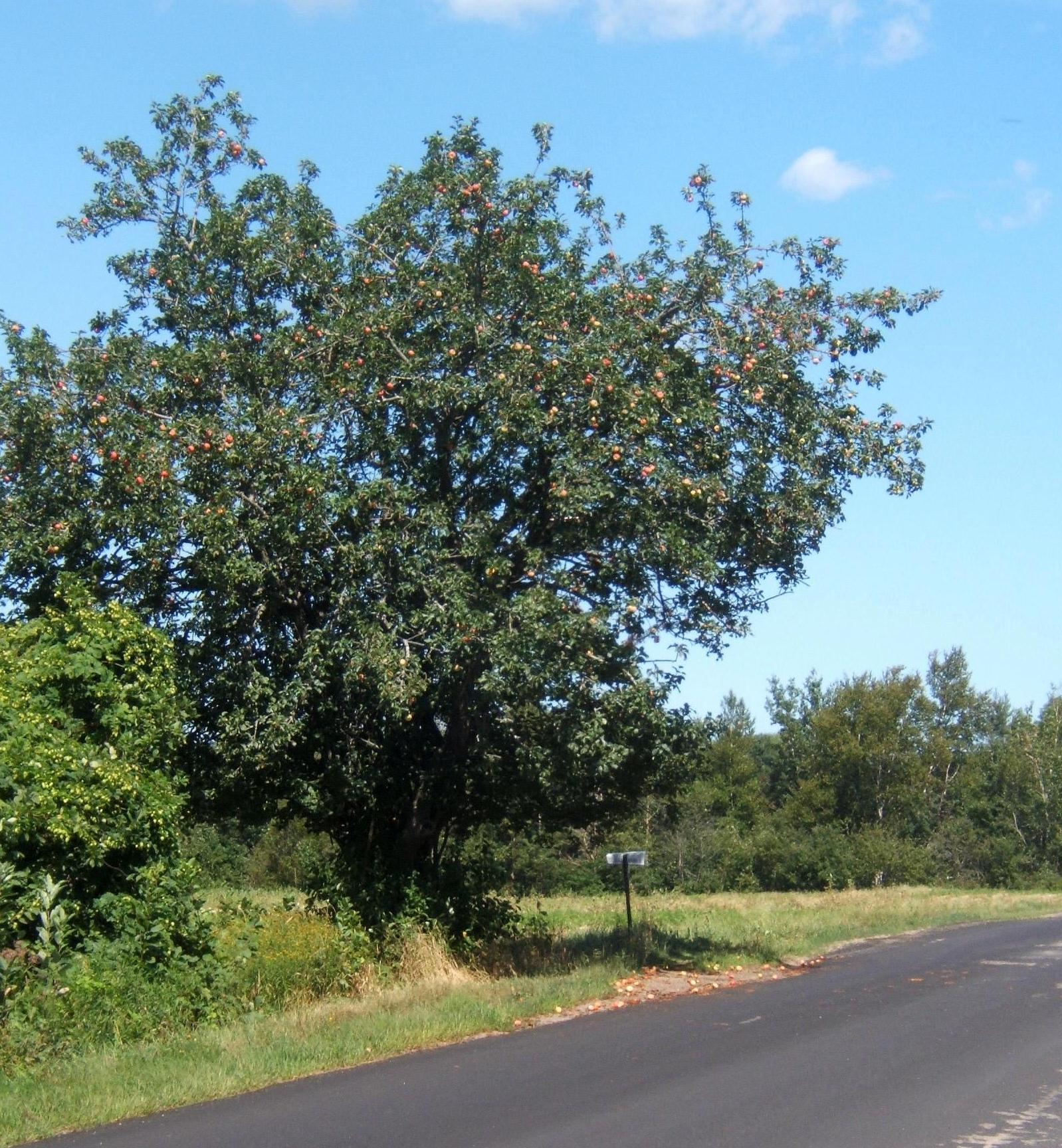
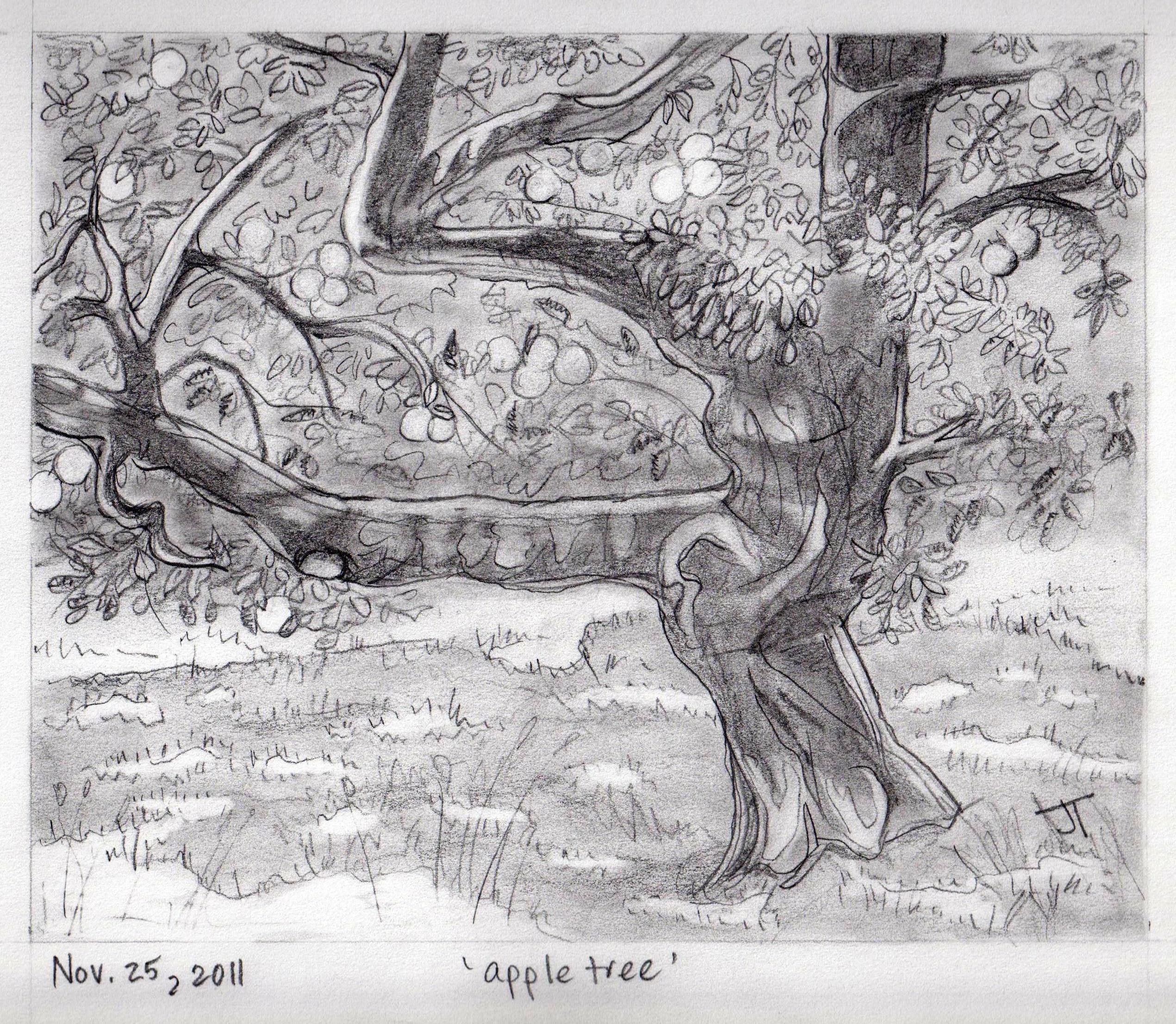
This time of year, I watch for the old apple trees along the road. Most are neglected, and the fruit remains unpicked, even for cider. When the apples fall, they lie beneath the tree in a circle of red or yellow, mimicking the shadow of the tree at noon.
~
~
apple shadow
~
days follow days
and the apples
fall to the ditch,
claim the gravel
edge the asphalt
~
ripe shadow space
at the base of
the leaning tree
~
passing cars play
polo and wasps
worry in the
rotting remains
~
~
Copyright Jane Tims 2012
Highbush Cranberry (Viburnum trilobum Marsh.)
Like miniature fireworks, bright bunches of the berries of Highbush Cranberry (Viburnum trilobum Marsh.) burst along our roadsides in late summer. Highbush Cranberry is also called Cranberry, Pimbina, and in Quebec, quatres-saisons des bois.
The Highbush Cranberry is a large deciduous shrub, found in cool woods, thickets, shores and slopes. It has grey bark and dense reddish-brown twigs. The large lobed leaves are very similar to red maple.

In spring and summer, the white flowers bloom in a cyme or corymb (a flat-topped or convex open flower-cluster). Most flowers in the cluster are small, but the outermost flowers are large and showy, making the plant attractive for insect pollinators.
The fruit is a drupe, ellipsoid and brightly colored red or orange. The juicy, acidic fruit has a very similar flavour to cranberry (Vaccinium spp. L.) and is used for jams and jellies. The preserves are rich in Vitamin C.

~
~
fireworks, quatres-saisons
(Viburnum trilobum Marsh.)
~
~
against a drawing paper sky
some liberated hand
has sketched fireworks
~
remember precursors in spring?
blowsy cymes, white sputter
of a Catherine wheel
~
now these berries, ready to pick
bold, spherical outburst
of vermillion sparks
~
a pyrotechnic flash of red
strontium detonates
in receptive dark
~
a four-season celebration
spring confetti, berries,
fireworks in fall
~
cranberry preserves – acidic,
tart blaze of summer sky
winter ignition
~
~
© Jane Tims 2012

© Jane Tims 2012
growing and gathering – names of edible wild plants
As I have worked on my poetry project about eating local foods, I have researched each wild plant, found it in its natural environment, and then written about it. With all this, I am exposed to the words and characteristics of a particular plant and it is never certain which way the ‘muse’ will take me when I write the poem. Sometimes, I end up creating a poem about eating local food, and sometimes, I get a poem about something else. Usually these stray poems are, in some way, about the name of the plant.
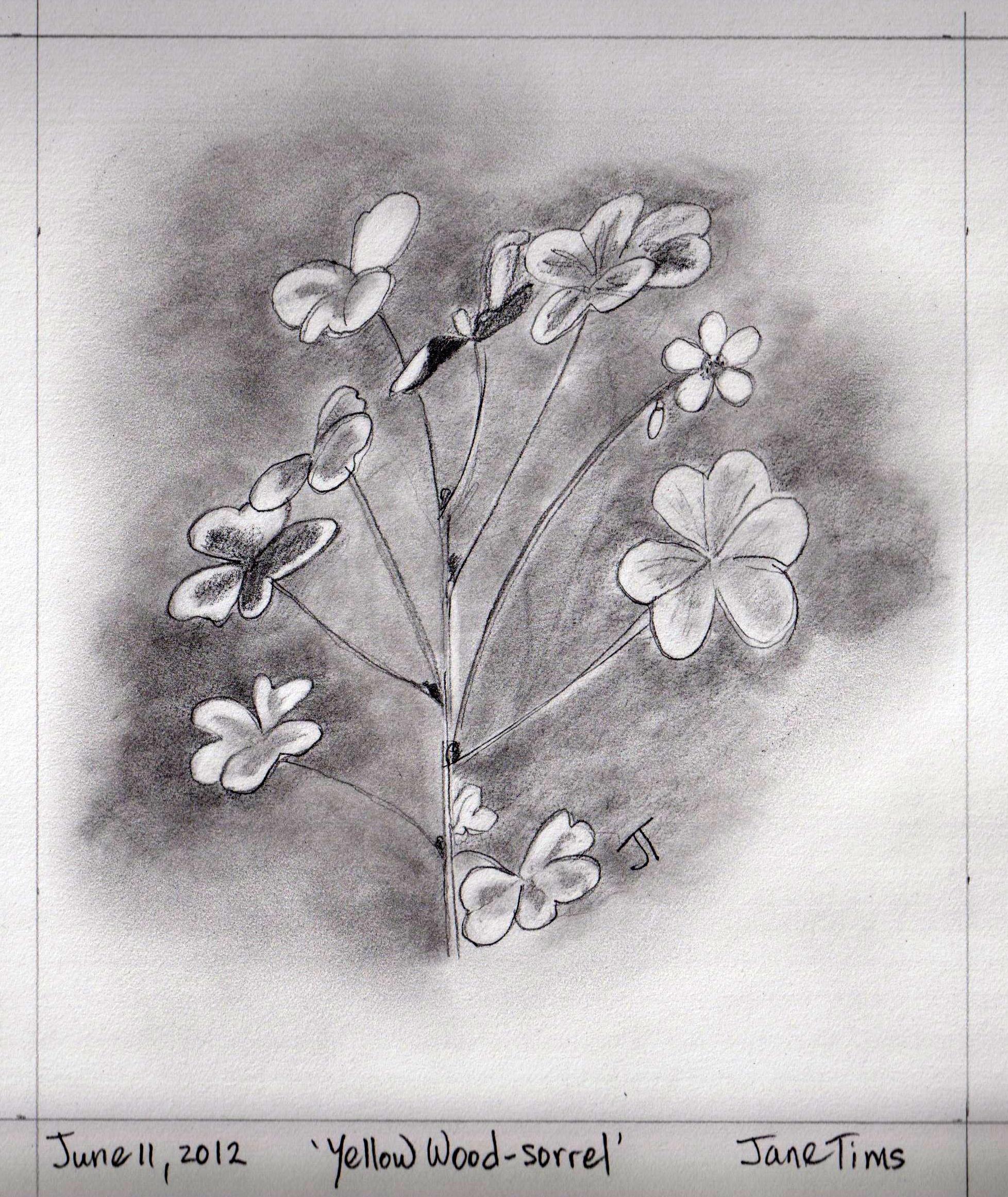
I find the names of plants are very inspiring. First is the Latin or scientific name, familiar to me after years of botanizing, but mysterious to most people. I love to find out about the origins of the name and I usually discover the name is descriptive of the plant. An example is the scientific name for Yellow Wood-sorrel (Oxalis stricta L.), a small yellow-flowered, three-leaved plant of waste areas. The name stricta means ‘erect’, referring to the way the plant grows when young or the way its seed pods are held. The word oxalis is from the Greek oxys meaning ‘sour’, a reference to the taste of the leaves.
The common names of plants are also intriguing. Sometimes these are different for each area where the plant is found. For example, the Cloudberry (Rubus Chamaemorus L.), a small relative of Blackberry with a peach-colored fruit, is known locally (and particularly in Newfoundland) as Bakeapple. Plant names may also refer to a characteristic of the plant. A good example is Heal-all (Prunella vulgaris L.), a small purple flower. It inhabits waste areas and lawns, becoming small and compact if mowed. One of its common names, ‘Carpenter Weed’, comes from this characteristic… Carpenter Weed mends holes in lawns! The name Heal-all comes from the old belief that the plant has medicinal properties.

‘heal-all’ Copyright Jane Tims 2011
So, among my collection of poems about edible plants, I have a group of poems about the plants and their names, but not about their use as local foods. I have to decide whether or not to include them in my collection, or to set them free!
~
~
Heal-all
(Prunella vulgaris L.)
~
snug Prunella, neat little weed
prim and proper, gone to seed
~
first called Brunella: gatherers found
Prunella purple fades to brown
~
a carpenter weed, busy, strong
mends bare patches on the lawn
~
heal-all, self-heal – your name suggests
an herbal secret you possess
~
~
© Jane Tims 2012
trial and error with mustard seed
On Saturday we took a side trip to see if the mustard is ripe for collecting seeds. We had selected a roadside area in early summer where lots of wild mustard was growing (for more information, see my earlier post about wild mustard –https://nichepoetryandprose.wordpress.com/2012/07/09/a-moment-of-beautiful-mustard-fields-in-bloom/
Although there are still some plants in bloom, the seeds have mostly been set in their long-beaked pods.

I would have been able to show you more, but I nibbled on the green pods the whole way home. They are delicious, crisp and tangy, with a hint of mustard.
There were a few dry seed pods but most need a couple of additional weeks to ripen. Each pod has three to seven well-formed seeds. The seeds take a little work to extract.
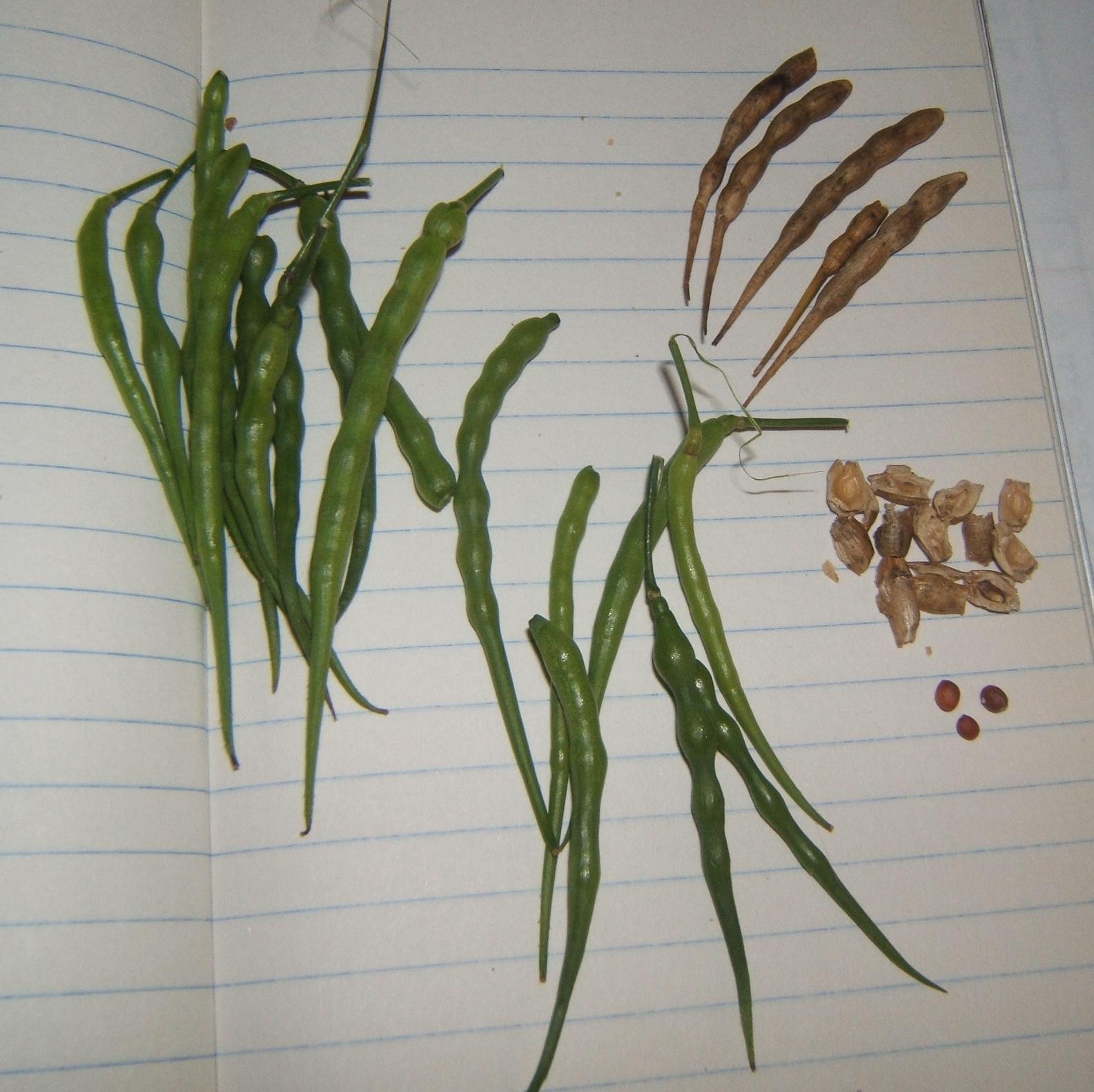
Mustard pods and seeds; green pods, dry brown pods, seed husks and three tiny seeds
I retrieved about 20 ripe mustard seeds from the pods, using a firm tap of the pestle to break the husk. Then I ground the seeds in a half teaspoon of olive oil. To make mustard, all my sources suggest using cold water, but I wanted to see if the seeds would flavour oil.
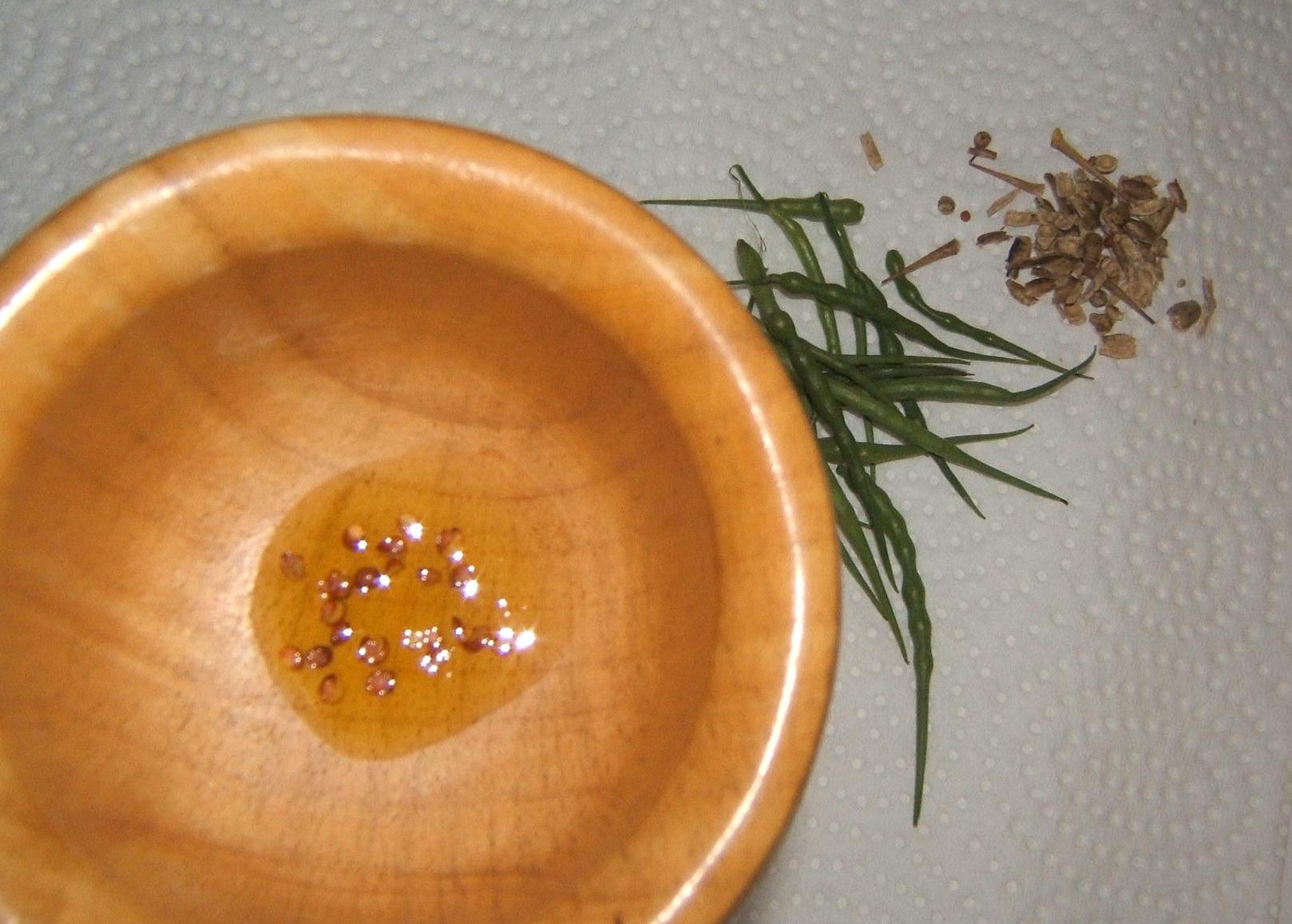
The ingredients almost vanished during the grinding with the pestle, but I got enough ‘mustard’ for a taste.

The verdict: a very mild mustard oil, easily overwhelmed by the salt on the crackers! When the pods ripen, I will pick enough for a few hundred seeds and I will use cold water to extract the flavour, just as the wise ones suggest!!!
~
~
© Jane Tims 2012
~
Warning:
1. never eat any plant if you are not absolutely certain of the identification;
2. never eat any plant if you have personal sensitivities, including allergies, to certain plants or their derivatives;
3. never eat any plant unless you have checked several sources to verify the edibility of the plant.
growing and gathering – years and seasons
As I work on my collection of poems about growing and gathering, I am aware of the passage of time. I am in the revision stage. This means my manuscript will soon be ‘complete’. I will worry over it and list the last things to be done. I will prepare my final report to artsnb (the New Brunswick Arts Board), the source of my Creations Grant, and send it away to them for approval.
The project will be over, but there will still be work to do. I will have to decide what poems should go in the final manuscript, re-order them a few times, do some more revisions and them send them away, to a publisher, hoping I will be able to get a book from all this work.
Then I will be at the end and facing a new beginning, a new project. I have a few to choose from, so I won’t be relaxing for long.
In all this is the dimension of time, with its deadlines and unforgiving rush forward. Even in a project about growing and gathering local foods, there are poems about time.
A number of my poems are about the ephemeral nature of local foods. Another way to think of this is ‘eating local foods in season’. In spring, everything is plentiful – new plants arrive in a rush, so fast, you can hardly keep up. Then there is the patient waiting for berries to ripen and, again, a rush… blueberries are quickly followed by blackberries and raspberries and so on. But everything has its season, so leaves become too old to harvest, and berries shrivel and fall to the ground.

This seasonal aspect of local foods can be thought of as as a metaphor for aging, and some of my poems work with this comparison. I have poems about resisting aging, and about the ailments of age including arthritis, lethargy, forgetfulness, and aging memory.
Many of my poems on the theme of ‘time’ overlap with other themes, about ‘companionship’, or changes to ‘place’. For this reason, I find myself shifting poems around in my manuscript. I ask myself if the poems flow well, one to another.
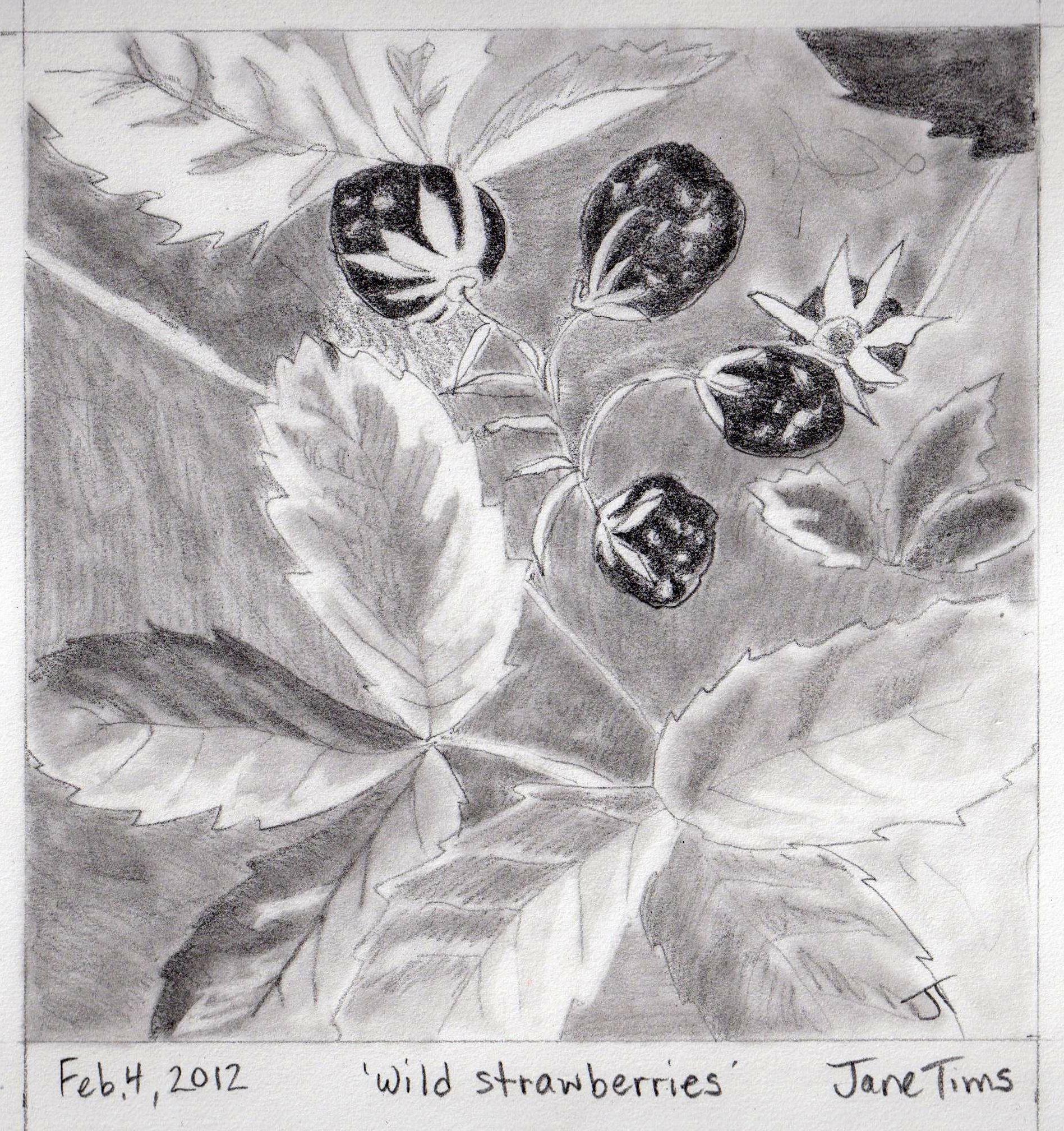
I also find I don’t seem to have many poems about the differences between our historical use of local foods and our present day use. I have lots of source material, particularly among my great-aunt’s diaries… she loved to pick berries. So away I go, to write a few more poems about time!
~
~
Old Man’s Beard
~
Usnea subfloridana Stirt.
~
you and I
years ago
forced our ways
bent through the thicket
of lichen and spruce
~
Usnea
caught in your beard
and we laughed
absurd!
us with stooped backs
and grey hair?
~
found a game trail
a strawberry marsh
wild berries
crushed into sedge
stained shirts
lips
and fingers
strawberries
dusted with sugar
washed down with cold tea
warmed by rum
~
today
an old woman
alone
lost her way in the spruce
found beard
caught in the branches
and cried
~
~
Published as ‘Old Man’s Beard’, The Fiddlehead 180, Summer, 1994
© Jane Tims 2012

growing and gathering – value
These days I am working to complete my manuscript of poems on the subject of ‘growing and gathering’ local foods.
As I sort my poems, I find several are about the ‘value’ of wild plants as food.
Sometimes this value is simple value for money. Every cup of blueberries I pick is one I don’t have to buy. When I pick enough berries to freeze, I can have blueberries or blackberries when they cost a fortune to buy fresh at the store. I am also bringing the warm summer and its memories forward into the chill of winter.

A few of my poems focus on the value of substitution. For example, I will never run out of tea leaves for my daily tea break. I have Pineapple Weed, Sorrel and Sweet-fern teas to make. Thanks to my sister and brother-in-law, and my own little herb garden, I have a rack of fresh herbs drying, including Camomile and several varieties of Mint. If I run out of salad ingredients, I have a stash of salad greens just outside my door.

Storage is the subject matter of a few of my poems. When I was young, my Mom showed us how to collect Spruce Gum from the trees for a sticky but tasty chew. During my project, I learned that some woodsmen make little wooden boxes for the gum, to keep it for later use. I also have a few poems about making jelly and jam.
Thinking about the value of food, I can’t forget the people for whom growing and gathering local foods is an occupation, not just a ‘hobby’. I have written poems about the people who sell shad and fiddleheads and lobster from their roadside trucks, about children who earn their summer money by picking and selling berries, and, of course, about the farmer.
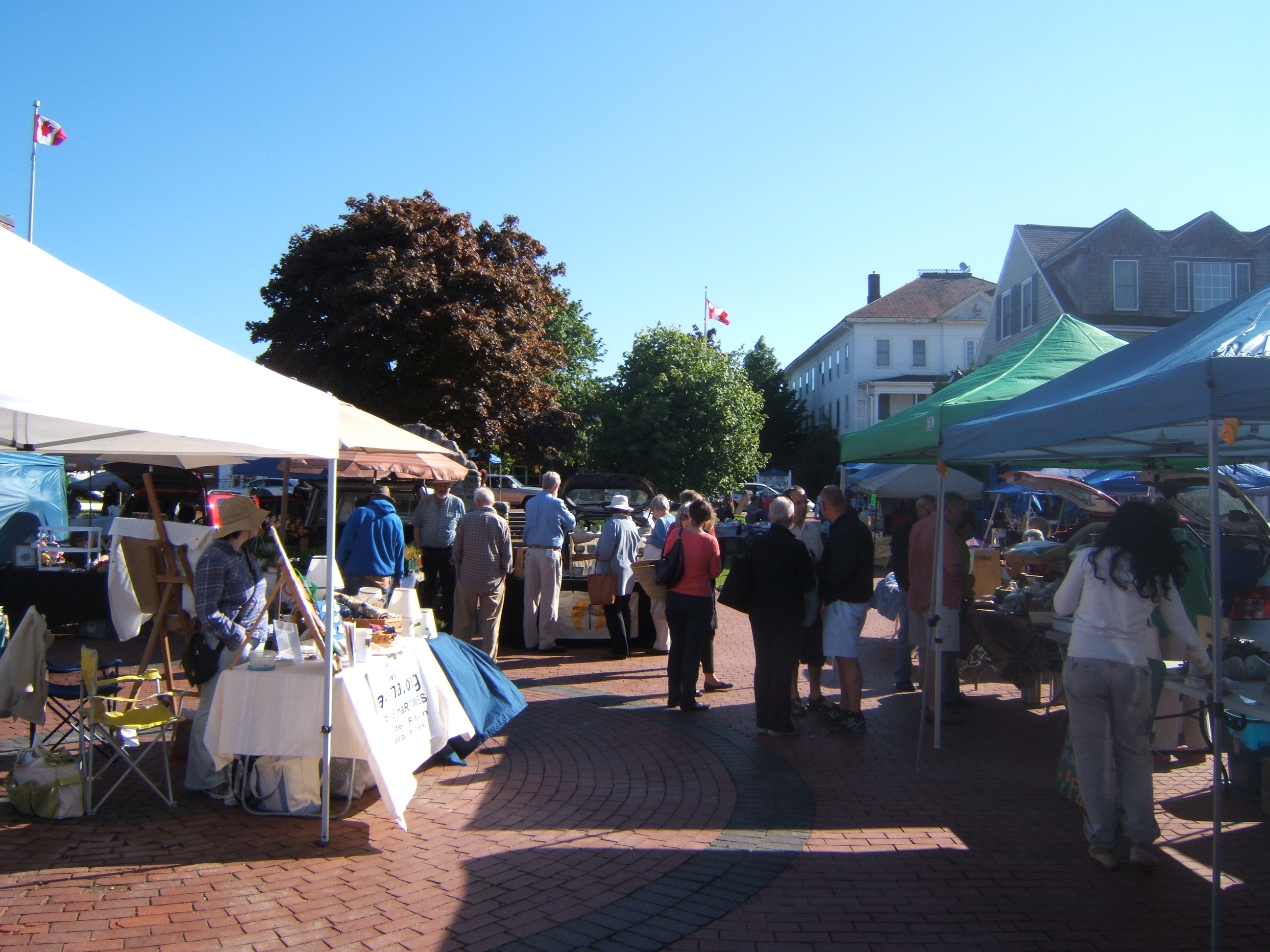
Last but not least, there is just the joy of finding or producing and eating your own food. I always say, the best part of a home garden is the taste of the first carrot or the snap of the first wax bean!
What do you think is the greatest value associated with growing and gathering local foods?
Warning: 1. never eat any plant if you are not absolutely certain of the identification; 2. never eat any plant if you have personal sensitivities, including allergies, to certain plants or their derivatives; 3. never eat any plant unless you have checked several sources to verify the edibility of the plant.© Jane Tims 2012
Sea-rocket (Cakile edentula Hook.)
Sea-rocket, also known as Seaside Mustard and caquillier in French, is found on sandy or gravelly beaches along the coast.
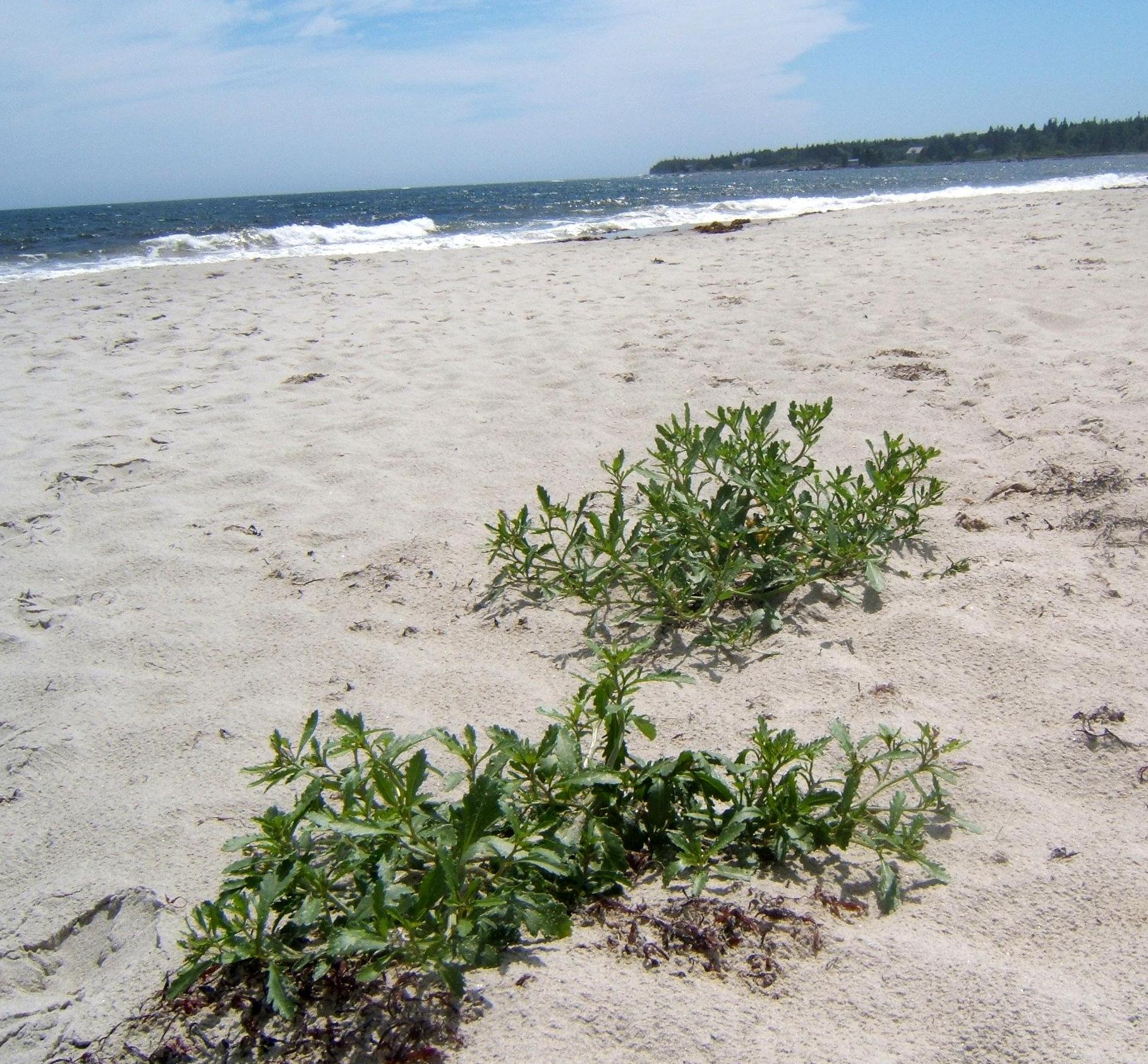
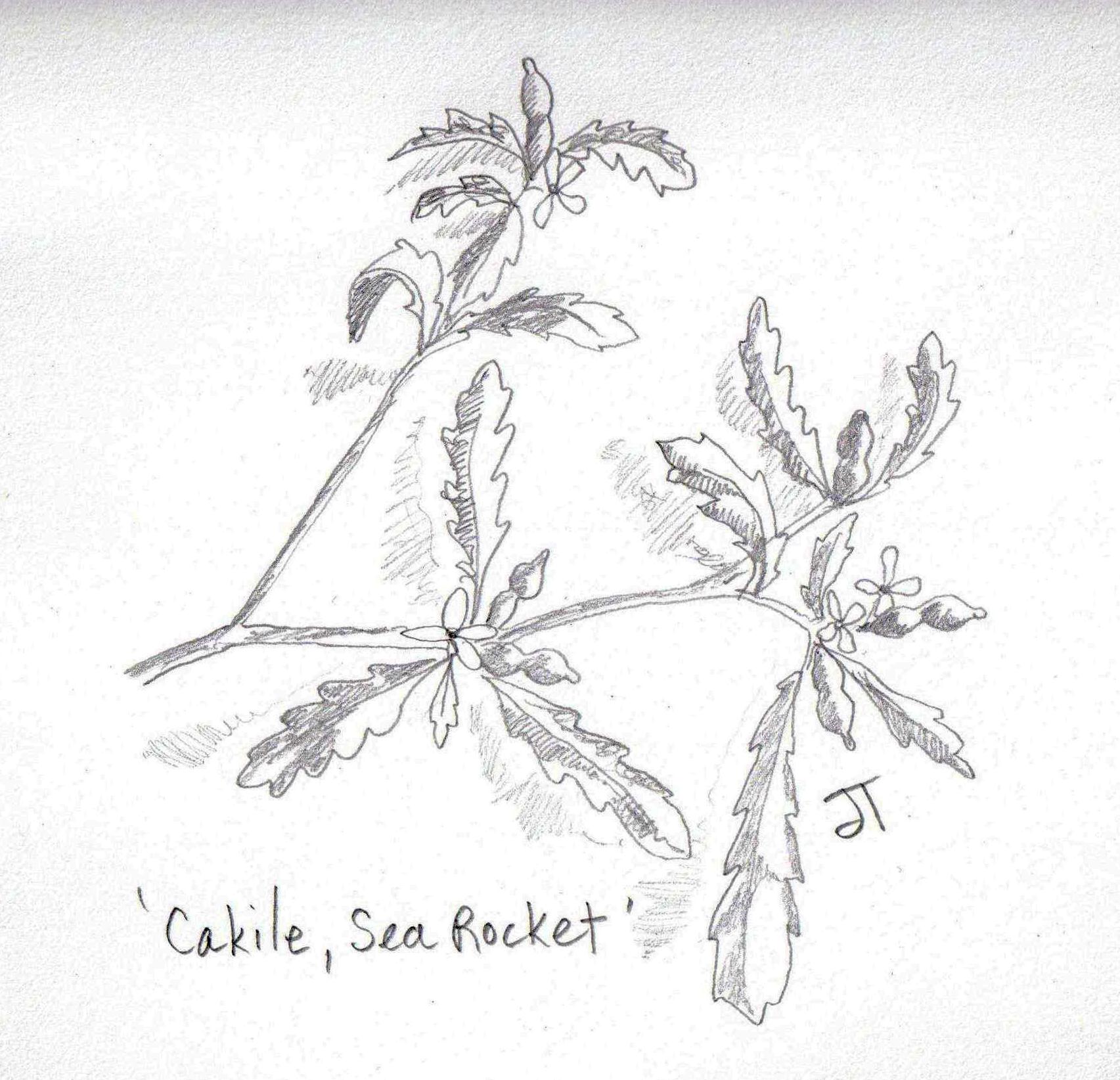
Cakile is a sprawling plant with succulent, branched stems. The leaves are thick and fleshy, with blunt-toothed margins. The four-petalled flowers are small, purple and located at the tip of the stem.
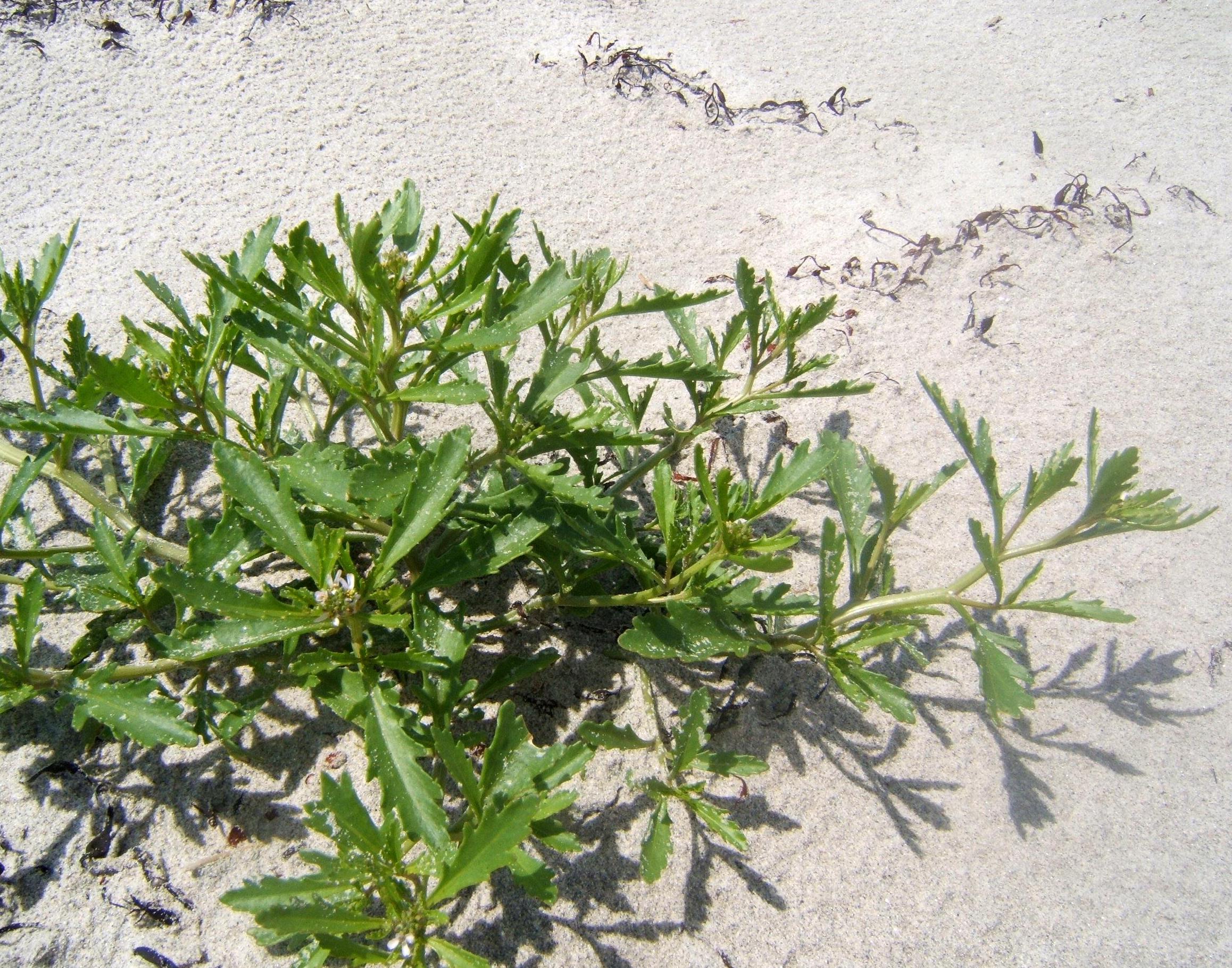
The name Sea-rocket comes from the distinctive shape of the seed pods. These have a narrow base and a pear-shaped tip, like a rocket. Cakile is an old Arabic name and edentula means ‘without teeth’.
Sea-rocket is edible. It has a hot, pungent taste, similar to radish. The stems, leaves and pods can be added to salads or boiled for 5 to 10 minutes to give a milder taste.
~
~
Cakile wind
~
the beach sizzles today
the breeze a peppered wind
the sand Cakile-hot
~
wind scours the shore-bands
of seaweed – rockweed, kelp
bleaches them, crisped and dry
~
sand dries, adheres to skin
brushes away, a rub
a sandpaper polish
~
the tongue too hot for words
the seas too salt for tears
tans ruined, scorched and red
~
~
© Jane Tims 2012
~
Warning:
1. never eat any plant if you are not absolutely certain of the identification; 2. never eat any plant if you have personal sensitivities, including allergies, to certain plants or their derivatives; 3. never eat any plant unless you have checked several sources to verify the edibility of the plant.




 nichepoetryandprose