Archive for the ‘exploring New Brunswick’ Category
a walk through the covered bridge – disappearing covered bridges
Last week we took a drive to re-visit some of the covered bridges we saw in 1992 as part of a special project to celebrate Canada’s 125th birthday. One of these was the Stone Ridge Covered Bridge (formally known as Keswick River #6), crossing the Keswick River at Upper Stone Ridge in York County. I was looking forward to seeing the bridge because we had recorded some interesting carvings in 1992. Among the usual initials, someone had craved the images of three houses, one with steps and two chimneys, and one, a cottage, on the sill of the bridge window.
A short drive on a pretty country road along the Keswick River brought us to the bridge… a metal Bailey bridge, constructed to cross the river at the point where the covered bridge had once stood. The new bridge was sturdy and had its own charm, but it was so disappointing to know the old covered bridge was gone forever. The Stone Ridge Covered Bridge was lost to fire on October 10, 2008.
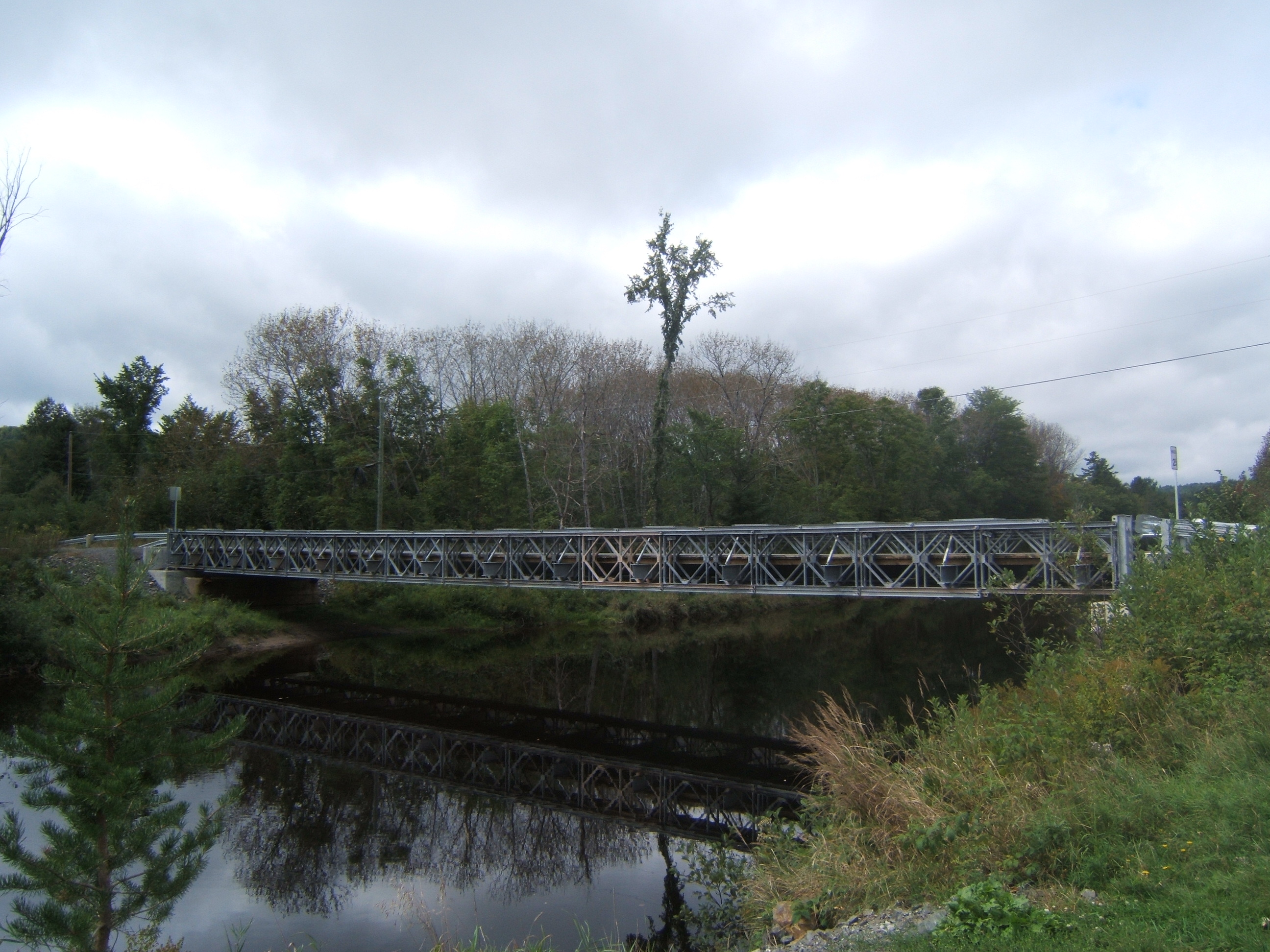
The Stone Ridge Covered Bridge was built in 1914 and had a span of 123′ 4″ and a total length of 126′ 4″. It had a roadway width of 14′ 10″ and a capacity of 10 T.
I wrote in our journal, on May 1, 1992: “most carvings were on the flat of the horizontal plate that formed the window sill and ran the length of the bridge”.’ I also wrote: “lots of hacking and hewing done on the window part of the sill”. The oldest date we recorded was ‘May 9, 1951 VHA’.
Some of the other carvings on the bridge in 1992 were: ‘LA + LB’, ‘WLR 54’, ‘VHA MARCH 7, 1952’, ‘1951 [or 1957] MAY 7 WLB [and a small heart]’, ‘KM 1952’, ‘KMB 9/55’, and ‘BB 1951’. There was also a separate carving of an upward arrow beside a ‘B’ and on the next line, ‘KM A4 54’.
I wonder who was VHA and how often did he or she return to the bridge over the years? Who was KM in 1952, and did she return, married, in 1955 with her new last name beginning with ‘B’? Was she married on April 4, 1954 to ‘B’? A mystery, perhaps solvable by looking into some local marriage records?!
It is sad to see the covered bridges in New Brunswick disappear, one at a time. Some are lost due to the dramatic power of the spring freshet. Others are lost to vandalism (fire) – every Hallowe’en residents keep a careful watch on the covered bridge in our community. In 1992 when we did the covered bridge project, our list had 71 covered bridges. The New Brunswick Department of Transportation website http://www.gnb.ca/0113/coveredbridges/coveredbridges-e.asp says there are presently 61 covered bridges in New Brunswick.
~
Copyright Jane Tims 2012
a walk through the covered bridge – Falls Brook Covered Bridge, Falls Brook on the Nackawic River
On May 16, 1992, we visited the Falls Brook Covered Bridge in York County as part of our project on covered bridges for Canada’s 125th anniversary. The Falls Brook Covered Bridge, on the Nackawic Siding Road at Nortondale, is also known as the Nackawic Siding Covered Bride, and is formally known as Nackawic River #5. This means that there used to be at least four other covered bridges crossing the Nackawic River or its tributaries, but they have been lost for various reasons.
This past weekend, we visited the Falls Brook bridge again, to see if it is still there. The sign at the end of the road was hopeful, indicating a covered bridge could be found on the road. Most of New Brunswick’s covered bridges are marked by these signs. 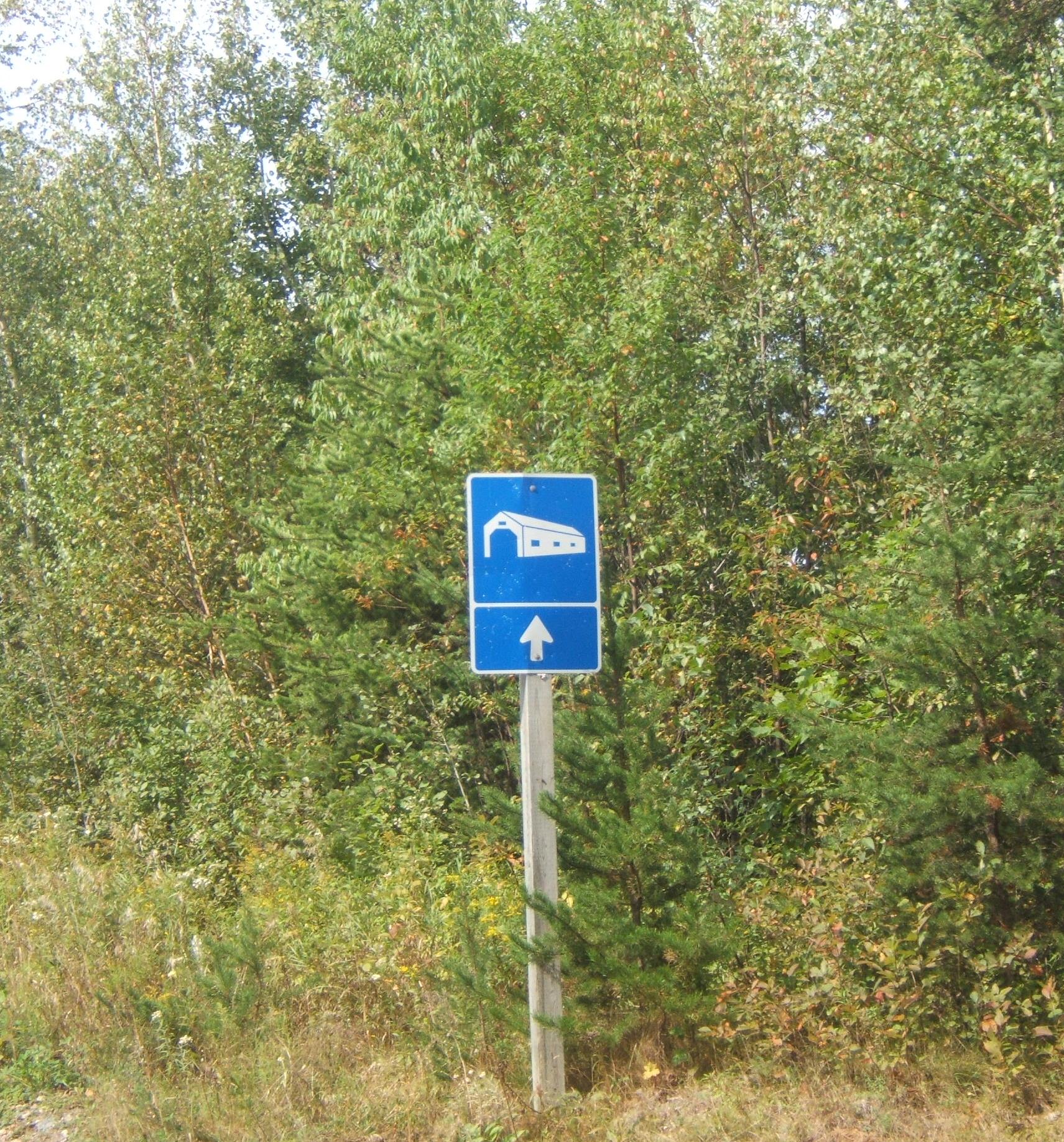
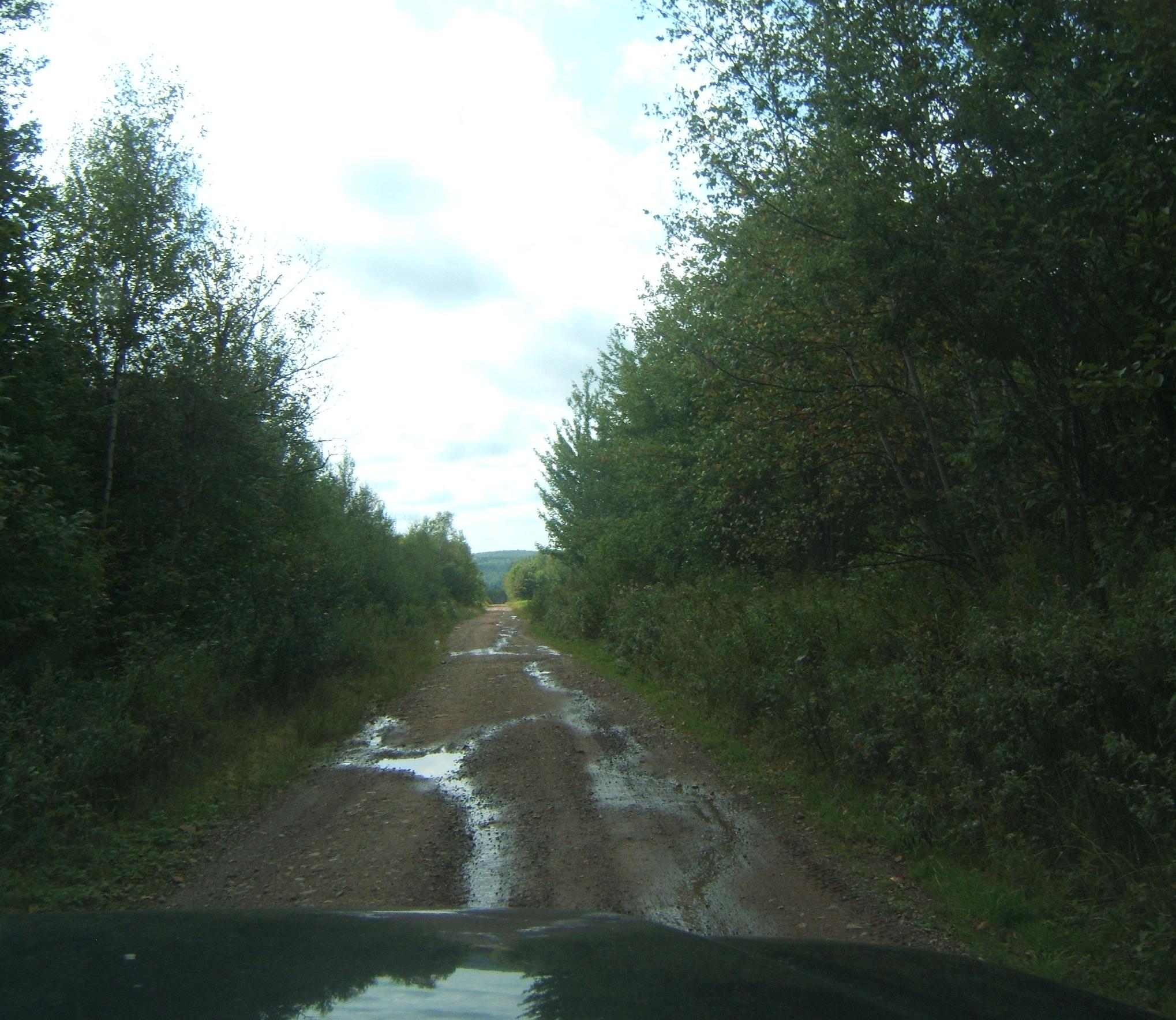
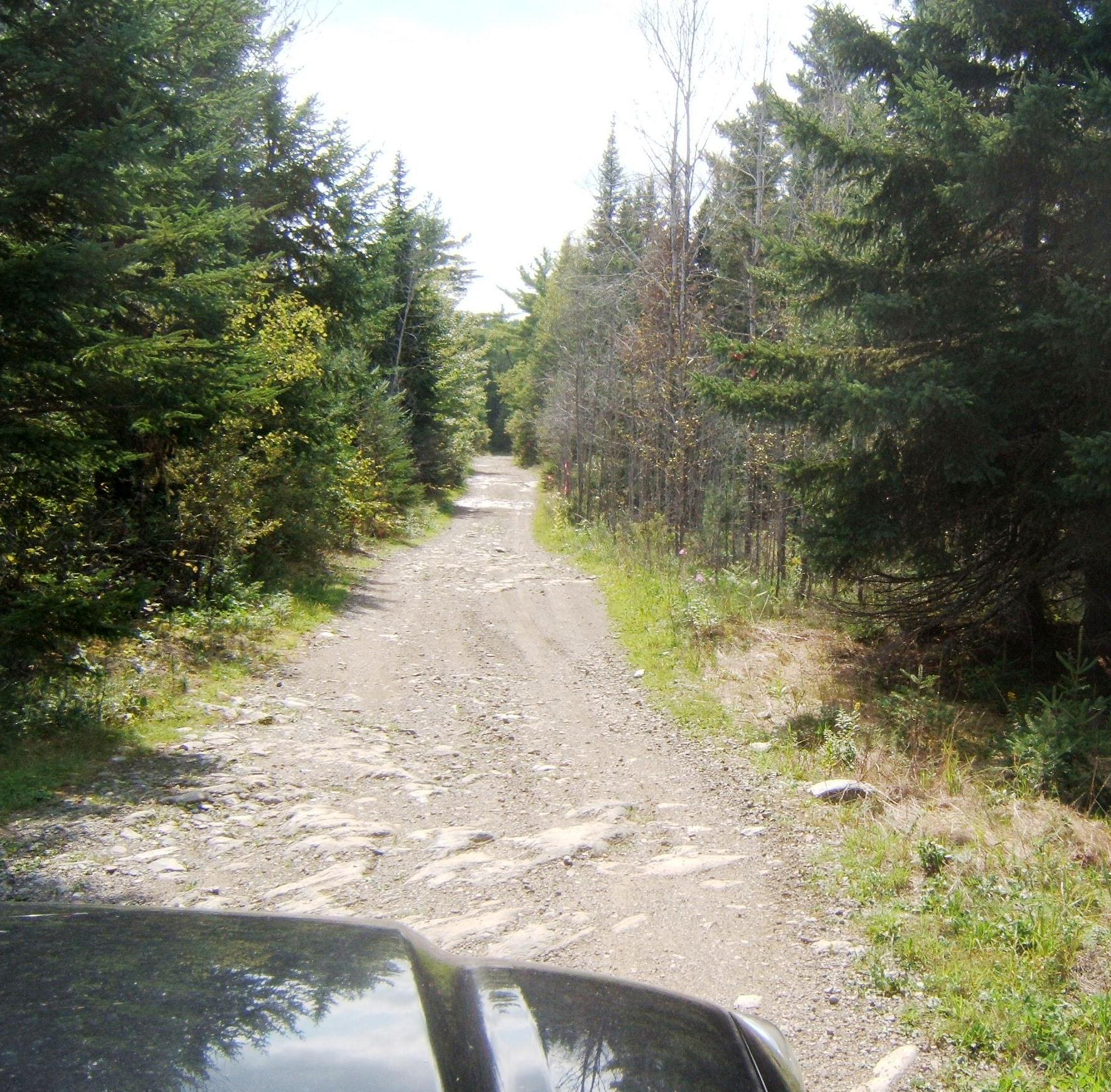
My notes from 1992 said the road to the bridge was in poor shape – ‘spooky but very pretty and other-worldly’ was what I wrote. The road has deteriorated over the years to become a narrow track with deep potholes and large outcroppings of rock.
The bridge was still there, tucked in among fir and maple woods. It had been renovated within the last couple of years, based on the presence of some new large timbers and completely new wood siding.

The Falls Brook Covered Bridge was built in 1927. It is 63′ long, with a span of 60′. It is 14′ 10″ wide and has a maximum load of 8 T. The height clearance is 4.0 m. The architecture of the bridge is amazing, showing brace and beam construction with various hardwood joinery.

Unfortunately, the renovations have removed many of the markings we noted in 1992. At that time, the oldest dates were a carved ‘1885’ and, in black ink, ‘Ptarmigan hunter Ray Brown May 12th 1896 Horse had bad leg’. I have asked a well-informed birder about this and he told me there are no other records of ptarmigan in New Brunswick. Other carvings we noted in 1992 included: ‘M.A.K.’, ‘WDH’, ‘Colin + BrenDa’, ‘Could be fishin’ ‘ , ‘D C ‘ and ‘TOGETHER AGANE Betty and Johnathan’.
The markings from the 1800s were gone, but ‘D.C.’ was still there, as well as some interesting new markings.


Some show that height is no barrier to leaving your name!

If you have covered bridges in your area, take note of the markings people have left behind! Your record may be all that survives!

~
Copyright Jane Tims 2012
a walk through the covered bridge – Bell Bridge, South Branch of the Oromocto River
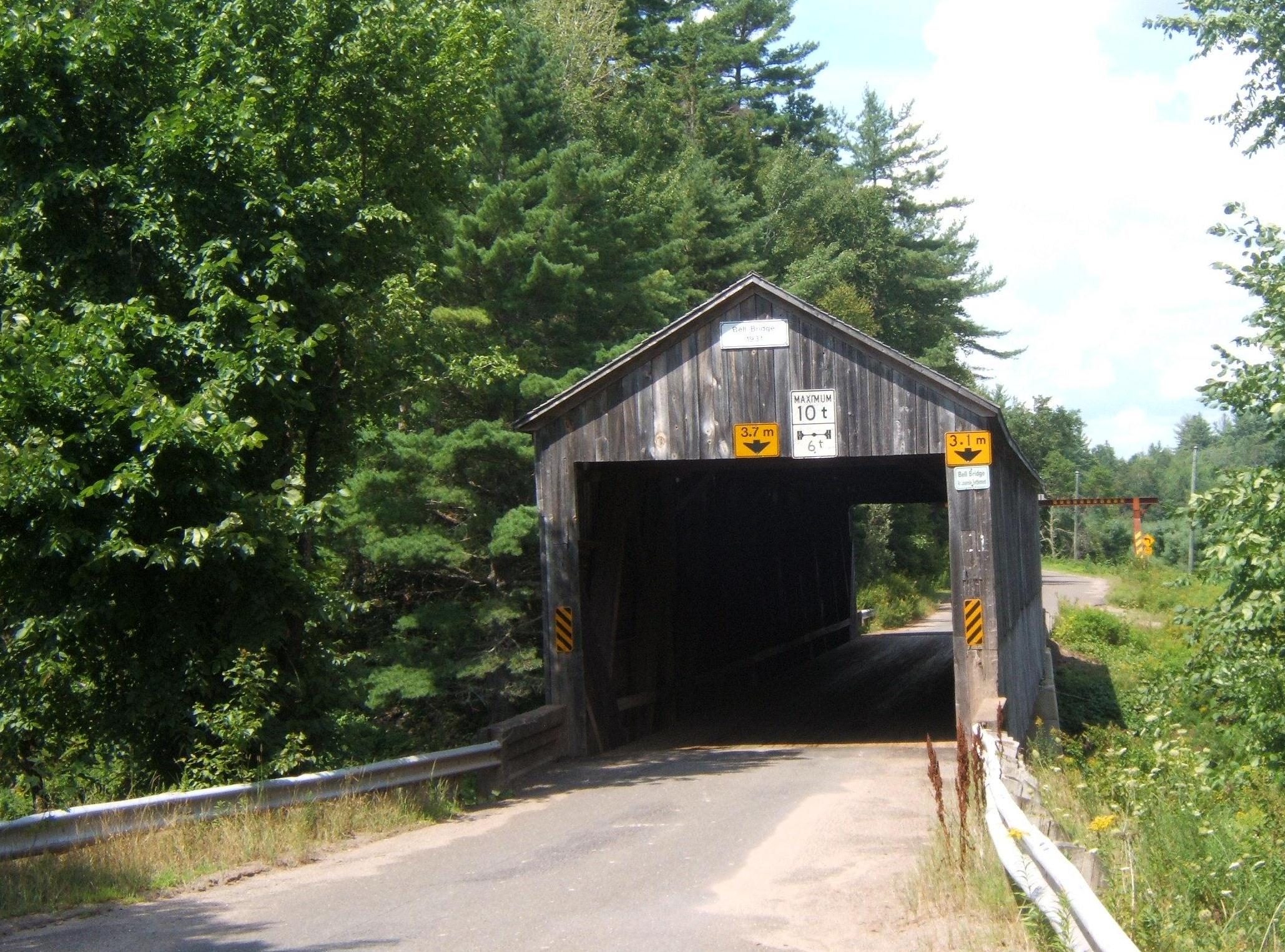
Another covered bridge crossing the South Branch of the Oromocto River is the Bell Bridge near Juvenile Settlement, Sunbury County (listed as South Oromocto Rover #3 in the April 1992 pamphlet ‘Covered Bridges in New Brunswick’, no author indicated). This bridge was built in 1931. It is 126′ 4″ long with a span of 123′ 4″. The roadway width is 15′ 5″, and the load limit is 10 t (6 t for double axle vehicles). The maximum clearance is 3.7 meters and a metal height barrier has been installed to ensure trucks exceeding the clearance cannot proceed through the bridge since this can do significant damage to the bridge structure.
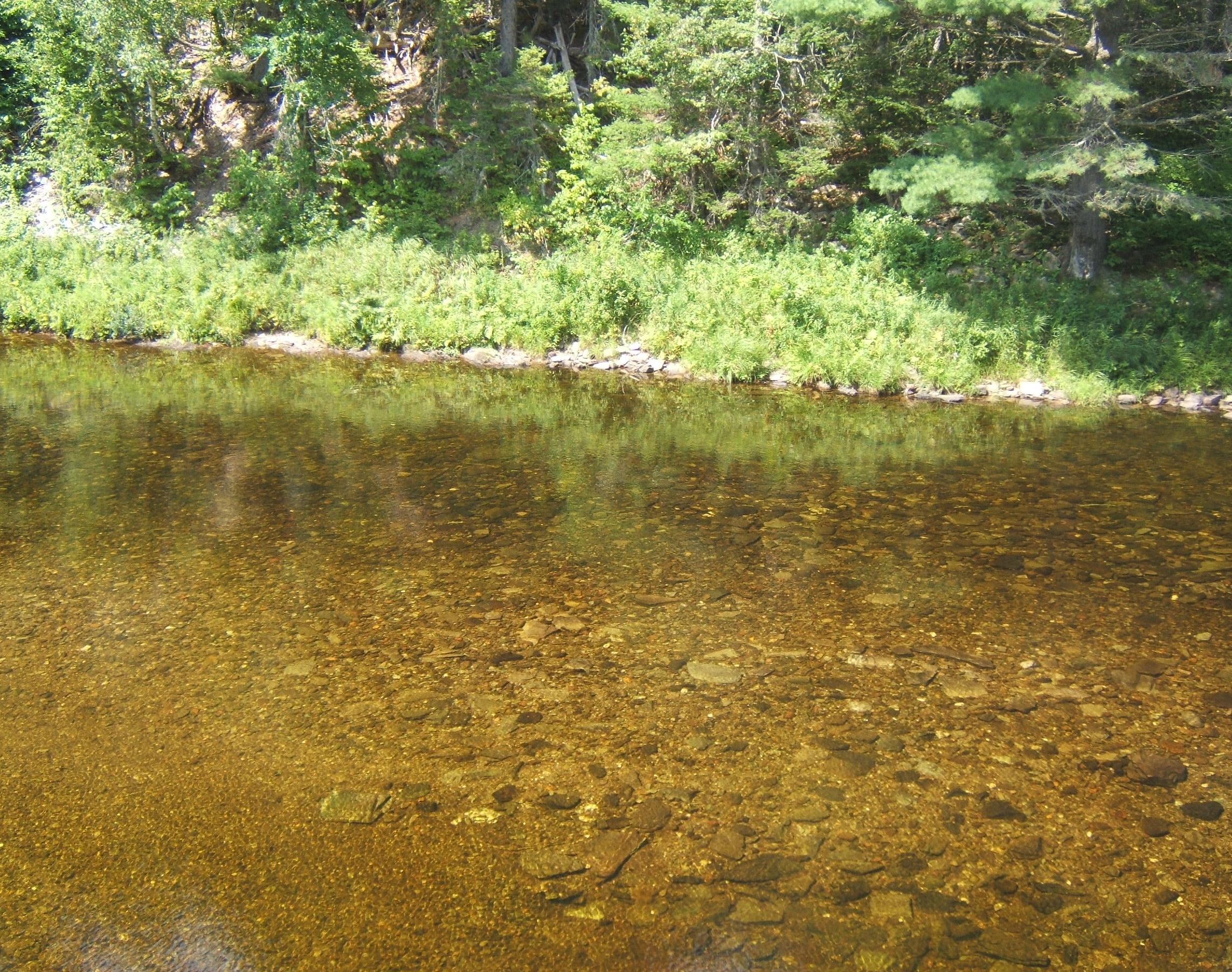
The water at this point in the river is shallow and clear. I watched for a long time to see a fish, but they will be hiding in the cooler waters of the deeper pools.
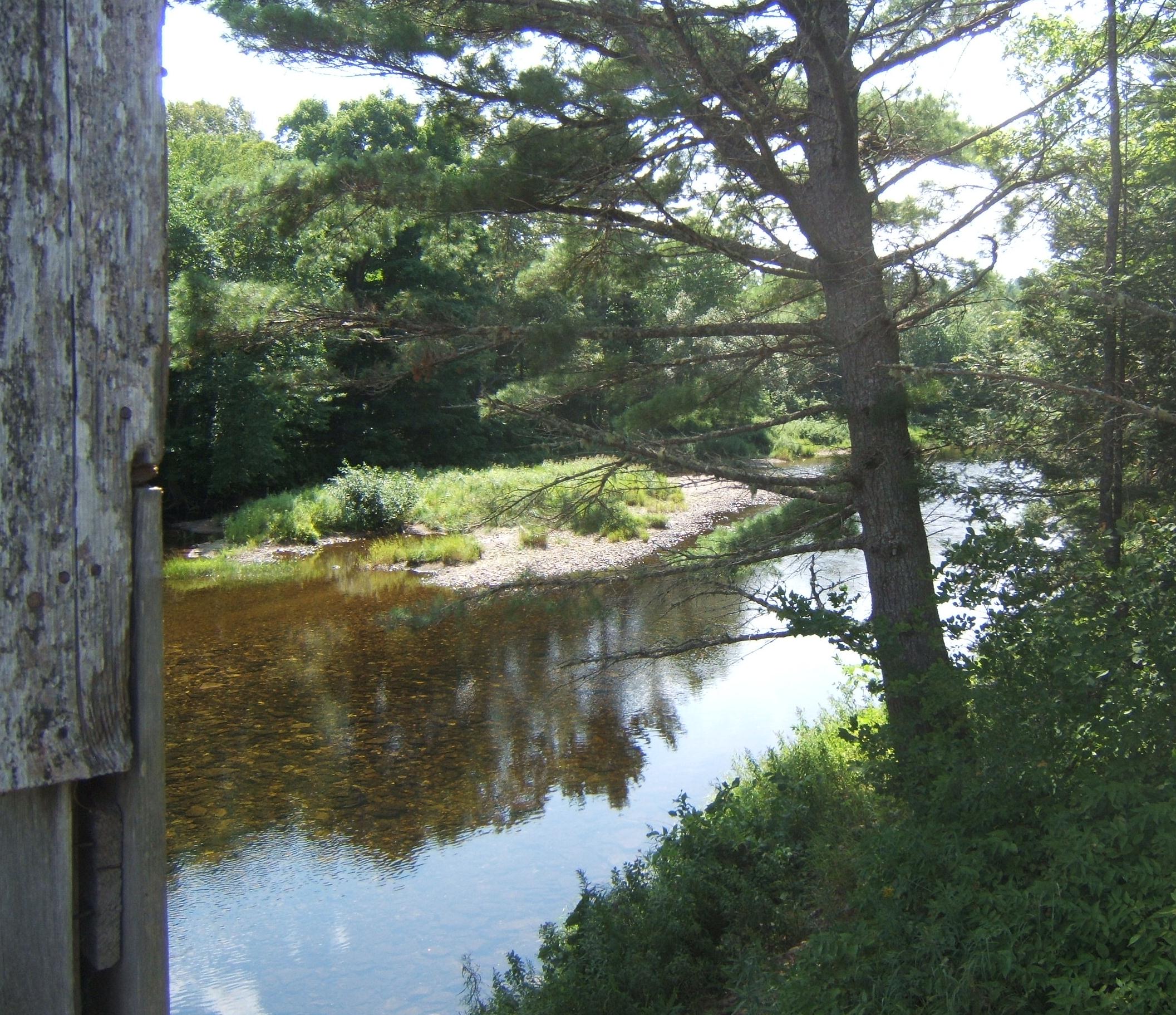
We visited this bridge on April 26, 1992 as part of our Covered Bridge Project for Canada’s 125th anniversary.
In 1992, we found many carved initials inside the bridge, on the various timbers. The oldest date we found was ‘April 3, 1932’. Some of the other initials included ‘LYL May 1, 1932′, RPC [perhaps PRC] June 6 /32’, ‘RS ’77 ‘, ‘ RT MAY 49’, ‘RM AUG 38’, ‘EK’, and ‘AE Mc APR 3/32’. We also found the initials ‘A.K.O.G. APPI 35.’ with the ‘O’ written as a diamond.
On our August drive, I noticed two unrecorded inscriptions: ‘ALIE 69’ and ‘M.O. L R.A.’
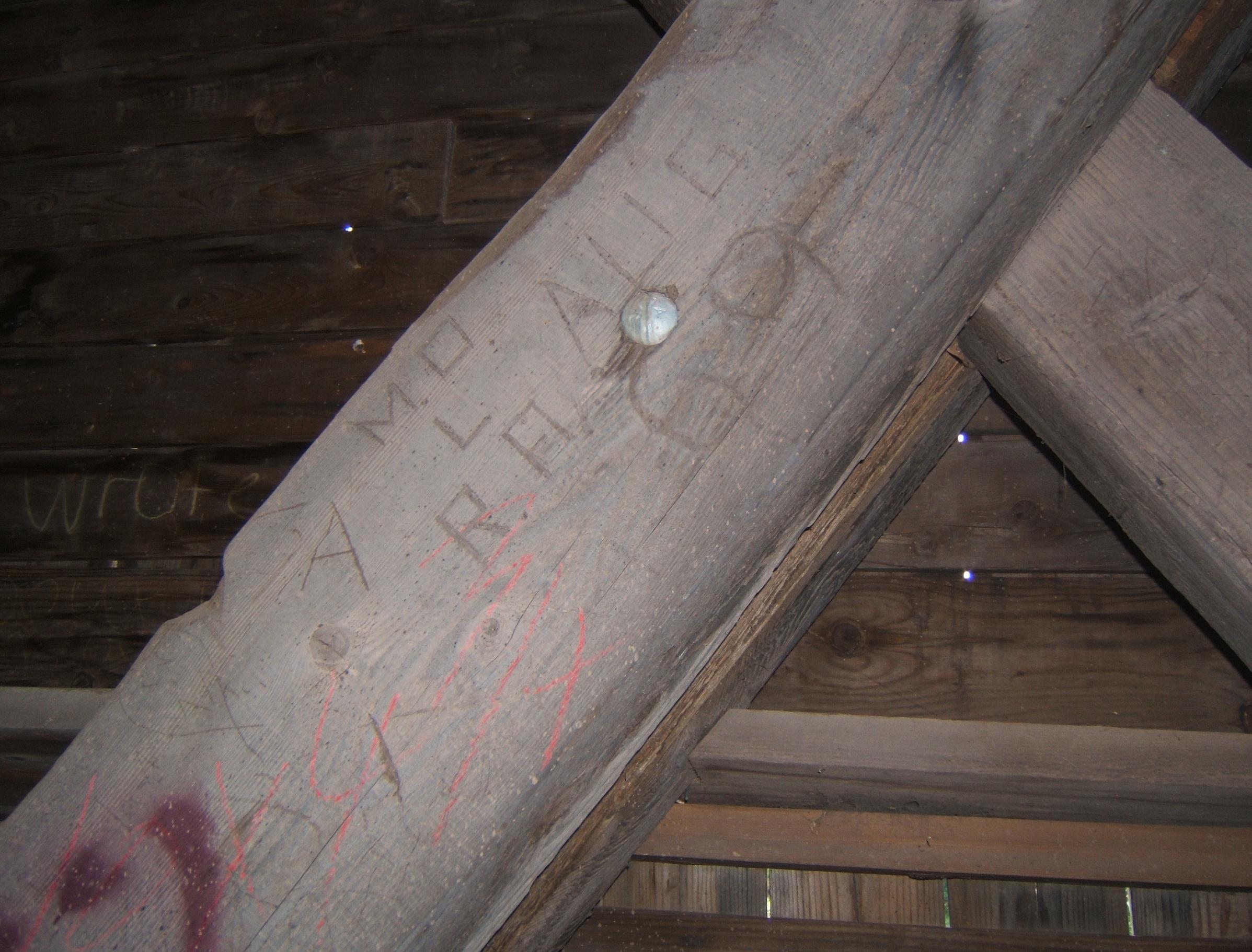
I also found a large carved ‘S’, very hard to see…

the ‘S’ is hard to see, just above the knot and about three times the length
Do you suppose ‘M.O.’ still loves ‘R.A.’ ?
~
~
forever
~
we carve our initials
in the beams of the covered bridge
pledge our love to endure
~
but these words may
outlast the love
even the people
~
~
Copyright Jane Tims 2012
a walk through the covered bridge – Smyth Bridge, South Branch of the Oromocto River
On our August drive along the South Branch of the Oromocto River, we crossed two covered bridges. I love these bridges… they are picturesque and so pleasant to walk through. They are also part of the local history of many communities in New Brunswick. I’ve talked a little about covered bridges before in my Blog – please have a look at https://nichepoetryandprose.wordpress.com/2011/09/05/inside-the-covered-bridge/
One of the bridges we saw on this drive was the Smyth Bridge. It crosses the South Branch of the Oromocto River, near Mill Settlement in Sunbury County (listed as South Oromocto Rover #2 in the April 1992 pamphlet ‘Covered Bridges in New Brunswick’, no author indicated).

Inside the bridge, it is cool and dark. When a car drives through, you hug the side, hoping the driver will see you and slow down. I love the sound of the tires on the timbers making up the floor of the bridge.

Down-river, the shallow water of the river glows in the sun. Most of our local rivers are the color of tea, a consequence of their origins in wetland areas.
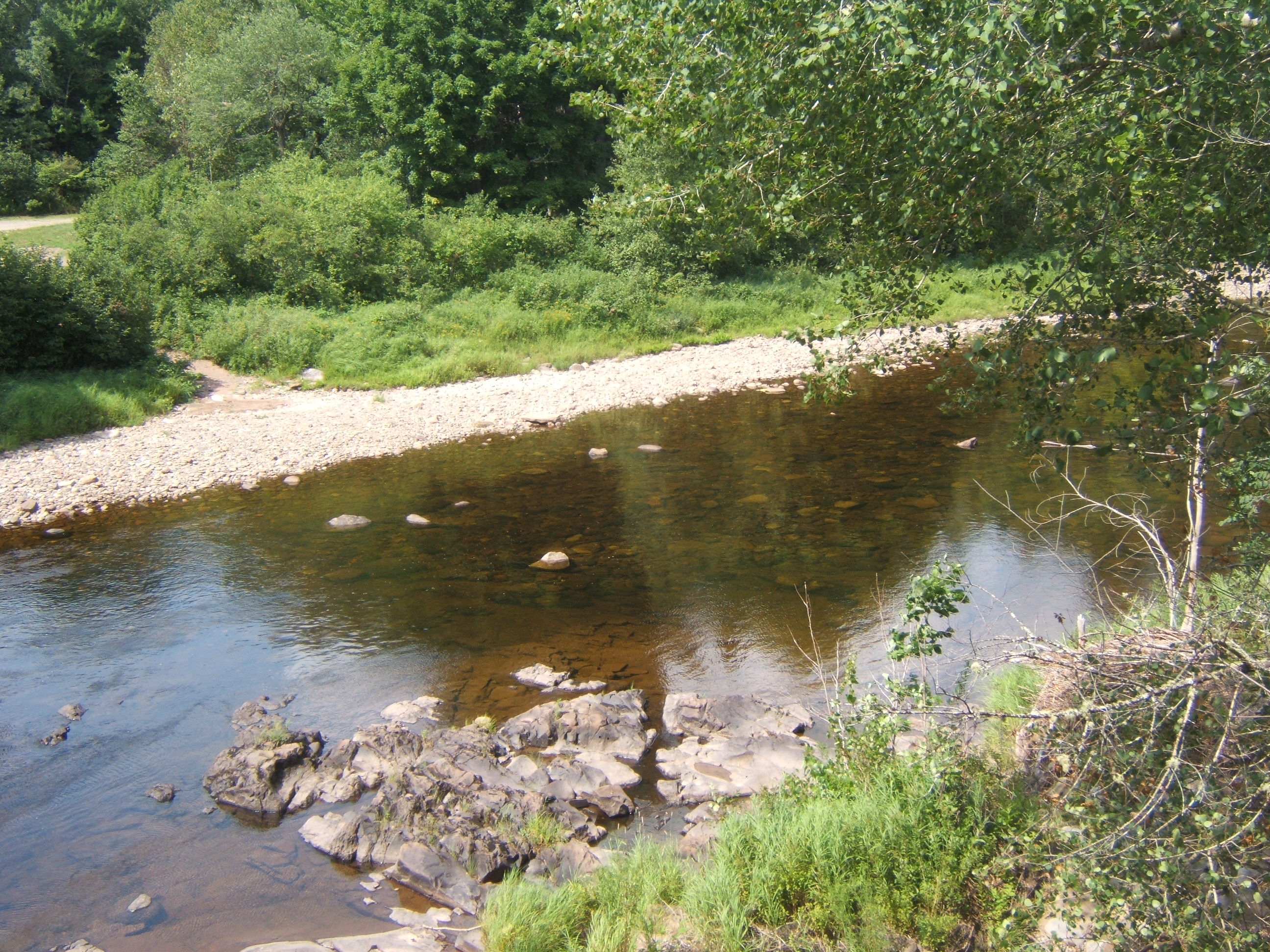
Up-river of the Smyth Bridge is a gravel beach and water for wading and swimming.
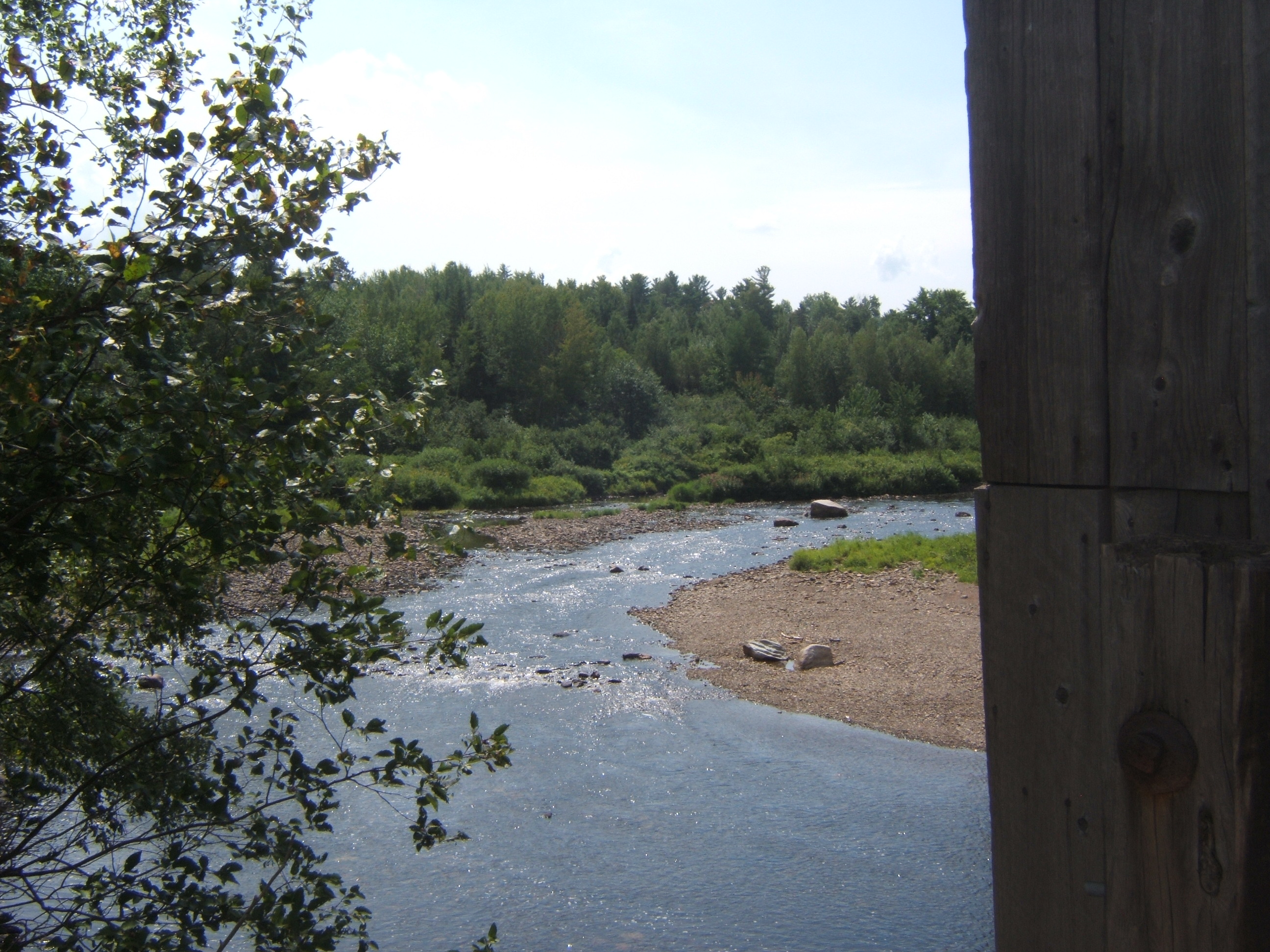
The Smyth Bridge was built in 1912 and has a total length of 139′ 1/2 “, and a span of 136′ 1/2 “. Its roadway width is 14′ 9”. Its Maximum Load is 10 t (6 t for double axle vehicles) and its center clearance height is 3.7 m.
During our Covered Bridge Project for Canada’s 125th anniversary, we visited the Smyth Bridge on April 16, 1992.
In 1992, the oldest dates we could find carved into the bridge were ‘Oct 3, 1915 Sunday’ under the initials ‘R K’ (in pen or pencil) and ‘Feb 1931’ beside the initials ‘LTF’ and ‘LEIK’ to the right of three simple crosses. There was also the totem of a face carved into the south side of the bridge, on the outside corner post. We also found a few other initials, deeply carved: ‘M B’, ‘R H’, ‘C B’, and ‘CED ER May 63’.
Finding these carvings requires patience, a good flashlight and about an hour per bridge, so I didn’t check to see if any of the carvings were still there on our recent visit. Sometimes they are lost when boards are replaced in the bridge during renovations.
I wonder if these people remember leaving their initials in the bridge so long ago?
~
~
‘LEIK’
– initials carved on the boards of the Smyth Covered Bridge, 1931
~
dark
silent
sequestered
~
light leaks between gable
boards, window squares cut high
river water below
sparkles in August sun
~
carved initials announce
the focused presence of
ghosts with knives
~
the clatter of tires
on timbers, as a car
rattles across the bridge
~
~
Copyright Jane Tims 2012
a snippet of landscape – glacial erratics and boulder fields
Last week we went for a drive to explore some of the back roads in Sunbury County. As we drove, we encountered large boulders everywhere along the road. I know from my reading and a course years ago, these are a remnant of the glaciers that once covered this area. Large boulders were carried along by the ice and deposited on the landscape far from their place of origin.

In one place, a clear-cut lay the landscape bare and we were able to see how frequently these glacial erratics occurred in the area. In the photo, you can see the boulders scattered in a ‘boulder field’. These boulders would have been deposited here by a glacier, thousands of years ago, perhaps during the Wisconsinan glaciation when almost all of Canada was covered by ice.

It is strange to drive along the road today and know that thousands of years ago, a sheet of ice, perhaps a few kilometers thick, would have covered us.
~
~
gravel pit
~
ten thousand years it took
a glacial stream to set
the sinew of the esker –
cobbles sorted to layers,
screened by a giant hand
~
ten scant years to sever
esker snake from his tail –
the excavator bucket
reaching, fingers lifting sand,
pit-run, ready for road
~
~
Copyright Jane Tims 2012
a moment of beautiful – old-fashioned flowers
the space: the side of a cottage in the late summer sun
the beautiful: a riot of Golden Glow, leaning against the wall
~
Last week, on a drive along the South Branch of the Oromocto River, I noticed the fall flowers have taken over from the summer species. The fields are filled with Goldenrod (Solidago spp.) and the ditches with Pearly Everlasting (Anaphalis margaritacea (L.) C.B. Clarke). In some of the yards were three flowers I think of as ‘old fashioned’ – French Marigolds (Tagetes patula L.), Hollyhock (Alcea spp.), and Golden Glow (Rudbeckia laciniata (L.) var. Hortensia). I love the orange of the Marigolds, the papery pinks and purples of the Hollyhock, and how the Golden Glow leans!

These plants were my first introduction to the concepts of ‘annual’, ‘biennial’ and ‘perennial’. The French Marigold was an annual, and grew only for a single year. The Hollyhock was a biennial (although some are weak perennials), living a year without flowers and then blooming in the second year. The Golden Glow came up year after year without benefit of seeds or fuss, a perennial.
I remember helping my Mom collect seeds so she would always have the Hollyhocks and French Marigolds. If I close my eyes, I can see my hand holding the pointy black French Marigold seeds and the flat Hollyhock seeds with their furry edges.
When we first built our house, I was anxious to have these plants in my garden, but after blooming for a few years at the edge of the house, the Golden Glow died out, and I could never get Hollyhocks to flower. Both need lots of sun and we have only shade to offer. I often grow French Marigolds. I still have the seeds I collected from our first garden here, stuffed in an old metal seed box. I doubt they are still viable, but when I open the box, I see the seeds of the Marigolds that bloomed here 32 years ago!
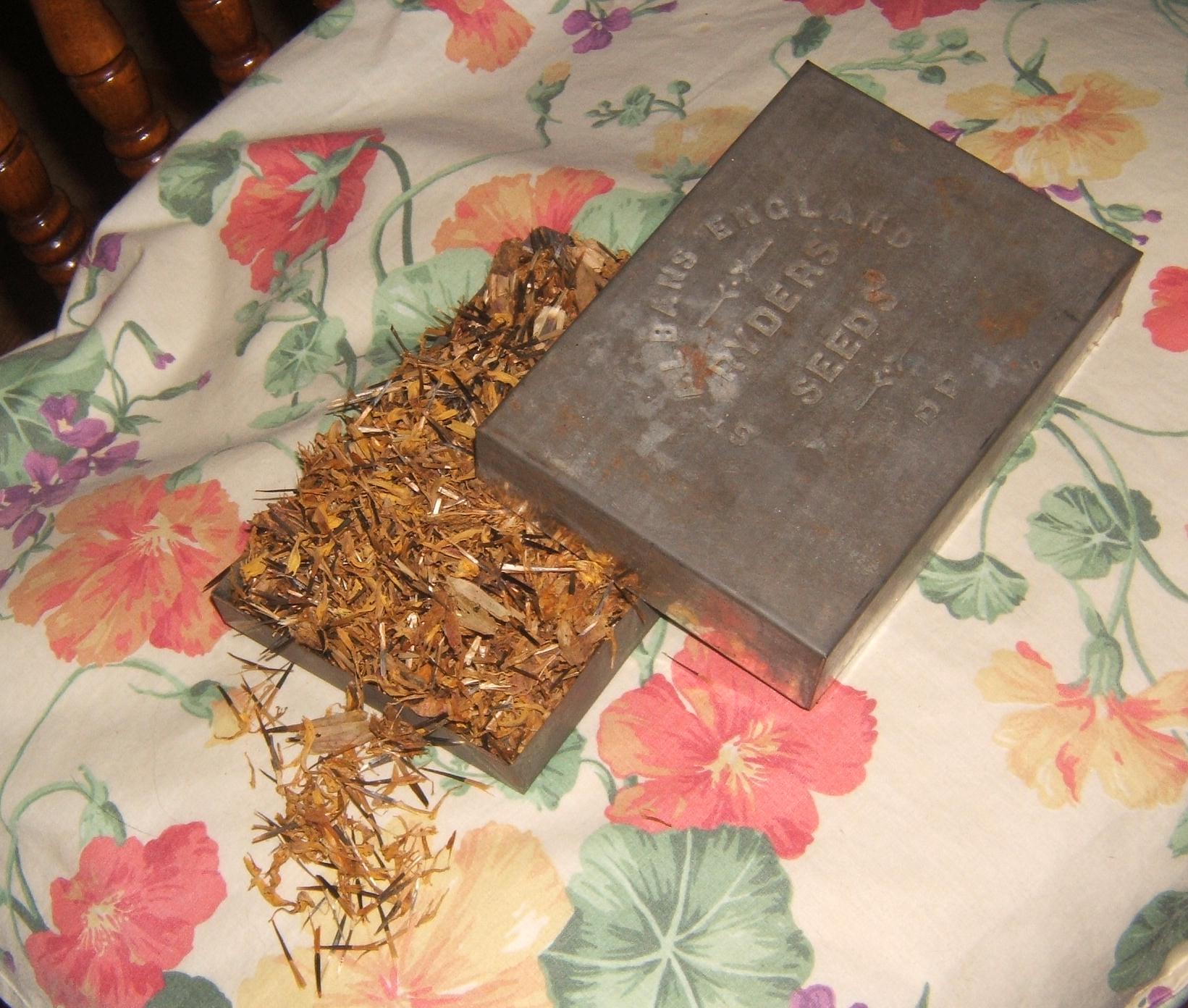
The seeds I collected from our first garden of Marigolds in 1980… they are kept in an antique box marked ‘St. Albans England – Ryders Seed – D.P.’ Ryders was a seed company operated in England beginning in the 1890s. It sold seed in ‘penny packets’ to be affordable for everyone.
What are your favorite ‘old-fashioned’ flowers and do you see them much anymore?
~
~
Pearly Everlasting
Anaphalis margaritacea L.
~
Pearly Everlasting
sign of summer’s passing
yet – immortelle
picked by the road
by the armload
hung from rafters
children’s laughter
runs beneath
~
downy leaf, wooly stem
white diadem
perfectly matched flowers
thatched in gold
dry and old
~
Linnaeus named
for Marguarite
memory sweet
paper petals keep
pale perfume
summer grace
in a winter room
~
~
Published as: ‘Pearly Everlasting’, The Antingonish Review 92, 1993
Copyright Jane Tims 2012
a botany club excursion
Earlier this summer, we went on a hike with other members of a local botany club to the Cranberry Lake Protected Natural Area, an area protected for its extensive forest community of Red Oak and Red Maple.
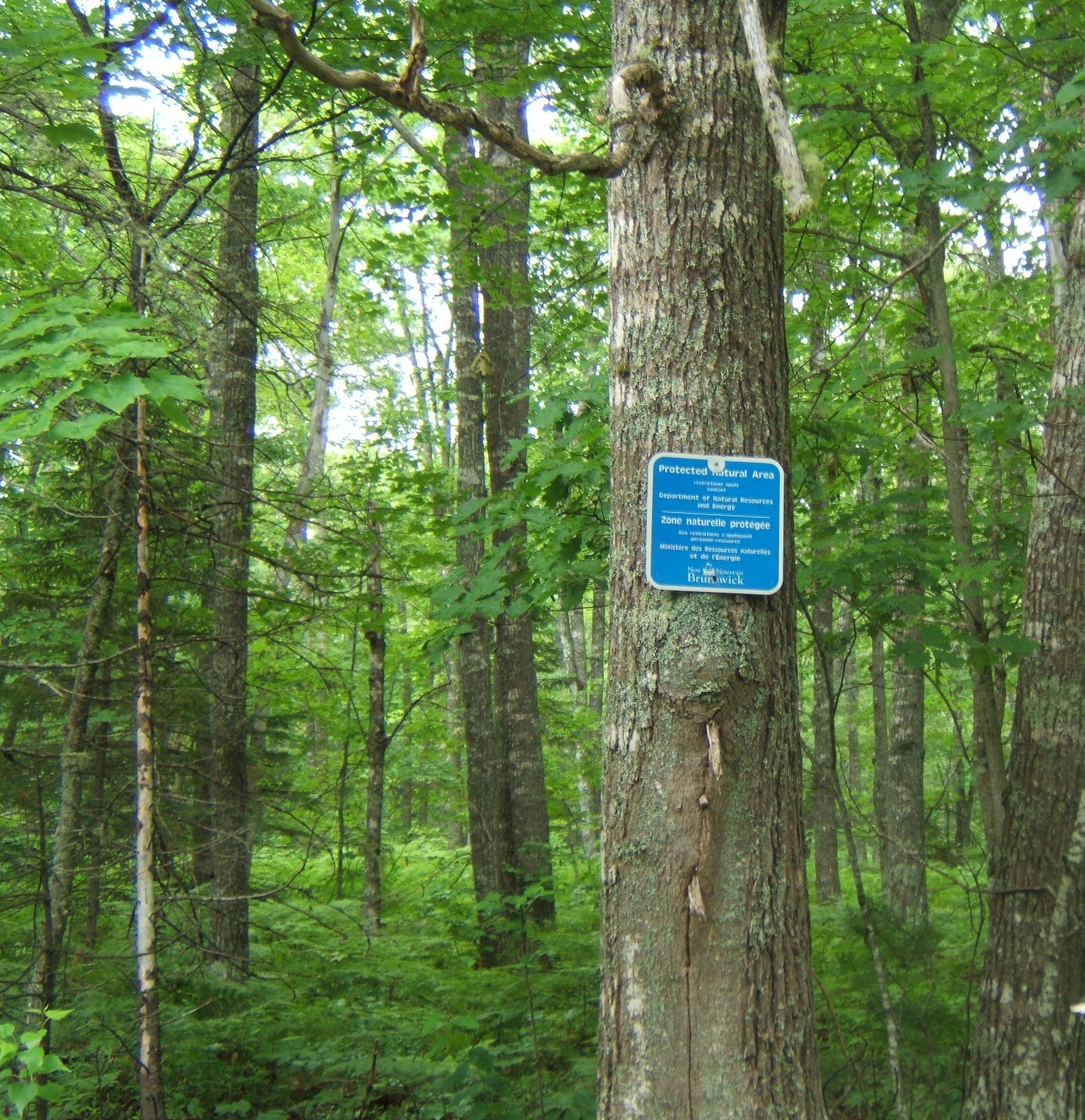
The New Brunswick Department of Natural Resources website describes the Cranberry Lake Protected Natural Area as follows:
An extensive Red Oak forest community. Predominantly Red Oak – Red Maple association. Red Oak make up a large percentage of the regeneration, most likely the Oak component will increase as the stand matures. The individual trees are impressive size.
This type of forest is rare in New Brunswick.
The woods were open with a thick understory of Bracken (Pteridium aquilinum (L.) Kuhn, var. latiusculum (Desv.) Underw. ex A. Heller), Blueberry (Vaccinium spp.), Common Lady’s Slipper (Cypripedium acaule Aiton) and some of the other species of the Canadian Element associated with woodlands in the Maritimes (see my post for April 30, 2012, Trailing Arbutus, https://nichepoetryandprose.wordpress.com/2012/04/30/trailing-arbutus-epigaea-repens-l-var-glabrifolia/ ).

My husband standing in the thick growth of Bracken… it was about waist-height… he says he was standing in a hole!
It was so much fun working with the other botanists and enthusiasts to identify the various species we encountered. The plant lists prepared during the day will be part of an effort by Nature New Brunswick to update a database of Environmentally Significant Areas in New Brunswick. During my years of work, I was privileged to work on the development and use of this database.
I saw many familiar species during the hike, but I was so excited to see three plants I have not seen in a while.
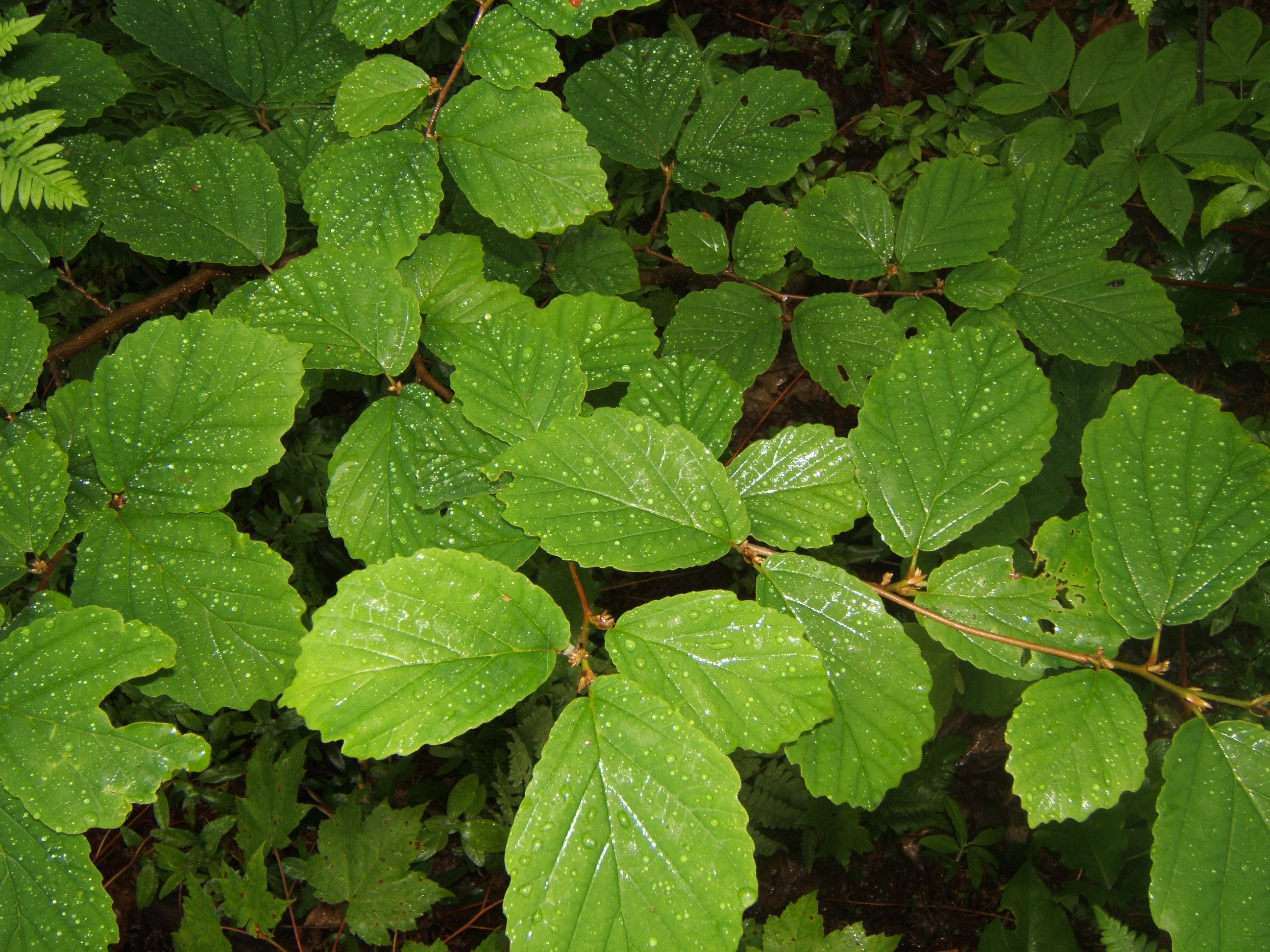
I renewed my acquaintance with Witch-hazel, Hamamelis virginiana L. (notice the asymmetrical shape of the leaves)…
and Shinleaf (Pyrola elliptica Nutt.), identifiable by its thick oval leaves, longer than the leaf-stalks or petioles…

a single plant of Shinleaf, with its straight stem of small creamy flowers, growing among Blueberry, and Red Maple and Red Oak seedlings
I also was introduced to a plant I thought I had never seen before, Cow-wheat (Melampyrum lineare Lam., a branchy variety found in dry woods). When I looked it up in my Flora, though, I found a notation to say I had seen this plant in the summer of 1984. It is always good to record the plants you see and identify!

While there, we saw a perfect example of the interaction of species. A bright orange fungus, known as Chicken of the Woods (Laetiporus sulphureus), growing on an aged Red Oak, was being consumed by a horde of slugs.

A hike with a group is a great way to expand your knowledge and boost your confidence. Everyone benefits from the knowledge of the various participants, and being with like-minded people is good for the soul!
© Jane Tims 2012
Warning: 1. never eat any plant if you are not absolutely certain of the identification; 2. never eat any plant if you have personal sensitivities, including allergies, to certain plants or their derivatives; 3. never eat any plant unless you have checked several sources to verify the edibility of the plant.keeping watch for dragons #6 – Water Dragon
The last full week in May, we took a day to drive the Plaster Rock-Renous Highway. This is an isolated, but paved, stretch of road, called Highway 108, connecting the sides of the province through a large, unpopulated area. The highway runs from Plaster Rock in the west, to Renous in the east and traverses three counties, Victoria, York and Northumberland. It takes you across more than 200 km of wetland, hardwood, and mixed coniferous forest, some privately owned, and some Crown Land. A large part of the area has been clearcut, but the road also passes through some wilderness of the Plaster Rock-Renous Wildlife Management Area and the headwaters of some of our most beautiful rivers.
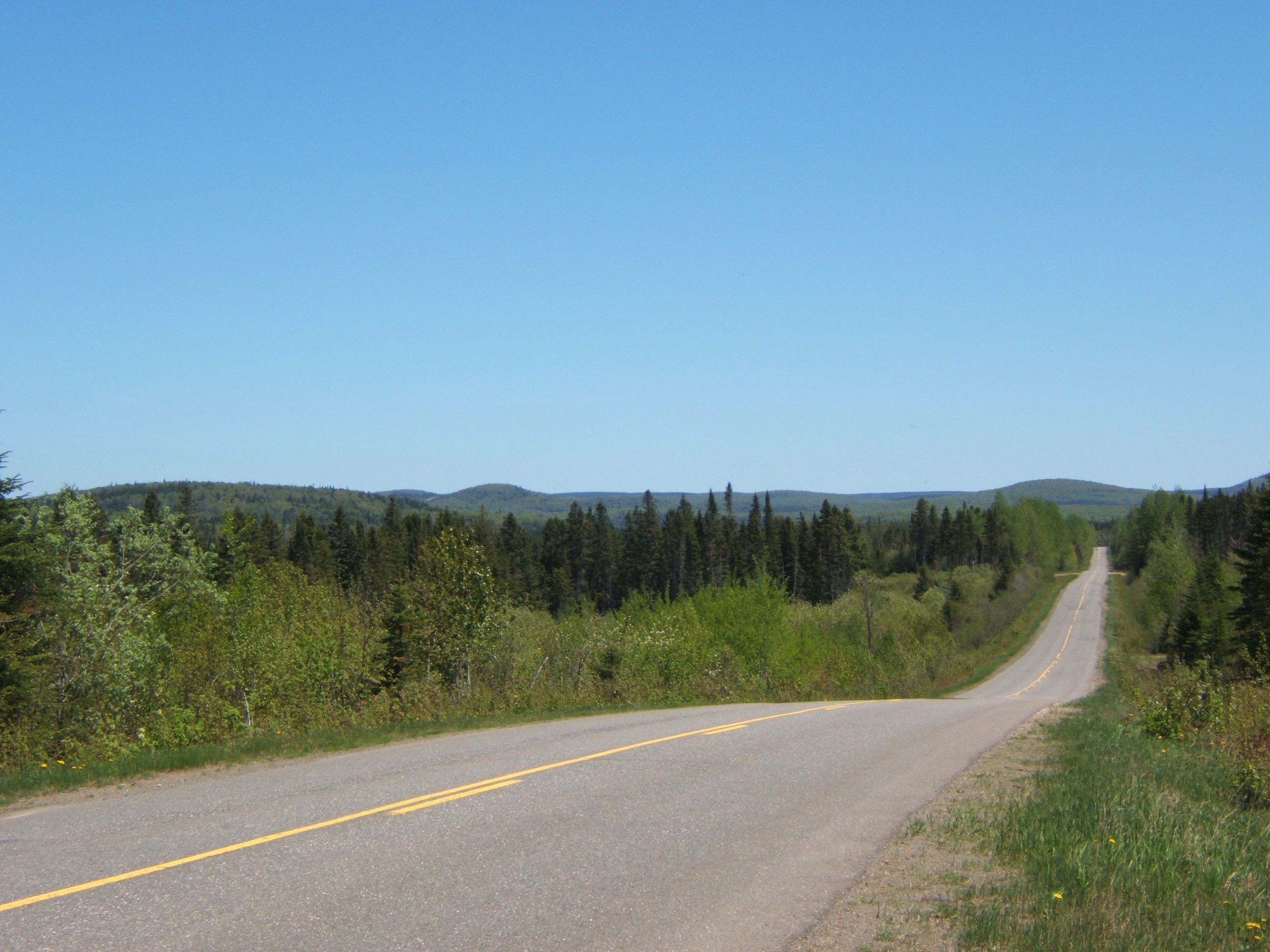
From the east, the highway first runs along the waters of the Tobique River, across the Divide Mountains, and into the drainage of the Miramichi River, crossing the Clearwater Brook, and running along the South Branch of the Dungarvon River and the South Branch Renous River.
Along the way, we stopped at a boggy pond next to the road between Clearwater Brook and the Dungarvon, to listen to the bull frogs croaking. There among the ericaceous vegetation filling most of the pond was a dragon for my collection.


look closely near the center of the photo… the single white spot is the spathe of a Wild Calla or Water Dragon
Water Dragon, more commonly known as Wild Calla or Water Arum, was present in the shallow, more open waters of the pond, appearing as startling white spots on an otherwise uniform backdrop of green and brown.
Wild Calla (Calla palustis L.) is also known as Female Dragons, Frog-cups, Swamp-Robin and, in French, calla des marais, arum d’eau, or aroïde d’eau. It lives in wet, cold bogs, or along the margins of ponds, lakes and streams.
The Wild Calla belongs to the Arum family, along with Jack-in-the-Pulpit (Arisaema Stewardsonii Britt.) and Skunk Cabbage (Symplocarpus foetidus (L.) Nutt.). These plants have tiny flowers along a thick spike known as a ‘spadix’. The spadix is enclosed by a leafy bract called the ‘spathe’. The spathe of Wild Calla is bright white, ovoid and abruptly narrow at the tip. The leaves are glossy green and heart-shaped. The flowers growing among them are often overlooked. On the pond, there were about ten visible spathes, and likely many more hidden among the plentiful leaves.
The various parts of the Wild Calla are considered poisonous since they contain crystals of calcium oxalate. These cause severe irritation of the mouth and throat if eaten. However, there is a twist to this story of a poisonous plant. Scandanavian people, in times of severe hardship, prepared flour for ‘Missen bread’ from the dried, ground, bruised, leached, and boiled seeds and roots of Wild Calla. Do I have to warn you not to try this at home!!!!????
Warning: 1. never eat any plant if you are not absolutely certain of the identification; 2. never eat any plant if you have personal sensitivities, including allergies, to certain plants or their derivatives; 3. never eat any plant unless you have checked several sources to verify the edibility of the plant.Linnaeus, the botanist who invented the binomial (Genus + Species) method of naming plants, described the laborious process the Swedish people used to remove the poisonous crystals from the Water Dragon in order to make flour. To read Linnaeus’ account, see Mrs. Campbell Overend, 1872, The Besieged City, and The Heroes of Sweden (William Oliphant and Co., Edinburgh), page 132 and notes (http://books.google.ca/books?id=IAsCAAAAQAAJ&pg=PA222&lpg=PA222&dq=missen+bread&source=bl&ots=ZO8cl_2nBl&sig=Gtr5Lq6PvG3DXV_l-kfECNuhWfo&hl=en&sa=X&ei=gGLFT-79B4OH6QG1m-nOCg&ved=0CC8Q6AEwAA#v=onepage&q=missen%20bread&f=false Accessed May 29, 2012).
~
~
~
desperate harvest
‘… they can be satisfied with bark-bread, or cakes made of the roots of water-dragon, which grows wild on the banks of the river…’
– Mrs Campbell Overend, 1872
~the pond beside the road
simmers, a kettle
of frog-croak and leather-leaf
~
spathes of Water Dragon
hug their lamposts, glow white
lure the desperate to the pond
~
bull-frog song deepens the shallows
the way voices lower when they speak
of trouble, of famine
~
people so hungry, harvest so poor
they wade in the mire
grind roots of Wild Calla for flour
~
needles to the tongue
burns to the throat
crystals of calcium oxalate, poison
~
worth the risk –
the drying,
the bruising,
the leaching,
the boil,
the painful test to know
if poison has been neutralized
~
the toughness of
the Missen bread
~
~
© Jane Tims 2012

‘Ducks’ Ditty’
On Saturday we took a drive along the St. John River, to see if any waterfowl were braving the cold windy day. The water is slowly receeding but still above summer levels. On a miserable day, the ducks retreat to the shallows, away from the exposure of the open water.
There were a few birds on the water. We stopped for a while to watch five male Mallards (Anas platyrhynchos) paddling about. They stuck together as a group, feeding in the shallows and occasionally ‘standing’ on the water to flap their wings. This time of year, the female Mallards are on the nest, hatching their young, and the males typically hang out in groups with other males until moulting begins.
I am not good at duck identification, but the Mallard is easy to spot, with its bright green head and the white ring around its neck. I enjoyed watching them through the binoculars, especially their orange legs and feet maneouvering in the muddy water.
The Mallard is a member of the marsh duck family and a ‘dabbler’. Dabblers obtain their food by skimming it from the surface or tipping up to submerge their heads so they can feed underwater.
I can never watch dabblers on the water without thinking of Kenneth Grahame’s famous poem ‘Ducks’ Ditty’, from the book The Wind in the Willows. If you don’t have a copy of the book, have a look at the poem at http://www.literaturepage.com/read/windinthewillows-14.html

© Jane Tims 2012
snippets of landscape – the bogan
Along the St. John River are sluggish side-streams, flooded in spring to form full tributaries of the river, but isolated and stagnant in low-water conditions, sometimes completely cut off from the main river. These are known as bogans, a word of Algonquian origin. The words logan and pokelogan have a similar origin and meaning.
My favorite bogan is a strip of water next to the Trans-Canada Highway near Jemseg. The bogan creates an island, Thatch Island, in the St. John River. Old Silver Maple trees lean over the still water, creating reflections and shadows.

bogan along Thatch Island
On maps of the St. John River, a bogan on Sugar Island, just north of Fredericton, is called the Sugar Island Padou.

bogan (padou) on Sugar Island
~
~
bogan
~
appendage of river
footnote on water
predictable as the day we walked
the dead-end backroad
and retraced our steps to return
~
in spring, by canoe, at high water
or on ice skates in winter
in summer sluggish
stagnant, secluded
~
we lurk, eavesdrop on whispered
conversation
we are river folk
unwelcome
~
~
© Jane Tims 2012
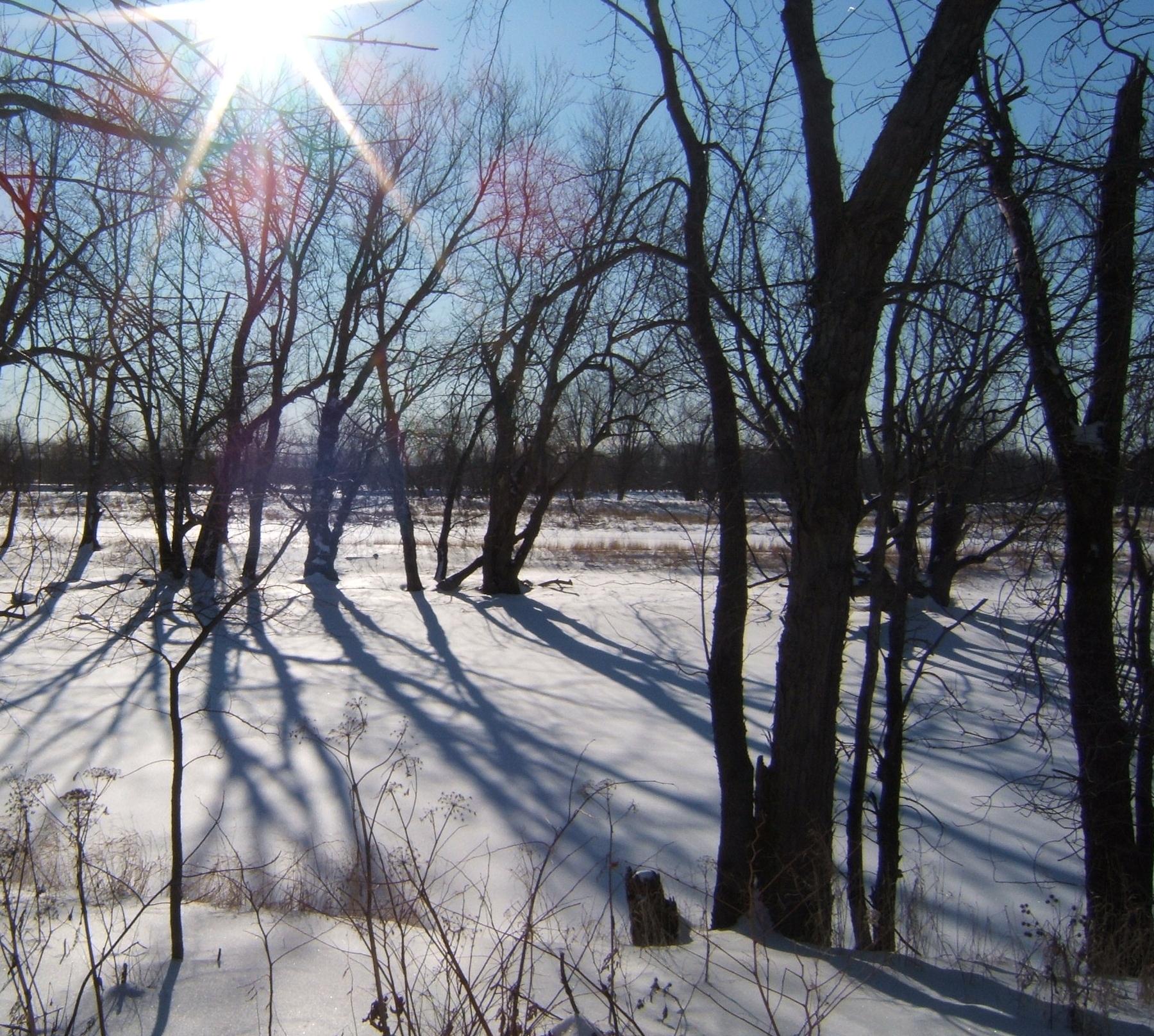
snow-bound bogan to the north of Thatch Island on the St. John River





 nichepoetryandprose