Archive for the ‘edible wild’ Category
growing and gathering – names of edible wild plants
As I have worked on my poetry project about eating local foods, I have researched each wild plant, found it in its natural environment, and then written about it. With all this, I am exposed to the words and characteristics of a particular plant and it is never certain which way the ‘muse’ will take me when I write the poem. Sometimes, I end up creating a poem about eating local food, and sometimes, I get a poem about something else. Usually these stray poems are, in some way, about the name of the plant.
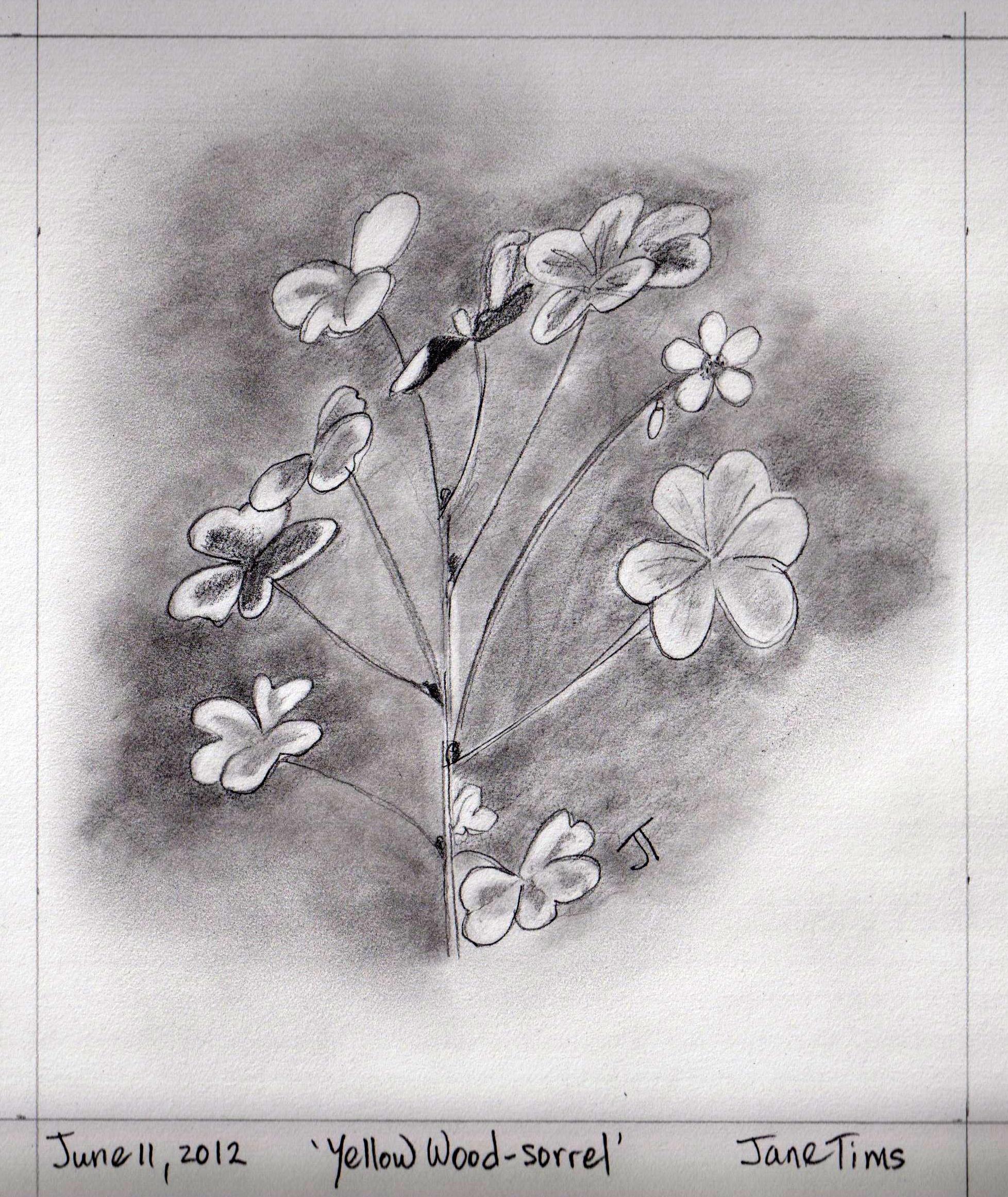
I find the names of plants are very inspiring. First is the Latin or scientific name, familiar to me after years of botanizing, but mysterious to most people. I love to find out about the origins of the name and I usually discover the name is descriptive of the plant. An example is the scientific name for Yellow Wood-sorrel (Oxalis stricta L.), a small yellow-flowered, three-leaved plant of waste areas. The name stricta means ‘erect’, referring to the way the plant grows when young or the way its seed pods are held. The word oxalis is from the Greek oxys meaning ‘sour’, a reference to the taste of the leaves.
The common names of plants are also intriguing. Sometimes these are different for each area where the plant is found. For example, the Cloudberry (Rubus Chamaemorus L.), a small relative of Blackberry with a peach-colored fruit, is known locally (and particularly in Newfoundland) as Bakeapple. Plant names may also refer to a characteristic of the plant. A good example is Heal-all (Prunella vulgaris L.), a small purple flower. It inhabits waste areas and lawns, becoming small and compact if mowed. One of its common names, ‘Carpenter Weed’, comes from this characteristic… Carpenter Weed mends holes in lawns! The name Heal-all comes from the old belief that the plant has medicinal properties.

‘heal-all’ Copyright Jane Tims 2011
So, among my collection of poems about edible plants, I have a group of poems about the plants and their names, but not about their use as local foods. I have to decide whether or not to include them in my collection, or to set them free!
~
~
Heal-all
(Prunella vulgaris L.)
~
snug Prunella, neat little weed
prim and proper, gone to seed
~
first called Brunella: gatherers found
Prunella purple fades to brown
~
a carpenter weed, busy, strong
mends bare patches on the lawn
~
heal-all, self-heal – your name suggests
an herbal secret you possess
~
~
© Jane Tims 2012
trial and error with mustard seed
On Saturday we took a side trip to see if the mustard is ripe for collecting seeds. We had selected a roadside area in early summer where lots of wild mustard was growing (for more information, see my earlier post about wild mustard –https://nichepoetryandprose.wordpress.com/2012/07/09/a-moment-of-beautiful-mustard-fields-in-bloom/
Although there are still some plants in bloom, the seeds have mostly been set in their long-beaked pods.

I would have been able to show you more, but I nibbled on the green pods the whole way home. They are delicious, crisp and tangy, with a hint of mustard.
There were a few dry seed pods but most need a couple of additional weeks to ripen. Each pod has three to seven well-formed seeds. The seeds take a little work to extract.
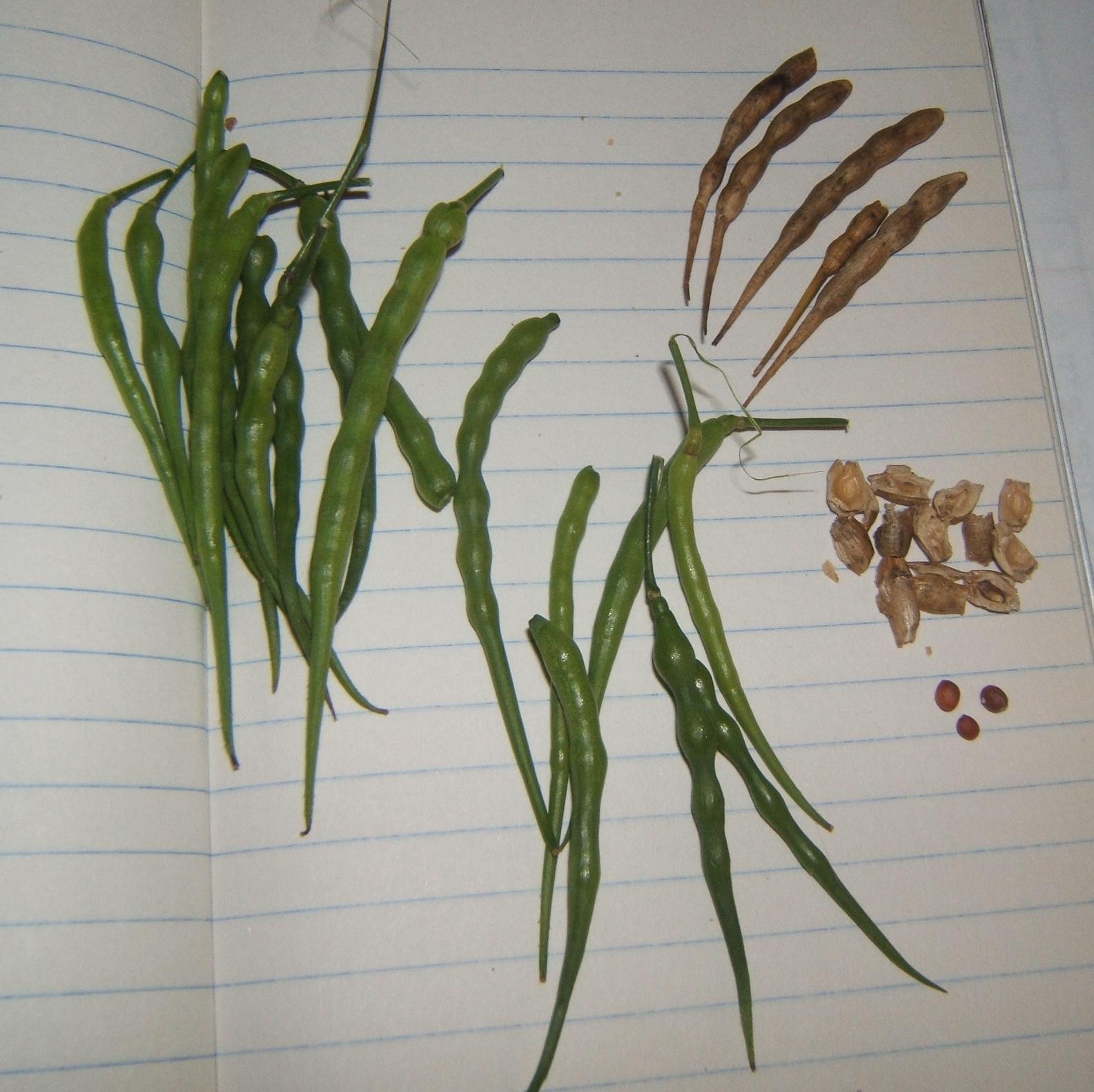
Mustard pods and seeds; green pods, dry brown pods, seed husks and three tiny seeds
I retrieved about 20 ripe mustard seeds from the pods, using a firm tap of the pestle to break the husk. Then I ground the seeds in a half teaspoon of olive oil. To make mustard, all my sources suggest using cold water, but I wanted to see if the seeds would flavour oil.
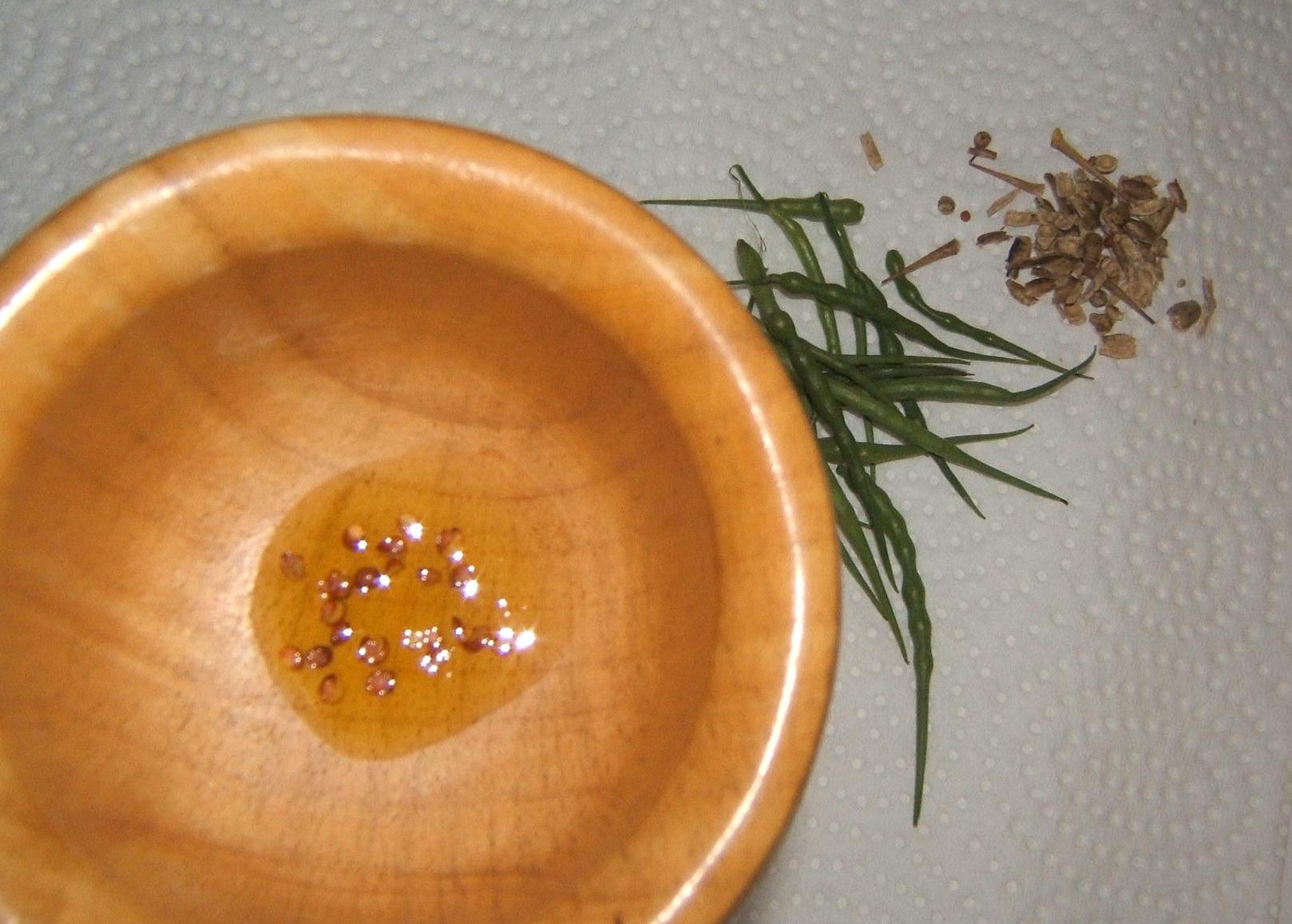
The ingredients almost vanished during the grinding with the pestle, but I got enough ‘mustard’ for a taste.

The verdict: a very mild mustard oil, easily overwhelmed by the salt on the crackers! When the pods ripen, I will pick enough for a few hundred seeds and I will use cold water to extract the flavour, just as the wise ones suggest!!!
~
~
© Jane Tims 2012
~
Warning:
1. never eat any plant if you are not absolutely certain of the identification;
2. never eat any plant if you have personal sensitivities, including allergies, to certain plants or their derivatives;
3. never eat any plant unless you have checked several sources to verify the edibility of the plant.
growing and gathering – years and seasons
As I work on my collection of poems about growing and gathering, I am aware of the passage of time. I am in the revision stage. This means my manuscript will soon be ‘complete’. I will worry over it and list the last things to be done. I will prepare my final report to artsnb (the New Brunswick Arts Board), the source of my Creations Grant, and send it away to them for approval.
The project will be over, but there will still be work to do. I will have to decide what poems should go in the final manuscript, re-order them a few times, do some more revisions and them send them away, to a publisher, hoping I will be able to get a book from all this work.
Then I will be at the end and facing a new beginning, a new project. I have a few to choose from, so I won’t be relaxing for long.
In all this is the dimension of time, with its deadlines and unforgiving rush forward. Even in a project about growing and gathering local foods, there are poems about time.
A number of my poems are about the ephemeral nature of local foods. Another way to think of this is ‘eating local foods in season’. In spring, everything is plentiful – new plants arrive in a rush, so fast, you can hardly keep up. Then there is the patient waiting for berries to ripen and, again, a rush… blueberries are quickly followed by blackberries and raspberries and so on. But everything has its season, so leaves become too old to harvest, and berries shrivel and fall to the ground.

This seasonal aspect of local foods can be thought of as as a metaphor for aging, and some of my poems work with this comparison. I have poems about resisting aging, and about the ailments of age including arthritis, lethargy, forgetfulness, and aging memory.
Many of my poems on the theme of ‘time’ overlap with other themes, about ‘companionship’, or changes to ‘place’. For this reason, I find myself shifting poems around in my manuscript. I ask myself if the poems flow well, one to another.
I also find I don’t seem to have many poems about the differences between our historical use of local foods and our present day use. I have lots of source material, particularly among my great-aunt’s diaries… she loved to pick berries. So away I go, to write a few more poems about time!
~
~
Old Man’s Beard
~
Usnea subfloridana Stirt.
~
you and I
years ago
forced our ways
bent through the thicket
of lichen and spruce
~
Usnea
caught in your beard
and we laughed
absurd!
us with stooped backs
and grey hair?
~
found a game trail
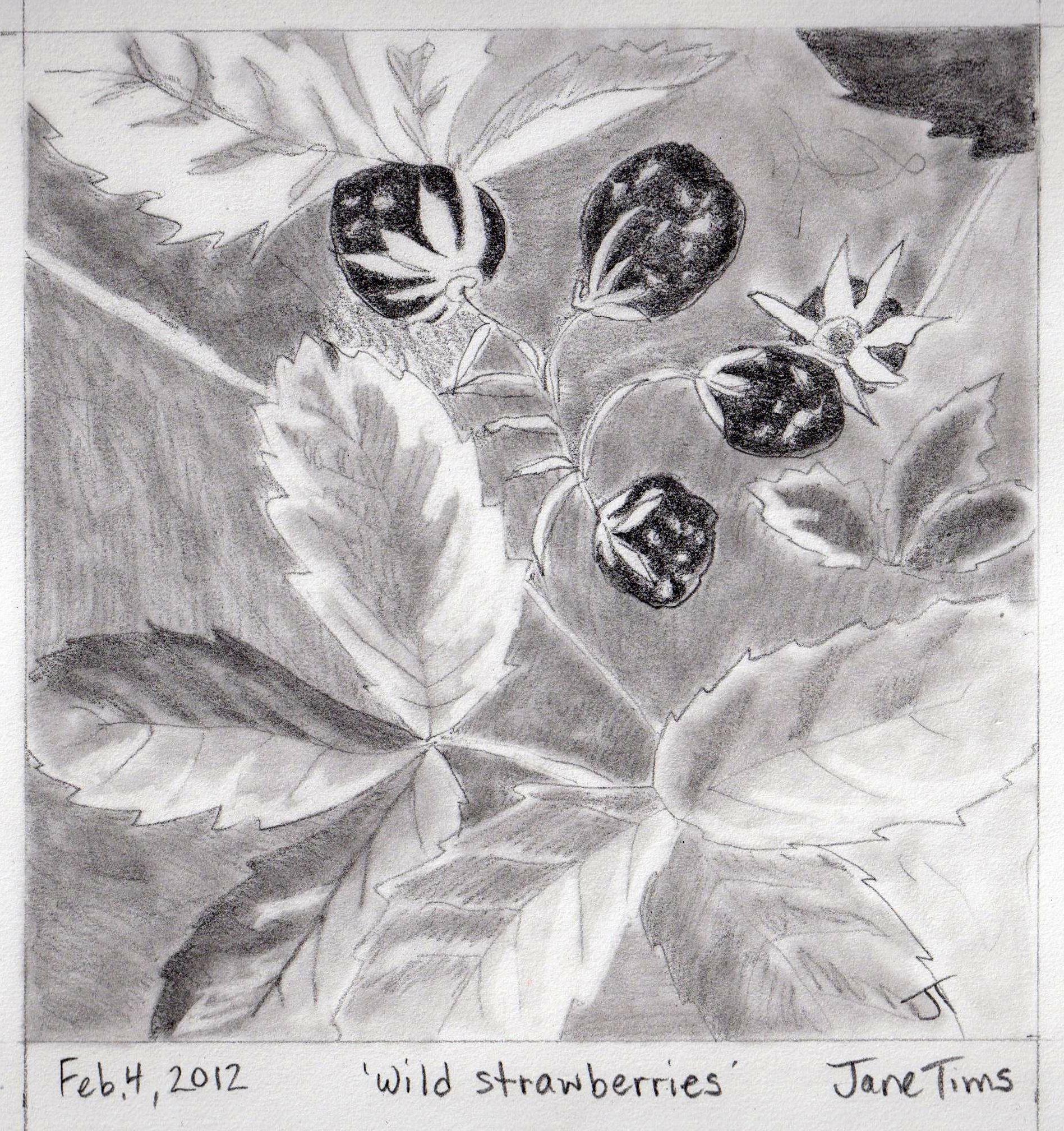
a strawberry marsh
wild berries
crushed into sedge
stained shirts
lips
and fingers
strawberries
dusted with sugar
washed down with cold tea
warmed by rum
~
today
an old woman
alone
lost her way in the spruce
found beard
caught in the branches
and cried
~
~
Published as ‘Old Man’s Beard’, The Fiddlehead 180, Summer, 1994
© Jane Tims 2012

growing and gathering – value
These days I am working to complete my manuscript of poems on the subject of ‘growing and gathering’ local foods.
As I sort my poems, I find several are about the ‘value’ of wild plants as food.
Sometimes this value is simple value for money. Every cup of blueberries I pick is one I don’t have to buy. When I pick enough berries to freeze, I can have blueberries or blackberries when they cost a fortune to buy fresh at the store. I am also bringing the warm summer and its memories forward into the chill of winter.

A few of my poems focus on the value of substitution. For example, I will never run out of tea leaves for my daily tea break. I have Pineapple Weed, Sorrel and Sweet-fern teas to make. Thanks to my sister and brother-in-law, and my own little herb garden, I have a rack of fresh herbs drying, including Camomile and several varieties of Mint. If I run out of salad ingredients, I have a stash of salad greens just outside my door.

Storage is the subject matter of a few of my poems. When I was young, my Mom showed us how to collect Spruce Gum from the trees for a sticky but tasty chew. During my project, I learned that some woodsmen make little wooden boxes for the gum, to keep it for later use. I also have a few poems about making jelly and jam.
Thinking about the value of food, I can’t forget the people for whom growing and gathering local foods is an occupation, not just a ‘hobby’. I have written poems about the people who sell shad and fiddleheads and lobster from their roadside trucks, about children who earn their summer money by picking and selling berries, and, of course, about the farmer.
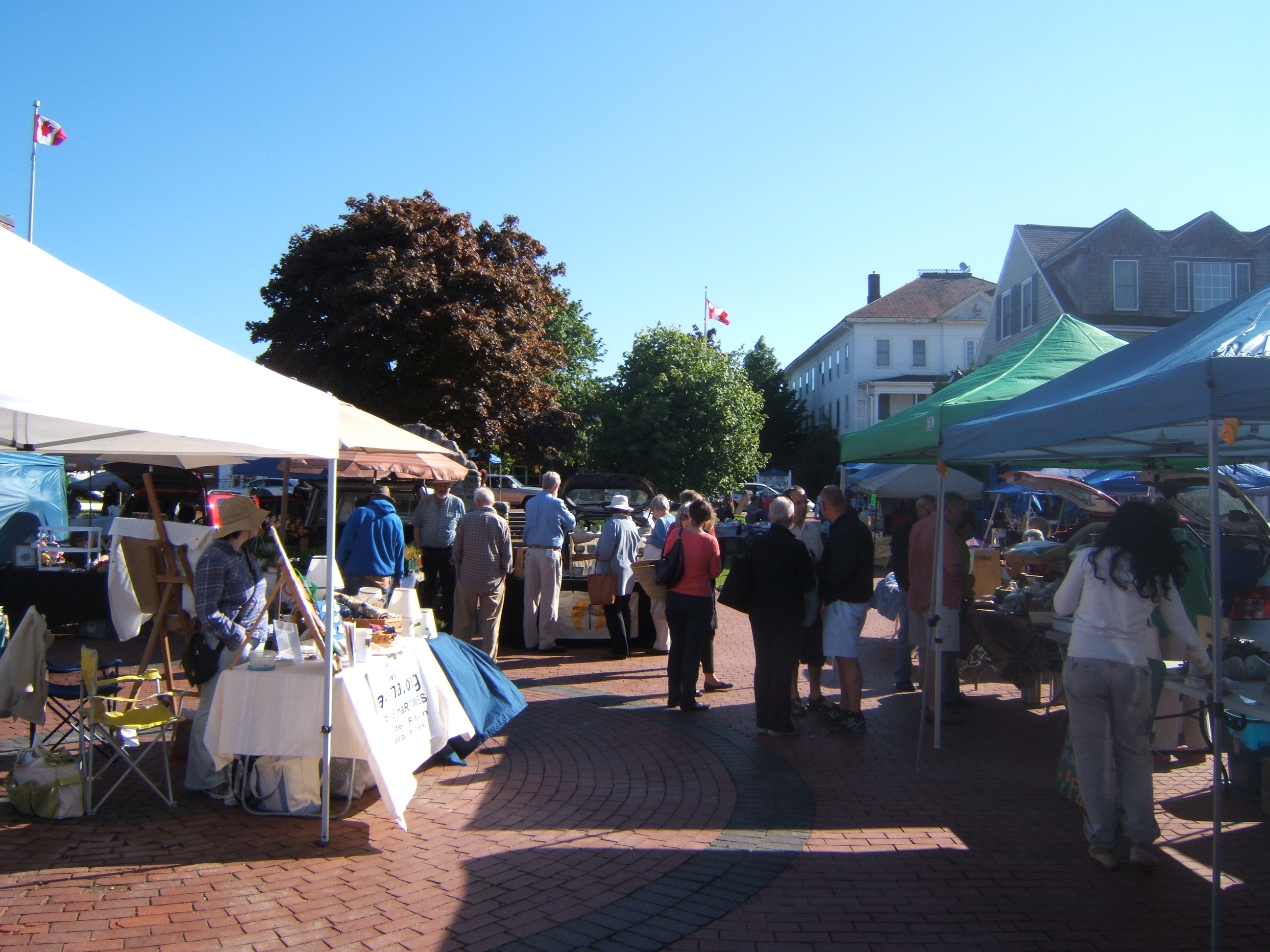
Last but not least, there is just the joy of finding or producing and eating your own food. I always say, the best part of a home garden is the taste of the first carrot or the snap of the first wax bean!
What do you think is the greatest value associated with growing and gathering local foods?
Warning: 1. never eat any plant if you are not absolutely certain of the identification; 2. never eat any plant if you have personal sensitivities, including allergies, to certain plants or their derivatives; 3. never eat any plant unless you have checked several sources to verify the edibility of the plant.© Jane Tims 2012
Sea-rocket (Cakile edentula Hook.)
Sea-rocket, also known as Seaside Mustard and caquillier in French, is found on sandy or gravelly beaches along the coast.
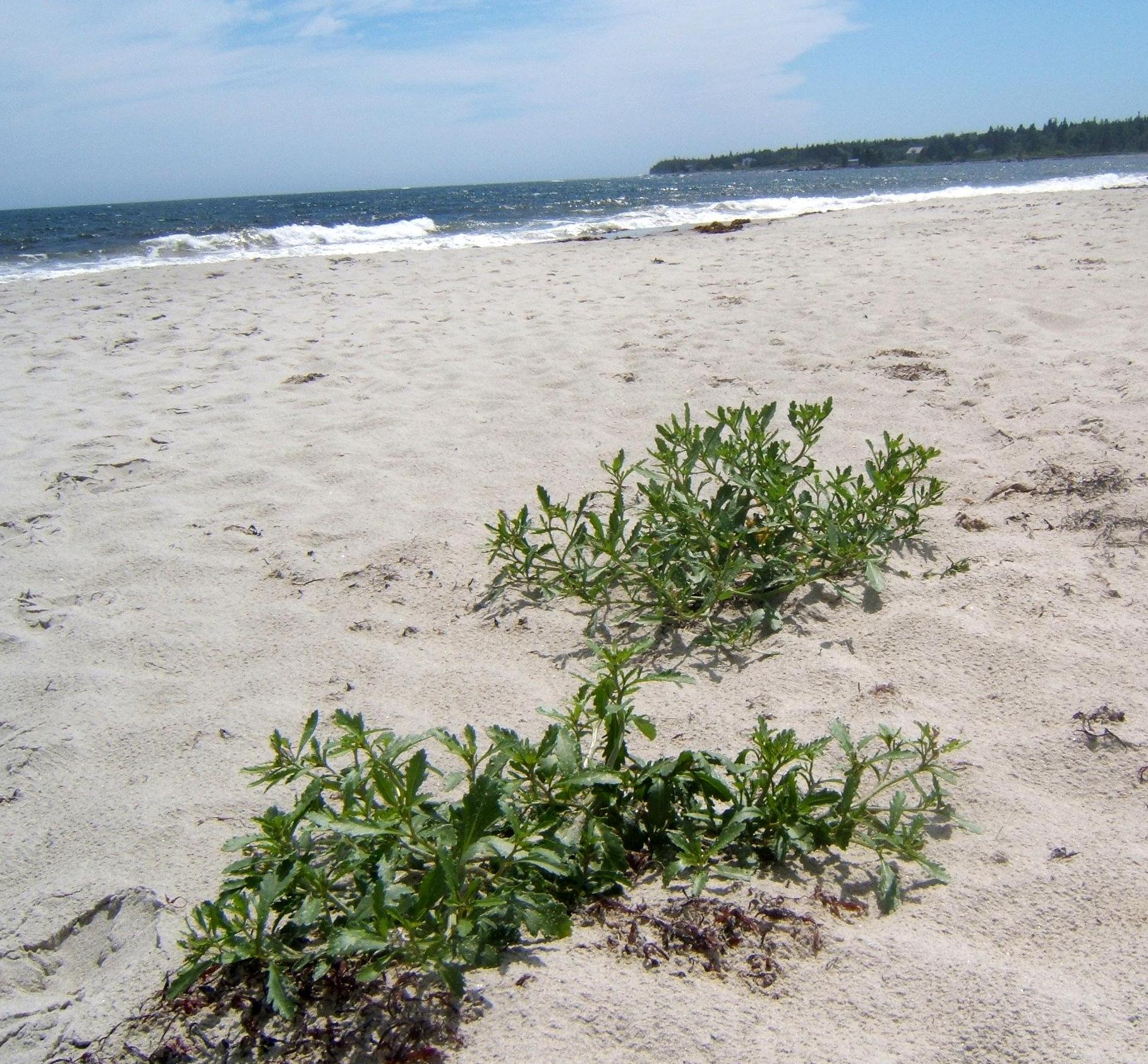
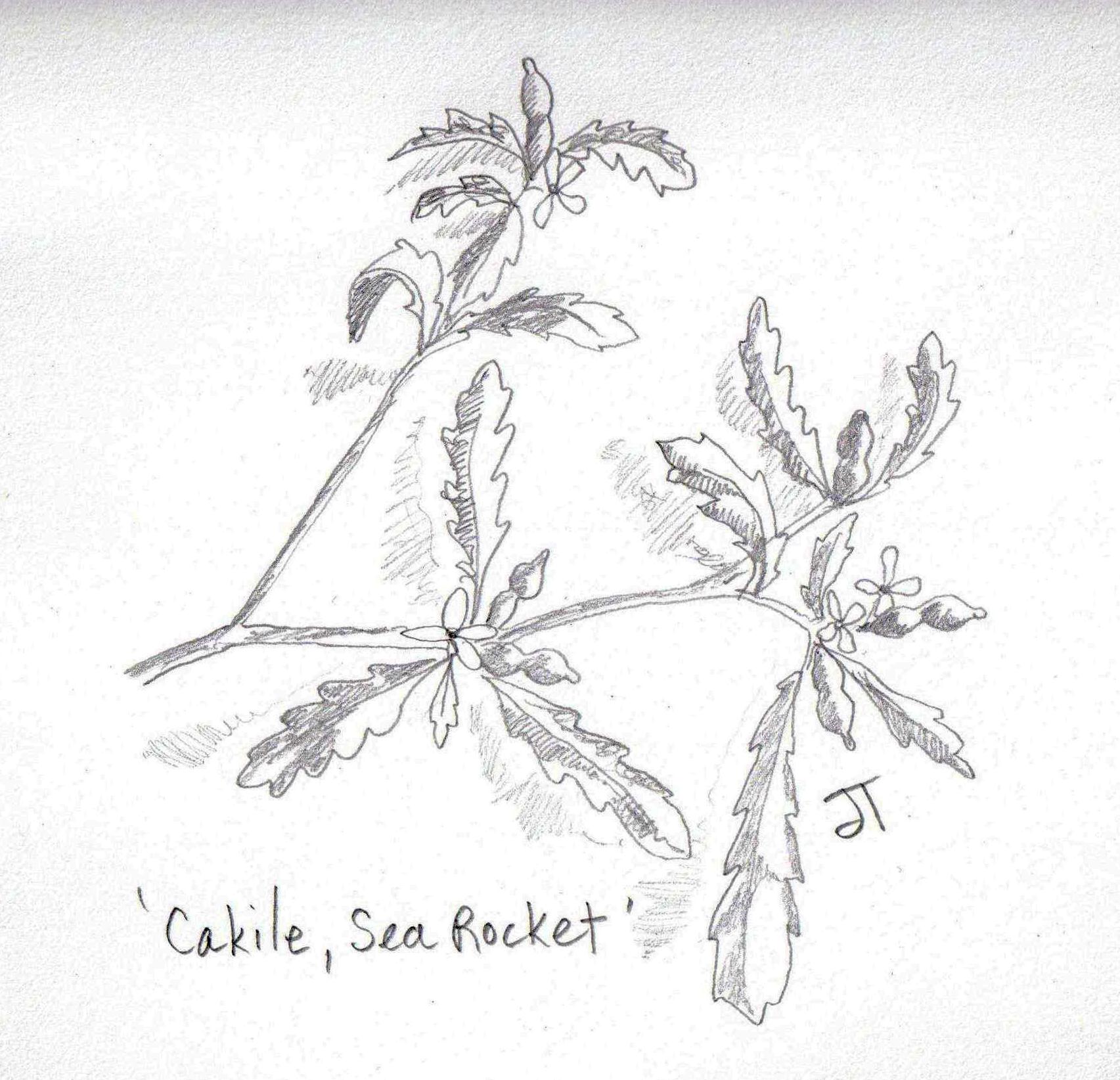
Cakile is a sprawling plant with succulent, branched stems. The leaves are thick and fleshy, with blunt-toothed margins. The four-petalled flowers are small, purple and located at the tip of the stem.
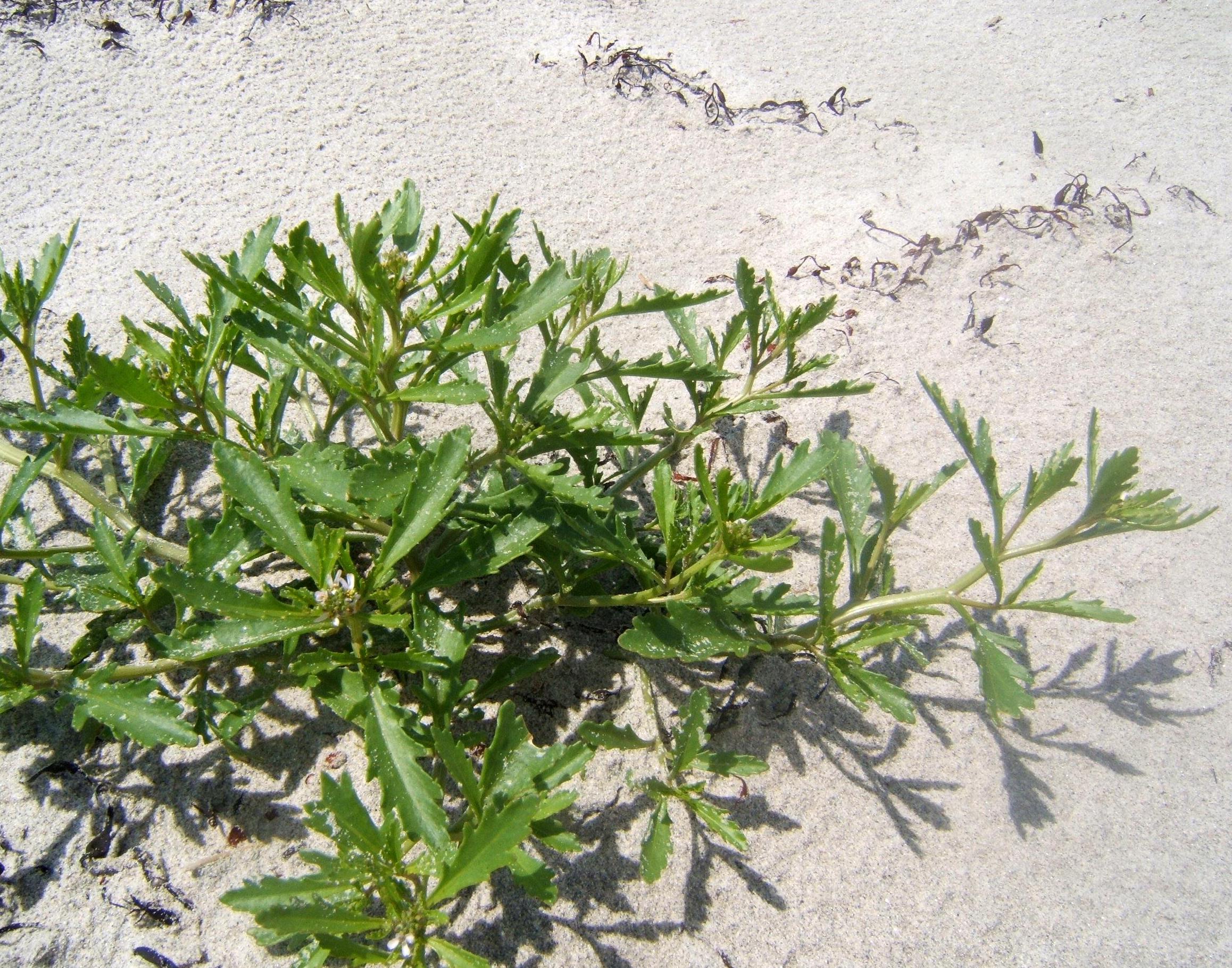
The name Sea-rocket comes from the distinctive shape of the seed pods. These have a narrow base and a pear-shaped tip, like a rocket. Cakile is an old Arabic name and edentula means ‘without teeth’.
Sea-rocket is edible. It has a hot, pungent taste, similar to radish. The stems, leaves and pods can be added to salads or boiled for 5 to 10 minutes to give a milder taste.
~
~
Cakile wind
~
the beach sizzles today
the breeze a peppered wind
the sand Cakile-hot
~
wind scours the shore-bands
of seaweed – rockweed, kelp
bleaches them, crisped and dry
~
sand dries, adheres to skin
brushes away, a rub
a sandpaper polish
~
the tongue too hot for words
the seas too salt for tears
tans ruined, scorched and red
~
~
© Jane Tims 2012
~
Warning:
1. never eat any plant if you are not absolutely certain of the identification; 2. never eat any plant if you have personal sensitivities, including allergies, to certain plants or their derivatives; 3. never eat any plant unless you have checked several sources to verify the edibility of the plant.growing and gathering – a sense of place
The theme of eating local foods has its essence in the idea of ‘place’. The book ‘The 100 Mile Diet – A Year of Local Eating’ by Alisa Smith and J.B. MacKinnon (2007), introduced many to the idea of eating foods grown within a certain radius of home. Eating local is also place-based in terms of the settings we associate with local foods – the woods, the blueberry field, the home garden, the local farm, the roadside stand, and, of course, the farmers market are all places associated with obtaining food from local sources.
‘Place’ is a complex topic. Most of my poems about ‘growing and gathering’ include at least a little information about the ‘place’ where foods are found. Some poems, however, are specifically about ‘place’, and I want to group these together in my manuscript.
The poems I will include under the theme of ‘place’ will be focused on habitat, landscape, local food traditions, and the people-based concept of ‘home’.
~
1. the ‘place’ where plants grow
Plants, of course, depend on their habitat to live. The ideal ‘place’ for a plant is determined by the availability of moisture, light and nutrients. These factors are, in part, the result of climate, soil type, slope, exposure, and interactions with other plants and animals. In my collection, I have poems about the habitat of seaside plants, the need for water in landscapes where water is scarce, and why woodland plants often bloom in the early spring, when light is most available.
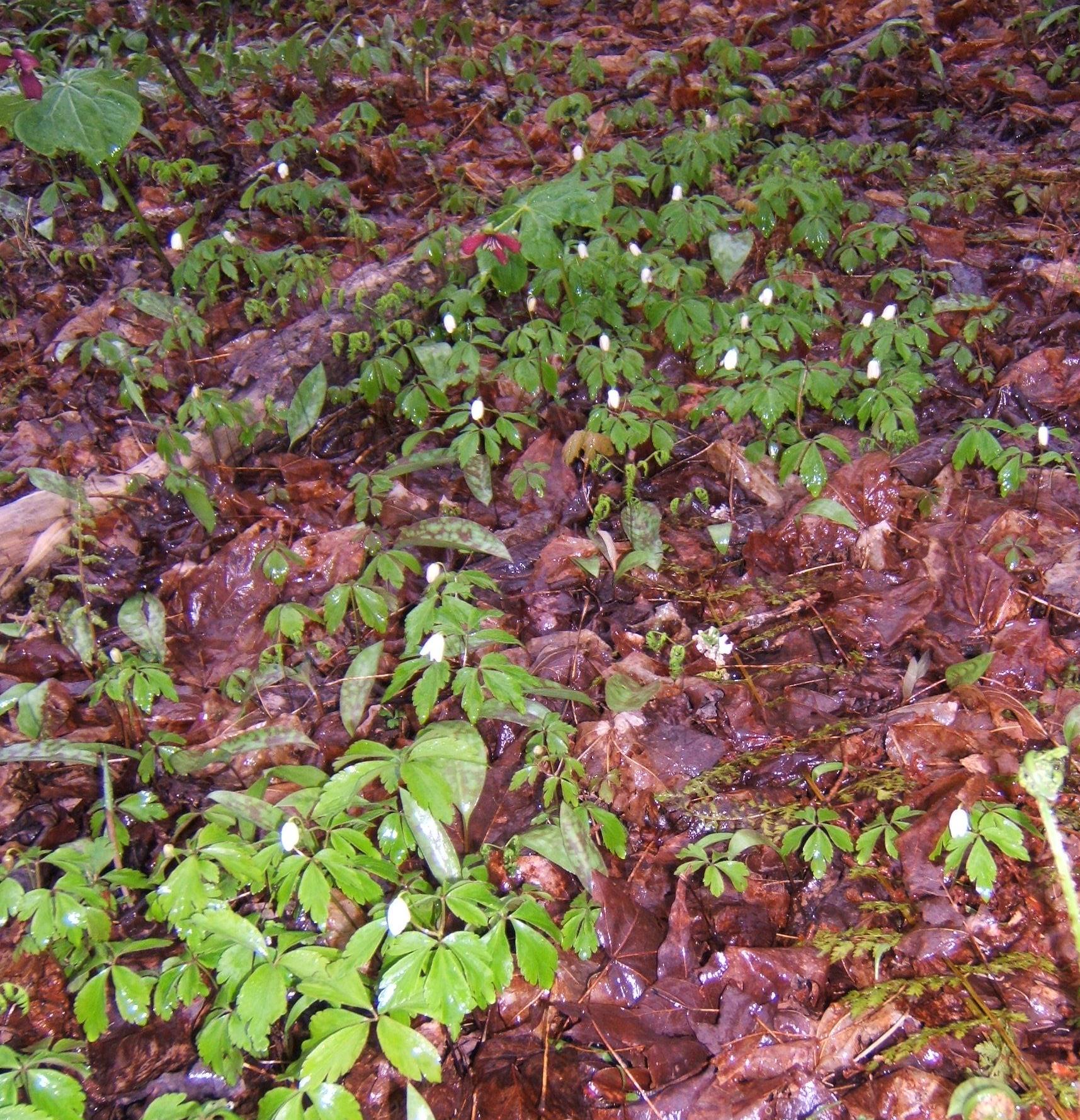
2. plants shape their surroundings and their landscape
Plants create habitat, modifying the regimes of moisture, light and nutrients in a local space. Plants also help to create the broader landscape. I have poems about how ripening apples change the space under an apple tree, how large and small-scale characteristics affect the value of a property, and how plants contribute to the way landscape appears.
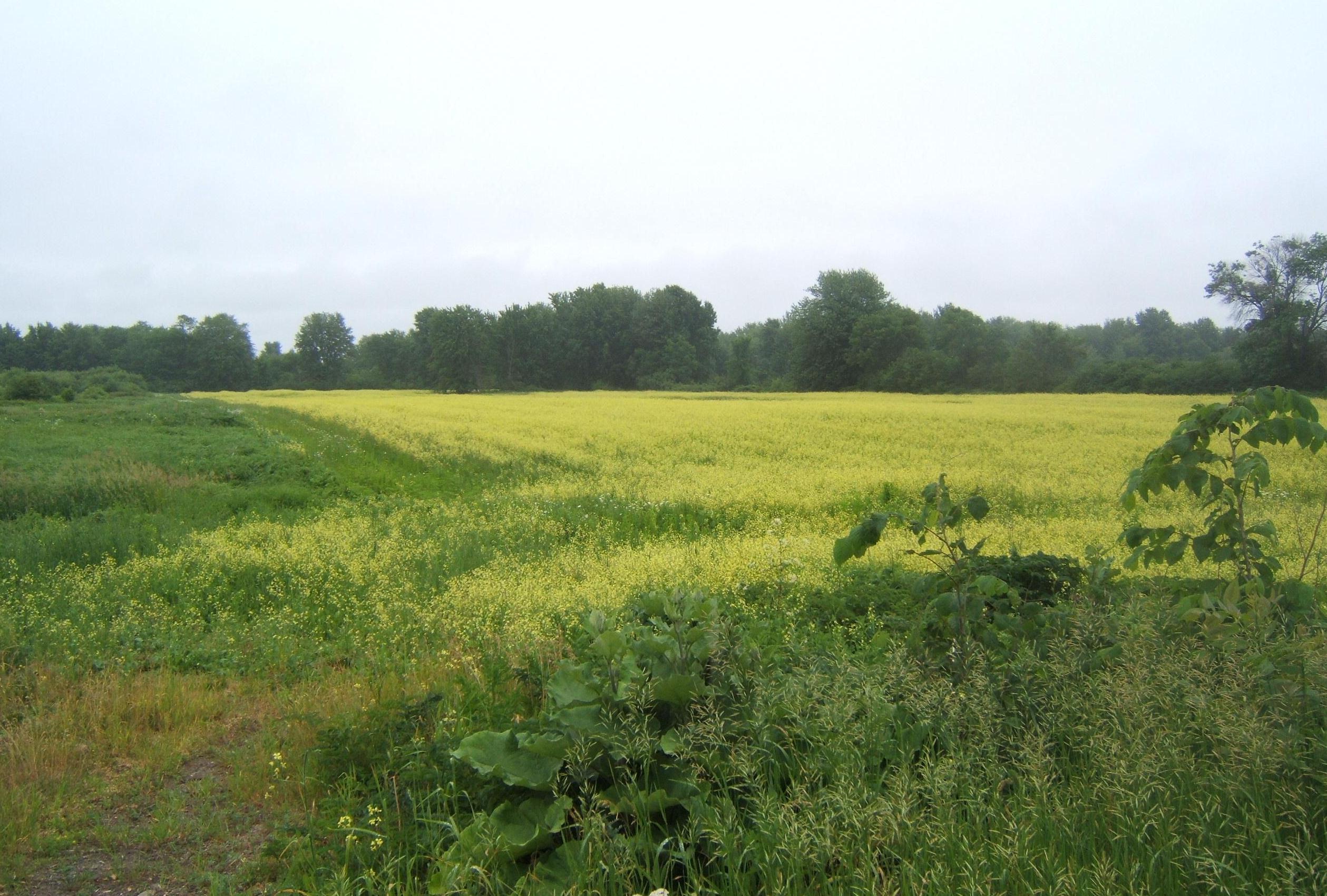
3. ‘place-based’ food traditions
As a result of the interaction between wild life and the landscape, people have access to different kinds of foods and develop area-specific wild food traditions. In New Brunswick, fiddleheads of the Ostrich Fern (Matteuccia Struthiopteris (L.) Todaro) are abundant in the spring, along the banks of rivers and wetlands, and many New Brunswickers consider a feed of cooked fiddleheads to be a rite of spring. In Newfoundland, a relative of the blackberry, the Bakeapple (Rubus Chamaemorus L.), is common in the bogs and barrens. Children often stand beside the road, their arms out-stretched, to sell their bottles of yellow Bakeapples packed in water. I have poems about these two local foods as well as others about traditional local foods.

4. ‘place’ as a metaphor for home
Plants and their ‘place’ can be a metaphor for the relationships between humans and the spaces where they are raised, or where they live. ‘Place’ may imply ‘home’ and ideas of belonging or familiarity. Several of my poems are about this aspect of ‘place’.

As I am working on the theme of ‘place’, a song by the 1990’s band Toad the Wet Sprocket is going around in my head:
‘…show me your home
Not the place where you live
But the place where you belong…’
Toad the Wet Sprocket, ‘Something to Say’, Fear, 1991
Exploring the theme of ‘place’ with you has helped me to organise my poems, to revise them, and to understand that I still have a few poems to write toward my manuscript. I am so grateful for this blog and for all my readers!
~
~
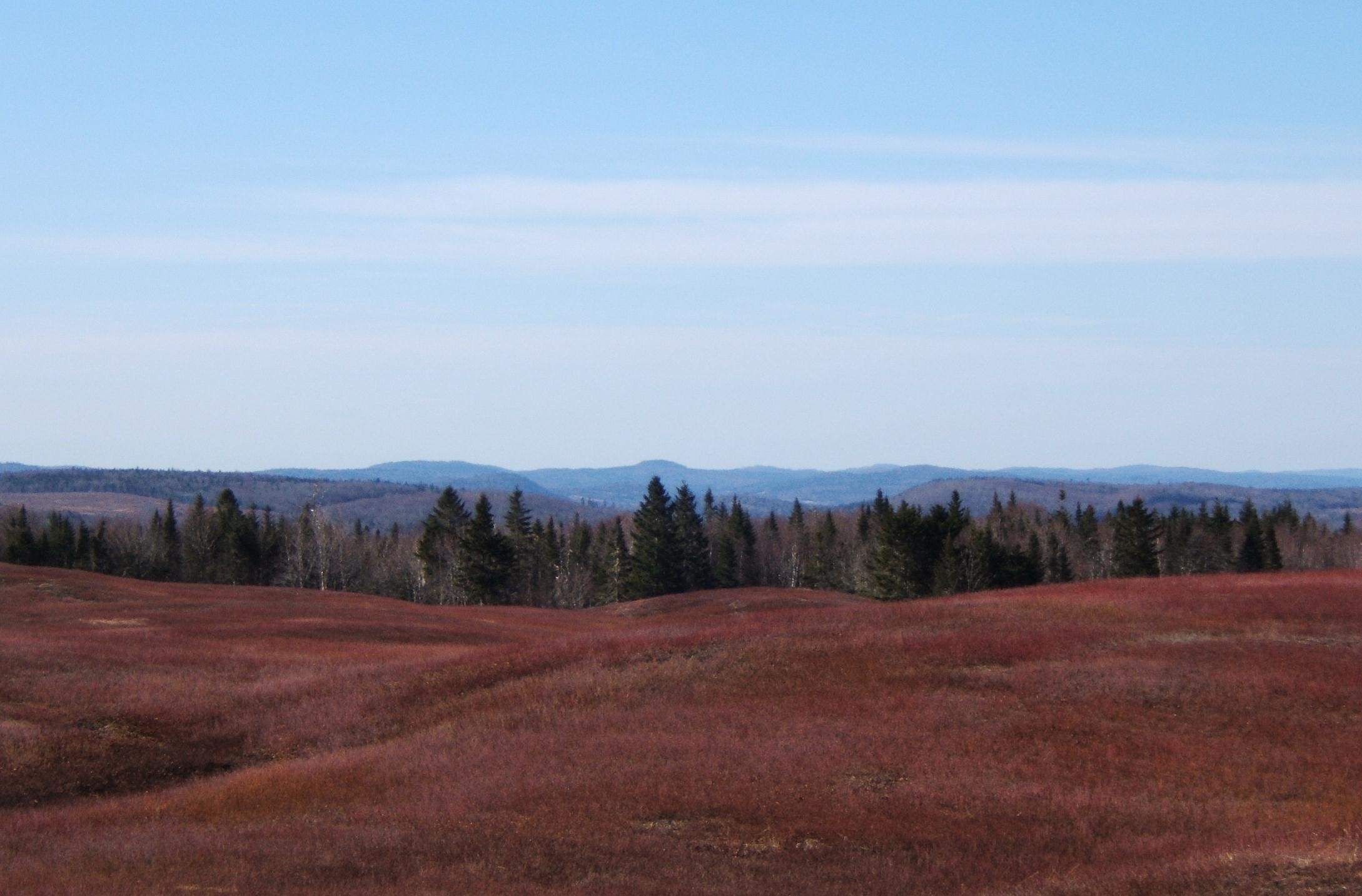
landscape
~
a veil draped across bones of the earth
pointed tents supported by forest
settles in pockets, lichens and moss
~
beneath the cloth is texture, the way
I know life on the land, fast or slow,
near or far, through clear eyes or through tears
~
to know form follows function – practice
repeated, detailed observation
see the sweep of a field of brambles
also the berries, also the thorns
~
Published as ‘landscape’ on www.nichepoetryandprose.wordpress.com September 3, 2011
Revised
© Jane Tims 2012
growing and gathering – learning
When I embarked on my project to write poetry about ‘growing and gathering’, I wanted to learn as much as I could about the subject. It is not surprising, then, to find I have written quite a few poems on the theme of ‘learning’.
Some of these poems are in the spirit of ‘how to’. I have poems about collecting maple syrup, making jelly, harvesting and preparing wild sarsaparilla, stringing peas in the garden, gathering eggs and picking fiddleheads, among others. As poems can be a little obtuse, sometimes these directions are not very helpful in a practical way. However, I try to capture the essence of the growing and gathering of local foods.

I have also written poems about learning itself. I have a poem about my childhood experience of running free on the prairie, picking thorny cactus berries and bottles of scorpions (yes, scorpions… they were interesting and pretty, and I didn’t know they were dangerous!). I also have a poem to remind busy young mothers to learn from the rhythms of nature – the calm conspiring of bees and clovers to make honey, or the way a bird collects the makings of a nest, a little at a time. Another poem is about learning how to negotiate the traditions of the farmers market (if you buy fresh carrots, keep the green tops for your compost bin!!!).

I also have two poems about imitating nature. In the 1960s, my Mom used to make a few substitutions in her cooking to make up for a lack of ingredients. You have probably seen these recipes before: Apple Pie, No Apples and Mock Cherry Pie.
One of the reasons Mom made these recipes was to have some fun and make us laugh. But fake food is no laughing matter. My goal, in part, has been to show that we are now a little distanced from our food and its sources. By considering what wild foods might still be available, I have tried to get others to think about the source of our food and the greater simplicity of eating local.
~
~
Apple Pie, No Apples
Prepare pastry for a double pie
Break 15 salted soda crackers into wedge-shaped pieces and place in the unbaked pie shell
Bring to a boil:
1 1/2 cups water 1 1/4 cups white sugar 4 tbsp. margarine 3/4 tsp. cinnamon 1 tsp. cream of tartar 1 tsp lemon flavoringPour mixture over crackers
Cover with pastry
Bake as for apple pie
~
Mock Cherry Pie
Prepare pastry for a double pie
Fill pie shell with:
2 cups fresh cranberries 1 cup raisins 1 1/2 cups sugar 2 tbsp. flour 1 cup cold water 1 1/2 tsp. vanillaCover with a lattice of pastry.
Bake as for cherry pie
~
~
Mock Cherry Pie
~
I am not easy to fool –
embellished covers, empty pages
‘baby’ carrots, shapened like pencils
knock-off purses, no money inside
diet soda and servings of fries
~
who else would look
under the lattice crust
to discover cranberries and raisins?
~
cherries in the orchard
never picked
~
~
© Jane Tims 2012
~
~
Warning: 1. never eat any plant if you are not absolutely certain of the identification; 2. never eat any plant if you have personal sensitivities, including allergies, to certain plants or their derivatives; 3. never eat any plant unless you have checked several sources to verify the edibility of the plant.~
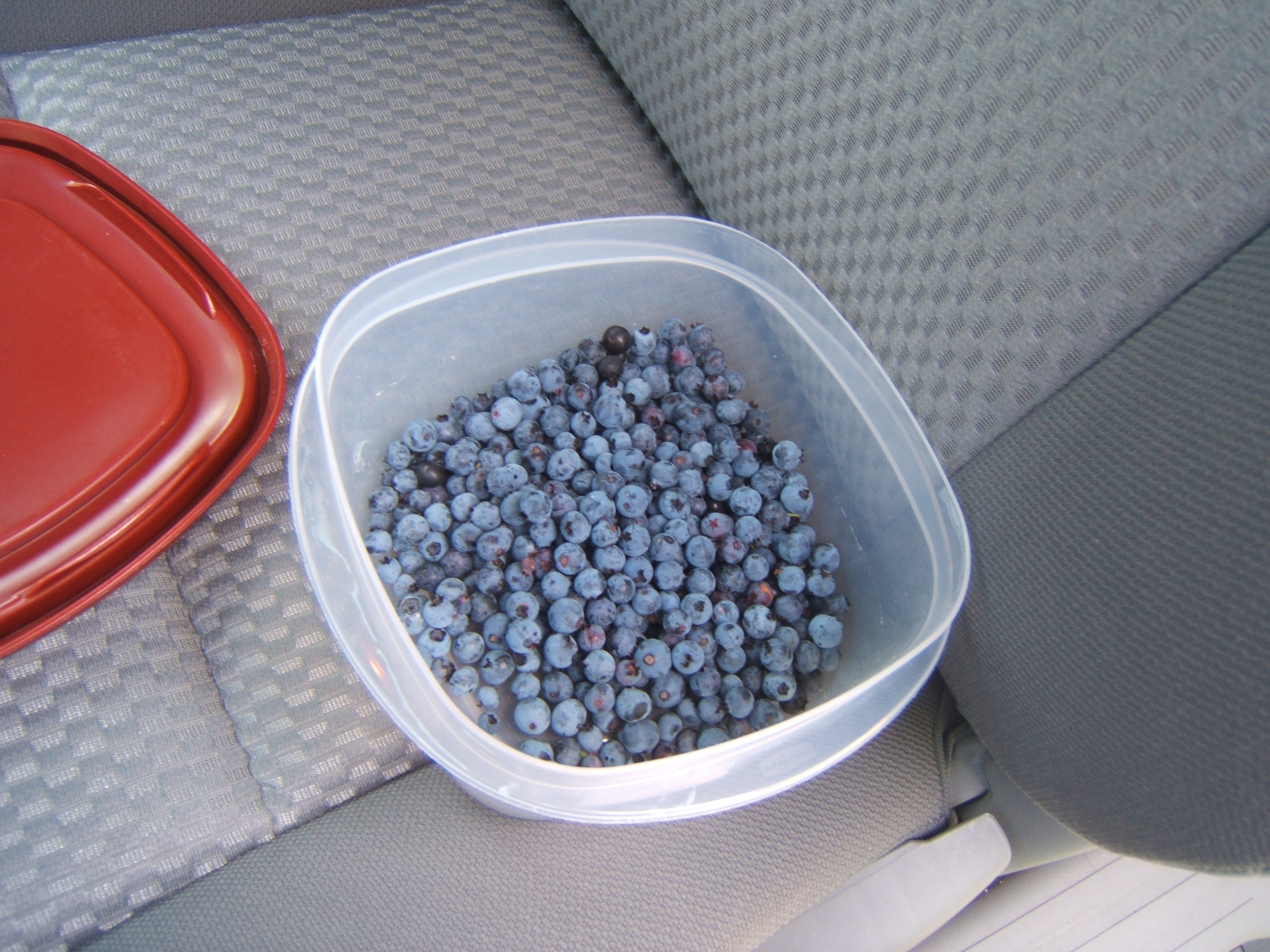
Blueberries!
I love blueberries and so I am very happy – our blueberries are blue and ready for the picking at our summer property.

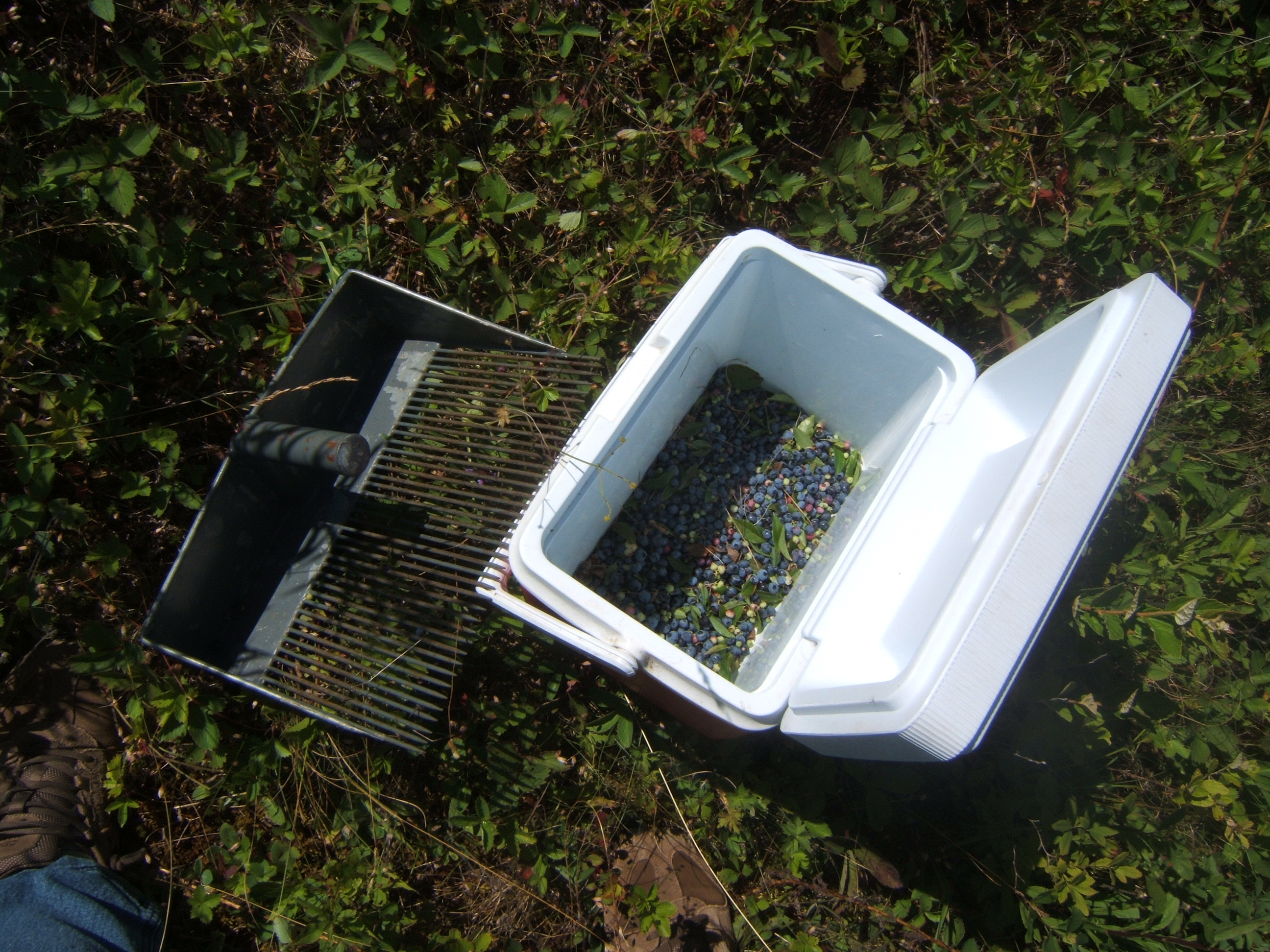
There are two ways to pick blueberries, with your hands…

or with a rake…

My husband bought me my rake years ago, so I use it when there are lots of berries and most are ripe. There is a bit of a knack to harvesting with a rake. The ripe blueberries are loosened and captured with the tines of the rake. The basic technique is to sweep the surface of the bushes, tipping the rake upward as you sweep, since the ripe berries fall into a tine-less part of the pan. The experience of raking berries is very different from picking. The process is less calm, although you do get into a rhythm. Also, the tines of the rake vibrate as you sweep, making a lovely musical sound!
We compared the yields between picking and raking, and we get about five times as many berries per unit effort with the rake (I am sure professional rakers do much better than this). The rake gets lots of leaves and debris along with the berries, so the time saved in raking instead of picking is lost in the cleaning (in a professional operation, the debris is removed with fans or another sorting method).
Although we have lots of berries on the property, they are getting fewer each year because the growth of other vegetation crowds the blueberry bushes. But we have a backup plan!
We also travel to the southern part of the province where the berries are in full production this time of year. Our preferred place to get blueberries by the box or by the pie is in Pennfield, at McKay’s Wild Blueberry Farm Stand.

We eat most of our own blueberries almost immediately. They also freeze very well. Our favorite way to use the berries is by making Blueberry Dumplings.
~
Blueberry Dumplings
two to three cups of fresh blueberries 1/2 cup of water 2 tbsp. of sugar (more if you prefer a sweeter dish) ~Bring the berries, sugar and water to a boil.
When the mixture is bubbling, turn down the heat.
Dumplings:
1 cup flour 2 tsp. baking powder 1 tbsp. of shortening, cut into the flour/baking powder mixture 1 tsp. sugar 1/2 cup milk ~Mix well and add by spoonfuls to the top of the cooking blueberries.
Cover the pan tightly with a lid (otherwise, you will have a blue-spattered stove).
Cook at low for about 12-15 minutes or until dumplings are fluffy and done in the middle.
Enjoy!
~
~
raking blueberries
~
the sweep of the rake, the berry
touch, the ring of the tines
vibrato in blue, duet with the wind
in the whispering pines
~
~
© Jane Tims 2012
Warning: 1. never eat any plant if you are not absolutely certain of the identification; 2. never eat any plant if you have personal sensitivities, including allergies, to certain plants or their derivatives; 3. never eat any plant unless you have checked several sources to verify the edibility of the plant. ~poisonous Lathyrus – when ‘wild’ plants are not edible
Yesterday, August 1, 2012, I posted a description of the Beach Pea (Lathyrus japonicus Willd.) and said the peas could be collected, boiled and eaten. This is the advice of the Peterson Field Guide to Edible Wild Plants (1977). My further reading, from more up to date sources, says you should not eat the seeds of Beach Pea or other species of wild pea. Many Lathyrus species contain a neurotoxin that can lead to a condition called lathyrism, a type of paralysis. Although there are other guides saying that Beach Pea is edible in small quantities, I have revised the post to remain on the safe side.
When we choose to include wild plants in our diets, it is very important to know for certain they will not be harmful. In my posts, I have talked about avoiding berries that may look pretty to eat, but contain toxins (for example the bright blue berries of Clintonia (see my post for May 23, 2012, ‘Bluebead Lily’ https://nichepoetryandprose.wordpress.com/2012/05/23/bluebead-lily-clintonia-borealis-ait-raf/ ) or the tomato-like berries of the Common Nightshade (see my post for July 16, 2012, ‘growing and gathering – barriers to eating wild foods’ https://nichepoetryandprose.wordpress.com/2012/07/16/growing-and-gathering-barriers-to-eating-wild-foods/ ).
I have also talked about cases in history of people who risk eating poisonous plants when hunger or famine strike. An example is the making of Missen Bread in Scandinavia, using a long complicated process designed to remove the burning, poisonous crystals contained in the roots of the Wild Calla (see my post for June 4, 2012, ‘keeping watch for dragons #6 – Water Dragon’ https://nichepoetryandprose.wordpress.com/2012/06/04/keeping-watch-for-dragons-6-water-dragon/ ). Poisonous species of Lathyrus (for example Lathyrus sativus, the Grass Pea), in the same genus as the Beach Pea, have been used throughout history for food when people are desperate, in times of drought, famine or poverty.
So, please, take the following steps before you ingest any wild plant:
1. check out as many sources as you can find, to discover the current wisdom and science about ingesting a plant
2. be certain of your identification – many plants look very similar to one-another and can be confused
3. think about your own sensitivities, since you may react to foods that do not bother other people.
4. when in doubt, take the route of caution and safety and do not eat
~
© Jane Tims 2012
limits of the tide #5 – Samphire (Salicornia europaea L.)
A beach-comber this time of year may easily over-look plants of Samphire (Salicornia europaea L.), also called Glasswort, Pigeon-foot, and Chicken-claws. Unless it is plentiful, it becomes lost ‘in the green’ of other sea-shore plants. The genus name, Salicornia, comes from the words sal meaning salt and cornu meaning horn. These plants consist of a branched, succulent stem, apparently without leaves or flowers. The leaves and tiny flowers are embedded in the stem.

Although Salicornia is typically a plant of coastal areas, like Sea-blite, it is also found far from the coast, in the vicinity of inland salt springs.
Samphire greens are salty, delicious as a salad ingredient, a pickle, or a pot-herb.
~
~
salt of the sea
Samphire ( Salicornia europaea L.)
~
Salicornia smoulders
on a silica shore,
flute and fire
~
Glass pipes,
mainstem and branches,
pickle green
~
Light glimpsed
through crystalline,
transparent walls
~
Seawater, rarefied,
decanted
to a Samphire phial
~
Flask of salt-sap,
brine on the tongue
Always wanting more
~
~
© Jane Tims 2012
Warning: 1. never eat any plant if you are not absolutely certain of the identification; 2. never eat any plant if you have personal sensitivities, including allergies, to certain plants or their derivatives; 3. never eat any plant unless you have checked several sources to verify the edibility of the plant.




 nichepoetryandprose