Archive for the ‘abandoned spaces’ Category
abandoned boat
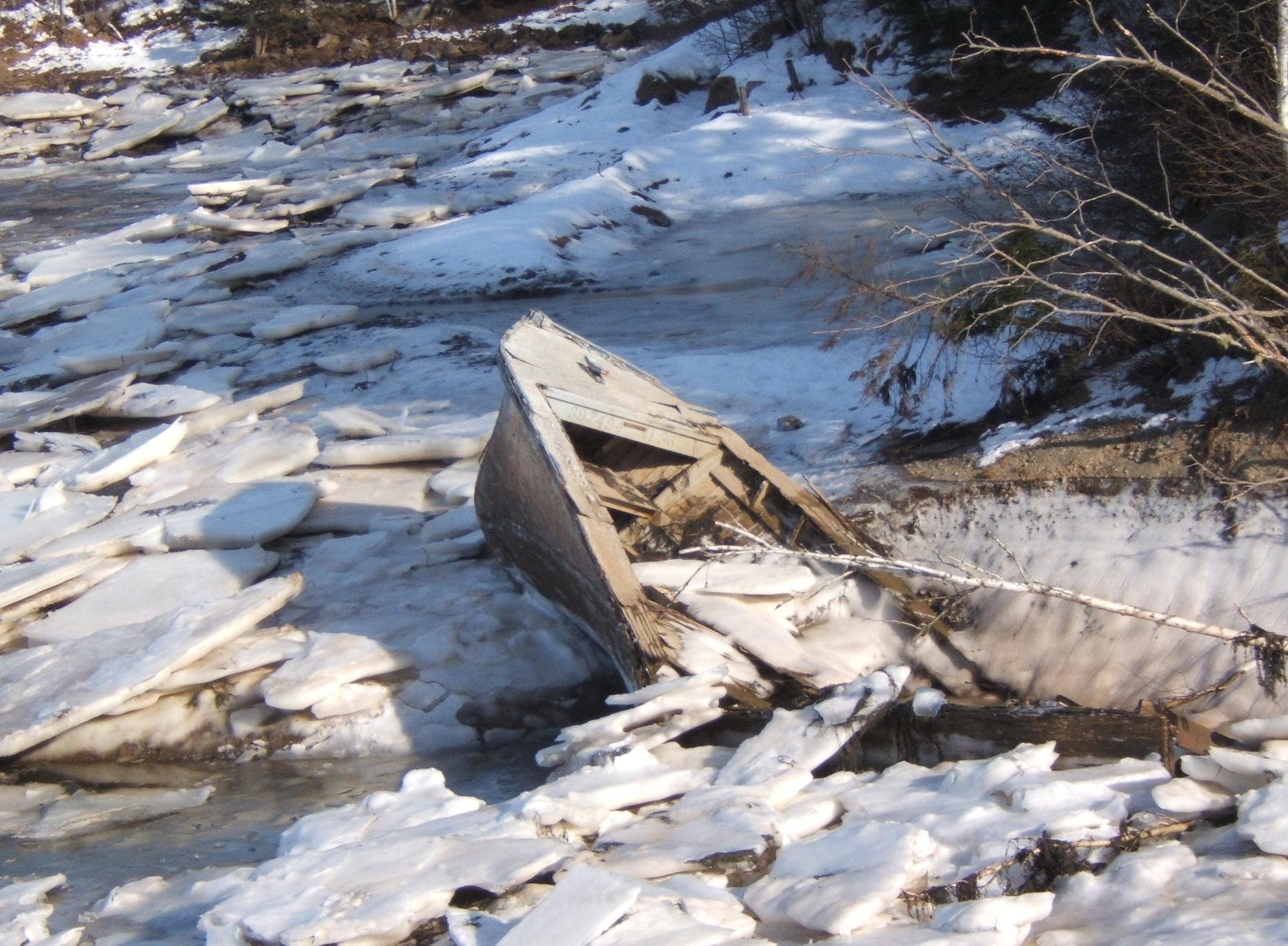
On Monday, we drove to Black’s Harbour. On the new highway, where it crosses the inland dregs of Oak Bay, the ice was broken into big sheets along the shore. There, in the icy debris, was an abandoned fishing boat, a wreck. Although I have never seen it before, it has probably been there a long time.
~
Foggy Molly
~
she had a sixth sense –
kicked in on a grey day
when mists lobbed across the bow
and thickened her passage
she loved flat water
and a blanket of fog
~
she was nervous of a big sea,
preferred to be tied, snug
to the wharf,
to lift and settle,
to lift and settle
moved by the inhalation,
the exhalation
of the tides
~
ironic – she broke up
at berth, waiting for a re-fit
smashed by a nor’easter
and cleavers of ice
~
~
Copyright Jane Tims 2013
featuring a 1941 International truck
I have had a few poems accepted for publication recently. These include ‘abandoned resort hotel, Devil’s Head’; ‘Berries in Cellophane’; and ‘1941 International K-4’. They appear in Issue 10 (Spring, 2013) of The Lion’s Head Magazine (online). You can have a look at these three poems at http://lionsheadpress.blogspot.ca/
~
‘Berries in Cellophane’ is from my manuscript on growing and gathering local foods.
The poems ‘abandoned resort hotel, Devil’s Head’ and ‘ ‘1941 International K-4’ are both part of a series, not yet completed, on abandonment. This series began my interest in abandoned churches, and lead to the novel I am now working on – ‘Saving the Landing Church’.
~
The poem ‘1941 International K-4’ was inspired by an old International truck, seen in a wood lot in southern New Brunswick in the fall of 2011. It was set up on steel drums and looked like it was no longer used. Rusted and out-of-commission, she was still elegant to behold. The poem came easily, written in the ‘voice’ of the truck, recalling its various adventures.
Have a look at the poem in Lion’s Head Magazine and let me know what you think.

~

Copyright Jane Tims 2013
tough to follow
In high school, in Nova Scotia, I belonged to a history club. We did an interesting project in about 1971, tracing the route of an old stagecoach trail through the woods between Lower Sackville and Fall River. We were able to follow the road since it had been raised above wet ground. We also found old culverts still intact. One of the things we made was a relief map of the area, with the hills built up in plaster and the old road marked in red. The project created, for me, a lifelong interest in old roads.

old trail obscured by a Bracken understory
~
tough to follow
~
the old road at the edge
of the hill is tough to follow
no clues, no footprints, no bent twigs
~
eventually all familiar ways
grow over
~
a layer of bracken
covers the track
like a cloth over biscuits
at the dinner table
~
primo-canes of bramble
claw you back
your mother reminding you
to wear your sweater
~
better to look up
follow the ribbon of sky
marked by the absence of branches
~
~
Published as ‘tough to follow’, Canadian Stories 15 (85), June 2012
Copyright Jane Tims 2012
abandoned bridge – South Nation River
In south-east Ontario, the South Nation River winds through farmland…

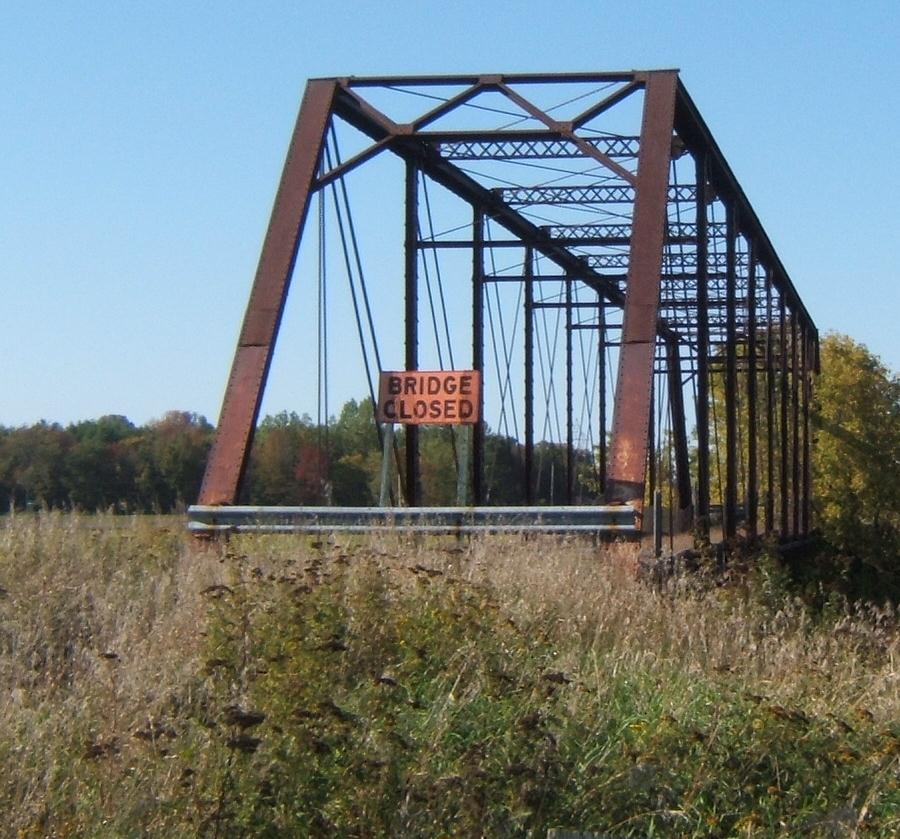
Driving along the river in October of 2012, we found an old metal bridge, closed to traffic. Although left to rust, this bridge was beautiful in its simple construction. The deck of the bridge was rotted, but wildflowers had taken hold in the debris.
According to the South Nation River link at http://www.nation.on.ca/en/geocaching/ (South Nation Conservation), the bridge has now been removed.
~
~
abandoned bridge, South Nation River
~
years since I crossed the metal bridge –
we take the long way now,
over that engineered, concrete
contrivance, upstream
~
the old bridge CLOSED, of course
trusses red with rust, corroded
pitted as the river bank
and its swallow-burrows
~
once we walked those girders
leaned from the railings
amused ourselves by pitching rocks down
into the duckweed
~
wouldn’t be safe today, the deck
rotted where hawkweeds bloom
all summer, cheerful
you’d think they’d been planted
~
~
Published as ‘abandoned bridge, South Nation River’, Canadian Stories 15 (85), June 2012.
Copyright Jane Tims 2012

snippets of landscape – evidence of old roads
This week, we drove to the south-west corner of the province and spent a little time at the Ganong Nature and Marine Park, at Todd’s Point near St. Stephen. The area is managed by the Quoddy Futures Foundation and is the former property of Eleanor and Whidden Ganong (Whidden Ganong was President of the Ganong Bros. candy factory in St. Stephen). The property is beautiful and good for the soul. We walked through the fields, identified wildflowers, listened to the birdsong, and were returned to a simpler time.
The fields along the path were yellow with Buttercup (Ranunculus sp.) and the largest population of Yellow Rattle (Rhinanthus Crista-galli L.) I have ever seen. The flowers of the Yellow Rattle were bright yellow, but the inflated calyx was tinged with red, giving the field a stippled glow (for more information on Yellow Rattle, see my post for August 3, 2011, ‘along the country road #1’ ).

Yellow Rattle among the field flowers… the fused sepals are tinged and veined with red
The Buttercups were everywhere, but concentrated in certain areas of the field. One area in particular seemed to mark the path of an abandoned road. The Buttercups have found some aspect of the old road to their liking. Perhaps the soil is compacted and they have a competitive ‘edge’ on the other plants. Perhaps the hidden track provides some alteration in the water regime or a place where certain types of seeds concentrate as they are dispersed. Perhaps there are subtle differences in the soil chemistry.
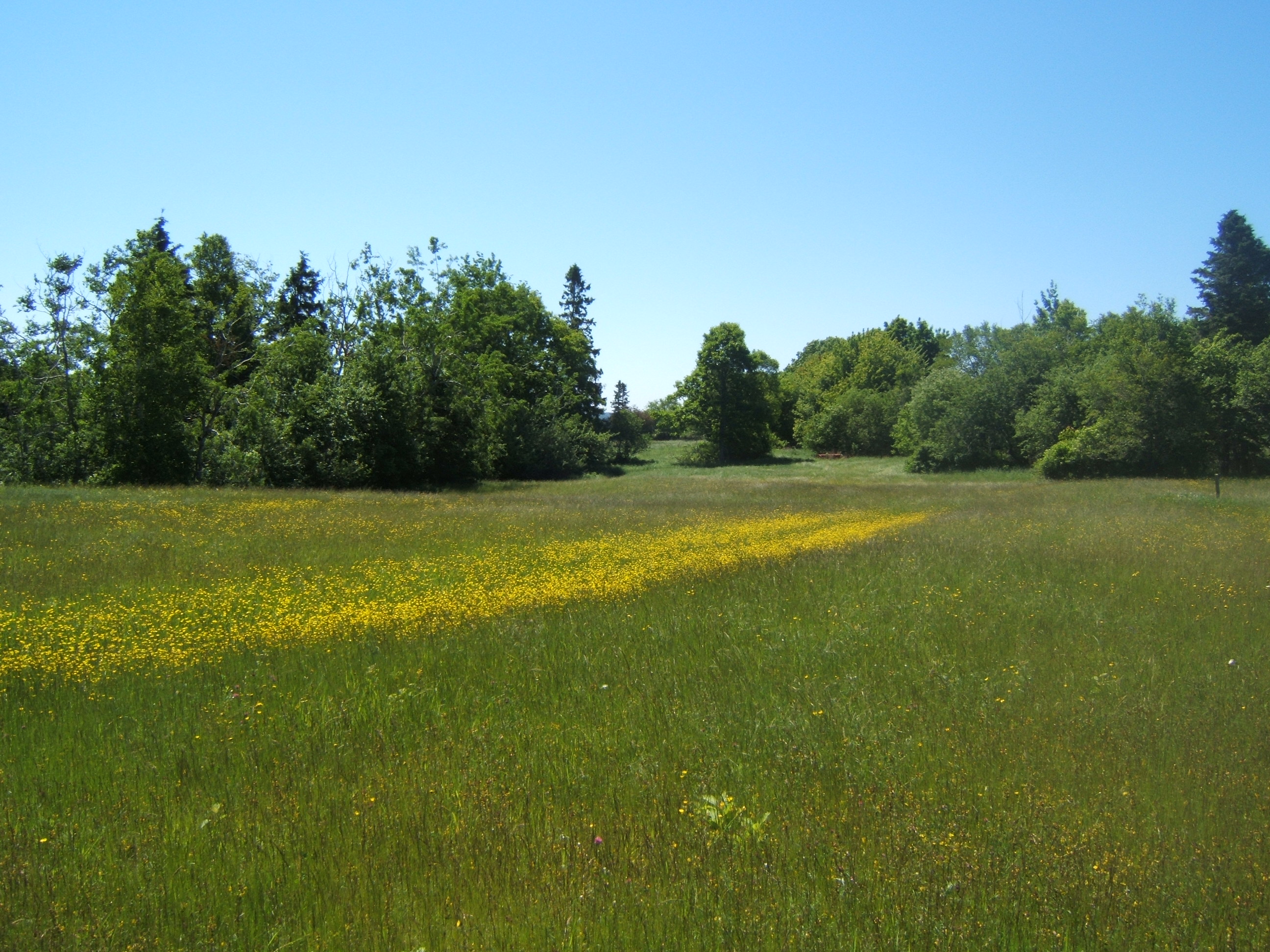
an abandoned track marked in Buttercups… the red tint in the foreground is from the reddish coloration of the Yellow Rattle
Years ago, I visited a property where the roadway to a back field was clearly marked with Bluets (Houstonia caerulea L.). The owner of the property said he thought they grew there because he always took his lime in an open cart back to his fields, and enough had spilled to make the way especially attractive to the Bluets.
Perhaps you will have a look in your landscape for wildflower clues to past activities.
~
~
Invitation to Tea
~
in the afternoon,
I huddle over tea
and watch
the road
~
an old road,
rarely used –
walks scarcely part
the tangle of fern
~
I scan the woods,
I love the look
of ancient trunk
and horizontal green
~
and always,
in the corner of my eye,
the road
~
overgrown –
a narrow course of saplings
intercepts
the sameness
of maturity
~
I watch
expectantly
~
but the road is abandoned –
cart-tracks worn
to rivulets,
culverts buried
by fallen leaves,
rusted oil tins,
depressions in the mould
~
~
© Jane Tims 2012
on pond ice
The days are short, reminding me of days when my son was young and I resented the brief daylight. We left for work in the dark and arrived home after the sun set. To spend just a little time with my son in the snow, I would turn on the outside light and play with him for a few precious minutes at the end of every day.
On weekends, we would seek out the smallest patch of ice and skate together. Any patch of ice would do. Some years we tried to make a small rink. Usually, we made do with the strip of ice formed at the edge of our driveway…

Our favourite place to skate was a small hollow in the grey woods behind our house. We dubbed it “Hoot-and-Hollow Pond” (because it was just ‘a hoot and a holler’ out back, and because we hear owls so often in the grey woods). The pond was small, but just the right size for my son to wobble around on his first skates.
In the years since we skated there, the trees have grown thick and tall around the pond. I went looking for it this week and found the ruin of the little bridge we built across a narrow place in the pond…

ruined bridge over Hoot-and-Hollow Pond...you can see the broken boards and old nails
and ice on the little pond itself…
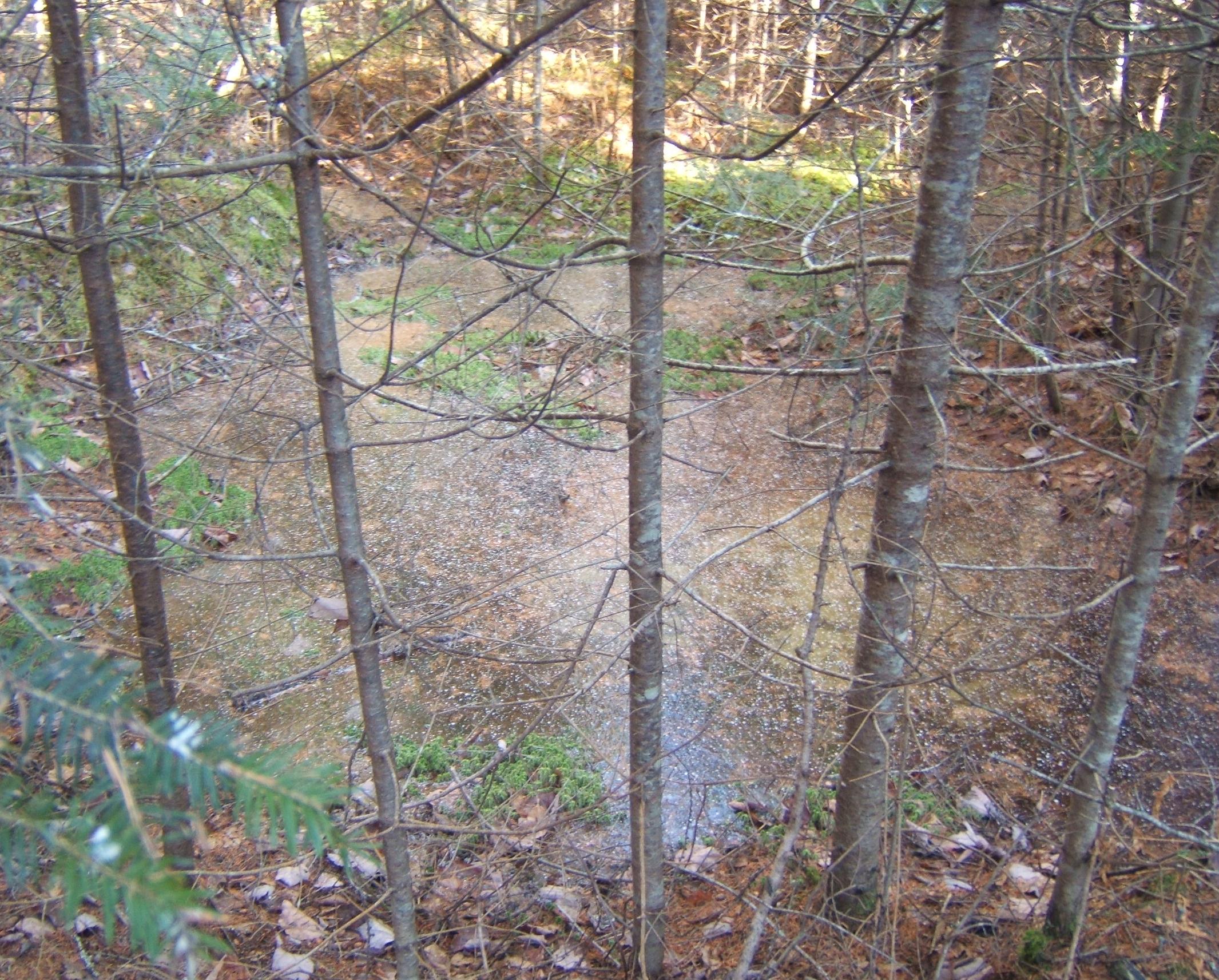
Hoot-and-Hollow Pond today, the water level a little lower than when we skated there
~
~
a skate on the woodland pond
~
~
etch
brittle cracks beneath the weight
of blades, we spread our bodies thin
twirl on the delicate lift
of snowflakes drift
above the pond, gather
firs around us, lean away, bend
beneath the weight of snow, find
room to glide, the edge where white birch
cage faint light
magnify the gleam
of paper bark, frail ice
white snow and stars
resist the dark
~
~
© Jane Tims 2011

the location of our picnic table
Back in our grey woods is a place we don’t visit regularly any more. Our picnic table is there, in a mossy area among mature spruce and fir, at the top of a slope. It overlooks a wet spot in the woods. In the spring the wet area becomes an ephemeral stream, and a series of vernal pools among the mosses and ferns.
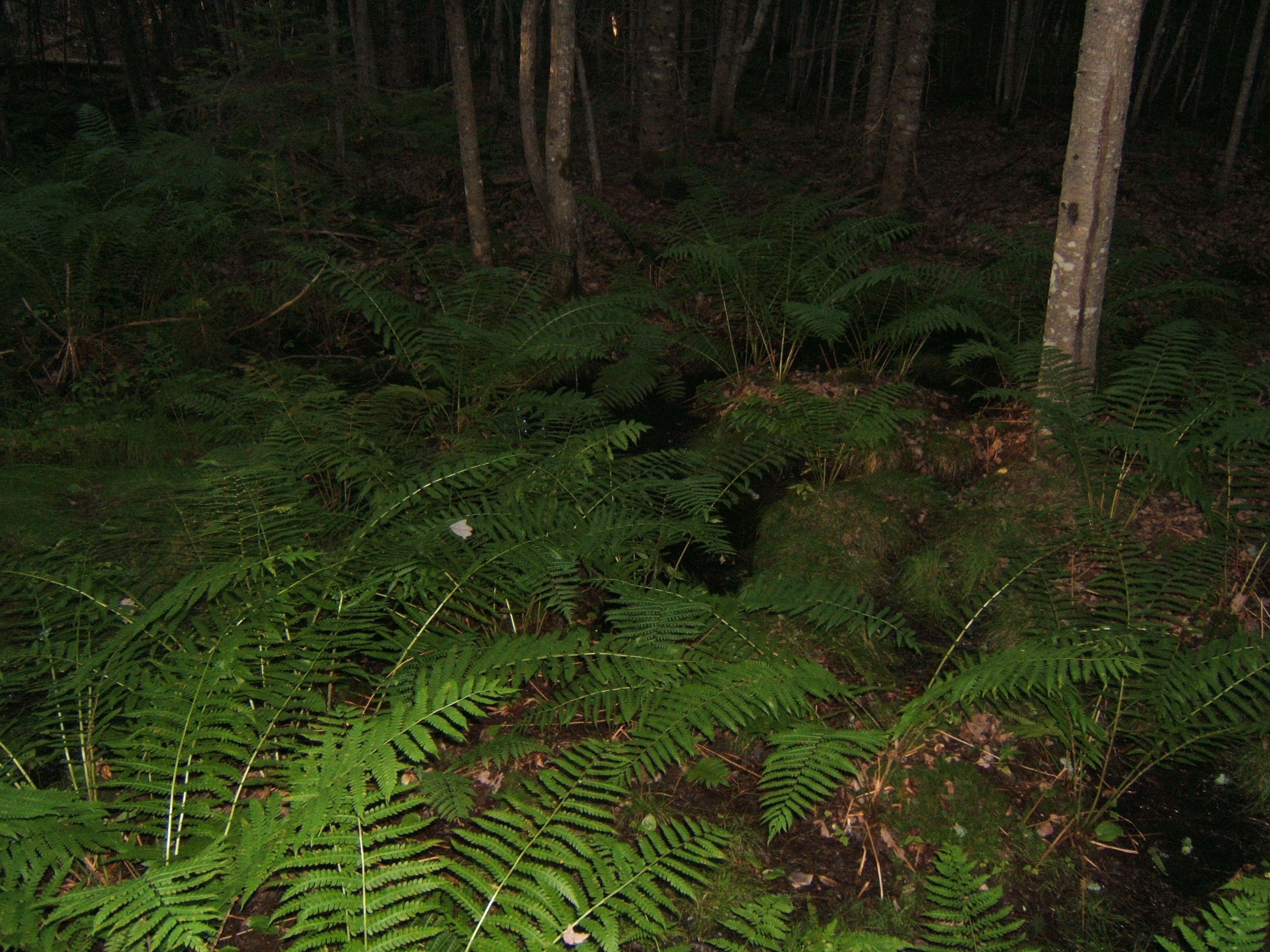
down-slope of the picnic table is a ferny area with an ephemeral stream... the dark areas in the photo are pools of water
Once, almost 28 years ago, the space was perfect for our new picnic table. The table was given to my newborn son by his Great-Aunt Jane and we took considerable care in choosing its location.

our picnic table in the woods
In years past, we took a picnic lunch there regularly. Sometimes I went there to write.
Today I pass the table when I follow the path through the woods, but I haven’t stopped to eat a picnic there in years. Another family has taken over, probably of Groundhogs (Marmota monax). They have built a labyrinth of burrows among the tree roots in the soft soil of the slope. Where each burrow exits is a mound, the remains of deep-earth excavation. One of the six burrow openings is larger than the others. My reading tells me this complex of burrows and exits provides quick escape from predators, a place to store food, and a place to hibernate.

the main entrance to the burrows, under the roots of a fir
Once this place was the ideal location for our new picnic table and our family picnics. Now the same site is perfect habitat for the Groundhog family.
concerning the location
of our new picnic table
~
share a meal with the unknown
to make it your friend
~
we find a clearing
near the path
where the sun will shine at noon
where we will not have to cut the trees
where the neighbours’ voices
and the passing cars
are quiet
~
we load the picnic table
into the cart
haul it through the woods
behind the Yamaha
~
we eat peanut butter sandwiches
and applesauce
drink cola
and sunshine
~
we laugh
make friends with the woods
and with each other
~
© Jane Tims 1983
abandoned spaces
When I drive through the countryside, I am drawn to the sight of abandoned farms or houses. I wonder why they have gone from being loved and used, to being alone.

abandoned farm buildings
Sometimes, the leaving is from economic necessity. Sometimes the last one who lived or worked there has died or moved on. Sometimes the government decides it can’t provide services anymore to out-of-the-way places. Occasionally, we are just seeing a moment in time, and new tenants and new life may be just around the corner.

an abandoned house
During the Depression, in the 1930s, many farms out west were abandoned because the combination of eroded land and poor economic conditions made staying impossible.
The poem below was written to remember one such place in southern Alberta. In the 1960’s, we went there once with my Dad, on a drive to explore the prairie roads.
Why do we abandon the spaces we know best?
The Reason for Leaving
~
1964
~
I remember the place
without texture
a line drawing
plainly coloured
~
two tracks on the prairie
one to come
and one to go on
~
a grey house
on a rise of green
(not grass, just green)
the door fallen away
~
a brown canal
still, without depth
sluice gears and flood gates
making the most
of insufficient water
~
and a bridge, also brown
boards laid without nails
~
~
1933
~
the truck
heavy on the driver’s side
steps down from the bridge
(the bridge ironic)
(three years, the Creek’s been dry)
~
in the rear-view mirror
a wooden house
on a low hill
a thin brown wind
and thirsty grasses
~
only the young ones
turn to stare
~
home
now hollow
stripped of voice and windows
the door left open
for tumbleweeds
~
Published as: ‘The Reason for Leaving’, 2010/2011, Canadian Stories 13 (76).
© Jane Tims




 nichepoetryandprose