Posts Tagged ‘woodland’
a botany club excursion
Earlier this summer, we went on a hike with other members of a local botany club to the Cranberry Lake Protected Natural Area, an area protected for its extensive forest community of Red Oak and Red Maple.
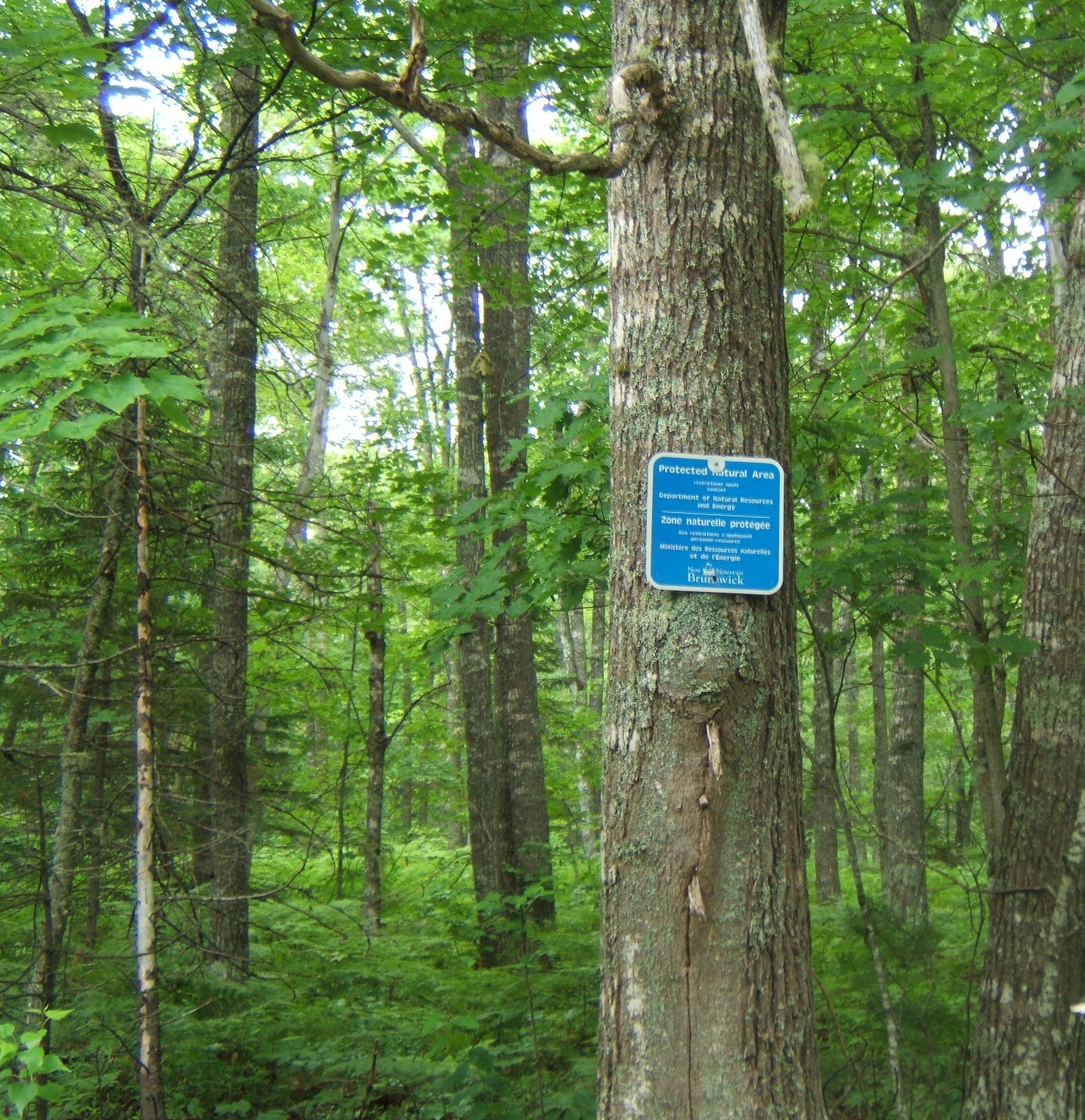
The New Brunswick Department of Natural Resources website describes the Cranberry Lake Protected Natural Area as follows:
An extensive Red Oak forest community. Predominantly Red Oak – Red Maple association. Red Oak make up a large percentage of the regeneration, most likely the Oak component will increase as the stand matures. The individual trees are impressive size.
This type of forest is rare in New Brunswick.
The woods were open with a thick understory of Bracken (Pteridium aquilinum (L.) Kuhn, var. latiusculum (Desv.) Underw. ex A. Heller), Blueberry (Vaccinium spp.), Common Lady’s Slipper (Cypripedium acaule Aiton) and some of the other species of the Canadian Element associated with woodlands in the Maritimes (see my post for April 30, 2012, Trailing Arbutus, https://nichepoetryandprose.wordpress.com/2012/04/30/trailing-arbutus-epigaea-repens-l-var-glabrifolia/ ).

My husband standing in the thick growth of Bracken… it was about waist-height… he says he was standing in a hole!
It was so much fun working with the other botanists and enthusiasts to identify the various species we encountered. The plant lists prepared during the day will be part of an effort by Nature New Brunswick to update a database of Environmentally Significant Areas in New Brunswick. During my years of work, I was privileged to work on the development and use of this database.
I saw many familiar species during the hike, but I was so excited to see three plants I have not seen in a while.
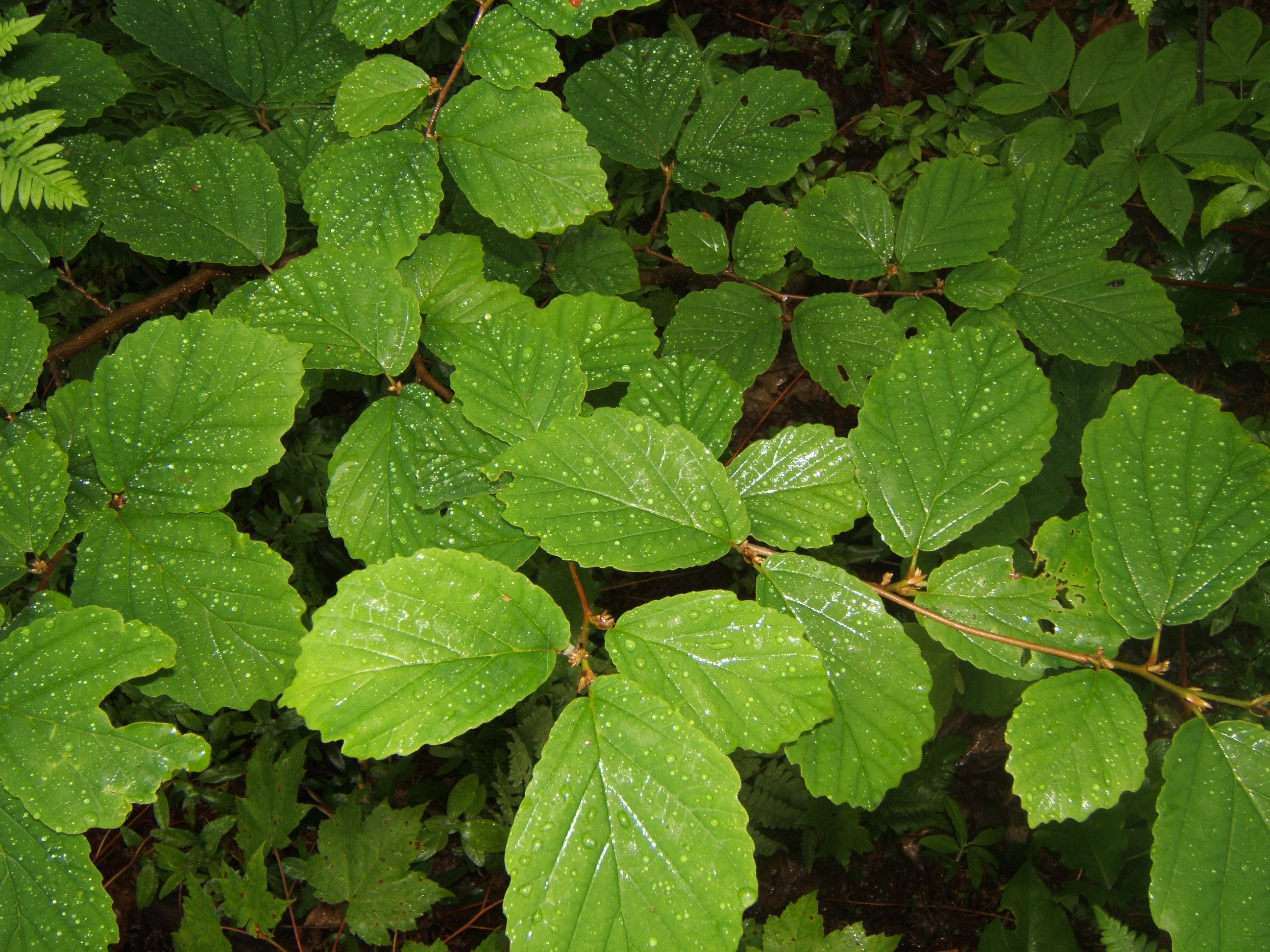
I renewed my acquaintance with Witch-hazel, Hamamelis virginiana L. (notice the asymmetrical shape of the leaves)…
and Shinleaf (Pyrola elliptica Nutt.), identifiable by its thick oval leaves, longer than the leaf-stalks or petioles…

a single plant of Shinleaf, with its straight stem of small creamy flowers, growing among Blueberry, and Red Maple and Red Oak seedlings
I also was introduced to a plant I thought I had never seen before, Cow-wheat (Melampyrum lineare Lam., a branchy variety found in dry woods). When I looked it up in my Flora, though, I found a notation to say I had seen this plant in the summer of 1984. It is always good to record the plants you see and identify!

While there, we saw a perfect example of the interaction of species. A bright orange fungus, known as Chicken of the Woods (Laetiporus sulphureus), growing on an aged Red Oak, was being consumed by a horde of slugs.

A hike with a group is a great way to expand your knowledge and boost your confidence. Everyone benefits from the knowledge of the various participants, and being with like-minded people is good for the soul!
© Jane Tims 2012
Warning: 1. never eat any plant if you are not absolutely certain of the identification; 2. never eat any plant if you have personal sensitivities, including allergies, to certain plants or their derivatives; 3. never eat any plant unless you have checked several sources to verify the edibility of the plant.Partridge-berry (Mitchella repens L.)
One of the evergreen plants in the spring woodland is a little vine called Partridge-berry. It trails, low to the ground, in shady, mossy woods, sometimes covering moist banks and hummocks with its shiny greenery.
Partridge-berry (Mitchella repens L.) is also known as Twinberry, Snakevine, Running Fox and Two-eyed Berry. The word repens is from the Latin for ‘creeping’.
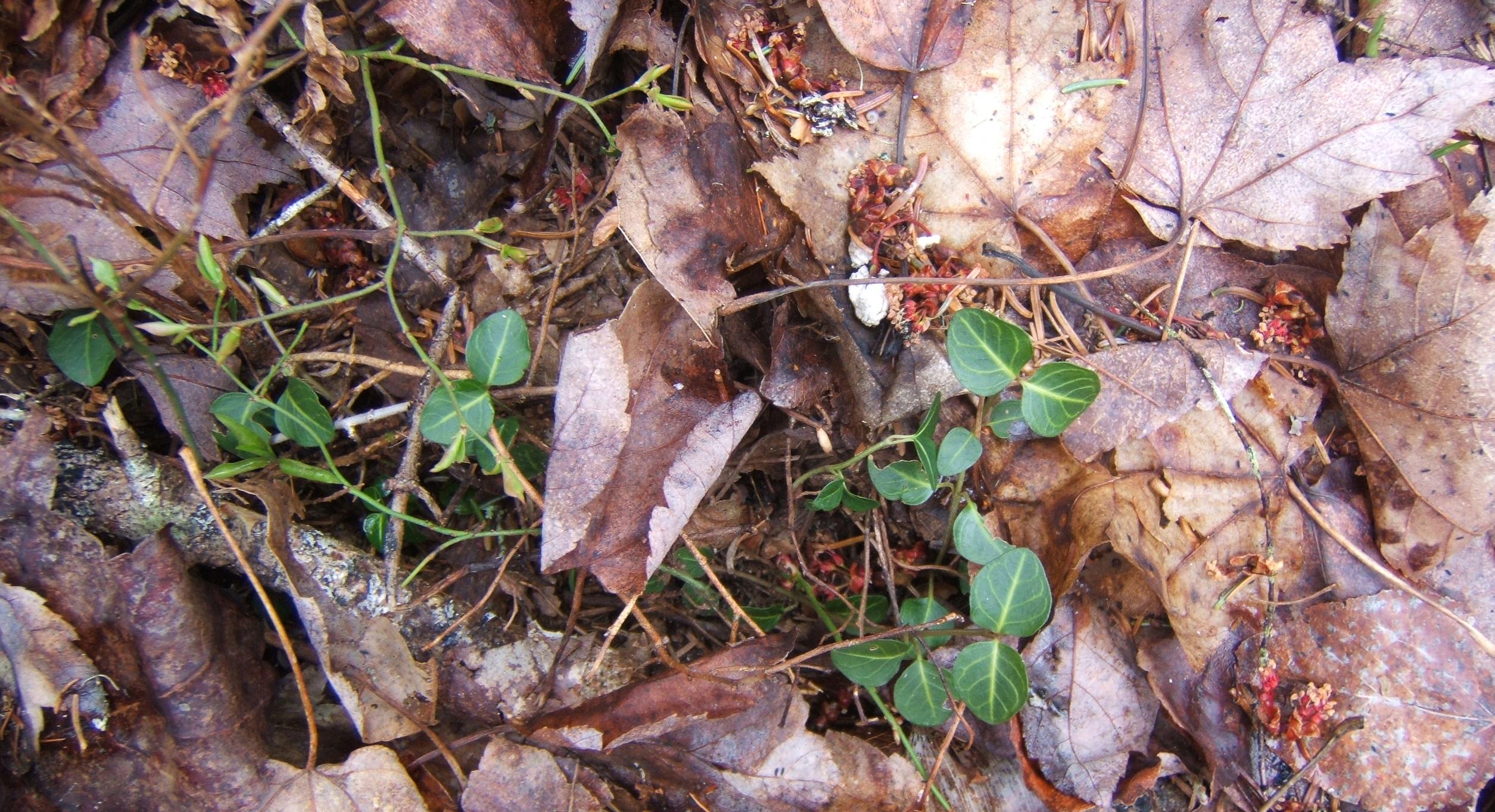
The leaves of Partridge-berry are small, ovoid and opposite on a vine-like stem. The leaves have a bright yellow midrib and veins, giving them a clear outline against the background of dry leaves.
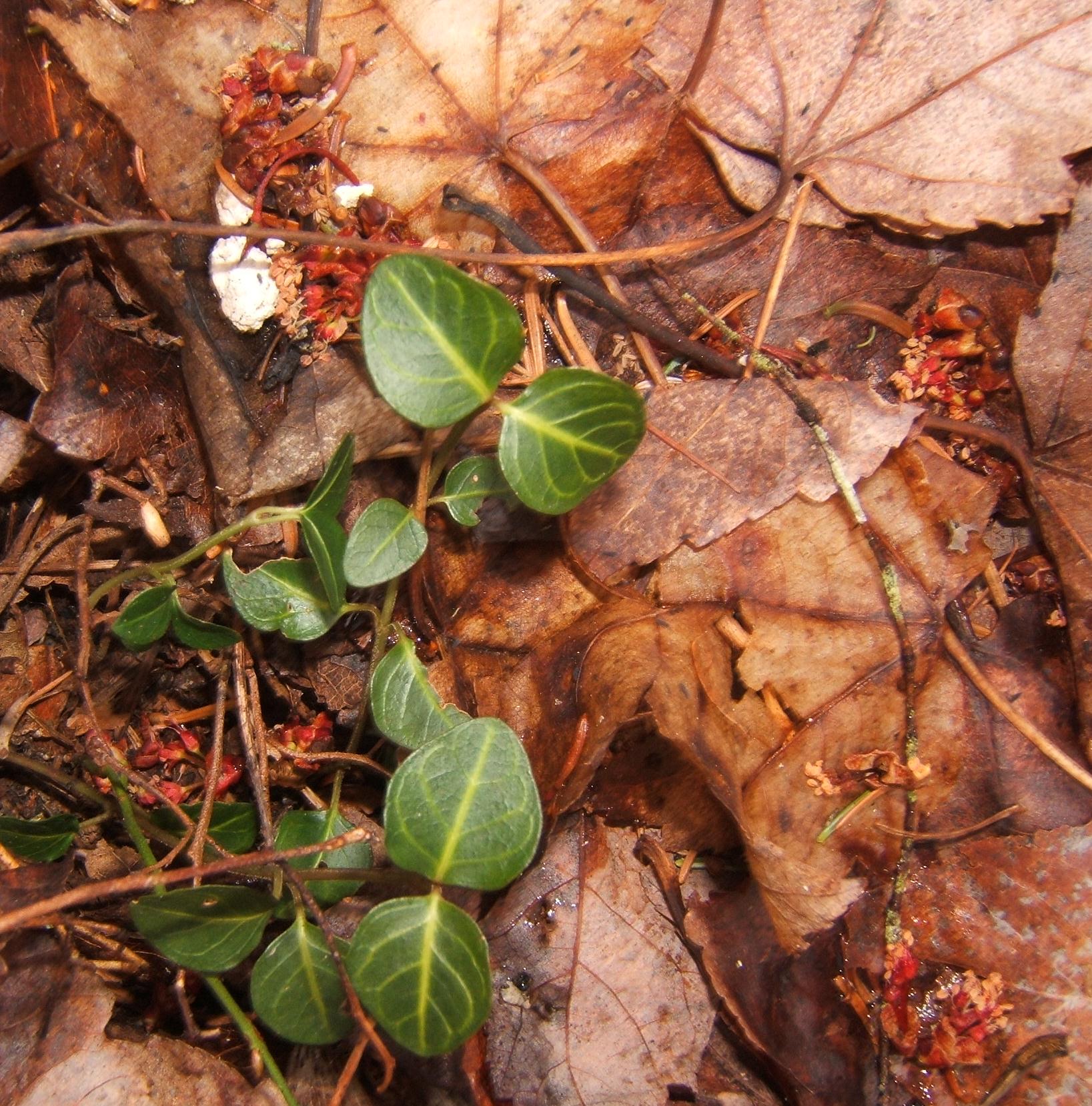
The flowers are white or pinkish, and bell-shaped. They occur in pairs – the two flowers are closely united at the base, sharing a single calyx. As a result, the bright red berries are two-eyed, each showing two blossom scars.
This time of year, in July, Partridge-berry has flowered and set its berries. The berries are dry and seedy but edible, with a slightly aromatic flavour. They are a good nibble along the trail or can be used as emergency food. The berries are ordinarily eaten by birds, such as the Ruffed Grouse.
Warning: 1. never eat any plant if you are not absolutely certain of the identification; 2. never eat any plant if you have personal sensitivities, including allergies, to certain plants or their derivatives; 3. never eat any plant unless you have checked several sources to verify the edibility of the plant.~
~
common names
( Mitchella repens L.)
~
1.
Running Fox
~
a glimpse of red
between hairmoss and hummock
the fox slips into shrewd spaces
seeks the vacant way
~
2.
Snakevine
~
a twist and a Twin-berry
trail woven and worn
mottled and mid-ribbed
Mitchella meanders
over feathermoss, under fern
~
3.
Partridge-berry
~
Ruffed Grouse pokes and pecks
tucks a Two-eyed Berry in his crop
lurches on
~
~
© Jane Tims 2012

a moment of beautiful – a button of moss
the space: at ground level, in the grey woods
the beautiful: a little button of moss, emerald green
~
Mosses are a beautiful, enigmatic group of plants. Except for a few well-known species, they simply grow unnamed and unnoticed by most people. The beauty of the mosses, especially under the stereo-microscope, where you can see so much detail, was what attracted me to the study of botany in the first place.
We have many species of moss in our Grey Woods. I long to be able to take the time to identify every one. For now, though, I content myself with a few common names and some of my own ‘made-up’ names.
I call this little moss ‘The Button’. Wherever I find it, it seems to grow in a little cushion. Its surface is like velvet and its color is a lovely shade of lime green.
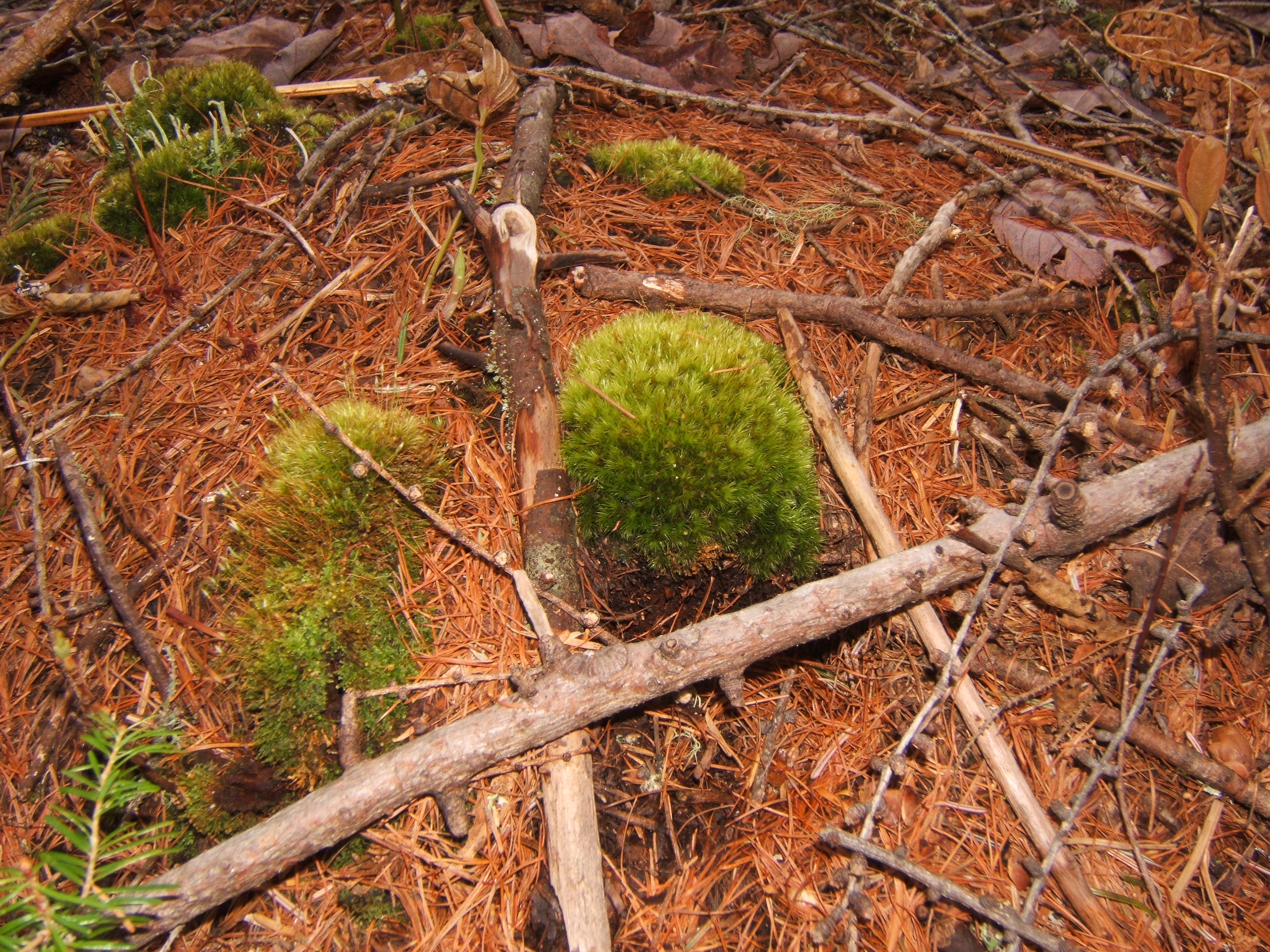
~
~
a button to press
~
resist the urge
to depress this plump of moss
firmly with a finger
~
will take you up
to the first floor
where the bunchberry blooms
or the second where bracken
planks an ephemeral floor
or the 67th where leaves align
precisely with sun
~
or down
to where the roots criss-cross
in confused abandon
~
~
© Jane Tims 2012
a view of a Black Bear
One of the experiences of the past two weeks was the sighting of a young Black Bear (Ursus americanus) along the Plaster Rock – Renous Highway. The Black Bear was only a youngster, probably a two-year-old born last January or February (2011). He watched us a long time from the woods, appearing a little confused. Eventually, he wandered away. He was probably rejoining his mama – Black Bears stay with their mothers until they are 16 or 17 months old.

I have seen/smelled a few bears in my life:
§ Once, on a fishing trip with my Uncle, he told me to stop and sniff the air. The smell was fetid, unforgettable. He told me you often smell a bear but almost never see one.
§ When we first built our house, our young neighbor was riding his bike up our gravel heap and encountered a bear coming up the other side of the pile!

§ When we first lived in our community, we had a garbage dump. We used to go to the dump on the weekend and join the other cars, watching the bears work their way through the garbage. I remember one was inside an old refrigerator, opening and closing the door!

§ On a work excursion to Mount Carleton, we saw a bear running up the road ahead of us, but it disappeared before we could get close.
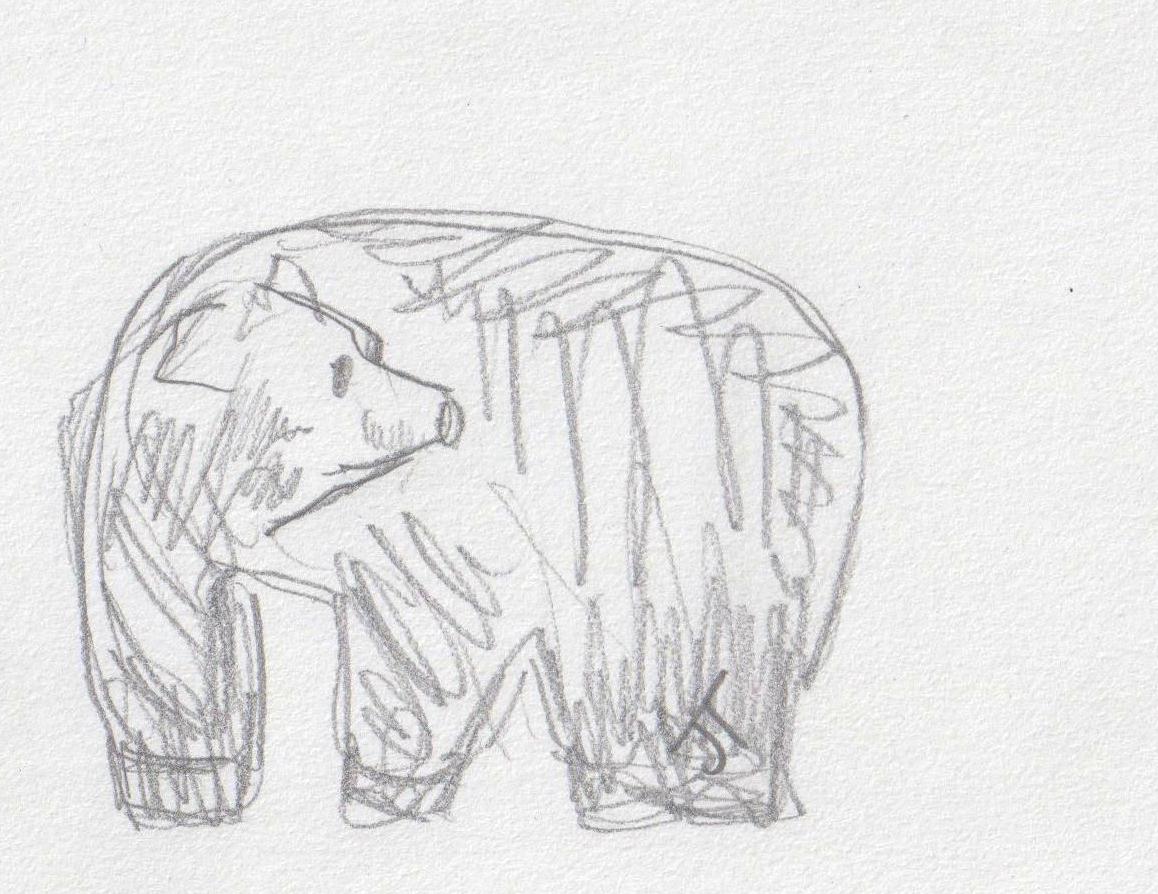
§ Once, on the Salmon River Road, on a drive to Bouctouche with my sister-in-law and niece and nephew, we saw a full-grown bear, on a run from one side of the road to the other. He had very long legs and ran by stretching his front legs out and bringing his rear legs up between them. He only hit the pavement twice, once with each set of feet!
§ On our trip through the Rocky Mountains, I saw a bear, species unknown, in a steep ditch beside the roadway.
Have you ever seen a bear???
~
© Jane Tims 2012
Trout-lily (Erythronium americanum Ker)
Two weeks ago, we had a memorable drive and hike along the South Branch Dunbar Stream, north of Fredericton. The wet hardwoods along the intervale areas of the stream were green with understory plants and dotted with spring wildflowers. One of the plants growing there in profusion is the Trout Lily. The Trout Lily is colonial, covering slopes in rich, moist hardwoods. Its red and green mottled leaves grow thick on the hummocks, beside the Wood Anemone and Purple Trillium. The area where we were hiking was not far from the stream and there was evidence it had been flooded earlier in the year.
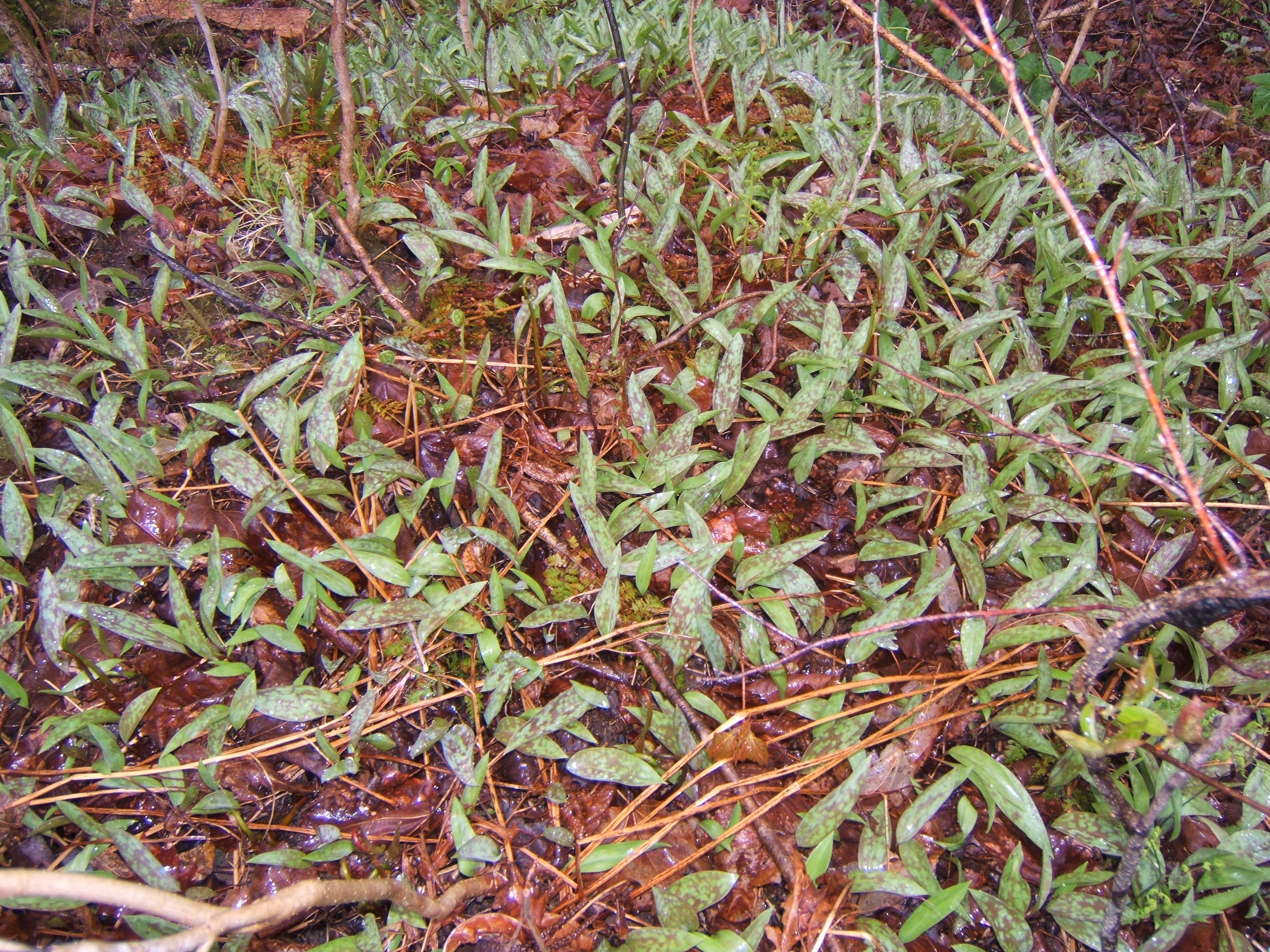
Trout Lily (Erythronium americanum Ker) is also known as the Dog’s Tooth Violet, Yellow Adder’s-tongue, Fawn-lily, and, in French, ail doux. Its generic name is from the Greek erythros meaning ‘red’, a reference to the purple-flowered European species.
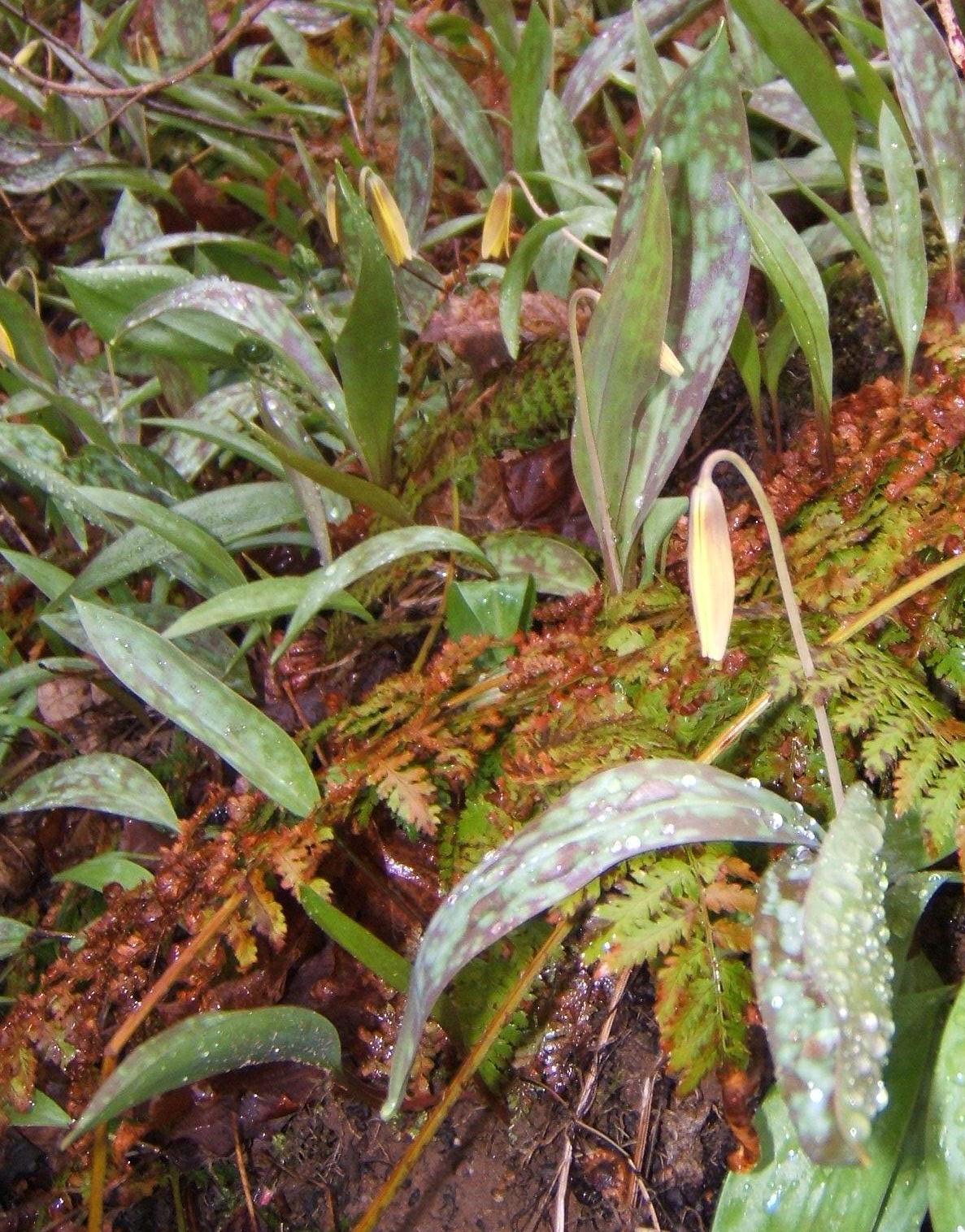
The Trout Lily was barely beginning its blooming when we were there, but it will be almost over by now. The flowers usually bloom from March to May. They are yellow and lily-like, with six divisions. The petals curve backward as they mature.

The young leaves are edible but should only be gathered if they are very abundant in order to conserve the species. To prepare the leaves for eating, clean them, boil them for 10 to 15 minutes and serve with vinegar. The bulb-like ‘corm’ is also edible; it should be cooked about 25 minutes and served with butter. Again, the bulbs should only be gathered if the plant is very plentiful, and only a small percentage of the plants should be harvested to enable the plant to thrive. Also, the usual warning applies, only harvest if you are absolutely certain of the identification.
~
~
Trout Lily
(Erythronium americanum Ker)
~
on a hike in the hardwood
north of the Dunbar Stream
you discover Trout Lily in profusion
mottled purple, overlapping
as the scales of adder, dinosaur or dragon
~
you know these plants as edible
the leaves a salad, or pot-herb
and, deep underground, the corm
flavoured like garlic
~
you fall to your knees
to dig, to gather
and hesitate,
examine your motives –
you, with two granola bars in your knapsack
and a bottle of water from Ontario
~
~
© Jane Tims 2012

making friends with the ferns #3
Although the fiddleheads of the Ostrich Fern are edible and a delicacy in New Brunswick, all fiddleheads are not edible. The fiddlehead is the tightly-rolled, earliest emergence of the immature fern leaf. This coil of the leaf resembles the head of a fiddle, hence the name. As time passes, the fiddleheads uncoil and become the mature leaves of the fern.
In the Grey Woods, we have two species of fern with very distinctive fiddleheads.
The fiddleheads of the Sensitive Fern (Onoclea sensibilis L.) are slim and red. They are not edible and are poisonous to horses.

red fiddleheads of the Sensitive Fern are hard to see against the dried leaf layer
The Sensitive Fern grows at the edges of the Grey Woods, along our house foundation and in a large patch on our ‘lawn’.
The common name ‘sensitive’ refers to the fern’s characteristic dying at the first frost. The Sensitive Fern is also called the Bead Fern, a reference to the hard brown spore cases on the fertile spikes. Once the green leaves have died, only the tall brown fertile spikes remain, and these persist until spring. The Sensitive Fern is a once-cut fern (the leaves are cut once into simple leaflets) with wavy margins and sometimes deep indentations in the leaflets. The upper leaflets are ‘winged’ or ‘webbed’ where they join the main axis of the plant.
The fiddleheads of the Cinnamon Fern occur in clumps and are densely covered with coarse white hairs. The fiddleheads can be eaten but are not used as commonly as those of the Ostrich fern.
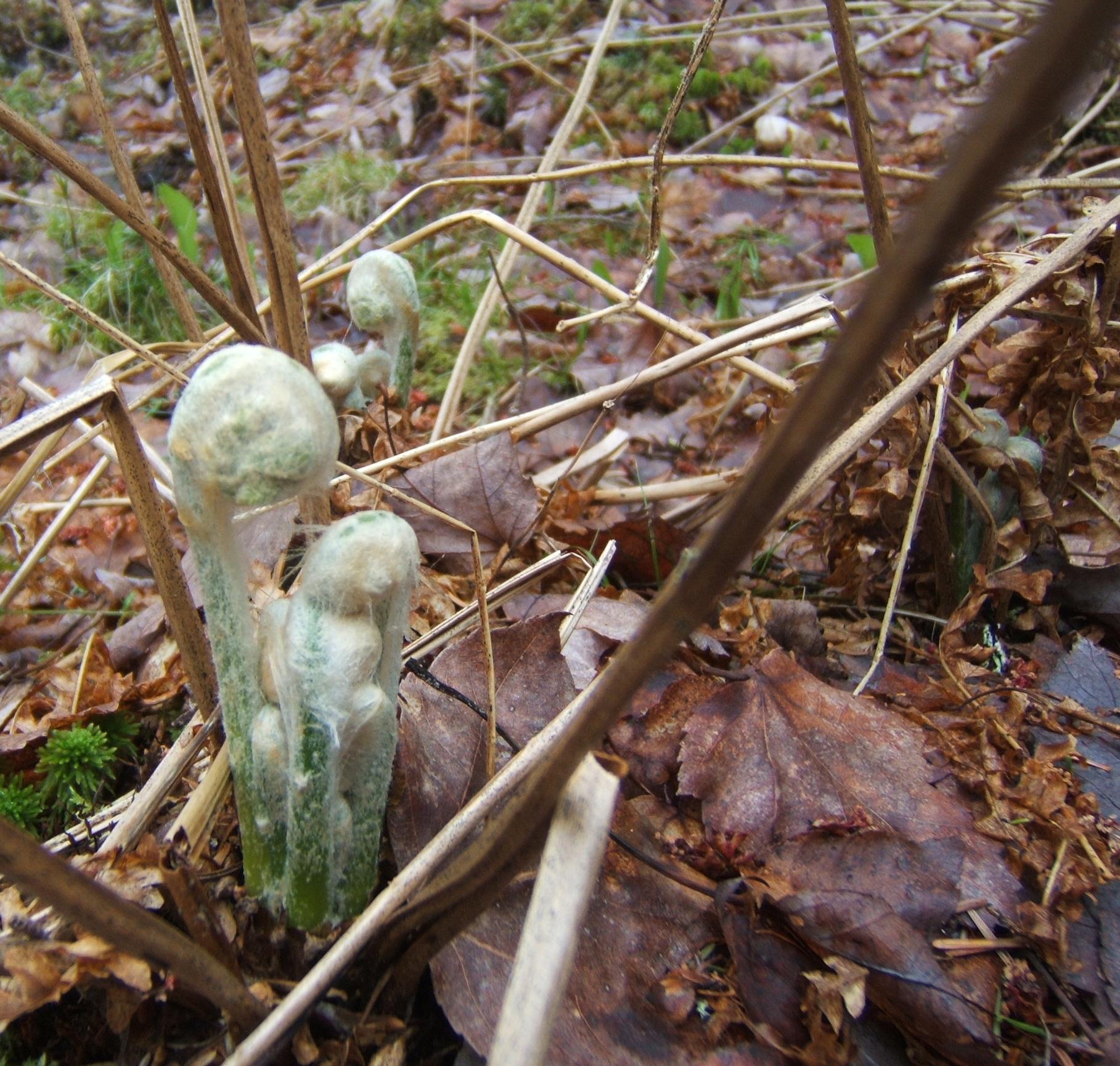
the wooly fiddleheads of the Cinnamon Fern are common in wet woods in New Brunswick
The Cinnamon Fern (Osmunda cinnamomea L.) grows in wet woods and other water-logged areas. In our Grey Woods, it grows in the fern gully (see the ‘map of the grey woods’ under ‘about‘).
Cinnamon Fern is a twice-cut fern (the leaves are cut into leaflets and these, in turn, are cut into sub-leaflets). As the sterile leaves expand, you can see fine cinnamon-colored wooly hair along the stalk, and tufts of cinnamon-colored hairs on the underside and at the base of each leaflet. The plant produces separate fertile spikes that turn cinnamon-brown in color.
~
~
fiddleheads
~
thin music in the May-woods,
trowie tunes from the peerie folk,
a bridge between spring
peepers and the wind,
fiddleheads carved in
Sensitive red and Ostrich green,
the bow strung by spiders,
the riff in the violin trembles
as potential uncoils,
music befuddled in a web
of Cinnamon wool
~
~
© Jane Tims 2012
Warning: 1. never eat any plant if you are not absolutely certain of the identification; 2. never eat any plant if you have personal sensitivities, including allergies, to certain plants or their derivatives; 3. never eat any plant unless you have checked several sources to verify the edibility of the plant.Bunchberry (Cornus canadensis L.)
Bunchberry is so common in our Grey Woods, I think of it as a friend. When I walk our paths in the spring, its white ‘flowers’ glow around me. In late summer and autumn, it offers its scarlet bunches of berries freely. It was one of the first plants I learned to identify.

Bunchberry (Cornus canadensis L.) is also called Crackerberry, Dwarf Cornel, and Pudding-berry. In French, it is called quatre-temps. It belongs to the Dogwood family of plants. Although some Dogwoods are low-growing herbaceous plants like Bunchberry and some are large shrubs, such as Red Osier Dogwood (Cornus stolonifera Michx.), all have similar leaves – ovoid with pointed tips and a distinctive venation pattern, the parallel veins all arising from the midrib of the leaf. The generic name Cornus comes from the Latin cornu meaning a ‘horn’, descriptive of the hardness of the wood. The name ‘Dagwood’ is derived from the word dagge meaning a dagger or sharp object, a reference to the use of the wood of the European Cornus sanguinea L. as skewers for meat.
Bunchberry grows in cool woods, on roadsides and slopes, and in barrens. It is low-growing, and creeps via underground rhizomes or root-like stems.
The form of the Bunchberry is distinctive. It consists of a short woody stem with a false whorl of six leaves. Just below the whorl is a smaller pair of leaves. The whorls of leaves are all at the same level in the forest, creating a single ‘surface’ of green.
The flower of Cornus canadensis blooms from May to July and is at first greenish, changing to a dazzling white. The blossom is composed of four petal-like bracts enclosing a central cluster of tiny purplish flowers.
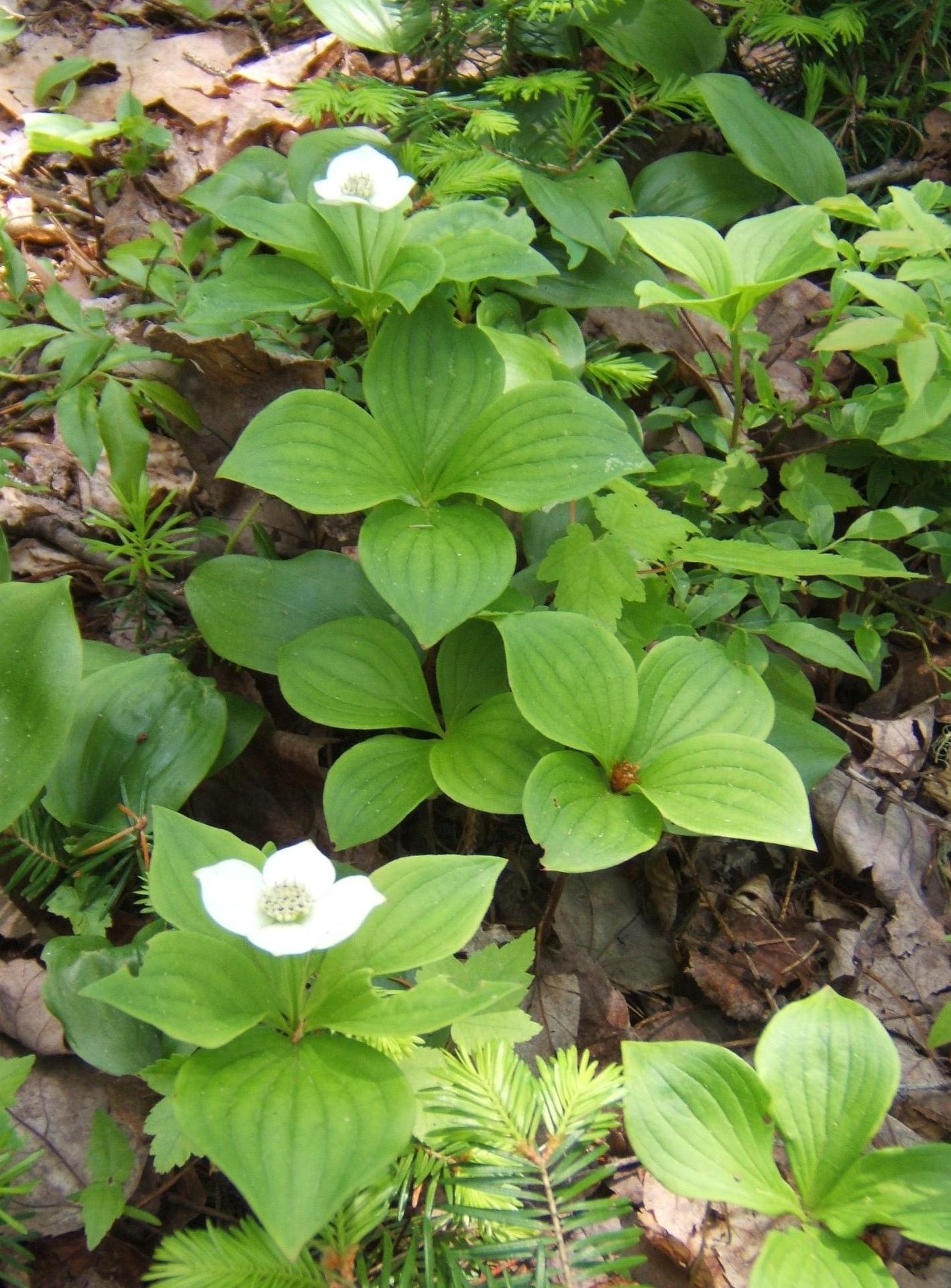
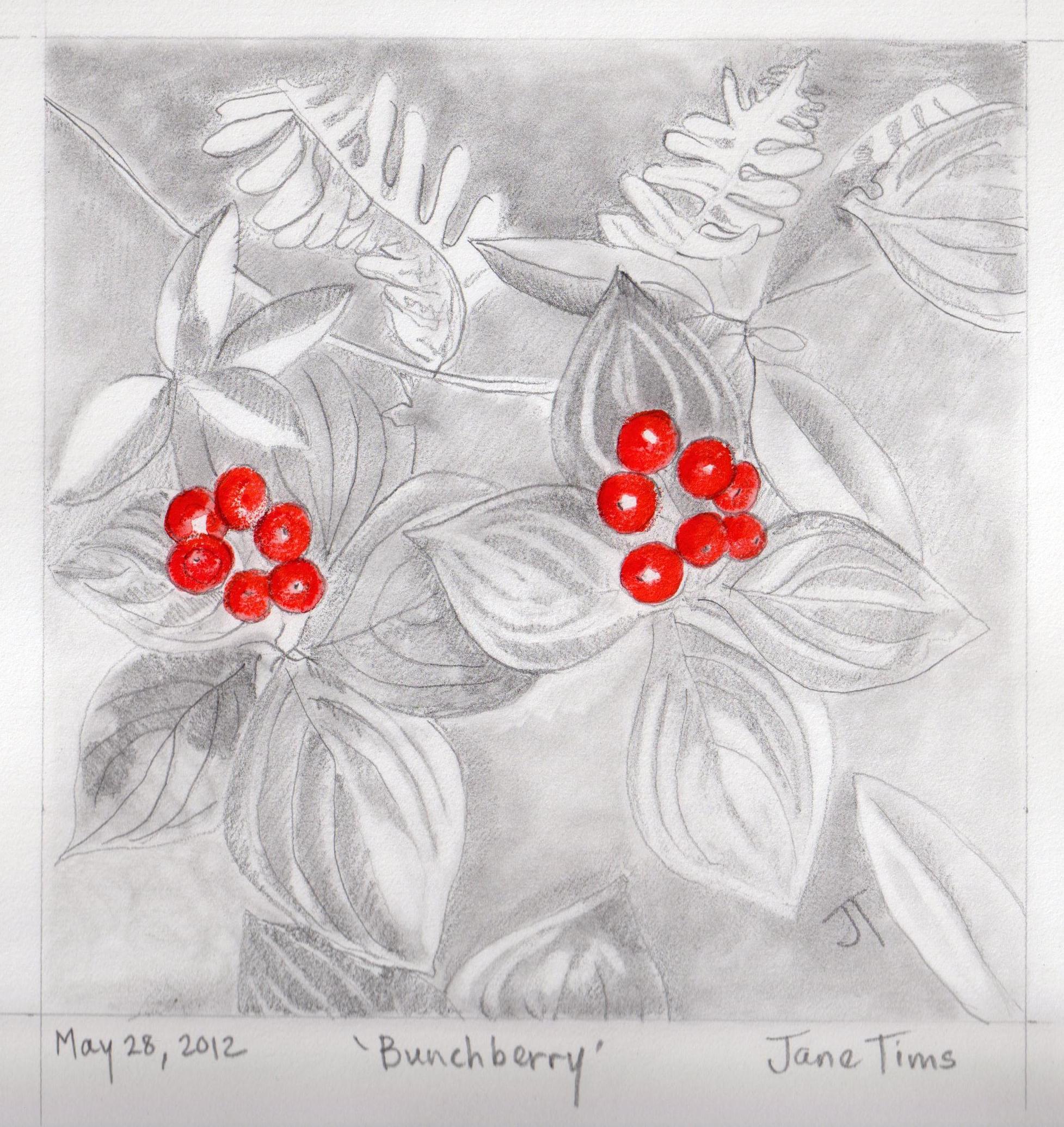
The berries of Bunchberry ripen in late summer and are bright scarlet, held in a tight cluster. The berries are sweet and great as a trailside nibble. They can also be made into jam or a berry pudding. Most guides describe them as ‘insipid-tasting’ but I find them quite pleasant. Unfortunately, each berry has a large seed, so enjoying a mouthful of berries is a challenge!
There is evidence Cornus canadensis and other Cornus species were included as part of the diet of prehistoric peoples in New Brunswick. Dr. David Black, an archaeologist at the University of New Brunswick, found a charred seed of what may have been Cornus canadensis in his excavation of a shell midden on Partridge Island in the southwest area of the province. Charred seeds of the dogwood species Cornus rugosa Lam. have been found by another archaeologist, Dr. Kevin Leonard, in excavations at Skull Island along the east coast of New Brunswick.
~
~
Bunchberry
Cornus canadensis L.
~
step lightly –
leaf-whorls of Bunchberry
are cobblestones, the green-between
~
Partridge-berry, ground-creeper
and landing platforms of Bracken
and Wild Sarsaparilla
~
elevated ways for fairy-folk
white flowers, four-weather beacons,
guideposts through the forest
~
bunches of berries, red-heaped into aprons
are pudding for dinner
~
or winter-fare, gleaned by a gatherer,
flavored by fire
~
a nibble to cheer a hiker
lost in the forest
~
~
© Jane Tims 2012
~
~
Sources:
David W. Black, 1983, What Images Return: A Study of the Stratigraphy and Seasonality of a Small Shell Midden in the West Isles of New Brunswick, M.A. Thesis, Department of Anthropology, McMaster University.
Kevin James Malachy Leonard, 1996, Mi’kmaq Culture During the Late Woodland and Early Historic Periods, Ph.D. Thesis, University of Toronto. http://independent.academia.edu/KevinLeonard/Papers/623902/Mikmaq_culture_during_the_Late_Woodland_and_Early_Historic_periods Accessed May 27, 2012.
Warning: 1. never eat any plant if you are not absolutely certain of the identification; 2. never eat any plant if you have personal sensitivities, including allergies, to certain plants or their derivatives; 3. never eat any plant unless you have checked several sources to verify the edibility of the plant.
Wild Lily-of-the-Valley (Maianthemum canadense Desf.)
This time of year, the floor of our Grey Woods is carpeted in the leaves and blooms of Wild Lily-of-the-Valley (Maianthemum canadense Desf.). The leaves first poke through the dry leaves in mid-April and literally unfurl …

By May the forming flowers are visible…

… by late-May they are in full bloom.

I cannot get a good photo of a white flower, but this shows their star-like quality
The Wild Lily-of-the-Valley, also known as False Lily-of-the-Valley and Canada Mayflower, grows in woods and clearings, and is one of the first plants to appear in the coniferous woods understory. The leaves are heart-shaped, cleft to fit around the floral stem. Flowers are white, contained in a compact elliptical raceme. Each little flower is four-pointed.
The berries of Maianthemum canadense are edible, first appearing as whitish-green with small spots and gradually turning to red.
~
This post is dedicated to Barbara Rodger’s mother, who loved Lily-of-the-Valley, the flower the Wild Lily-of-the-Valley gently resembles!
~
~
Wild Lily-of-the-Valley
– Maianthemum canadense Desf.
~
slim emerald flames
burn through dry leaves,
ignite sparklers
of stamen stars,
puffs of smoke,
white berries heat to red
embers in forest
~
~

Bluebead Lily (Clintonia borealis (Ait.) Raf.)
When I hike through the woods, I am made uneasy by two unnatural-looking berries… the ‘doll’s eyes’ of White Baneberry (Actaea pachypoda Ell.) , and the metallic blue berries of the Bluebead Lily (Clintonia borealis (Ait.) Raf.). Both berries are poisonous and inedible. I’ll write more about White Baneberry in a later post, but first, I want to tell you about the Bluebead Lily.
The Bluebead Lily is also known by the names Snakeberry, Dogberry, Corn Lily, Cow Tongue, Straw Lily and even Wild Lily-of-the-Valley. It is called after De Witt Clinton, several-times Governor of New York. Its specific name, borealis, is Latin for ‘northern’.
Clintonia grows in rich, cool hardwoods, often on slopes. The plant consists of two or three large, shiny basal leaves, with parallel veins, wrapped around one-another and clasping the base of a flower-stalk. The stalk bears several yellow-green nodding lily-like flowers. In late May, these flowers are just beginning their blooming.
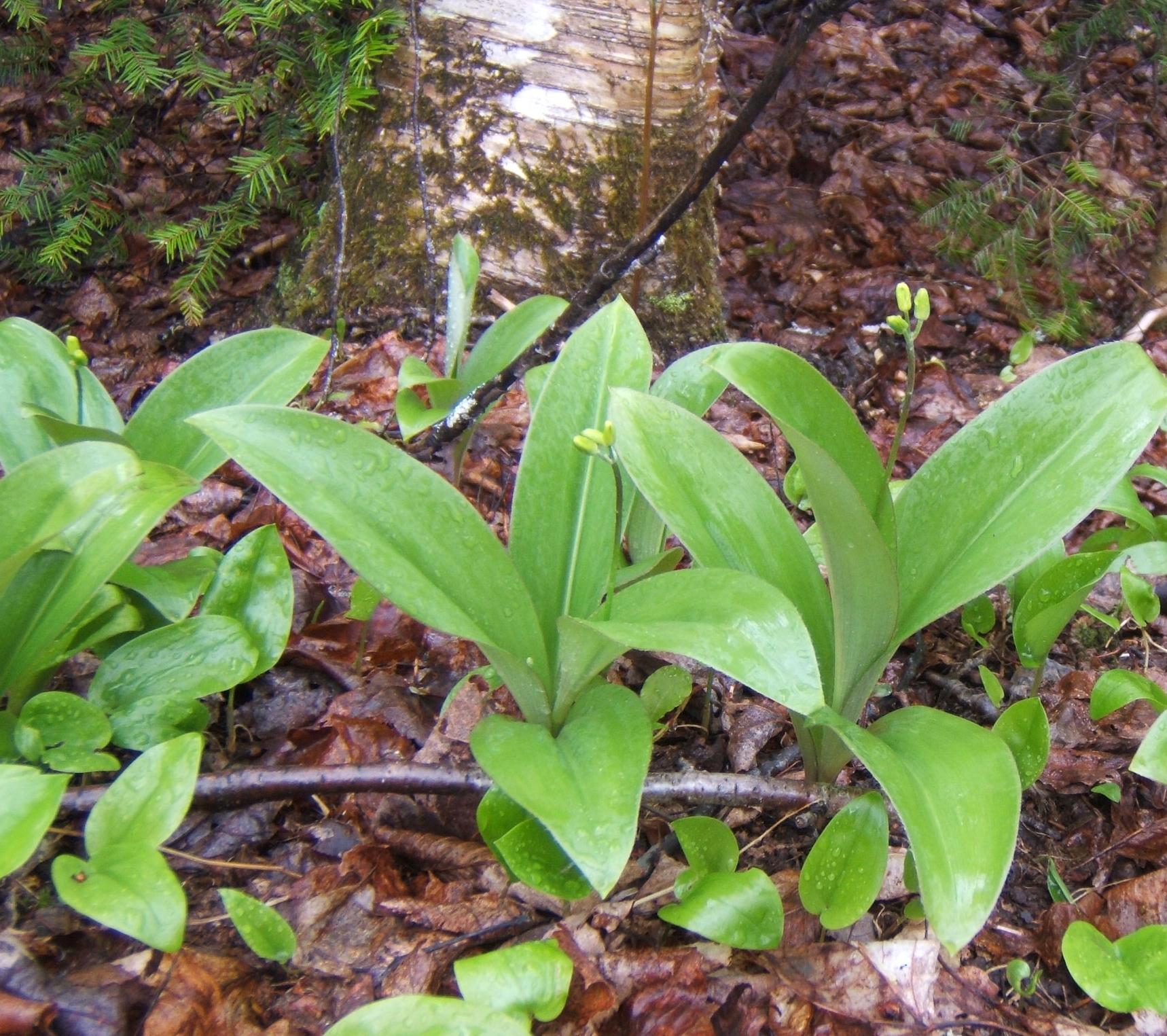

By July, the berries are ripening. These are considered inedible, perhaps toxic. They are oval, shiny, dark blue, and to me, menacing.
Although the berries are inedible, the young leaves, when they are just expanding, can be eaten cooked or raw, and taste like cucumber. To cook them, boil for 10 minutes and serve with butter. As the leaves mature, the cucumber taste becomes strong and unpleasant.
If you want to try the young leaves of Clintonia, make sure you are certain of identification since there are many leaves in the woods that may superficially resemble the leaves of Clintonia.
Have you ever seen a Bluebead Lily and its berries or flowers?
~
~
poisonous
~
White Baneberry
and Bluebead Lily –
vivid berries
peek between leaves,
part a path
in the understory, dolls
wink, use fern shadow
to blink or disguise
a gift, a bead
of metal, stained
glossy, alien
blueberry-blue
~
glossed by the Guidebook
with skull and crossbones
~
~
Warning: 1. never eat any plant if you are not absolutely certain of the identification; 2. never eat any plant if you have personal sensitivities, including allergies, to certain plants or their derivatives; 3. never eat any plant unless you have checked several sources to verify the edibility of the plant.© Jane Tims 2012
excavation underway!
On Tuesday morning last week, I began my morning work to the beat of an intermittent rapping. It was so loud and so near, I thought it must be someone hammering on the house.
I looked outside and saw, across the lawn, a large bird with a flaming red crest. A Pileated Woodpecker (Dryocopus pileatus)!
We have seen this species of woodpecker several times before in our Grey Woods. These birds leave their oval cavities in many of our older trees, evidence of their search for insects or the preparation of cavities for nesting. The use of dead or dying trees as cavity nesting sites is an example of how important these trees are to the woodland ecosystem.

I watched as the bird did her circuit of the tree and hopped down to the ground for a while. Then she fluttered up to our cedar rail fence and into the trees.
The Pileated Woodpecker’s bright red crest and long skinny neck give it a comical air – not a beautiful bird, but very exciting to see and watch.
~
~
© Jane Tims 2012




 nichepoetryandprose