Posts Tagged ‘wildflowers’
along New Brunswick’s roads
New Brunswick is a beautiful province. We also have a great road system, both for those who want to linger and those who want to get through as fast as possible.
~

~
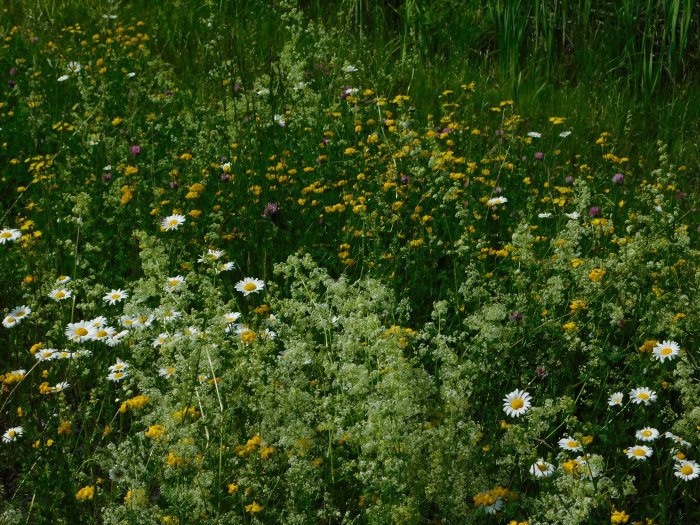
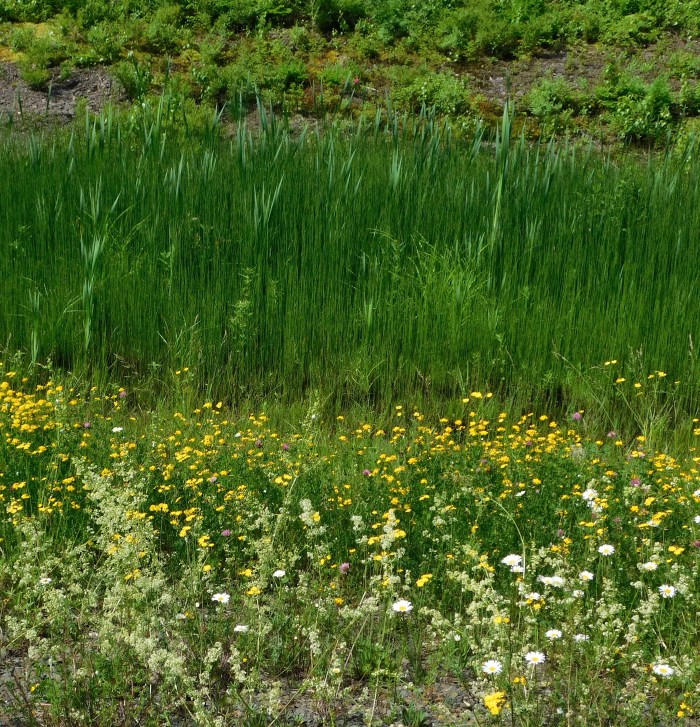
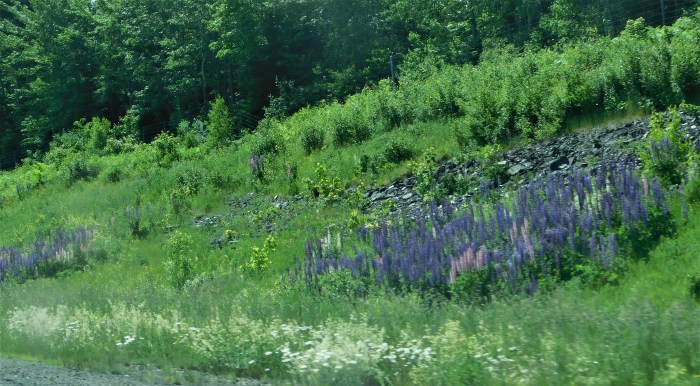
This time of year I am amazed at the beauty of our four-lane Trans-Canada highway. I think the roadside has been seeded with a wild-flower mix but many are weedy species common in New Brunswick. Whatever their origins, the results are lovely.
~

~
~
~
I have found these flowers in a quick sampling of the roadside:
Buttercup (Ranunculus sp.)
Lupin (Lupinus sp.)
Bird’s-foot trefoil (Lotus corniculatus)
Red Clover (Trifolium pretense)
Daisy (Leucanthemum sp.)
Viper’s Bugloss (Echium vulgare)
Yellow Hawkweed (Hieracium caespitosum)
Bedstraw (Galium sp.)
Coltsfoot (Tussilago farafara)
Dandelion (Taraxacum officinale)
(plus many grasses, sedges and non-flowering plants contributing to the background of green)
~
~
Long stretches of highway can be boring-beyond-belief, but, because of these expanses of bloom, I am enjoying our drives along the highway this summer.
~
Copyright 2017 Jane Tims
pink lady’s slipper
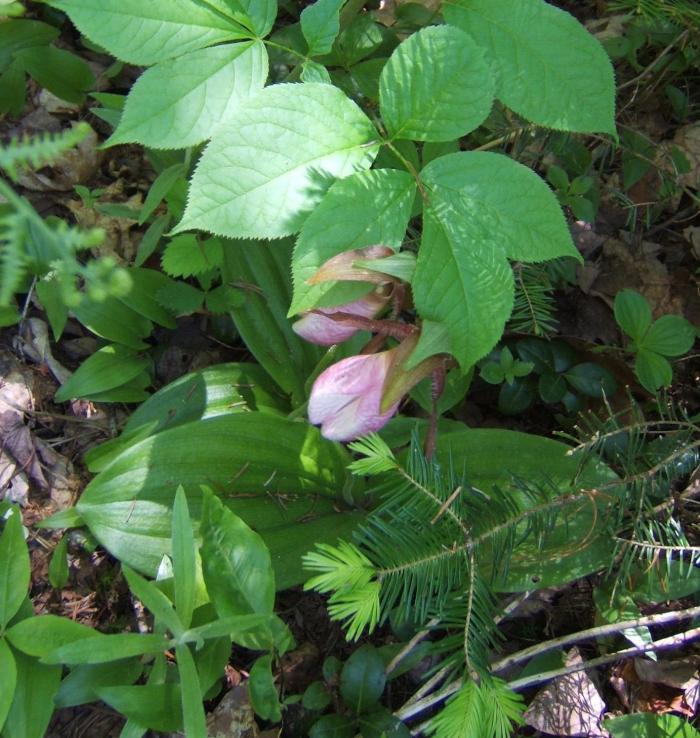
This time of year, my husband does an inventory of the Pink Lady’s Slippers (Cypripedium acaule) on our property.
~

~
This year, he found 10. He only saw three last year but there have been as many as 15 in bloom at one time. We never pick them and try to keep our property natural and wooded.
~
The Pink Lady’s Slipper prefers acidic soil and partly shady conditions, making our grey woods an ideal habitat. Our flowers are often a pale pink or white variety.
~
~
Copyright Jane Tims 2017
lupins lean
~

~
Yesterday our drive in western New Brunswick was dominated by two things: the wind and the roadside wildflowers.
~
Buttercups, bunchberry, bluets and lupins fill the ditches with bloom. The lupins (Lupinus sp.) dominate – mostly purple and blue, but occasionally white, pink or even yellow. The wind was blowing so hard, you could use the flower heads and leaves to measure wind direction!
~

~
Copyright Jane Tims 2017
in the shelter of the covered bridge – drawings
As I complete my manuscript of poems ‘in the shelter of the covered bridge’, I am also working on the drawings to accompany the text. I have made a list of the visuals presented in the poems, so I have a specific idea of what drawings I need. Many are completed since I have a large portfolio of bird drawings, for example …
~

~
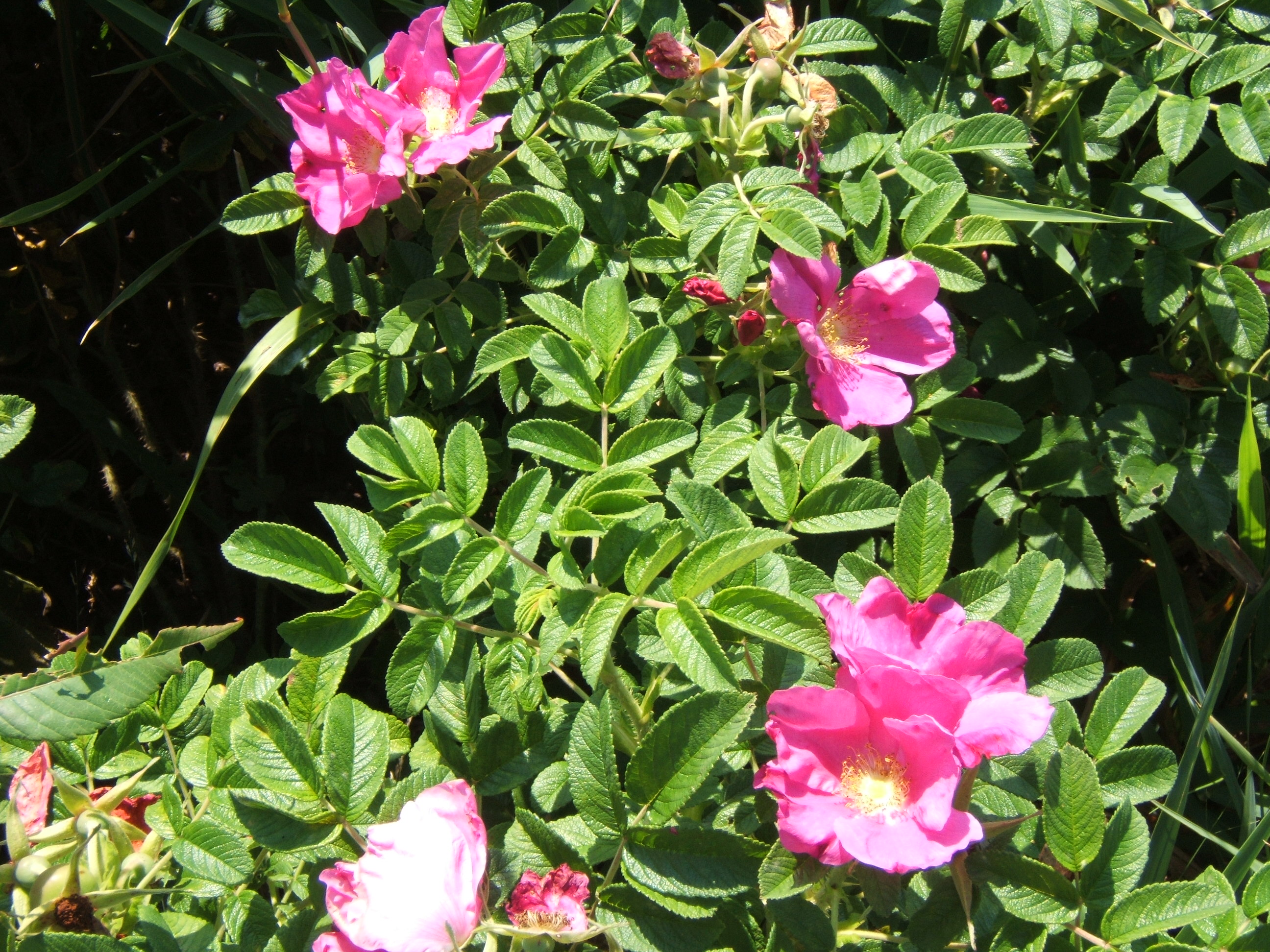
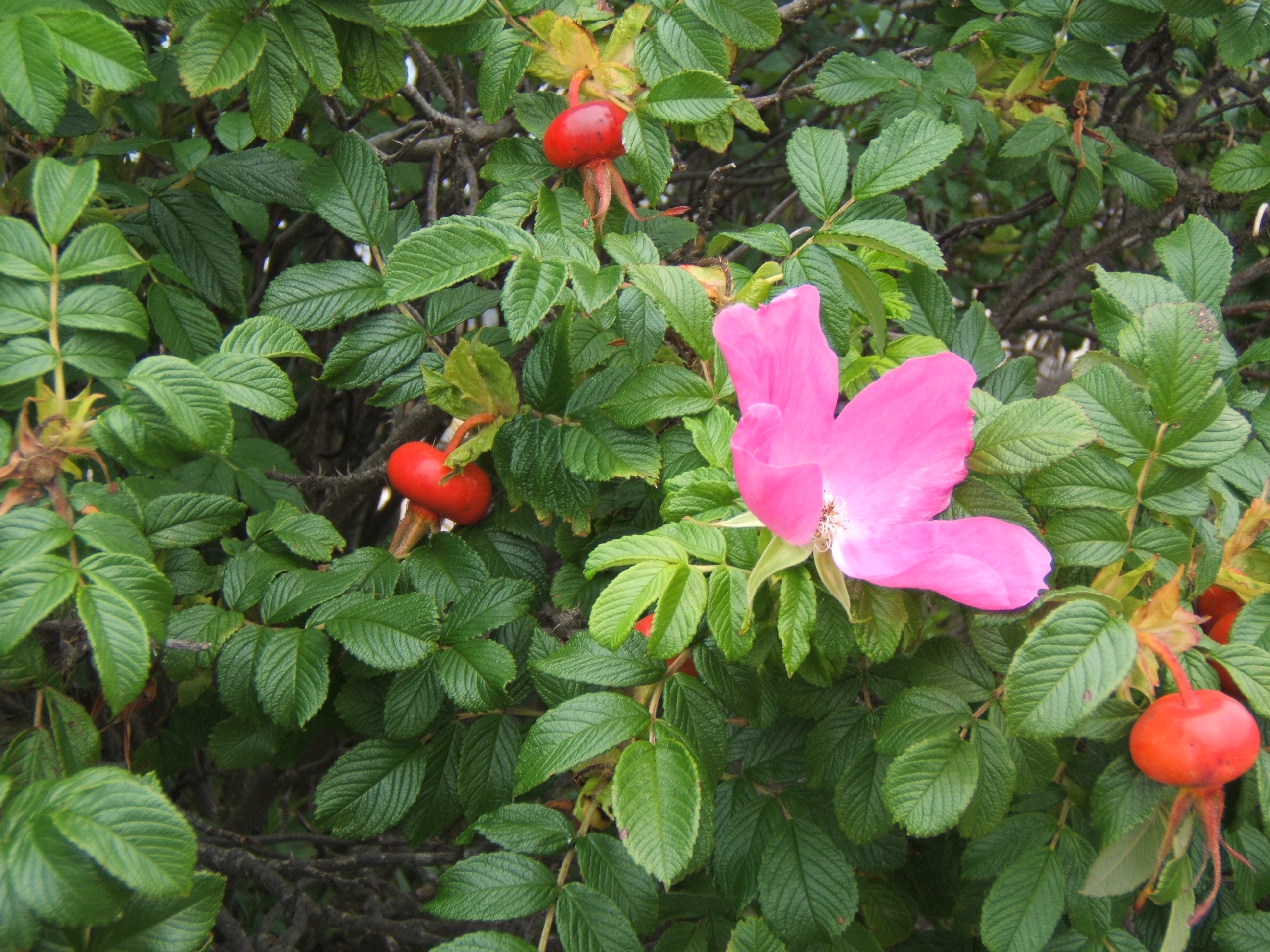
Others are still to be done. This morning I completed a rather delicate drawing of the two kinds of roses growing beside the Darlings Island Covered Bridge and captured in my poem ‘tangle’.
~

~
I love to draw. For me, it is like watching a movie as I see my hand lay pencil marks on paper. It is not a calm activity. Perhaps because my hand and arm are moving, I get quite agitated when I draw and I imagine my blood pressure rising as the work progresses.
~
In order to have a body of work to choose from for the final manuscript, I aim to have more than forty drawings. I have completed nineteen. Lots to do !
~
Copyright Jane Tims 2016
harvesting colour – Meadowsweet
Last week, we finished installing the new gate at our cabin. To make our leveling easier, we had to cut some of the Meadowsweet (Filipendula ulmaria) growing in profusion along the road. And into the dye pot it went!
~

Meadowsweet
~
My botany skills are showing their age. When I learned my plants, we called Meadowsweet Spirea ulmaria. But times have changed and so has the name for the genus (it will take me a while to get used to Filipendula!). Other common names for Meadowsweet are Queen of the Meadow, Lady of the Meadow, Mead Wort, and Brideswort.
~
Meadowsweet is a fragrant plant. The scent of its flowers is reminiscent of roses – it belongs to the same family as the rose. But the stem has a faint smell of wintergreen or almonds.
~
Meadowsweet has a long history of use. The chemical in Aspirin was first discovered in its leaves and named from the old generic name Spirea. In past centuries, Meadowsweet was used as a ‘strewing herb’ to cover floors because its fragrance underfoot disguised less pleasant smells. The Druids considered it sacred, along with Watermint and Vervain. Across the internet, Meadowsweet is famed for being included as one of many ingredients in ‘save’, a medieval drink mentioned in Chaucer’s The Knight’s Tale. I have taken the time to read The Knight’s Tale and found the reference is not to Meadowsweet but Sage:
line 2713: ‘Fermacies of herbes, and eek save’ (middle English)
‘Medicines made of herbs, and also of sage’ (modern English translation) (see http://sites.fas.harvard.edu/~chaucer/teachslf/kt-par0.htm )
I will continue to look for an ingredient list for this mysterious drink.
~
The obsolete name for Meadowsweet (Mead Wort) is mentioned in Book II, Canto viii of Spenser’s Faerie Queen, referring to the making of Merlin’s sword:
‘The metall first he mixt with Medawart, That no enchauntment from his dint might saue;’ (see http://darkwing.uoregon.edu/~rbear/queene2.html#Cant.%20VIII. )
~
Boiling the chopped leaves and flowers in water for one hour gave me an amber dye.
~

amber dye from Meadowsweet
~
Wool roving, treated with alum and simmered in the dye for an hour turned pale yellow-brown, almost apricot in some light.
~

wool roving dyed with Meadowsweet
~
~
Copyright 2014 Jane Tims
abandoned railroad siding
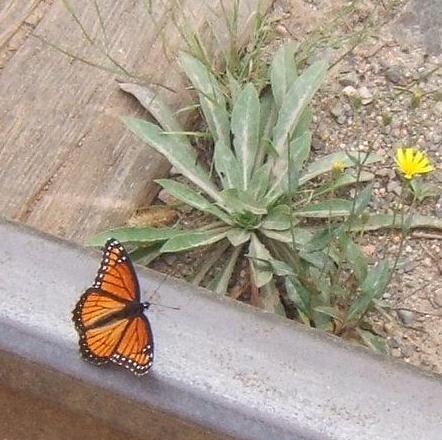
Viceroy on rail
~
abandoned railroad siding
~
a viceroy butterfly, orange
leaded glass
and rows of wary eyes
naturally suspicious
settles on the slate-grey rail
flexes its wings, nonchalant
~
as the black bear who
ambled the track
left a dump
of blackberry seed
undigested pulp
or the enthusiastic jumble of clovers
blooming between the ties
~
rails are held between the trill
of insect and the quaver
of goldenrod, caught in the crossfire of sun
light focused through
signal lenses
and glass insulators
on unstrung
telephone poles
~
turn toward horizon
rails merge and vanish
altered stride of railroad
walking made confident
by the absence of train
~
~
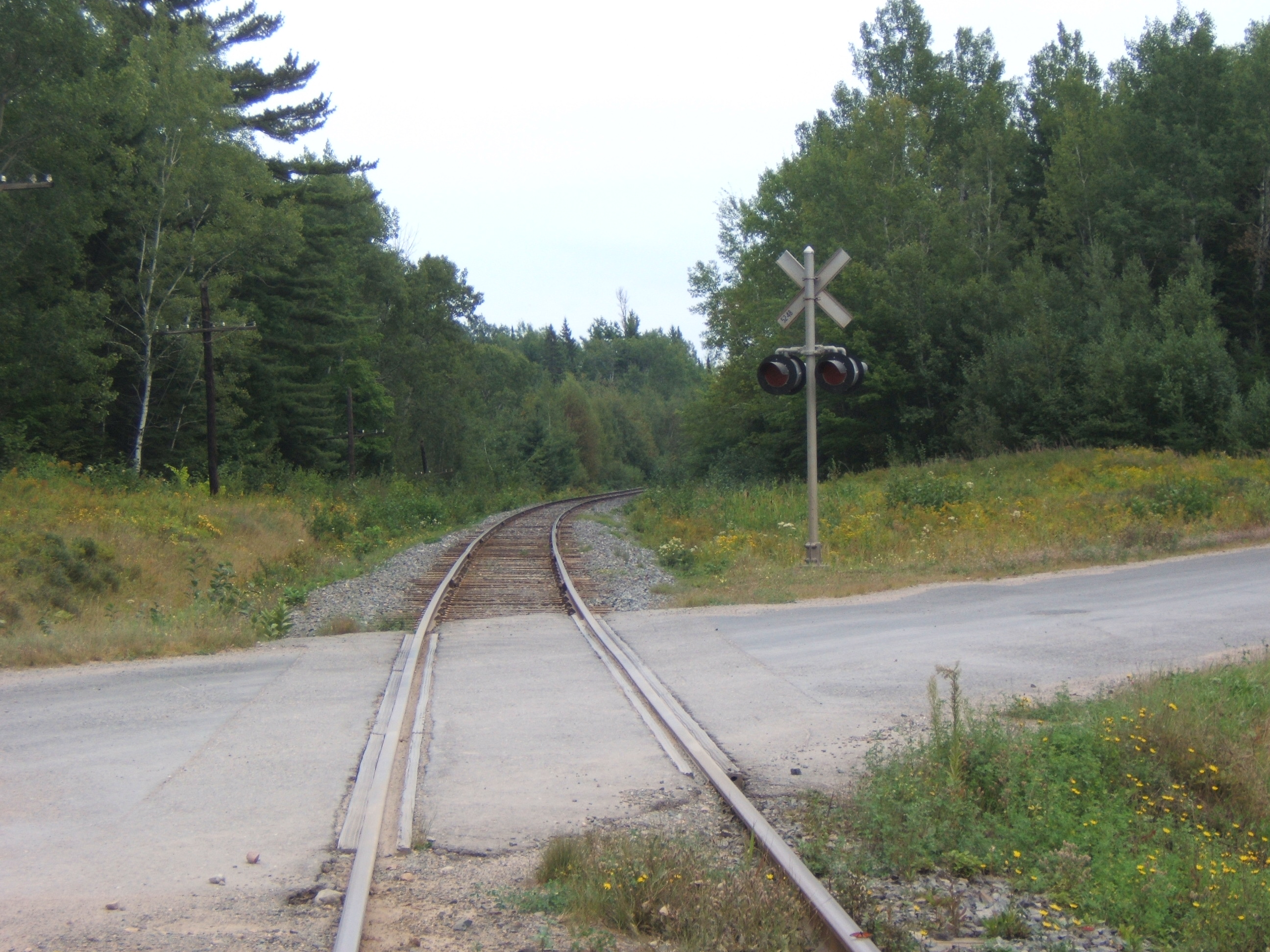
railway crossing
~
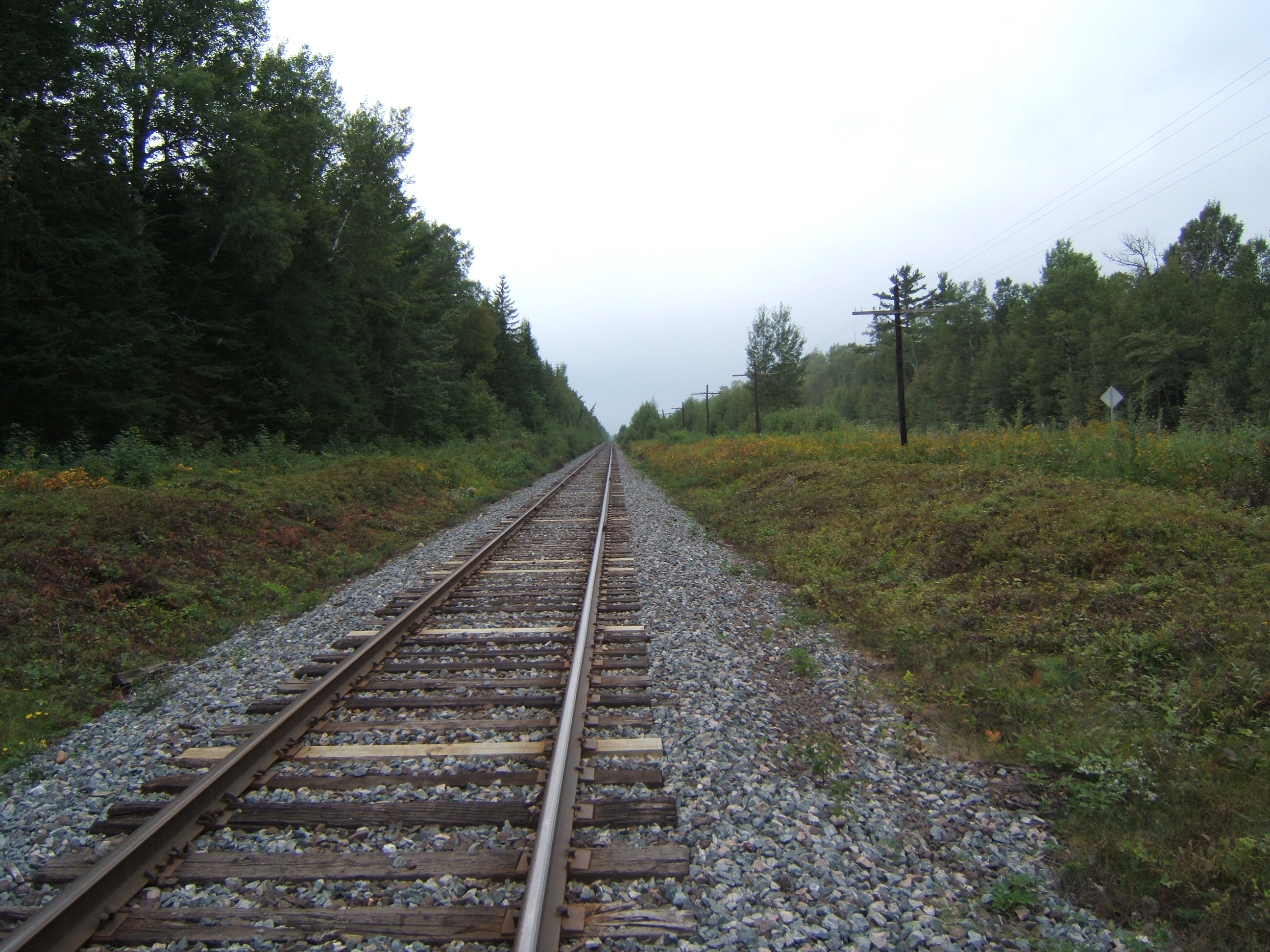
railway near Rooth, New Brunswick
~
Copyright 2014 Jane Tims
colour transfers
As I was preparing my eco-bundles for steaming ( https://nichepoetryandprose.wordpress.com/2014/06/20/an-attempt-at-ecoprinting/ ), I was thinking the words ‘heat’ and ‘steam’ – after 30 years of ironing my husband’s work shirts every morning, these words mean ‘steam iron’ to me. So I wondered if it would be possible to transfer the colour of a flower to cloth using my iron.
~
So far, I have tried two species: Bugleweed (Ajuga reptans) from under our apple trees, and Birdsfoot Trefoil (Lotus corniculatus) from the roadside …
~
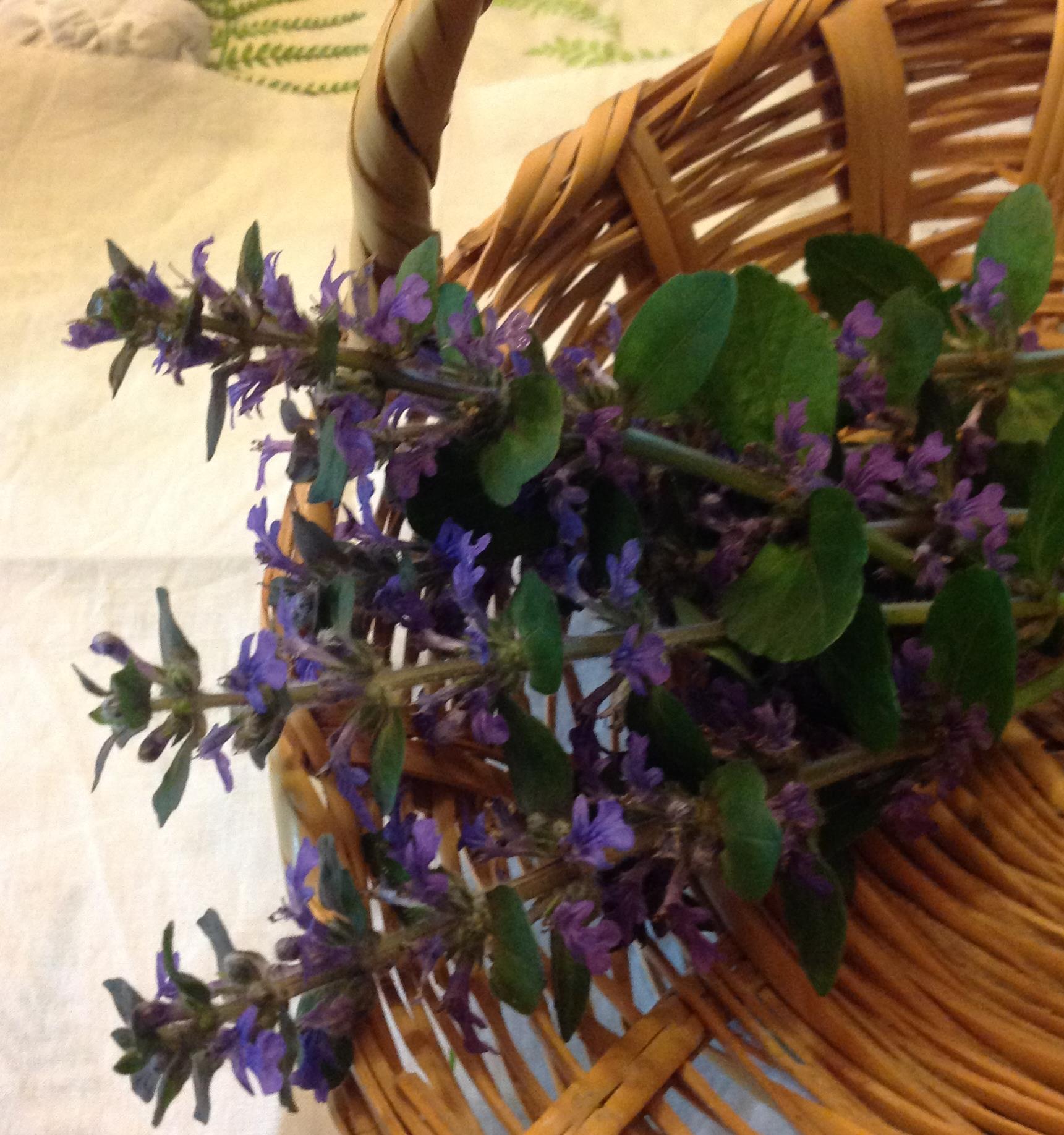
basket of Bugleweed
~
I placed the flowers between two layers of cotton, sprayed the material with water and pressed down with the steam iron set on medium. I pressed fairly hard and ironed the cloth/flower sandwich until it was dry. Then I wetted it again and continued until I had transferred the colour …
~

using the steam iron to transfer colour from Birdsfoot trefoil to cotton
~
It took five successive sets of wetting and pressing to obtain the colour. The blues of Bugleweed turned out best …
~
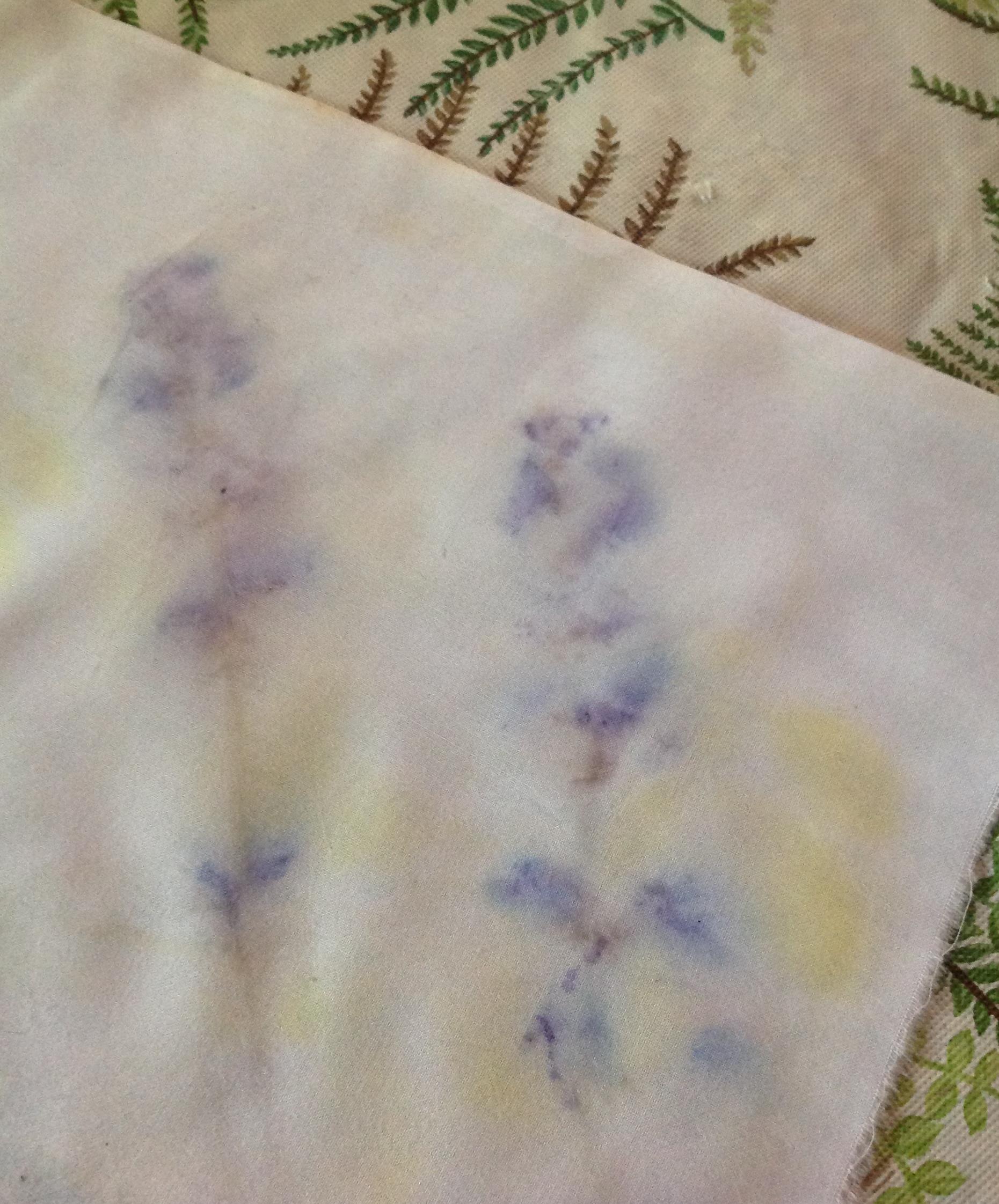
colour transfers from Bugleweed (the pale green in the background is made with leaves from my rosebush)
~
But the yellow colour from petals and stems of the Birdsfoot trefoil also came out well …
~
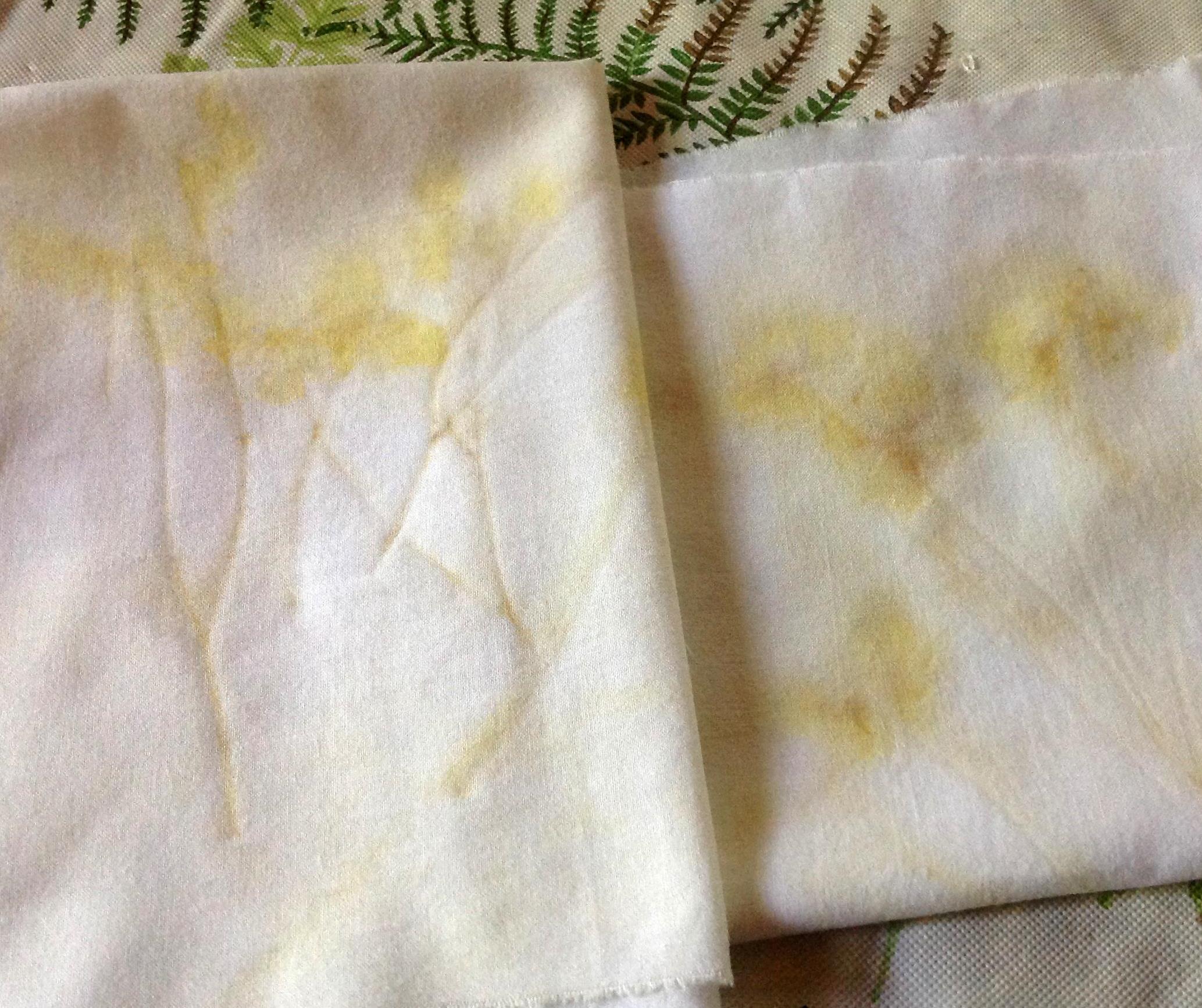
colour transfers from Birdsfoot trefoil
~
Now I have two new colour patterns to add to my future ‘harvesting colour’ quilt !
~

colour transfers using Bugleweed and Birdsfoot trefoil
~
Copyright 2014 Jane Tims
blue in the woodland
About a decade ago, we took a drive from Canterbury to McAdam on a gravel road. The memory I have carried with me for years is of a section of woodland absolutely blue with flowers. I often wondered what the flowers were and if I’d be able to find the spot again. This weekend we tried to find the place and the sea of blue in the woodland.
~

Highway 630 from Canterbury to McAdam in New Brunswick (map from Google Maps)
~
Canterbury, like many rural communities of New Brunswick, has faced a shrinking population over the years. Settled by Loyalists, it was a center for logging and railroad traffic and, in the late 1800s, had a population of over 1000. Today it has only about 340 residents. Nevertheless, it is a charming village and has a newly renovated school, housing all 12 grades.
~
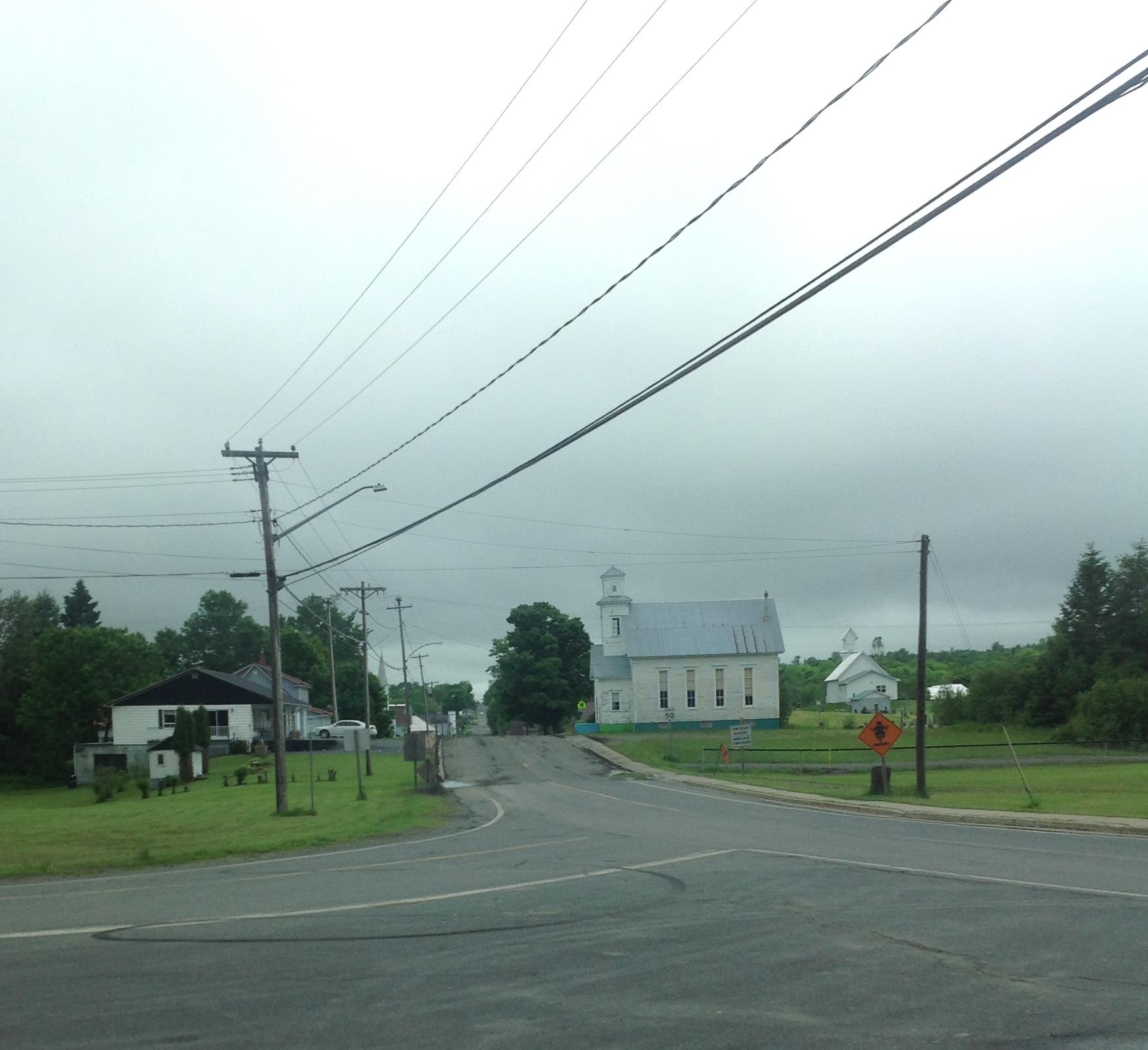
Village of Canterbury at the turn to Highway 630
~
The route from Canterbury toward the south is a numbered road. But Highway 630 is not paved and quite rutted in some sections. In one place we had to ask some ATVers if we were on the right road!
~

Highway 630
~
As we drove, I watched the woods for those blue flowers. Wildflowers were certainly a theme of our drive. By the road we saw Pink Lady’s Slipper (Cypripedium acaule), Bluebead Lily (Clintonia borealis), Bunchberry (Cornus canadensis) and Quaker Ladies (Houstonia caerulea).
~
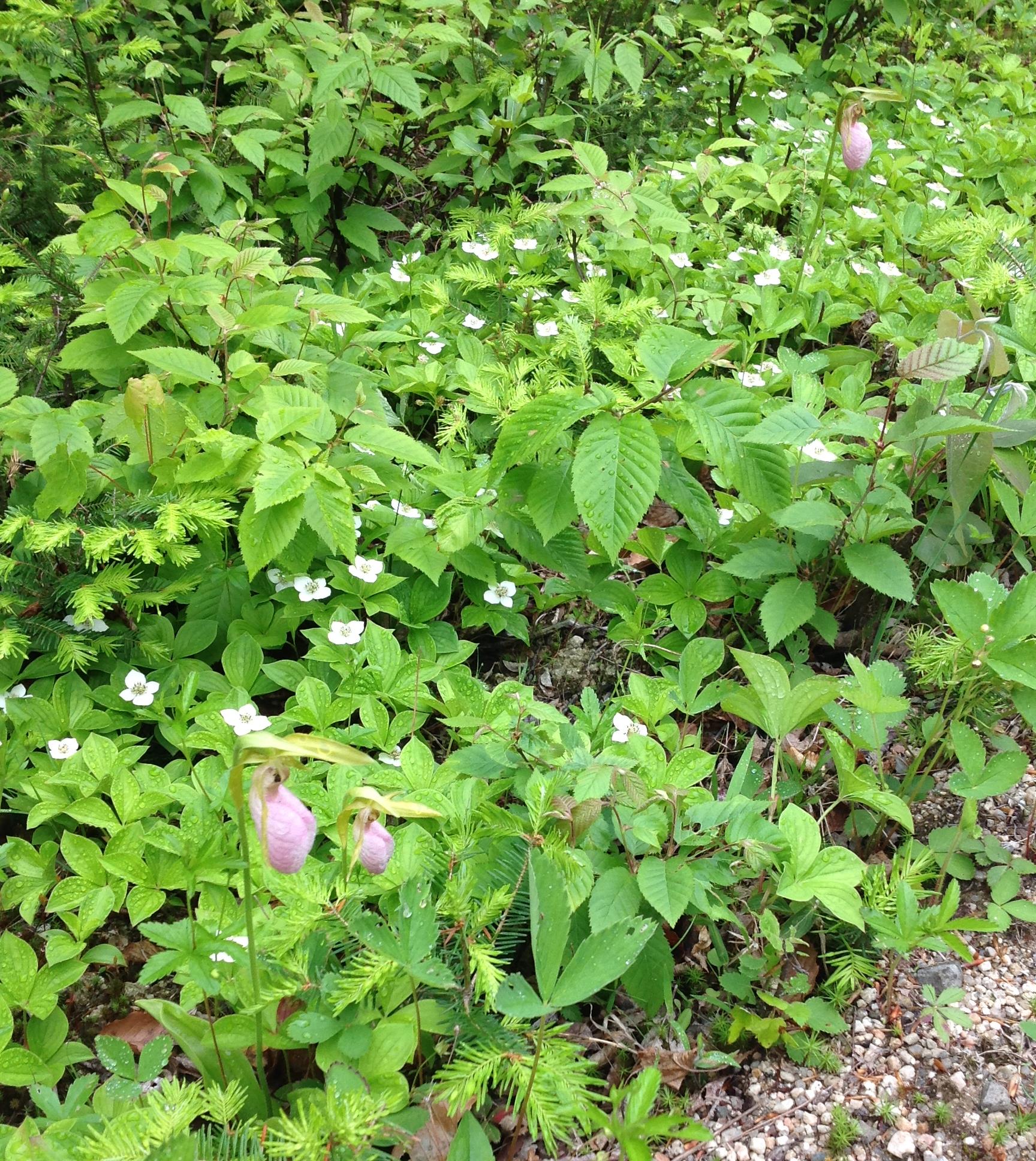
Lady’s Slipper and Bunchberry along the road
~
The map shows a community named Carroll’s Ridge just south of Canterbury. When we reached the location marked on the map, there were no homes or buildings, only a few old roads and cleared areas. But there in the woods was evidence people had once lived there. I found my sea of blue! Forget-me-nots, escaped from some forgotten garden to thrive in the near by woods.
~

Forget-me-nots escaped from an old garden
~
In my memory, the ‘blue’ of the flowers was more intense a decade ago. But we noticed many of the Forget-me-nots there now are a white variety. Who knows if flower colour or memory really changed during those ten years.
~

blue flowers in the woodland
~
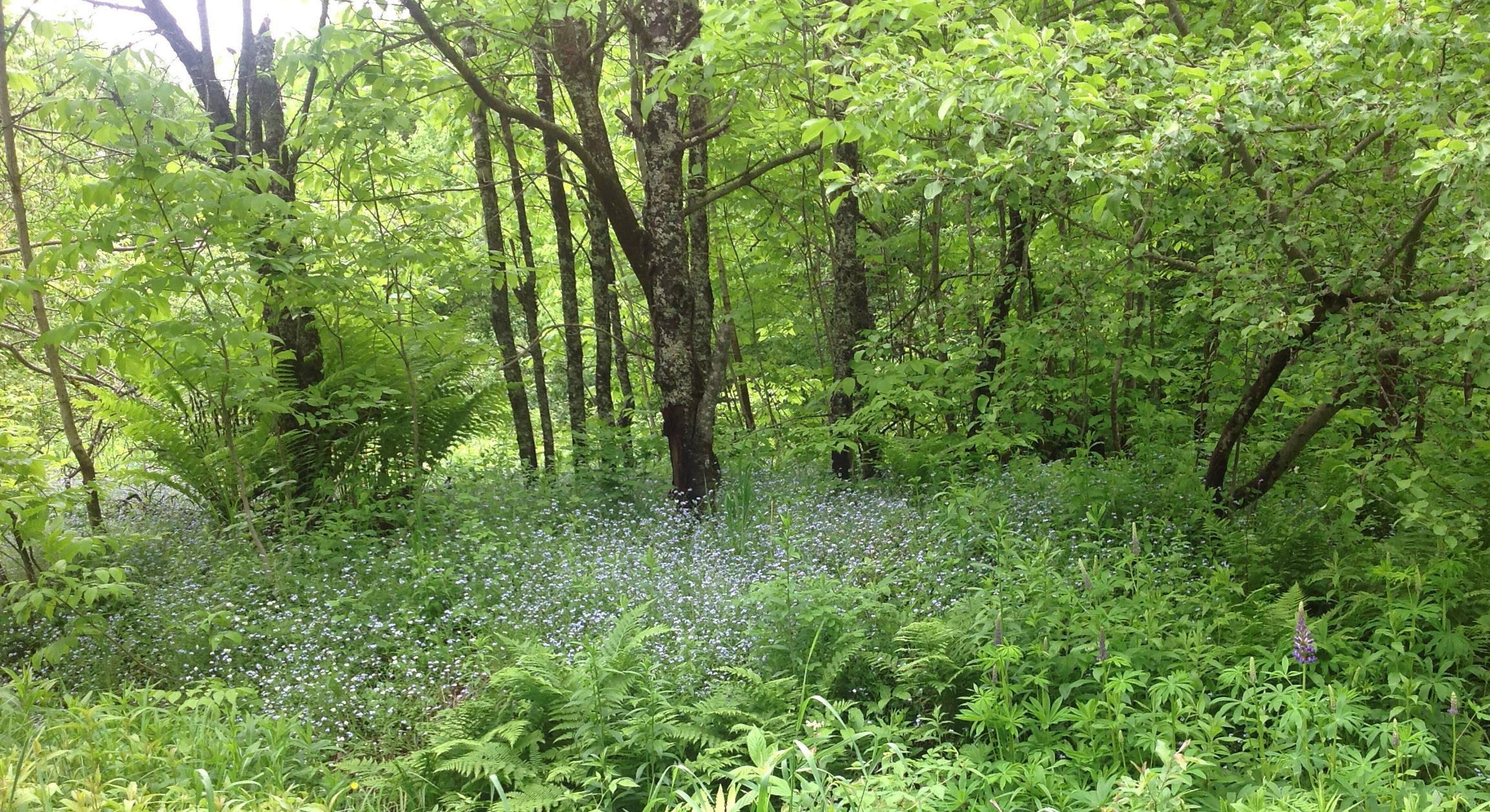
Forget-me-nots in the woods
~
I picked a few of the Forget-me-nots, to try an ‘eco-print’ dyeing experiment in coming days. But what I really took away was another image of a sea of blue flowers in the woods.
~
Copyright 2014 Jane Tims
excusing the difference
On this cold and wintry day …
~
When my son went to school, we often went to theatrical presentations at the school. The young people were so talented and the presentations so well executed, I often went away with the lines of a poem running through my head.
One evening performance was particularly memorable and inspiring. It was a production of Romeo and Juliet, and in this ‘version’ Rosaline was given an on-stage role. Rosaline is the character who does not appear in Shakespeare’s play but has a background role as Romeo’s first love.
The young lady who played the part of Rosaline was memorable for her costuming and her on-stage presence. She was dressed entirely in black Goth except for her hair – bright pink. I remember her soliloquy – she begged us to look past her difference and see the person within.
~
~
heroine
~
her hair
a stroke of pink
on the brown audience
~
more compelling
than the script
or the decorated stage
not surprising to see her name
on the program
~
Rose
in the part of Rosaline
~
in black but for the hair
even her lips
implore the audience
to pardon the difference
to understand
~
if only he had lived
~
she, of course, the heroic one
not Romeo
or Juliet
~
not the dead
but the left-behind
~
~
Copyright 2014 Jane Tims
wildflowers along the road
~

~
I have completed Phase 4 of my virtual bike ride through France! My entire ride (Phase 1, 2, 3 and 4) since January 30, 2013 has taken me from Lusignan to Ferrières for a total of 116 km or 1155 minutes (19.2 hours).
~

~
The last bike ride of Phase 4 took me through the countryside east of Ferrièrres …
~

~

~
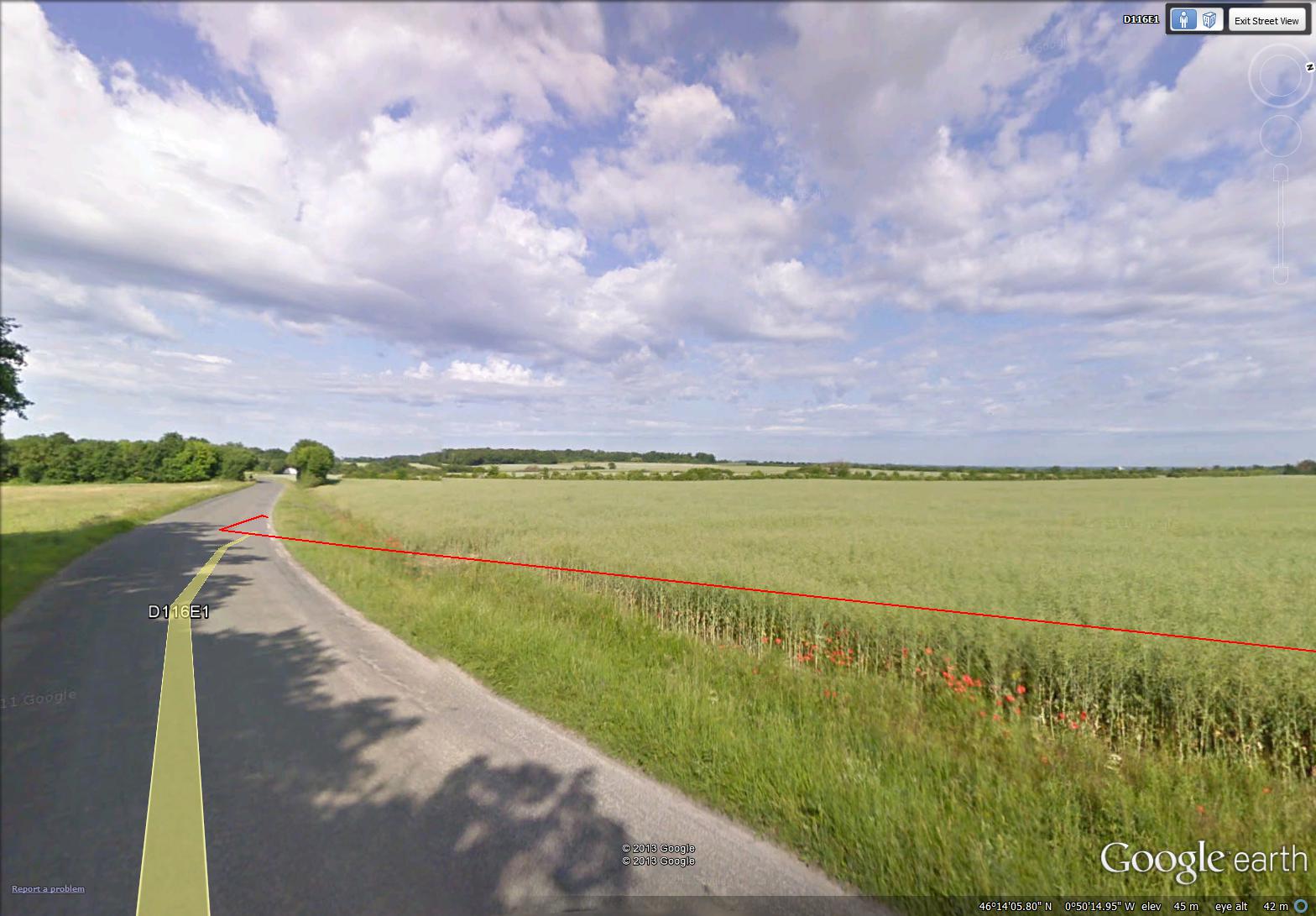
The theme seemed to be one of wildflowers. I saw Queen Anne’s Lace, Fireweed, and, best of all, Poppies, along the edge of the fields …
~
~
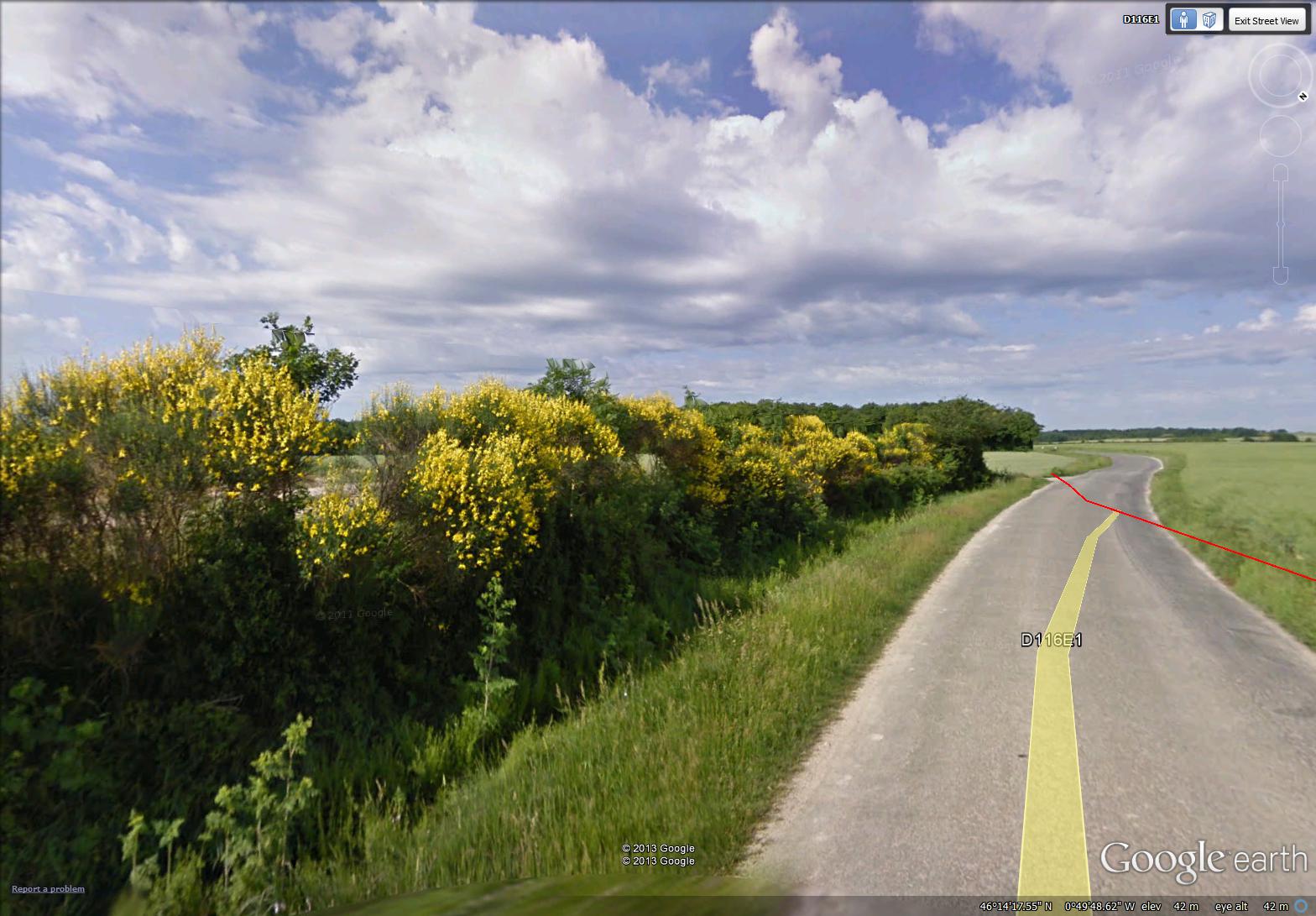
I also saw a roadside shrub in yellow bloom. Since the images were taken in May, I think these flowers were Gorse …
~
~
I also saw a flock of sheep grazing in a pasture …
~

~
Best View: a flower garden in Courçon …
~
 ~
~
For Phase 5 of my trip, I plan to cycle from Ferrières to Nieul-sur-Mer, near the Atlantic Coast of France. Hope you will stay with me on my journey!
~

~
Copyright Jane Tims 2013




 nichepoetryandprose