Posts Tagged ‘water’
keeping watch for dragons #5– river dragon
It’s like getting an old song stuck in your head… I am now seeing dragons… everywhere.
Yesturday, as I crossed the bridge on the way to my work, I saw the piers of the old bridge and their reflections in the water. To me they were the protruding plates along the spine of a river dragon, resting in the water.
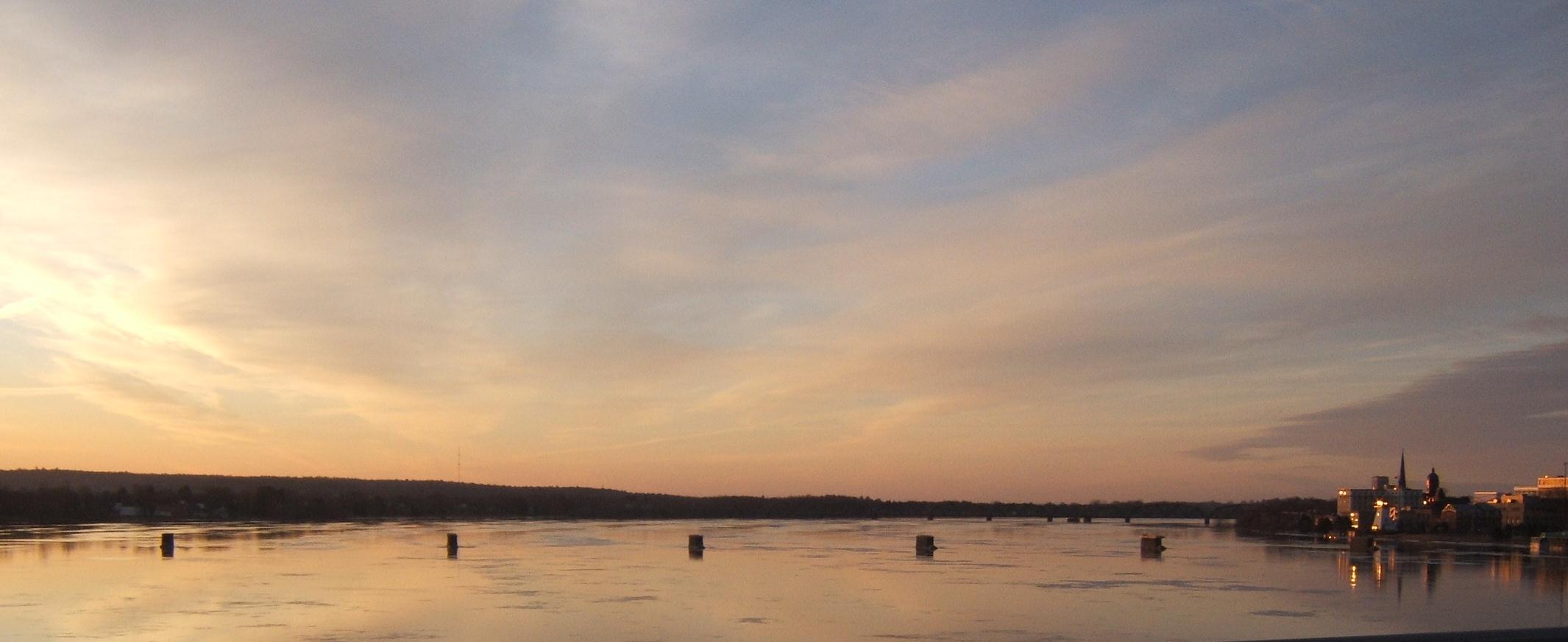
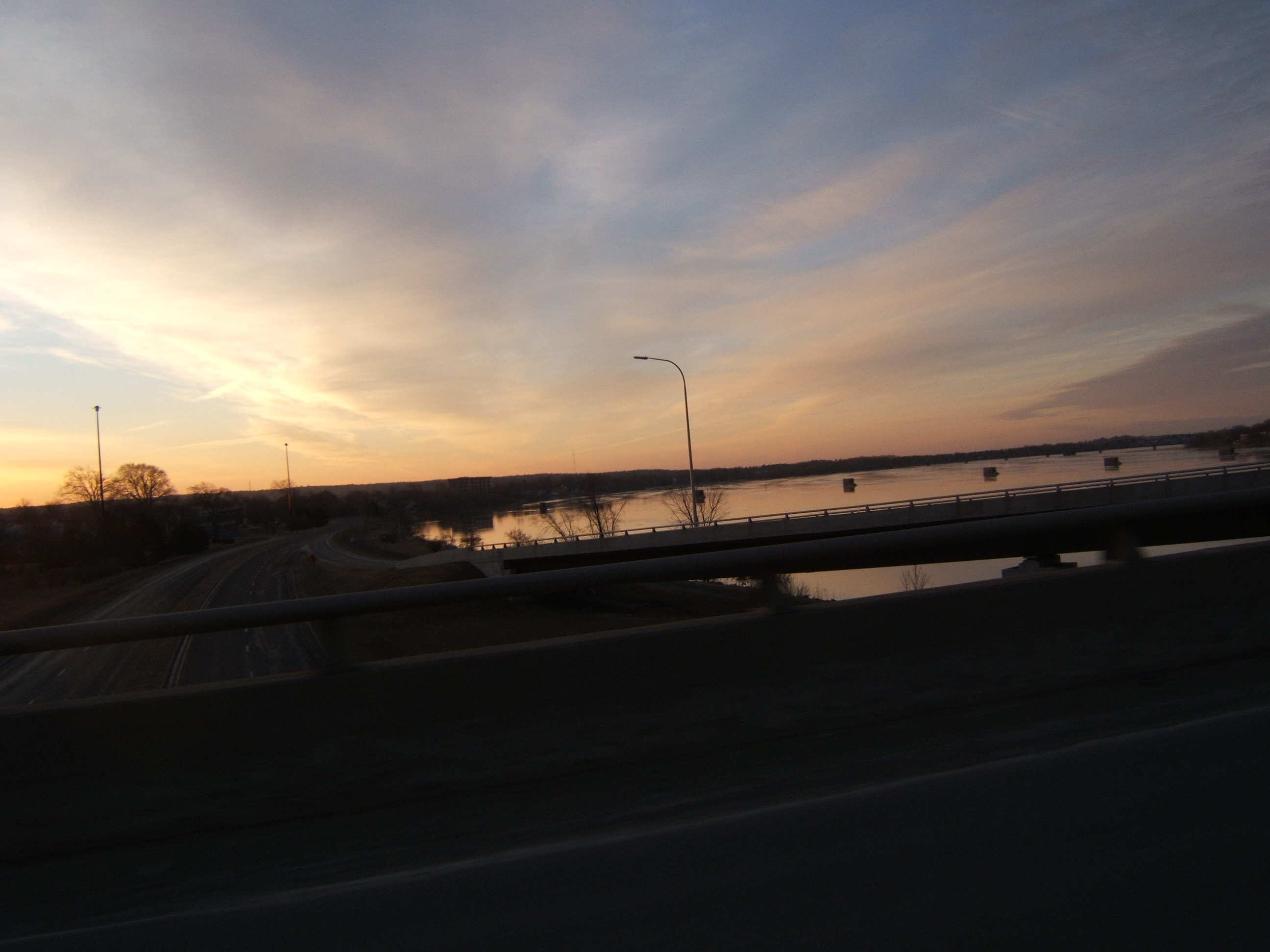
Have you seen any dragons lately?
~
~
river dragon
~
eight bevelled piers
(only remains of the old bridge)
idle in still water, reflections rigid
plates along the spine of a spent dragon
lolling on his side
taking a break in the river
~
~
© Jane Tims 2012
snippets of landscape – beaver lodges and beaver dams
Everywhere along streams in New Brunswick there are dams and lodges the beaver have built. The North American Beaver (Castor canadensis) is a clever engineer, building dams to create ponds as habitat. The still, deep water provides safety from predators and enables the beaver to float branches and logs to be used as building materials and food.
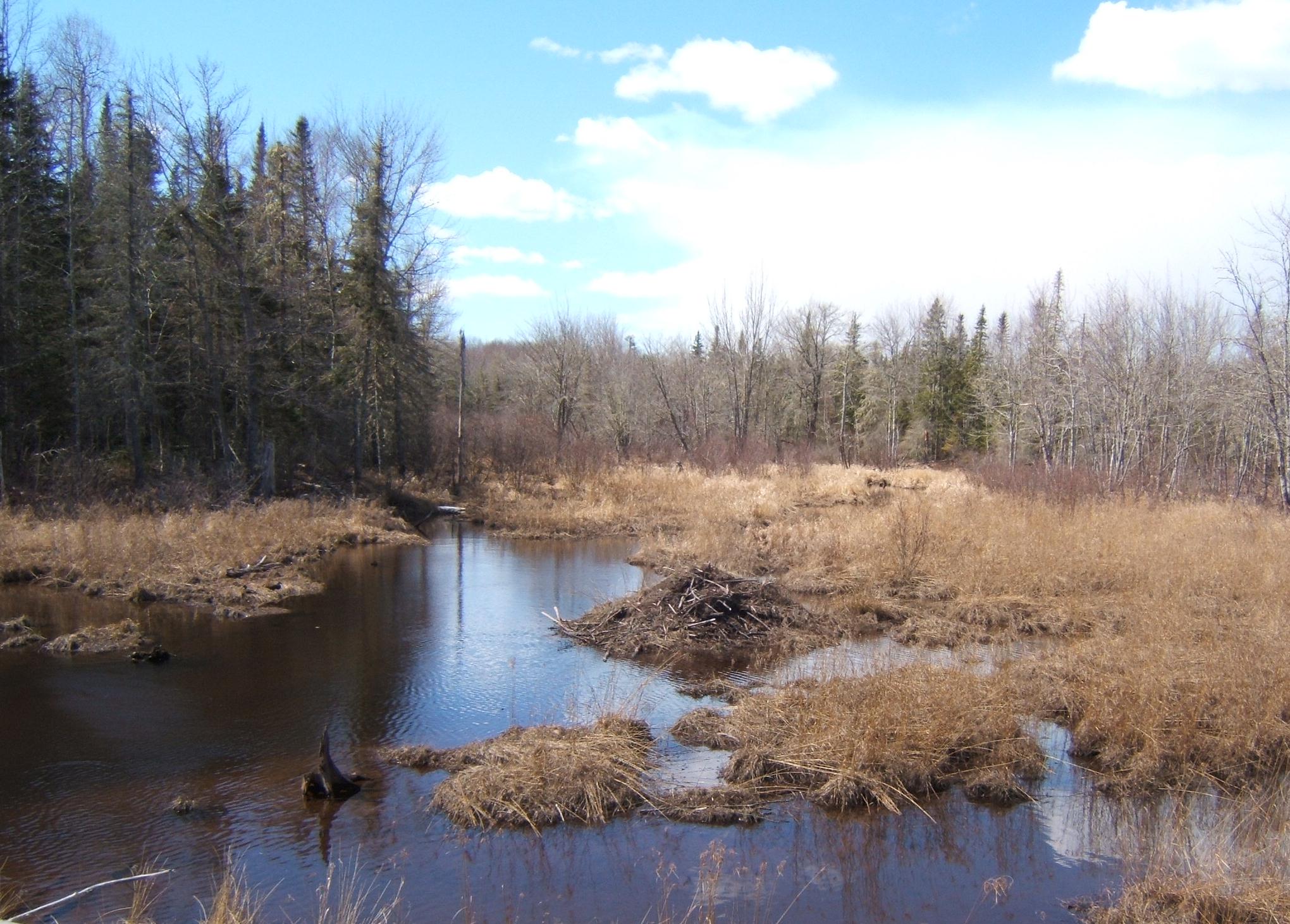
a beaver pond near our cabin ... notice the two ducks on the shore to the left...
Unfortunately, the subsequent flooding of roads and other land means the beaver’s talents are not always appreciated. However, beaver dams help create and maintain wetlands, important for providing habitat for other animals and storage areas for water.
~
~
Bear Creek Meadow by Canoe
~
from the river
we portage
across the beaverdam
over poles and patted mud
up
to the quiet pond
~
and the bow
scoured by rocks
parts green
~
and our paddles
pitted by snags
spoon soup
~
dignity quiets our paddles
hushed voices heed
the diminishing echo
~
pliant as stems of pickerel weed
we honour the whisper
of wild rice
the edgewise touching
of nymphaea and nuphar
amphibian eyes
in the harbour-notch of lily pads
~
we are threaded by dragonflies
drawn by water striders
gathered in a cloak of water shield
~
oval pads a puzzle
part in silence
return to their places
~
no trace of our passing
~
~
Published as ‘Bear Creek Meadow by Canoe’, Canadian Stories 14 (79), 2011.
© Jane Tims 2011
floodwaters
This time of year, along the St. John River, we watch for floodwaters. For some, whose homes may be threatened by the flood, this means worry. For others, it means a road along the river may be closed until the waters recede. For me, it is a time to watch for the return of the Canada Geese. It is also a time to see what interesting cargo the floodwaters carry.
All along the river, there will be huge wheels of root… the remains of trees ripped from the river’s banks and carried along with the floodwaters. These ‘root wheels’ come to rest on the river’s edges, stranded by the falling waters. Washed clean of the soil, the roots show us the underpinnings of the trees and reveal what goes on beneath the ground, where we ordinarily cannot see.


~
~
Windthrow
~
another scar
in the clearcut
~
one crooked pine
left sentinel
to watch shoots and brambles
scramble for sun
~
wind thrown in silence
(no ears to hear)
seedlings
patted in by Boy Scouts
crushed
~
roots and fibre, exposed
clots of clay
dripping rock, wounded
rootlets, oozing sap
~
overturned war wagon
mighty axle, broken
wheel of matted roots, still
spinning, earth upended
~
a crater dug in regolith
~
a new shelter
from the wind, rain
sprouting seeds
in mineral
and fallen leaves
~
~
Published as: ‘Windthrow’, The Cormorant XI (1): 100 (Fall 94)
© Jane Tims 1994
snippets of landscape – the bogan
Along the St. John River are sluggish side-streams, flooded in spring to form full tributaries of the river, but isolated and stagnant in low-water conditions, sometimes completely cut off from the main river. These are known as bogans, a word of Algonquian origin. The words logan and pokelogan have a similar origin and meaning.
My favorite bogan is a strip of water next to the Trans-Canada Highway near Jemseg. The bogan creates an island, Thatch Island, in the St. John River. Old Silver Maple trees lean over the still water, creating reflections and shadows.

bogan along Thatch Island
On maps of the St. John River, a bogan on Sugar Island, just north of Fredericton, is called the Sugar Island Padou.

bogan (padou) on Sugar Island
~
~
bogan
~
appendage of river
footnote on water
predictable as the day we walked
the dead-end backroad
and retraced our steps to return
~
in spring, by canoe, at high water
or on ice skates in winter
in summer sluggish
stagnant, secluded
~
we lurk, eavesdrop on whispered
conversation
we are river folk
unwelcome
~
~
© Jane Tims 2012
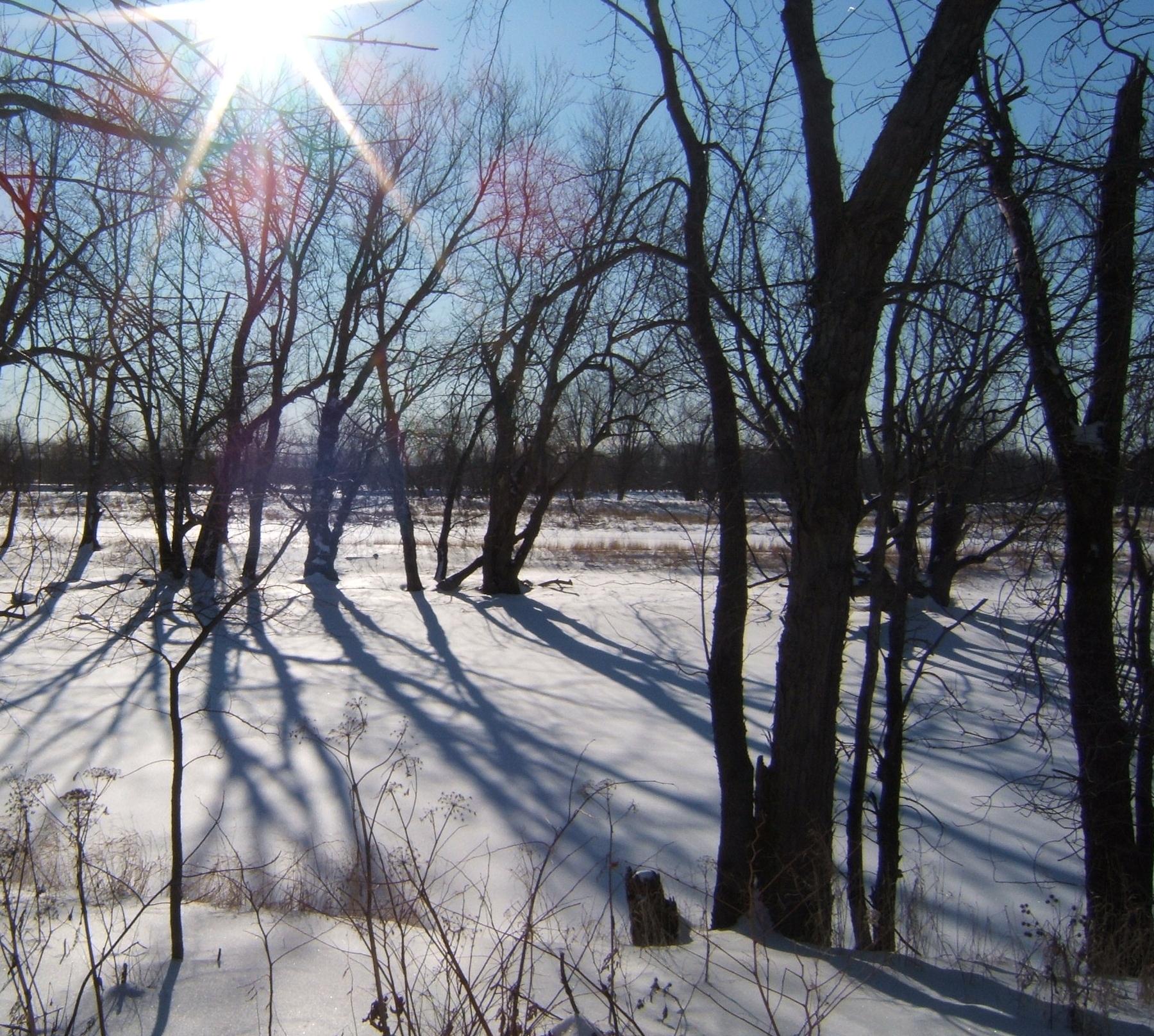
snow-bound bogan to the north of Thatch Island on the St. John River
ice is nice
Our snow is slow in coming this year. We have had three snowfalls, but each, in its turn, has been rained or warmed away. If our ups and downs of temperature continue, the scant layer of snow on the ground this morning will be gone by Saturday.
However, winter is manifesting itself in other ways. I am wearing another sweater-layer this week. Our grey woods are muttering with chill cracking sounds. And ice is forming on the river and along the lake edge, gradually covering the surfaces with white and grey.
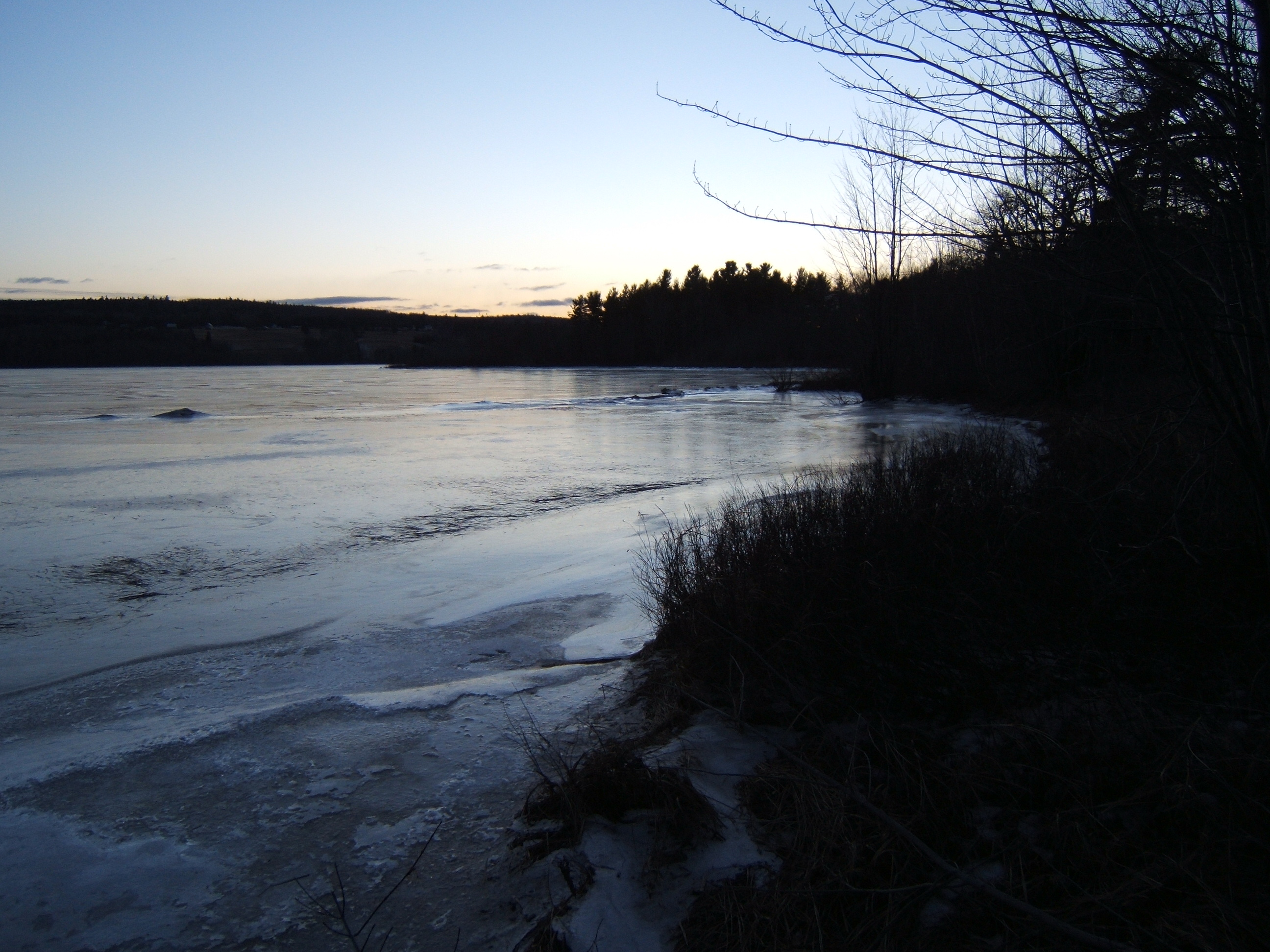
Ice – the frozen state of water… water is critical because it is a key component of our ecosystem and we need water to drink. Also, an unusual property of ice is responsible for keeping our ecosystem healthy.
Frozen water is about 8% less dense than liquid water. This means ice floats. As a result, bodies of water such as rivers, ponds and lakes, do not freeze from the bottom up. Instead, when water freezes at the surface, critical habitat is left under the ice for living things to survive and thrive. This is especially important for the bacterial and algal colonies at the base of the food chain.
Ice, therefore, is nice.
~
~
river ice
~
ice builds in shallows
at the rim of river, incremental
embellishment to glass, surrounds
willow stem and reed, thickness
increased as frost penetrates, sharp
edges cauterized by cold
~
© Jane Tims 2011

mood of the lake
One of the very enjoyable experiences of having a property near the lake is listening to the loons. There is a least one pair of loons on our lake and we see them often. Usually they call a few times at mid-day or in the evening. Their cries are varied, ranging from a laughing tremolo to distinctive and melancholy wails, hoots, and yodels.
We have always been interested in loons and the protection of their habitat. Loons are especially vulnerable to quickly changing water levels and wave action because they build their nests just at water level. `Watch Your Wake` programs help boaters protect loon habitat.
In 1994, we participated briefly in the North American Loon Project. Today there is a similar program, the Canadian Lakes Loon Survey, sponsored by Bird Studies Canada. This is a long term study, using data from volunteers, to assess the health of Canada’s loon population.
We had little time in those days to participate fully, but we did visit Peltoma Lake in southern New Brunswick, to look at the loons living there. My journal entry for our visit to Peltoma Lake reads:
May 1, 1994 Sunday
Trip to Peltoma Lake to see if there are any loons. We are preparing to canoe the lake
about three times this year to make observations. Disappointed at first
as the lake is lined with cottages and we could see no loons.
Then we stopped near a small bay and there they were
– nine black and white beauties! They left the cove as soon as they saw us.

I also wrote a poem about the lake – the mood of the poem suggests it must have been a damp and miserable day.
Last Sunday, we drove out to Peltoma Lake to take some photographs. The loons and most of the people are gone this time of year. Although it was cold, the lake sparkled in the sunlight and was anything but dreary.
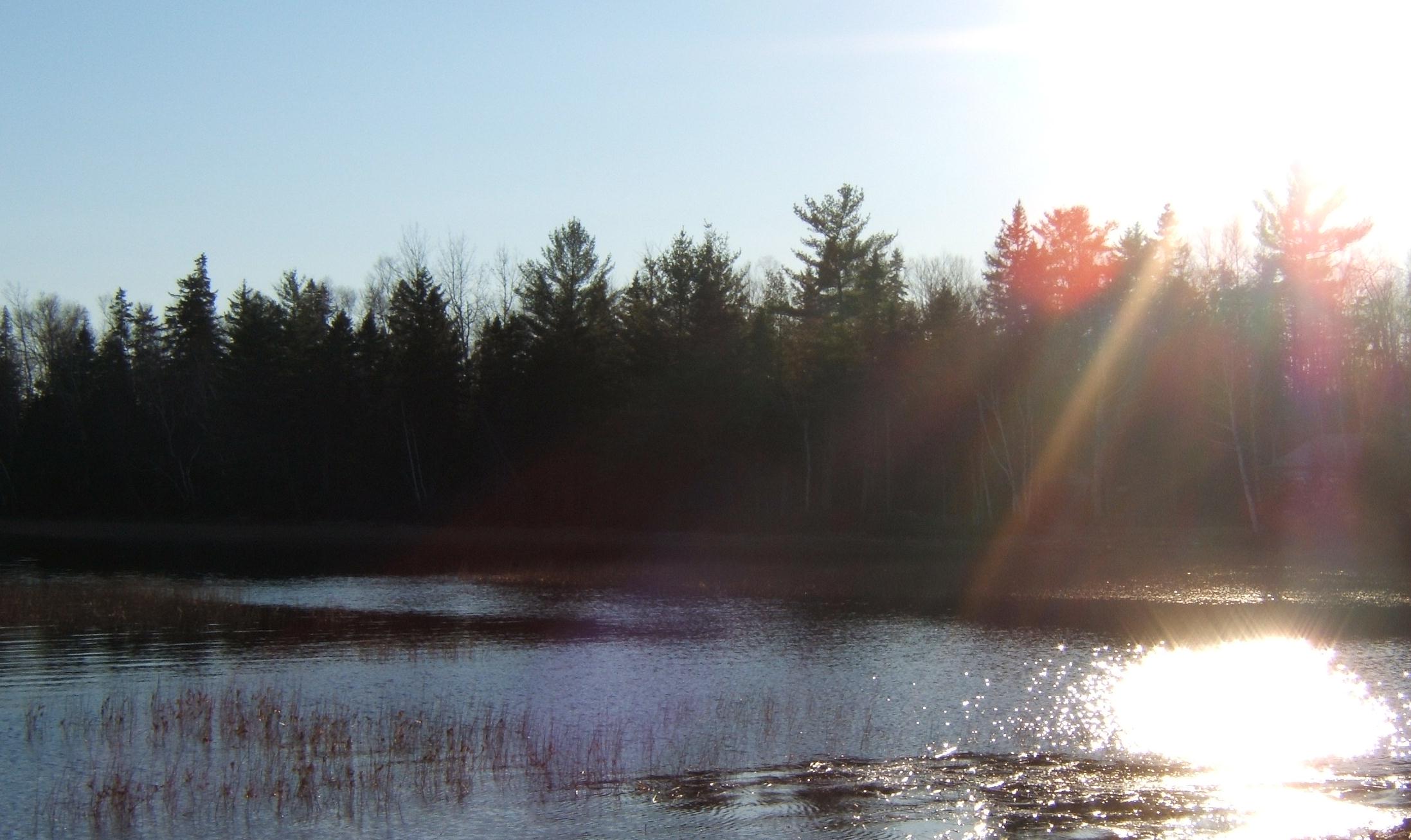
Peltoma Lake– Sunbury County
~
Peltoma in rain
is a faded black and white photo
layers of misery, thick and still
the lake, the shore, the mist
the thin chill drizzle
~
in the coves
the cedar and birch swoon above the water
moved to tears at reflection
the lake broods
over her loons
and the cell-thick pall of algae
smoothed to the shore
~
cottages hug the lake
like campers huddle a fire
cheerless and smoky
pines on the esker reach
blank windows keep watch
for sparkle on waves
back flips from the dock
paddles flashing sun
the day is bleak without answer
~
a muskrat tows a line on the shallows
loons quit the cove
diminish to mist
~
Peltoma is scowling
~
© Jane Tims 1994

refections on the water
I have realised there is a sequence to the vanishing of the autumn colour.
First the maples lose their leaves in the early autumn winds. The next will be the poplars, now glowing with banana colours. The oak leaves, ruddy and slick with reds and oranges, will succumb by late October. Tamarack, a deciduous conifer, will lose its amber needles in early November. The beech trees will keep their ochre, papery leaves all through the winter, finally losing them in spring when the new leaves emerge.
This past weekend, we found some maples still in autumn garb. At Watty Brook, flowing into McDougall Lake in south-west New Brunswick, at least one maple has taken longer than most to lose its leaves. At its sheltered location in the low valley of the brook, the tree has eluded the winds. It was reflected clearly in the brook, and its orange and gold were captured in the rocks showing through the tea-coloured water.

In spite of the movement of the water, the tree was reflected in all its splender.
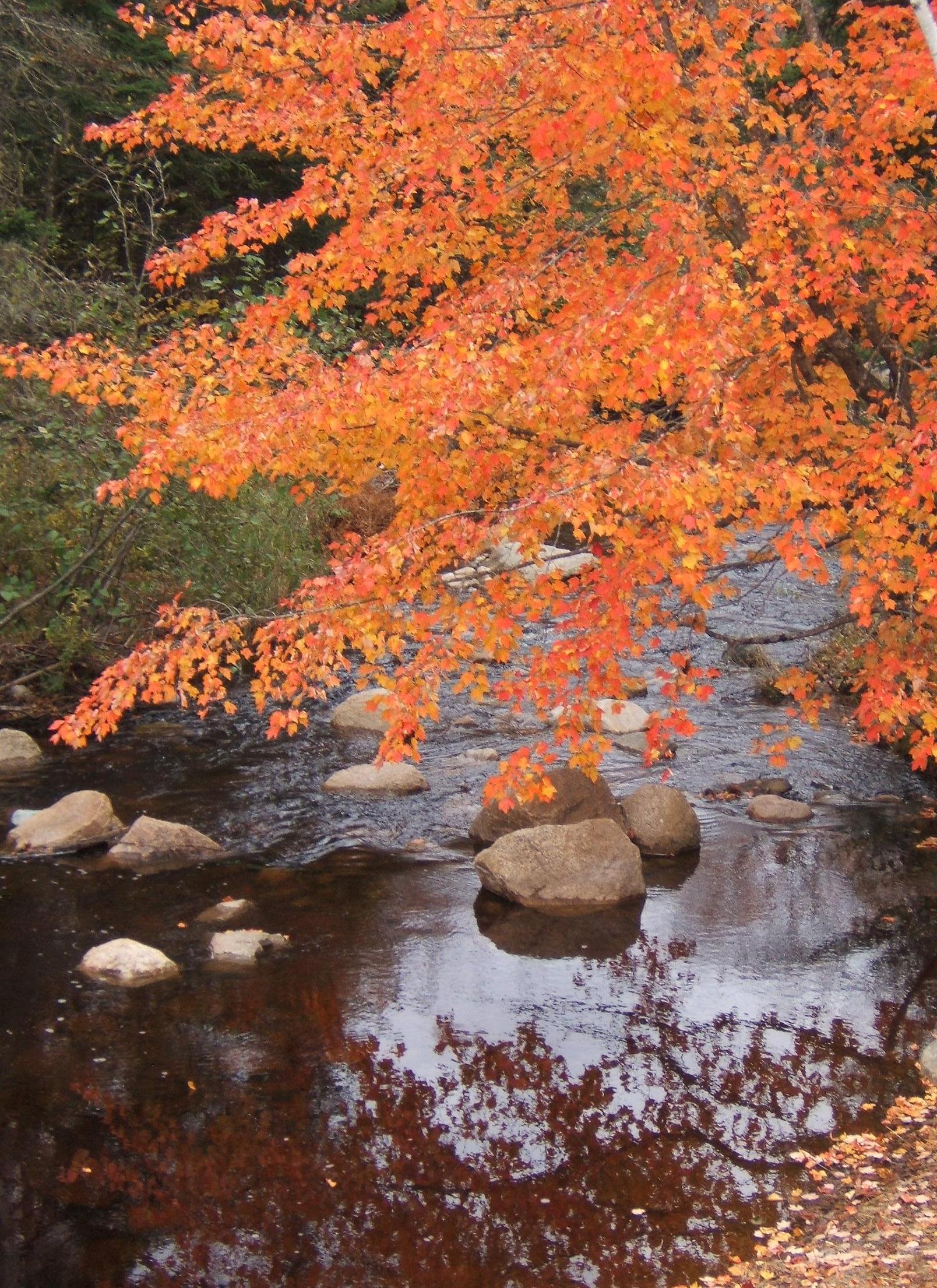
in the millstream
~
upstream
deer are drinking
and the raindrops
swell the running
this I know
from bubbles
rising
~
I am a rock
in the millstream
seasons and freshets
have smoothed
my edges
~
once I met the water
a cleaver
divisive
now I ask the water
to flow
around me
~
© Jane Tims 2003

reflection
reflection n. 1: reflecting or being reflected; reflect light, heat, colour or image;
2: reflex action;
3: censure; thing bringing discredit on;
4: reconsideration;
5: mental faculty dealing with products of sensation and perception;
6: idea arising in the mind, mental or verbal comment.
Oxford dictionary, 1950.
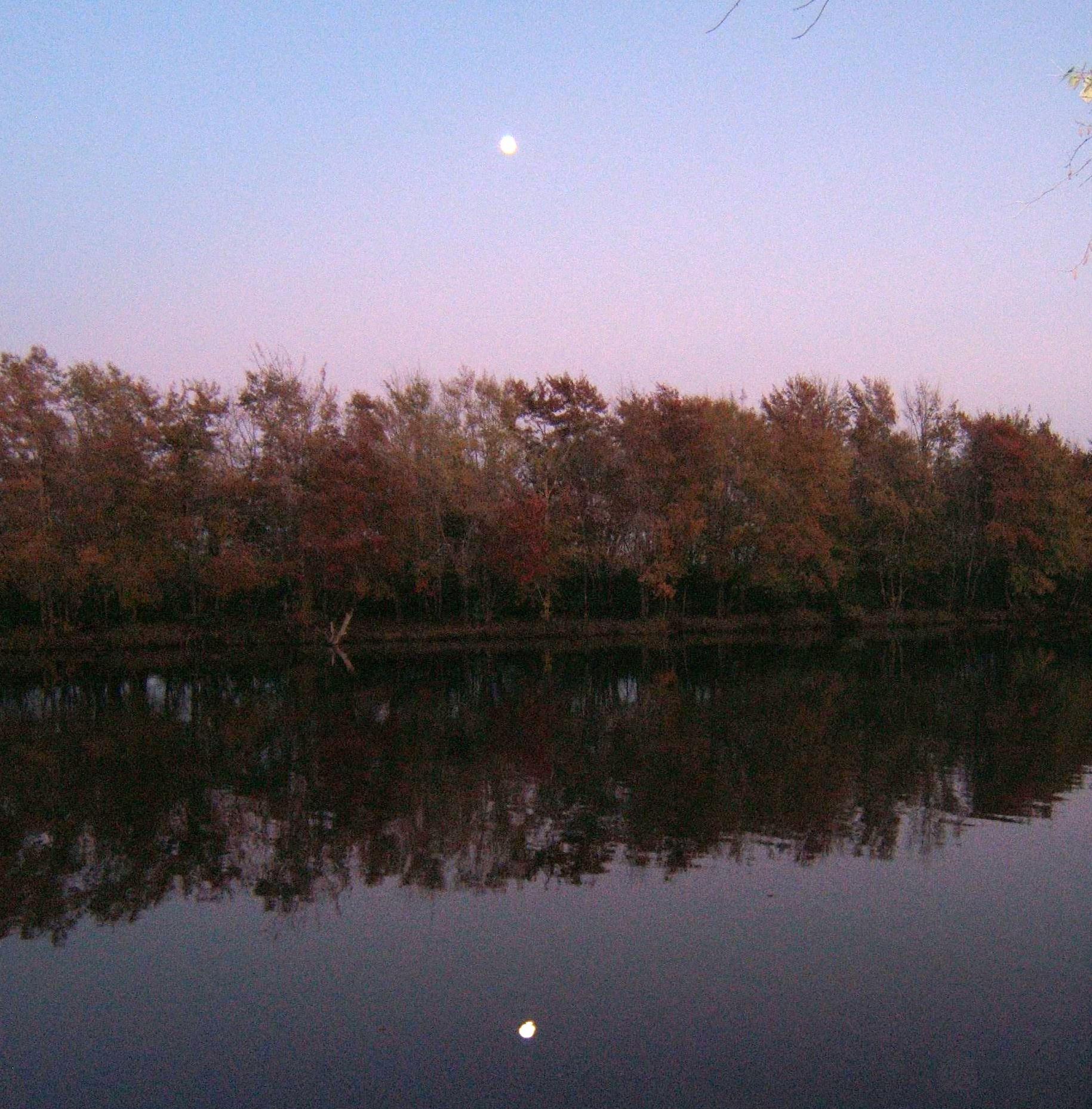
In autumn, I seek out rivers and lakes because they reflect the colour of the trees and magnify the effect of autumn fire.

Reflections are tricky. Sometimes they are so clear, you can turn a picture upside down and be momentarily confused about which way is up. Reflections are true, but show the inverse of self… the left side is on the right, the right side on the left. Refections take on the characteristics of the mirroring surface… in a mirror, a flaw in the glass will create a distorted image… in the water this results in wavy or doubled images as the water is disturbed.
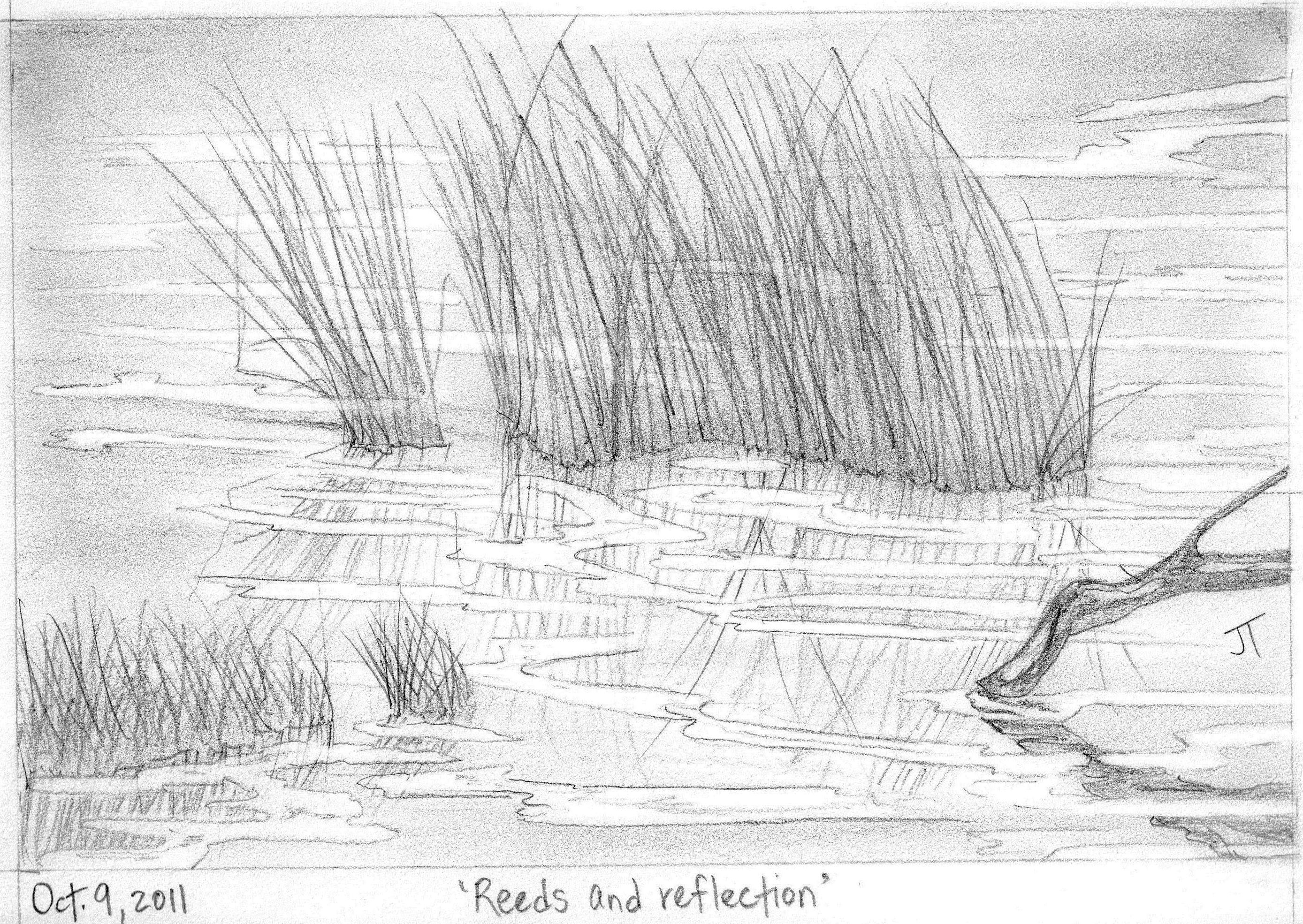
search for the essence of sun
~
1.
~
the river is molten
brimming with sunset
part water part sun imprisoned
by river reeds
~
2.
~
I am empty
less the thickness of reflection
~
the hollow
in begging hands
the void in the pipe
after the note has faded
darkness in the cradle of the moon
~
3.
~
if I had a straw
I could drink this sun
if the light would lift in folds
I could wrap it around my brain
tie it like a bandana
or I could scoop it into my hands
let it run honey and golden
along my arms
cut it with a knife
keep one half
to show my lover
~
I could sink into the river
rise through the sun’s reflection
slip it over my shoulders like raiment
~
4.
~
I could take the sun
in all these ways
weave it through me
like ribbon
~
but that would be only
the image of sun
not warm
~
© Jane Tims 1990
fords across the river
During a week of vacation last month in south-eastern Ontario, I was able to get to know some of its rivers.
The water is low this time of year and the rivers run still and quiet. Pond lilies and duckweed cover the surface, joined by early falling leaves. The country roads cross and re-cross the rivers, giving a view of each river at several points along the way.
I was also reminded of another means of crossing a shallow river or stream – the ford. This is a place where the water is shallow enough to cross on foot or by vehicle, without a bridge. Sometimes the ford depends on the natural stones or solid bottom for its footing; sometimes the bottom is built up by adding stone.
The fords on the South Branch of the Raisin River in South Glengarry County were built to last, of stone. They make a charming pause in the run of the river, allowing passage of the water and a safe way to cross.

A local person familiar with the river told me this: in spring, when the river runs deep enough to allow canoes to paddle, the fords can still be seen, white stones shining up through the water.

~
crossing the South Branch Raisin River, South Glengarry County
~
weedy South Branch Raisin River water-dry
stream-bed wizened wild grapes purple-weighted
sun-dried field rock
fords and fences
rain and rising
leaf-spun river
surface winds reflected
elm, nymphaea
ash, nuphar
~
© Jane Tims 2011
pool at the base of the waterfall
Have you ever had trout nibble at your toes?
When I was a teenager, my family was fortunate to own a woods property with a brook and a substantial waterfall. We had a cabin there, built by my Dad.
The brook was wide and shallow, running through mixed woods. It was a torrent in the spring, but in summer it ran gently through the trees, bordered by mossy hummocks, accented with small pools and riffles.
I remember the first time I saw the waterfall. We were looking for a woods property and a farmer offered to show us some of his land. I was exploring a particular area, following the bank of the stream, when I first heard the roar of the falls and saw the bright froth of water through the trees. I couldn’t believe it when the owner said, without hesitation, we could have that lot for our cabin.
The falls were substantial, spilling about 15 feet over a dip in the shale substrate. They spread outward from the lip of the falls, creating a broad triangle of white, laid across the rock like a veil. The roar of the water falling was constant and intense.

'waterfall and pool'
At the base of the waterfall was a pool, waist deep. The water was headache cold, but once we became used to it, we could swim and cool off on a summer day. The pool was transparent as glass, and we could look down and watch the trout nibbling at our toes. In spite of the dramatic turn of my poem below, the trout were not voracious and their nibbles were butterfly kisses.
Meniscus
~
1.
~
mist and mosses
colour the air
where the waterfall leaps
green in the mumble of water
~
I stand waist deep
in the fall-fed pool
bubbles cling to my legs
to the hairs on the back of my knee
~
droplets of air above water are nothing
~
2.
~
the soles of my feet
slide on the slate
search for softer
pockets of sand
~
trout kiss my ankles
~
I try to see
but the surface is silver
a dome reflected
of maple and sky
~
3.
~
a green leaf settles
a pine needle spins
striders press dents on the water
~
4.
~
I need to see the trout
I bend my face to the water
press on the skin
push through the meniscus
~
my nose is severed from my face
~
5.
~
I am the pond
~
I cannot move
I cannot breathe
my hands are numb
my heart squeezes within me
~
I cannot believe
the trout have taken
great gashes of leg
my toes are slashed by the slate
~
I look up through the water
its surface a circle of silver
~
6.
~
fish gnaw at my toes
bubbles grate at the back of my knee
tears under water are nothing
~
© Jane Tims 1992




 nichepoetryandprose