Posts Tagged ‘St. John River’
making friends with the ferns #2
The onset of plants in spring is overwhelming. This year, I seem to see ferns everywhere, probably because the fiddlehead of the Ostrich Fern is a delicacy in New Brunswick. The Ostrich Fern (Matteuccia Struthiopteris (L.) Todaro) grows in riparian (shoreland) areas all along the St. John River and its tributaries.
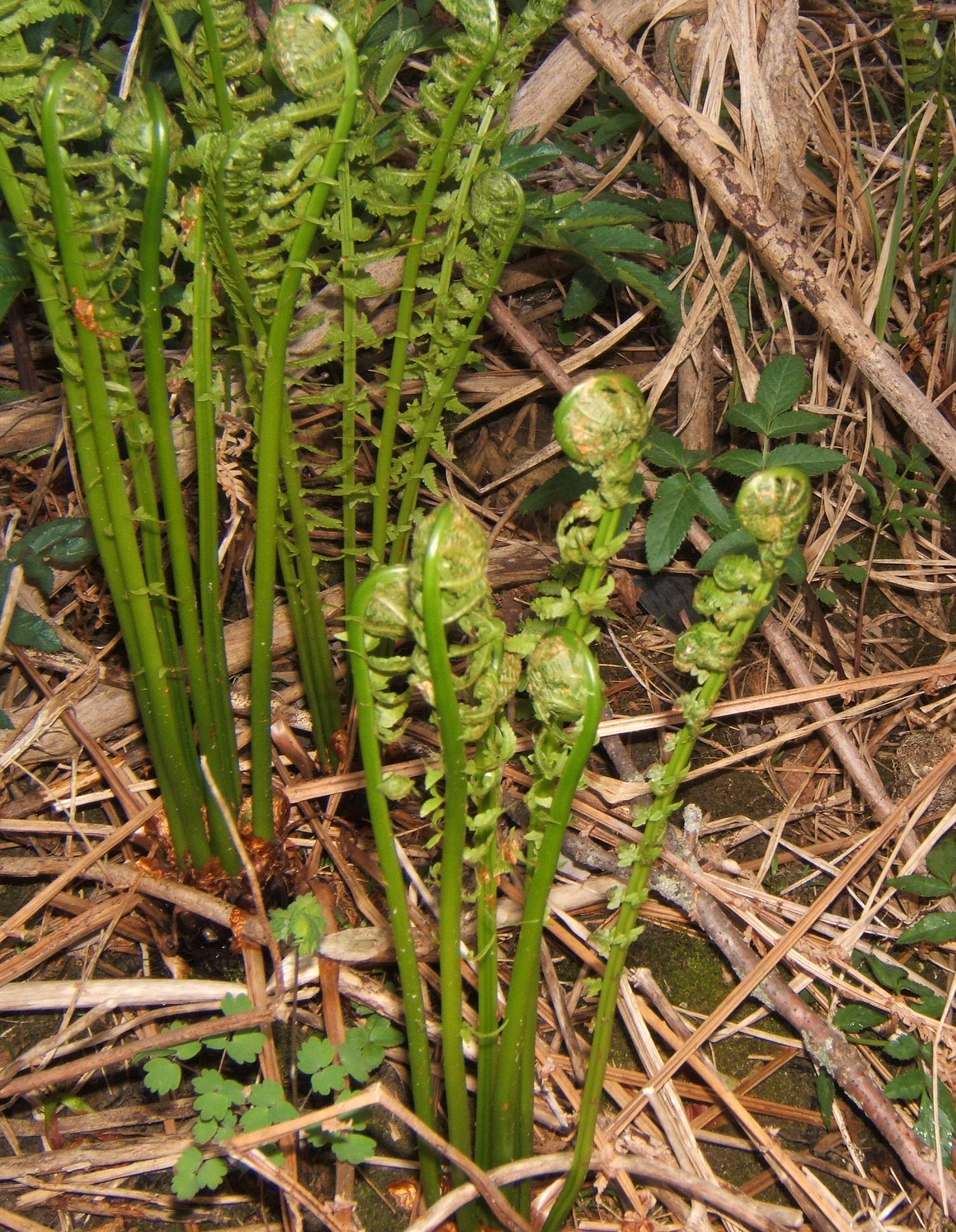
This time of year, car and trucks park in small roads off the old Trans-Canada, and you can glimpse people picking fiddleheads in lowlying places along the river. They concentrate on what they are doing, their backs bent, hardly looking up from their picking. People have favorite fiddleheading spots and usually follow a code, leaving a percentage of the fiddleheads to grow and sustain the ferns for future years.

I only picked a few fiddelheads this year. They were a little older than they are ordinarily picked, but they were delicious. The best fiddleheads are picked when they are just above the surface. After picking they are cleaned, a very easy undertaking, and boiled or steamed until very well cooked.

The cooking liquor is discarded – its dark amber-red color is due to high concentrations of shikimik acid. Once cooked, the fiddleheads are a flavorful green, served with butter or margarine. When my husband was young, his family ate a meal of fiddleheads, new potatoes and shad at fiddleheading time.
Warning: 1. never eat any plant if you are not absolutely certain of the identification; 2. never eat any plant if you have personal sensitivities, including allergies, to certain plants or their derivatives; 3. never eat any plant unless you have checked several sources to verify the edibility of the plant.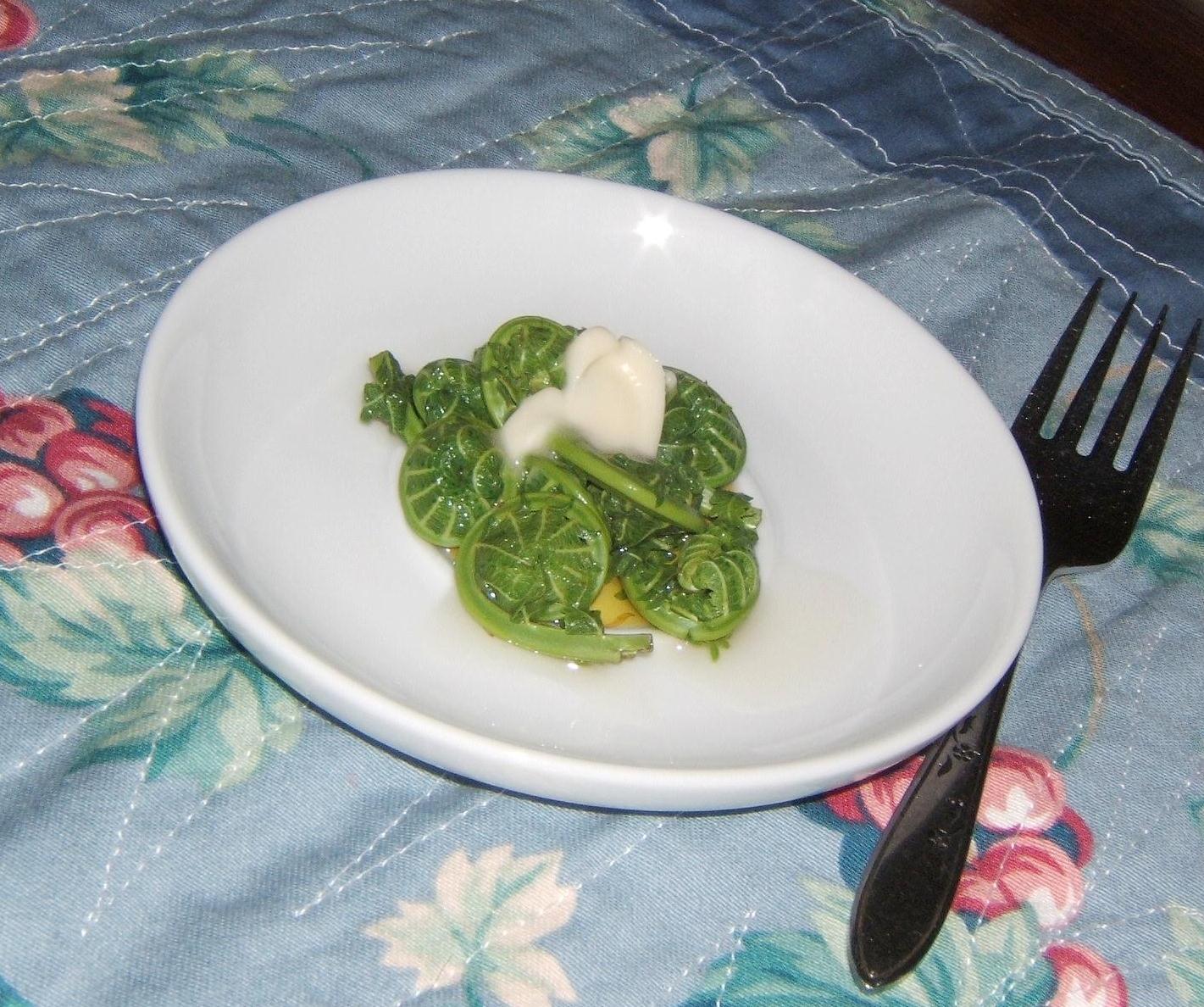
In town, people are selling fiddleheads from trucks and at small stands, and there will certainly be Fiddleheads at the Farmer’s Market today in Fredericton. Usually, the sellers do a brisk business, keeping the fiddleheads fresh in portable coolers and in buckets. I watched a vendor bagging the green fiddleheads, giving the clear plastic bag a deft twirl to seal it before he handed it to the buyer.
Have you ever eaten fiddleheads?
~
~
waking from a dream
Ostrich Fern (Matteuccia Struthiopteris (L.) Todaro)
~
bottom-land thicket
naked in spring
a rumpled bed
the throws of hibernation
~
new growth cocooned
in dry leaves, bent skeletons
last summer’s fern
~
sun surge
insult
between curtains
~
green fiddlehead
uncoils
head down
hesitant fist thrust
between pillows and down
stretches fingers
filigreed shadow
new blocking of sun
~
brown coverlet
kicked
~
new green bedspread
new green canopy
green shade
~
~
Published www.nichepoetryandprose.wordpress.com Nov. 9, 2011
© Jane Tims 2011
Warning: 1. never eat any plant if you are not absolutely certain of the identification; 2. never eat any plant if you have personal sensitivities, including allergies, to certain plants or their derivatives; 3. never eat any plant unless you have checked several sources to verify the edibility of the plant.juvenile Bald Eagle
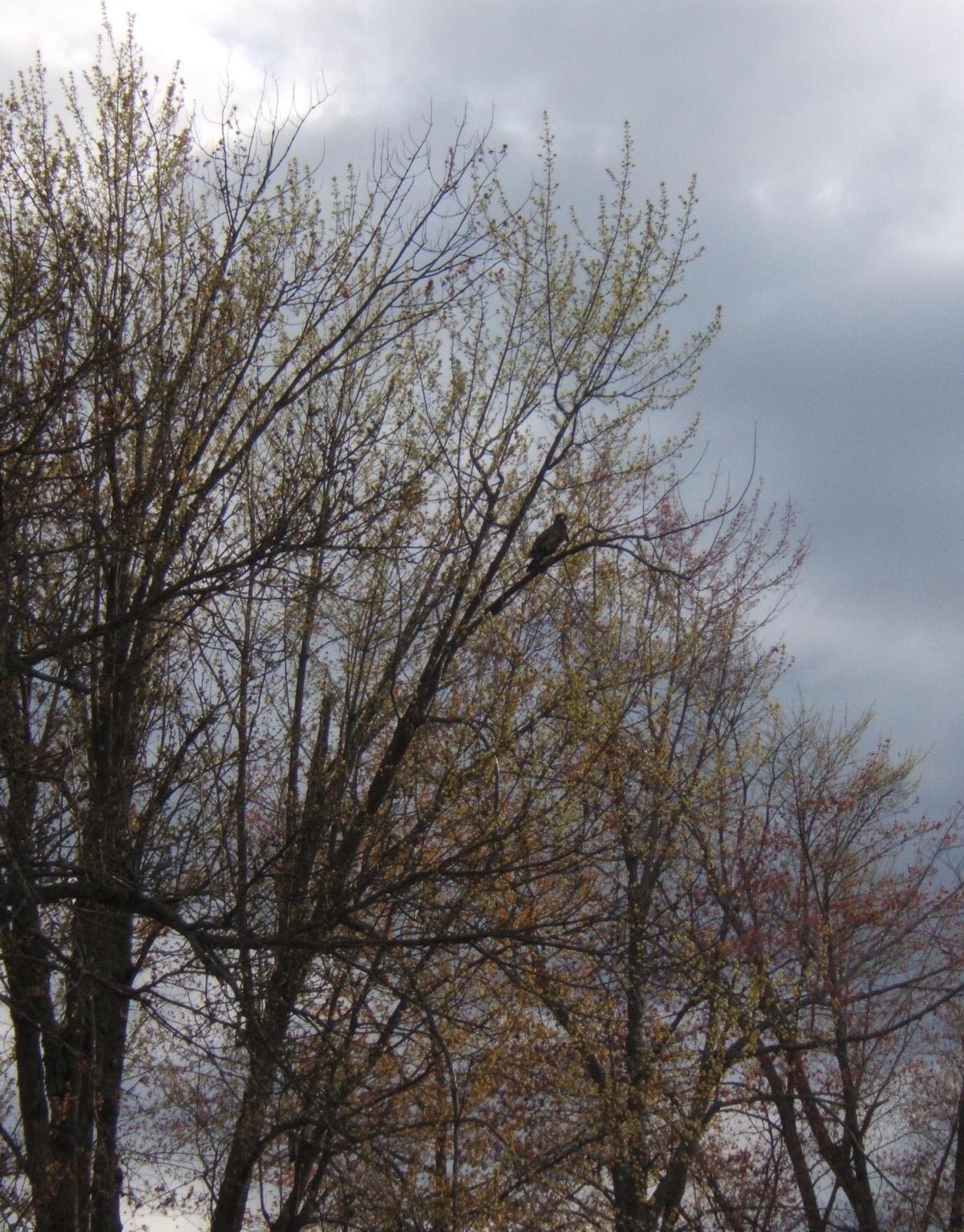
Last evening, we drove along the St. John River looking for fiddleheads and were delighted to see a juvenile Bald Eagle (Haliaeetus leucocephalus).
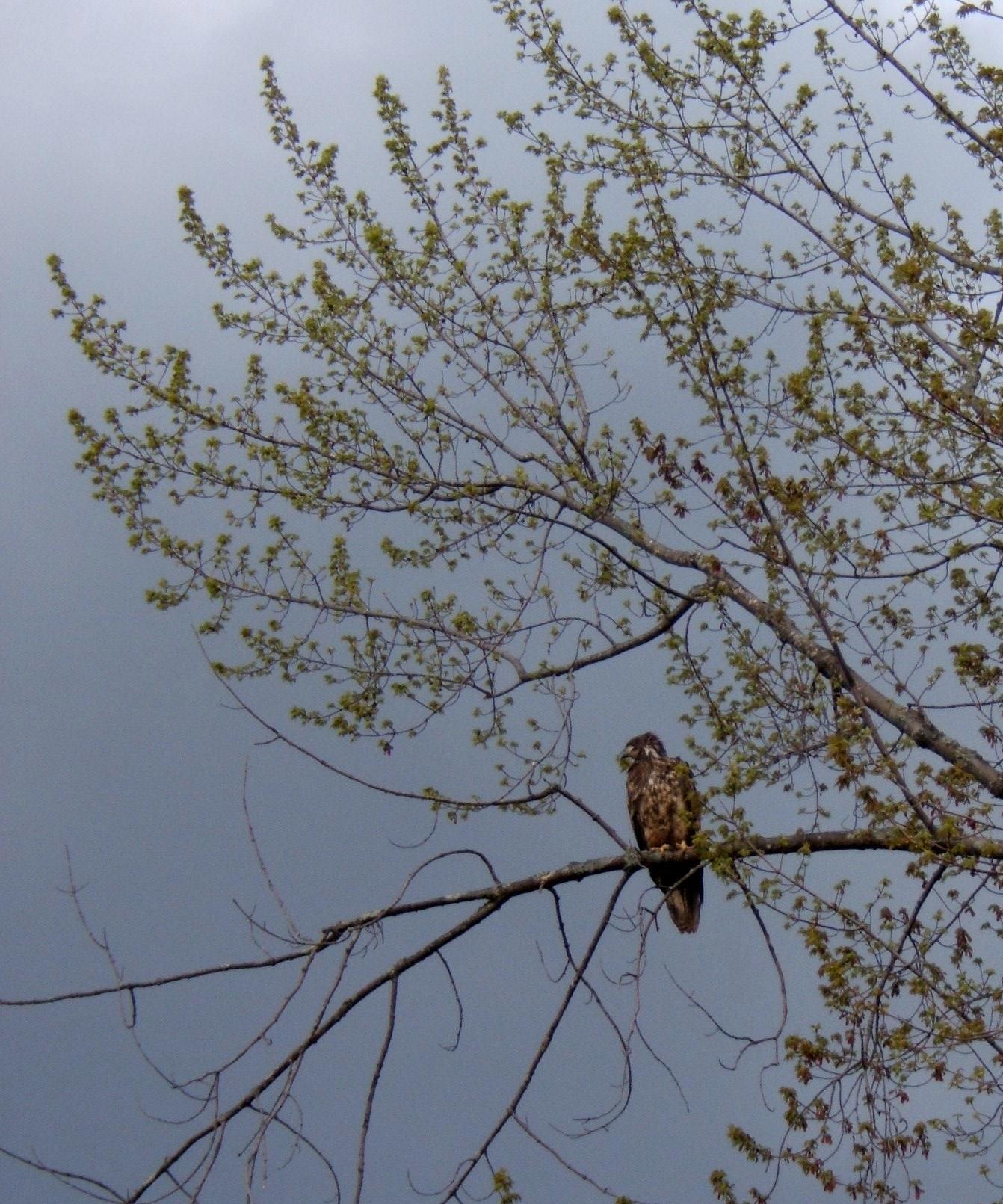
He was sitting on the dead branch of a Silver Maple, just above the highway. He stayed quite still as I took a few photos. He was huge compared to the hawks and osprey we usually see in the trees along the raodway. His plumage was tawny and brown, and his talons were a beautiful orange. Occasionally, he would twist his head and his eye would gleam, reflecting the light of the setting sun.
~
~
young eagle
~
his golden eye
glints as he twists his head
reinterprets the sinking sun
as soul
scrutinizes the river lands
for peril or prey
~
~
© Jane Tims 2012
a pair of Painted Turtles
We did our usual bird-watching run along the St. John River on Sunday afternoon. We ordinarily follow the same circuit, from Oromocto, along the north side of the River, to Jemseg, crossing the River via the Gagetown Ferry, and returning on the south side of the St. John River. This area is in central New Brunswick, east of Fredericton.
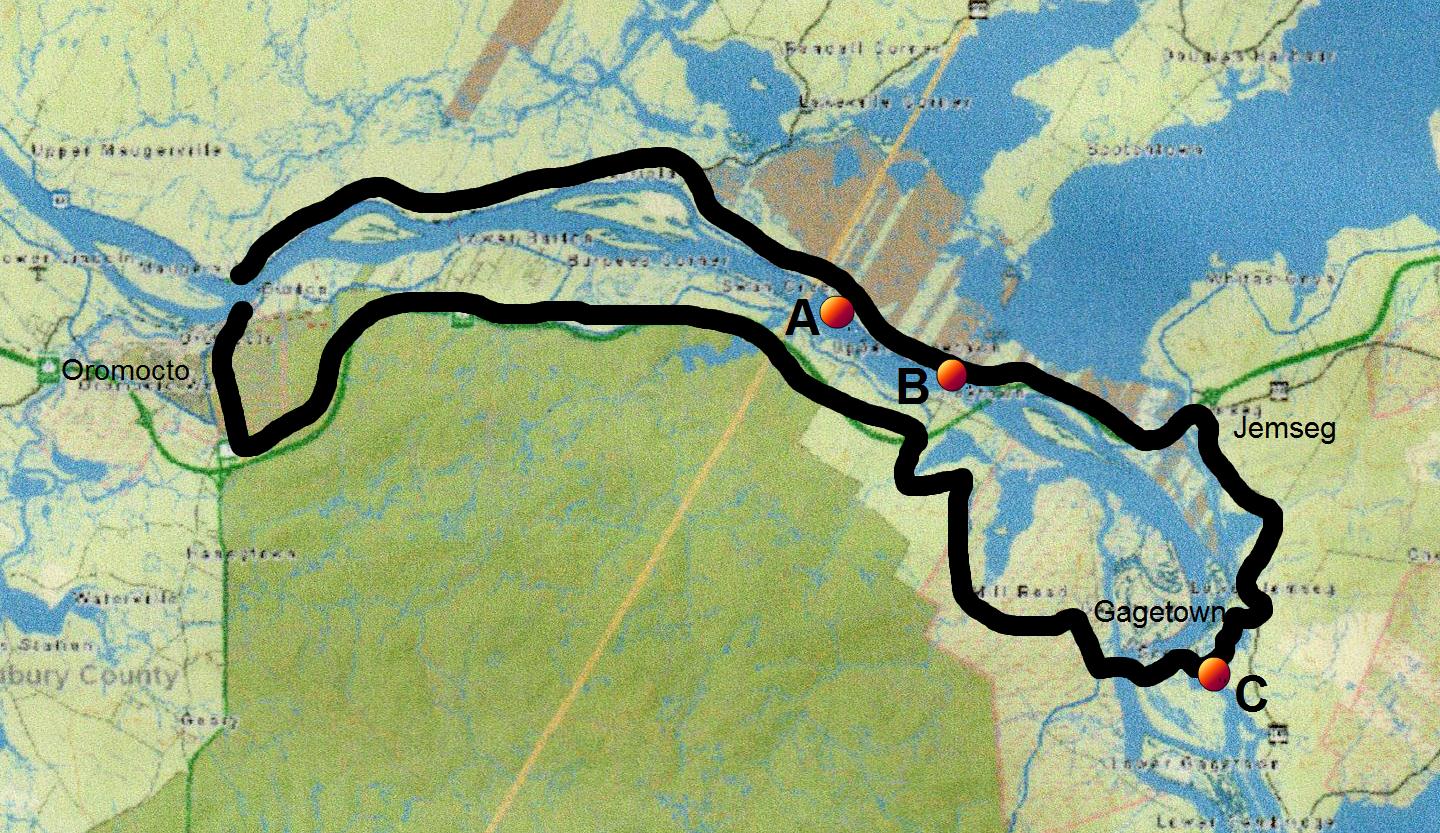
The first part of this circuit is along the old Trans Canada Highway, now Route 105. This section follows the St. John River, through the Grand Lake Meadows, an important wetland area for New Brunswick. Near the spot marked ‘A’, we saw lots of ducks, an Osprey eating a fish, and three other raptors (a group including hawks or eagles) too distant to identify. Near ‘B’ is the place we often see various owls, Bald Eagles, and Moose.

From Jemseg, we take Route 715 to Lower Jemseg. This part of the route travels above the River, through farmland. We rarely see wildlife along this section, but the area has a rich history and has several interesting buildings, including the old church featured in my post of September 14, 2011.

From Lower Jemseg, we turn towards the Gagetown Ferry and Scovil. This is a very interesting part of the route, snaking between wetlands and ponds. Along this section, it is usual to spot other cars of eager birdwatchers.
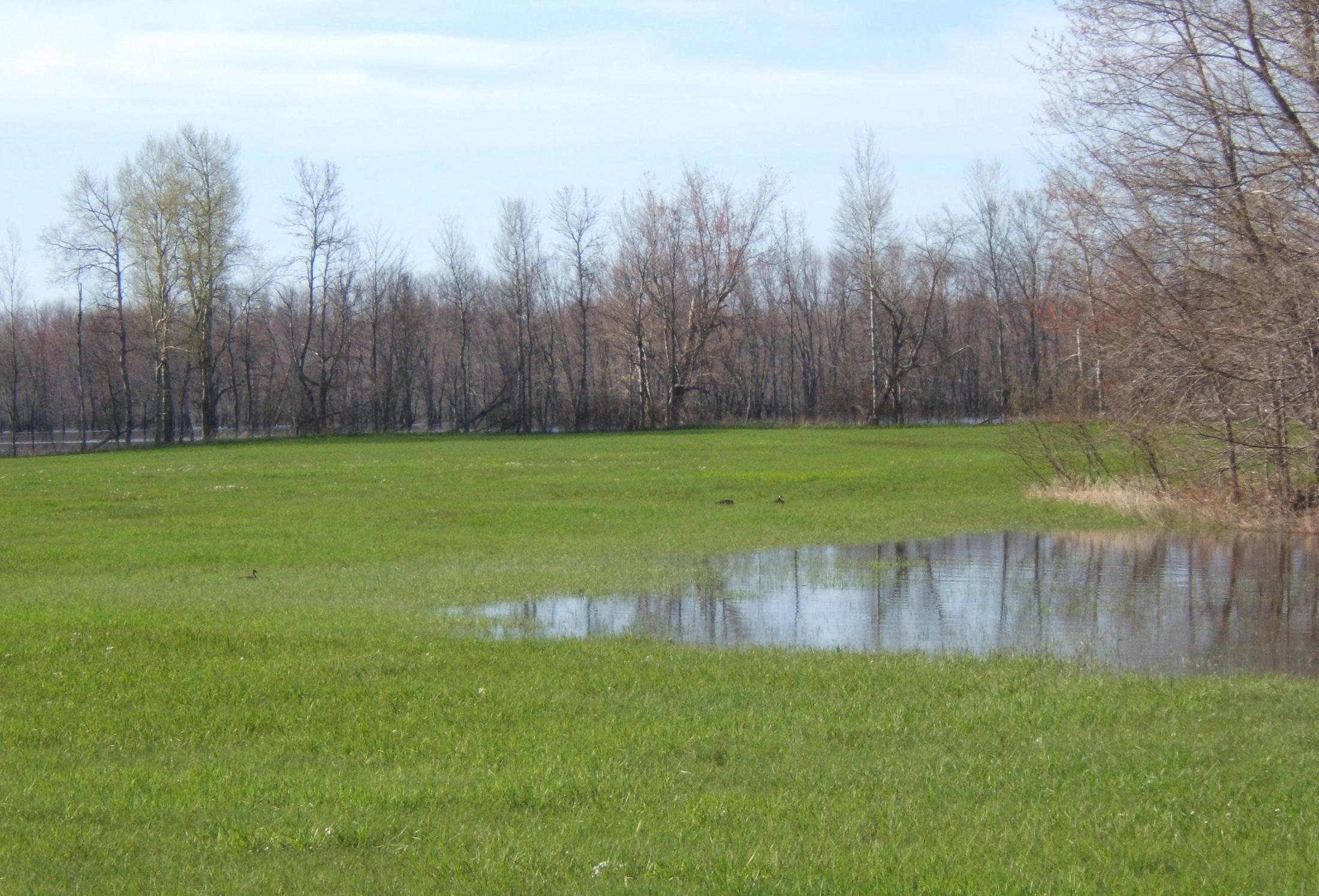
a wet field near Scovil … there are two American Black Ducks in the grass to the left and two Canada Geese beyond the pond … this is the same pond where we saw a Glossy Ibis on April 23, 1988
The highlight of our trip on Sunday was a group of three Painted Turtles (Chrysemys picta) on a log along this last section of our route, near the spot marked ‘C’.

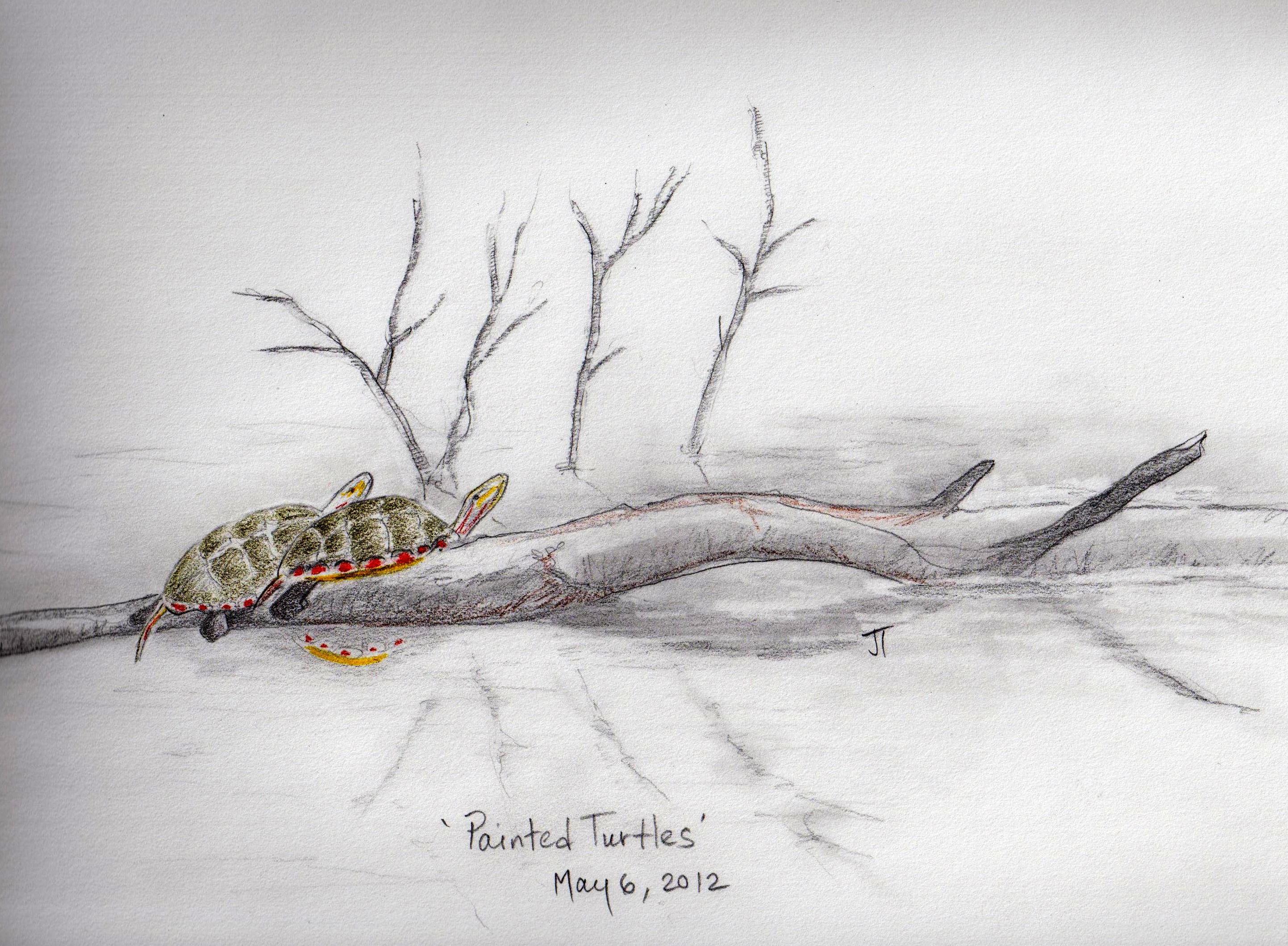
The turtles were sunning themselves on a log in the middle of a pond. They have dark green, smooth shells, with bright orange markings along the edge of the shell. The inside of the lower shell is bright yellow. Their heads and tails are also marked with short streaks of orange and yellow. All winter these turtles have been hibernating at the bottom of the pond. Now awake, they will live in the pond all summer, laying eggs and feeding on aquatic insects and vegetation.
These Painted Turtles were stretching their necks out of their shells as far as possible. They made a beautiful sight, their colorful shells mirrored in the pond water.
~
~
Painted Turtles
~
I study the colors
through binoculars
remember these
with my hand, my fingers
rock the fine focus
rotate the brush
pick paint from the palette
~
the shell, flat olive tiles, grouted
Payne’s Grey
the wrinkled foot and leg, relaxed along the log
Burnt Umber
on the tail, the neck, the head
deft strokes of Cadmium
Yellow and Orange
~
the head stretches, to soak in sun
and dazzles on the pond
the lower shell
Yellow
refection on water
~
and, at the edge of the carapace
bright dabs of Orange
one part Cadmium
two parts Quinacridone
and a touch of some unknown
translucence
elusive
~
© Jane Tims 2012
‘Ducks’ Ditty’
On Saturday we took a drive along the St. John River, to see if any waterfowl were braving the cold windy day. The water is slowly receeding but still above summer levels. On a miserable day, the ducks retreat to the shallows, away from the exposure of the open water.
There were a few birds on the water. We stopped for a while to watch five male Mallards (Anas platyrhynchos) paddling about. They stuck together as a group, feeding in the shallows and occasionally ‘standing’ on the water to flap their wings. This time of year, the female Mallards are on the nest, hatching their young, and the males typically hang out in groups with other males until moulting begins.
I am not good at duck identification, but the Mallard is easy to spot, with its bright green head and the white ring around its neck. I enjoyed watching them through the binoculars, especially their orange legs and feet maneouvering in the muddy water.
The Mallard is a member of the marsh duck family and a ‘dabbler’. Dabblers obtain their food by skimming it from the surface or tipping up to submerge their heads so they can feed underwater.
I can never watch dabblers on the water without thinking of Kenneth Grahame’s famous poem ‘Ducks’ Ditty’, from the book The Wind in the Willows. If you don’t have a copy of the book, have a look at the poem at http://www.literaturepage.com/read/windinthewillows-14.html

© Jane Tims 2012
floodwaters
This time of year, along the St. John River, we watch for floodwaters. For some, whose homes may be threatened by the flood, this means worry. For others, it means a road along the river may be closed until the waters recede. For me, it is a time to watch for the return of the Canada Geese. It is also a time to see what interesting cargo the floodwaters carry.
All along the river, there will be huge wheels of root… the remains of trees ripped from the river’s banks and carried along with the floodwaters. These ‘root wheels’ come to rest on the river’s edges, stranded by the falling waters. Washed clean of the soil, the roots show us the underpinnings of the trees and reveal what goes on beneath the ground, where we ordinarily cannot see.


~
~
Windthrow
~
another scar
in the clearcut
~
one crooked pine
left sentinel
to watch shoots and brambles
scramble for sun
~
wind thrown in silence
(no ears to hear)
seedlings
patted in by Boy Scouts
crushed
~
roots and fibre, exposed
clots of clay
dripping rock, wounded
rootlets, oozing sap
~
overturned war wagon
mighty axle, broken
wheel of matted roots, still
spinning, earth upended
~
a crater dug in regolith
~
a new shelter
from the wind, rain
sprouting seeds
in mineral
and fallen leaves
~
~
Published as: ‘Windthrow’, The Cormorant XI (1): 100 (Fall 94)
© Jane Tims 1994
snippets of landscape – the bogan
Along the St. John River are sluggish side-streams, flooded in spring to form full tributaries of the river, but isolated and stagnant in low-water conditions, sometimes completely cut off from the main river. These are known as bogans, a word of Algonquian origin. The words logan and pokelogan have a similar origin and meaning.
My favorite bogan is a strip of water next to the Trans-Canada Highway near Jemseg. The bogan creates an island, Thatch Island, in the St. John River. Old Silver Maple trees lean over the still water, creating reflections and shadows.

bogan along Thatch Island
On maps of the St. John River, a bogan on Sugar Island, just north of Fredericton, is called the Sugar Island Padou.

bogan (padou) on Sugar Island
~
~
bogan
~
appendage of river
footnote on water
predictable as the day we walked
the dead-end backroad
and retraced our steps to return
~
in spring, by canoe, at high water
or on ice skates in winter
in summer sluggish
stagnant, secluded
~
we lurk, eavesdrop on whispered
conversation
we are river folk
unwelcome
~
~
© Jane Tims 2012
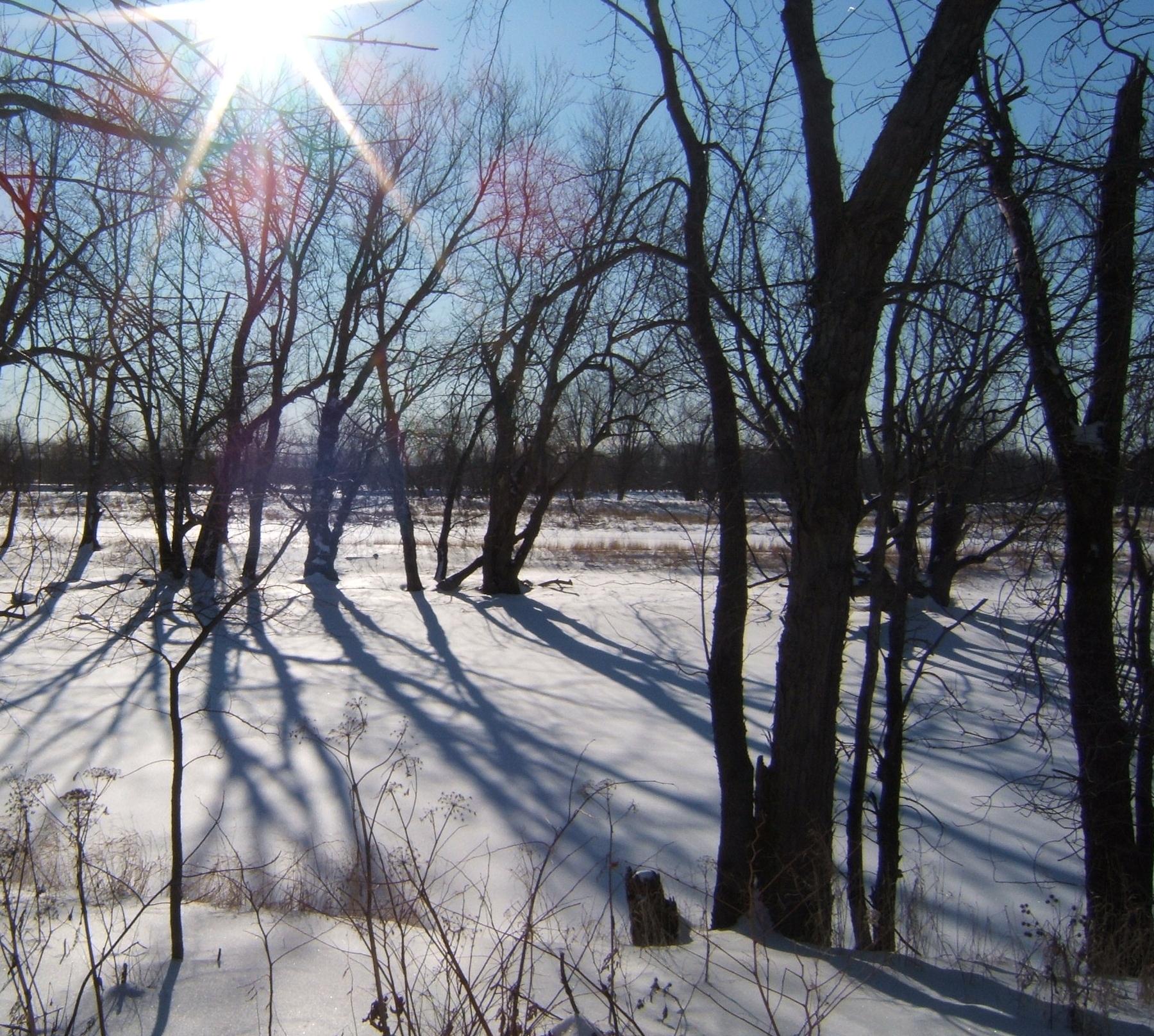
snow-bound bogan to the north of Thatch Island on the St. John River
a moment of beautiful – trees and shadows
space: edge of the St. John River in winter
beautiful: mature silver maple trees and their shadows on the snow
~
We went for a drive last weekend, along the St. John River. Above the ice, the river is covered in snow, a broad white plain edged by very old and very rugged silver maple trees.
In spite of a harsh environment, these trees endure. Each spring and fall, they are flooded. They are scoured by ice and subject to the eroding forces of the river. They are always at risk from people searching for a supply of firewood. A friend tells me these huge trees are usually suckers, grown from the base after the original tree was harvested.
And yet they grow old, a part of the hardwood floodplain forest. On a sunny day, they lean over the snow-covered river and spread their shadows across its surface. They have the beauty of their symmetry, solidity, grace, and fortitude.
~
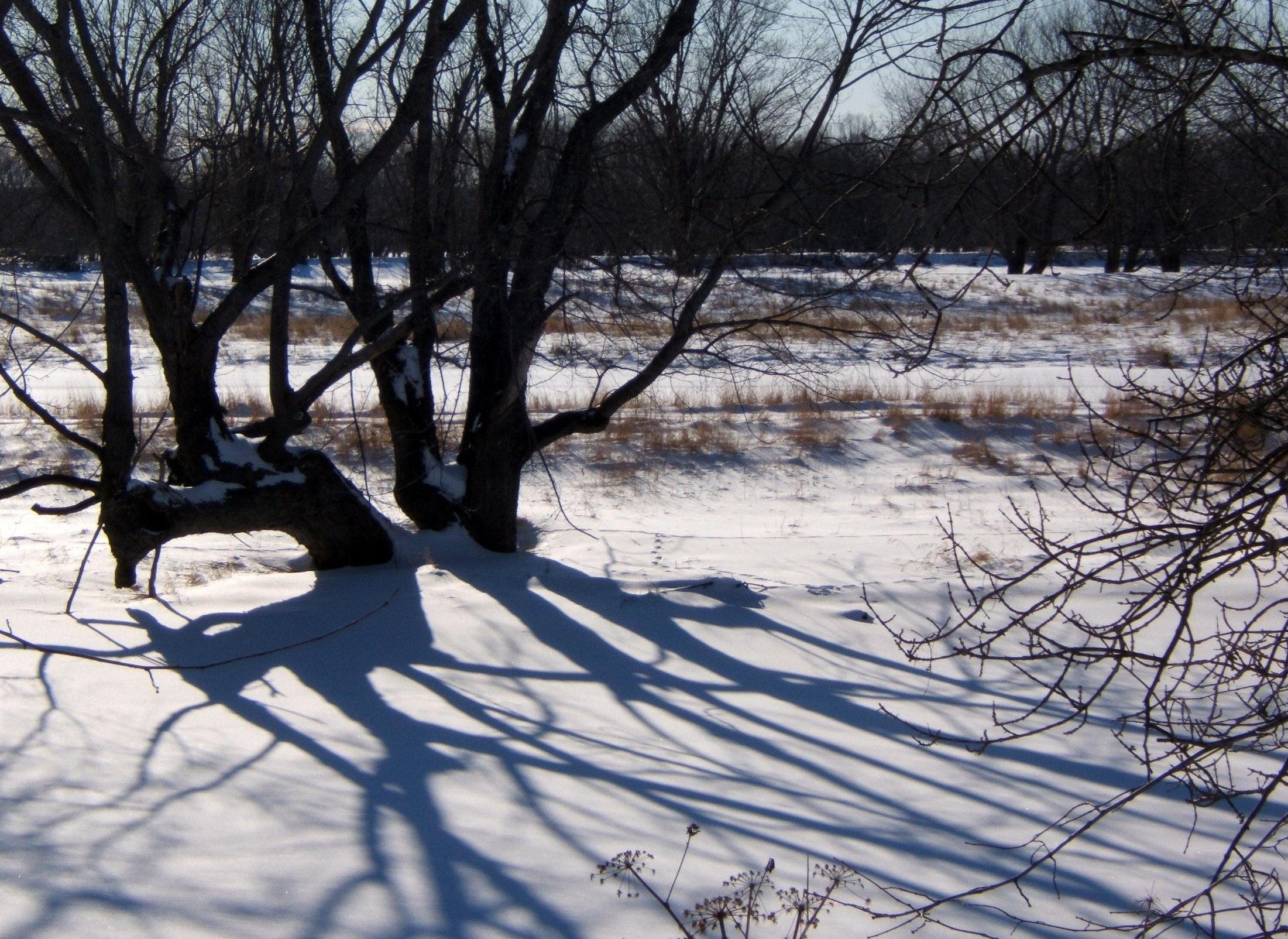

the line of animal tracks crossing the snow are probably from a Red Fox
Copyright Jane Tims 2012




 nichepoetryandprose