Posts Tagged ‘spring’
aromatic spring
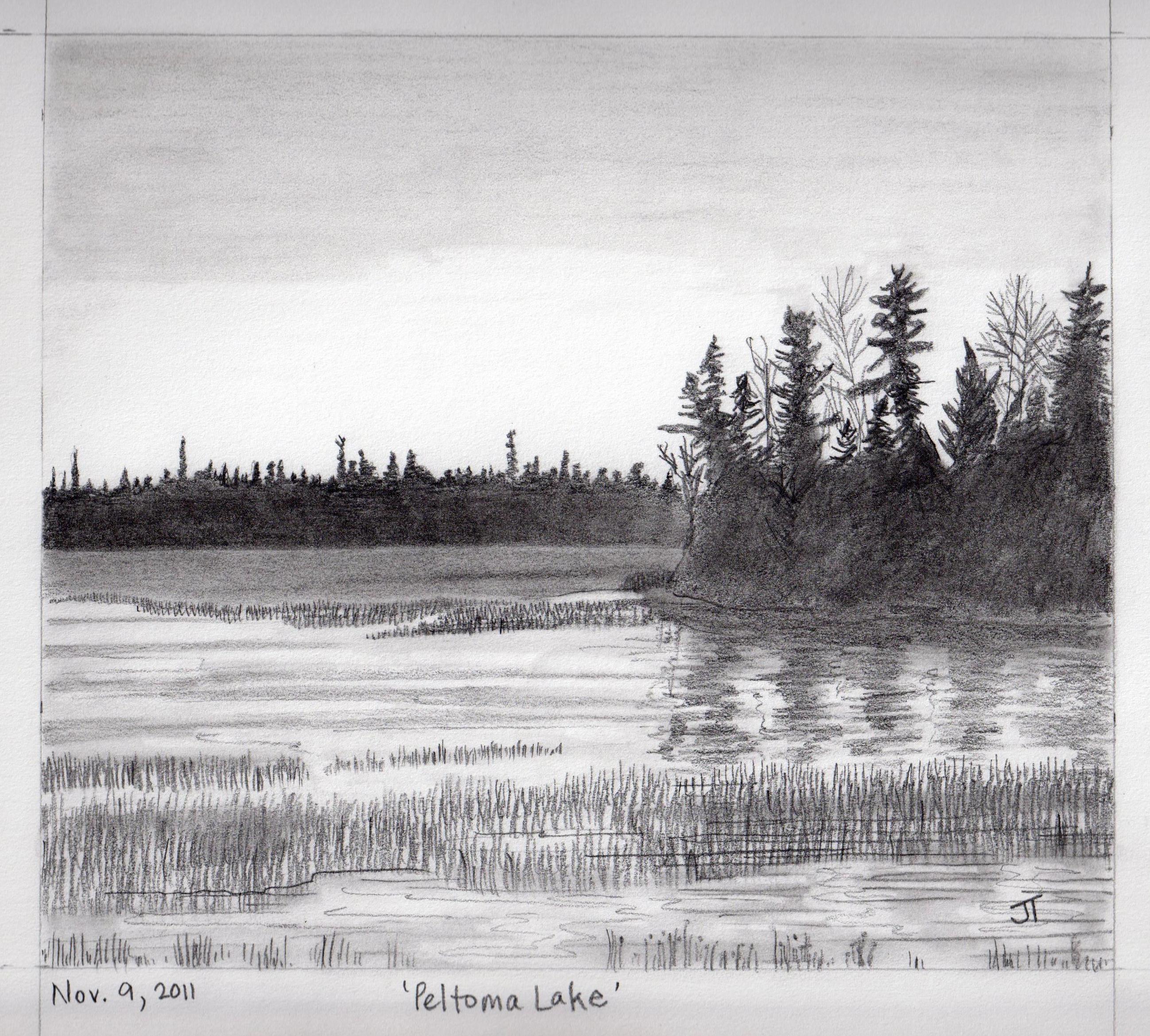
November 9, 2011 ‘Peltoma Lake’ Jane Tims
~
meadow aromatic
~
ozone lightning, late
waters cede, shoots
of cattail merge
end of day, end of June
fireflies, mosquito nights
~
lake-land meadow seeps
wetland meets nostril
marsh musk percolates
half sour, half sweet
methane ooze, decay
~
damp fiddleheads unfurl
bird beaks simmer
in duckweed soup
skin of salamander, frog
steeplebush, meadowsweet
~
angels crave human years, allow
their pores release, scent imitates
reek of sweat, of work
tears mingle with perfume
aftershave and powder
~
~

Oct. 9, 2011 ‘Reeds and reflection’ Jane Tims
~
Copyright 2014 Jane Tims
ghost girl
In Fredericton, there is a relatively famous road, called Waterloo Row. It is famous for its beautiful old homes and is featured in the Canadian version of the game Monopoly. For me, the road represents a favorite part of my former morning commute.
~
Especially in fog, Waterloo Row presents some lovely vignettes, including ghostly images of the St. John River, with the old bridge, now a footbridge, vanishing into the mist…
~
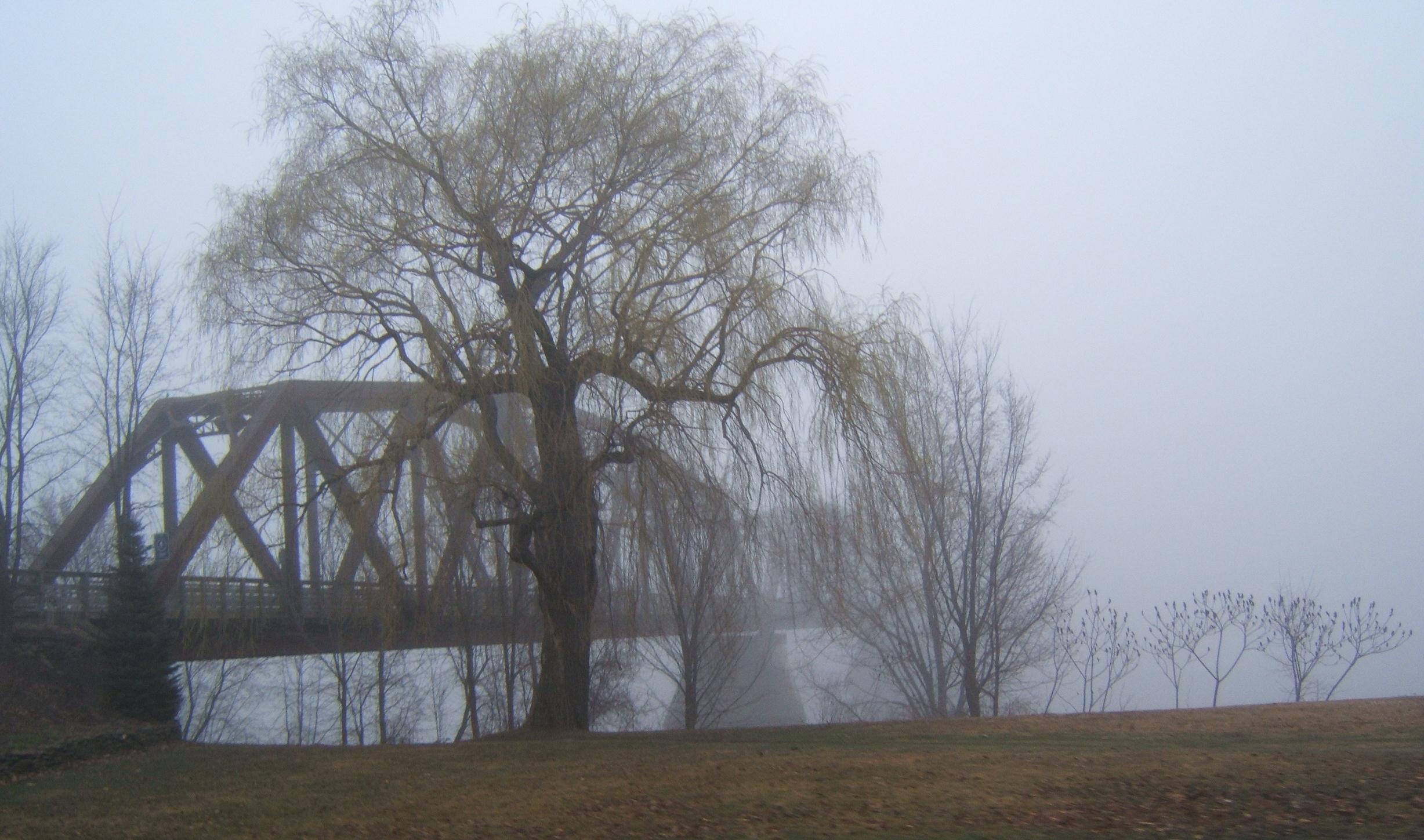
~
older homes, some of whom are reputed to be haunted…
~
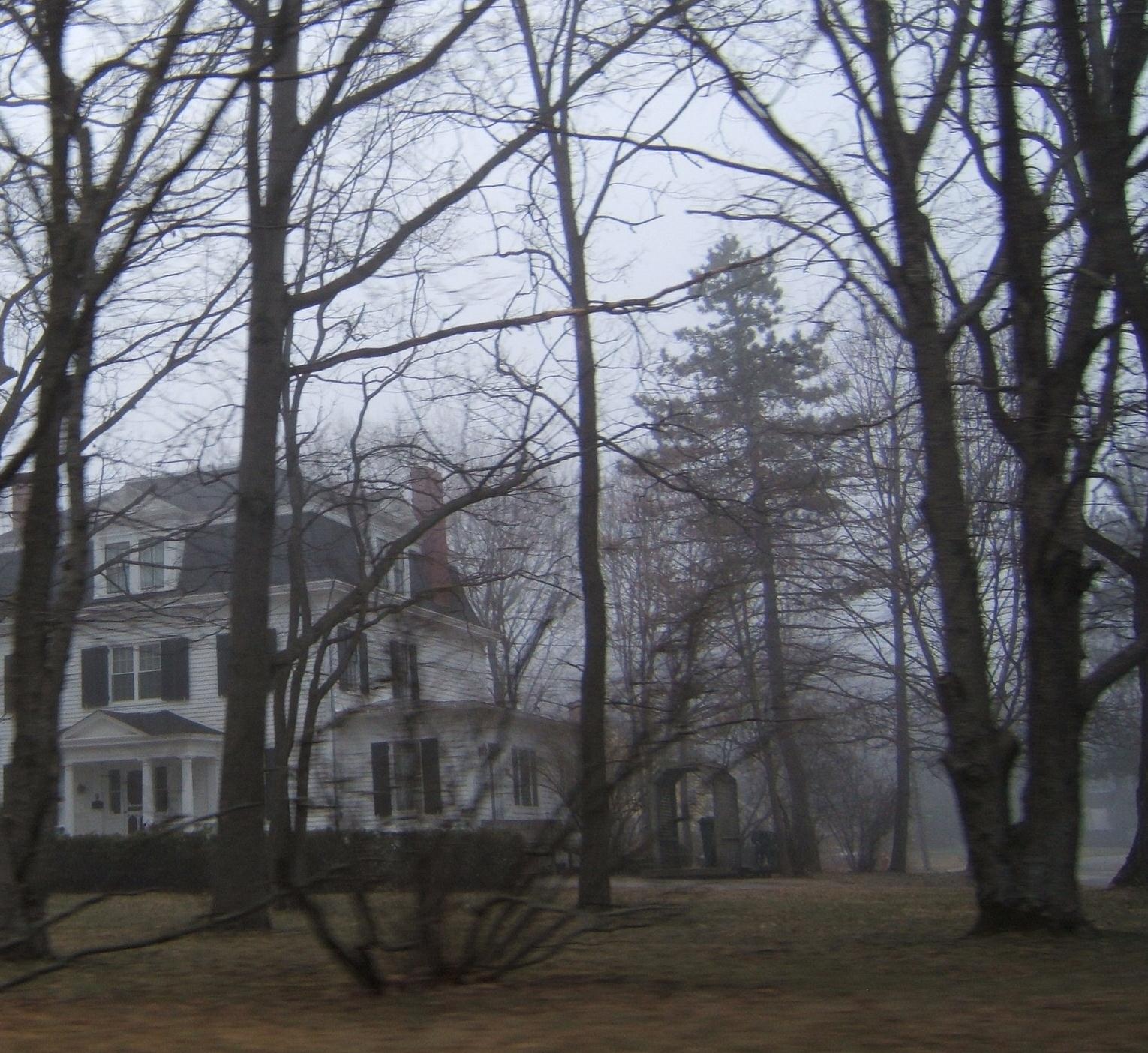
~
and a bench along the river footpath, haunted by a young girl who sat there almost 34 years ago, considering her future…
~

~
I see her sitting there whenever I drive by. On a cool evening in May of 1980, she drove there on her bicycle and watched the river for an hour, thinking about what her life would be. In two months, she would marry, and her life would change in many ways. She thought about this and wondered.
~
If I could talk to her, I could answer almost all her questions. I could tell her about her marriage of (so far) 33 wonderful years. I could tell her all about her future husband and amazing son. I could tell her how relaxing it will be to be at home full-time after three decades of work. And I could tell her – the river could never be as beautiful as the sight of our small pond with its stone bench and violet-studded lawn on this day at the end of May, 34 years later.
~
Copyright 2013 Jane Tims
remembering place: a gift on a spring day

~
When I was a teenager, my family lived in Lower Sackville in Nova Scotia. I went to Junior High and Senior High there and began my university days.
~
I have many great memories of living in our house … of spending time with friends and family. I remember painting the kitchen cupboards with my Dad, painting a huge seascape on the living room wall, decorating the Christmas tree with the ‘help’ of our dog Snoopy, and doing homework and learning to sew while watching Audie Murphy movies. One of my earliest ‘projects’ was raising wild violets from seed along the back fence. I can remember spending hours on the phone with my friend Donna, pulling the long telephone cord down the basement stairs so I could sit and giggle in privacy.
~
On that same phone, my sister and I practiced for days how we would be the tenth caller to win tickets to see Elvis Presley in Halifax. When the moment came, we counted the time just as we had carefully calculated. Then I dialed in, at the precise moment. They answered! And, in my excitement, I HUNG UP. My sister was so put out at me. And we will never know if we were the lucky tenth caller! We never did see Elvis in person.
~
As an exercise for a writing class I am taking, I wrote a little about attending my best friend’s wedding after graduation in 1972. I walked to the church which was just at the bottom of our street. As I wrote the story, I thought how I would like to see that street, to better remember the walk I took. So, I went to Street View (Google Earth). I began at the top of the hill and virtually ‘walked ‘ along the street where I had lived. At the first of the walk, I saw our house in July of 2012, when the Street View image was taken. I was amazed to see how the trees we planted had grown … the house is hard to see !
~
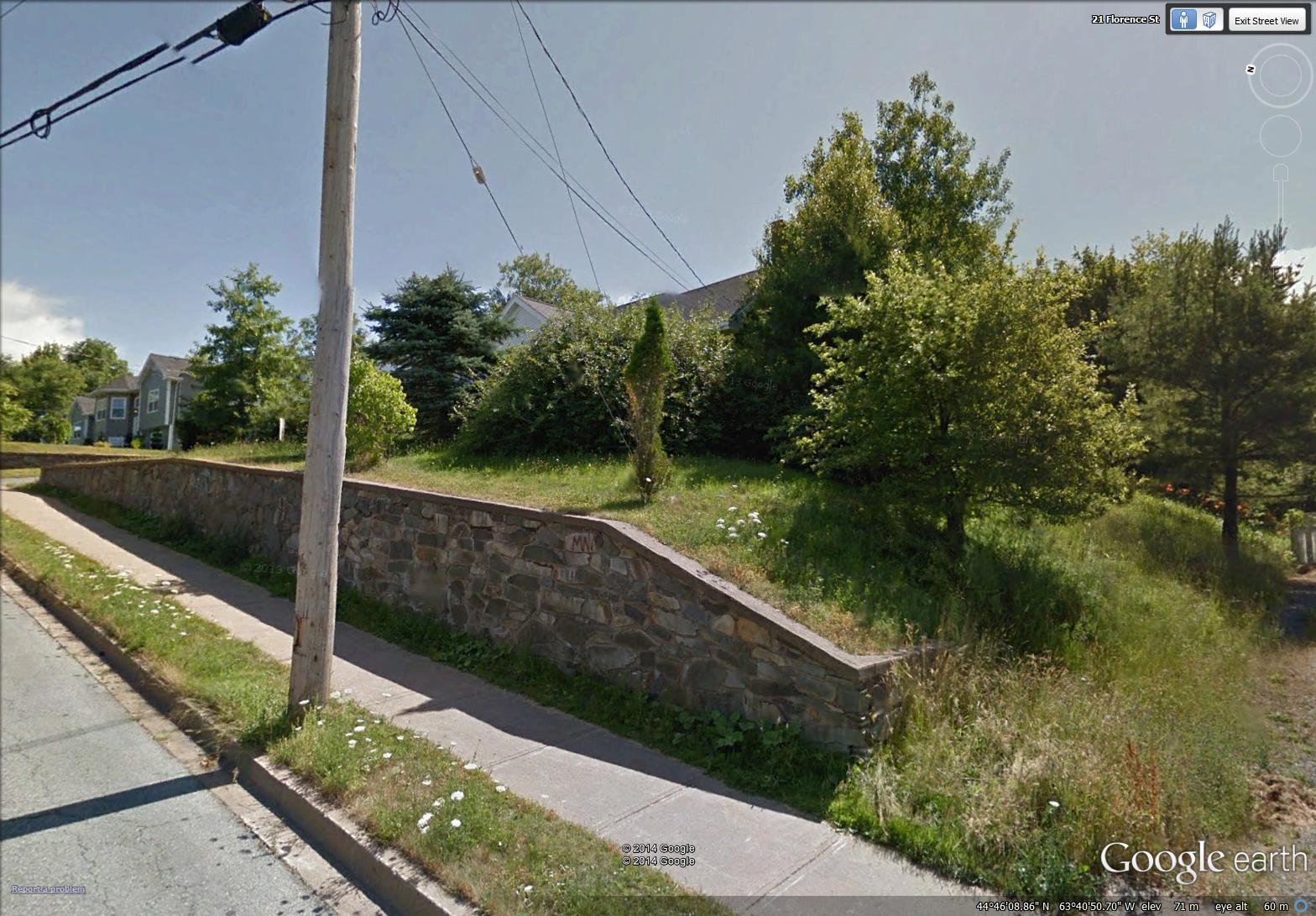
the house where we used to live, the trees all grown
~
A few more ‘steps’ and Street View switched to an image taken in May of 2009. I turned back to ‘see’ the house. And this is what I saw …
~

Forsythia in bloom in front of the house where I used to live
~
My Mom loved the big Forsythia that grew in our front yard. She always said it reminded her of my grandmother (her mother). And there it was, in full bloom and grown huge over the 40 years since we lived there. What a lovely gift on a spring day!
~
Copyright 2014 Jane Tims
a moment of beautiful – through a stained glass window
the space: the big maple outside our front door
the beautiful: seeing a squirrel in the tree through the stained glass window in our stairwell
~
As I was working at my desk, my husband called to me. Through our stained glass window, he could see a silhouette of our grey squirrel. I’m glad the squirrel waited long enough for me to snap his picture!

Can you see the squirrel through the stained glass?
© Jane Tims 2013
Trailing Arbutus (Epigaea repens L. var glabrifolia)
One of the common flowers of early spring is the Mayflower (Epigaea repens L. var. glabrifolia), or Trailing Arbutus, also called Epigee rampante in French. It belongs to the heath or heather family (Ericaceae). It grows in open woods, or pastures, and along hillsides, in acidic soil.

Mayflower in bloom, photo taken in 1978 in Nova Scotia
The Mayflower is part of what Roland and Smith (The Flora of Nova Scotia, The Nova Scotia Museum, 1969) called the ‘Canadian Element’, woodland plants native to Northeastern North America and including common plants of the coniferous woods: Maianthemum canadense Desf. (Wild Lily-of-the- Valley), Mitchella repens L. (Partridge-berry), Gaultheria procumbens L. (Wintergreen) and Trientalis borealis Raf. (Star-flower), among others. When I worked on my M. Sc. thesis project, years ago, these were in the community of plants I encountered in the woods I was studying, and they are still my favorite plants.

two members of the ‘Canadian Element’ community – leaves of Wild Lily-of-the-Valley (left) and Wintergreen (right)
The name epigaea means ‘on the earth’, and perfectly describes the way the Mayflower grows. The specific name is from the Latin repens meaning ‘creeping’. The plant spreads across the ground, its oval, leathery leaves lying flat and overlapping. The leaves persist all winter and sometimes look a little weather-worn. The variety we have is glabrous on the lower leaf surface, meaning without hairs. The leaves grow on hairy, woody twigs.

leaves of Mayflower in the Grey Woods, April 2012
The flowers grow in clusters tucked beneath the leaves. They are creamy white, and are in the form of a short tube ending in five flaring lobes. They bloom mid-April to mid-May. The flowers along our woods have just completed their blooming. For a nostalgic look at the tradition of picking Mayflowers in spring, have a look at http://ahundredyearsago.com/2012/04/28/gathering-arbutus/
A delight of spring is to manoeuvre close to the ground so you can smell the Epigaea flowers. The perfume is very sweet, gently stirring. The only edible part of the plant is the flower and it tastes as sweet and fragrant as it smells. It is a shame to eat such a delicate creature as a Mayflower, but once a year I allow myself the privilege, just one tiny bloom (always be absolutely certain of the identification before you eat any plant in the wild). The plant is protected in some areas since it rarely sets seed and is almost impossible to transplant.
The Mayflower is the floral emblem of Nova Scotia and Massachusetts.
~
~
Trailing Arbutus
(Epigaea repens L.)
~
on the slope, new leaves
Trientalis, Gaultheria
Star-flower, Wintergreen,
vines of Partridge-berry creep,
Maianthemum unfurls
~
beneath the din, a melody
weeps Epigaea, evergreen
pressed to the hillside
leather armour, thickened leaves
weather-beaten, worn
~
waxy bloom resists
subtle shadow
predator
unrelenting rain
~
~

Warning: 1. never eat any plant if you are not absolutely certain of the identification; 2. never eat any plant if you have personal sensitivities, including allergies, to certain plants or their derivatives; 3. never eat any plant unless you have checked several sources to verify the edibility of the plant.
© Jane Tims 2012
maple blossoms
This week, as Red Maple (Acer rubrum) flowers bloom, the woodland blushes scarlet. In the driveway, a tree-shadow of blossoms has begun to form, as the flower clusters reach their peak and then drop to the ground.
Each flower is a puff of reddish-pink bracts surrounding the male and female flower parts. The stamens (the male part of the flower) consist of a thin filament topped by a dark anther where the pollen is formed. The pistil (the female part) is made of a style topped by a stigma; once fertilised by pollen, the maple seeds will form here. Red maple flowers may have both stamens and pistils, or may be only male or only female. The flower looks like a tiny fireworks, the burst-effect created by a bundle of stamens or stigmas.
When I went to Dalhousie University in Halifax, I always loved the flowering of the Norway Maples (Acer platanoides) in spring. Their flowers are green and most people mistake them for new leaves. I used to wonder what the ecosystem consequences might be if the flowers were bright orange or purple instead of green.
~
~
red maple blossoms
~
across brown sky
strontium bursts of bright
sparks bloom
against dark
~
~
© Jane Tims 2012

accents in red
We are still in the greys and browns of spring.
There are a few wildflowers blooming. The Coltsfoot is spreading carpets of yellow along the roadside. And flowers in the deep hardwoods have begun to display their delicate beauty. But most places are drab and colorless.
I watch for red this time of year. There are a few red berries, still clinging to their branches after winter.
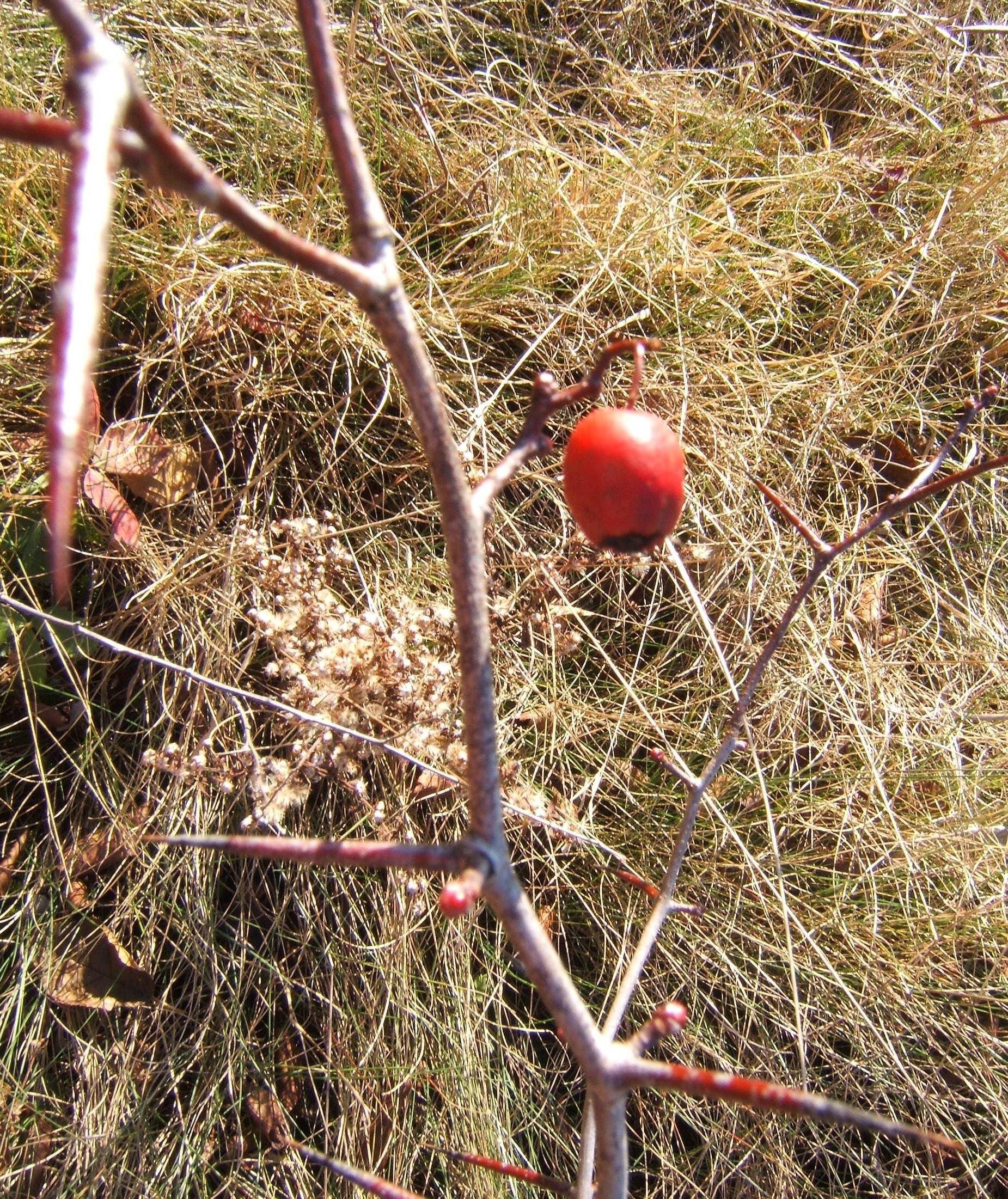

And the stems of Red Osier Dogwood (Cornus stolonifera Michx.) are brilliant in the fields and ditches.

My favorite ‘red’ of spring is the muted red of the blueberry fields.

~
~
fancy
~
the blueberry barren
is faded scarlet
red osier in ditches
rosebush and hawthorn
a single berry, a single haw
Earth in brown
toenails red
~
© Jane Tims 2012
a moment of beautiful – ice in the ditch
the space: a ditch along the road
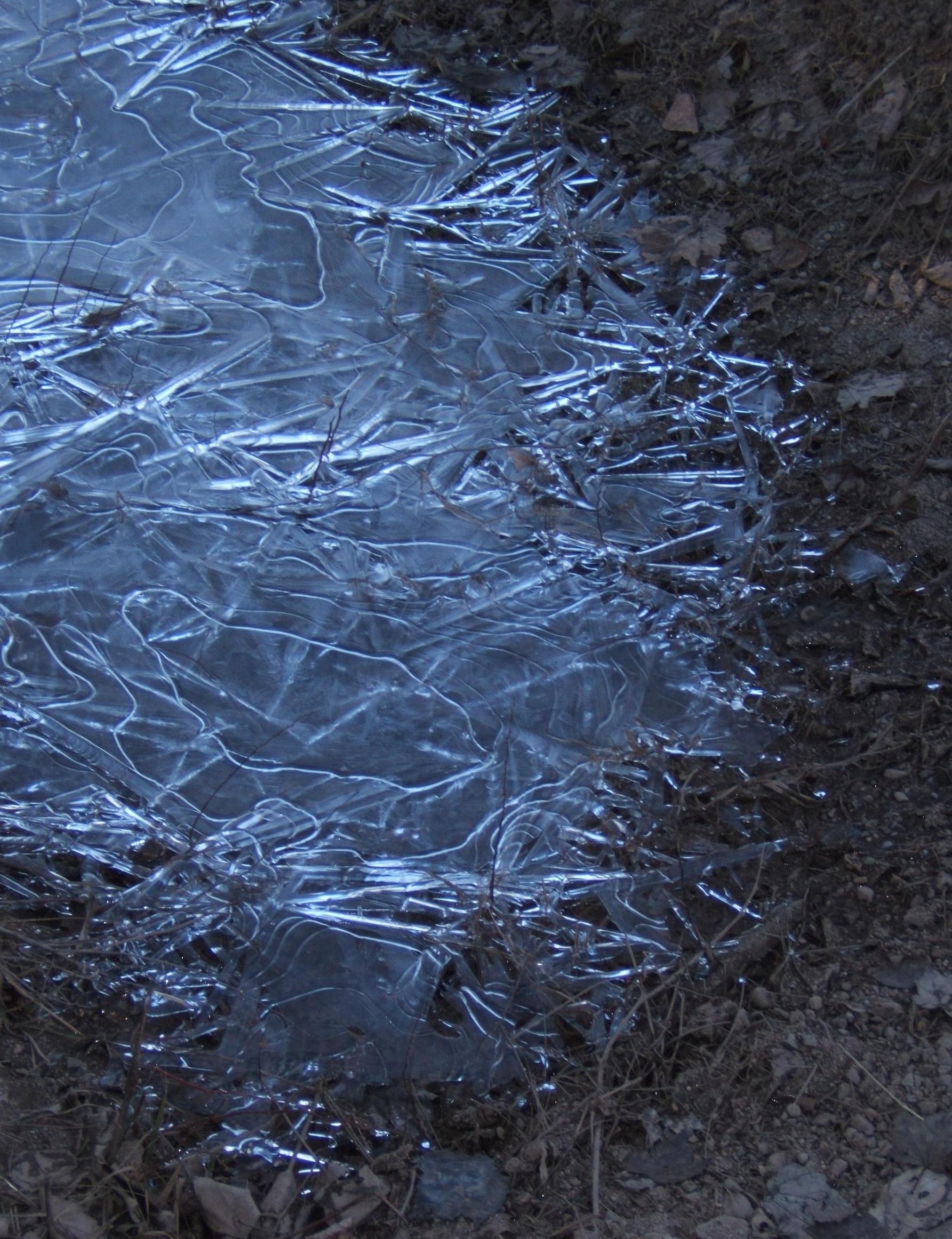
the beautiful: a skim of new ice
~
When nights are icy cold after a day of spring warmth, water freezes in the ditches. Ephemeral, this skim of new ice will be gone as soon as the morning sun overtops the trees.

The ice is frail, but if you are careful, you can lift a pane of this natural glass and see the world through a different window.
~
~
ditch ice
~
on the last sub-zero night in March
we forge swords and slivers
cast a lens, a barrier to warm
~
below ditch ice are sinuous
arrangements of water and breath
nostrils grope for airways
peer through frozen skim
as though through windows
learn the underside of pane
~
~
© Jane Tims 2012
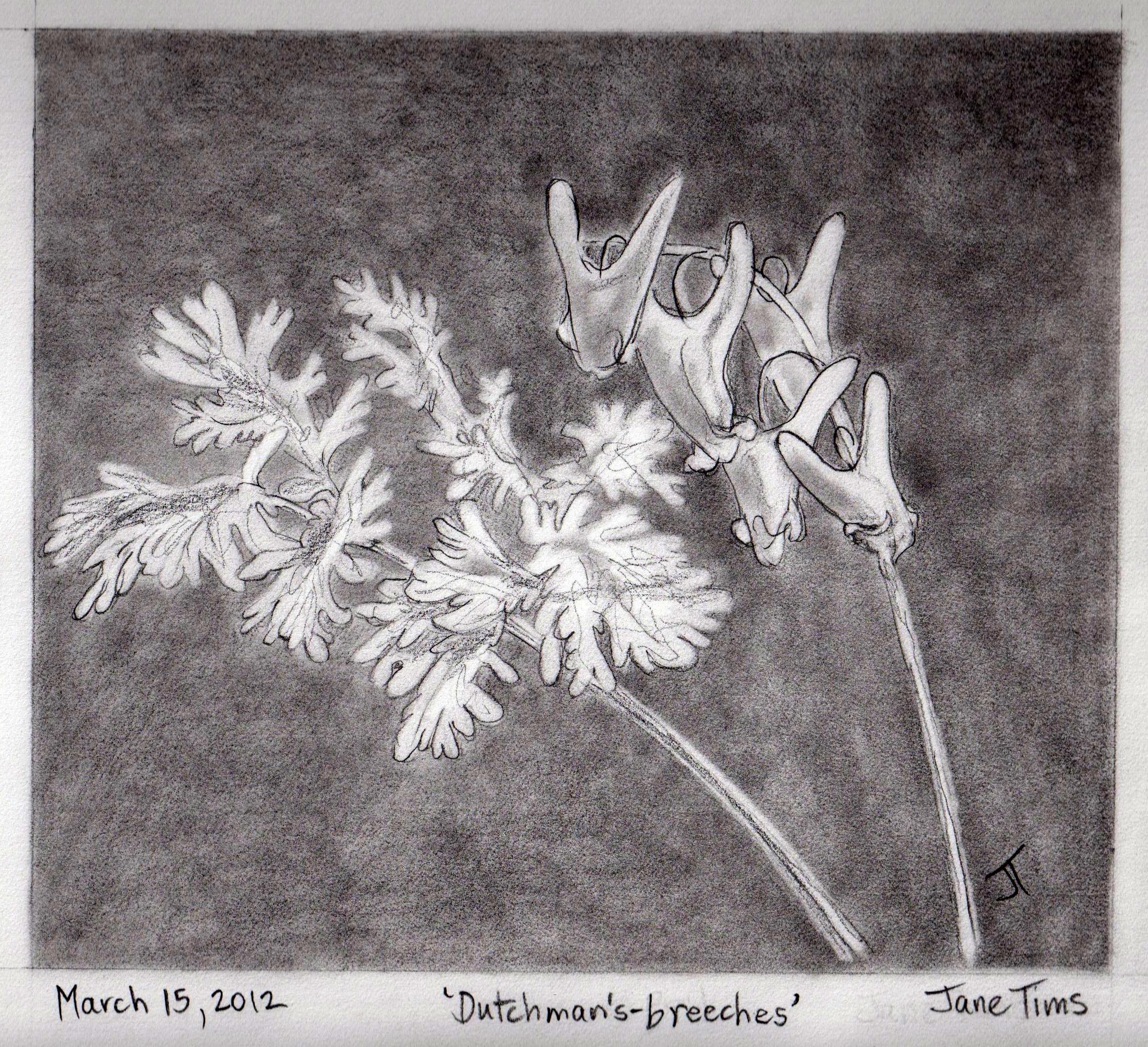
Dutchman’s-breeches (Dicentra Cucullaria (L.) Bernh.)
Our first summer home was located in a rich hardwood of Sugar-Maple (Acer saccharum Marsh.), Beech (Fagus grandifolia Ehrh.) and White Ash (Fraxinus Americana L. ). In these woods, in early spring, as the snow melted, wildflowers found ideal habitat. Many plants take advantage of the few days when the leaves of the overstory trees are still developing, and there is bright light in the understory of the woods.
One of these wildflowers is Dutchman’s-breeches (Dicentra Cucullaria (L.) Bernh.). This charming little plant blooms early in spring, in rich, rocky hardwoods. The white flowers are two-spurred, in groups of four to ten along a stem held just above finely divided, feathery leaves.
The plants is also known as breeches-flower, cullottes de Hollandais, and dicentre à capuchon. The generic name is from the Greek di meaning twice and centron meaning a spur. Cucullaria is the old generic name meaning hoodlike. The plant was named by Johann Jacob Bernhardi.
The flowers of Dutchman’s-breeches are an example of plant adaptation for pollination. The flower has a clever mechanism, in the form of fused flower parts, to ensure only certain insects (such as the bumblebee) can access the nectar and pollen.
In my copy of Roland and Smith (The Flora of Nova Scotia), I recorded my first encounter with this little plant – April 28, 1985, during one of our first visits to our property before we purchased it. We called our cabin Whisperwood, in part because of the subtle breezes in those wildflower-dotted spring woods.
~
~
Dutchman’s Breeches
Dicentra Cucullaria (L.) Bernh.
~
~
Dutchman’s breeches
brighten in sun
woodland washdays
have begun
~
spring-clean trousers
hung in rows
inflated with breath
the May wind blows
~
sprites are playing
tossing their hoods
above the damp
in the spring-fed woods
~
little fairy laundry
trembles on the line
before greening trees
block spring sunshine
~
~
© Jane Tims 1993
Coltsfoot (Tussilago Farfara L.)
Although it has been snowing sporadically this month, our recent days of very, very warm weather tell me spring has arrived. As a result, I am watching the roadsides for the first flowers of spring. Even before the snow is out of the woods, it begins to melt along the roadsides as they warm in the lengthening hours of sun. And the cycle of bloom begins again.
Coltsfoot (Tussilago Farfara L.) is one of the first plants seen in early spring. It forms large patches in waste areas, beside brooks and roads, and on damp hillsides. People often mistake Tussilago for Dandelion, but it is quite different. Its yellow flowers are borne on scaly, leafless stems. The large, woolly leaves don’t appear until later in the season. In spite of its early appearance in spring, Tussilago actually has late flowers. The flower buds are formed in autumn at the base of the plant, and pass winter underground, flowering in the first spring sunlight.
Other names for the plant are Son-before-the-Father, which refers to the appearance of flowers before the leaves, and pas-d’âne (literally donkey-steps). The scientific names are from the Latin tussis, meaning a cough, referring to the use of the plant as a remedy for such ailments, and the Latin word for coltsfoot, farfarus. The plant was named by Linnaeus, the Swedish botanist who established the present day system of naming plants.
Although the plant was used by pioneers for its medicinal effects, it is now known that Tussilago contains harmful alkaloids. Tea made from Coltsfoot has caused health problems in infants and pregnant women, so its use as a cough remedy is not recommended. In some States, Coltsfoot is considered a noxious weed.
~
~
Coltsfoot
Tussilago Farfara L.
~
Gold-
splashed beside the road
like prints
of a frisky colt’s feet
~
at first glance-
an early dandelion!
but-
too early
stem scaly
no leaves below the bloom
no perfume.
~
Coltsfoot,
Son-before-the-Father
(flowers before the leaves).
Introduced from
far, far away.
Old wives say
boiled greens
will ease
a cough.
~
Long ago
Tussilago
sprang from where
a burro trod
among the palms
(pas-d’ane)
~
~
Published as: ‘Coltsfoot’, Winter 1993, The Antigonish Review 92:76-77.
Revised
© Jane Tims 1993
~





 nichepoetryandprose