Posts Tagged ‘poetry’
Wild Strawberry (Fragaria virginiana Duchesne)
Soon, the fields at our summer place will be jeweled with Wild Strawberries.
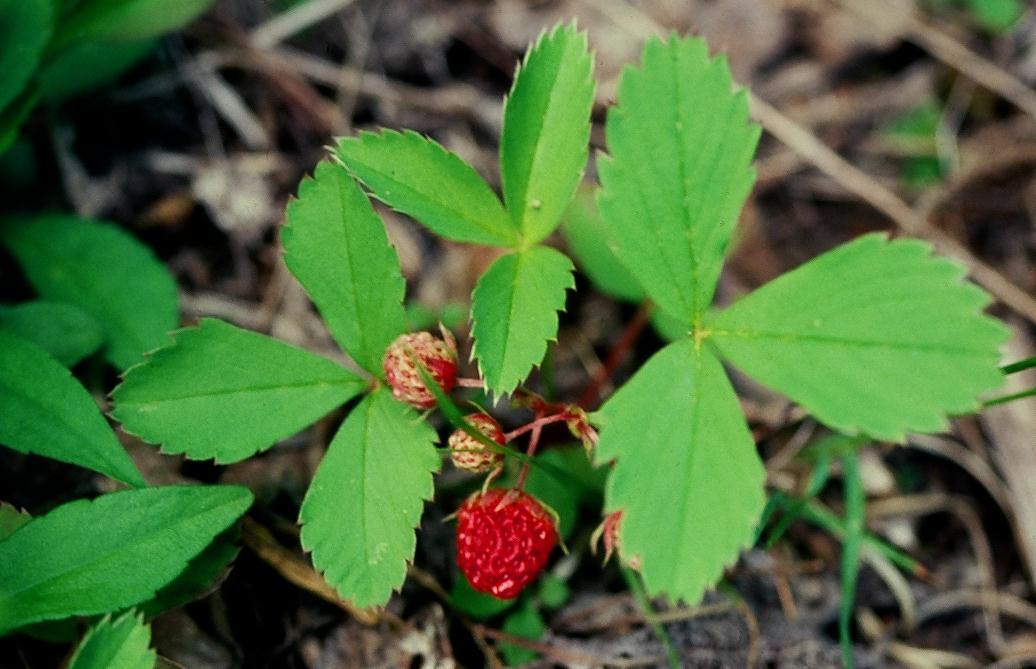
Wild Strawberry (Fragaria virginiana Duchesne) grows in open woodlands, fields and barrens. It is also known as Virginia Strawberry, Common Strawberry and, in French, fraisier. The name Fragaria comes from the Latin word for strawberry, fraga meaning fragrance.
The leaves of Wild Strawberry grow on slender stalks, and occur in threes. They are hairy and coarsely toothed. Plants are stoloniferous, meaning they produce ‘stolons’ or runners, freely-rooting basal branches.
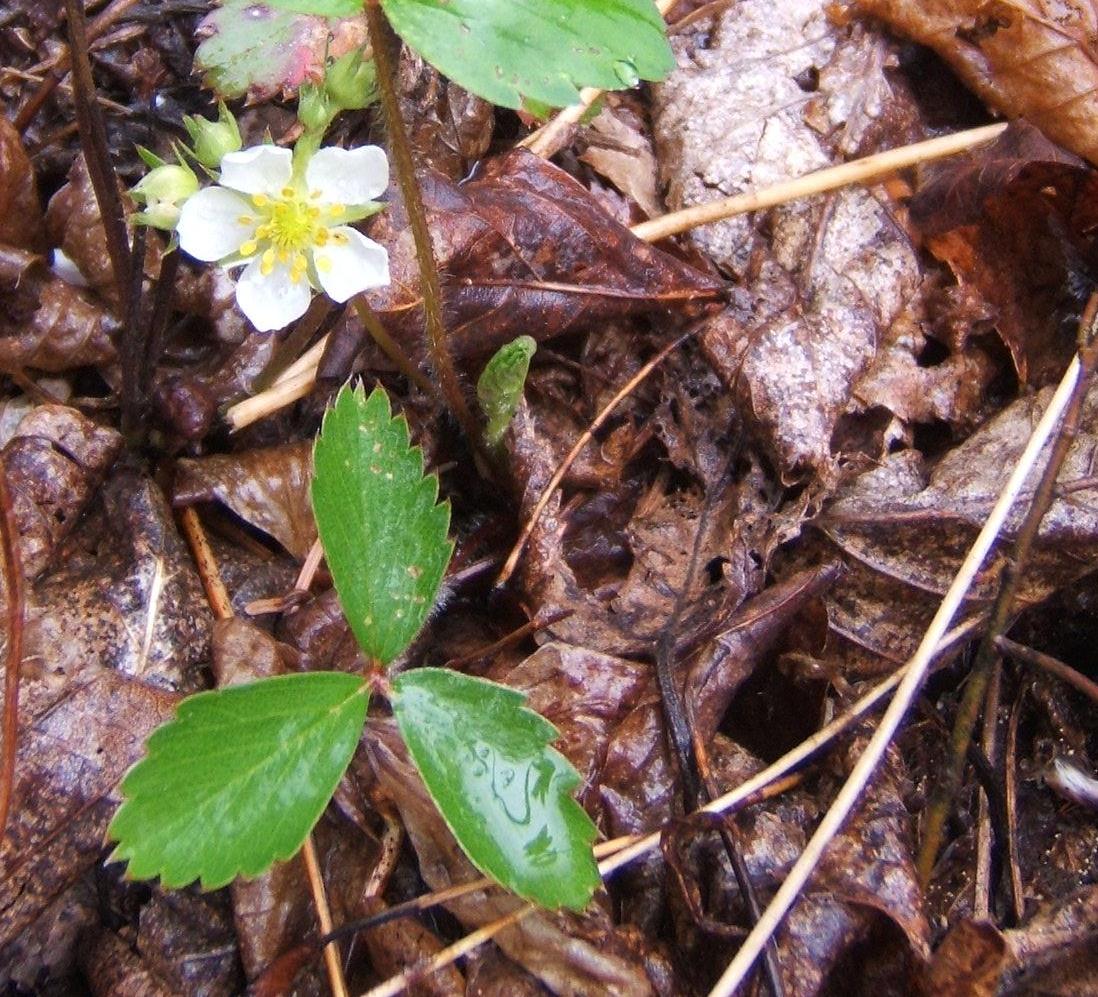
The flower of the Wild Strawberry is white, with five petals and numerous stamens and pistils. Right now, our fields are spangled with them. The flowers occur in an open cluster of two or more flowers. In this species, the flower stalk is not longer than the leaf stalk.
The berries are red and ovoid, covered with small pits and seeds. They are more delicate and sweeter than the domestic strawberry. They appear in late June and may last until August, but the best berry-picking is at the first of summer.
In the book ‘The Blue Castle’ by Lucy Maude Montgomery, the heroine says one of her greatest pleasures is to eat berries directly from the stem:
Here they found berries … hanging like rubies to long, rosy stalks. They lifted them by the stalk and ate them from it, uncrushed and virgin, tasting each berry by itself with all its wild fragrance ensphered therein. When Valancy carried any of these berries home that elusive essence escaped and they became nothing more than the common berries of the market-place–very kitchenly good indeed, but not as they would have been, eaten in their birch dell …
(from L.M. Montgomery, The Blue Castle, Chapter 30, McClelland and Stewart Limited, 1972)
~
The berries of the Wild Strawberry are delicious in jam. The leaves also make a fragrant tea, high in Vitamin C. To make the tea, put a handful of green leaves into two cups of boiling water, steep, strain and enjoy!
~
~
too early to pick
~
last week of June
roadside red with leaves
and ripening wild
strawberries hang
still green except
where sepal contrast
shows sweet berry
~
patience, wait
a few days and every berry
ripe and a thimble pot
of berry jam
~
can’t wait?
sour green flesh
grit of tiny seed
~
~
Copyright Jane Tims 2012

a moment of beautiful – a button of moss
the space: at ground level, in the grey woods
the beautiful: a little button of moss, emerald green
~
Mosses are a beautiful, enigmatic group of plants. Except for a few well-known species, they simply grow unnamed and unnoticed by most people. The beauty of the mosses, especially under the stereo-microscope, where you can see so much detail, was what attracted me to the study of botany in the first place.
We have many species of moss in our Grey Woods. I long to be able to take the time to identify every one. For now, though, I content myself with a few common names and some of my own ‘made-up’ names.
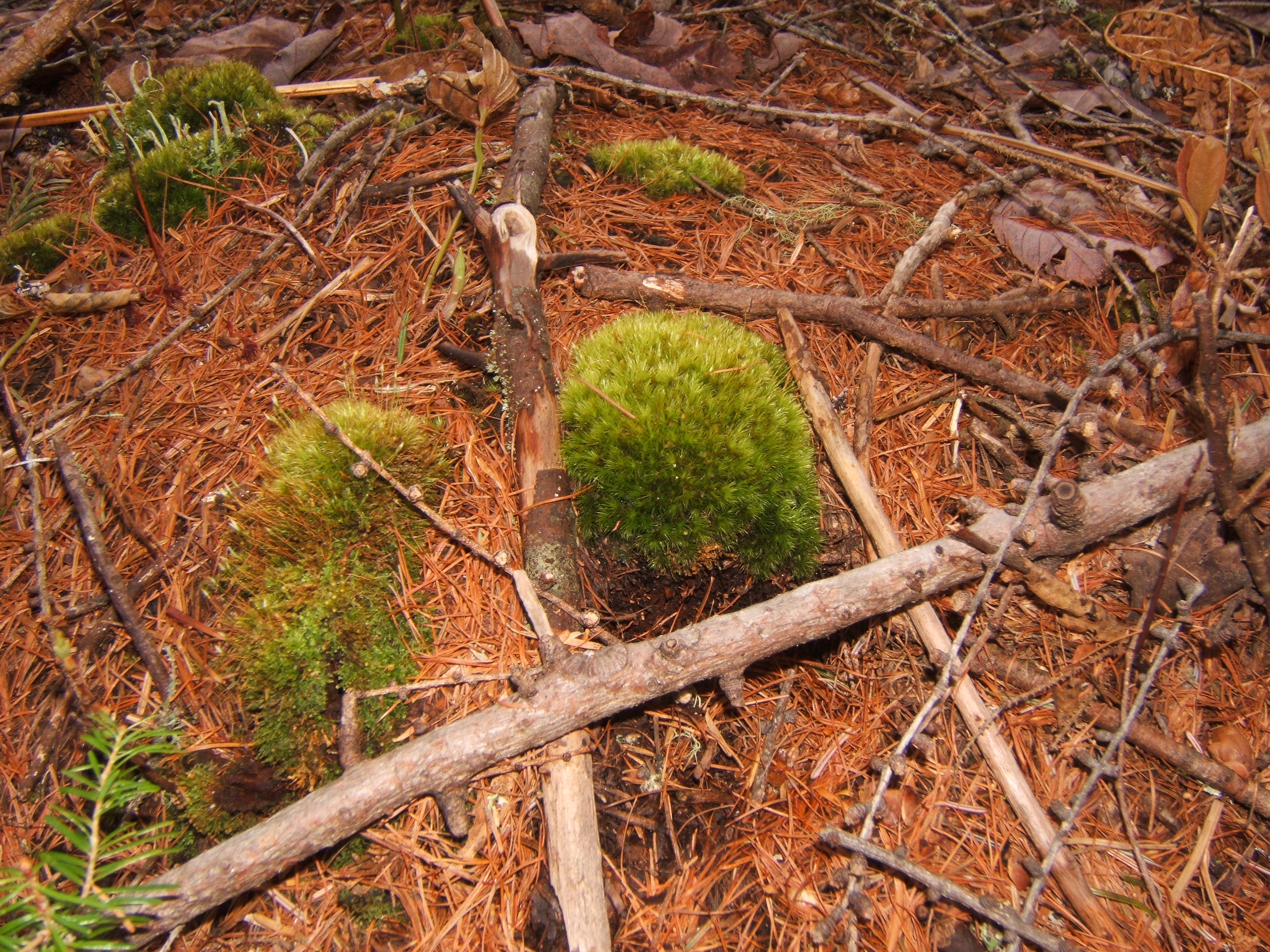
I call this little moss ‘The Button’. Wherever I find it, it seems to grow in a little cushion. Its surface is like velvet and its color is a lovely shade of lime green.
~
~
a button to press
~
resist the urge
to depress this plump of moss
firmly with a finger
~
will take you up
to the first floor
where the bunchberry blooms
or the second where bracken
planks an ephemeral floor
or the 67th where leaves align
precisely with sun
~
or down
to where the roots criss-cross
in confused abandon
~
~
© Jane Tims 2012
Sheep Sorrel (Rumex Acetosella L.)
At this time of year, some of the fallow fields adjacent to our Federal-Provincial Agricultural ‘Farm’ in Fredericton are shadowed with bright red. Closer inspection shows these fields are filled with Sheep Sorrel, in scarlet bloom.

The common Sheep Sorrel (Rumex Acetocella L.) is a small, slender plant, less than a foot high, with distinctive leaves shaped a little like an arrowhead or halberd. The lobes at the base of each ‘arrowhead’ leaf point backwards, a shape described in botany as ‘hastate’.
Sheep Sorrel is considered a weed, growing along roadways and in fields. It prefers acidic, ‘sour’ soils and is considered an indicator of these soils.
Sheep Sorrel (Rumex Acetosella ) is also known as Common Sorrel, Field Sorrel, Red Sorrel, and Sour Weed. In French it is called surette or oseille. The old generic name Acetosella means ‘little sorrel’. Sheep Sorrel is from the Buckweat Family of plants.

The flowers of Sheep Sorrel are small, distributed in an open cluster along the stem. The female flowers are maroon and the male flowers are brownish-green.
The leaves of Sheep Sorrel are well-known as an edible plant. They have a pleasantly tart, sour flavour and make a good nibble, an iced tea, or an addition to a salad. They can also be used as a pot-herb – when cooked they reduce in size like spinach, and they lose the acid taste. The Sheep Sorrel plant has a chemical called oxalate so cannot be consumed in large quantities. Long-term consumption can affect calcium absorption in the body. As always, please be sure of your identification before you consume any wild plant.
Warning: 1. never eat any plant if you are not absolutely certain of the identification; 2. never eat any plant if you have personal sensitivities, including allergies, to certain plants or their derivatives; 3. never eat any plant unless you have checked several sources to verify the edibility of the plant.~
~
red field
~
walk in the field with the scarlet flowers
arrowheads and halberds surely leave
a sour taste on the tongue
titration with alkaline needed
to sweeten the ground, dilute the red
return the soil
to more productive ways
~
~
© Jane Tims 2012

keeping watch for dragons #6 – Water Dragon
The last full week in May, we took a day to drive the Plaster Rock-Renous Highway. This is an isolated, but paved, stretch of road, called Highway 108, connecting the sides of the province through a large, unpopulated area. The highway runs from Plaster Rock in the west, to Renous in the east and traverses three counties, Victoria, York and Northumberland. It takes you across more than 200 km of wetland, hardwood, and mixed coniferous forest, some privately owned, and some Crown Land. A large part of the area has been clearcut, but the road also passes through some wilderness of the Plaster Rock-Renous Wildlife Management Area and the headwaters of some of our most beautiful rivers.
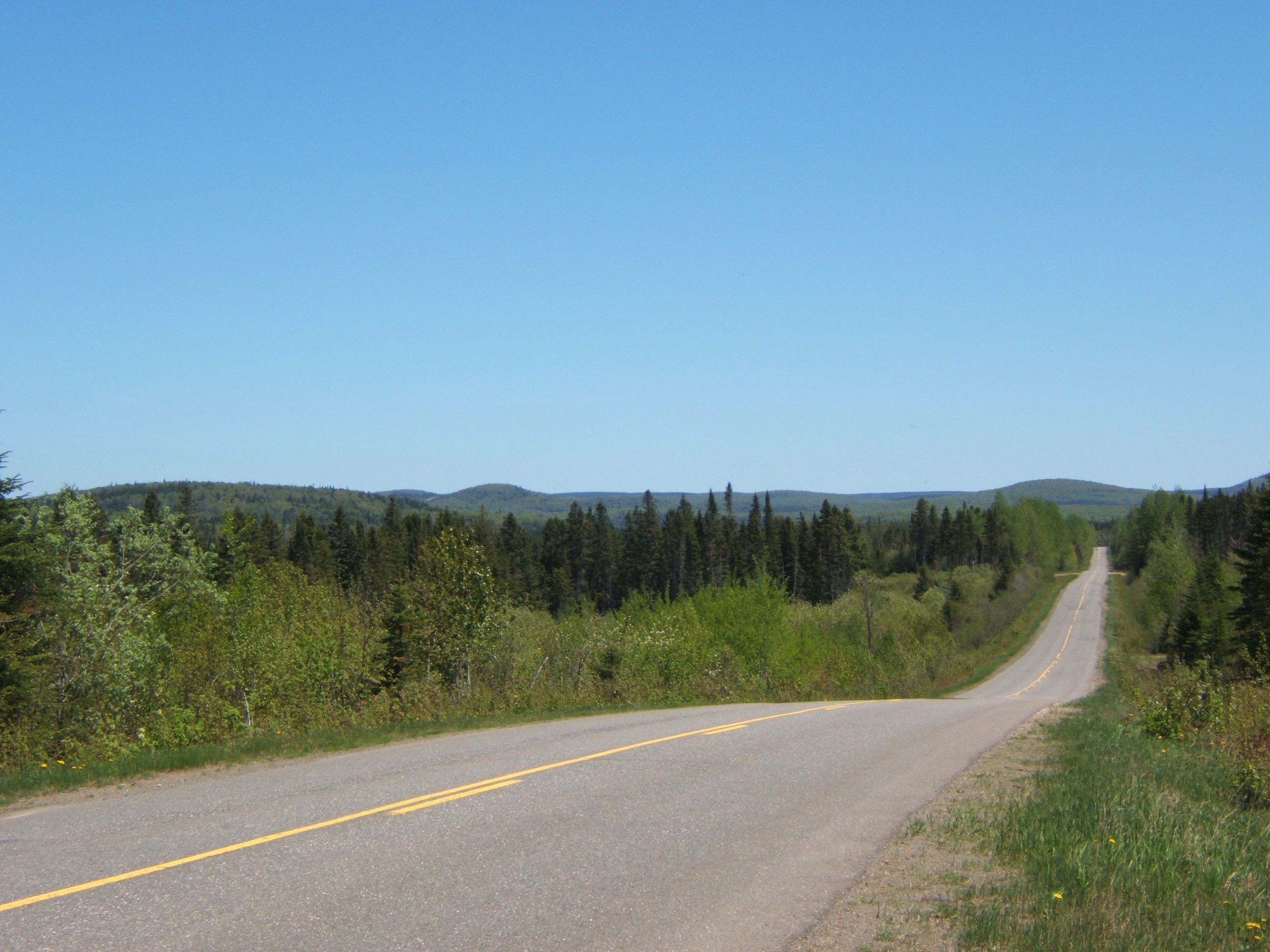
From the east, the highway first runs along the waters of the Tobique River, across the Divide Mountains, and into the drainage of the Miramichi River, crossing the Clearwater Brook, and running along the South Branch of the Dungarvon River and the South Branch Renous River.
Along the way, we stopped at a boggy pond next to the road between Clearwater Brook and the Dungarvon, to listen to the bull frogs croaking. There among the ericaceous vegetation filling most of the pond was a dragon for my collection.


look closely near the center of the photo… the single white spot is the spathe of a Wild Calla or Water Dragon
Water Dragon, more commonly known as Wild Calla or Water Arum, was present in the shallow, more open waters of the pond, appearing as startling white spots on an otherwise uniform backdrop of green and brown.
Wild Calla (Calla palustis L.) is also known as Female Dragons, Frog-cups, Swamp-Robin and, in French, calla des marais, arum d’eau, or aroïde d’eau. It lives in wet, cold bogs, or along the margins of ponds, lakes and streams.
The Wild Calla belongs to the Arum family, along with Jack-in-the-Pulpit (Arisaema Stewardsonii Britt.) and Skunk Cabbage (Symplocarpus foetidus (L.) Nutt.). These plants have tiny flowers along a thick spike known as a ‘spadix’. The spadix is enclosed by a leafy bract called the ‘spathe’. The spathe of Wild Calla is bright white, ovoid and abruptly narrow at the tip. The leaves are glossy green and heart-shaped. The flowers growing among them are often overlooked. On the pond, there were about ten visible spathes, and likely many more hidden among the plentiful leaves.
The various parts of the Wild Calla are considered poisonous since they contain crystals of calcium oxalate. These cause severe irritation of the mouth and throat if eaten. However, there is a twist to this story of a poisonous plant. Scandanavian people, in times of severe hardship, prepared flour for ‘Missen bread’ from the dried, ground, bruised, leached, and boiled seeds and roots of Wild Calla. Do I have to warn you not to try this at home!!!!????
Warning: 1. never eat any plant if you are not absolutely certain of the identification; 2. never eat any plant if you have personal sensitivities, including allergies, to certain plants or their derivatives; 3. never eat any plant unless you have checked several sources to verify the edibility of the plant.Linnaeus, the botanist who invented the binomial (Genus + Species) method of naming plants, described the laborious process the Swedish people used to remove the poisonous crystals from the Water Dragon in order to make flour. To read Linnaeus’ account, see Mrs. Campbell Overend, 1872, The Besieged City, and The Heroes of Sweden (William Oliphant and Co., Edinburgh), page 132 and notes (http://books.google.ca/books?id=IAsCAAAAQAAJ&pg=PA222&lpg=PA222&dq=missen+bread&source=bl&ots=ZO8cl_2nBl&sig=Gtr5Lq6PvG3DXV_l-kfECNuhWfo&hl=en&sa=X&ei=gGLFT-79B4OH6QG1m-nOCg&ved=0CC8Q6AEwAA#v=onepage&q=missen%20bread&f=false Accessed May 29, 2012).
~
~
~
desperate harvest
‘… they can be satisfied with bark-bread, or cakes made of the roots of water-dragon, which grows wild on the banks of the river…’
– Mrs Campbell Overend, 1872
~the pond beside the road
simmers, a kettle
of frog-croak and leather-leaf
~
spathes of Water Dragon
hug their lamposts, glow white
lure the desperate to the pond
~
bull-frog song deepens the shallows
the way voices lower when they speak
of trouble, of famine
~
people so hungry, harvest so poor
they wade in the mire
grind roots of Wild Calla for flour
~
needles to the tongue
burns to the throat
crystals of calcium oxalate, poison
~
worth the risk –
the drying,
the bruising,
the leaching,
the boil,
the painful test to know
if poison has been neutralized
~
the toughness of
the Missen bread
~
~
© Jane Tims 2012

Trout-lily (Erythronium americanum Ker)
Two weeks ago, we had a memorable drive and hike along the South Branch Dunbar Stream, north of Fredericton. The wet hardwoods along the intervale areas of the stream were green with understory plants and dotted with spring wildflowers. One of the plants growing there in profusion is the Trout Lily. The Trout Lily is colonial, covering slopes in rich, moist hardwoods. Its red and green mottled leaves grow thick on the hummocks, beside the Wood Anemone and Purple Trillium. The area where we were hiking was not far from the stream and there was evidence it had been flooded earlier in the year.
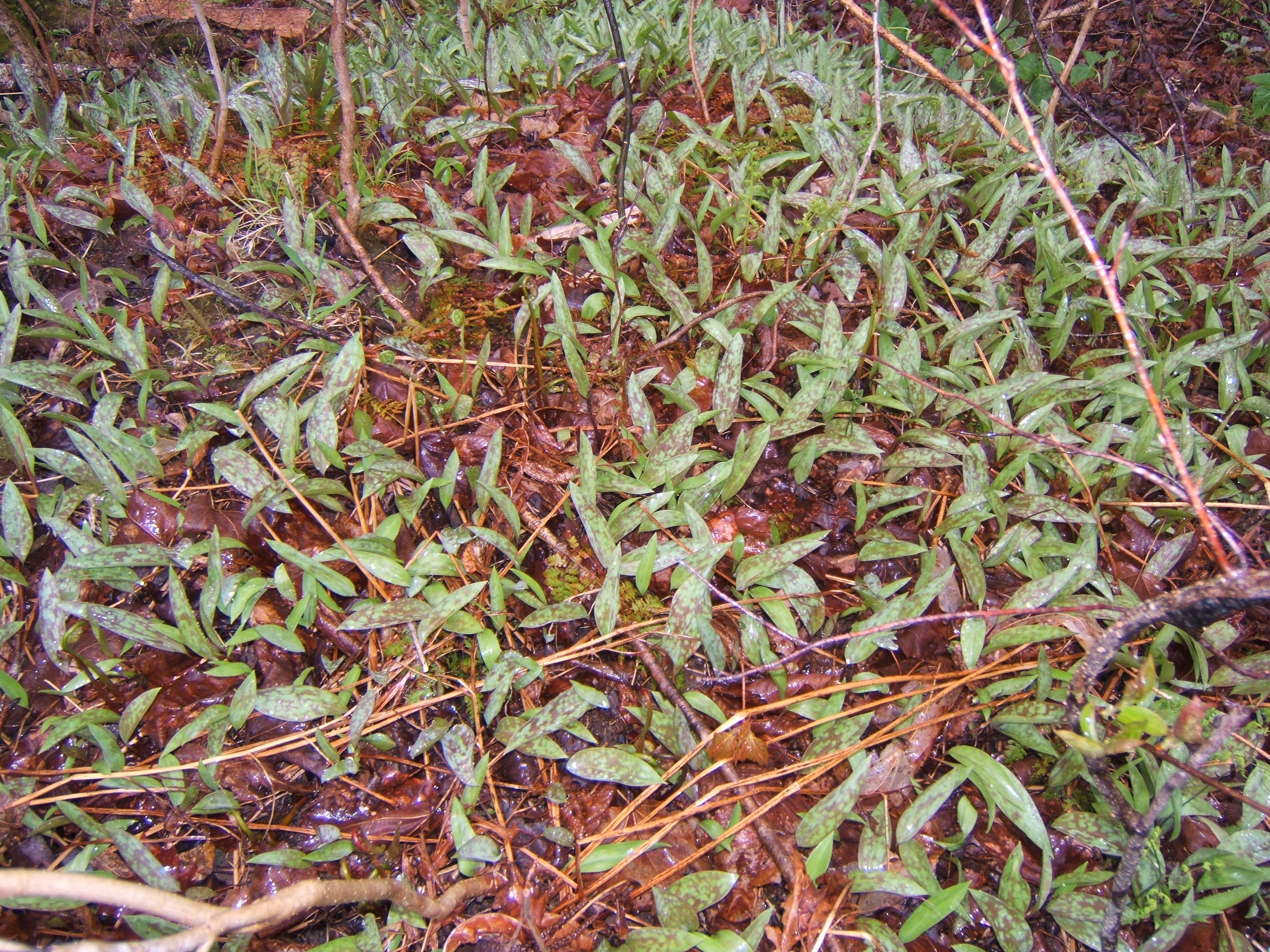
Trout Lily (Erythronium americanum Ker) is also known as the Dog’s Tooth Violet, Yellow Adder’s-tongue, Fawn-lily, and, in French, ail doux. Its generic name is from the Greek erythros meaning ‘red’, a reference to the purple-flowered European species.
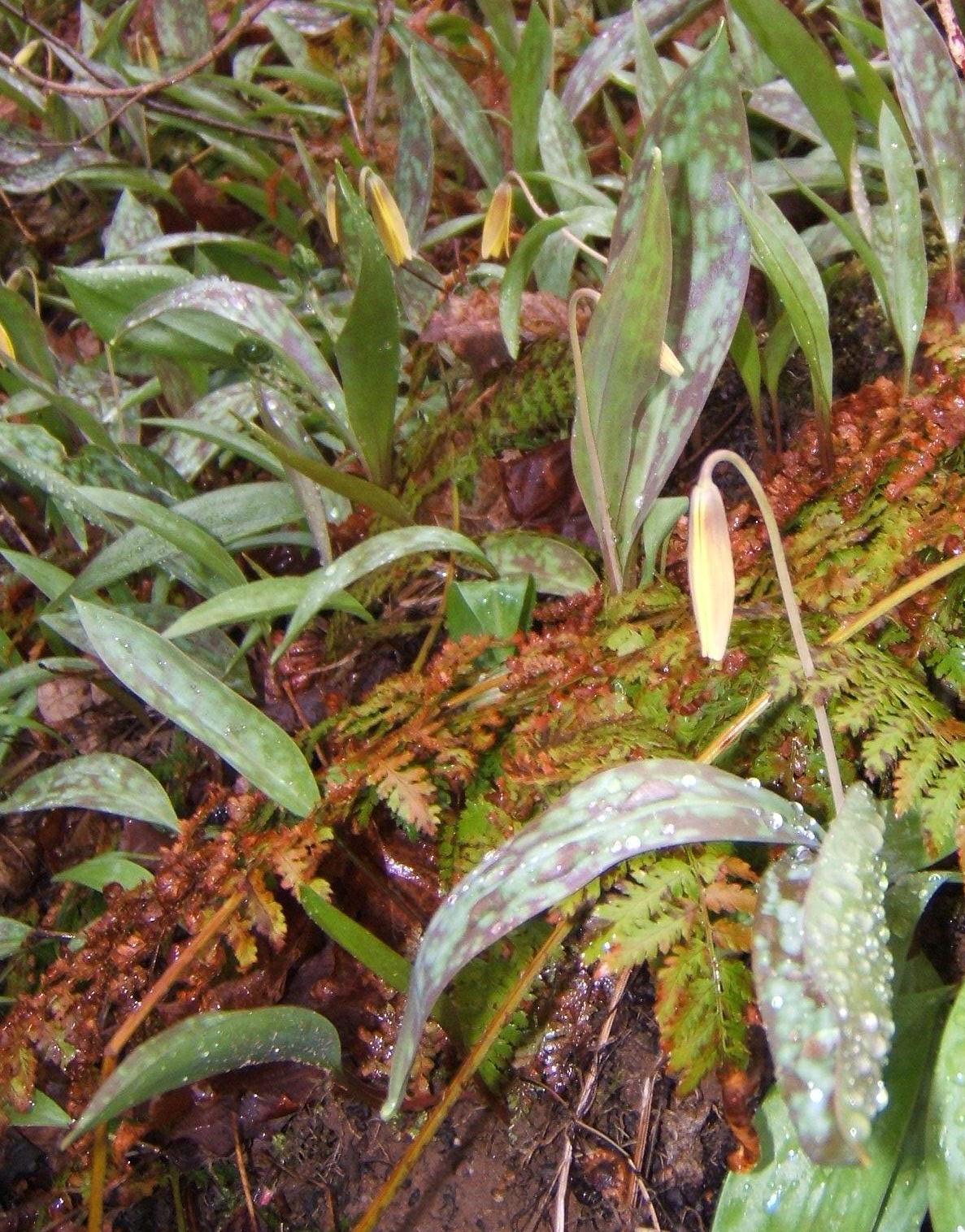
The Trout Lily was barely beginning its blooming when we were there, but it will be almost over by now. The flowers usually bloom from March to May. They are yellow and lily-like, with six divisions. The petals curve backward as they mature.

The young leaves are edible but should only be gathered if they are very abundant in order to conserve the species. To prepare the leaves for eating, clean them, boil them for 10 to 15 minutes and serve with vinegar. The bulb-like ‘corm’ is also edible; it should be cooked about 25 minutes and served with butter. Again, the bulbs should only be gathered if the plant is very plentiful, and only a small percentage of the plants should be harvested to enable the plant to thrive. Also, the usual warning applies, only harvest if you are absolutely certain of the identification.
~
~
Trout Lily
(Erythronium americanum Ker)
~
on a hike in the hardwood
north of the Dunbar Stream
you discover Trout Lily in profusion
mottled purple, overlapping
as the scales of adder, dinosaur or dragon
~
you know these plants as edible
the leaves a salad, or pot-herb
and, deep underground, the corm
flavoured like garlic
~
you fall to your knees
to dig, to gather
and hesitate,
examine your motives –
you, with two granola bars in your knapsack
and a bottle of water from Ontario
~
~
© Jane Tims 2012

making friends with the ferns #3
Although the fiddleheads of the Ostrich Fern are edible and a delicacy in New Brunswick, all fiddleheads are not edible. The fiddlehead is the tightly-rolled, earliest emergence of the immature fern leaf. This coil of the leaf resembles the head of a fiddle, hence the name. As time passes, the fiddleheads uncoil and become the mature leaves of the fern.
In the Grey Woods, we have two species of fern with very distinctive fiddleheads.
The fiddleheads of the Sensitive Fern (Onoclea sensibilis L.) are slim and red. They are not edible and are poisonous to horses.

red fiddleheads of the Sensitive Fern are hard to see against the dried leaf layer
The Sensitive Fern grows at the edges of the Grey Woods, along our house foundation and in a large patch on our ‘lawn’.
The common name ‘sensitive’ refers to the fern’s characteristic dying at the first frost. The Sensitive Fern is also called the Bead Fern, a reference to the hard brown spore cases on the fertile spikes. Once the green leaves have died, only the tall brown fertile spikes remain, and these persist until spring. The Sensitive Fern is a once-cut fern (the leaves are cut once into simple leaflets) with wavy margins and sometimes deep indentations in the leaflets. The upper leaflets are ‘winged’ or ‘webbed’ where they join the main axis of the plant.
The fiddleheads of the Cinnamon Fern occur in clumps and are densely covered with coarse white hairs. The fiddleheads can be eaten but are not used as commonly as those of the Ostrich fern.
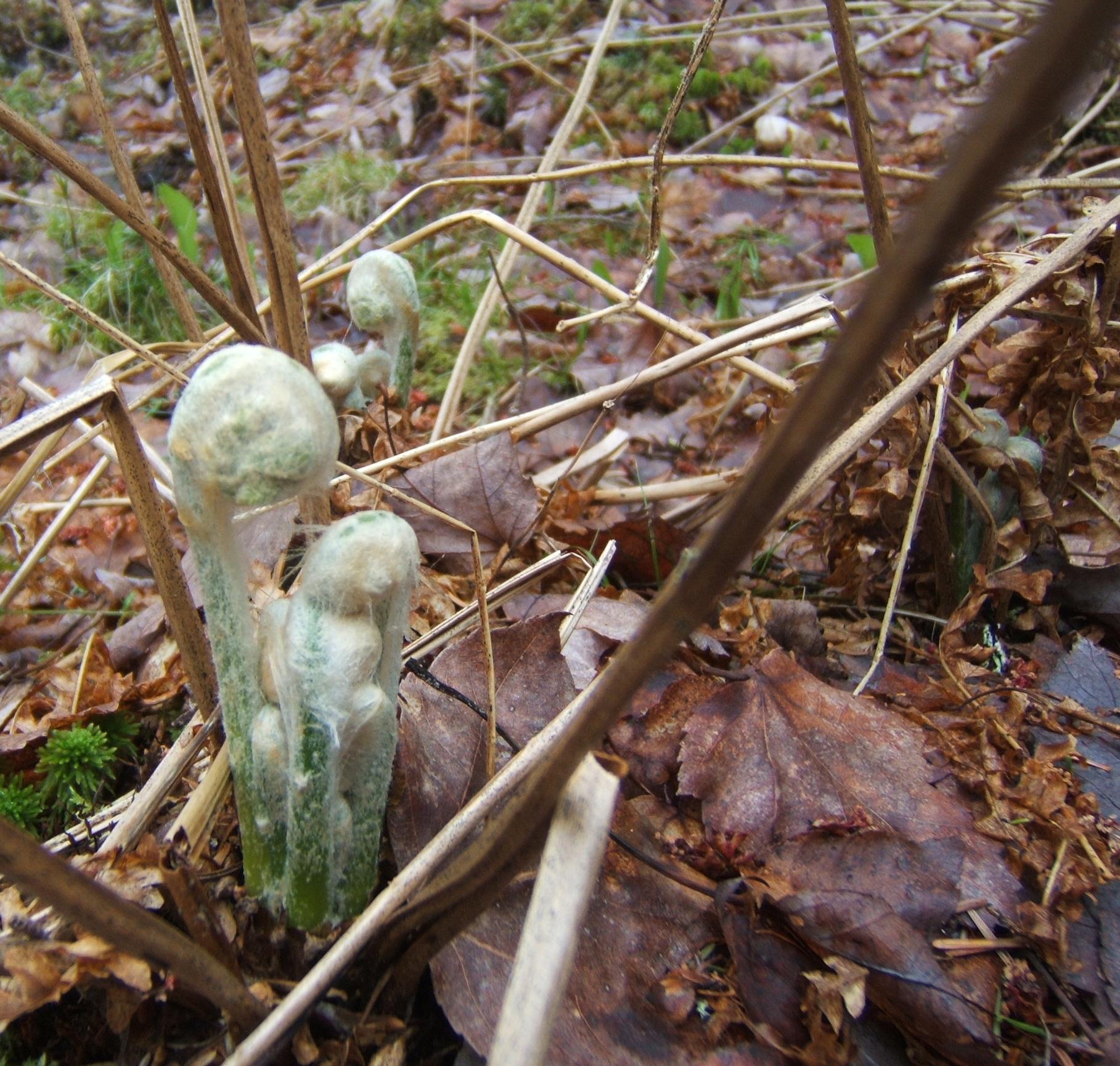
the wooly fiddleheads of the Cinnamon Fern are common in wet woods in New Brunswick
The Cinnamon Fern (Osmunda cinnamomea L.) grows in wet woods and other water-logged areas. In our Grey Woods, it grows in the fern gully (see the ‘map of the grey woods’ under ‘about‘).
Cinnamon Fern is a twice-cut fern (the leaves are cut into leaflets and these, in turn, are cut into sub-leaflets). As the sterile leaves expand, you can see fine cinnamon-colored wooly hair along the stalk, and tufts of cinnamon-colored hairs on the underside and at the base of each leaflet. The plant produces separate fertile spikes that turn cinnamon-brown in color.
~
~
fiddleheads
~
thin music in the May-woods,
trowie tunes from the peerie folk,
a bridge between spring
peepers and the wind,
fiddleheads carved in
Sensitive red and Ostrich green,
the bow strung by spiders,
the riff in the violin trembles
as potential uncoils,
music befuddled in a web
of Cinnamon wool
~
~
© Jane Tims 2012
Warning: 1. never eat any plant if you are not absolutely certain of the identification; 2. never eat any plant if you have personal sensitivities, including allergies, to certain plants or their derivatives; 3. never eat any plant unless you have checked several sources to verify the edibility of the plant.Bunchberry (Cornus canadensis L.)
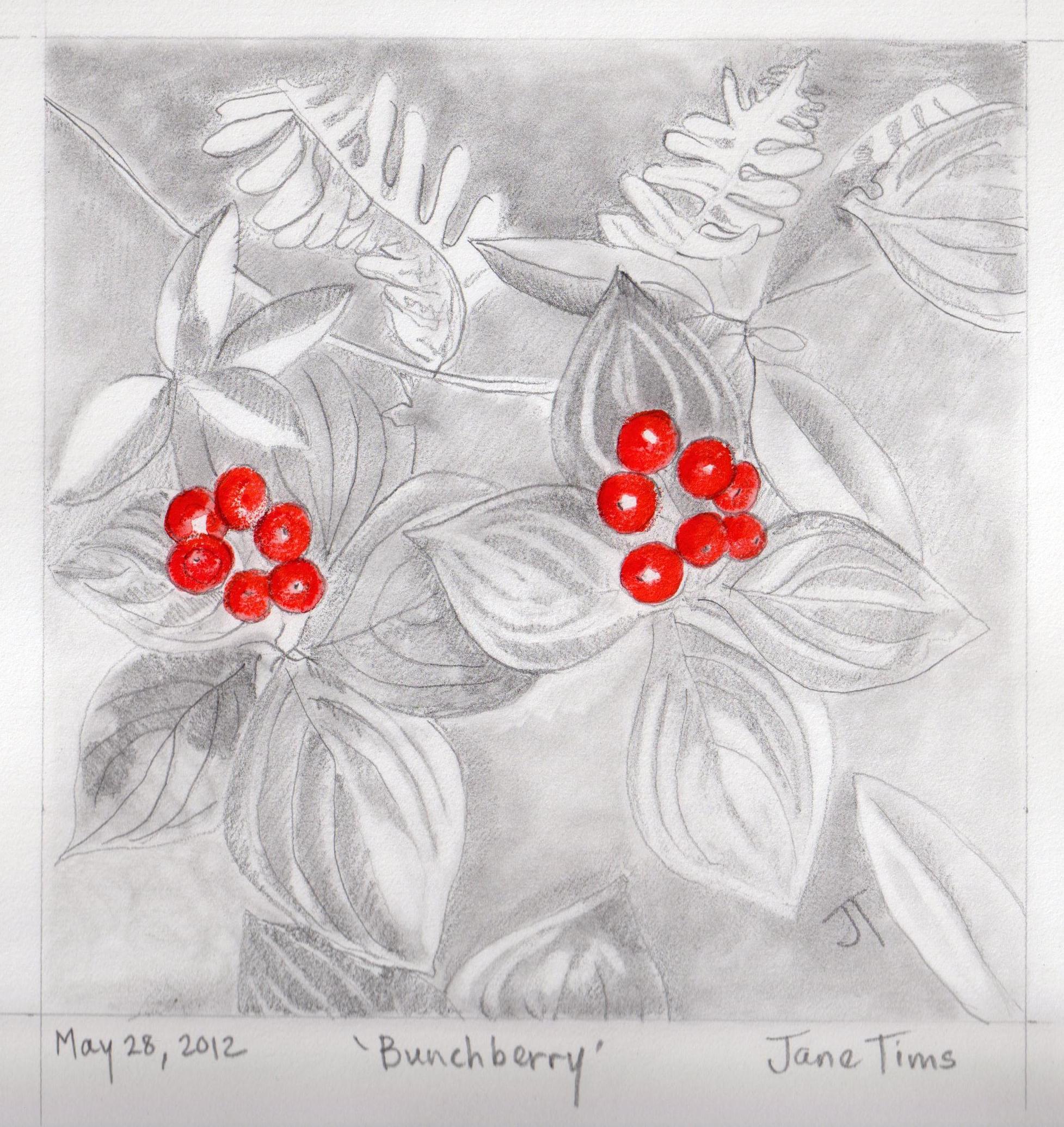
Bunchberry is so common in our Grey Woods, I think of it as a friend. When I walk our paths in the spring, its white ‘flowers’ glow around me. In late summer and autumn, it offers its scarlet bunches of berries freely. It was one of the first plants I learned to identify.

Bunchberry (Cornus canadensis L.) is also called Crackerberry, Dwarf Cornel, and Pudding-berry. In French, it is called quatre-temps. It belongs to the Dogwood family of plants. Although some Dogwoods are low-growing herbaceous plants like Bunchberry and some are large shrubs, such as Red Osier Dogwood (Cornus stolonifera Michx.), all have similar leaves – ovoid with pointed tips and a distinctive venation pattern, the parallel veins all arising from the midrib of the leaf. The generic name Cornus comes from the Latin cornu meaning a ‘horn’, descriptive of the hardness of the wood. The name ‘Dagwood’ is derived from the word dagge meaning a dagger or sharp object, a reference to the use of the wood of the European Cornus sanguinea L. as skewers for meat.
Bunchberry grows in cool woods, on roadsides and slopes, and in barrens. It is low-growing, and creeps via underground rhizomes or root-like stems.
The form of the Bunchberry is distinctive. It consists of a short woody stem with a false whorl of six leaves. Just below the whorl is a smaller pair of leaves. The whorls of leaves are all at the same level in the forest, creating a single ‘surface’ of green.
The flower of Cornus canadensis blooms from May to July and is at first greenish, changing to a dazzling white. The blossom is composed of four petal-like bracts enclosing a central cluster of tiny purplish flowers.
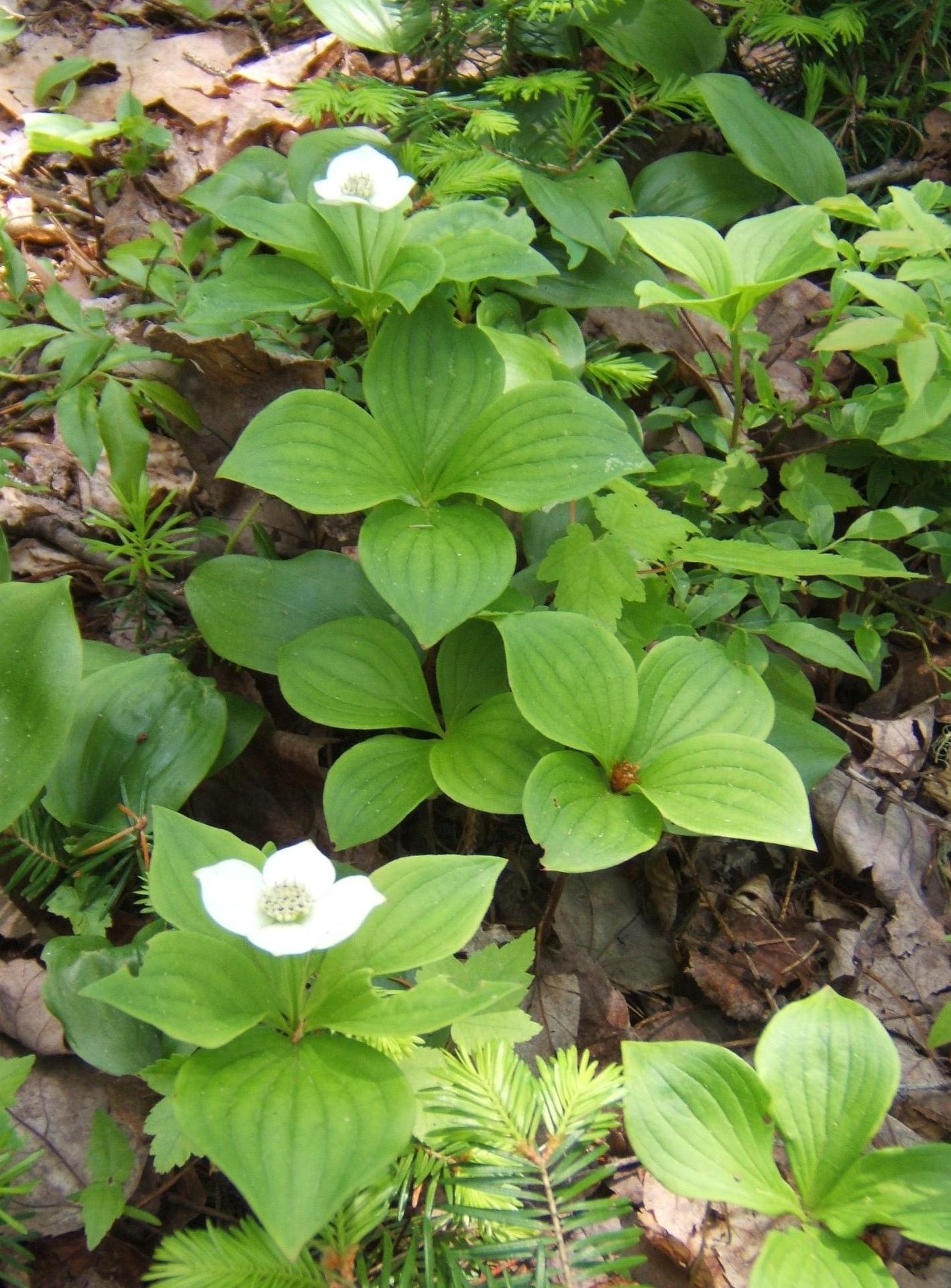
The berries of Bunchberry ripen in late summer and are bright scarlet, held in a tight cluster. The berries are sweet and great as a trailside nibble. They can also be made into jam or a berry pudding. Most guides describe them as ‘insipid-tasting’ but I find them quite pleasant. Unfortunately, each berry has a large seed, so enjoying a mouthful of berries is a challenge!
There is evidence Cornus canadensis and other Cornus species were included as part of the diet of prehistoric peoples in New Brunswick. Dr. David Black, an archaeologist at the University of New Brunswick, found a charred seed of what may have been Cornus canadensis in his excavation of a shell midden on Partridge Island in the southwest area of the province. Charred seeds of the dogwood species Cornus rugosa Lam. have been found by another archaeologist, Dr. Kevin Leonard, in excavations at Skull Island along the east coast of New Brunswick.
~
~
Bunchberry
Cornus canadensis L.
~
step lightly –
leaf-whorls of Bunchberry
are cobblestones, the green-between
~
Partridge-berry, ground-creeper
and landing platforms of Bracken
and Wild Sarsaparilla
~
elevated ways for fairy-folk
white flowers, four-weather beacons,
guideposts through the forest
~
bunches of berries, red-heaped into aprons
are pudding for dinner
~
or winter-fare, gleaned by a gatherer,
flavored by fire
~
a nibble to cheer a hiker
lost in the forest
~
~
© Jane Tims 2012
~
~
Sources:
David W. Black, 1983, What Images Return: A Study of the Stratigraphy and Seasonality of a Small Shell Midden in the West Isles of New Brunswick, M.A. Thesis, Department of Anthropology, McMaster University.
Kevin James Malachy Leonard, 1996, Mi’kmaq Culture During the Late Woodland and Early Historic Periods, Ph.D. Thesis, University of Toronto. http://independent.academia.edu/KevinLeonard/Papers/623902/Mikmaq_culture_during_the_Late_Woodland_and_Early_Historic_periods Accessed May 27, 2012.
Warning: 1. never eat any plant if you are not absolutely certain of the identification; 2. never eat any plant if you have personal sensitivities, including allergies, to certain plants or their derivatives; 3. never eat any plant unless you have checked several sources to verify the edibility of the plant.
places off-planet #6 – the ‘Coathanger’ asterism
Most people have never seen my favourite star grouping, but if you use binoculars and can locate two key stars, I think you could see it too. It is the ‘Coathanger’ asterism (or group of stars), also known as Collinder 366, Al Sufi’s Cluster, or Brocchi’s Cluster. It looks like a little upside-down coathanger. It was first described by the Persian astronomer Al Sufi in 964 AD!
The ‘Coathanger’ is in the constellation Vulpecula in the ‘Summer Triangle’. To find the ‘Coathanger’, use the binoculars to sweep the Milky Way from the star ‘Altair’ towards the bright star ‘Vega’. The ‘Coathanger’ is found about one-third of the way from Altair to Vega.

photo is from Wikimedia Commons
original contributor DannyZ
~
~
coat hangers, closets and stars
~
1.
metal hangers
aggravate
refuse to cooperate
jangled
tangled twisted
~
2.
her closet
built for grace
satin hangers
muffled plumped and padded
kind to arthritic hands
~
pearl buttons to catch
her dresses
before they slip
to the floor
~
3.
between Altair and Vega
Brocchis’ Coathanger Cluster
also known as Collinder 399
suspends the fabric of sky
~
with binoculars
this fuzzy patch of light
resolves
to ten splendid stars
~
strong little hanger
oversized hook
upside-down
~
~
© Jane Tims 2011
Wild Lily-of-the-Valley (Maianthemum canadense Desf.)
This time of year, the floor of our Grey Woods is carpeted in the leaves and blooms of Wild Lily-of-the-Valley (Maianthemum canadense Desf.). The leaves first poke through the dry leaves in mid-April and literally unfurl …

By May the forming flowers are visible…

… by late-May they are in full bloom.

I cannot get a good photo of a white flower, but this shows their star-like quality
The Wild Lily-of-the-Valley, also known as False Lily-of-the-Valley and Canada Mayflower, grows in woods and clearings, and is one of the first plants to appear in the coniferous woods understory. The leaves are heart-shaped, cleft to fit around the floral stem. Flowers are white, contained in a compact elliptical raceme. Each little flower is four-pointed.
The berries of Maianthemum canadense are edible, first appearing as whitish-green with small spots and gradually turning to red.
~
This post is dedicated to Barbara Rodger’s mother, who loved Lily-of-the-Valley, the flower the Wild Lily-of-the-Valley gently resembles!
~
~
Wild Lily-of-the-Valley
– Maianthemum canadense Desf.
~
slim emerald flames
burn through dry leaves,
ignite sparklers
of stamen stars,
puffs of smoke,
white berries heat to red
embers in forest
~
~

Bluebead Lily (Clintonia borealis (Ait.) Raf.)
When I hike through the woods, I am made uneasy by two unnatural-looking berries… the ‘doll’s eyes’ of White Baneberry (Actaea pachypoda Ell.) , and the metallic blue berries of the Bluebead Lily (Clintonia borealis (Ait.) Raf.). Both berries are poisonous and inedible. I’ll write more about White Baneberry in a later post, but first, I want to tell you about the Bluebead Lily.
The Bluebead Lily is also known by the names Snakeberry, Dogberry, Corn Lily, Cow Tongue, Straw Lily and even Wild Lily-of-the-Valley. It is called after De Witt Clinton, several-times Governor of New York. Its specific name, borealis, is Latin for ‘northern’.
Clintonia grows in rich, cool hardwoods, often on slopes. The plant consists of two or three large, shiny basal leaves, with parallel veins, wrapped around one-another and clasping the base of a flower-stalk. The stalk bears several yellow-green nodding lily-like flowers. In late May, these flowers are just beginning their blooming.
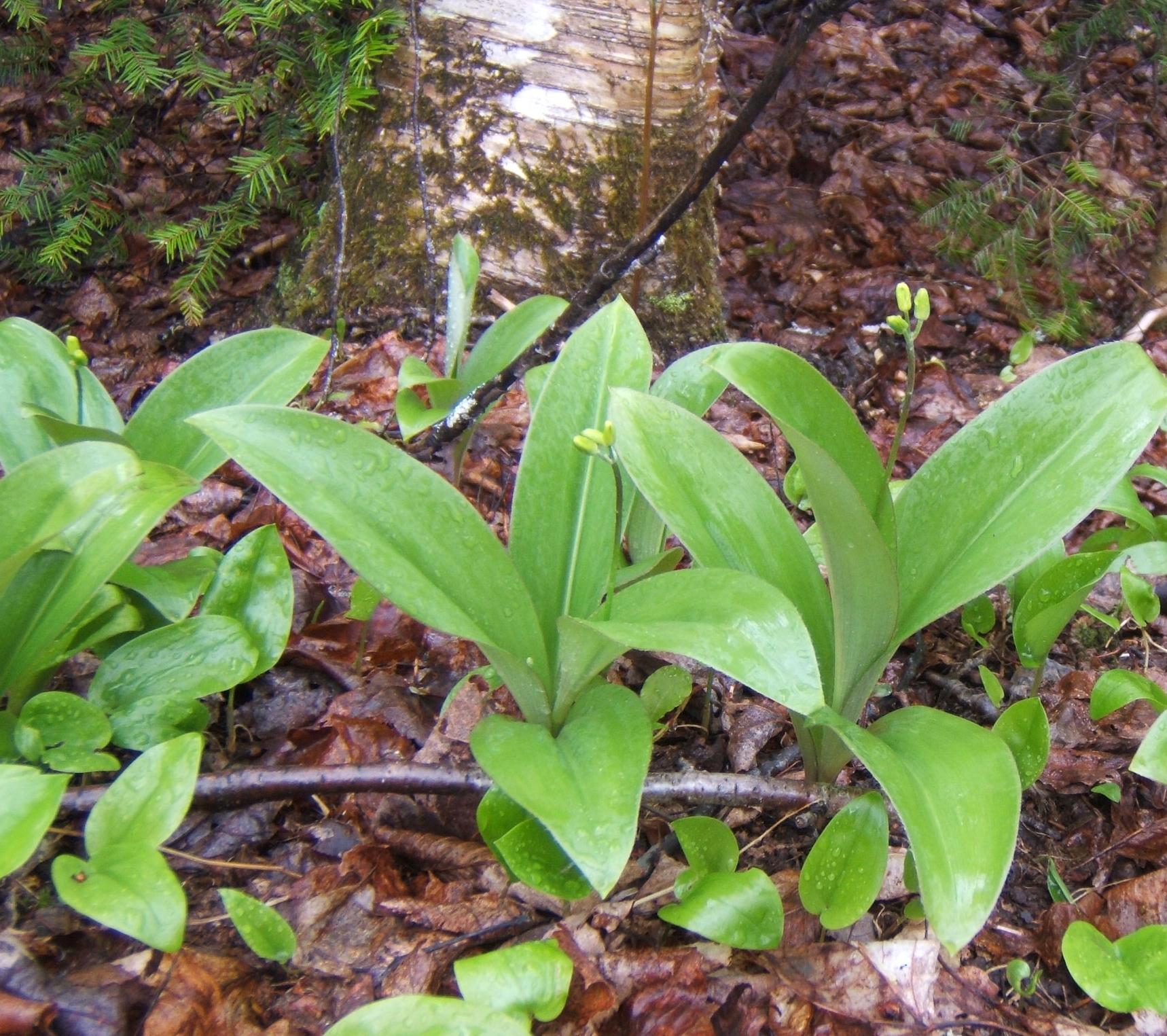

By July, the berries are ripening. These are considered inedible, perhaps toxic. They are oval, shiny, dark blue, and to me, menacing.
Although the berries are inedible, the young leaves, when they are just expanding, can be eaten cooked or raw, and taste like cucumber. To cook them, boil for 10 minutes and serve with butter. As the leaves mature, the cucumber taste becomes strong and unpleasant.
If you want to try the young leaves of Clintonia, make sure you are certain of identification since there are many leaves in the woods that may superficially resemble the leaves of Clintonia.
Have you ever seen a Bluebead Lily and its berries or flowers?
~
~
poisonous
~
White Baneberry
and Bluebead Lily –
vivid berries
peek between leaves,
part a path
in the understory, dolls
wink, use fern shadow
to blink or disguise
a gift, a bead
of metal, stained
glossy, alien
blueberry-blue
~
glossed by the Guidebook
with skull and crossbones
~
~
Warning: 1. never eat any plant if you are not absolutely certain of the identification; 2. never eat any plant if you have personal sensitivities, including allergies, to certain plants or their derivatives; 3. never eat any plant unless you have checked several sources to verify the edibility of the plant.© Jane Tims 2012




 nichepoetryandprose