Posts Tagged ‘pencil drawing’
a bridge for the soul
In eleventh century Sweden, rune stones were often raised by landowners as a memorial of their accomplishments.
Jarlebanke was a landowner and a local magnate who lived in Uppland, Sweden during the second half of the eleventh century. He took pains to ensure he would be remembered, and six stones survive of the many he ordered to be carved.
Four of the surviving stones stand at the ends of the Täby bru. The Täby bru is a ‘bridge’ or causeway marked with two rune stones at each end.
One of these stones (U127) was used in the 17th century as the threshold of the church in Täby; it now stands to the side of the church door. The inscription (in runes) says: Iarlabanki let ræisa stæina Þessa at sik kvikvan, ok bro Þessa gærđi fyr and sina ok æinn atti Tæby allan. This has been translated as: “Jarlebanke let raise these stones after himself, while he was living, and he made this bridge for his soul, and he himself owned the whole Täby.”
The stone depicts two serpent creatures enclosing a Latin cross. Symbols of the old religion and Christianity are often found together on rune stones, evidence of transition in belief systems. Jarlebanke was not taking any chances when he recognized both religions on his rune stones. The facimile (below) of the runes on the stone is from:
http://www.ludd.luth.se/~frazze/history/mirror/viking_age/runes/nytt/images/u127.gif

facimile of carvings on rune stone U127
a bridge for the soul
Danderyds church, Täby, Uppland
~
ok bro Þessa gærđi fyr and sina…
and he made this bridge for his soul…
– inscription on a Täby bridge runestone
~
Jarlabanke made this bridge
for his soul
a causeway crossing marshy ground
~
uncertain
for though he owned all Täby
he was afraid
~
he raised these four while living
a rare deed
the stones, of course, never care
~
first at the ends of the Täby bru
then at the threshold
of the south church door
~
the Cross tethered to old faith
dragon-kind
best wager for passage into heaven
~
© Jane Tims 2003

spending time out-of-doors
Do you spend enough time out-of-doors? Some researchers believe if you haven’t seen a ‘fractal’ today, you aren’t as well as you could be!
The word ‘fractal’ is relatively new. My desk-side dictionaries, a Webster from 1979 and an Oxford from 1998 do not have this word. According to the on-line Oxford Dictionary, a ‘fractal’ is a curve or geometrical figure, each part of which has the same statistical character as the whole. The word ‘fractal’ comes from the Latin fractus meaning ‘to break’.
In nature fractals occur frequently. All fractals are self-similar – the ‘whole’ has the same shape as its parts. For example, the tributary of a river has the same sinuous shape and properties of the larger river. Also, the leaflet of a finely-divided fern has the same shape as the whole frond.
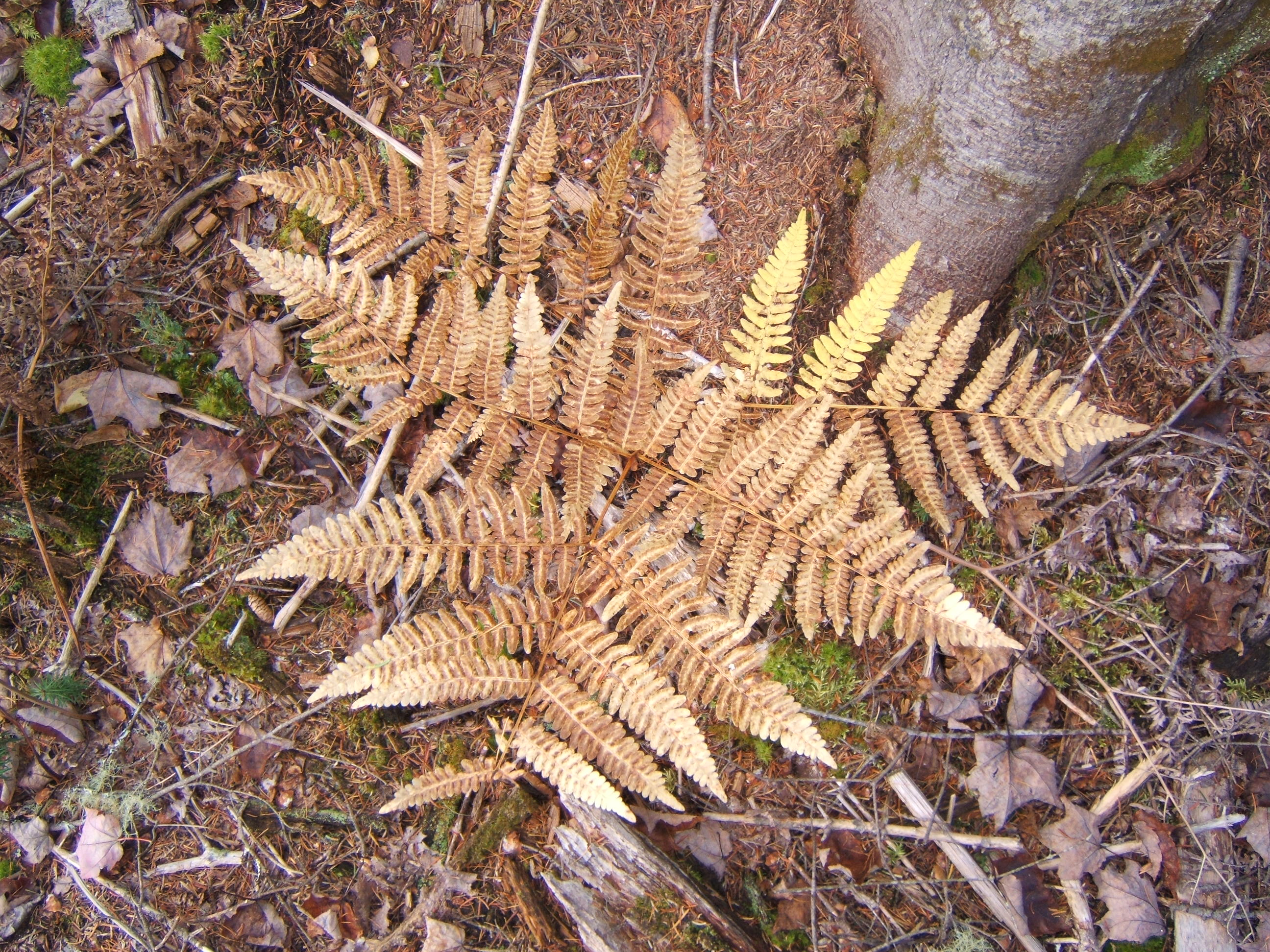
Bracken fern with fractal leaf patterns... the leaf is divided into leaflets... these are divided into sub-leaflets... and these are divided into lobes...
Benoit Mandelbrot is the mathematician credited with first describing fractal geometry.
Other fractals in nature include mountains, branching patterns of trees, the dendritic form of root systems, patterns of vessels in the body, frost crystals and snowflakes, even the clustering of galaxies. Just go on a walk outside to find lots of your own examples of fractals.
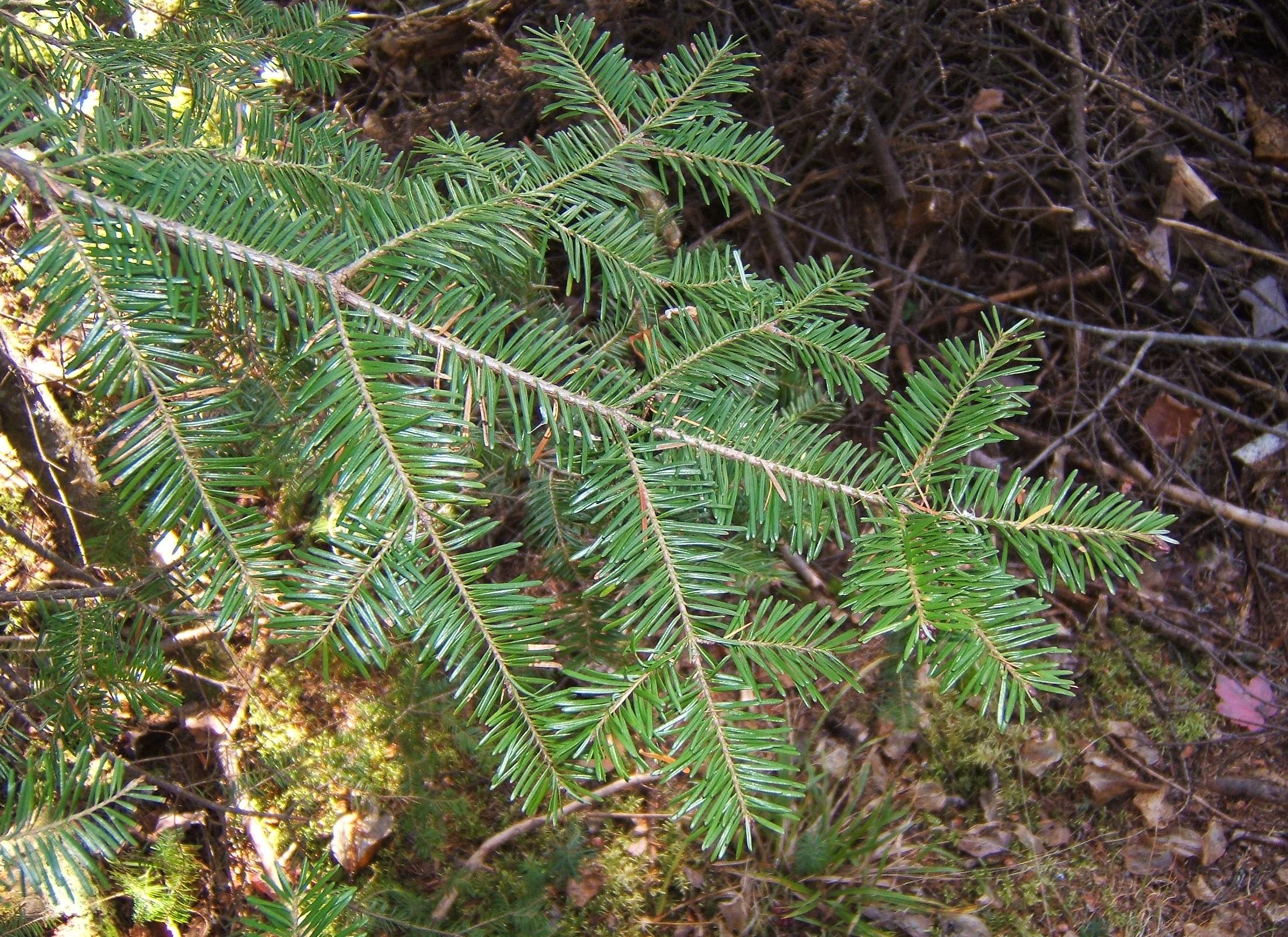
fractals in branches of Balsam Fir...
When we do not include nature in our lives, we miss these fractals. If experiencing fractals in nature is necessary for human wellness, as some suspect, this is yet another reason for getting out-of-doors, examining the patterns we see in trees and other wild plants, taking in the scenery of landforms and horizons, and catching snowflakes on mittens.
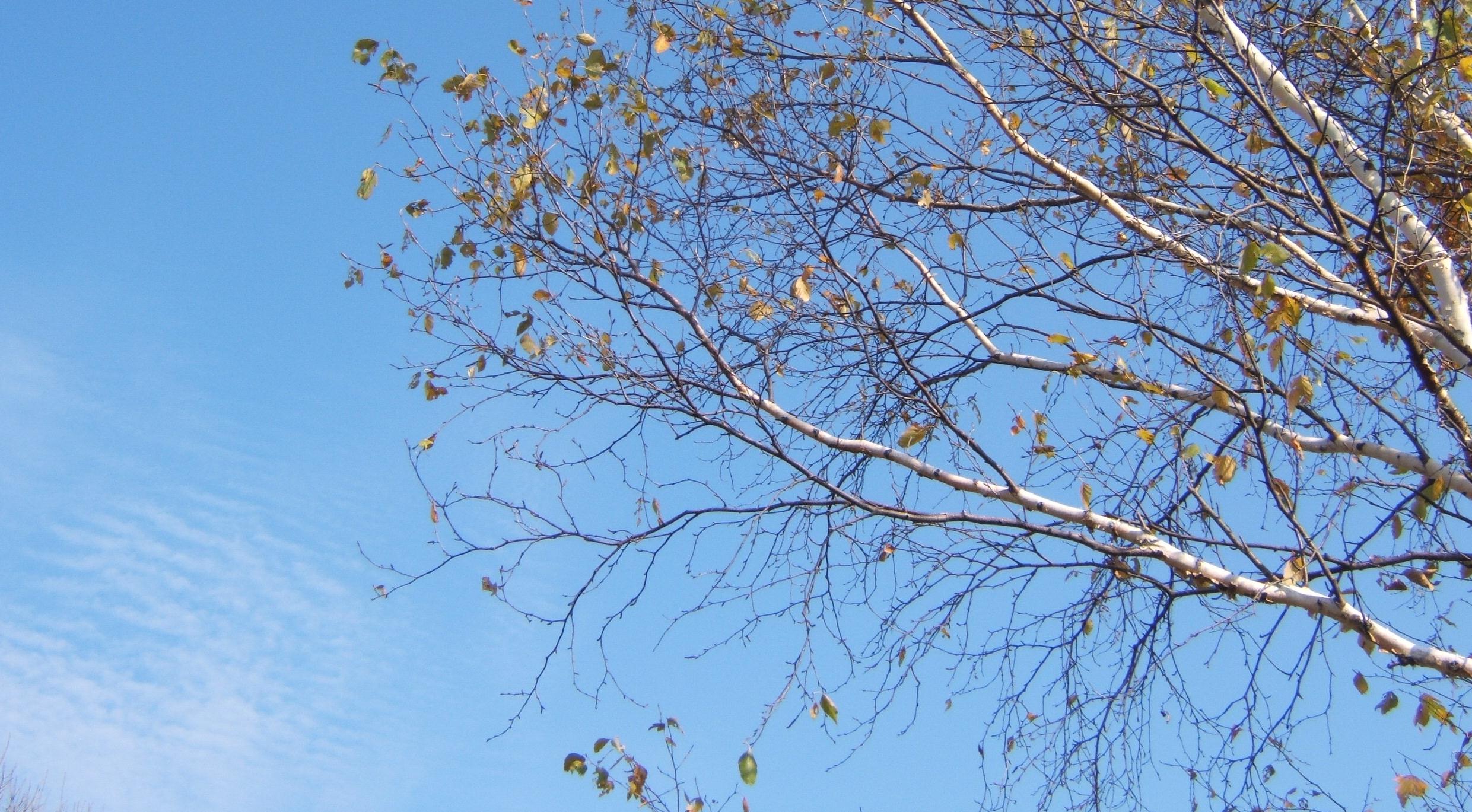
fractals in tree branches and fractals in clouds
fractals
~
winter trees on morning sky
each a watershed, dendritic weave
brooks and rivers
backwaters and waterfalls
~
the trunk a river
not flowing to the sea
but into earth toward
unsalted water, deep in the ground
~
the roots the mirror of river
knowledge gathered
drawn, divided
to fine corpuscular thread
~
© Jane Tims 2005

Northern White Violet (Viola pallens (Banks) Brainerd.)
Yesterday, we had our first dusting of snow and it persisted on the grass until the evening. It reminded me of some of those low white summer flowers whose petals look like snow when they bloom in masses on the lawn or in a field. In any season, the sight of ‘snow’ can be a charming, welcome sight.
The northern white violet, or small white violet (Viola pallens (Banks) Brainerd.) inhabits the moist ground of meadows, bogs and thickets, and it blooms profusely on our front lawn. Pallens means pale, referring to the color of the flowers. The leaves are somewhat heart-shaped.
The violets are a difficult group, taxonomically. Viola pallens is also known as Viola macloskeyi Lloyd.
Northern White Violet
Viola pallens (Banks) Brainerd.
~
stars in the northern meadow
scattered at the feet
of cattle grazing hay
violet sweet
~
hearts among the grasses
where the ground is wet
flowers pale and nodding
small white violet
~
Published as: ‘Northern White Violet’, April 2005, Refuge 14 (1)
© Jane Tims 2005

monuments in stone
inuksuk n. (plural inuksuit) a stone landmark or cairn used by Arctic and northern peoples to mark a point of reference or a place of significance; an Inuit cultural symbol.
inunnguaq n. (plural inunnguat) a stone cairn in the shape of a human figure, meant to represent a human figure, and distinguished from an inuksuk.
Wikipedia.org
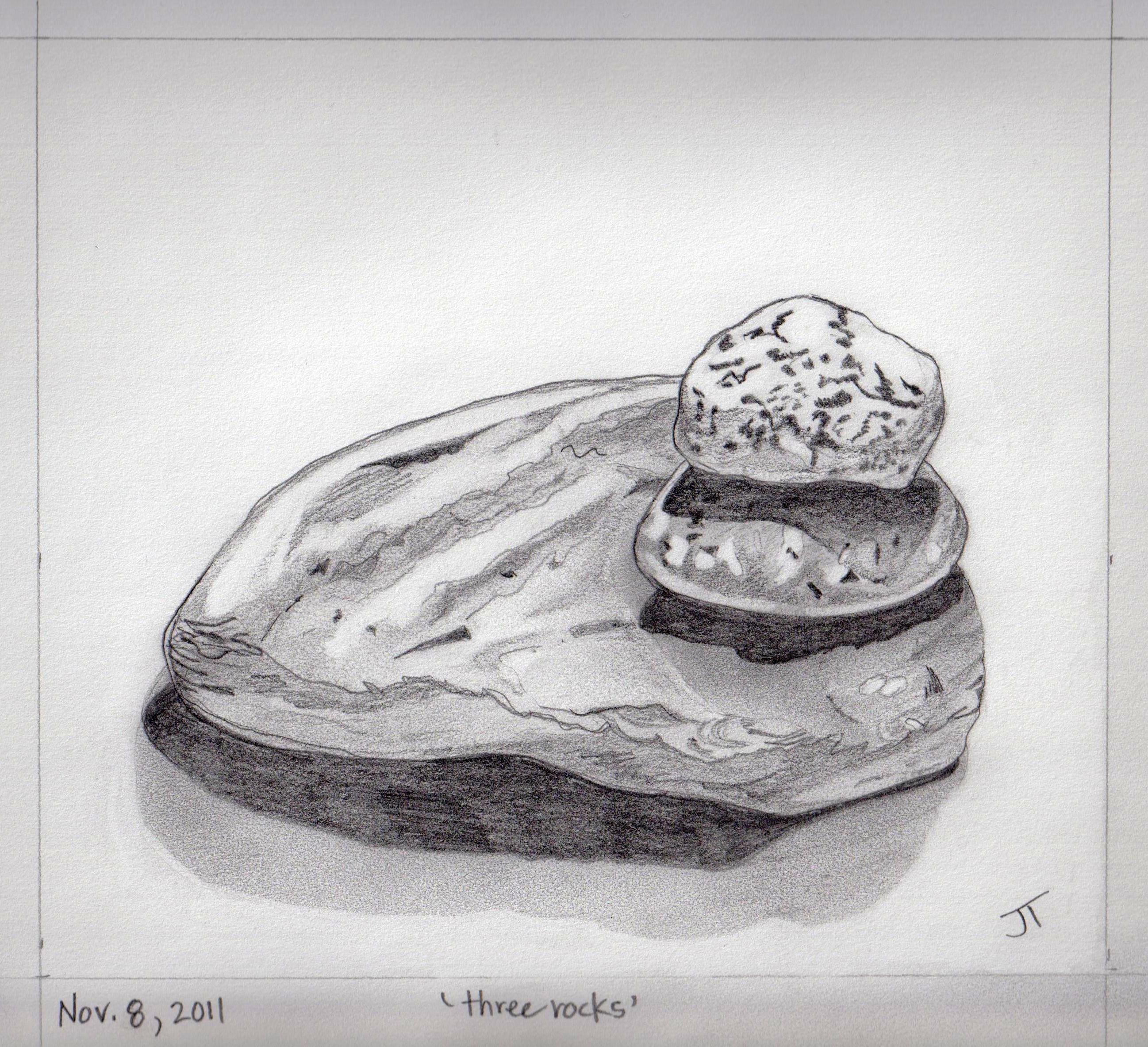
Our rock project is progressing slowly. We are collecting rocks for a stone monument. Since I want this to be a sculptural piece, I am sure the rocks we select will play a role in the final look of the monument.
One possibiity is to build an inuksuk. These stone landmarks are a part of the culture of the north, but they have caught the general imagination and are now encountered throughout Canada. On our trip out west, the inuksuk built along the Trans-Canada highway in Manitoba were particularly memorable.
For a few years, the inuksuk (plural inuksuit) and inunnguaq were common along the New Maryland highway in New Brunswick. On the stretch of road between New Maryland and Fredericton, the highway is carved through rock and outcrops are part of the roadscape. A women who walked along the road every morning for a few years was responsible for building many of the inuksuit. The local newspaper did a story on her, explaining that she walked and built the monuments as exercise following by-pass surgery. She wore a white jogging outfit with black splotches and was fondly referred to as the ‘Cow Lady’.
The ‘Cow Lady’ no longer walks the road and her inuksuit and inunnguat have fallen into disrepair. I remember her fondly and dedicate the poem below to her.
Inunnguaq 101
~
these are the hill people
sometimes without arms and legs
sometimes with other, alien parts
but proud
honor the woman who walks here
~
sometimes toppled
often reassembled
constructed one day at a time
optimism of increment
a community on the hillside
~
© Jane Tims 2004

Eastern Teaberry (Gautheria procumbens L.)
When the wind is chill and fingers are cold, what better remedy exists than a cup of tea? After years of attending meetings where there is a box of fancy teas to choose from, I now have my own wooden ‘tea box’. I replenish it from time to time with a new blend, but I find the old standbys are my favourites: Red Rose, Earl Grey, and Chamomile.
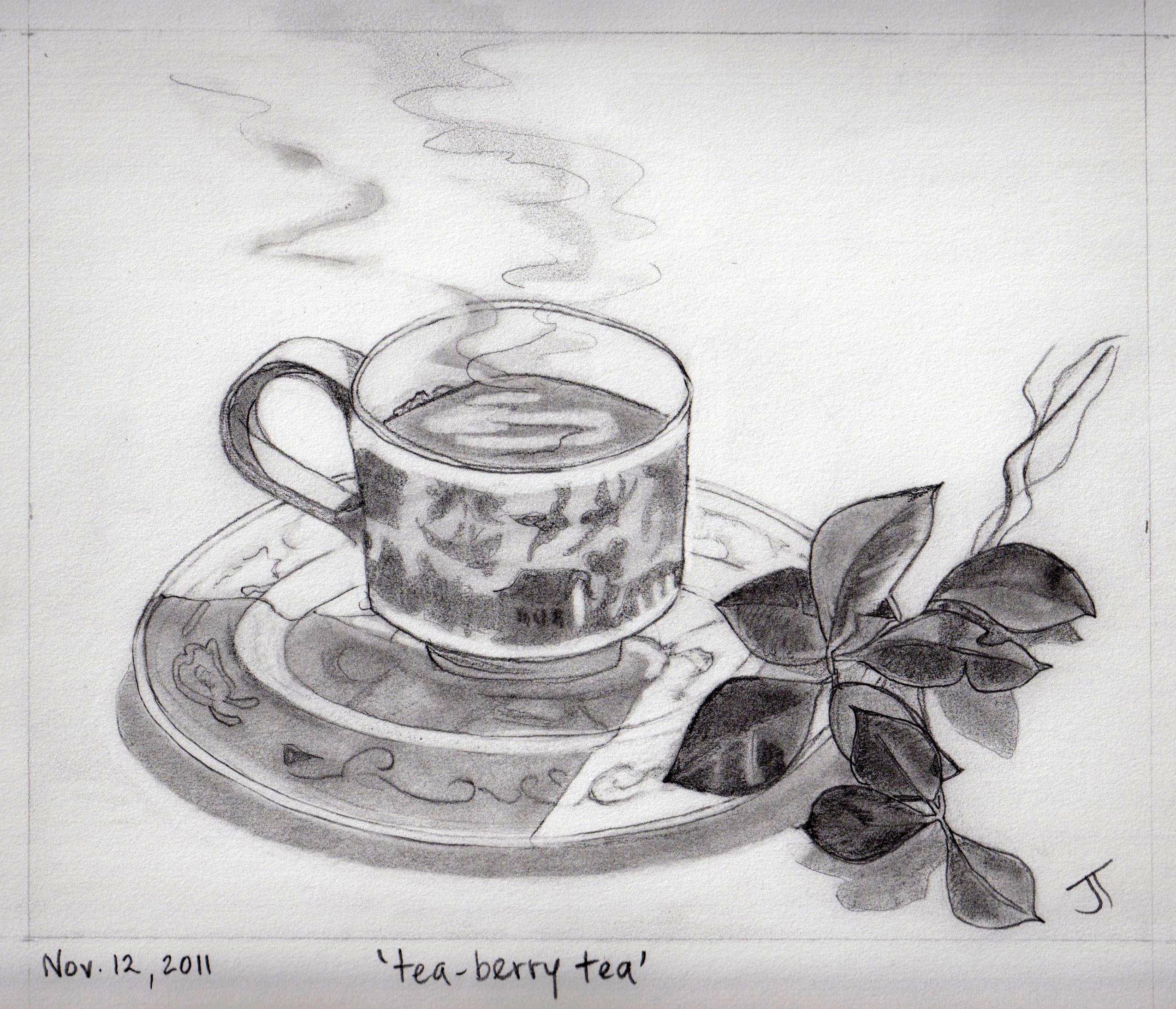
When my son was little, we used to have fun making ‘tea-berry tea’. I still go out occasionally to my patch of Gaultheria procumbens, also known as Eastern Teaberry or American Wintergreen. A few leaves, crushed and steeped in boiling water, make a lovely, fragrant tea with a delicate green color. In French, Eastern teaberry is le petit thé du bois (the little tea of the woods).
The leaves contain oil of wintergreen; the chemical in this oil is methyl salicylate, known for its anti-inflammatory properties and closely related to aspirin. For this reason, use caution and only drink ‘tea-berry tea’ occasionally and if you are not sensitive to aspirin. Methyl salicylate is also found in twigs of yellow birch and it also makes a fragrant tea. Methyl salicylate will build up an electrical charge when dried with sugar and rubbed… you can try this yourself with wintergreen-flavoured hard candies.
Warning: 1. never eat any plant if you are not absolutely certain of the identification; 2. never eat any plant if you have personal sensitivities, including allergies, to certain plants or their derivatives; 3. never eat any plant unless you have checked several sources to verify the edibility of the plant.The leaves of Eastern teaberry are thick and evergreen, so they can be found this time of year. The flowers are white, waxy, nodding, and bell-shaped. The bright red berries are also waxy and sometimes still found in November.
~
Wintergreen
Gaultheria procumbens L.
~
small leaves gathered, crushed
oils weep into water, pale
green tea, pink aroma
sugar and midnight sparks
sweet steam and aspirin make
undelicate my heart
~
~
Warning: 1. never eat any plant if you are not absolutely certain of the identification; 2. never eat any plant if you have personal sensitivities, including allergies, to certain plants or their derivatives; 3. never eat any plant unless you have checked several sources to verify the edibility of the plant.© Jane Tims 2012
© Jane Tims 2011
the ideal property
A few years ago, my younger brother lived in New Brunswick for a while and we were able to see him and my sister-in-law quite often. We had some great times, camping one weekend on Grand Manan, watching Survivor together, seeing their terrific Christmas decorations, and just visiting.
One of the weekends I remember well was our drive to see their new property along the St. John River. Although they eventually sold the property, it remains one of the best plots of land I have ever seen. My poem will tell you why!
~
~
Land For Sale
~
waterfront
two acres
one of cleared field
one of woods
silver maple, curly fern, rocky shore
transparent water and wobbling waves
an island over there
(conservation land)
(no buildings to intercept
the view)
~
plans manifest
the house here
the driveway a garden a gate
a path through the maples
to the shore and a dock
two good-natured chairs
turned toward one another
skating in January bonfires in July
promising neighbours
reasonable price
~
and the clincher?
the deal maker?
the heart breaker?
a crooked bush
with five fat blueberries
ready to pick
~
Warning: 1. never eat any plant if you are not absolutely certain of the identification; 2. never eat any plant if you have personal sensitivities, including allergies, to certain plants or their derivatives; 3. never eat any plant unless you have checked several sources to verify the edibility of the plant.
© Jane Tims 2011

plans for a rocky road
This fall, we have begun a new landscaping project, using rocks to embellish a length of road on our property.
On our travels this summer, we were impressed by the many ways home landscapers use stone as a signature element. Some of these ventures were as simple as a stone wall snaking through the woods. Some had elaborate stone benches, stone sculptures, or carefully-built piles of stones.
We have an offshoot to our driveway, intended some day to form half of a circular road. Over the years, we have added some stone embellishments to this road and its associated path, so it seems to me to be the perfect place to develop our own rock project.

To date, we have the following features in place, some in an advanced state of disrepair:
- two stone pillars, about three feet in diameter – each is a page-wire cage filled with rock
- an ‘old-fashioned’ rock wall constructed of granite stones, each about the size of a large honeydew melon
- a lopsided (fallen-down) sundial built of small angular rocks in the shape of a cone
- a chunk of black basalt, a five-sided, columnar volcanic feature, harvested from the shore where my ancestors came to Canada via shipwreck
- a stone ‘stream’ built years ago before we purchased more property and Fern Gully Brook entered our lives – this stream is a one foot wide course of small stones screened from a pile of pit-run gravel. It ‘runs’ from a small artificial pond and is now completely overflowing with dry leaves.

- existing rock and stone features on the road and path
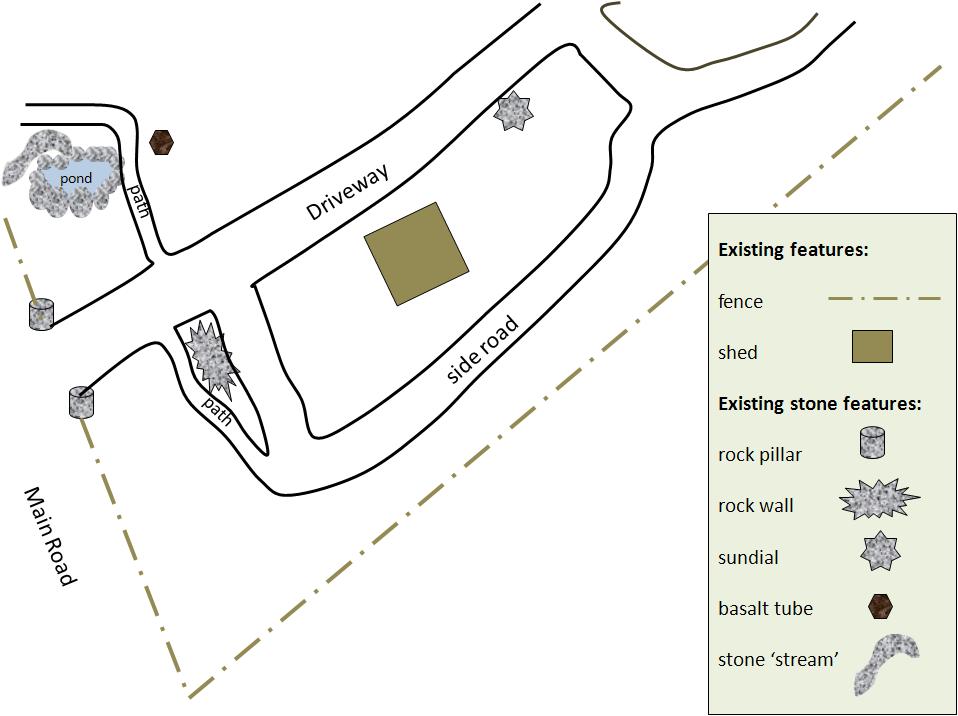
Over the next months, we want to add some features to the road:
- rebuild our formerly wonderful granite fire pit in a new location along the road
- create two new lengths of stone wall to match the existing wall
- build a stone statue or monument
- lay out a circle of stones to mark the one area where we can see the Milky Way from our property (star-gazing is difficult since we have so many trees)
- build a stone embankment-with-moss feature to emulate a lovely roadway we saw at my brother’s wedding last year.

- rock and stone features we plan to add

Over the next year, it is my intention to report back on the progress made on our Rock Project. If you never hear another word about this project, remember – I like to plan.
Copyright Jane Tims 2011
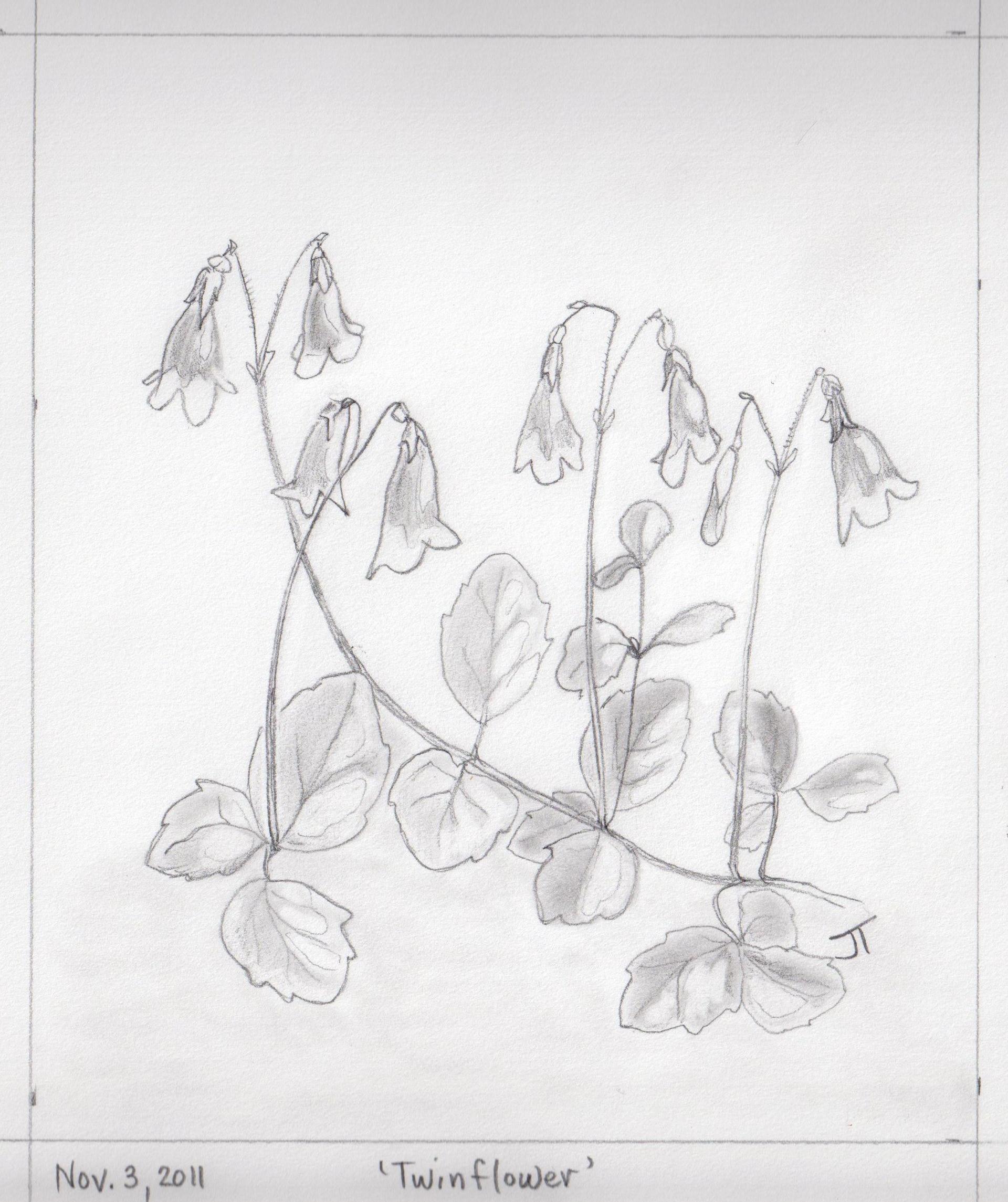
Twinflower (Linnaea borealis L.)
As we enter the winter months, I like to remember the woodland plants now waiting under the layers of fallen leaves to flower again next spring.
Twin-flower (Linnaea borealis L. var. americana (Forbes) Rehd.) is a low-growing, creeping evergreen, found blooming in late June in wooded swamps, coniferous bogs and clearings.
Each slender stalk bears a set of two delicate, nodding, fragrant flowers, white in color and tinged with pink. Other names for the plant are pink bells and, in French, linnée boréale. The specific name is from the Latin borealis, meaning northern.
The European variety was a special favorite of Linnaeus, the founder of the present system of naming flowers.
Twinflower
Linnaea borealis L.
~
conifer cathedral
slanting light
Linnaea carpets
stains the forest floor
to the edge
near the forest door
a woodland pool
~
on slender stem
mirrored
in the pool
and in the air
twinflower rings
pink boreal bells
at vespers
in whispers
a whisper
the rule
~
creeps under roots
and fallen leaves
Linnaea trails
over rude beams fallen
from fences built
when woods
were pasture
~
twin flowers
settle back to back
nodding heads
they cease to ring
and sleep
~
© Jane Tims 1992
mood of the lake
One of the very enjoyable experiences of having a property near the lake is listening to the loons. There is a least one pair of loons on our lake and we see them often. Usually they call a few times at mid-day or in the evening. Their cries are varied, ranging from a laughing tremolo to distinctive and melancholy wails, hoots, and yodels.
We have always been interested in loons and the protection of their habitat. Loons are especially vulnerable to quickly changing water levels and wave action because they build their nests just at water level. `Watch Your Wake` programs help boaters protect loon habitat.
In 1994, we participated briefly in the North American Loon Project. Today there is a similar program, the Canadian Lakes Loon Survey, sponsored by Bird Studies Canada. This is a long term study, using data from volunteers, to assess the health of Canada’s loon population.
We had little time in those days to participate fully, but we did visit Peltoma Lake in southern New Brunswick, to look at the loons living there. My journal entry for our visit to Peltoma Lake reads:
May 1, 1994 Sunday
Trip to Peltoma Lake to see if there are any loons. We are preparing to canoe the lake
about three times this year to make observations. Disappointed at first
as the lake is lined with cottages and we could see no loons.
Then we stopped near a small bay and there they were
– nine black and white beauties! They left the cove as soon as they saw us.

I also wrote a poem about the lake – the mood of the poem suggests it must have been a damp and miserable day.
Last Sunday, we drove out to Peltoma Lake to take some photographs. The loons and most of the people are gone this time of year. Although it was cold, the lake sparkled in the sunlight and was anything but dreary.
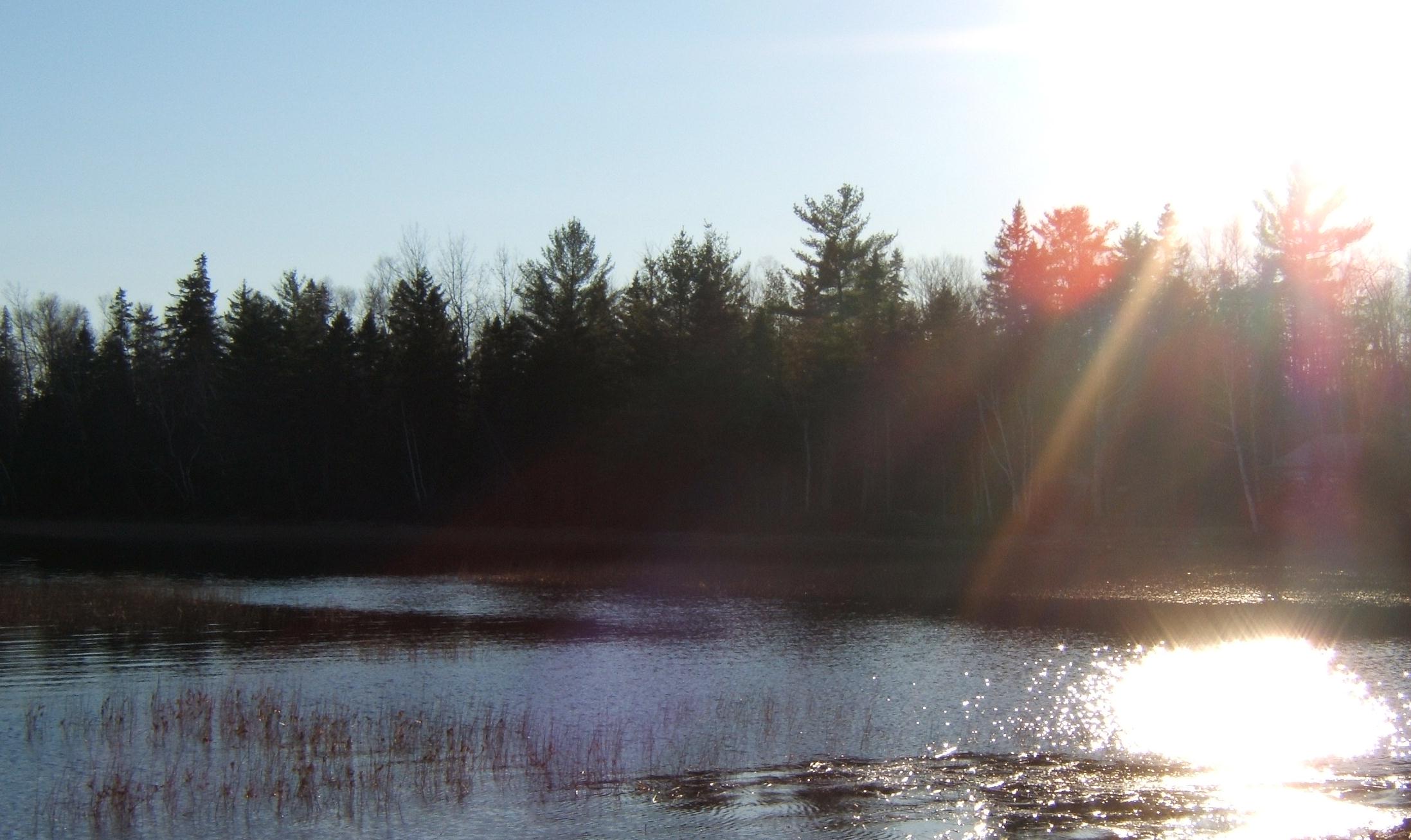
Peltoma Lake– Sunbury County
~
Peltoma in rain
is a faded black and white photo
layers of misery, thick and still
the lake, the shore, the mist
the thin chill drizzle
~
in the coves
the cedar and birch swoon above the water
moved to tears at reflection
the lake broods
over her loons
and the cell-thick pall of algae
smoothed to the shore
~
cottages hug the lake
like campers huddle a fire
cheerless and smoky
pines on the esker reach
blank windows keep watch
for sparkle on waves
back flips from the dock
paddles flashing sun
the day is bleak without answer
~
a muskrat tows a line on the shallows
loons quit the cove
diminish to mist
~
Peltoma is scowling
~
© Jane Tims 1994

making friends with the ferns #1
November is an odd time to think about identifying ferns, I admit. But identification of the evergreen ferns is still possible, as they hang on to their identity in the frosty air and even beneath the snow. Also, ferns are so beautiful, it is fun just to look over the field guides and reminisce about the days of summer.

a pressed Long Beech Fern in my copy of Boughton Cobb’s ‘Field Guide to the Ferns’
Ferns belong to the group of vascular plants known as the Pteridophytes. They have stems, roots and leaves but no seeds. Instead, they reproduce by spores and have complicated life cycles.
Ferns grow in many habitats. In our area they are found in moist and shaded woodlands. They are also inhabitants of fields, cliffs, wetlands and cityscapes. I have even seen ferns growing deep within the Howe Caverns of New York State where they have taken advantage of the scant habitat provided by artificial lighting.
The uniform ‘greenness’ of ferns and their highly patterned leaves make them popular as a motif, especially for home decorating and at Christmastime.
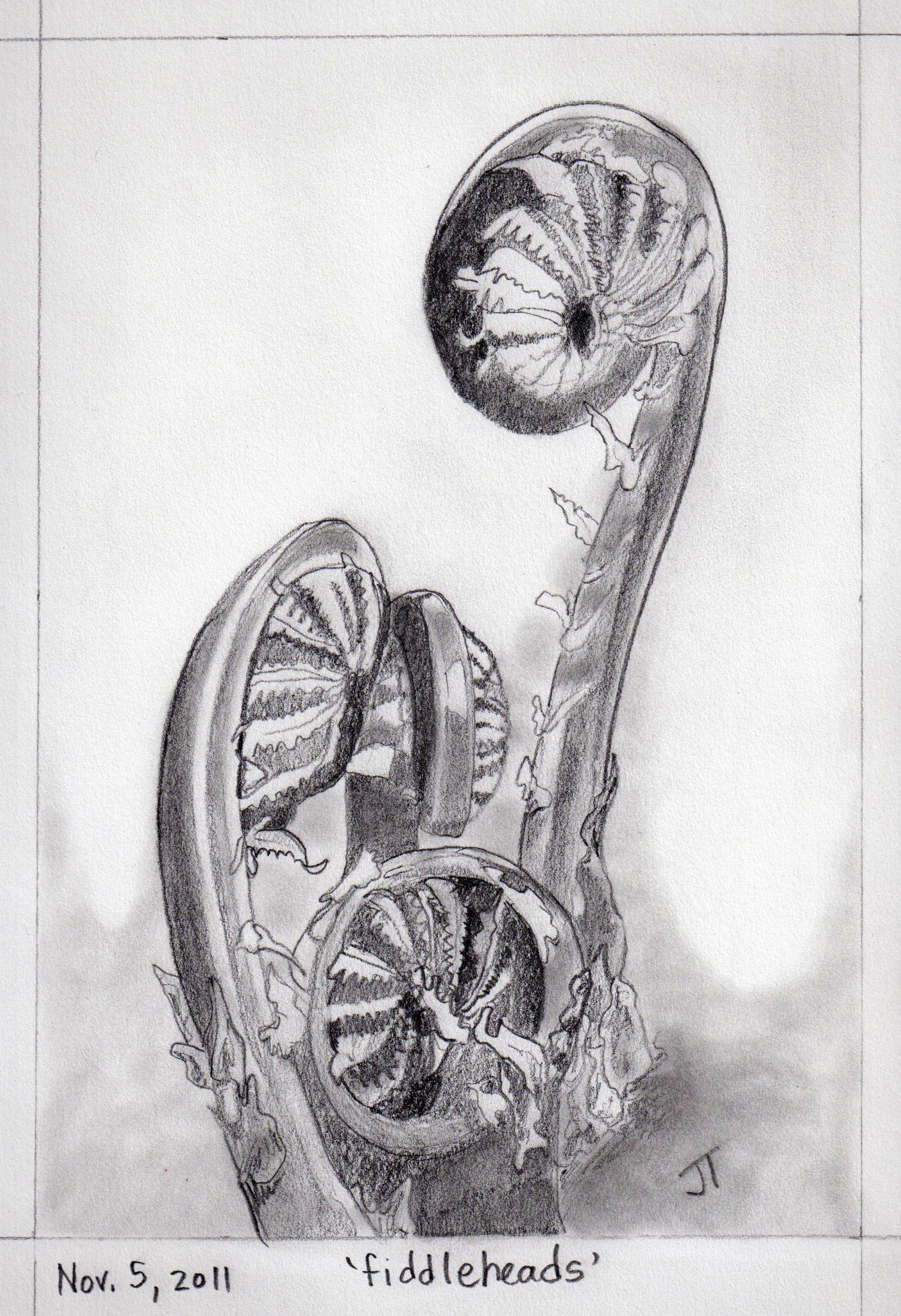
In New Brunswick, fiddleheads, the tightly coiled new leaves of the Ostrich fern (Matteuccia Struthiopteris (L.) Todaro), are collected for food every spring along the banks of rivers and their tributaries.
~
waking from a dream
Ostrich Fern (Matteuccia Struthiopteris(L.) Todaro)
~
bottom-land thicket
naked in spring
a rumpled bed
the throws of hibernation
~
new growth cocooned
in dry leaves, bent skeletons
of last summer’s fern
~
sun surge
an insult
between curtains
~
green fiddlehead
uncoils
head down
fist thrust
between pillows and down
fingers stretched
filigreed shadow
new blocking of sun
~
brown coverlet
kicked
~
new green bedspread
new green canopy
green shade
~
© Jane Tims 2011




 nichepoetryandprose
