Posts Tagged ‘nature’
(brackets in the birch grove)
Last week we went for a walk (more like a struggle) through the birch grove at the base of the grey woods (see the ‘map of the grey woods’ under ‘about’). To get there, we crossed the fern gully, mostly dry this time of year, and entered a mixed wood of birch, maple, spruce and fir, much younger than the mature spruce in the grey woods.

These trees grow in very wet conditions, and the forest floor is a hummocky, spongy growth of Sphagnum moss and fern.

There is no path through this woodland, so the ‘walk’ was an up-and-down, over-and-under kind of trek. To stay dry, you must take giant steps from hummock to hummock. To stay upright, you must check your footing and hang on to the young trees. With all this concentration on moving forward, I tend to miss some of the interesting detail, so I try to use each ‘balancing moment’ as a time to look around and observe the wild life.
One occupant of the birch grove is the bracket fungus. This is a type of fungus that grows like shelves on both living and dead trees. The fungus forms thick flat pads on the tree, usually parallel to the ground. They remind me of steps, a spiral stair to ascend the tree.

The semi-circular body of the bracket fungus is called a conk. The conks of the bracket fungus growing in our woods are thick, often oddly shaped, and constructed of various cream, tan and brown coloured layers. The conks are the outwardly visible, reproductive part of the fungus. The vegetative portion of the fungus grows as an extensive network of threads within the tree.
bracket fungi
~
1.
in this forest
staid
practical
grey
could any form
construe to magic?
~
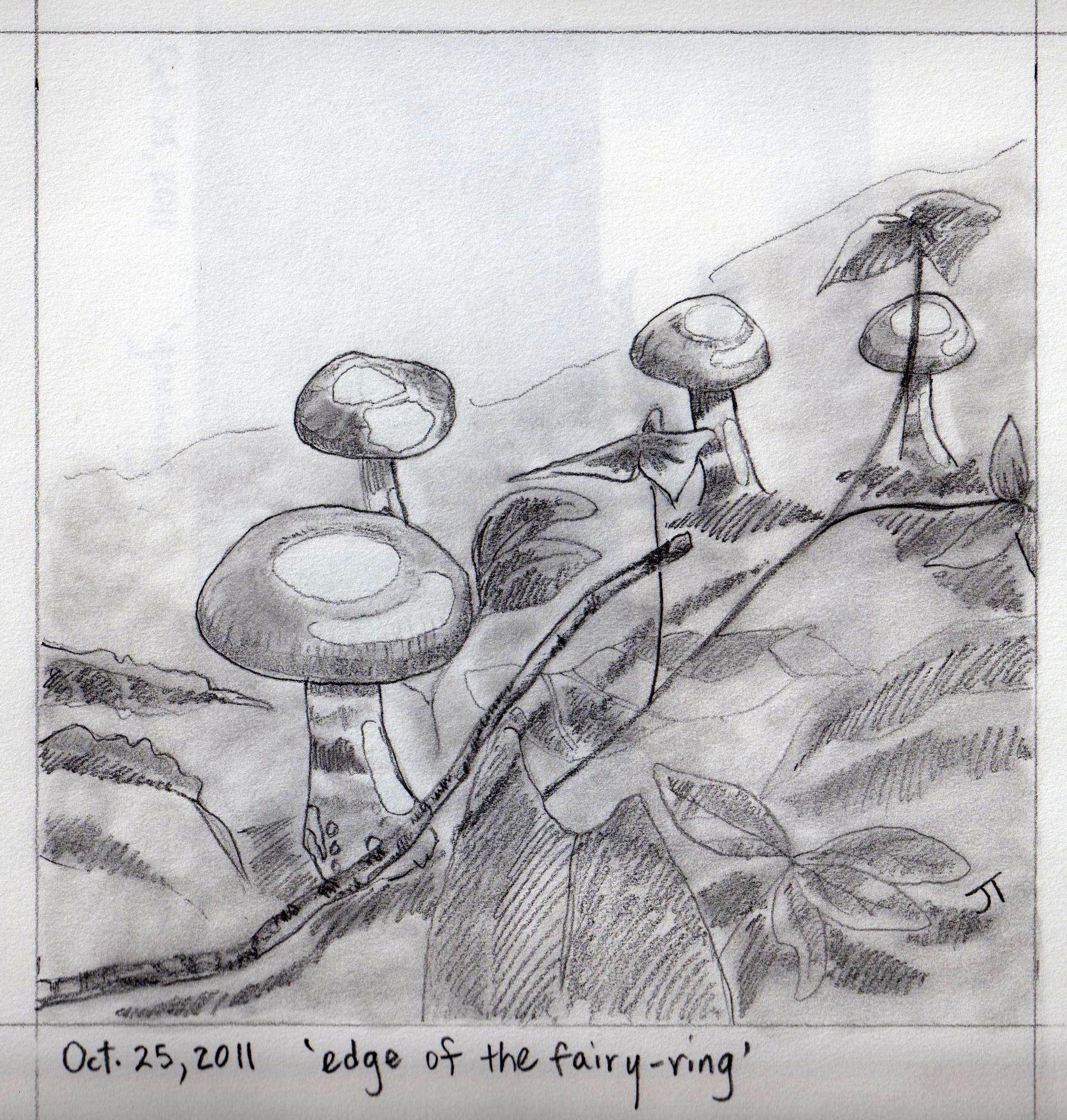
fairy rings
moths in spectral flight
spider webs, witches brooms
burrows and subterranean
rooms, hollows in wizened
logs, red toadstools
white-spotted, mottled
frogs
~
2.
bracket fungi
steps ascend
a branchless tree
~
© Jane Tims 2011
in the shelter of the lane
Now, when the trees are shedding their foliage in yellow, red and orange, have you taken the time to stroll down a lane crackling with dry leaves?
1 lane n. 1: a narrow passageway between fences or hedges;
2: a relatively narrow way or track …
2 lane Scot var of LONE
Webster’s New Collegiate Dictionary, 1979
Words are so laden with connotative and denotative associations, those similar in meaning may not convey the same idea at all. For example, the word ‘lane’ is vastly different in meaning from ‘road’, yet a lane is a type of roadway.
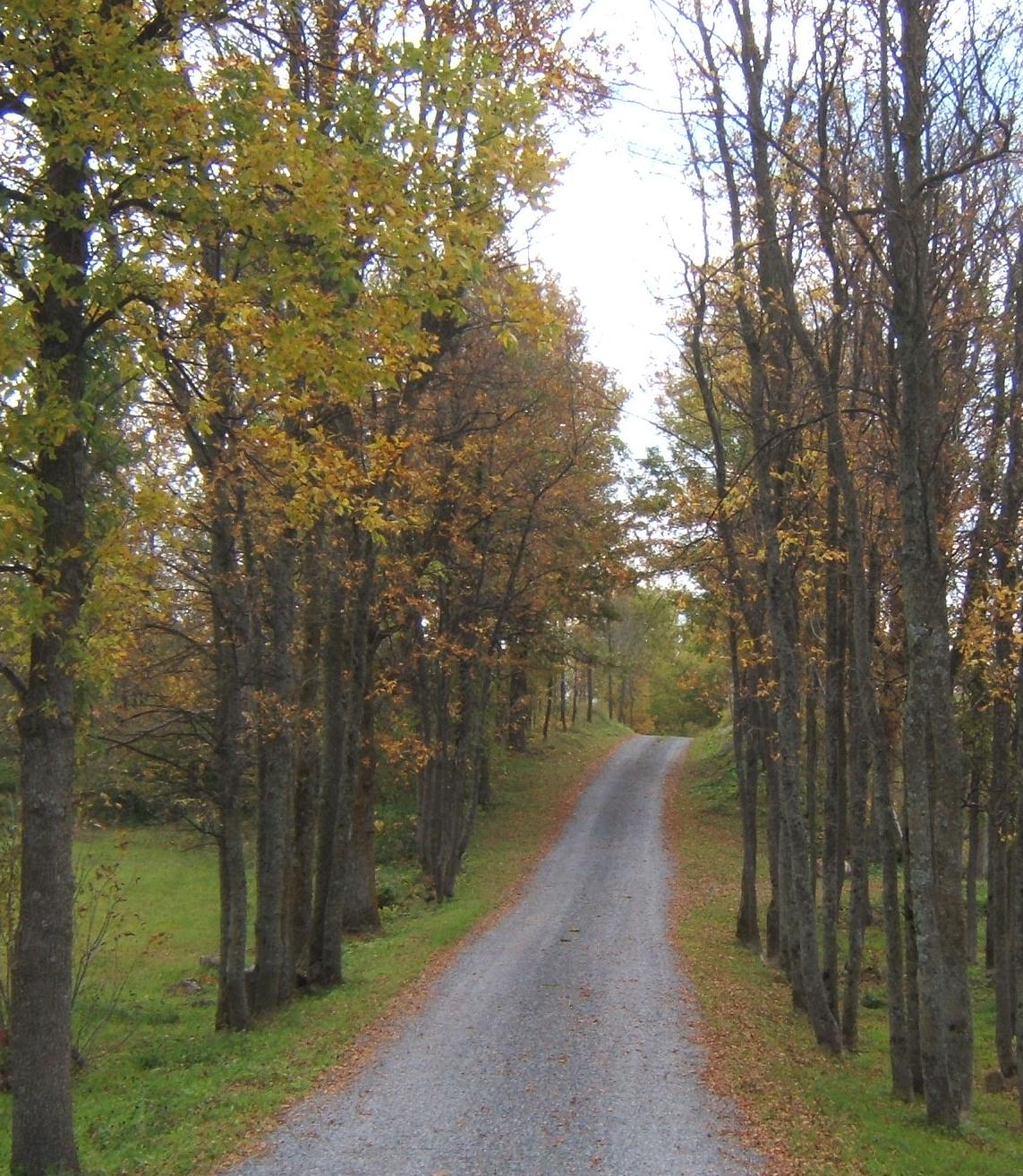
A lane, to me, is a narrow corridor, built to admit people from the ordinary world of community to the private world of home. A lane is bounded on each side by trees, hedges or fences. A proper lane must have ruts for the tires and a centerline of grass to challenge the clearance of any vehicle. Once you are in the lane, it is difficult to see anything outside.

When I was young, visiting my mother’s family took us to ‘the old home place’. It was sandwiched between the main road and the river, but because it was connected to the outside world by a long, bent, shady lane, it was truly a ‘world-apart’.

I spent many happy hours in the lane, wandering up and down its length, singing and dreaming, exploring and examining. I loved the small woodland habitat created on either side. I picked the wild blueberries growing there, watched squirrels busy at the workings of their pine-cone industry, and made friends with specific trees.
One young Silver-leaved Poplar (Populus alba L.) was a particular favourite. It stood just before the bend in the lane, its bark marked with black diamonds. When the wind blew, it turned its leaves over in a generous offering of silver.
I have other pleasant associations with the lane. I remember my Dad working there with a shovel and a pickaxe, trying to fill in the worst of the ruts to save the undercarriages of his car and trailer. I remember listening to my Mom’s stories of how she and my aunt pushed their doll carriages up the lane to visit imaginary neighbours. I remembered how excited we always were to see the gate at the end of the lane wide open, since that meant my aunt or uncles were at home.
lane
~
trees along the lane
sentinels
to guard its ways
cone scale mounds
acorn stashes
the silver undersides of poplar leaves
doll carriages with squeaky wheels
blueberries in slants of light
~
the lane a wooden shelter
its base the rutted track
its sides the trees, muscled arms
branches overhead with fingers locked
~
charmed paths
moss tablecloths
fairy rings and follows
~
protected by
the closing of eyes
~
© Jane Tims 2011

‘blue’berry fields in autumn
This time of the year, the only thing ‘blue’ about our blueberry fields is the blue sky above them. The fields themselves are a blanket of scarlet and orange.
These are a few scenes of the October blueberry fields in south-west New Brunswick…


legacy
~
remaining in the room
a well-used blanket
red with two black stripes
inexpensive facsimile of
~
a white
three-beaver blanket
stripes red, yellow, green
~
a blue sky
two vapor contrails
~
the yellow double line
on an asphalt road
~
a band of stars
across a light-starved sky
~
a red leather book
with black ribbons
mark passages for giving
thanks:
look down from heaven
upon the fields, now white
unto the harvest
~
a crimson blueberry field
in October, draped across bones
of the landscape
double tracks leading away
over the horizon
~
© Jane Tims 2011

not naming any names (along the country road # 7)
What do you do if you are stranded beside a highway and have to wait for a long while? I name the plants I see growing in the ditches.
Part of my fascination with plant taxonomy is the interesting origin of the plant names. This includes both the Latin ‘scientific’ names and the common names. Many scientific names for plants can be traced to their physical characteristics. However, with references to mythology and local lore, and the modern unfamiliarity with Latin and Greek, the origin of many names may seem quite obscure.
For example, the Latin species name for Buttercup is Ranunculus, from the Latin name for ‘little frog’; Pliny gave this name to the plant because it grew where frogs lived. Some plants were named because they resembled parts of common animals; Larkspur has the specific name Delphinium since the flower resembles the shape of a dolphin. Other plants were given names because they reminded botanists of everyday objects – the species name of Meadowsweet is Spirea, from the Greek speira, wreath.

Meadowsweet (Spirea latifolia (Ait.) Borkh.)
Common names may vary with location. One of the reasons for using scientific names is the variety of common names assigned to a single plant by people of different localities. Botanists needed a way to make sure they were talking about the same plant. So Virgin’s Bower, or Devil’s-darning-needle, or Devil’s Hair, or Lovejoy, or Traveller’s Joy, or Love Vine are known by one scientific name, Clematis virginiana L.
Many common names also include references to mythology or religion. Coltsfoot (Tussilago farfara L.), the dandelion-like flower blooming in our ditches almost before the snow has disappeared, is also called Son-before-the-Father, which refers to the appearance of flowers before the leaves.
Since New Brunswick is a bilingual province, I like to know the French common names for plants as well as the English. Some examples of French names for common flowers include pas-d’âne (literally donkey-steps) for Coltsfoot, immortelle (meaning immortal) for Pearly Everlasting (Anaphalis margaritacea (L.) C.B. Clarke), and herbe aux gueux (meaning beggar or tramp) for Virgin’s bower.
So, what is this plant, discovered beside a stretch of highway while we waited for our friends to arrive?

what is my name?
~
common name unknown
~
1.
stranded beside the highway
entirely industrial
chain-link fence, ditches sandy dry
we passed the time
naming the familiar
giving names to unknown
road-side
vegetation
~
2.
three-leaflets
definitely clover
but what species
what common names might suit
a crowded cloud
of soft and purple
flower?
~
3.
we tried ‘common’
clover cloud
clover crowd
muffin-mound
rabbit’s whiskers
pussy-toes
pillow-fill
billow hill
lavender clover
Purple Pleiades Pleione
please!
~
3.
we tried Latin
Trifolium
lavandula
purpura
porphyrophobia
fluffense
~
we mixed Latin with Italian
musical notation
Trifolium pianissimo
very soft
~
4.
our drive arrived
our wait was over
botanical field-guide
verified Trifolium arvense
Rabbit-foot, ‘of-the-field’, Hare’s-foot, Stone Clover
~
a footnote: sometime the botanical description is no help at all…
Trifolium arvense L.
“…long-villous 10-nerved sessile campanulate calyces crowded, spreading, their setiform teeth much longer that the tube and the marcescent corolla…”
Fernald, Gray’s Manual of Botany, 1950.
© Jane Tims 2011
beneath the vine
Vines sculpt spaces as they grow, clinging to and draping across the surfaces they choose to colonise.
Telephone poles display armloads of Virginia Creeper (Parthenocissus quinquefolia ( L.) Planch.) …

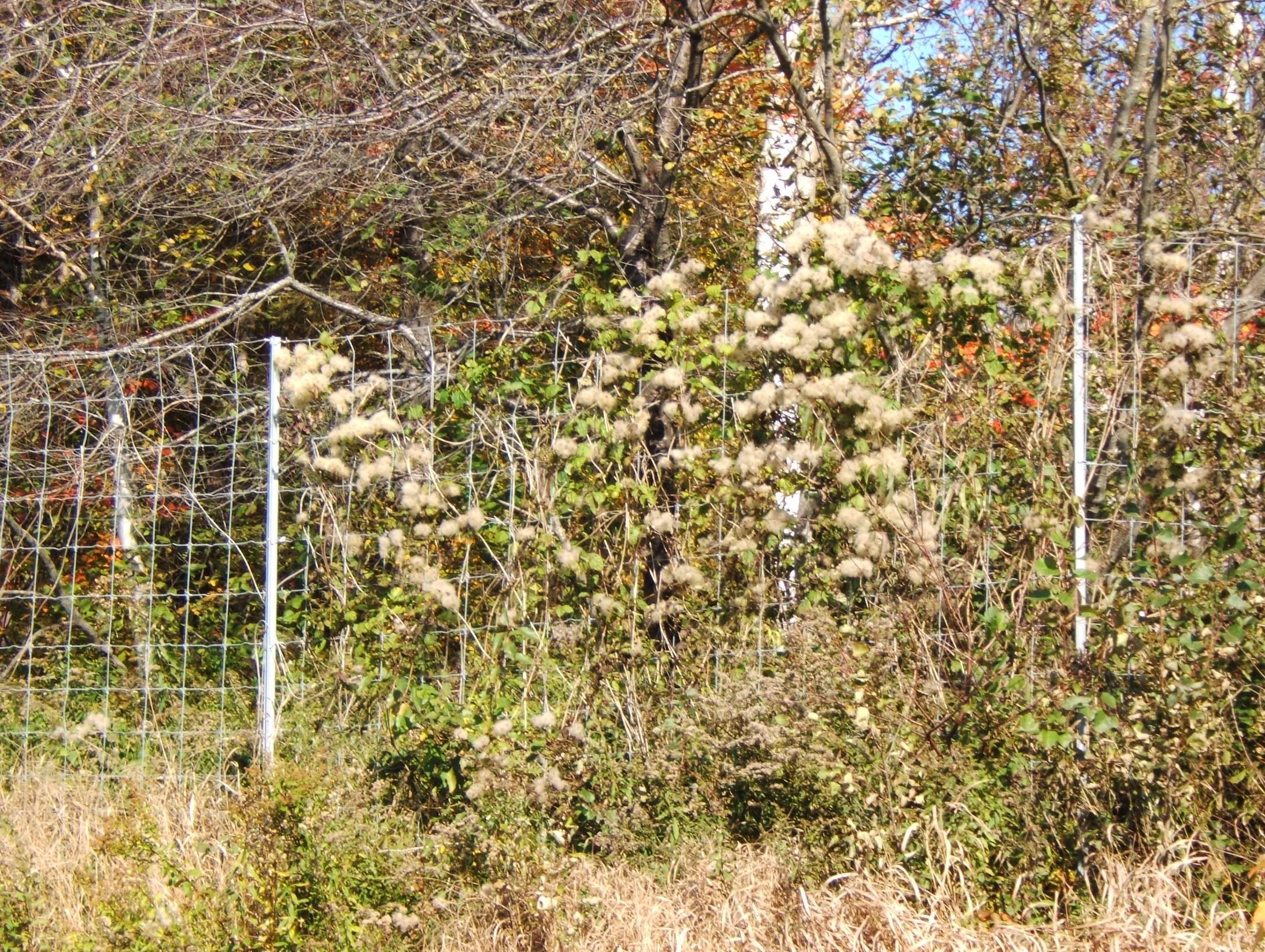
The moose fence along the highway is softened by a curtain of Virgin’s Bower (Clematis virginiana L.) …
Purple grapes, ready to pick, fill the arbour with soft shade…
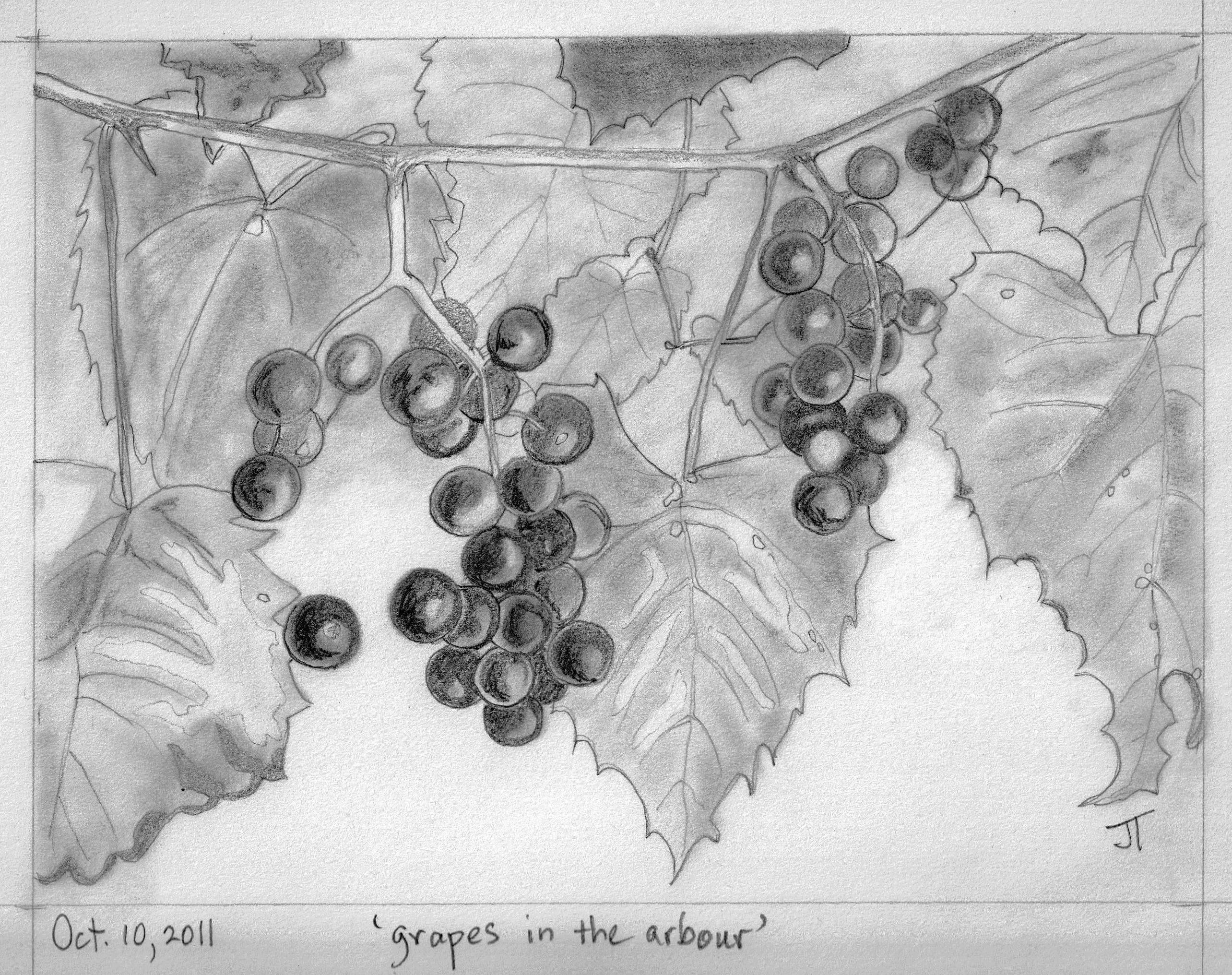
ripened shadows
~
under layered leaves
marbled shadows hang
in cloistered dark
~
cool nonchalance
columnar grey intensifies
as grapes grow ripe
~
taut green ferments
to purple must
and effervesces air
~
even where no surface intercepts
clustered shadows
ready to pick
~
© Jane Tims 2011
under the red maple
We have a huge red maple (Acer rubrum L.) in front of our house. It forces a turn in the walkway, but I love to greet it every morning and watch it through the seasons. When we first lived here 30 years ago, the tree was small enough to encircle with thumb and finger. Now I can’t fit my arms around its girth.

Autumn inspires this tree. It takes its time, gradually turning yellow, red and orange over several days. Then it gives up all its leaves within a day.
When I drive my car away the next morning, a dark rectangle of driveway remains, within the circle of new-fallen leaves.
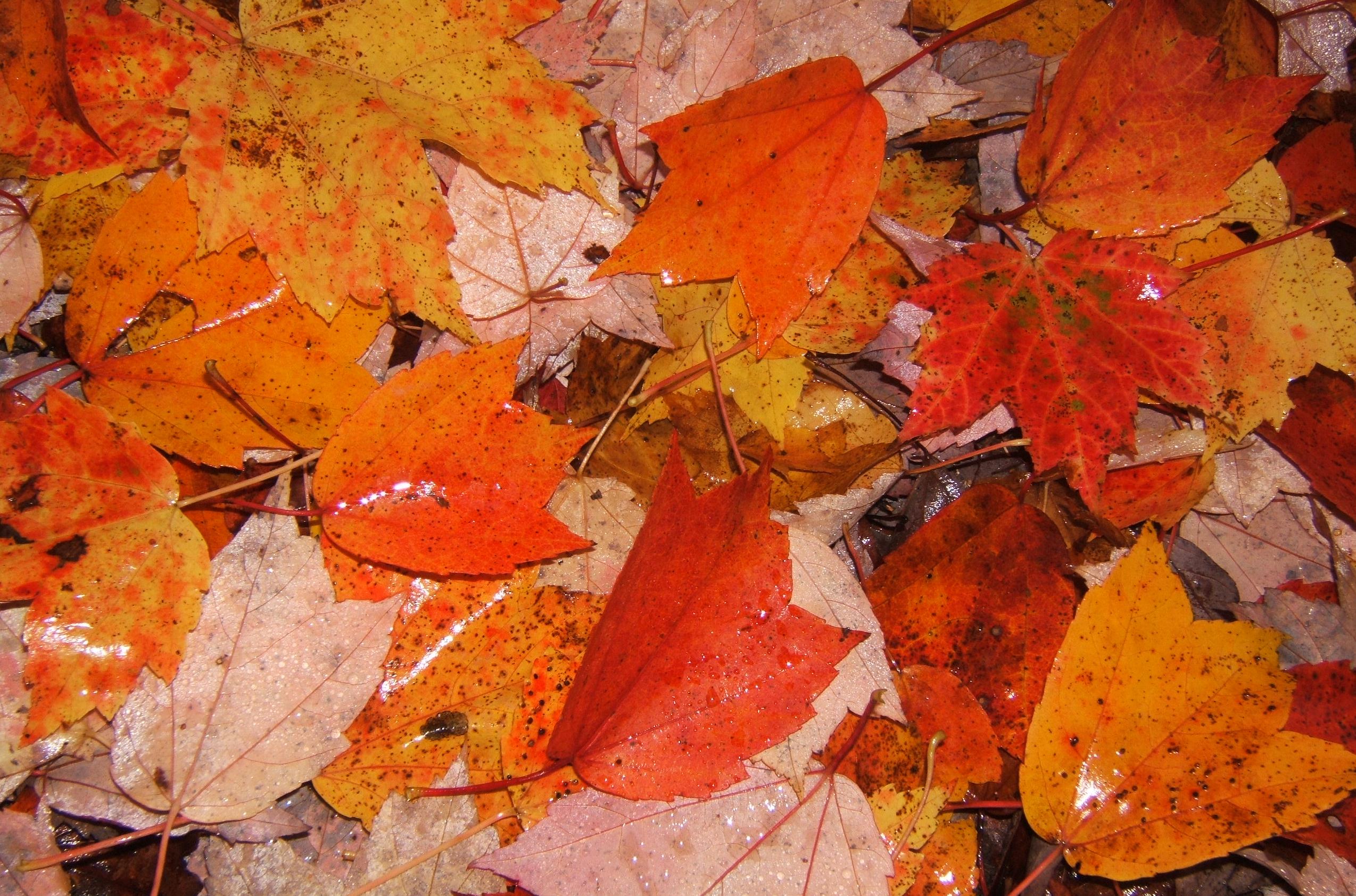
summer in flames
~
suddenly
leaf fall
embers settle
on the walkway
patio table and chairs
~
suddenly
impossible
to walk in silence
red flames
and careful steps
a conflagration
~
suddenly
shadows lost
and branches
scratch the sky
sun bright
hands warm before the fire
~
© Jane Tims 2011

sounds in the silence #1
If niche has colour, it also has sound. Some of those sounds are soothing, the sound of a babbling brook, or the wind in the Red Pine. Some sounds are alarming, the cry of a child, or the squeal of brakes. At my office, there are multiple sounds in the background – people talking, computers whirring, copiers copying, printers printing. When there is a power outage, I am amazed at the silence of the building, and wonder how I can possibly work with all the noise.
When I can’t sleep, I turn to a trick my Mom taught me – I count the sounds in the sleeping house. Last week, a welcome sound was added to the usual repertoire, the three part hoot of a Great Horned Owl. Hoo-Hoo-Hoo Hoo-o Hoo-o. It was a gentle but penetrating sound and it ruled the night. The owl hooted three times at about five minute intervals and then I fell asleep.
Not long ago I went for a walk in the grey woods and heard a sound I have heard so often before, the grating squeal of two trees rubbing together. These trees, a Balsam Fir and a Grey Birch, have tried to grow into the same space and now they reproach one another in an endless competition.
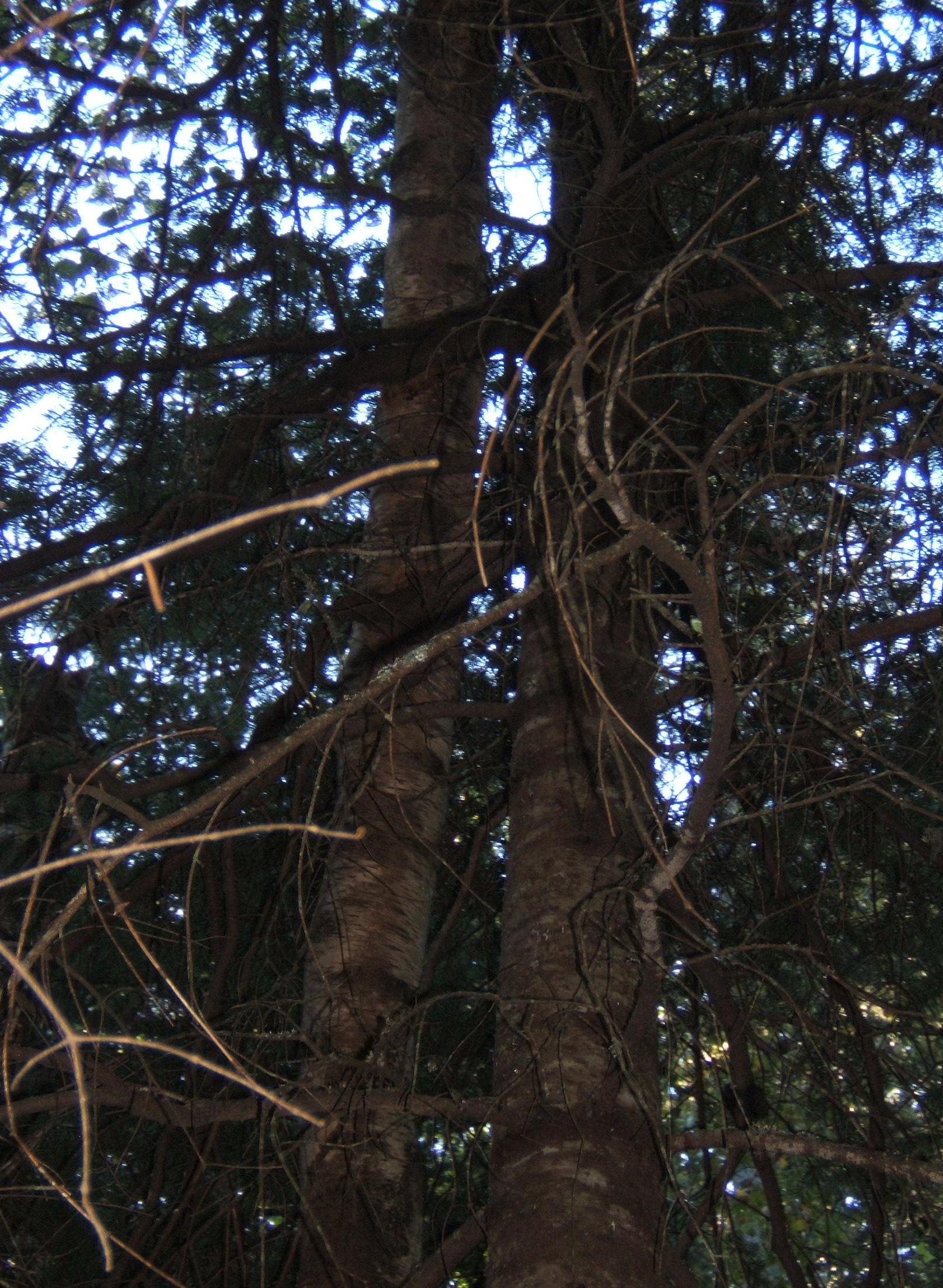
the branches of one tree grate against the bark of the other
fear of heights
~
as dizzying to look up
in the forest
as down
into the abyss
the trees taper so
~
they lean
birch
against fir
rubbed raw
where branches touch
and reach for one another
~
and sudden, wrenching sounds
a branch swings back or breaks
loosened by a squirrel
or burdened where crows complain
~
or where a warbler scolds
teacher teacher teacher
~
© Jane Tims 1996
a trail through grey woods
In our grey woods, an old trail follows the top of the slope, between the trees. It takes constant care to keep it free for walking. The spruce are old and every winter takes down a new raft of trees. My husband works at it constantly, cutting a way through the fallen logs and filling the hollows with wood chips.
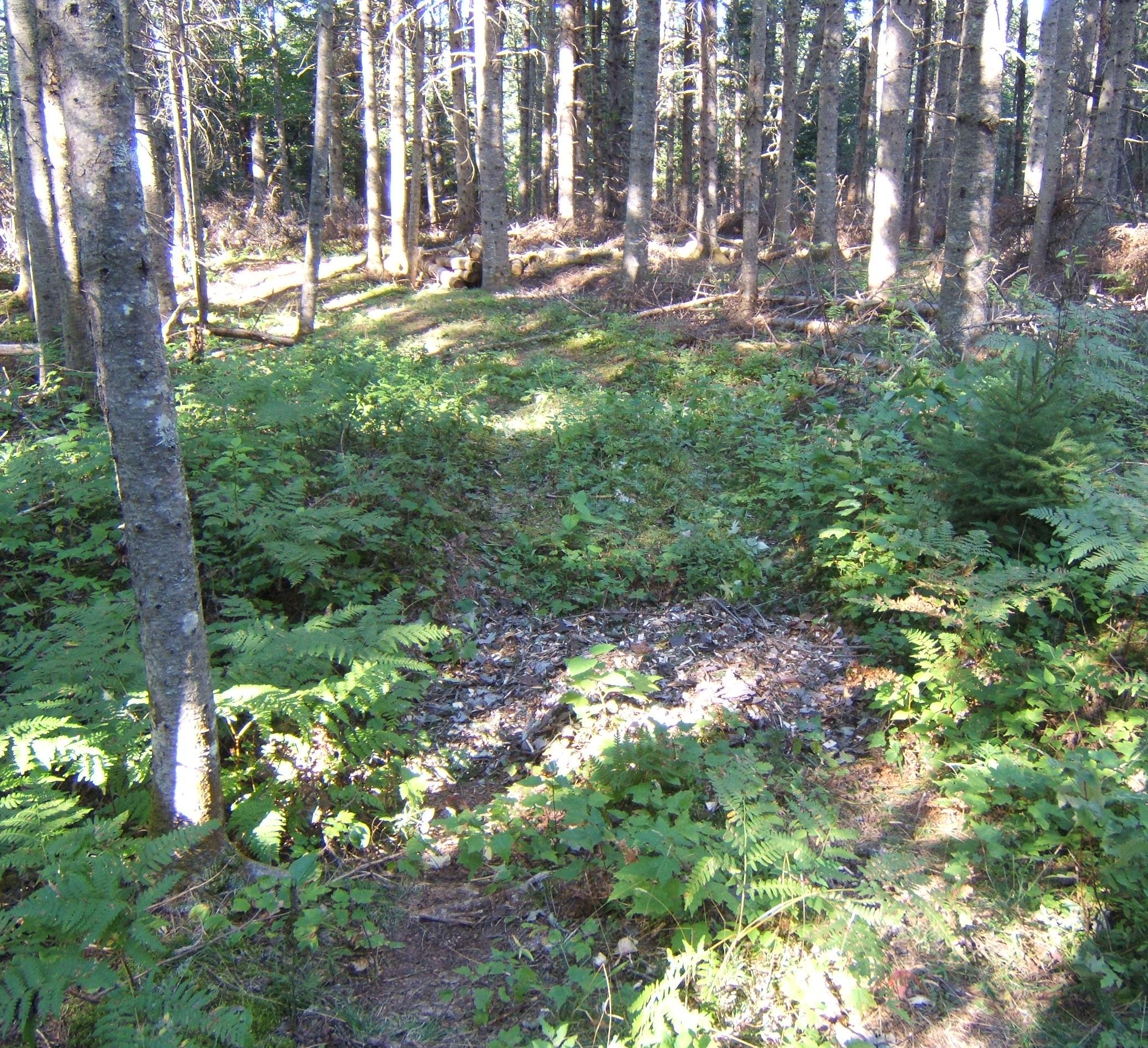
When I walk there, I always find something I haven’t noticed before. Yesterday I made three discoveries:
A maple seedling sprouting in the cut surface of a maple tree felled for firewood…

A pair of bracket fungi on a fallen birch log (notice the shadows of fern leaf on the surface of the fungi)…

And various other types of fungi, sprung up after the rain…
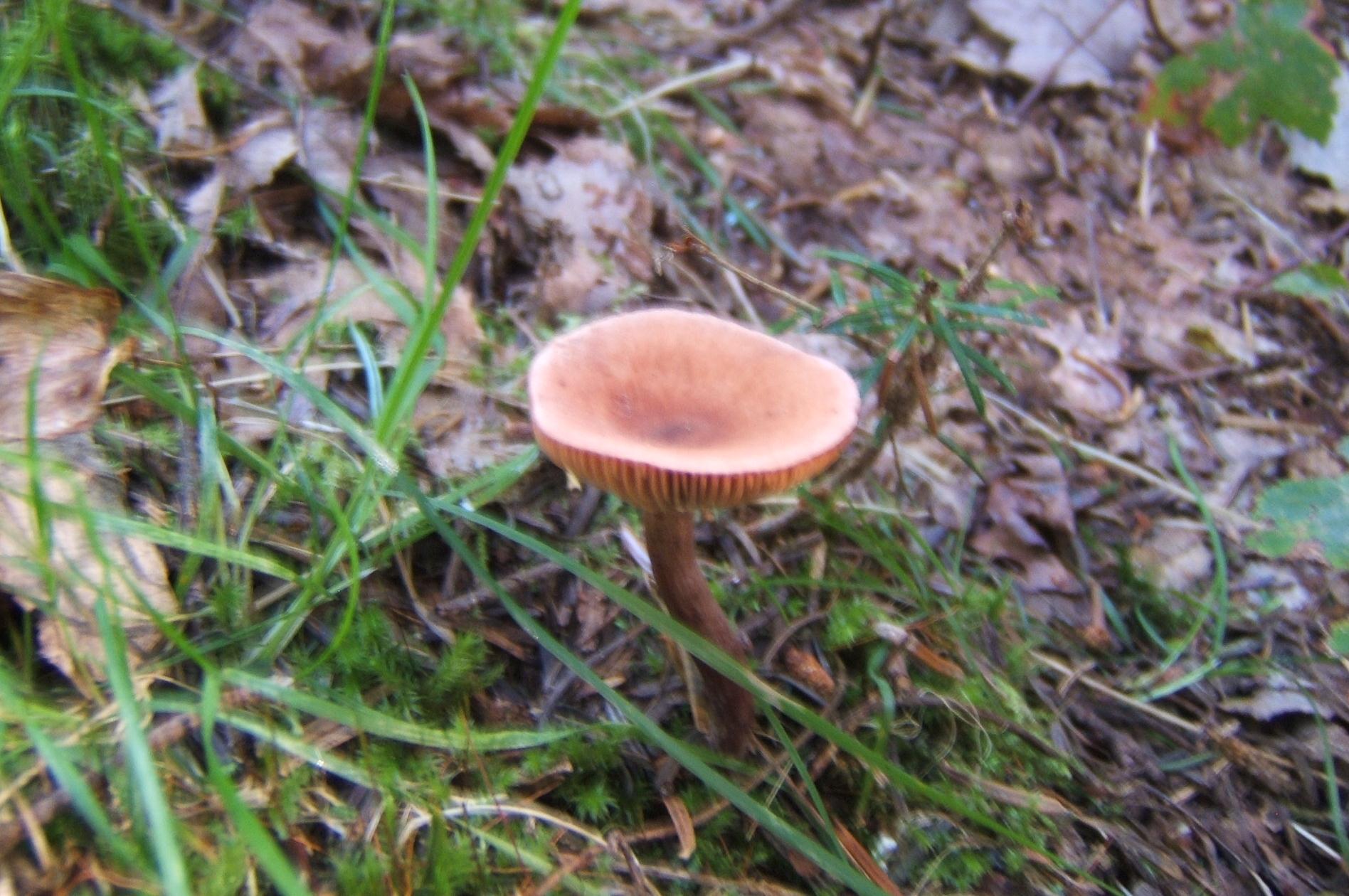
In each case, the discovery was about hope – life from death, new growth from decay.
The woods have so many lessons to teach… I only need to slow down and look closely to learn.
slow walk in the woods
~
1.
more to woods
than a path between trees
slow pace
check perspective
~
2.
discover texture on trunk
scar and indentation
detail in the duff upset
by careless feet
~
note how light scatters
through pollen and powder
now sifts slantwise, shadow
on brackets of fungi
light from lichen
chandeliers
~
3.
slow beat and breath
match the stealth of forest, realise
branches gather rain
an hour before they weep
~
© Jane Tims 2005
cascade across the rock
Earlier this summer, in July, we visited Little Sheephouse Falls, northwest of Miramichi. The Falls are part of the watershed of the South Branch of the Big Sevogle River.
To see Little Sheephouse Falls requires a short hike through mixed woods. The trail to the Falls is very well maintained by the forest company who manages the area and was an easy walk in spite of my arthritic knees.
The woods were green with ferns and other woodland plants. My favourite of these was a little vine of Mitchella repens L. cascading across a lichened rock. Commonly known as Partidge-berry, Mitchella is a small vine with roundish opposite leaves, often found growing in shady, mossy woods. It has pinkish flowers and small red berries. The Flora I consulted says it is found where it can be free from the competition of more vigorous plants.

Mitchella repens growing across a rock in the woods
We did not go to the base of the falls, but kept to the trails navigating the escarpment. The falls are about 20 meters high, with a large pool and a cave at the base. They were a white torrent on the day we visited, making a rumbling thunder in striking contrast to the quiet woods.

Little Sheephouse Falls
Directions to Little Sheephouse Falls, and other waterfalls in New Brunswick, are contained at Nicholas Guitard’s website http://www.waterfallsnewbrunswick.ca and in his 2009 book Waterfalls of New Brunswick (see ‘books about natural spaces’).
Waterfalls are spaces to soothe the soul and inspire love for natural areas. They engage the senses… the sounds of the gurgling stream and the roar of the waterfall, the feel of cool, clean water, and the sight of water bubbling and boiling, following the contours of the landscape.
the three fates, spinning
~
1.
wound on the rock
mended by waterfall thread
~
2.
at last I touch
the water
real, wet water
(not a report or diagram
but the flavor feel and smell
of water)
~
it pours through my fingers
delivers to me
the mosses
the lichens
(the moth on the pin where she has always
wanted to be)
~
3.
the doe must feel this
as she crosses
the road-to-nowhere
when the birch and aspen enfold her
~
or the ant
as she maps the labyrinth
on the rotting morel
when she touches the ground
(blessed ground)
~
or the needles of white pine
when they find the note
split the wind into song
~
4.
the three fates
spinning
~
the waterfall
diverted by the rock
~
Published as: “the three fates, spinning”, The Antigonish Review 165, Spring 2011.
(revised)
© Jane Tims

needles of white pine...split the wind into song
horizons
Landscape is a fundamental driver in our lives. The spaces around us shape our experiences, our thoughts and our perspectives.
I was born and raised on the Alberta prairie. Although I love the woods and hills where I now live, I think my eyes are never satisfied when they seek the horizon.
When we drove across Canada in 2002, my husband, who was born in New Brunswick, was appreciative of the prairie landscape, but when we finally turned toward home, he was glad, so glad, to see the trees.
In southern Alberta, on the Trans-Canada Highway, we tried to measure the distance to the horizon. We took note of the oncoming lights and timed how long it took them to reach us on the road. One car, we estimated, was 17 kilometers away when we first saw it on the prairie horizon! On the Trans-Canada in New Brunswick, we rarely see cars more than 2 or 3 kilometers distant.
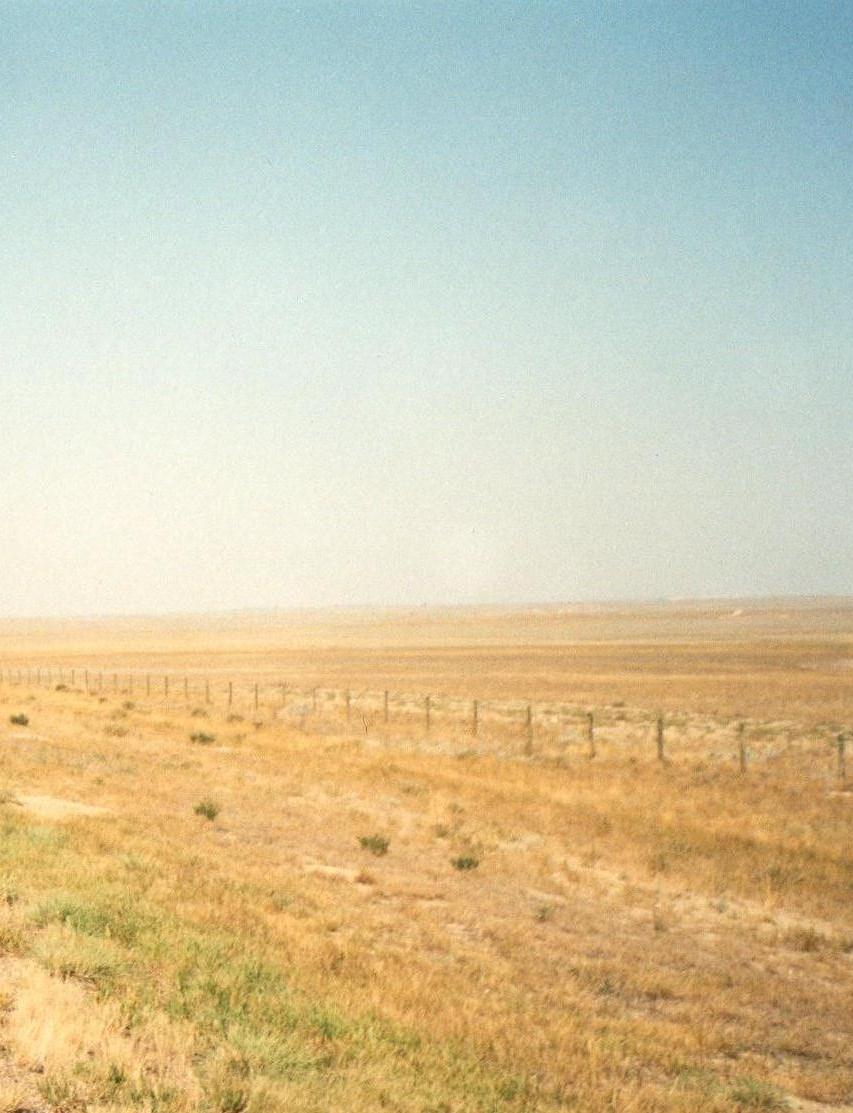
the prairie horizon of southern Alberta (2002)
What was the landscape of your childhood? Do you live in a different landscape now? How are these landscapes different and how are you different in each?
a longing for prairie
~
1.
what subtle psychoses
plague women
who grow on the prairie
and leave
to die in the forest
2.
memories a few words long
the chinook coulees at sunset the odd red of prairie mallow grasshoppers without aim
spears of foxgrass gophers beside their burrows willows by the slough
the rattle of the Texan Gate the tarnished dry of August
I want to run on the prairie
3.
I narrow my eyes at the ditches
imagine the weeds tumbling
to cover the forest with shortgrass
and sedges
the clearcut
and the barrens of blueberry
have the lie
but not the essence of prairie
4.
piled by the roadside
nine bales of hay
burst from the baler twine
left to the rain
piled three high into landscape
mountains, foothills, flatland
this last has sprouted me prairie
5.
trees form a tunnel
shut out the spaces around me
some days I can’t summon the words
the hay and the corn fields are all I have
and the hayfield shows the tines of the tiller
deep into summer
~
Published as: ‘a longing for prairie’, Whetstone Spring 1997
(revised)
© Jane Tims

a glimpse of prairie landscape in New Brunswick ... just a glimpse









 nichepoetryandprose