Posts Tagged ‘nature’
edge of lake
Water is essential to my health, not only because I need it to drink. I also need to see water. Whether it’s the water of a stream, river, lake or ocean, being near water comforts and enlivens me.
I like the transitions too, the places where land and water meet – the seashore, the margins of a brook, or the shoreline of a lake. Birds and other animals love ‘edge’ – places where the food is plentiful and cover is available. We go to the lake shore to watch loons diving for fish, deer wading in the marsh grass and ducks ‘dabbling’ along the shore.
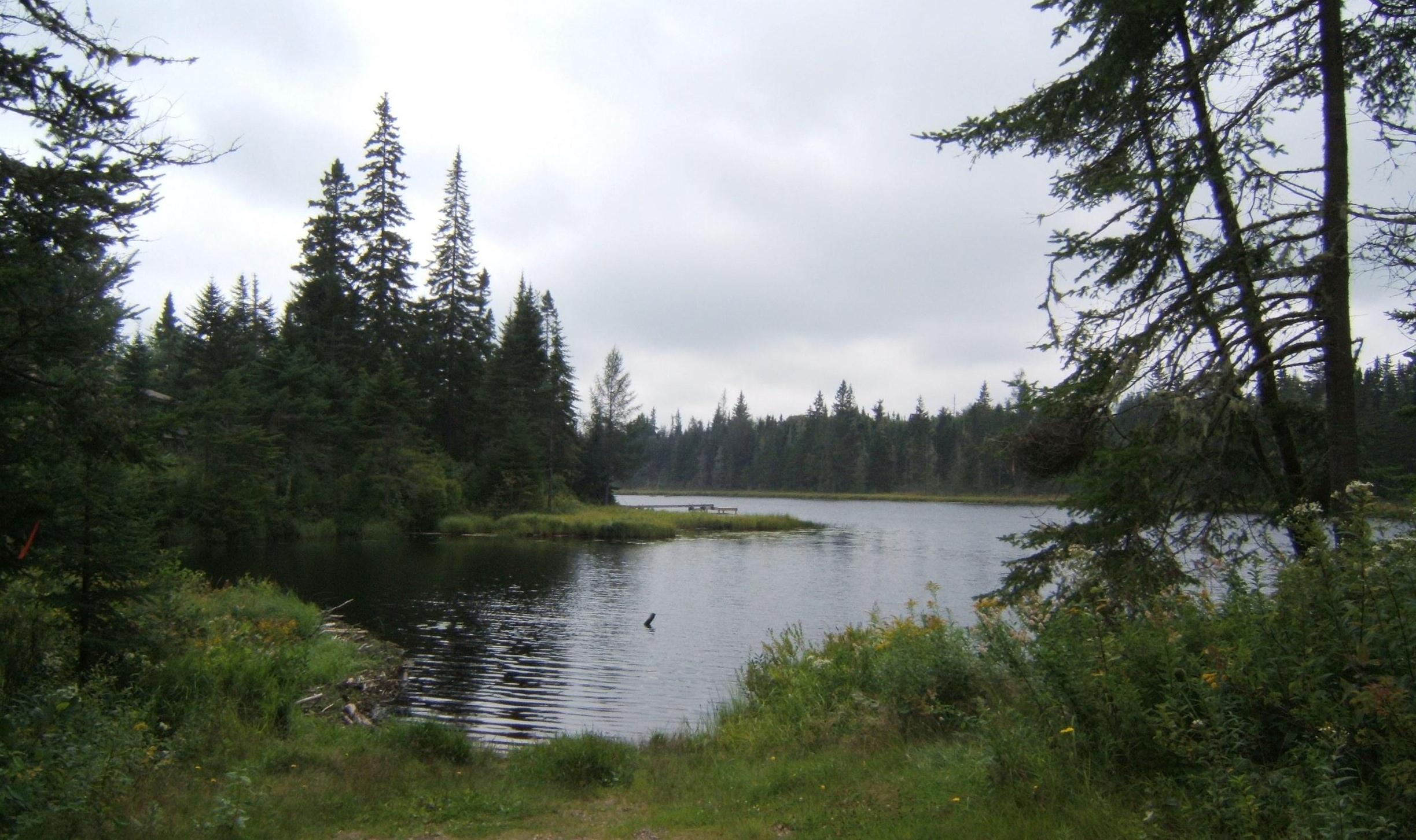
edge of lake
evening edge
~
of lake
a corner torn
from the loaf of hills
red with setting
~
faint click
sun gone
dusk and bread crumbs scattered
~
nasal chuckle
from the farther shore
arrows etched on glass
~
blue-winged teal
under wings a glimpse
of summer night
~
greedy for crust and crumbs
~
© Jane Tims 1998

evening edge of lake
trampled grass on a flat-topped hill
I change the spaces I enter, even when I enter only for a moment. I am an intruder. I am certain feet have scurried into hiding just as I arrive. Sounds have ceased. Scents and tastes have been altered.
Once in a while, my difference can be disguised. I can enter before the space can know I am there. If I am quiet, if I walk softly, some agent will help me pass through the veil and remain unnoticed, just long enough to see and hear and taste the true essence of the place. Often, the generous agent is the wind.
It was a favorite hike, an old cart track winding up the side of a dome-shaped hill in the Elkwater Lake area of the Cypress Hills in southern Alberta. The hill had a flat top and a thick bristle of conifers along the sides. On the flat top was a fescue grass meadow, a bit of prairie perched a layer above the mixed grasslands.
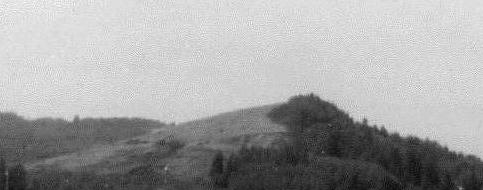
a hill at Elkwater Lake ... coniferous woods and grassland on the same hill
The track was not much more than two ruts, worn into the grass. It curved up the side of the hill, so the approach was gentle, gradual. Then, abruptly, the hilltop. If the wind was right, I could surprise the deer. They yarded there, grazing the grasses, etching paths into the meadow.
If the wind stayed in my favor, the deer would linger, chewing their cuds, watching me, but not registering my difference. As long as the wind blew I could watch, but if it settled, my scent would reach the deer. They would lift their heads and tails and be off in a few zigzag bounds.
deer yard
on a flat-topped hill
~
1.
below the hill is the distant prairie
speargrass and grama grass
and the sweetgrass hills of Montana
~
the grass at my feet is different
fescues of the Cypress Hills
flat-topped remnants of the Great Plateau
untouched by glacier scour
~
2.
bless the wind
it sorts the grasses
lifts each hair
ruffles the limp and fine
~
wind nudges the stubble
the artist’s bristle
the tail hairs of the doe
the chop of fresh grass
~
her gentle cud
her watchful eyes
wind in the spokes
of the mule deer wheel
~
the trampled paths
a game of fox and geese
or the part teased by wind
into sun-blond hair
~
3.
if the wind takes a breath
if the grass or the hair
settles on the shoulder
of the hill
she runs!
~
seeks the safety
of the downslope
downwind
trees
~
4.
fescue
curious on this flat-topped hill
its rightful place
the ancient prairie
~
Published as: “deer yard on a flat-topped hill”, 2010, Canadian Stories 13 (76)
(revised)
© Jane Tims

deer on the grasslands of Nebraska (2002)
deep waters – Clear Lake
As a result of my work, I have been privileged to see some remote, very special places in New Brunswick.
One of these is Clear Lake, a pristine lake in the south west area of the province. To reach Clear Lake, we canoed across Sparks Lake and made the short portage from Sparks to Clear. The portage crosses the narrow divide between two watersheds – Sparks Lake eventually flows into the Magaguadavic River, while Clear Lake is part of the Pocologan River system.

topographic map showing Clear Lake, Horseback Lake and Sparks Lake
Clear Lake is a deep lake with remarkably clear water. Lake depth measurements from the New Brunswick Aquatic Data Warehouse show the maximum measured depth to be 29.6 meters (97 feet), although deeper depths have been recorded. Stones on the bottom of the lake look like they are only centimetres away, but when you put your hand into the water, you quickly realise they are far out of reach.

standing beside Horseback Lake, a small lake just west of Clear Lake, October 1992 (photo by J. O'K.)
Clear Lake
~
behind us
dry leaves settle
waves on Sparks and Redrock
~
Clear Lake
bottle blue
silences our chatter
reeds and aluminium
whisper
~
we glide
~
between islands
group of seven trees
flung southward
quartz cobbles
rim the shore
dark Porcupine
bristles with conifers
tangled in the surface
plunge eighteen fathoms
to a cove
gathered in arms
of granite and pine
a cabin perched green
shadows peering
over the edge
~
sudden and silent
sunken logs
caressed by crescent suns
cast through ripples
only a touch away
~
through the mirror
shattered
numb fingers search
down
down
~
essence always
out of reach
~
dissolved
in the clear lake
~
Published as: “Clear Lake”, 1999, River Revue 5
(revised)
© Jane Tims
the location of our picnic table
Back in our grey woods is a place we don’t visit regularly any more. Our picnic table is there, in a mossy area among mature spruce and fir, at the top of a slope. It overlooks a wet spot in the woods. In the spring the wet area becomes an ephemeral stream, and a series of vernal pools among the mosses and ferns.
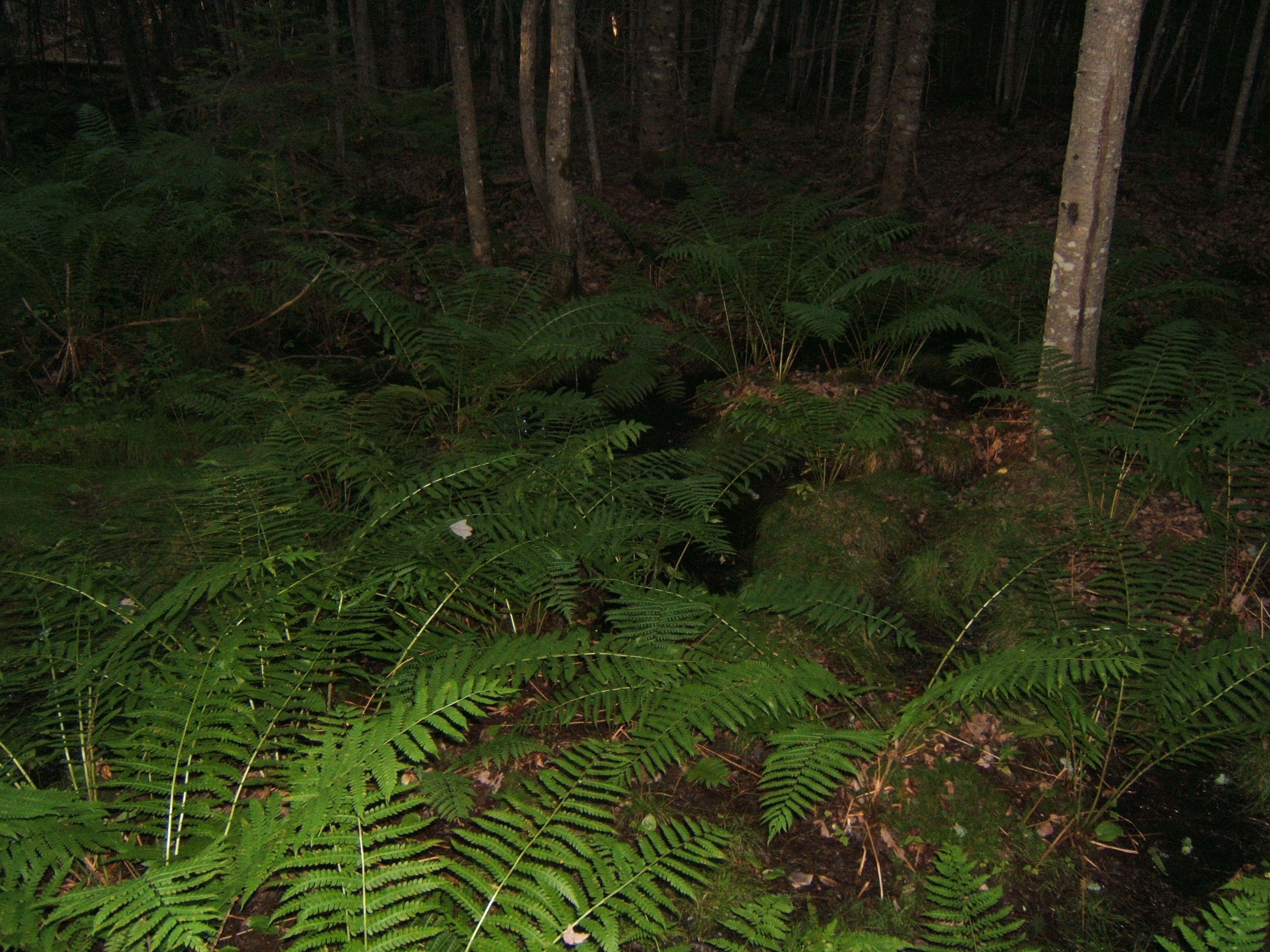
down-slope of the picnic table is a ferny area with an ephemeral stream... the dark areas in the photo are pools of water
Once, almost 28 years ago, the space was perfect for our new picnic table. The table was given to my newborn son by his Great-Aunt Jane and we took considerable care in choosing its location.

our picnic table in the woods
In years past, we took a picnic lunch there regularly. Sometimes I went there to write.
Today I pass the table when I follow the path through the woods, but I haven’t stopped to eat a picnic there in years. Another family has taken over, probably of Groundhogs (Marmota monax). They have built a labyrinth of burrows among the tree roots in the soft soil of the slope. Where each burrow exits is a mound, the remains of deep-earth excavation. One of the six burrow openings is larger than the others. My reading tells me this complex of burrows and exits provides quick escape from predators, a place to store food, and a place to hibernate.

the main entrance to the burrows, under the roots of a fir
Once this place was the ideal location for our new picnic table and our family picnics. Now the same site is perfect habitat for the Groundhog family.
concerning the location
of our new picnic table
~
share a meal with the unknown
to make it your friend
~
we find a clearing
near the path
where the sun will shine at noon
where we will not have to cut the trees
where the neighbours’ voices
and the passing cars
are quiet
~
we load the picnic table
into the cart
haul it through the woods
behind the Yamaha
~
we eat peanut butter sandwiches
and applesauce
drink cola
and sunshine
~
we laugh
make friends with the woods
and with each other
~
© Jane Tims 1983
hidden in the hollow heart of an oak
Hollow trees create mysterious spaces in the woods.
When I was young, a hollow in a tree was a secret hiding place for treasures, and one of my favourite books was a Nancy Drew mystery – “The Message in the Hollow Oak”. In the story, a hollow tree is used as a secret mailbox between long lost lovers.
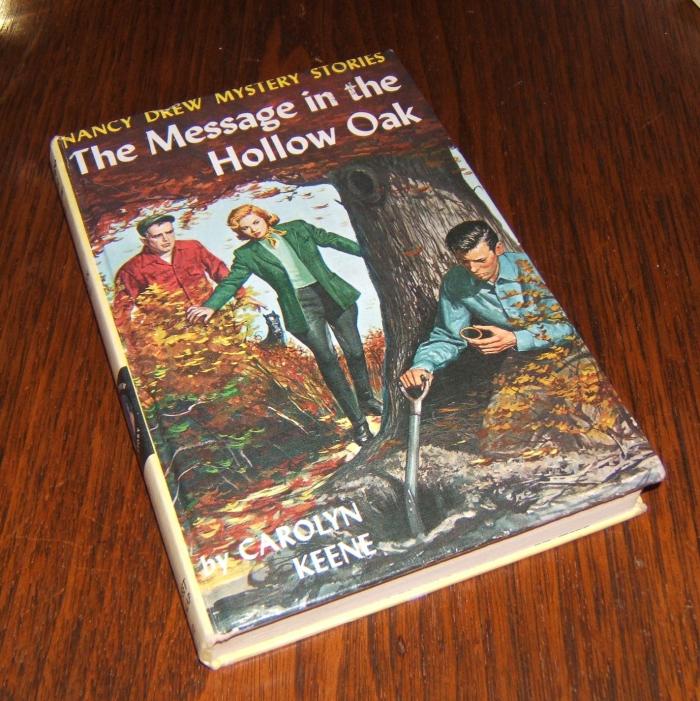
- Carolyn Keene 1935 The Message in the Hollow Oak (a later edition, probably around 1965)

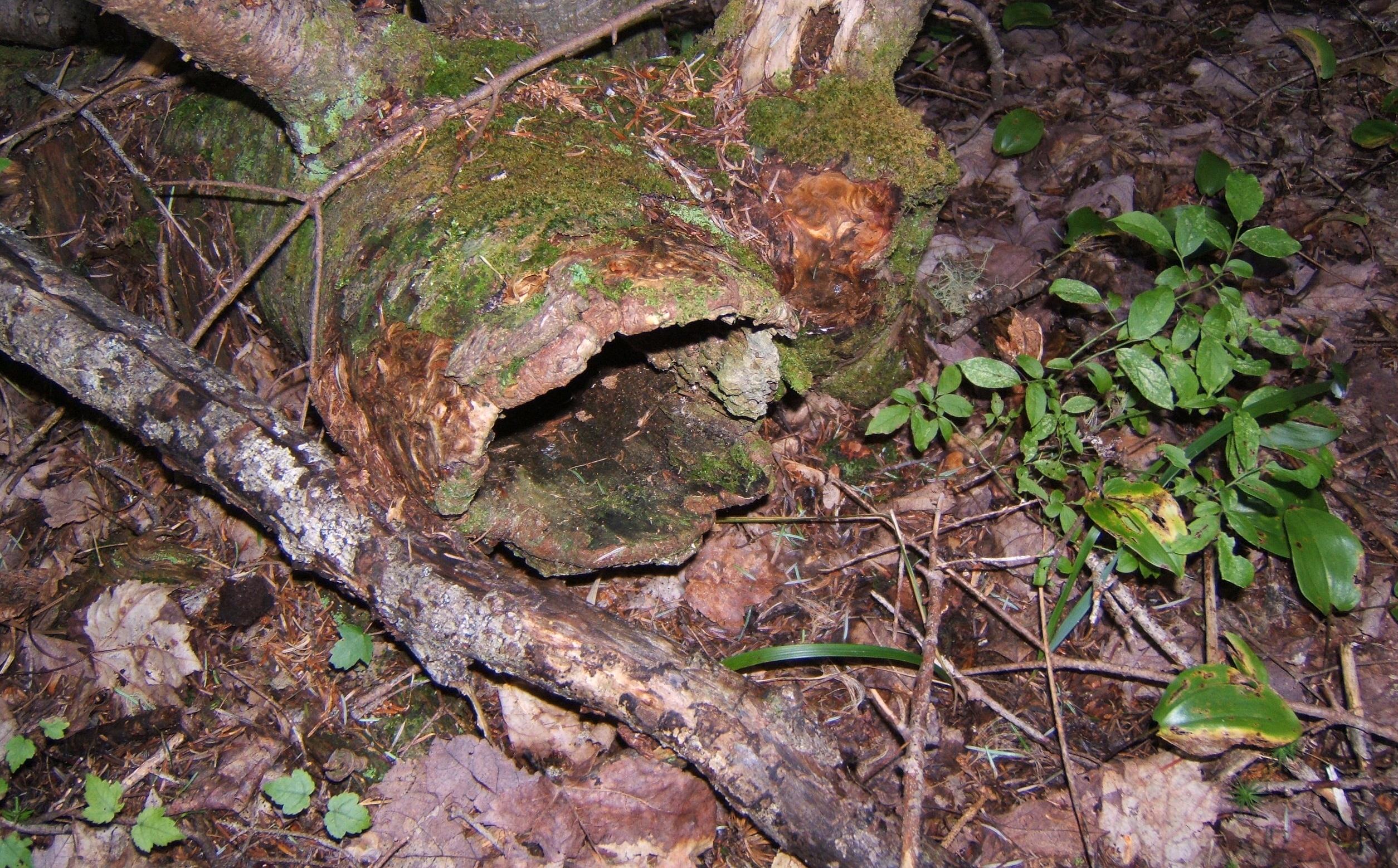
a hollow log in the woods
Cavities are usually found in mature trees. Their importance as habitat is a good reason for protecting older, mature trees in the woodlot. When my son was young, we made wooden signs saying “DEN TREE” for the older hollow trees in our woods, so we would remember not to cut them down.
Do you know a hollow tree and would you reach into the cavity to retrieve a letter???
requesting the favour of a reply
~
these leafless trees
brush against
a linen sky
ink strokes
on rice paper
letters
penned at midnight
~
hidden in the hollow
heart of an oak
afraid to reach in
to feel only
curls of bark
desiccated leaves
~
these trees
all seem the same
empty envelopes
parchment ghosts
~
branches tangled
messages
lost
~
black spruce scribbled on sky
~
Published as: ‘an answer in silence’, Spring 1995, The Cormorant XI (2)
(revised)
© Jane Tims
along the country road #3
A few years ago, I became interested in pressing flowers as a craft. I discovered a secret – one of the best flowers to press is Queen Anne’s Lace. Laid out on the page, it has the look of intricate crochet.
Queen Anne’s Lace, also called wild carrot, devil’s-plague, and carotte sauvage, is a tall weed with an umbrella-like cluster of lacy white flowers. The flowers are an umbel, meaning that the individual flowers all radiate from the same point on the stem to form a head. The flower is commonly seen in hayfields and waste places, and along roadsides.

Queen Anne's Lace (Daucus carota L.)
Daucus is the ancient Greek name for carrot; carota is the old generic name for carrot.
Don’t let the name ‘carrot’ fool you, as the roots are said to be somewhat poisonous. Also, beware of look-alikes. There are many flowers that can be described as a ‘white umbel’, some of them poisonous to the touch. Use an identification guide before you investigate too closely!
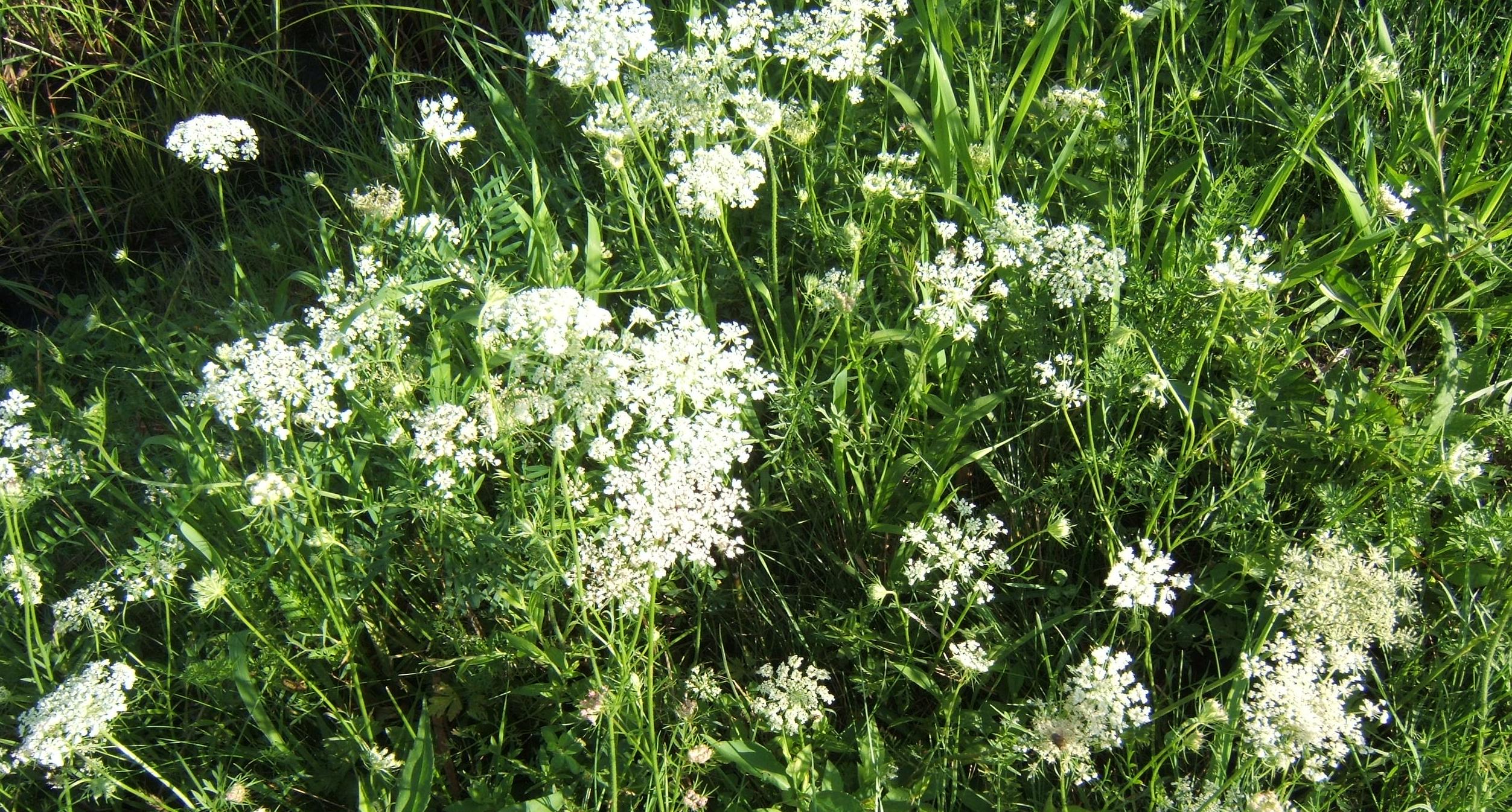
like snowflakes in summer
Queen Anne’s Lace
Daucus carota L.
wild carrot
inedible
no colour
unsuitable
as a vegetable
(poison probable)
white lace
three dimensional
tatted for Anne
‘Not Suitable’
for a Queen
(too usual)
umbrella
non-functional
(leaky)
unsuitable
for the rain
(or even drizzle)
in moonlight
unforgettable
common words
unsuitable
devil’s-plague?
ethereal!
Published as: ‘Queen Anne’s Lace’, Winter 1993, The Antigonish Review 92:80-81.
(revised)
© Jane Tims
in the apple orchard
One of the spaces I loved the best on my grandfather’s farm was the apple orchard. It was a small orchard, perhaps twenty trees. I have never seen it in spring when the apple blossoms are in bloom, in fall when the trees are laden with fruit, or in winter when the stark bones of the trees are visible. But I knew the orchard in summer, when the green canopies of the trees shed thick shade over the meadow grasses beneath.

an apple orchard in August
In summer, the orchard was usually a private space. The farm yard could be bustling with people and animals, but the orchard was set apart. It was a still room of dark and dapple.
When I wasn’t pushing the swing to its limits, I was climbing apple trees, one in particular. Its main side branch was as thick as its trunk and jutted out parallel to the ground. A little jump and you could sit on it like a chair. Swing a leg across and you had a horse. Stand on it and you were in the crow’s nest of a sailing ship. Sit down again, lean against the trunk and you had the ideal perch for reading the afternoon away.

an apple orchard in spring (photo by G. Tims)
The orchard was usually a private space. But on Family Reunion Day, it was the focus of the festivities. Big tables covered with white cloths were assembled in a line. Enough chairs were unfolded for every person in our very large family. Cars turned in at the driveway and claimed a spot in the farm yard. Cousins rolled from the cars and were soon climbing and swinging in the orchard. The table gradually filled with a conundrum of casseroles, bean pots, roasters and platters.
After the eating was done, wire hoops went up for a game of croquet. My Dad loved croquet and would show me all the tricks – how to get through the starting hoops in a single turn and how to ricochet off the goal post. He also showed me how to bump up against the ball of another player and send their ball flying out of bounds on the next turn. Armed with my learning, I gripped my croquet mallet, certain to win. And realised my brothers and sister and some of the cousins had some strategies of their own!
After the Reunion was over and the last car was waved from the driveway, I was left alone in the orchard and it seemed more empty and silent than before.
I would love to return to the apple orchard on my grandfather’s farm and read a book in my tree one more time. Are you ever too old to climb an apple tree?
dapple
the worn blanket flung
over the bough
of the apple tree
is an old woman
she hugs the limb
reaches for a branch
or an apple
barely beyond
the crook
of her fingers
she would dare
to set her foot
on the branch
and the next
step up
put the orchard
below her
rise above
the canopy
the valley
the meander of the river
feeble
she waits
in the dapple
clings to the branch
endures the tremble
delays the fall
Published as: ‘dapple’, 1998, Green’s magazine (Autumn 1998) XXXVII (1)
(revised)
© Jane Tims
thriving on the roof
Our wood shed is almost thirty years old and its roof has never been re-shingled. This summer, perhaps it is trying to communicate with us.
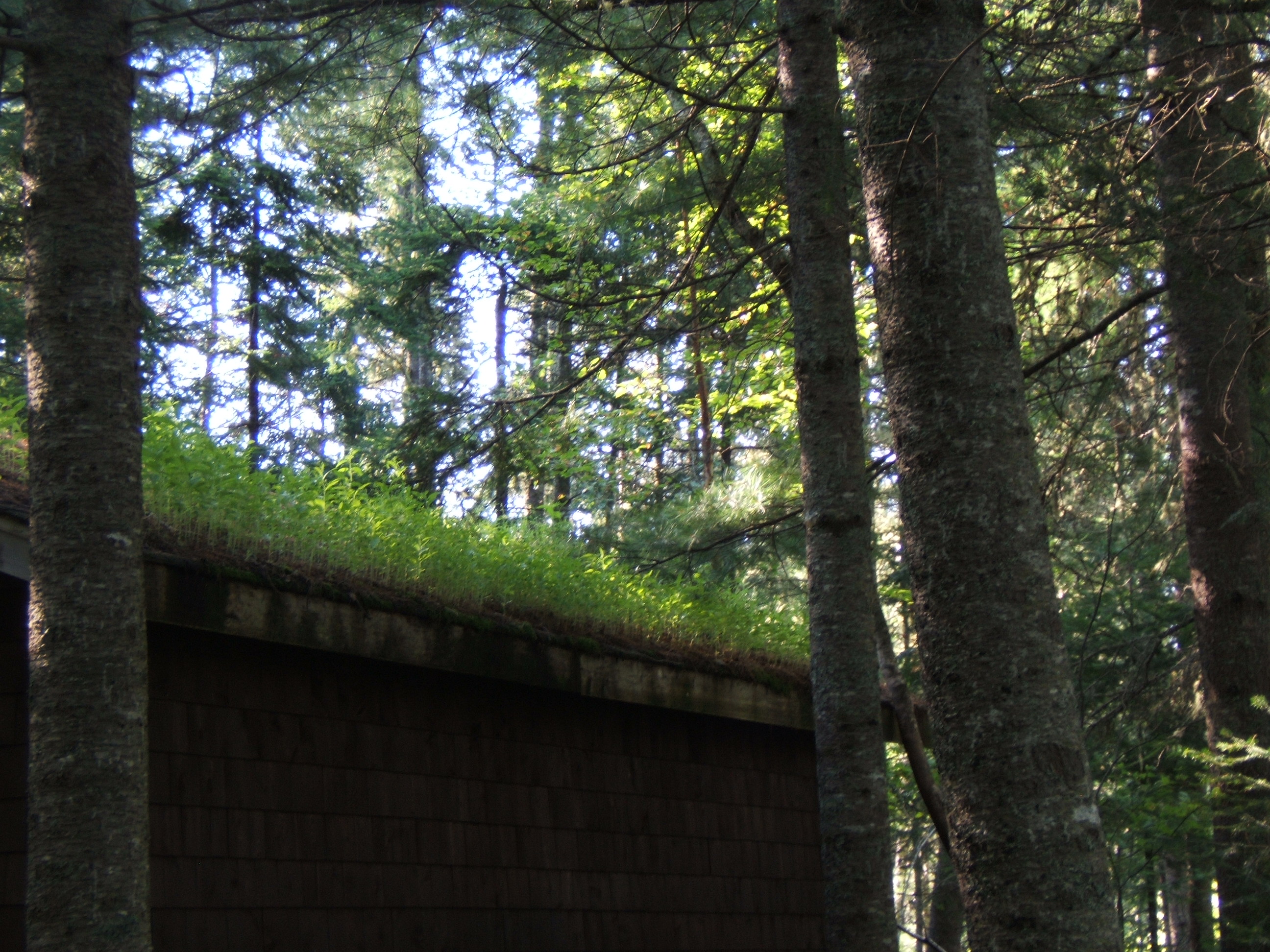
the right amount of soil, the right amount of sun
Just above the wood shed is a white pine. Each year it sheds some of its needles and these land on the roof. Over the years, they have gradually built up, forming a kind of compost. This year, a dusting of seeds found hold, sprouted and are thriving! The roof is still keeping the contents of the wood shed dry, although we expect a vigorous root to break through any time.
Sometimes, we find a space to grow and thrive where it is least expected.

thriving on the wood shed roof
Niche: poetry and prose about place
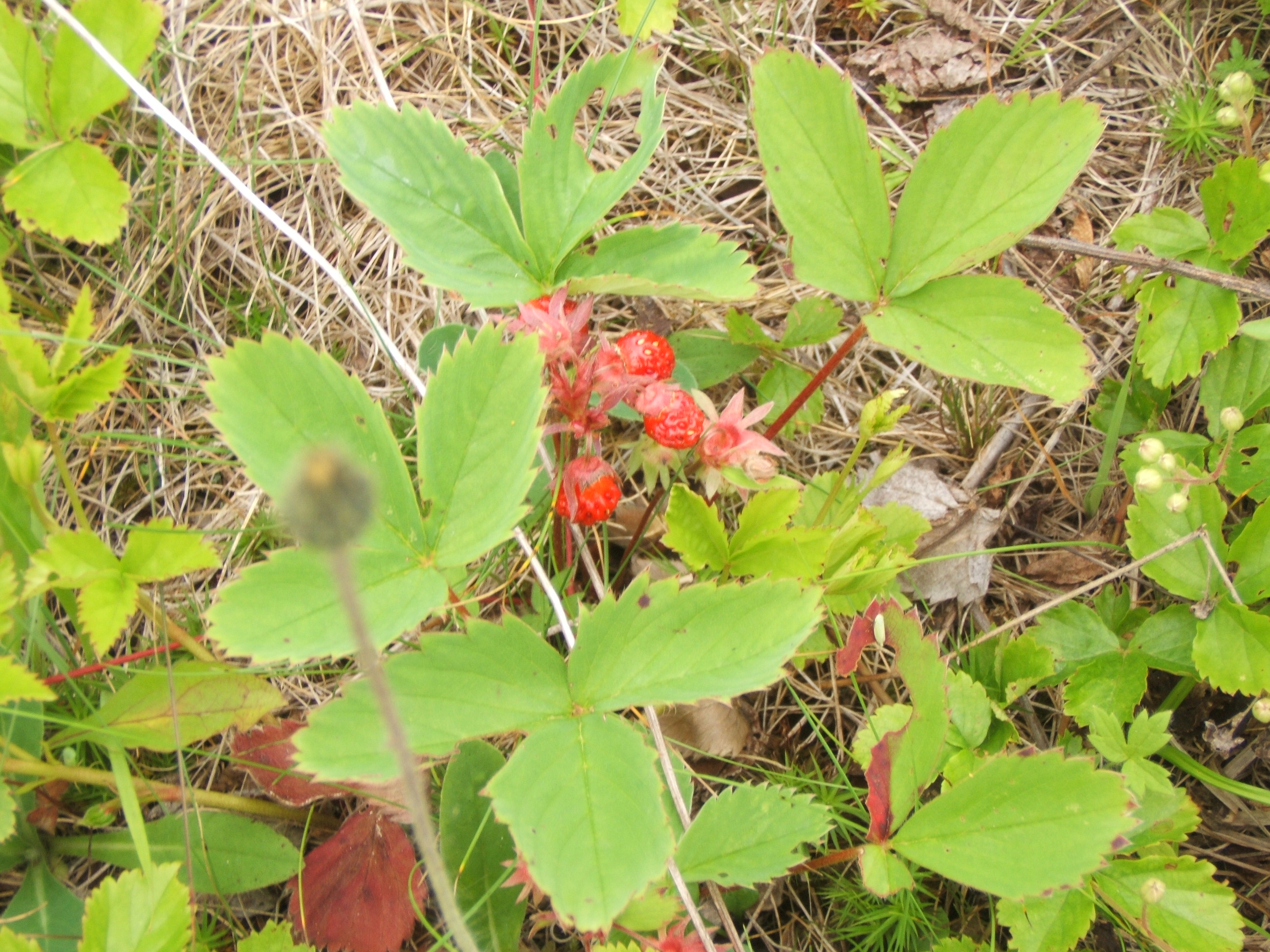
wild strawberries
In biology, ‘niche’ refers to the space occupied by a plant or an animal. ‘Niche’ is the sum total of the habitat needs of a plant or animal – physical, nutritional, and biological. For example, the wild strawberries in our field grow where the moisture, sunlight and soil are just right. ‘Niche’ also includes the role the wild strawberries play in the ecosystem, the way its fruit and leaves provide food for insects, field mice and birds.
In human terms, ‘niche’ can be a metaphor for personal space, home, or community. My best space to live is in the country, where I can garden, be near to woods and water, and escape from urban noise. When I am in my right ‘niche’, I contribute best to my family and to the community where I live.
In my experience, ‘niche’ is not stagnant but changes, hour to hour, day to day, season to season. One way of looking at the timeline of life is to think of it as a sequence of niche-spaces lived-in, sought after, avoided, encountered, or discovered.
The place where I am also influences how I feel. Stress occurs when ‘niche’ does not quite fit. Comfort is discovering a space answering all my ‘niche-needs’. Sadness is in trying to return to a space once occupied but no longer available. Conflict can occur when I have trouble sharing my space with others.
Contentment is finding and inhabiting a space that is, if not perfect, at least mine.
This blog space will be devoted to poetry and prose about ‘niche’. I’ll include poems and stories about human space: home and away, past and present. I’ll write to explore some of the place-based themes I love: laughing and talking with friends, growing and gathering food, wandering in forest and field, and travelling to other places. Because I am a biologist, I’ll also write about wild plants and animals, and the spaces where they live and interact with one another.
Visit often, because I love to write and I’ll have regular updates. For now, tell me about your best place, your ‘niche’, the place where you belong.







 nichepoetryandprose