Posts Tagged ‘nature’
Trailing Arbutus (Epigaea repens L. var glabrifolia)
One of the common flowers of early spring is the Mayflower (Epigaea repens L. var. glabrifolia), or Trailing Arbutus, also called Epigee rampante in French. It belongs to the heath or heather family (Ericaceae). It grows in open woods, or pastures, and along hillsides, in acidic soil.

Mayflower in bloom, photo taken in 1978 in Nova Scotia
The Mayflower is part of what Roland and Smith (The Flora of Nova Scotia, The Nova Scotia Museum, 1969) called the ‘Canadian Element’, woodland plants native to Northeastern North America and including common plants of the coniferous woods: Maianthemum canadense Desf. (Wild Lily-of-the- Valley), Mitchella repens L. (Partridge-berry), Gaultheria procumbens L. (Wintergreen) and Trientalis borealis Raf. (Star-flower), among others. When I worked on my M. Sc. thesis project, years ago, these were in the community of plants I encountered in the woods I was studying, and they are still my favorite plants.

two members of the ‘Canadian Element’ community – leaves of Wild Lily-of-the-Valley (left) and Wintergreen (right)
The name epigaea means ‘on the earth’, and perfectly describes the way the Mayflower grows. The specific name is from the Latin repens meaning ‘creeping’. The plant spreads across the ground, its oval, leathery leaves lying flat and overlapping. The leaves persist all winter and sometimes look a little weather-worn. The variety we have is glabrous on the lower leaf surface, meaning without hairs. The leaves grow on hairy, woody twigs.

leaves of Mayflower in the Grey Woods, April 2012
The flowers grow in clusters tucked beneath the leaves. They are creamy white, and are in the form of a short tube ending in five flaring lobes. They bloom mid-April to mid-May. The flowers along our woods have just completed their blooming. For a nostalgic look at the tradition of picking Mayflowers in spring, have a look at http://ahundredyearsago.com/2012/04/28/gathering-arbutus/
A delight of spring is to manoeuvre close to the ground so you can smell the Epigaea flowers. The perfume is very sweet, gently stirring. The only edible part of the plant is the flower and it tastes as sweet and fragrant as it smells. It is a shame to eat such a delicate creature as a Mayflower, but once a year I allow myself the privilege, just one tiny bloom (always be absolutely certain of the identification before you eat any plant in the wild). The plant is protected in some areas since it rarely sets seed and is almost impossible to transplant.
The Mayflower is the floral emblem of Nova Scotia and Massachusetts.
~
~
Trailing Arbutus
(Epigaea repens L.)
~
on the slope, new leaves
Trientalis, Gaultheria
Star-flower, Wintergreen,
vines of Partridge-berry creep,
Maianthemum unfurls
~
beneath the din, a melody
weeps Epigaea, evergreen
pressed to the hillside
leather armour, thickened leaves
weather-beaten, worn
~
waxy bloom resists
subtle shadow
predator
unrelenting rain
~
~

Warning: 1. never eat any plant if you are not absolutely certain of the identification; 2. never eat any plant if you have personal sensitivities, including allergies, to certain plants or their derivatives; 3. never eat any plant unless you have checked several sources to verify the edibility of the plant.
© Jane Tims 2012
Sweet-fern (Comptonia peregrina (L.) Coult.)
Last weekend, we went on a short hike to the lake to collect some dried Sweet-fern, with the goal of making Sweet-fern sun tea. To make the tea, fresh or dry leaves of Sweet-fern are steeped in a jar in the sun for three hours.
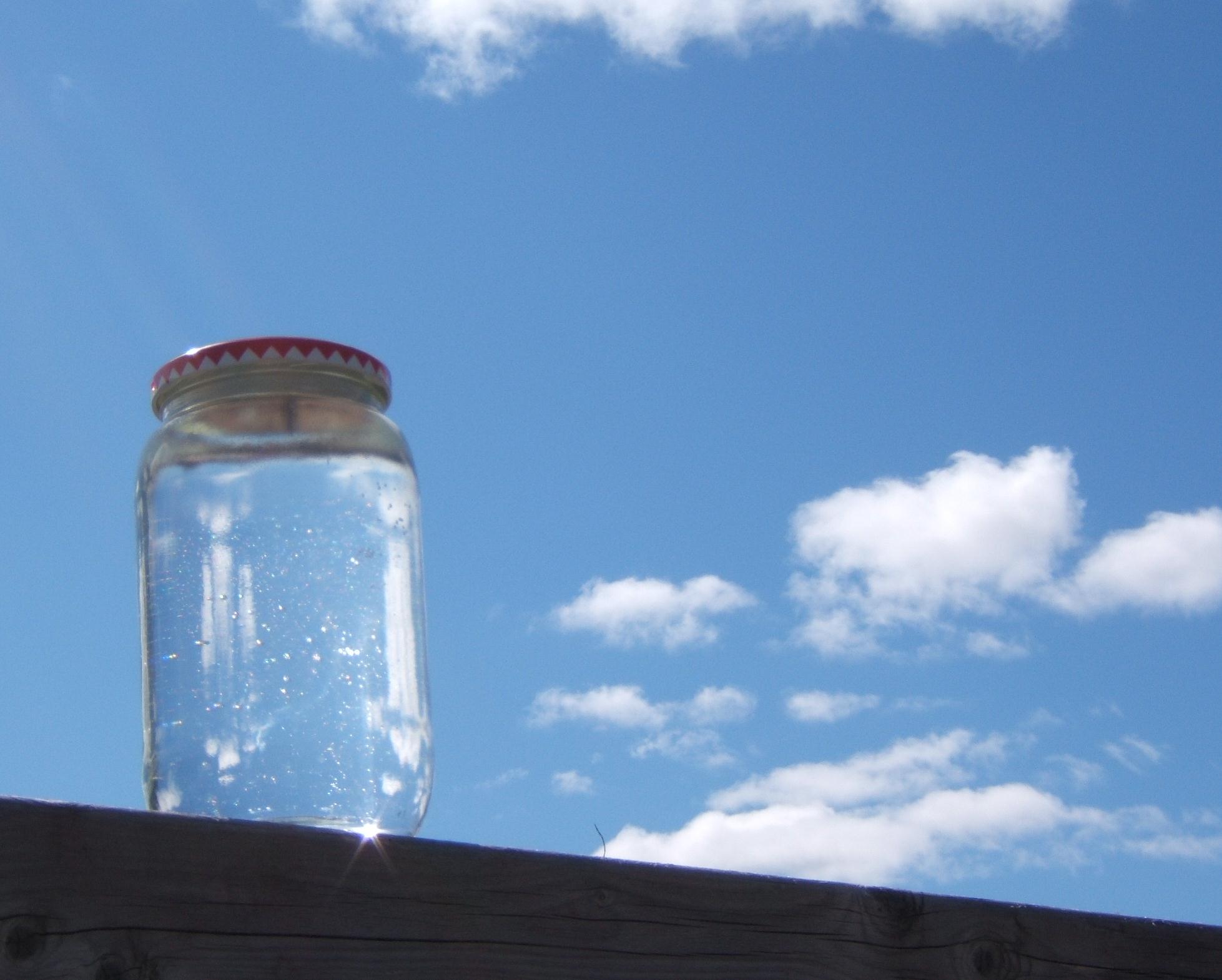
Unfortunately, the wind was too cold to allow the spring sun to warm the jar. So I collected the dry leaves and, on Sunday afternoon, I enjoyed a cup of fragrant Sweet-fern tea, made the usual way, steeped in boiling water.

Later in the spring or summer, I’ll be trying the sun tea method again.
Sweet-fern(Comptonia peregrina (L.) Coult.) is a small rounded shrub with fernlike green leaves found in dry rocky waste areas, clearings or pastures. The leaves are simple and alternate, long, narrow and deeply lobed. The shrub sometimes grows as a weed in blueberry fields.
Sweet-fern is called Comptonie voyageus in French, since peregrina means traveller. The generic name is after Henry Compton, a 17th century Bishop of London who was a patron of botany.
The fruit is a green burr enclosing 1-4 nutlets. These can be harvested in June or July while still tender.
Sweet-fern is a member of the Sweet Gale family. The plant is very fragrant, particularly when crushed, due to glands on the leaves and twigs. The tea made from the leaves is also fragrant. To make the tea, use 1 tsp dried or 2 tsp fresh leaves per cup of water. Remember, to always be absolutely certain of the identification before you try eating or drinking anything in the wild.
~
Directions for Sweet-fern sun tea
8 tsp of fresh chopped leaves
1 quart of clean fresh cold water in a jar
cap and place in sun three hours until water is dark
strain and serve
~
~
Sweet-fern sun tea
Comptonia peregrina (L.) Coult.
~
to quench the thirst of a traveller
and reward a hike too far
~
steep sweet-fern
in the solar flare
~
gives up fragrance to air
and to water in a sun-drenched jar
~
~
Warning: 1. never eat any plant if you are not absolutely certain of the identification; 2. never eat any plant if you have personal sensitivities, including allergies, to certain plants or their derivatives; 3. never eat any plant unless you have checked several sources to verify the edibility of the plant. © Jane Tims 2012places off-planet #1 – watching the stars
For me, star-gazing is a warm-weather activity. The winter, although dazzling in its displays of stars, is too cold for my arthritic joints and the immobility of prolonged star study.
So, as May approaches, I am looking forward to spending some time outside, to locate some old friends in the sky and to meet some new sky-folk!
I am lucky to live in an area not overly polluted with night light. At our home, although trees make viewing sporadic, stray light from street and yard lights is not a problem. At our lake property, the surroundings are utterly dark and the sky is stunning, studded with stars.
If you want to do some stargazing, you need three things to get a good start:
- a star chart or a planisphere (a combination of a star chart and a viewer). My favourite planisphere is downloadable and printable, from the National Research Council at
http://www.nrc-cnrc.gc.ca/eng/education/astronomy/constellations/html.html
- a reclining lawn chair (so you can relax and your neck will not ache)
- a flashlight with a clear red cover (this is to prevent your eyes from becoming light-adapted as you check the star-chart).
Another helpful item, to see groupings of stars more clearly, or to see details of the moon:
- a pair of binoculars
Are you a stargazer? What are your favorite ‘tools-of-the-trade’?
~
~
the search for wind
and stars
`
these are not the winds I sought to stand in
I wanted a zephyr to ruffle the bluets in spring
a breeze to whip the silver wind chime to frenzy
~
instead I cower from night moans
the rattle at the window
the street where a dust daemon lurks
near every wall, lifts the leaves
grinds them to powder
~
I gaze at the skies
watch for Altair and Orion
the never- random pulse to signal man
~
but all the lights in the night sky
are not stars
the moon who solemn watches
as his face is peeled away
the comet drawing scant thoughts across darkness
its tears a storm of falling stars
~
I walk with sorrow
it rests behind the eyes
and cannot swell to tears
~
the truth so simple
yet impossible to know-
you need only stand
and the hill will form beneath your feet
and the roaring shrink
to the breath of love across your face
~
© Jane Tims 2012

maple blossoms
This week, as Red Maple (Acer rubrum) flowers bloom, the woodland blushes scarlet. In the driveway, a tree-shadow of blossoms has begun to form, as the flower clusters reach their peak and then drop to the ground.
Each flower is a puff of reddish-pink bracts surrounding the male and female flower parts. The stamens (the male part of the flower) consist of a thin filament topped by a dark anther where the pollen is formed. The pistil (the female part) is made of a style topped by a stigma; once fertilised by pollen, the maple seeds will form here. Red maple flowers may have both stamens and pistils, or may be only male or only female. The flower looks like a tiny fireworks, the burst-effect created by a bundle of stamens or stigmas.
When I went to Dalhousie University in Halifax, I always loved the flowering of the Norway Maples (Acer platanoides) in spring. Their flowers are green and most people mistake them for new leaves. I used to wonder what the ecosystem consequences might be if the flowers were bright orange or purple instead of green.
~
~
red maple blossoms
~
across brown sky
strontium bursts of bright
sparks bloom
against dark
~
~
© Jane Tims 2012

snippets of landscape – vernal pools and the spring migration
At the edges of our Grey Woods are several places where ‘vernal pools’ form. As a result, these spring evenings are alive with the peeping and croaking of various frogs and toads.
‘Vernal pools’ are temporary accumulations of water in depressions. This water may originate from snow accumulations or from rising water tables. The word ‘vernal’ comes from the Latin ver meaning spring.
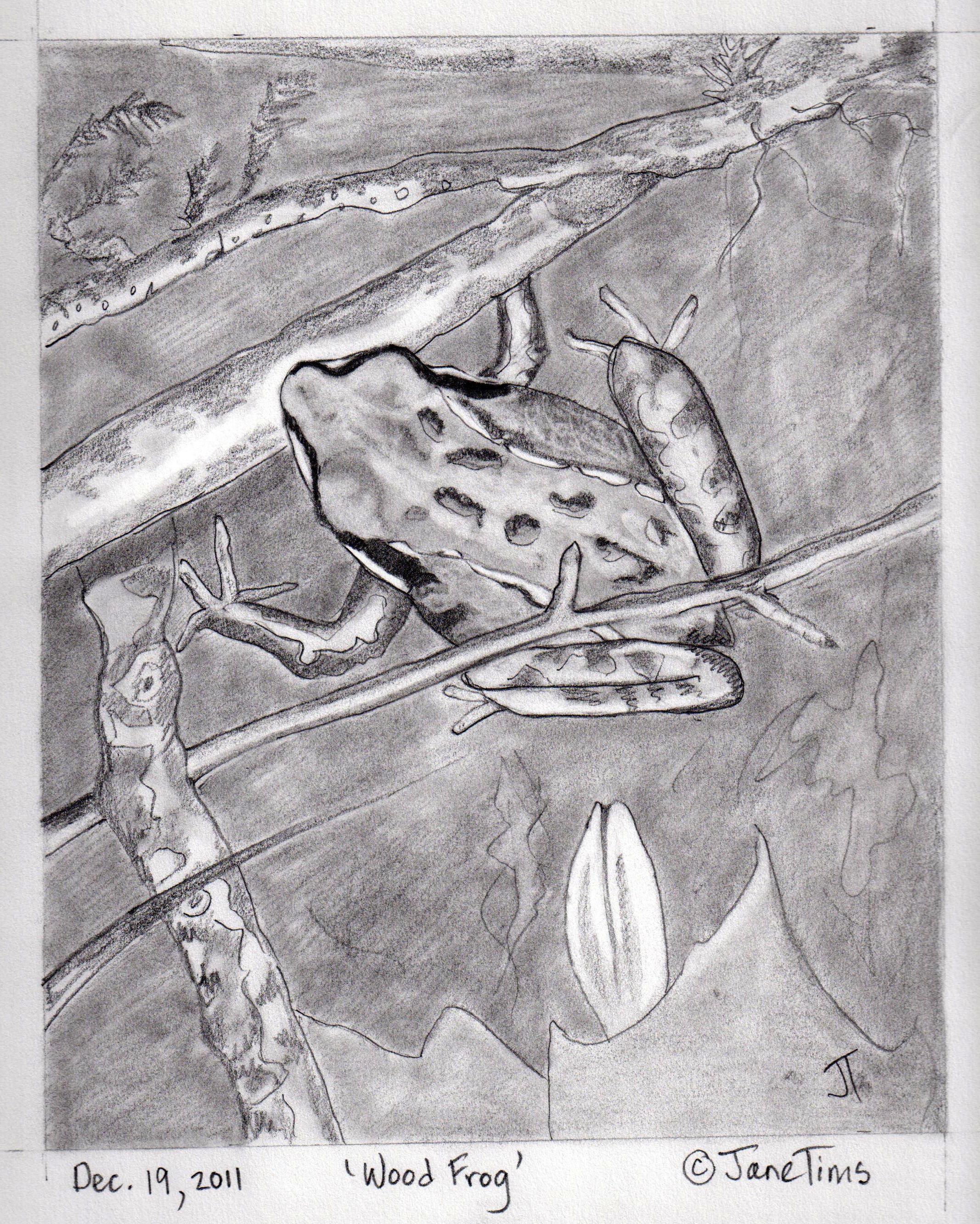
Although vernal pools are ephemeral, they create habitat for many animals, including insects and amphibians, often at critical life stages. Amphibians such as Wood Frogs (Rana sylvatica), Spotted Salamanders (Ambystoma maculatum), and Blue Spotted Salamanders (Ambystoma laterale) depend on vernal pools for laying their eggs and development of tadpoles. Other amphibians you may encounter in a vernal pool include Spring Peepers, Grey Tree Frogs and Bull Frogs.
During a rainy night in late April or early May, you may be fortunate enough to observe the early spring migration of Wood Frogs and other species as they make their way to breeding locations. These frogs have remained all winter in hibernation and have unthawed in the early spring rains. Unfortunately, many must cross roads to get to the ponds and vernal pools where they will lay their eggs, and many become casualties of their attempts to cross the road.

~
~
an uncertain spring migration
~
if it rains
the night road
leads home
to lowlands
and hollows
vernal pools
north of the highway
swollen with rain
~
mists crawl
towards me
vignettes
sweep the windshield
frogs cross the roadway
follow ancestral memory
blurred by rain
~
some nights
the tail-lights ahead
are my only family
red streamers on wet pavement
tadpoles from the eggmass
grow legs
absorb their tails
follow the road
~
I watch
the phone poles
the potholes
the hidden driveways
the headlight echo on trees
frog legs
crushed on the pavement
mailboxes with uncertain names
~
the centre line is a zipper
seals the left side
to the right
the coming home
with the leaving
frogs plead
from the wetlands
never saying goodbye
~
Published as: ‘an uncertain spring migration’, Spring 1997, Green’s Magazine XXV (3).
revised
© Jane Tims 2011
~
accents in red
We are still in the greys and browns of spring.
There are a few wildflowers blooming. The Coltsfoot is spreading carpets of yellow along the roadside. And flowers in the deep hardwoods have begun to display their delicate beauty. But most places are drab and colorless.
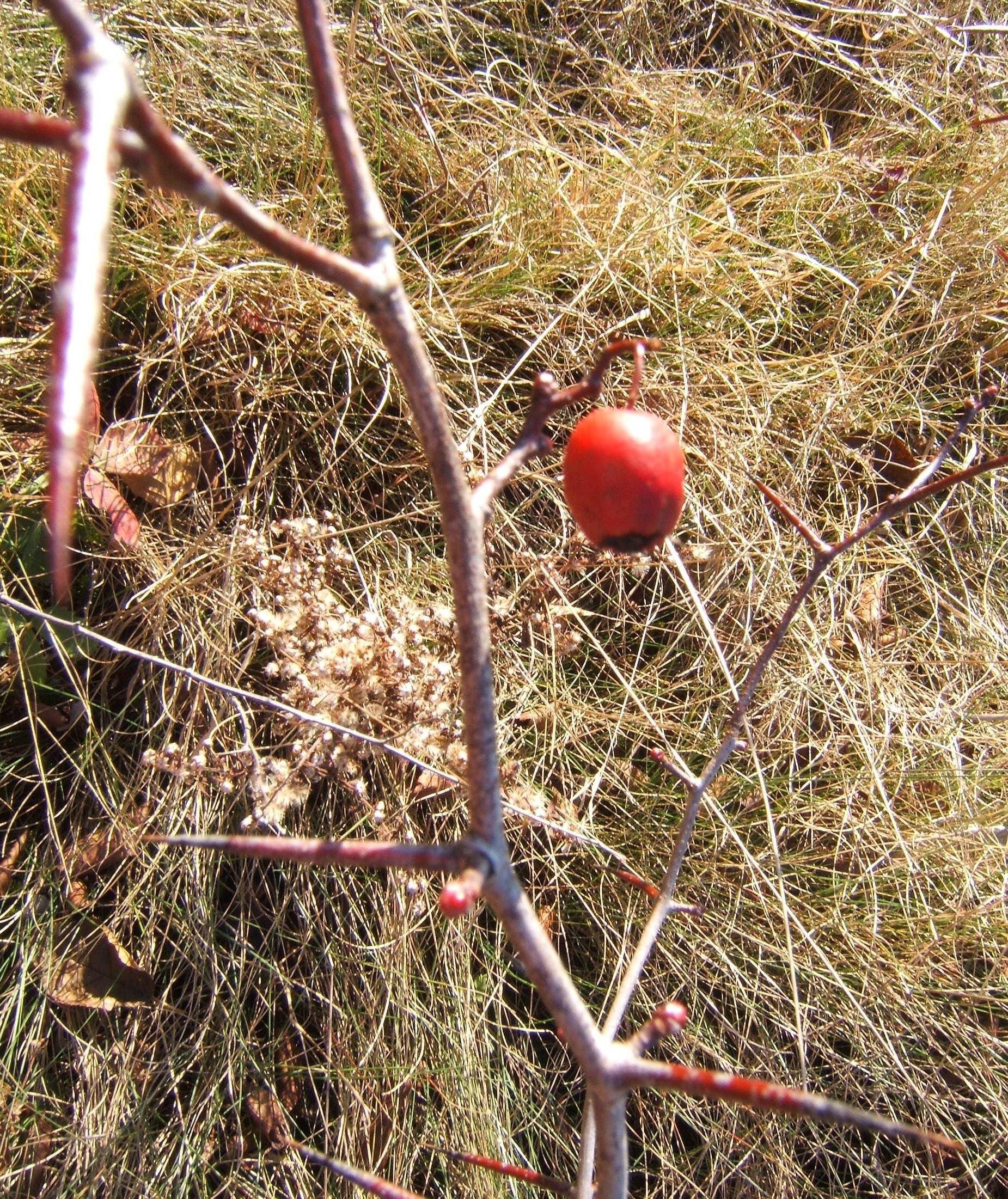
I watch for red this time of year. There are a few red berries, still clinging to their branches after winter.

And the stems of Red Osier Dogwood (Cornus stolonifera Michx.) are brilliant in the fields and ditches.

My favorite ‘red’ of spring is the muted red of the blueberry fields.

~
~
fancy
~
the blueberry barren
is faded scarlet
red osier in ditches
rosebush and hawthorn
a single berry, a single haw
Earth in brown
toenails red
~
© Jane Tims 2012
oldfield
In my posts this summer, the space I expect to feature prominently is our summer property.
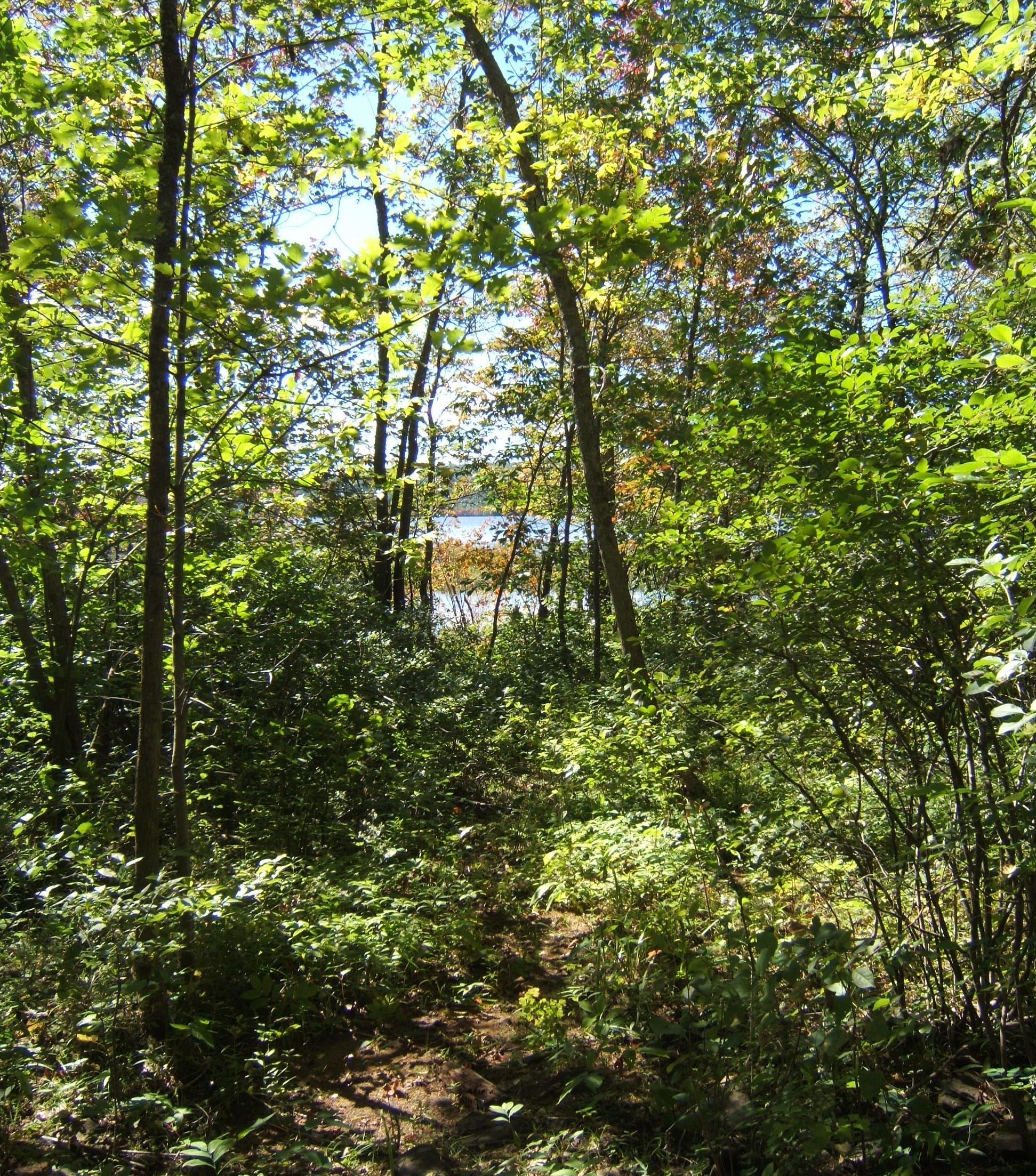
I’ve talked about this place before. One end of the property is along a lake (see ‘course of the creek’, September 12, 2012, and ‘ice is nice’, December 21, 2011, both under the category ‘waterways’). The lake edge is a bright forest of cedar, hemlock, birch and oak, and includes a beautiful marsh. We sit on our bench in the woods and look out at the lake, watching loons and deer and ducks. Once I saw an eagle plummet from the sky and dive into the water with a huge splash, to emerge with a good-sized fish in his talons.

Most of the property was/is an oldfield. When we bought the property in 2004, we bought an open field, thick with blueberry bushes and grass that rippled in the ever-present wind. There were a few trees, mostly bushy pine, spared year after year by the farmer’s bushhog. The field had been home to a herd of buffalo (bison) and we still find the dry, dusty evidence of their wallows.
The keyword in the last paragraph is ‘bushhog’! The farmer offered to keep the field mowed, but we are very independent. We were certain we could keep ahead of the various trees and alders sprouting everywhere.

The result has been the usual progress of an oldfield in the process of succession. Today our pines still punctuate the property, and there are enough blueberries to keep us satisfied, but other spaces have emerged… the alder swale, the maple grove, the path through the birches, the blackberry barrens, and, of course, our tiny cottage. There is a bit of grassy field still remaining and we struggle to keep it intact.

east boundary of our property, with our cedar rail fence, looking toward our neighbor's mowed field
When we go to the property I like to think about how it is changing, right before our eyes. Those buffalo would have a hard time recognising the place.
~
~
evidence of buffalo
~
“…in this field, years ago, I kept buffalo….”
beef farmer, selling his land
~
massive posts brace a page fence
woven with wire birch
dusty wallows where soil is crushed
and only lichen will grow
~
three apple trees trodden
parallel to ground
grey feed trough
strung together with nails
~
cedar waxwings search the fence
coarse hairs for their nests
winds nuzzle and whisper
through the brush of pine
~
~
© Jane Tims 2012
a moment of beautiful – ice in the ditch
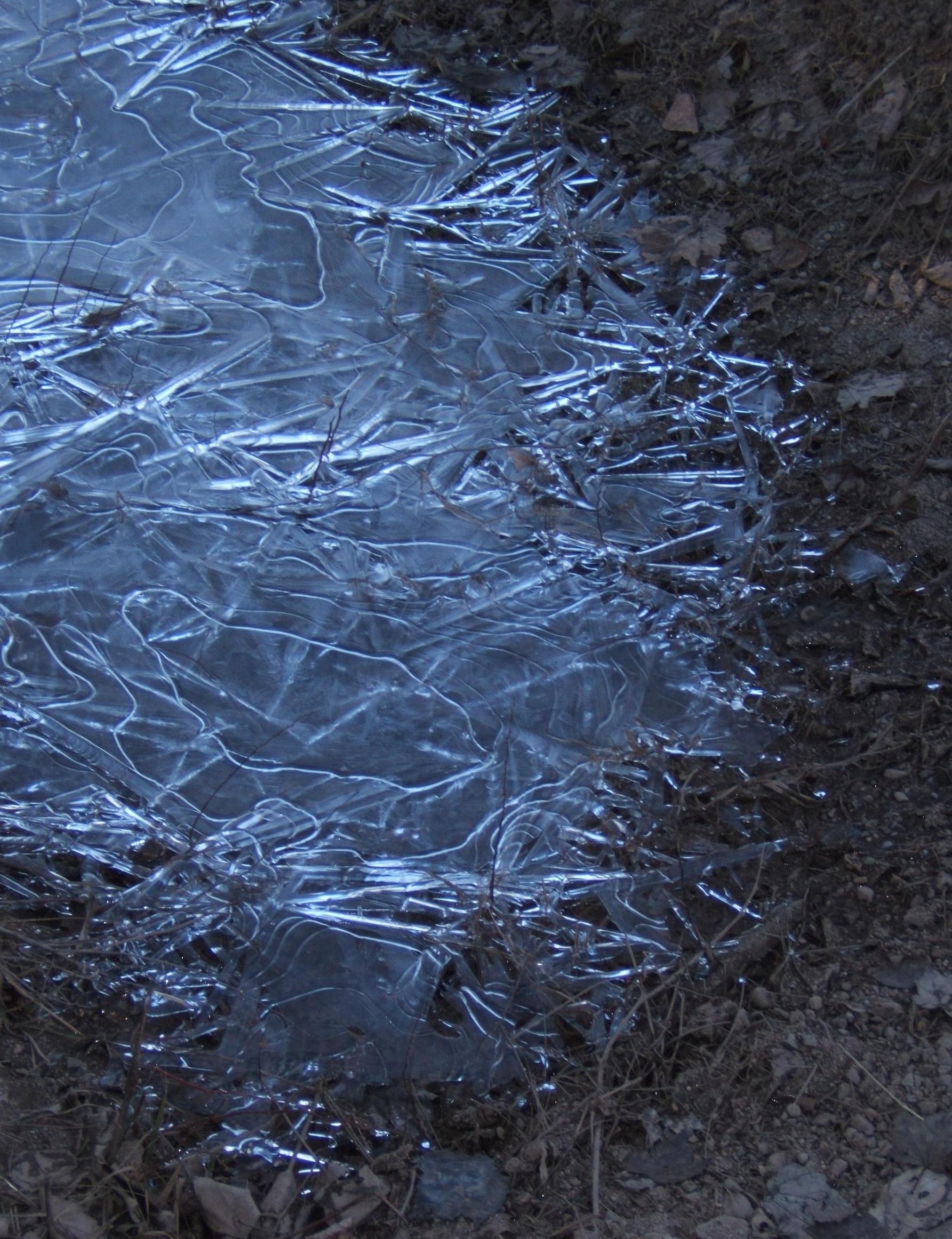
the space: a ditch along the road
the beautiful: a skim of new ice
~
When nights are icy cold after a day of spring warmth, water freezes in the ditches. Ephemeral, this skim of new ice will be gone as soon as the morning sun overtops the trees.

The ice is frail, but if you are careful, you can lift a pane of this natural glass and see the world through a different window.
~
~
ditch ice
~
on the last sub-zero night in March
we forge swords and slivers
cast a lens, a barrier to warm
~
below ditch ice are sinuous
arrangements of water and breath
nostrils grope for airways
peer through frozen skim
as though through windows
learn the underside of pane
~
~
© Jane Tims 2012
Dutchman’s-breeches (Dicentra Cucullaria (L.) Bernh.)
Our first summer home was located in a rich hardwood of Sugar-Maple (Acer saccharum Marsh.), Beech (Fagus grandifolia Ehrh.) and White Ash (Fraxinus Americana L. ). In these woods, in early spring, as the snow melted, wildflowers found ideal habitat. Many plants take advantage of the few days when the leaves of the overstory trees are still developing, and there is bright light in the understory of the woods.
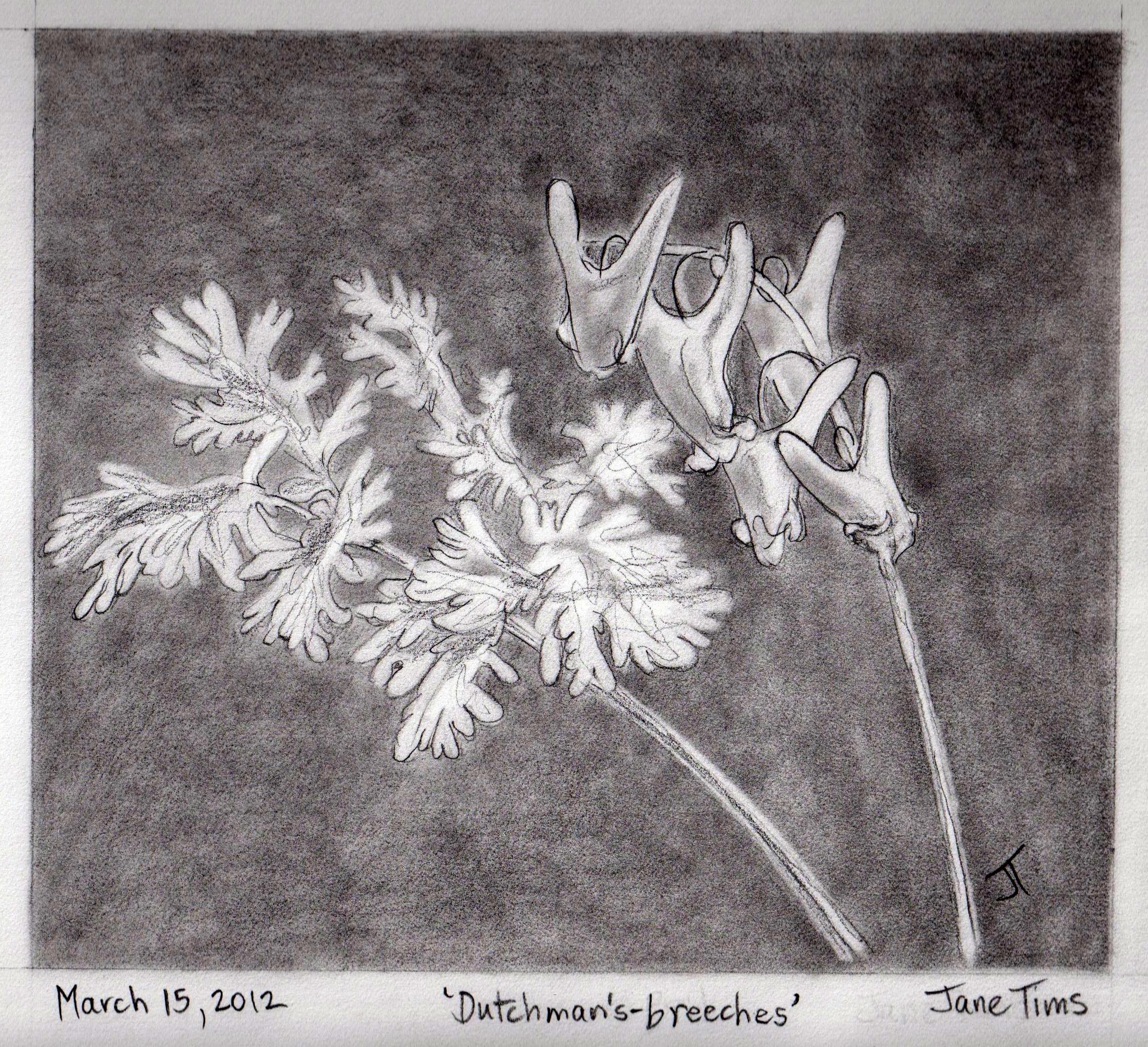
One of these wildflowers is Dutchman’s-breeches (Dicentra Cucullaria (L.) Bernh.). This charming little plant blooms early in spring, in rich, rocky hardwoods. The white flowers are two-spurred, in groups of four to ten along a stem held just above finely divided, feathery leaves.
The plants is also known as breeches-flower, cullottes de Hollandais, and dicentre à capuchon. The generic name is from the Greek di meaning twice and centron meaning a spur. Cucullaria is the old generic name meaning hoodlike. The plant was named by Johann Jacob Bernhardi.
The flowers of Dutchman’s-breeches are an example of plant adaptation for pollination. The flower has a clever mechanism, in the form of fused flower parts, to ensure only certain insects (such as the bumblebee) can access the nectar and pollen.
In my copy of Roland and Smith (The Flora of Nova Scotia), I recorded my first encounter with this little plant – April 28, 1985, during one of our first visits to our property before we purchased it. We called our cabin Whisperwood, in part because of the subtle breezes in those wildflower-dotted spring woods.
~
~
Dutchman’s Breeches
Dicentra Cucullaria (L.) Bernh.
~
~
Dutchman’s breeches
brighten in sun
woodland washdays
have begun
~
spring-clean trousers
hung in rows
inflated with breath
the May wind blows
~
sprites are playing
tossing their hoods
above the damp
in the spring-fed woods
~
little fairy laundry
trembles on the line
before greening trees
block spring sunshine
~
~
© Jane Tims 1993
floodwaters
This time of year, along the St. John River, we watch for floodwaters. For some, whose homes may be threatened by the flood, this means worry. For others, it means a road along the river may be closed until the waters recede. For me, it is a time to watch for the return of the Canada Geese. It is also a time to see what interesting cargo the floodwaters carry.
All along the river, there will be huge wheels of root… the remains of trees ripped from the river’s banks and carried along with the floodwaters. These ‘root wheels’ come to rest on the river’s edges, stranded by the falling waters. Washed clean of the soil, the roots show us the underpinnings of the trees and reveal what goes on beneath the ground, where we ordinarily cannot see.


~
~
Windthrow
~
another scar
in the clearcut
~
one crooked pine
left sentinel
to watch shoots and brambles
scramble for sun
~
wind thrown in silence
(no ears to hear)
seedlings
patted in by Boy Scouts
crushed
~
roots and fibre, exposed
clots of clay
dripping rock, wounded
rootlets, oozing sap
~
overturned war wagon
mighty axle, broken
wheel of matted roots, still
spinning, earth upended
~
a crater dug in regolith
~
a new shelter
from the wind, rain
sprouting seeds
in mineral
and fallen leaves
~
~
Published as: ‘Windthrow’, The Cormorant XI (1): 100 (Fall 94)
© Jane Tims 1994









 nichepoetryandprose