harvesting colour … colour of the harvest
On our weekend drive from Canterbury to McAdam, I saw another aspect of the ‘harvesting colour’ theme. Anywhere you travel in New Brunswick, you usually come across wood harvesting activity and Highway 630 was no exception. About half way along, a turn in the road brought us to a large forest harvest.
~

forest harvesting operation
~
The wood from the cut was stacked into gigantic walls.
~
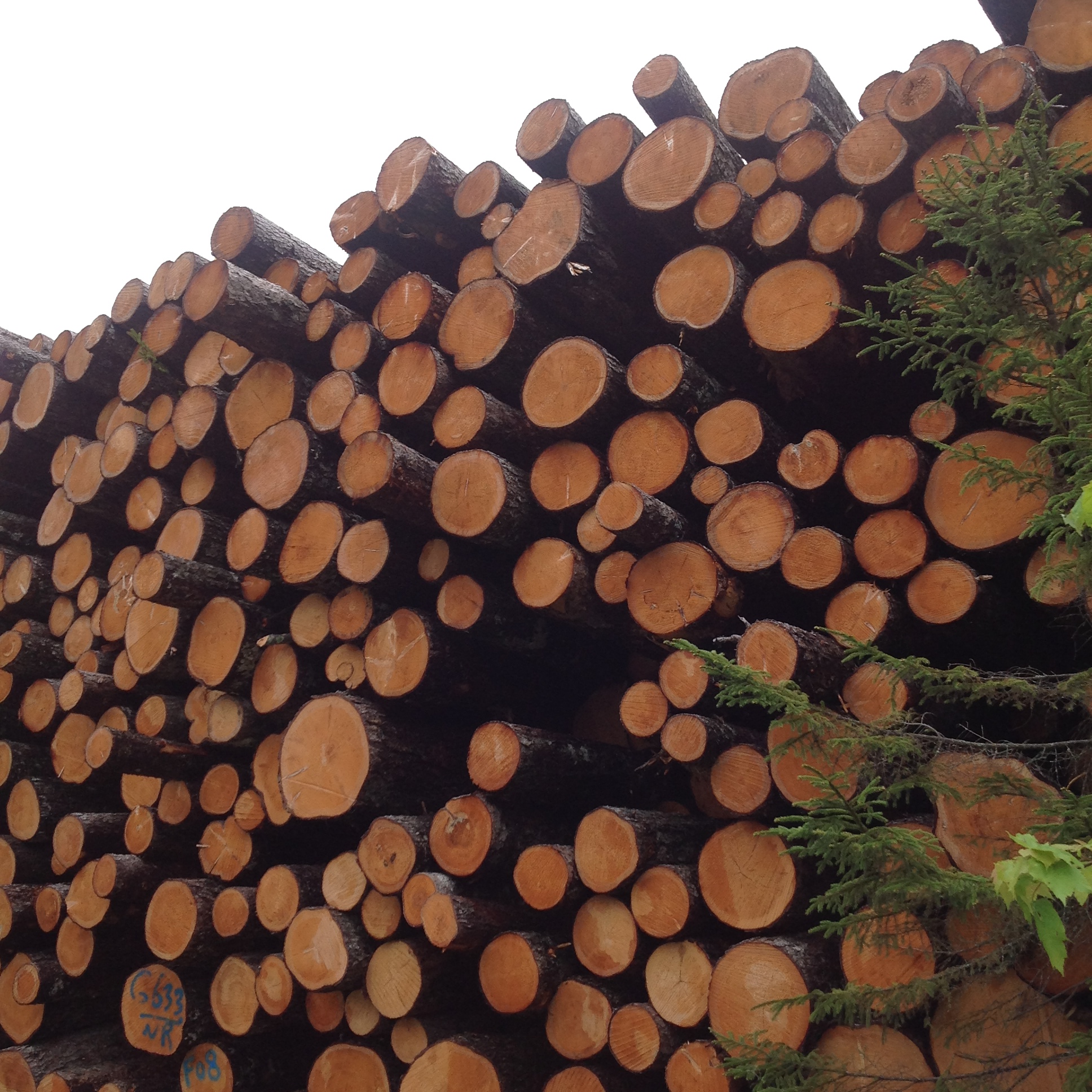
wall of cut wood
~
The clearcut laid the land quite bare. It will be many years before this area returns to the hardwood habitat typical of the area, if at all.
~

spruce and fir
~
The wood from the cutting had been piled according to species. The colours of the cut wood were quite distinctive. The largest colour contrast was between the pale almost white, ash …
~
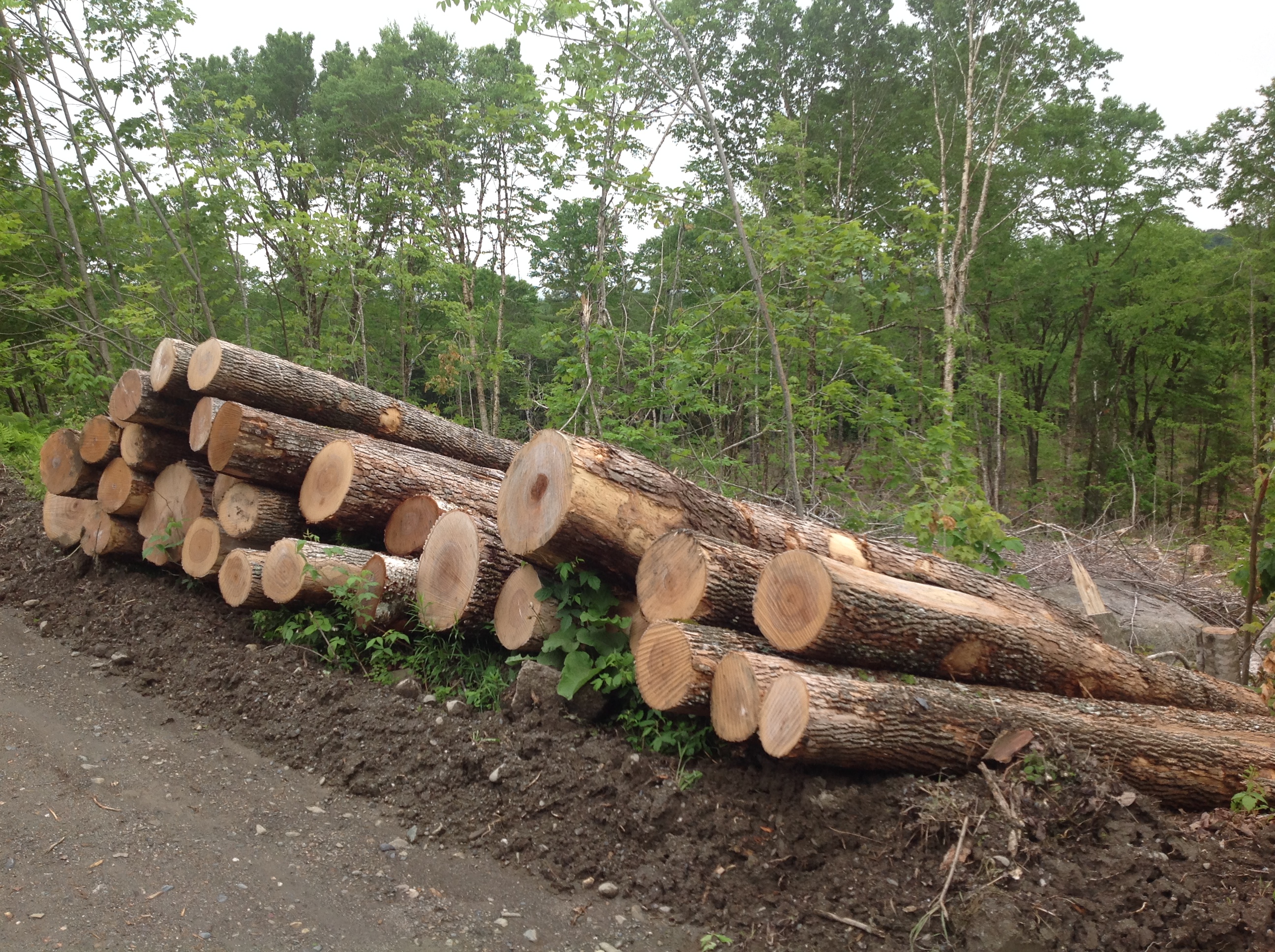
ash
~

ash
~
and the very orange wood of the spruce and fir …
~

spruce and fir
~
I have no particular point to make, except to honour the very individual characteristics of these trees.
~
Copyright 2014 Jane Tims
an attempt at ecoprinting
After our drive to Canterbury over the weekend, I was anxious to capture some of the roadside flower colour in my ‘harvesting colour’ experiments. I decided to try a technique described by India Flint in her book Eco Colour: Botanical Dyes for Beautiful Textiles (Interweave Press, 2010). ‘Ecoprinting’ involves bringing a plant into close contact with a fabric in order to transfer the colour to the cloth. I am very impressed with the effects shown in Eco Colour – prints of leaves, flowers and berries.
~
For my experiment I tried a handful of the Forget-me-nots I collected on our weekend drive …
~
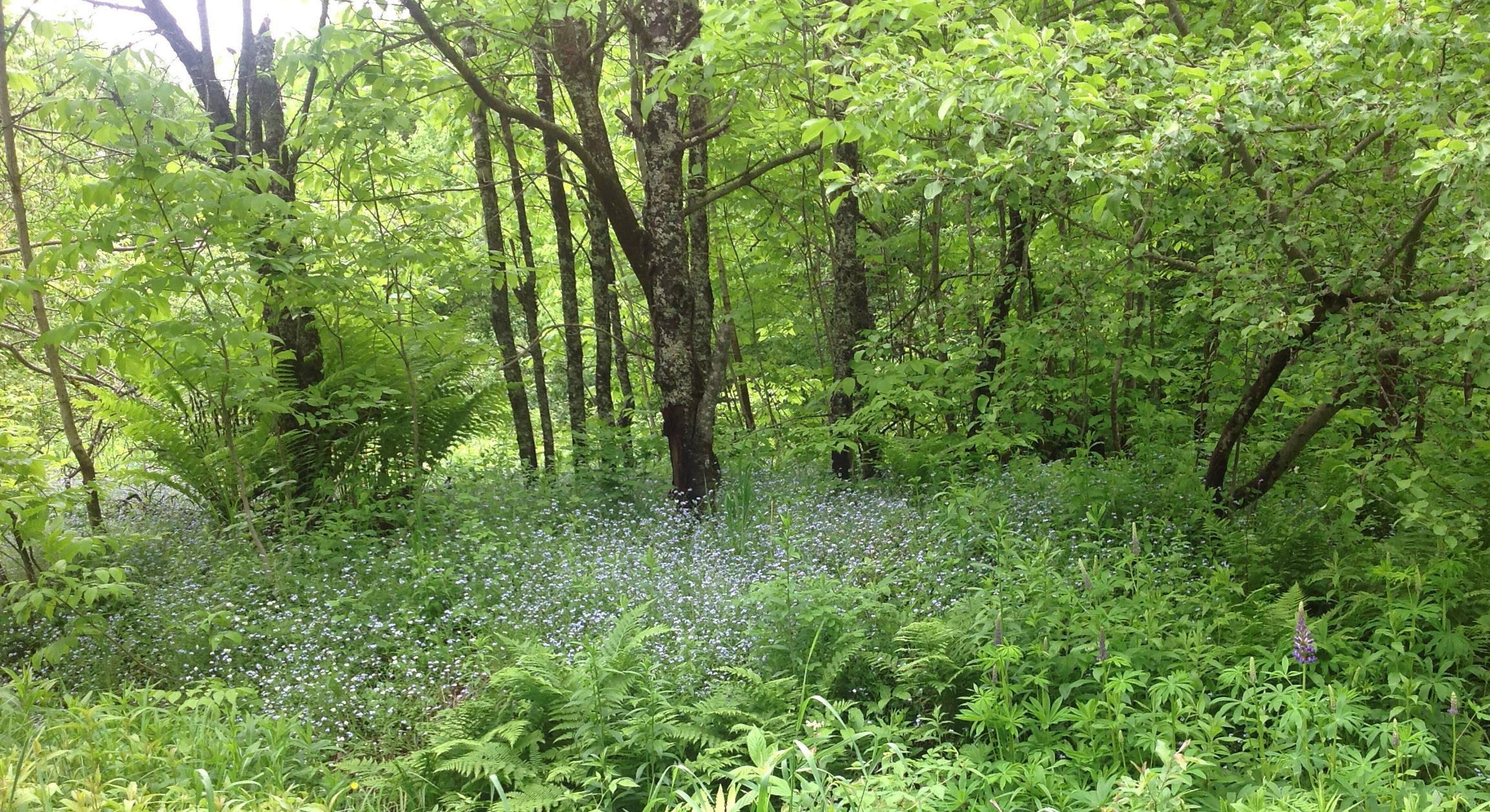
Forget-me-nots in the woods
~
a bundle of the purple Lupins growing along the road in my community …
~

Lupins along the road
~
and a bunch of a ground cover plant growing in my yard, Bugleweed (Ajuga reptans) …
~
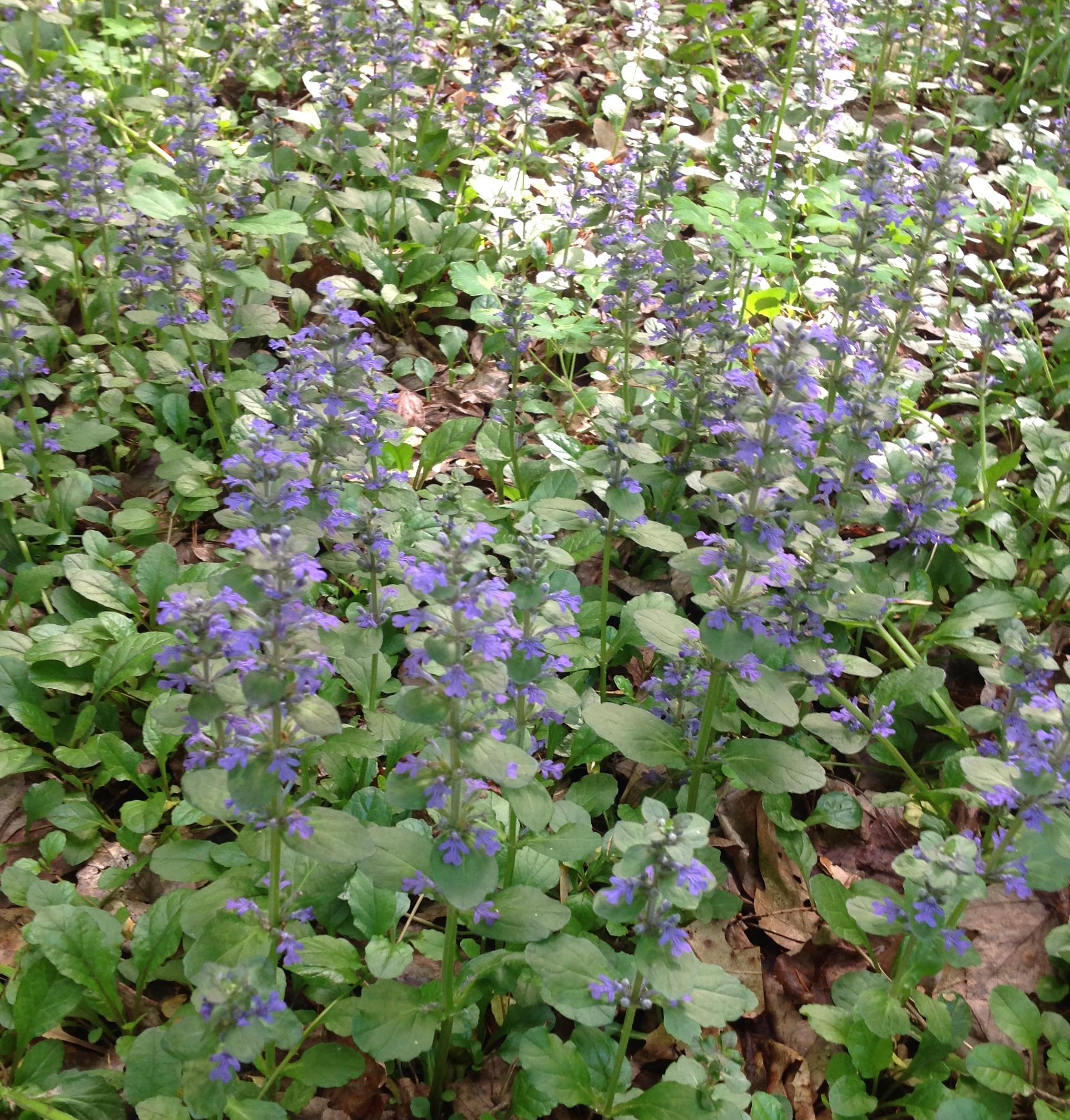
Bugleweed in the orchard
~
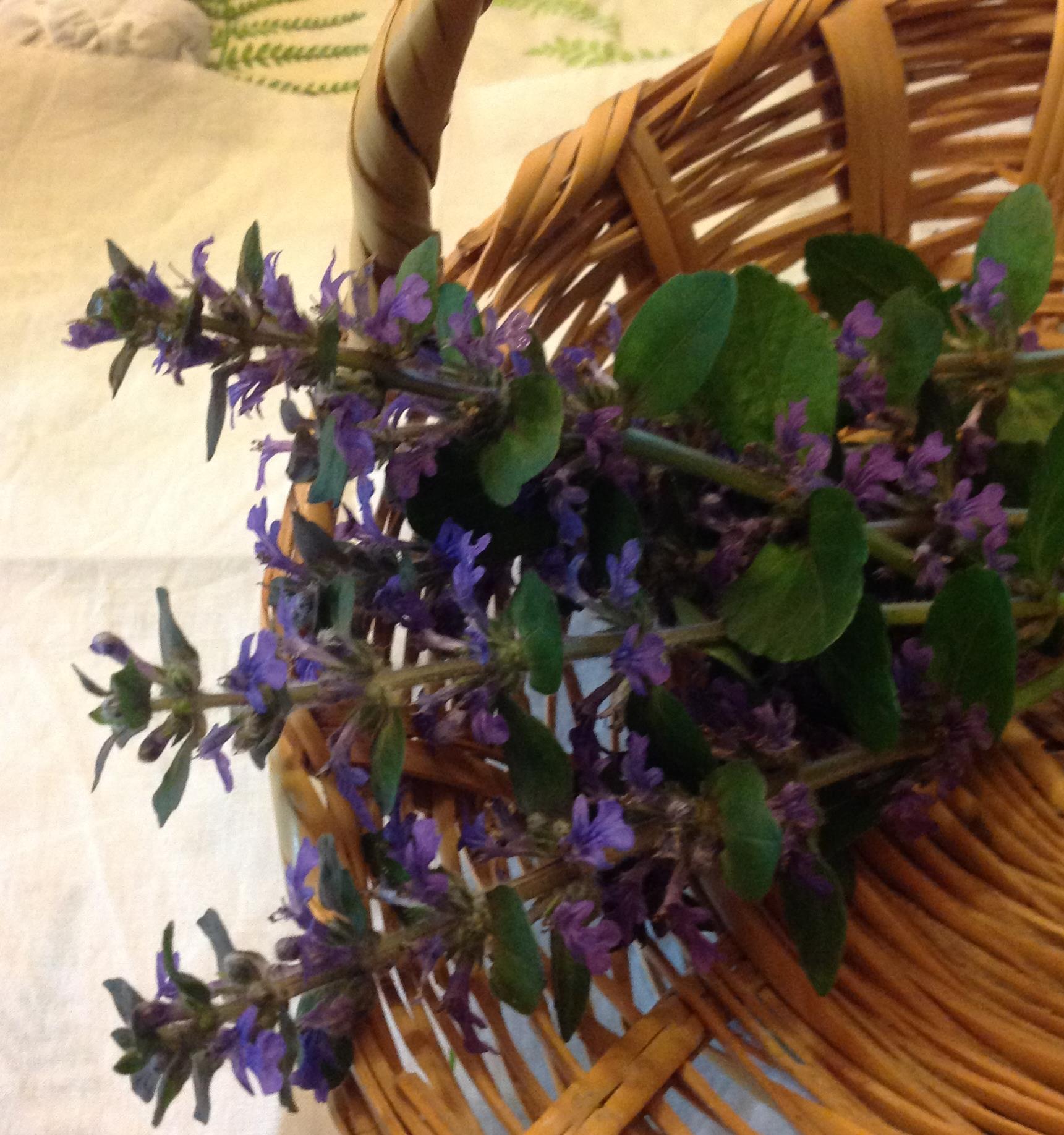
basket of Bugleweed
~
I only used small samples of cloth … my idea is to use these ‘patches’ to make a little quilt to show the results of my ‘colour harvest’. I arranged a few of the flowers, both petals and leaves, inside the cloth …
~

Forget-me-nots on cotton
~

Lupin petals and leaves on cotton
~
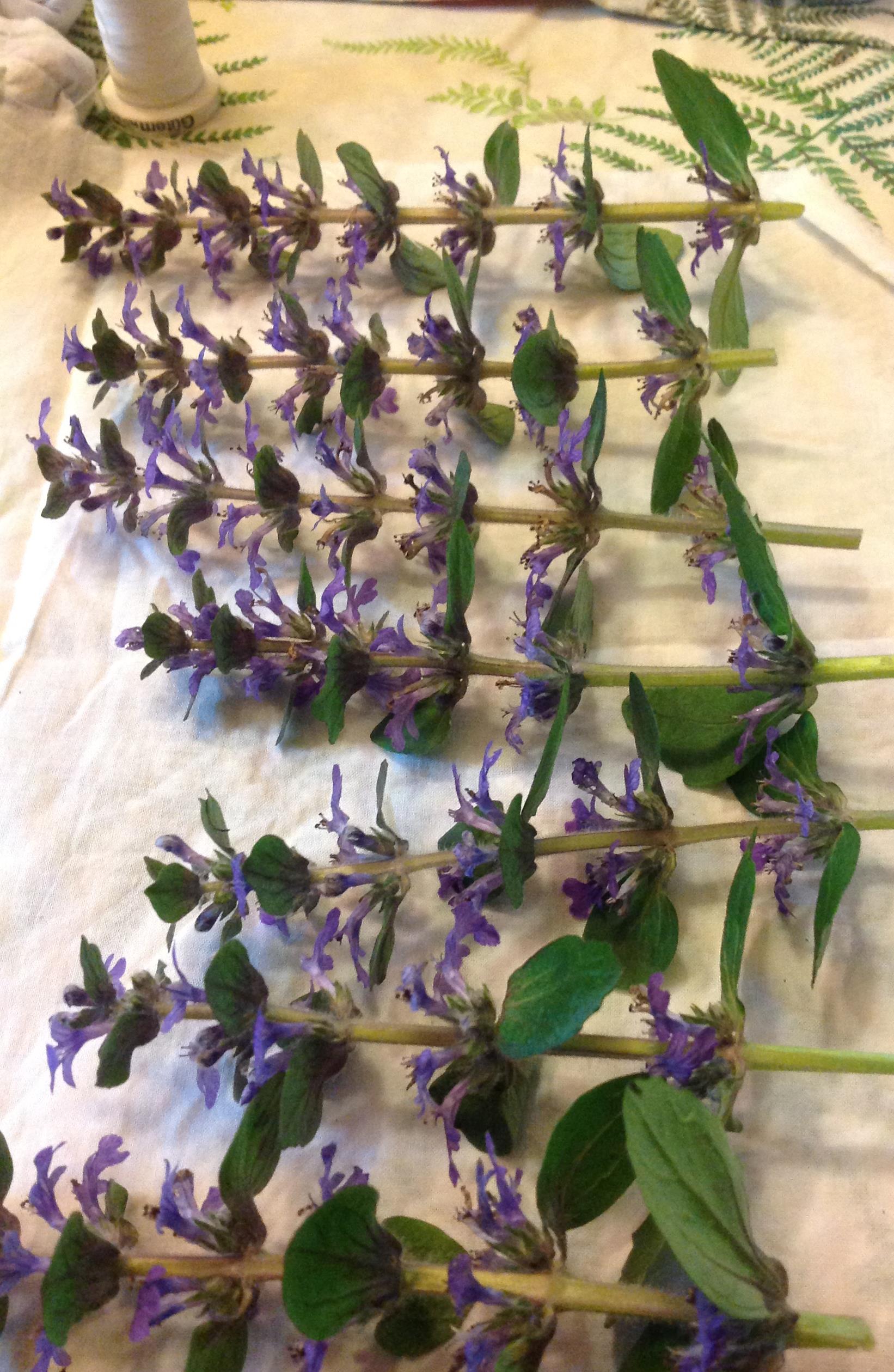
Bugleweed on cotton
~
Then I folded the cloth in half, enclosing the flowers like a sandwich …
~

flowers folded in cotton
~
and rolled the cloth up tightly …
~

rolling the bundle tightly
~
and tied it with cotton thread …
~

flower and cotton bundles
~
I put my bundles in a wire basket and steamed them for an hour …
~
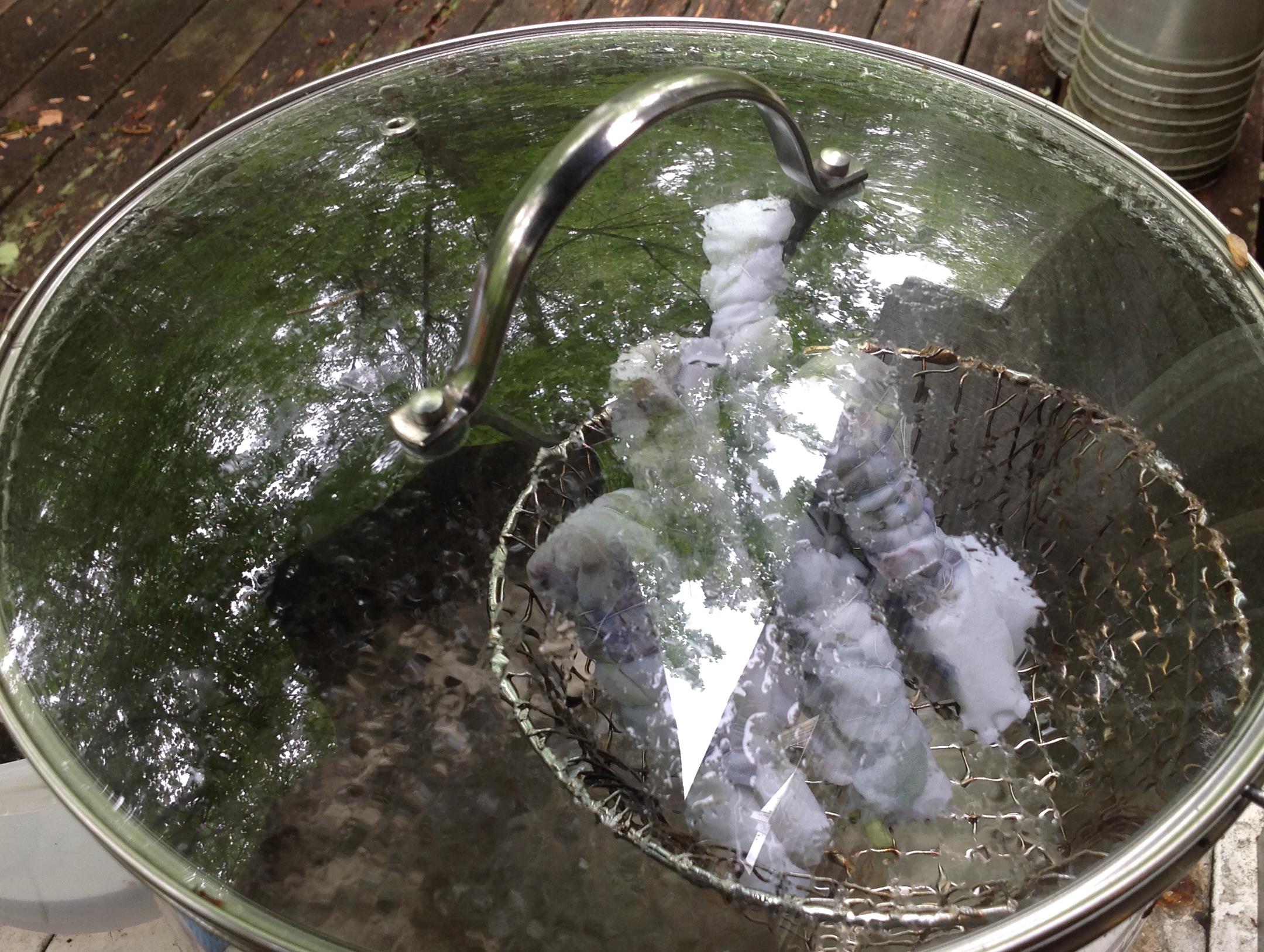
flower and cotton bundles steaming (as usual I have thrown in a bit of woods and sky)
~
After cooling, I opened the bundles, discarded the leaves and flowers, and rinsed the cloth. I was quite pleased with the results. After ironing, I have a pale array of colour. The Bugleweed left a definite lime green. The Lupin a more indefinite green and pale violet. The Forget-me-nots left a faint violet-grey.
~

pale colour
~
I did not get the flower and leaf impressions I expected, but I will keep trying. There are so many variables, steaming time and ‘unbundling’ time among them. I do hope to see that lovely lime green again!!!
~
Copyright 2014 Jane Tims
blue in the woodland
About a decade ago, we took a drive from Canterbury to McAdam on a gravel road. The memory I have carried with me for years is of a section of woodland absolutely blue with flowers. I often wondered what the flowers were and if I’d be able to find the spot again. This weekend we tried to find the place and the sea of blue in the woodland.
~

Highway 630 from Canterbury to McAdam in New Brunswick (map from Google Maps)
~
Canterbury, like many rural communities of New Brunswick, has faced a shrinking population over the years. Settled by Loyalists, it was a center for logging and railroad traffic and, in the late 1800s, had a population of over 1000. Today it has only about 340 residents. Nevertheless, it is a charming village and has a newly renovated school, housing all 12 grades.
~
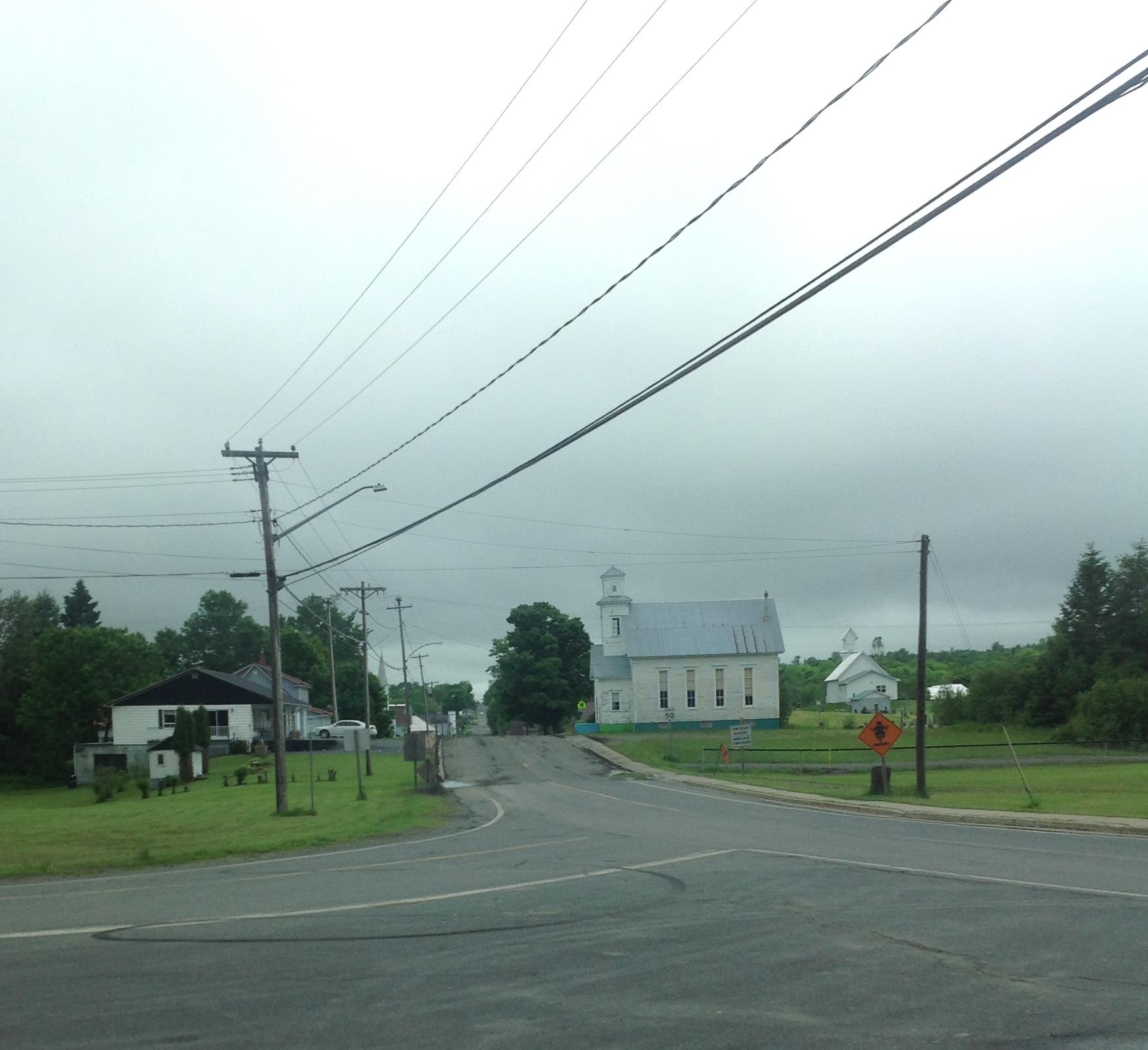
Village of Canterbury at the turn to Highway 630
~
The route from Canterbury toward the south is a numbered road. But Highway 630 is not paved and quite rutted in some sections. In one place we had to ask some ATVers if we were on the right road!
~

Highway 630
~
As we drove, I watched the woods for those blue flowers. Wildflowers were certainly a theme of our drive. By the road we saw Pink Lady’s Slipper (Cypripedium acaule), Bluebead Lily (Clintonia borealis), Bunchberry (Cornus canadensis) and Quaker Ladies (Houstonia caerulea).
~
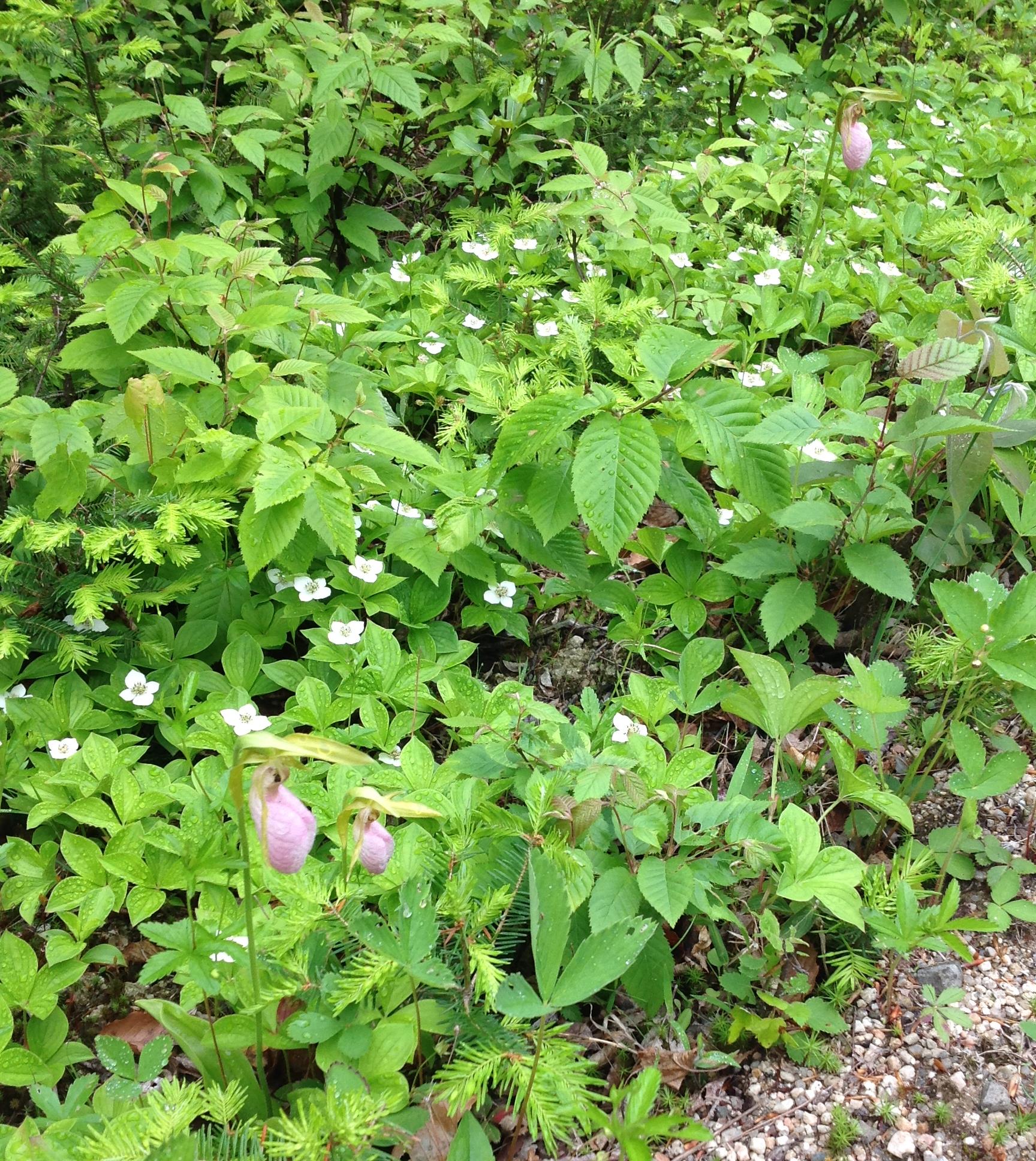
Lady’s Slipper and Bunchberry along the road
~
The map shows a community named Carroll’s Ridge just south of Canterbury. When we reached the location marked on the map, there were no homes or buildings, only a few old roads and cleared areas. But there in the woods was evidence people had once lived there. I found my sea of blue! Forget-me-nots, escaped from some forgotten garden to thrive in the near by woods.
~

Forget-me-nots escaped from an old garden
~
In my memory, the ‘blue’ of the flowers was more intense a decade ago. But we noticed many of the Forget-me-nots there now are a white variety. Who knows if flower colour or memory really changed during those ten years.
~

blue flowers in the woodland
~
Forget-me-nots in the woods
~
I picked a few of the Forget-me-nots, to try an ‘eco-print’ dyeing experiment in coming days. But what I really took away was another image of a sea of blue flowers in the woods.
~
Copyright 2014 Jane Tims
aromatic spring
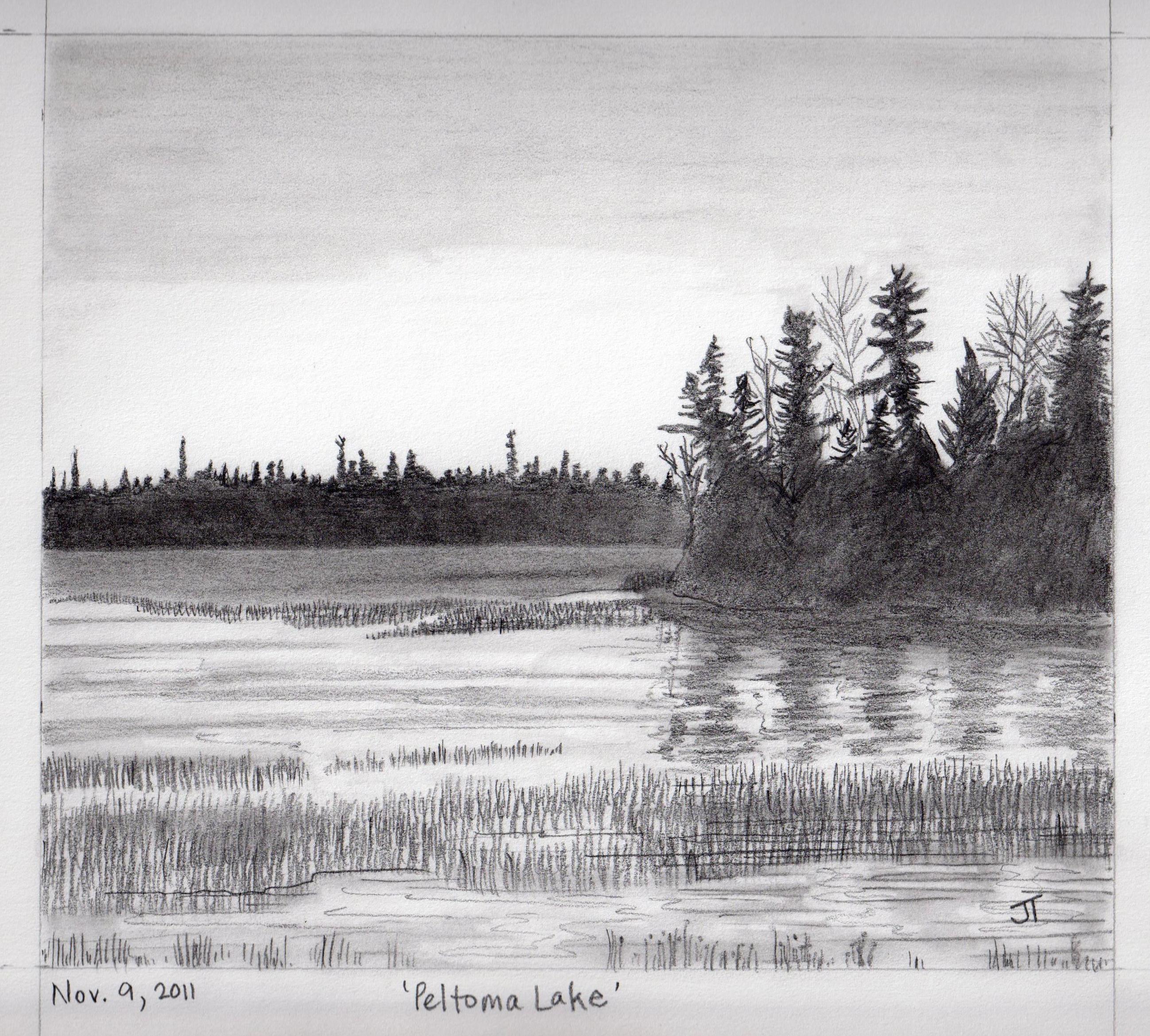
November 9, 2011 ‘Peltoma Lake’ Jane Tims
~
meadow aromatic
~
ozone lightning, late
waters cede, shoots
of cattail merge
end of day, end of June
fireflies, mosquito nights
~
lake-land meadow seeps
wetland meets nostril
marsh musk percolates
half sour, half sweet
methane ooze, decay
~
damp fiddleheads unfurl
bird beaks simmer
in duckweed soup
skin of salamander, frog
steeplebush, meadowsweet
~
angels crave human years, allow
their pores release, scent imitates
reek of sweat, of work
tears mingle with perfume
aftershave and powder
~
~
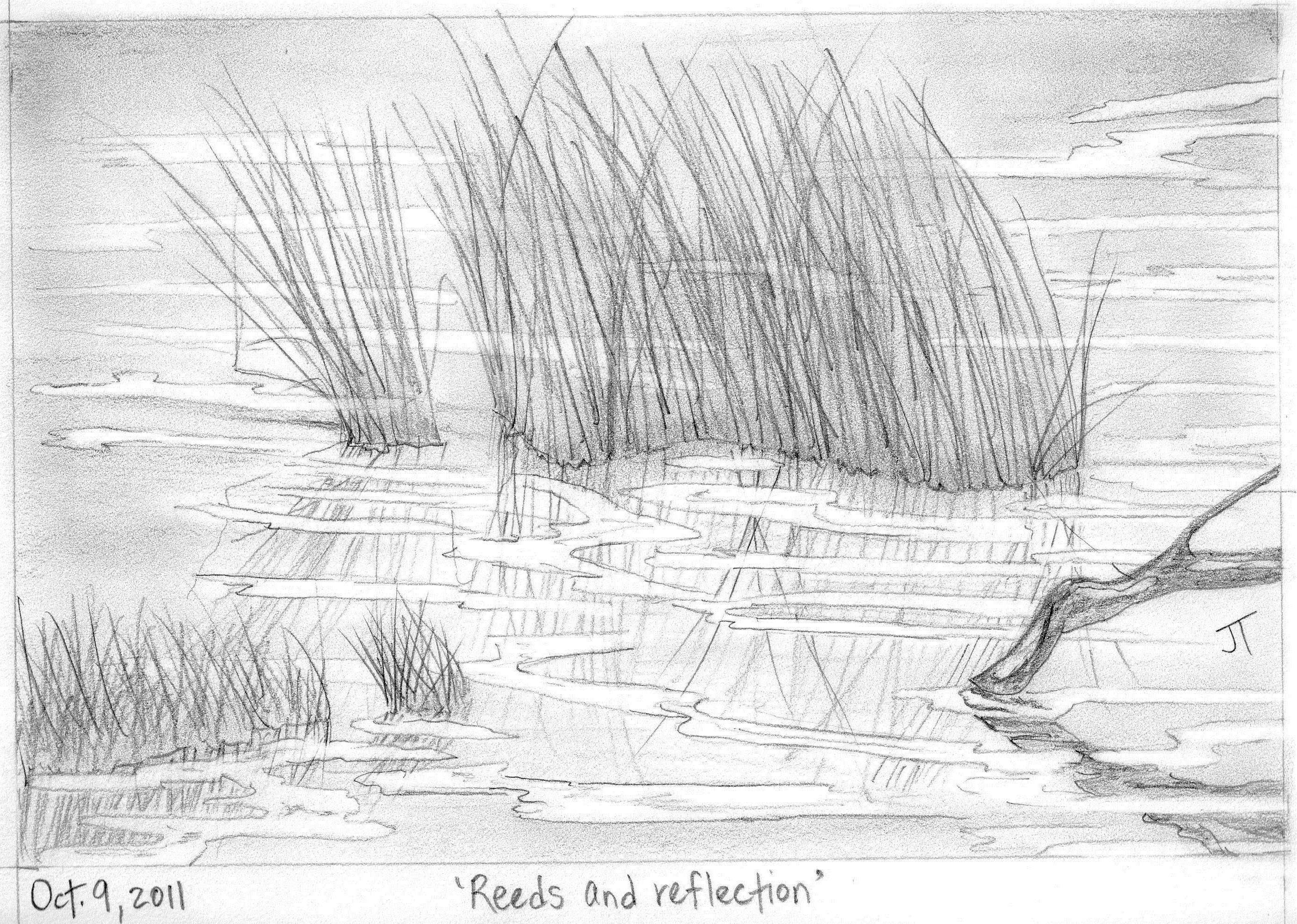
Oct. 9, 2011 ‘Reeds and reflection’ Jane Tims
~
Copyright 2014 Jane Tims
comforting Comfrey brown
As I try using various plants as a source of dye, I am realising how many shades of brown there are !!!
~
Over the weekend, I did a dye vat of Comfrey. Comfrey (Symphytum officinale) is a flowering plant often found in older gardens. It is a useful plant for gardeners … as a fertilizer, it contributes impressive amounts of nitrogen and potassium. As a compost component, it adds heat and moisture, and helps to speed up the composting process. In the past, Comfrey was recommended as a tea and a medicinal. However, the plant contains alkaloids. Taken internally, these can cause severe damage to the liver and, in Canada, the sale of products containing Comfrey is prohibited.
~
Comfrey grows in large clumps of linear leaves, up to a meter tall. Its stately foliage provides a great backdrop for smaller plants. Later in the season, it will produce curved clusters of bluish-purple flowers.
~
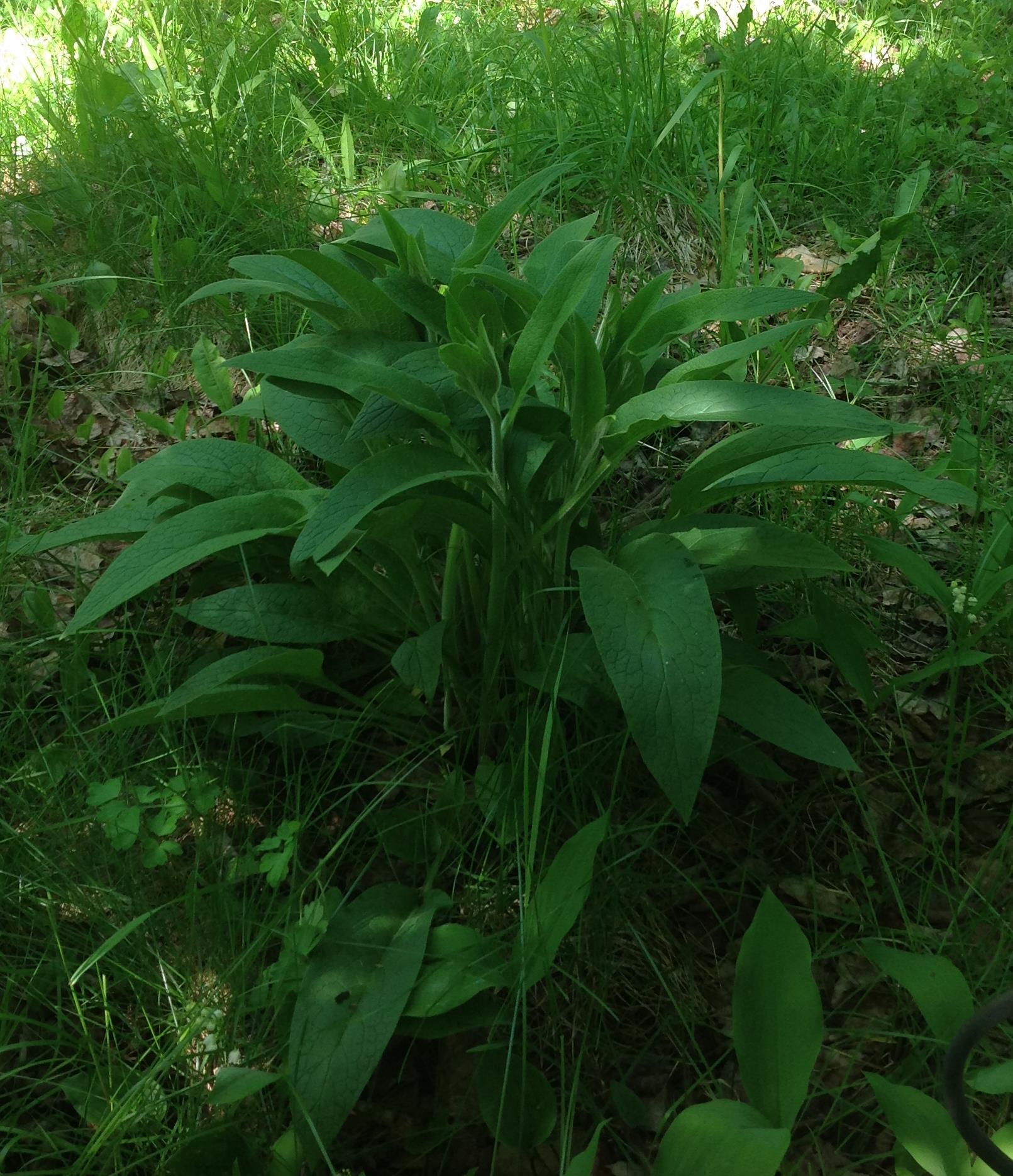
Comfrey in my garden
~
The underside of each Comfrey leaf is a maze of raised veins …
~
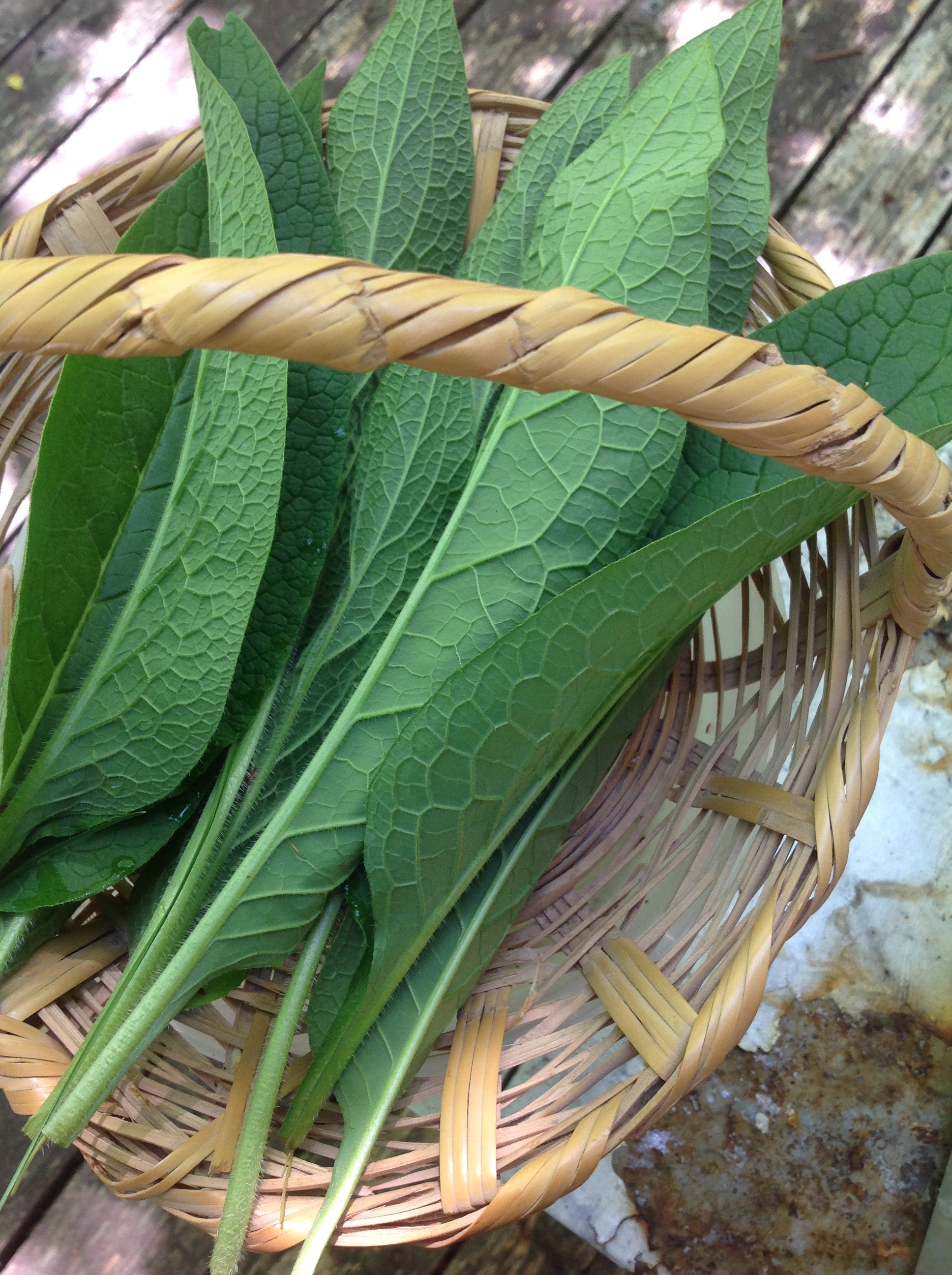
leaves of Comfrey, showing the veins on the underside of each leaf
~
To make the dye, I added the leaves, coarsely chopped, to 6 liters of water. I couldn’t resist throwing in my rusty square nail, to add a touch of iron to the mix …
~

Comfrey leaves in water, cut up and ready for the boil
~
After boiling for an hour, I had a pale apricot-coloured liquid …
~

pale apricot colour of the Comfrey dye
~
I strained and discarded the leaves (in my compost of course) and allowed the liquid to cool. Then I added some of my wool roving, pre-treated with alum, and simmered the wool for about an hour.
~
The result was yet another shade of brown, so similar, yet so different from the browns I obtained from Alder, Old Man’s Beard lichen and Tansy …
~

various dyes on wool roving (left to right): Alder bark, Old Man’s Beard lichen, Comfrey, Tansy and a glimpse of Beet
~
The Comfrey brown is a brown of the forest, without the orange or yellow undertones of the other browns I have made. This is the brown of the wild rabbit I saw in our driveway last week. It is the buff brown of the heads of Pine Siskins visiting our bird feeders in winter. This brown reminds me of soft mitten wool and caterpillar cocoons. From Comfrey comes a very comforting brown.
~
Although I could use my wool roving ‘as is’ in my weaving, I have decided to spin the wool. First, of course, I have to learn to spin. A maple drop spindle should be waiting in my mailbox later in the week. So many projects … good thing the days are getting longer !!!
~
Copyright 2014 Jane Tims
Juno beach, 70 years later
On June 6, 1944, seventy years ago, my Dad was one of the men who landed on the beaches of Normandy.
~
Dad was a member of the North Shore (New Brunswick) Regiment of the Third Canadian Division, Company ‘D’. He entered active service in 1940 and joined the New Brunswick Regiment in 1943.
~
Will R. Bird wrote a comprehensive history of the North Shore Regiment (Brunswick Press, 1963). In the book is a photo taken in February of 1945. My Dad believed the soldier in the foreground was him. The soldier certainly has my father’s stance, but the shovel on his back was what convinced my Dad. Most of the shovels issued had a ‘T’-shaped handle. My Dad’s shovel had an unusual triangular handle, like the one in the photo. Dad certainly considered the shovel his friend since digging trenches was their main protection under fire.
~

Canadian troops in 1945 (photo from Will R. Bird, North Shore (New Brunswick) Regiment, 1963, page 322)
~
I have never been to France. But with Street View, in Google Earth, I can see the place where Dad came ashore. Will R. Bird’s book, North Shore (New Brunswick) Regiment, includes a copy of an aerial map showing the beach where the North Shore Regiment landed – the NAN 7 Beach at St-Aubin-sur-Mer in northern France. ‘D’ Company landed on the part of the beach indicated by the arrow to the left.
~

aerial map showing the beach where the North Shore Regiment landed on June 6, 1944 (Will R. Bird, South Shore (New Brunswick) Regiment, 1963, page 316)
~
The Google map shows the same area in July, 2013 …
~
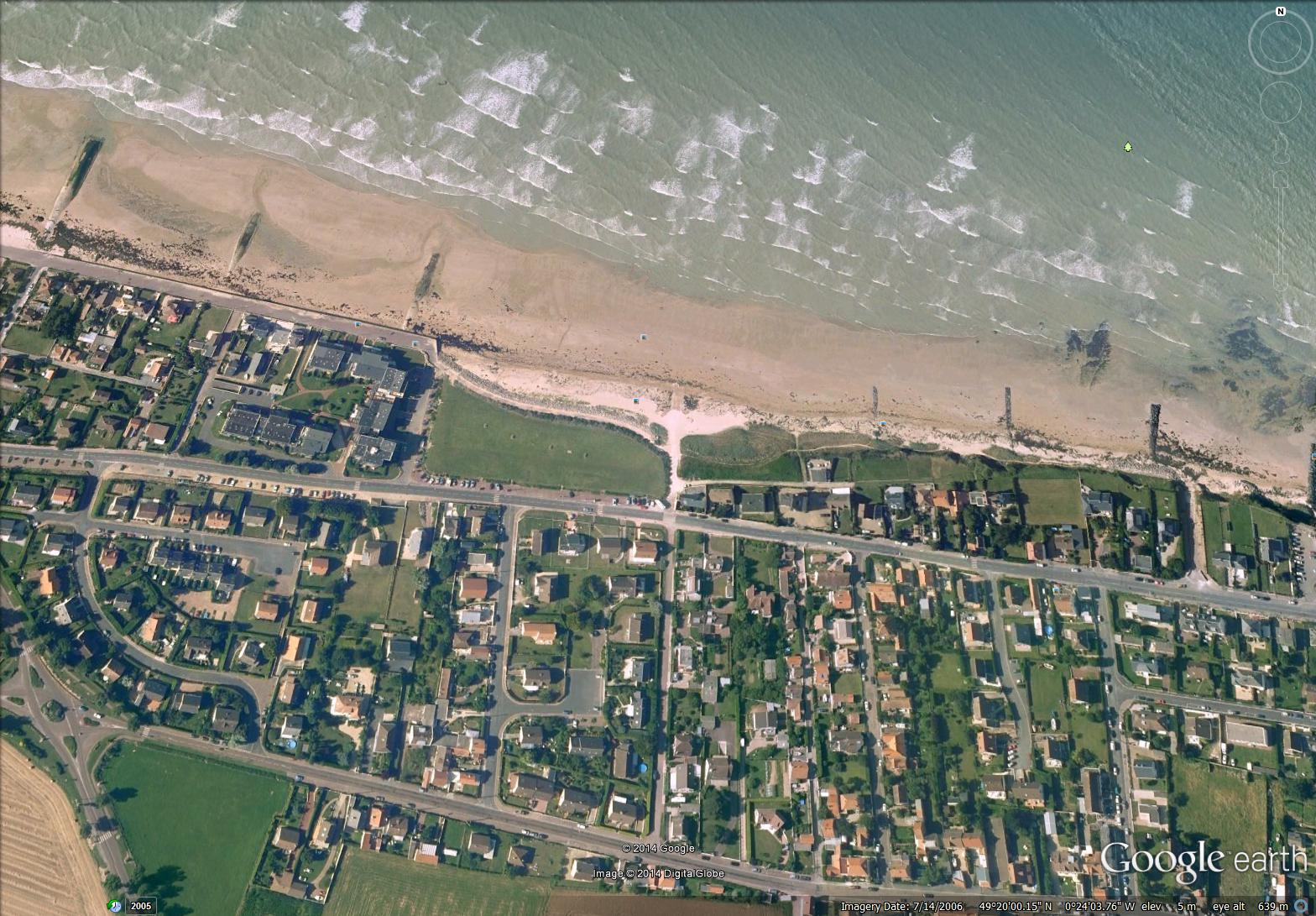
aerial view of beach at St-Aubin-Sur-Mer (map from Google Earth)
~
A view looking out to sea …
~
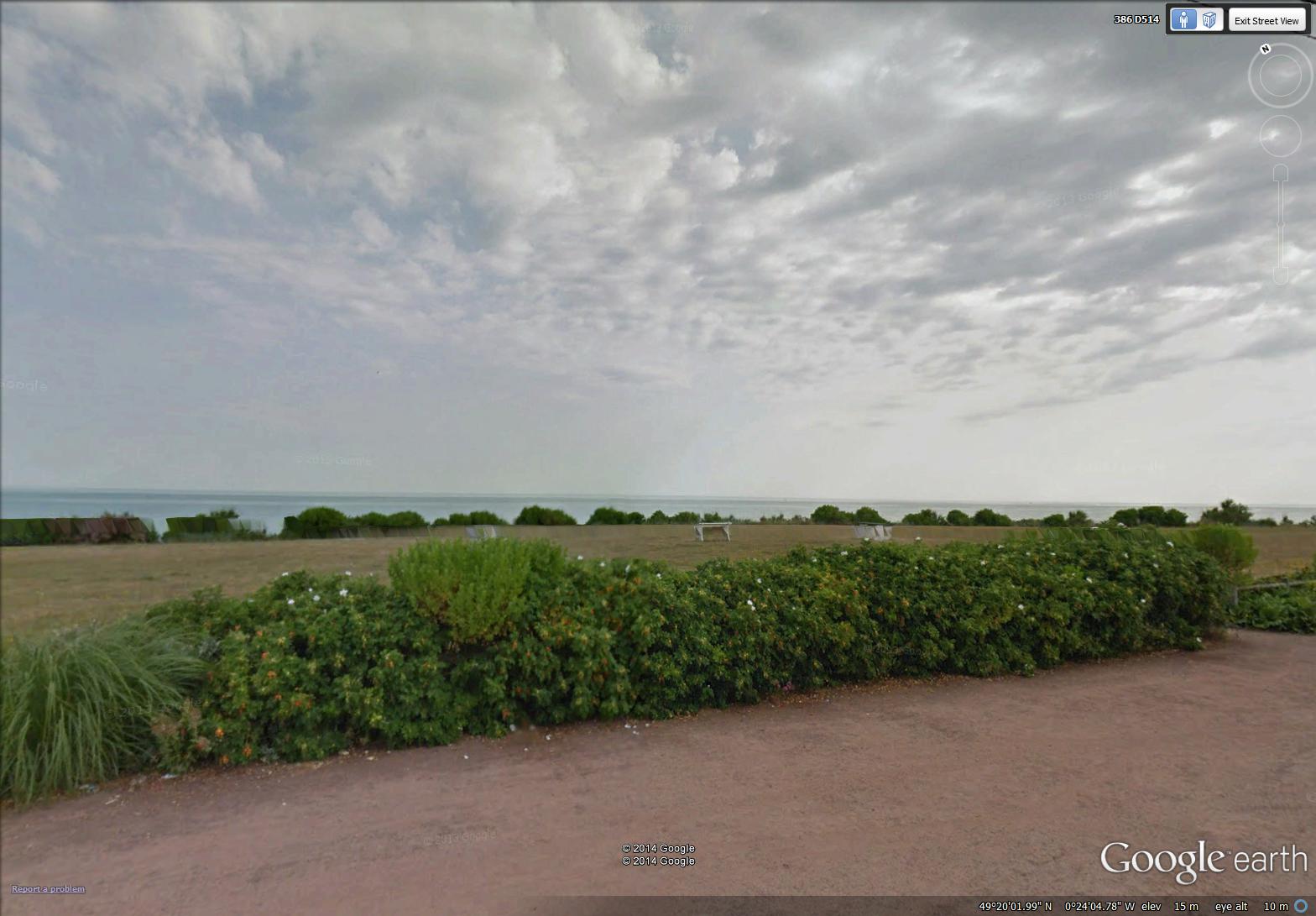
looking out to sea (image from Street View)
~
And a sign commemorating the landing of the Canadian troops …
~
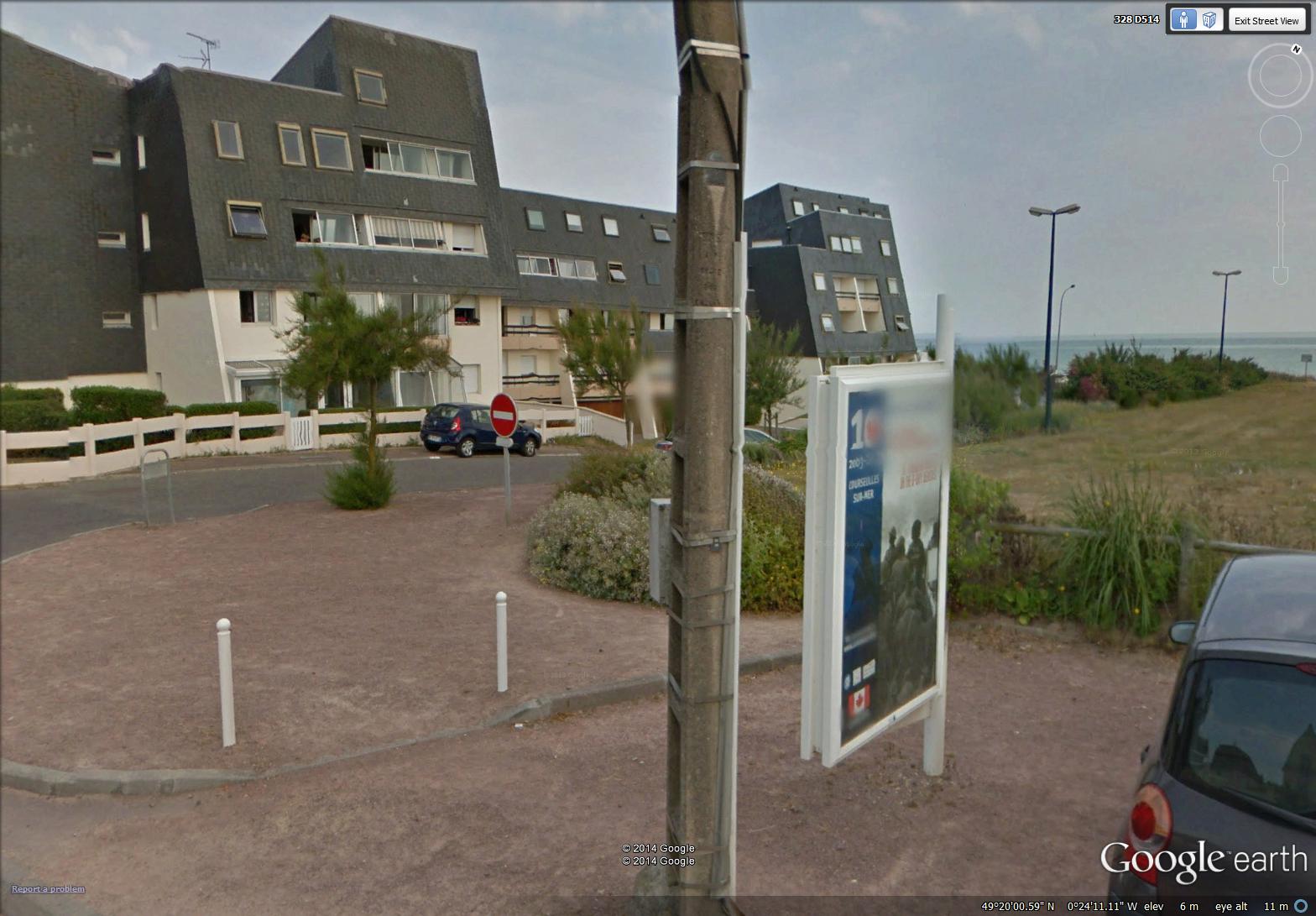
view of the sign at NAN 7 Beach (image from Street View)
~
We know the casualties of the Normandy invasion were staggering. In the first hour after the landing, the Canadians suffered casualties of over 50%. When the war was over, my Dad was one of only nine ‘D’ Company men who had landed at D-Day and made it through to the liberation of Holland.
~

Canadian troops landing at NAN Beach (photo from Wikipedia, public domain)
~
Copyright 2014 Jane Tims
writing weekend
This weekend, I will be attending WordSpring. WordSpring is the annual spring meeting and workshop of the New Brunswick Writers’ Federation. I will be reading some of the poetry from my ‘harvesting colour’ manuscript and I will get another eye on part of my novel at a Blue Pencil Café.
~
Preparations for the weekend made me think of a poem I wrote after the workshop in Saint Andrews a few years ago …
~
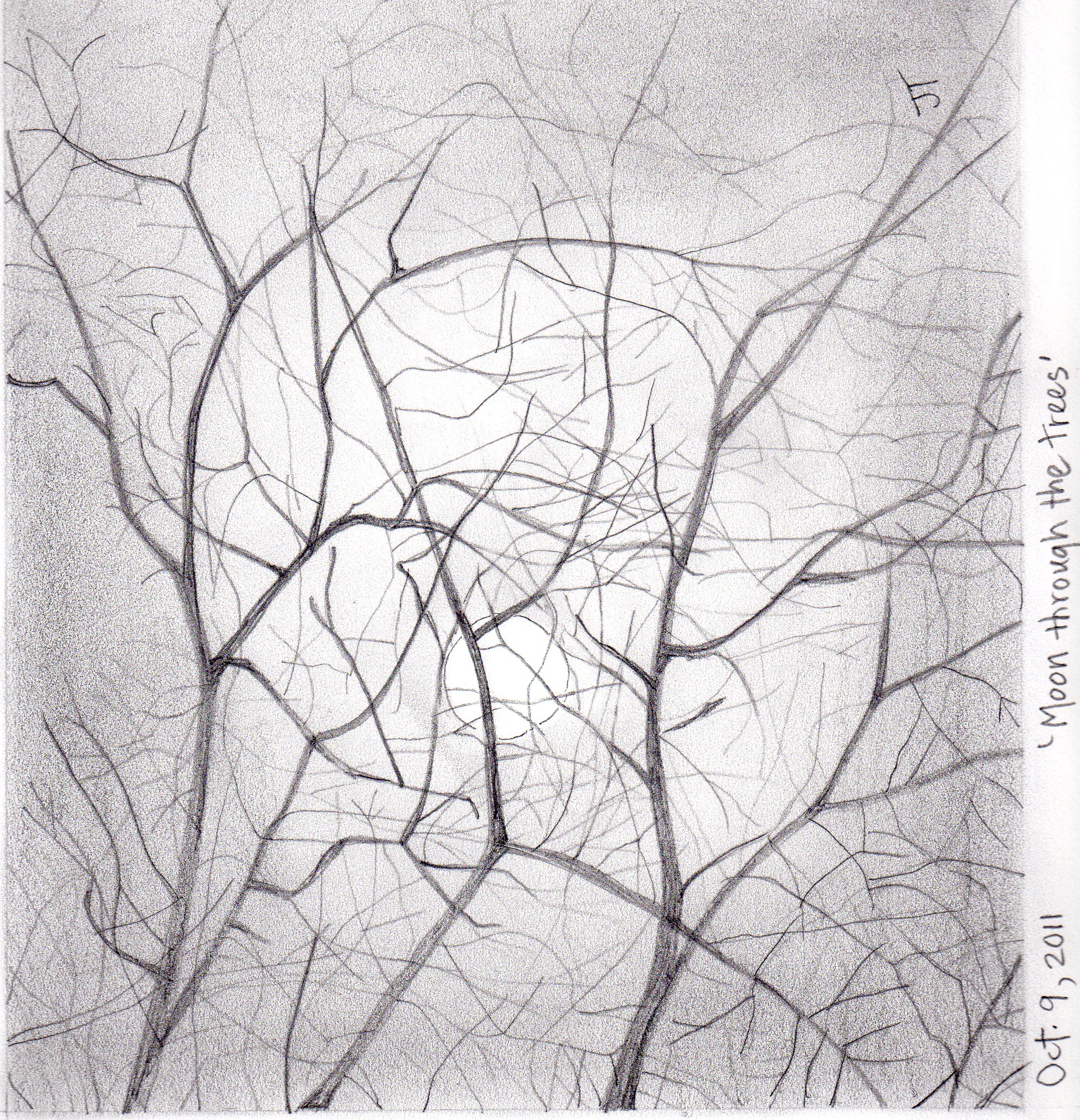
October 9, 2011 ‘Moon through the trees’ Jane Tims
encounters
~
on a windy night
in Saint Andrews, a toad
hop-toddies across the road,
bewildered
~
and on Prince of Wales, a deer
pauses on the sidewalk, stares
up the hill, and I hesitate
before driving on
~
in the Algonquin, a light
switches on, in the room I know is mine
and a couple huddles on the open porch,
and leaves, mottled, skid
along the street
~
~
Copyright 2014 Jane Tims
Where they came from …
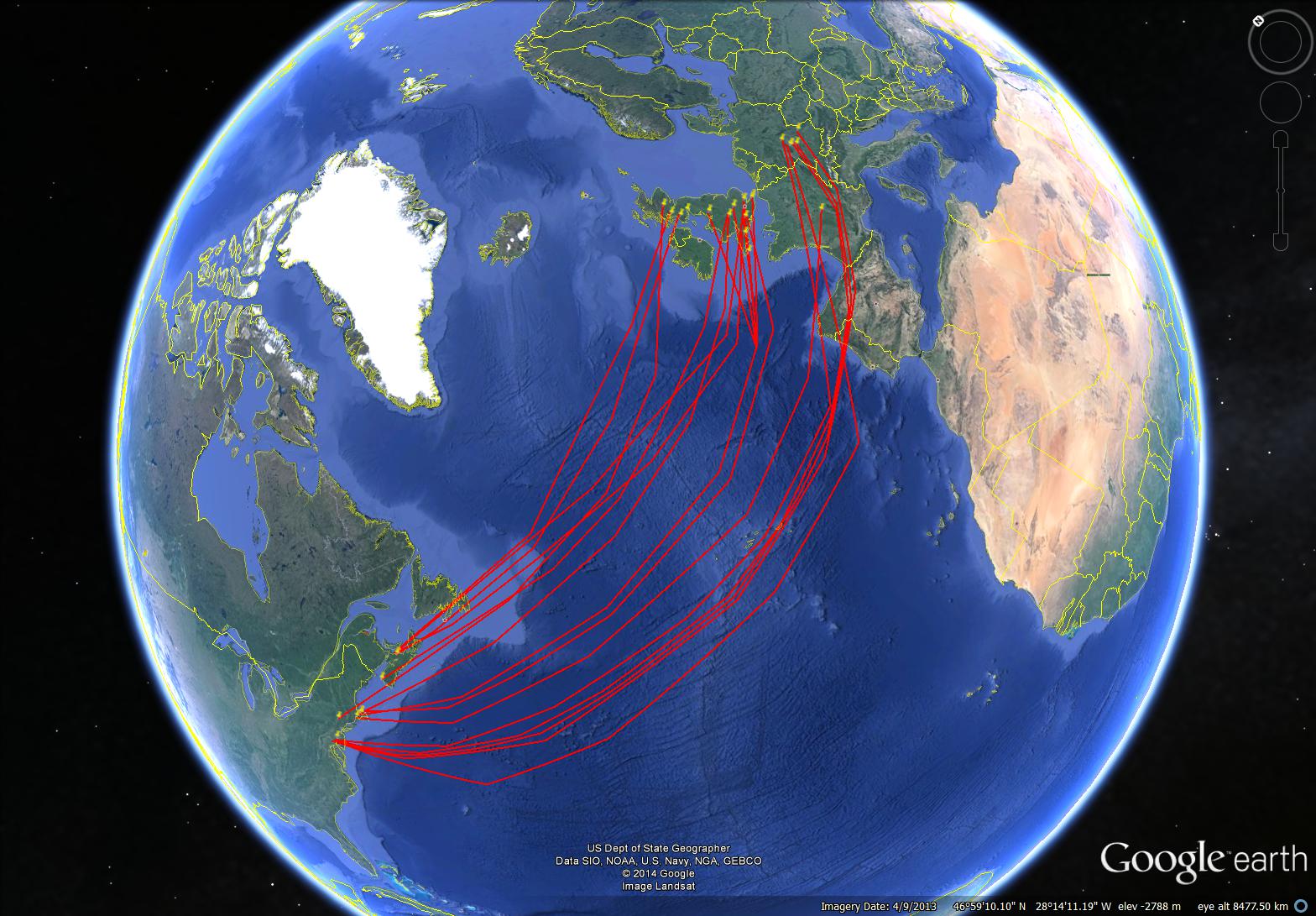
With a little more research, I have some more information on where some of my ancestors came from before they arrived in the United States and Canada.
- John Winslow (b. 1597) Droitwich, Worcestershire, England (Fortune 1620, probably 1821)
- Mary Chilton (b. 1607) St. Peter, Sandwich, Kent, England (Mayflower 1620)
- Patrick McMullen (b. 1704) Scotland
- Peter LeValley (b. 1675) France
- William Spavold (b. 1810) England (Trafalgar 1817)
- Eliza Greenfield (b. 1790) England (Trafalgar 1817)
- Stephen Hopkins (b. 1581) Upper Clatford, Hampshire, England (Mayflower 1620)
- Elizabeth Fisher (b. unknown) England (Mayflower 1620)
- Francis Cook (b. 1583) Gides Hall, Essex, England (Mayflower 1620)
- Hester Mahieu (b. 1585) Canterbury, Kent, England (Anne 1623)
- William Latham (b. 1608) Chorley, Lancashire, England (Mayflower 1620)
- Conrad Hawk (Sr.) (b. 1744) Germany
- Conrad Kresge (b. 1730) Amberg-Sulzbach, Bayern, Germany
- Johan Ulrick Kohl (b. 1702) Pallatine, Germany
- Solmey Cooll (b. 1702) Germany
- Johann Nicholas Borger (b. 1720) Wertheim, Main-Tauber-Kreis, Baden-Württemberg, Germany (1753)
- Ottila Shafer (b. 1725) Nassig, Baden-Württemberg, Germany
- Michael Fisher (b. 1720) Germany
- Maria Elizabeth Storm (b 1725) Germany
- John Clark (b. 1793) Straiton, Ayrshire, Scotland
- Jane Cooper (b. 1799) Greenock, Scotland
- Margaret Miller (b. 1798) Hoddam, Dumfriesshire, Scotland
- William Aitcheson (b. 1794) Annan, Dumfriesshire, Scotland (1832)
- — Wayborne (b. 1836) Rockbeare, Devon, England
- John Johnson (b. 1780) England
~
I plotted these on a map of the world. Each red line represents the voyage of one or more of my ancestors across the Atlantic from the place of their birth in England, Scotland, Germany or France.
~
~
Copyright 2014 Jane Tims
harvesting colour … lily of the valley
Now that green is the dominant colour outside my door, I am anxious to try dyeing with every plant I see. I was particularly anxious to see if I could coax colour from the Lily of the Valley crowding around my walkway.
~

leaves of Lily of the Valley and Wild Lily of the Valley
~
The green leaves in the photo above are from two different plants, the smaller single leaves of Wild Lily of the Valley (Maianthemum canadense) and the larger furled Lily of the Valley (Convallaria majalis). The larger Lily of the Valley produces a dye with seasonal qualities – dark green in spring and yellow in fall.
~

‘pips’ of Lily of the Valley
~
The rolled emerging leaves of the Lily of the Valley are called ‘pips’. The pips squeak as they are collected. I think they want to be left alone!
~

Lily of the Valley leaves in water
~
I cut the leaves into one inch pieces and left them for an hour to simmer in water. I added some iron to the mix, to serve as a colour modifier – a square-headed nail, a railroad spike and a rusty horseshoe. The water was pale green at first, but as it began to cool, it became a dark, almost black, green …
~

dark dye from Lily of the Valley
~
Once the water cooled, I strained the liquid and added the wool. After bringing it to a boil, I let it cool gradually – wool hates sudden changes in temperature …
~

wool roving, treated with alum, in the dark Lily of the Valley dye
~
The resulting colour was dark grey. I also did a vat without the addition of iron and the result was a slightly paler grey.
~
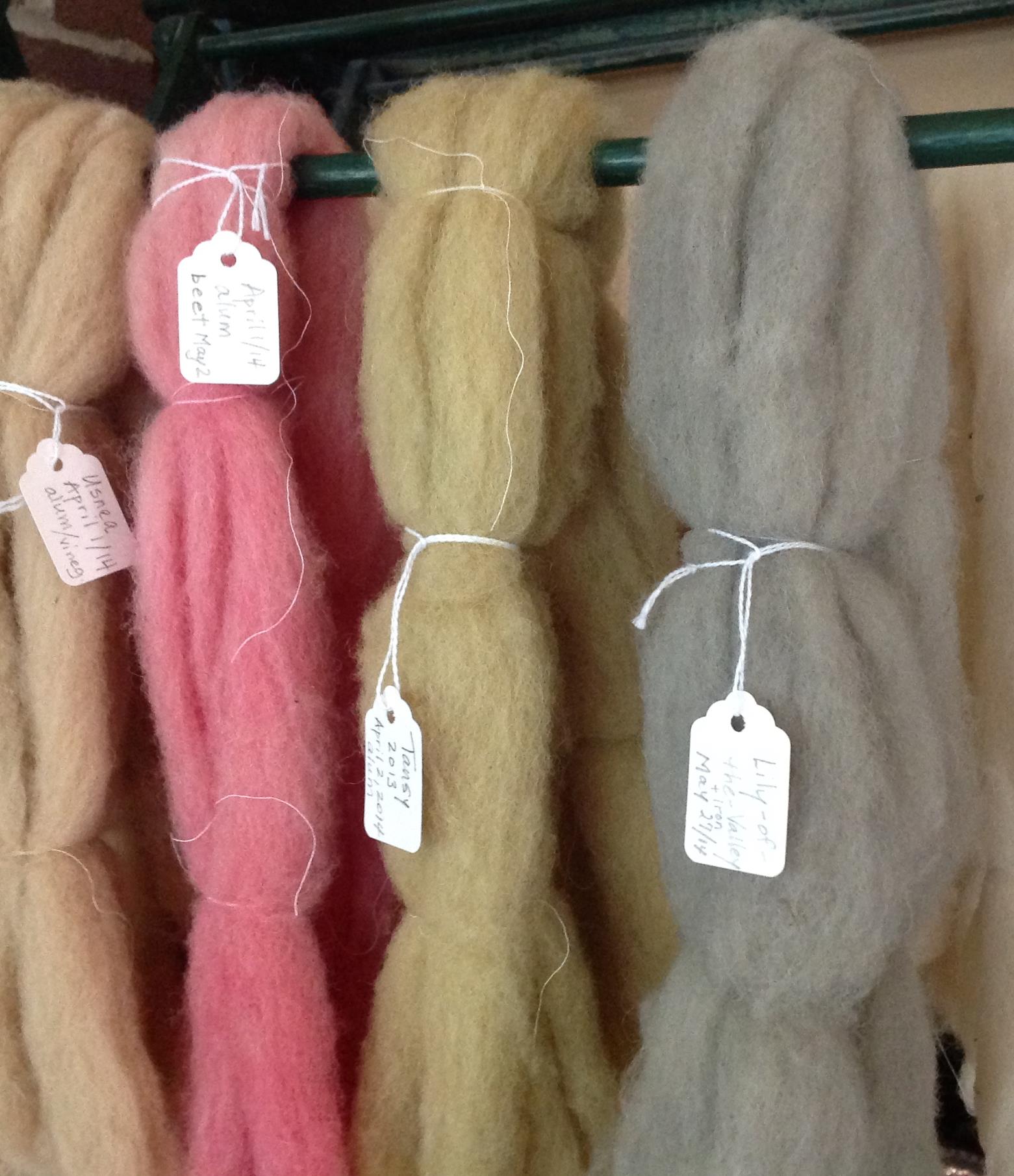
dark grey of wool roving dyed with Lily of the Valley
~
This is my last dyeing experiment with Lily of the Valley. All the parts of the plant are poisonous with compounds known as glycosides. Ingested, these compounds have an effect on the heart and can cause fatal circulatory, gastrointestinal and respiratory problems. If you are a fan of the TV show Breaking Bad, you will know that Walt used Lily of the Valley in a scheme to kill one of his enemies.
~
Although I took precautions, doing the boiling outside and disposing of the liquid in the woods, far from our well or the stream, I was not comfortable working with such a poisonous plant. While the water was boiling, the smell was thick and noxious and my mouth had a metallic taste all day. I was jittery before I went to bed, convinced that breathing the vapours would be the end of me. I am fine today, but I don’t recommend using Lily of the Valley as a dye. The dark grey colour obtained is not worth the risk. And the lovely scent of the Lily of the Valley flowers is the plant’s first, best use.
~
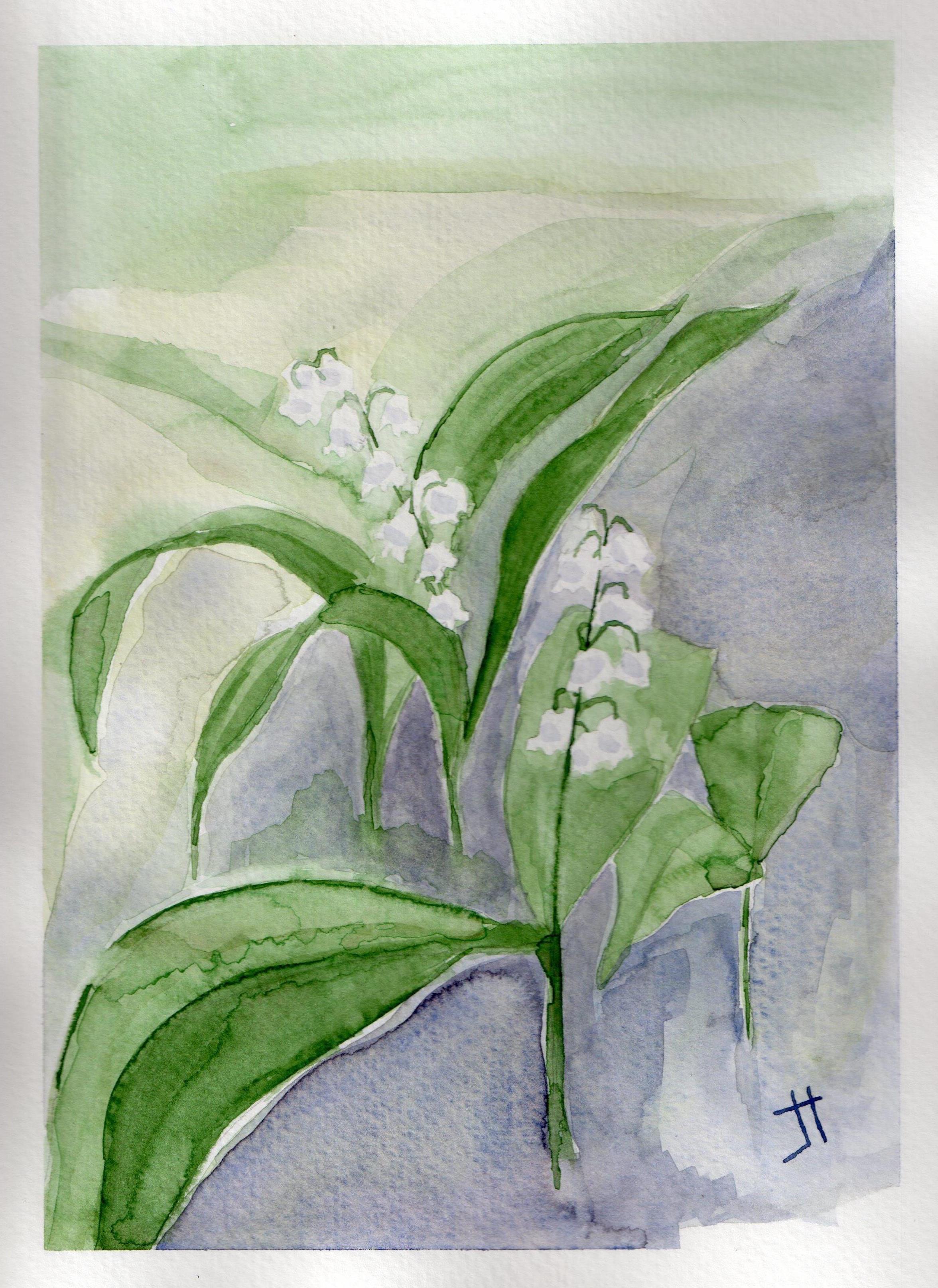
2013 ‘lily-of-the-valley’ Jane Tims
~
Copyright 2014 Jane Tims
ghost girl
In Fredericton, there is a relatively famous road, called Waterloo Row. It is famous for its beautiful old homes and is featured in the Canadian version of the game Monopoly. For me, the road represents a favorite part of my former morning commute.
~
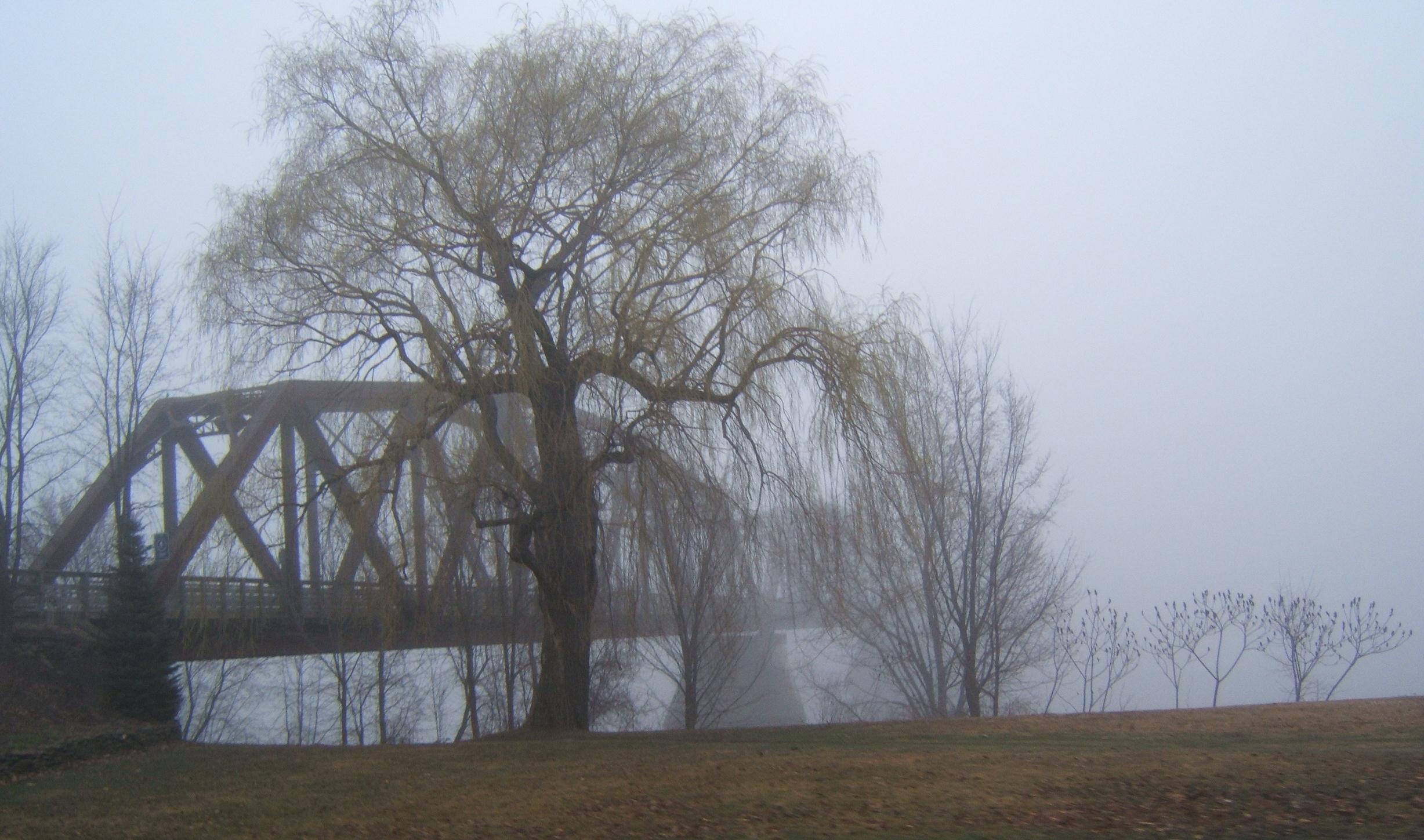
Especially in fog, Waterloo Row presents some lovely vignettes, including ghostly images of the St. John River, with the old bridge, now a footbridge, vanishing into the mist…
~
~
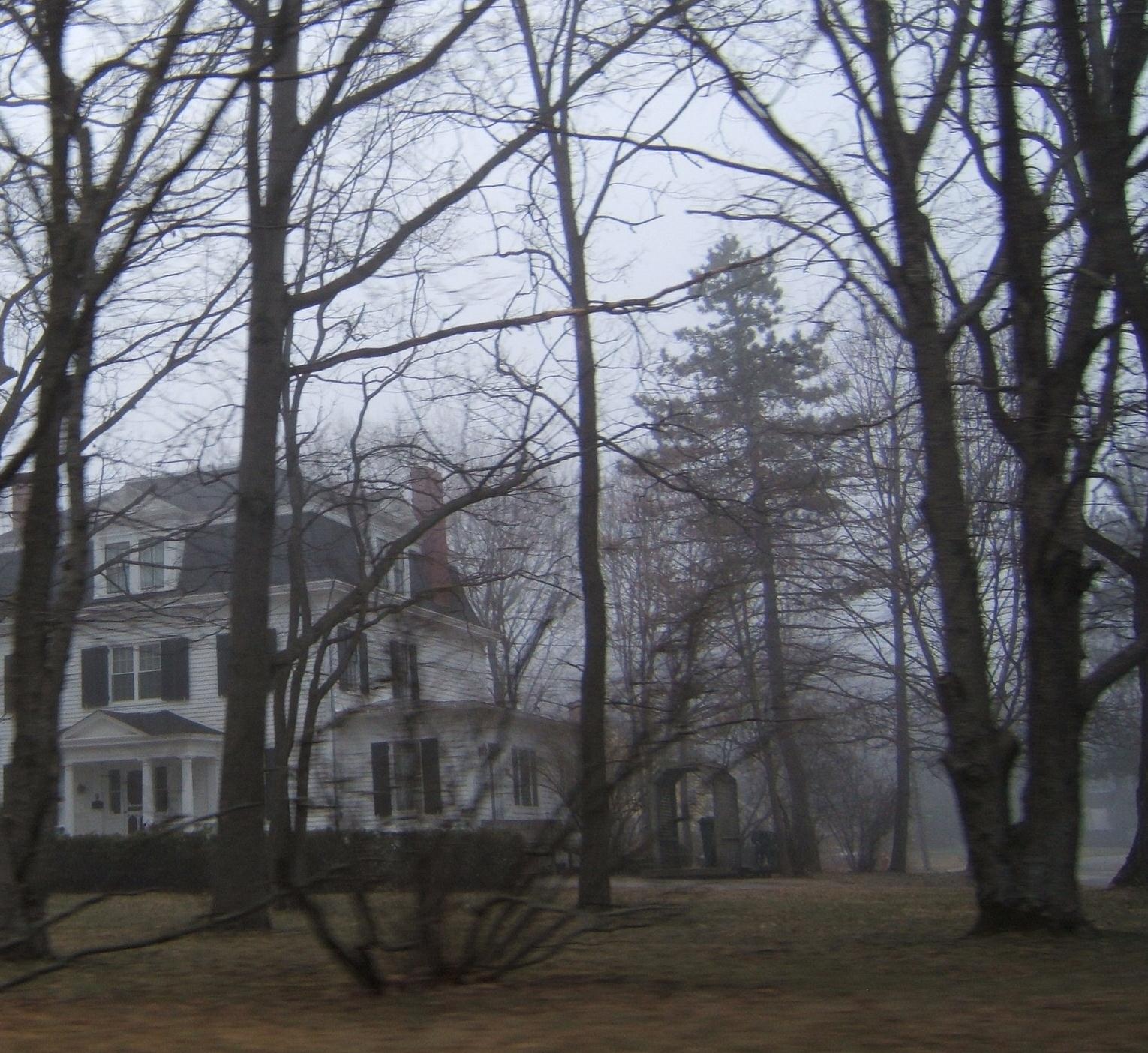
older homes, some of whom are reputed to be haunted…
~
~
and a bench along the river footpath, haunted by a young girl who sat there almost 34 years ago, considering her future…
~

~
I see her sitting there whenever I drive by. On a cool evening in May of 1980, she drove there on her bicycle and watched the river for an hour, thinking about what her life would be. In two months, she would marry, and her life would change in many ways. She thought about this and wondered.
~
If I could talk to her, I could answer almost all her questions. I could tell her about her marriage of (so far) 33 wonderful years. I could tell her all about her future husband and amazing son. I could tell her how relaxing it will be to be at home full-time after three decades of work. And I could tell her – the river could never be as beautiful as the sight of our small pond with its stone bench and violet-studded lawn on this day at the end of May, 34 years later.
~
Copyright 2013 Jane Tims




 nichepoetryandprose