One Lovely Blog
This will be a different kind of post!
I have been nominated for the ‘One Lovely Blog Award’.
Thanks very much to ‘sunontiepost’ at www.sunontiepost.wordpress.com for nominating me for this award! Sunontiepost, aka ‘choosing words to choose worlds’, writes direct, hard-hitting poetry about many things, but often about dealing with the complications of diabetes.

I would like to nominate the following very nicely presented blogs, by some very talented people, for this award. I hope you visit them and enjoy their posts as much as I do:
http://carolsteel5050.blogspot.com/
http://leafandtwig.wordpress.com/
http://robbyrobinsjourney.wordpress.com/
http://snowbirdpress.wordpress.com
~
~
Seven possibly unknown things about me:
- I am very messy but extremely well organized…is this even possible?
- My earliest memory is of my Mom teaching me ‘Twinkle, Twinkle, Little Star”
- One of my favorite possessions is a little carved wooden cat, given to me by my son.
- My favorite poets are Seamus Heaney, Robert Frost, and Sara Teasdale.
- My favorite color is green.. oh and purple…no, red…except for orange, my absolute favorite… and then there is blue…..
- The first movie I ever saw was ‘Tarzan’ with my Dad (Tarzan the Ape Man, 1959).
- My best friends are my husband, my sister and my son, as well as my two brothers, and all my sister- and brother-in-laws, not in any particular order. Also my nieces and nephews. Also all the friends who are not related to me. I have really got myself into trouble with this item #7.
The Rules of Acceptance:
- Thank the person/people who nominated you and link back to them in your post:
- Share seven possibly unknown things about yourself.
- Nominate fifteen or so bloggers you admire.
- Contact the chosen bloggers to let them know and link back to them
Thank you so much to all the blogs mentioned above for making my life more and more interesting. Jane
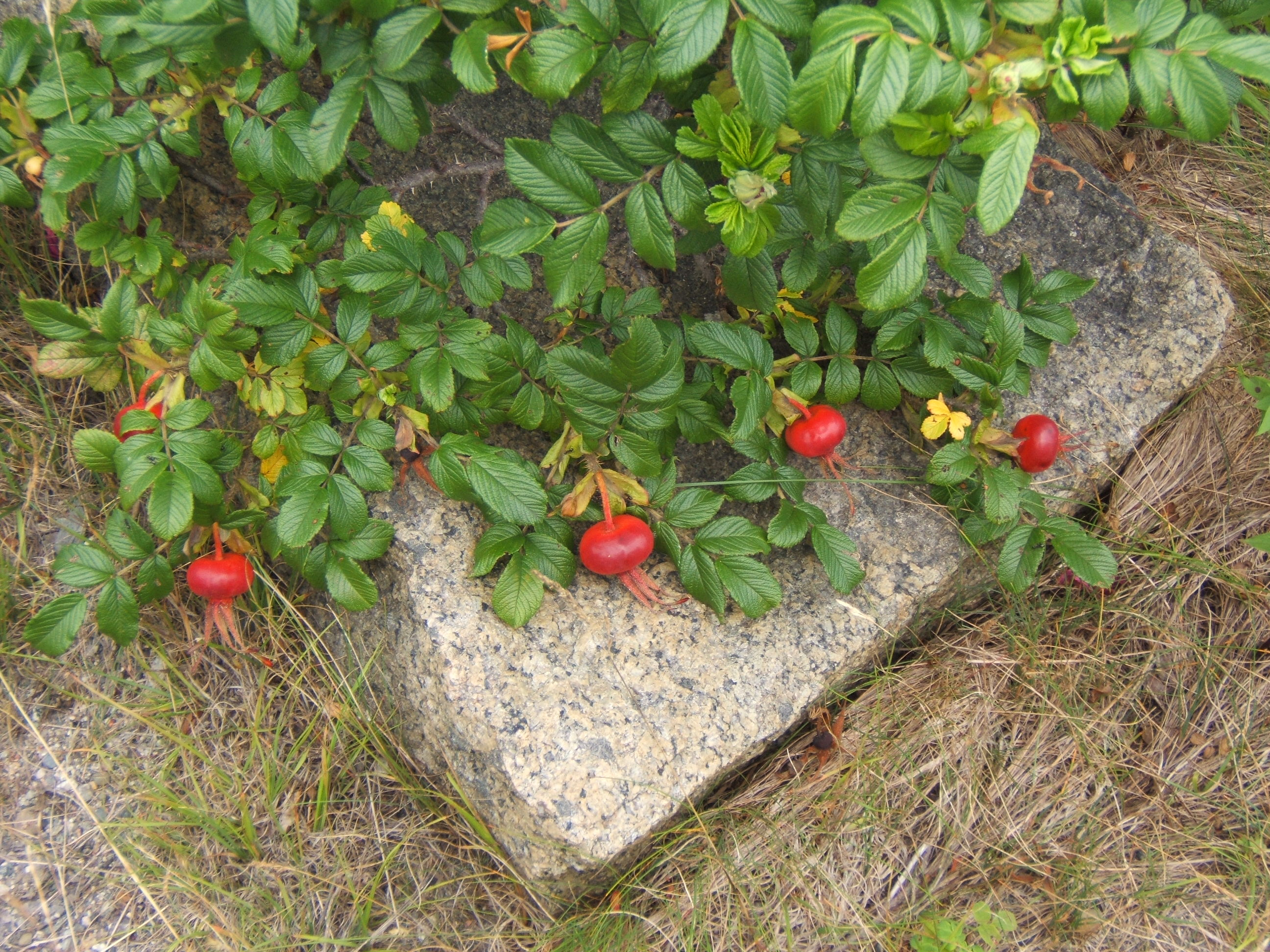
poisonous Lathyrus – when ‘wild’ plants are not edible
Yesterday, August 1, 2012, I posted a description of the Beach Pea (Lathyrus japonicus Willd.) and said the peas could be collected, boiled and eaten. This is the advice of the Peterson Field Guide to Edible Wild Plants (1977). My further reading, from more up to date sources, says you should not eat the seeds of Beach Pea or other species of wild pea. Many Lathyrus species contain a neurotoxin that can lead to a condition called lathyrism, a type of paralysis. Although there are other guides saying that Beach Pea is edible in small quantities, I have revised the post to remain on the safe side.
When we choose to include wild plants in our diets, it is very important to know for certain they will not be harmful. In my posts, I have talked about avoiding berries that may look pretty to eat, but contain toxins (for example the bright blue berries of Clintonia (see my post for May 23, 2012, ‘Bluebead Lily’ https://nichepoetryandprose.wordpress.com/2012/05/23/bluebead-lily-clintonia-borealis-ait-raf/ ) or the tomato-like berries of the Common Nightshade (see my post for July 16, 2012, ‘growing and gathering – barriers to eating wild foods’ https://nichepoetryandprose.wordpress.com/2012/07/16/growing-and-gathering-barriers-to-eating-wild-foods/ ).
I have also talked about cases in history of people who risk eating poisonous plants when hunger or famine strike. An example is the making of Missen Bread in Scandinavia, using a long complicated process designed to remove the burning, poisonous crystals contained in the roots of the Wild Calla (see my post for June 4, 2012, ‘keeping watch for dragons #6 – Water Dragon’ https://nichepoetryandprose.wordpress.com/2012/06/04/keeping-watch-for-dragons-6-water-dragon/ ). Poisonous species of Lathyrus (for example Lathyrus sativus, the Grass Pea), in the same genus as the Beach Pea, have been used throughout history for food when people are desperate, in times of drought, famine or poverty.
So, please, take the following steps before you ingest any wild plant:
1. check out as many sources as you can find, to discover the current wisdom and science about ingesting a plant
2. be certain of your identification – many plants look very similar to one-another and can be confused
3. think about your own sensitivities, since you may react to foods that do not bother other people.
4. when in doubt, take the route of caution and safety and do not eat
~
© Jane Tims 2012
Beach Pea (Lathyrus japonicus Willd.)
During our vacation to Nova Scotia, we stopped at several places along St. Margaret’s Bay. All along the beaches, tucked just out of reach of the highest tides, were crowds of Beach Pea. Beach Pea (Lathyrus japonicus Willd.) is a common plant of the coast, growing on sandy and gravelly shorelines and beaches.

This plant resembles the garden pea. It has vine-like, trailing, compound leaves, each composed of 6-8 leaflets. At the base of each leaf is a clasping stipule; at the leaf’s tip is a curling tendril. The flowers are showy, pink and blueish-purple, blooming from June to August.

The seeds of the Beach Pea are podded peas, from 1 to 2 inches long. They are greyish-green and ripen in August.
Some sources, including Peterson’s Field Guide to Edible Wild Plants (1977), say that Beach Peas can be collected, boiled and eaten when they are young and tender. Other sources, more up to date, say they are not edible because they contain a toxic substance that effects the nervous system. In my next post, I’ll talk a bit about being cautious before eating wild plants.
~
~
Beach Pea
Lathyrus japonicus Willd.
~
she feints on the rocks
sighs on the sand
beckons with the tendrils
of her feathery hand
~
ruffles her skirts
in the salted breeze
and squanders her love
on indifferent seas
~
~
© Jane Tims 2012
Warning: 1. never eat any plant if you are not absolutely certain of the identification; 2. never eat any plant if you have personal sensitivities, including allergies, to certain plants or their derivatives; 3. never eat any plant unless you have checked several sources to verify the edibility of the plant.a moment of beautiful – bug-shot shadows
the space: the surface of the power pole in front of our house
the beautiful: the pattern of shadow through bug-eaten leaves
The power pole in front of our house is habitat for a vine of Virginia Creeper (Parthenocissus quinquefolia (L.) Planch.). also known as Woodbine. I brought the vine home about thirty years ago, as a slip collected from a plant in the park beside the St. John River. Over the years, it has struggle against the winds, determined to blow it from its perch, the power company, unhappy with its use of the pole, and the lawn mower as it snips away at the horizontal tendrils.
This year, it has a new challenge to overcome. An insect has chewed the vine full of holes… probably not a severe problem for the plant.
On Friday, I caught the shadow pattern created by the bug-eaten leaves as the sun shone at the right angle for a moment… a new way to see the consequence of belonging to the food chain!

© Jane Tims 2012
limits of the tide #5 – Samphire (Salicornia europaea L.)
A beach-comber this time of year may easily over-look plants of Samphire (Salicornia europaea L.), also called Glasswort, Pigeon-foot, and Chicken-claws. Unless it is plentiful, it becomes lost ‘in the green’ of other sea-shore plants. The genus name, Salicornia, comes from the words sal meaning salt and cornu meaning horn. These plants consist of a branched, succulent stem, apparently without leaves or flowers. The leaves and tiny flowers are embedded in the stem.

Although Salicornia is typically a plant of coastal areas, like Sea-blite, it is also found far from the coast, in the vicinity of inland salt springs.
Samphire greens are salty, delicious as a salad ingredient, a pickle, or a pot-herb.
~
~
salt of the sea
Samphire ( Salicornia europaea L.)
~
Salicornia smoulders
on a silica shore,
flute and fire
~
Glass pipes,
mainstem and branches,
pickle green
~
Light glimpsed
through crystalline,
transparent walls
~
Seawater, rarefied,
decanted
to a Samphire phial
~
Flask of salt-sap,
brine on the tongue
Always wanting more
~
~
© Jane Tims 2012
Warning: 1. never eat any plant if you are not absolutely certain of the identification; 2. never eat any plant if you have personal sensitivities, including allergies, to certain plants or their derivatives; 3. never eat any plant unless you have checked several sources to verify the edibility of the plant.Silvery Cinquefoil (Potentilla argentea L.)
Last month, whenever I went to get the mail, I was waylaid by a little plant sprawling next to the row of boxes. He was so charming, once I forgot to get my mail because I was examining his flowers and leaves! There should be a sign saying ‘No Loitering’.
The plant was Silvery Cinquefoil (Potentilla argentea L.). As its name suggests, Silvery Cinquefoil is covered with fine silver hairs, giving it a downy appearance. It has fine-toothed, five-fingered leaves, palmately compound, and five-petalled yellow flowers.
I have always liked the various species of Potentilla, interesting for the variety of their leaves. You can see how diverse these shapes are in a page from Roland and Smth’s Flora of Nova Scotia. The reddish pressed leaf in the scanned book, for example, is Silverweed (Potentilla Anserina L.). My post for July 13, 2012, ‘coastal barren, coastal bog’, shows the Three-toothed Cinquefoil (Potentilla tridentata Ait.) https://nichepoetryandprose.wordpress.com/2012/07/13/coastal-barren-coastal-bog/ .
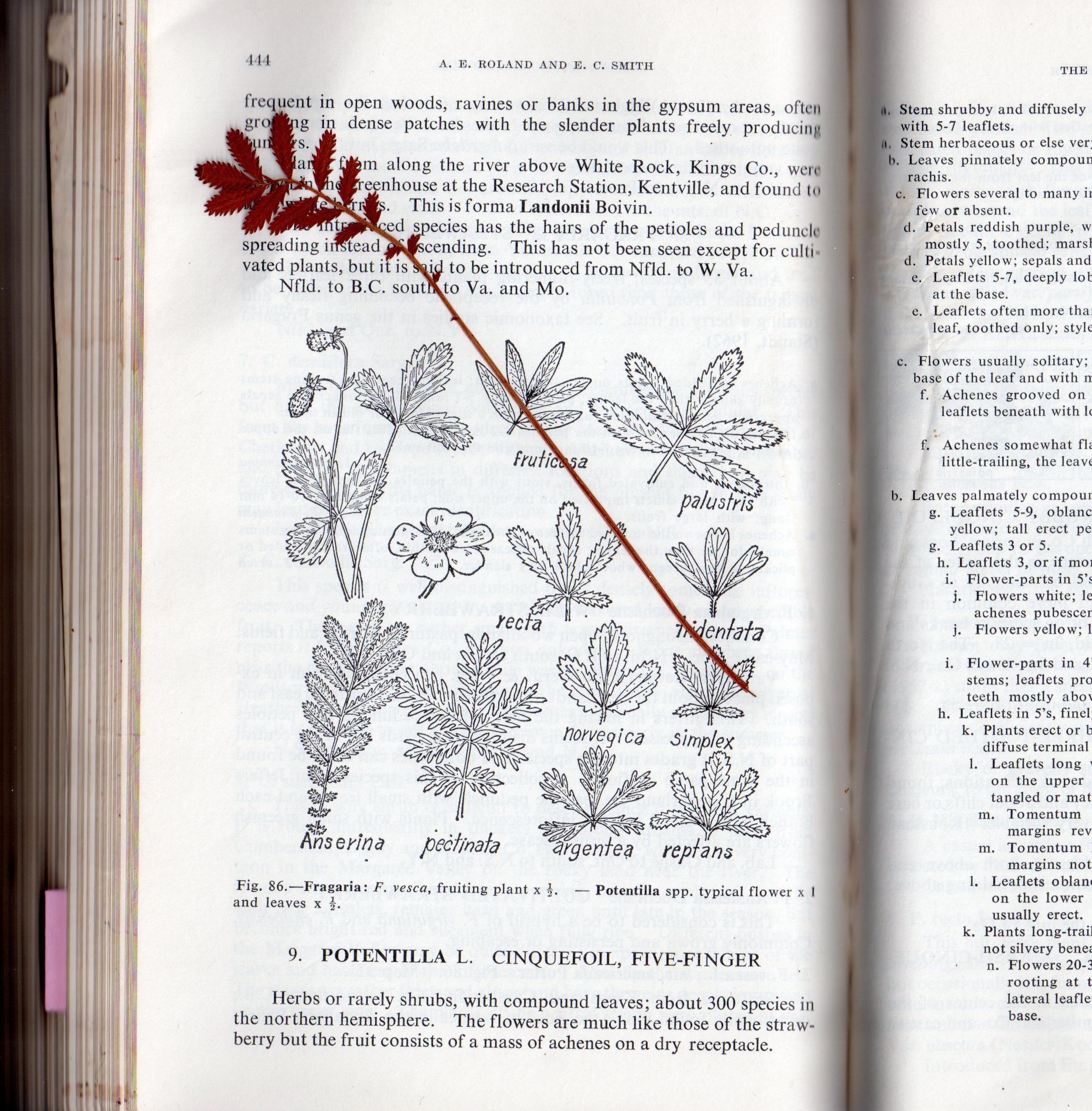
various leaf shapes of Potentilla in a page of The Flora of Nova Scotia (A.E. Roland and E.C. Smith, Nova Scotia Museum, Halifax, 1969) … the pressed leaf is from Potentilla Anserina or Silverweed, a coastal species of Potentilla.
~
~
Five-Finger
~
metal leaf and yellow,
he leans on the post-box
palms extended
potent, persuasive
a bit of a thug
want your mail?
pay me,
in silver
~
~
© Jane Tims 2012

Grove-sandwort (Arenaria lateriflora L.)
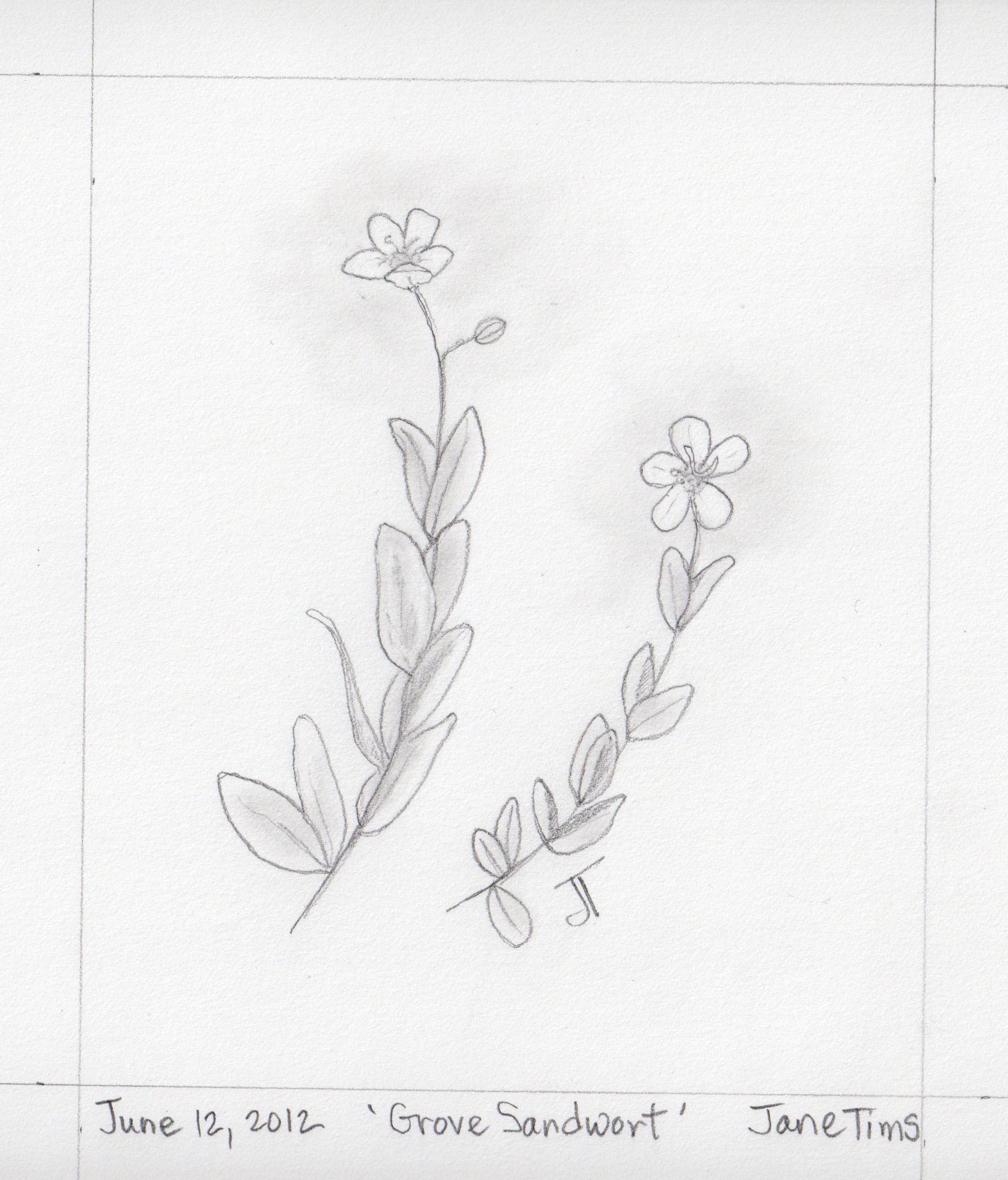
Our summer property is a constant source of learning for me. Every year I seem to find at least one new plant. This year the plant is Grove-sandwort (Arenaria lateriflora L.).
Grove-sandwort is a common plant, found in meadows, along shorelines and at the borders of woods. It is a low-growing herb, first noticeable in June. The starry, white flowers each have five petals and grow near the top and along the sides of a simple stem. The leaves are elongated, elliptical, and in pairs.

Arenaria comes from the Latin arena meaning ‘sand’, where many of the members of the genus grow. The specific name lateriflora means ‘flowering on the side’.
Have you learned to identify any new plants this summer?
~
~
new neighbor
Grove-sandwort (Arenaria lateriflora L.)
~
met her in the meadow
by the split-rail fence
strewing the grove
with flowers
~
her leaves paired,
clapping hands,
delighted only ‘to be’
a bystander in the arena
~
~
© Jane Tims 2012
growing and gathering – ethics
Some of the poems in my collection will address the ethics of eating wild plants as food.
As a botanist, I know how many wild plants are edible. However, I also know there are ethical considerations to eating wild plants.
Plants differ greatly in their availability. Eating Dandelion greens puts no pressure on the survival of the Dandelion. Weedy species in general respond well to being harvested, by putting out copious seeds, by filling in the spaces with new rhizomes and shoots, and by growing in many habitats and conditions.
However some plants are very specific in their requirements. They need certain conditions of light, moisture and soil to thrive and reproduce. On our own property, I have watched the Painted Trillium (Trillium undulatum Willd.) struggle to maintain its presence. The Painted Trillium needs acidic, rich soils and lots of shade. Remove a single tree, cut a new trail, or let the Balsam Fir overtake the understory, and the place where a few Trilliums grew in previous years is suddenly vacant. The young leaves of the Painted Trillium can be used as a pot herb, but should I pick them to add to my knowledge about eating local foods?
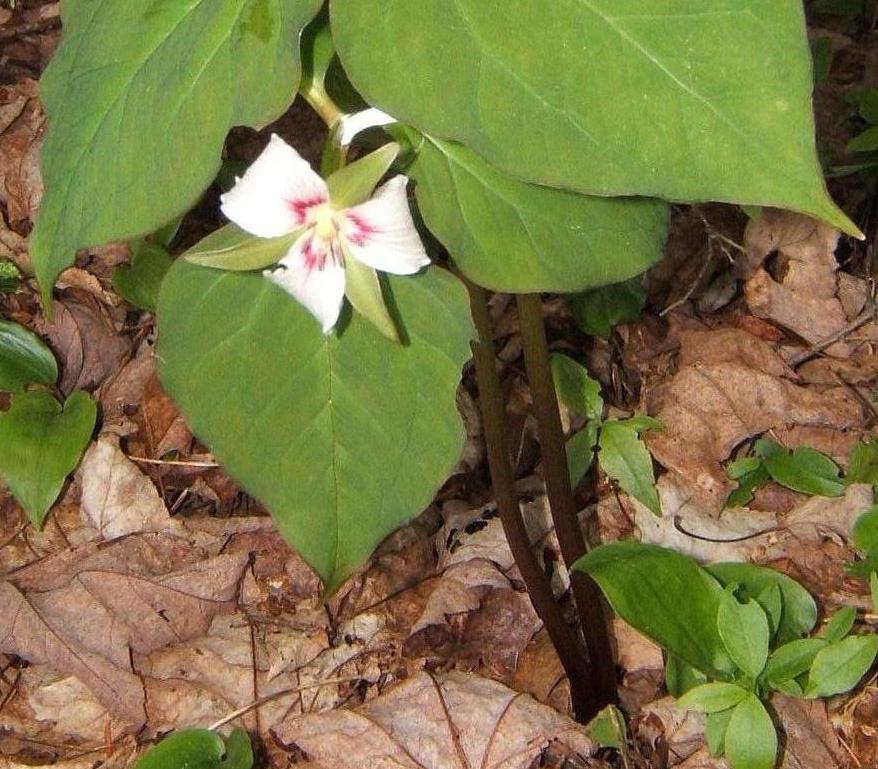
a Painted Trillium in our Grey Woods, near the end of its blooming
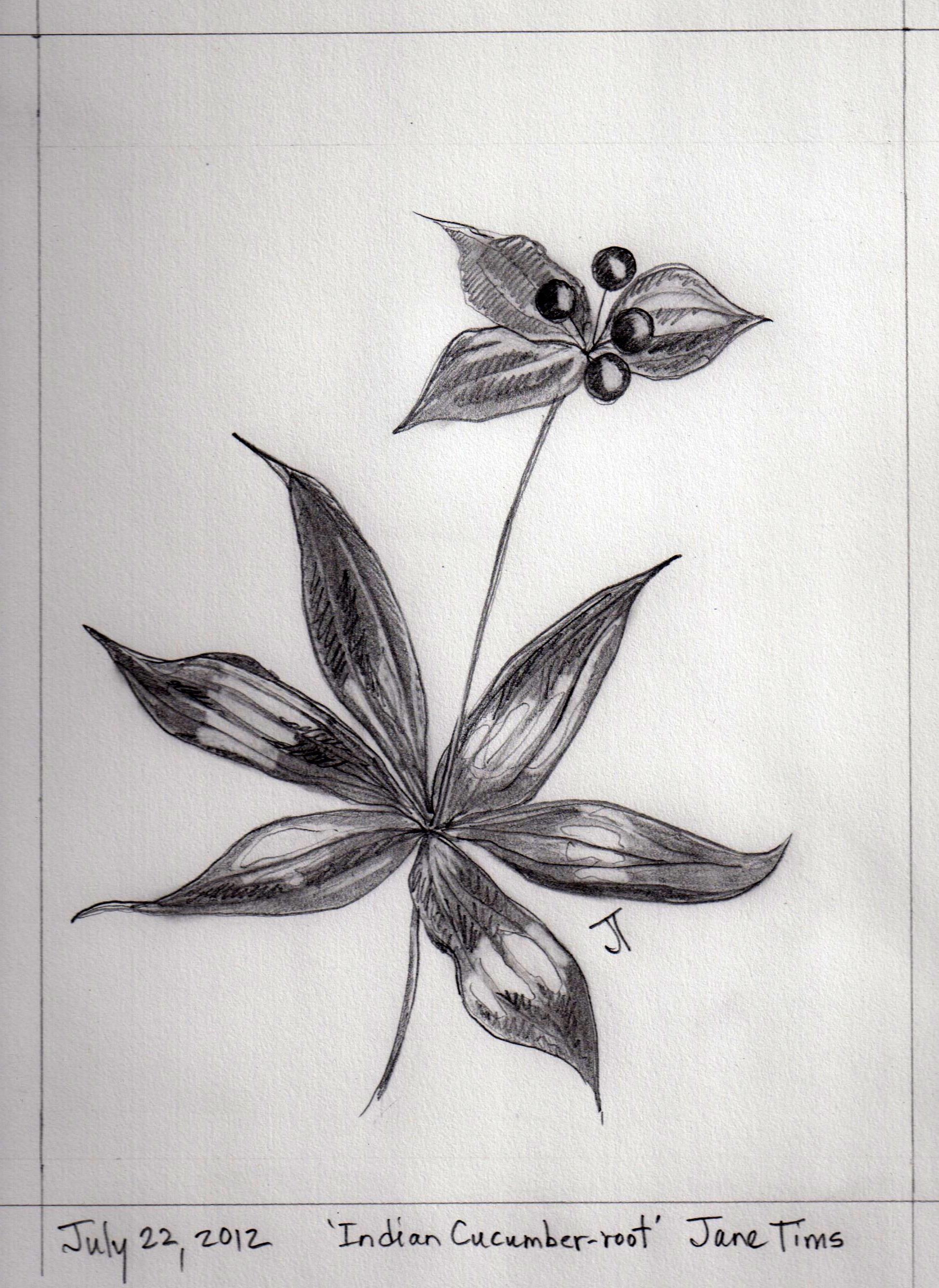
Many woodland plants deserve this special consideration. In his Flora of New Brunswick (2000), Hal Hinds wrote, of the Indian Cucumber-root (Medeola virginiana L.): “… Although this plant produces a deeply rooted, 2-3 cm edible white tuber with a bland cucumber taste and crisp watery texture, it is truly unfortunate to destroy the plant for such a tiny morsel…”
In some circumstances, harvesting and eating these rarer wildflowers would be acceptable. In the past, for example, people of the First Nations depended on wild plants for their existence. A lost hiker, needing sustenance or hope in an emergency situation, could be excused for eating any edible wild plant.
In other circumstances, rarity, the size of the population, and habitat health are probably the fundamental issues. Take the time to know a little about the plant you are thinking of picking. Is its habitat under stress or becoming hard to find? Is it rare, threatened or endangered? Local abundance may not be a deciding factor, since rare plants often grow abundantly where they are able to grow.
Eating local is an environmentally responsible life-style choice. It saves energy and supports local farmers. Eating local wild plants as food is a nutritious and thrifty way to supplement the larder. But these benefits must be weighed against the possible harm to plant populations.
Pick with some rules in mind. Understand the plant you harvest. Gather only what is sustainable. Sometimes this means gathering nothing at all.
~
~
Indian Cucumber-root
(Medeola virginiana L.)
~
step carefully
in your quest,
lured to the wood
by a sorceress
~
search carefully
among the shoots
for Indian
Cucumber-root
~
count carefully-
two layers of leaves
purple berries
stalk wool-sheathed
~
dig carefully-
below the stem
in dark, damp earth
awaits a gem
~
clean carefully
leave no trace
of the woodland soil
on the creamy face
~
taste carefully-
best to savour-
slightly celery
in flavour
~
think carefully
now you possess
one dead plant
and emptiness
~
~
© Jane Tims 2012
a moment of beautiful – new friends
the space- a shelf in an antique store
the beautiful- creating a collection of two
~
I took a break from writing this week, to take a drive to the Woodstock area, for lunch with my husband and to check out any antique stores we saw. We visited one store and I saw what I wanted the minute I walked in.

It was a little china salt and pepper shaker, a little Dutch boy, I think, from the bit of research I did on eBay.
He looked familiar, so I paid a dollar (a dollar!) and he came home with me. At home, I was so happy to find that he ‘matches’ another little Dutch figurine I have had for a long time. My figurine is not a salt and pepper shaker, but he is the same size and gloss. My son would say they belong to the same ‘universe’.
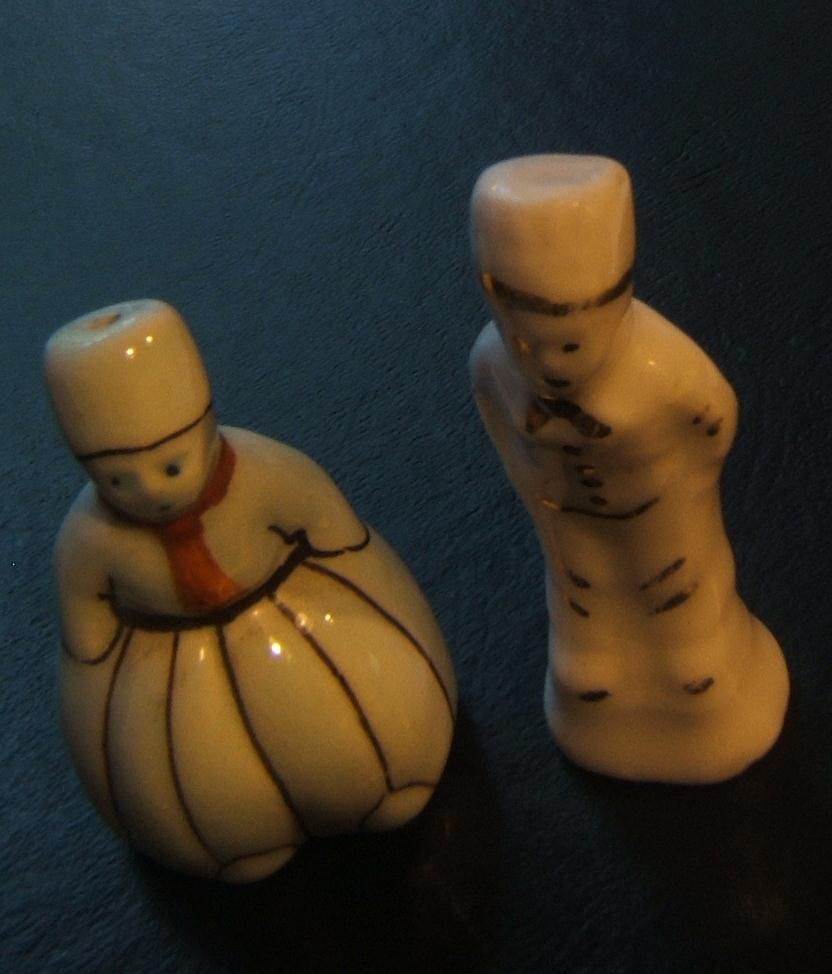
It is so much fun to meet new friends.
~
© Jane Tims 2012
Chicory – (Cichorium intybus L.)
Along the Trans-Canada near Jemseg, one colony of Chicory has taken hold. Its bright sky-blue flowers catch the eye as the usual roadside vegetation rolls by.
~

~
Also known as Blue Sailors and, in French, chicoreé, Chicory (Cichorium intybus L.) is a tall plant, found along roadsides and in other waste places.
Chicory has basal leaves resembling those of the Dandelion. When broken, the stem exudes a white milky fluid.
The bright blue flowers of Chicory occur along the length of the almost leafless and somewhat zig-zag stem. Each flower is formed of a central involucre of tiny blue flowers and a disc of larger ray flowers. The rays are square-cut and fringed. The flowers follow the sun, closing by noon, or on overcast days.
~

~
Chicory is a useful plant. Its young leaves are edible as salad greens or as a pot-herb. The roots can be dried and ground to make a coffee substitute or supplement. The root of Chicory has soothing properties to balance the edginess caused by caffeine. The roots of Chicory are large and very deep. I tried to pull them by hand, but a shovel will be needed to harvest the roots in the compact soil of the roadside.
~ When I see these flowers, I am reminded of my grandfather, my mother’s father. I never knew him, but I have a couple of photographs of him as a young man. I have made a small study of his mother, my great-grandmother, so I know quite a lot about him. ~
~
The flowers of Chicory remind me of his eyes, since they were the same startling blue. He was also a tall man, another feature of the plant.
The other name for Chicory, Blue Sailors, also reminds me of my grandfather. He was a sailor, entering the navy when he was only fifteen. I know from various records that he served on at least two naval vessels, the USS Nebraska and the USS Pensacola. As so often happens when I see photographs of ancestors, there is a familiarity about his features.
~

~
Blue Sailors
Chicory (Cichorium intybus L.)
~
at the roadside
weeds surge as waves
~
on the sameness of ocean,
a buoy lifted,
a sudden swell of Chicory
~
tall, like my grandfather,
the blue ice of his eyes
its blunt petals, the square-cut of his jaw
~
joined the navy at fifteen
dressed as a sailor, headed for sea
USS Pensacola, USS Nebraska
~
his tie, a sapphire ribbon
toothed or frayed
~
~
© Jane Tims 2012
Warning: 1. never eat any plant if you are not absolutely certain of the identification; 2. never eat any plant if you have personal sensitivities, including allergies, to certain plants or their derivatives; 3. never eat any plant unless you have checked several sources to verify the edibility of the plant.




 nichepoetryandprose