Archive for the ‘writing a novel’ Category
a name for a novel – biking log book Day #8
Biking, biking, biking!!! I am still working on Phase 3 of my virtual bike trip through central France. For Phase 3 of my trip, I am biking in 12 days from Exireuil to Magné just west of Niort.
~
On March 4, for the second biking day in a row, my bike trip was along a railroad track!

~
I had lots of time to think, so I thought about the title of the novel I have been working on. For those of you who do not know about my novel, it is about a woman who sets out to save an abandoned church.
~
On Day #6 of my virtual bike trip, in Chavagné on the Route de la Mothe, I saw an old church…
~

~
At first, I thought the roof had been removed from this church, leaving it open to the elements. On closer look, there is a low-pitch roof in place (note the rafters and clay tiles)…
~

old church on the Route de la Mothe
~
However, the image reminded me of another abandoned church I had read about in my research for my book:
‘The Old Church of St. Nidan, in Llanidan, North Wales, is a ruin. All that is left of this medieval church are the four stone walls of the western wing and its central arcade. The nineteenth century clergyman Harry Longueville Jones wrote that the church had succumbed to a ‘melancholy fate’. In 1850, church historian Sir Stephen Glynne wrote that most of the church is ‘open to the skies.’ (partly quoted from Wikipedia, ‘Old Church of St Nidan, Llanidan’, January, 2013).
I think I will use the phrase ‘Open to the Skies’ as the title for my novel. It refers to the fate of an abandoned church, but also to the ability of people to open themselves up to possibilities. I think it is perfect for my book.
~
Log Book: March 4, 2013
Area travelled: from ‘field south of Trévins-le-Bas’ to ‘outskirts of Niort’
Distance: 30 minutes 3.0 km
Best view: no best views today; biking on the railroad is not inspiring
Notes: after this, I will be careful to plot my bike trip on roads rather than rails!!!!
~
Distance Travelled Feb 21 to Mar 4: 24.0 km (240 minutes of stationary biking)
Total Distance Travelled Jan 30 to Mar 4 : 55.8 km (565 minutes of stationary biking)
~
What do you think of the title ‘Open to the Skies’ for my book?
~
Copyright Jane Tims 2013
writing a novel – results of a weekend workshop
This weekend, I participated in a weekend writing workshop organised by the University of New Brunswick’s College of Extended Learning as part of the Maritime Writers’ Workshop. I worked with 11 other writers, the workshop coordinator, and the group leader. We read one another’s work, making suggestions for revisions and generally learning about editing both prose and poetry. As I looked around our work table, there were water glasses, pens and pencils, i-pads and laptops, piles of paper, and notebooks for writing. I loved the beautiful journals some of the writers were using to record their thoughts.

beautiful notebooks
Our leader was Joan Clark. Joan has published several novels and she read to us from her published work. I especially appreciated her reading from some of her work-in-progress. Her book The Victory of Geraldine Gull (1988) was a finalist for the Governor General’s Award and the Books in Canada First Novel Award. She has also written Swimming Towards the Light (1990) and Latitudes of Melt (2000), among others.
For my own work, I had some very encouraging comments. I think I most appreciated a comment from Roger Moore, a well-known poet and educator in Fredericton. He told me about the work of Wolfgang Kayser – his writing puts novels in three types: ‘action’, ‘character’ and ‘place’. Roger thinks the focus of my novel is ‘place’. He also said the creation of place was central to my story and, in the excerpt he read, I was doing this well. Since I consider all my work to be about place (hence the focus of my Blog), I was very happy about his comment.

writing about place
Another writer told me that the story I was telling in my book seemed an allegory for the shifting loyalties of community. Since I set out to write a book where the community is like a character in its complexity, I was very encouraged by this observation.
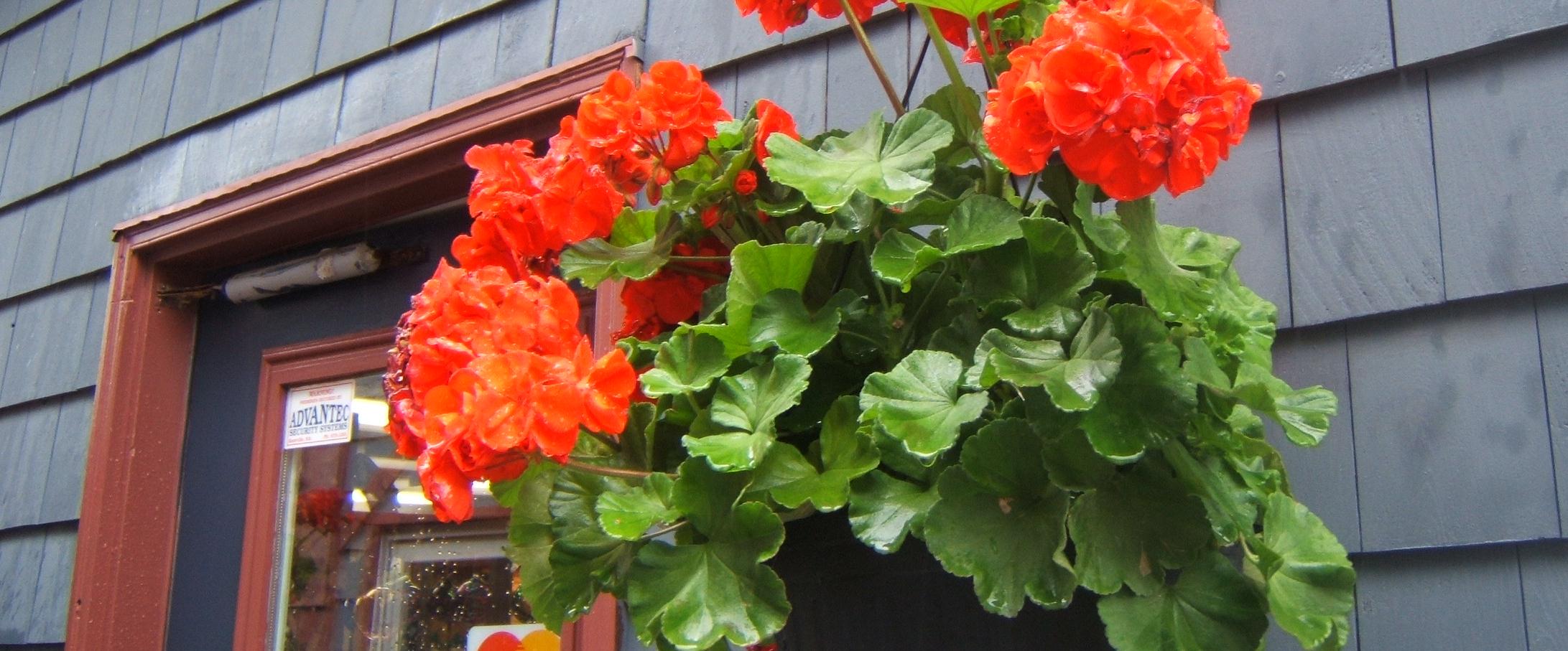
glimpses into the character of a community
Another well-know New Brunswick writer pointed out to me that while I write excellent, detailed descriptions of the out-of-doors, I tend to neglect other descriptions …. I appreciate that I need to provide some balance by providing more detailed descriptions of inside spaces and action.
Another knowledgeable writer at the workshop talked to me about the decision-making process toward a church’s deconsecration. These are details I will have to get right since I want to build credibility with my readers.
A couple of editorial comments stood out for me. I wish there was a ‘checker’ in the computer for locating words that are repeated in proximity to one another (for example, when I use the phrase ‘across the field’ in two adjacent lines). Also, in some cases, I should use shorter sentences to increase tension.
~
Overall, the weekend was hard work, but also a lot of fun. I now have material to use toward the fourth draft of my novel. Also, looking at the work of other writers shows me what to look for when editing my own writing.
~
Over the next couple of days, I’ll make some new revisions. Afterwards, I’ll put my manuscript away for three weeks. Then, on March 4, I’ll take a fresh look at my draft and see where I think the story-line and writing need more work.
~
I would recommend a similar workshop for anyone in the midst of writing a novel, especially if you want to see your own work from other points of view.
Have you ever attended a writers’ workshop and what was your experience?
~
Copyright Jane Tims 2013
writing a novel – taking a break from the draft
On Friday of this week, I begin a weekend Maritime Writer’s Workshop with the University of New Brunswick’s College of Extended Learning. I will work with a dozen other writers at revision of our written work under the leadership of Joan Clark. Joan is an award-winning novelist of both adult and children’s fiction, and I am anxious to find out what she thinks of my work.
I have chosen to submit ten pages of my novel ‘Saving the Landing Church’ to be examined during the weekend. I will get some good insight into how other writers respond to my writing. No doubt, I will also discover some aspects of my writing that need improvement. I hope the other writers will find my work interesting and help me discover some strengths as well as weaknesses.
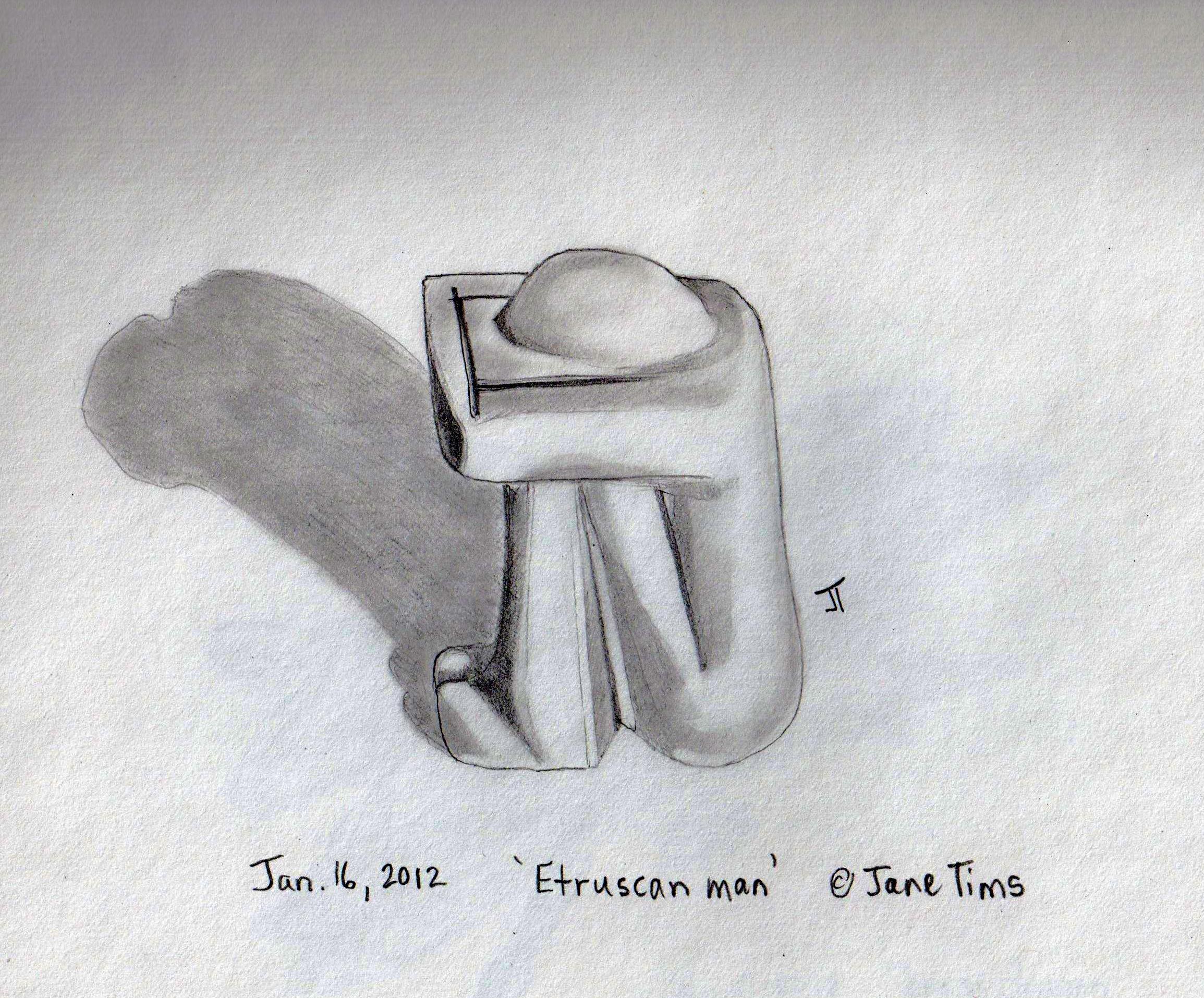
Sometimes it is difficult for me to hear criticism about my writing, but I have to listen carefully and keep an open mind …
I will also read and comment on the work of the other writers. This will help me to hone my own editing skills and discover more about what readers like in written work.
Once I have done the workshop and incorporated various comments into the draft, I will take a three-week break from my novel. I will put the current (third) draft away. During that time, I will not read the draft and I will try not to think about it. Then, after March 4, I will spend a couple of days reading a paper-printout of my novel. The theory is, it will be new to my brain after the break and I will see, with great clarity, what I certainly should have seen before.
~
I expect to find:
simple edits (Sadie takes a drive on the car, rather than in the car)
discontinuities in the action (Sadie goes for a hike a week after cracking her ribs)
slip-ups in characterization (Nicola suddenly has blue eyes instead of green)
cases of inverted time (July cames before June)
~

I may discover that Tom and Sadie are going for a walk and listening to the rustle of the leaves in the birch trees in the dead of winter….
~
From these observations, I will make some changes and then will come a series of decisions about how to get my novel published.
~
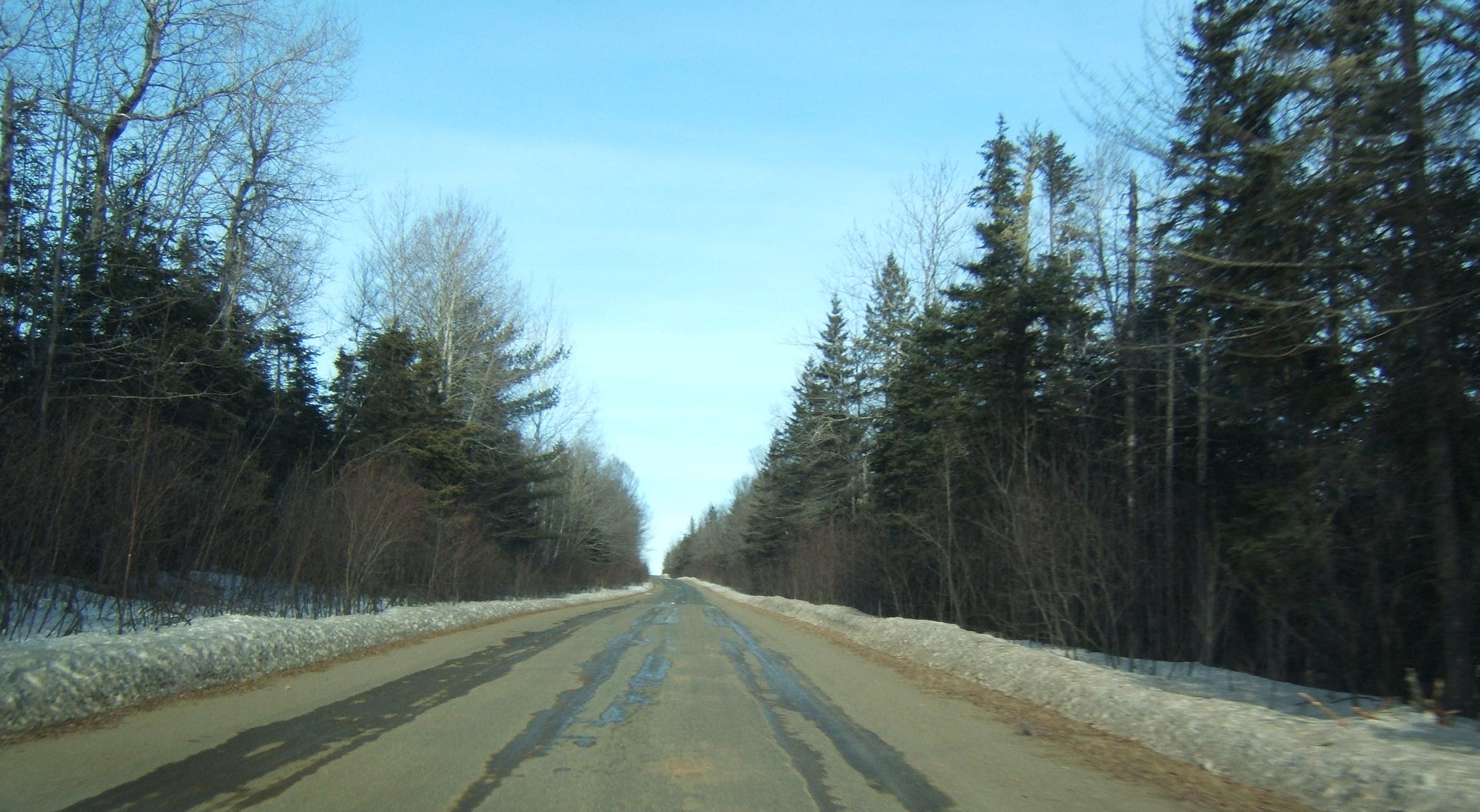
on the road to novel publication
~
Copyright Jane Tims 2013
featuring a 1941 International truck
I have had a few poems accepted for publication recently. These include ‘abandoned resort hotel, Devil’s Head’; ‘Berries in Cellophane’; and ‘1941 International K-4’. They appear in Issue 10 (Spring, 2013) of The Lion’s Head Magazine (online). You can have a look at these three poems at http://lionsheadpress.blogspot.ca/
~
‘Berries in Cellophane’ is from my manuscript on growing and gathering local foods.
The poems ‘abandoned resort hotel, Devil’s Head’ and ‘ ‘1941 International K-4’ are both part of a series, not yet completed, on abandonment. This series began my interest in abandoned churches, and lead to the novel I am now working on – ‘Saving the Landing Church’.
~
The poem ‘1941 International K-4’ was inspired by an old International truck, seen in a wood lot in southern New Brunswick in the fall of 2011. It was set up on steel drums and looked like it was no longer used. Rusted and out-of-commission, she was still elegant to behold. The poem came easily, written in the ‘voice’ of the truck, recalling its various adventures.
Have a look at the poem in Lion’s Head Magazine and let me know what you think.

~

Copyright Jane Tims 2013
editing to remove the passive voice
I am still editing my novel, aiming for the third draft. Today is about finding and eradicating the passive voice. When I find an instant of the passive voice, I try to find a better, more active way to present the idea.
The passive voice occurs when the object of an action is expressed as the subject. ‘The book was read by Jane’ (passive voice) … instead of … ‘Jane read the book’ (active voice).
The passive voice is often accompanied by a form of the verb ‘to be’. A simple example: ‘The text had been edited by the teacher’ (passive voice) … ‘The teacher had edited the text’ (active voice).
The active voice is usually preferred because it’s direct, energetic and less wordy. Sometimes the passive voice is Ok to use – for example, if the agent of an action is unknown or unimportant: ‘The letters were misdirected to Toronto.’
~
Here are examples of some of the changes I have made:
~
Passive : The louvers of the belfry were splintered where they had been damaged by the move.
Active: The move had damaged the louvers of the belfry, splintering the wood.
~

louvers in a belfry, the wood not splintered!!!
~
Passive: Our taste buds were teased by names like the Pickle in the Barrel Pub, Heavenly Hash, and Bob’s Country Diner.
Active: Names like the Pickle in the Barrel Pub, Heavenly Hash, and Bob’s Country Diner teased our taste buds.
~

if there were such a place as ‘Heavenly Hash’, they might serve a salad like this!!!!
~
Passive: The deconsecration has been approved by the Diocese
Active: The Diocese has approved the deconsecration.
~
~
I treat my edits of dialogue a little differently with respect to the passive voice. People often speak in the passive and so I am careful to edit for what sounds natural rather than what is grammatically correct!
~
Copyright Jane Tims 2013
writing a novel – the first reads
So, I have completed the second draft of my novel. This stage follows the pages of edits I had after reading my book on my e-reader. It took two long days to make the changes. I emerged from the experience feeling that I needed a few other eyes on my work before I start another draft.
I am lucky to have two people in my family who have volunteered to look at the draft, my son and my niece. I am also fortunate to belong to a couple of writer’s groups and some of these brave folk have agreed to give the draft a critical read. I don’t know what to expect, but it will be so helpful to see their comments, both good and bad. I am so grateful to them all.
My husband is also listening to the draft. Just before we watch Coronation Street each evening, I read a chapter from my novel to him. He is no book-worm, but he listens carefully and gives me his impressions. He is especially helpful on some of the technical issues. For example, my main character’s husband, Tom, is a welder, and my husband explained to me that you can’t weld copper to steel. Also, I find errors as I read. So, I make a few changes each evening.
~

Tom, my main character’s husband, is a welder… in the novel, he makes a series of wind sculptures for the writers’ retreat… this wind sculpture is one we have at our real property by the lake
~
I am rapidly coming to a time when I will leave the draft untouched for about three weeks. This is Stephen King’s advice (On Writing, 2000). It will give me a chance to return to my poetry and meet some upcoming deadlines. Then I will pick up the draft of my novel, to read it as if brand new! Who knows what idiosyncrasies I will find!!!
~
For you to read, here is an excerpt from the book, about Tom’s wind sculpture:
~
‘You shouldn’t be welding, you know,’ I said. ‘The doctor said you might improve if you stayed away.’
‘The doctor said I’d already done all the damage I could do,’ said Tom.
I was silent. It was an old argument. Tom didn’t want to hear about possibilities. He believed in the frozen-cold facts.
‘Hey, girl, have a look.’
He lifted part of his project from the bench. The main element was a long cylinder of steel. In a coil around the cylinder, he had welded a thick, inflexible steel wire. To the flat end of this wire, Tom had screwed a broad triangle of copper sheeting. The triangle was shaped like an oak leaf, cupped and angled to catch the wind. Tom stood the cylinder on its end and it became a tree with a single clinging leaf. He reached for another piece of formed metal and threaded the two together. With his hands, he moved the unit, giving me a glimpse of the way it would move in the wind.
‘It’s wonderful,’ I said, always awed by the mellow gleam of the copper and his ingenious designs. ‘How many leaves will there be?’
‘Nine, in three layers,’ he said. ‘It’ll be taller and quicker than the others.’ He had already finished the first three in a series of these wind mobiles. Eventually, they would be part of a sort of garden he had planned for the property. ‘Writers,’ he said, ‘will visit the wind garden and be inspired.’
The whisper of the wind and the mobile joinery of the sculpture, the exchange of light between the burnished metal and the shimmering lake, together these would create a magical, rhythmic experience of light, movement and sound, perfect for meditation and contemplation.
~
Copyright Jane Tims 2013
writing a novel – words, words, words
I have kept close track of my progress during the writing of my novel.
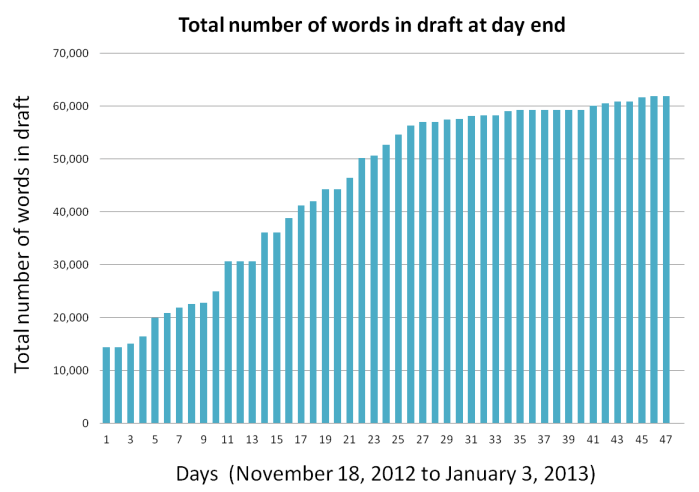
I began writing my novel ‘Saving the Landing Church’ on November 1, 2012. By November 18, I had a short story of 14,432 words. After November 18, each day, before I saved the document, I took a word count. This helped me feel productive and let me decide when it was time to start editing the first draft. In the graph below, you can see the number of words I had on each day after November 18 (Day 1).
During the writing, I decided 60,000 words would be a good goal. At first, I was worried I wouldn’t be able to reach this many words. By December 9 (Day 22), I had reached 50,000 words, the story was almost told, and I knew I would reach my goal. Around Day 26, at a little less than 60,000 words, I was beginning to edit.
~
I also made a graph to show how many words I wrote per day. My daily goal was 2000 words, as Stephen King recommends in his book On Writing (Schribner, 2000). Until my editing phase (beginning Day 26), my production was highly variable. However, I usually wrote more than 1000 words per day. I had four very productive days when I wrote more than 3000 words.

I hope this might help you to be aware of your productivity when writing.
I know that quantity does not equal quality. I also know that, during editing, my word count could begin to be in the negative. But, during the phase of producing the first draft, I do think the number of words is a useful indicator for a writer who wants to make progress on a particular project.
~
Copyright Jane Tims 2013
writing a novel – e-reader editing
So the poet is writing a novel…
~
Title: unknown
Working Title: Saving the Landing Church
Setting: a writers’ retreat, including an abandoned church
Characters: main character a writer; her husband Tom; people from the embedded community including next door neighbors Emma and Mark; people from the commuter community; the aberrant community
Plot: the story of how a woman tries to preserve an abandoned church with unexpected consequences for herself and for the community
~
~
I have finished my first draft!
This week, I am working on edits.
The writer’s discipline of producing something each day suits me most of the time. I characteristically accomplish enough in three or four hours of work to push back from the computer with a feeling of satisfaction.
Some days, it’s harder to focus. I find editing particularly hard. Perhaps because of the recent holidays, perhaps because it is so cold outside, this week I have been having trouble concentrating.
Yesterday, I discovered a way to make the editing easier!
Lately, I’ve been using my e-reader more and more for general reading. I thought, why not use it to read my own (draft) book?
I didn’t do any fancy work. I merely took my Word draft and saved it as a .pdf file. The first time I did this, the font was so tiny, I’d have to use a magnifier to read. So I experimented a little, and finally settled on the font Times New Roman, size 22, double-spaced. Once I made the font change in Word, I saved it as a .pdf file and copied it directly into my Kobo e-reader. There were a couple of glitches which I didn’t bother to fix. Some words transposed as bold (as you can see in the photo) and none of my italics made it through. But the book was very readable.
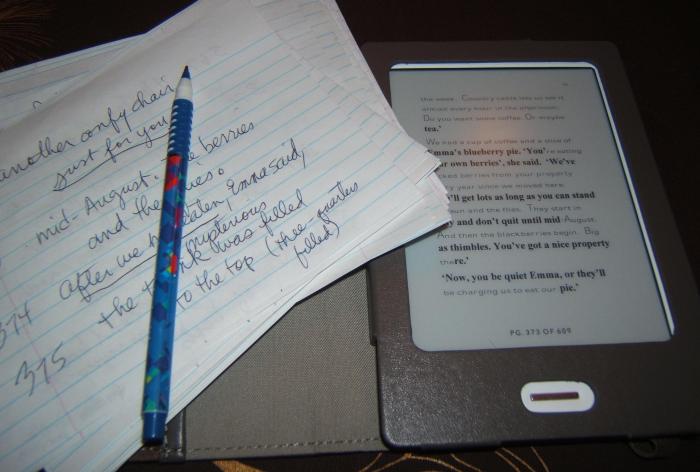
Today and yesterday, I have been editing in luxury. I have been sitting in my comfy chair, with a warm throw, a cup of tea and my Kobo. By having my draft in book format, I can see it as a book, read it with more ‘distance’ and more easily find the places I need to re-write or edit. I keep track of edits, page by page, in pen, on note paper. Of course, I’ll have to do the final edits at the computer, but that pain is somewhere in the future, made easier by the ‘Find’ feature in Word.
One step closer to completion!!!
~
Copyright Jane Tims 2013

blackberries as big as thimbles
writing a novel – another look at old churches
As I write my novel, I am amazed at how many instances of abandoned churches I have encountered in my life. I have come to think that I live at a time that will be remembered for a great turnover in our churches. With the need for energy efficiency and financial stability, congregations are actively seeking the ideal ‘place’.
I understand why this should be so. But I still love the idealized rural church of the nineteenth and twentieth centuries.
Earlier this month, we took a drive to Saint Martins. Near Garnett Settlement, we saw yet another re-purposed church.
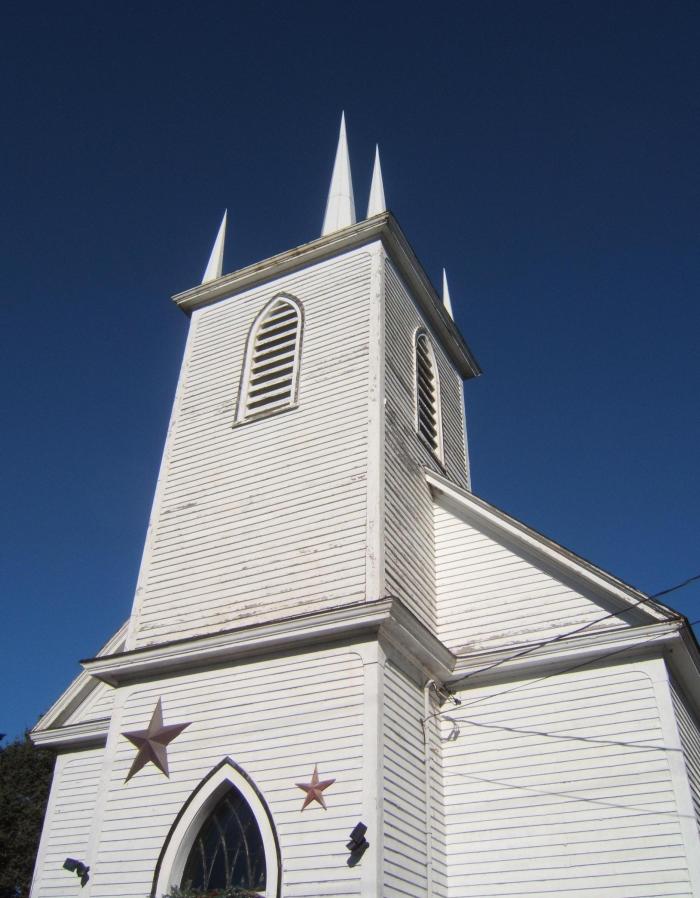
This one was abandoned a few years ago, after there were only four parishioners to keep it going. It was sold and has been turned into a country treasures gift store called the ‘Old Fangled Steeple’.
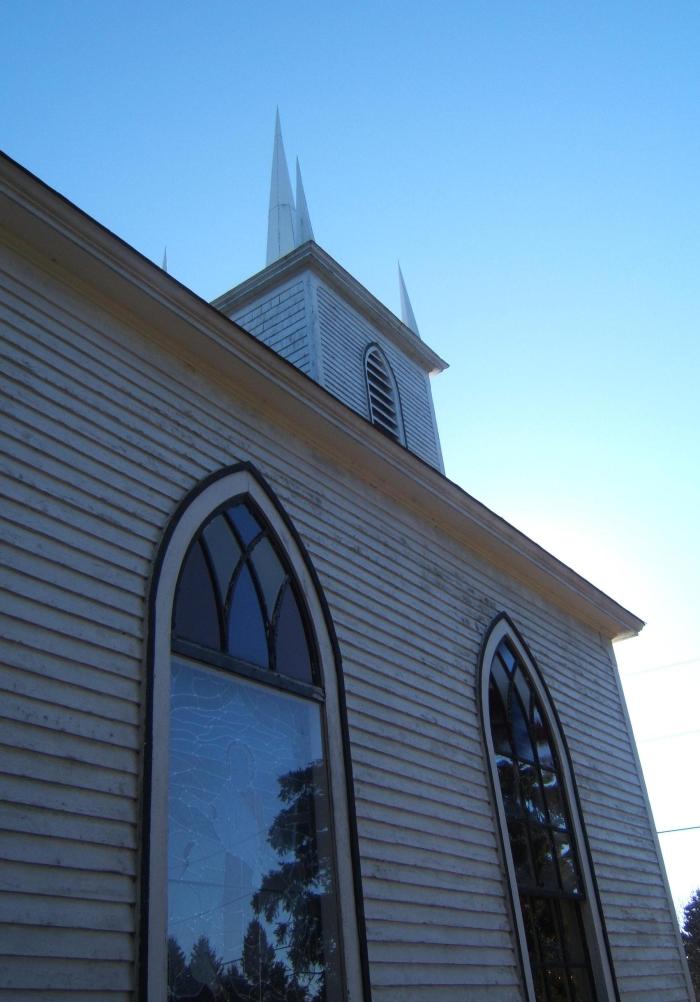
The church still has almost all of its stained glass windows intact.

~

~
For some beautiful images of abandoned churches, have a look at:
http://pinterest.com/patiluhayes/old-churches/
For a rather sad tour of the inside of some abandoned churches, see:
http://www.environmentalgraffiti.com/news-abandoned-churches?image=23
~
Copyright Jane Tims 2012

by the frozen lake, next year
It’s mild here today and we are expecting lots of snow. I’m working on my novel, doing edits.
I want this post to include an excerpt from my work, so I have chosen a wintry bit.
In this excerpt, the protagonist, Sadie, and her husband are near the edge of the lake, on the property they have bought. They’re planning to bring the Landing Church to this location, to build a writer’s retreat.
Sadie’s husband, Tom, isn’t well. He’s dying. His way of coping is to be a stoic, to face his death as inevitable, and to plan his wife’s life out for her. Usually, he talks about what she’ll be doing this time next year. Until now, he’s refused to include himself in any talk of the future. But, as the novel progresses, his thinking is changing.
~

~
The lake, in the grip of November, had frozen to plates of glass, interrupted by pebbly bands where the wind mixed snow into the surface of the ice. The distant shore presented itself in silhouette, an indigo strip between the lake and the brighter sky. The dark images of trees were frozen into the surface of the ice. The air was crisp, but we sat, as we did in summer, on the bench by the lake’s edge.
‘Next year,’ said Tom, ‘we’ll clear the ice for skating. And we’ll build a bonfire, here by the shore. There’s certainly enough dead wood to fuel it.’
I sat still, watching the lake and thinking about Tom’s words – ‘next year’ and ‘we’. These words were so different from what he would have said, even three weeks ago. Ordinarily, he’d be making plans for me alone. Ordinarily, he’d have said ’Next year, you’ll clear the ice for skating.’
We sat in silence, as we always did, just watching the lake. Tom probably didn’t notice how thoughtful I’d become. I wondered how I’d missed it, this transition from ‘no future’ to ‘plans for tomorrow’. Plans to be shared by us both. My hands began to tremble.
To distract myself, I found a flat stone embedded in the frost at my feet. I stood, moving a little closer to the edge of the lake. I turned my arm and cradled the stone in my hand. I pulled my arm back and propelled the stone toward the ice. It hit with a clear ping and bounced across the surface, leaving a line of clear notes in its wake. I tried another one. It sang a semi-tone higher, and the ice vibrated between the crisp air and the ice-cold water below. Tom bent and loosened another flat stone from the ground. He stood beside me. In another minute, the ice was ringing with the song of skipping stones.
We’d soon depleted the shore of every loose flat rock. The lake was still and silent. No note remained in its repertoire. The ice in front of us was littered with flat grey stones.
‘No skating this year,’ said Tom. ‘We’ve planted enough trippers to last into next spring.’
We turned from the lake and followed the path back to the field. As we navigated the alders and rounded a corner, we came suddenly on a sturdy bush of bright red berries. ‘Look, Sadie. Winterberry holly,’ said Tom. ‘It usually grows by the lake, but here it is, in our field. Our very own burning bush.’
The bush glowed with orange-red berries, set off by bronze-colored leaves, not yet fallen. In the silver and grey of the thicket, it was a gift…
~
~

~
If you have any comments, good or bad, about this piece of writing, let me know. Is there anything you don’t understand? I there anything I could better explain? Have you ever skipped stones on the ice of a lake or pond?
~
Copyright Jane Tims 2012




 nichepoetryandprose