Archive for the ‘waterways’ Category
inside the covered bridge
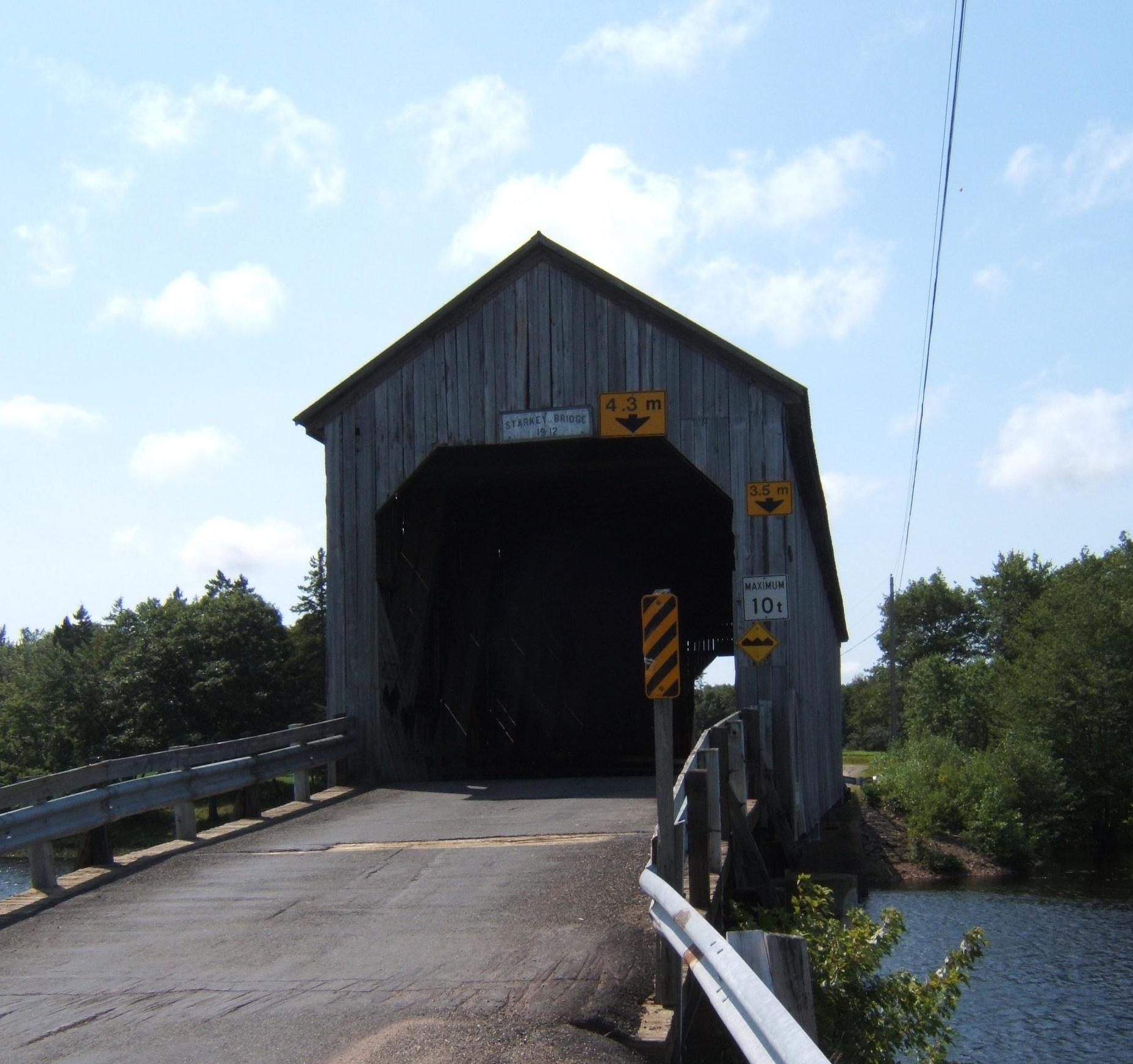
the Starkey Bridge over Long Creek
One of New Brunswick’s ‘claims to fame’ is its covered bridges. A covered bridge is a bridge constructed with high sides and a roof, made to cope with winter snow loads. The covered bridge was designed to be easier to cross in winter. Also, these bridges don’t have to be shovelled free of snow after storms.
There are 60 covered bridges in New Brunswick, one less after the Mangrum Bridge, crossing the Becaguimec River, was destroyed by vandals earlier this month. Communities really love their covered bridges and try to keep them safe by holding watches at Halloween and other times of the year. It is a huge disappointment to anticipate driving across a covered bridge you have visited in the past, only to find it has been burnt and replaced with a metal Bailey Bridge.
Visiting covered bridges is a favourite pastime for many New Brunswickers. On a hot day, the bridges are cool inside and there are usually open ‘windows’ to encourage breezes and allow a view of the river. When a car drives through the bridge, the whole structure vibrates and the car tires make a deep-toned rumble. The floor timbers in a covered bridge are pleasant to walk on and the rafters make interesting study for the carvings and writings people have left as mementos of their visits.
In 1992, my husband and son and I began a project to celebrate Canada’s 125thbirthday. We intended to visit all the covered bridges in the province and make a record of the carvings and graffiti inside each bridge.

we promised to include the ‘Canada 125’ logo whenever we reported on our project, so here it is!
We explored many of the bridges, and made pencil rubbings of some of the more memorable carvings. I particularly remember the girl’s name ‘Phoebe’ carved in elegant lettering in the Wheaton Bridge (bridge installed 1916) over the Tantramar River, and a carving of an old car and the date 1910 in the Maxwell Crossing Bridge over the Dennis Stream (bridge installed 1910).

some of the notations in our record for the Maxwell Crossing Bridge over the Dennis Stream
Other markings were also noteworthy. Inside the Falls Brook Bridge at Nortondale over the Nackawic River were the following words in India ink: ‘Ptarmigan Hunter Ray Brown May 12th 1896 Horse had bad leg”. An expert birder in the area told me Ptarmigan have never been recorded in New Brunswick and this could be a valid record.
Another bit of graffiti I particularly liked were the words I AM THE WIND, printed in yellow in at least three of the bridges in Charlotte County, including the covered bridge on Stillwater Road over the Digedeguash River. This bridge is now gone and a Bailey Bridge was in its place the last time we visited.
I am the wind
~
I am the wind
of the Digedeguash
shaped by valley walls
~
I race trout
lift ferns
blow quick kisses
under the wings of butterflies
~
I am the wind
spoken in the beams
of the covered bridge
slipped into space
between
boards
I rattle the roof, the reeds
vibrate with my breath
~
I am the wind
from the County line
to the Passamaquoddy Bay
I race
~
refreshed by the waterfall, salted
by the rising tide
~
carve my name
on the boards, block
my name in yellow
chalk
~
I am the wind
~
Published as: ‘I am the Wind’, Spring 1995, The Cormorant XI (2)
(revised)
© Jane Tims
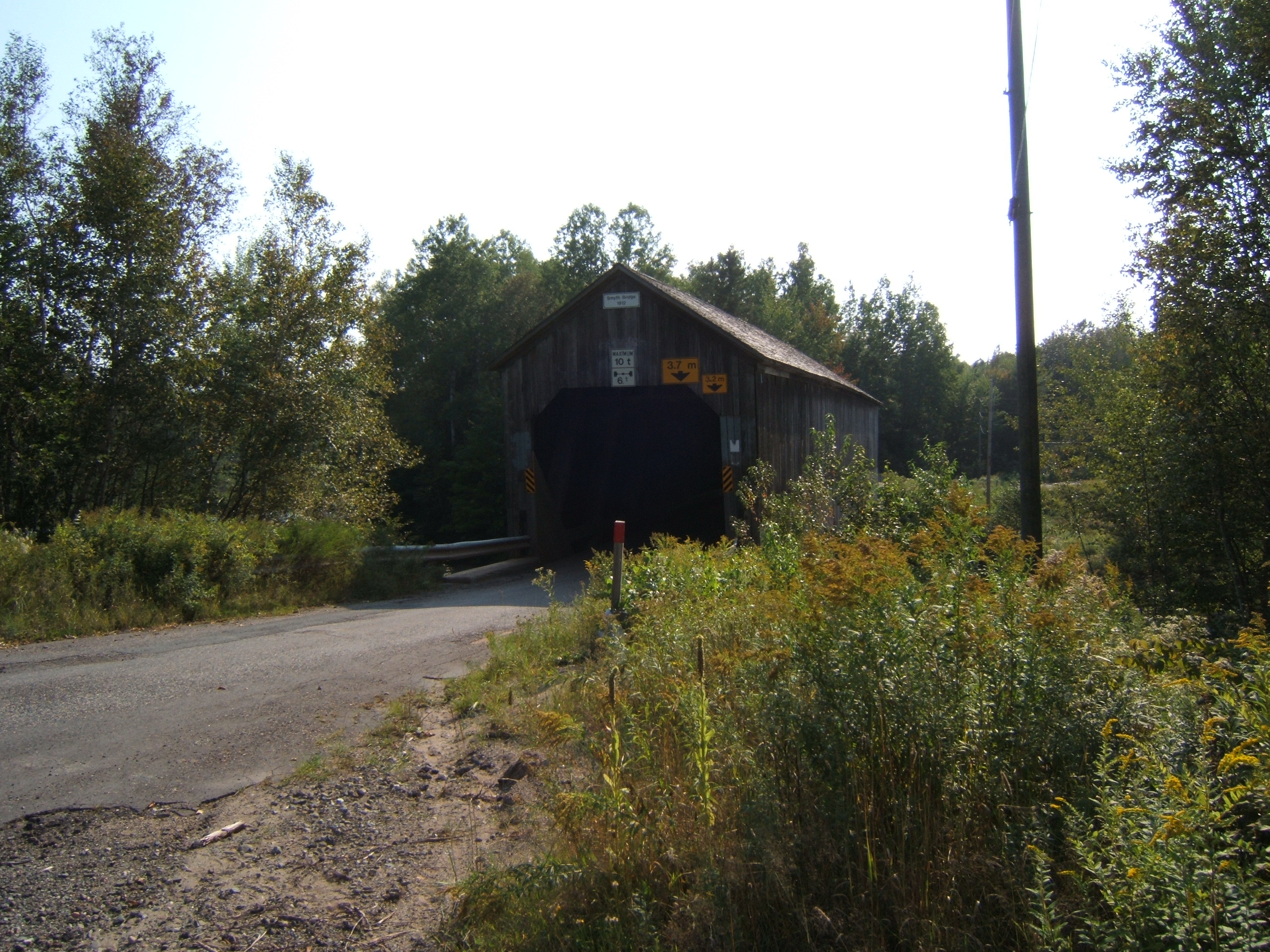
Smyth Bridge, crossing a small tributary of the South Oromocto River
edge of lake
Water is essential to my health, not only because I need it to drink. I also need to see water. Whether it’s the water of a stream, river, lake or ocean, being near water comforts and enlivens me.
I like the transitions too, the places where land and water meet – the seashore, the margins of a brook, or the shoreline of a lake. Birds and other animals love ‘edge’ – places where the food is plentiful and cover is available. We go to the lake shore to watch loons diving for fish, deer wading in the marsh grass and ducks ‘dabbling’ along the shore.
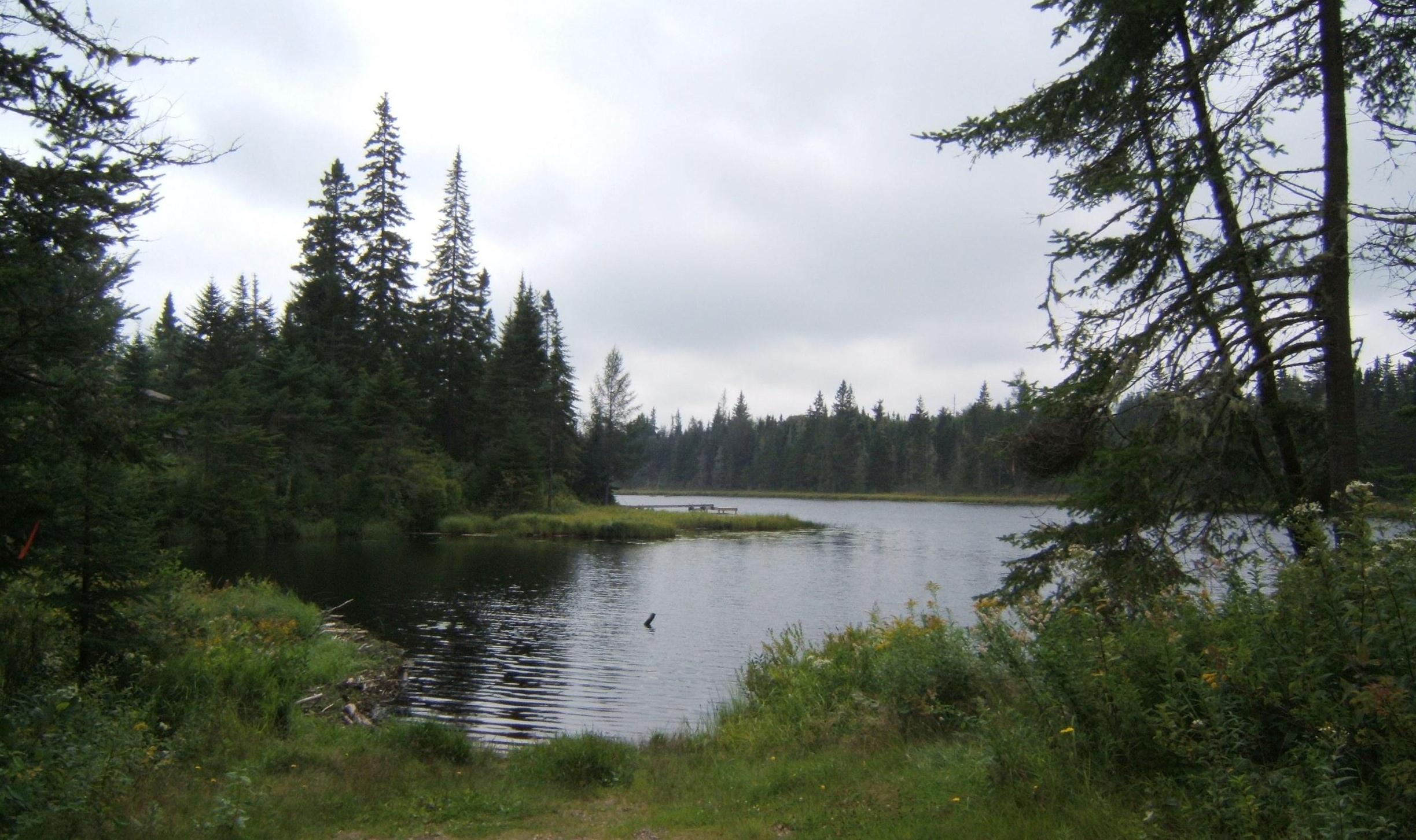
edge of lake
evening edge
~
of lake
a corner torn
from the loaf of hills
red with setting
~
faint click
sun gone
dusk and bread crumbs scattered
~
nasal chuckle
from the farther shore
arrows etched on glass
~
blue-winged teal
under wings a glimpse
of summer night
~
greedy for crust and crumbs
~
© Jane Tims 1998

evening edge of lake
deep waters – Clear Lake
As a result of my work, I have been privileged to see some remote, very special places in New Brunswick.
One of these is Clear Lake, a pristine lake in the south west area of the province. To reach Clear Lake, we canoed across Sparks Lake and made the short portage from Sparks to Clear. The portage crosses the narrow divide between two watersheds – Sparks Lake eventually flows into the Magaguadavic River, while Clear Lake is part of the Pocologan River system.

topographic map showing Clear Lake, Horseback Lake and Sparks Lake
Clear Lake is a deep lake with remarkably clear water. Lake depth measurements from the New Brunswick Aquatic Data Warehouse show the maximum measured depth to be 29.6 meters (97 feet), although deeper depths have been recorded. Stones on the bottom of the lake look like they are only centimetres away, but when you put your hand into the water, you quickly realise they are far out of reach.

standing beside Horseback Lake, a small lake just west of Clear Lake, October 1992 (photo by J. O'K.)
Clear Lake
~
behind us
dry leaves settle
waves on Sparks and Redrock
~
Clear Lake
bottle blue
silences our chatter
reeds and aluminium
whisper
~
we glide
~
between islands
group of seven trees
flung southward
quartz cobbles
rim the shore
dark Porcupine
bristles with conifers
tangled in the surface
plunge eighteen fathoms
to a cove
gathered in arms
of granite and pine
a cabin perched green
shadows peering
over the edge
~
sudden and silent
sunken logs
caressed by crescent suns
cast through ripples
only a touch away
~
through the mirror
shattered
numb fingers search
down
down
~
essence always
out of reach
~
dissolved
in the clear lake
~
Published as: “Clear Lake”, 1999, River Revue 5
(revised)
© Jane Tims
a woodland stream in southern Alberta
When we were children, living in Alberta, Mom and Dad took us for drives on the weekends. Usually, we explored the prairie roads or the landscape of the South Saskatchewan River. Sometimes, though, we sought the wooded areas of southern Alberta.
A place we visited more than once was a small wooded stream in the Cypress Hills. We called it ‘Greyburn Gap’, probably after the nearby community of Greyburn’s Gap. The site had a picnic table and shelter, woods to explore, and the little stream.
The Cypress Hills area is an eroded plateau, rising above the Alberta and Saskatchewan prairies. It was left unglaciated during the last ice age and has a flora and fauna much different than the surrounding prairie. Part of the Cypress Hills is protected as the Cypress Hills Interprovincial Park.

Elkwater Lake and the wooded landscape of the Cypress Hills Interprovincial Park as they appeared in 1967
My parents were raised in Nova Scotia and were accustomed to the forests of the Atlantic Provinces. The Cypress Hills, and the woods of Elkwater Lake, where we had a cabin, must have helped them feel more at home in Alberta.

mixed woods of Elkwater Lake area (2002)

our cabin at Elkwater Lake (1967)
Greyburn Gap, Alberta
~
I remember a brook threaded through the trees like string
black water in the gap between gossamer and fern
a fence to mark its moving a fallen fir
to tangle its water our hands
trailing in the eddy
~
a jug of root beer sunk to the neck to move the brook’s cold shiver
into our summer bodies
~
© Jane Tims, 2011
niche beneath waterfall
This past weekend, we made a visit to two of New Brunswick’s waterfalls: Erbs Falls and Smith Falls, both on the Kingston Peninsula.

Erbs Falls begins as a quickening of the water of Peters Brook in a narrowing gorge.
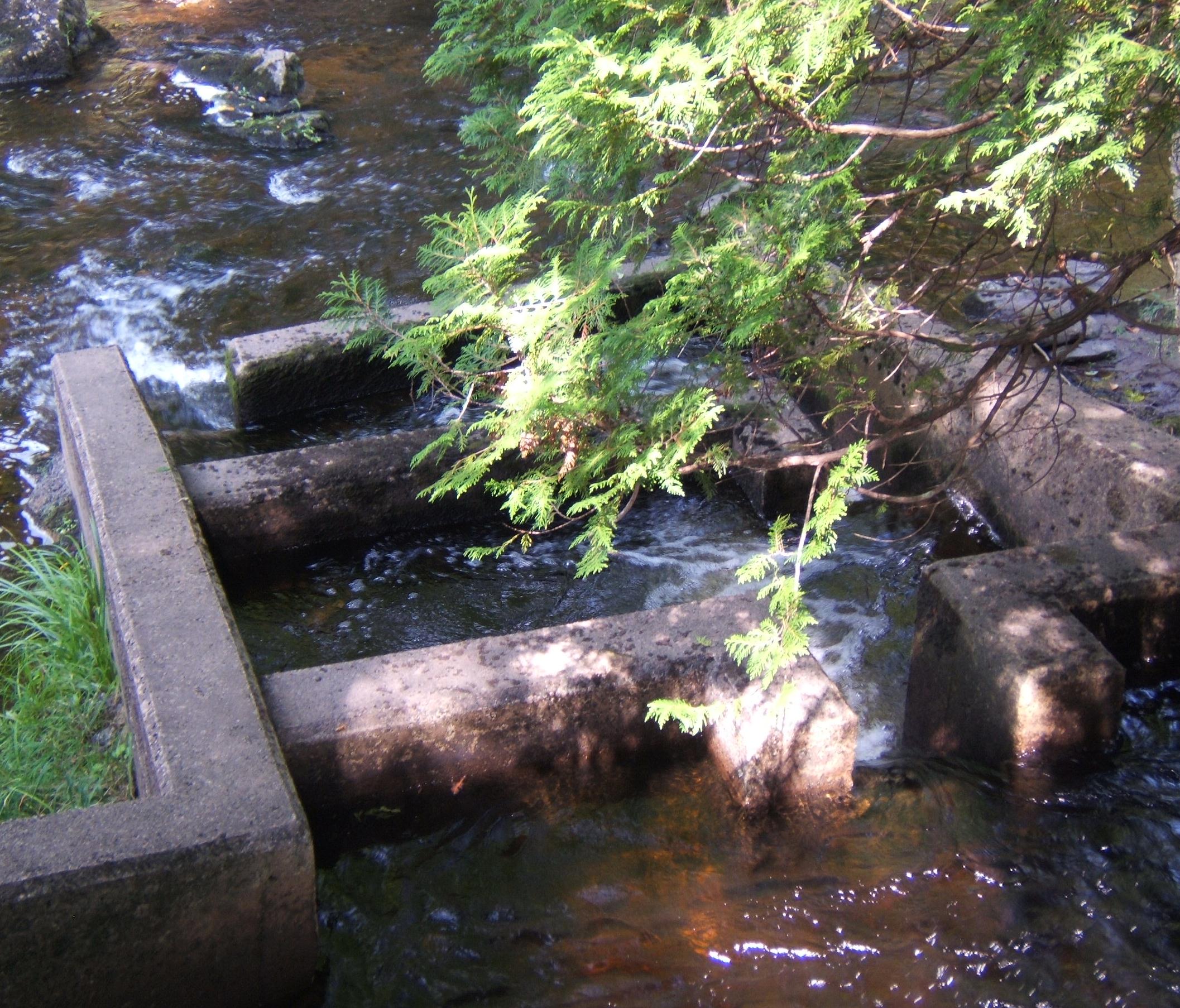
At this time of year, the water proceeds in one of two pathways, down the labyrinth of the fish ladder…

…or into a deep, narrow gorge through the bedrock…

… to emerge into the sunlight as Erbs Falls.

Smith Falls begins as a series of smaller falls in the brook. The path runs along the brook, so we saw every ripple and dip.
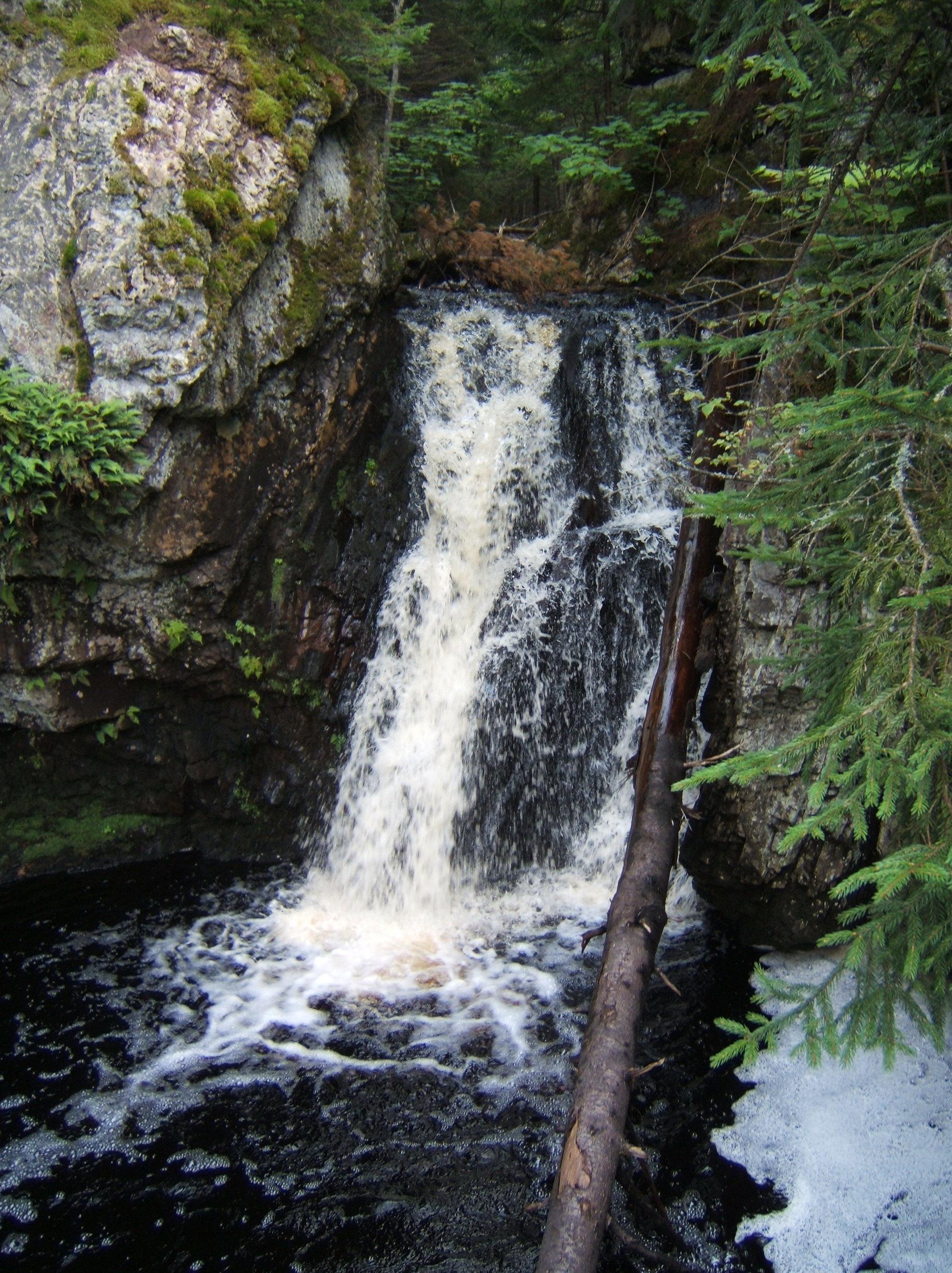
The water plunges over the lip of the falls…
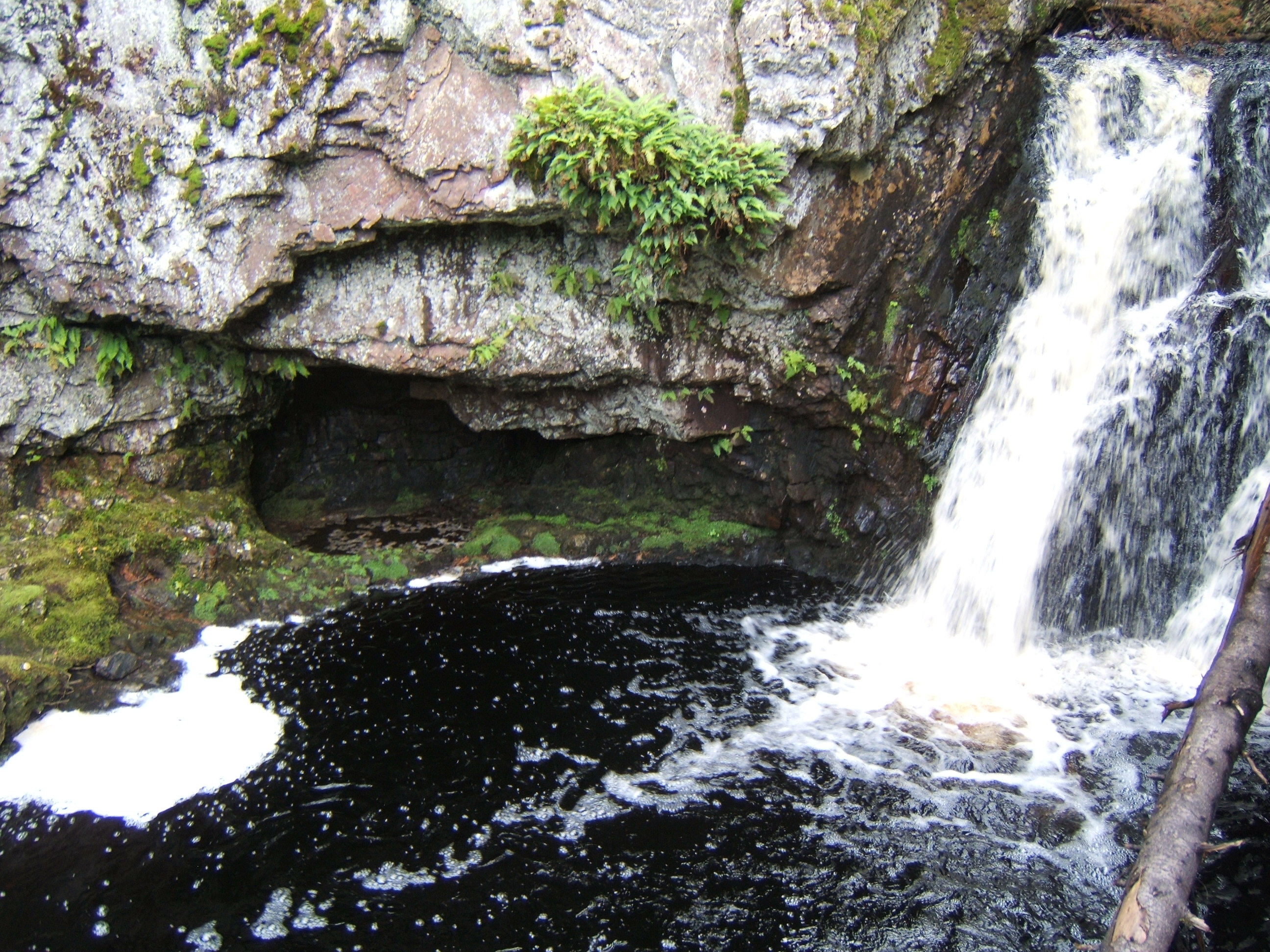
…flows past a small cave…

… and forces its way between rocks over the lower part of the falls.
Waterfalls are the ultimate experience of water. At the base of the waterfall are the mingled sounds of the thundering water and the gurgle of the stream. The shade and mists are cooling, refreshing. Sneakers get wet, hands are washed in cold water, and balance is tested as you follow the downward path of the waterfall.
I also like to think about the shape of the rock under the falls. I watch the spout and flume of the water to see what solid shapes beneath the flow have shaped the waterfall. I try to see through the white curtain of water to see the rock and stone, and understand how they are both revealed and concealed by the waterfall.
beneath waterfall
~
what can I do
to cover me
feign a drip of waterfall
from a single eye
or a flume
from the fluid of two
~
shall I arrange
my hair to hide beneath
my skin a wasp-nest
paper waterfall
hung lightly
~
who will see me
if I place my hands on rock
freckles are dapples of sun
fingernail glints of mica
or whorls in fingerprint
swirl like water
~
the spare notes of white-throat
or fluid jubilee of robin
flow over, compose sheet
music of quarter notes
to cover me
~
sitting here
on the edge of the bed
far from waterfall
electric fan for breeze
electric bulbs for sparkle
down-filled white duvet
to hide beneath
~
© Jane Tims 2011




 nichepoetryandprose